TOLEDO – Just west of the intersection of Byrne Rd. and Airport Highway, 30 acres of land is coming up on eight years worth of controversy.
“This was also slated to be the property for the jail,” said Kelly McKown, a resident who lives across from the contested area.
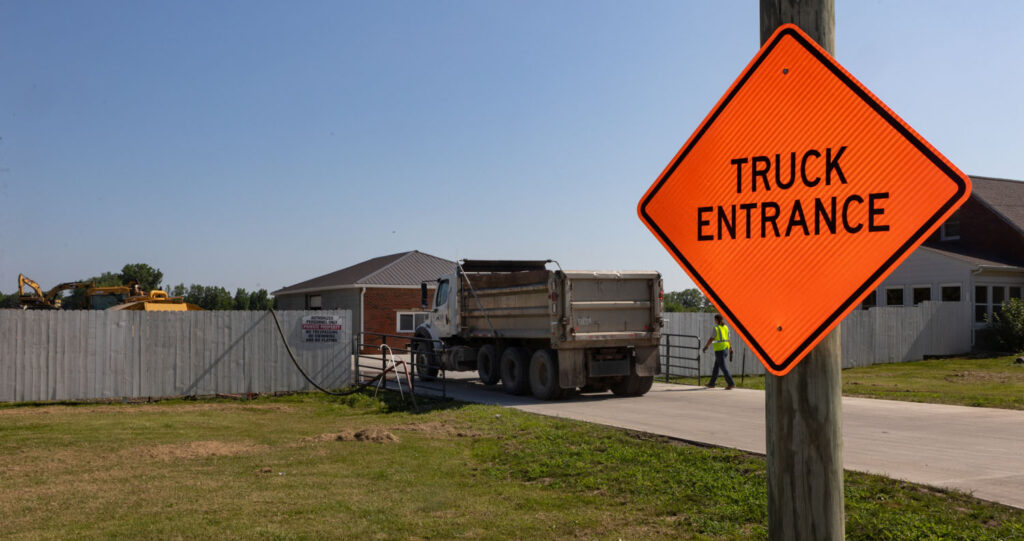
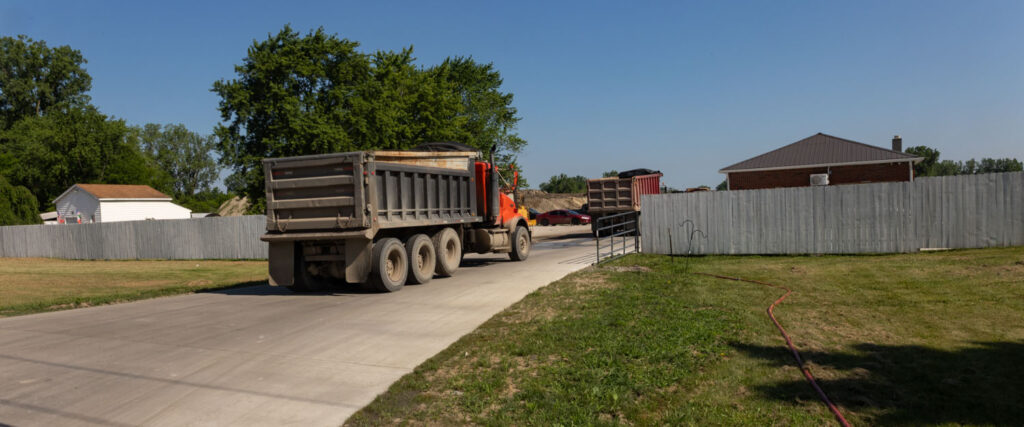
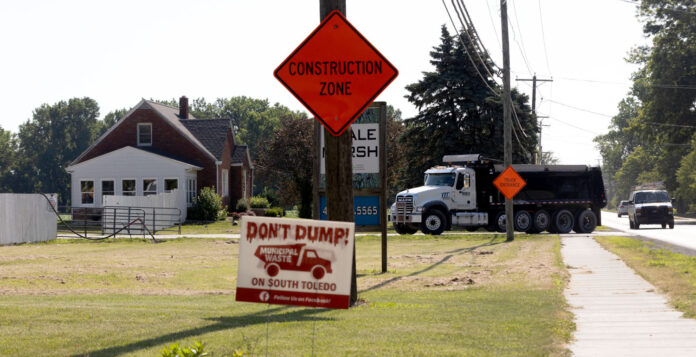
“Maybe that’d be quieter,” she said in jest, as empty trucks, one to three at a time, enter the driveway across from her home, and exit — full of materials—onto Byrne Road.

In 2017, the same parcel of land was part of a proposal for a new jail, which fell through. Then, four years later, Dennis Topsoil and Landscaping proposed to change the zoning to industrial for their mulch business. This attempt to rezone the area for industrial use was met with over 1,000 names from area businesses and residents petitioning against that rezone proposal.
Now, four years later, a different company — Rocky Ridge Development, LLC — has already started mining without the proper zoning, and the residents are unhappy, to say the least.
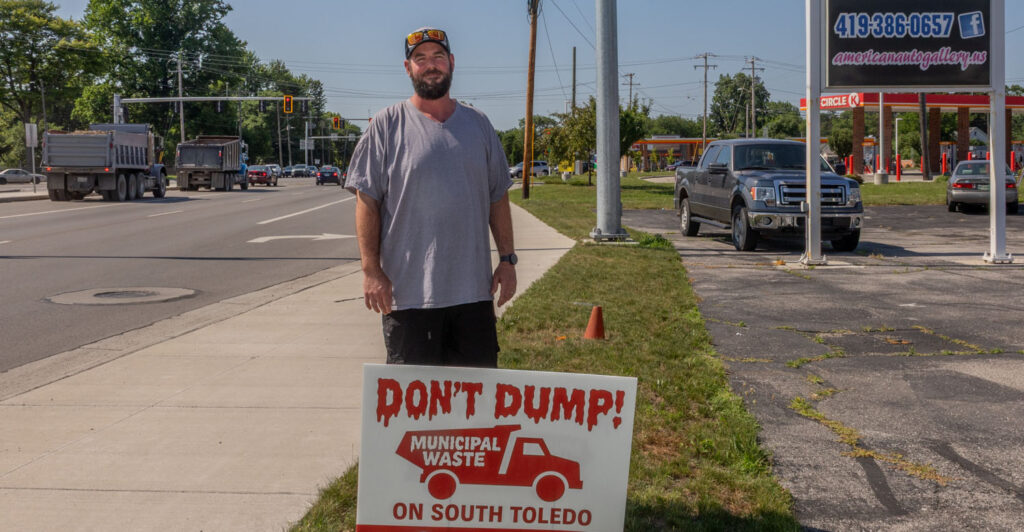
“It’s like they don’t care what kind of damage they do,” said Stephen Chenault, owner of American Auto Gallery on South Byrne Road.
“They widened this road out here, took a bunch of my property [through eminent domain], and then literally, you can see dump trucks lined up from the light all the way back to there,” he said, motioning beyond his car lot.
Chenault has been on S. Byrne since 2017, long enough to see the last attempt at changing the zoning to general industrial.
“It seems very odd. It seems like they get things done or don’t get the same kind of discipline [as other companies],” he said, referring to Rocky Ridge Development.
Another oddity is the two bedroom, one bathroom single-family home at 4004 Angola Road that sits on 30 acres and is currently used for the mining operation … without the proper zoning.
In 2021, Rocky Ridge Development bought the property and started mining on the land shortly thereafter, Chenault said.
But just recently, on May 14, Brandon Stansley, director of sustainability at Rocky Ridge Development, presented before the City of Toledo’s Planning and Zoning Committee a proposal to “…assist the city of Toledo and its regional partners, to provide high quality, safe, economical drinking water to consumers through the beneficial reuse of what we call DWTM — Drinking Water Treatment Material.”
Stansley was requesting the same parcel of land to be zoned for general industrial use so the company could continue to mine the land they admitted in the committee meeting they had been mining since somewhere around 2021-2022.
WTOL 11 reported that “a zoning approval from September 29, 2020, confirms the city only granted Rocky Ridge permission to establish a wetland — not a mining operation. An accompanying letter dated Sep. 30, 2020, explicitly states: ‘This letter does not grant approval for a mining operation.’”
During Toledo’s zoning and planning committee meeting in May, the cities of Toledo and Oregon were identified as the main clients associated with the mining operation, and Rocky Ridge proposed a plan to backfill the land with those cities’ waste product from water purification.
“Despite zoning issues, Rocky Ridge has received millions in city contracts to remove spent lime. One such contract, worth $11 million, was approved in December 2023. That contract was negotiated under then-director of public utilities Ed Moore, who retired just two months later. The city said that Moore would ‘continue to serve the city of Toledo in an advisory role,’” WTOL 11 reported.
Shortly after, Moore was hired as the managing director for Rocky Ridge Development LLC, and even represented Rocky Ridge before city council when they requested the zoning change.
“Current zoning does not allow for mining operations,” Stansley said during the committee meeting. “This is, in fact, the primary reason for asking for the zoning change.”
Regardless, residents have said the mining operation has picked up speed in the past year, and especially in the last few months.
“It seems like there’s been a significant uptick in the vehicles and the amount of stuff,” Chenault said. “I mean, the other day – I’m not joking – I don’t know how many trucking companies they would have had to hire, but we saw in the course of that day hundreds of semi dump trucks coming out of there, just nonstop.”
The Toledo Free Press talked with Kelly and Jason McKown, who live across from 4004 Angola Road, on their front porch.
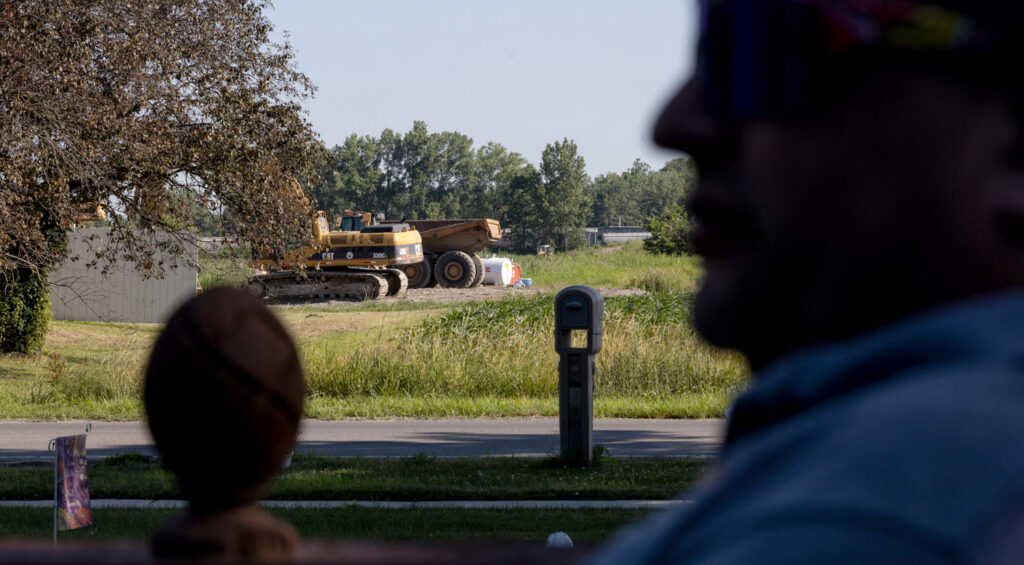
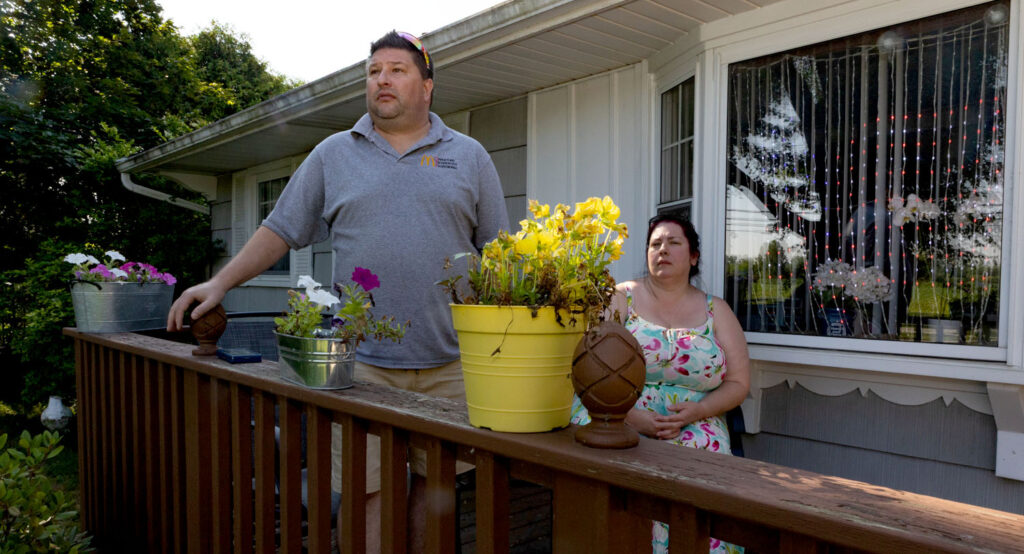
“I’ve seen probably 10 to 15 trucks,” Jason McKown said during the 15-minute time frame that the Free Press had been speaking with the couple, who joked that the trucks come about every five minutes.
The McKowns and other residents in the area have voiced their displeasure with Rocky Ridge through a petition, steady involvement in public forums, and with yard sides reading, “Don’t Dump on South Toledo.”
Residents’ main concerns have been dust, effects on individual’s health, resale value of their properties, noise, and the viability of the land after it is mined and filled in with DWTM.
“Since I moved here I’m now on a maintenance inhaler,” Kelly McKown said. Her asthma symptoms have worsened since she and her husband moved to Angola Road two years earlier.
“Ever since we got here, it’s harder for me to breathe. And the dust? It’s incredible. It’s everywhere, like, you can’t have your windows open. You’ve power washed this,” she said speaking to her husband and motioning to the driveway, “I don’t know how many times.”
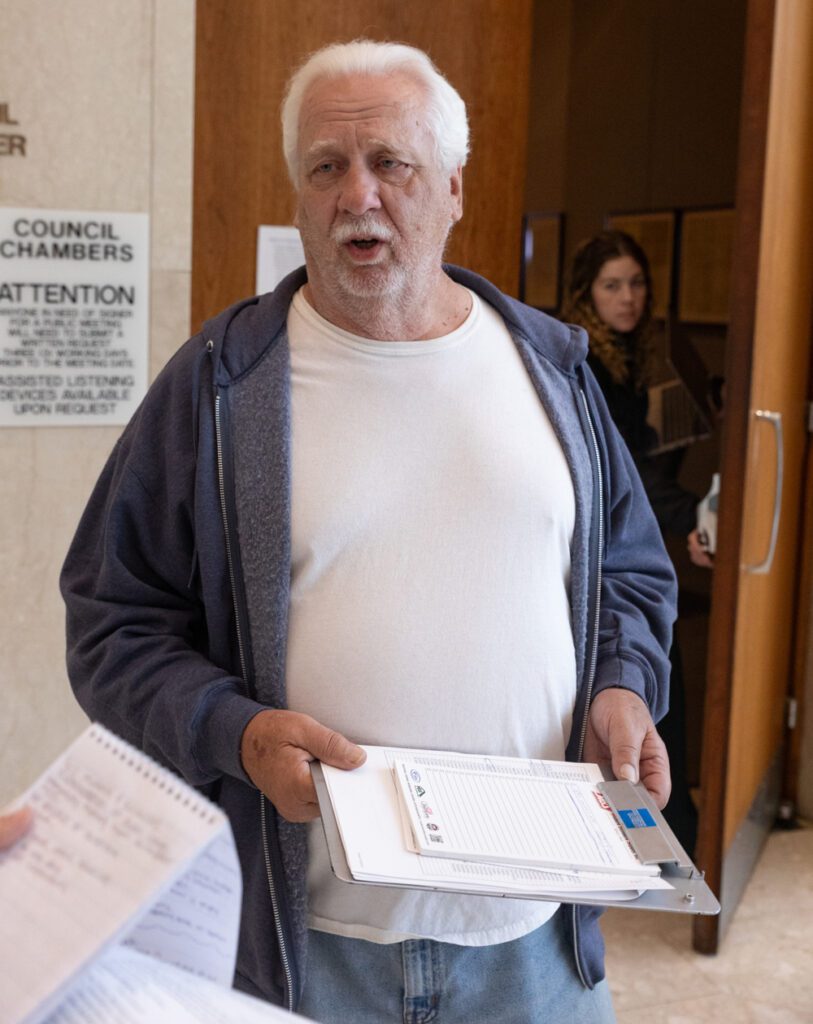
Toledo City Council members Nick Komives (at-large) and Adam Martinez (District 2) both had concerns with the development, mainly the potential health effects of the dust and any potential water contamination that could happen during the industrial actions on the land.
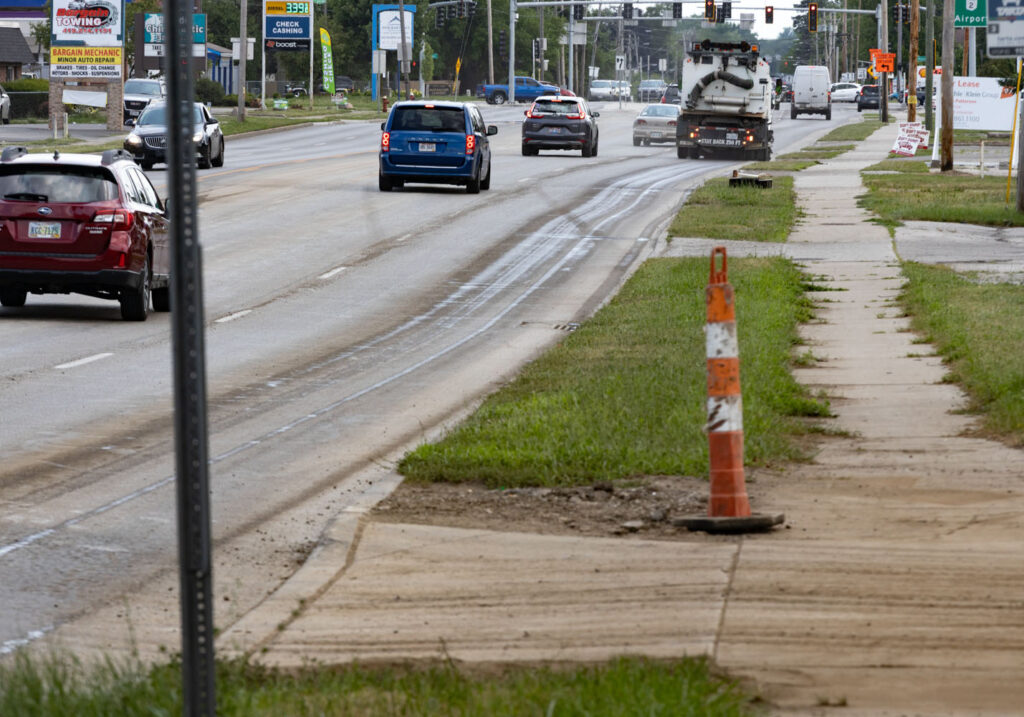
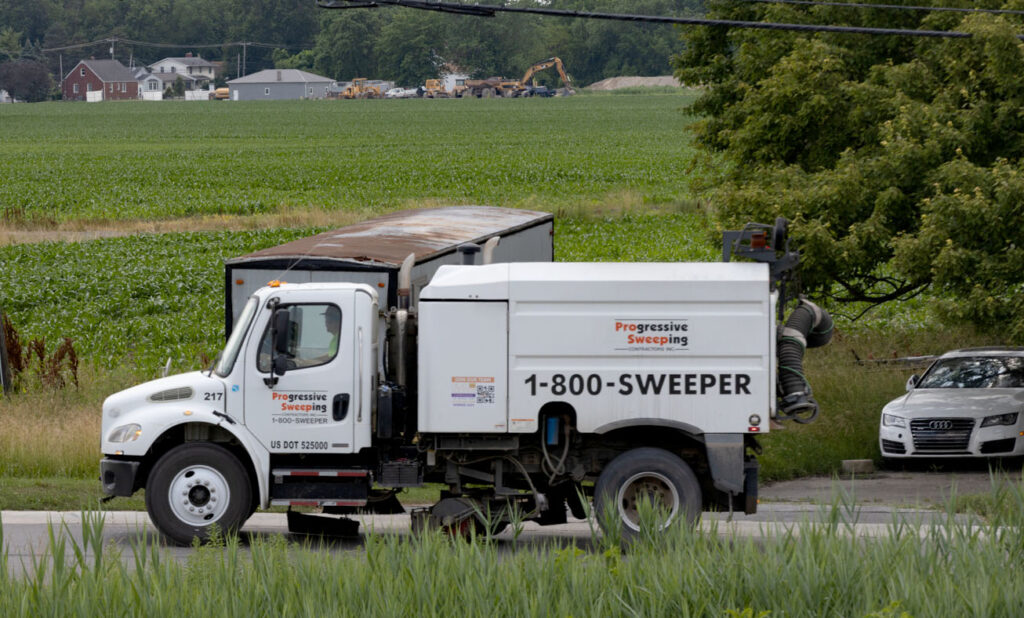
Moore said a five-point dust mitigation plan would solve the issue of dust, and would include rumble strips and street sweepers applying a synthetic polymer to the dust. In his statements to City Council, Moore assured the council the dust suppressant material was a non-petroleum product despite it feeling like “baby oil.”
Residents, including Bill Hoag, a local organizer in the area who owns a number of residential properties in the neighborhood, contradicted Moore after a city council meeting on June 3, emphatically claiming the dust suppressant contained oil.
“Byrne Road’s all oil,” he said, and complained of “an oil slick” left on Byrne Road from the suppressant.
Even with the use of street sweepers and the dust suppressant, some residents still complain of dust. Other individuals in the community, like Michael Schrickel, who owns Chop Machine Cycles, a custom motorcycle shop in the area, initially voiced concerns but said publicly at the committee meeting that the dust concerns had been solved with the dust mitigation measures put forth by Rocky Ridge Development.
Yet, for all Rocky Ridge’s efforts in the area to make good with neighbors, including helping to landscape a neighbor’s lawn, offering to give the land back to the city as a wetland when the project finishes, and the efforts of mitigating dust, many residents are still wondering how Rocky Ridge has been allowed by the City of Toledo to operate without the correct zoning.
“If I was out in the back of my yard right now building a deck without a permit, they’d shut me down,” Jason McKown pointed out, and then relayed that his brother-in-law tried to build a handicap ramp without a permit and was shut down.
Chenault said he had a similar experience when he tried to put a building up at the American Auto Gallery. “I have a laundry list of things they want me to do for Toledo, but it’s like it doesn’t seem to apply to them in the same way,” he said.
On Tuesday, July 15, Toledo City Council is set to vote on the three ordinances dealing with Rocky Ridge Development’s request for a zone change. The ordinances in question have already been delayed at the past two Toledo City Council meetings.