


Cartoon by Steven J. Athanas
RELATED CONTENT: Steven Athanas: The Artist

Cartoon by Steven J. Athanas
RELATED CONTENT: Steven Athanas: The Artist

HOWARD MARSH METROPARK – A buck peers through a thick stand of cattails along Maumee Bay. He is already sporting a nice set of velveted antlers, highlighted in the sunlight of a recent summer evening.
Now is the time for male whitetail deer to show the growth of antlers they’ll need this fall as they spar with other males during the rut, or mating season. The velvet protects and nourishes the antlers while they grow, drying up in the fall when the job is done. When it’s dry, the bucks rub the velvet off, revealing the bone-hard antlers.

*Podcast edited by Stephen Zenner
Adam Cassi, executive director of Keep Toledo-Lucas County Beautiful, speaks to host Jaden Jefferson about the organization’s mission. He has tips on how best to reduce, reuse, and recycle, along with the latest initiatives from KTLCB. One of those is the Litter League, a fun, baseball-themed program that is helping Toledoans mobilize against litter.
RELATED CONTENT: Composting in Toledo

TOLEDO – Founded in 2020, Krazy Bins is an outlet store that buys overstocked and returned items from the largest retailers in the United States and sells them for a fraction of the cost.
Noah Leavitt, founder of Krazy Bins, explained that it has a weekly cycle. This cycle begins on Friday when the store brings in three to four truckloads of merchandise. Items are stocked in bins and priced at $15 to start the cycle. In an attempt to sell out of the product by the end of the week, the price is lowered each day.
All items in the bins are $10 on Saturday, $6 on Sunday, $4 on Monday, $3 on Tuesday, $1.25 on Wednesday, and $1 on Thursday. On Friday, that cycle starts again.
Krazy Bins currently has locations in the Cleveland suburb cities of Medina, Parma and Kent. Over the years, they have had several locations in Ohio; some of those locations have moved or closed. Now the company is gearing up to open in Toledo.
According to Leavitt, the decision to expand to the Glass City was driven by several factors, including the lack of similar stores in the area, the nearby university and the population size.
“It was a huge decision for us; the traffic right there is phenomenal, and we just think it’s a really strong fit as a city, as a location.”
After expanding to Toledo, Leavitt says he has plans to venture out to Detroit, Pittsburgh and Columbus.
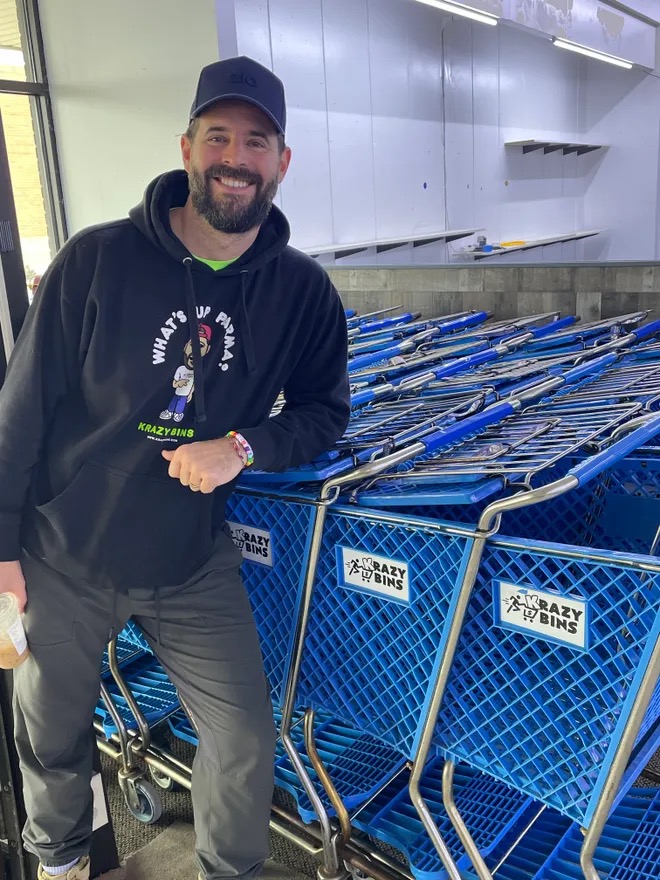
Leavitt said that Krazy Bins does not function like a normal store. It doesn’t restock the same items each week. The bin pricing model creates a treasure hunt atmosphere for shoppers, leading customers to visit the store multiple times a week or every week because there is always a new product on the shelves.
“You’re never going to have the same experience when you walk into Krazy Bins,” Leavitt said. “If I walk into Krazy Bins on a Friday. It’s going to be different than when I walk in on a Wednesday because a lot of the merchandise is gone, but there still can be great stuff.”
Leavitt encourages shoppers from Toledo to go into the store with an open mind.
Kara Russo is from Novelty, Ohio, and she is the owner of KASA Interiors Cleveland. She says Krazy Bins is one of her favorite stores, and she has been shopping there since they opened their location in Parma over four years ago.
Russo says the prices are one factor for her support, but she also likes that they sell goods on Instagram, making it easier to purchase big-ticket items like furniture without physically going to the store. She also likes that the shopping experience is different from regular retail stores.
“You never know what you’re going to find, which is a bunch of hidden treasures,” Russo said, adding that she is a big proponent of shopping the home goods section. Among these are furniture, fake plants, knick-knacks and art.
Russo says the store is helpful for people who are on a budget and don’t want to pay retail prices.
“You get brand new items for a fraction of the price,” she said. “It just helps people be able to decorate their homes and clothing, and everything they need for a fraction [of the cost].”
Russo praised the store for preventing items from ending up in landfills by selling them at low prices. She advises shoppers to take their time: look at all the bins, check out all the shelving and explore the furniture section.
Her advice to new customers is “you need to be there early, and you need to be prepared. You need to not have any expectations and just be open-minded for all the hidden gems that you will come across.”

Shelby Pepin of Kent, Ohio is another longtime customer of Krazy Bins. She has shopped at the stores since they first opened. Her first store was the now-closed Akron location; she now shops at the much closer location in Kent. Despite not being paid by Krazy Bins, she occasionally posts Instagram videos of her shopping trips.
Pepin loves to go to the store to shop for clothing and home decor items. She thinks stores like Krazy Bins are important because she can enjoy shopping without overspending.
“I put myself on a budget because I would like to buy a house in the near future, but I also love fashion, and it gives me the ability to buy some things when I’m feeling the urge to shop but on a friendly budget, and the clothing is not going to landfills.”
The new Krazy Bins location will have its grand opening on Friday, August 1, at 10 a.m., 3314 Secor Rd, Toledo.

Considering the uncertain funding from both federal and state sources, the future of the passenger rail movement in Ohio seems to be at a standstill. But there also was reason for optimism coming from All Aboard Ohio’s annual meeting on July 12. Lots of work ahead to be sure, but optimism too.
“We didn’t get what we wanted in the [recently passed] state budget, but we’re moving on to the next steps,” explained Liz Quigley, board member of All Aboard Ohio, a nonprofit organization dedicated to promoting improved public transportation and passenger rail service throughout the state.
The 2025 budget did not include an allocation for the state to rejoin the Midwest Interstate Passenger Rail Commission, a group that advocates for expanded rail service throughout the Midwest. Additionally, lawmakers refused to allocate one seat on the Ohio Rail Development Commission to the passenger rail industry (instead designating that seat for freight rail).
The Commission, in conjunction with the national Corridor ID Program, is overseeing studies of two of Amtrak’s proposed new Ohio passenger routes: the 3C+D line (Cleveland, Columbus, Cincinnati + Dayton) and the Cleveland-Toledo-Detroit line. Quigley said that the Corridor ID Program “is still on track, but it will be more challenging,” and is not scheduled to be complete until 2032.
Speaking of Amtrak, the 2025 federal budget calls for a 25 percent cut in the Amtrak Northeast Corridor, but most of the federal funding provided by the 2021 infrastructure law currently remains, including funding for the Ohio passenger routes.
Quigley said much of their group’s activities have to do with the law around taxes. “Our transportation funding comes from gas taxes, and transportation is typically interpreted as roads,” she said. “By adding state rail systems, you’re improving the longevity of our highway systems.”
Sally Fish, Disability Rights Advocate with The Ability Center in Toledo, created the Disability and Aging Rail Coalition (DARC) to address the systemic issues that limit individuals with disabilities from access to vital areas of community life. She also attended the All Aboard Ohio annual meeting as its Northwest Ohio Representative and was encouraged by the vibe at the meeting.
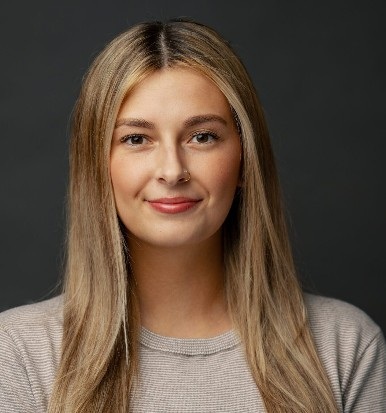
“We have support in the (Ohio) House of Representatives,” she said. Two Republicans attended the meeting, including Rep. Bernard Willis (District 74), Chair of the Transportation Committee. “He was in full support of our efforts, and was very encouraging,” she said.
“Ohio has a high aging population, and our current transportation systems don’t provide the infrastructure support we need,” said Quigley. Fish agrees that a multi-modal transportation system across the state results in access to that infrastructure, particularly for individuals with disabilities.
“Rail provides the access to specialized care, services and recreational activities that other transportation may not provide,” she said.
All Aboard Ohio is focused on three specific areas going forward, according to Quigley:
And in Toledo, One Government Center will be the setting for a DARC legislative event, Toledo on Track, on Sept. 19.

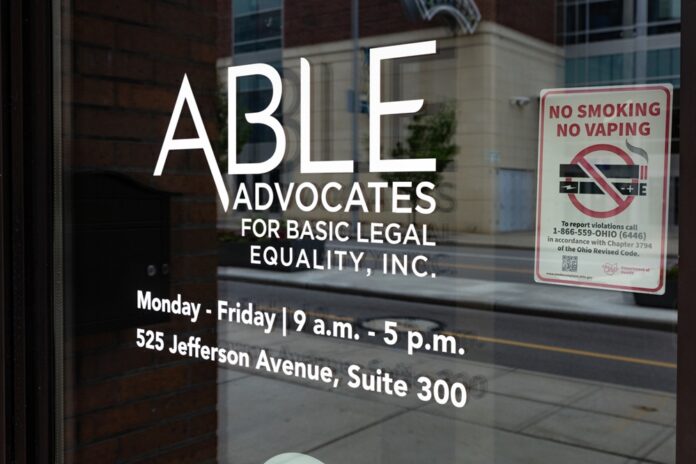
TOLEDO – Advocates for Basic Legal Equality, or ABLE, as it is better known, is a nonprofit law firm dedicated to representing underprivileged communities, but now ABLE employees are seeking to represent themselves at the bargaining table.
The organization boasts of helping people in poverty, refugees and immigrants, but grievances with management have led them towards joining the United Auto Workers (UAW).
“They sacrifice because they believe in things. But the sacrifice can only go so far,” said Lance Rhines, the Midwest Organizer for UAW Local 2320.
On the July 14, ABLE League of Justice (ALJ), the group hoping to become the newest chapter of UAW-NOLSW Local 2320 on behalf of ABLE employees, sent a letter to the nonprofit’s executive director, Makiedah Messam, asking her to recognize the union by today (Monday July 28).
78 percent of ABLE staff approved the move to unionize according to ALJ’s internal count and have given ABLE management until Monday, July 28 to recognize them formally.
The Dayton location of ABLE (ABLE is located in Toledo, Dayton and Defiance), filed four unfair labor practices with the National Labor Relations Board (NLRB) in March.
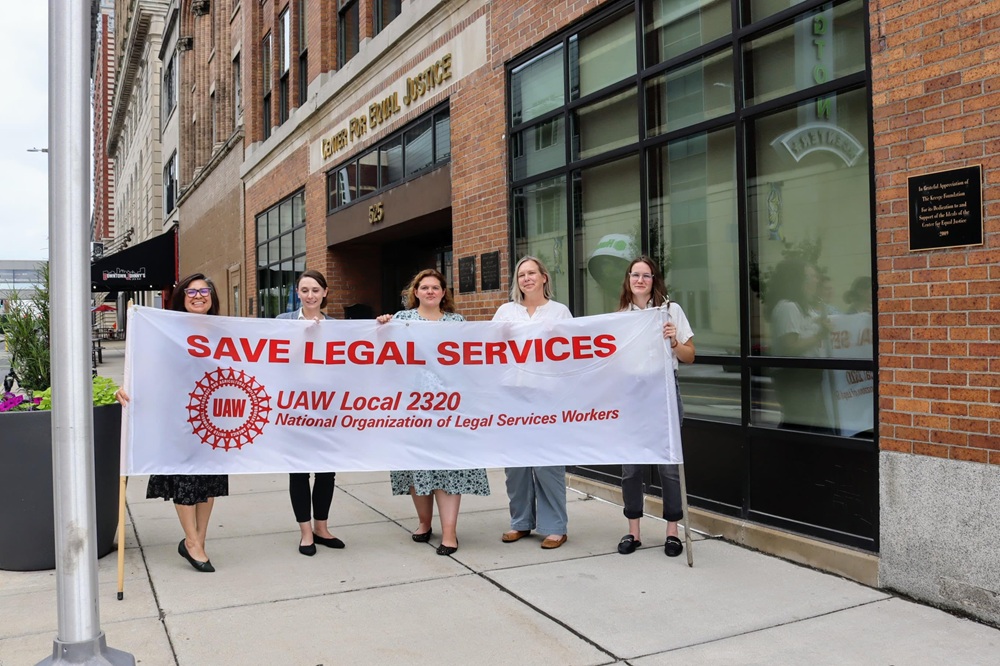
All listed allegations deal with attempts to hinder unionization.
“Despite feeling like they [ABLE management] did violate it [good faith] in the past, we are willing to drop those charges [the unfair labor practice charges] if they were to voluntarily recognize us,” said Kara Ford, a senior attorney with ABLE, on behalf of the ALJ.
“We are willing to move forward,” she said.
The Toledo Free Press reached out to ABLE’s management for comment concerning their workers’ desire to unionize, but did not hear back.
On Friday, July 15, Messam emailed employees the following: “I have instructed firm counsel to file an RM petition with the NLRB, securing your right to vote on this pivotal issue.”
Later that day the petition was filed, allowing ABLE employees to vote for or against unionization on a to-be-determined date.

In her address to employees on Friday, Messam said she had received the formal request from a group “claiming to represent the interests of ABLE’s staff,” which showed a tone of skepticism.
Messam listed the ways she had responded to employee’s requests with action. In the e-mail, Messam said she revived the ABLE newsletter to keep employees informed, researched the best practices for managing caseloads in response to demands for more manageable caseloads, held open office hours for feedback and included spaces for employees to voice their opinions/concerns.
But employees said their concerns have not been adequately addressed.
“Issues from 2019, 2020 and from then to now, are the same. And they’ve worsened,” said Jen Behnfeldt, a non-attorney child advocate with ABLE who has been with the nonprofit for 12 years.
Difficulties with management began to ramp up around fall of 2024.
“I think it started with some proposed policy changes, such as a ‘Return to Office’ mandate. But definitely what sparked, I think, more fire and really started getting people motivated was when they rolled out the new pay band system,” Ford said.
Attorneys, paralegals, advocates and administrative assistants were allocated into different pay groupings, and began to find what they termed “gaps” between how individuals were compensated.
“Staff have never been thrilled that we might get like a 1 percent or 2 percent compensation increase sometimes,” Behnfeldt said. “But it was across the board, right?
“So everyone got the same crappy whatever it was, not until this most recent compensation.”
Ford shared her pay with her coworkers and encouraged others to do the same for transparency.
“That’s when people really started discovering: our attorney staff got 10 percent, 15 percent, 20 percent, 30 percent raises,” Ford said. On the other end of things, “Some of our lowest paid staff got like, 5 percent or a one-time 2 percent payment. A lot lower.”
“We’re all advocates here,” Ford said. “We’re all speaking up for our clients in poverty,” and went on to say that ALJ would be speaking up for their workers who were struggling financially.
Pay was the largest concern for the ALJ, but most of their other grievances stemmed from what Ford and Behnfeldt described as a corporatization of the company.
Corporatization was described as micromanagement, ignoring/rejecting feedback from workers and new probationary measures both women said were unequally implemented across the staff and a steady process of infantilizing workers of ABLE.
ALJ attempted to unionize over half a year earlier, but were surprised at their employer’s response, waylaying them until now.
“They went public with their campaign, initially at the end of last year, asked for voluntary recognition, and then it kind of became a little bit of a dog fight with the employer,” said Ben Dormus, Northeast/Midwest servicing representative for UAW Local 2320.
Initially the ALJ asked for recognition in December, but then ABLE hired outside help including MPI Consulting and Bricker Graydon LLP.
“I mean, bringing in the outside consultant and saying we don’t need an outside third party was a bit ironic,” Ford said in reaction to management’s words against forming a union.
From that point on, the two said ABLE employees were heavily bombarded with anti-union sentiments leading up to a voluntary town hall. “But that’s really where things I feel like took a big turn at that meeting.”
“It was hostile,” Ford said, and went on to say she and others were verbally reprimanded for asking questions of management.
Behnfeldt said she was taken aback at the hypocrisy of ABLE considering the work they do. “It’s extremely hypocritical,” she said. “We organize people. We have organized a Dayton tenants union. We organize groups like that all the time.”
Between then and now, ALJ said the law and consulting firms hired to negotiate with the union had administratively obfuscated the objective of union recognition.
“The employer retained union busting counsel, initially, objected to the workers petition with the NLRB, because at the time, the NLRB didn’t have a quorum,” Dormus said.
“And so they kind of took the Amazon and Whole Foods line on that, and said that, because the NLRB doesn’t have a quorum the workers can’t file a petition for election. And then they just engaged in union busting.”
The ALJ has received a letter of support from all three Lucas County Commissioners, Wade Kapszukiewicz, the mayor of Toledo, Paula Hicks-Hudson, senator for Ohio’s 11th district, Erika White, representative for Ohio House district 41, Tony Totti, president of UAW Local 14 in Toledo, Theresa Gadus, Toledo City Council Member for District 3, Nick Komives, Toledo City Council Member At-Large, and from the Lucas County Democrats.
TOLEDO — Local health officials and advocates are sounding alarms after a proposed federal budget threatens to eliminate a $56 million naloxone grant program, potentially scaling back access to the life-saving opioid overdose reversal drug across the country.
Under the plan introduced by the Trump administration and supported by Health and Human Services Secretary Robert F. Kennedy Jr., the First Responders-Comprehensive Addiction and Recovery Act (FR-CARA) could be eliminated and folded into a newly proposed entity called the Administration for a Healthy America. The restructuring would dissolve the Substance Abuse and Mental Health Services Administration (SAMHSA), the current overseer of FR-CARA.
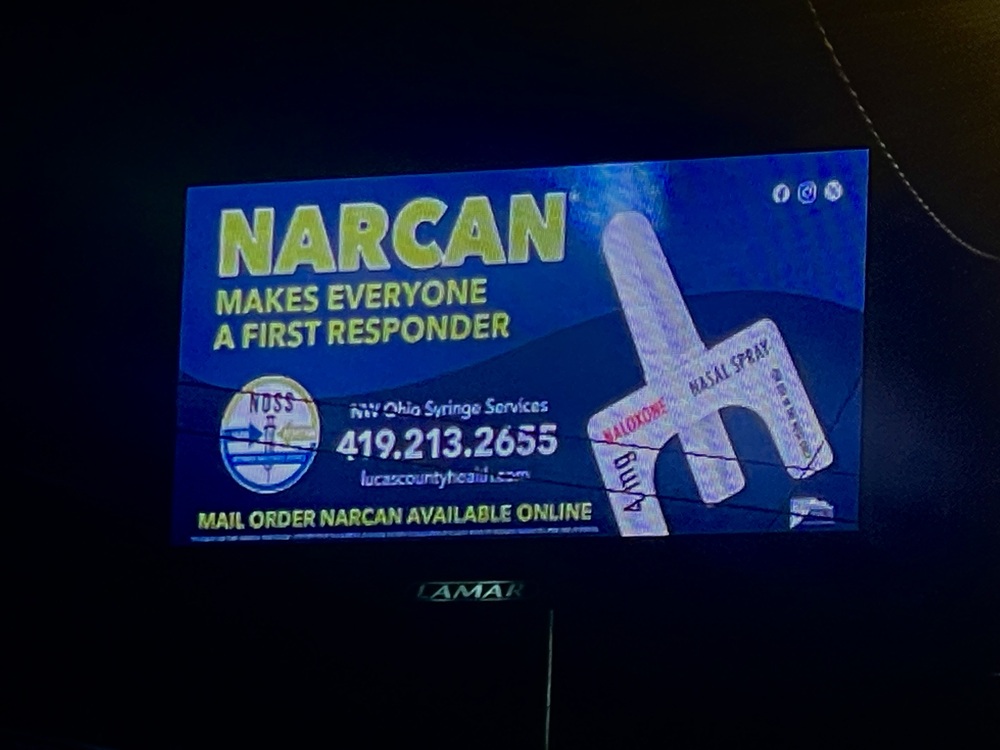
Naloxone, sold under the brand name Narcan, is widely used by emergency responders, hospitals and community organizations to reverse opioid overdoses. In Lucas County alone, nearly 19,000 naloxone kits were distributed in 2024, resulting in more than 2,000 confirmed reversals, according to Joe Wood, the public health educator for the Lucas County Health Department. The same year, the county recorded 159 fatal overdoses—a 35 percent drop from 2023.
Wood said Ohio is currently protected by a statewide initiative that provides free naloxone via Project DAWN (Deaths Avoided With Naloxone), a program backed by Gov. Mike DeWine and RecoveryOhio.
“Fortunately, Toledo is protected, and we will remain distributing naloxone for first responders in the foreseeable future.” Wood mentions this may not be the case for other states and counties.
“There are most certainly—probably—Ohio programs that get this federal funding, and if it’s cut, it would affect their access. And then, certainly in other states, the majority of the state’s funding could have devastating impacts on first responders being able to respond to an overdose.”
Wood emphasized that naloxone’s availability isn’t just preventative — it’s part of a wider accountability effort.
“It started from the mass distribution of oxycodone, and the pharmaceutical companies lying to the FDA about their medication not being addictive. That is why the opiate settlement funds were arbitrated.” Wood mentions that it is the government’s responsibility to fund the solution to the epidemic it helped create.
“How can we pull funding for an issue that we have already agreed the government and the pharmaceutical companies were complicit in creating?”
In July 2025, Purdue Pharma’s bankruptcy settlement was finalized at $7.4 billion, one of the largest corporate settlements of its kind. Legal documents tied the company’s practices to the national opioid epidemic, and distributors like CVS, Walgreens, and Walmart were also found liable. The settlement funds are now being routed to state and local governments to support treatment, recovery, and overdose prevention efforts.
Dr. Brian Kaminski, vice president of medical affairs for ProMedica Metro Hospitals, said Narcan is administered in local emergency departments nearly every day. He emphasized that the grant supports not only distribution, but training and post-overdose protocols.
“Over the course of the last two years, we’ve had a pretty significant decline in the number of fatal overdoses and also the number of Narcan administrations that occur in the hospital.” Kaminski mentions that scaling back now could reverse that progress.
For addiction recovery advocate Matt Bell, the issue is personal. The founder of Toledo-based Team Recovery said he struggled with opioid addiction for almost a decade, experiencing 18 overdoses and attending 28 rehab programs before entering recovery in 2015. Bell credits Narcan with saving his life multiple times.
“If it weren’t for Narcan, I wouldn’t be here,” Bell said. “I’m married. I have three beautiful children. I have a master’s degree in social work. I just graduated from the University of Toledo. I own an addiction treatment center. I employ 160 people. We have 250 beds that are almost full at all times.” Bell mentions that everyone deserves a second chance like him.

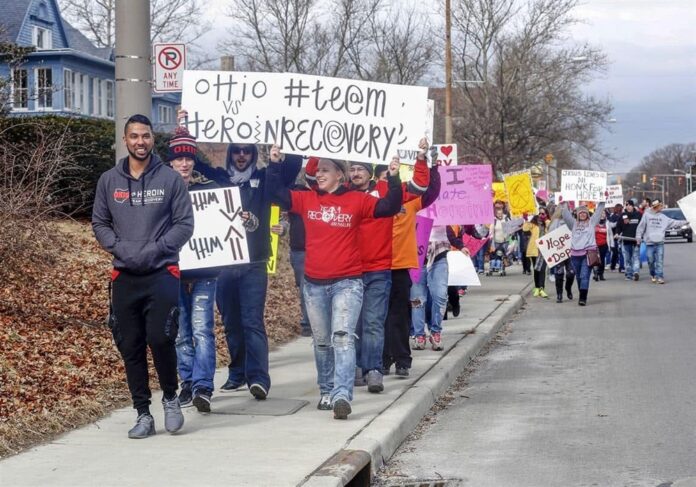
Bell’s nonprofit includes a public naloxone vending machine in its lobby and hosts community events to fight stigma and promote recovery—including an annual rally held on October 17, officially declared “Team Recovery Day” by Toledo’s mayor. Participants hold signs reading “Honk if you hate heroin” and “Heroin’s killing our town.” in an effort to raise awareness and shift public perception.
“A lot of people think Narcan enables drug use,” Bell said. “It doesn’t — it enables breathing. And if people can continue to breathe and stay alive, they have another chance to experience sobriety and happiness and peace and making amends to their families and society and debtors.”
Wood and Bell also highlighted emerging concerns in local drug trends, including rising methamphetamine use and counterfeit prescription pills laced with synthetic opioids like fentanyl and xylazine. While opioid-related deaths are down, overdoses tied to nontraditional substances are climbing.
“Addiction doesn’t discriminate,” Wood said. “I walk into schools and meet 15 [and] 16-year-olds who have already seen overdoses. And when we recognize the environmental components of sometimes parents use drugs in front of their children…sometimes children grow up in neighborhoods where drug use is common in their community. We see a cycle of generational addiction, and this isn’t the children’s fault, and we need to provide the resources to save their lives as well.”
Bell added that recovery is possible, but only if life-saving interventions remain available. “People are not bad—they’re sick. Sick people need treatment,” he said. “You know, more recovery is needed. More love.”
For now, state funding in Ohio remains intact, but advocates and health officials urge policymakers to maintain federal support—especially in the shadow of nationwide litigation that confirmed the scale of corporate wrongdoing.
RELATED STORY: “Narcan installed in some S&G stores”
LUCAS COUNTY – In an effort to follow up on concerns surrounding increased property taxes in Lucas County for maintaining the ditch systems associated with the Swan Creek watershed, commissioners held a second “Swan Creek” hearing on Tuesday afternoon.
Three individuals signed up for the 2 p.m. to 3 p.m. time slot, but only one individual, William Roper of Waterville, showed up to speak with the county engineer, Mike Pniewski.
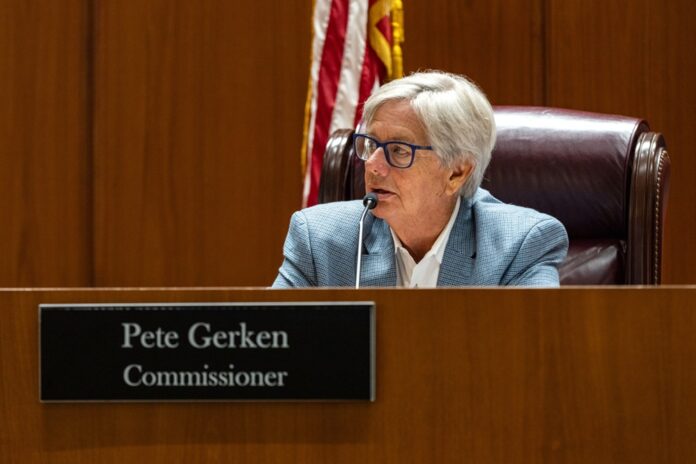
Initial efforts on remedying needed maintenance for the ditches began in 2021, but just last week, commissioners certified the new taxes, with Lisa Sobecki and Pete Gerken voting to approve the raised taxes on Lucas County residents and Anita Lopez voting against it.
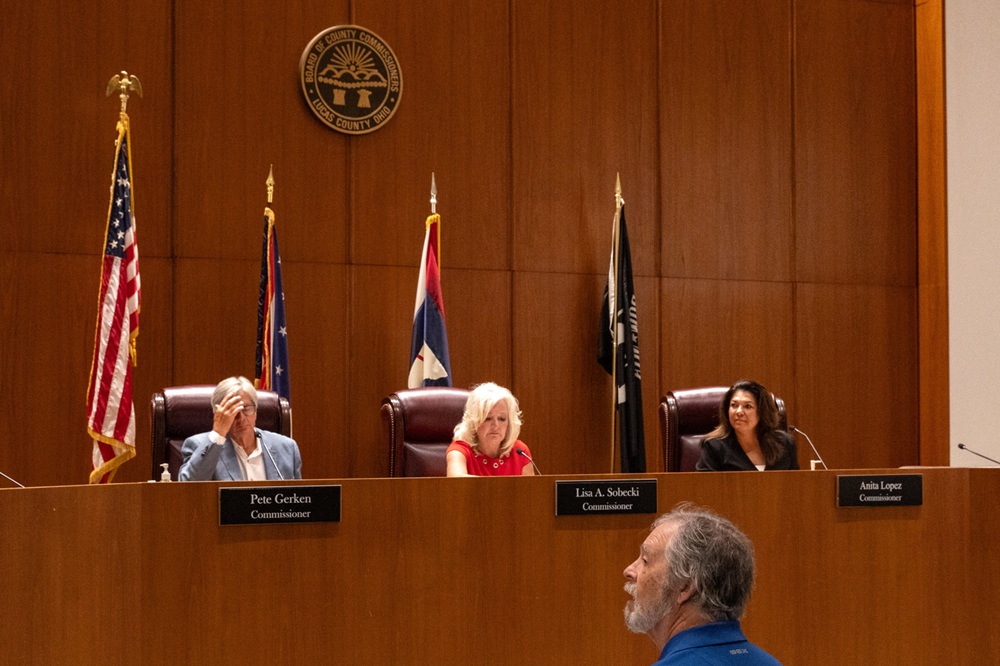
All three commissioners lamented the heightened tax burden on residents, and over the course of the two-hour hearing, 34 citizens weighed in with their opinions on the record.
Ultimately the report from Pniewski and the need for maintenance outweighed dissenters.
“Observations have indicated a reduction in the original drainage capacity of as much as 25 to 75 percent as a result of sedimentation in the watercourses,” Pniewski said in his report. “Reduced capacity in drainage watercourses has caused widespread flooding in areas of the watershed, especially during periods of heavy rainfall.”
Maintenance to be performed include the removal of log jams and dead/leaning trees, removal of excess sedimentation and the implementation of vegetated buffer strip.
Low attendance to this week’s hearing was anticipated as the vote had already gone through.
After two missed appointments and 45 minutes into the hearing, Sobecki said, “We will stand at recess until our three o’clock appointments.”
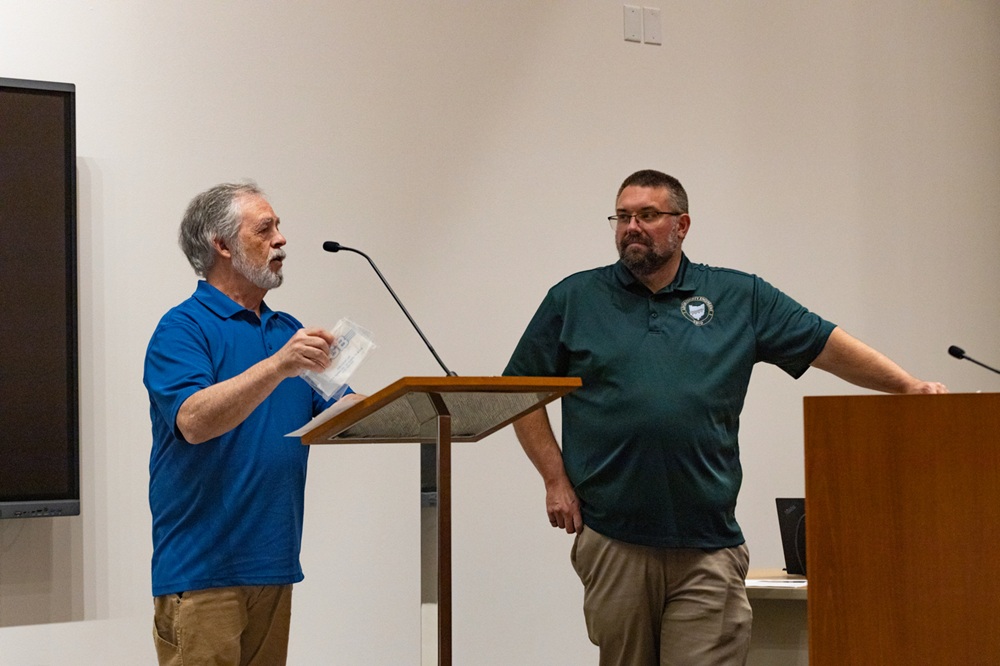
Roper, the lone attendee, came at 3 p.m. to dispute the ditch inspection grade on his property, asking for the county to bring his soil grade from a D rating up to a B rating.
It was a brief and quick consensus Pniewski approved, which brought the total tax estimation on Roper’s property taxes down.
“Our recommendation is to go with B, so there you go,” said Pniewski. “One of the factors to determine how assessments are partitioned is the type of soil type you have.”
U.S. Department of Agriculture soil maps are the basis for Pniewski’s data.
“They’re large scale [maps], so it’s hard, on a parcel-by-parcel basis, to know exactly what somebody has,” he said, adding that if “somebody feels that their soil is something different, then they have the opportunity to provide testimony and evidence to basically show what they have. And that’s what Mr. Roper did.”
The B-grade soil on Roper’s land was more of a sand as opposed to the D rating (a clay). Less absorptive soil, like clay, means the land contributes more to the runoff, and therefore more to the overall problem of flooding.
“You’re an example of how that exemption works,” Sobecki said, addressing Roper. “So thank you for doing that, and [I] think we have solved all the issues right here.”
Over the next 30 years, the total project cost for the Swan Creek ditch maintenance is estimated at $21,169,148.
This cost is “partitioned between the benefitting landowners by a series of calculations to approximate several factors to be considered under the Ohio Revised Code,” according to Pniewski’s report. These factors include parcel size, location, soil type and drainage ditch length.
Initially, Lucas and Fulton Counties were going to share the cost, but as of July 15, Lucas County residents alone will pick up the tab for the maintaining the ditch infrastructure necessary to limit flooding from Swan Creek.
Roper declined comment to the Toledo Free Press.
Pniewski ended his report and said, “It is the opinion of the engineer that the proposed project is feasible, that it is conductive to the public welfare, that there is a sufficient outlet and that the benefits exceed the cost.”
Find more information at Lucascountyengineer.org.

TOLEDO – Fastball, an alternative rock band widely loved for their catalog of hits from the 90s and beyond, will be playing at the Toledo Zoo Amphitheater on July 30. When we received an offer to interview someone from the band ahead of the show, I said that it had to be me. As an editor, I normally send assignments to other writers, but this one felt personal.
Like many fans of Fastball, my first impression of them was while sitting in front of the TV, watching VH1 music videos in 1998, and finding myself suddenly transfixed by “The Way.” I was eleven years old, but I was taken in by the three bandmates facing a storefront, watching a throwback aerobics video of a woman doing pelvic thrusts on the floor. It’s at that point that lead singer Tony Scalzo – his face deadpan – begins singing the song, a long narrative about an old couple with dementia who drive off into the sunset only to never be heard from again.
Scalzo wrote the lyrics, inspired by a story circulating in the news about the elderly couple’s disappearance. Despite the macabre ending of the real story (the couple being found dead in their car at the bottom of a ravine), “The Way” was a surprisingly danceable hit.
Miles Zuniga, vocalist and guitarist, spoke to me about the band’s beginnings in Austin, Texas, where he found himself drawing from the rich music scene there, with a strong infusion of midcentury British rock.
“I moved there in ‘84, and when I got there, I’d been listening to whatever was on MTV,” said Zuniga. “Culture Club. Duran Duran. ACDC. Whatever was on the radio. But when I got to Austin, Stevie Ray Vaughan had just become a huge star. So out of every doorway there was blues coming out, like people trying to do that. And The Fabulous Thunderbirds, as well, had hit songs. All these guys had made really cool records, especially those first couple T-birds records were really, really great.
“So all of a sudden, I was just getting a double dose of blues music, and that was something I’d never encountered. So that influenced me quite a bit.”

Another huge influence on Fastball? The Beatles. The influence for so many. But not every band influenced by them has gotten to collaborate with Fifth Beatle Billy Preston, who played piano on Fastball’s “You’re an Ocean” (Harsh Light of Day, 2000).
Zuniga and Scalzo are both songwriters, though they rarely co-write. Zuniga’s credits include early hits like “Fire Escape” and “Sooner or Later.” Aside from the Austin scene and midcentury British rock, Zuniga’s writing comes from a spiritual place: Buddhism.
“A man can’t enter the same river twice,” he said. “That’s one of my favorite quotes of all, because the man has changed. And the river has changed, so the circumstances are completely different. And I feel like that’s what life is. It’s just that most people don’t want to accept that, right? Life is impermanent. Everything’s always changing all the time in subtle, little ways. And that’s influenced my songwriting over the years.”
Those attending the show on the 30th will recognize Fastball’s older hits, but they’ll also be playing songs from their most recent album, Sonic Ranch (2024). One song that Zuniga has mixed feelings about playing from the album is “America,” a song he co-wrote with Scalzo. Its subtext is an indictment of today’s political climate.
“We almost never write songs together, but sometimes we do, like one of my favorite songs, ‘America,’ we wrote together, and we’ve had other ones over the years,” Zuniga said. “It’s nowhere in the song [explicitly], but it’s about how media – once it became for-profit… once Ronald Reagan deregulated the industry – it was no longer boring news. Now, it’s got to be sexy, you know. It’s got to make money. And it’s the worst. I really feel like it has destroyed the world, because the actual news doesn’t have to be politicized, but it is. It’s politicized to death.”
Zuniga laughed and said, “Events have gotten so crazy I don’t want to [play it]. I don’t really feel like singing that one song. I want to escape as much as the audience does. It depends on how I’m feeling.”
To get a another sampling of their latest album, check out the music video for “Rather Be Me than You” below.
Purchase tickets to see Fastball, Barenaked Ladies, and Sugar Ray at Toledozoo.org/concerts. The show begins at 6:30 p.m. on July 30 at the Toledo Zoo, 2 Hippo Way.
RELATED POST: Enter to win Fastball’s latest album, Sonic Ranch here.

The Toledo Free Press is a project of Toledo Integrated Media Education.
Company
Trending
Categories
© Copyright 2024 - Toledo Free Press