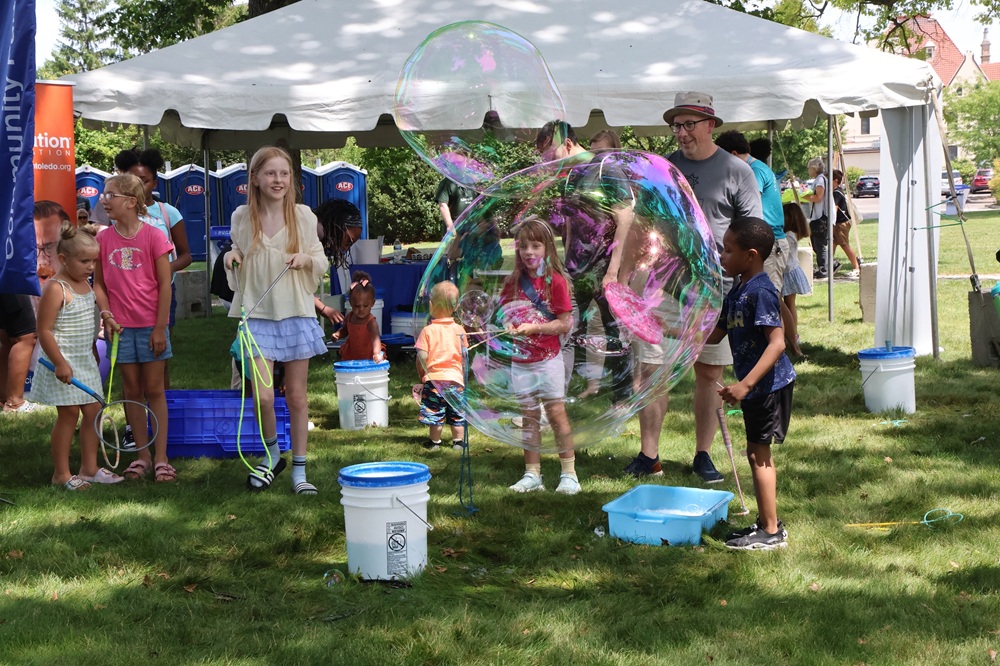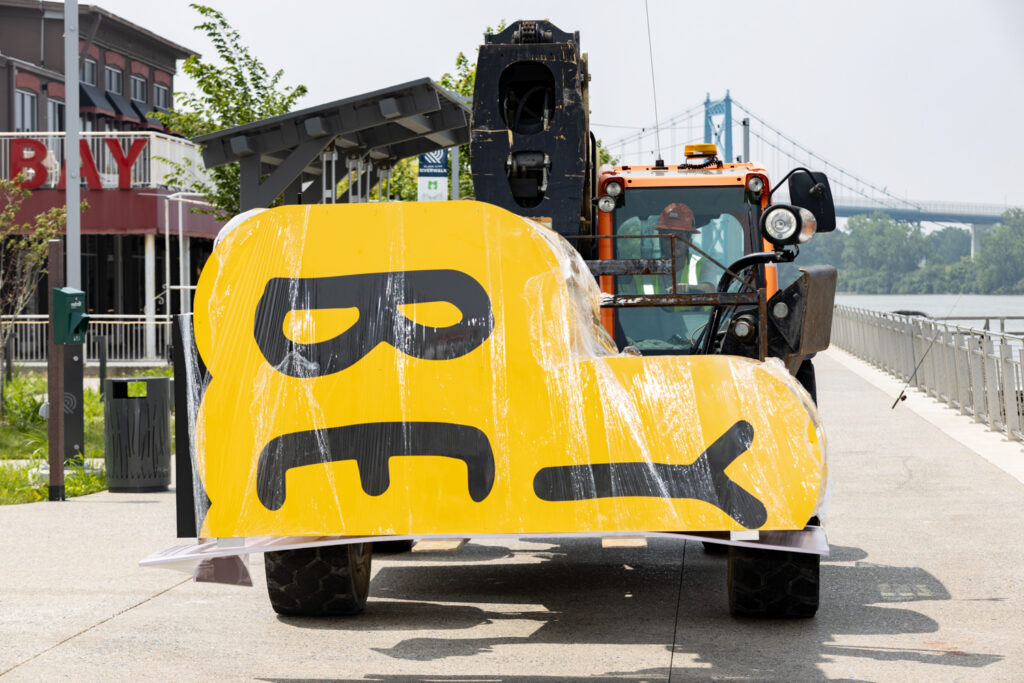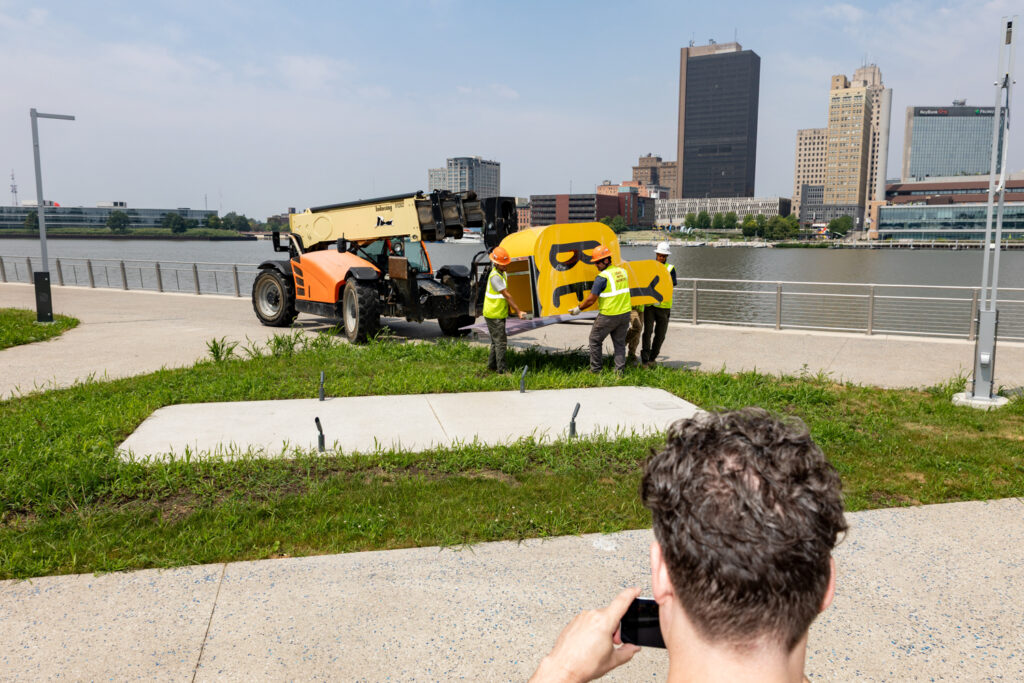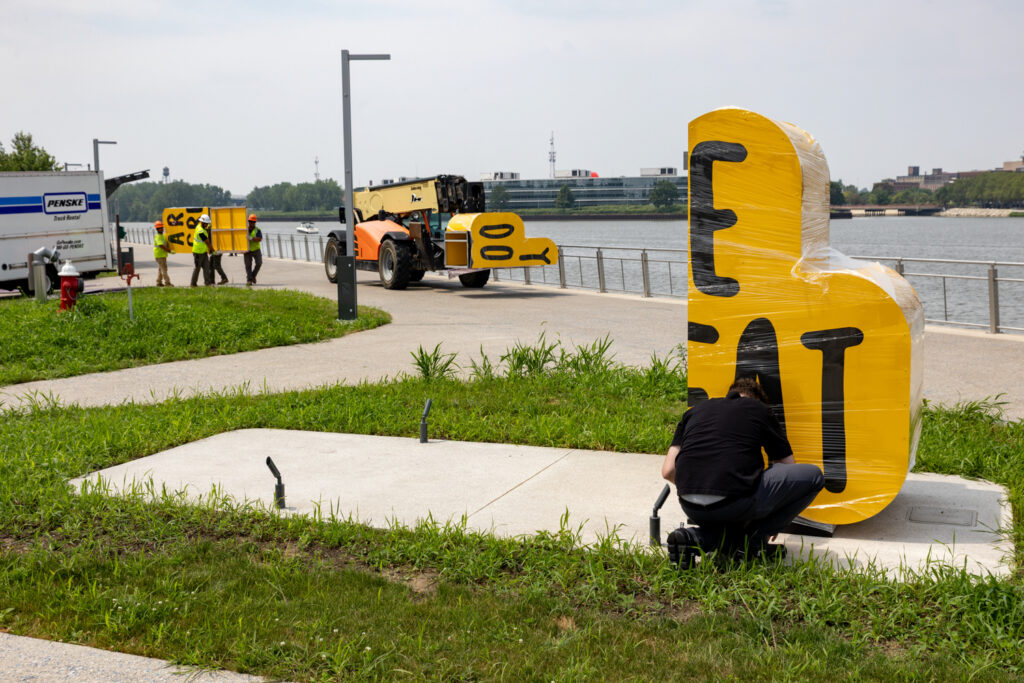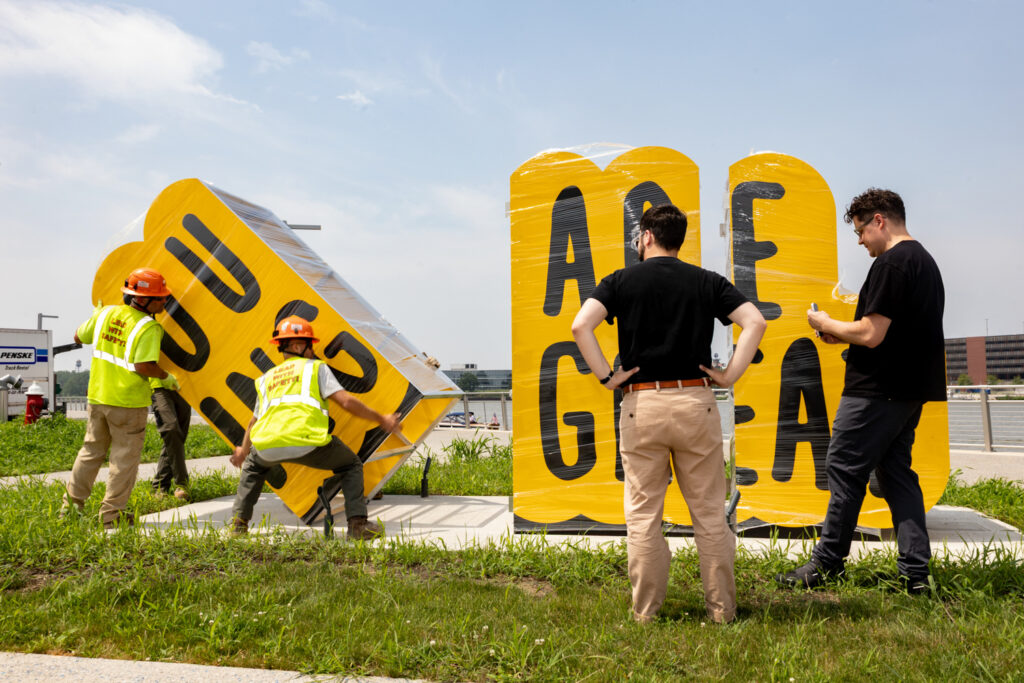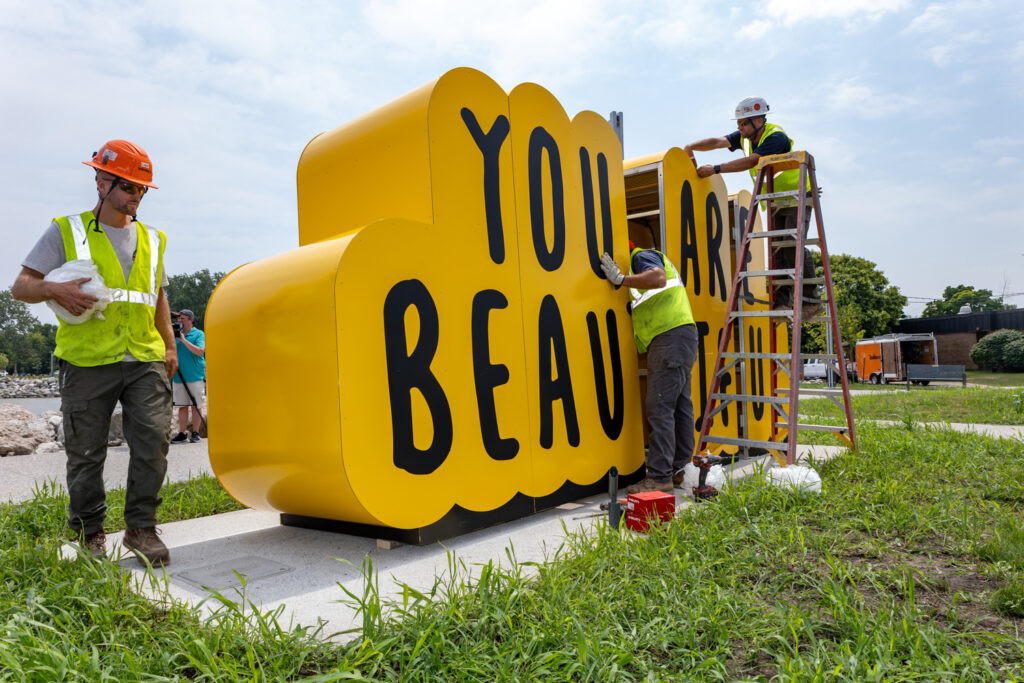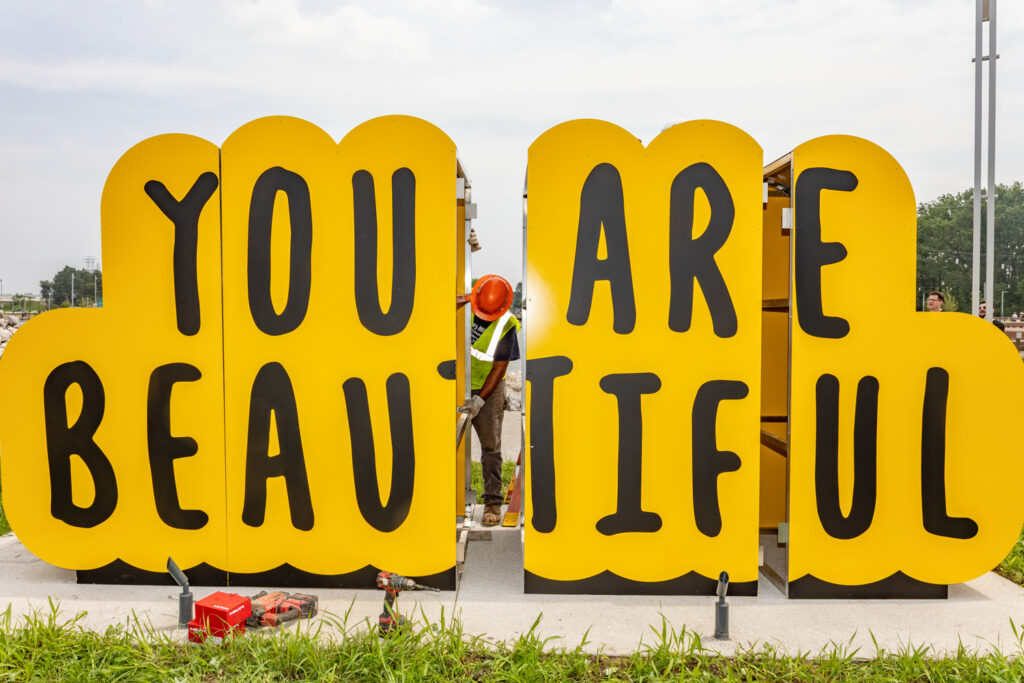
TOLEDO — Two important milestones converged at Ohio’s Homecoming & Picnic on July 11, as the Toledo Museum of Art hosted free community festivities in coordination with the America 250-Ohio Commission to mark the nation’s anniversary and 125 years since the institution’s own founding in 1901.
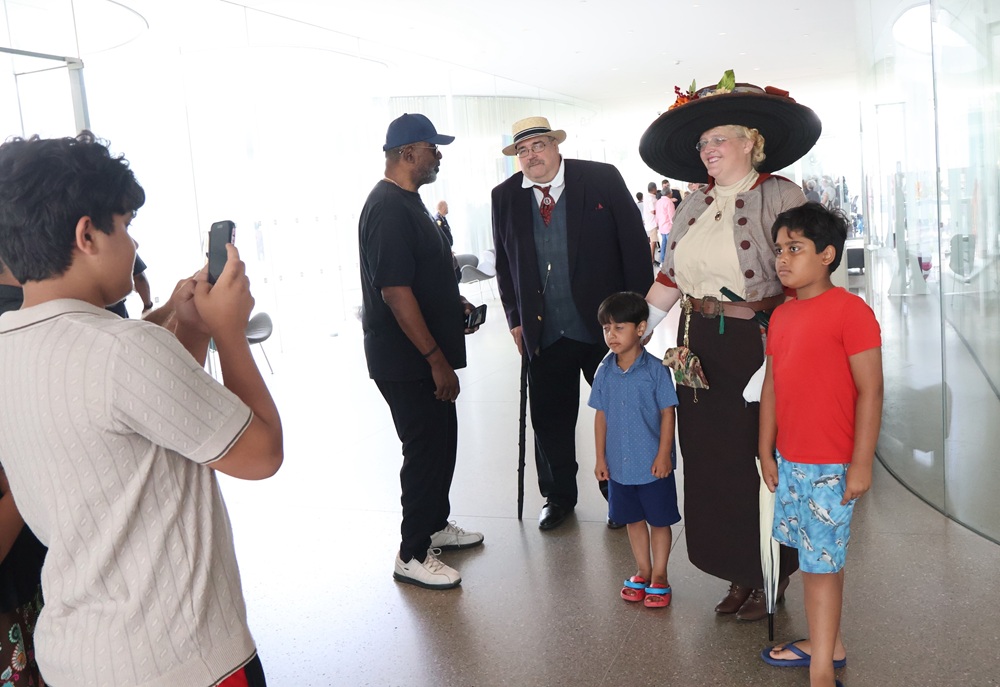
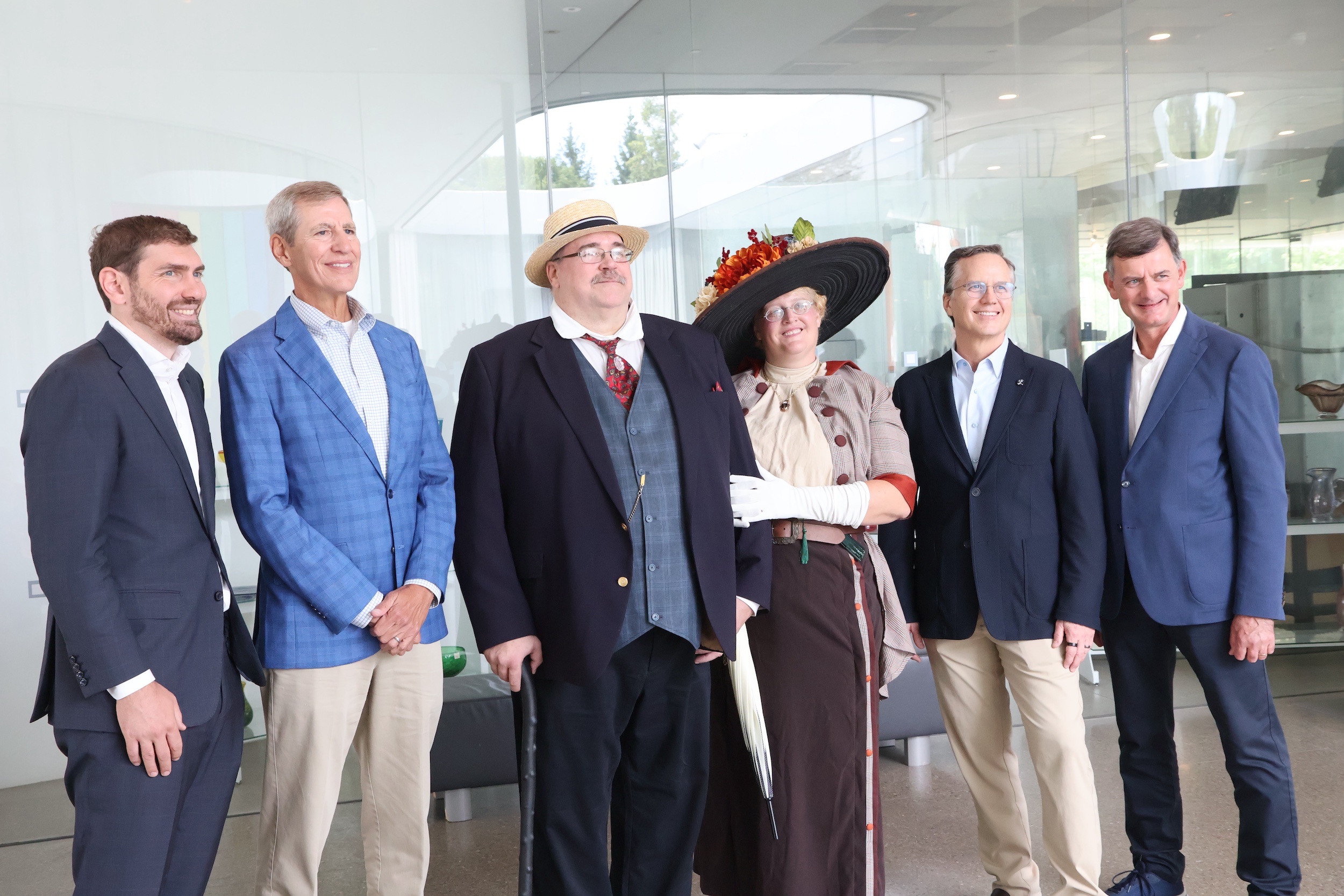
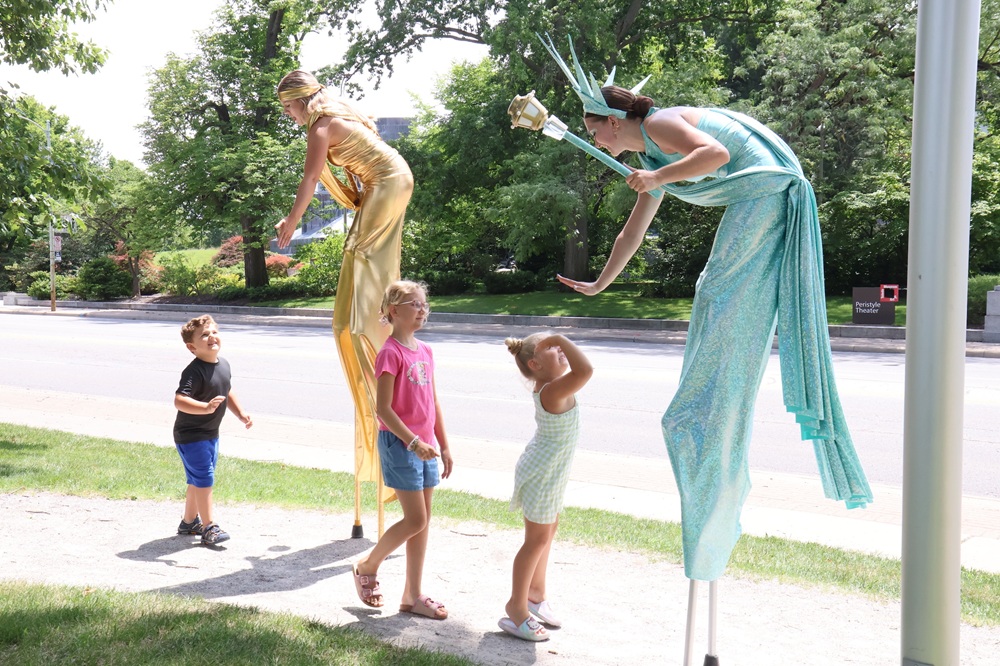
The day brought three museum directors past and present together for a candid conversation moderated by Libbey Inc. CEO and TMA Board President Mike Bauer. While the directors recounted memories from their tenures and discussed the museum’s evolution before a rapt crowd in the GlasSalon, families frolicked outside on the Glass Pavilion lawn playing games, making art, watching historical demonstrations and listening to live music.
Panelists included Adam Levine, the museum’s 11th director since he assumed the role in 2020, and his two predecessors, Brian Kennedy and Don Bacigalupi. Kennedy directed the museum from 2010 to 2019 and Bacigalupi served from 2004 to 2009.
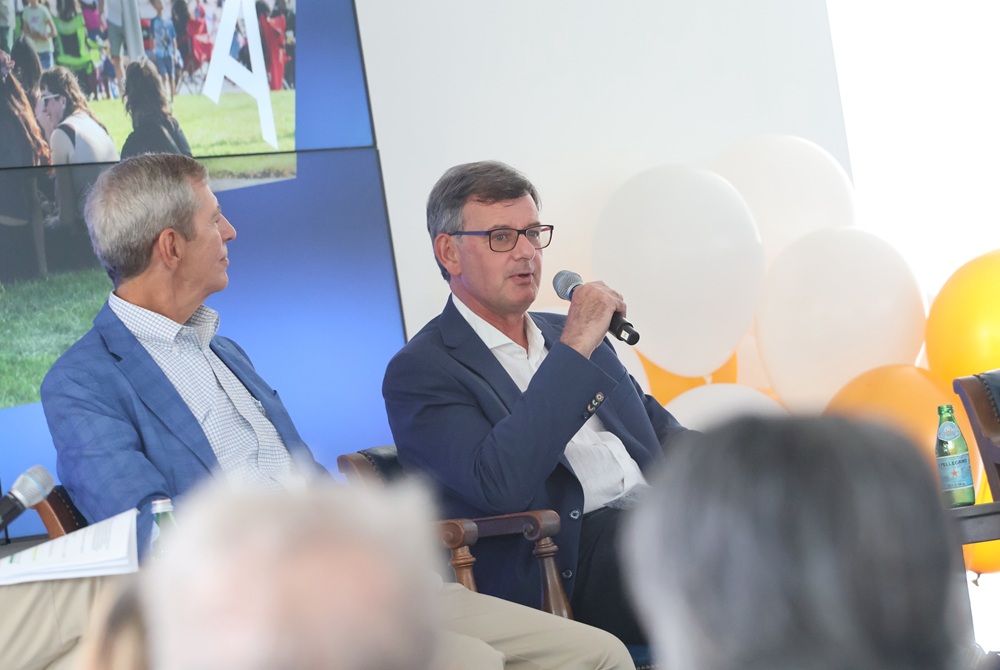
During his time as director, Kennedy recalled, he liked to say that the museum didn’t happen — it was called into being by its founders, Edward Drummond Libbey and Florence Scott Libbey.
Mrs. Libbey encouraged her husband to establish an art museum for the enrichment of the community, and the couple provided the land, funded much of the iconic construction on campus and donated their own personal art collection to the endeavor. An endowment fund from the Libbeys continues to fund museum operations and the purchase of works of art.
Kennedy said the Libbeys were people of the Gilded Age who brought the eye in design together with the hand in manufacturing to make something extraordinary.
He encouraged people to consider what the founders were trying to do when they started the museum, and not to lose that. “They were very, very remarkable people. And they set off this notion of art education, and Toledo is the beneficiary for generations now,” said Kennedy.
All three directors touched repeatedly on the importance of increasing community engagement during their tenures.
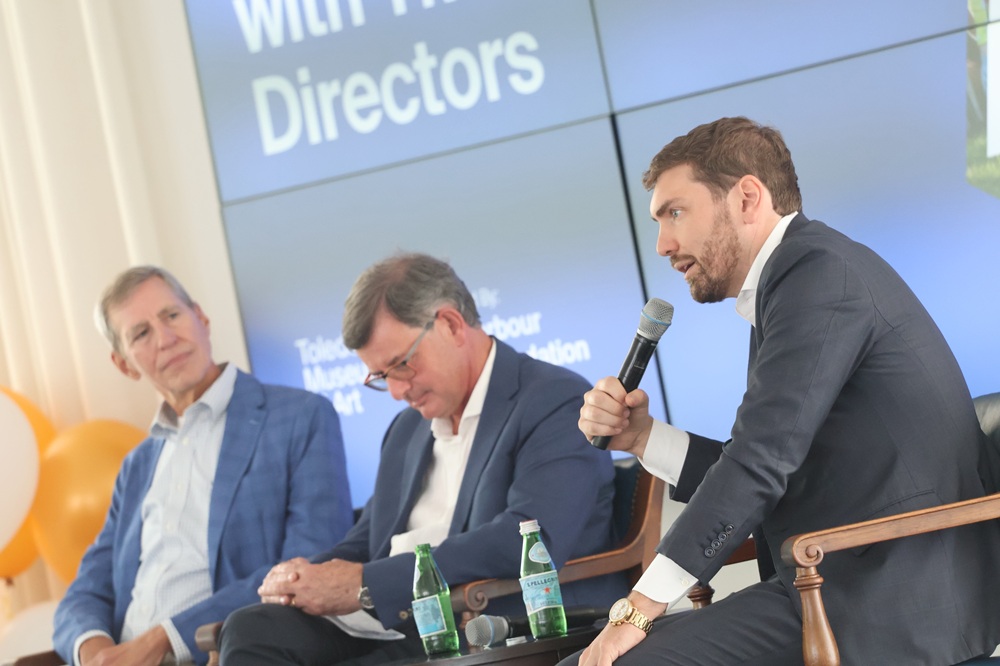
When he first arrived at the museum and began talking with residents, Bacigalupi recalled his surprise and concern at observing a disconnect between the passion Toledoans expressed for the museum and how often they visited. He set about exploring ways to make the museum more accessible and open, and recalled the marketing campaign his staff developed. Banners and billboards utilized colloquial language with messages such as, “Come on in to your museum,” and “Come up and see me sometime.”
“It was kind of a different voice that the museum could speak in, that wasn’t up on a hill and up a marble staircase, but was, in fact, in the language parlance of the community which is, I think, the best language for this museum to speak,” said Bacigalupi. “It doesn’t mean that we, in any way, disrespect the scholarship and the quality of the museum and its history, but it does open its arms to a broader community.”
The museum’s annual Juneteenth celebration also began under Bacigalupi’s tenure, the idea growing out of his own experience at celebrations during his formative years in Texas and conversations with African-American staff members. It further evolved under Kennedy’s leadership into the block party the museum hosts annually in conjunction with the holiday.
“We are constantly evolving toward this greater sense of community engagement,” said Levine. “We’re sitting in a building that didn’t exist until 20 years ago, using a template that Don developed for the first Juneteenth celebration, that Brian perfected in the block party for getting the zoning, and getting the permit and getting the tents, right? … So we are always sort of standing on the shoulders of people who came before.”
Broadening the collection
Levine credited his two predecessors with the role they played in creating the contemporary art program at TMA.
“The debt of gratitude that we should have to both Don and Brian for getting the governance frameworks in place and changing the culture, to think about finding quality as a global phenomenon, both temporally and geographically, cannot be understated,” he said.
Levine said one of the first exercises Kennedy did was to put pins in a map representing the origins of the museum’s artwork, to see what regions were missing.
“Because there’s great work from those places, and a huge part of building a collection that causes people to feel reflected is just trying to find the best art, which is what we’ve always done, but from anywhere,” said Levine. “It’s really these two gentlemen that started to put some sense of systematicity around what had been a superlative collection, but really was very director-driven.”
After the museum hosted an exhibit of Aboriginal Australian art in 2013, Kennedy said people began asking why the museum did not have any Native American art in its collection. This led to the museum making a concerted effort to expand its collection of art made by indigenous peoples, with a particular focus on Native American art.
Kennedy also recalled a moment during the 2016 Jaume Plensa exhibition, Human Landscape, that brought home the significance of the decision to place “Paula,” a giant cast iron head, in front of the museum. He stopped to talk with a man who was walking up the steps with his young daughter, and the man told him, “Thank you for putting a black woman in front of a white museum.” The piece remains on display in the Sculpture Garden today.
Bringing art to everyone
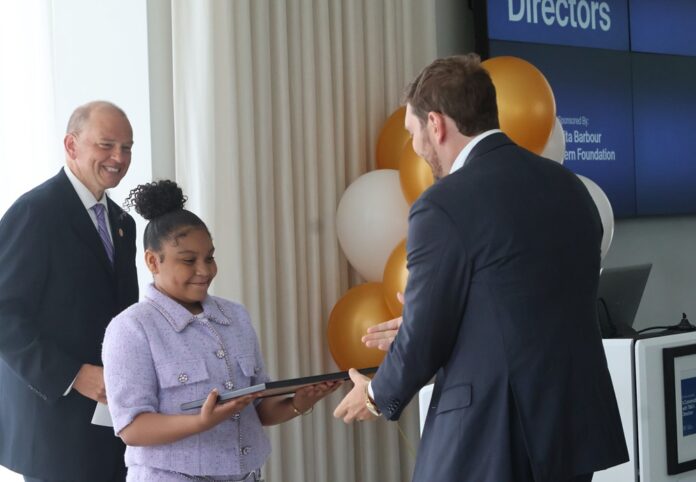
Toledo Mayor Wade Kapszukiewicz was on hand at the panel with this year’s Kid Mayor, 10-year-old Jamie Howard of Ella P. Stewart Academy, to present a proclamation in honor of the museum’s 125th anniversary. He acknowledged that TMA has been named the best museum in the country for the past two years.
The mayor also noted that admission to the Toledo Museum of Art has been free since 1901, making it a place that “everyone can enjoy, regardless of their background or their means.”
“Anything that can bring art to the people, to everyone, is special,” said Kapszukiewicz. “Toledo Museum of Art, truly, is among the best museums in the entire country, and I might even say in the entire world.”