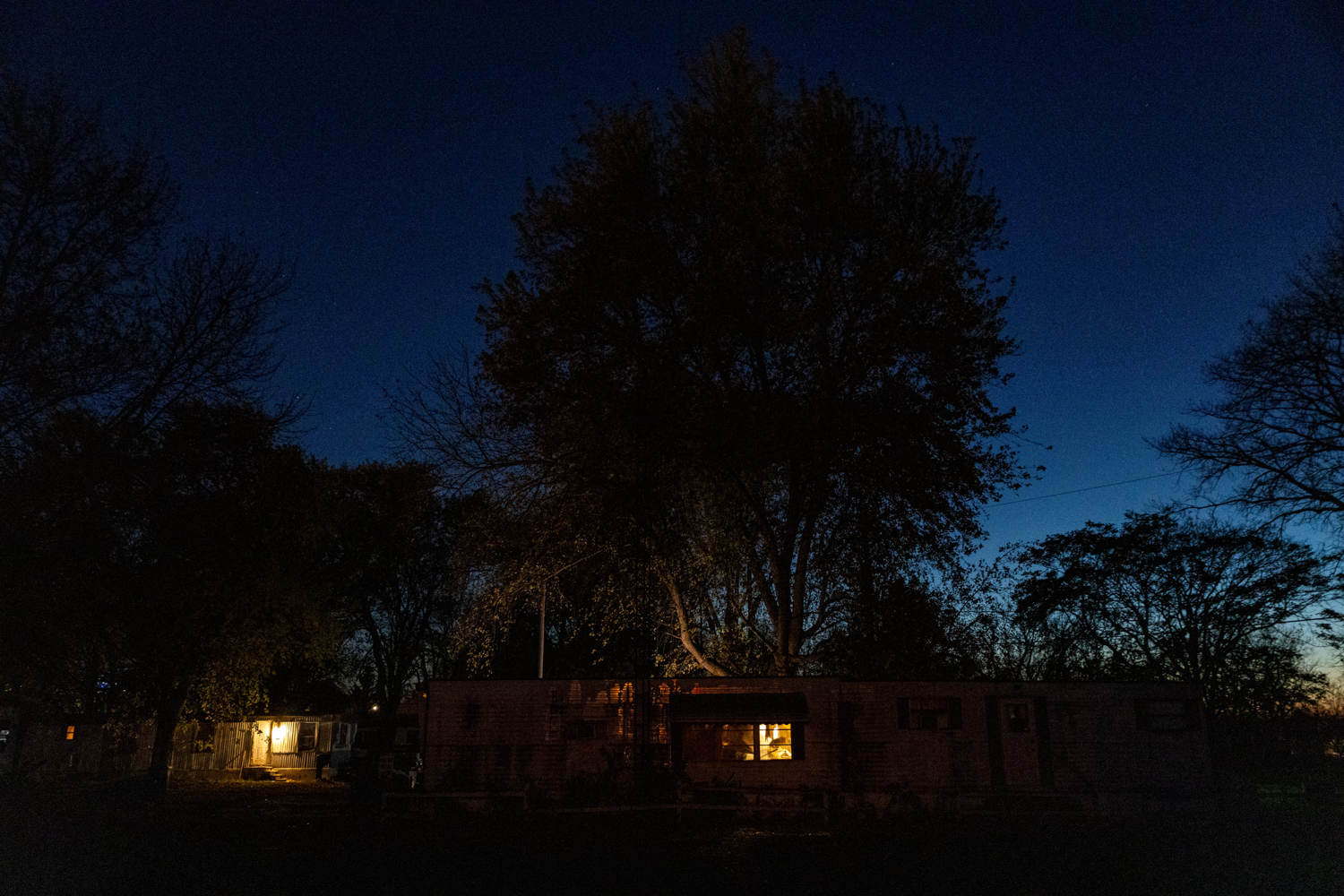
TOLEDO – Green spray-painted letters on the side of a trailer home warn passers-by to “Keep Out” of the Riverside Mobile Home Park, just outside of downtown Toledo.
Six months on from the city shutting down the park, the graffiti speaks louder than the infinite “No Trespassing” signs across the three rows of rectangular homes laying cracked open with fiberglass insulation oozing out of them.
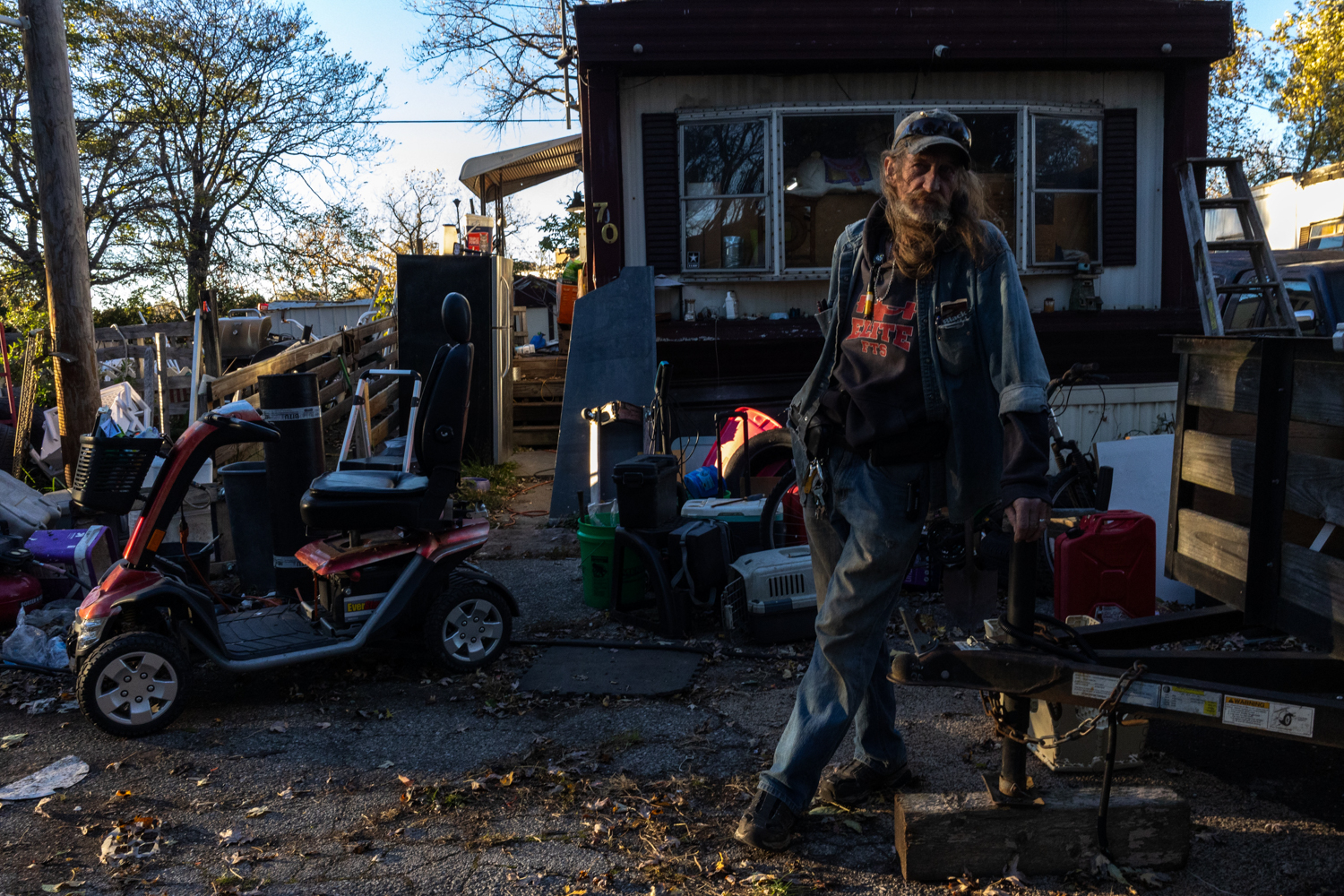
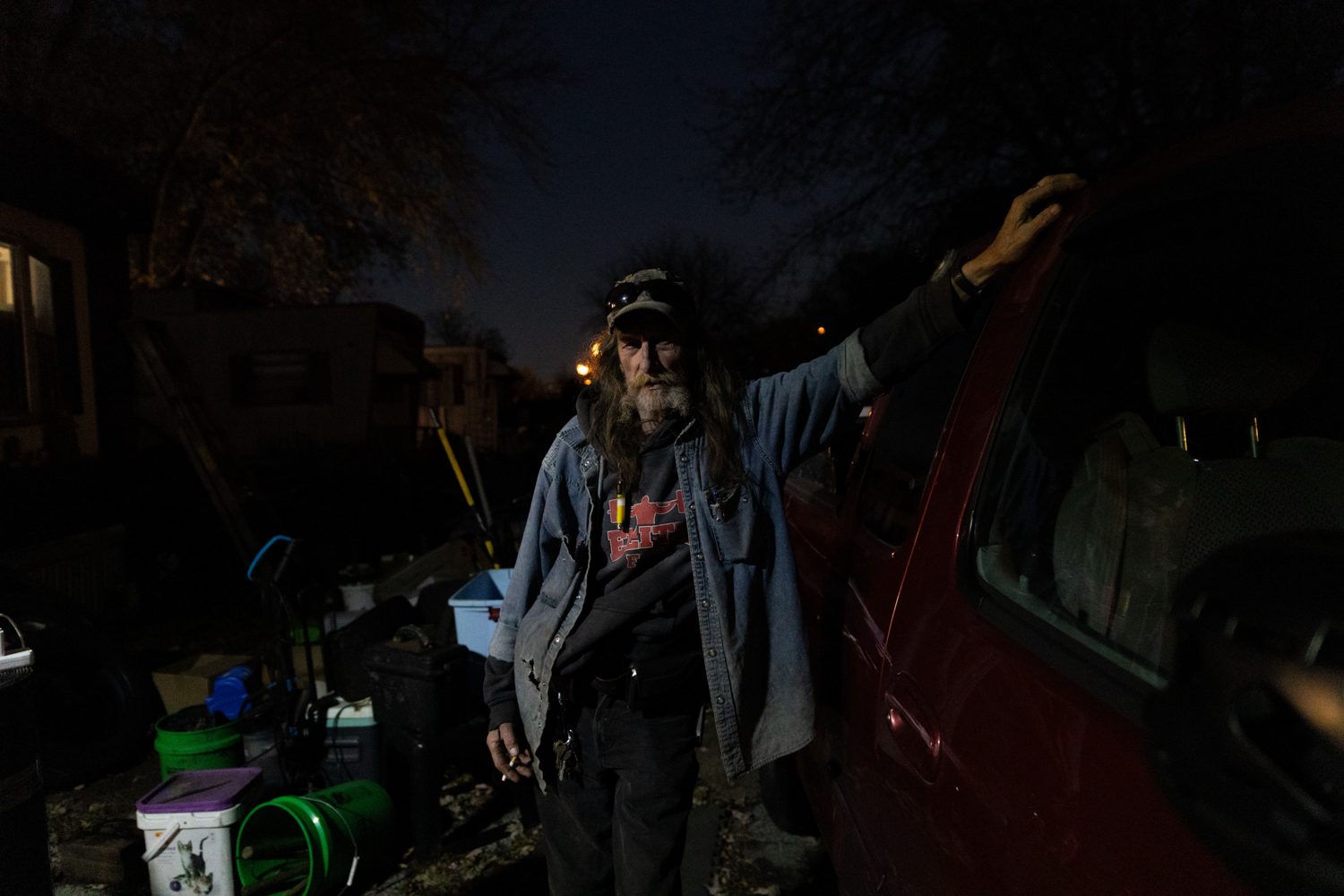
“Time is getting short for us,” said Charles “Chuck” Parker, 66, who has lived at Riverside for the past five years with his wife and adult son. “I’m just waiting for them to come knocking on the door and tell us that we gotta’ go.”
Technically the city told Parker and others to move out months ago, but have allowed Parker and other residents with more complicated living needs to stay while they look for new housing. Soon, however, the city is going to demolish the park in the latter half of November.
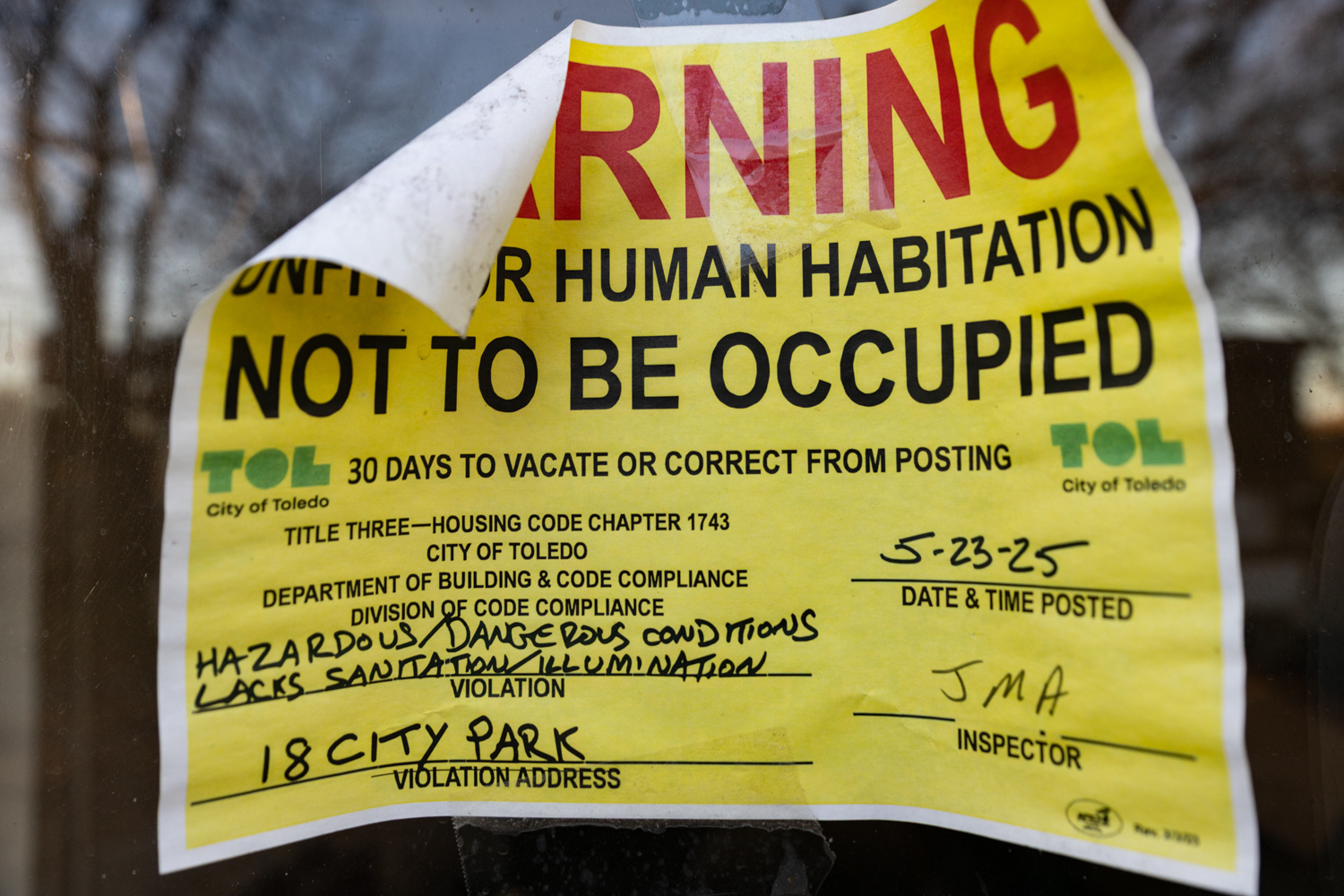
White papers are attached to just about every trailer with their own personal list of code violations: “Unsafe Conditions, Plumbing Systems and Fixtures, Sanitary Drainage System, Heating Facilities and Electrical Systems Hazards,” read some of the code violations on individual trailers.
When the city first declared Riverside uninhabitable, people stopped paying rent, and the absentee landlord, out of Illinois, attempted to evict tenants who weren’t paying to live in a condemned trailer park.
Parker was keenly aware of the failure of owner Ernesto Garcia to upkeep the property.
When first talking about the reason for the park’s shutdown, Parker pulled up exhibit A, a sampling of the decades-old ceramic plumbing lines running underneath each trailer home.

“These are from the 50s,” he said, holding the piece that appeared to be made of concrete and clay. “There’s a lot of busted water lines in here…because the trees plugged it up.”
“Trees love sewage; it’s like candy to them.”
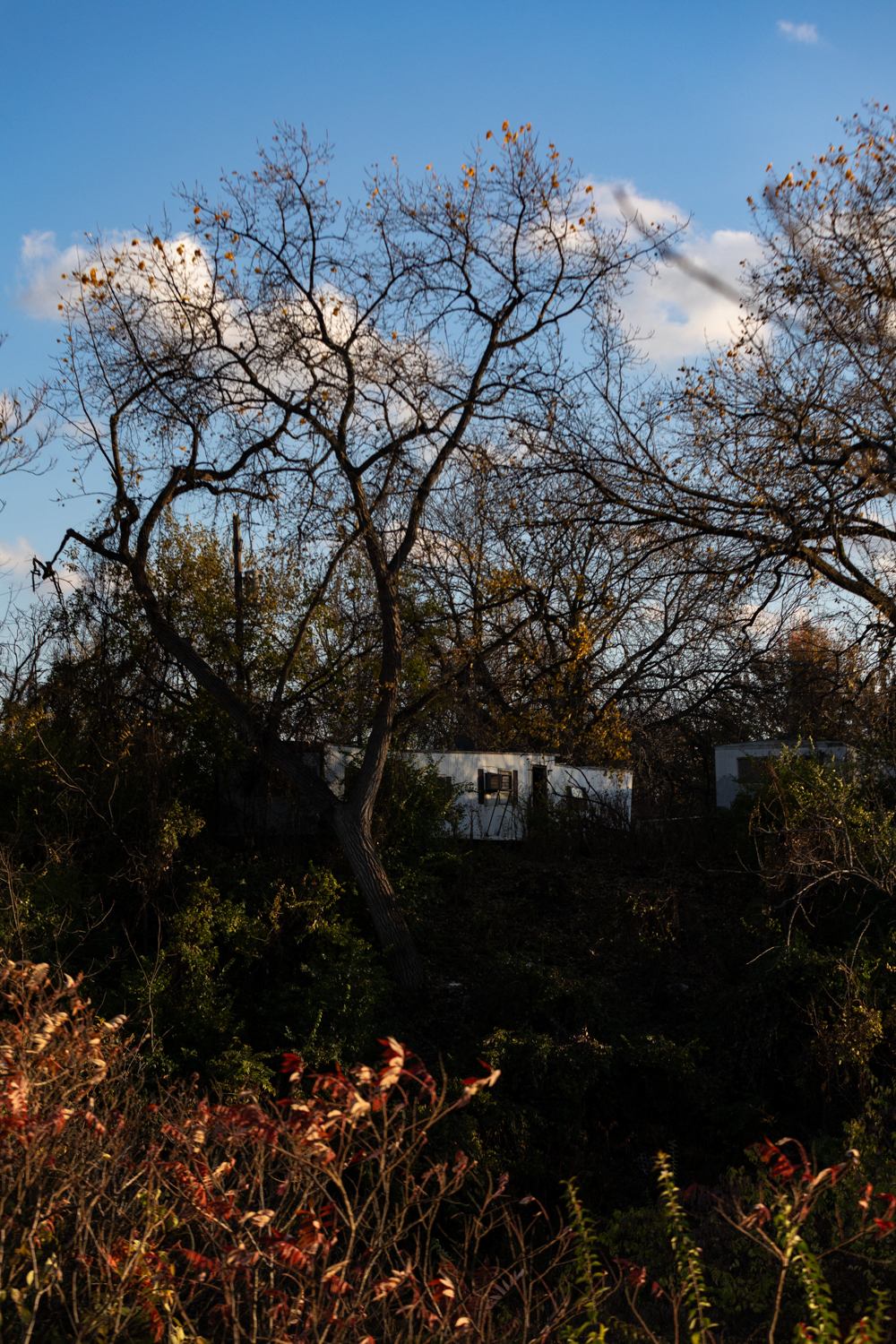
Here Parker and his partner of 38 years, Carol Kelly, 59, live off the beaten path, each with their own trailer home, and in between is a home that has collapsed in on itself, and the trees have blocked up the sewage.
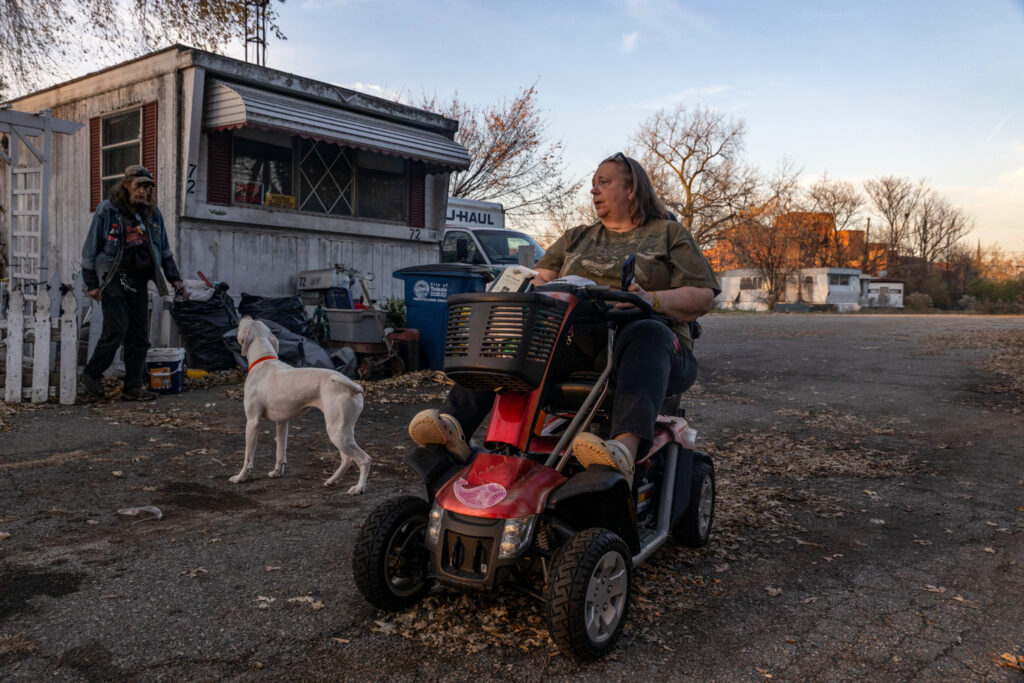
Nevertheless, the homes he and his partner occupy are “in a lot better shape than when I bought it,” Parker said. A few thousand dollars for each mobile home bought the couple a place to live, but they had to put in work to make them livable.
“There was no electrical working in here. The plumbing was all messed up. Same thing with that one,” he said, motioning to his wife’s trailer.
“I put a whole new bathroom in this one,” he said. “They don’t give a shit.”

For years, Parker has tried to make a bad situation better, but hasn’t seen much benefit.
“This has been a very long running issue at Riverside,” said Paul Redrup, an attorney with Advocates for Basic Legal Equality (ABLE), who has been watching the residents of Riverside struggle to get help since April of this year.
“Folks kind of moved out in phases over time.”
But before people started to leave, Garcia sold the park to a woman, and then he bought it back from her, “and over the course of her ownership, and then his re-ownership it just degraded over that period of time.”
Written and unwritten code
Parker and his wife Kelly said the city got involved when the owner tried to evict a fellow tenant of the park, Willie Smith, for not paying rent. According to their retelling, Smith complained about a lack of electricity and sewage to his trailer, and then stopped paying rent.
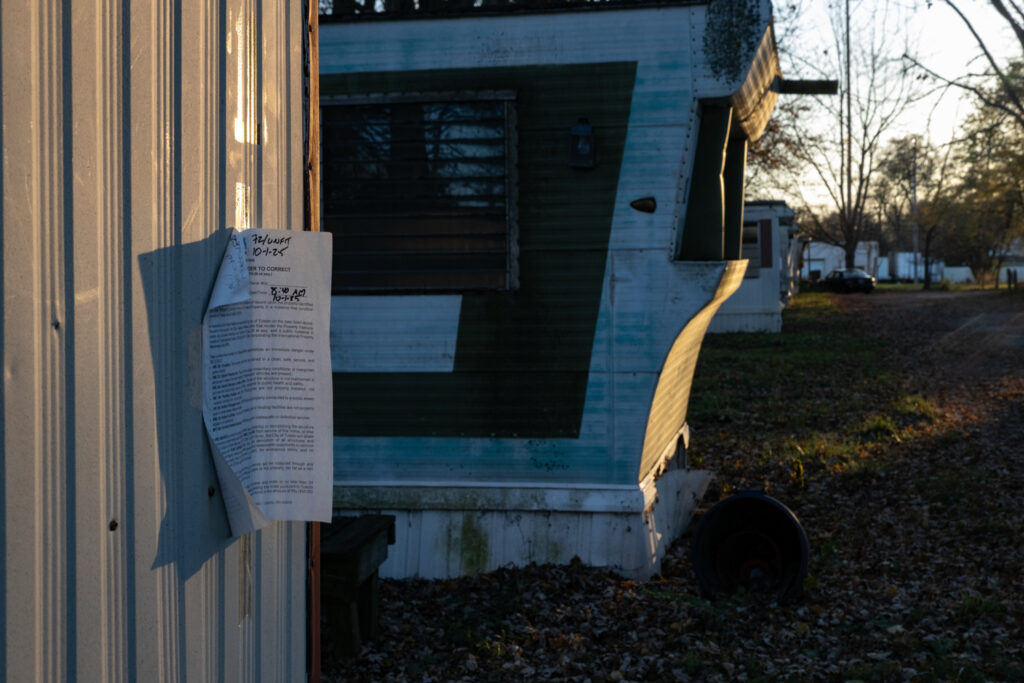
When the owner tried to evict Smith for not paying, Smith reported code violations, and the City of Toledo gave Garcia a list of updates the park needed to make to remain open.
By this time, Parker and his wife had become unofficial employees for the absentee landlord, “Basically we were being the managers, but we weren’t officially the managers,” Kelly said.
“When the city started coming down on things in here. He [Garcia] hires these people off of Craigslist to come out here,” she said, and Parker and Kelly would try to instruct them on what needed to be done, without success.
“They’re like, getting high, walking around with liquor bottles,” she said. “I mean literally, it caused more problems than what it solved.”
While the couple admits some of the trailers were dilapidated over a year ago, they made the best of a difficult situation.
Both Parker and Kelly live off of disability, with Kelly barely able to walk even with the use of two canes, and Parker with intense back pain he generally works through.
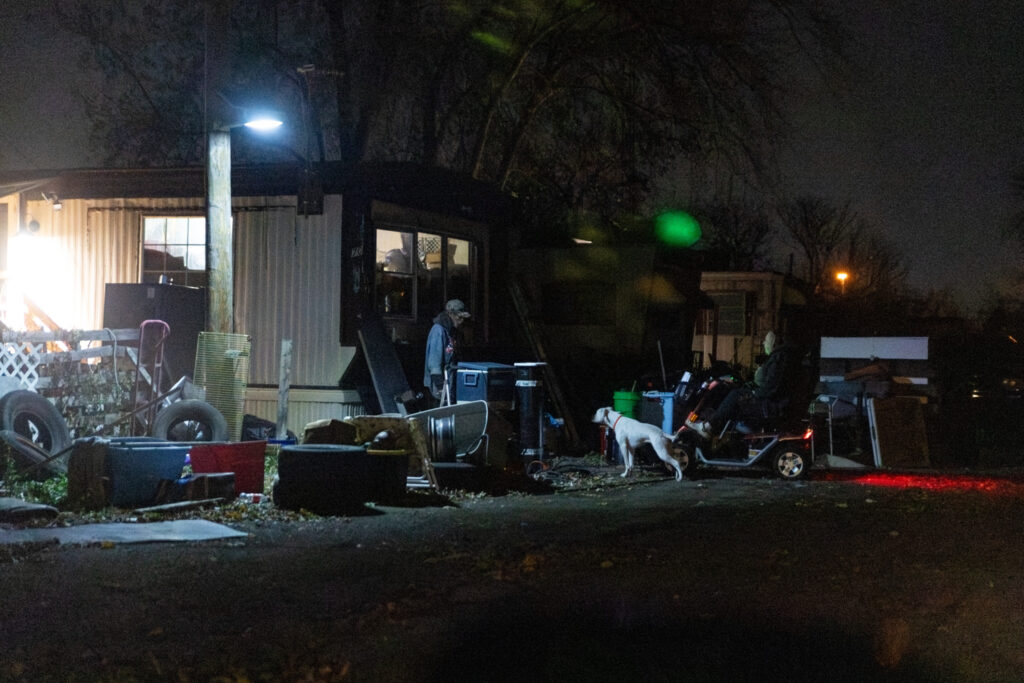
The couple were invested in staying in their trailers, and trying to fix up the park to make it a livable situation for their community.
Redrup said, “The owner would – I wouldn’t say continuously, but frequently – would reach out to Chuck and Carol and try to use Chuck as a conduit to, I think, try to retain ownership of the Park, but without actually fixing the issues.”
“I don’t know where he was finding folks,” he said about the hired help, but clarified that when they tried to cut the tall grass, “they would drive over it [water lines] with the lawn mower, they would break it, and now you’ve got an open, pressurized water line.”
“Now the city pressure is just pumping water out onto the ground.”
Kelly corroborated this story, and remembers significantly losing water pressure.
“The Craigslist guys hit three water lines in one day,” she said. “I couldn’t even use my sprayer.”
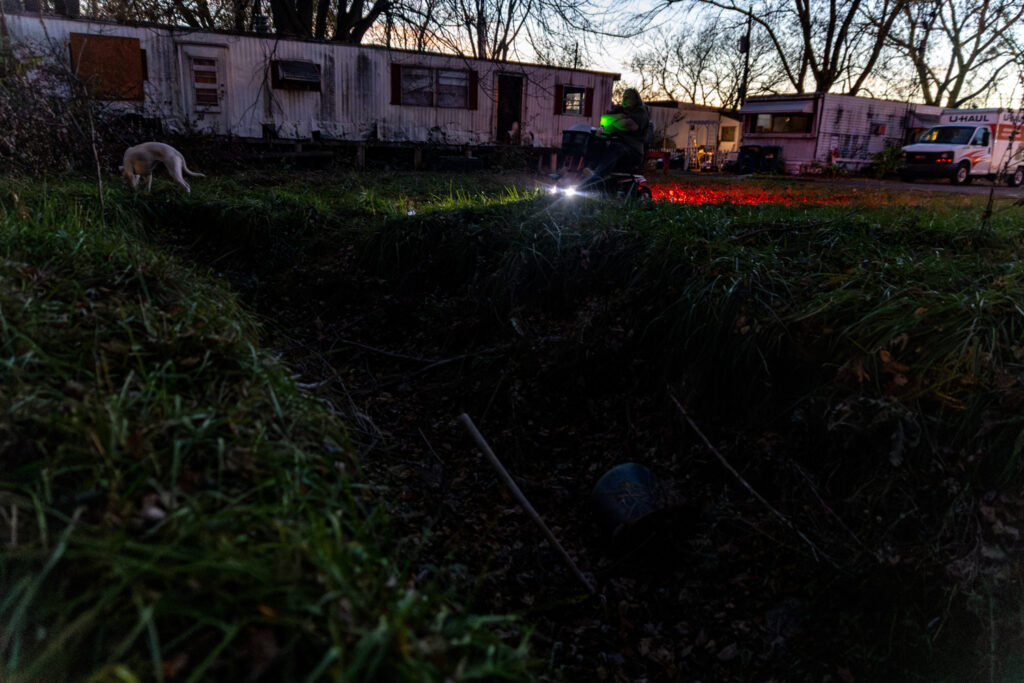
Three open water lines and no one coming to fix them eventually led to over $150,000 in unpaid water utilities, tens of thousands of dollars in unpaid property taxes, not to mention thousands of dollars owed to the county in unpaid land taxes with still no sign of Garcia.
What can be done?
Other problems with Riverside included broken sewage lines, animal infestations, trees falling on trailers and dangerous electrical lines.
“Nobody did anything to hold the ownership accountable [for] not paying the water bill,” Redrup said. “And that’s sort of a pattern of what happened here, this ownership not being held accountable for a variety of factors, and just one of them is the water situation.”
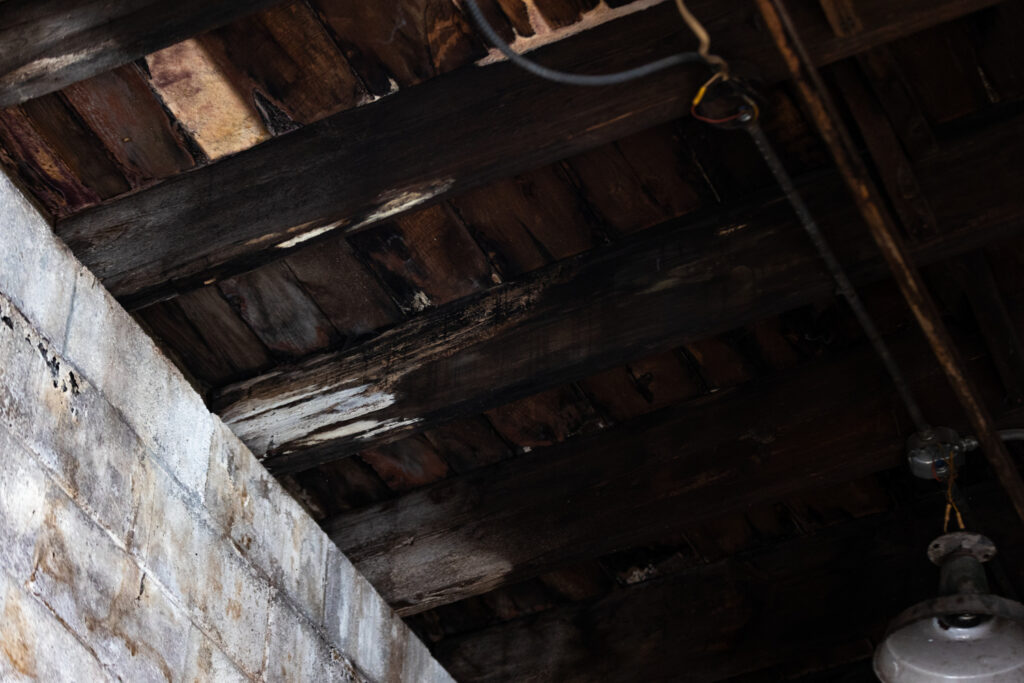
And once the media began reporting on the vulnerable nature of Riverside, Parker, Kelly and Redrup said, “scrappers and thieves” started working their way through the homes.
“There are enforcement mechanisms that are available that I don’t think are being utilized,” Redrup said. “Obviously, not enough is happening.”
Redrup referenced Ohio Revised Code 3767 as a possible way to compel property owners to do right by their tenants.
In layman’s terms, “Take it over and fix it up,” Parker said. “But don’t bulldoze it and make us homeless. You know, that don’t make sense.”
But now, with the park left in such a poor state, the only option may be to bulldoze Riverside.
“Had it been done earlier on, [Ohio Revised Code 3767] probably would have been a very useful tool,” Redrup said.
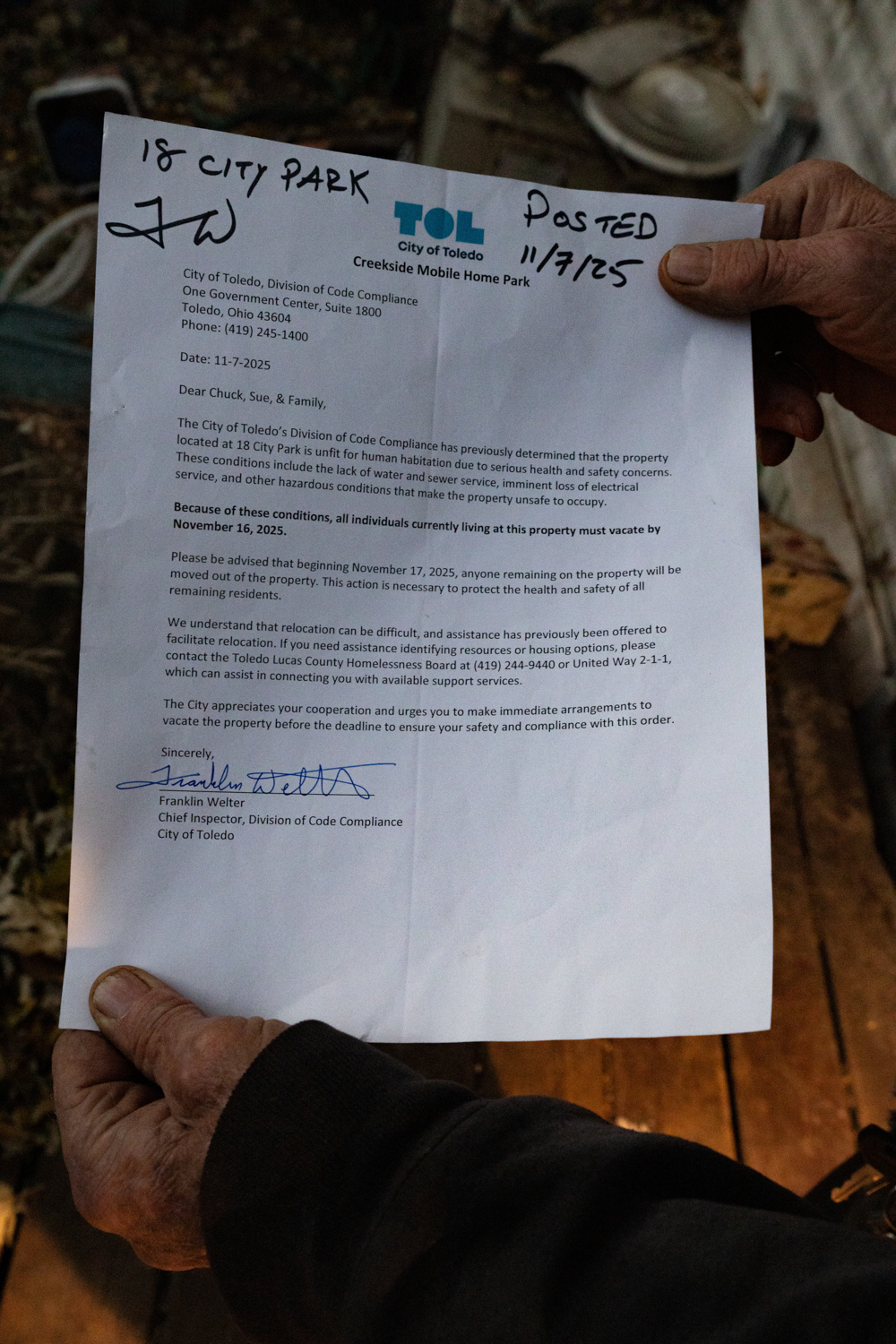
Just a week ago, Parker received a notice about the city moving to demolish Riverside.
“I know one of the reasons why they [the city] went this route,” Redrup said. “It is so bad that it is, I mean, there’s no question, it is a legitimate health and safety hazard to anyone living there.” And then added, “But it didn’t start that way.”
“This could have been handled much earlier in the process; it didn’t have to become what it is now. Could you fix it up? Sure, but the cost to do so is so outrageous at this point.”
Moving on
About a month ago, the city disconnected the water, so Parker started buying water for everyday use.
There are two main households left from the nearly 20 households estimated to be here before the park began to deteriorate at a rapid pace.
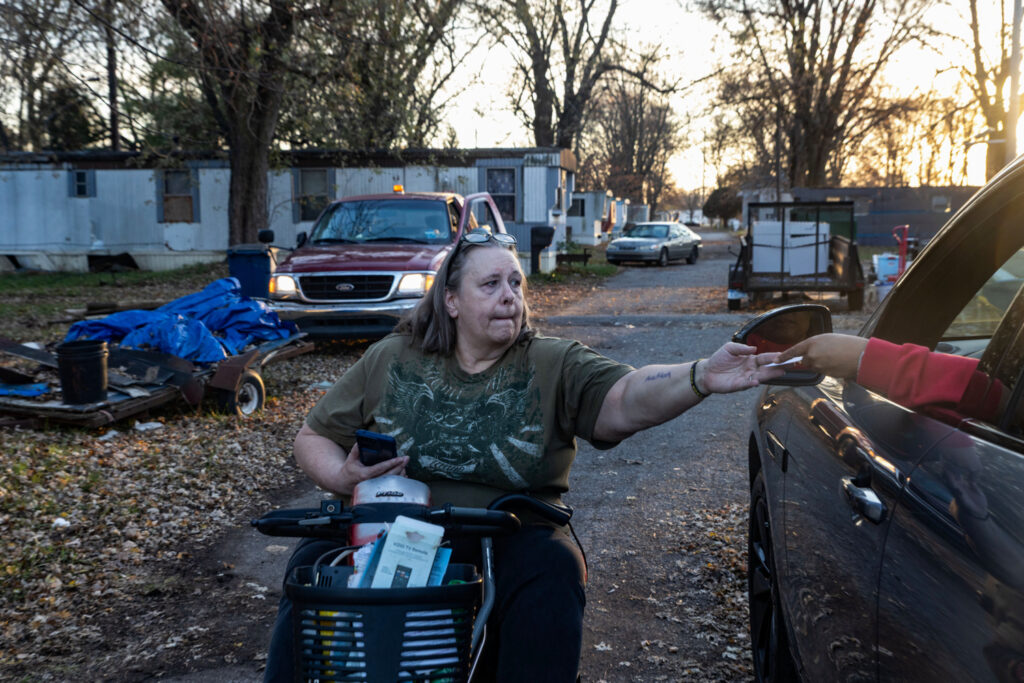
“It was nice to get together and have cookouts and birthday parties for some of the residents,” said Susan Luttrell, 70, who’d been living at Riverside since 2018, and is one of the last households left in the park. “It was just nice,” she mused.
“When I bought this [the trailer] I never planned on having to move again,” Luttrell said of her home at the entrance to the park.

“This is a 1958 [New] Moon,” she said, referring to her vintage trailer. Like Parker, Luttrell invested in her home, “put wiring, plumbing you name it, just about 1,000s of dollars, because it was a fixer-upper.”
Other trailers may not have had water or sewage, but Luttrell and Parker paid/or installed those amenities themselves, along with electricity.
“The problem with owning these is they’re too old to move,” Parker said, plus, “Nobody will let us bring them into their park.”
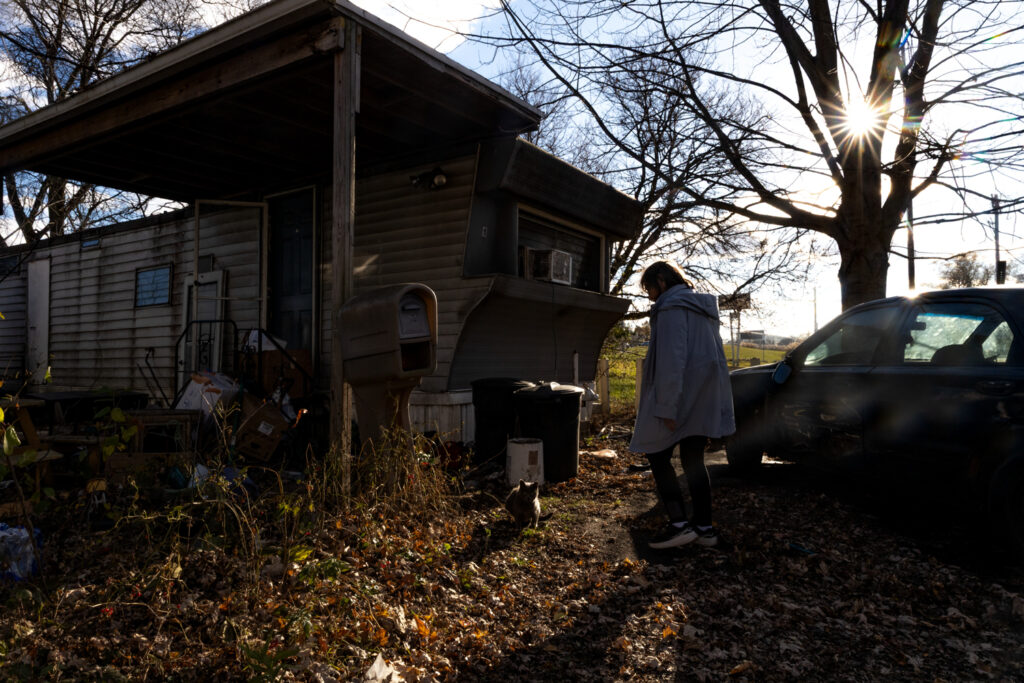
Charles Parker and his wife’s homes are a little newer, but the fact is, the mobile homes aren’t very mobile. Both Parker and Luttrell fear the trailers would fall apart if moved.
Luttrell, like Parker and Kelly, is disabled, with back problems. Standing for long hours is difficult for her, and she takes each step up to her home with great preparation.
Back in March, right before the park was shut down, Luttrell had a stroke, but she’d received help from her community.
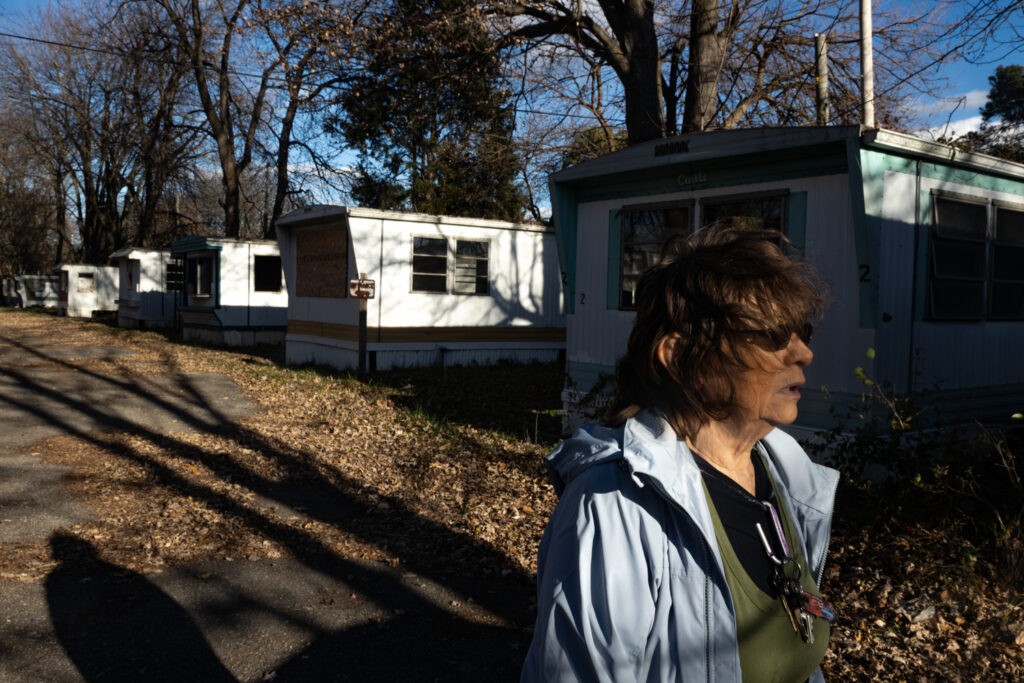

“I go to the grocery store on Broadway. The owners, three owners, they all know my first name,” she said. “One day, one of them pulled me aside. He said, ‘Susan, if you ever need any food on credit, we’ll do that for you.’”
“I’ve been going there for 25 years; it really surprised me,” she said. “‘We’ll run you a line of credit.’ And I never asked.”
In the meantime, Luttrell has thought about moving to another trailer park, but hasn’t mentioned specifics.
Next steps

Since Parker and Luttrell owned their trailers, this move is a loss for them, which forces them into more expensive living situations.
“I can’t find a place to rent that is comfortable for me,” Luttrell said, summing up the problem current residents of Riverside have found.
Homes in Toledo cannot compare with the $350 a month the residents of the mobile home park paid for their space on the lot.
“The wife sits on the phone all day looking at housing,” Parker said. “It’d be great to find a fucking house and be done with it.”
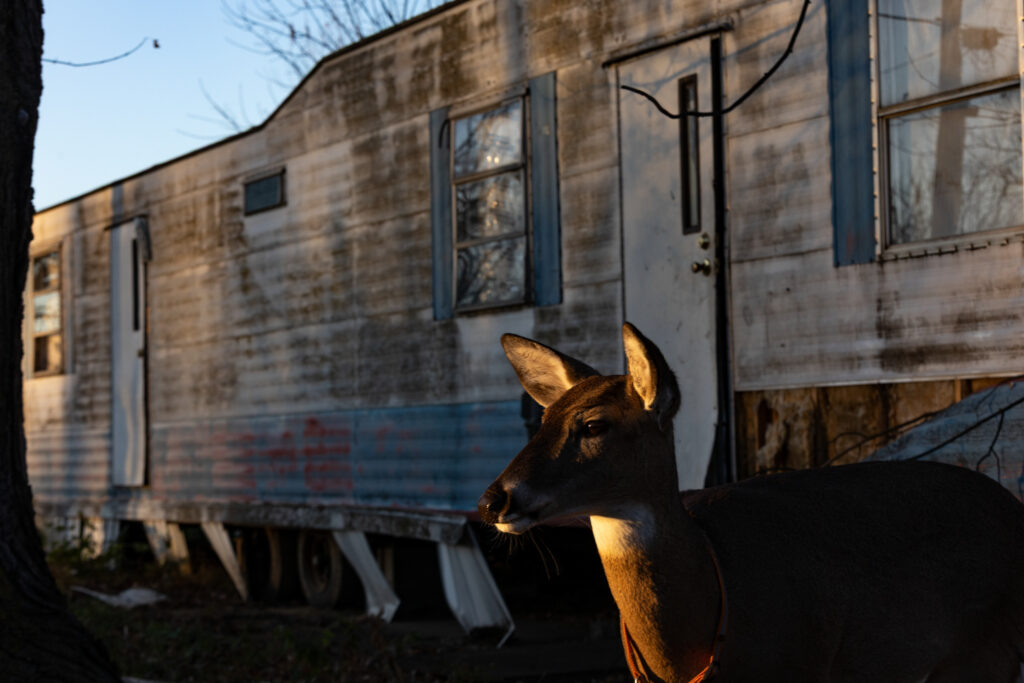
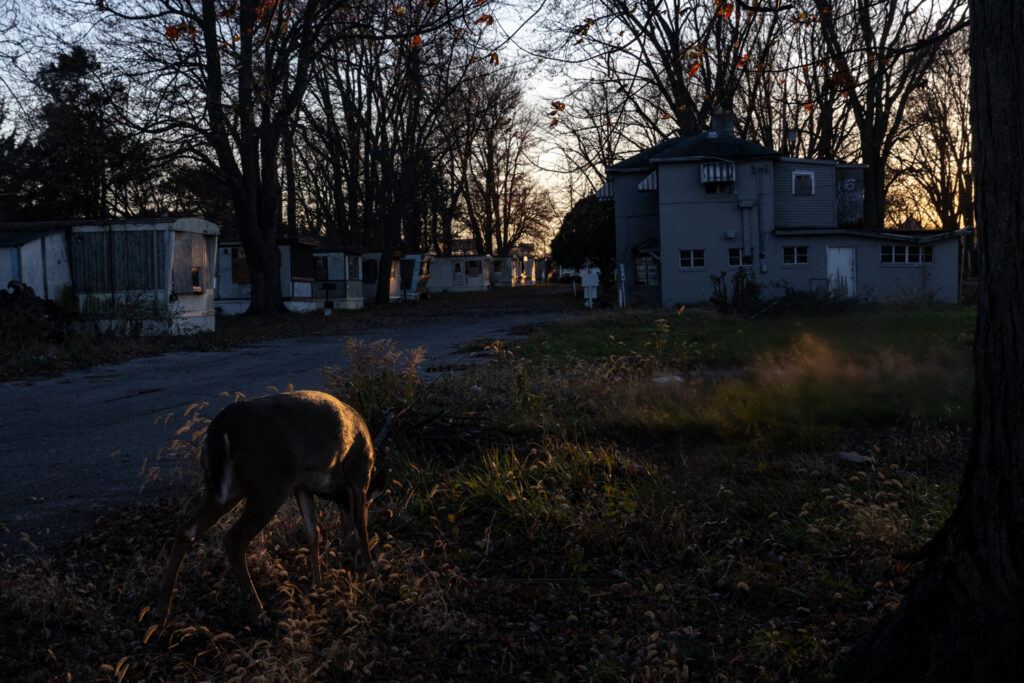
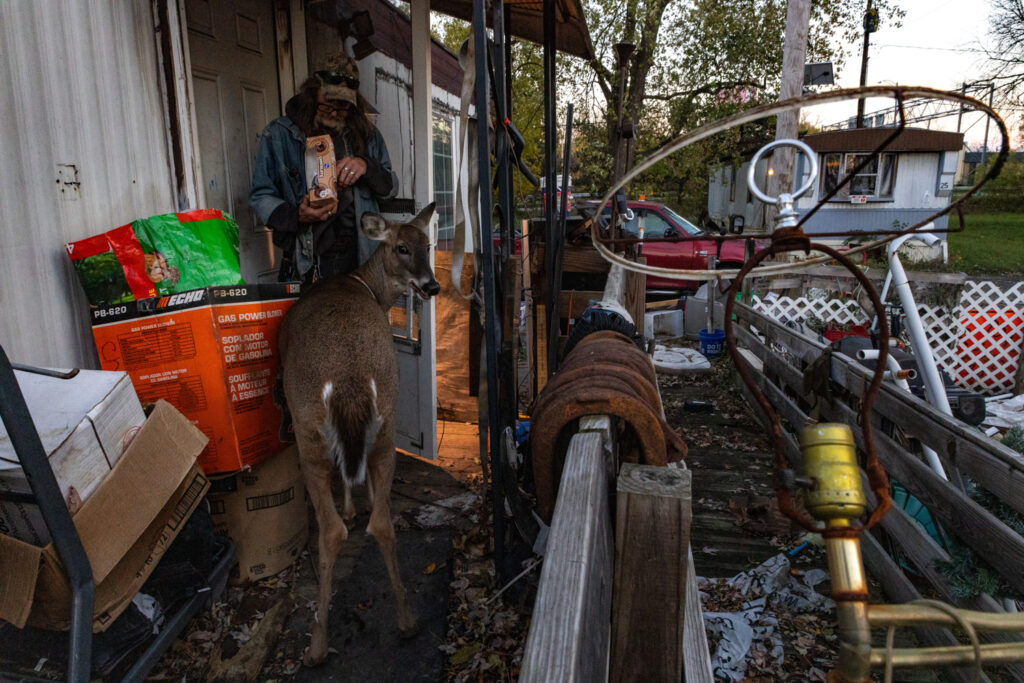
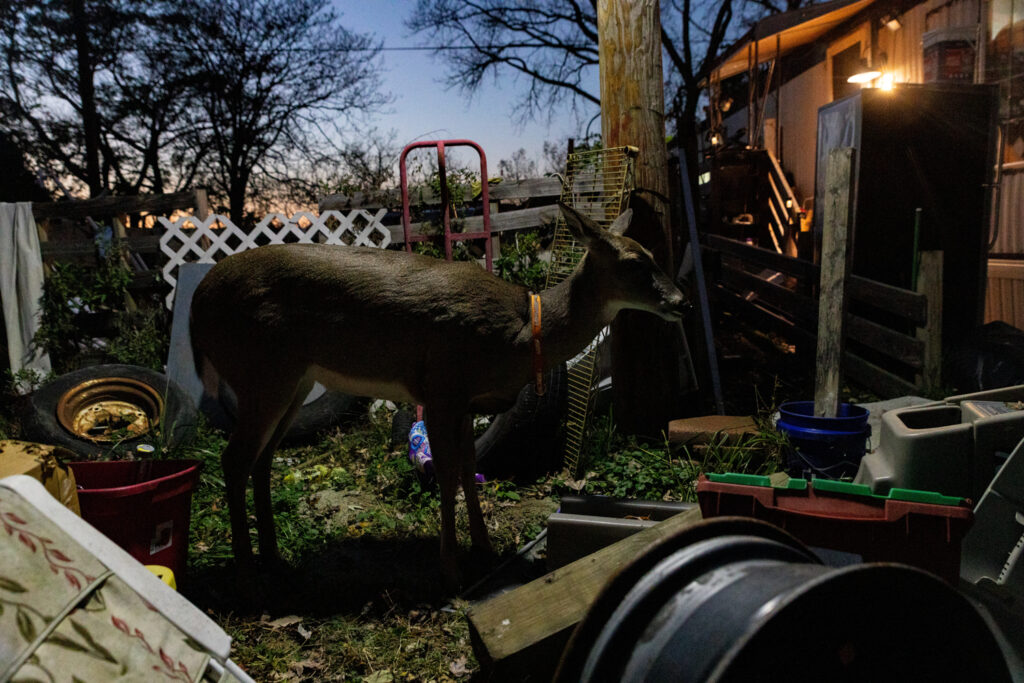
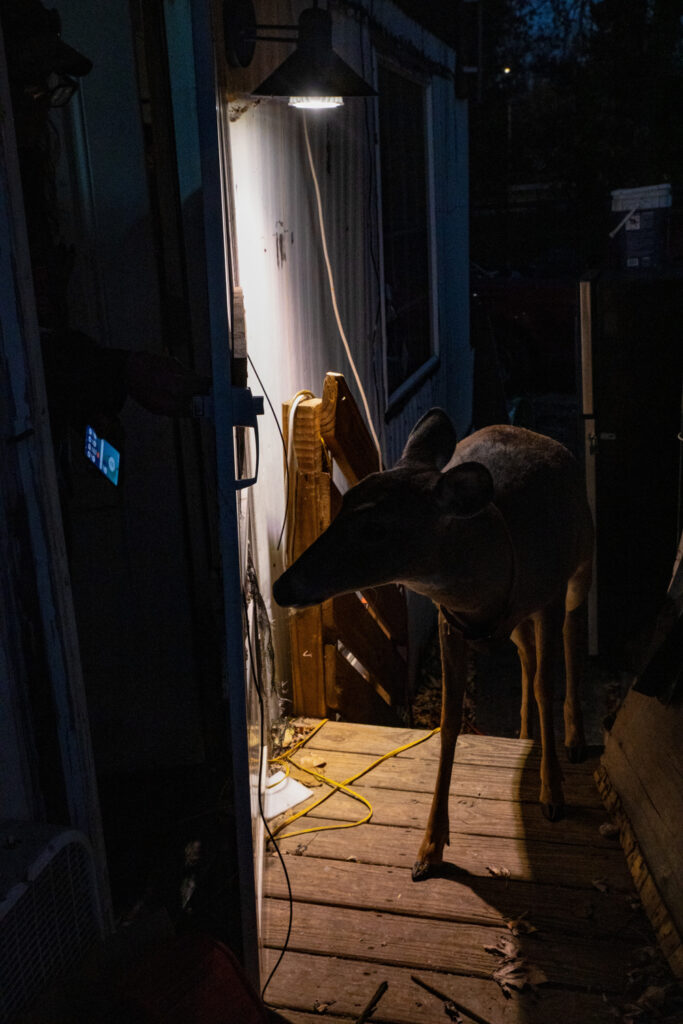
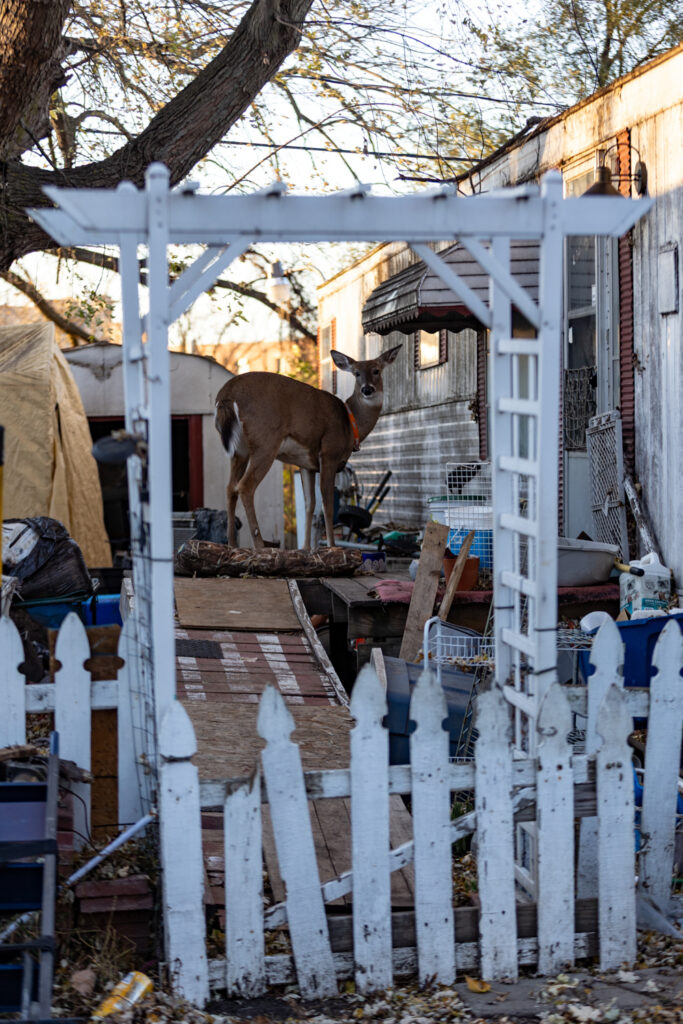
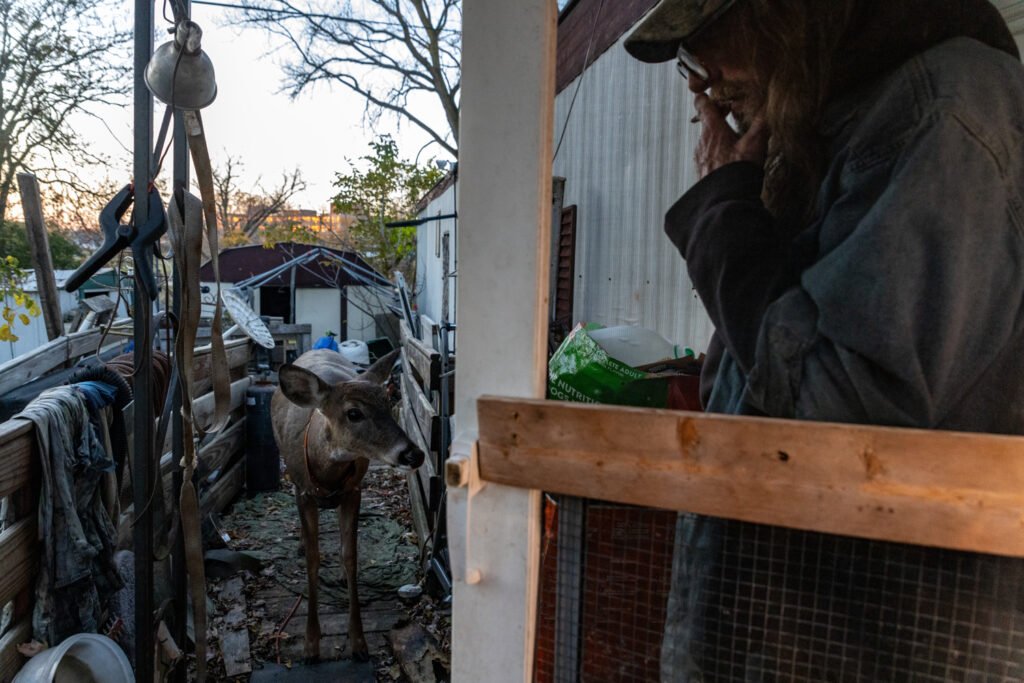
With four dogs: Ann Marie, Sadie Lynn, Buttons and a pit bull named Dan; five cats: Fluffy, Gizmo, Missy, Princess and Theodora Ellen Bear (Ted E. Bear); and a pet deer named Lotus Rain, the couple decided that renting wasn’t really an option for them.

“We would have been paying about $1,800 a month for the pets and everything,” Kelly said.
Unfortunately, Luttrell isn’t sure of her options, and fears she’ll have to leave her cats behind as she looks for another trailer park.
But Parker and his wife have chosen to look for a house to buy instead of renting, using the credit of their 35-year-old son, Kendall Parker, since they have no credit.

“She’ll see one that’s suitable, because its bathrooms are downstairs, yards we can have the animals in,” but then Parker says the living spaces are snatched up.

Kelly and Parker both believe the scarcity of housing comes from outside investors buying up all the properties, leaving everyday folks with few options to buy or rent.
“I have list after list after list after list of houses that we have looked at,” Kelly said. “About 500 [properties she’s looked at] in the last six months.” And then she estimated Parker had driven by about 100 homes in-person, but the pictures don’t always match the in-person experience.
“‘What’s the matter with it?’” Parker said, so he could answer himself. “Well, there’s no furnace, no hot water heater, and he wants us to rent it for $1050 a month.”
Initially, the couple called 211 for the United Way, and got connected with a number of resources from nonprofits and the city.
“There were discussions,” Redrup said about the different organizations that shared what they could. “But nothing that materialized.”
Most of the suggestions offered to Parker and Kelly pushed into non-negotiable areas for them.
The couple needed a bathroom downstairs, because of Kelly’s issues with her knees. They would not go to a place like a shelter where they couldn’t take their pets, and Parker was deeply worried he would be separated from his wife if he entered into some sort of welfare facility.
“‘Why don’t you just stay in the shelter until you find something?’” Parker asked himself. “Us not being legally married. [We] Can’t do that. We can’t be together [in a shelter].”
“I’m basically her caretaker,” he said.
Still looking
In the meantime, the city has given the few who are left in the deteriorating mobile home park a timeline to get out.
“I guess we’re screwed big time,” Parker said. “Because we just found out from our lawyer earlier today that to give me financial assistance from the land bank/the city, we had to have whatever turned in by noon.”
Fortunately, Parker, Kelly, Luttrell and Kendall Parker, were all able to access grant funding through the Lucas County Land Bank, to help them transition, even with missing some deadlines.
Jim Molnar, the director of building and code compliance for the City of Toledo, said Monday or Tuesday, the week of Nov. 16, the city would be moving demolition equipment into the area. But he did include a caveat that there would be a willingness and patience to work with those who have been stuck in the park for the past six months.
The Toledo Free Press tried to get more in-depth explanation on the attempts made by the city to help those at Riverside, but did not hear back from the City of Toledo’s communications department.
“You got to think the folks that are still there for the last six months, have been living in a trailer park that was condemned,” Redrup said from his experience trying to help all the separate households involved to get a better living situation.
“These folks have been living in a crisis situation for easily a year. They’re tired,” Redrup said.
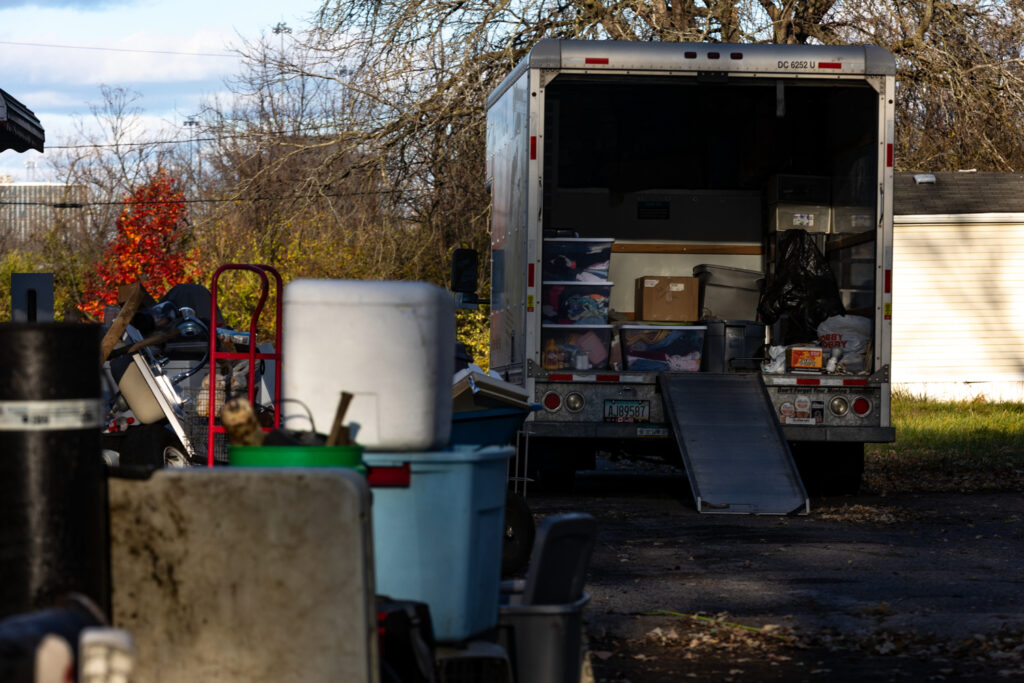
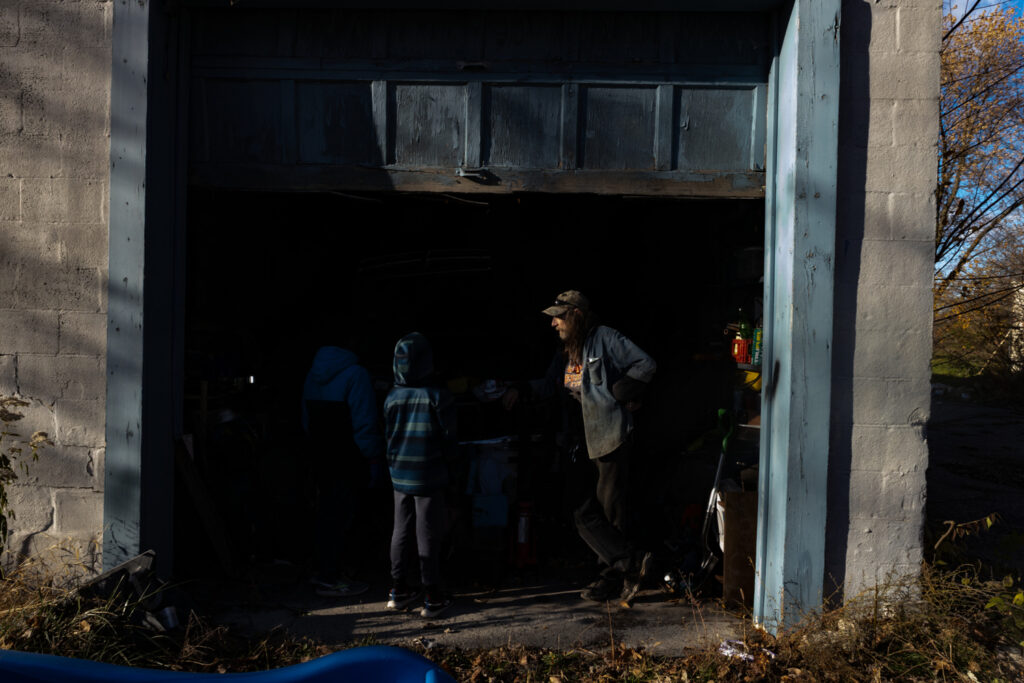
Over the past months, Parker has been moving items to a storage unit, and his family plans to move to a short-term living situation inside a monthly billed hotel until they can find a more permanent living situation.
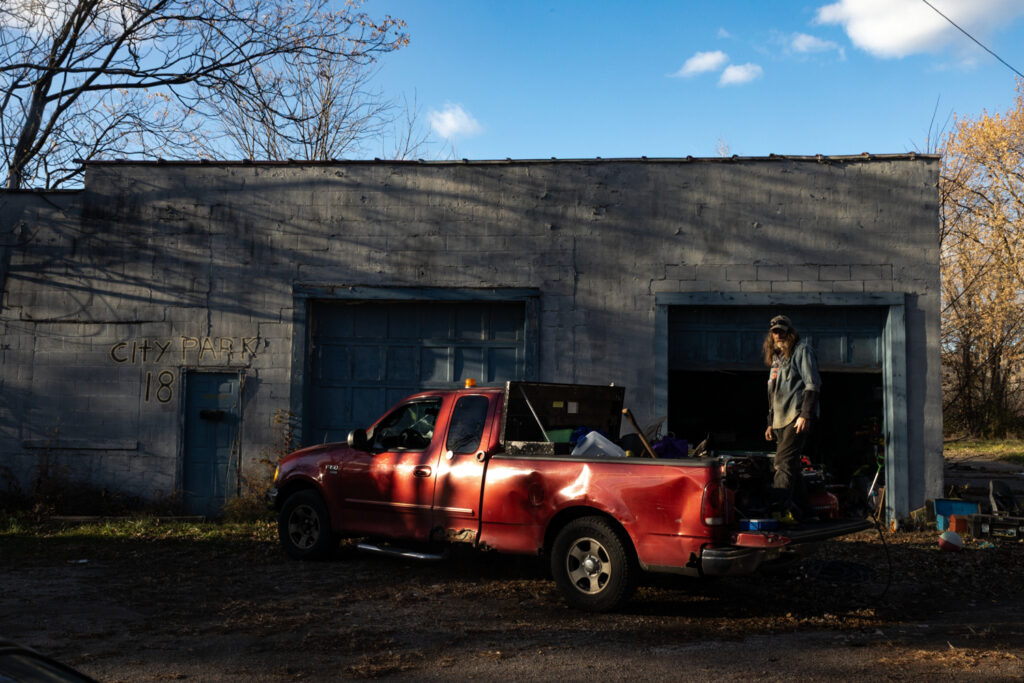
“It’s important to play up the resilience of the people that we’re talking about here,” Redrup said in summation, and praised the positivity the Parker and Luttrell households displayed.
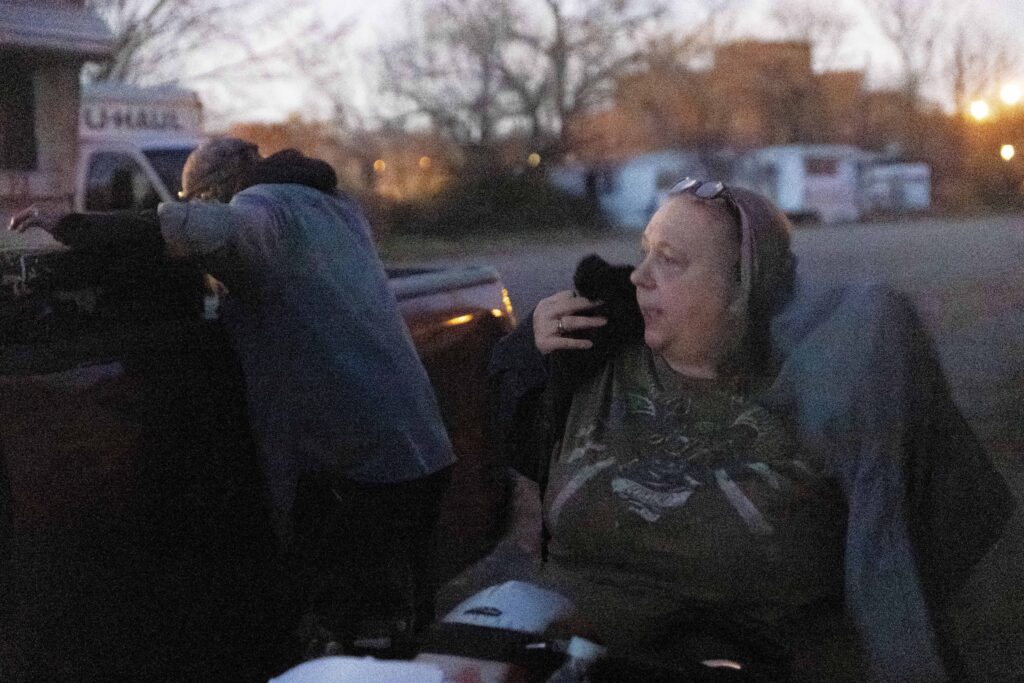

Leading up to the week of the demolition Kelly said she had trouble sleeping.
“This was all very, very stressful,” she said. “The last couple nights I haven’t gotten to sleep until 5 a.m.”
Parker is pessimistic about the couple’s ability to move out by Monday, but said they would do their best to get out of the city’s way.


Read the second installment of this story here.