Home Blog Page 41

Anthony Wayne students support community causes

0
Addelyn O'Shea and Madalyn Blevins stand among the 2,600 toys donated by Anthony Wayne Local Schools students to Anthony Wayne Neighborhood Bridges, which will distribute them to area children in need. (Courtesy photo)

Filling backpacks with school supplies, coordinating a Veterans Day assembly, collecting interview clothing for the homeless – these are just a few of the dozens of projects that Dr. Justin Zemanski‘s Anthony Wayne High School students have led since a Community Engagement class was added to the curriculum in early 2021.

“I continue to be amazed at the projects my students choose, and their level of interest,” said Zemanski, who guides juniors and seniors through the process of researching nonprofit organizations, creating a fundraiser and promoting it to the community.

Last week, Zemanski’s first period class delivered 2,600 new toys collected for distribution by Anthony Wayne Neighborhood Bridges.

“Kids in poverty will benefit,” said senior Sophia Stanton.

While Stanton teamed up with Sophia Alfieri to coordinate the toy drive at Monclova Primary School, other students led the toy drive in other schools: Madalyn McKnight and Jocelyn Ryan, Waterville Primary; Meghan Donnelly and Sophia Sarkisian, Whitehouse Primary; Matheo Cottier and Sean Kolling, the middle school and junior high; and several others working on logistics and promotions within the district.

The high school students made in-person presentations, fliers, announcements and even a TikTok video to encourage younger Generals to fill collection boxes with new toys, and devised incentives – including a cookie party, donut party and house points for middle schoolers – to sweeten the deal.

“I think our schools do well with donating and coming together to give back to the community,” said Kolling.

While her peers collected from the schools, Katie Reinhard led a parallel effort through Church of the Cross in Toledo, calling area businesses and making regular announcements at the church to encourage donations.

The total result is so much more than Zemanski, and the students, expected. It also astounded Anthony Wayne Bridges Coordinator Amy Barrett, who noted that the donation will help children in need.

“We are so grateful for the students. This project is another wonderful example of how we can all work together to help each other to benefit our community,” Barrett said.

While the first period class focused on the toy drive, second period students found projects to match their interests. One team raised funds to install three Little Free Libraries stocked with over 300 children’s books donated by district teachers.

“When we were researching our project, we saw that there was a discrepancy between kids and how many books they had access to,” said senior Lila Hippert.
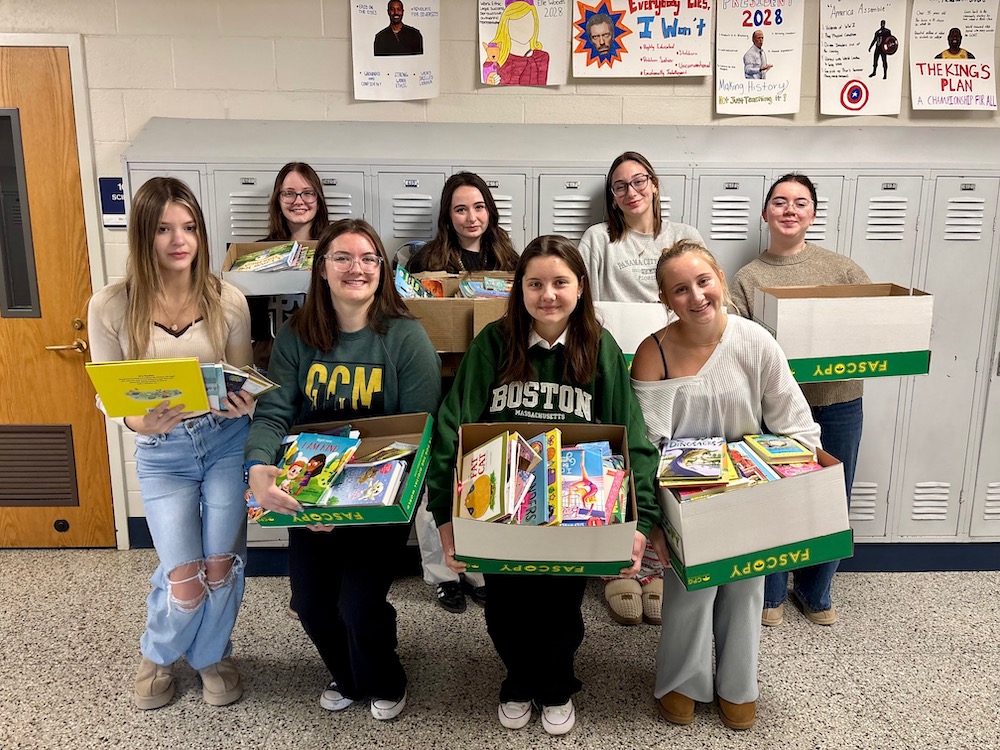
Anthony Wayne High School Community Engagement class members did fundraising and marketing to support the installation of three Little Free Libraries stocked with donated children’s books. Pictured are, back row (from left) Isabel Riggenbach, Madison Engle, Ava Newman and LIzzy Babcock and, front row, Katience Patchin, Sonya Beale, Maya Beale and Lila Hippert.
(AWFP photo byKaren Gerhardinger)

Waterville Community Church donated funds for the boxes and plaques, and Aric Christman‘s high school construction class will help with installation, but the team needed donations for other supplies, so they hosted an hours-long bake sale in downtown Whitehouse last month.

“It went swimmingly,” said Sonya Beale, noting that the entire team stood on the four corners to encourage motorists and walkers to stop and shop the sale.

Once weatherproofed and painted bright colors, the boxes will be installed next spring in Monclova’s Homecoming Park, Whitehouse Park and near the Sylvania YMCA. 

Another team, including Lydia Fabian and twins Leah and Mallory Pike, organized a gift basket raffle to raise funds for The Nest, a nonprofit that provides child care so parents can complete their education. Each member contacted multiple businesses to solicit gift cards, tickets and other goodies in baskets that were raffled off at a home basketball game.

Seniors Izzy Christopher and Will Iott collected items from area businesses for the Anthony Wayne Community Food Ministry and, during Thanksgiving Week, helped register more than 150 area families waiting in line to pick up bags and boxes of food.

“With the shutdown, a lot more people were going without pay, so there was a lot more need,” Christopher said. 

Nolan Holloway and Tyler Shaw are among the team members working on a Generals sports closet – a resource for students to access gently used sports gear, like basketballs, knee pads, compression shorts, lacrosse sticks, helmets and hockey equipment.

While many of the 19 sports teams at AWHS are top-ranked, not all students have the financial backing to afford the equipment, Shaw said.

“We know how expensive sports equipment is. We want everyone who wants to play to have that opportunity,” Holloway added.

While the class is wrapping up, the project will be continued into the spring, when they will host an equipment drive and see the construction of a small shed on campus come to fruition – thanks to backing from the high school construction technology class.

One of the main objectives of the class is to connect students’ passions to a project, said Zemanski, who invites leaders from area nonprofits to speak to students. Over the past few years, many students have chosen to support Toledo Animal Rescue, a non-kill shelter.

“Research has shown that students tend to be more invested in their work when they have a choice; connecting learning to something that interests the students leads to increased engagement,” Zemanski said.

His own research for a doctoral dissertation in 2020 led Zemanski to discover the Community Engagement class as a way to show the community what’s going on in the district. Plus, he discovered that the students can also earn a State of Ohio Community Service Seal for completing over 60 hours of community service – which was one reason why Cottier, a junior, signed up for the class. He also found many other benefits.

“This class definitely helps with communication skills and how to put a project together,” Cottier said.

Reinhard agreed, adding that she’s learned how to not be scared of talking to people.

“You have to reach out and build connections,” Reinhard added.

Madalyn Blevins, who plans to study pre-med next year, said that in the process of working on the toy collection project, her team had to adapt their plans several times, and that required a lot of communication and coordination.

“Stay flexible,” agreed Sonja Beale.

For Donnelly, who is shadowing Whitehouse fourth-grade teacher Stacy Lindrup this year, the project has given her more exposure to students.

“This class has definitely taught me how to talk louder with kids. I have to be able to do that if I want to be a teacher,” said Donnelly, who plans to major in early childhood education at Bowling Green State University next year.
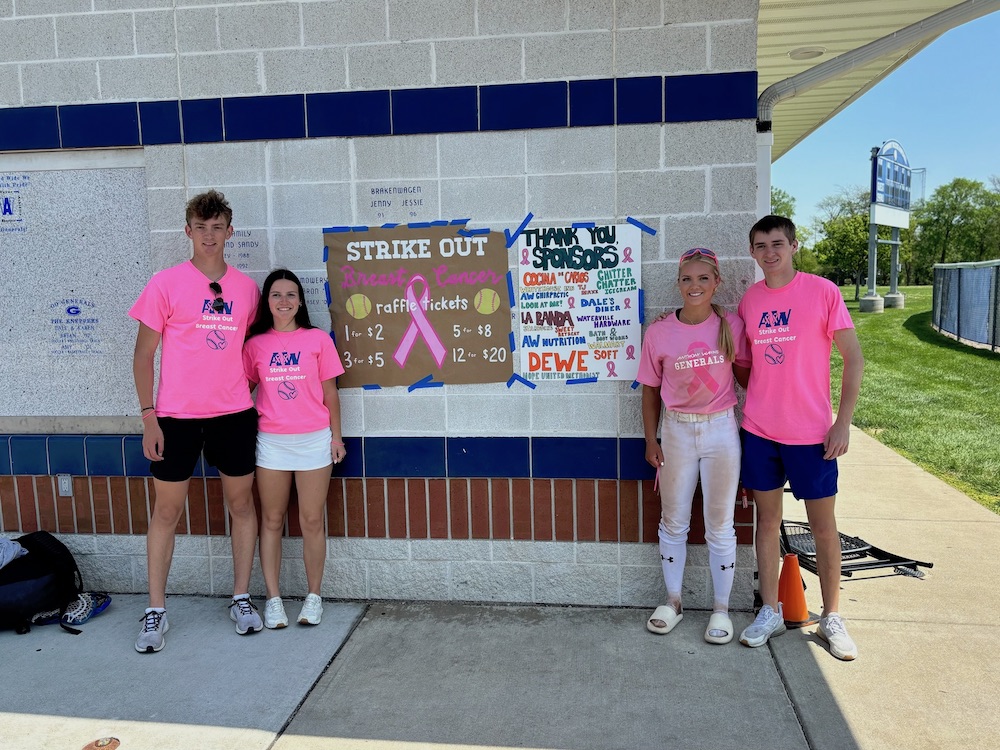
Earlier this year, 2024 graduates (from left) Ryan Shelton, Harper Clifton, Molly Conner and AJ Rea hosted a Strike Out Breast Cancer event that raised over $3,000 for a family impacted by breast cancer. (Photo courtesy of Harper Clifton)

AW Class of ’24 graduate Harper Clifton, now a freshman at Centenary College of Louisiana, said her experiences in the Community Engagement class solidified her decision to pursue a career in sports philanthropy. Last spring she teamed up with softball player Molly Conner and athletes Ryan Shelton and AJ Rea to host Strike Out Breast Cancer, a softball game and fundraiser to benefit an area family impacted by breast cancer.

“Our goal was $1,000 but we raised over $3,000,” Clifton said, explaining that her team members were on the phone daily soliciting donations and encouraging people to attend the game. 

“I gained so much experience from that class – being able to see our work put into a real project that plays out through the semester,” Clifton said. “Dr. Zemanski is an amazing teacher and mentor.”

No matter how much the Community Engagement class benefits those involved, Blevins shares one piece of advice that sums up the class.

“Always focus on helping other people,” she said.
S&G devotes $215,000 in donations to 67 local charities

0
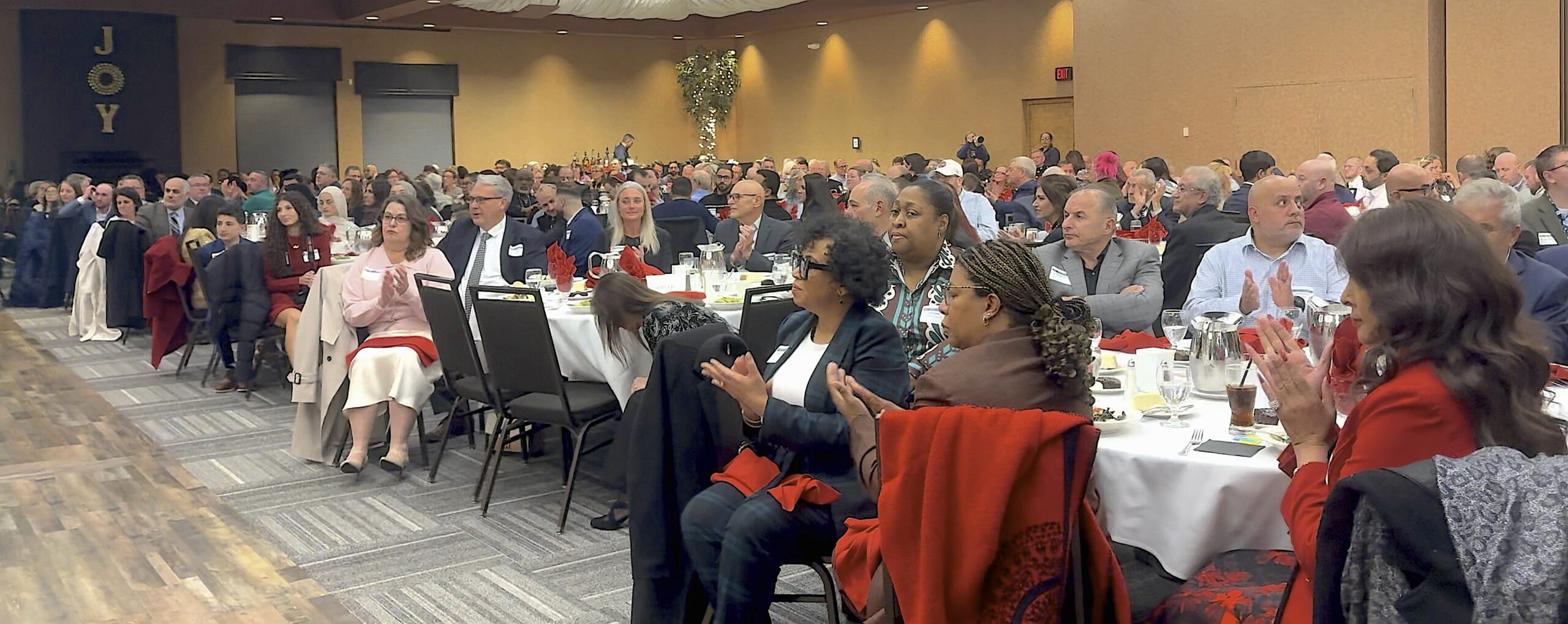
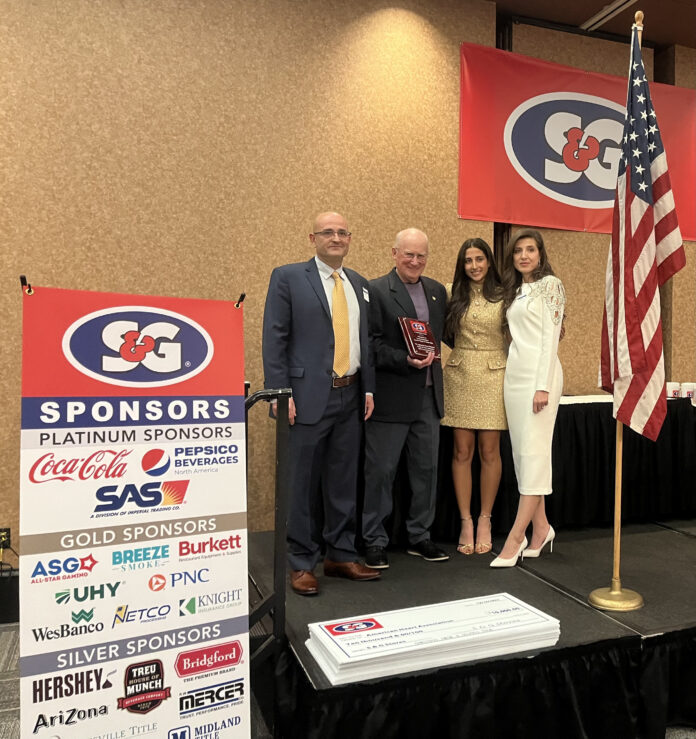
Former Toledo Mayor Carty Finkbeiner, second from left, joins the Ridi family in front of 67 checks being donated to local charities during the annual S&G Day of Thanks event in Maumee, Ohio, Tuesday, Dec. 16, 2025. The donations were distributed to 67 different organizations throughout the evening. (TFP photo by Justo Hernandez)

MAUMEE — Holiday generosity took center stage at the Pinnacle in Maumee on Dec. 16 as S&G (Stop & Go) Convenience Stores hosted its 9th Annual Day of Thanks and Giving.

In a record-breaking night for the Toledo-based company, CEO Dan Ridi announced that S&G donated more than $215,000 to 67 local charities. The evening was capped by the announcement of an additional $100,000 commitment to the Halim Clinic, to be donated over the next five years, to support free medical care for those in need.

What began as a modest $16,000 donation in 2015 has evolved into one of Northwest Ohio’s premier philanthropic events. This year’s record-breaking night marked a major milestone for the company: S&G’s lifetime contributions to the region through this initiative have now surpassed $700,000.

Dan Ridi, founder of S&G, announces a series of charitable donations to local organizations during the annual Day of Thanks event in Maumee, Ohio, Tuesday, Dec. 16, 2025. (TFP photo by Justo Hernandez)

“S&G has always been locally owned and locally committed,” said Ridi. “When we held our first fundraising event in 2015, we raised $16,000. It was a humble beginning, but it was the spark that led us toward giving back to this wonderful community. I am proud and truly moved to announce that tonight, S&G is donating $215,000 to 67 charities helping families and children throughout our region.”

Former Toledo Mayor Carty Finkbeiner was in attendance and received a Community Leader plaque, but the spotlight remained firmly on the 67 local organizations that serve as the community’s safety net. From Connecting Kids to Meals to the Islamic Food Bank of Toledo, the beneficiaries shared a common theme: they are firmly rooted in a commitment to Toledo’s families.

During his remarks, Ridi drew a sharp contrast between S&G’s business model and that of its major competitors. He emphasized that while other large chains are increasingly owned by international conglomerates or headquartered in other states, S&G’s corporate office is rooted in Sylvania.

“This is truly what it means to be locally committed—not by words but by actions. S&G Stores is locally owned. Myself, and my executive teams, and our families live here,” Ridi said. “S&G is facing fierce competition from businesses who do not live here.”

Ridi pointed out that Speedway, once a regional mainstay, was acquired by the Japanese-owned 7-Eleven (under Seven & i Holdings), while Circle K is owned by the Canadian retail giant Alimentation Couche-Tard. He expressed deep appreciation for S&G’s customers, observing that their support keeps profits within the community and directly enables the record-breaking donations announced Tuesday night.

(TFP photo by Justo Hernandez)

The emotional high point of the evening came with the surprise announcement of a $100,000 pledge to the Halim Clinic. The clinic provides primary and specialty care to patients who lack insurance, a service that is vital to the local community. The message was clear: for S&G, convenience is the business, but community is the mission. By keeping their charitable dollars within the 419 area code, the company isn’t just selling fuel and snacks—they are fueling the future of the city they call home.

Data centers in Northwest Ohio: Jobs, power, water and more

0

In this episode of Make It Happen, Mike Vanderpool sits down with Gary Thompson from the Regional Growth Partnership to unpack one of the most talked-about topics in Northwest Ohio right now: data centers. What are they? Why are they being proposed here? Do they help or hurt electricity prices, water usage, and local communities? And what should residents actually know?

This conversation breaks down power grids, zoning, pipelines, job growth, water usage, tax agreements, and regional development in a way the public rarely gets to hear — directly from someone who has been at the center of negotiations for years.

You can find more episodes of Make it Happen here.

Anthony Wayne residents weigh in on board member’s replacement

0
Pexels photo by Pixabay

And other news from the AW Board of Education

Outgoing Anthony Wayne Board of Education member Shellie McKnight, who is resigning effective Dec. 31 after two years in office, shared some parting thoughts during her final meeting on Dec. 8.

First, she thanked Superintendent Kevin Herman, Assistant Superintendent Kevin Pfefferle, Treasurer Kerri Johnson and Technology Director Chris Hamady for their professionalism, then spoke about the importance of public education.

“Public schools are the hub of the community,” McKnight said. “It is indeed the foundation of our American democracy.”

McKnight warned of what she calls “unwarranted attacks on public education at the statewide and federal level” that seek to weaken public schools for private education vouchers that take away funding from schools, including Anthony Wayne.

“Please educate yourself on this growing menace and try to stop it,” she said.
McKnight also shared a concern for what she sees as an increase in religious intrusion during the school day, which she called a “clear violation of separation of church and state.”

As she cleared her belongings in preparation for moving to Colorado, McKnight said she found Anthony Wayne memorabilia from her daughters, who both graduated from the district.

“We talked about how fortunate we were to live in an excellent school district. I will be truly sorry to leave this,” McKnight said.

Because her effective resignation date is Dec. 31, the board must follow strict state policies and appoint her replacement between Jan. 10 and 30, said Board Vice President Jeff Baden. Last month, the board received 25 applications for those seeking to fill her position. Of those, four finalists – Amy Barrett, Katie Carollo, Matthew Culling and Troy Schalitz – introduced themselves to the audience. Read more about them here.

Two community members, Sara Fournier and Roy Collaco, addressed the board about their hopes for the process of selecting McKnight’s replacement.

McKnight, Fournier said, “brought deep knowledge of public education, did her homework on legislation affecting Ohio schools, and consistently showed up informed,” as she represented 4,000 voters who put her into office two years ago.

Fournier asked whether the board has a rubric with defined scoring, weighting and question alignment to areas being evaluated for each of the four finalists. Items that would support clarity include: which competencies are being scored; questions being asked during the interviews; and how the scoring will be documented and compared consistently.

“These safeguards strengthen the integrity of the process. They clarify decision making, build trust and protect the board from claims of inconsistency or preferential selection. Families want confidence that decisions about curriculum, policy and budgeting are based on the needs of all students rather than alignment and affiliation,” Fournier said. 

Collaco shared how, during the COVID-19 pandemic, he was hospitalized for three weeks and nearly died. He noted that the board at the time made decisions on health and safety protocols from the Centers for Disease Control, National Institutes of Health and Toledo Lucas County Health Department to protect the staff, students and community.

“I’m grateful that the school board…set aside their personal opinions and relied on experts,” he said. “They withstood a wave of anti-science attacks.”

The board, he said, is elected to champion and advocate for the educational interests of all children based on the latest laws, best recommendations of trained experts and empirical, validated research, not to implement their personal ideology.

“The school board and school buildings are not the proving ground for anyone’s political ambitions or spiritual redemption,” Collaco said. “If you can’t make that distinction, then you should skip the school board and run for political office instead, where one can claim to be an expert in anything and everything.”

During the meeting the board also:

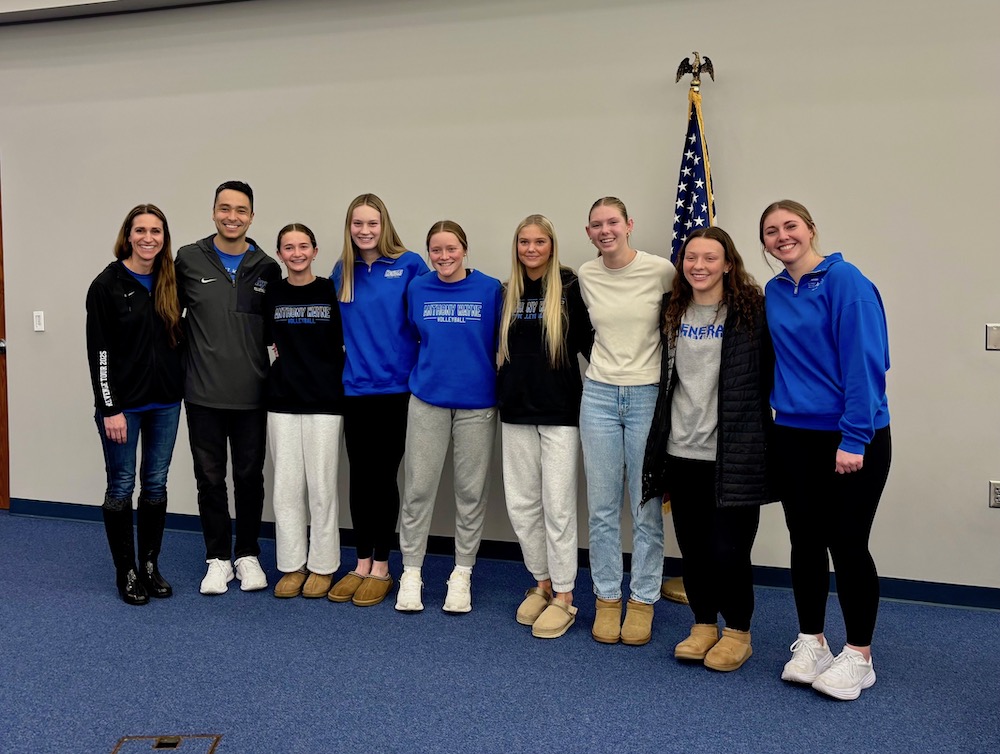
–Congratulated the girls volleyball team, which was the state runner up in Division 2 for the second year, finishing the season with a 26-2 record. Coach Chrissy Graven said that four of the five graduating seniors have signed to play at the next level, and two players had back-to-back All-Ohio honors. Even more impressive, Graven said, is the 4.0 GPA first quarter team average. Graven thanked the community for the support throughout the season.

The Anthony Wayne High School volleyball team, which finished the season 26-2 and a state runner-up title, was recognized during the Dec. 8 board of education meeting. (AWFP photo by Karen Gerhardinger)

-Congratulated 2024 graduate Lillian Albert and senior Ruby Rapp for receiving the Principal’s Award and Superintendent’s Award (respectively) as part of the 2025 FOCUS Art Show. Teacher Carrie Flagg said the FOCUS Art Show is held at Toledo Museum of Art and features the best artwork from students throughout Northwest Ohio. 

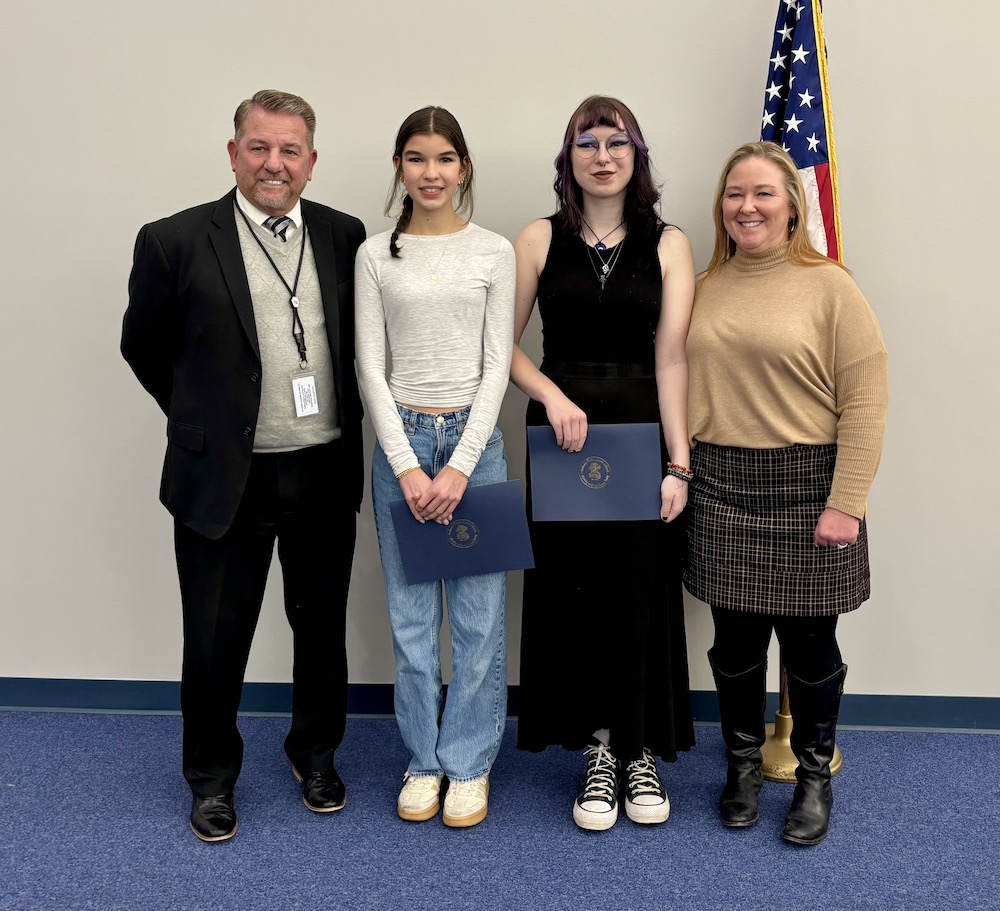
Superintendent Kevin Herman (left) honored senior Ruby Rapp and 2024 graduate Lillian Albert, who had their artwork chosen for the 54th annual FOCUS Art Show at the Toledo Museum of Art. They are pictured with art teacher Carrie Flagg. (AWFP photo by Karen Gerhardinger)

–Named Kyle Miller as president pro-tem for the first meeting of 2026, which will be held on Tuesday, Jan. 13 at 6 p.m.

-Approved a farm lease agreement with Keith and Michael Hannewald, at a price of $160 an acre, for 2026-2028.

-Passed a resolution of urgent necessity for the chilled water line repair at Waterville Primary, for $54,483. Issue found while on site.

-Approved a $1,038,433 contract with Spatco Energy Solutions to replace the fuel tanks, pumps, dispensers and other associated equipment. The 40-year-old tanks – including a 6,000-gallon gas tank, a 10,000 diesel tank and another 12,000 diesel tank – have exceeded their useful life and have had water leaking in, said Operations Director Neil Raymond. The new tanks will be installed this summer.

Wild Side: Watch for witchhazel

0
Witchhazel in bloom. (Photo by Art Weber)

While you’re out and about enjoying our winter wonderland, keep your eyes open
for the flowers. Yep, the flowers. You’re looking for the late-season blooms on witchhazel, a
large shrub found in our Metroparks Toledo woodlands.


The bright yellow scraggly-looking blooms are small but distinctive, a welcome
sight for any of our insect pollinators that might emerge with an occasional warm snap
and be on the hunt for something to nectar on.

Witchhazel has many practical uses, mostly in ways that benefit our skin. It’s also
the “witch” in water witching, a folksy and largely debunked method of dowsing to detect
underground water.

Anthony Wayne news: Waterville approves 6-month moratorium

0
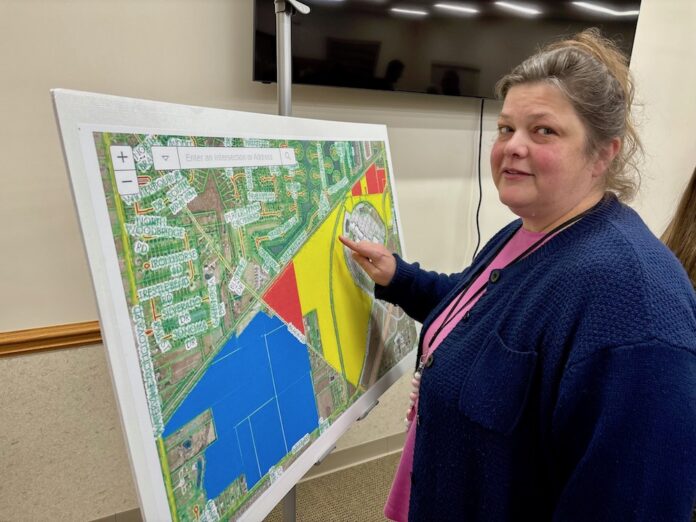
Janet Jacobs, who owns property on Monclova Road, points to a map of mall-area property after the Dec. 1 Monclova Township trustees' meeting. The map is posted online at monclovatwp.org. (AWFP photo by Karen Gerhardinger)

And Monclova hears data center discussion

ANTHONY WAYNE – Waterville City Council passed a six-month moratorium on data centers while Monclova Township trustees continue to answer questions from residents concerned that such a development will go in around the Shops at Fallen Timbers. These are just a few of the updates from December meetings in the Anthony Wayne area.

Waterville

After more than an hour of discussion, Waterville City Council on Dec. 8 voted 7-0 in favor of imposing a six-month moratorium on data centers.

“Oh my god. We were unanimous. It’s a miracle,” said Council Member Mary Duncan.

Initially, Duncan pushed Council Member Wayne Wagner – who began asking for a moratorium a few months ago – to explain why the city needed to be the first to enact a moratorium, especially since the city doesn’t have any properties suitable for a data center, she said.

Wagner said the city needs to be a leader and set the tone for the entire Anthony Wayne community with a moratorium, which he wants to allow more time to research the pros and cons. More information that has come to light since council approved, on Sept. 8, amendments to its zoning code to allow data centers in M-1 zoned areas, he explained.

“So much more has come to light since then. This will give us time to plan,” Wagner said.

At the start of the three-hour meeting, residents Lisa Haberstock, Lisa Webber and Paul Miller urged Council to pass a moratorium to give the city time to dig deeper into impacts – on the environment, health and the city overall. 

Resident Scott Jahns said he was concerned that a moratorium would send a negative message to potential businesses and impact the city’s economic development efforts. This was a sentiment echoed by Rod Frey, who noted that business tax revenue is vital to cover increasing costs of services without raising income tax rates on residents. 

The city has enacted moratoriums on self-storage units and car washes, and that hasn’t stopped Meijer, The Collective and other new businesses from launching in the city, countered Wagner.

“I would argue that a data center will stop the kind of development we want,” Wagner said, stating that no restaurant would want to pay $360,000 an acre to build in the city. 

“We’re not putting a moratorium on business development – we’re just pausing what we might do for a data center,” said Council Member John Rozic. “We’re protecting the community from what we don’t know.”

Todd Borowski agreed, stating that he wanted to slow up the process to allow Council to do its due diligence. Anthony Bruno pointed out that while the city might enact a moratorium, the reality is that neighboring Waterville Township and Monclova Township are just a mile away and could get a data center that impacts residents unless they follow suit. 

After much debate, Council settled on a six-month period that Mayor Tim Pedro said should include benchmarks for research done by Council and administration – not an ad hoc committee of citizens as some suggested. Near the six-month point, Council could decide to extend the moratorium if desired.

Waterville resident Shannon Bostelman speaks to Waterville City Council about a moratorium on data centers. (AWFP photo by Karen Gerhardinger)

During the meeting, council also:

-Recognized outgoing Council Members Anthony Bruno and John Rozic for their service. Bruno, who has served eight years, decided not to run for office for a third term. Rozic served 12 years and is term-limited. Because not enough qualified candidates were on the ballot, Council will select their replacements in January.

– Heard that 10 candidates submitted letters of interest to fill  the two open positions: Rob Allen, Karen Eboch, Chris Gomez, Tim Guzman, Michael Hampton, Scott Jahns, Nick Kaufman, Nick Sargent, Amy Self and Colleen Weaver. Guzman previously was one of five candidates who applied to fill Anthony Garver‘s position when he resigned in June; Council selected Rod Frey.

-Adopted collective bargaining agreements with the Ohio Patrolmen’s Benevolent Association for the patrol unit and sergeant unit for 36 months.

-Passed ordinances to adopt temporary appropriations for 2026 and to amend 2025 appropriations to reflect changes, including $35,400 for Waterville Township property tax sharing agreements. Gochenour explained that over nine years the city has paid $$689,000 with the township as part of an agreement to share property taxes in annexed areas.

-Learned that Austin Klapp, who has served as the city’s prosecutor, will serve as the law director, following the resignation of Kati Tharp.

-Heard that a suspect in the murder of a fellow resident in a Waterville nursing home will have a hearing this week to determine mental capacity. 

-Learned that firefighter/paramedic Bryan Cox is organizing a fire safety explorer program for high school students.

-Approved Pedro’s committee appointments, including: Mike Roetter, Board of Zoning Appeals; Andrew Sherman, Charles Monus, Mary Beth DeMatteo and Nancy Bucher, Tree Commission; Landon Drewes, Finance Committee; Scott Jahns, Riverbend Industrial Park Committee; Terry Rousseau and James Stoma, Historic District Commission; Doug Parrish, Planning Commission; Jeff Marty, Civil Service Commission; Nick Sargent, Tim Guzman, Mike Metzger, Stephanie Gabel, Frederick Greive, John Morse, Brad Fox, Cindy Schultz, Greg Aubell and Scott Jahns, Public Works Committee; and Robert Kennedy, Rose Kandik and Elaine Parrish, Parks and Recreation Committee. 

John Rozic and Anthony Bruno were honored for their years of service on council. Rozic wrapped up his third term while Bruno finished his second. Their positions will be filled in January. Ten candidates applied for the positions. (AWFP photo by Karen Gerhardinger)

Monclova 

Faced with repeated questions about property around the Shops at Fallen Timbers as a possible location for a data center, Monclova Township Trustees asked zoning administrator Eric Wagner to create a map showing which properties are in the township – and which ones are controlled by Maumee.

During the Dec. 1 meeting, trustees referred to the map, which shows 200 acres owned by Monclova Properties LLC on the west side of Black Road in the township, along with property surrounding the mall, which is in Maumee. The city of Maumee annexed three properties from the township over the past five years, explained Trustee Chuck Hoecherl. 

“We do not have any control over the zoning or the conditions that Maumee may or may not put in,” Hoerchel said of the red and yellow properties, which are just south of Waterside.

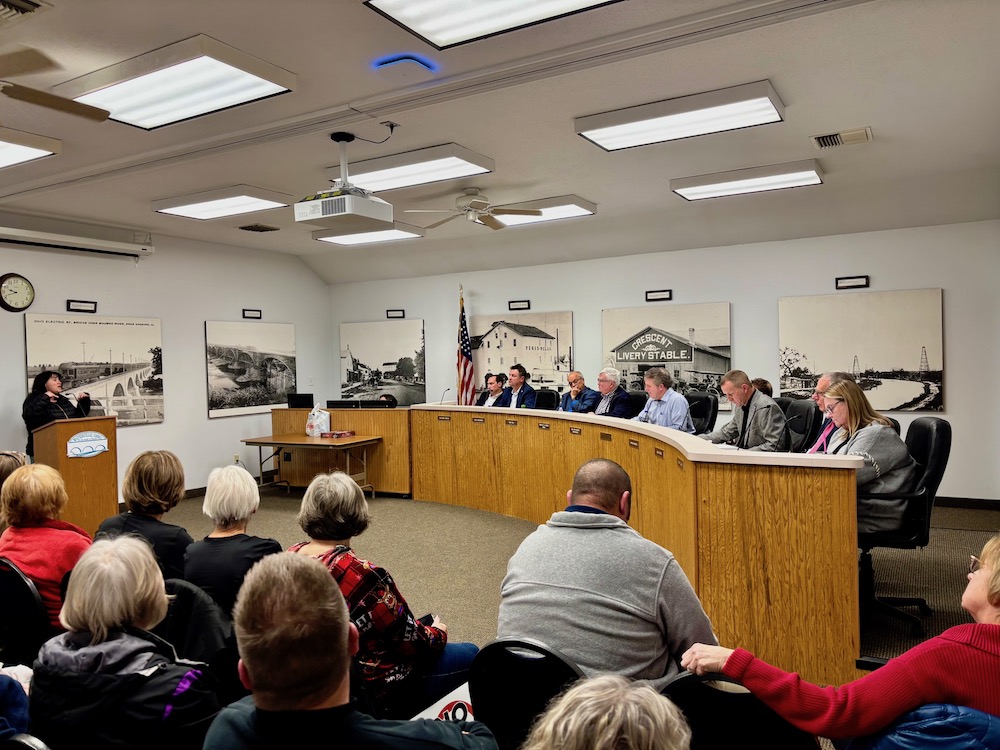
The meeting was packed with people opposed to a data center, including Waterside residents Judy Imhoff, Susan Mann, Judith Booker and Suzanne Peats, who asked trustees to enact a moratorium on data centers in order to allow more time to study the potential impacts on power, water, wildlife, quality of life and housing values.

“In my opinion, a moratorium sends a message to the property owner that ‘we do not want to work with you,'” said Hoecherl, referring to the 200 acres in the township. “We cannot prohibit a legal business. And property owners have rights too.”

While Hoecherl said he’s seen plans by Monclova Properties LLC to build 300 homes and a small commercial building abutting hole No. 10 on Fallen Timbers Fairways, that property could be considered for a number of projects. The process that the township put in place for the agriculturally-zoned land would require a conditional use permit to build a data center, and that would give the township more control over lighting, setbacks, noise and other factors.

One concern is that if the township institutes a ban, that property owner could just apply for annexation into Maumee. While the township and Maumee have been at odds over the years regarding annexation, Hoecherl said he was setting up a meeting with new Maumee Mayor Chelsea Ziss and concerns about annexation and data centers would be shared.

Earlier this year, Maumee approved data centers as a permitted use on the mall-area property within the city. But on Dec. 1, Maumee held a first reading to amend two ordinances that would require a conditional use permit on any proposed data center – which means that a proposal would come before the Planning Commission and have to meet a certain set of standards or requirements. 

“The ordinance being considered is changing language that refers to data centers from permitted use to conditional use,” said Maumee spokesperson Nancy Gagnet.

If an application comes in for a data center, the township will post it on the website and place a sign on the property; then the Board of Zoning Appeals will hold a public hearing and review the permit application. The trustees and the Joint Economic Development Zone board will not make that decision, noted Fiscal Officer Gavin Pike, who added that he lives on Black Road and has the same concerns.

During the meeting, the trustees also discussed the annex building, a former church at 8353 Monclova Rd., that the trustees purchased for $275,000 in Sept. 2024. The township asked the Postmaster General to consider using the property for a new post office to meeting the needs of a growing community, but outgoing Trustee Trudy Vicary said she isn’t holding her breath.

Instead, she’s lobbying for the township’s administrative staff to be moved to the site, along with a larger meeting room, in order to open up more space for the fire department to have enough sleeping quarters and training space. Pike said the committee looking at expanding the fire department didn’t think that was necessary, but trustees directed administrator Harold Grim to seek more information.

Whitehouse

Whitehouse Village Council held a brief meeting on Dec. 2, followed by a session to review the proposed budget. During the meeting, council:

-Learned that the Whitehouse Fire Department reached an all-time high call volume of 1,000 incidents as of Dec. 1.

-Heard that a new furnace will be installed in the Whitehouse Park shelterhouse by the end of the year, enabling the facility to be rented year-round.

-Learned that Fire Chief Jason Francis is working with Scout Pack 97 to earn first aid merit badges during a Dec. 15 gathering at the fire station.

-Passed ordinances to update rates and fees, comp time, pay classifications and council conduct.

TMA preps for gallery closures on Dec. 15

0
The Great Gallery is among the spaces the museum announced will close Dec. 15 as part of its reinstallation project. All galleries will reopen in 2027. (Photo courtesy of Toledo Museum of Art)

TOLEDO— Major changes to the Toledo Museum of Art are in the works this month with a wave of gallery closures that will take a number of visitor favorites off view until 2027. 

As it moves into the next phase of its first comprehensive gallery reinstallation in more than 40 years, the museum announced a long list of galleries in its west wing that are closing Dec. 15. These include the iconic Great Gallery and galleries featuring Dutch, French Baroque and Rococo paintings and sculptures, European art and selections from TMA’s jewelry collection. 

These galleries will remain closed, and their artwork — including “The Architect’s Dream” by Thomas Cole, “Blind Man’s Buff” by Jean-Honoré Fragonard, and “The Crowning of Saint Catherine” by Peter Paul Rubens — will remain off view until the grand re-opening in 2027.

These closures follow those of Levis Gallery at the end of July and the Cloister Gallery, which closed in February so it could be disassembled and moved to a different part of the museum. 

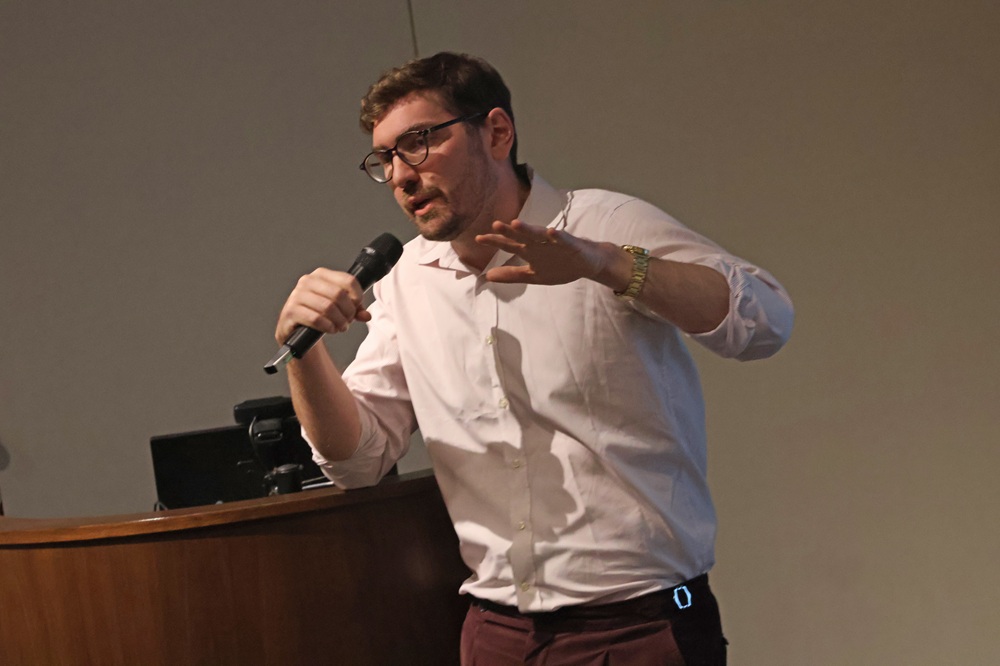
Adam Levine, TMA’s Edward Drummond and Florence Scott Libbey President, Director and CEO. (TFP Photo/Laurie Bertke)

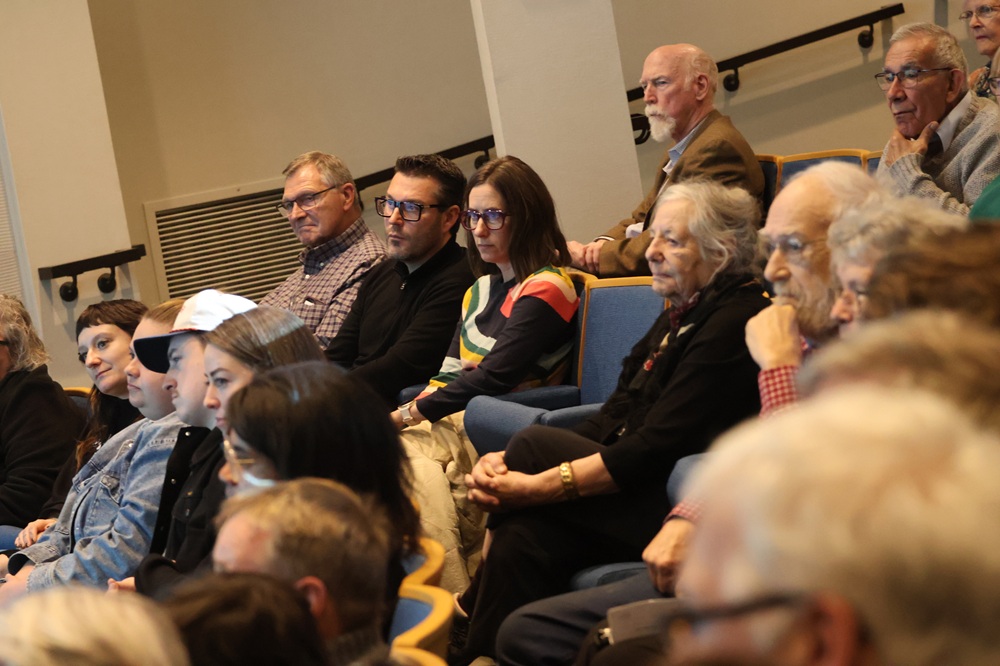
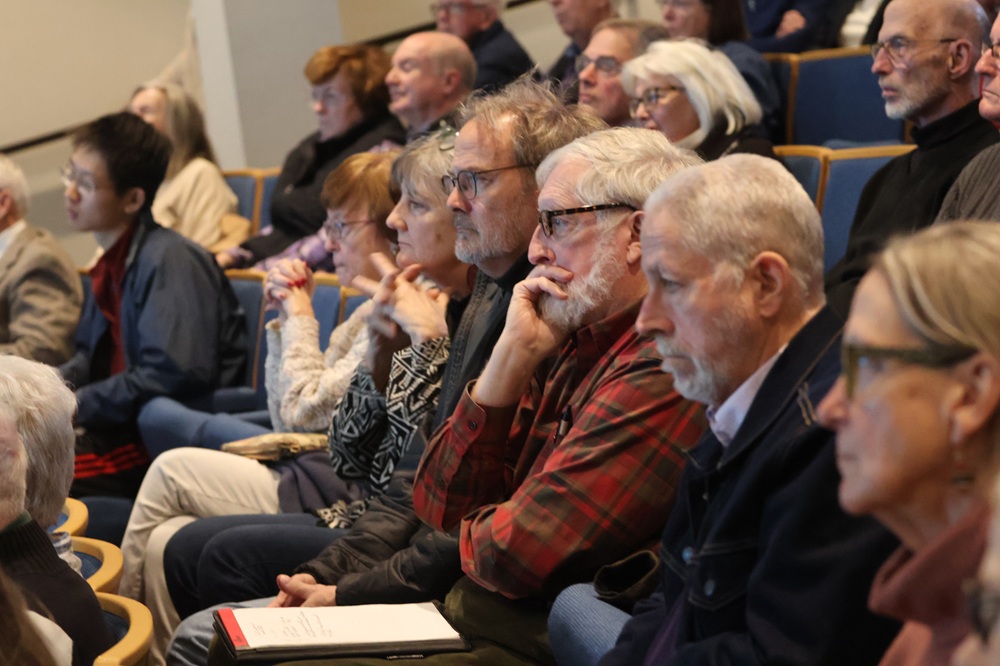
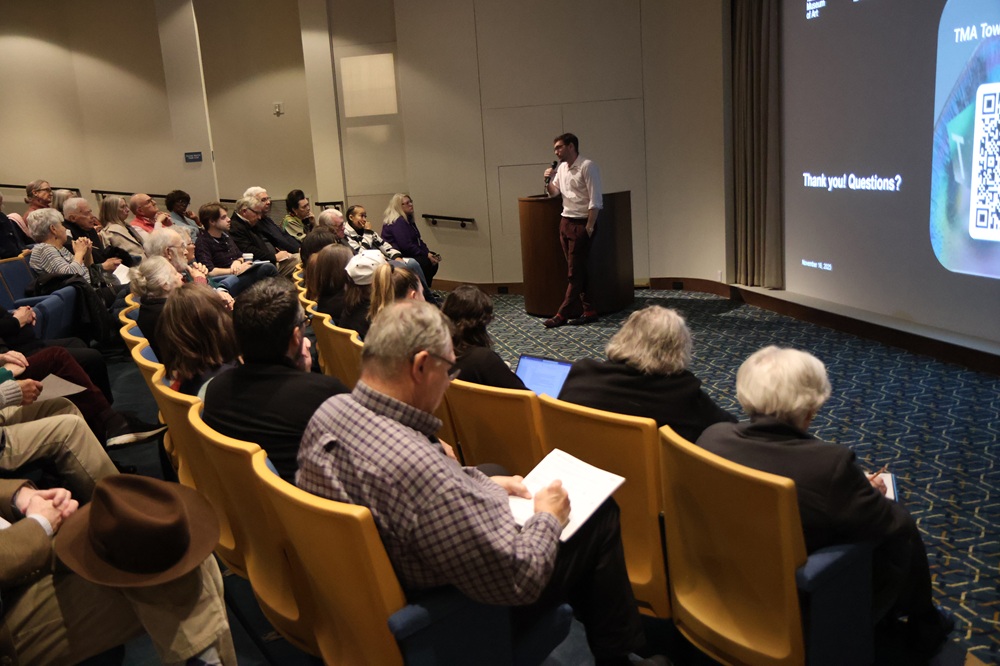
More than 100 people packed into the museum’s Little Theatre on Nov. 16 to hear a project update from TMA’s director and CEO, Adam Levine.

Levine, the 11th director since the museum’s founding in 1901, spoke for an hour and sought to address many of the most frequent concerns and criticisms surrounding the project. 

“It would be easy to look at me, so many people who have been coming to the museum for so long, and think, ‘Who is this person who’s changing these galleries?’” said Levine. He became the museum’s youngest director at 33 years old when he was appointed in 2020.

Now in the sixth year of his directorship, Levine emphasized his commitment to the museum and to Toledo. Levine noted that he speaks with every former living director of the museum on a monthly basis.

“Everything that we are doing is not only consistent with the Toledo Museum of Art’s values and ethos, but it will in fact make the experience better for anyone,” he said. “Change is hard, but change can be better, and I think you will see some really exciting things that we have planned for you.”

Audience members listen to a project update from TMA’s director and CEO, Adam Levine. (TFP Photo/Laurie Bertke)

Why make changes now?

Levine said the short answer to the question of timing is that TMA’s heating and cooling system is at the end of its useful life and needs total replacement. 

Since the HVAC system mostly exists in the attic and is divided into separate units, galleries must close as different zones are replaced throughout the building. 

“You cannot leave artwork in galleries that do not have humidity and temperature control,” said Levine. “So forget the reinstallation — there was no universe in which every gallery of the Toledo Museum of Art wasn’t going to have to close by 2027 anyway, because the artwork would have needed to be moved as the HVAC unit was replaced.”

Museum leadership decided to seize on the opportunity to re-evaluate what Levine described as a “tired” conceptual framework that does not represent the world or the breadth of the collection as it has grown over the past 50 years adequately.

(TFP Photo/Laurie Bertke)

While the museum has seen incremental changes in the past 40 years, he explained these decisions were based on utilizing the space that was available at the time. 

“If you were designing a museum from scratch, you would not put your contemporary gallery next to your antiquity gallery,” said Levine. “You would not put your Southeast Asian archaeology gallery next to your Colonial American painting gallery. You would not create a new media gallery that runs right next to your Cloister.”

Levine also cited smaller cosmetic details that he said are not up to Toledo standards, such as water stains on burlap fabric in the west wing and 40 years worth of nail holes from moving artwork around. “I love these galleries as much as anyone, but it is possible for the galleries to hold remarkable art and to look dated,” said Levine. “There are all these things that are right in front of us that are obvious when said out loud, but they are not necessarily things we think of because we are used to the museum as it presents itself.” 

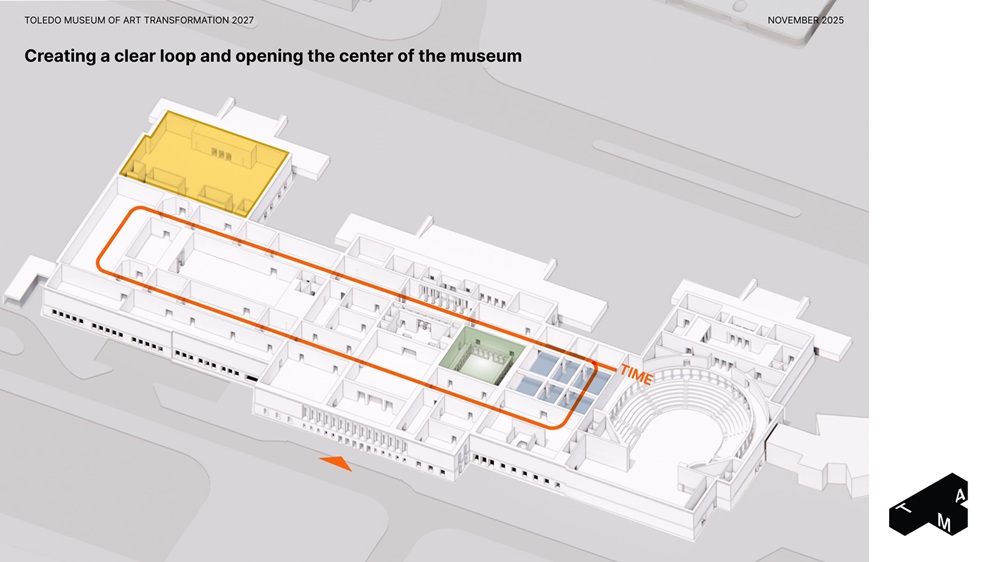
This rendering shared by the Toledo Museum of Art shows how renovations will restore the original loop flow envisioned by the building’s designer, Edward B. Green. A new temporary exhibit space will be created in the area shaded in yellow. (Image courtesy of Toledo Museum of Art)

A loop through time

Museum administration decided it would be more efficient in terms of time and cost to reinstall the galleries as part of the HVAC replacement.

They settled on approaching the reinstallation chronologically, with visitors moving through time beginning with antiquity in the east wing and working their way to present day in the west wing. To allow for easier navigation, renovations will restore the original loop flow envisioned by the building’s designer, Edward B. Green.

Collections will no longer be segmented by geography or media.

“To tell a true and integrated chronology, it’s important to understand everything that was happening simultaneously in different cultures during different periods,” said Levine. “We have an opportunity to tell a history of the world that shows how the world has always been connected.” 

Glass — which makes up one third of TMA’s collection — will still be featured in the Glass Pavilion but selected works will also be integrated into the collection in TMA’s Green Building. A new exhibit created in what is currently the Canaday Gallery will tell “a mini history of the world in glass” in a nod to Toledo’s reputation as the Glass City. 

Introductory galleries will also be created on either side of the building, with one featuring highlights from the museum’s collection over the decades and the other displaying recent acquisitions. 

Temporary exhibits will move from the Canaday and Levis galleries to a new larger exhibit space that is to be created at the far end of the west wing from what is now the American galleries, conservation lab and southeast Asian archaeology galleries. 

The museum’s iconic Great Gallery will remain “a great picture gallery, updated for the 21st century,” said Levine. He assured the crowd that when they enter that space in 2027 they will see some of the same iconic paintings they have come to expect on a red wall. “This is your museum, and I promise you when you come to the museum there will be moments of great familiarity, by design, not by accident,” Levine noted.

All the Impressionist paintings that visitors know and love will come back on view when the museum reopens. These works are off display now as they travel abroad in temporary exhibitions in New Zealand this year and Australia next year.  

The 17th-century room from the Chateau de Chenailles will also reopen after extensive restoration that includes the installation of a fourth wall. Visitors will be able to enter into the room for an immersive experience including screens behind the windows broadcasting views of the French landscape.

Improving accessibility and comfort

The reinstallation is not only about moving art around, Levine said, but about integrating art into the lives of people. This includes considerations of accessibility and comfort. 

More comfortable respite areas and seating will be added throughout the museum, and main floor bathrooms are also to be added for the first time in the museum’s history.

An accessible entrance at the northwest corner will help visitors move back and forth from the Green Building to the Glass Pavilion across the street with greater ease. Currently, visitors with mobility limitations need to use the elevator and make a quarter of a mile trek around the museum to the Glass Pavilion. The new entrance will reduce the journey to 520 feet.

Another less visible upgrade is the installation of power and data infrastructure throughout the build in anticipation of future needs. 

More than 100 people packed into the Toledo Museum of Art’s Little Theatre Nov. 16 to hear a reinstallation project update from TMA’s director and CEO, Adam Levine. (TFP Photo/Laurie Bertke)

Funded by ‘private philanthropy’

Levine struck a combative tone at times during the question and answer session of the town hall. He flatly refused to answer a question from the audience about the total cost for the reinstallation project, but promised the museum will remain free for all visitors.

“The benefit of being private is that we are never going to ask you for money for a levy. The benefit of being private is also that I don’t have to answer that question,” he responded.

Levine said the entire project is being supported through private philanthropy. Asked about whether that money comes with any strings attached, he responded that the money coming in is “overwhelmingly unrestricted.” 

“The only restrictions are by design and they are being suggested by the curatorial and administrative staff of the museum,” added Levine.

He assured the audience that the museum has carefully budgeted for the reinstallation. “You are allowed to disagree with any part of this project. You are not allowed to critique us for not being sufficiently thoughtful. That’s the deal,” he told the crowd. 

Listening to community feedback

Levine told the Toledo Free Press that the town hall is part of a series of events TMA has done to engage and gather feedback about the project from the community. He said the museum is striving for “the most community-informed reinstallation of any museum in the country,” with more than 1,000 people consulted to date.

“We are doing our best with a major project that means a lot to this community,” Levine said. “We understand that we are not going to get everything right, so this is our chance to continue to listen, to learn and to be able to take those lessons forward throughout the project.”

Part of that listening has involved the creation of a Community Council made up of representatives with a variety of perspectives and backgrounds to offer input on the project. 

Tina Hall, a member of TMA’s Community Council that has provided input on the project, is hoping the updates make the museum more accessible to all residents. (TFP Photo/Laurie Bertke)

One member is Tina Hall, a second-grade teacher for Toledo Public Schools and resident of the Englewood neighborhood in which the museum resides. She and her daughter live close enough that they can walk to the museum and visit frequently.

An example of work the council has assisted with has been providing feedback on the art descriptions posted around the museum to help make them more understandable for all visitors, not only people with art history backgrounds. “This is everybody’s museum,” said Hall.

She is personally excited for the chronological layout. “The hardest thing for people is change. And I think when you say you’re getting ready to change something that’s been here since 19-such-and-such, people think of the negative as opposed to the positive,” she added. “But the changes are going to be positive. Hopefully it will bring more people into the art museum that typically don’t come to the art museum.”

After the Dec. 15 gallery closures, Levine said the public should expect rolling closures of additional galleries about every six months. The museum as a whole will continue to offer programming on campus through the grand reopening, including activities in the education wing, the Glass Pavilion and the Peristyle. 

Letter to the editor: Toledo needs a pediatric cooperative now

0
Pexels photo by Karola G.

My beautiful daughter, Carly, passed away a year ago from complications of Progeria, an ultra-rare condition occurring in an estimated 1 in 20 million births. Carly was one of the faces representing Mercy Children’s, helping to raise funds through Children’s Miracle Network Hospitals. I know firsthand that high-quality pediatric care is expensive, essential, and time sensitive.

This is why I believe we are incredibly fortunate to have a nationally ranked partner like Nationwide Children’s Hospital committing to bring expertise and resources to the Toledo region. Their commitment is the foundation upon which we must build.

Today, we are in a stalemate focused on corporate turf, not kids’ needs. Our three major health systems have three different positions: one system (Mercy Health), which transferred operational control of its pediatric unit to Nationwide Children’s in 2022, relies on an active breach-of-contract lawsuit filed in Lucas County Court as its main negotiating tool; another system (ProMedica) understandably refuses to mediate with a pending lawsuit, a stance Judge McNamara acknowledged as reasonable; and a third system (Nationwide Children’s) stands ready to partner but is caught in the legal crossfire, while caring for our kids. In short, legal posturing is standing in the way of our children getting the collaborative care they need. 

Collaboration is not a naturally occurring phenomenon; it’s something we build purposefully, together, utilizing all the benefits of modern technology to serve the needs of Northwest Ohio kids, like my Carly. No hospital system can own every expensive piece of machinery for all specialties, but as a community, we can certainly organize to make sure that families have access to all the care they need. We have the skills, the heart, and we have the need. 

From my perspective, the current stalemate threatens the very collaborative premise that inspired 40+ new physicians and specialists to select Northwest Ohio to practice their skills. We cannot afford to lose this talent or momentum.  

We need a clear starting place, which is why I was encouraged by the recent “unified statement” signed by our local leaders. I call on those signatories, particularly Mayor Kapszukiewicz and County Commissioners Lisa Sobecki, Pete Gerken and Anita Lopez, to transform their political will into a publicly-shared framework that addresses urgent needs and ends the stalemate by creating: 

  • A unified, seamless Electronic Health Record (EHR) system for Northwest Ohio’s pediatric patients so that regardless of where kids get care, all providers access the same single record, images, labs, notes, and prescriptions.
  • Defined roles to ensure kids have access to the care they need, whether routine, specialty, or complex care (tertiary) including coordinated resources in Columbus. 

Toledo needs an intentional, cooperative, and comprehensive pediatric solution. Our kids can’t wait. I respectfully ask that our leaders force the conversation in a transparent way that shows the cooperation (or lack there of) from all sides, without delay.  I also ask fellow parents and medical staff, specifically pediatric staff, to speak out and be heard on this crucial issue for our community. 

Neighborhood residents react to Toledo Heights Library closure

0
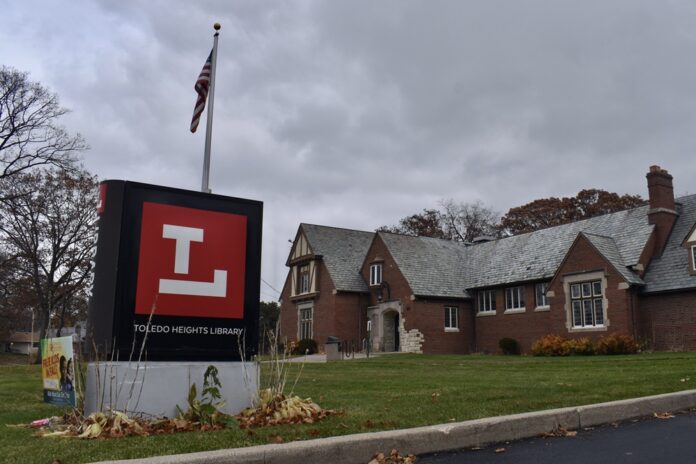
The Toledo Heights Library branch. (TFP photo by Allyson Ritchey)

TOLEDO–The Toledo Heights Branch doesn’t quite have the hushed atmosphere one might expect at a library, especially one closing at the end of the year. Instead, it resonates with activity—keyboards clicking, phones connecting and greetings exchanged between staff and patrons the moment the front door opens. It’s an atmosphere the neighborhood will soon be without.

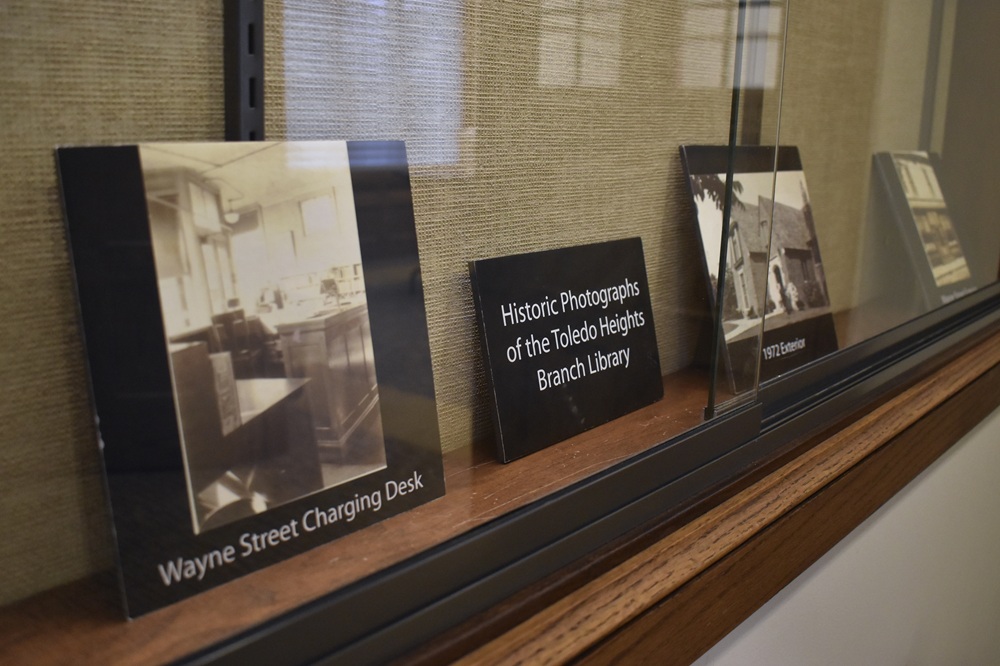
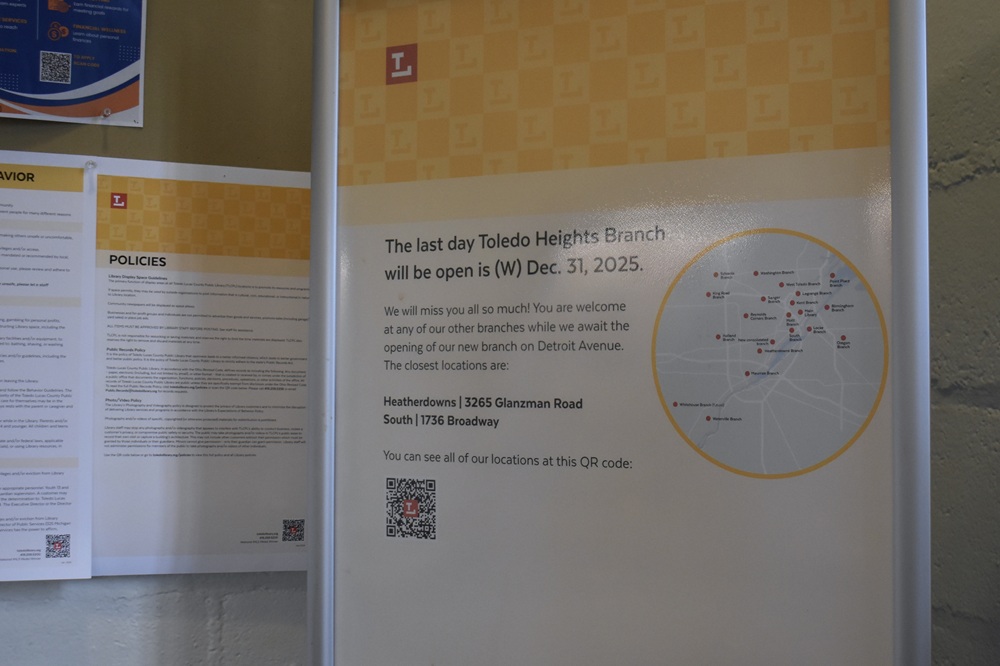
This community connection began nearly a century ago when the library first opened in rented quarters in 1926 and was solidified in 1935 when the current structure on Shasta Drive was built under the federal Public Works Administration (PWA). Now, that nearly 90-year history of service in a historic building is coming to an end as the Toledo Lucas County Public Library (TLCPL) has confirmed the branch will permanently close its doors on Dec. 30, 2025.

The decision, officially passed by the Board of Trustees, is driven by the immediate need to close a $2.8 million operational deficit and avoid an estimated $6 million in structural repairs necessary for the aging, PWA-era facility. But for lifelong residents, this closure represents a loss of a neighborhood institution.

The Toledo Heights Branch supports children’s programming. (TFP photo by Allyson Ritchey)

What the library means to the community

For residents of the Toledo Heights neighborhood, the branch serves as a social and digital hub. 

Judy Scott, a long-time patron who walks to the branch, is concerned about the coming change. “It means a lot to a lot of people in this area,” she said. “With it moving, it’s going to be farther away, and I have a bad hip, so, I mean, it doesn’t… losing this branch will be kind of lonely.”
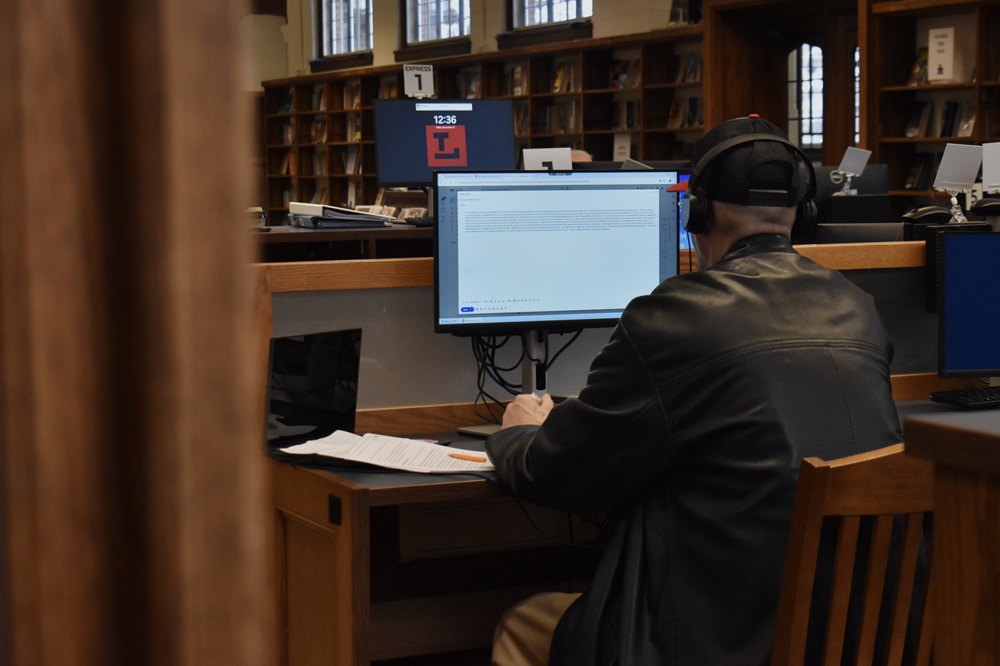
Patrons like Scott rely on the free Wi-Fi and computers. “I talk to my friend down in Columbus, because I don’t have internet at home,” Scott said, describing her library use. This access allows patrons to complete essential tasks like job searching, applying for government services and accessing health information.

Beyond digital access, the branch regularly hosts Connecting Kids to Meals, a program providing hot, nutritious meals at no cost to children after school and throughout the year. The program often runs alongside activities like the Nintendo Gamers’ Guild, where young patrons use the branch’s Switches and iPads to play games like Super Smash Brothers and Mario Kart. The combination ensures children have access to meals, a safe space and digital resources after school.

The branch is also a center for adult literacy and community meetings, providing essential meeting space for local groups like book clubs.

Donald Mullen, a local who has used the branch since the 1960s, closed his library account on Friday, Nov. 21. “None of the stuff I went to in this town is here anymore. Most of my churches are gone. Most of my places I lived are disappearing, and now this building’s gonna disappear,” he said. “It’s like, why am I staying here?”

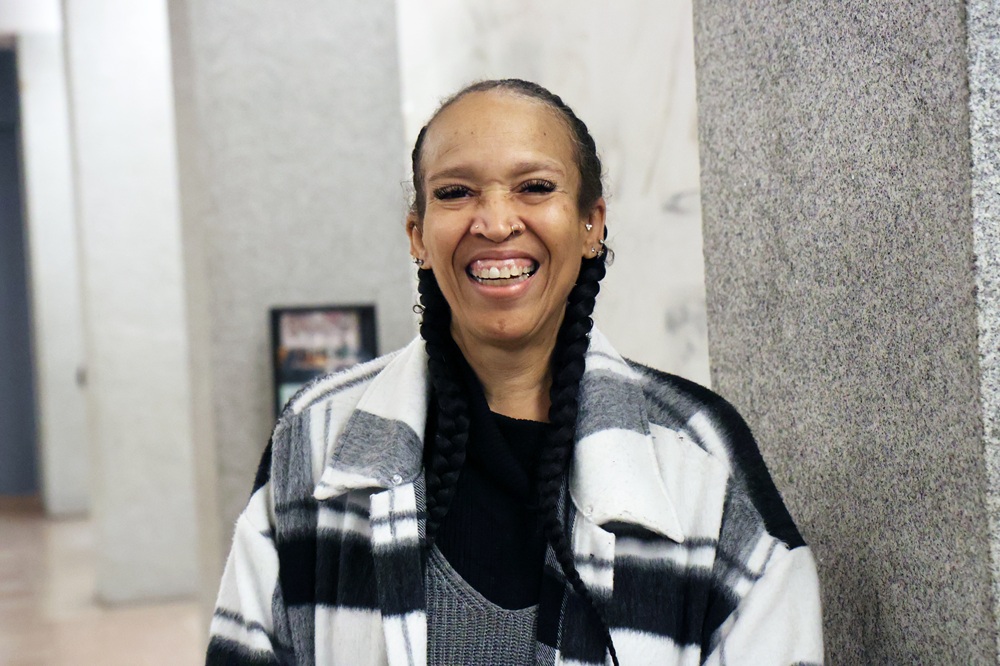
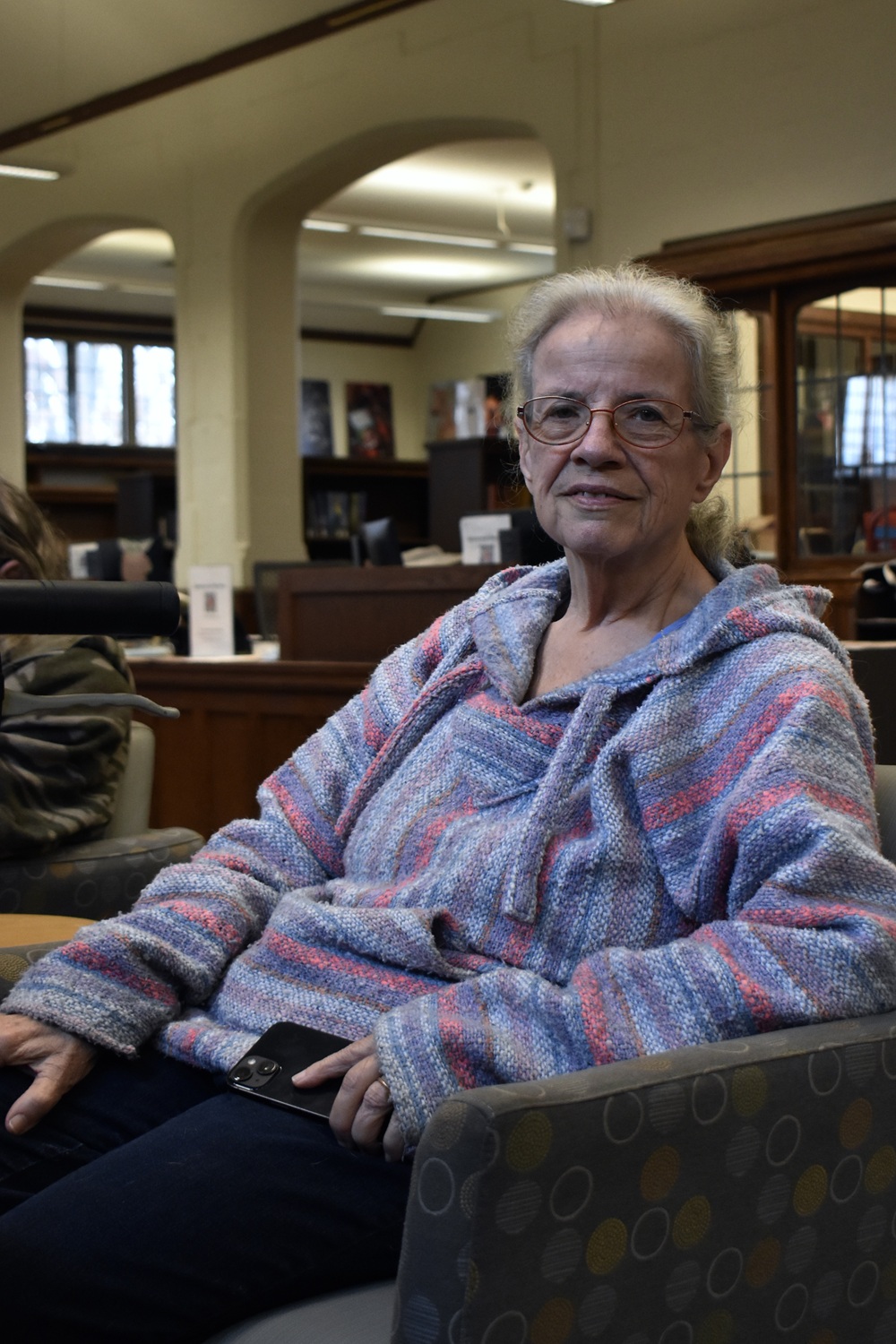
Judy Scott, patron of the library. (TFP photo by Allyson Ritchey)

TLCPL’s strategy

Library administration maintains that the closure is necessary to protect the fiscal health of the system while expanding access for the wider community.

Communications strategist Stephanie Elton confirmed the TLCPL faces a $2.8 million operational deficit and must contend with a $1.6 million reduction in state funding. Director of Public Services Cathy Bartel cites accessibility issues of the 1935 building, which requires $6 million just to be brought up to modern standards.

“If you’ve gone to Toledo Heights and have tried to open those front doors, you know that’s not… accessible,” Bartel said. She noted the lack of an elevator to the basement meeting room, lengthy paths without handrails to the entrance and insufficient restrooms. Bartel said the new facility will address these issues and serve patrons currently unable to access the outdated structure.

The Library has stated that the commitment among the staff remains high. All of the staff members have been reassigned to other branches within the TLCPL system, a process managed according to contract agreements. Bartel indicated that staff mobility is not unusual, as most employees have worked at multiple locations before coming to the Toledo Heights branch, allowing them to remain dedicated to serving the public.

Bartel also stated the branch’s poor visibility and low traffic contribute to consistently low usage metrics, stating that the new, high-visibility facility is expected to attract more users.

The closure is the first phase of a new strategy to create a centralized “super branch” to serve South Toledo.

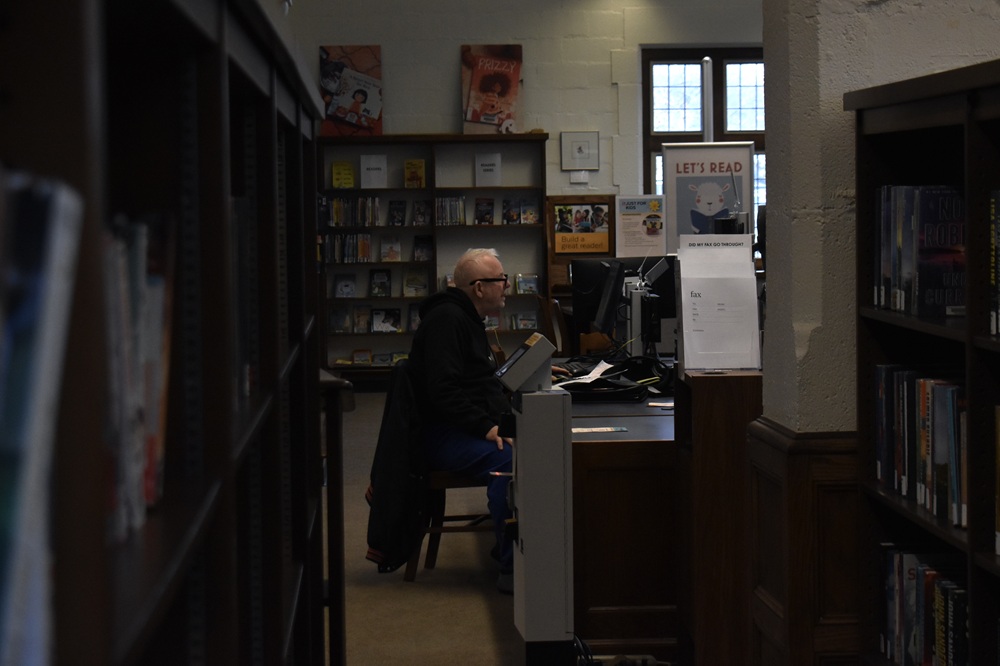
The PWA-era interior of the main part of the Toledo Heights Branch. (TFP photo by Allyson Ritchey)

Services will be consolidated into the existing Heatherdowns branch, 3 miles from the Toledo Heights location, until the new facility opens. On Oct. 28, City Council approved the rezoning of a 15-acre parcel on Detroit Avenue near WGTE for the new building. The goal is to open the consolidated, fully accessible branch in 2028. The new branch will be located 1.5 miles from both the current Toledo Heights and Heatherdowns branches.

The gap between the Toledo Heights closure in December 2025 and the new branch opening in 2028 creates a service disruption. Bartel acknowledged the closure “will be a disruption” to patrons and said replicating specialized programs at an already busy branch presents a challenge.

Furthermore, the loss impacts food security. The Toledo Heights branch currently serves as a location for the Connecting Kids to Meals program. Following the closure, families will have to travel to the next closest location, such as the Heatherdowns Library or the South Toledo Library, for meal access.

For those without personal transportation, the lack of a local library during this three-year period presents challenges. Patrons like Scott, who already anticipates mobility difficulties, and families who depend on programs like Connecting Kids to Meals, will need to find alternative arrangements until the new building is completed.

As the Toledo Heights branch prepares to close on Dec. 30, the library continues its regular operations and programming, including this year’s final Winter Wonderland celebration. The TLCPL maintains the closure is a fiscally necessary step toward a modernized, accessible system, while residents prepare for the loss of their neighborhood branch and the three-year gap before the new facility opens in 2028.

Beneath the surface: the veteran behind Right at Home

0
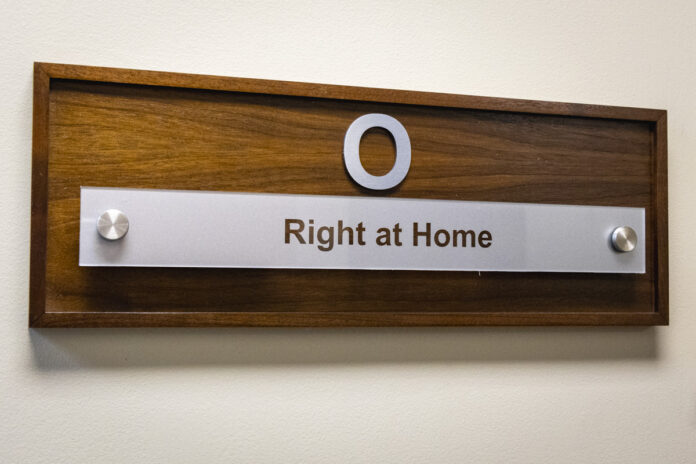
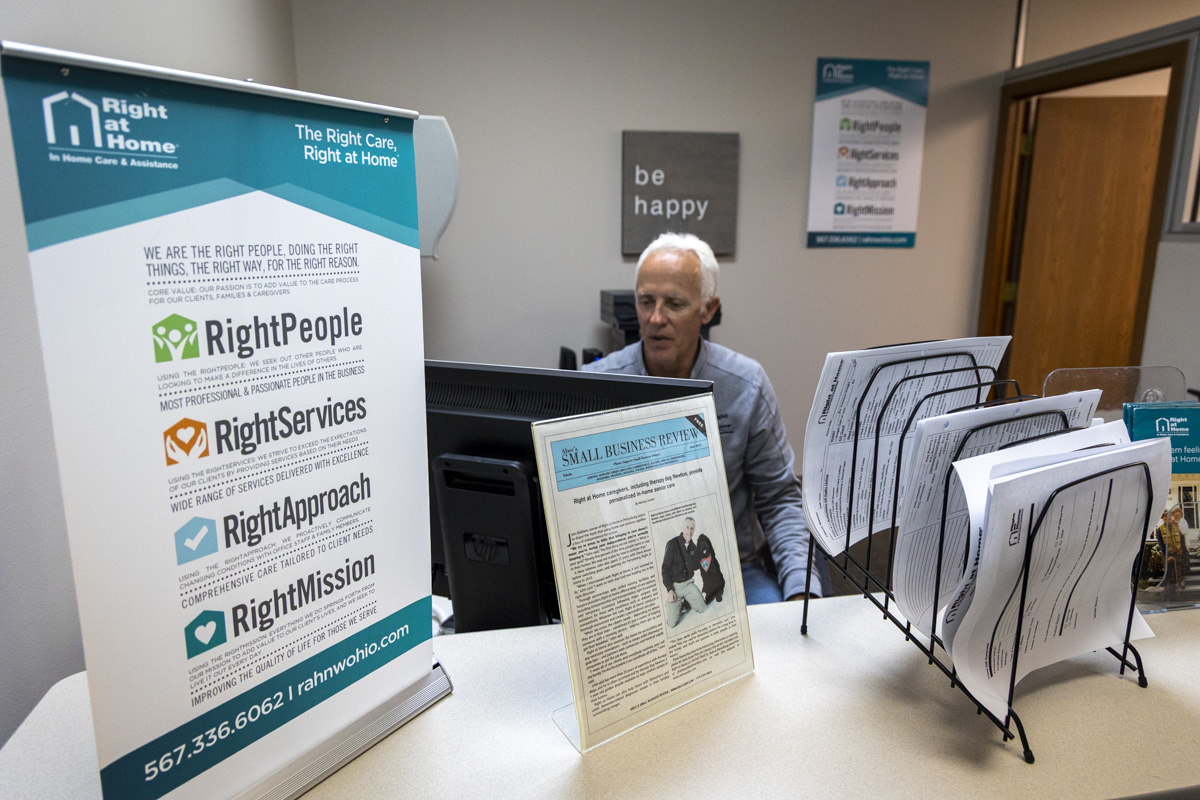
The Right at Home office is located at 134 W South Boundry St. Ste. O Perrysburg. (TFP photo by Gaven Hafner)

PERRYSBURG – At 64, Navy veteran John Baldwin has lived two very different lives: one deep under the ocean aboard nuclear submarines and the other inside the homes of families navigating the challenges of aging and needing care. Today, as the owner of Right at Home, Baldwin provides in-home care for seniors who want to remain where they’re most comfortable.

“The whole thing of home care…I mean, you’re stepping into stressful situations with families. They’re trying to figure out how to care for mom and dad, and they’re nervous about bringing people in the house, and you’re just working with all of those dynamics,” Baldwin said. (TFP photo by Gaven Hafner)

“We do in-home care and assistance for the elderly to help them to age in place. That’s the business, in a nutshell,” he said.
Before running a care agency, Baldwin was in the Navy as a submariner from 1979 to 1985. For his six years of service, Baldwin was part of the Navy’s nuclear program where he was stationed on nuclear submarines.

“It was pretty intense; it was a lot of learning,” he said. “The six years stay in the Navy involved two years of nuclear power school, two years where I worked at a prototype as a naval instructor, and then it was two years in the submarine fleet.” Baldwin said.
Life underwater was structured and isolating, but Baldwin adapted to it. For Baldwin, patrols lasted three to four months at a time between returning to port. “Your days just melt together,” he said. 

After leaving the Navy in 1985, Baldwin landed a job at Davis-Besse Nuclear Power Station, where he worked for 20 years. But as his parents and in-laws grew older, Baldwin encountered the struggles of finding reliable, compassionate care.

“God redirected my career path in a big way. My parents were aging, and I was having trouble finding care for my dad and my wife’s parents,” Baldwin said. “After interviews with Right at Home, it just seemed like a good fit, like people need help with this finding care for their mom and dad, so that’s how we got into this.”

Since opening his franchise in 2010, Baldwin has worked with many families to help provide care and support.

“It’s a mixture of one or two visits a week to full time care. It really depends what the family needs and where they’re at and the whole aging process,” Baldwin said. Compatibility between the caregiver and the client is a big priority to Baldwin. “When your caregiver comes to the house, you want to look forward to the caregiver coming, and you don’t want to be dreading their visit,” he said.

As a veteran himself, Baldwin now makes sure aging service members receive the help they are entitled to. A fellow veteran once encouraged him to check his own eligibility, which resulted in Baldwin receiving benefits he didn’t realize he had qualified for.

“If it wasn’t for him telling me to just go check it out, I never would have got those,” he said. Now Baldwin passes that same guidance onto others.

“When I meet a client, one of the questions I ask them is, ‘Are you a veteran?’ And once I find out they’re a veteran I guide them, like I was guided, that you need to go and check this out and see if you can get benefits,” he said. “Families need to know that if they have vets that don’t let those benefits go to waste,” Baldwin said.

For Baldwin, the work remains a continuation of the values shaped during his years in the military. His commitment to guiding families, supporting veterans, and ensuring older adults can remain safely in their homes reflects a lifetime spent answering the call to serve. And as he looks toward the future of Right at Home, Baldwin remains focused on the simple mission of making sure no family has to face the challenges of aging alone.