Home Blog Page 41

Anthony Wayne news: Waterville approves 6-month moratorium

0
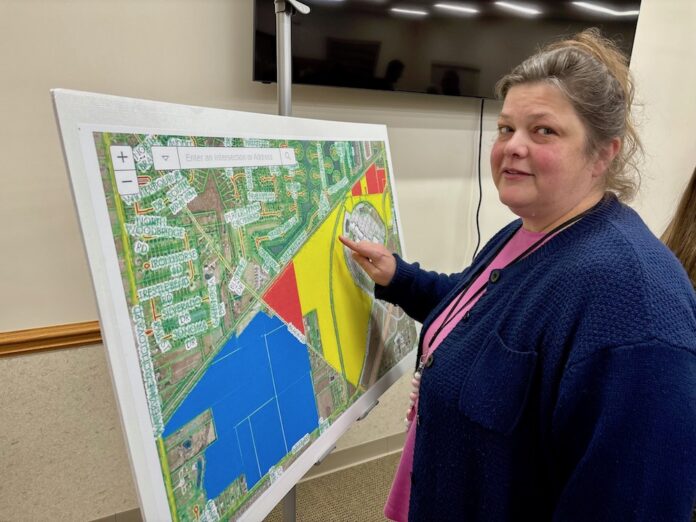
Janet Jacobs, who owns property on Monclova Road, points to a map of mall-area property after the Dec. 1 Monclova Township trustees' meeting. The map is posted online at monclovatwp.org. (AWFP photo by Karen Gerhardinger)

And Monclova hears data center discussion

ANTHONY WAYNE – Waterville City Council passed a six-month moratorium on data centers while Monclova Township trustees continue to answer questions from residents concerned that such a development will go in around the Shops at Fallen Timbers. These are just a few of the updates from December meetings in the Anthony Wayne area.

Waterville

After more than an hour of discussion, Waterville City Council on Dec. 8 voted 7-0 in favor of imposing a six-month moratorium on data centers.

“Oh my god. We were unanimous. It’s a miracle,” said Council Member Mary Duncan.

Initially, Duncan pushed Council Member Wayne Wagner – who began asking for a moratorium a few months ago – to explain why the city needed to be the first to enact a moratorium, especially since the city doesn’t have any properties suitable for a data center, she said.

Wagner said the city needs to be a leader and set the tone for the entire Anthony Wayne community with a moratorium, which he wants to allow more time to research the pros and cons. More information that has come to light since council approved, on Sept. 8, amendments to its zoning code to allow data centers in M-1 zoned areas, he explained.

“So much more has come to light since then. This will give us time to plan,” Wagner said.

At the start of the three-hour meeting, residents Lisa Haberstock, Lisa Webber and Paul Miller urged Council to pass a moratorium to give the city time to dig deeper into impacts – on the environment, health and the city overall. 

Resident Scott Jahns said he was concerned that a moratorium would send a negative message to potential businesses and impact the city’s economic development efforts. This was a sentiment echoed by Rod Frey, who noted that business tax revenue is vital to cover increasing costs of services without raising income tax rates on residents. 

The city has enacted moratoriums on self-storage units and car washes, and that hasn’t stopped Meijer, The Collective and other new businesses from launching in the city, countered Wagner.

“I would argue that a data center will stop the kind of development we want,” Wagner said, stating that no restaurant would want to pay $360,000 an acre to build in the city. 

“We’re not putting a moratorium on business development – we’re just pausing what we might do for a data center,” said Council Member John Rozic. “We’re protecting the community from what we don’t know.”

Todd Borowski agreed, stating that he wanted to slow up the process to allow Council to do its due diligence. Anthony Bruno pointed out that while the city might enact a moratorium, the reality is that neighboring Waterville Township and Monclova Township are just a mile away and could get a data center that impacts residents unless they follow suit. 

After much debate, Council settled on a six-month period that Mayor Tim Pedro said should include benchmarks for research done by Council and administration – not an ad hoc committee of citizens as some suggested. Near the six-month point, Council could decide to extend the moratorium if desired.

Waterville resident Shannon Bostelman speaks to Waterville City Council about a moratorium on data centers. (AWFP photo by Karen Gerhardinger)

During the meeting, council also:

-Recognized outgoing Council Members Anthony Bruno and John Rozic for their service. Bruno, who has served eight years, decided not to run for office for a third term. Rozic served 12 years and is term-limited. Because not enough qualified candidates were on the ballot, Council will select their replacements in January.

– Heard that 10 candidates submitted letters of interest to fill  the two open positions: Rob Allen, Karen Eboch, Chris Gomez, Tim Guzman, Michael Hampton, Scott Jahns, Nick Kaufman, Nick Sargent, Amy Self and Colleen Weaver. Guzman previously was one of five candidates who applied to fill Anthony Garver‘s position when he resigned in June; Council selected Rod Frey.

-Adopted collective bargaining agreements with the Ohio Patrolmen’s Benevolent Association for the patrol unit and sergeant unit for 36 months.

-Passed ordinances to adopt temporary appropriations for 2026 and to amend 2025 appropriations to reflect changes, including $35,400 for Waterville Township property tax sharing agreements. Gochenour explained that over nine years the city has paid $$689,000 with the township as part of an agreement to share property taxes in annexed areas.

-Learned that Austin Klapp, who has served as the city’s prosecutor, will serve as the law director, following the resignation of Kati Tharp.

-Heard that a suspect in the murder of a fellow resident in a Waterville nursing home will have a hearing this week to determine mental capacity. 

-Learned that firefighter/paramedic Bryan Cox is organizing a fire safety explorer program for high school students.

-Approved Pedro’s committee appointments, including: Mike Roetter, Board of Zoning Appeals; Andrew Sherman, Charles Monus, Mary Beth DeMatteo and Nancy Bucher, Tree Commission; Landon Drewes, Finance Committee; Scott Jahns, Riverbend Industrial Park Committee; Terry Rousseau and James Stoma, Historic District Commission; Doug Parrish, Planning Commission; Jeff Marty, Civil Service Commission; Nick Sargent, Tim Guzman, Mike Metzger, Stephanie Gabel, Frederick Greive, John Morse, Brad Fox, Cindy Schultz, Greg Aubell and Scott Jahns, Public Works Committee; and Robert Kennedy, Rose Kandik and Elaine Parrish, Parks and Recreation Committee. 

John Rozic and Anthony Bruno were honored for their years of service on council. Rozic wrapped up his third term while Bruno finished his second. Their positions will be filled in January. Ten candidates applied for the positions. (AWFP photo by Karen Gerhardinger)

Monclova 

Faced with repeated questions about property around the Shops at Fallen Timbers as a possible location for a data center, Monclova Township Trustees asked zoning administrator Eric Wagner to create a map showing which properties are in the township – and which ones are controlled by Maumee.

During the Dec. 1 meeting, trustees referred to the map, which shows 200 acres owned by Monclova Properties LLC on the west side of Black Road in the township, along with property surrounding the mall, which is in Maumee. The city of Maumee annexed three properties from the township over the past five years, explained Trustee Chuck Hoecherl

“We do not have any control over the zoning or the conditions that Maumee may or may not put in,” Hoerchel said of the red and yellow properties, which are just south of Waterside.

The meeting was packed with people opposed to a data center, including Waterside residents Judy Imhoff, Susan Mann, Judith Booker and Suzanne Peats, who asked trustees to enact a moratorium on data centers in order to allow more time to study the potential impacts on power, water, wildlife, quality of life and housing values.

“In my opinion, a moratorium sends a message to the property owner that ‘we do not want to work with you,'” said Hoecherl, referring to the 200 acres in the township. “We cannot prohibit a legal business. And property owners have rights too.”

While Hoecherl said he’s seen plans by Monclova Properties LLC to build 300 homes and a small commercial building abutting hole No. 10 on Fallen Timbers Fairways, that property could be considered for a number of projects. The process that the township put in place for the agriculturally-zoned land would require a conditional use permit to build a data center, and that would give the township more control over lighting, setbacks, noise and other factors.

One concern is that if the township institutes a ban, that property owner could just apply for annexation into Maumee. While the township and Maumee have been at odds over the years regarding annexation, Hoecherl said he was setting up a meeting with new Maumee Mayor Chelsea Ziss and concerns about annexation and data centers would be shared.

Earlier this year, Maumee approved data centers as a permitted use on the mall-area property within the city. But on Dec. 1, Maumee held a first reading to amend two ordinances that would require a conditional use permit on any proposed data center – which means that a proposal would come before the Planning Commission and have to meet a certain set of standards or requirements. 

“The ordinance being considered is changing language that refers to data centers from permitted use to conditional use,” said Maumee spokesperson Nancy Gagnet.

If an application comes in for a data center, the township will post it on the website and place a sign on the property; then the Board of Zoning Appeals will hold a public hearing and review the permit application. The trustees and the Joint Economic Development Zone board will not make that decision, noted Fiscal Officer Gavin Pike, who added that he lives on Black Road and has the same concerns.

During the meeting, the trustees also discussed the annex building, a former church at 8353 Monclova Rd., that the trustees purchased for $275,000 in Sept. 2024. The township asked the Postmaster General to consider using the property for a new post office to meeting the needs of a growing community, but outgoing Trustee Trudy Vicary said she isn’t holding her breath.

Instead, she’s lobbying for the township’s administrative staff to be moved to the site, along with a larger meeting room, in order to open up more space for the fire department to have enough sleeping quarters and training space. Pike said the committee looking at expanding the fire department didn’t think that was necessary, but trustees directed administrator Harold Grim to seek more information.

Whitehouse

Whitehouse Village Council held a brief meeting on Dec. 2, followed by a session to review the proposed budget. During the meeting, council:

-Learned that the Whitehouse Fire Department reached an all-time high call volume of 1,000 incidents as of Dec. 1.

-Heard that a new furnace will be installed in the Whitehouse Park shelterhouse by the end of the year, enabling the facility to be rented year-round.

-Learned that Fire Chief Jason Francis is working with Scout Pack 97 to earn first aid merit badges during a Dec. 15 gathering at the fire station.

-Passed ordinances to update rates and fees, comp time, pay classifications and council conduct.

TMA preps for gallery closures on Dec. 15

0
The Great Gallery is among the spaces the museum announced will close Dec. 15 as part of its reinstallation project. All galleries will reopen in 2027. (Photo courtesy of Toledo Museum of Art)

TOLEDO— Major changes to the Toledo Museum of Art are in the works this month with a wave of gallery closures that will take a number of visitor favorites off view until 2027. 

As it moves into the next phase of its first comprehensive gallery reinstallation in more than 40 years, the museum announced a long list of galleries in its west wing that are closing Dec. 15. These include the iconic Great Gallery and galleries featuring Dutch, French Baroque and Rococo paintings and sculptures, European art and selections from TMA’s jewelry collection. 

These galleries will remain closed, and their artwork — including “The Architect’s Dream” by Thomas Cole, “Blind Man’s Buff” by Jean-Honoré Fragonard, and “The Crowning of Saint Catherine” by Peter Paul Rubens — will remain off view until the grand re-opening in 2027.

These closures follow those of Levis Gallery at the end of July and the Cloister Gallery, which closed in February so it could be disassembled and moved to a different part of the museum. 

Adam Levine, TMA’s Edward Drummond and Florence Scott Libbey President, Director and CEO. (TFP Photo/Laurie Bertke)

More than 100 people packed into the museum’s Little Theatre on Nov. 16 to hear a project update from TMA’s director and CEO, Adam Levine.

Levine, the 11th director since the museum’s founding in 1901, spoke for an hour and sought to address many of the most frequent concerns and criticisms surrounding the project. 

“It would be easy to look at me, so many people who have been coming to the museum for so long, and think, ‘Who is this person who’s changing these galleries?’” said Levine. He became the museum’s youngest director at 33 years old when he was appointed in 2020.

Now in the sixth year of his directorship, Levine emphasized his commitment to the museum and to Toledo. Levine noted that he speaks with every former living director of the museum on a monthly basis.

“Everything that we are doing is not only consistent with the Toledo Museum of Art’s values and ethos, but it will in fact make the experience better for anyone,” he said. “Change is hard, but change can be better, and I think you will see some really exciting things that we have planned for you.”

Audience members listen to a project update from TMA’s director and CEO, Adam Levine. (TFP Photo/Laurie Bertke)

Why make changes now?

Levine said the short answer to the question of timing is that TMA’s heating and cooling system is at the end of its useful life and needs total replacement. 

Since the HVAC system mostly exists in the attic and is divided into separate units, galleries must close as different zones are replaced throughout the building. 

“You cannot leave artwork in galleries that do not have humidity and temperature control,” said Levine. “So forget the reinstallation — there was no universe in which every gallery of the Toledo Museum of Art wasn’t going to have to close by 2027 anyway, because the artwork would have needed to be moved as the HVAC unit was replaced.”

Museum leadership decided to seize on the opportunity to re-evaluate what Levine described as a “tired” conceptual framework that does not represent the world or the breadth of the collection as it has grown over the past 50 years adequately.

(TFP Photo/Laurie Bertke)

While the museum has seen incremental changes in the past 40 years, he explained these decisions were based on utilizing the space that was available at the time. 

“If you were designing a museum from scratch, you would not put your contemporary gallery next to your antiquity gallery,” said Levine. “You would not put your Southeast Asian archaeology gallery next to your Colonial American painting gallery. You would not create a new media gallery that runs right next to your Cloister.”

Levine also cited smaller cosmetic details that he said are not up to Toledo standards, such as water stains on burlap fabric in the west wing and 40 years worth of nail holes from moving artwork around. “I love these galleries as much as anyone, but it is possible for the galleries to hold remarkable art and to look dated,” said Levine. “There are all these things that are right in front of us that are obvious when said out loud, but they are not necessarily things we think of because we are used to the museum as it presents itself.” 

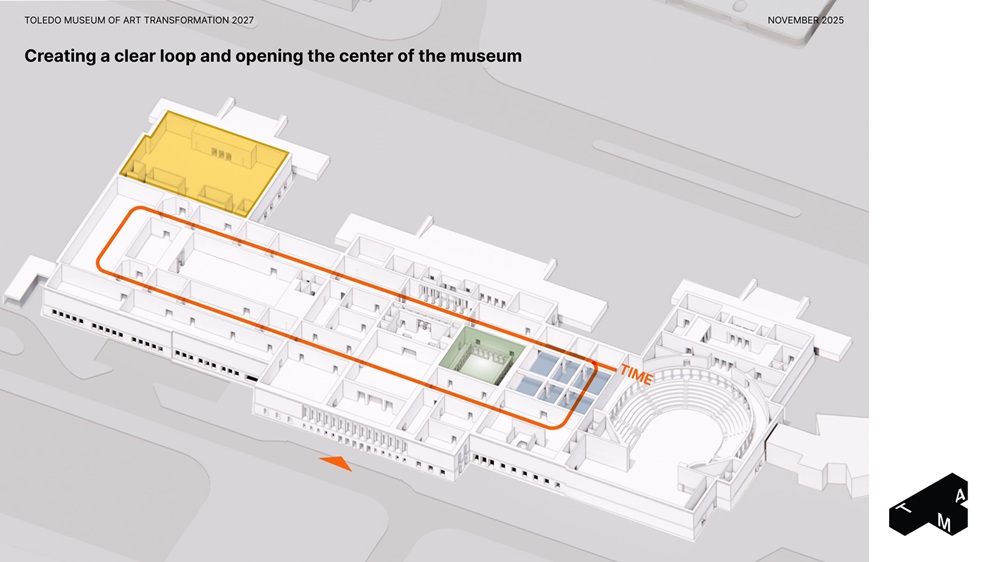
This rendering shared by the Toledo Museum of Art shows how renovations will restore the original loop flow envisioned by the building’s designer, Edward B. Green. A new temporary exhibit space will be created in the area shaded in yellow. (Image courtesy of Toledo Museum of Art)

A loop through time

Museum administration decided it would be more efficient in terms of time and cost to reinstall the galleries as part of the HVAC replacement.

They settled on approaching the reinstallation chronologically, with visitors moving through time beginning with antiquity in the east wing and working their way to present day in the west wing. To allow for easier navigation, renovations will restore the original loop flow envisioned by the building’s designer, Edward B. Green.

Collections will no longer be segmented by geography or media.

“To tell a true and integrated chronology, it’s important to understand everything that was happening simultaneously in different cultures during different periods,” said Levine. “We have an opportunity to tell a history of the world that shows how the world has always been connected.” 

Glass — which makes up one third of TMA’s collection — will still be featured in the Glass Pavilion but selected works will also be integrated into the collection in TMA’s Green Building. A new exhibit created in what is currently the Canaday Gallery will tell “a mini history of the world in glass” in a nod to Toledo’s reputation as the Glass City. 

Introductory galleries will also be created on either side of the building, with one featuring highlights from the museum’s collection over the decades and the other displaying recent acquisitions. 

Temporary exhibits will move from the Canaday and Levis galleries to a new larger exhibit space that is to be created at the far end of the west wing from what is now the American galleries, conservation lab and southeast Asian archaeology galleries. 

The museum’s iconic Great Gallery will remain “a great picture gallery, updated for the 21st century,” said Levine. He assured the crowd that when they enter that space in 2027 they will see some of the same iconic paintings they have come to expect on a red wall. “This is your museum, and I promise you when you come to the museum there will be moments of great familiarity, by design, not by accident,” Levine noted.

All the Impressionist paintings that visitors know and love will come back on view when the museum reopens. These works are off display now as they travel abroad in temporary exhibitions in New Zealand this year and Australia next year.  

The 17th-century room from the Chateau de Chenailles will also reopen after extensive restoration that includes the installation of a fourth wall. Visitors will be able to enter into the room for an immersive experience including screens behind the windows broadcasting views of the French landscape.

Improving accessibility and comfort

The reinstallation is not only about moving art around, Levine said, but about integrating art into the lives of people. This includes considerations of accessibility and comfort. 

More comfortable respite areas and seating will be added throughout the museum, and main floor bathrooms are also to be added for the first time in the museum’s history.

An accessible entrance at the northwest corner will help visitors move back and forth from the Green Building to the Glass Pavilion across the street with greater ease. Currently, visitors with mobility limitations need to use the elevator and make a quarter of a mile trek around the museum to the Glass Pavilion. The new entrance will reduce the journey to 520 feet.

Another less visible upgrade is the installation of power and data infrastructure throughout the build in anticipation of future needs. 

More than 100 people packed into the Toledo Museum of Art’s Little Theatre Nov. 16 to hear a reinstallation project update from TMA’s director and CEO, Adam Levine. (TFP Photo/Laurie Bertke)

Funded by ‘private philanthropy’

Levine struck a combative tone at times during the question and answer session of the town hall. He flatly refused to answer a question from the audience about the total cost for the reinstallation project, but promised the museum will remain free for all visitors.

“The benefit of being private is that we are never going to ask you for money for a levy. The benefit of being private is also that I don’t have to answer that question,” he responded.

Levine said the entire project is being supported through private philanthropy. Asked about whether that money comes with any strings attached, he responded that the money coming in is “overwhelmingly unrestricted.” 

“The only restrictions are by design and they are being suggested by the curatorial and administrative staff of the museum,” added Levine.

He assured the audience that the museum has carefully budgeted for the reinstallation. “You are allowed to disagree with any part of this project. You are not allowed to critique us for not being sufficiently thoughtful. That’s the deal,” he told the crowd. 

Listening to community feedback

Levine told the Toledo Free Press that the town hall is part of a series of events TMA has done to engage and gather feedback about the project from the community. He said the museum is striving for “the most community-informed reinstallation of any museum in the country,” with more than 1,000 people consulted to date.

“We are doing our best with a major project that means a lot to this community,” Levine said. “We understand that we are not going to get everything right, so this is our chance to continue to listen, to learn and to be able to take those lessons forward throughout the project.”

Part of that listening has involved the creation of a Community Council made up of representatives with a variety of perspectives and backgrounds to offer input on the project. 

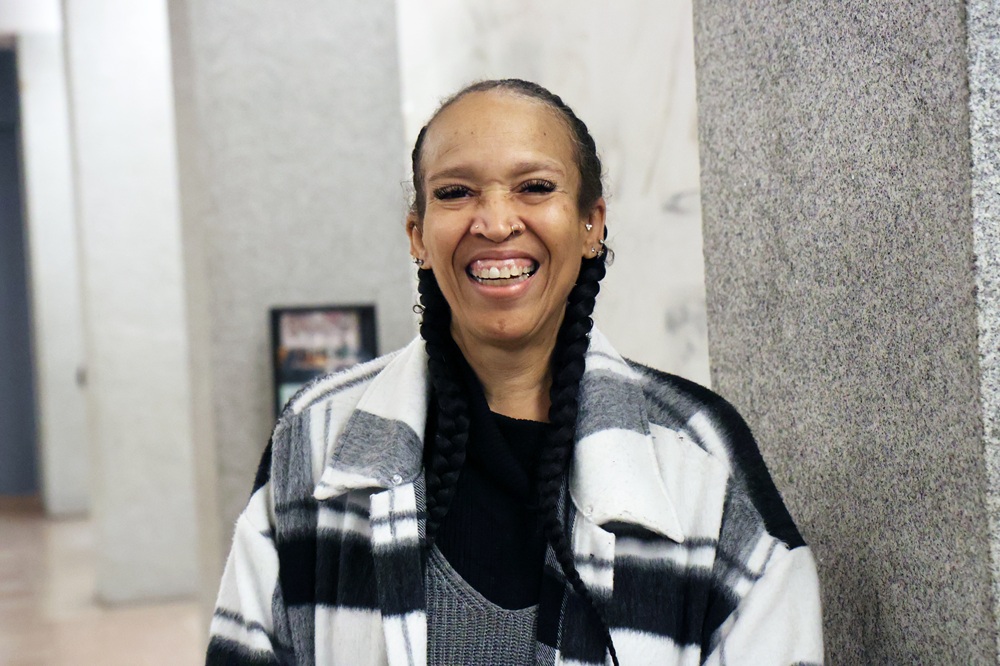
Tina Hall, a member of TMA’s Community Council that has provided input on the project, is hoping the updates make the museum more accessible to all residents. (TFP Photo/Laurie Bertke)

One member is Tina Hall, a second-grade teacher for Toledo Public Schools and resident of the Englewood neighborhood in which the museum resides. She and her daughter live close enough that they can walk to the museum and visit frequently.

An example of work the council has assisted with has been providing feedback on the art descriptions posted around the museum to help make them more understandable for all visitors, not only people with art history backgrounds. “This is everybody’s museum,” said Hall.

She is personally excited for the chronological layout. “The hardest thing for people is change. And I think when you say you’re getting ready to change something that’s been here since 19-such-and-such, people think of the negative as opposed to the positive,” she added. “But the changes are going to be positive. Hopefully it will bring more people into the art museum that typically don’t come to the art museum.”

After the Dec. 15 gallery closures, Levine said the public should expect rolling closures of additional galleries about every six months. The museum as a whole will continue to offer programming on campus through the grand reopening, including activities in the education wing, the Glass Pavilion and the Peristyle. 

Letter to the editor: Toledo needs a pediatric cooperative now

0
Pexels photo by Karola G.

My beautiful daughter, Carly, passed away a year ago from complications of Progeria, an ultra-rare condition occurring in an estimated 1 in 20 million births. Carly was one of the faces representing Mercy Children’s, helping to raise funds through Children’s Miracle Network Hospitals. I know firsthand that high-quality pediatric care is expensive, essential, and time sensitive.

This is why I believe we are incredibly fortunate to have a nationally ranked partner like Nationwide Children’s Hospital committing to bring expertise and resources to the Toledo region. Their commitment is the foundation upon which we must build.

Today, we are in a stalemate focused on corporate turf, not kids’ needs. Our three major health systems have three different positions: one system (Mercy Health), which transferred operational control of its pediatric unit to Nationwide Children’s in 2022, relies on an active breach-of-contract lawsuit filed in Lucas County Court as its main negotiating tool; another system (ProMedica) understandably refuses to mediate with a pending lawsuit, a stance Judge McNamara acknowledged as reasonable; and a third system (Nationwide Children’s) stands ready to partner but is caught in the legal crossfire, while caring for our kids. In short, legal posturing is standing in the way of our children getting the collaborative care they need. 

Collaboration is not a naturally occurring phenomenon; it’s something we build purposefully, together, utilizing all the benefits of modern technology to serve the needs of Northwest Ohio kids, like my Carly. No hospital system can own every expensive piece of machinery for all specialties, but as a community, we can certainly organize to make sure that families have access to all the care they need. We have the skills, the heart, and we have the need. 

From my perspective, the current stalemate threatens the very collaborative premise that inspired 40+ new physicians and specialists to select Northwest Ohio to practice their skills. We cannot afford to lose this talent or momentum.  

We need a clear starting place, which is why I was encouraged by the recent “unified statement” signed by our local leaders. I call on those signatories, particularly Mayor Kapszukiewicz and County Commissioners Lisa Sobecki, Pete Gerken and Anita Lopez, to transform their political will into a publicly-shared framework that addresses urgent needs and ends the stalemate by creating: 

  • A unified, seamless Electronic Health Record (EHR) system for Northwest Ohio’s pediatric patients so that regardless of where kids get care, all providers access the same single record, images, labs, notes, and prescriptions.
  • Defined roles to ensure kids have access to the care they need, whether routine, specialty, or complex care (tertiary) including coordinated resources in Columbus. 

Toledo needs an intentional, cooperative, and comprehensive pediatric solution. Our kids can’t wait. I respectfully ask that our leaders force the conversation in a transparent way that shows the cooperation (or lack there of) from all sides, without delay.  I also ask fellow parents and medical staff, specifically pediatric staff, to speak out and be heard on this crucial issue for our community. 

Neighborhood residents react to Toledo Heights Library closure

0
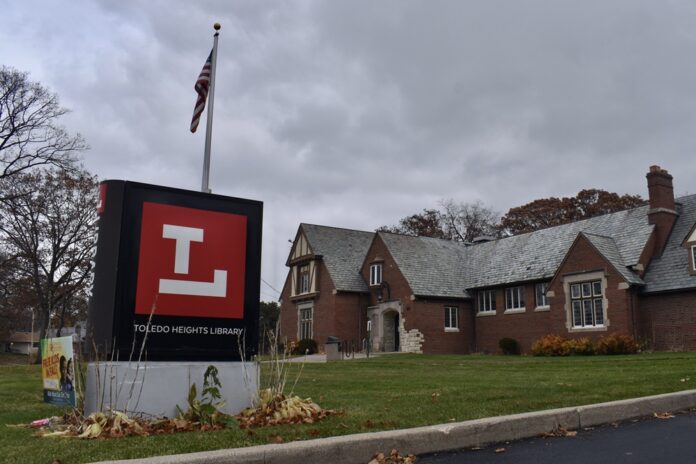
The Toledo Heights Library branch. (TFP photo by Allyson Ritchey)

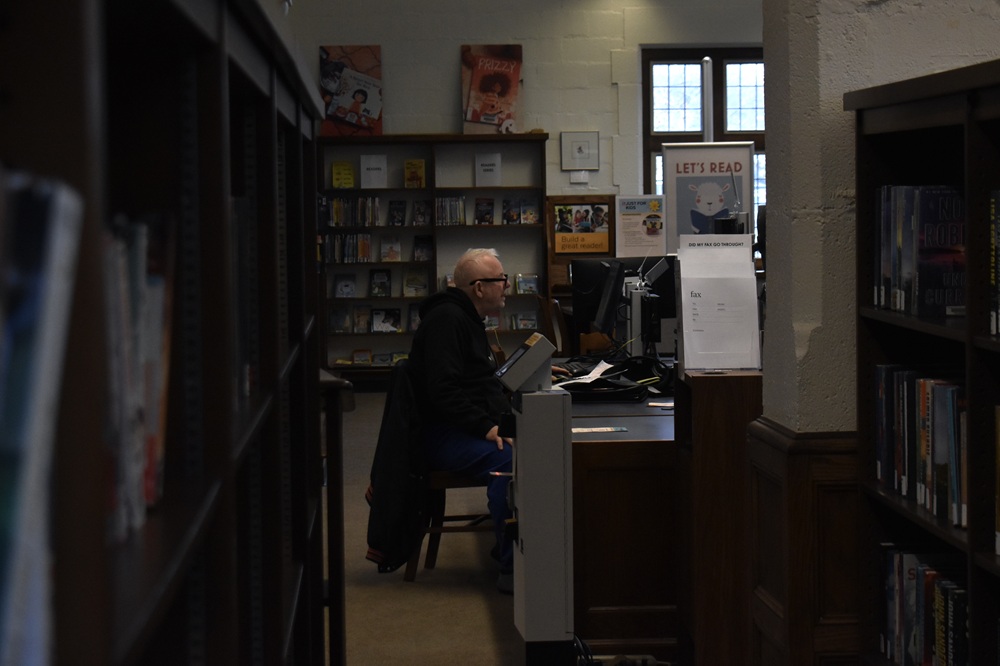
TOLEDO–The Toledo Heights Branch doesn’t quite have the hushed atmosphere one might expect at a library, especially one closing at the end of the year. Instead, it resonates with activity—keyboards clicking, phones connecting and greetings exchanged between staff and patrons the moment the front door opens. It’s an atmosphere the neighborhood will soon be without.

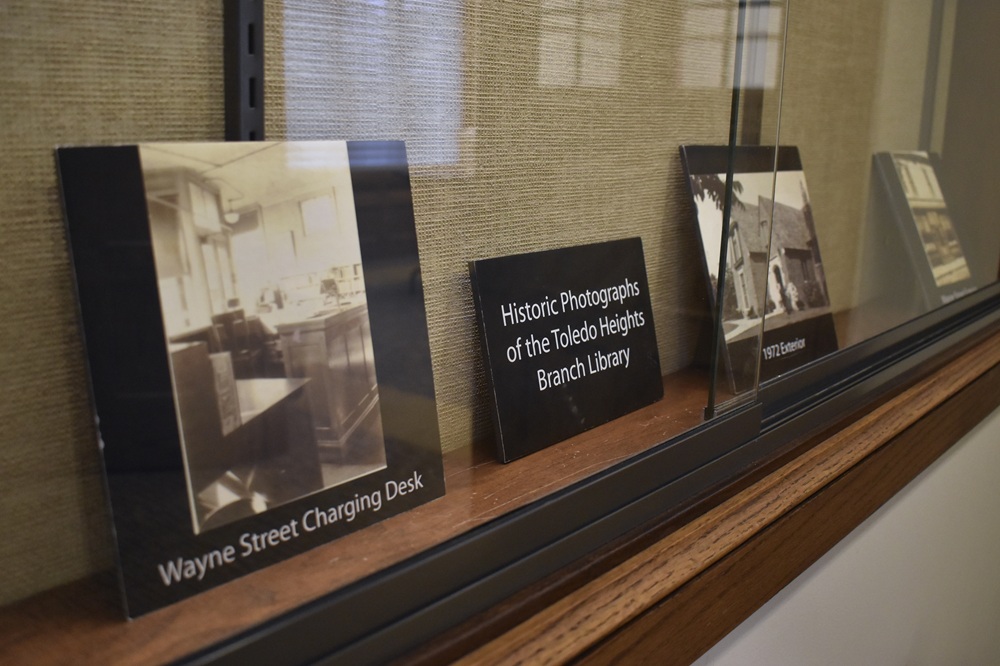
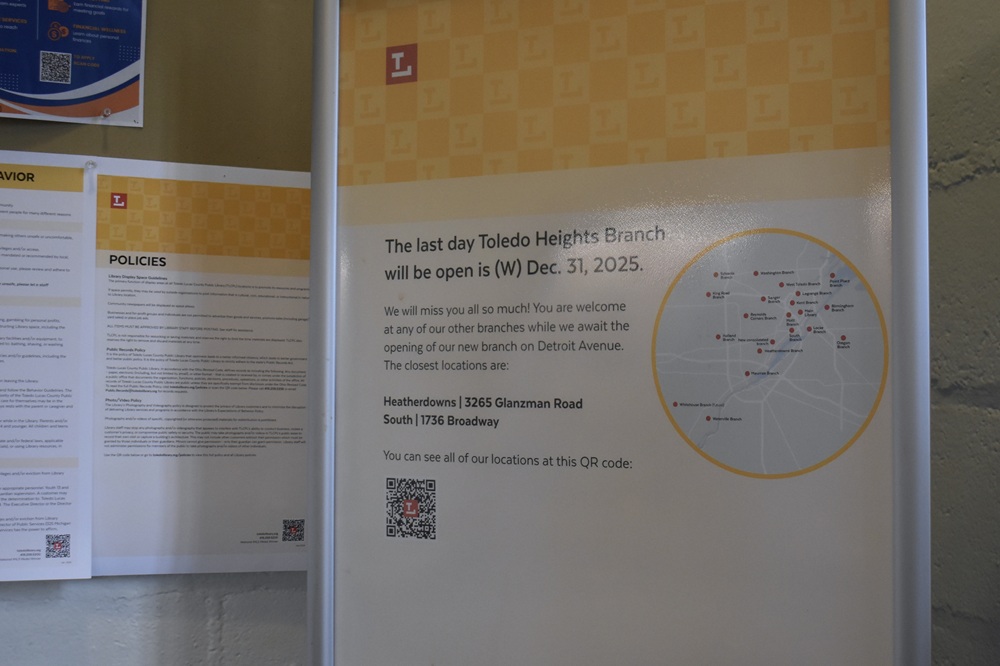
This community connection began nearly a century ago when the library first opened in rented quarters in 1926 and was solidified in 1935 when the current structure on Shasta Drive was built under the federal Public Works Administration (PWA). Now, that nearly 90-year history of service in a historic building is coming to an end as the Toledo Lucas County Public Library (TLCPL) has confirmed the branch will permanently close its doors on Dec. 30, 2025.

The decision, officially passed by the Board of Trustees, is driven by the immediate need to close a $2.8 million operational deficit and avoid an estimated $6 million in structural repairs necessary for the aging, PWA-era facility. But for lifelong residents, this closure represents a loss of a neighborhood institution.

The Toledo Heights Branch supports children’s programming. (TFP photo by Allyson Ritchey)

What the library means to the community

For residents of the Toledo Heights neighborhood, the branch serves as a social and digital hub. 

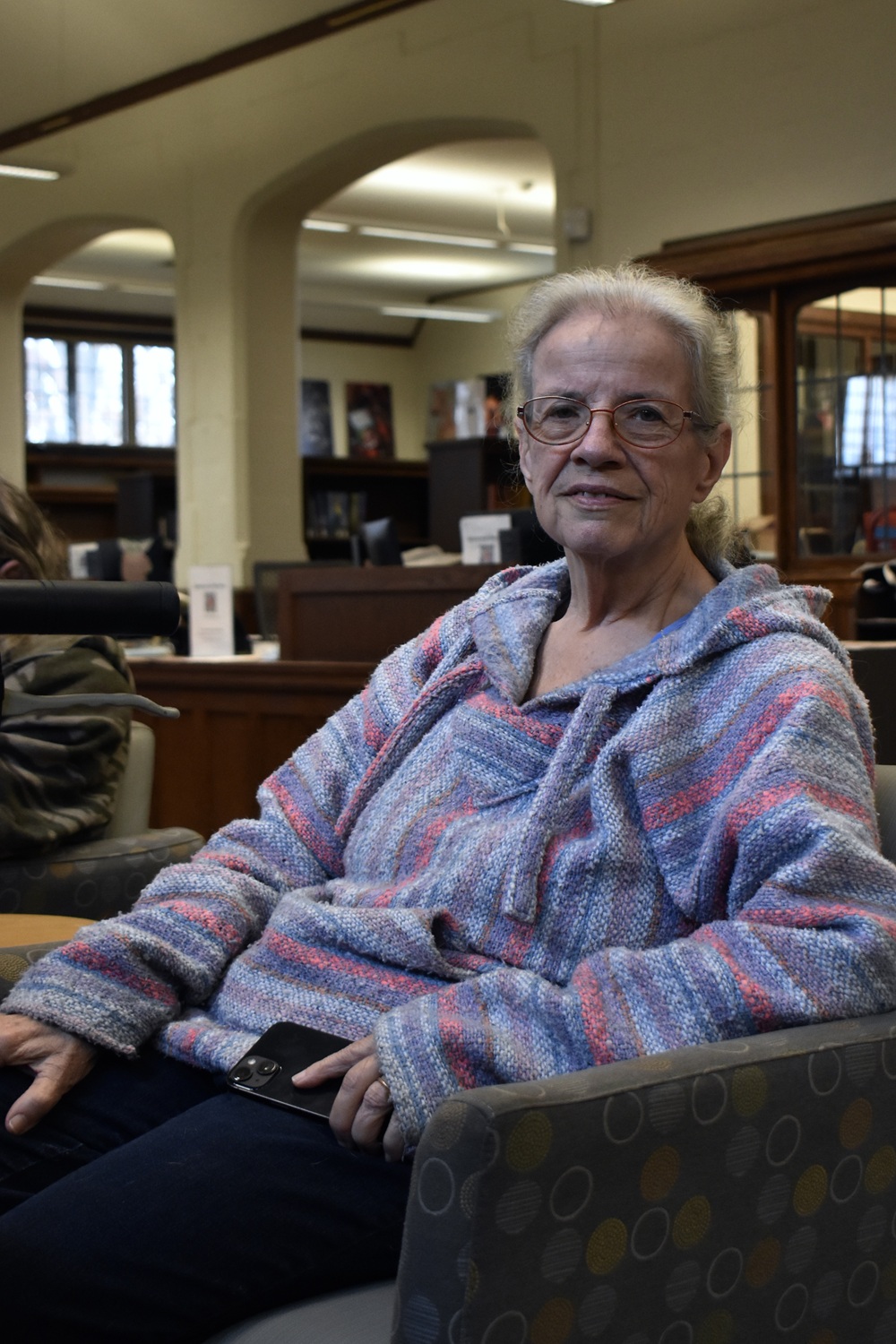
Judy Scott, a long-time patron who walks to the branch, is concerned about the coming change. “It means a lot to a lot of people in this area,” she said. “With it moving, it’s going to be farther away, and I have a bad hip, so, I mean, it doesn’t… losing this branch will be kind of lonely.”

Patrons like Scott rely on the free Wi-Fi and computers. “I talk to my friend down in Columbus, because I don’t have internet at home,” Scott said, describing her library use. This access allows patrons to complete essential tasks like job searching, applying for government services and accessing health information.

Beyond digital access, the branch regularly hosts Connecting Kids to Meals, a program providing hot, nutritious meals at no cost to children after school and throughout the year. The program often runs alongside activities like the Nintendo Gamers’ Guild, where young patrons use the branch’s Switches and iPads to play games like Super Smash Brothers and Mario Kart. The combination ensures children have access to meals, a safe space and digital resources after school.

The branch is also a center for adult literacy and community meetings, providing essential meeting space for local groups like book clubs.

Donald Mullen, a local who has used the branch since the 1960s, closed his library account on Friday, Nov. 21. “None of the stuff I went to in this town is here anymore. Most of my churches are gone. Most of my places I lived are disappearing, and now this building’s gonna disappear,” he said. “It’s like, why am I staying here?”

Judy Scott, patron of the library. (TFP photo by Allyson Ritchey)

TLCPL’s strategy

Library administration maintains that the closure is necessary to protect the fiscal health of the system while expanding access for the wider community.

Communications strategist Stephanie Elton confirmed the TLCPL faces a $2.8 million operational deficit and must contend with a $1.6 million reduction in state funding. Director of Public Services Cathy Bartel cites accessibility issues of the 1935 building, which requires $6 million just to be brought up to modern standards.

“If you’ve gone to Toledo Heights and have tried to open those front doors, you know that’s not… accessible,” Bartel said. She noted the lack of an elevator to the basement meeting room, lengthy paths without handrails to the entrance and insufficient restrooms. Bartel said the new facility will address these issues and serve patrons currently unable to access the outdated structure.

The Library has stated that the commitment among the staff remains high. All of the staff members have been reassigned to other branches within the TLCPL system, a process managed according to contract agreements. Bartel indicated that staff mobility is not unusual, as most employees have worked at multiple locations before coming to the Toledo Heights branch, allowing them to remain dedicated to serving the public.

Bartel also stated the branch’s poor visibility and low traffic contribute to consistently low usage metrics, stating that the new, high-visibility facility is expected to attract more users.

The closure is the first phase of a new strategy to create a centralized “super branch” to serve South Toledo.

The PWA-era interior of the main part of the Toledo Heights Branch. (TFP photo by Allyson Ritchey)

Services will be consolidated into the existing Heatherdowns branch, 3 miles from the Toledo Heights location, until the new facility opens. On Oct. 28, City Council approved the rezoning of a 15-acre parcel on Detroit Avenue near WGTE for the new building. The goal is to open the consolidated, fully accessible branch in 2028. The new branch will be located 1.5 miles from both the current Toledo Heights and Heatherdowns branches.

The gap between the Toledo Heights closure in December 2025 and the new branch opening in 2028 creates a service disruption. Bartel acknowledged the closure “will be a disruption” to patrons and said replicating specialized programs at an already busy branch presents a challenge.

Furthermore, the loss impacts food security. The Toledo Heights branch currently serves as a location for the Connecting Kids to Meals program. Following the closure, families will have to travel to the next closest location, such as the Heatherdowns Library or the South Toledo Library, for meal access.

For those without personal transportation, the lack of a local library during this three-year period presents challenges. Patrons like Scott, who already anticipates mobility difficulties, and families who depend on programs like Connecting Kids to Meals, will need to find alternative arrangements until the new building is completed.

As the Toledo Heights branch prepares to close on Dec. 30, the library continues its regular operations and programming, including this year’s final Winter Wonderland celebration. The TLCPL maintains the closure is a fiscally necessary step toward a modernized, accessible system, while residents prepare for the loss of their neighborhood branch and the three-year gap before the new facility opens in 2028.

Beneath the surface: the veteran behind Right at Home

0
The Right at Home office is located at 134 W South Boundry St. Ste. O Perrysburg. (TFP photo by Gaven Hafner)

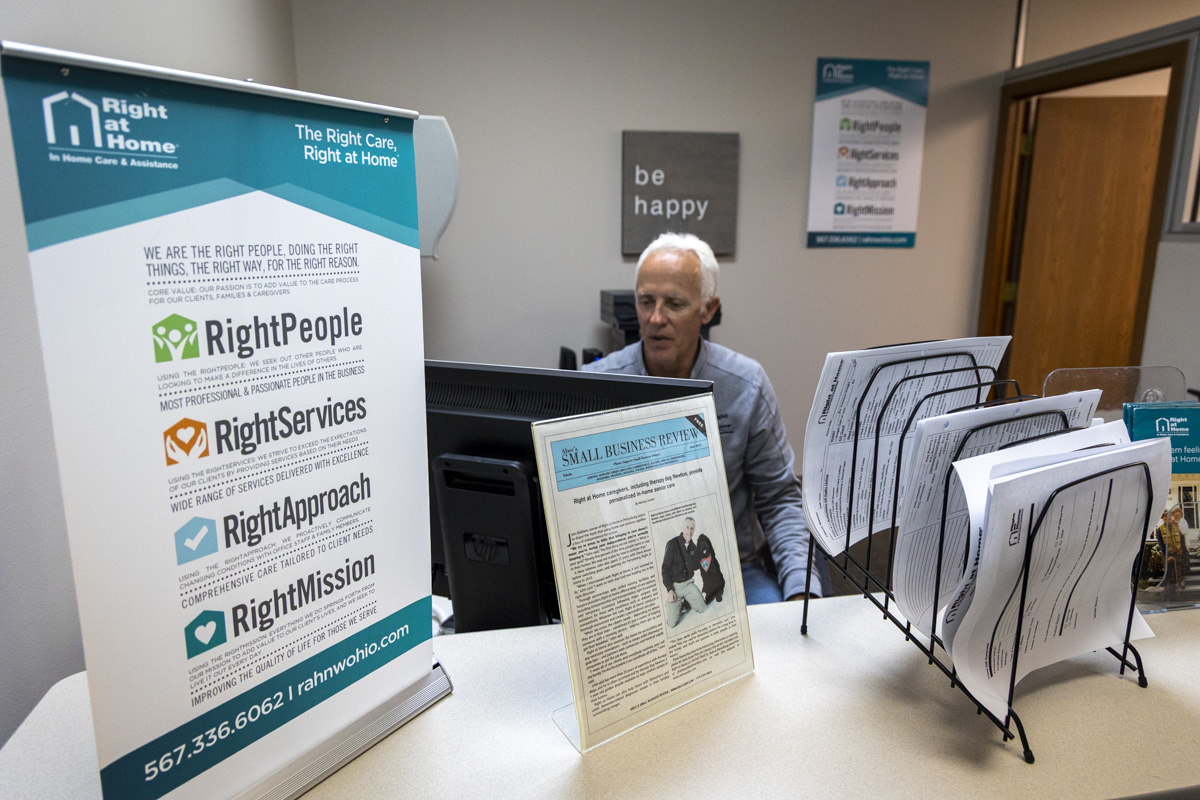
PERRYSBURG – At 64, Navy veteran John Baldwin has lived two very different lives: one deep under the ocean aboard nuclear submarines and the other inside the homes of families navigating the challenges of aging and needing care. Today, as the owner of Right at Home, Baldwin provides in-home care for seniors who want to remain where they’re most comfortable.

“The whole thing of home care…I mean, you’re stepping into stressful situations with families. They’re trying to figure out how to care for mom and dad, and they’re nervous about bringing people in the house, and you’re just working with all of those dynamics,” Baldwin said. (TFP photo by Gaven Hafner)

“We do in-home care and assistance for the elderly to help them to age in place. That’s the business, in a nutshell,” he said.

Before running a care agency, Baldwin was in the Navy as a submariner from 1979 to 1985. For his six years of service, Baldwin was part of the Navy’s nuclear program where he was stationed on nuclear submarines.

“It was pretty intense; it was a lot of learning,” he said. “The six years stay in the Navy involved two years of nuclear power school, two years where I worked at a prototype as a naval instructor, and then it was two years in the submarine fleet.” Baldwin said.

Life underwater was structured and isolating, but Baldwin adapted to it. For Baldwin, patrols lasted three to four months at a time between returning to port. “Your days just melt together,” he said. 

After leaving the Navy in 1985, Baldwin landed a job at Davis-Besse Nuclear Power Station, where he worked for 20 years. But as his parents and in-laws grew older, Baldwin encountered the struggles of finding reliable, compassionate care.

“God redirected my career path in a big way. My parents were aging, and I was having trouble finding care for my dad and my wife’s parents,” Baldwin said. “After interviews with Right at Home, it just seemed like a good fit, like people need help with this finding care for their mom and dad, so that’s how we got into this.”

Since opening his franchise in 2010, Baldwin has worked with many families to help provide care and support.

“It’s a mixture of one or two visits a week to full time care. It really depends what the family needs and where they’re at and the whole aging process,” Baldwin said. Compatibility between the caregiver and the client is a big priority to Baldwin. “When your caregiver comes to the house, you want to look forward to the caregiver coming, and you don’t want to be dreading their visit,” he said.

As a veteran himself, Baldwin now makes sure aging service members receive the help they are entitled to. A fellow veteran once encouraged him to check his own eligibility, which resulted in Baldwin receiving benefits he didn’t realize he had qualified for.

“If it wasn’t for him telling me to just go check it out, I never would have got those,” he said. Now Baldwin passes that same guidance onto others.

“When I meet a client, one of the questions I ask them is, ‘Are you a veteran?’ And once I find out they’re a veteran I guide them, like I was guided, that you need to go and check this out and see if you can get benefits,” he said. “Families need to know that if they have vets that don’t let those benefits go to waste,” Baldwin said.

For Baldwin, the work remains a continuation of the values shaped during his years in the military. His commitment to guiding families, supporting veterans, and ensuring older adults can remain safely in their homes reflects a lifetime spent answering the call to serve. And as he looks toward the future of Right at Home, Baldwin remains focused on the simple mission of making sure no family has to face the challenges of aging alone.

New owner plans to expand compost toilet company

0
OGO Toilets, based in North Baltimore, Ohio, manufactures compost toilets for markets that include RVs, boats, cabins, and people living off the grid. (Courtesy photo)

NAM, founded in Findlay, buys North Baltimore’s OGO Toilets

NORTH BALTIMORE – An investment firm that was founded in Findlay has purchased OGO, a local company that manufactures compost toilets, with plans to expand its workforce, facility size, and production within three years.

Nickolas Reinhart, founder and sole owner of Nickolas Asset Management (NAM), said he believes the market for compost toilets will continue to grow steadily as people buy more RVs, boats, cabins and tiny homes, or opt to live off the grid.

Nickolas Reinhart, owner of Nickolas Asset Management, said that from a business
perspective, Northwest Ohioans “are the best people on the planet.” (Courtesy photo)

“We’ve already committed capital of about $10 million to invest in the facility through future acquisitions, machinery and equipment, and product development,” Reinhart told the Toledo Free Press. 

He said he expects to boost the size of the OGO plant in North Baltimore from 32,500 square feet to about 50,000 square feet, and also plans to increase the number of employees from 25 to 50 within three years.

“When I bought the company, the revenues of the business were around $6 million a year, and we plan to take that and double it, if not triple it, over the next 24 to 36 months,” Reinhart said.

Compost toilets are flush-free, waterless toilet systems that turn human waste into compost using natural processes.

Along with OGO, NAM also acquired Medal Technologies, a North Baltimore firm that specializes in product development.

Reinhart said he was drawn to OGO because its compost toilets are proprietary products with a lot of patents.

“My background is in engineering design, and then designing and manufacturing proprietary products for consumer retail. I like companies like this. It’s a great small business. And I love small markets like North Baltimore.”

He said he started NAM in his hometown of Findlay and has added operations in Lima, Ohio; Georgetown, Texas; and Las Vegas, Nevada.

He said he moved to Sarasota, Fla., which is his wife’s hometown, but still spends much of his time in Ohio.

Reinhart, 44, said he grew up working in a family business. 

“I worked with my father in plastics, in a family business, before I started my own companies. I started working with my Dad when I was 18 years old and I worked with him until I was about 30 years old before I started my first business.”

He said working for his father was a better education for his career than if he had studied business in college.

“There is no better mentor than a parent who cares more about you than anybody else,” Reinhart said.

He said his firm differs from the typical private equity companies that buy and then flip acquisitions for a quick profit.

“We don’t acquire a company unless we plan to own it forever,” Reinhart said. “We invest for the long term. We only buy businesses that we plan to keep and invest in. We don’t buy businesses to buy and sell them.”

He expects the recent tariffs imposed by Washington on goods imported to the United States to have only a minimal effect on OGO.

“Some of the components are sourced globally and have been impacted by tariffs,” Reinhart said, “but we’ve done a pretty good job to re-source those components to countries that have lower tariffs than others. The impact has not been that significant.”

In addition, Reinhart said the tariffs have motivated him to look at ways to manufacture components locally.

“It’s kind of put us in a position to focus on vertical integration versus sourcing, and to bring as much back in house that we could and not source products from overseas,” he said. “We already have the square footage, we just have to make the investment in the capital to do the manufacturing.”

He said he is glad to be in a position to help Northwest Ohio’s economy.

“From a business perspective, I think the people in Northwest Ohio are the best people on the planet. They are some of the hardest working and smartest people, and some of the best culture in the country is in Northwest Ohio,” Reinhart said.

The global composting toilet market is expected to grow from $1.5 billion in 2024 to $3.2 billion by 2032, according to Verified Market Reports

OGO’s compost toilet received high praise from bloggers Tom and Cait Morton, whose Mortons on the Move website has more than 15,000 subscribers.

“Overall the OGO is our top choice for composting toilets that are available today,” the Mortons wrote. “In general, the OGO is on par with the comfort and usability of competitors we have tried.”

No more tragic end: & Juliet takes the stage at Stranahan Theater

0
Fabiola Caraballo Quijada and Joseph Torres in the North American Tour of & Juliet. (Photo courtesy of Evan Zimmerman for MurphyMade)

TOLEDO- Get ready Toledo! The spotlight is about to shine on the Glass City as the Stranahan Theater prepares to host a season of Broadway touring shows, including &Juliet.

&Juliet first came to the Broadway stage in 2022 and was created by Emmy-winning writer of Schitt’s Creek, David West Reed

Lois Ellise, understudy for Juliet, started out as a college student looking to go into athletic training.

Lois Ellise is the understudy for Juliet. (Courtesy photo)

“I went to Central Michigan University, and I originally had gone for athletic training, but decided that I wanted to be a physical therapist for the arts, for theater, for dancers, and decided to do a musical in order to have some experience within the industry,” Ellise said. 

She said she has always loved musicals and did her first show her sophomore year. 

“I just fell in love with it, and I changed my major; I had a completely new outlook on what my life was going to look like, and I honestly never looked back after that,” Ellise said. 

As the role of an understudy, Ellise must be ready to go on stage at any time if Fabiola Caraballo Quijada, who plays the role of Juliet, cannot perform for any reason. 

“Anytime our Juliet is unable to do a show for any reason like injuries, illness, etcetera, I step up,” Ellise said. “I could be asked to do the show hours before or even an hour into the show, so it’s just really about staying ready for that to happen at any moment.”  

She has been with the company for the last 14 months. 

“I got the opportunity to learn the role right there, as our Juliet at the time, Rachel Simone Webb, was learning the role, and I was taking all the direction that I could. You just kind of absorb all this information and hold on to it until you get the call that you’re going on,” Ellise said. 

The company of the North American Tour of & Juliet. (Photo courtesy of Evan Zimmerman for MurphyMade)

Along with being the understudy for Juliet, Ellise also serves as a swing, covering ensemble roles, and is the assistant dance captain responsible for knowing and teaching the choreography for the show. 

“We have ten ensemble roles and we have on-stage eight principal roles that we end up teaching,” Ellise said. 

While being in the musical theater world, Ellise has pushed through setbacks and obstacles, proving her resilience both on and off the stage.

“When you’re asked to step into any role, just knowing exactly what this character does and when you have so much information in your head…just trying to manage all of that is the most challenging part of the job,” Ellise said. 

Ellise has two pieces of advice to anyone interested in pursuing musical theater, theater or the arts. 

“My two pieces of advice are one, to always train – and that doesn’t mean you have to have the fanciest lessons or acting classes. It can mean reading a play, watching a musical, listening to the soundtrack, find out what speaks to you as an artist, and hold on to that and you can train anywhere,” she said. “My other piece of advice is to have your own career. More than likely, it’s not going to look like anybody else’s journey or career. That’s the most beautiful thing about theater and about the arts, that everyone is on a unique and individualized journey, and there’s so much meaning and power behind it,” Ellise said. 

In some ways, Ellise relates heavily to her character of Juliet. 

“I definitely relate to Juliet. I have in my lifetime had to recognize and lean into the power of the pivot. There were so many obstacles, even just in this industry, and there are so many times where you might be met with an obstacle, and it’s up to you to quickly say, ‘Okay, this is what we’re going to do,’” Ellise said. 

Performance Schedule:

Tuesday, Dec.16, 7:30 p.m.

Wednesday, Dec.17, 7:30 p.m.

Thursday, Dec. 18, 7:30 p.m.

Friday, Dec. 19, 7:30 p.m.

Saturday, Dec. 20, 2 and 7:30 p.m.

Sunday, Dec. 21, 1 and  6:30 p.m.

Tickets to see &Juliet are available for purchase at BroadwayinToledo.com, StranahanTheater.com and Etix.com.

RX Solutions to open in Whitehouse

0
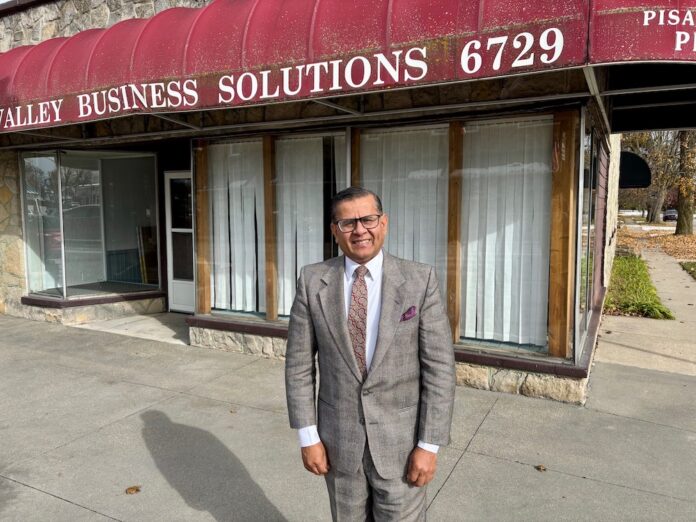
Dr. Anwer Ali, a retired physician who owns several healthcare related businesses, plans to open RX Solutions in Whitehouse in early 2026. The pharmacy will offer free delivery of medications six days a week. (AWFP photo by Karen Gerhardinger)

WHITEHOUSE – When RX Solutions opens its doors in early 2026, Anthony Wayne-area residents will have a second option when it comes to filling prescriptions – but without the lines.

Currently serving Northwest Ohio through its Toledo location, RX Solutions is projected to open in downtown Whitehouse in January, said Dr. Anwer Ali, a retired physician who has teamed up with business partners, including a pharmacist, to answer the need for additional pharmacies in the area.

“I am excited,” said Ali, as he walked through the former Spring Valley Business Solutions offices at 6729 Providence St.

The new pharmacy, while small, will be big on customer service and community, offering free home delivery of prescriptions and in-office vaccinations and other services.

“We don’t charge for delivery. We want to be different and provide a service to our customers,” Ali said, noting that people who are homebound, elderly or dealing with health challenges often can’t get to a pharmacy. 

RX Solutions will take just about any insurance, including Medicare and Medicaid. Once a doctor calls in a prescription, the pharmacy will contact the patient to arrange a delivery time that is convenient, even if it’s on the weekend. The pharmacy will also deliver to area nursing homes and facilities.

He encourages area residents to contact RX Solutions even before the pharmacy opens to test out the service, as the Toledo office delivers to a 100-mile radius, including the Anthony Wayne area. Once the downtown pharmacy is open, expect friendly service from the on-site staff. Ali is currently seeking pharmacy technicians and a pharmacist to fill those roles.

Having a pharmacy in town has been one of the priorities named in community surveys, said Mayor Richard Bingham. With the closure of Rite Aid in January 2024, the Anthony Wayne area was left with just one option, and Bingham said he’s heard complaints about long wait times, delayed prescriptions and insurance issues. So he began contacting providers to fill that void.

Nationally, pharmacy closures have accelerated, creating pharmacy deserts and reducing convenient access to essential medications and services, Bingham said.

“For a community of 5,000, establishing a pharmacy is critical to restoring reliable care, reducing strain on remaining providers, and strengthening the health and resilience of our residents,” the mayor said.

This spring, Bingham and Ali toured the area, looking at possible locations. Downtown Whitehouse impressed Ali, who admits that while he lives in Perrysburg, he’d never made it past Waterville to see the area.

“It’s a very beautiful town, with flowers in the spring, an ice cream shop and kids in the park. It’s like a movie,” Ali laughed. “And the community is very friendly.”

He credits the assistance of building owner Skip Walker, Bingham, Village Administrator Jordan Daugherty and Chief Operating Officer Josh Hartbarger for working to bring the pharmacy to town. He has applied for a matching grant from the village to cover the cost of a new awning and facade improvements. The Greer Group will be renovating the space once permits are secured.

For information, visit RXSolutionsnwo.com or call (419) 558-0800.

Anthony Wayne Board of Education: 4 candidates to interview

0
Pexels photo by Pixabay.

ANTHONY WAYNE – Four candidates were selected to move on to the interview phase as the Anthony Wayne Board of Education seeks to fill a position that will be vacated on Dec. 31.

After Shellie McKnight announced plans to step down, the board solicited applications from interested community members. Of the 25 who applied, the board selected four candidates to interview: Amy Barrett, Katie Carollo, Matthew Culling and Troy Schalitz.

“We sincerely thank all 25 individuals who showed interest in serving on the board and took the time to apply,” said Board Vice President Jeff Baden. “We had many talented candidates to choose from and truly appreciate their effort and dedication to Anthony Wayne Local Schools.”

The four finalists will be publicly introduced during the Monday, Dec. 8 regular board meeting, then interviewed in an executive session after the meeting. The board does not plan to make a final decision at that time, as the state requires a vote be held between Jan. 10 and Jan. 30. The newly appointed member will serve the remaining two years of McKnight’s term.

Below are profiles, in alphabetical order, based on the applications submitted to the board.

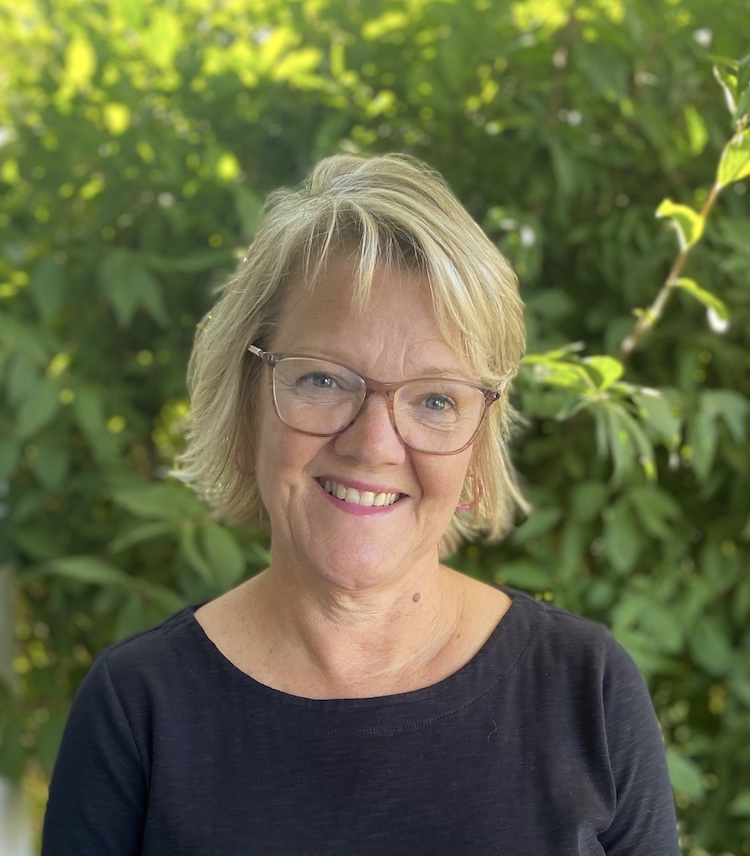
Candidate Amy Barrett. (Courtesy photo)

Amy Barrett is a self-employed grant writer who served for several years as executive director of Awake Community Coalition, coordinating the district’s drug prevention education. Previously, she was a substitute teacher in the district, where she has spent 28 years in school-parent organizations. She holds a bachelor’s degree in communications and public relations from the University of Toledo and was a corporate marketing/project manager consultant for Lutheran Homes Society.

Currently she is the volunteer coordinator for Anthony Wayne Neighborhood Bridges, which ensures that students have food, clothing and other resources. Barrett is the founder of the weekend bag food program – which provides take-home supplies of food and snacks for students to eat over the weekend or holidays. She is a board member for the Anthony Wayne Community Food Ministry and has served as a deacon at Waterville Community Church. 

“I’m interested in becoming a board member because I am very passionate about our school district,” said Barrett, who previously ran for the board in a crowded 2023 election. “My motivation stems from a desire to give back in a meaningful way.”

She lists her top three priorities as: school funding; making sure all students and families feel welcomed, valued, respected and represented; and facility needs.

For students, the district should continue to focus on offering a high quality, well-rounded education with academic programs that prepare students for college, careers and lifelong learning – and ensure equity in educational opportunities regardless of background, ability or learning style.

“The district should also continue to support the social-emotional and mental health of our students by providing resources and safe environments that support our students’ well-being, resilience and mental health,” she said.  

Giving students opportunities to engage in leadership opportunities – in school and with civic organizations – is also a priority. So is keeping the community informed, managing taxpayer funds wisely, collaborating with community partners, and offering adult education workshops and community programs that encourage engagement for all residents.

“I believe fostering collaboration begins with building trust both among other board members, the school community and the community as a whole,” she said. “That means listening actively, respecting diverse perspectives and ensuring every voice has a space at the table, especially when discussions are difficult.”

Barrett said she approaches collaboration with a learner’s mindset of shared purpose – united in a commitment to do what’s best for the students, staff and administration.

“In my various positions, I have found that when differences arise, it has been important to look for areas of common ground and focus on the principles by asking clarifying questions to identify core needs, and then look for solutions that honor the intent of all parties. Our goal should be to put any personal agendas aside and make decisions on what is best for our students so that they are provided with the best learning experience possible, and to support our staff and administration.” 

Candidate Katie Carollo. (Courtesy photo)

Katie Carollo is assistant dean of Student Affairs at the University of Toledo College of Law, where she previously served in leadership positions since 2019. An Ohio State University and University of Toledo College of Law graduate, she has served as an associate attorney and other related positions. Carollo is a member of the Toledo Bar Association and American Bar Association.

Currently, Carollo is an at-large board member for the Anthony Wayne Youth Foundation, where she is also flag football president. 

“I am dedicated to public service and to making a difference in the community,” Carollo said. “With the Anthony Wayne Youth Foundation, I can see the direct impact that my involvement is having with children in our community.”

The parent of three children – in middle, junior high and high school – Carollo said she would like to combine her experience in education and passion for public service to make the district the best for all children.

During her time at the University of Toledo, Carollo said she’s seen how following a core mission and working with a dedicated staff and faculty can overcome obstacles such as budget constraints and community criticism. The school board is no different, she said.

“Even though there are challenges, the board consists of a group of people who are highly dedicated to the students,” she said, noting that she believes her experience and passion for public service will help AWLS achieve its goals.

One of the top priorities is to help the district pass a levy.

“Our district is growing and we need the financial support of our community in order to continue providing the services the community expects,” she said. “Ensuring financial security is of the utmost importance.”

A second issue is the political climate, including attempts by the Ohio legislature to limit academic freedom and dictate what is taught. Community members are becoming increasingly vocal and intolerant towards people who don’t hold their views, she said.

“Turning down the temperature is key,” Carollo said. “The focus needs to stay on what is best for the kids, and all decisions should be viewed through that lens.”

Her third priority is ensuring that the district has the facilities to handle a growing student population.

“The district should make sure all students’ academic, social and emotional needs are met by providing a safe and supportive environment for learning and leadership,” she said.

Carollo said the key to fostering collaboration is to listen to ideas with an open mind but with a goal of making the district the best it can be.

“Active listening and allowing open dialogue are the keys to fostering collaboration. Occasionally, if a topic is particularly divisive, it can be helpful to take a more structured approach (using time limits or a facilitator). I find that reaching consensus with others is one of my strengths, and one of the reasons I’ve been successful in my current role as dean of Student Affairs.”

Candidate Matthew Culling. (Courtesy photo)

Matthew Culling is an audit director for Hillebrand, Inc. and previously served as a business risk services director, controller and audit manager and senior accountant. He has a degree in accounting from the University of Toledo and is a Leadership Toledo graduate. 

As a licensed CPA, Culling said he has a understanding of accountability, governance and fiscal responsibility – skills that are valuable during times of navigating funding challenges and long-term planning.

“My work requires precision, integrity and collaboration across diverse stakeholders, all of which translate directly to the responsibilities of a school board member,” said Culling, who describes himself as detail-oriented in operations and finance, but people-centered when it comes to leadership and policy.

“I understand how to ask the right questions, assess risk and keep big-picture goals in focus while staying grounded in the needs of families and students,” he said. “I believe school boards are stronger when they include the voices of parents, professionals and community members who lead with integrity and prioritize outcomes over optics. I want to build a culture of transparency, accountability and trust. One that brings people together and keeps our focus where it belongs, the students.”

As a parent with students in the system, Culling said he’s familiar with the needs of families and students and understands the importance of a district that is responsive, transparent and forward looking. 

The top three priorities he sees for the district: financial health and future funding; capacity, growth and classroom experiences; and trust, communication and board governance culture.

For each of those priorities, he provided a suggested course of action.

For financial health, Culling would make budget transparency a prime effort, letting taxpayers see exactly where the money goes and how it supports students. Funding requests can be tied to student-impact outcomes such as class sizes, programs and teacher retention.

When it comes to capacity growth and classrooms, Culling suggests an audit of actual classroom sizes, growth forecasts and teacher workloads to see where pressure is greatest – and use that information to build trust, enhance communication and build the board governance culture. He also wants to see the board adopt a listening mode through parent/teacher forums, community surveys and open dialogues. 

Overall, the district must continue encouraging students to succeed not only academically but to thrive as responsible, thoughtful and engaged citizen, he said. This is done by supporting all students, regardless of ability or background, to reach their full potential. High standards, effective teaching, early intervention  and strong support systems for enrichment and remediation are a priority, as are developing the whole child through the arts, athletics, STEM, service and emotional learning.

“I believe the school district is a cornerstone of the community. Strong schools attract families, strengthen property values and foster a sense of shared identity. As such, I believe the district should serve both as an educational institution and as a community partner,” he said.

Candidate Troy Schalitz. (Courtesy photo)

Troy Schalitz is a 2017 Anthony Wayne High School graduate who serves as general manager of Midwest Terminals/Ironville Rail and Transfer. He studied accounting at Otterbein University and previously served in other finance and accounting positions.

Schalitz first became interested in the board in 2023, but didn’t want to resign from his position as assistant varsity basketball coach for Anthony Wayne. As his family grew, Schalitz said he put coaching on the back burner and is now ready to become more involved in the community where he was raised.

“My K-12 experience at Anthony Wayne was bar none,” Schalitz said. “My deep, interconnected roots within the community motivated me to apply for the open position. Anthony Wayne Schools has consistently propelled excellence.”

The top three issues facing the district, he believes, are: an increasing expense profile, a downward trend in community trust, and deterioration of identity.

“Everyone can agree that the price to operate anything from a school district to an ice cream stand has risen over the last five years; however, that does not limit our creativity in countering rising costs,” he said.

“Seeing the downward trend in community trust has been truly difficult to witness. Growing up, I recall our levies passing consistently, and our district growing fruitfully as a result,” he said. “Nowadays, speaking in support of our levies seems to carry an undertone of controversy. I’d like to solve this. We have the power to restore trust between the school and constituents by developing better ownership and transparency in our district. We need to own the mistakes and learn from them.”

Schalitz said he’d like to continue the board’s work in inviting public interaction and open forums.

“We’re all active shareholders within this school district and want our children to be educated in a sound and well-ordered manner,” he said.

The district’s “deteriorating identity” stems from the last three to five years, where arguments over trivial items have blurred the bigger picture.

“Anthony Wayne does not exist to be some political battleground or only welcome like-minded staff and students. Educational institutions exist to engage students from diverse backgrounds in meaningful exchanges of ideas and beliefs; to tell them how to think critically rather than what to think,” he said.

Schalitz uses as an example his high school FFA teacher and history teacher.

“I’m certain they had vastly different ideologies, yet they were both exceptional educators, never allowing their personal beliefs to dictate my own learning experience,” he said. “I’d like to create an Anthony Wayne united around core doctrine, rather than divided by every minor disagreement.”

He cited the Portrait of a General core competencies: leader’s mindset; critical thinking; collaboration and communication; adaptability and flexibility; and empathy as a great foundation for every student.

“Our district breeds high caliber individuals; let’s bring them together to reignite the passion for unity, distinction and character.”

The Dec. 8 board meeting begins at 6 p.m. in the Central Administrative Office, 9565 Bucher Rd. in Whitehouse. It will also be livestreamed at anthonywayneschools.org.

What’s new in Anthony Wayne: Data centers dominate discourse

0
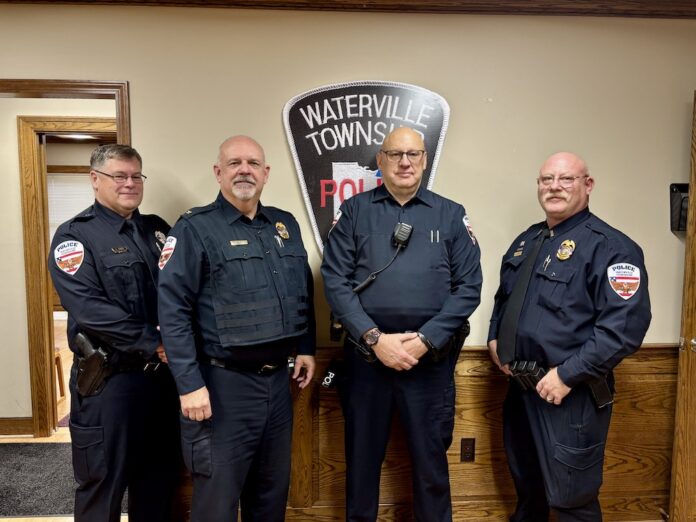
Waterville Township Police swore in new part-time officer James Waltmire (second from right). Pictured are officer George Roush, Chief Kevin Smith, Waltmire and Lt. Marty Przybysz. (AWFP photo by Karen Gerhardinger)

ANTHONY WAYNE – Data centers continue to dominate the conversations in local meetings, including those held in Monclova Township, Waterville Township, Whitehouse and Waterville in the second half of November.

Waterville

Dozens of residents filled the Waterville City Council chambers to capacity and waited outside on Nov. 24, as a data center moratorium discussion – but not a vote – appeared on the agenda. 

Mayor Tim Pedro announced that legislation on a moratorium had not been prepared for review early enough for the required three days to allow citizens and council to review it. Instead, he said it would be up for a vote during the Monday, Dec. 8 meeting.

Wayne Wagner, who brought forth the request for a moratorium, said he just wanted a year to take a pause and do more research on data centers.

“Eight weeks ago, I asked for a resolution to be put on the agenda,” Wagner said, adding that he followed it up with emails and documents to the law director. “I did my part and it was rejected. This is not democracy, and honestly I’m just ashamed to be up here at this point.”

Rod Frey said he, too, expected to see a resolution, but since Waterville doesn’t have enough land for a data center, he’s not sure why it would be needed.

“We’re spending all this time and we need to get other things done in this city,” Frey said, adding that a moratorium might send a wrong message to potential investors in the city – those other than data centers.

Three residents spoke about data centers. Chris Celusta said he took a data center site visit and has concerns about water and electric usage, diesel fumes from generators, a 24/7 humming noise and the impact on the quality of life. Celusta also noted that data centers could be the target of terrorism. Scott Jahns said he doesn’t have an opinion on data centers and understands both sides, but wondered why a moratorium is needed if the city doesn’t have the land. 

“It was reported that Waterville does not have enough land to accommodate a data center,” Pedro said, adding that the available land is too close to blasts from the quarry and railroad lines, which data centers want to avoid.

“We’re still going to be studying this. Perhaps a smaller data center could come online. We haven’t gotten there yet because we have not received an application.”

Lisa Haberstock said she’s concerned that if a vote doesn’t happen on a moratorium sooner, then a permit request from a data center could slip through. Resident Rachelle Balenger asked each of the council members whether they knew when they voted on on the data center that Pedro had been in talks with the city.

Several council members noted that Pedro’s job is to meet with potential investors, including regional and national brokers, to look for opportunities. That might include a discussion about data centers, although Pedro reiterated that the city doesn’t have the available land.

“The point of all these meetings is for him to be involved and tell us if there’s anything relevant,” Rozic said. “Nothing nefarious has taken place.”

Wagner said he doesn’t know everything the mayor does, but would expect Pedro and any council member to share those discussions in a memo with Council at the least.

Frey said meetings with potential developers and investors can’t always be disclosed in order to maintain trust.

“That’s economic development. You have to lay the groundwork before it comes in here and gets exposed,” Frey said.

Council agreed to make sure that legislation for a moratorium will appear on the Monday, Dec. 8 ballot for a vote.

During the meeting, council also:

-Heard that the city closed on the purchase of the former Sunoco station at the corner of Farnsworth and Anthony Wayne Trail, and will be applying for funds from the Lucas County Land Bank to take out the old tanks, demolish the building and get the site ready for redevelopment. Pedro said he’s received calls of interest in the property. The city is also eyeing options for the former Valero gas station at the corner of Mechanic Street and the Anthony Wayne Trail.

-Congratulated Lt. Cameron Solis for graduating from the Police Executive Leadership College.

-Heard that applications for two positions on council – those currently held by Anthony Bruno and John Rozic – are being accepted through Friday, Dec. 5.

-Listened to Terri Massucci thank those who donated toys for the toy drive competition between Waterville and Whitehouse. Toys can be dropped off anytime in the city hall lobby, or at the YMCA, Mad Anthony’s, Subway, First Federal of Delta and Waterville Bodyworks by Wednesday, Dec. 10.

-Encouraged residents to attend the Light Up Waterville event on Sunday, Dec. 7 from 5:30 to 7:30 p.m. in Parker Square. The event includes live music, Santa, a tree lighting and horse and wagon rides.

-Awarded a $1,584,130 contract to Helms and Sons Excavating to expand a section of Waterville-Monclova Road between Michigan Avenue and Pray Boulevard to include continuous middle left turn lane for both directions. The city has a $1.1 million federal grant and $293,285 state grant to help cover the cost.

-Heard Wagner suggest that Kati Tharp, who stepped down as law director effective Nov. 24, be replaced by John Rozic, who is an attorney and term-limited from running for another seat on council. Tharp said she decided to resign in order to pursue other opportunities.

Waterville resident Scott Jahns addresses Waterville City Council during its Nov. 24 meeting. (AWFP photo by Karen Gerhardinger)

Monclova Township

During the Nov. 17 Monclova Township trustees meeting, Waterside resident Risa Sindel said she contacted State Rep. Josh Williams (R-Sylvania Twp.) and a Maumee representative whom she would not name about her concerns that a data center might locate on or around the Shops at Fallen Timbers.

“All arrows from Maumee and Josh Williams point back to you,” Sindel said, suggesting that the trustees and administrator Harold Grim were “pursuing” data centers.

Trustees Barbara Lang and Chuck Hoecherl reminded Sindel that the township has no control over the Maumee land east of Black Road. If a data center were to utilize the 200 acres on the west side of Black Road – owned by Monclova Properties LLC and in the township – at least the township would have some control.

“We are in a vulnerable position because the property owner can petition the county to annex the property on the west side of Black into Maumee. We’re walking a tightrope here,” said Hoecherl, adding that the owner could nab up to $30 million for the 200 acres. 

“Josh [Williams] can change the annexation laws so Maumee can’t annex us,” Lang said. “We don’t have a say over what Maumee does.”

Black Road property owner Ryan Bauman suggested that the township at least investigate the possibility of buying the 200 acres to prevent it from being annexed. That would cost $39 million over 10 years, Hoecherl estimated, but asked Grim to seek out more information.

In the meantime, the township will continue to compile residents’ emails and meeting comments in the public record in the event that an application for a data center does come in, Hoecherl said.

During the meeting, the trustees also:

  • – Passed a resolution honoring the late Gary Kuns Sr., who served as a township trustee for over 20 years.

– Welcomed Anthony Wayne High School senior Lila Hippert, who is working on a project with her Community Engagement class to install Little Free Libraries stocked with children’s books to encourage literacy in the township, Waterville and Whitehouse.

– Heard that Monclova Township Fire and Rescue responded to 189 calls in October, for a year-to-date total of 1,920. 

–Approved an automatic mutual aid agreement with Maumee Fire. The township already has automatic mutual aid agreements with the Air National Guard, Waterville and Springfield Township fire departments. With these agreements, crews automatically respond to a structure fire in sections that are closest to their jurisdiction, to ensure that adequate staffing is on scene for the 201 businesses and 5,000 residents in areas along the boundaries of the township.  

Waterville Township 

Waterville Township citizens with data center concerns spoke during the Nov. 17 Zoning Commission and Nov. 19 trustees meetings.

“The people of the township want to have the opportunity to be a part of the decision making,” said Russ Schifferly, whose family has been in the area for 166 years. “This does not fit in Waterville Township. There is no benefit to the community other than tax money.”

Zoning Commission member Keith Moosman, noting that his family has also been in the township for generations, said he understands the concerns.

“We made every precaution that a zoning board can take to make it right if they [data centers] were to come to the township,” he said. “We didn’t hide anything. We’re not back pocket people.”

The township has not received a request for a conditional-use permit for a data center, but if it does, the public would have two opportunities to speak, said Zoning Commission member Bill Burkett. First would be with the Lucas County Plan Commission, then the Zoning Commission, which would make a recommendation to the Board of Zoning Appeals, which would have its own public hearing. 

During the trustees meeting, residents asked about the potential for a moratorium and concerns about annexation by Waterville or Whitehouse if the township turned down a data center request.

Resident Jill Lipinski noted that one farm family has agreed to sell land if such an offer would come forward – a move she understands is a landowner’s right.

“I can see both sides of it,” Lipinski said, explaining that having an offer of $200,00 an acre would be life changing. 

Lipinski said she wants to see restrictions put in place for data centers to ensure that they follow the rules, and she questioned whether a moratorium would give the township a pause to iron out more details.

That’s a better question for the law firm that the trustees hired, Albers and Albers, said trustee Kyle Hertzfeld

During the meetings, township officials also:

-Learned that a public hearing for the trustees to consider a zoning change for 8346 Dutch Rd. has been moved to Wednesday, Dec. 3 at 6:30 p.m. The owner wants to change the land from Agricultural to R-A Suburban Residential with a Planned Unit Development for Walden subdivision.

-Heard that a survey for the land use plan update survey, posted at watervilletownship.com, is still open for comments. 

-Heard that James Waltimire was sworn in as part-time officer with the police department. Waltimire has a master’s degree in criminal justice/law enforcement administration and over 40 years of experience. He is also an ordained minister and serves as a substitute teacher for Springfield Local Schools.

-Heard that Waterville Senior Lofts has been issued a permit to build on Kay Drive off Waterville-Monclova Road just north of U.S. 24. 

-Listened to Hertzfeld thank the community for passing a levy for the General Fund.

Whitehouse

Downtown, the S.R. 64 corridor, community connectivity and branding are the four core areas that Whitehouse has identified as priorities for growth, Kleinfelder engineer Greg Telecky told Whitehouse Village Council during its Nov. 18 meeting.

A meeting is being scheduled with downtown property owners to get insight on ideas including the formation of a historic district, redevelopment district and funding mechanisms to enhance the downtown, Telecky said. 

The S.R. 64 corridor is of interest to some industrial developers, Telecky said, noting that he’s had indirect dialogue through a third party but needs to keep the information confidential for now. He’s also working on funding options for a pedestrian bridge over S.R. 64. 

The third area of focus is community connectivity, and plans to apply for a Safe Routes to Schools grant and funding for a study are underway. A connectivity master plan will show gaps in the village between multi-purpose trails and sidewalks. Right-of-way acquisition and preliminary engineering will be underway soon for a multi-use trail that will extend along Weckerly Road.

The fourth focus is community branding, which includes signage and landscaping throughout the village. 

During the meeting, the council also:

-Agreed to a 2.8 percent cost of living increase and a one-time additional 2 percent bonus payable in January for employees, as well as merit service pay based on years of service.

-Heard that the Whitehouse holiday celebration is planned for Saturday, Dec. 6 in the downtown area, with holiday crafts, venders, a visit with Santa, a holiday parade and tree lighting. The event kicks off with a Christmas Village 5k.

-Asked residents to donate new, unwrapped toys for a competition between Waterville and Whitehouse. The Whitehouse toys will go to Toys for Tots while the Waterville donations will benefit Anthony Wayne Neighborhood Bridges.

-Heard Mayor Rich Bingham say that he heard a complaint that the village didn’t notify residents about a Tier 3 sex offender who moved to Whitehouse. The state no longer sends out notifications, but residents can sign up for alerts through the state. The Lucas County Sheriff’s Office handles notification of neighbors. The 28-year-old male who moved to Whitehouse served 10 years for gross sexual imposition with a victim under 13. He was released in August 2024.

-Heard that the village is waiting for electric wholesale rates to dropped before locking in an electrical aggregation rate. Currently the rates are higher than the standard market price.

-Learned that the fire department has responded to 975 calls for service this year.

-Listened to resident Leslie Harper ask about conversations that council and the mayor have had about data centers. She requested and received one document related to data centers: a map of utilities in the area.