Home Blog Page 4

Billboard proposal draws comments

0
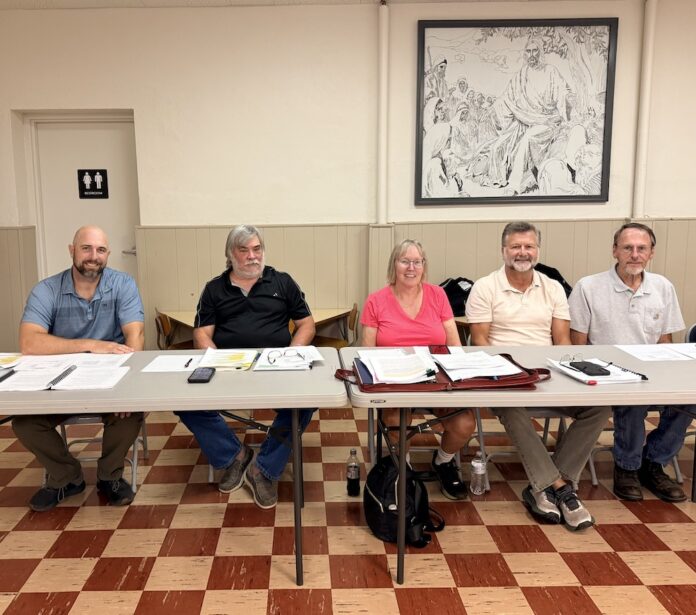
The Waterville Township Zoning Commission includes members Jon Poponak, Keith Moosman, Catherine Vorst, Bill Burkett and Robert Long. The commission held a public hearing on August 31 to receive input on a proposed change to its zoning regulations for billboards. (AWFP photo by Karen Gerhardinger)

WATERVILLE TOWNSHIP – A proposed change to Waterville Township’s zoning regulations – one that would allow two electronic billboards along a two-mile stretch along U.S. 24 – elicited comments from community members, who cited concerns about the impact of a 672-square-foot sign on driver attention, neighboring residents, the environment and the tranquility of the township.

“I don’t think we need to have the Las Vegas kind of flashing lights,” said Russ Schifferly during an Aug. 31 Zoning Commission public hearing. He called billboards an unnecessary distraction, and one that would impact the future of the township.

Anita Conley noted that the stretch of U.S. 24 between Dutch Road and S.R. 64 has a curve where semi drivers in particular either hit the brakes or go over the rumble strips on the side of the roadway. Lyn Cox shared research on how high intensity electronic messaging may cause dangerously long gazes, temporary glare or night blindness, driver drift and delayed braking action.

“This board is tasked with guarding the health, safety and rural character of Waterville Township. A text amendment that invites unprecedented visual pollution and roadway distraction does the opposite,” Cox said.

Mark Phillips, who lives just east of the Dutch Road Storage facility where such a sign is proposed, noted that the billboard wouldn’t just affect his quality of life, but that of the residents of Waterville Loft Apartments, a 70-unit, 55-plus community set to open on Kay Drive, just across the highway, in April.

Debra Reed, who lives on Tournament Drive, also pointed out the impact to future Waterville Lofts residents. She’s previously complained about light coming from Dutch Road Storage, and believes that a billboard would only further impact the area.

“Outdoor lighted advertising and electric signs are not conducive to our community,” she said.

Preserving the community was a common theme in the comments.

“We’re changing so much about ourselves as Waterville Township. I get it that progress is progress. But I think it would be wise to save just a little bit of what we’ve got left,” said Phillips.

Terry Beam wondered who would monitor the sign to make sure that it wasn’t exceeding the limits on brightness, and wondered if that would require additional resources in terms of equipment or personnel. He noted that the township has been busy trying to protect residents from a potential data center, and asked the commission to do the same with a billboard.

“I think we need to keep the township the way it is: a nice community without all the bells and whistles. Why do we want to allow this?” he asked.

The Zoning Commission began looking at a change to the zoning language last fall, when the owners of Dutch Road Storage began asking about the possibility of erecting an off-premise sign on their property at 7750 Dutch Rd. The term “off-premise” means that it would be used to advertise businesses not located on the property. Currently, billboards are limited to 15 feet in height and 72-square-feet of signage face. Nothing in the resolution addresses electronic signage. 

Faced with a nonrefundable $10,000 application to ask the Board of Zoning Appeals (BZA) for a conditional use permit – an amount that could be seen as a punitive measure to prevent billboards – owners Dan Bollin and James Moline, along with attorney Jerry Parker, asked the township to look at updating the language.

Over several months, the Zoning Commission drafted proposed language that sets the number of electronic billboards allowed in the township to two along the township’s portion of U.S. 24. The language sets limits on distance from intersections, interchanges and homes, brightness and images, which would stay up for at least 8 seconds at a time cannot include animation, scrolling, flashing, videos or profanity. The operator must allow up to 10 percent of its display time for community messages requested by governmental and emergency management agencies.

These regulations are among the most restrictive he’s seen, said Parker, who has represented outdoor advertising companies for decades. While many other townships have regulations on billboards, they don’t limit the number and don’t require a percentage for community messaging, he said.

“Our purpose is not to affect property owners adversely but to help the township with a civic-minded sort of proposal,” he said.

Providing that service will allow the township to promote itself and the opportunities for businesses to locate in the area and bring jobs, Bollin said. And while residents might not want to see the township change, that’s already happened with U.S. 24 cutting through.

“Billboards are everywhere. This is just two billboards, not like Toledo where you see them every 400 feet,” Bollin said.

Once in place, the electronic billboard would be programmed to meet the strict requirements, so no additional enforcement would be needed, he added.

After the township put together the proposed zoning language, it was sent to the Lucas County Plan Commissions staff, and Senior Planner Molly Maguire wrote in her recommendation to the Planning Commission to deny the change, calling billboards “visual blight” that has a negative impact on the community and can create a visual hazard. Lucas County Engineer Mike Pniewski agreed. But the rest of the commission recommended moving forward with the change.

Trustee Toby Miller said the new language would allow the township to put in tighter regulations on billboards, because the current process through the BZA would open the door to more signs. Any decision by the BZA is considered an administrative action, and could not be challenged by a citizens referendum.

“The reality of the current zoning book is they can apply for an off-premise billboard as it stands. If a variance is granted, it’s opening the door. You can’t grant a variance for one without doing it for all, and that could occur anywhere in the township, not just along U.S. 24.,” Miller said.

The fee for applying for an off-premise sign has been under review by the Zoning Commission and the trustees, said Commission Chair Keith Moosman. He expects the trustees to discuss the topic during their Sept. 23 meeting. The commission, in the meantime, will take the information about the zoning language change and make a decision during their next regular meeting, on Monday, Sept. 21 at 7 p.m. 

Anthony Wayne Youth Foundation marks 20 years

0
Members of the orange softball team gather at the new ball diamonds in 2012. (AWFP photo by Karen Gerhardinger)

In the early 2000s, as the Anthony Wayne area was rapidly growing, a small group gathered around an idea: forming an organization to support existing youth sporting groups and expanding those offerings so that all kids would have an opportunity to get out and play.

Now, 20 years after its 2006 formation, the Anthony Wayne Youth Foundation (AWYF) offers 17 different activities on fields and in gyms throughout the area, serving over 1,200 families a year, without taxpayer funding.  

Todd Frendt. (Courtesy photo)

“To see what it’s grown into today is beyond what our vision was,” said AWYF Founder Todd Frendt. “It warms my heart.” 

As a coach and board member for the Anthony Wayne Youth Soccer League (AWYSL) in the early 2000s, Frendt noticed that the soccer league and other youth sports organizations were experiencing some of the same challenges: managing a nonprofit, recruiting and training coaches, finding places to practice or hold games, and funding it all with player fees.

“From a business standpoint, we looked at what we could do to provide administrative assistance so coaches could do what they love: teach kids,” Frendt recalled. 

Initially, Par Ricketts and Cal Whewell worked to pass a tax levy to create the Anthony Wayne Area Recreation District, modeled after Sylvania’s Pacesetter Park model, with the intention of providing outdoor recreation space to the community. 

After back-to-back levy failures in 2003 and 2004, Frendt joined the picture with a core group of individuals representing each local organization and took a different approach: creating a nonprofit organization that united the Anthony Wayne Youth Soccer League (AWYSL), Anthony Wayne United Soccer Club (AWUSC), Anthony Wayne Youth Football League (AWYFL), Anthony Wayne Area Baseball Softball Association (AWABSA) and Anthony Wayne  Junior Generals Baseball Club (AWJRGBC).

Today, the AWYF encompasses these original five activities, plus basketball, cheer, fishing, inclusive sports, lacrosse, off-season training, rugby, ski/snowboard, tennis and volleyball.

“Our job is to get as many kids out and doing some sort of physical activity as possible – whether it’s travel or rec,” said Taylor Kervin, who became the nonprofit’s full-time executive director in 2021. 

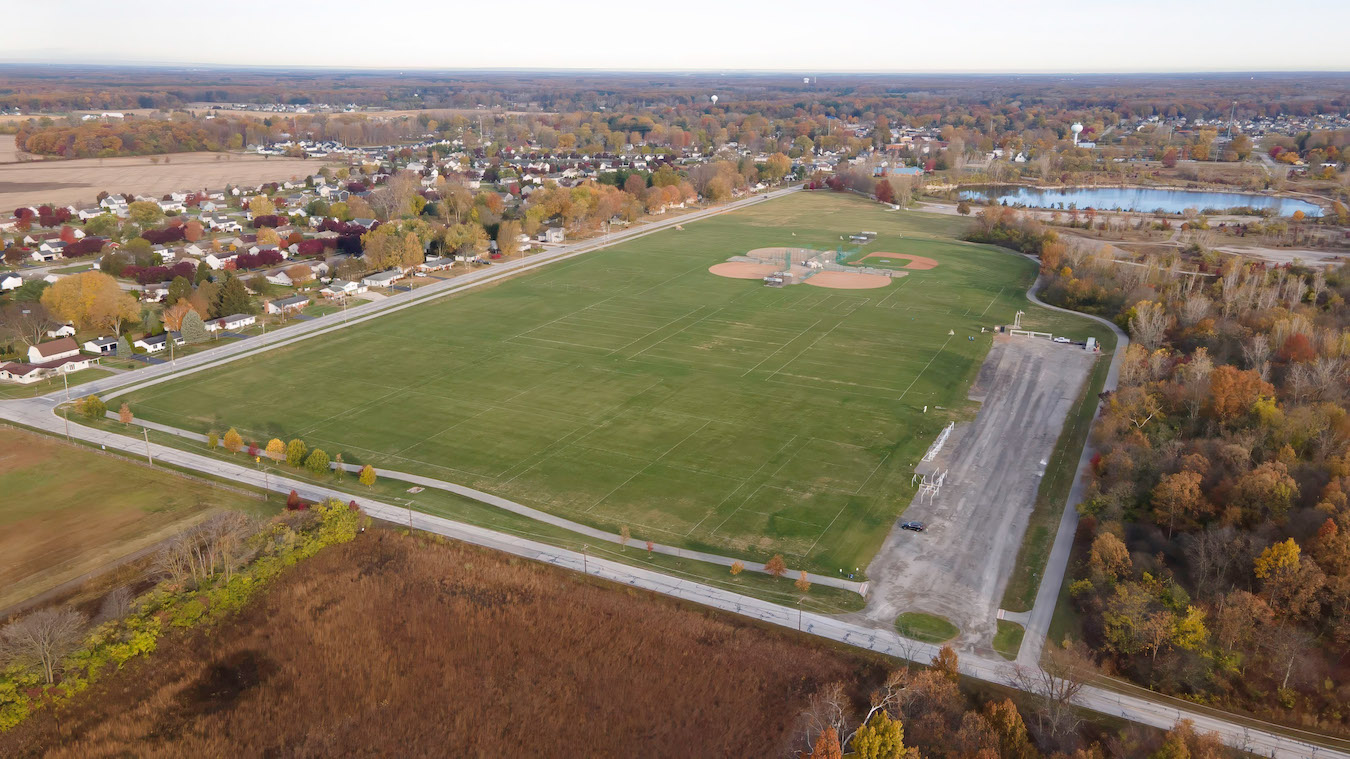
This aerial shot shows Blue Creek Recreation Area in fall 2025. (Courtesy photo)

She was 13 in 2006 when the AWYF was formed, and was heavily involved: not only playing soccer and basketball but mowing the practice fields at Blue Creek, working the concession stands and setting up basketball games. After earning undergraduate and master’s degrees in athletic training, and working for Toledo Public Schools and St. Francis de Sales, Kervin gained a broader perspective on just how much AWYF impacts youth and the community.

“Seeing all the other schools, I realized that what we have out here is special,” Kervin said, noting that often in other districts, students could join high school teams with little or no prior sports experience. “It was shocking to see these kids starting later and not having the opportunities that we give these kids. It made me love and respect this even more.”

Flag football is one of 17 activities offered through the Anthony Wayne Youth Foundation. (Courtesy Photo)

While the goal of the AWYF is not to serve as a feeder to high school sports, that’s certainly been a byproduct. Lori Williams, one of the original AWYF board members, is the high school girls’ soccer coach. The youth soccer programs have been pivotal in shaping the success of the high school program, she believes.

“Many of our players start their journey in the Anthony Wayne recreation program, where they first discover their love for soccer, before growing further through Anthony Wayne United Soccer Club,” she said. “The benefits of these programs extend far beyond just technical skills. By the time our players reach high school, they come equipped with years of coaching, an understanding of the game, and, perhaps more importantly, strong connections with teammates.”

“The success of our high school program is built on the solid foundation laid by the recreation and club teams over the last 20-plus years. We are genuinely grateful for the many dedicated volunteers, coaches and families who have poured their time and energy into nurturing not only skilled soccer players but also remarkable young individuals.”

Chris Chisholm, treasurer for the AWYF, first got involved when his daughter, Alaina, was playing rec basketball. In 2015, he received an email at the end of the season stating that unless someone stepped up to join the board, the program might not be able to continue next year. So, he joined the basketball league’s board, then stepped into the AWYF treasurer position in 2018.

“I’m a big proponent of sports and what it teaches kids: teamwork, a common goal, celebrating success and navigating defeat and disappointment,” Chisholm said. 

Another benefit of a district-wide organization is that it brings kids from all the communities together on one team, he noted. Sometimes parents want to create teams with the same friend groups year after year, but Chisholm explained that teams are designed to provide parity in terms of skill levels, and in bringing kids together who might not otherwise meet until at least middle school.

Flag football is one of 17 activities offered through the Anthony Wayne Youth Foundation. (Courtesy photo)

Landon Heeres, whose teens Silas and Eliana are homeschooled, noted that the AWYF was a leader in welcoming homeschoolers even before public schools permitted them on teams. His wife, Emily, was homeschooled but played softball and other sports through AWYF when she was growing up.

“We love the community coming together and cheering on the players at our local venues like Blue Creek. Youth sports have the potential to bring out the best in a community,” Landon said.

With the growth in the number of AWYF activities, the numbers of participants has grown as well, and that poses a challenge: finding enough practice and game space. While Anthony Wayne Local Schools allows youth teams to utilize school gymnasiums and outdoor spaces, the school teams get first priority in facility scheduling, Kervin said. 

“It’s a constant discussion of what the future looks like, and what can we do for more space,” she said.

Unlike Pacesetter Park in Sylvania, or the Wauseon recreational facilities, AWYF does not receive any taxpayer dollars or funding from the school district. Instead, families pay a yearly membership fee, plus a fee for each activity. Grants and fundraising events – like the “golf inning” at XGolf Toledo every winter and the purse bingo at The Stables every spring – help raise funds to cover the organization’s areas of greatest needs and to keep costs low for families.  

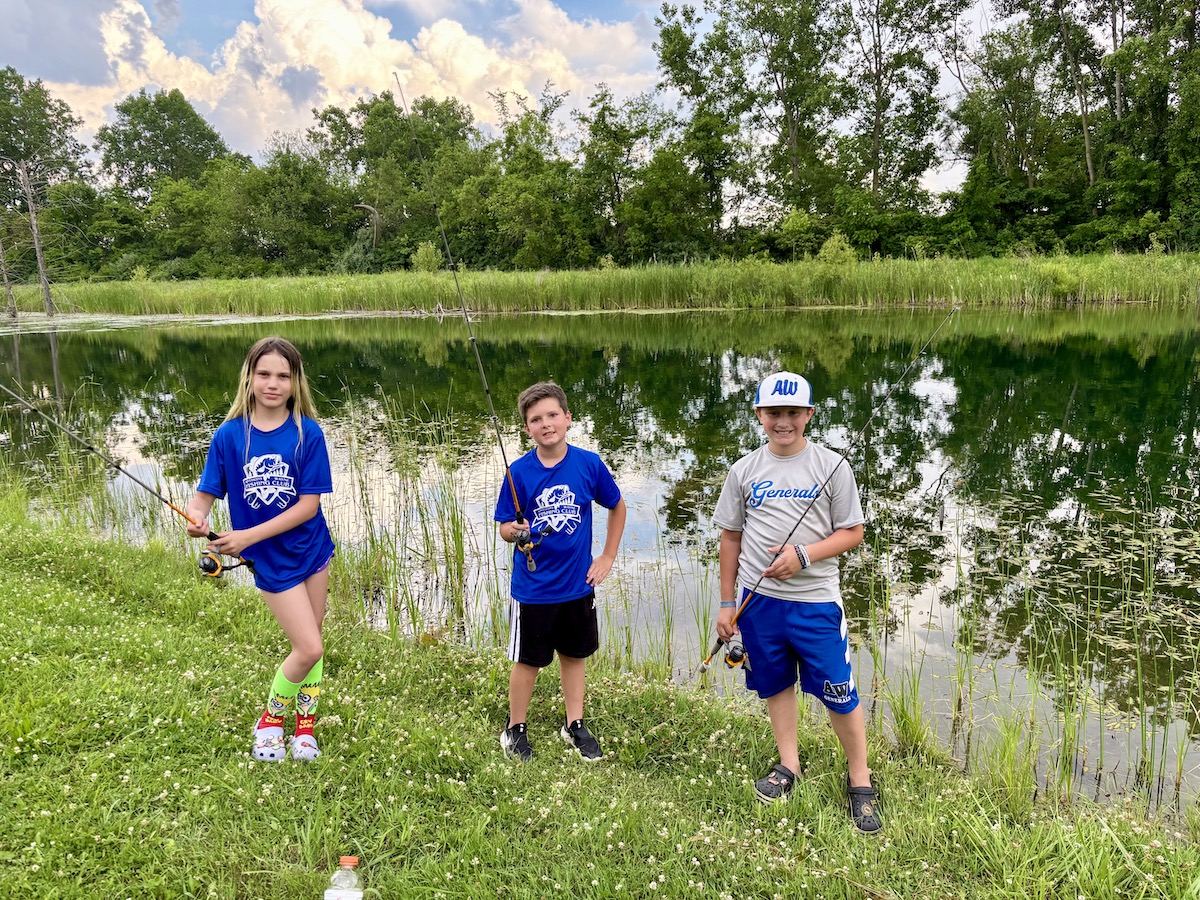
The Anthony Wayne Fishing Club is one of 17 activities offered by the Anthony Wayne Youth Foundation. (AWFP photo by Karen Gerhardinger)

The AWYF has a long-term lease agreement with Metroparks Toledo to utilize the fields at Blue Creek Metropark, but must invest its own money in upgrades and maintenance. The Blue Creek Recreation Area (BCRA), as the fields are known, was once part of Nona France Quarry, and later owned by the village of Whitehouse. The Operating Engineers used the area for training future operators, who removed rocks and leveled the grounds. But it was a $675,000 grant from the White Paper Committee of Ohio that provided the initial boost to prepare the land for future field development, a process that took three years.

That included bringing in 250 truckloads of dirt to grade the fields, adding drainage tiles, a well and sprinklers, and electrical conduit to plan for future restrooms and other facilities that have yet to be built.

“People were asking us where the money was going, because they didn’t see any goals or backstops,” Frendt recalled. “It was all underground work. Then in 2012 we built the baseball fields.”

Jeff Schwerer joined the AWYF after retiring as a teacher and athletic director for Anthony Wayne Local Schools. He serves as the field service manager. Initially, he was asked to get the four baseball fields at Blue Creek and Tom Allen Field behind Whitehouse Inn prepped for games. Now he and a team take care of 35 acres at BCRA and Tom Allen Field, and assist with local community fields including the two softball fields at Whitehouse Park, two ball fields at Monclova Community Park and two at Keener Park. They not only prepare the baseball and softball fields but mow grass at Blue Creek and paint the soccer, lacrosse and football fields.

“Prior to us doing that, the coaches had to do it all,” he said of the volunteer coaches, who are often parents with full-time day jobs. “If they had a game at 5 p.m., they’d have to show up at 4 pm. It’s not always easy.”

The Anthony Wayne Youth Foundation celebrated the opening of four ball fields at Blue Creek Recreation Area in 2012. (AWFP photo by Karen Gerhardinger)

Behind the scenes, there are a lot of working parts, Kervin said. And some are details that parents often don’t think about, such as insurance. Jake McVicker of Savage McVicker Associates handles the three different policies that cover AWYF, including coverage for the coaches, volunteers and medical practice. Every time a travel team hits the road, that requires additional insurance, he noted. 

Kervin focuses on operations, logistics, back-end support, field usage, contracts, legal, bookkeeping and taxes. Olivia Hanifan, the development and partnerships coordinator, joined the team in June and focuses on AWYF and activity fundraising, sponsorships, and donations, as well as community partnerships. 

Administrative Assistant Sam Whitmore manages coaching credentials, registrations, field scheduling, and support to families and volunteers. The AWYF ensures that all volunteers have background checks to ensure high safety standards for the kids, Kervin said. And having all the activities on one website, with one scheduling app, streamlines communications and signups so those volunteer coaches can just show up and do their job, she added.

Often Kervin will hear concerns about affordability, and about 30 of the 1,200 families that participate each year take advantage of an opportunity to sell raffle tickets to cover their fees. Some of the activities offer scholarships to help families, and the Anthony Wayne Neighborhood Bridges program also links families in need with community members willing to help out with costs.

“We’re running as lean as we possibly can,” Kervin said, noting that 92 percent of the income goes back into programming. 

Long term, the AWYF would like to add restroom facilities at BCRA, as well as a maintenance storage area so that equipment currently housed under a tarp in a fenced-in area can be kept out of the elements, Chisholm said. 

Another goal is to expand the offerings for youth sports, so all the activities are available for K-12, Kervin said, explaining that currently rec soccer and boys rec basketball are the only activities for all grade levels.

“We want to keep kids involved as much as possible,” she said.

For the kids who do participate in AWYF activities, the benefits are obvious. Silas Heeres, now 16, started playing soccer at a young age.

“I’ve made a lot of friends, and it also gave me a good foundation to continue playing the game that I love at a higher level,” Silas said.

This summer, Silas organized a summer soccer program every Friday morning for anyone who showed up. He also continues to referee soccer games while his sister, 13-year-old Eliana, has played several sports over the years.

“It’s been fun. It helped me get better at sports that I like, especially flag football and basketball,” Eliana said. “It definitely helped me make a travel flag football team and now I’m playing basketball for Anthony Wayne Junior High.”

She has fond memories of winning the Junior Generals basketball championship her fifth grade year, and credits coaches Andy and Jackie Szymanski for making it “super fun.”

For Kervin, hearing these positive reviews shows her just how much AWYF is making a difference in the community, and she’s thankful for the volunteer coaches, volunteer board members, community partners, and most importantly, the families who have been a part of making it a success for the past 20 years. 

For Frendt, his goal for the next 20 years would be to see more kids involved, buildings completed, additional sports programs, and acreage for future facilities to serve the community. But for now, he has the joy of seeing his granddaughter, Charleigh, playing soccer.

“Seeing her out there – it’s special,” he said.

For information about the AWYF, visit awyf.sportngin.com.

Rally Point Social Club set to open in spring

0
Ron and Becca DeLeeuw, at right, were joined by investors during an Aug. 31 groundbreaking for Rally Point Social Club. (AWFP photo by Karen Gerhardinger)

MONCLOVA TOWNSHIP – When Rally Point Social Club opens next spring, it will not only provide much-desired indoor and outdoor pickleball courts for Monclova Township and surrounding communities, but a community gathering spot where all ages and abilities can gather to play no-skill games, eat, drink and get to know one another.

“It ultimately comes down to community,” said Rally Point Founder Ron DeLeeuw. “The community needs to feel it belongs to them. Rally Point is a social club built around activity, competition and connection. We want to give people a place to play, eat, drink and spend time together.”

On Aug. 31, DeLeeuw and his family, investors and local leaders gathered on the 8.6-acre property on the northeast corner of Jerome and Monclova roads for a ceremonial ground breaking – although site work has been under way for the past few weeks. He expects the frame for the 48,000-square-foot steel structure to be up within the next few weeks.

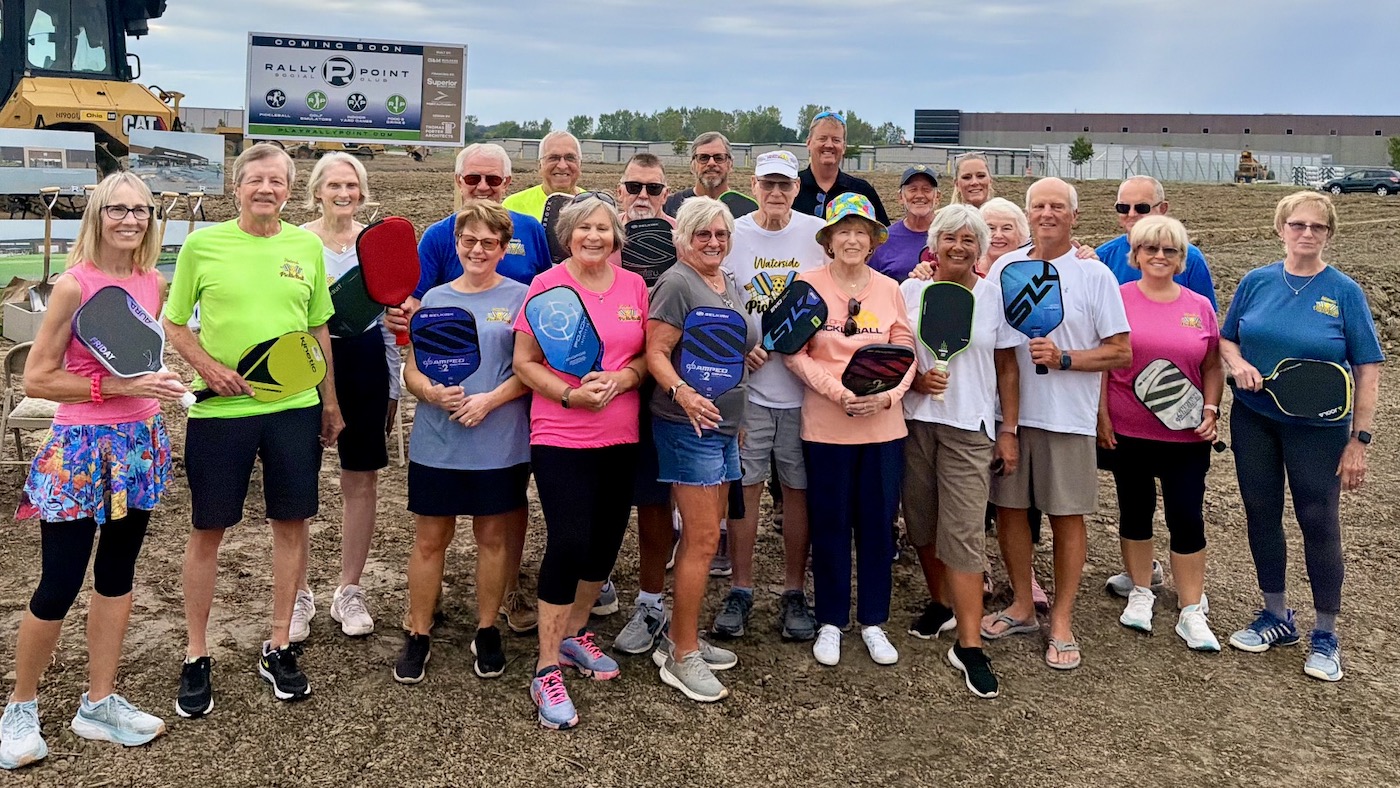
Pickleball players from Waterside community came to support Rally Point Social Club during the Aug. 31 groundbreaking. (AWFP photo by Karen Gerhardinger)

When finished, Rally Point Social Club will have five outdoor and 10 indoor pickleball courts, four golf simulators and spaces for playing games like bocce, cornhole, shuffleboard and virtual reality darts. The indoor courts will have rounded corners to allow for a walking track around the perimeter, and a nearby space with stationary bikes and exercise bands will give pickleball players an opportunity to warm up. A mezzanine overlooking the first floor will include spaces for groups to meet for euchre, trivia nights and reunions – or to just watch the pickleball games below.

“Every activity is based on what is working around the country,” said DeLeeuw, noting that shuffleboard bars and restaurants are gaining in popularity. “People are just looking for something to do together. Shuffleboard is not only good for the younger generation but the senior population. It’s a traditional sport that you can do even with limitations.”

In addition to pickleball courts, Rally Point will feature indoor yard games, a tap wall and plenty of space to socialize. (Rendering courtesy of Thomas Porter Architects)

While food trucks will be on site in warmer months, serving customers using the outdoor patio and its many activities, an indoor kitchen will serve up breakfast, lunch and dinner year-round, with everything from pizza, wings and pretzels to salads and wraps. An indoor and outdoor self-serve tap wall will provide dozens of brews – many of them local – for tasting by the ounce. 

“We hope to team up with local breweries, to bring as much of Toledo as we can into this building,” DeLeeuw said. 

Technology will be used throughout the customer experience, with an app for reserving a lane or court, or paying for food and drinks, but ambassadors will be on site to help through that process and to check IDs for alcohol sales. That self-serve model works well for those who don’t want to be tied down to a table or a waitstaff member, but instead roam through the building while on a date, a family night out or a morning gathering, he noted.

A mezzanine at Rally Point will include areas for groups to host social gatherings. (Rendering courtesy of Thomas Porter Architects)

Memberships will be offered for pickleball, giving members the ability to book courts a few weeks out, but are not necessary for booking a lane or just hanging out. DeLeeuw envisions Rally Point Social Club as a place where people can come in at 7 a.m. and play a game and use one of the two showers on site before heading into work. Retirees like those he met in Waterside community might take the next shift, playing pickleball mid-morning and staying for lunch. Parents might meet up with other families while kids play with balls in an open-turf area throughout the morning. And he expects that the two conference rooms with AV capabilities will be used for corporate retreats or social gatherings.

Typically in the afternoon is when sports venues see a lull, but DeLeeuw plans to offer an after-school rate of $1 per game for students to play pickleball from 3 to 5 p.m. 

“Our No. 1 focus is value. We want to keep the prices at a value level so that we keep the building busy all day,” DeLeeuw said, explaining that his goal is to keep lane rental under $10 an hour. “If the price is right, people will come all day and the building will have great energy from 7 a.m. to 11 p.m.”

During the groundbreaking, several Waterside residents who play pickleball regularly came to show their support.

“It will be a lot of fun. There will be a lot of us out here. We’re all looking forward to it,” said Dianne Stroshine. “I’m so excited to have something close. We just need to hop on the bike path and come here.”

Rally Point Social Club’s pickleball courts are lined just for the sport, which makes a difference. Other courts often have lines for other sports like tennis, Stroshine said. 

(Rendering courtesy of Thomas Porter Architects)

Lori Schroeder, who organizes the Waterside pickleball group, said about 105 residents of the 602-home senior community play pickleball. DeLeeuw came to visit the group last week to get feedback.

“The community itself will be using this to come down for easy dinner or the games that the kids have. It seems like a real family oriented place. He’ll have a lot of us here in the winter playing,” Schroeder said.

While the new structure will utilize just an acre of the property, plus space for the outdoor patio and parking, DeLeeuw is keeping his options option for future facilities on site, based on feedback.

For DeLeeuw, the groundbreaking represents more than two years of planning. In October 2024,  Monclova Township turned down his initial request to build an inflatable dome for pickleball, volleyball and baseball/softball, because such structures are not permitted in the Monclova-Maumee-Toledo Joint Economic Development Zone – of which his property is an anchor. But going back to the drawing board just gave him more time to research and come up with a plan that will appeal to more than just pickleball enthusiasts, he said.

The facility is expected to employ directors for pickleball, operations and food and beverage, as well as a marketing/promotions manager, kitchen staff and ambassadors. DeLeeuw did not receive any tax incentives or abatements for the project, but did work with Superior Credit Union and the Port Authority to obtain a loan.

Letter to the editor: There’s No Place Like Home

0
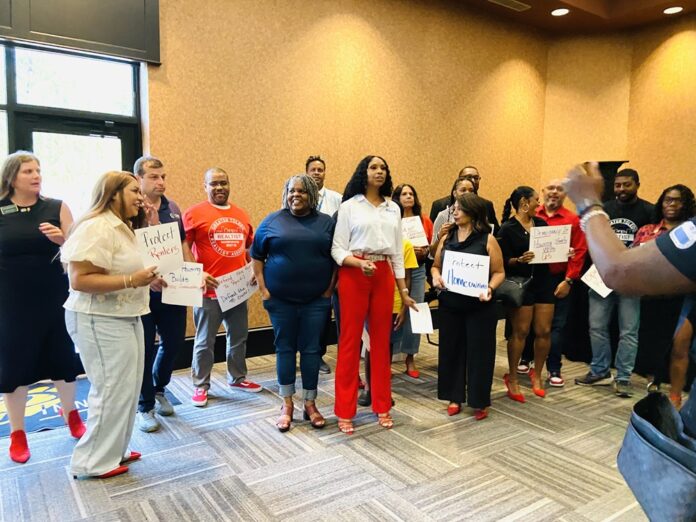
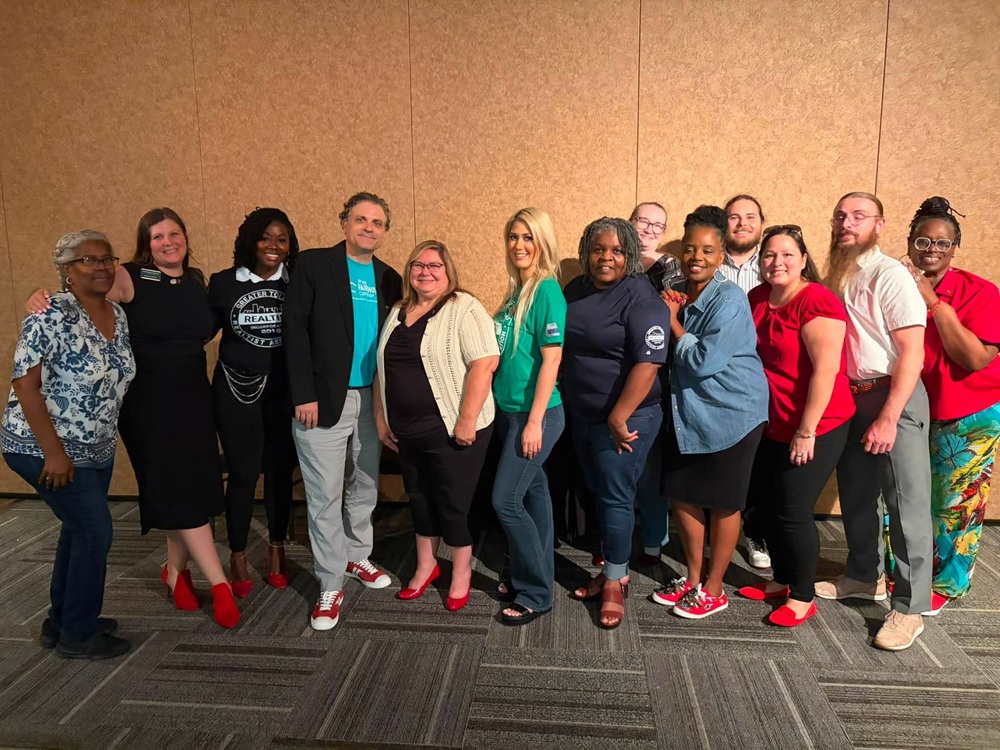
Greater Toledo Realtist Association flash mob. (Courtesy photo)

On behalf of The Fair Housing Center (TFHC), we want to thank the Toledo-area community for making There’s No Place Like Home on Aug. 18 a magical celebration of fair housing and the community we all call home.

The Pinnacle was filled with red shoes, music, and an outpouring of support for our mission. The Greater Toledo Realtist Association (GTRA) brought energy and enthusiasm with a surprise flash mob, while Howard Hanna of Northwest Ohio made an already generous moment even more meaningful by donating its 50/50 raffle winnings back to TFHC. With generous sponsorships from GTRA, Key Realty, and the Lucas County Commissioners, the event helped us raise $3,000 in ticket sales and donations.

TFHC staff with supporters from GTRA and Howard Hanna. (Courtesy photo)

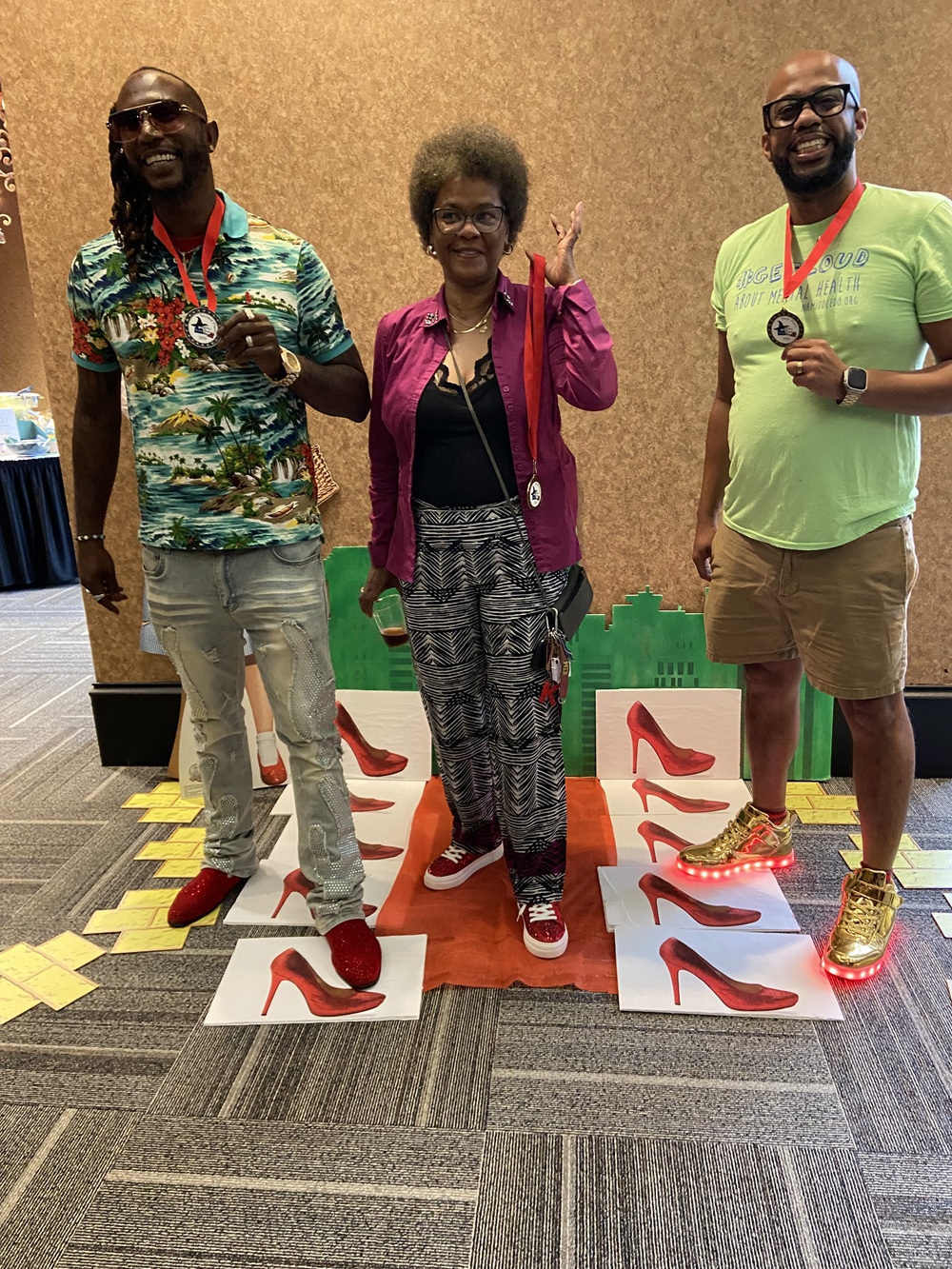
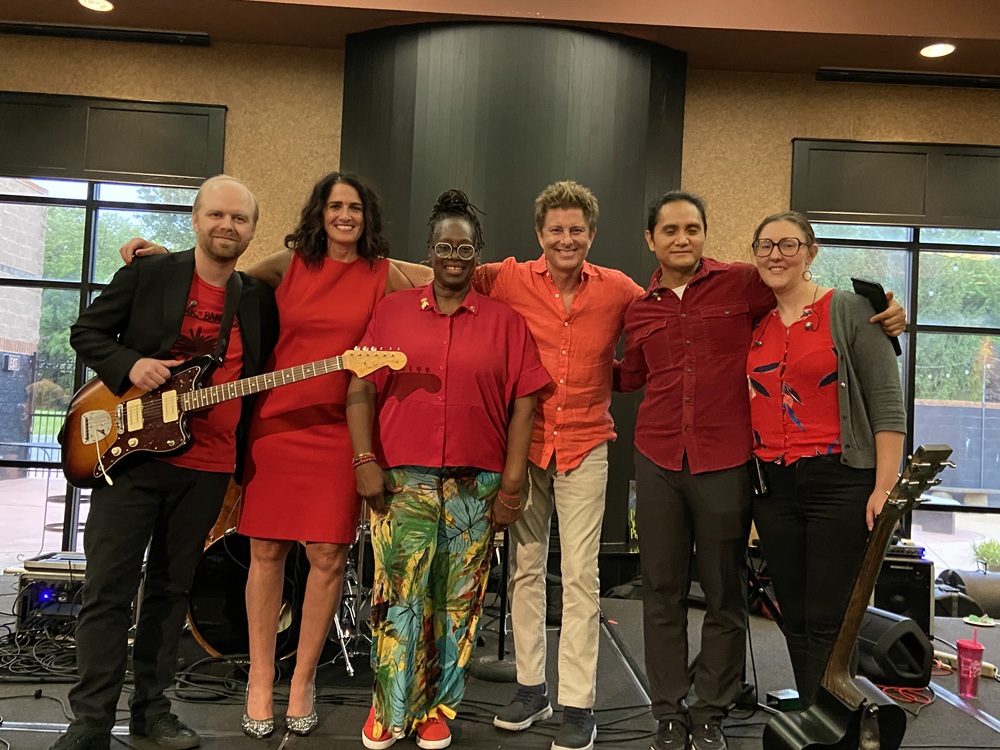
Guests also enjoyed live music from Toledo’s own Arctic Clam, original Wizard of Oz-themed artwork by local artist Brian Lowe, and the extremely popular Red Shoe Contest. Winners Gabriel Garcia, Chris Keller, and Kimberly Dixon won first, second, and third place, respectively by the crowd’s applause.

(Left to right) Chris Keller, Kimberly Dixon, and Gabriel Garcia, winners of The Red Shoe Contest. (Courtesy photo)

Events like There’s No Place Like Home are more than just having a good time; they bring people together around the belief that everyone deserves a fair opportunity to find a safe, stable place to call home. As TFHC Development Coordinator Audrey Johnson puts it: “No Place Like Home is an accessible, welcoming event that brings our mission to life. When I looked around the room and saw people of all backgrounds, Black, brown and white, young and old, coming together, I knew we were getting it right.”

Audrey Johnson of TFHC with Arctic Clam. (Courtesy photo)

While it had been a few years since we held There’s No Place Like Home, we look forward to hosting this community gathering for many years to come. We are grateful to everyone who attended, participated, donated and helped make this year’s event such a success. None of this would have been possible without the generosity of the Toledo community.

There truly is no place like home, and we are proud to call northwest Ohio ours.

-Emily Desmond
Toledo Fair Housing Center, Director of Communications

Toledo Opera goes beyond the stage with events, education 

0
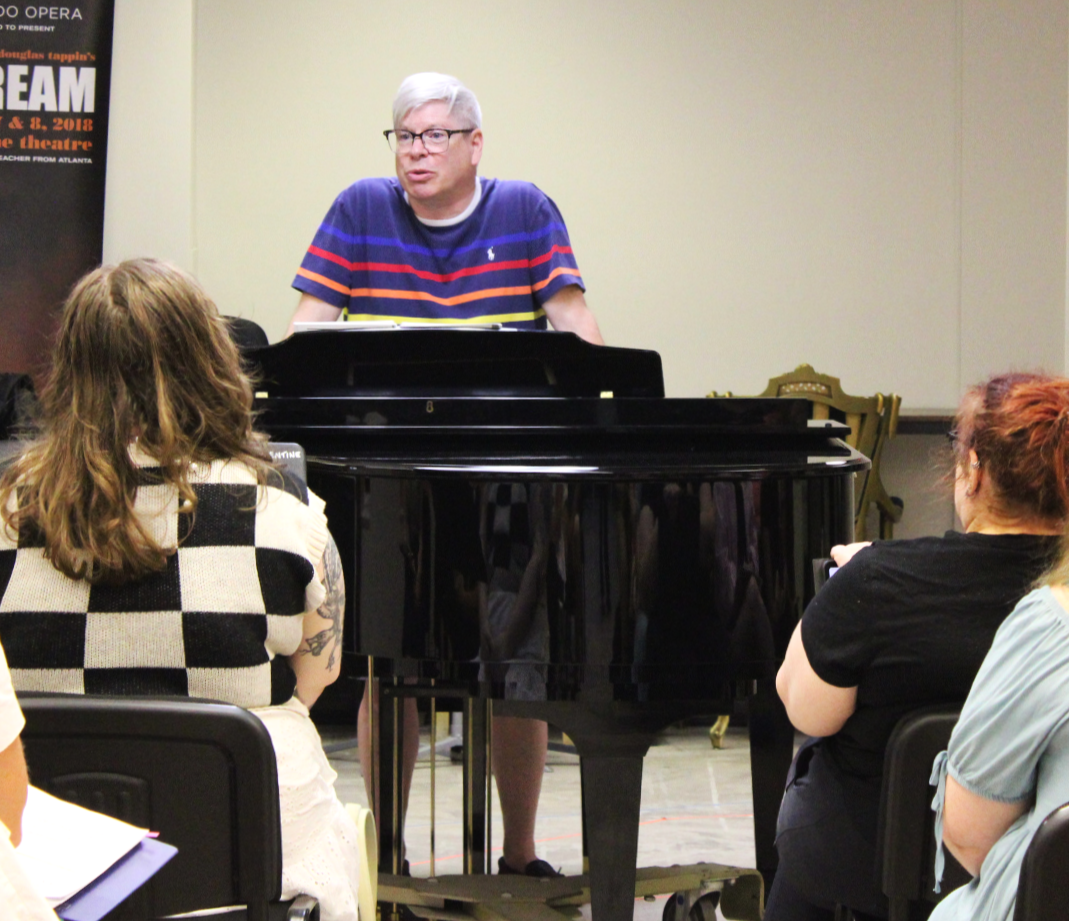
Chorus members rehearse songs from Guiseppe Verdi’s “Aida” at the Toledo Opera offices on Jefferson Avenue downtown. (Photo courtesy Toledo Opera)

TOLEDO – From pop-up performances with resident artists to fun-filled gatherings at local pubs, Toledo Opera is planning several community events to enhance its 2026-2027 season of fully staged productions of Aida and H.M.S. Pinafore.

“With free performances around the region with Opera ’Round Town to chorus rehearsals for Aida, exciting things are happening both on and off the stage,” said Rachael Cammarn, director of marketing and communication for Toledo Opera.

Kevin Bylsma, artistic director for Toledo Opera, stands at the piano as he leads Aida chorus members in rehearsal. (Photo courtesy of Toledo Opera)

The epic tale of love, loyalty and impossible choices in Giuseppe Verdi’s Aida will turn the Valentine Theatre in Toledo into an Egyptian royal court this fall, with performances Oct. 16 and 18. Audiences will set sail with Gilbert & Sullivan’s delightful H.M.S. Pinafore in the same historic downtown venue on Feb. 19 and 21.

At the heart of Aida is an Ethiopian princess, captured and enslaved in Egypt, who finds herself caught between two worlds: the man she loves and the homeland and people to whom she belongs. 

Love takes a lighter turn in H.M.S. Pinafore, with mischievous sailors, scheming relatives, and bumbling ship passengers mixing up identities and stretching the boundaries of social classes. 

The northwest Ohio regional opera company operates as a nonprofit and offers several opportunities for the community to learn more about the story and music of the season’s operas, with free pre-performance lectures at the Valentine and extensive synopses, audience guides, and audio clips on its website at toledoopera.org

Companion programming throughout the year includes prelude dinners and special events such as Aida: Get into the Spirit, a casual event with signature cocktails and cast performances from 5:30-6:30 p.m. on Oct. 1 at Bellwether at Toledo Spirits Co., 1301 N. Summit St. Admission is free with drinks and food available for purchase. 

Set throughout the distinctive spaces of TolHouse, the event Aida: Homelands will feature traditional Azmari music, an Ethiopian buffet from Taste of Ethiopia in Detroit, and a presentation by musicologist Dr. Ryan Ebright exploring Ethiopia’s role in the opera and some of the historical and cultural context surrounding Verdi’s iconic work. Tickets are $75 for the event starting at 6 p.m. at the club (1447 N. Summit St.) and must be purchased in advance.

The Toledo Opera Guild, a volunteer group dedicated to spreading awareness of the artform and supporting Toledo Opera, is planning an Aida luncheon Oct. 1 in the Malawi Event Center at Toledo Zoo. Attendees get to meet principal performers and production leaders from the opera as well as opera staff, and they will be serenaded with a special selection from Aida

The Guild also plans special events throughout the season, including Tip the Opera meals at local restaurants, with the next one slated as a Halloween Booooozy Brunch on Oct. 31. Guild membership is open to the public with three different levels and can be registered on the opera website, which also has details of other Guild events.

Toledo Opera resident artists are the backbone of the company’s melodic and harmonic offerings the whole year, with Opera ’Round Town outdoor performances and Opera Is a Story and Opera on Wheels programs brought to area schools. 

Sponsored by iHeart Media Inc. and presented in partnership with Metroparks Toledo, Opera ’Round Town features Jenna Grissom (soprano), Caroline Friend (mezzo soprano), Jeremy Do (tenor), Timothy Krueger (baritone), and Charles Lingus (pianist), who were selected from an international pool of more than 150 applicants for a one-year residency in Toledo. Together, they will perform iconic vocal selections from the classical repertoire, along with musical theater and other American standards.

The first of seven scheduled Opera ’Round Town performances will be held at 6 p.m. on Sept. 9 at The Manor House at Wildwood Metropark, 5100 W. Central Ave.

Student Night at the Opera invites middle and high school students to come to the final dress rehearsal of the main stage productions, at 7 p.m., Oct. 14 for Aida and at 7 p.m., Feb. 17 for H.M.S. Pinafore at the Valentine Theatre. Tickets are $10 per student and teacher. As in the public performances, English captions will be projected for both operas. (Aida is sung in Italian, while H.M.S. Pinafore is sung in English.)

An all-access ticket to the Friday, Oct. 16 performance of Aida will include an Operatizer, a pre-performance gathering starting at 5:30 p.m. at the Toledo Club, and Afterglow, the opening night cast party following the performance. Hosted by the Toledo Opera Audience Development Committee, transportation between the club and theater will be provided. Tickets are $100 per person.

Curtain rises at 7:30 p.m. for the Friday night performances and at 2 p.m. on Sundays for both Aida and H.M.S. Pinafore.

Single-seat opera performance tickets range from $59-$149 while season subscriptions from $99-$349 offer bundled discounts and all-inclusive perks. Information and tickets for opera performances, community events, and volunteer and donor opportunities can be found online at toledoopera.org or by calling the Toledo Opera office at 419-255-SING (7464). 

Rebecca Conklin Kleiboemer serves as president of the Toledo Opera Guild and is a trustee of the Toledo Free Press Board of Directors.

Anthony Wayne Announcements

0
Pexels photo by Markus Winkler

Below you’ll find the latest news from the Anthony Wayne area, compiled from Anthony Wayne Free Press coverage, along with press releases we receive from community members:


The Roche de Boeuf Bridge is undergoing selective demolition, with Kokosing operators carefully removing dirt from on top of the arches of the 118-year-old concrete structure. The goal is to remove the dirt and take down the falling spandrel walls in order to save the arches and piers as a base for a future pedestrian and bike bridge, Save the Bridge Association’s Rex Childers said at an Aug. 24 Waterville City Council meeting. Read the latest here.


When Waterville Township trustees learned during their July meeting that Police Chief Kevin Smith plans to retire effective Nov. 1, they decided in executive session to begin a search for a new chief.

But during the trustees’ Aug. 26 meeting, several officers urged them to instead consider promoting Lt. Marty Przbysz (pronounced shibish) to the position. Read more of the story by Karen Gerhardinger here.


Anthony Wayne Alumni Association welcomed five new Hall of Fame inductees following an Aug. 22 luncheon in which four graduates and one retired teacher shared how the lessons they learned as Generals have stayed with them throughout their lives. Read more here.


During an Aug. 20 Providence Township meeting, the trustees heard solicitor David Chamberlain report that the county will not write zoning resolution changes to regulate data centers, but will provide input on any proposed language submitted. Trustees agreed that the best option would be to look at what neighboring communities are using in order to create their own. Read more here.


Adventure Spirits Distilling Announces Leadership Transition – On Aug. 1, the company announced this month that Co-Founder and Co-Owner Barry Beale transitioned out of his ownership and operational roles with the company.

While Beale is exiting his ownership and operational role, his legacy will live on through Gin Barry Gin, which will continue to be proudly produced unchanged and remain a flagship spirit in the Adventure Spirits portfolio. Co-founder Joe Carter will continue his leadership of distillery operations.


Township officers support lieutenant as next chief

0
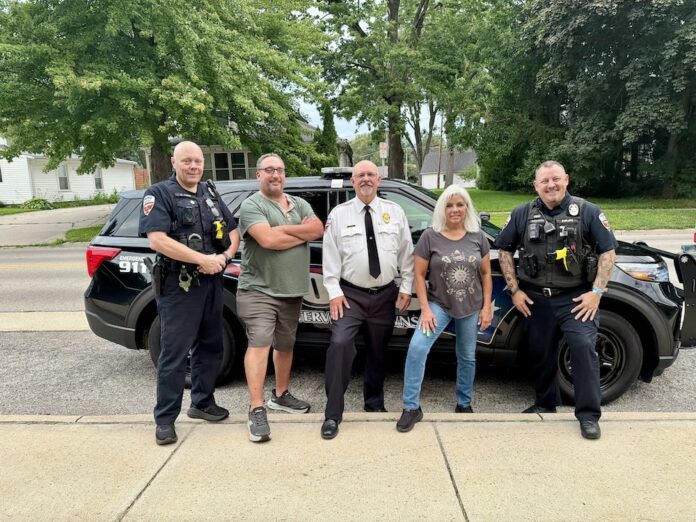
Waterville Township Police Chief Kevin Smith (center) plans to retire Nov. 1. Officers (from left) David Terry, Jim Schlievert, Diana Trevino and Gregory Westrick are urging township trustees to promote Lt. Marty Przbysz as the next chief, rather than doing a full search. (AWFP photo by Karen Gerhardinger)

WATERVILLE TOWNSHIP – When Waterville Township trustees learned during their July meeting that Police Chief Kevin Smith plans to retire effective Nov. 1, they decided in executive session to begin a search for a new chief.

But during the trustees’ Aug. 26 meeting, several officers urged them to instead consider promoting Lt. Marty Przbysz (pronounced shibish) to the position. 

“I’m here to throw my lot behind Marty as the new chief. He’s dedicated more than half his life to law enforcement and public safety. He knows the policies and procedures. He could seamlessly take over Kevin’s spot,” said Diana Trevino, a retired Toledo Police detective who Przbysz recruited to join the township. “I think it would be a better transition. He doesn’t need to be trained. And he’s very dedicated and committed to the safety of the officers and the safety of the public.”

Officers Jim Schlievert, David Terry, James Waltimire and Gregory Westrick also shared their appreciation for Smith and Przbysz.

“I want to express my gratitude for Kevin’s leadership and commitment to the department and to the residents we serve – that’s a big thing he pushes on the officers, that it’s about the residents and how we treat them,” Terry said. “Lt. Marty stands behind the officers. Anytime we have a situation arise, it doesn’t matter what time of day or night, he calls us back. We are never outside of the loop.”

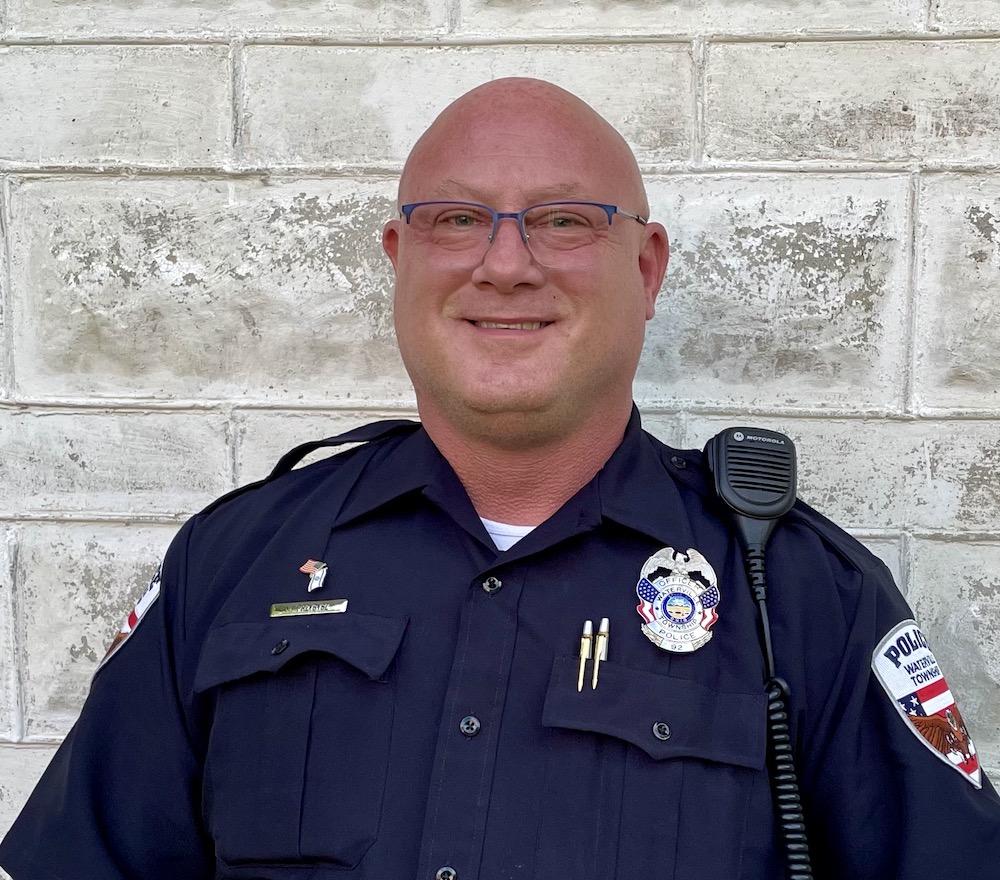
Waterville Township Lt. Marty Przbysz has been with the department since August 2023. (AWFP photo by Karen Gerhardinger)

Waltimire noted that Przbysz knows the department and the officers well, along with the policies and procedures.

“I think if you go outside the department, that causes chaos, because you don’t know who you are bringing in, if they are going to match together, and if they are going to be a team leader,” Waltimire said. “Marty’s in place, he knows what’s going on, and he knows how to do his job.”

The officers pointed out that the department had a high turnover rate before Smith arrived, and said Przbysz has recruited more experienced officers who arrive with specialized training, including grant writing, accident reconstruction, detective work and crisis intervention. Having well-trained, experienced officers also means the township is less likely to be involved in litigation, Schlievert said.

“I am asking you to consider that a good candidate is already in place, so no search is necessary –  no time, no money, no effort, and that candidate already works for you,” Schlievert said.

After hearing the officers, Trustee Julie Theroux said she would like to revisit the conversation about doing a search. 

“It’s my opinion that 100 percent of the officers are supportive. That says we have the right person. We don’t have to do a search,” Theroux said. “I’m all in favor of not going through that: the interview process, the time, the money, the posting. We could have someone in place who could take that position seamlessly.”

While Trustees Kyle Hertzfeld and Toby Miller agreed, they said they would first like to meet and speak with Przbysz in the next few weeks.

The trustees then approved a motion recognizing Smith for his service and to wish him well. Smith was hired as chief in August 2023 after 27 years as a sergeant with Toledo Police Department (TPD). Przbysz was hired a few weeks after Smith, and worked for TPD for 28 years.

During the meeting, the board also:

-Discussed two upcoming Zoning Commission meetings: on Monday, Aug. 31 at 7 p.m. to hear about proposed changes to the zoning language that would allow electronic billboards along U.S. 24; and on Monday, Sept. 14 at 7 p.m. to review proposed changes to language governing data centers and other campus-style developments. Both will be held at Waterville First Presbyterian Church, 611 Farnsworth Rd.

-Agreed to Fiscal Officer Jeanne Taylor‘s request to hire Eric Walker, of Quality Computer Services, at a rate of $75 an hour for up to 20 hours, for ongoing maintenance and IT support services.

-Learned that the police department responded to 88 calls for service last month, including assisting Waterville, Whitehouse and the Lucas County Sheriff’s Office, plus making 50 house checks at three locations and 837 business checks at 11 locations.

-Discussed how to handle residents’ concerns about lighting originating from Dutch Road Storage. Miller suggested that Fischer talk to the owners about finding a way to mitigate the issue before spending township money to hire someone to measure several aspects of lighting listed in the zoning resolution.

-Discussed issues with Spectrum installers cutting into Noward Road and leaving residents’ yards with holes, ruts and rocks after laying new fiberoptic cable. The Lucas County Engineer issued a stop work order, but the installers were out late at night trying to fix the issue – but made it worse. The company has a month to return all of the properties to the state it was prior to their work.

-Agreed that trail cameras and “no dumping” signs need to be posted on Moosman, Kay and Fischer drives – all dead-end cul-de-sacs where dumping has been an issue recently.

-Listened to Monclova Township resident Lyn Cox ask questions about the changes to the M-3 zoning resolution proposed for regulating data centers and other large developments. She also asked to see a copy of those proposed changes prior to the meeting. 

-Approved, in public hearing before the meeting, lighting districts for Village on the Green plats 1, 2 and 3 and Coventry Glen plats 5 and 6. The cost for street lights is put on the property taxes for each parcel.

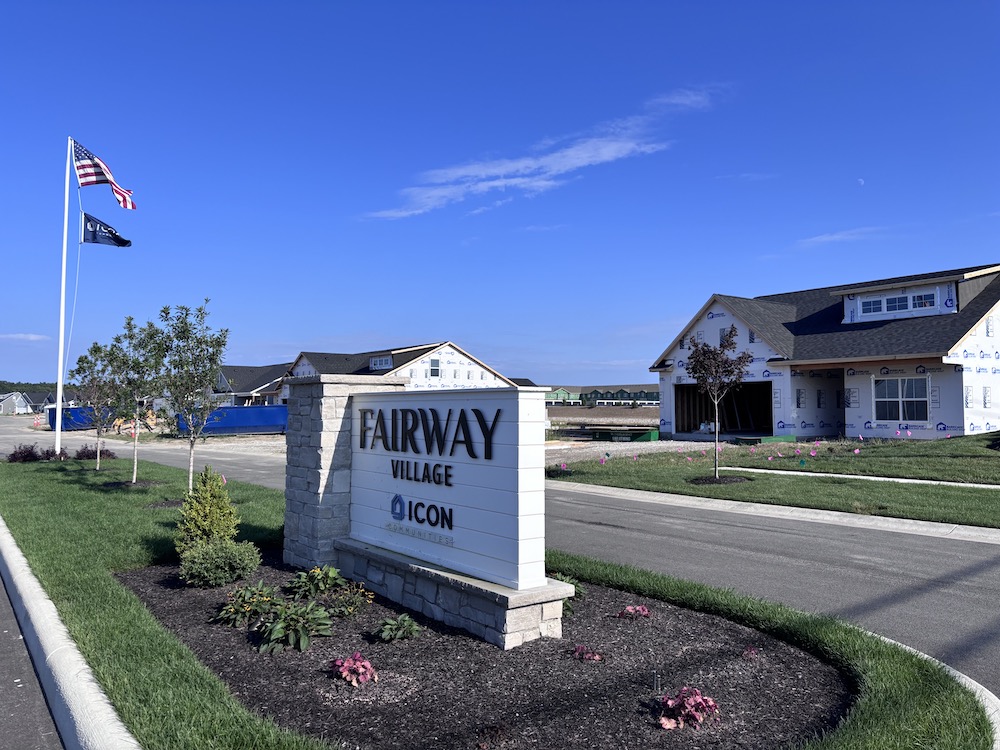
Fairway Village is one of two developments experiencing growth in the township. Trustees approved lighting districts for Fairway Village and Coventry Glen. (AWFP photo by Karen Gerhardinger)

AW Alumni Association welcomes Hall Of Fame inductees

0
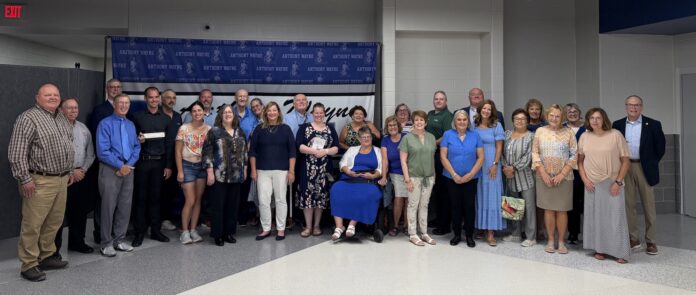
Anthony Wayne alumni of all ages gather for a photo after an August 22 luncheon welcoming five new Hall of Fame members. (AWFP photo by Karen Gerhardinger)

Five new faces now appear on the Anthony Wayne Alumni Association’s Hall of Fame, following an Aug. 22 luncheon in which four graduates and one retired teacher shared how the lessons they learned as Generals have stayed with them throughout their lives.

Kevin Click, Class of 1979, spoke about the teachers, Scout leaders and others in the community who inspired him to give back to others. While big issues like food insecurity and housing affordability might seem daunting, Click said making a difference starts by helping one family at a time.

“If everyone does that, the world would be a better place,” said Click, who is involved with an Asheville, N.C. food bank and volunteers with Habitat for Humanity.

He thanked the alumni association for inspiring the next generation of leaders by providing scholarships to graduating seniors, and noted that his years as AW helped shape his future.

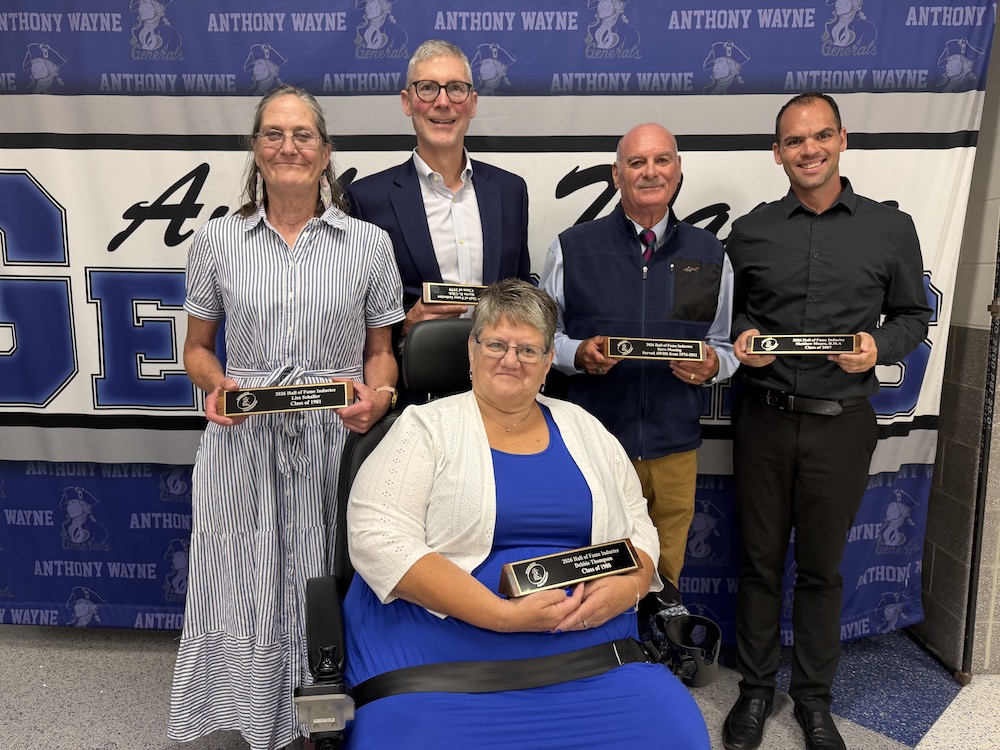
Five graduates and one retired teacher were into the Anthony Wayne Alumni Association Hall of Fame on Aug. 23, including Debra Thompson (front) and, back row, Lisa Schaller, Kevin Click, Steve Mossing and Matthew Mauro. Not pictured is Charles Wiedie, who works in Hawaii and was unable to attend. (Anthony Wayne Local Schools/Rebecca Sanford)

Debra Thompson, Class of 1980, was overwhelmed with emotion and asked Charlene Hansen for help in reading her speech. After seeing how a diagnosis of multiple sclerosis spurred Thompson into action, Hansen nominated her friend for the Hall of Fame.

Riding around in a power wheelchair in downtown Bowling Green, Thompson began seeing things from a different perspective, and then got to work making a change so that others with mobility issues – or anyone pushing a walker, wheelchair or stroller – could safely navigate their community.

“My different perspective gave me a choice: to advocate for improvements. Making a difference doesn’t always have to be something huge,” said Thompson, whose service on committees in Bowling Green has led to change. “Show up. Get involved. Help where you can. And don’t assume someone else will do it.”

Rev. Melissa Hart, class of 1987, gave an invocation. (Photo courtesy of Anthony Wayne Locals Schools/Rebecca Sanford)

Lisa Schaller, a 1981 graduate, shared stories of growing up along Dutch Road, with neighbors who showed her early on what it means to be community: Les Disher coming to help in the middle of the night when a pack of wild dogs attacked the lambs that were her 4H project; and Don Woods getting food from his grocery store to deliver to people stranded during the Blizzard of ’78.

“Community has shown me in my rearview mirror what I need to portray in my front windshield. From there I started giving back completely,” said Schaller, who serves on the Anthony Wayne Alumni Association, which was founded by her father, Don Schaller and other AW supporters. 

Schaller also focuses on STEM education, hosting every Whitehouse third-grader each year for a day of hands-on lessons with her Bowling Green State University Construction Management students.

Charles Wiedie‘s father – also Charles – spoke on behalf of his son, a 1986 graduate who is serving as an attorney advisor to the U.S. Marine Corps Defense Services Organization in Hawaii. 

“From the first day he set foot on the campus here in Whitehouse, he was warmly received by all the Anthony Wayne family. Some of the friends he made during those high school years have become lifelong friends. His experience here…helped make him the man he is today. His mother and I are so proud of the son, the father and the husband he has become and the many years he has devoted to serving his country.”

Ralph Whalen, class of 1965, is president of the AW Alumni Association. (Photo courtesy of Anthony Wayne Locals Schools/Rebecca Sanford)

Matthew Mauro, Class of 2007, is now a performer and teacher of music in the Cincinnati area and throughout Ohio. He credits the teachers who pushed and demanded more of him: preschool teacher Melissa Bergfeld, Brad Rhodes, Jane Yates, Valerie Sido and Jim Burda.

“They really challenged and inspired me to think more deeply and creatively on a daily basis. The teachers at Anthony Wayne molded my life for the better. To this day I – consciously and unconsciously – mimic the habits and investment of these teachers in my own teaching every day,” he said.

Mauro also noted that he had many bright, driven and inspiring peers, as shown by the fact that the Class of 2007 had 15 valedictorians.

“Many of my colleagues are now leading impressive lives and impressive careers. Part of my work ethic and drive can be attributed to the fact that I grew up around those other people who are incredibly brilliant,” he added.

Steve Mossing, who spent his 35-year teaching career in the district, retiring in 2011, shared how he was welcomed into the district by leaders including Dick Albaugh, Mark Knerr, George Donnelly, Tom Jennings and George Schoonmaker

Through his career, Mossing served as high school physical education teacher and coach, serving as a golf coach for more than 30 years.

“I loved being a small part of the success. That success starts at the top: administration, board of education, staff, students and community support. There’s a phrase that teachers make a difference. I would add that good teachers make a big difference. I witnessed firsthand that AW had, and to this day has, a lot of teachers that make a big difference.”

Alumni association board member Karen Wiggins summed it up.

“We learned about showing up, lifting up, giving back, committing to improve life, rooting for your family, passion for the community…It’s simply what one does to be a General for life,” she said.

For information, visit awalumni.org.

Providence Township discusses roads & data centers

0
Patton Road paving was recently completed, using Ohio Public Works Commission funding. (AWFP photo by Karen Gerhardinger)

PROVIDENCE TOWNSHIP – Roads and data centers were the focus of the Providence Township trustees’ Aug. 20 meeting.

The township has been working with Sarah Rowland, an engineering manager with the Lucas County Engineer’s office, on applying for funding with the Ohio Public Works Commission (OPWC). Part of the OPWC includes a round of funding for small governments with populations under 5,000 – including townships.

Trustees agreed with one option suggested by Rowland: to widen Bailey Road from Providence-Neapolis-Swanton Road to Manore Road. If awarded, the work would be done in 2028 and the cost to the township would be $133,051, or 35 percent of the total cost, taken out of the gas tax fund. 

The township recently completed work on Manore and Patton roads, using OPWC funds approved for this year, and approved payment of $188,646.94 to Gerkin Paving.

After hearing concerns from residents about a need for better drainage on Manore, Trustee Jeremiah Floyd and Road Superintendent Kyle Keifer investigated the drainage tiles and ditches leading to the area and discovered several that are plugged. The county maps, dating back to the 1930s, don’t reflect the existing tiles, so the two plan to dig back more to better assess the situation, then talk to the county engineer to see if the ditch could be cleared as part of the county ditch petition, Floyd said.

Trustee Steve Kendall said that with Manore Road repaved, some motorists believe it is now a two-lane road, but that it isn’t wide enough to pass without someone getting near the edge of the berm. Rowland and the other engineers are working on options for mitigating that issue, which may include signage to alert that it is a single-land road.

Trustee Lee Bialecki suggested that the township inform citizens of how much the road work is costing the township, possibly sharing the breakdown on the township website.

The trustees also discussed issues with line of sight restrictions on westbound Hartman Road at Patton Road, and the need to cut back rose of Sharon trees that were planted under the power lines and have since grown much larger.

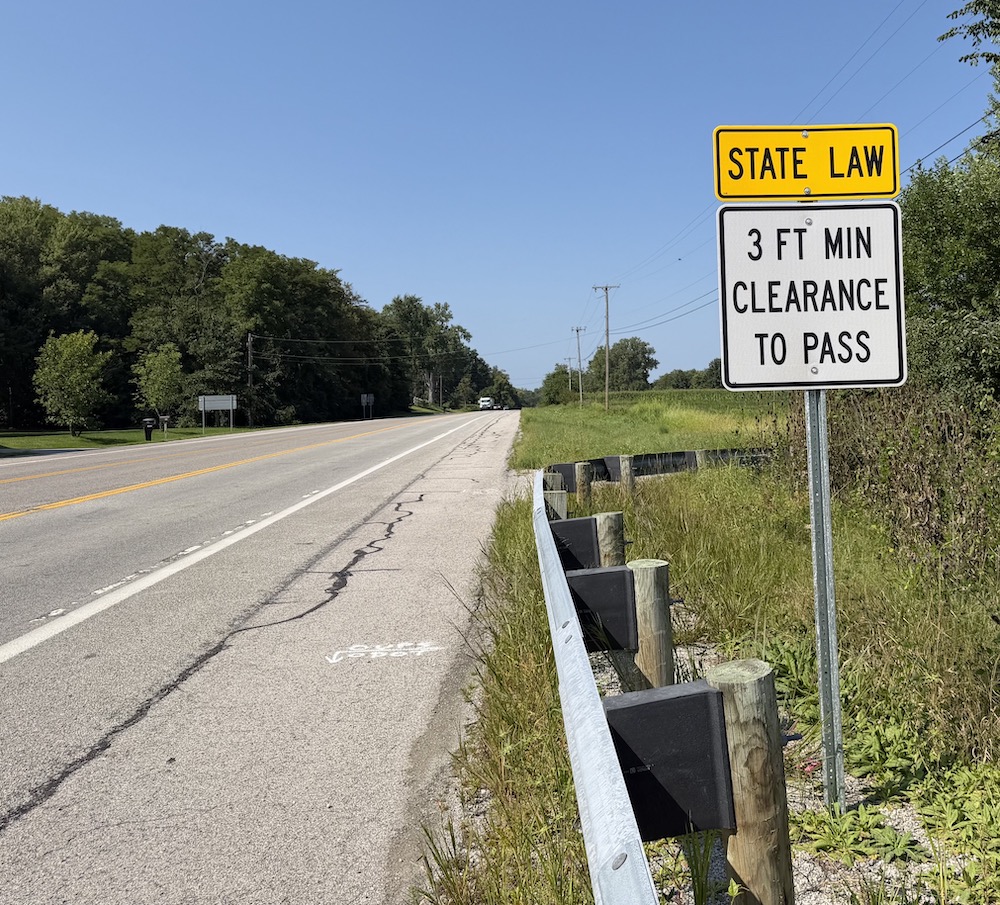
Just feet away from a roadside memorial for Roseann Marie Peiffer, who was killed last year while cycling on S. River Road near 295, the Ohio Department of Transportation has installed a sign reminding motorists to allow at least three feet of clearance to pass. Another sign is located near the entrance to Providence Metropark. (AWFP photo by Karen Gerhardinger)

Ohio Department of Transportation recently installed “Share the Road” signs on South River Road near Providence Metropark and near S.R. 95 to warn motorists that cyclists use the roadway. This is in response to the May 2025 accident in which a Maumee woman was killed by a driver while cycling with two others on a Saturday morning.

During the meeting, the trustees also heard solicitor David Chamberlain report that the county will not write zoning resolution changes to regulate data centers, but will provide input on any proposed language submitted. Trustees agreed that the best option would be to look at what neighboring communities are using in order to create their own.

Ann Aguirre brings a little ‘Hocus Pocus’ to Toledo

0
Ann Aguirre's novle is a fantasy romance that follows Thea Winter, a changeling who was stolen from the mortal world as an infant and raised by a pragmatic hobgoblin. (Courtesy image)

TOLEDO – When the real world feels overwhelming, author Ann Aguirre wants readers to have somewhere else to go. 

Aguirre, a New York Times and USA Today bestselling author, will bring that philosophy to Toledo on Thursday, Sept. 3, when she visits the Toledo Main Branch Library for an Authors! event celebrating her newest novel, The Hocus Pocus Handbook.

The fantasy romance follows Thea Winter, a changeling who was stolen from the mortal world as an infant and raised by a pragmatic hobgoblin. She is caught in an unwanted marriage of convenience, but when her spouse runs away, she has to find him. Her search pairs her with Kerboros, a reserved enforcer known as the Winter’s Hound.

The resulting story combines fae courts, wildcraft magic and a slow-burning romance between two characters who could hardly be more different.

For Aguirre, however, the book’s world was not something she meticulously planned before writing. Instead, she said, her characters taught her about the world as the story unfolded.

“Everything I learn about my world comes from my characters,” Aguirre said. “So I just start writing, and they tell me things.” 

This approach became particularly important with Kerboros.

Aguirre initially intended a different romantic dynamic for Thea, but eventually realized she was forcing the story in a direction that it didn’t want to go.

“I wrote the entire first act pushing the wrong dynamic, and I had to eat the first act of the book because I just had it so wrong,” Aguirre said.

Once she stopped pushing the story in that direction, Kerboros took over.

“He stole the book,” Aguirre said.

Novelist Ann Aguirre, who said she is particularly excited to return to Toledo where she previously appeared for a signing roughly a decade ago. (Courtesy photo)

Kerboros and Thea eventually developed the kind of contrasting personalities familiar to romance readers: Thea is energetic and outgoing, while Kerboros is quiet and reserved. Aguirre said the slow-burn relationship was one of the most enjoyable parts of writing the book.

But the romance is only one piece of the story.

Found family has been a recurring theme throughout Aguirre’s work, and she said it resonates because people can choose the relationships they build outside of their biological families.

“No matter how much you love your biological family, you did not choose them,” Aguirre said.

The book also explores what it means to be an outsider. Kerberos is a Native Fae who has become powerless and isolated under the control of the Winter Court, while Thea is an outsider by birth who nevertheless considers the fae realm her home.

Aguirre described Thea’s story as, in many ways, an immigration and naturalization story.

“She is not Native Fae,” Aguirre said. “So, for people to say you’re not one of us, you don’t look like us, it’s just kind of heartbreaking for her because this is her home, and this is all she knows.” 

Those themes ultimately connect to what Aguirre hopes readers find in her books.

“I hope that when they finish the Hocus Pocus Handbook, that they feel seen, and they feel safe, and they feel a little happier than they were when they began,” she said.

Aguirre said she wants her books to be a “soft spot” for readers – a place where they can step away from the intensity of everyday life and find comfort in a story.

“I just really want people to feel that my books are a safe space,” she said, “and that the happy ending is not optional.”

Aguirre said she has always had a strong connection to libraries.

Growing up in rural Indiana, she recalled walking along a four-lane highway to reach her local library, carrying a backpack full of books to return for more.

She said she is particularly excited to return to Toledo where she previously appeared for a signing roughly a decade ago.

“Everyone was just so nice and so welcoming and so friendly,” Aguirre said. “So I am excited about the warmth and chatting with readers again.”

Aguirre will appear at 7 p.m. Sept. 3 at the Toledo Main Branch Library. The event includes a 45-minute presentation followed by an audience Q&A. Each ticket includes a first-edition hardcover copy of The Hocus Pocus Handbook. Aguirre will also be available for a limited book signing following the presentation. General admission seating begins at 6:30 p.m. Tickets are available online through the library’s Authors! program.