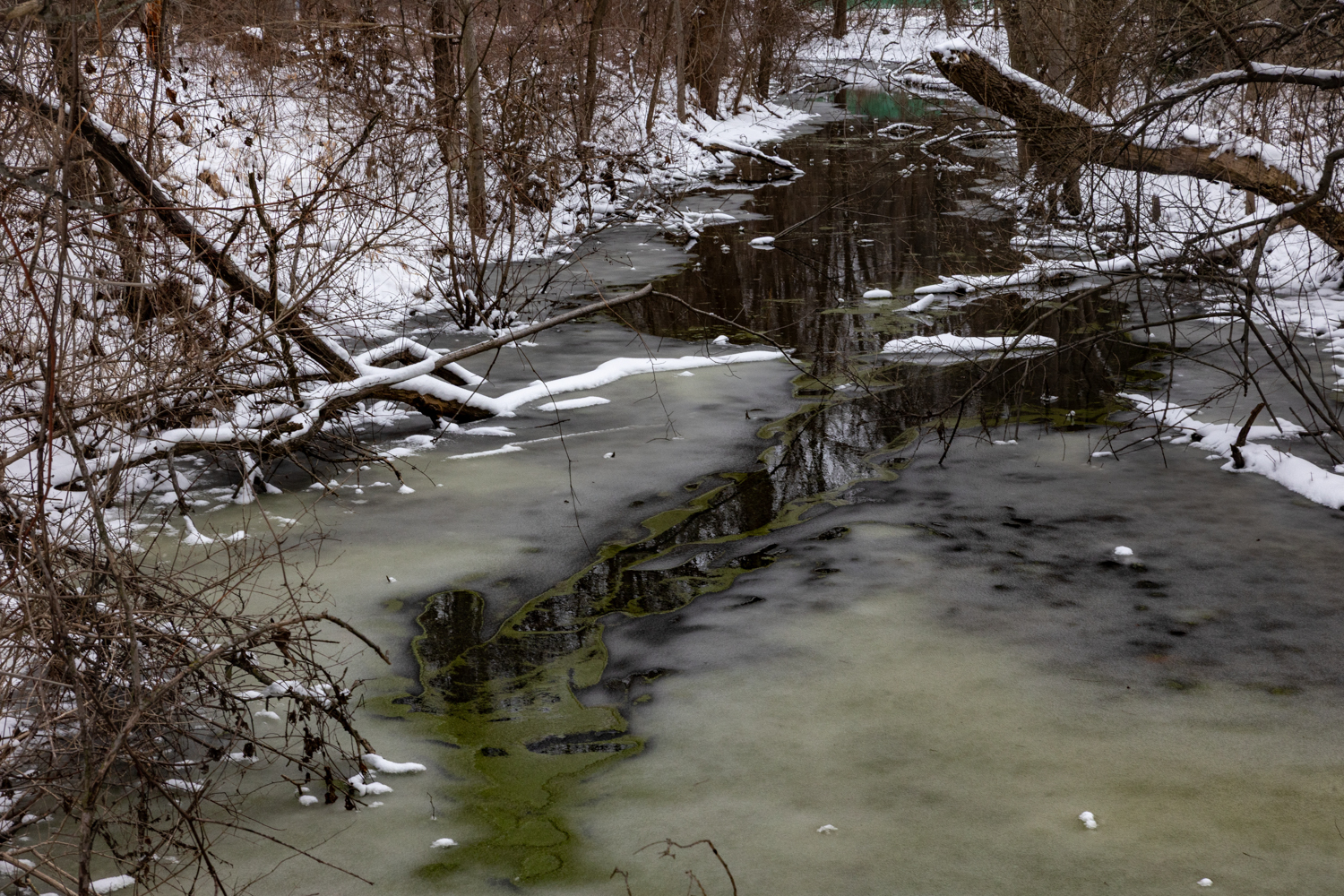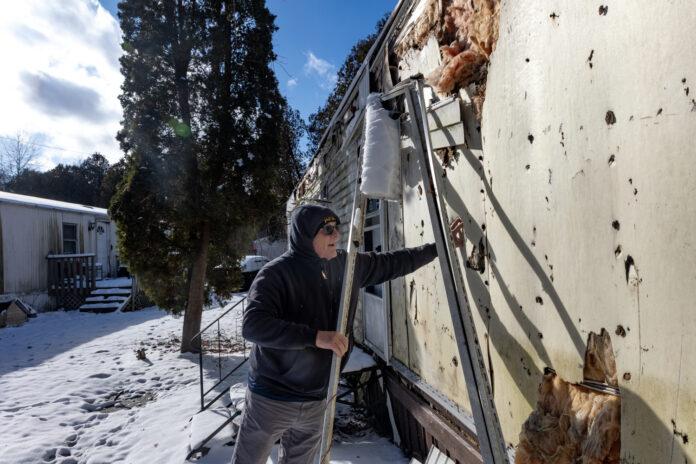
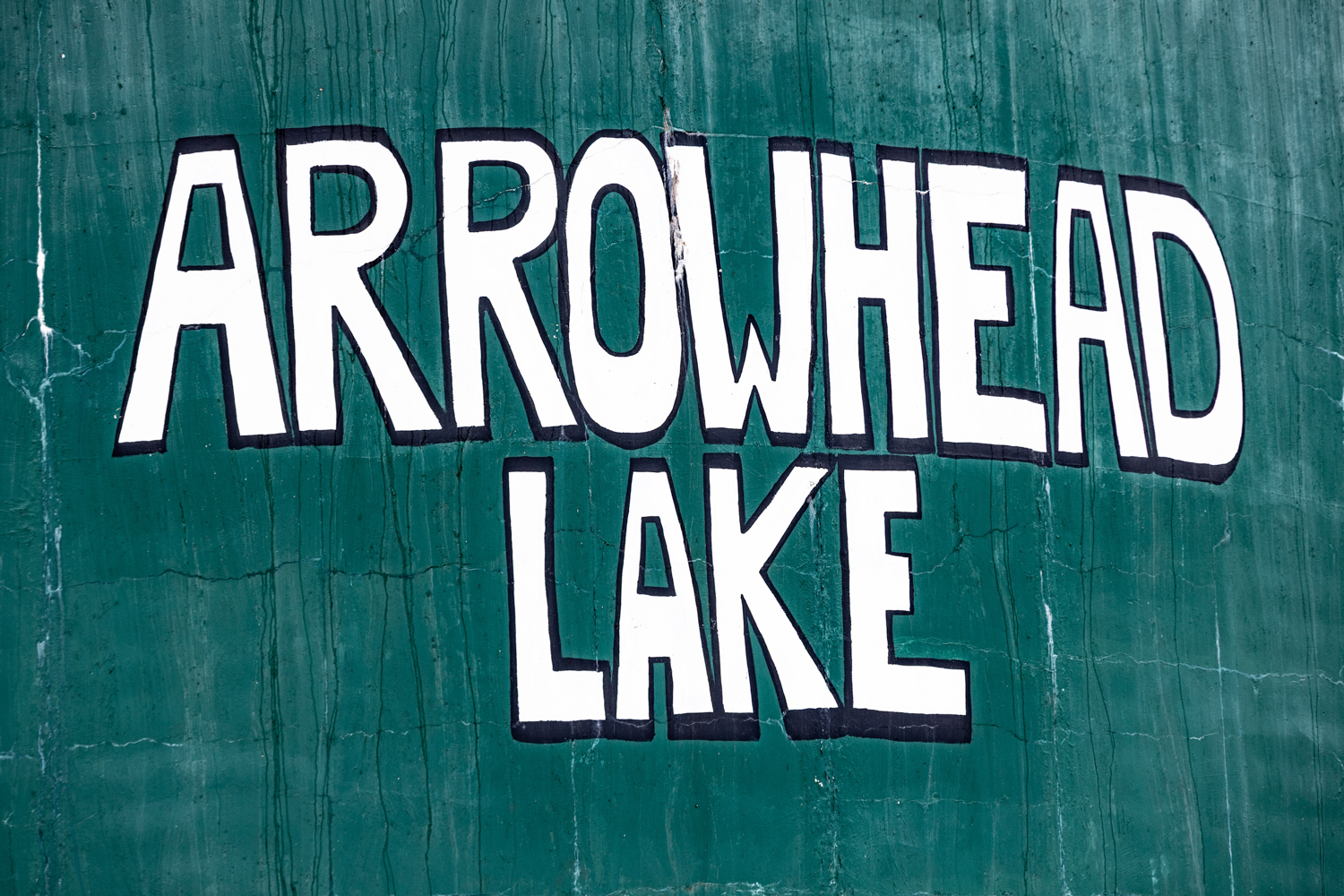
SWANTON TOWNSHIP – Looking out his back patio door at the frozen Arrowhead Lake last month, Army veteran Robert Hawkins recalled the reasons why he moved to the Swanton Township mobile home community years ago: affordable rent, friendly neighbors and a view of the lake.
A retiree, Hawkins invested $8,000 into fixing up a $100 mobile home in Arrowhead Lake Mobile Home Park (ALMHP), where he lives with his Shih Tzu, Mia. While he’s invested in his home, Hawkins points out that many have been abandoned and left to deteriorate, many turned over to the park’s owner but not maintained.

Hawkins is one of several residents – some speaking on condition of anonymity for fear of repercussions from the management – who have lived in ALMHP for years, but have seen a more rapid change in the past decade: climbing lot rents, additional garbage and water utility fees, deteriorating property conditions and numerous water boil advisories due to water line breaks on a system that the Ohio EPA has said must be repaired or replaced.
“There are many layers to the problems here,” said Kim Middleton, who has lived in the park since 1997.
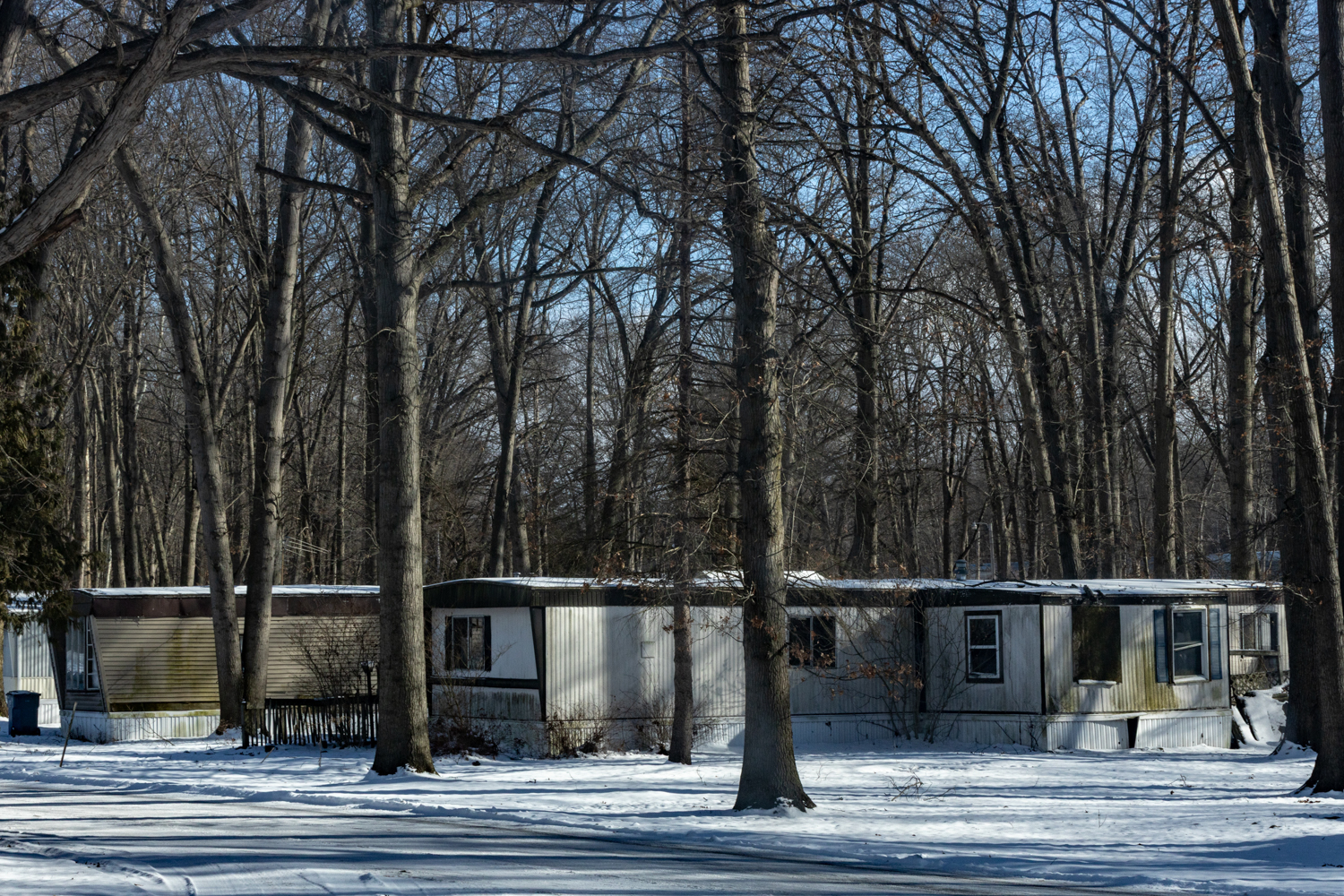
Located on S.R. 295 between the Ohio Turnpike and the railroad tracks, Arrowhead Lake Mobile Home Park was originally a campground, with the lake created when the Ohio Turnpike was built in the 1950s. With large trees and an aerator in the pond, the park was clean and well kept while it was under private ownership, Middleton said. Now just 45 percent of the 285 lots are occupied, and many of the vacant homes have multiple violations.
Zoning Violations
For two years ending on Dec. 31, Middleton served as the Swanton Township zoning inspector, so she understands code violations. On December 19 – shortly before she resigned – Middleton sent a six-page letter from Swanton Township, detailing “multiple reports and complaints concerning the deplorable conditions,” to the three entities involved with the park. Arrowhead Lake LLC purchased the property in 2017 for $4,057,900. The park’s owner, MHC Capital and management company, FTI Management, are both based in Los Angeles. Requests to speak with representatives from these companies were not returned.
The six-page letter from Swanton Township, dated Dec. 19, 2025, details “multiple reports and complaints concerning the deplorable conditions.”
“The complaints include conditions which invite both vagrants and an abundance of nuisance critters. Residents have reported trespassers to local law enforcement on several occasions. Nuisance critters have taken up residence in the vacant/abandoned homes, causing damage to properties and health risks to residents,” the letter states, detailing raccoons, squirrels, opossums, vermin and feral cats.
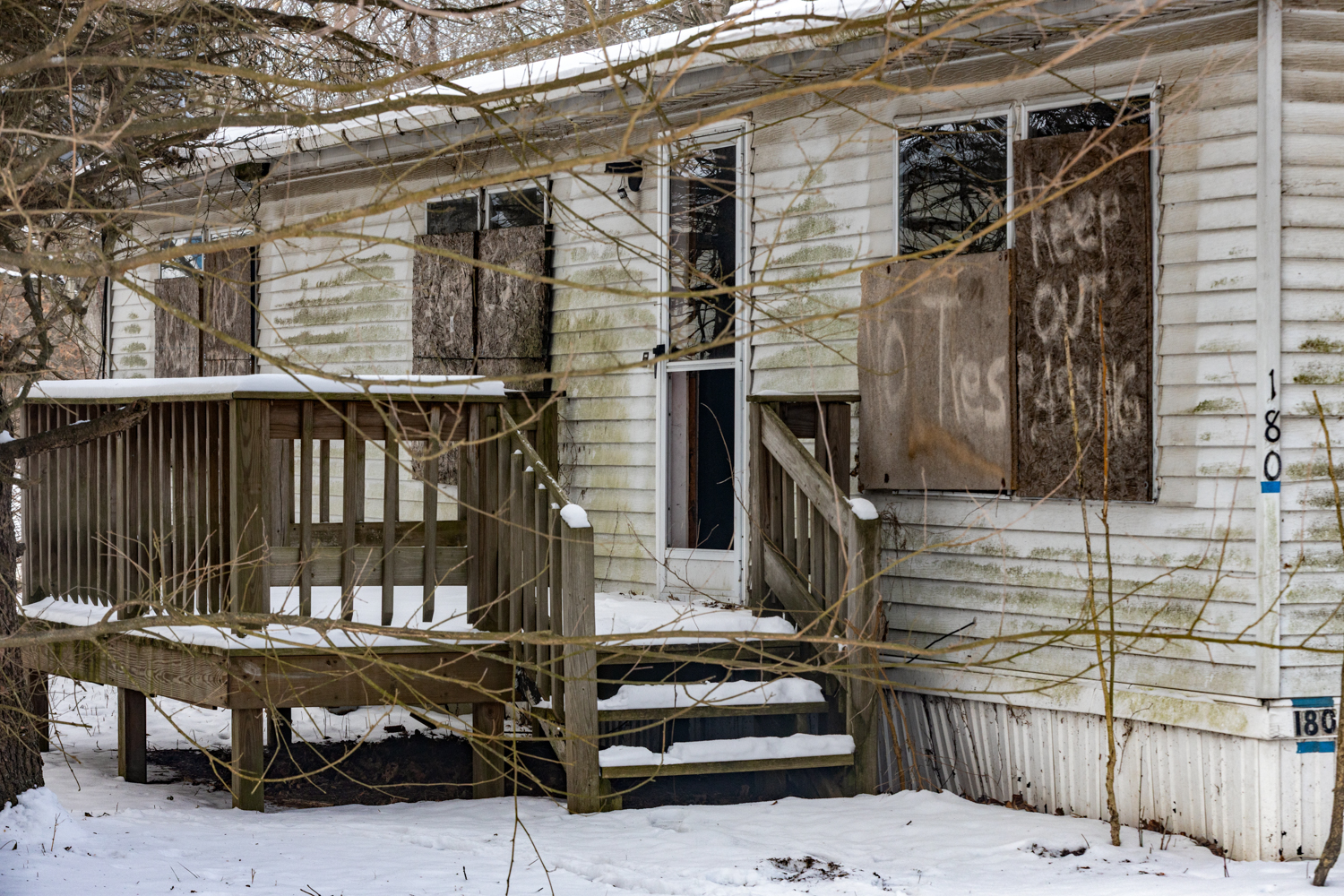
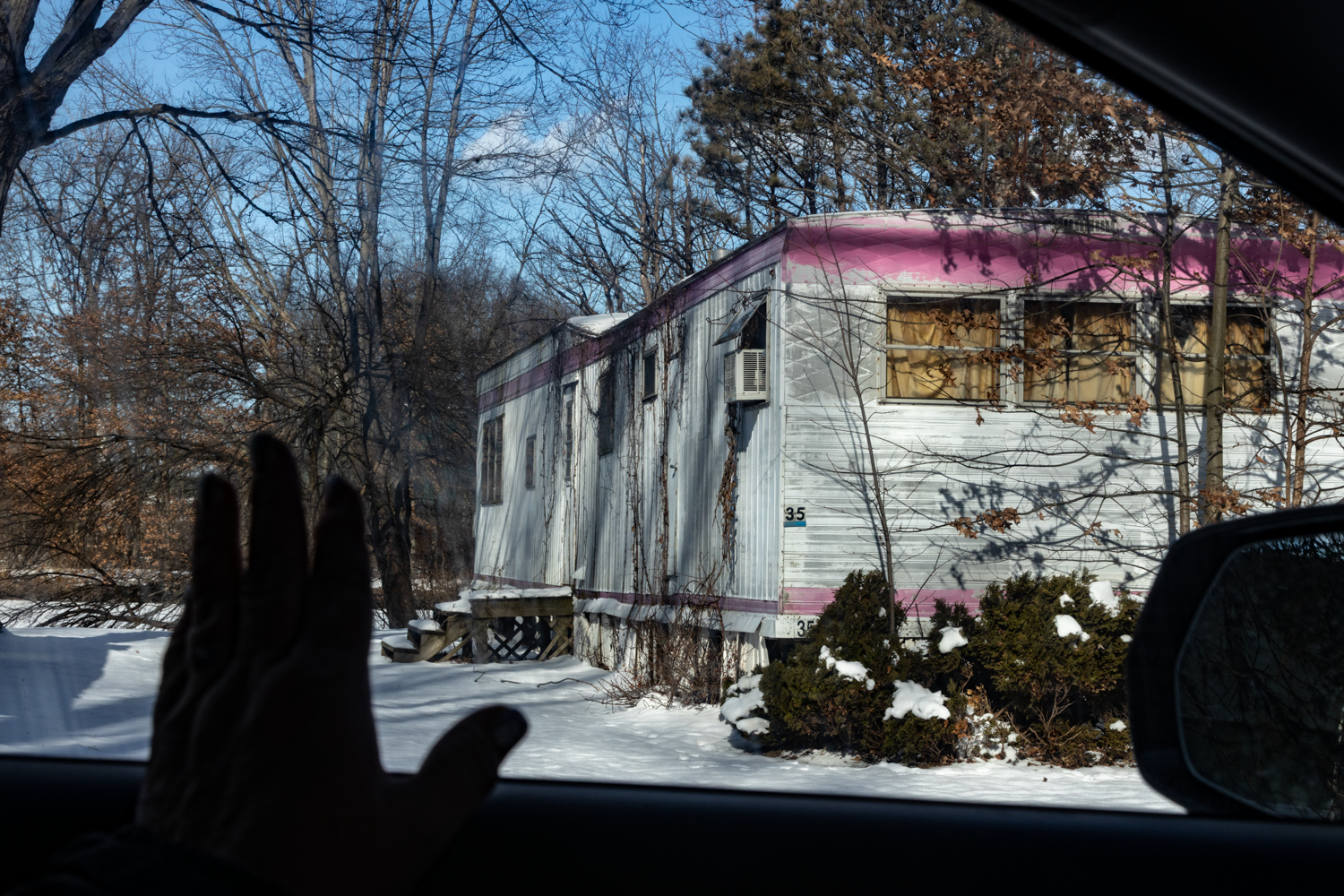
The letter lists 69 properties, the majority of which have been vacant for over five years, that need to be repaired, made habitable, or removed. The violations include missing skirting, overgrown vegetation and trees, fire damage, accumulated junk and refuse, inoperable vehicles, and homes that are no longer habitable due to fire, natural disaster or other physical deterioration.
The county requires that no structures, planting, fencing or mounding be within 25 feet of ditches and creeks, but Wiregrass Creek is filled with growth and debris, the letter states.
“They just let the weed trees grow up through the homes and porches,” Middleton said, pointing out several homes overgrown with weed trees. “They say that their maintenance man walks the park daily. If he did, he would see all these things.”
Trees Posing Danger
“One of our biggest issues here is dead, decaying, falling trees,” Middleton said. “They don’t want to spend the money to take care of anything. They think we’re just complaining, but I’ll show you why.”
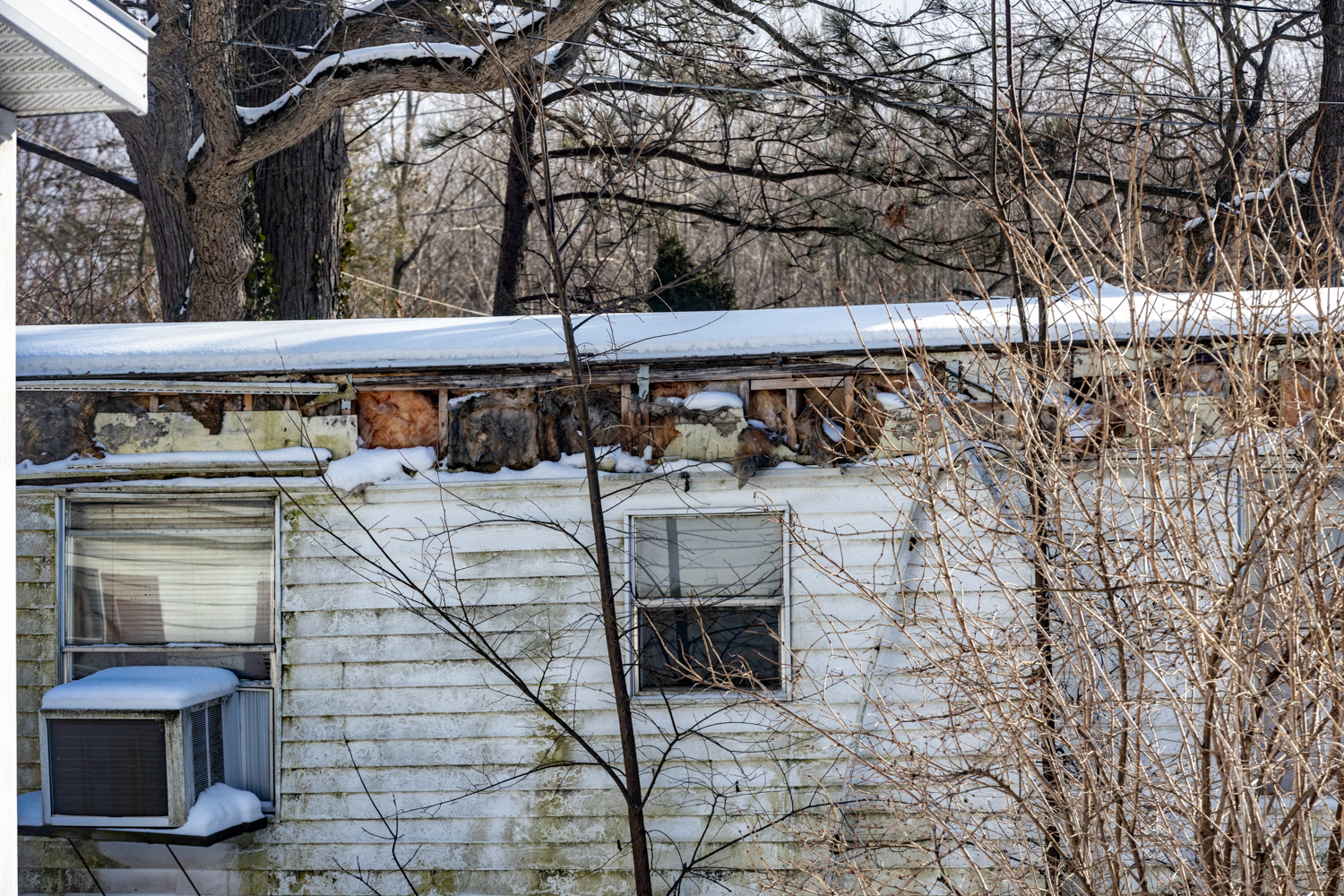
She drives past a home where, on Dec. 29, a large tree fell through the roof, narrowly missing a sleeping occupant. Management states that residents are responsible for caring for the first 10 feet of a tree from the ground up, Middleton said. This one was huge, and crushed the roof, leaving gaping holes and dangling wires. Middleton said the park manager told the family to use space heaters to stay warm. So she contacted the Springfield Township Fire Department for help. Fire Inspector Scott Bockelman and Assistant Chief Andrew Sauder came out to look.
“Scott is everyone’s hero here,” she said, noting that Bockelman stayed on the phone with the FTI corporate office until he had assurances that the family could be located into a different home. The family was provided a vacant home, but Middleton learned a few days later that it didn’t have water due to a leaky water tank – an issue she pushed management to rectify.
Water Issues
Two residents filed suit against Arrowhead, FTI and MHC for failing to comply with their obligations to operate a public water system under the Safe Drinking Water Act. From July 2015 through February 2020, the property owners failed to properly maintain the system, resulting in water failing to meet basic hardness, radionuclide and chlorination standards, according to a U.S. District Court filing. The company was ordered to take several actions to address multiple violations, including replacing the deteriorating clear well – a storage tank for water – and doing regular testing on the water. While some smaller measures were completed, the clearwell remains unchanged.
Last July, the Ohio EPA sent a notice of violation to FTI Property Management following a sanitary survey showing multiple violations still outstanding. In December, FTI’s environmental compliance department informed the EPA that, instead of repairing or replacing the clear well, it instead plans to hook up to City of Toledo water with a private line that will run under the railroad tracks – once it has permission from the railroad for access and has approval from the Lucas County Sanitary Engineer of its design. On Jan. 8, the EPA sent the park owners a notice of violation (NOV) for elevated levels of hardness in its water supply and for not providing enough bottled water – at least one gallon per person per day – which is required as part of its contingency plan.
Dina Pierce, an Ohio EPA spokesperson, said the EPA received an after-action report from ALMHP about the Jan. 8 NOV on Feb. 6.
“According to the after-action report, increased water hardness was caused by a blockage in a water-softening system line. The blockage was removed, the line was repaired, and the water hardness has returned to an acceptable level,” Pierce said. “Ohio EPA is working with the park to revise its contingency plan for responding to elevated hardness levels regarding notifying residents and providing bottled water. The facility continues to work with Toledo and the Lucas County Sanitary Engineer’s Office to connect to the city’s public water system.”
Several residents shared a concern that their problems won’t end if the park hooks up to city water. Many of the lines are original from when it was a campground, and could burst under the pressure of city water. One resident said a mainline has burst under her home twice, causing extensive damage.
On Jan. 31, residents were notified that an emergency main line water repair was taking place, and that all water would be shut off. Water would need to be boiled as “disease-causing organisms may have entered the water supply.”
Many residents share a sense of frustration for the ongoing problems.
“It’s stall, avoid, play dumb, say you’re waiting on estimates. The EPA is just as guilty as Arrowhead. The EPA doesn’t hold them accountable. They give them firm deadlines and say there are consequences, but they don’t follow through,” said one resident.
Hawkins, like many others, resorts to spending money on buying bottled water for drinking and brushing his teeth. But that doesn’t replace the water he uses to shower.
“My skin is bad, dried out. You flush the toilet and it smells like bleach,” he said.
Laurie Langenderfer, who has lived in the park since 1998, recently spent $800 for a plumber to analyze every pipe under her home, trying to determine why her water usage doubled in the fall and winter to over 11,000 gallons a month.
“He went to the park office to say that he checked it from one end of the home to another, and there is no leak – he thinks it’s a main line,” she said, noting that a main line should be repaired by the park.
To save from using too much water, she fills jugs at work, buys bottled water and has cut back on shower usage and toilet flushing. In the meantime, she’s still trying to come up with $499.66 that Universal Utilities – the third party billing company for water – said is due March 4. And while the water bill is high, her sewer rates have doubled as well, Langenderfer said.
Several residents noted that the community’s two wastewater treatment plants that, on warm days, can have an overwhelming odor. One resident said she took a photo of what appeared to be raw sewage on the ground near the treatment plant at the front of the community.
What can be done?
As of Feb. 16, the company missed the Jan. 20 deadline set by the township to correct the dozens of issues. Mike Nowicki, the Swanton Township trustee handling zoning until a new inspector is appointed, confirmed that he has not received any response from the owners. So he’s asked the county’s assistant prosecuting attorney, John Borell, for help.
If a zoning violation is not appealed to the Board of Zoning Appeals or corrected, typically the next step is for the township would be to file an action in Common Pleas Court, Borell advised.
“We will have to look for ways to correct the situation without cooperation from the owners. The fact that the situation involves mobile homes…it is a little more legally complicated,” he said.
Manufactured homes are regulated by the Ohio Department of Commerce, more specifically the Manufactured Homes Program and Ohio Revised Code Chapter 4781-Manufactured Homes, said Springfield Township Assistant Fire Chief Andrew Sauder.
“The Ohio Fire Code has not completely identified these properties and their requirements as it has other commercial or multi-residential structures,” Sauder said, adding that the Fire Prevention Bureau is limited to fire lanes, turning radius and private water mains when it comes to enforcement of mobile home communities.
“Unfortunately, there is no local governmental agency that would take immediate action such as the Lucas County Building Regulations or local zoning departments as they are not the Authority Having Jurisdiction,” he added.
He recommends that the township enact a property maintenance code, which would allow the local zoning department to take action rather than rely on other governmental agencies like the health department to deal with rodent infestations, for example.
Referring to the fallen tree on the home in Arrowhead Lake in December, Sauder said such a property maintenance code would allow the township to take immediate action on health, safety and security, as opposed to awaiting action from the state.

Franklin Freytag, public information officer for the Department of Commerce, said the Division of Industrial Compliance regulates the development and maintenance of the physical premises and infrastructure of manufactured home parks.
“While the division has exclusive authority to license manufactured home park operators, it’s important to note that numerous other governmental entities can have regulatory authority over a manufactured home park or part of a park,” Freytag said, referring to the Ohio EPA’s jurisdiction of the water system as an example.
He confirmed that Arrowhead MHC, LLC does have an active operator license, which is required for each calendar year. Every park is inspected for compliance with the Division of Industrial Compliance’s rules, but renewal of a license is not contingent or tied in with such an inspection – but any violations found during an inspection could be cited and issued to the park operator for correction, he said.
Increasing Costs
Many of the residents in Arrowhead Lake have lived there for decades. While it was privately owned, the sense of community was strong and the cost of living affordable, they agree. And then the park went through several ownership changes. With each one, fees went up.
Langenderfer, a widow on a fixed income, pointed out that she has to pay a pet fee for her dog, even though she owns her home. When she first moved in, the water and garbage were included in the rent.
In January, FTI Property Management notified residents that rents were increasing from $454 to $527 a month, to cover the cost of park maintenance. A new fee for utility monitoring was added a few years ago, and garbage rates are increasing for the park, which doesn’t use the township’s pickup.
“A lot of people here live on very fixed incomes. That increase of $58 for rent and trash pickup will put a lot of people in a very serious financial bind. The ever-increasing price of water and sewer isn’t helping anything,” said Middleton.
Despite the problems, Hawkins said he can’t imagine moving. Finding another place with low rent and a great view would be a challenge. And he likes his neighbors, including fellow veterans. Middleton and her husband plan to move to Michigan after retiring in a few years.
“Our kids are mad at us for not moving years ago. Our home is paid for, and all we pay for is the lot,” she said. “We’ve been fighting this for a while. I’m not going to stop just because I know we’re moving.”
MHC Capital is owned by Kwame Granderson, a Harvard-educated real estate attorney who owns hundreds of mobile home communities, and who hosts seminars for vetted investors to learn how to “acquire communities at favorable prices at favorable prices from largely mom and pop sellers with unsophisticated management who are nearing retirement and lack access to capital,” according to an MHC Capital investment overview. MHC owns 22 communities in the tri-state area, including Arrowhead Lake, Grand Rapids Estates, Sylvania Estates and and Twinwall Mobile Home Community in Toledo.
While MHC might be focused on making a profit, Arrowhead’s residents just want them to make things right: provide clean, safe drinking water; fix the sewage system; take out the dangerous trees; and haul out or fix the decrepit homes.