Housing prices are rising faster than prices overall. From March 2020 to December 2025, housing prices increased 57.5 percent nationally and 46 percent in Ohio. In contrast, overall inflation increased 26 percent nationally during the same period.
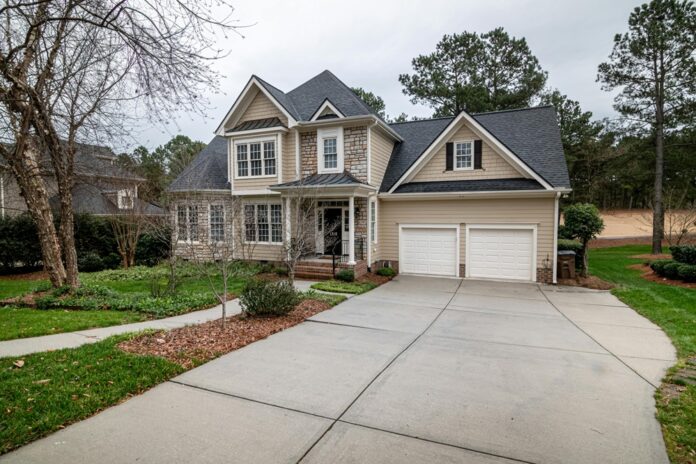
As county auditors re-assess property values, homeowners discover that they are required to pay higher property taxes. In Lucas County, the home value assessments increased 29.5 percent in the 2024-2025 reappraisal. Whereas individuals pay income tax from earned income, there is no additional income derived from ownership of a primary residence to pay the increased property tax. Herein lies the essence of the frustration facing homeowners throughout the country and here in northwest Ohio.
As property taxes increase, it is possible that some proportion of homeowners will not be able to afford or be unwilling to pay the taxes to remain in their home. For a far larger proportion of homeowners, higher tax bills require forgoing some consumption or tapping savings to pay the higher tax bill.
These statements presuppose that real income growth for homeowners is not matching or exceeding the increase in property taxes. These statements are supported by data reported by the US Census Bureau showing real median household income has decreased 2.6 percent since January 2020. A decline in median real income means that after all the reported wage increases, at least one-half of income earners can buy less than they could by in January 2020 due to inflation rising faster than income.
In response to rising property taxes across the country, citizen groups are seeking to reduce or to eliminate property taxes. In Ohio, there is an effort to add the issue on the ballot in November. The ballot initiative seeks to add an amendment to the Ohio constitution eliminating property tax and prohibiting any form of property tax in the future. Approximately 20 states are grappling with similar voter discord.
Governments use tax revenue to fund operations. Nearly all state and local tax revenue is derived from the combination sales tax, income taxes, and property tax. Among the three, property tax is typically the largest source of revenue. Last year, Ohio collected $13 billion from the sales tax and $10.4 billion from income taxes. In contrast, $24 billion in property tax revenue was collected.
Property tax is the primary source of revenue for local government. In Ohio, nearly two-thirds of property tax is allocated to schools. The remaining one-third is distributed among counties, townships, municipalities, and special districts (e. g. fire departments, parks, and libraries) from which the revenue is derived.
If the ballot initiative to eliminate property tax in Ohio passes, local governments will face challenges. Like many states, Ohio’s constitution prohibits budget deficits, and state law prohibits municipalities from intentionally operating in deficit. So, in the absence of the property tax revenue, three broad possibilities exist: raise revenue another way, reduce government expenditure, or some combination of both.
Two potential alternative means of raising revenue are the state income tax system and sales tax. The infrastructure already exists to collect these taxes. Based on the most recent tax receipts, replacing the property tax revenue would require, effectively, doubling the income tax or the sales tax collected annually.
While it may seem intuitive to anticipate that doubling the income tax rates and sales tax rate will double the total revenue, it is likely that the higher rates will inspire behavior to avoid paying the higher taxes.
Although some celebrity billionaires and athletes have forsaken California, purportedly to avoid the top 13.3 percent marginal income tax rate in favor of Florida or Texas, two states with no state income tax, studies suggest that the net outflow of residents due to tax rates is small. Nonetheless, California is experiencing net outflow of residents for any number of reasons.
It is more difficult for lower income individuals and households to relocate. It is also more often the case that lower income individuals and households utilize more government services. Given that studies reveal that higher income individuals and households are more able to relocate, any sort of net outflow is expected to disproportionately include higher income individuals and households that would pay more income and sales taxes. Avoiding an exodus seems essential.
There are two ways to modify a sales tax to increase revenue. One option is to raise the tax rate. The second option is to apply the tax to more goods (e.g. food) and services (e.g. healthcare). In either case, consumers will have an incentive to avoid paying the additional sales tax by purchasing goods in nearby jurisdictions with lower rates.
Property tax is consistent with the benefits-received principle of taxation. The tax is paid by county property owners to fund county, municipality, and township government services that residents utilize. Sales tax includes a base rate collected by the state and an additional county-level rate. Sales tax, therefore, is partially consistent with the benefits-received principle. However, there is one very big difference between property tax and sales tax: taxed property cannot be relocated, whereas taxed goods and services are easily transported.
Some Ohioans reside near the border of another state. If so, sales tax rate discrepancies might be sufficiently large to motivate Ohioans to cross into another state to make purchases. Similarly, variation in the county-level rate can be expected to encourage Ohioans to cross county boundaries to avoid higher tax rates.
Adjacent counties competing for tax revenue might instigate a race-to-the-bottom resulting in both counties unable to collect sufficient revenue to maintain service levels. The rapid development of Moon Township near Pittsburgh, PA, is frequently attributed to preferences to avoid taxes levied in Allegheny County to fund the construction of new stadiums for the Steelers and the Pirates.
It is difficult to imagine that advocates of eliminating property tax are sincere in their intent, given the challenges passage of the measure would impose on state and local governments. It seems unlikely that advocates think that eliminating property tax corresponds with eliminating taxes. Clearly, tax revenue would be collected some other way. Regardless of the motivation or the intent, there is little doubt that state legislators and the governor have the incentive to propose a viable alternative to address concerns.
There are a number of potential solutions. Counties can adjust the milage rate for all property owners. In addition, the legislature and governor can enact highly targeted measures to protect the most vulnerable homeowners most at risk of losing their home. Alternatively, limits can be established based on revenue requirements. Limiting property tax to revenue requirements addresses the concern with the current system that accommodates tax increases without legislative action and the accompanying accountability to voters.
“Taxation without representation” rallied the colonists to challenge the English King and Parliament. Rising property taxes does not require revolution so much as it requires attention and action in response to a change in macroeconomic conditions. The national scope of the challenge presents the opportunity for development of a variety potential solutions. Given the consequences of failing to resolve the problem, the incentives are properly assigned. Let’s hope that those positioned to affect meaningful change are up to the task.