Home Blog Page 31

Toledo Free Press Voter’s Guide: David Gedert runs for Congress

0

The entrepreneur and drag performer hopes to represent Ohio’s 9th District

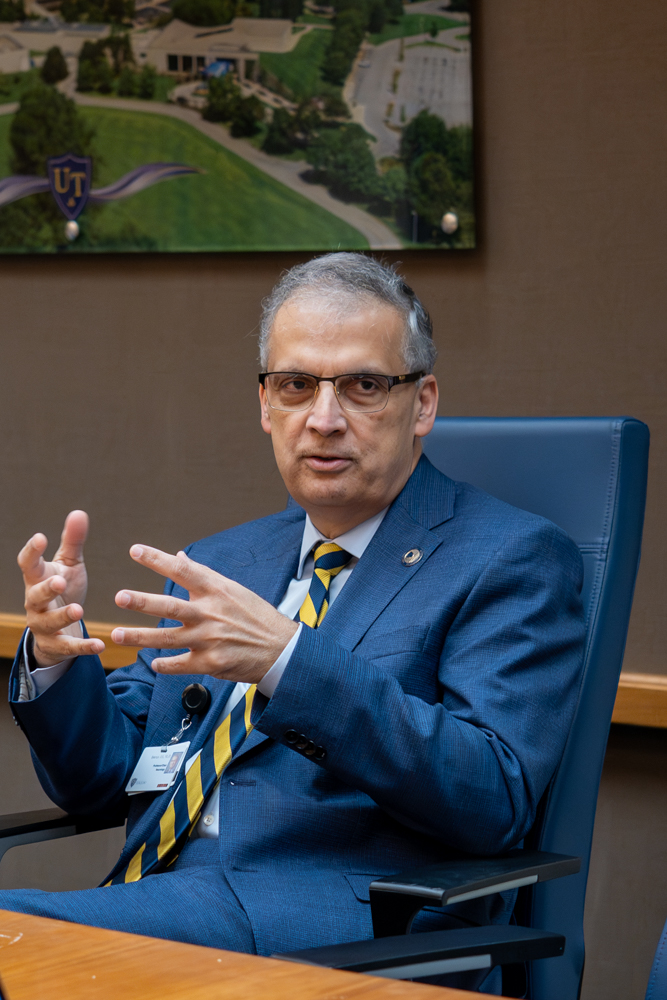
David Gedert, candidate for Ohio’s 9th Congressional District, poses with Jaden Jefferson, journalist with the Toledo Free Press, for an interview at the Toledo Tech Loft in downtown Toledo, Ohio on Thursday January 15, 2026. (TFP photo by Stephen Zenner)

Jaden Jefferson sits down with David Gedert, who goes by Sugar Vermonte while performing, to talk about his run for Congress to represent Ohio’s District 9. Gedert is also an entrepreneur who owns a food truck called Maybe Cheese Born With It. This is the first in our Toledo Voter’s Guide series for 2026 election coverage. You can also listen to this and other episodes of our Voter’s Guide on Spotify.

Opinions: Don’t let Congress undercut life-saving research in Ohio

0
Pexels photo by Polina Tankilevitch

Across Ohio, researchers are achieving medical breakthroughs on what seems to be a monthly basis.

Unfortunately, proposed legislation in Congress threatens to undermine Buckeye scientists by weakening the patent protections that biotech startups rely on to raise capital and to give patients meaningful access to promising research ideas by developing those ideas into real-world therapies.

This year, the Senate Judiciary Committee advanced several such troubling bills, including the Affordable Prescriptions for Patients Act and the Drug Competition Enhancement Act.

The reason these bills would have such negative effects – despite their good intentions – is that they are based on misunderstandings of the patent system and its invaluable role in supporting biopharmaceutical research and development.

The lawmakers behind the Affordable Prescriptions for Patients Act, for instance, believe biotech companies file patents on the same biologic drug over and over again to keep biosimilar drugs from reaching the market. 

This gets the patent system all wrong, however. The law already prohibits an inventor from getting more than one patent on the same invention. But complex therapies like biologics require companies to address multiple challenges, and overcoming these challenges often involves inventing new solutions. Each of these solutions represents a legitimate – and vital – scientific advance deserving of patent protection.

More generally, despite the overheated rhetoric, more patents don’t mean less competition or increased prices. A 2024 U.S. Patent and Trademark Office (USPTO) study – as well as my own research – found no evidence that the number of drug patents has anything to do with when a generic version of the drug enters the market.

The Drug Competition Enhancement Act is equally misguided. Biopharmaceutical companies often work hard to improve their products to make them more effective, easier to take, or less likely to cause side effects. The Act nonetheless would wrongly treat such innovations as anti-competitive and potential antitrust violations based on the cleverly named but misleading concept of “product hopping” – the allegation that companies create and patent new versions of their drugs merely to undercut any market share generic manufacturers might have. 

Beneficial improvements to drugs should be encouraged, not punished.

Unfortunately, lawmakers are advancing these bills alongside a slate of other troubling proposals.

The Preserve Access to Affordable Generics and Biosimilars Act proposal, for example, would unnecessarily regulate settlements of patent lawsuits between innovator and generic drug manufacturers, ironically leading to the possibility that generic drugs will enter the market later than they would under reasonable settlement terms. Meanwhile, the proposed Interagency Patent Coordination and Improvement Act of 2025 would saddle the FDA and USPTO with red tape, potentially delaying both patent examination and regulatory approval of new medical treatments. 

Ohio is home to nearly 4,900 life sciences businesses that depend on patents to attract investment and bring cutting-edge advances to patients. By needlessly complicating the industry’s ability to rely on the patent system, the proposed bills would endanger investment in tomorrow’s breakthrough therapies.

Inside Toledo City Council: Highlights, ordinances and amendments

0
Vanice Williams, president of Council and council member for District 4, speaks against the amendment to O-024-26 during a Toledo City Council Meeting at 1 Government Center in downtown Toledo on Tuesday, Jan. 20, 2026. Williams said that, while she had voted against the initial release of millions of dollars, now the project just needed to be done. (TFP photo by Stephen Zenner)

A prayer and jazz instrumental rendition of the “Star Spangled Banner” started off a new year for Toledo City Council on Tuesday, Jan. 20, at 1 Government Center in Downtown Toledo.

LEAD

The first agenda item of 2026, R-001-26, was recognizing the Toledo Municipal Court for developing the city’s Leaders Emerging and Developing (LEAD) program, based off a similar program that originated under Lucas County’s government. LEAD’s goal is to develop leaders from within the ranks of Toledo city government employees. 

Retirement

After 31 years of service to the city of Toledo, David Calzone, the superintendent of parks, was recognized, as he moves on from his position with the city.

David Calzone, the superintendent of parks for the city of Toledo, says farewell to coworkers as he is recognized for his 31 years working with the city during a Toledo City Council Meeting at 1 Government Center in downtown Toledo, Ohio on Tuesday January 20, 2026. TFP Photo/STEPHEN ZENNER

Members of the Council shared praise for Calzone. Notably, Theresa Gadus, District 3 Council Member, called him the “Blight Master” and said, “You put your heart into this job.”

Theresa Morris, Council Member for District 6, Cerssandra McPherson, Council Member At Large, and Vanice Williams, Council Member for District 4, all shared well wishes and appreciation for Calzone before he heads down to South Carolina to homestead. 

“You blink, and here I am, 31 years later, ready to retire,” Calzone said as he addressed Council. 

Appointments

John Ziegelhofer and Rick Burson were both re-appointed to the Electrical Board of Control, and Christopher Gaffney, was appointed to the HVAC Board of Control.

Most of Toledo City Council has remained the same after the 2025 election, with the exception of Carrie Hartman, the former president of Council and member at-large who stepped down in the middle of election season. Erin Kramer took Hartman’s open seat for the member at-large position, and Williams has been acting as president of council since Hartman stepped down.

With the new year, the following are the council members and the committees they are on: 

Resolutions and ordinances

O-581-25 passed unanimously and extended the length of the contract while amending the scope of services on an “infrastructure program to bring the city’s sewer system and wastewater treatment into compliance with federal and state law.”

O-007-26 changed the Toledo City Council Committees from:

1. Parks, Education, Recreation and Health Committee

2. Finance Debt and Budget Oversight Committee

3. Intergovernmental & Administrative Services

4. Housing and Community Development Committee

5. Public Safety & Criminal Justice Reform Committee

6. Regional Growth, Development & Small Business Enterprise Committee

7. Mobility, Sustainability & Beautification Committee

8. Water Quality Committee

9. Zoning and Planning Committee

And the new committees are as follows:

1. Community & Administrative Services Committee

2. Economic Development & Innovation Committee

3. Finance Debt & Budget Oversight Committee

4. Housing, Community Development, Public Health Policy Committee

5. Public Safety & Criminal Justice Reform Committee

6. Sustainability and Beautification Committee

7. Transportation Committee

8. Water Quality Committee

9. Zoning and Planning Committee

Data centers

R-008-26 requests a study on data centers and their effects on communities.

Council requests the study be done in a “timely manner” to study the effects of data centers on “water consumption, electricity consumption, increased greenhouse gas emissions, effect on residential water, electric, and gas rates, market volatility, as well as job creation, tax revenue, and catalyzing effects on the development of related industries.”

The resolution says the study should commence immediately, but does not have a deadline for its end. 

AI

Likewise, R-009-26, resolves to create a “responsible Artificial Intelligence (AI) strategy” for the City of Toledo. 

“…establishing an AI Strategy is necessary to protect residents, ensure equitable outcomes, build institutional capacity, and responsibly guide the city’s use of emerging technologies…”

Section 1 states the City will work with subject matter experts to develop the strategy, and the development of the strategy will begin as soon as possible. 

Zoning

A 90-day moratorium on “zoning permits, building permits, certificates of occupancy, and other licenses or permits for storage units” was passed at Council – O-010-26.

District 3 Council Member Gadus explained the ordinance: “The plan commission did not complete their study [on storage units] in time, and they reached out to City Council and asked if we would extend it for three more months so that they could present their findings to council.”

The explanation of the plan commission’s delay, according to Gadus, were “administrative changes” that delayed the study. 

Similarly, the council resolved to extend a moratorium on demolishing buildings of “historical community importance,” which extends the provisions of Resolution 293-25, with Resolution 010-26. 

Loan for country club

A $251,859.04 loan was approved for the Toledo Country Club, 3900 River Rd., to update the club’s energy efficiency.

This 14-year loan was offered at a 6.15 percent interest rate as part of a regional Special Energy Improvement Project. 

Toledo-Lucas County Port Authority’s Northwest Ohio Bond Fund issued the loan, and the estimated repayment over the course of the 14 years is $347,680.20. 

Bus benches

O-012-26:

“Mr. Temple purchased bus benches in accordance with an agreement with the City of Toledo but was subsequently required to remove them. A settlement agreement resolving all Mr. Temple’s possible claims related to this agreement in the amount of $40,000 has been reached, conditioned on the approval of City Council and the Mayor.”

UAW agreement

O-013-26:

“UAW Local 12 reached a tentative agreement over terms that revise the current collective bargaining agreement, which will expire on December 31, 2025,” and the agreement was approved by council. 

Replacements and Improvements 

O-014-26:

$10,000,000 was appropriated from the unappropriated balance of the Water Replacement Fund into Account Code 6063-35000-4UC0426STDSTD and was authorized to be spent on the Water Main Program.

O-015-26:

$7,200,000 is appropriated from the unappropriated balance of the Sewer Replacement Fund into Account Code 6073-35000-4UC0526STDSTD, and the expenditure of the same is authorized for various sewer replacement and improvement projects.

O-016-26:

$3,240,000is appropriated from the unappropriated balance of the Storm Water Utility Improvement Fund into Account Code 607B-35000-4UC0326STDSTD and further authorizing the expenditure of same for various drainage improvement projects.

O-017-26:

Authorized money from grants and loans for use in four roadway projects. 

Summit Street Phase 2 – Grant- $599,000

Glendale Avenue – Detroit to Charmaine – Grant – $248,457

Douglas Road – Alexis to the state line – Grant – $272,450

Telegraph Road – Alexis to Detroit – Grant – $886,210

Total Grant: $2,006,117

Glendale Avenue – Detroit to Charmaine – Loan – $248,457

$2,254,574 in grant and loan funds from the Ohio Public Works Commission (OPWC) for roadway projects

O-018-26 accepted grants from the Ohio Department of Transportation (ODOT) for specific projects:

Safe Routes to School – Sidewalk Repair – $2,608,481

Telegraph – Alexis to Detroit – $1,045,600

Telegraph/Alexis Intersection – $829,229

Glendale – Detroit to Charmaine – $500,000

Emerald Bike Path – $1,000,000

Douglas – Alexis to the State Line – $2,173,360

Safe Routes to School – $499,708

Summit Street – New York to Manhattan – $4,460,080

Total amount: $13,116,458

O-019-26 appropriated $6,500,000 from unappropriated Capital Improvement Funds for the roadway matches and planning program.

O-020-26 appropriated $36,000,000 from the Roadway Improvement Fund for the General Resurfacing program. These funds were requested from the Division of Engineering and Construction Management.

New software contract

O-021-26:

The City of Toledo entered into a contractual agreement to use SWPPPTrackPro software and servers for its environmental compliance and enforcement activities as required by the City’s NPDES permit: 

“The use of this software will allow for more timely notifications of violations to property owners and/or construction responsible parties, automate documentation of correspondence of said violations and resolutions, and save staff time by working with a comprehensive software package specifically designed to handle these types of tasks. 

“The first year of the three-year contract is in the amount of $26,479, including a one-time set up fee of $4,999.”

Investigation and cleanup

O-022-26:

$24,000 was appropriated from the General Fund for the Toledo Police investigation and site clean-up of the property located at 433 Baden Street. The Klumm Brothers Company was contracted for the clean-up.

O-023-26:

Hillabrand & Sons Construction was contracted for the emergency repair of three 8” water main valves, 20 feet of pipe, a service line re-tap, and restoration work at the intersection of Arco Drive and Frenchmens Road. The extent authorized for this work was $80,000 from the Water Replacement Fund.

Oversight dispute

Division sparked amongst Council Members who wished to amend O-024-26, and those who wished to keep it as originally stated. The ordinance dealt with another payment to DLZ Ohio, Inc. for installing digital meters across Toledo. The project began in 2021, but there are still 5,500 meters that need to be installed. 

“What I and Councilwoman McPherson and Councilman Driscoll are asking for this ordinance is that we would basically give the administration one year to basically complete the AMI [Advance Metering Infrastructure] project, and along during that time-frame that they would make every effort to train an individual from Local 2058, or individuals, so they could properly supervise the project in The future,” said George Sarantou, council member at-large.

The amendment proposed by Sarantou, McPherson and Mac Driscoll, council member at-large, would cap appropriations for the project at $215,977 for one year, and Sarantou said if more money was needed for the project, they could come back in a year’s time to approve it. Initially the ordinance appropriated $431,954.

Sarantou’s main point was that within 10-15 years the meters would be replaced again, and that it would be cost-effective to have someone trained in-house to work on the project in the future. 

“This project was supposed to be concluded in 2024,” McPherson said during her support of the amendment, and recommended a strategic plan with dates to rein in spending on the meters. “Beyond the 100 million dollars for this project, they [DLZ Ohio, Inc.] have come back to us twice for additional funds.”

McPherson pushed for greater accountability, criticized the oversight of the meter project and wanted an in-house employee to be trained on the process for oversight and future needs servicing the meters. 

Adam Martinez, council member for District 2, speaks against the proposed amendment to O-024-26, which would rein in costs on an advanced metering infrastructure project. Martinez thought the amendment was well intentioned but would end up costing the city more in the long run by extending the timeline of the project. (TFP photo by Stephen Zenner)

Council Member Adam Martinez of District 2 offered a soft rebuttal to his fellow council members, and said he understood the desire for more accountability. He said, “but the end of the day, this has to get done.”

Martinez saw halving the money as prolonging the project by at least a year or two, and costing the city an extra $90,000 through “zombie” meters that were not yet installed. In regards to hiring in-house, “the work is already being done by our local labor forces and done well.” And by creating the position, which would be highly involved with engineering and technology, Martinez said the City would run into HR problems when crossing both domains. 

When dealing with management of the project, Martinez acquiesced that there should be more oversight, and that quarterly check-ins could meet the requirement to steer the project more precisely. But Martinez said he opposed the amendment, and thought it would only delay the completion of the project, costing the city more. 

Sam Melden, council member for District 5, weighed-in on the advanced metering infrastructure amendment to O-024-26, succinctly saying that the amendment was “too much in the weeds. (TFP photo by Stephen Zenner)

Sam Melden, council member for District 5, concisely opposed the amendment, saying “this amendment is getting into who does it and how we do it. I think it’s too much in the weeds, and that’s why I’m not supporting it.”

In reaction to Martinez and Melden, McPherson clarified her words.

“I’m NOT holding up the project because the amendment IS releasing money,” she said. “I’m holding up some of the money so that we can get some accountability on this, instead of continuing writing an open check and not getting anything for it.”

McPherson was clear that she was not dictating who should do the work, but her efforts were for accountability on the project. 

“Initially they came to us requesting over $900,000 and then miraculously, they got to bring it down to eight,” she said. “I’m bringing it down less than that, because I want follow up.”

“We’ve let this dog run wild for too long. That’s my stance. I want the project done.”

Sarantou then repeated both McPherson and his previous remarks for clarity: 

“It’s important that we get it done. It is a miracle that suddenly the administration went from $960,000 that they requested late last year to now $845,000, and again, I think we can save the rate payers money by doing it right and using our in-house people to provide that kind of leadership,” he said. 

Martinez quickly remarked that the amendment was not about installing the meters, but about “back office support.” 

Then President of Council Vanice Williams weighed-in quickly on the matter with a tempo that matched her resolve. 

“Johnson Control started this project where we gave $100 million to which, again, I voted against. But now we’re here. We need to get this job done,” she said, and then asked Julie Gibbons, the clerk of the council, to slow walk the vote so each member could be recorded. 

At-Large Council Member Nick Komives and District 3 Council Member John Hobbs III were both absent from all votes during the meeting.

The vote supporting the amendment went as follows:

Yeas: Gadus, Driscoll, Jones, Kramer, McPherson, Morris, Sarantou

Nays: Martinez, Melden, Williams

The amendment passed. 

Gas pipeline 

O-025-26:

Authorized a land license agreement, amended a license agreement for a gas pipeline and gas regulator station with Columbia Gas of Ohio on the Maumee Riverfront-Riverfront Northwest. 

This was an amendment to a similar agreement made back in 1991 for $6,550. According to the recently passed agreement, Columbia Gas will pay the city $13,031.23 to lease the pipeline. The conditions of the agreement are for another 30 year term. 

Cleveland Cliffs Foundation

O-026-26 authorized the mayor to accept and deposit a grant from the Cleveland Cliffs Foundation awarded through NeighborWorks Toledo Region in the amount of $10,000 to support the installation of visitor amenities at Pontiac Preserve into the Capital Improvement Fund.

Relieved items

Driscoll relieved items O-027-26 and O-028-26 from the agenda. If accepted, 25 S. Superior Street and 19 S. Superior Street would be designated as local landmarks. 

Driscoll then relieved R-465-25 from the agenda as well, which declared intent to vacate a 25-foot alley located behind 2024 Champlain Street. 

Anthony Wayne news: Whitehouse, Monclova & Providence

0
(AWFP photo by Karen Gerhardinger)

Whitehouse is set to consider two annexation requests. Monclova Township residents learn they were overbilled for garbage on the first half of their property taxes. Providence Township trustees discuss electrical work done by a company owned by a trustee’s brother. These are a few of the highlights from meetings in the Anthony Wayne area over the past few weeks. 

Two property owners ask to annex into Whitehouse

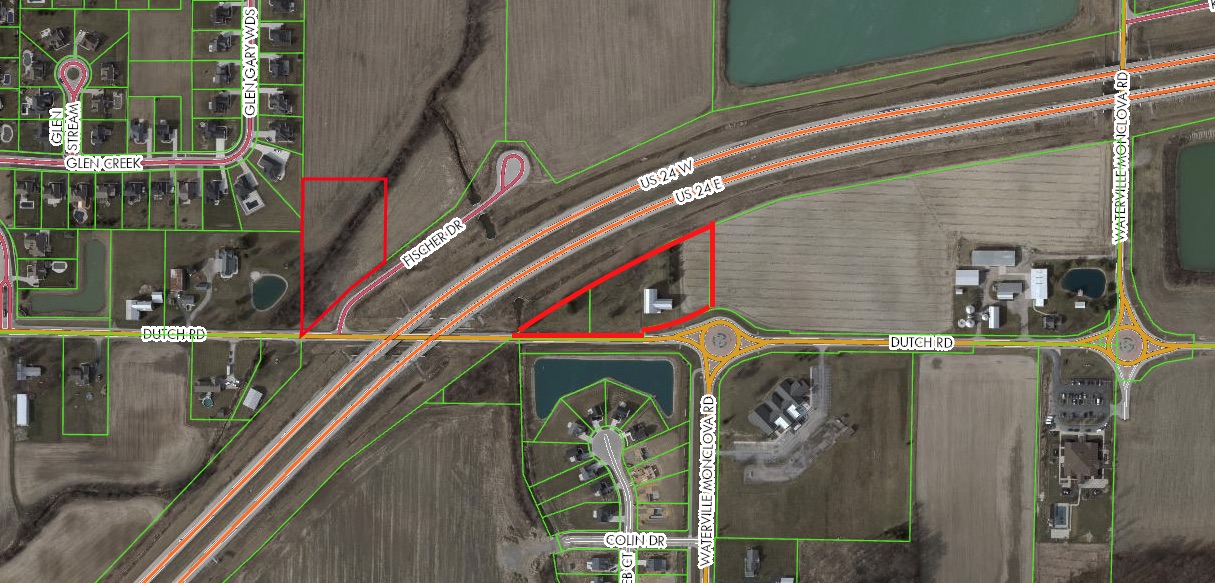
Whitehouse Village Council tabled two requests for annexing property into the village, after Waterville Township trustees asked for an opportunity to discuss their concerns.

During the Jan. 20 meeting, council members discussed the two requests. One is for a two-acre parcel at 7010 Finzel Rd., purchased in Feb. 2025 by RF Asset LLC, represented by Josh Doyle. A home on the property was razed in 2018 and two outbuildings remain.

The second annexation request is from Amanda and Travis Ratcliff, whose home is on 2.18 acres at 11032 Winslow Rd., at the northeast corner of Whitehouse-Spencer Rd.

The property owners petitioned the village to annex, and the Lucas County Commissioners reviewed that request and approved it. From there, Council has until Thursday, Feb. 5 to approve the annexation, said law director Kevin Heban.

“I believe they want to annex so they can get the inside rate for water and sewer,” said Heban, explaining that the rates for those utilities are much higher for non-residents.

The question is whether the village wants the properties, said Council Member Dave Riggenbach, adding that he doesn’t believe the township should hold sway over the village.

Council Member Louann Artiaga asked Heban about the pros and cons. On the plus side, the village gains new residents, he said. 

“The con: we lose money on residents because we lose money on services,” he said, referring to the cost to provide police, fire, EMS and other services – a cost that isn’t completely covered by the income taxes paid.

Council tabled ordinances to do with the annexation and resolutions that would agree to provide utilities and services, pending Mayor Rich Bingham‘s discussion with township trustees.

In the meeting Whitehouse Village Council also:

–Congratulated the Anthony Wayne High School girls soccer team, which won the 2025 state championship. Coach Lori Williams thanked the village staff for their assistance in state sendoffs and receptions, and the residents for their continual support.

-Approved the use of village streets during the Saturday, March 28 Great Black Swamp Festival of Races.

-Heard an update on electric aggregation from Council President Steve Fine and Administrator Jordan Daugherty. Since voters approved an opportunity to seek out lower rates, the market has been volatile, and the village has been waiting to lock in at a rate that would present a savings over the standard rate. 

-Appointed Bob Kimball to the Charter Review Commission.

-Learned that Whitehouse will host a coffee with the mayor and council on Saturday, March 14 from 8:30 to 10 a.m. at the Buzz Diner. The village is planning an Easter Egg Hunt on Saturday, March 21. 

-Discussed a request from Waterville Council Member Wayne Wagner, who is seeking two members of council, along with a representative from Waterville Township, to hold a brainstorming session on ways that the three communities can “work together for the betterment of the community” on economic development and recreational opportunities, Bingham said, reading an email he received prior to the meeting. Council Member Carrie Tuohy said she opposed the idea, preferring that any discussion take place during an open meeting when all could be present. Joe Bublick and Artiaga agreed to represent the village in discussions and to report back. No decisions will be made without Council input, Bingham said.

-Learned that Capt. Rich Snyder retired from the township. A reception will be held for Snyder and also Tom Vincent, who retired earlier this month, sometime in March.

-Congratulated Police Chief Allan Baer, who is getting married on Jan. 24.

-Listened to Tuohy ask about the process of attracting new residents to join positions on committees. Bingham said he will look at promoting those opportunities when openings on boards become available.

Whitehouse Mayor Bingham presented the Anthony Wayne High School girls soccer team, which won the 2025 state championship, with a certificate of appreciation during the Jan. 20 meeting. (AWFP photo by Karen Gerhardinger)

Monclova Township refuse assessments miscalculated

Monclova Township residents were overcharged for waste collection on property tax assessments for the first half of 2026, Township Administrator Harold Grim reported to trustees during their Jan. 20 meeting.

The township has a contract with Republic Services through the Lucas County Solid Waste Management District (LCSWMD) to collect garbage and recycling from 5,511 residential units. Every household is to be assessed $112.32 a year for the duration of the contract, which runs from 2023-2028. 

“This year they made a mistake and asked for the wrong assessment so the amount doubled,” Grim said, noting that many residents have called the Lucas County Auditor’s office to find out about the increase.

“The first half tax duplicate had a charge of $103.56 and it should have been $56.16,” said Julie Riley, LCSWMD manager. “We apologize for the error.”

The district sent letters to the residents to explain that each household will receive a credit of $47.40 on the second half tax bill to make up the difference. That means that the second half assessment should be just $8.76, Grim said.

The township pays for roughly half of the total cost to provide refuse and recycling to its residents. In 2026, the assessments on properties are anticipated to generate $618,995.52, leaving $522,442.80 to be paid by the township’s General Fund. 

During the meeting, the trustees also:

-Authorized Grim to advertise for bids for the 2026 resurfacing project, which will include Wrenwood, the Ridge at Wrenwood and Keystone Drive. 

-Learned about projects scheduled in the township by the Lucas County Engineer this summer, including: a roundabout at Albon and Monclova, April 13-June 6; a roundabout at Monclova and Waterville-Monclova, June 8-July 18; a roundabout at U.S. 20A and Albon, Aug. 1 to Oct. 18; a roundabout at U.S. 20A and Strayer, Aug. 1 for 60 days (an Ohio Department of Transportation project); and a Monclova Road overlay near the sanitary sewer work that was done in the downtown area, sometime after Aug. 1.

-Approved the hiring of paid-per-call employee Nathan Reddy and part-time firefighter/EMT Chase Liskai.

-Heard Fire Chief Matt Homik say that the fire department handled 196 incidents in December, including 69 fires and 127 EMS calls. For 2025, the department responded to 2,297 incidents, including 563 fire and 1,734 EMS – about a 300 call increase over 2024.

-Learned that the Board of Zoning Appeals approved a conditional use permit for Redemption Church to build a 5,570-square-foot fellowship hall on adjacent property that was recently purchased.

-Heard Road Superintendent Doug Holland say that the switch for the lights at the pickleball courts was broken due to vandalism, as someone can be seen on camera kicking the box. Lake Erie Electric will be installing a tamper-proof box and adjusting the lights in order to prevent them from facing west, where residents have complained about light pollution. The lights are on a timer in the spring, but the broken switch caused the light to be on later than 10 p.m. 

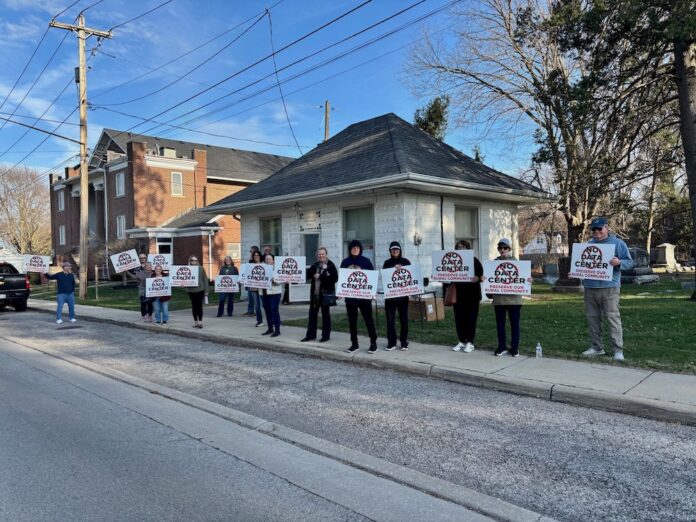
-Listened to residents Risa Sindel, Brenda Gammon, Diane Stroshine and Lyn Cox ask the trustees to consider a moratorium on data centers. John Langevin asked trustees to use the MyMonclova app to announce meetings and public hearings.

Monclova Township residents received a letter last week outlining how their first half property tax assessments were incorrect due to an error from the Lucas County Solid Waste Management District. Residents will get a credit on the second half property tax bills. (AWFP photo by Karen Gerhardinger)

Providence Township trustees discuss payment for electrical work

A $4,121.29 invoice continues to spark debate among Providence Township trustees, who, during their January 21 meeting, discussed electrical work performed on two new fuel tanks adjacent to the salt barn.

Last fall, trustees agreed to purchase a 520-gallon and 300-gallon tank from Stanwade Metal Products for approximately $16,000. But when the materials arrived, Stanwade would not do the electrical work. Road Supervisor Kevin Keifer said many companies didn’t want to get involved in working on fuel tanks, but one recommended AE Electric, which did the work in a timely manner, ensuring that Keifer and other employees had access to the fuel.

When it came time to vote on payment of the bill, listed as warrant 46965, during the Jan. 7 meeting, Trustee Jeremiah Floyd objected, citing concern about the lack of written quotes from other companies, especially since Trustee Lee Bialecki‘s brother is owner of AE Electric. During that first meeting of the year, Trustee Steve Kendall and Bialecki voted to pay AE Electric the $4,129.29 while Floyd abstained. At the time, Solicitor David Chamberlain advised Bialecki that it was not a conflict of interest, since he would not financially benefit.

Without any discussion beforehand, Kendall put a motion on the table on Jan. 21 to rescind the warrant. That motion failed for the lack of a second. Instead, Floyd offered up two additional quotes that he obtained, one from Lake Erie Electric and one from GLIC Electric, that were between $2,100 and $2,400 for the work.

“What are these quotes for? Why did we get these when the work is done?” Bialecki asked. 

Floyd said he sought out the quotes to see if the prices would be comparable to AE’s, in order to justify payment. Instead, he heard from the two other companies that the work is not up to code because they don’t include explosion proof boxes and rigid conduit necessary for being used on the outdoor gasoline and diesel tanks.

A Providence Township trustee said that work done to hook up the electrical components on two new fuel tanks has been deemed “not up to code” according to two other electrical contractors. (AWFP photo by Karen Gerhardinger)

“Both contractors were concerned about how they were hooked up,” Floyd said.

Bialecki said that while he’s not an electrician and does not work for AE Electric, he has faith in the electricians who did the work, and suggested that, if Floyd has a problem, he should take it up with AE Electric. Whether the township opts to have the work removed and redone is up to the other two trustees, Bialecki added

“I’m staying the hell out of it,” he said.

Chamberlain and Kendall said Keifer made the decision to hire AE when he was in a time crunch, and it’s his job – not the trustees – to make contact with potential contractors to do the work. If the work done by AE is not right, that’s a different issue, and may impact a decision on payment – a decision that was again postponed until the Feb. 4 meeting.

In the meantime, Chamberlain said he contacted Assistant Lucas County Prosecuting Attorney John Borell for guidance, and was waiting to hear back about a potential ethics violation by Bialecki regarding the vote.

“Whether there is an ethical dilemma or whatever, that is going to be a reprimand to Lee. It’s not going to be criminal. It [the bill] hasn’t even been paid. If there’s any issue, it’s going to be on an ethical reprimand,” Chamberlain said.

Borell, contacted by the Anthony Wayne Free Press later, said he could not comment on the specific incident or Chamberlain’s comments, but did say that violations of Ohio’s ethics laws are considered criminal offenses. The severity of the crime depends on the specific violation of the Ohio Revise Code, and is determined by the Ohio Ethics Commission.

During the meeting, the trustees also:

-Heard Keifer say that Albert Hilt, the county engineer’s road superintendent, will come to the March meeting to discuss options for using the township’s salt bin to store salt for the county plow trucks to use when clearing snow in the area. The county also stores salt in Whitehouse and Waterville to reduce travel time back to the county storage area.

-Agreed to contribute $200 to the Lucas Soil and Water Conservation District.

-Approved an $85,000 contract with Swancreek Township to provide fire and EMS service.

-Heard Fire Chief Richard Triggs say that he is going to Sioux Falls, S.D. on Feb. 13 to inspect the new 3,000-gallon tanker/tender. Trustees approved up to $2,000 for two additional personnel to join him in that inspection: Nick Meko and Ray Kozina

-Approved $18,950 for pull-out compartments for the new fire truck. This will secure the equipment better, Triggs said.

-Discussed Triggs’ recommendation to increase wages by $1.00 per hour or $1.00 per run for paid per call personnel to $16.00 per hour for basic firefighters; $17.00 an hour for intermediate firefighter/EMTs; and $18.00 an hour for paramedics; and $16.00 per run for volunteers. Triggs also asked to allow personnel to work up to 36 hours per week, but Chamberlain cautioned that as weekly hours near 40 hours, it might be considered full time and trigger a requirement to provide insurance. Currently fire personnel are limited to working 32 hours a week.

-Approved the $12,984.64 purchase of a John Deere mower from Truland Equipment in Wauseon.

What’s new in Swanton Township: January 2026

0
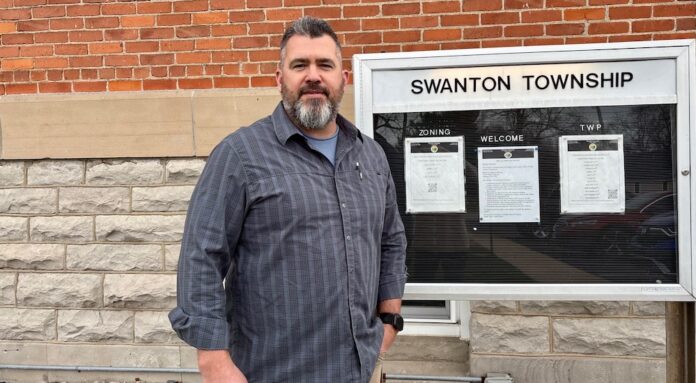
The Swanton Township Board of Trustees held its first meeting on January 13, deciding to add a public comments section to the agenda. Pictured are (from left) fiscal officer Mindy Curry and trustees Bill Anderson, Matt Beil and Mike Nowicki. (AWFP photo by Karen Gerhardinger)

Swanton Township welcomes public comments

Swanton Township residents took advantage of a new policy adopted by township trustees on Jan. 13: allowing public comments during the meeting and having those comments included in the official minutes that will be posted on the website.

Previously, comments were only permitted after the meeting and were not included in the minutes, said Fiscal Officer Mindy Curry.

New trustees Bill Anderson and Matt Beil, along with Trustee Mike Nowicki, voted unanimously
to add public comments to the agenda. Questions should be directed to the board, with a limit
of three minutes.

Colleen Baird, Kim Middleton, Mona Weiss and Patty Zalewski were among several dozen residents who attended the meeting, and they addressed the board with a variety of questions.

Middleton, who until Dec. 31 served as the zoning inspector, spoke about her concerns regarding Arrowhead Lake Mobile Home Park, including blight, use of a mobile home for the park office, a need for ditch clearing and tree removal, and missed deadlines with the Ohio EPA. She suggested the township look at adopting a maintenance section to the zoning code to hold commercial properties accountable for the condition of their properties.

Zalewski asked that policies – such as public records requests, records retention, cemetery
rules and zoning – be placed on the website.

“We will be updating the website and getting more information on there, including calendars,” Nowicki said, adding that it would include resolutions and changes being considered.

The village of Swanton recently posted a statement asking Toledo Edison to do a better job at restoring service, and Zalewski asked if the township would join in that proclamation by the village.

“We’re all losing power. I’ve never lost so much power in one year’s time,” she said. “It’s detrimental, especially in the winter time.”

Anderson encouraged residents to contact their state representatives to ask for help, as Toledo Edison is taking longer to respond.

Weiss asked about the trustees’ decision to hold off on making two payments, for $319.50 and $624.60, to the law firm of Shumaker, Loop and Kendrick. Curry said she is seeking information on what the bills are regarding since the prior administration did not leave details.

Weiss also asked about how to get notices of special meetings, and learned these will be posted on the website. Baird suggested using signage to post at locations that are being considered for zoning changes, in order to alert residents to look to the website for information. While posting a sign is not required, Nowicki said trustees would take it under consideration.

During the meeting, the trustees also:

-Heard that Nowicki administered the oath of office to Anderson and Beil on Jan. 2.

-Named Nowicki as chair and Beil as vice chair for 2026.

-Assigned trustee areas of responsibility. Nowicki will oversee zoning, internal finance and audit, and represent the township on the health district’s advisory council and the county’s 911 Regional Council of Governments committee. Anderson will handle roads and cemetery. Beil will serve on the Northwest Advanced Energy Board and the Toledo Express Airport Joint Economic Development District (TEA-JEDD).

-Passed a series of resolutions on financials, monthly payments, check signing and public records retention, as well as cemetery rules and fees. The zoning fees will remain unchanged for 2026.

-Acknowledged the cancellation of the Dec. 23, 2025 meeting.

-Learned that the fiscal officer and trustees will attend Ohio Township Association training in
early February.

-Verified the Ohio Department of Transportation’s certification of mileage in the township at
21.997 miles, down from 22.12 miles due to the annexation of land on Scott Road.

-Heard that the four bridges in the township are rated “good” and “very good” by the Lucas County
Engineer
.

The 44 signs that were placed, without authorization, along a section of Girdham Road in Oak Openings last year were removed last week. This opens the area up for those who travel to the area to see rare birds or to enjoy hiking in the Metropark. (AWFP photo by Karen Gerhardinger)

-Approved holding just one meeting a month, on the second Tuesday at 7:30 p.m., with the understanding that an additional meeting could be scheduled if required. Zoning meetings will be held quarterly, in January, April, July and October, on the second Tuesday at 6:45 p.m.

-Learned that Zoning Commission member Roger Thompson, whose term was set to expire on
April 10, has submitted his resignation. Zoning Inspector Kim Middleton turned in her
resignation effective Dec. 31, 2025. The trustees will be seeking to fill both positions.

-Heard that the 44 “no parking” signs placed on Girdham Road in Oak Openings last year have been removed, as they were never officially approved.

It’s the economy: Vice President JD Vance speaks in Toledo

0
Vice President JD Vance speaks to a crowd at Midwest Terminals' Ironville Terminal on Thursday, Jan. 22, 2026.

TOLEDO – If it wasn’t already clear that the economy will define this year’s midterm elections, perhaps the sitting vice president delivering a speech about it — under the words “lower prices, bigger paychecks” — is a sign.

Vice President JD Vance, who previously served as one of Ohio’s two U.S. senators, spoke at Midwest Terminals’ Ironville Terminal on Toledo’s east side yesterday morning. The focus of the VP’s remarks? Selling the Trump administration’s economic agenda.

Vance’s visit, which opened with brief remarks from Senator Jon Husted, as well as gubernatorial candidate Vivek Ramaswamy, was attended by a number of other Republican candidates for office — particularly those hoping to represent Ohio’s 9th Congressional District. Former State Representative Derek Merrin, current State Rep. Josh Williams, veteran Alea Nadeem, and former deputy director of Immigration and Customs Enforcement (ICE), Madison Sheahan, are all vying for the Republican nomination to face Representative Marcy Kaptur in November.

Video by Jaden Jefferson

Vance began his speech by discussing the administration’s goal of returning jobs to the U.S. Without providing specifics, he claimed that “we’re one year into $18 trillion of new investment for the United States of America.”

Regarding the “One Big Beautiful Bill Act,” which was passed by Republican lawmakers last summer, Vance emphasized its tax cuts. He specifically promoted the bill’s provisions for no tax on tips and overtime. However, according to the IRS, the maximum annual deduction for tips is $25,000, while it’s $12,500 for overtime pay.

On inflation, the issue that drove 2024’s election cycle, Vance claimed “we have the lowest inflation that we’ve had, well, since the last Trump administration.” While the Bureau of Labor Statistics data shows that, in February 2017 and August 2018, the 12-month U.S. inflation rate was 2.7 percent – what it is now – it had been lower toward the end of President Biden’s term. It had gotten down to 2.5 percent in August of 2024 and 2.4 percent the following month, before climbing up again, beginning in October of 2024.

Discussing prescription drug costs, Vance said “for four years under the Biden-Harris administration, Americans paid the highest prescription drug costs in the world.” While it is true that Americans pay significantly more than their peers for prescription drugs, that has been the case for years – including during President Trump’s first term. Data from the Peterson-KFF Health System Tracker offers a fuller picture.

Housing costs continue to be a concern nationwide. While it’s a problem driven by high demand and a lack of affordable housing, Vance placed blame with the nation’s undocumented community.

“That is how you lower prices: focus on American workers and invest in American homebuilding – you don’t give all of our homes to illegal aliens.”

While a slowdown in homebuilding, resulting from the 2008-09 recession, is a legitimate cause of high housing prices – experts say undocumented Americans, while a contributor to demand, are not a significant contributor to prices rising.

A noteworthy line from Vance’s speech was that “you don’t turn the Titanic around overnight – it takes time to fix what was broken.” The metaphor, which was mocked by some on social media, served as a call for patience, amid some voters souring on the Trump administration. The president’s approval rating has been down in multiple polls, of multiple states, including Ohio. An October 2025 BGSU poll showed Trump underwater by 10 points, while a December 2025 Emerson College poll showed him with a 46 percent approval rating.

Toledo Means Business: Wendy Gramza

0
Wendy Gramza speaks at a Toledo Regional Chamber of Commerce Annual Meeting presented by Fifth Third Bank on April 29, 2025. (Photo courtesy of Creadio.)

Toledo Regional Chamber President/CEO cares about local businesses, staff

TOLEDO – Wendy Gramza grew up in Walbridge, the daughter of a father who worked for the railroad.

“You couldn’t get out of Walbridge without going over railroad tracks,” she recalled.

Gramza graduated from Lake High School in 1987 before moving on to the University of Toledo. She started working at the Toledo Regional Chamber of Commerce in 1987 while attending UToledo part-time. Gramza graduated with a degree in marketing.

She became president and CEO of the TRCC in 2014 and has held that position ever since.

“I started as an intern here,” Gramza said. “They didn’t call them interns at the time. I worked here during the day and went to school at night and took a couple leaves of absence to finish [school].”

Gramza served as an executive vice president and vice president of business development services at the Chamber before being named president and CEO. Before that, she was director of the Toledo Area Small Business Association.

“I am a certified Chamber executive, which is a program through the National Association,” Gramza said. “My peer review was based on leadership and knowledge of the industry. I received an award in 2006 and that was pretty cool.

“I got to be recognized in front of a couple thousand of my colleagues. That’s when you know you are in a position to lead and this industry is your career.”

Having such a prestigious position at the Chamber does have its perks.

On Sept. 25, 2024, Gramza signed a hot dog bun at the original Tony Packo’s restaurant on Consaul Street in East Toledo. The event was part of a celebration of Gramza’s invitation to the U.S. Chamber of Commerce Committee of 100 (CCC100).

Tony Packo’s has been a Toledo institution since 1932 and is famous for the hundreds of signed hot dog buns that cover the inside of its restaurants.

“That was pretty neat,” Gramza said. “I didn’t know it was happening. We were five minutes in, and I couldn’t figure out why I was there. There are about 7,000 Chambers in the country and they [CCC100] picked us. I’m not sure how I met their criteria.”

Gramza said her signed Tony Packo’s bun is “between two [Ohio] politicians, which I thought was appropriate because I represent the business community. It was an honor to be associated with such an iconic establishment.”

Gramza said the TRCC’s role is to represent the business community.

“Our job is to grow and help regional businesses be more successful to grow our economy,” she said. “It’s working out really well. We are one of the charter metro Chambers in the country, and we have a lot of services to help the member businesses grow.”

Asked to describe her outlook on future economic development in the Toledo area, she said, “My hope is we get on the same page and work together, and make sure this is a viable place for businesses and that we have a business friendly reputation.”

Gramza, 57, oversees 25 employees and said one of the best things about her job is the people she works with.

“I care about our members, business leaders, staff and people who care about the community,” she said. “We are always involved in cutting edge stuff. Every day – every hour – is different. People I have met from all over the country and being able to meet some really great people and see all points of view…sometimes you don’t really get a sense for how complex all these issues are.”

Gramza and her husband, Mark, have been married 33 years. They have a son, Nick, 31, and a daughter, Emily, 25, who is studying to be a nurse practitioner at Ohio State. Nick and his wife, Sarah, are expecting their first child.

The Toledo Regional Chamber of Commerce is located at 300 Madison Ave., Suite 200, Toledo, Ohio 43604. Phone 419-243-8191.

Anthony Wayne High School welcomes facility dog

0
Kelsey Borcherdt is happy to see Jasper as he delivers a happy half-birthday card on Jan. 10. (AWFP photo by Karen Gerhardinger)

WHITEHOUSE – For his first week on the job, Jasper had it easy: delivering birthday wishes and kisses, watching a basketball game, accompanying his handlers through the hall and taking a lunchtime nap. But as Anthony Wayne High School’s first facility dog, the 49-pound, three-year-old yellow Labrador retriever is just beginning a career that will include consoling nervous students, encouraging academic, social and emotional growth, and reminding the humans in the room to “wag more, bark less.”

“He regulates the room really well,” noted Principal Jon Burke, one of three handlers for Jasper, who was thoroughly trained by The Ability Center before starting full-time at the school on Jan. 6.

Jasper looks up at principal Jon Burke for direction as they walk the halls. (AWFP photo by Karen Gerhardinger)

Resting on a cot in the conference room earlier this week, Jasper’s ears perked up as Burke and the other two handlers – counselor Lauren Murawski and Assistant Principal Stephanie Buckenmeyer– spoke about how the school facility dog will benefit the students and staff.

The district welcomed its first dog in 2008, when Sara joined Waterville Primary School. She was replaced by Teila in 2019. Monclova’s first dog, Laney, served from 2017 to last May, when Dunkin joined the team. Luna was welcomed by Whitehouse Primary in 2019, Astro joined Fallen Timbers in 2021. It was the addition of Lorain to the junior high in 2024 that ramped up interest in having a facility dog at the high school, said Buckenmeyer, who was one of Lorain’s handlers.

“Watching the impact on the junior high students and staff was part of the catalyst. She helps a lot with emotional regulation and brings a lot of positivity. Students earn time with her as they learn appropriate behaviors in a school setting. And overall she built a sense of community in the building,” Buckenmeyer said.

Murawski, who worked with a facility dog while doing her master’s degree practicum with Tiffin City Schools, understands how a dog can help manage expectations in the classroom and hallway, lighten the atmosphere and provide emotional regulation in student and parent meetings.

School Resource Officer Jeff Siebenaler takes a moment with Jasper. (AWFP photo by Karen Gerhardinger)

“Whether it’s in a crisis situation or more frequent visits, we can use commands like ‘lap,’ ‘hug’ or ‘place’ so that Jasper can provide support to students,” Murawski said. “I also love being able to take him into classrooms as a reward. And we can have him play games to address academic, social and emotional needs. We do have to be a little more creative in how we meet our upper level students – it’s different than how a facility dog is used at the primary level.”

With a command of “paws,” Jasper will put his paws on a desk to check a student’s work. And he can be utilized to play games with curriculum-focused questions, such as tic-tac-toe, four corners or rock, paper, scissors.

Beau Seelenbinder was awarded with a brief Jasper visit after telling principal Jon Burke about
the point he scored during a recent lacrosse game. (AWFP photo by Karen Gerhardinger)

Jasper comes to the high school with a solid resume that includes Ability Center classes, training for four months – each with inmates at Gus Harrison Correctional Facility and Cooper Street Correctional Facility in Michigan – and then a semester of student teaching with St. Joan of Arc Spanish teacher Jennifer Kraus.

“Jasper thrived there,” Murawski learned, after speaking with Kraus about her experience. In November, the school informed the students, staff and parents of Jasper’s arrival, and sought input on any students with dog fears or allergies. Students were also asked about how they’d like to see Jasper utilized in the building.

“They came up with some creative ideas, but we also got some funny ones, like ‘let him run free in the halls’ or to let them schedule a naptime with Jasper,” Buckenmeyer said.

In early December, Buckenmeyer, Burke and Murawski spent a full week training at The Ability Center, to learn all of the commands and how to care for Jasper, before bringing him into the building while students were on winter break.

“We used that time for him to get used to the three of us and this space, and to learn that – out of the 1,500 people in this building – he needs to pay attention to the three of us,” Buckenmeyer said. “He does a lot of check-ins with us. He stares at us when walking down the hallway, and sometimes so much that he doesn’t look where he’s going.”

Senior Avery Eckols was thrilled to be among the first students to meet Jasper. (AWFP photo by Karen Gerhardinger)

Walking through the school early this week, Jasper repeatedly looked up to Buckenmeyer and Burke as they led him to classrooms, looking for the signs indicating if the room is dog-welcoming. Depending on the schedules of students with allergies, Jasper might not be able to enter a classroom. But for those who were open, the rewards were many.

“I scored a point last night; can I pet the dog?” called out Beau Seelenbinder as he walked to the office. With permission, the teen knelt down to meet Jasper.

Twins Addison and Kennedi Hill were surprised when Jasper delivered a card wishing them a happy “half-birthday” – since they’re not in school on July 10 – along with an opportunity for a dog kiss.

While at school, Jasper will work most of the day but nap in a locked office in a crate during lunchtime. After school, as his energy level allows, he may attend athletic, arts and club events. On evenings and weekends, Jasper lives with the Buckenmeyer family, which includes eighth- grader Audra and sophomore CJ, along with Stephanie and her husband Mike. Jasper had a few weeks to get acclimated to the household and its routines.

Twins Addison and Kennedi Hill were surprised to see Jasper deliver a happy half-birthday greeting on January 10 to mark their July 10 birthday. (AWFP photo by Karen Gerhardinger)

Being a working dog, Jasper is eager for commands and being on the job. Too much downtime
isn’t good, and he can still display some typical dog behavior, like trying to sneak off with some “stuffies” when left unsupervised, or zooming through the back yard chasing sticks.

“Though he’s highly trained, he’s still a dog. He may randomly bark or get boisterous,” Murawski said. “When he puts his vest on, he’s working. He is always going to be learning and wants to be helpful.”

While the Buckenmeyers previously had a pug, taking care of Jasper is more rigorous. The Ability Center checks in regularly to make sure his weight is steady. Jasper’s morning and evening meals are smaller because he receives treats throughout the day as he obeys commands. The family is also in charge of giving Jasper regular baths, tooth brushing, ear cleaning and nail trims, as well as practicing commands.

Jasper’s care is not financed by the school district and requires fundraising for food, bedding, toys and veterinary bills. High Point Animal Hospital has generously offered a discounted rate on services, but Burke said he hopes to establish an emergency fund.

“We don’t have a parent-teacher organization to support our facility dog like they do at the primary schools,” Burke said. “So we’re doing a lot of fundraising ourselves. We’re open to sponsorships or donations.”

Those interested in assisting can call the high school office at (419) 877-0466.

Anthony Wayne High School counselor Lauren Murawski, assistant principal Stephanie Buckenmeyer and principal Jon Burke are trained as handlers for the school’s first facility dog, Jasper. (AWFP photo by Karen Gerhardinger)

Local etiquette consultant weighs in on professionalism

0
(Pexels photo by Mikhail Nilov)

In today’s tight job market, we hear a common refrain: employers are desperate to hire.

Positions sit unfilled, help-wanted signs stay up for months, and companies compete for talent. With so much opportunity, it is easy to assume that the rules of job interviewing have loosened or disappeared altogether. They have not.

As an etiquette consultant, I often hear from employers who repeat the same message: they can teach skills, but they struggle to find candidates who demonstrate professionalism. In other words, while the job market has changed, expectations around respect, reliability, and courtesy have not.

Manners are not about being old-fashioned. Manners are about showing awareness of others, taking responsibility, and signaling that you can be trusted. In a job interview, those qualities are just as important as experience. They can make the difference between a “maybe” and a “yes.”

Consider the basics. Arriving fifteen minutes early communicates respect for the interviewer’s schedule. Making eye contact, listening without interrupting, and answering questions thoughtfully are not etiquette “extras.” These courtesies are signs of engagement and confidence. Each small choice in a professional interaction is an opportunity to show your best self, and it costs nothing.

Communication matters as well. A rushed email, a casual tone that borders on dismissive, or a failure to follow up after an interview can quietly remove a candidate from consideration. Courtesy is often the tie-breaker between two equally qualified applicants, and it is a skill every candidate can master.

Some job seekers worry that focusing on manners feels outdated or elitist. In reality, good manners are one of the most powerful tools anyone can use. Manners do not require advanced education, special connections, or expensive training. They require awareness, effort, and a commitment to showing respect. A polite greeting, a sincere thank-you, and a respectful tone are simple, universal ways to stand out.

Manners are especially important for young adults entering the workforce. Many are talented, capable, and eager, but they have grown up in a casual culture where texting replaces conversation and speed is valued over thoughtfulness. Teaching interview etiquette is not about stifling personality. Interview etiquette is about helping candidates translate their strengths into a professional setting, and seize the opportunities waiting for them.

Employers, too, have a role to play. Clear expectations, respectful interview processes, and timely communication model the same courtesy they hope to see in applicants. Professionalism works best when it flows both ways.

In a community like Toledo, where connections matter and reputations travel quickly, first impressions carry weight. A candidate who demonstrates kindness, attentiveness, and respect is remembered and often recommended. Manners build trust, and trust builds opportunity.

The job market may be competitive and fast-moving, but one thing remains constant: people want to work with people who make their day easier, not harder. Good manners signal exactly that, and can help any candidate rise, regardless of background, education, or experience.

Etiquette is consideration. In a job interview, consideration may be the most powerful qualification of all. Take the opportunity to show your best self. You never know which small act of respect could open the door to your next big opportunity.

Ear Appeal: Shucked brings big laughs to The Stranahan Theater

0
The Cast of The North American Tour of SHUCKED (Photo by Matthew Murphy and Evan Zimmerman)

The Stranahan Theater is set to host Shucked, the Tony Award®-winning musical comedy that has been touring since 2024. Its score is written by the Grammy®-Award winning songwriting team of Brandy Clark and Shane McAnally (Kacey Musgraves’ “Follow Your Arrow”), and directed by Tony Award winner Jack O’Brien (Hairspray). 

Just as corn pleases most diets, the genre-bending beats and hometown sets are sure to follow suit. Shucked is Broadway meets pop-country, playing on the best storytelling features of the mash up. 

Maya Lagerstam heads the cast as part of the story-telling duo that takes the audience through the maize. 

“We’re almost like a narrator, but we’re really communicating with the audience, and we guide you throughout the show,” Lagerstam said. “We also sometimes tend to hop into different roles, so sometimes we like to include ourselves into the story. We’re really right there having a dialogue with the audience.”

Maya Lagerstam as Storyteller 1 and Tyler Joseph Ellis as Storyteller 2 in The North American Tour of SHUCKED (Photo by Matthew Murphy and Evan Zimmerman)

The audience must build trust with Lagerstam and feel like they are in safe hands to be a part of the story, as the role intends. She said she takes a lot of her personal warmth and tucks it into the role to help engage folks. She also needs to put herself in several roles to make her dynamic character come alive on stage. Her approach to theater from the beginning of her career informs this ability.

“I was so excited to do theater in general when I was a kid. And any show that was happening, I was in. I wanted to play any role  in any show. Wherever you need someone, I can play it, I’ll do it.”

Lagerstam’s experience in many roles plays a part in the versatility of Storyteller 1. She also comes into the role with eight off-Broadway shows under her belt, among popular titles like The Wiz and Rent.
She said that this is her favorite role. 

“One of the things that I really, really really love about this show is that we’re not ‘based on’ anything. Most shows that you see now on Broadway are either music that you’ve heard before on the radio, or by, or it’s a plot coming from a book or based on a movie. In Shucked, the music is original, and the plot is original.”

Shucked is a laugh for everyone.

“If you skipped the gym that day, it’s a really good ab workout. There’s at least one joke, if not 100 for anyone out there.”

When asked what advice she would give the audience, Lagerstam said, “Be ready to get shucked. I’m not much of a farmer, per se, but I do know a thing or two about shucking.”

PERFORMANCE SCHEDULE:

Tuesday, Jan. 20, 2026 7:30 p.m.

Wednesday, Jan. 21, 2026 7:30 p.m.

Thursday, Jan. 22, 2026 7:30 p.m.

Friday, Jan. 23, 2026 7:30 p.m.

Saturday, Jan. 24, 2026 2:00 & 7:30 p.m.

Sunday, Jan. 25, 2026 1:00 & 6:30 p.m.

TICKETING INFORMATION:

Tickets are available for purchase at BroadwayinToledo.com, StranahanTheater.com and Etix.com. Tickets purchased through another source will not be guaranteed.

For upcoming information on Toledo Broadway Shows, follow:

  • Facebook: @BroadwayInToledo

Instagram: @BwayToledo