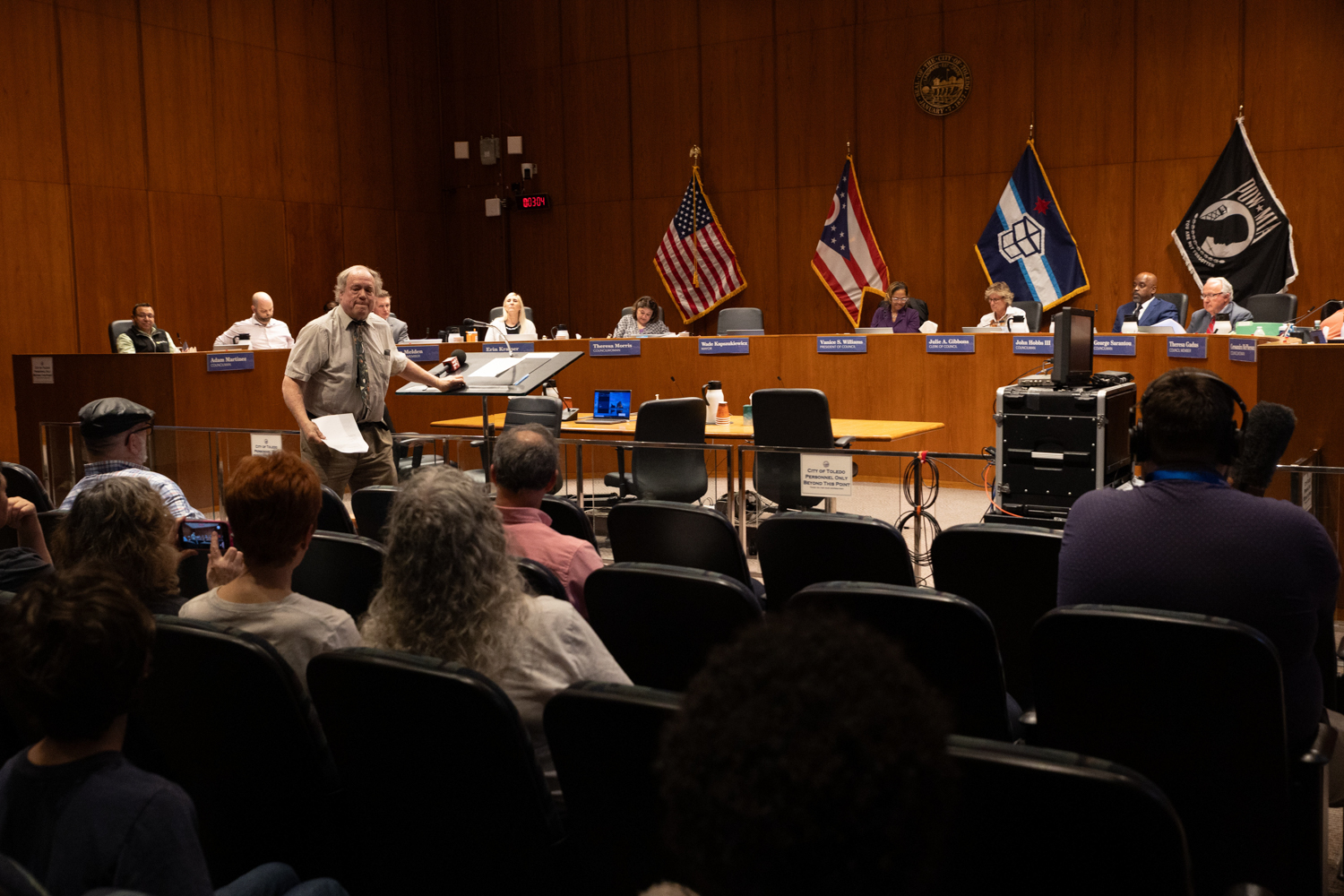
Public Comment: Invest/Divest Q4
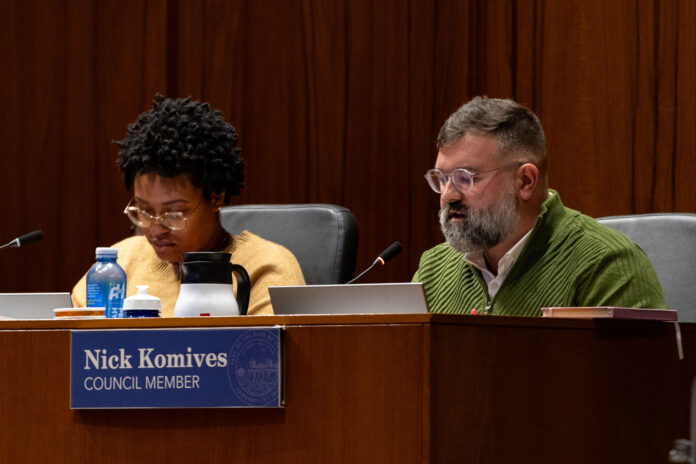
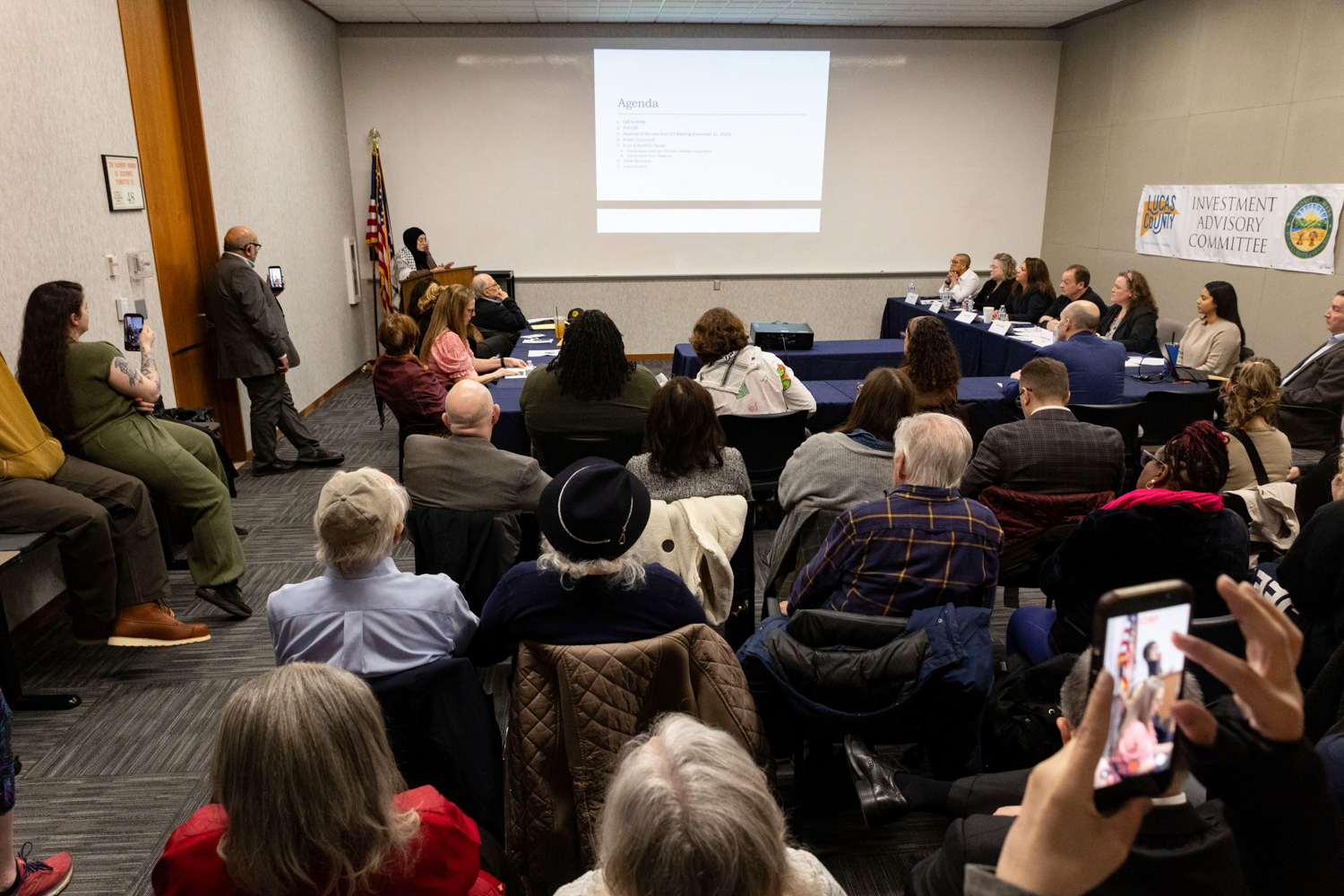
Space was limited during the Feb. 20 Lucas County Investment Advisory Committee (IAC) meeting, as supporters of Israel and supporters of Palestine sat to be heard.
Only five individuals total, from a combination of both sides, had an opportunity to address the IAC for three minutes each.
According to Lucas County Treasurer Lindsay M. Webb, those who would be able to give public comment at the investment meeting were chosen at random, and the first individual chosen was Pro-Palestine organizer Walaa Kanan.
Dispute over Israeli bonds
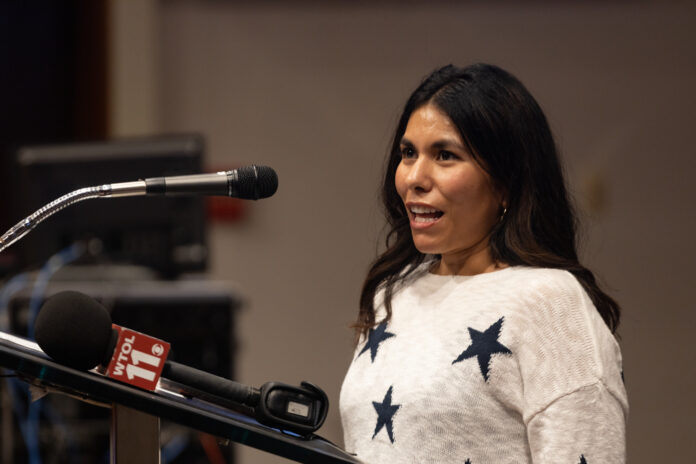
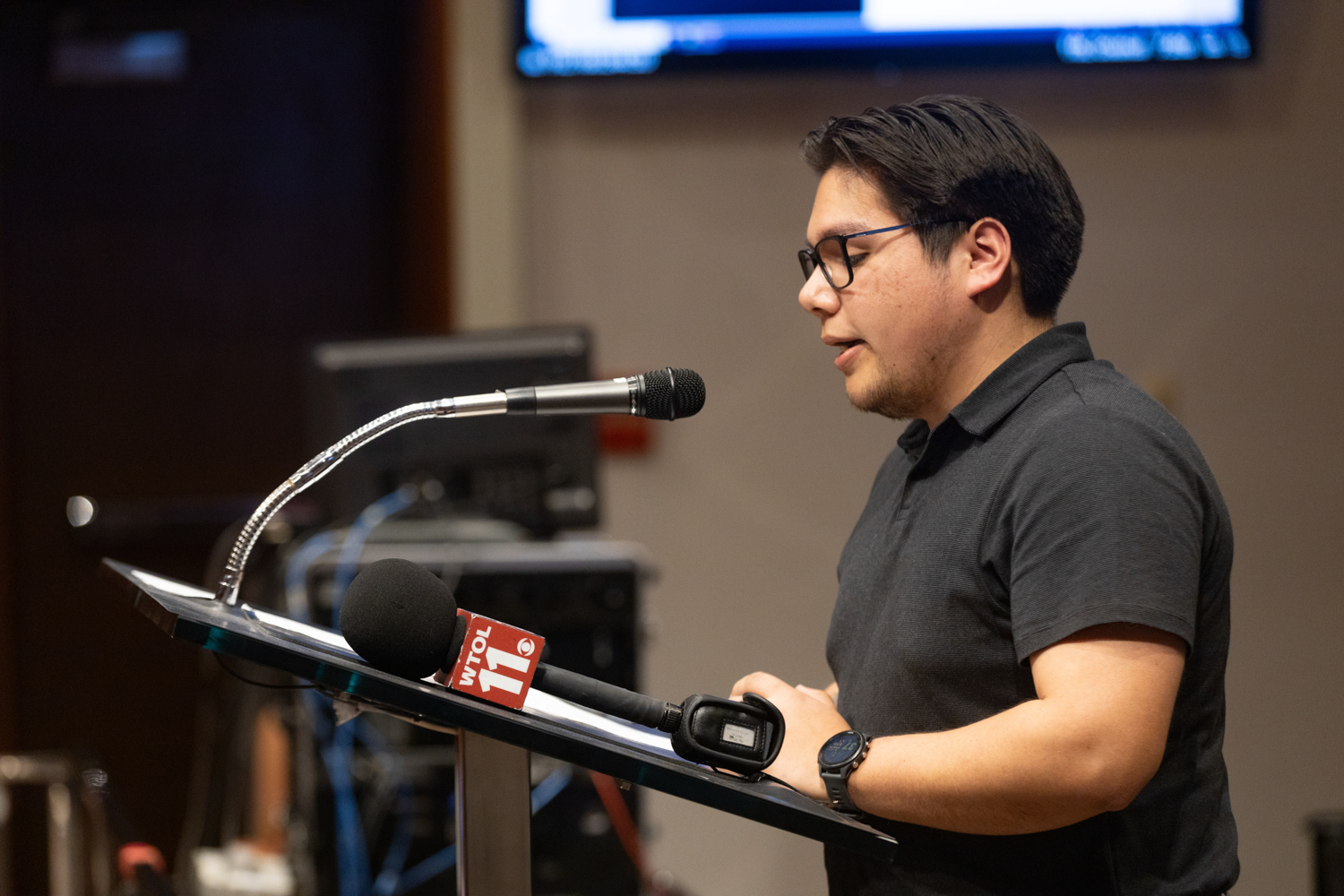
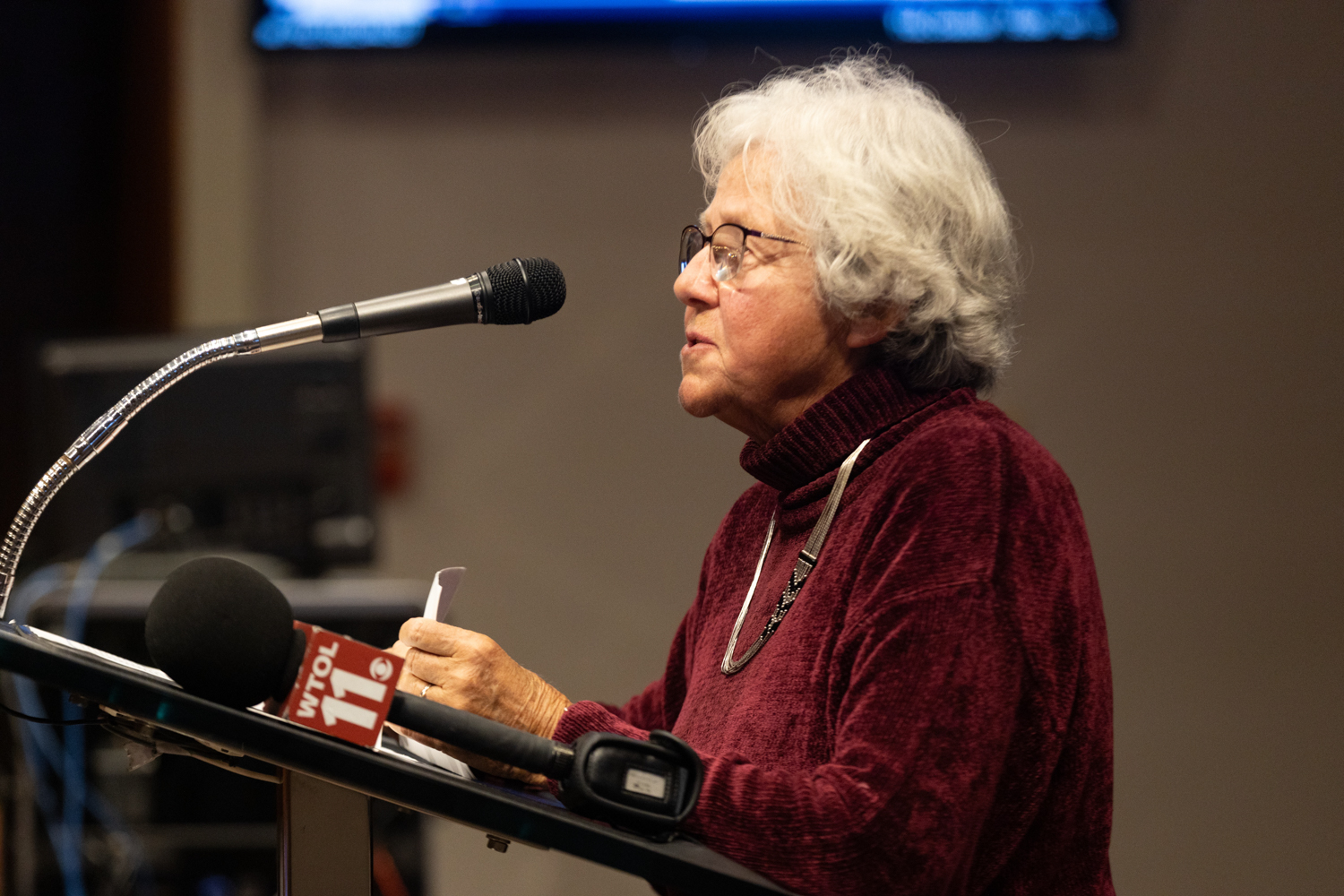
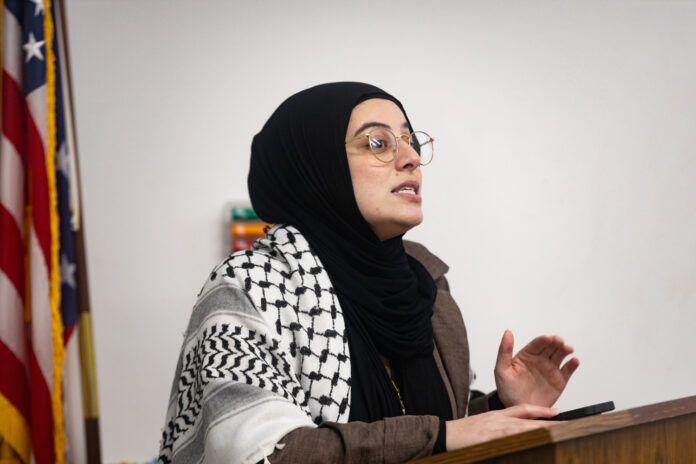
“This committee cannot reinvest in Israel bonds due to political reasons,” Kanan said, beginning her three minute criticism of Lucas County’s investment. “Supporters of these bonds have continued to share their support for Israel’s military operations, which, mind you, are being tried in international court as acts of genocide.
“If this was an ordinary bond that was evaluated simply based on funds, we wouldn’t see repeated legislation and attempts and attention to accommodate surrounding the continued purchase of Israel bonds,” Kanan said, potentially referring to HB 188 establishing The Ohio Israel Trade and Innovation Partnership, yet to pass in the Ohio Senate.
“So to me, clearly not a neutral financial decision.”
One percent of Lucas County’s investments, or as Webb said previously, one $5 million bond, is invested in Israel from Lucas County, and will not reach maturation until December 2026.
In August of 2025, Lucas County Commissioner Pete Gerken pressured the treasurer and the IAC to divest from Israeli bonds by packing conference room A on the eighth floor of 1 Government Center with Pro-Palestine protesters, in a move that visibly made members of the IAC uncomfortable.
The meeting in August ended with a representative from the Jewish Federation asking to be notified about such meetings in the future, and with a formal recommendation from the advisory committee to divest from Israeli bonds.
No actions, beyond the recommendation to divest, were made at the time concerning the Israeli bonds.

Continued opposition
Six months later, protesters showed up in greater numbers for both sides with similar sentiments stated in the last meeting.
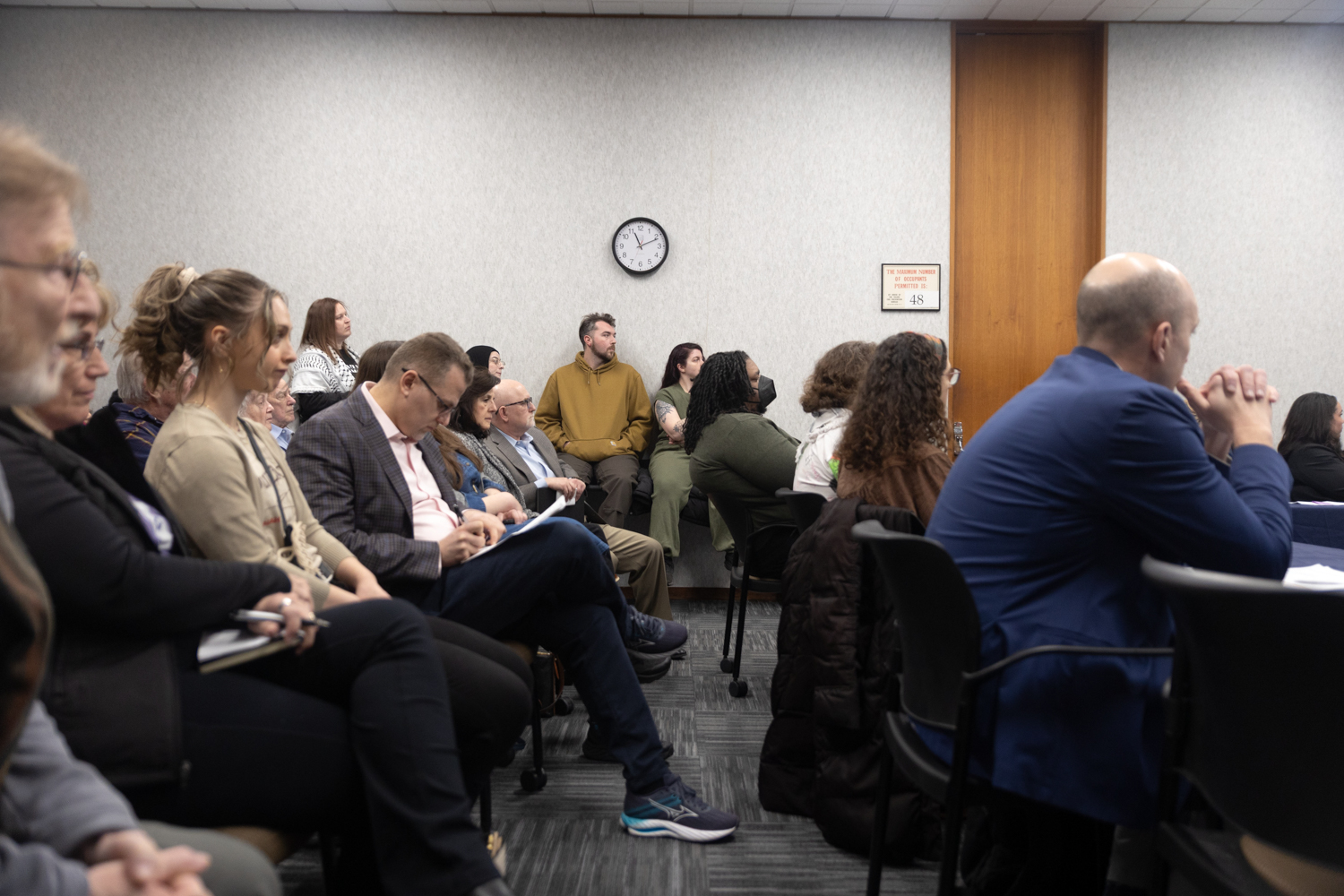
Pro-Palestine supporters outnumbered Israel supporters, with somewhere around 60 to 20 people respectively on each side of the issue.
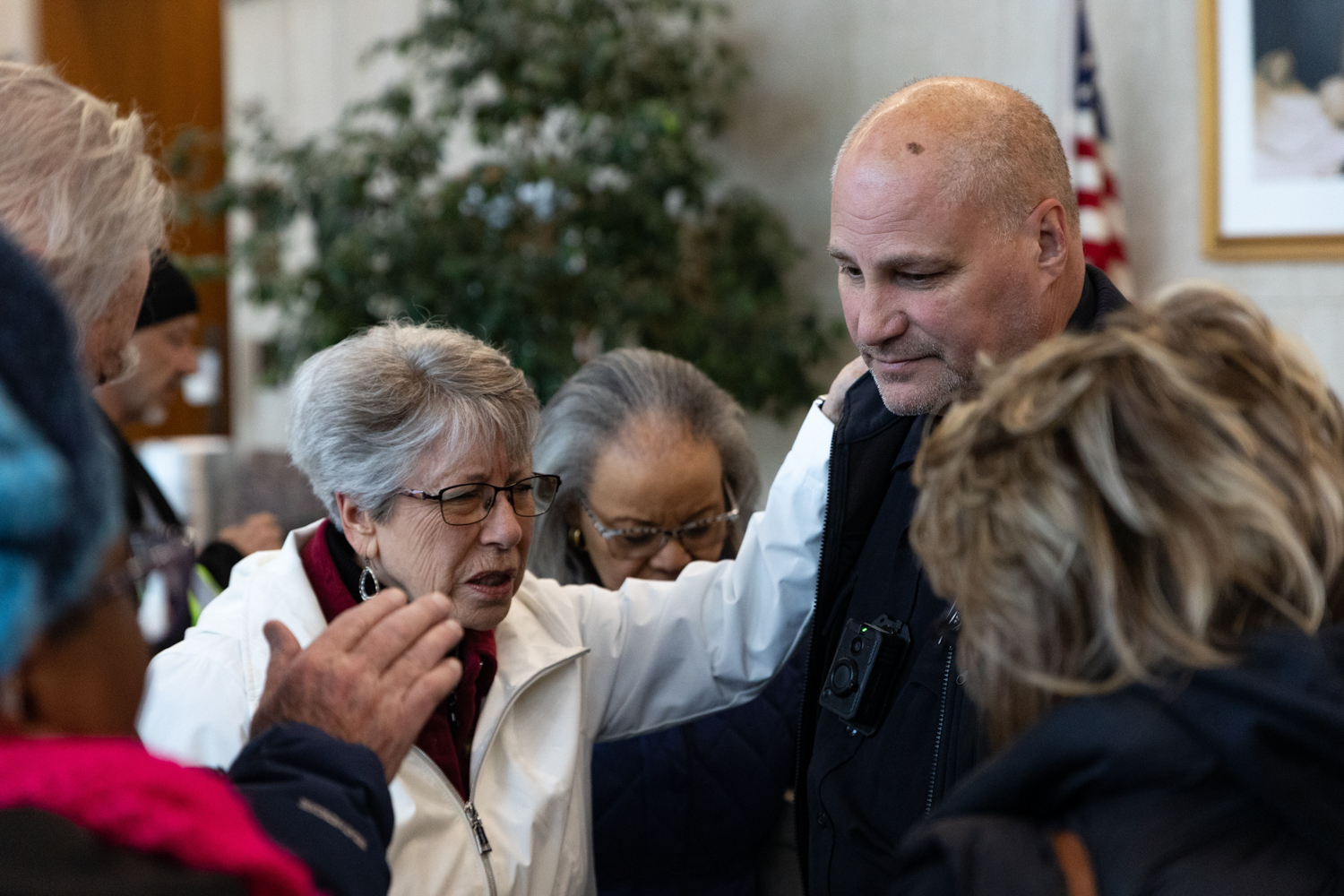
Even with the larger room reserved on the first floor of 1 Government Center, many who came had no other option than to stand outside of the investment meeting. Two police officers guarded the entrance to the meeting without incident.
Kanan and others in opposition to the Israeli bonds referenced Ohio Revised Code (ORC) 9.76 §, a provision stating that the state of Ohio will not engage in contracts with companies boycotting the state of Israel.
In the previous meeting, Webb made reference to this part of the ORC: “Directing me not to invest in instruments of a foreign nation by which the category is only Israel runs the risk of running afoul of state law, and I personally don’t think that that’s a wise move.”
This statement received public rebuttals from Kanan, and subsequent public speakers.
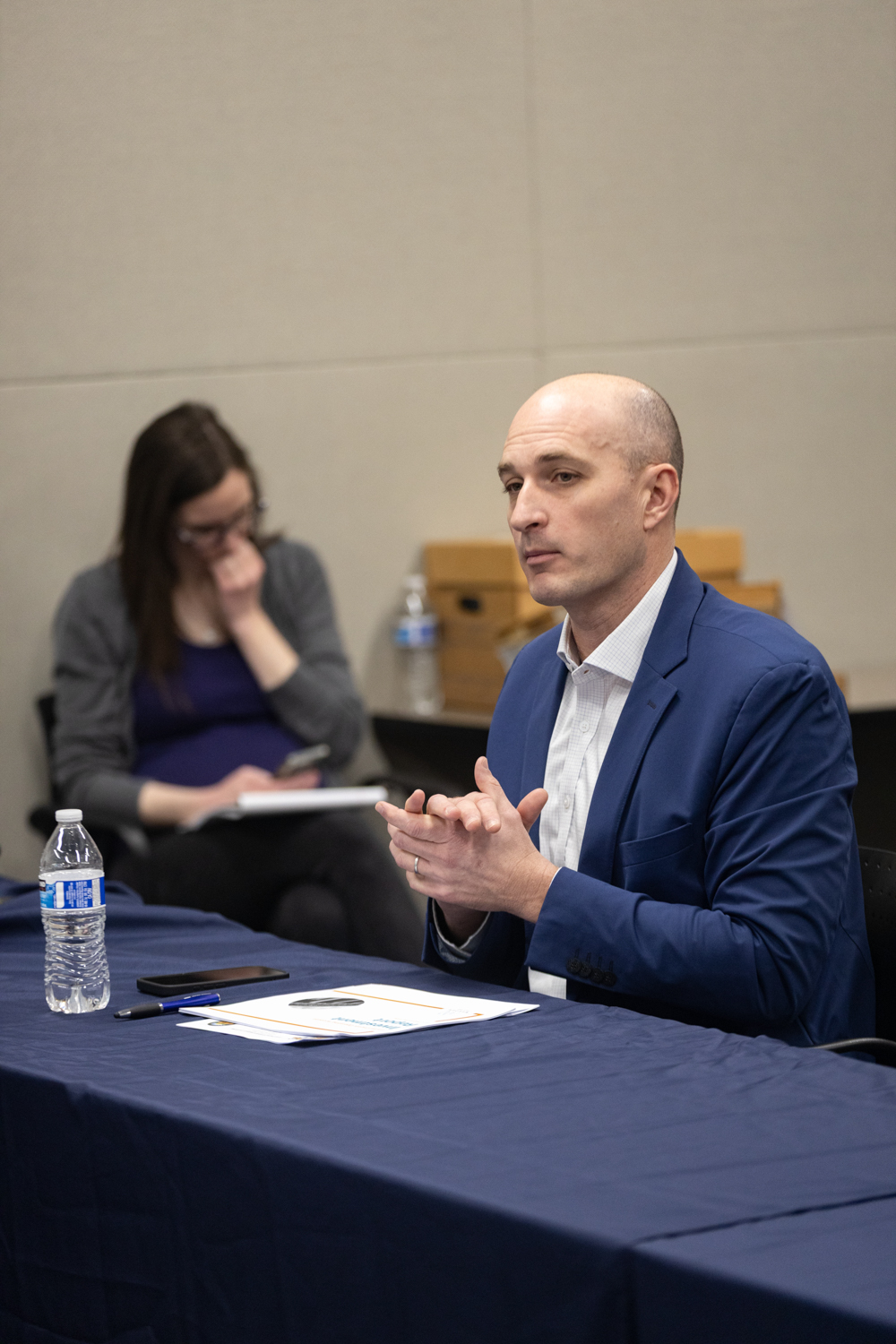
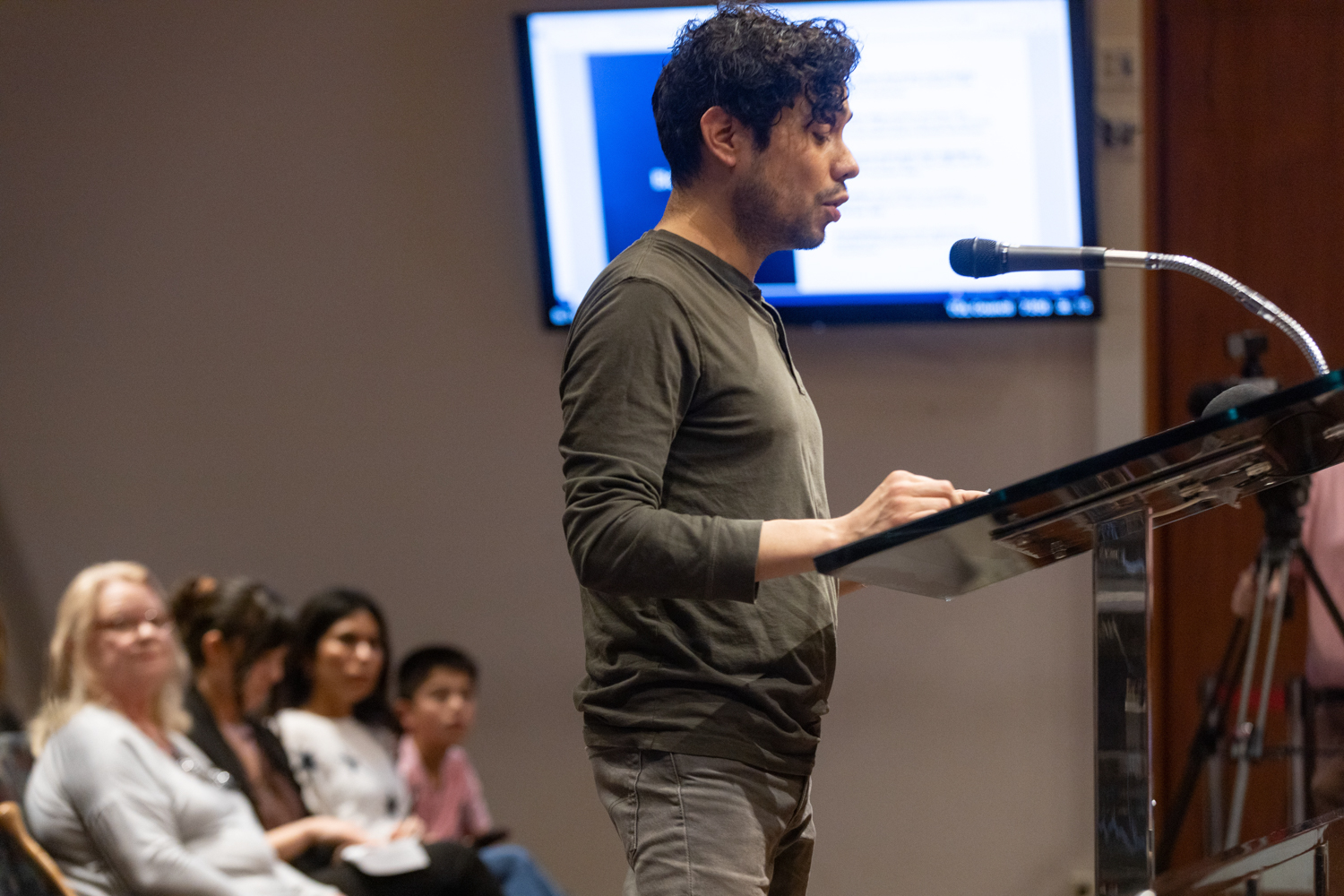
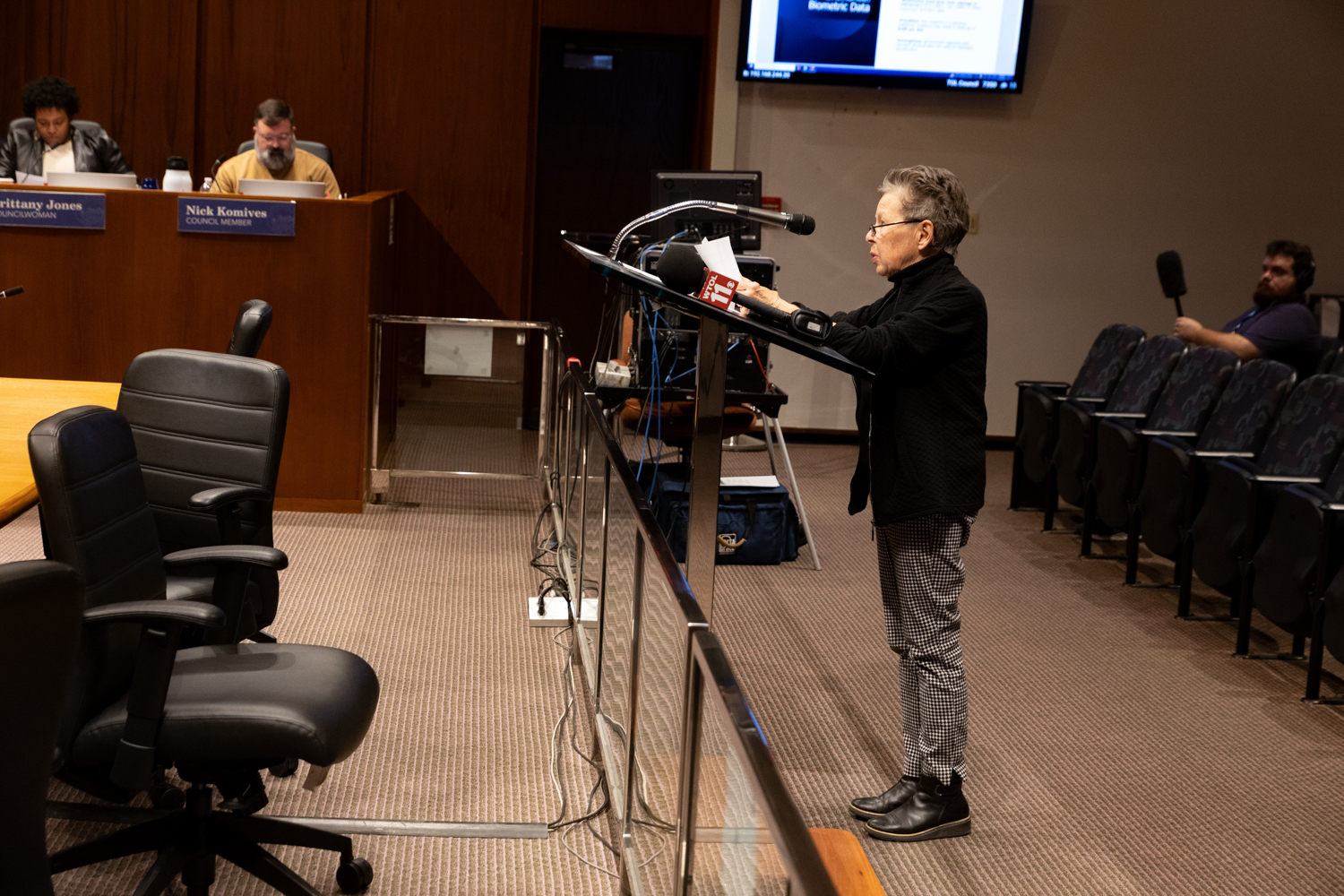
Rashad Daoudi, an independent attorney, spoke after Kanan on ORC 9.76, saying, “I can tell you that that law has absolutely no application whatsoever to your decision to choose not to reinvest [in Israeli bonds].
“Furthermore, even if it does apply to your decision, there are exceptions that allow you to still choose not to reinvest. And those exceptions are, one, if the decision is commercial, two, if it’s non-discriminatory, and three, if it’s based on the specific conduct of the entity that’s being targeted.”
Concisely, Daoudi said there were other investments that would return higher yields than continued investment in Israel, the decision to divest was not based on discrimination against Israeli or Jewish people, and the conduct of Israel against the Palestinian people merited reevaluation of the reinvestment in the country.
Approximate figures on Gaza
Daoudi himself said the death toll in Gaza was “as many as 200,000,” a figure used to refer to the dead and injured in Gaza collectively.
The Associated Press (AP) following the two year marker of the Hamas led attacks on Oct. 7, 2023, killing roughly 1,200 people inside Israel, released its estimates of casualties inside of Gaza, 67,000 killed Palestinians and 170,000 wounded.
Israeli Defense Forces’ (IDF’s) former chief, Herzi Halevi, who initiated the assault on Gaza in 2023, confirmed the over 200,000 casualty marker between the injured and dead in Gaza just ahead of the two-year marker. And then, after over two years of denying the Gaza Ministry of Health’s (GMoH) death toll as propaganda, Israel officially accepted the estimate of around 70,000 dead at the end of January 2026, this toll includes 20,000 minors who have died.
A less controversial statistic is that about 90 percent of Gaza’s total population of 2.2 million people have been displaced due to Israel’s attacks on the area.
An independent study from Lancet Global Health found the GMoH’s death count to be “conservative” and said, “We estimated 75 200 violent deaths (95 percent CI 63 600–86 800) between Oct. 7, 2023, and Jan 5, 2025…” in Gaza. This study leaves out any casualties that have happened since Jan. 5, 2025, at this point, over a year’s worth of data on the dead and wounded in Gaza.
Pro-Israel POV
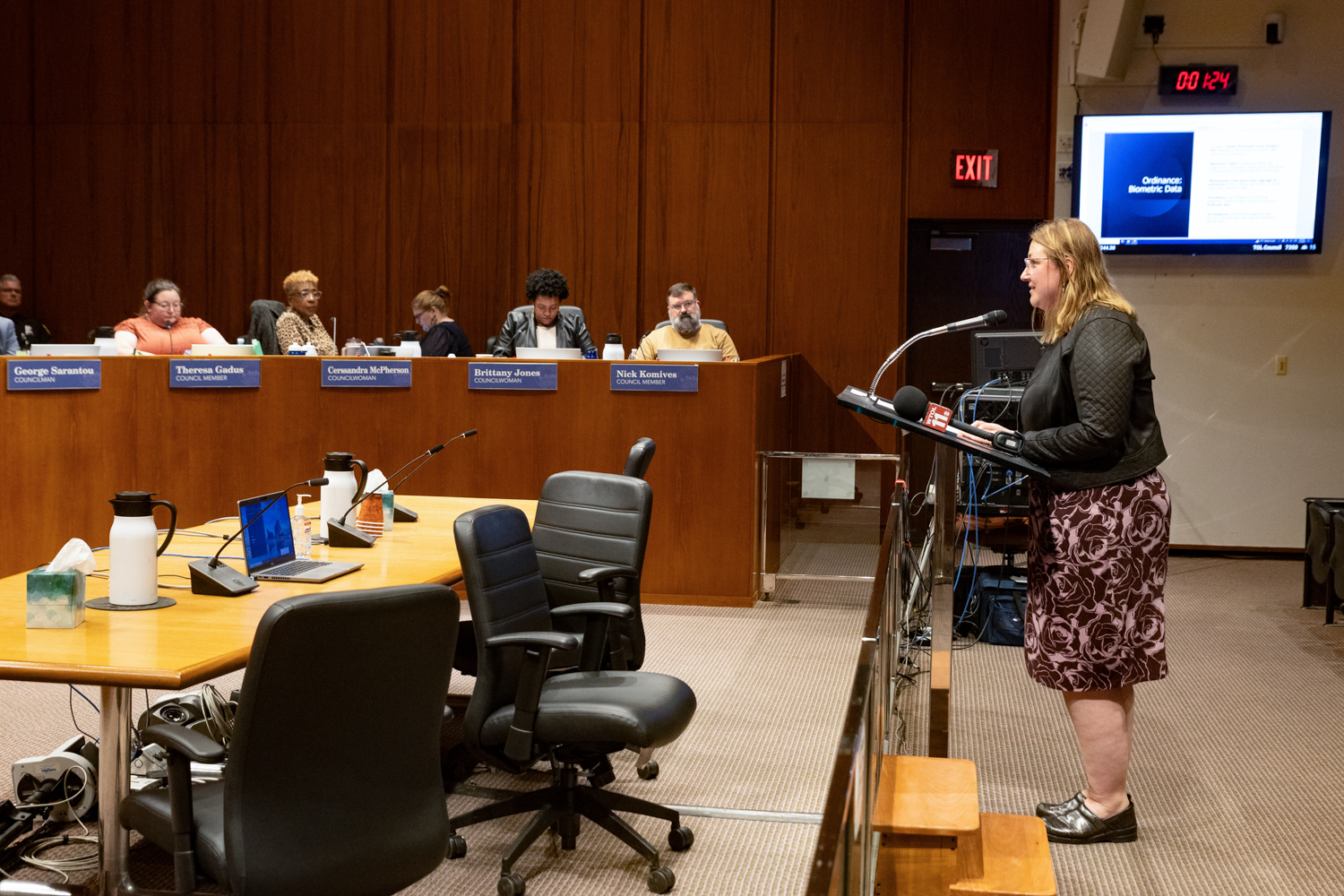
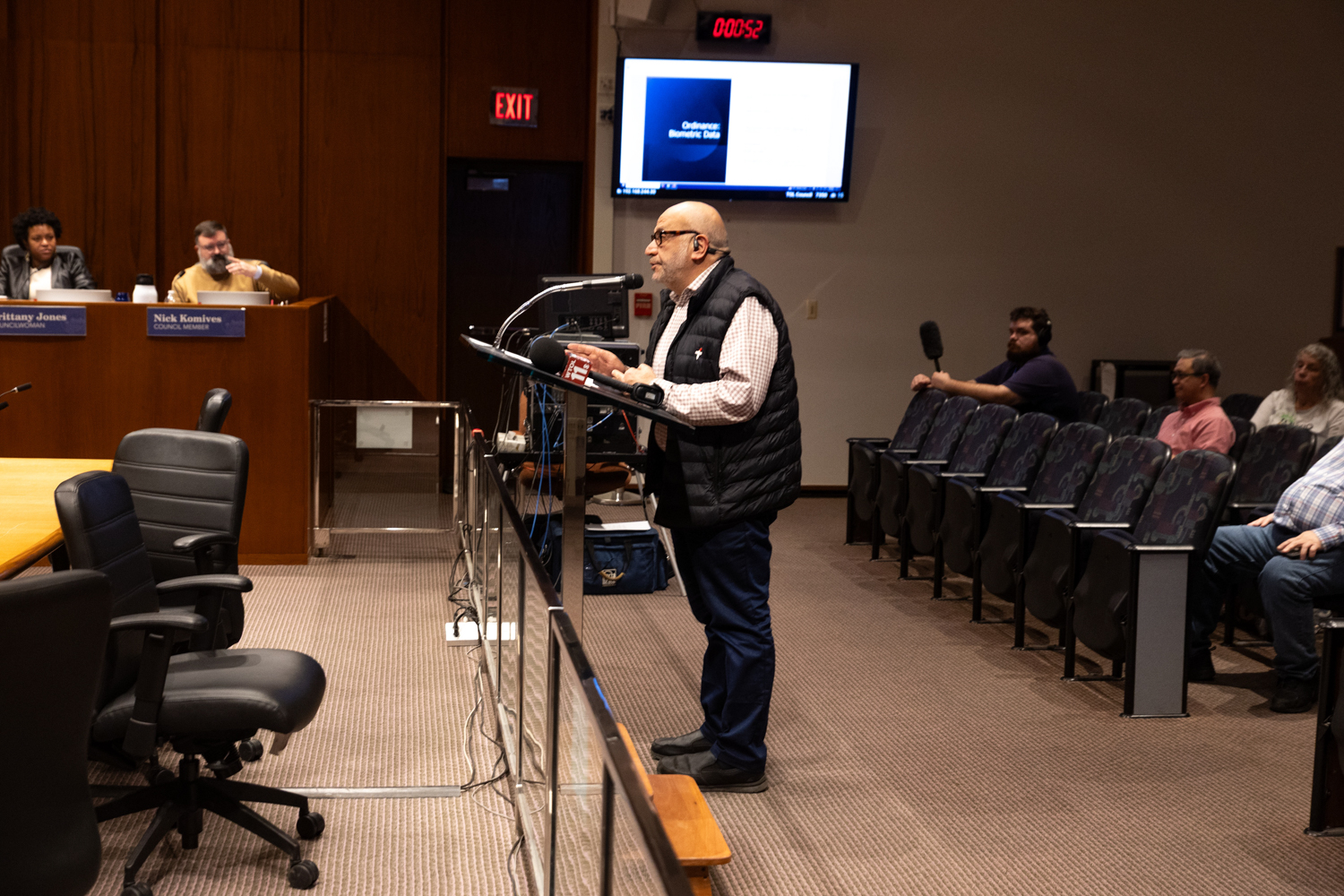
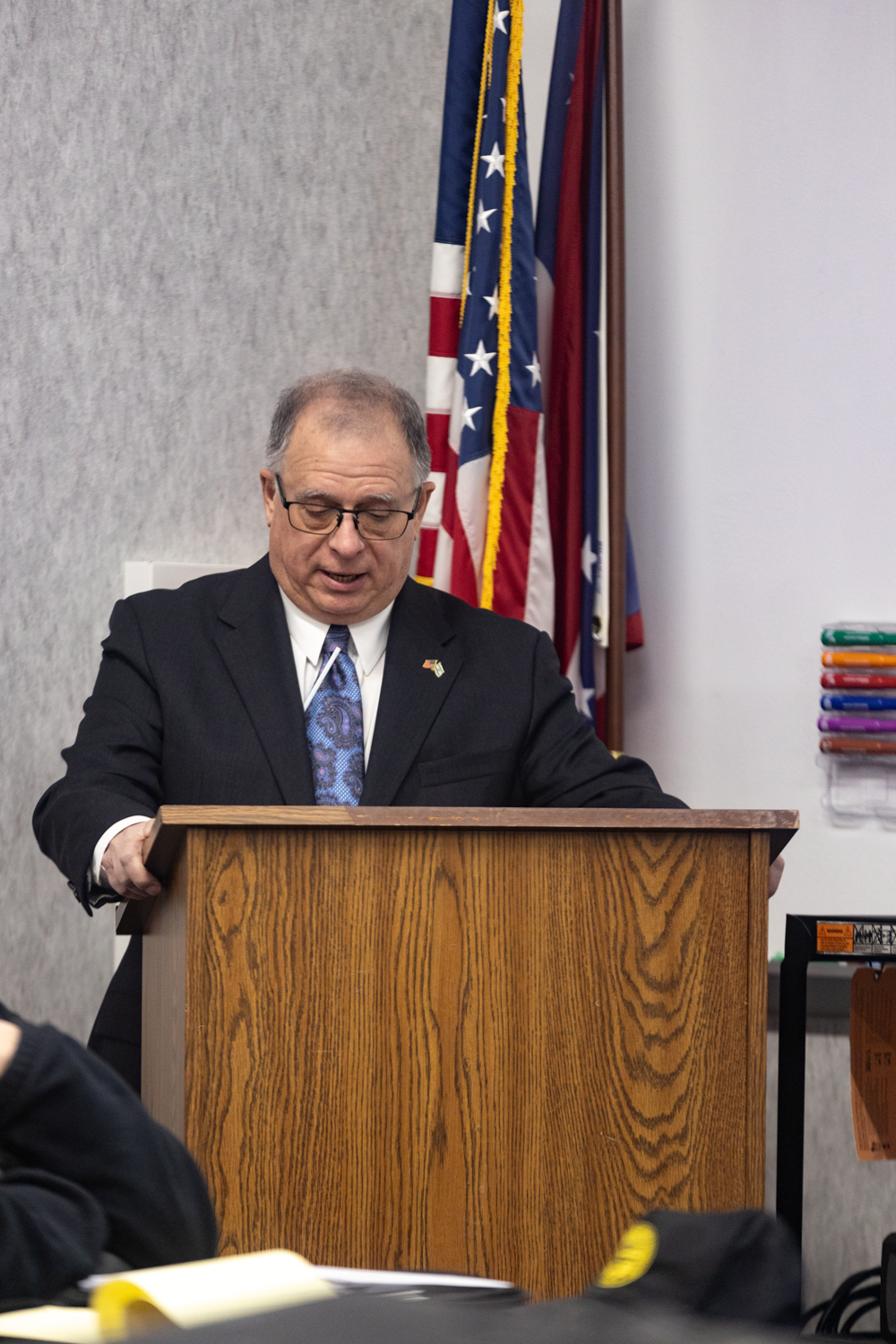
The subsequent speaker Joel Beren moved to defend the state of Israel, and highlighted the Hamas attacks on Israel killing 1,200 and the taking of 251 hostages, leading to the deadly escalations in Gaza.
“My goal is to communicate with several elected officials who are sowing seeds of hate, specifically antisemitism in our community,” Beren said, and detailed the different cultures and nationalities of the people who were killed on Oct. 7.
“Israel then went to war against Hamas, a U.S.-designated terror organization, not with the Palestinian people,” he said.
“Since then, a complex international dispute has entered our community, where a county official is making strong accusations of genocide, a claim also repeated by senior members of the Lucas County Democratic Party.”
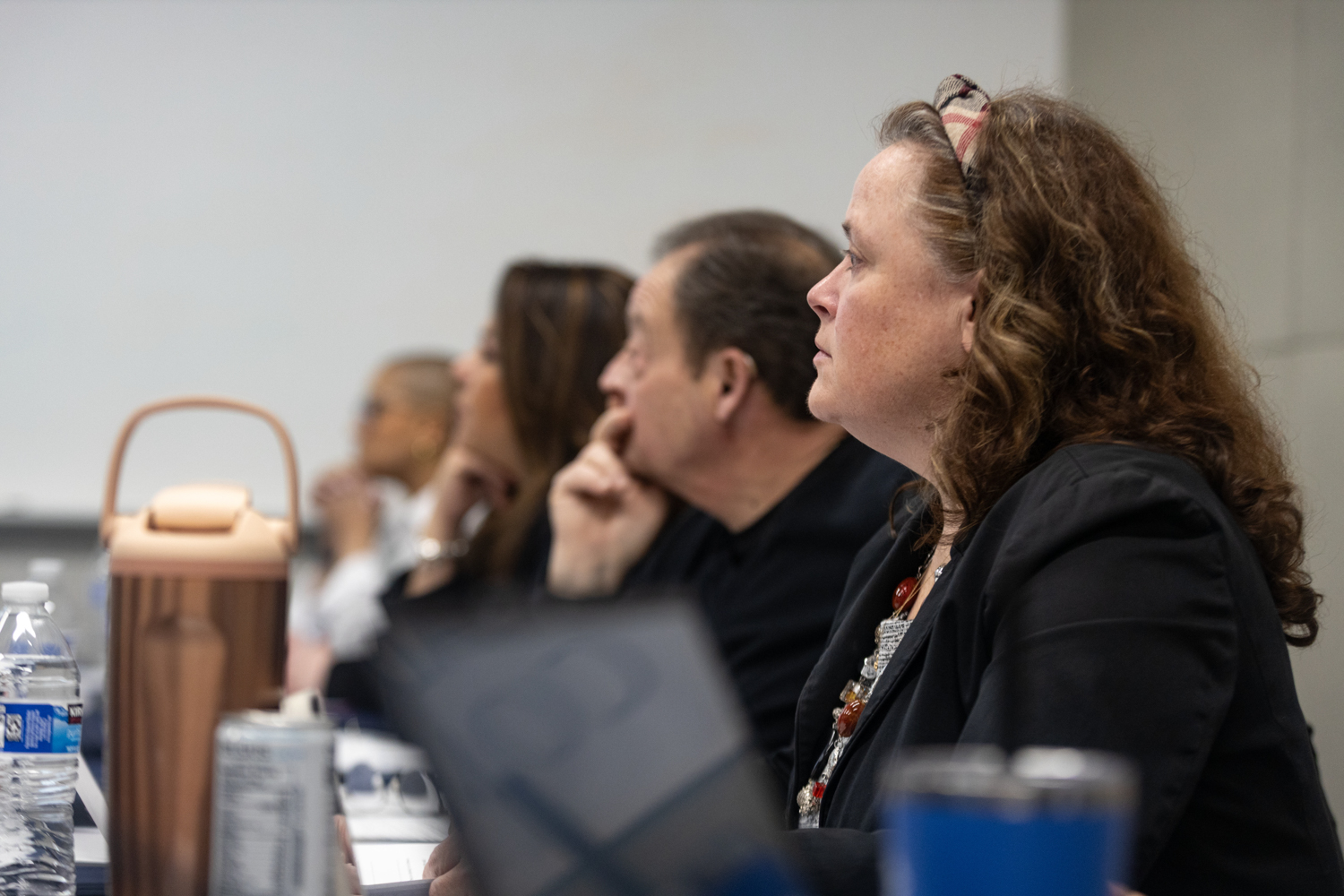
Beren argued genocide requires “an intent to destroy people,” and he said the evidence did not support that Israel was intending to destroy the people of Gaza, only Hamas. Hamas, Beren said, was ideologically opposed to western values, and he advocated for keeping Lucas County funds invested in Israel as the state treasurer of Ohio has been doing at greater levels than Lucas County.
Stephen Rothschild, the CEO of the Jewish Federation, said separately, in an interview with the Toledo Free Press that the use of the term “genocide” has been used as a provocation, to inflame people against the Jewish people.
There is no doubt some people use the word “genocide” to stir up hate against the Jewish people, as antisemitism and Islamophobia rise in the United States.
However, there is a real reason to question what is going on in Gaza.
Humanitarian groups, including Amnesty International, the United Nations (UN) and the International Association of Genocide Scholars (IAGS), have resolved that Israel is committing a genocide in Gaza.
An excerpt from the conclusion of the 60th session of the Human Rights Council for the UN reads:
“On the basis of fully conclusive evidence, the Commission finds that
statements made by Israeli authorities are direct evidence of genocidal intent.
Additionally, on the basis of circumstantial evidence, the Commission finds that genocidal intent was the only reasonable inference that could be drawn based on the pattern of conduct of the Israeli authorities. Thus, the Commission concludes that the Israeli authorities and Israeli security forces have the genocidal intent to destroy, in whole or in part, the Palestinians in the Gaza Strip.”
Written in the latter part of 2025, the conclusion comes on the 64th page of the council’s proceedings, and is preceded by evidence supporting the legal definition of genocide as defined by the Convention on the Prevention and Punishment of the Crime of Genocide, in 1948.
Towards the end of his three minutes, Beren said the United States (US) has given money to Hamas through direct humanitarian aid, and that it has only made things worse, and asked the IAC again to continue their investment in Israel.
The Israeli government has banned The United Nations Relief and Works Agency for Palestine Refugees (UNRWA) from its operations in Israel along similar sentiments, alleging members of UNRWA were terrorists.
The British Broadcasting Corporation (BBC) reported, “In December [2025], Israel told organisations – including Médecins Sans Frontières (MSF, Doctors Without Borders), Oxfam, Save the Children, ActionAid and the Norwegian Refugee Council (NRC) – that their registrations had expired. They were given 60 days to renew them – by complying with new rules – or cease operations by 1 March.”
New rules put forth by the Israeli government for nongovernmental organizations (NGOs) require them to share complete staffing details, operational organizational information and funding sources.
The AP reported, “Aid groups that refuse to comply say they fear what Israel might do with the personal data of their employees, noting that hundreds of aid workers have been killed in Israeli strikes during the war.”
Israel claims in some cases NGOs have been infiltrated by Hamas, and Israel has acted accordingly.
In one instance 15 Palestinian medics with the Red Cross/Red Crescent were killed by Israel, but then later Israel backtracked and blamed “professional failures” for the deaths.
To make things more complicated, Israel killed five armed individuals in a World Central Kitchen (WCK) vehicle. WCK condemned the armed individuals’ use of WCK as a disguise, and said they were not familiar with the five people brandishing weapons under their logo.
But in another instance seven WCK workers were killed in a strike by Israel, which the Israelis later apologized for.
“The Israeli Diaspora Ministry says that since its guidelines came into effect, it has been contacted by 117 NGOs. Of these, 27 have been approved and 11 were rejected with the remainder still undergoing review or told to conclude operations should they fail to meet the compliance requirements,” according to the BBC.

NGOs have pushed back against the standards, claiming they seek to silence criticism of Israel’s tactics. Jan Egeland, Secretary General of the Norwegian Refugee Council told the BBC, “This is a political matter…They don’t want independent witnesses that are not pro-Netenyahu to operate in the Palestinian areas. That’s why they’ve come after us and so many others.”
The new standard for NGO’s is in step with Israel preventing foreign journalists from entering Gaza since their offensive began, except in cases where journalists are embedded with the IDF.
Prominently, Save the Children lost its license to operate in Gaza after being accused of delegitimizing the State of Israel. Another well-known humanitarian operation, Doctors Without Borders, is disputing the terms with Israel, after many claims the NGO denies about their staff being affiliated with armed groups in the area.
“County investment policy cannot be influenced by politicized narrative,” Beren said before his time ran out. “This committee is advisory. Israel bonds are both credit-worthy and a permitted investment within the authority of the county treasurer.”
Public comment continued
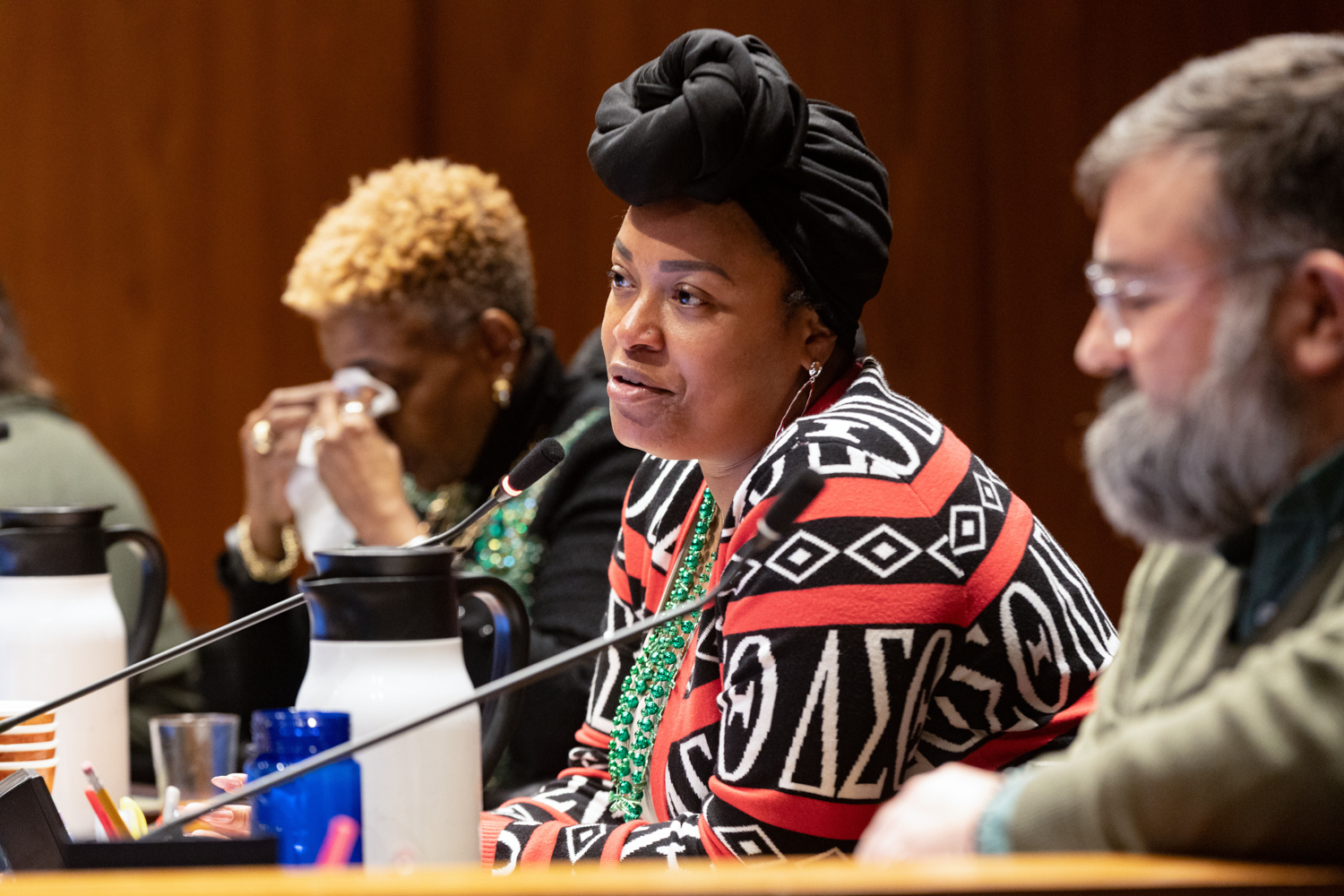
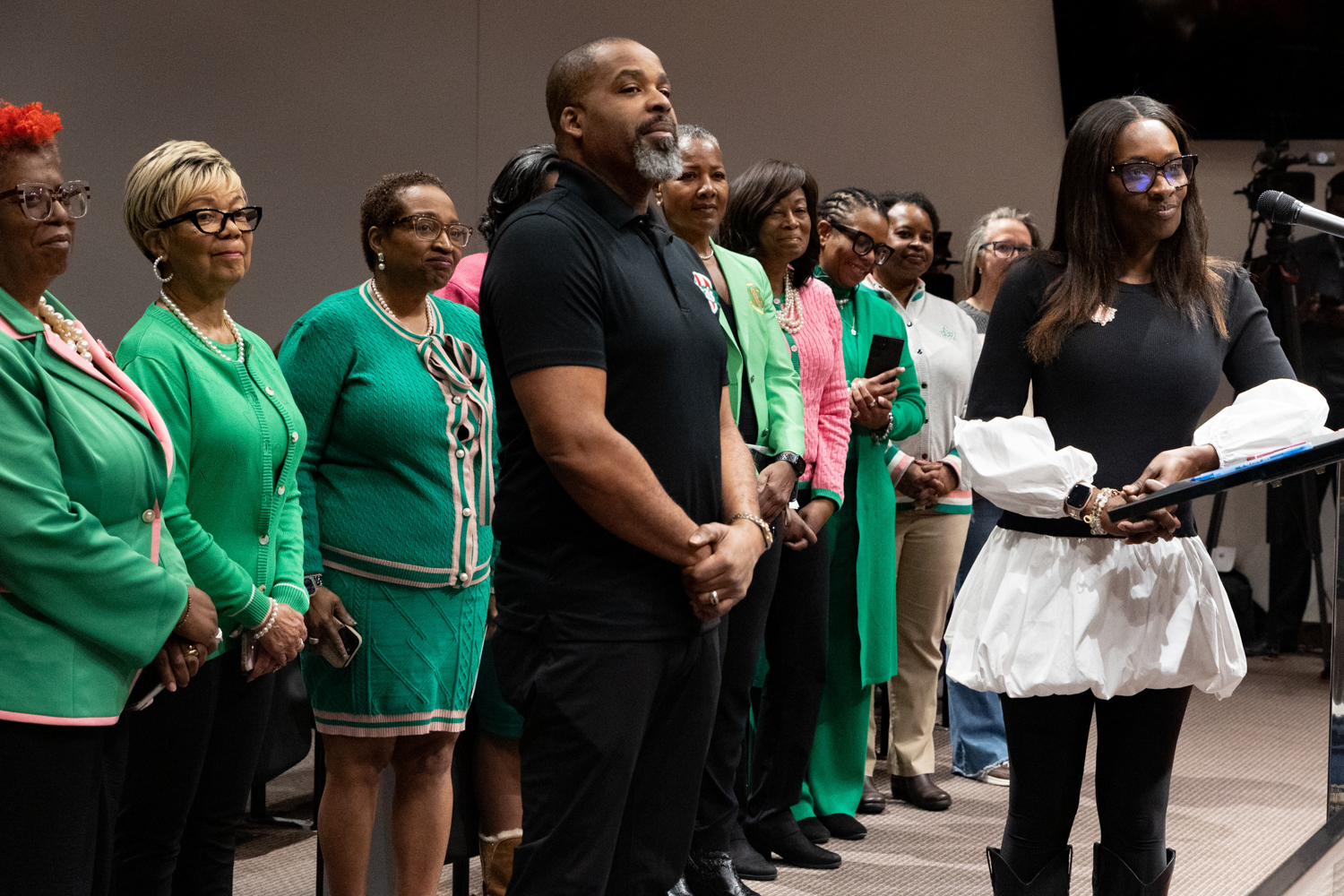
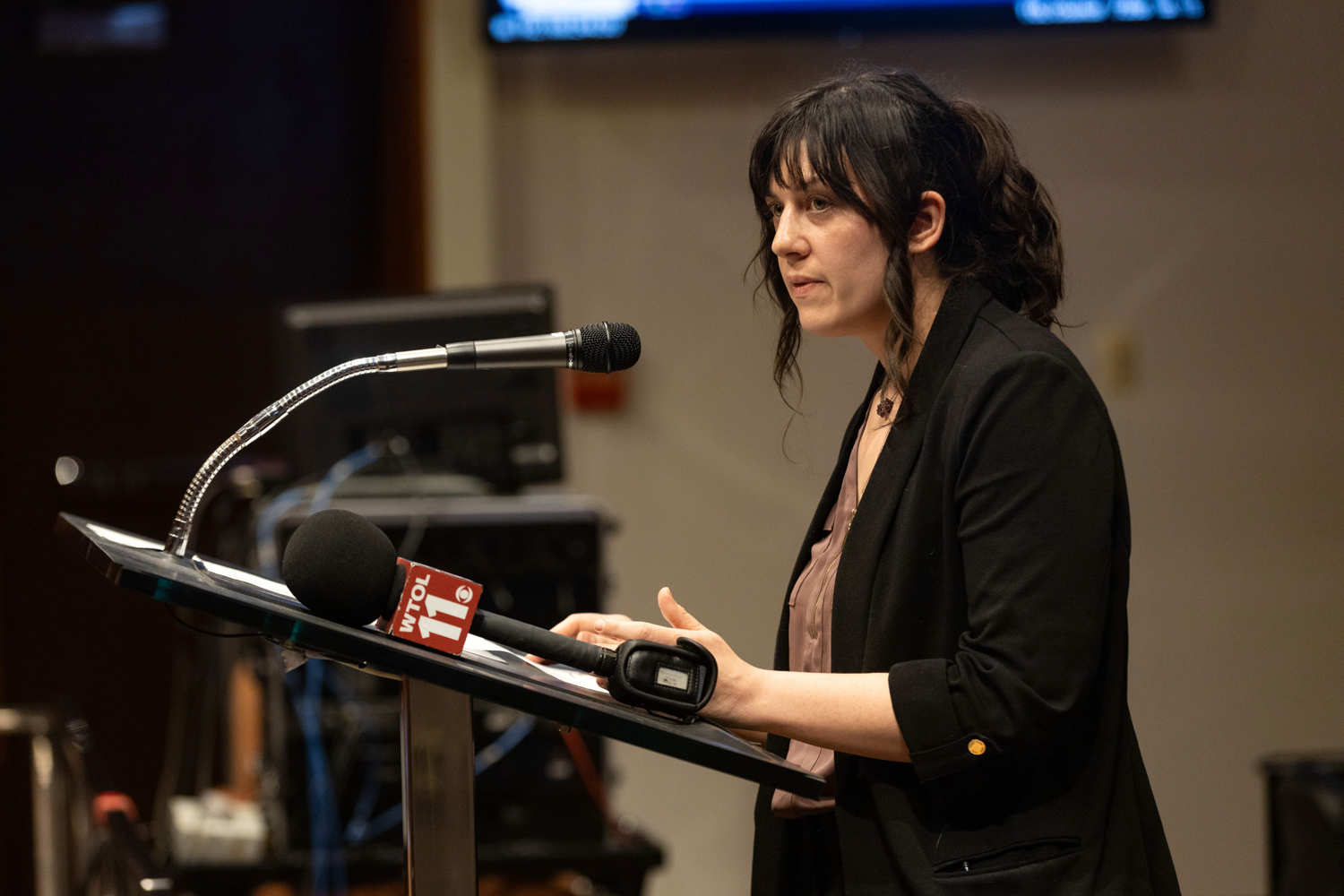
After Beren spoke, Hoda Al-Hayim was called from the hallway to give her public comment. She mentioned some of the same sentiments as previous Pro-Palestine supporters, but during her speaking time the Pro-Palestine supporters in the hallway, began chanting, “No Israel Bonds.”
Al-Hayim continued speaking, and ended by urging the committee to “stand with humanity.”
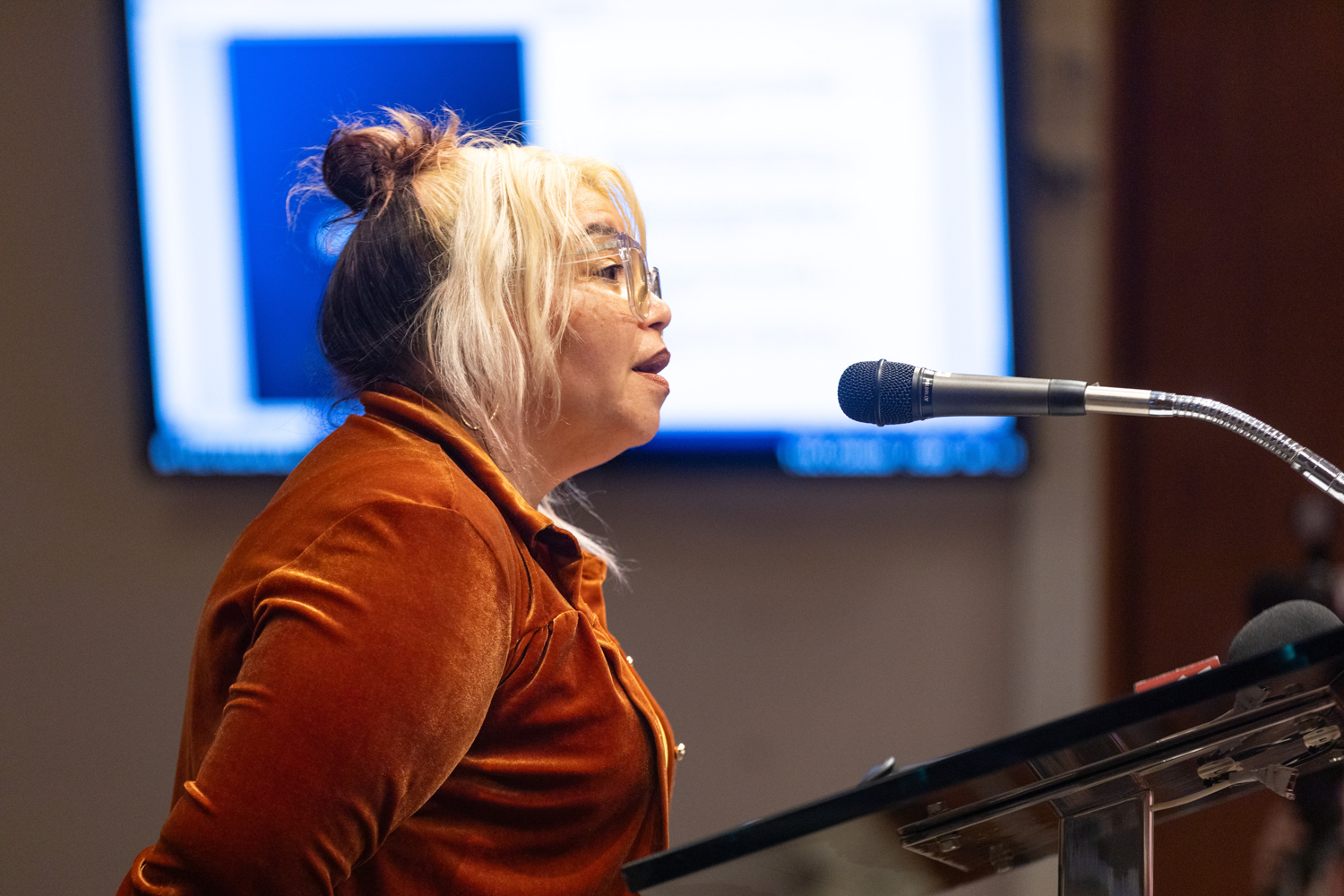
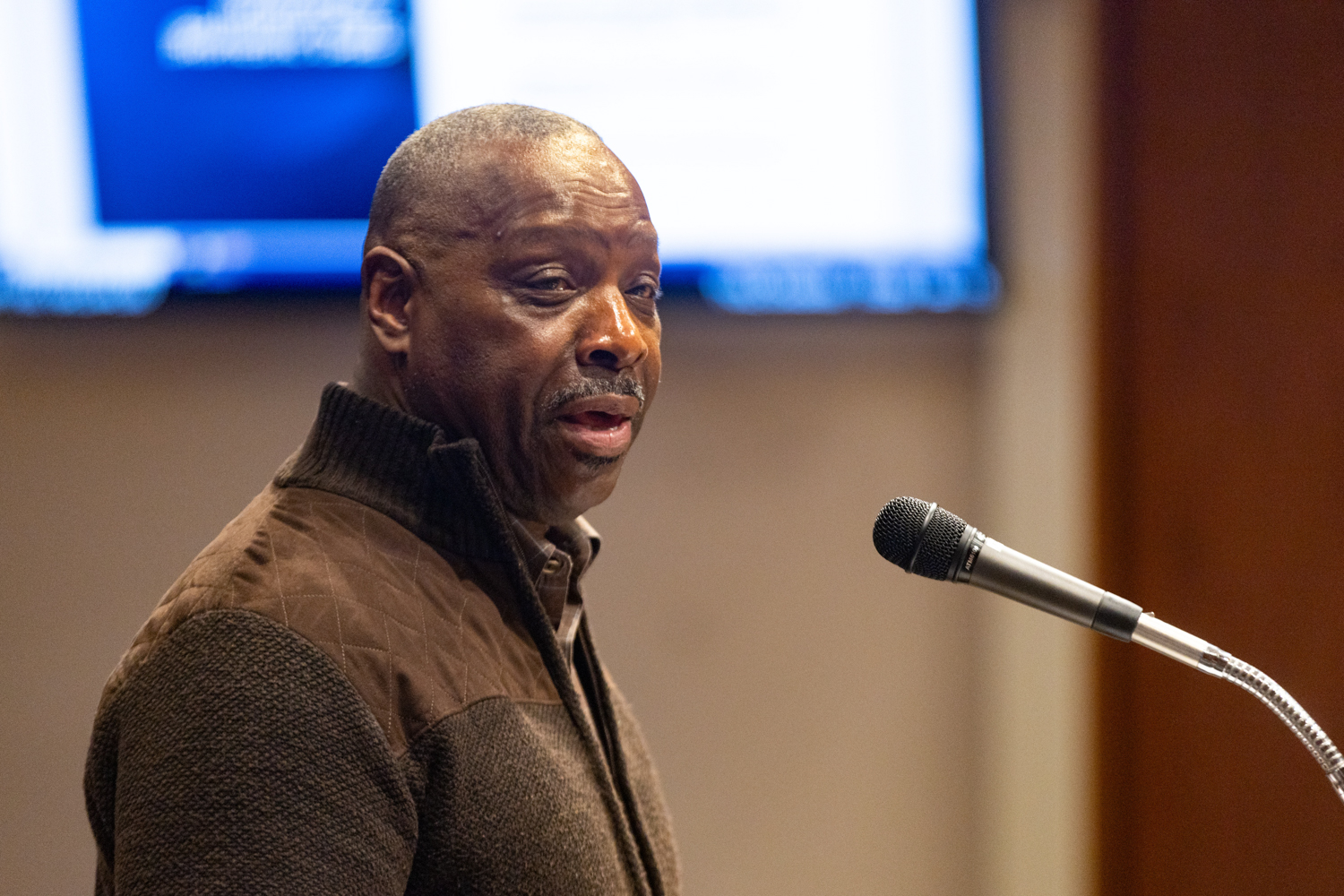
The last speaker was a co-chair of the Northwest Ohio Democratic Socialists of America, Lamar Willis, who spoke against investing the money in a “genocidal state.”
“I want to remind everyone that we don’t know exactly where that money is going,” he said, and advocated for “Lucas County money to stay in Lucas County.”
Willis ended his time asking Treasurer Webb “to be on the right side of history.”
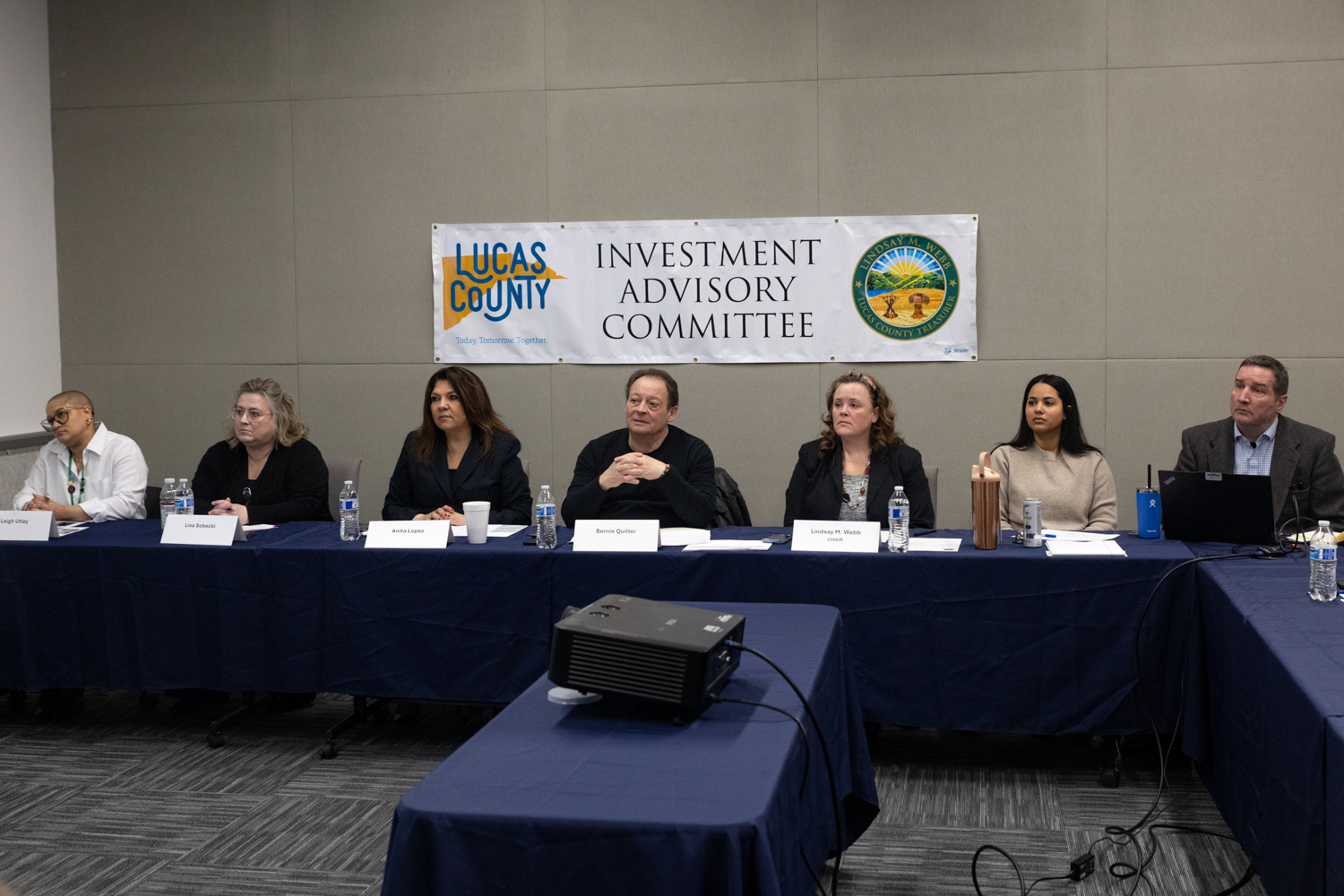
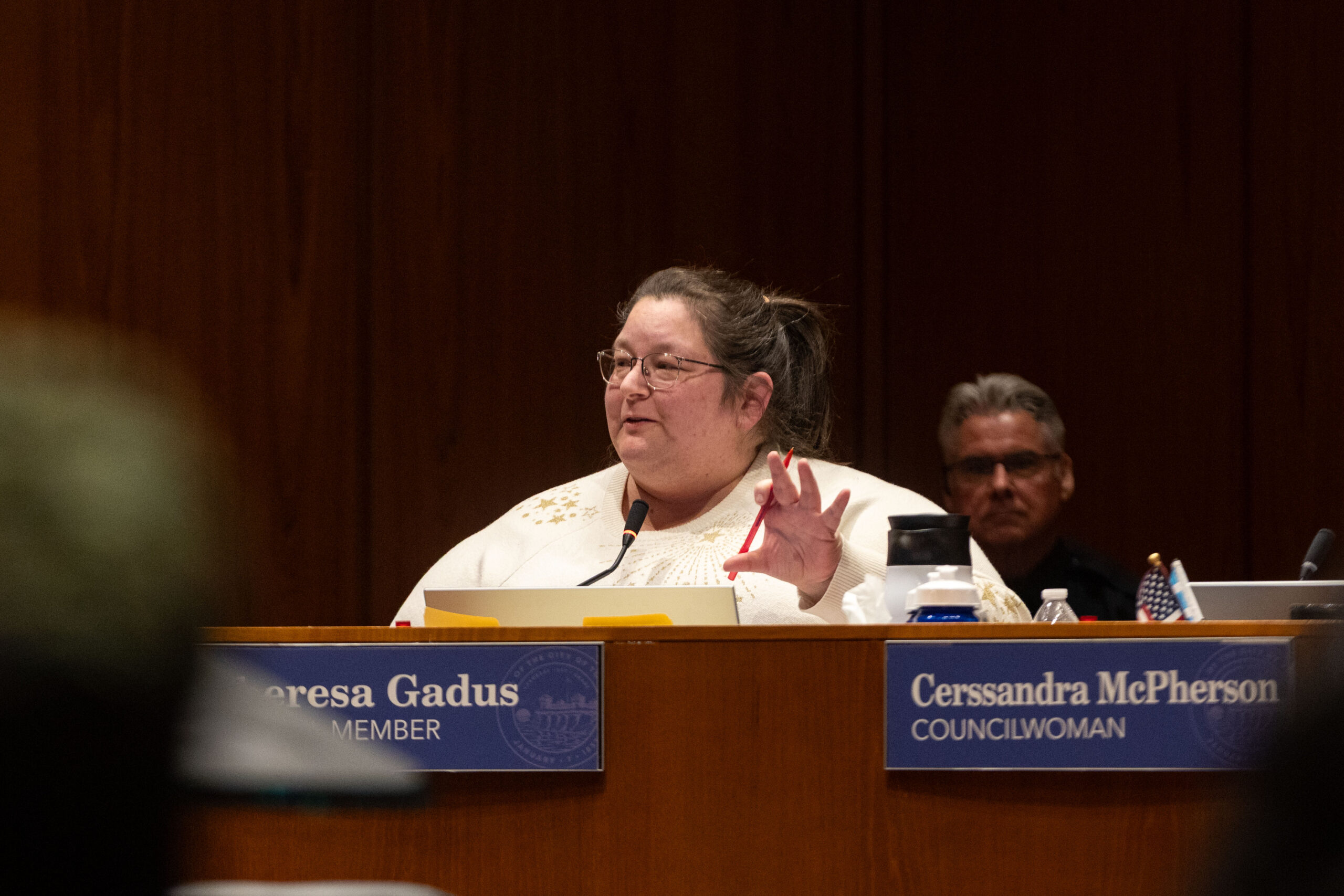
Lucas County Commissioner Anita Lopez, interrupted Webb as she tried to move on with the meeting amidst chanting. “I know you discussed this policy beforehand, but I do feel like both sides should be provided equal time,” Lopez said, after the random selection yielded 4 to 1 speakers, respectively.
Webb seemed less interested in continuing public comment, making the argument that both sides of the issue were heard to some extent.
And while the two women were discussing the proper solution for public comment going forward Lopez became frustrated, and said, “Can we get that under control?” referring to the chants from the hallway.

Local Palestinian organizer, Ziad Hummos, accommodated, opening the door, and the crowd immediately responded by quieting down, at his direction.
Lopez recommended the next IAC meeting to take place in a larger space, potentially the Commissioners Hearing Room.
As soon as the meeting room quieted, Webb said, “I want to acknowledge the 180 some emails that we’ve received, that all members of the committee have received,” and said they had been “noted,” along with a number of phone calls.
She then encouraged people to email and call “so people can continue to participate in this process and have their voices heard.”
“This is America,” she stated.
That being said, Webb, seemingly exhausted by the controversy, took note of Commissioner Lopez’s recommendations for further comment, and moved on with the meeting.
“It is well-noted the feelings of the people in this room and quite frankly, this bond does not mature until December,” Webb said. “So regardless of what is said today, no action will be taken today, tomorrow, next month or the month after.”
“It will only be when the bond matures in December, and we will make that decision according to our responsibility under the [Ohio Revised] Code, which is the safety liquidity, the safety of the investment, the liquidity needs of the county, and the yield, that is the permissible determination that I am allowed to invest in.”
Webb told those in attendance that she had reached out to the Ohio Attorney General, Dave Yost, through the Lucas County Prosecutor’s Office for an opinion on ORC 9.76 § related to the local issue of investing or divesting from Israeli Bonds in Lucas County.
“If the point is to be heard, people are being heard, and I would like to move on with the rest of the agenda,” Webb said.
Supporting Webb, Lucas County Clerk of Courts, Bernie Quilter, also on the IAC, affirmed everything stated by the treasurer.
“I too, have received all your emails,” he said. “I have a separate folder that I have kept every one of your emails in, and I have read every email also.”
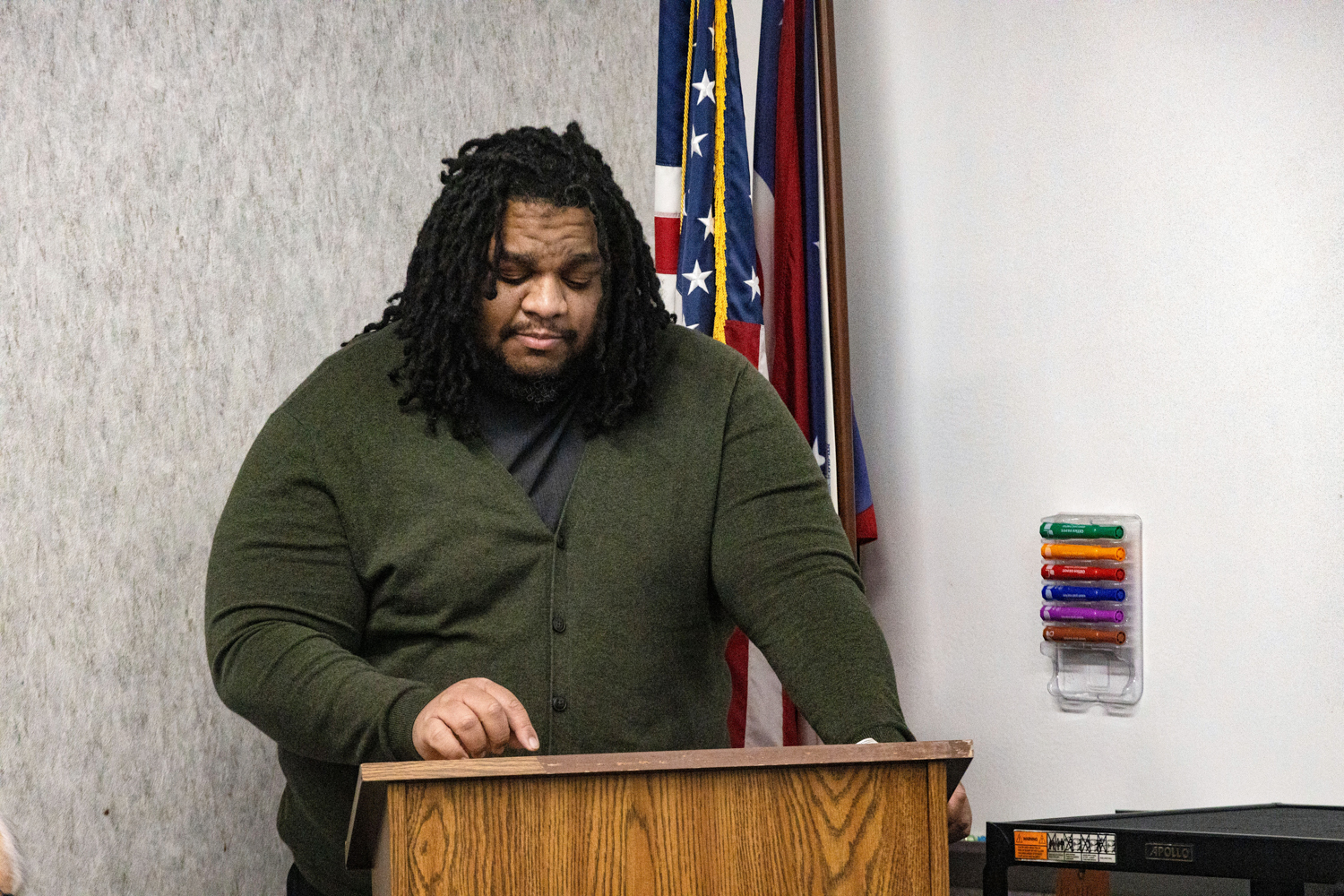
The issue of investing in Israel bonds does not come up until December, he said, and mentioned U.S. banks are investing, “a lot of money in Israel bonds.” Quilter also mentioned other areas in Ohio had put a pause on Israel bonds, and confirmed the request for opinion went out to the Ohio AG.
Lopez spoke afterwards, and said, “I just want to make sure that you understand we are dividing our county on this issue.”
She then announced that it was a sad state of affairs when the two parties in the room could not break bread because of an international dispute the county had no control over.