Home Blog Page 272

Miller: Readers name desired franchises

0
Toledo Free Press illustration by DON LEE


Last week, we reflected on a Toledo Free Press story from 2008 that asked readers to name the restaurant and entertainment franchises they would most like to see in Lucas County. Some of those — a casino and a large-format movie screen — have come true. Others, such as Trader Joe’s and IKEA, are rumored but not yet a reality. During the past week, scores of emails — and calls during my Monday hosting gig on WSPD’s “Eye on Toledo” — contributed to this “most wanted” list.

Tori Crowell suggested Quaker Steak and Lube and Cosi restaurants and department stores Ross and Beall’s.

Leah Owell mentioned Sweet Tomatoes restaurant, L&L Hawaiian Barbecue, Heart Attack Grill, Steamers, a wild game restaurant, a Moroccan restaurant and a Russian restaurant.

With all due respect to Sonic, Five Guys and Burger Bar 419, many people mentioned In-N-Out Burger and Culver’s. We mentioned that there is a Culver’s in Adrian, and Thomas Blaha, executive director of the Wood County Economic Development Commission, wrote in to say there is a Culver’s in Findlay. He said it was financed in part through the SBA Regional 504 Loan board, hosted by the Toledo-Lucas County Port Authority.

Barb Meyers was enthusiastic about IKEA, and agreed Culver’s would make a “wonderful addition. My son-in-law took us to Culver’s in Ypsilanti, and I found out they have frozen custard, wonderful stuff that I haven’t had since I was a kid.”

Tom Glassmoyer wrote about Firehouse Subs, praising the food and the chain’s dedication to charity and local fire departments.

Romaine asked for a Zingerman’s Deli, a request that came up during the radio show.

Jeannine Reilly’s wish list included Noodles & Company, Mad Mex (“Downtown needs a great Mexican restaurant”) and wrote, “When and if the riverfront is ever developed, someone should look into bringing back Tiedtke’s, making it the center of attraction and try to make it close to the original … how cool would that be?”

A retro Tiedtke’s Downtown? That would be very cool indeed, Jeannine.

Michael S. Miller is editor in chief of Toledo Free Press and Toledo Free Press Star.

Counting Crows to swoop into Sylvania

0
Counting Crows brought their Outlaw Road Show to Centennial Terrace in Sylvania in June 2012. Photo by James Minchin.

On “Underwater Sunshine (Or What We Did on Our Summer Vacation),” Counting Crows refract 15 tracks, bending a few favorite songs to create big, bright waves of sound.

Adam Duritz said the group had fun covering songs — and found freedom.

“It was such a great liberating thing to get to work with so many other songwriters, in a way. I mean, it was like collaborating with people without them being there,” he said during a teleconference with some 30 media outlets, including Toledo Free Press.

“Something happened when we made that record. I mean, we just played differently and I’m not sure why, but it affected everybody,” he said. “There was something that was completely liberating about not doing my songs, about just like the fact that the guy that wrote them wasn’t necessarily standing in the room with you and wasn’t necessarily a guy you’d known for all these years, so you owed less to them, in a way.

“I don’t know what happened with everybody, but everybody loosened up in some way. It was really creative, including [for] me. Like, I love the singing on this record; I love the vocals on this record.”

And he loves listening to the disc, which features songs by Pure Prairie League, Tender Mercies, Fairport Convention, Travis, Bob Dylan, Teenage Fanclub, Faces, Gram Parsons, Big Star and others.

“I feel like putting it on sometimes, walking around the city listening to it. I dig it. It just keeps surprising me,” Duritz said.

The singer-songwriter and the band — drummer Jim Bogios, keyboardist Charlie Gillingham, bassist Millard Powers, and guitarists David Bryson, David Immerglück and Dan Vickrey — are hitting the road in support of their first independent release, which came out in April.

“We were looking for just not playing the sort of same old cookie-cutter venues that everybody goes to. We wanted venues that were a little bit more fun to play and also maybe a little more fun for an audience because we want people to be coming out early and checking out all these bands,” he said.

Counting Crows will bring the Outlaw Road Show to Centennial Terrace in Sylvania for a 7 p.m. concert June 16, 2012. Special guests will be Good Old War, Foreign Fields and Filligar. Tickets range from $35 to $85. Gates open at 5:30 p.m.

The front man with the famous dreads said the group likes to wing it and writes the set list right before the show.

That list might not feature all the rockers’ hits, which include “Mr. Jones,” “Rain King,” “Hangin’ Around,” “Accidentally in Love,” “Big Yellow Taxi” and “Round Here.”

“If I’m tired of playing something, I’m not going to play it because I think that’s going to make a bad show,” Duritz said.

“You don’t owe [fans] songs, but you do owe them a quality performance, and I think the best way to do that is to, like, make sure that you’re fully invested in everything you’re doing. And it’s art, so you can’t necessarily guarantee you’re going to be fully invested in somebody else’s suggestions, but you can pretty much guarantee you’ll be invested in yours.

“And I think we’ve stuck by that fairly religiously over the years, and I think it’s really paid off for us because I still like playing ‘Mr. Jones’ as opposed to a lot of people I know who have that kind of song in their catalog who just don’t want to play [it].”

PechaKucha to unite ideas, stories, performances

0
Samantha Hookway

Toledoans can see slide shows on steroids at the Glass City’s second PechaKucha Night on June 12 at the Toledo-Lucas County Main Library.

In PechaKucha, presenters have six minutes and 40 seconds to share concepts, stories, performances or artwork by sharing 20 slides for 20 seconds each.

“It can be very entertaining because you don’t know what’s going to happen in those 20 seconds, the audience doesn’t know what’s going to happen in those 20 seconds and mistakes do happen,” said event organizer Kimberly Adams.
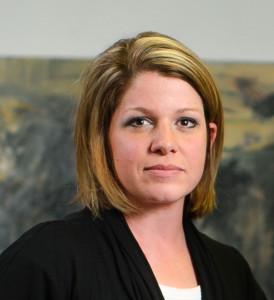
Kimberly Adams

PechaKucha began in Tokyo in 2003 as a way for young designers to share their ideas.

“They started it for architects, because the architects tended to be a little long-winded when they were presenting their designs so they kind of shortened that format for them,” Adams said. Now the nights occur in more than 500 cities all over the world and Tokyo itself has had about 100 PechaKucha Nights. The events even have their own designated space within the city.

Adams, founder of tart :: projects, an artists’ platform, also organized Toledo’s first PechaKucha Night, which took place March 31 at Manhattan’s. She recently moved back to Ohio after living in Tampa, Fla., where she first observed PechaKucha.

“I’d been to a couple in Tampa and they were really well put-together so I just thought it’d be great to happen here,” Adams said.

PechaKucha almost started in Toledo in 2010, but never officially took off. However, 2012 was a different story for PechaKucha in Toledo. After deciding to bring the events to Toledo, Adams reached out to the PechaKucha organization in Tokyo.

“I had to sign a contract, like a handshake contact. The contract had a picture of the two hands shaking,” Adams said with a laugh. By signing the contract, Adams agreed to organize four nights within the year.

The first Toledo event included 10 presenters of all kinds and 30-50 people attended, Adams said. So far, the June presentation also looks to be full of variety.

“[PechaKucha is] used for like artists, designers, people that are advocating for anything and everything,” Adams said.

The documentarian

One of those artists is Tina Gionis, who returned from making a documentary in Taiwan about a month ago. While in Taiwan, she documented the Mazu Pilgrimage and Festival, an annual celebration honoring Mazu, the sea deity of the Taoist faith. Her PechaKucha presentation will feature images and stories from her trip, she said.

Tina Gionis

“[Filming] was really a good experience, pretty high-pressure. I did a lot of traveling around and the pilgrimage was very fast moving. A lot of times, I didn’t get enough sleep but I managed to get the footage I needed and I was able to get a lot of interviews with the right people and capture the intensity,” Gionis said.

The next step is the film’s editing process. “I believe the making of a film, half of it is actually shooting and capturing footage and the other half is editing. You really tell a story with how you put the shots together,” she said. Depending on funding, the editing process could take up to a year.

This is Gionis’ first PechaKucha night and she is still putting together her presentation, but plans to share some exciting stories.

“I’ll probably talk about how I almost got trampled in a religious frenzy by Mazu followers,” she said.

Events like PechaKucha Night can make the city stronger, Gionis said.

“It sounds like a really good way to make people aware of different projects artists are working on,” she said.

The movie-inspired poet

Imani Lateef, an independent graphic designer and presenter, agreed with Gionis.

“[PechaKucha] creates an opportunity for people to share in real time. It’s so odd with all the technology that there’s so many connections, but we’re still very much separated. This actually gives us the opportunity to step out of our comfort zone so to speak, in ways that social media outlets don’t normally do,”

Lateef said.

Imani Lateef

Lateef plans on presenting a poem he wrote based on scenes from the  film, “Black Orpheus,” which won the 1960 Academy Award for Best Foreign Language Film. The film was made in Brazil and directed by Marcel Camus.

“I thought it would be a cool way to use the PechaKucha format,” Lateef said. “[The format] lends itself perfectly to poetry and artistic presentations.”

Lateef first heard of PechaKucha in 2010 and even offered to sponsor a night at his now closed Ground Level Coffee House, but the event fell through. But now the designer is happy to be working on his new presentation. “I enjoy the challenge. I think it’s going to be very interesting to see how people work in the constraints,” he said.

The nonprofit worker

Sam Melden, executive director of Food for Thought, hopes to be helped by those constraints. “It’s actually helpful because you know exactly what’s expected. The interesting part for me is I’ve never seen [PechaKucha] done,” he said. If his presentation is successful, Melden may start talking in “20-second bursts,” he said.

His organization, Food for Thought, aims to feed the hungry while investing dignity and respect in them, Melden said. He plans to share the story of the nonprofit along with “how thought or being thoughtful really matters to the work that you do in the nonprofit type job.”

Food for Thoughtn was founded in May 2007 and Melden joined the organization in August 2011 after working in retail and ministry positions. Food for Thought now operates a stationary and mobile food pantry, a lunch distribution program and gardens for growing healthy foods.
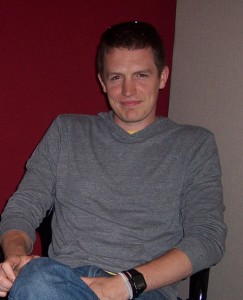
Sam Melden

Melden said he hopes to impart some of the group’s philosophy at PechaKucha Night.

“It would be my No. 1 goal just to offer something of value. If [the audience] considers it valuable then I’ve accomplished something,” he said of his presentation.

The out-of-town artist

Samantha Hookway has a few reasons to be in Toledo this June: a friend’s wedding, the Glass Art Society (GAS) Convention from June 13-17 and, of course, presenting at PechaKucha.

When she heard of PechaKucha, “I thought, ‘Score!’ because I wanted to come to Toledo and do something but I’m feeling very tight with the wedding and the GAS conference,” Hookway said. She plans to present some of her artwork and background on the slides.

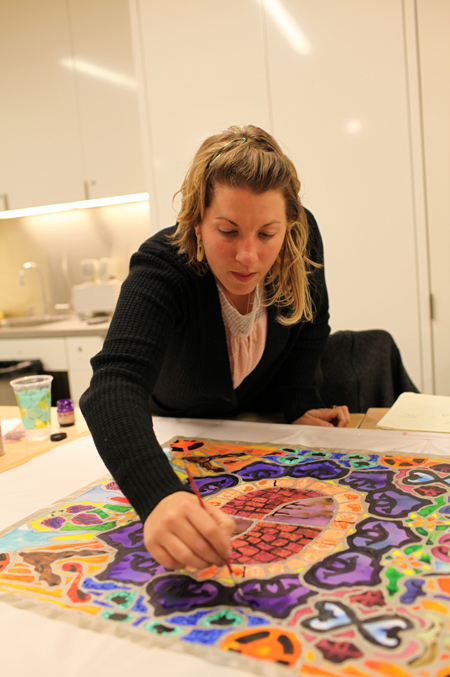
The artist, influenced by how painters interpret windows, often puts the look of a stained glass window on materials like silk.

“I was making [glass art] traditionally … but then as I kept making the work, I realized I wanted to take the stained glass in the leaded window into another world altogether,” she said.

Hookway lives in Columbus and has heard of PechaKucha Nights, but never attended.

“It’s a platform where all the disciplines can find a way to fit together, so that’s a really strong part of it and I’m hoping I’ll learn something I hadn’t considered,” she said.

At press time, other presenters include Karen Ranney Wolkins of the Toledo Botanical Garden, Adam Goldberg of Gathered Studio, Amy Fidler of You Are Here Toledo/AIGA Toledo and Aesa Bjork, a glass artist. The event is sponsored by Toledo Free Press, Erie Construction Mid-West Inc., DoxSystems, Paul R. Sullivan Jr., AIA LLC, Law Office of Gretchen DeBacker and tart :: projects.
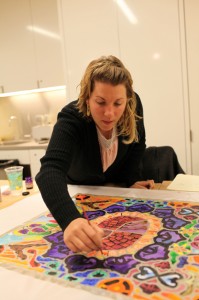
Samantha Hookway

Adams is still looking for presenters for June 12. The only requirement of presenters is that they use images and send Adams a statement to [email protected].

The minimum number of presenters is 10 and the maximum is 16.

“[PechaKucha is] pretty wide open. It’s just a platform for people to share their ideas, you know, get it out there. With as much as we’ve got going on here, it’s a great way to inform the community of what’s happening,” Adams said. After June, the next PechaKucha Night is set for September and Adams hopes to get Rep. Marcy Kaptur to present.

PechaKucha Night is 7:30-10 p.m. June 12 at the Toledo-Lucas County Main Library, 325 N. Michigan St. Admission is free.

For more information, visit www.pecha-kucha.org/night/toledo/.

South Toledo Community Center seeks new home

0
The end of a lease has the South Toledo Community Center looking for new options for a home, Toledo Free Press photo by Caitlin McGlade.

For two years, the bulky gray church at the corner of Walbridge Avenue and Broadway Street has stood as an uplifting symbol for thousands of Toledoans crushed by the South End’s decline.

But this will likely change by the end of the year, when Cherry Street Mission’s lease expires with Moawad Ball Holdings, LLC, the firm that purchased the building in 2006.

The firm bought the building at 1411 Broadway  St. for $140,000 but has since put as much as $15,000 into the property and has accumulated debt in mortgage and taxes, said William Lowry of the Moawad Group, which operates Moawad Ball Holdings.

The company recently paid off property taxes for the building, after going from 2009 to 2012 without paying any, according to the Auditor’s Real Estate Information System (AREIS).

Pastor called ‘joker’

The South Toledo Community Center, which is run from the church, partners with Cherry Street Mission. The mission pays the rent and Pastor David Kaiser and his wife Kelly of Western Avenue Ministries operate the programs for low-income neighbors and the church services.

Rent costs $1,500 a month and Dan Rogers, president and CEO of Cherry Street Mission, said operating the outreach ministry would be more affordable if the partnership could buy its own building. Kaiser offered to buy the property  for what Moawad Ball Holdings paid for it in 2006.

Lowry called Kaiser a “joker.”

“I’ll be darned if I’m going to put more money into his pockets,” Lowry said. He said the firm already subsidizes $1,000 a month of Cherry Street Mission’s rent. The mortgage costs $2,500 a month. Between the mortgage, the debts and the investment pumped into the building, Kaiser was told he would need $384,000 to purchase it.

That’s just not doable, Kaiser said.

“The fundamental thing is that they bought the building in 2006, at the height of the real estate bubble,” Kaiser said. “It feels like greed.”

The building, with its dated infrastructure, has needed a lot of work throughout the years. When asked why the firm owns the building, Lowry said,“Stupidity.”

Different approach

Sam Moawad of Moawad Ball Holdings has a different approach. Moawad bought the building when a church came to him asking for help finding a place to locate.

“We like to get involved in ministries,” Moawad said. “We’ve been involved in the community and we know the cash flow and the economy is hard for everybody.”

He also owns a smaller church on Western Avenue that he bought for $22,500 in 2005. Lowry said at least $60,000 in repairs went into that building. Moawad said his company has borrowed money to subsidize much of Cherry Street Mission’s building expenses for the church because the mission does great work for the community.

A new real estate sign stands in the building’s front lawn. Moawad said if he sells the place he wants to sell it to another church group.

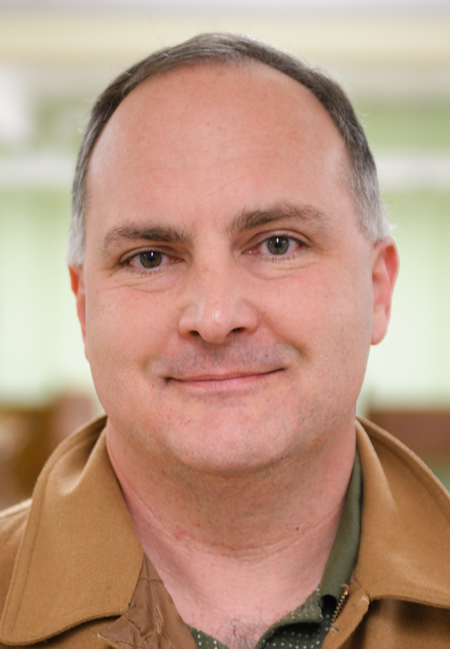
David Kaiser

Parenting classes have coached almost 130 moms and dads — as young as 14 years old — about discipline, self worth and gearing their kids toward college.  Another program has offered hours to at least 60 welfare recipients to clean and cook, so they can meet the government-mandated work requirements to receive cash assistance.

The kitchen sent groceries home to at least 10,000 households last year. On average, the South Toledo Community Center serves 167 meals a day.

Outreach workers have knocked on countless doors to connect struggling Toledoans to aid services. Spanish-speaking workers have hit up the Hispanic neighborhoods, helping to bridge the language barrier between service providers and Toledoans who speak little English.

Talk of a free clinic in the second story had evolved into more concrete plans just last month, with a handful of doctors meeting to discuss logistics and equipment needs. Kaiser had also intended to set up a day care in partnership with the YMCA.

“But our hopes to transform the South End are in limbo,” Kaiser said. “At the end of this year, we’re going to have sort of nowhere to go.”

Kaiser has a few options. The nearby Queen of Apostles offered to host the parenting courses and church services, but Kaiser said he fears that numbers will dwindle without the soup kitchen and food pantry.

Other buildings that might seem like options are older and mostly dilapidated. Kaiser was considering the La Garza building but repair costs could be immense. The block of brick buildings surrounding La Garza was constructed when Abraham Lincoln was president, Kaiser said.

Up in the air

As for the free clinic? The day care? It’s all up in the air for now.

“These ideas have been in the brew for so long and I’m so confident with every closed door, a door will open,” Rogers said.

The top priority is to keep services long-term — to implement a 12-to-15-year plan so that the outreach can cut through generations of poverty. The partnership between Kaiser and the mission will continue, Rogers said.

‘I’m going to be lost’

Gege Sprague depends on it continuing. But she has a weak knee and no car — and if the church moves too far she’ll have to stop going. Sprague, 52, lives down the street and her morning routine every day for the past two years has included breakfast from the soup kitchen.

“Whenever this church is open, I’m here,” she said. “If they take this away from me I’m going to rot — I’m going to be lost.”

Baby University, the parenting class, has educated her niece and her son. She eats many suppers at the soup kitchen and attends every church service she can. In a life challenged by two deaths — her son and spouse — and the subsequent years of working two jobs to support her three other kids, Sprague finds solace and healing behind the Broadway Street building’s doors, she said.

Kaiser said many of his attendees face a similar plight: They don’t have transportation. Making it a mile down the road on foot often hinders people in the neighborhood from making medical appointments or getting to the drug store, he said.

“If the new place is not within walking distance, I’m going to have to say goodbye,” Sprague said.

Toledo Police Museum marks one-year anniversary

0
A police van and traffic cop's motorbike are part of the local history on display at the Toledo Police Museum. Toledo Free Press photo by Brian Bohnert.

The voice of the late James “Jimmy” Ogle echoes through the Toledo Police Museum on Kenwood Boulevard. A speaker projects the former Toledo police officer’s yearly Christmas Eve broadcast, urging anyone on duty to be on the lookout for a red-suited suspect:

“Attention all cars and listeners: Be on the lookout for a short, jolly individual dressed in red and trimmed in white, who is constantly saying, ‘Ho Ho Ho,’” he would say. “Subject was last seen operating a sleigh being pulled by eight reindeer southbound from the North Pole. The subject’s method of operation is that he spreads joy and cheer everywhere. If this subject is observed, all units are advised to assist this subject as much as possible. If found, this subject will bring happiness all year long.”

Christmas Eve 2011 was his final holiday greeting to his peers.

A few feet away, Sarah McLaughlin’s “Angel” plays behind a video of late Detective Keith Dressel’s funeral from Feb. 26, 2007. A white hearse drives slowly, flanked by Toledo Police Department (TPD) squad cars. Toledoans look on from the nearby sidewalks.

On the opposite wall, a plaque hangs over a wooden mantel. On it are 30 names, all Toledo Police officers. All were killed on duty.

Ogle, Dressel and more of Toledo’s fallen heroes are immortalized inside the stone walls of the Toledo Police Museum.

Discovering history

The museum, which opened to a crowd of 300 on June 9, 2011, was designed so Toledoans could “discover the history of the Toledo Police Department” and remember those who lost their lives, according to the museum’s website.

“I’ve had many people say [opening night] was like a magical night. It was so rainy the week before we opened, we were afraid it was going to be that way when we opened,” said officer Beth Cooley. “But it wasn’t. That night was the most beautiful, perfect night. Even the mosquitoes were afraid to come out to bother us.”

Cooley, a TPD veteran since December 10, 1993, said officers never forget their start date and they never forget a fallen comrade.

Since TPD’s inception in 1867, 30 men have died while on duty.

“We promised that we will not forget,” Cooley said. “We call it our ‘solemn obligation’ to never let time diminish the sacrifices they have made. That’s the part closest to my heart.”

Remembering those who died too soon, the museum houses kiosks for visitors to read about the fallen officers and the circumstances surrounding their deaths.

“We have a kiosk that tells their stories,” Cooley said. “We have all of their names and their end-of-watch dates.”

For anyone wanting to explore the history of the Toledo Police Department, the museum has a variety of artifacts that showcase the evolution of TPD.

“It’s the history that has been lying around and not told. We have so many things to discover and we’ve only scratched the surface,” she said. “I have always said right now we are glossy front, and the real research and learning comes now.”

Inside, visitors can find everything from a vintage police radio and bulletproof vests to an old jail cell and a 1948 Toledo Police wagon.

Admission to the museum, 2201 Kenwood Blvd., is free.

Resurrection

Cooley manages all business operations and the 40 volunteers who work during its hours of operation. The museum is open Thursday through Saturday, 10 a.m. to 4 p.m.

In May 2010, then Police Chief Mike Navarre put Cooley in charge of resurrecting the museum, which originally stood at 525 N. Erie St. from 1985 to 1994, she said. After years of storing artifacts, Cooley and the Toledo Police Retirees Association put the wheels into motion and opened the museum eight months later.

“It was a perfect storm in a sense. The mayor helped us with the building, which had been vacant at the time,” Cooley said. “It was next to a police substation so it was kind of the obvious choice. It just looked like a museum waiting to be a museum.”

Close to home

On Sept. 18, 1970, TPD Officer William Miscannon was gunned down inside his patrol car during a race riot sparked by the Black Panthers. He was just 33 years old.

His daughter, Diane Miscannon, was only 10 at the time.

After growing close to Detective Dressel’s parents, Larraine and Mike, Diane was not only inspired to help with the annual Dressel Ride, she was also inspired to commemorate the life of her father.

Starting the second year of the Dressel Ride, Detective Bonnie Weis surprised Diane by having all proceeds from the event go to the Officer William Miscannon Scholarship Fund at Owens Community College.

“I started bawling like a baby when they told me,” she said.

After reading about the museum needing volunteers, Diane jumped at the chance to devote her time to TPD history. Though, she was completely unaware of how fate would play out.

“I did it to be closer to my father, but I didn’t even think about it right away that the day I started at the museum was Feb. 21, 2011, the anniversary of Keith’s death,” she said.

99 to go

Cooley said the museum must sustain itself so future generations can experience the city’s rich history.

“We want to be here in 100 years,” she said. “We don’t just want to be here for five years and leave, so it’s important to come up with a feasible plan to sustain ourselves.”

Cooley keeps fighting for the history of the Toledo Police Department.

“We have had an amazing history with some cool stuff that no one’s ever known because they’ve just been tucked away,” she said. “Now we have the opportunity to see how our city has grown through eyes of the police department. When you look back and see history through eyes of police, it helps people understand why we do what we do. Without that, we’re a little less rich.”

Treece: Walker’s win

0

So far, 2012 has led the private industry to a phenomenon rarely witnessed across American history: A large number of businesses in this country are operating at or near their full capacity. Just a month ago, automakers Ford and Chrysler canceled summer shutdowns for a number of plants. Chrysler CEO Sergio Marchionne has been quoted as saying that Chrysler simply can’t produce another car without expanding its capacity — that means building new plants, buying new equipment and hiring new workers.

To the same point, a number of engineering firms that we regularly contact have told us they are being forced to turn down work. Many are quoting so many projects they tell us that if they win all their bids, they’ll have to turn down half of them.

After the 2008 downturn this country lost a number of suppliers, particularly in the automotive sector. Now, years later, production is back to or near the pre-crash peak, but capacity and the number of suppliers remain reduced. As a result, both are being stretched to their limits.

Many firms, it seems, have been backed into a corner where they are producing all they can and don’t want to expand — especially if doing so will require borrowing. While many could pay for expansion in cash, they would likely fund projects with credit, and they don’t want to borrow without a clear outlook on government policy.

For these companies, failure to borrow is not a question of poor credit. While it’s hard for a lot of individuals to get loans lately, this is more common among those with poor or limited credit history. The companies we’re talking about have good profits and plenty of assets to secure loans. They have adequate access to credit, but they don’t want to borrow.

What many business leaders have been eagerly awaiting is a clearer picture of how forthcoming policies will look. For the past four years they’ve had to deal with a growing number of anti-business policies coming from Washington, D.C., and they’re in no mood to expand their businesses and create jobs without knowing that they’ll be able to survive whatever new rules Washington sends down the pike.

In just the past four years the private industry has had to contend with health care reform and repeated talk of Cap and Trade legislation of some variety, plus increased bureaucracy among government agencies and growing compliance costs. That’s not to mention the usual headaches, which have lately grown to include the increased difficulty in attracting skilled workers.

Thankfully, business leaders are finally starting to get a picture of what the environment for business is going to look like in one to three years. Gov. Scott Walker’s victory in his special Wisconsin election is a valid case in point, and it clearly shows two things.

First and foremost, public opinion in this country is undergoing a massive shift. Unions — particularly public sector unions — are losing a lot of their power. Americans are finally beginning to ask what these unions have done lately for their members, and they aren’t impressed with the answers. Membership has fallen pretty much nationwide, regardless of industry, as a result.

Second, Walker’s win in his recall election demonstrates that the voting public isn’t being honest with pollsters. Leading up to this special election, polls showed Walker winning, but only by a 1-3 percent margin. At last count, it appeared that — when all the votes are tallied — he should win by 7 percent or more.

It’s also worth noting that when news of Walker’s victory hit the wires, Asian markets spiked and American futures (our markets had closed for the evening) jumped nicely. Clearly these new trends — like them or not — seem to agree with America’s private sector. Hopefully they will gain the motivation they need to expand capacity and continue growing the American economy.

Dock David Treece is a partner with Treece Investment Advisory Corp (www.TreeceInvestments.com) and is licensed with FINRA through Treece Financial Services Corp. He provides expert content to numerous media outlets. The above information is the express opinion of Dock David Treece and should not be construed as investment advice or used without outside verification.

Area seniors gearing up for 50+ Sports Classic

0
Dorothy Gackstetter and Gary Kidd. Photo illustration by Don Lee from photos provided by the Office on Aging.

When Dorothy Gackstetter attended Genoa High School in the late 1940s, she was told track and field was too hard for girls and not good for their health.

“It was a ridiculous excuse because we were county champions every year and probably would have gone to state,” Gackstetter said.

As the Ottawa County resident approaches her 80th birthday, she will compete in the 50+ Sports Classic at St. Francis de Sales High School on June 9. Gackstetter has participated in the event for nearly 30 years, competing in the 100- and 200-meter race along with longjumping, shot put, discus and javelin.

While Gackstetter was denied the opportunity to attend the state meet as a teenager, she qualified for the Senior Olympics’ state meet in Dayton four years ago and hopes to qualify for this year’s state meet in Cleveland.

“I belong to our health and wellness club, but I don’t go to a gym,” said Gackstetter, who said she once tied former Toledo Mayor Carty Finkbeiner in the 100-meter dash. “I have a bicycle and weights and I do practice lunges at home. I have a horse so I do all those chores, so there’s always something to do to keep me active.”

To train, Gackstetter said she runs around her horse track and uses a sawdust pile as her long-jump landing. She throws a homemade javelin and uses an old cooking stone her mother used while making sauerkraut as a shot put.

“(The Sports Classic) keeps me motivated to do exercises and keep limber,” Gackstetter said. “I look at some people in their 70s and I see how important it is to stay limber and keep active. I like to go to the nursing homes and get more people involved.”

Justin Moor, vice president of planning and program development at the Area Office on Aging, which organizes the event, said there are competitors in every age group, although the highest bracket, 90+, has the fewest. Moor said the oldest recent participant was a 92-year-old man who bowled and competed in track and field.

“It’s really inspiring. Some are out there just to have fun and get exercise. Some are out there to compete with others and improve their times from last year,” Moor said.

Gary Kidd, 65, of Toledo has participated for about four years, usually competing in javelin, shot put, discus and basketball events, which include a three-on-three tournament and foul-shooting contest.

“You end up sharing with and coaching the people you compete with. You’re not just out there to win; it’s more socialization. You learn from other people because you are never too old to learn,” Kidd said. “A lot of my friends have seen me compete and want to be involved because it seems fun.”

Kidd played basketball at Bowling Green High School and competed in track and field at Bowling Green State University. In his first year competing in the foul-shooting contest, Kidd shot 25 for 25 and last year went 23 for 25.

“I know how to go about it psychologically. As we get older we aren’t as fast or jumping high, but we can still do it and we can still function,” said Kidd, who officiates high school baseball, basketball, football, volleyball and lacrosse in the area.

“I keep myself rather active. Part of living a good life is being able to enjoy it, by living an active lifestyle,” Kidd said.

Moor said the number of spectators has increased in recent years, as more and more competitors have been bringing spouses and family members to watch, making it more of a family outing.

Terry Mohler, 82, of South Toledo said, for him, running is a family affair.

“My wife does occasionally [come to watch me] and there are five or six in the family that participate in the road races in the area,” Mohler said. “My wife is a good runner too and I’ve tried to get her to [participate].”

Mohler said he’s been participating in the Classic for about a dozen years. He competes in the shot put and all the running events, adding that he would like to do basketball and table tennis, but it would make for too long of a day.

Mohler ran track and cross country at Central Catholic High School and was on a practice football squad at John Carroll University. He coached track, football and cross country at Macomber High School in the ’50s and ‘60s and has been a member of the Toledo Roadrunners since shortly after its founding in 1976.

“I did 49 marathons,” Mohler said. “On my bucket list was 50, but I couldn’t make that 50. My last one was four years ago, the Glass City Marathon. I just didn’t have the stamina or time to condition anymore. It was fun and I met a lot of people.”

About 220 people competed in last year’s Classic and 200 have already preregistered for this year’s event. The cost to register is $30, and participants get a T-shirt, lunch and a goodie bag that includes a month-long membership to the YMCA. The day begins with golf at Ottawa Park at 7:15 a.m. and continues with events all day until bowling at 5 p.m.

For more information or to register, call (419) 382-0624 or visit areaofficeonaging.com/sports.pdf.

Arts in Lucas County: State funding down, federal funding up

0

As state funding for the arts has decreased in Lucas County, federal funding has increased.

The Ohio Arts Council recently released its 2010-11 biennial report, which details how much funding was given to each county, artist and cultural arts organization in Ohio, from the state and federal governments.

“Our organization has been more aggressively going after federal funding,” said Marc Folk, executive director for Toledo’s Arts Commission.

Lucas County saw its state funding decrease by $25,974 from 2006-07 to 2008-09, from $981,012 to $955,038.  In the same time frame, the overall amount granted by the state of Ohio fell by more than $1 million.

From 2008-09 to 2010-11, the county’s state-provided art funds again decreased dramatically, reflecting further decreases in statewide funds as well. In 2010-11, Lucas County received $592,522 of the state’s $13,188,580, a $362,516 decrease, or a 60 percent drop in a four-year span.

“(Funding) has been going down over time as the economy has plunged nationally and within the state,” said Kathleen Carroll, president and CEO of the Toledo Symphony Orchestra.

For the previous three biennial periods, about 20 percent of the state’s arts funding has gone to administration while the other roughly 80 percent has gone to general subsidy.

Big setback

Folk said the Arts Commission, along with artists and other cultural arts organizations, used to get general operating support from the City of Toledo. The city would provide $600,000-$900,000 to the local arts community and the Arts Commission would receive about $100,000, of which they used $40,000-$60,000 to match with private money to be granted to other organizations, Folk said.

Carroll said this changed after 2000-01.

“When the city went through hard times, they eliminated cultural funding,” Folk said. “That was a pretty big setback.”

Folk said Toledo is the only metropolis in Ohio that doesn’t have a dedicated funding stream for arts and culture. As an example, he said cigarette taxes in Cuyahoga County help fund the local arts community.

Since 2006-07, federal funding provided by the National Endowment for the Arts (NEA) has risen. In 2006-07, Lucas County received $2,937 of the federal government’s $1,598,600 arts funding for Ohio. In 2008-09, Lucas County’s share of the NEA’s $1,788,500 for Ohio rose to $9,404.

2010-11 saw the most drastic increase, as Lucas County received $57,712 of the state’s $2.51 million dollars.

“We’ve been working with a group of the region’s arts and cultural leaders, called the Toledo Area Cultural Leaders (TACL), once a month. We report on federal opportunities with the National Endowment for the Arts,” Folk said. “The chair of the NEA has reached out to different departments … to create a deeper understanding of how artistic places inspire businesses, draw more talented youth, increase the economy. They work with other agencies to have art programs added to grants.”

“Organizations must apply to receive grants from the Ohio Arts Council (OAC) either every year or every two years depending on the grant program,” Amy McKay said in an email. McKay is the Public Information Office Director at the Ohio Arts Council.

“Each OAC grant program has a set of evaluation criteria used to assess applicants. Each application is held up against the evaluation criteria and the applications that are recommended for funding are scored,” McKay said. “The scores are averaged and then presented to the OAC’s board members, the only body empowered to approve grant awards on behalf of the OAC.”

Benefits of the arts

McKay said programs are evaluated to make sure they are serving their intended purpose.

Carroll said she commends the OAC for their push to make the state government aware of the benefits of the arts.

“I’d say that citizens of Ohio should be proud of the work done by the Ohio Arts Council. They have been a force and exemplary [model] for arts councils across the country. In Columbus, the council held its own,” she said.

Folk said the next biennial budget will rise almost $4 million above the

$13 million the state provided in 2010-11.

Even with this state increase, Folk said the Arts Commission is looking at ways to increase its funding and expand the arts in Northwest Ohio.

“Our board has made it a priority to find a way to create a funding stream to create grants to support the community and strengthen the arts in Northwest Ohio, whether it be through the endowment or other mechanisms,” Folk said.

The Toledo Symphony Orchestra relies on the government for .01 percent of its operating costs.

“[Government funding] is not something we count on. Our biggest source is revenue from ticket sales and community generosity,” Carroll said.

“It’s not easy, everybody has taken an enormous hit (from the economy),” she said. “We put a plan in place and our musicians took a 6-12 percent cut at the start of recession. Our service has not diminished to any degree.”

Carroll said she believes it is the arts culture of Toledo that makes it a unique city.

“Any community can have roads and streets and infrastructure. But when people come to Toledo they remark about the art museum, the quality of the orchestra, the opera, the zoo, the metroparks, the ballet,” Carroll said. “All of those make us unique, livable, desirable.”

The biennial report is available online at oac.ohio.gov.

Bell revamping Civilian Police Review Board

0

The Civilian Police Review Board, which was created in 1991 under Mayor John McHugh, has been revamped by Mayor Mike Bell and his administration.

The board has acquired new members and rewritten its policies since January 2011, in the hopes of more effectively acting as “an extra set of eyes and ears for the citizens of Toledo,” Chairman Lisa Canales said.

Canales, who has been chairman for close to 10 years and is the education director for NAMI of Greater Toledo, said the board was created because there were so many conflicts and a huge outcry from people who felt like they didn’t have a voice when it came to the Toledo Police Department (TPD).

The advisory board is in place as a last resort for citizens who do not agree with the findings of an investigation made by Internal Affairs.

“If you have a complaint against TPD, whether it be abusive authority, or an officer looked at you wrong, to other more important things, … you request an investigation by Internal Affairs,” Canales said. “Internal Affairs will look at the police report, contact witnesses and begin their formal procedure as far as formal investigation. Once that is done, they will … decide if the complaint has any merit.

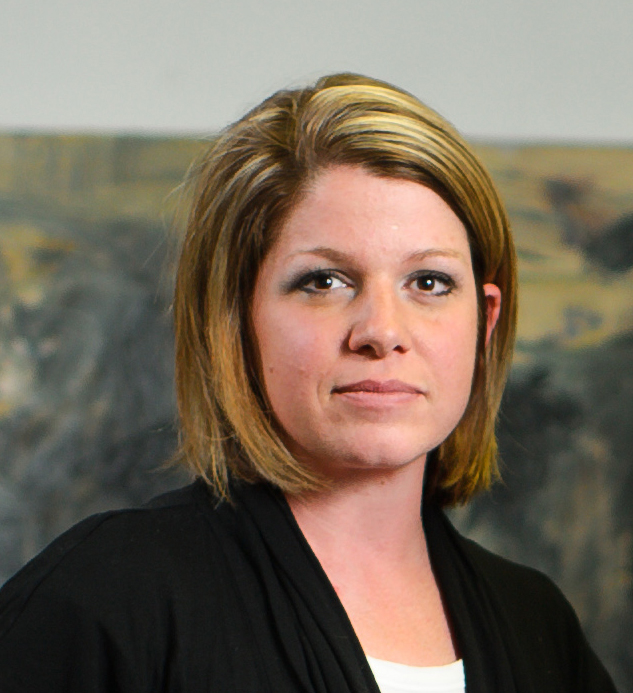
Lisa Canales

“They send a letter to the citizen, … telling them that their last option if they don’t agree with the findings is the Civilian Review Board. They have within 14 days to complete that and then we start our investigation,” Canales said. “We go back and look at [the information] and try to decide if we agree with Internal Affairs and their investigation, which is very thorough and very complete.”

Canales said in her experience, the board has both agreed with and at other times disagreed with Internal Affairs’ findings.

“There have been a couple of times where we have stepped in and asked different questions, like,  “Could you have handled it differently? Could this officer use some sensitivity training?’” Canales said. “It’s a check and balance to make sure everybody is doing their job.”

Vital, but …

Canales said while she feels the board is vital to the community, she does not agree with its role as an advisory board.

“It’s not that it needs a lot of power, but to be an advisory board is not OK,” Canales said. “If we are to succeed, we need to sit at the same table with the same amount of authority, in a sense. I don’t think it should be a board that defines whether or not an officer should be fired or not fired, but it needs to be [elevated] to have a little more meat to it.”

Canales concedes that the board does have more power than it used to, thanks to a positive collaboration with former Chief of Police Mike Navarre. She said there was mutual respect between Navarre and the board, and feels the same support from new Chief of Police Derrick Diggs.

“We would get a case 20 or 30 pages thick, and the officer’s name would be marked out so we couldn’t see who the officer was or any of the witness names. That was one of the things Chief Navarre worked with us to fix,” Canales said.

Canales said it was impossible to judge a case without knowing the officer’s name.

“How do we know if it’s the same officer doing everything or one silly complaint about a good officer?” Canales asked. “Now we can infer if it is an officer that has an issue or not.”

A team affiliated with the board has researched similar organizations in other cities and found that many of them are more active and have more of a say in citizen complaints, Canales said.

Shirley Green, safety director for Toledo, serves as a liaison between the board and the mayor’s administration. She said she does not think there is a need to change the role of the advisory board.

“There would have to be a need for a change to be made and right now there isn’t any need for a change to occur,” Green said. “The board is set up by the City of Toledo Ordinance and its function and responsibility are set by the ordinance, so for [the board] to be changed, [the ordinance] would have to be changed.”

Established through the city ordinance, the board is comprised of mayoral appointments. The volunteer board members serve two- and four-year terms, and may be reappointed for many years.

Melvin Stachura, a retired Toledo police officer who has sat on the board for a little more than a year, said an advisory board is adequate since the board is not handling a lot of cases right now.

“If they’re going to increase the amount of cases then there should be an increase in power or oversight,” Stachura said. “When you’re only getting a couple of cases a year there’s no reason to have (subpoena) power if it’s going to be lightly used.”

Barbara Laraway, secretary of the board and former executive of Parents Helping Parents, said the group is beginning to work well and come together for the community, the first step toward taking on a more active role.

“Our organization will have to work very hard to move from an advisory to have more teeth [in the process],” Laraway said. “We would like to move it but we have to have a good foundation for what we’re doing now.”

Morris Jenkins is vice chairman of the board and chair of the Department of Criminal Justice at the University of Toledo. He has been rewriting the policies of the board to make the process easier for citizens and the responses a little more timely, he said. Jenkins is an active advocate of restorative justice, and said this board is an important piece in bridging the gap between the community and the corrective system.

“When you have a 12-member board, there’s going to be people that don’t know what officers are supposed to do or why they act the way they do in a situation, so we (ex-officers) have the perspective to say why they did something, or why they reacted in a particular way,” Stachura said.

Canales said she makes every board member, with the exception of ex-officers, ride with Toledo police officers twice a year to understand their point of view and what they deal with on the job.

“The board is made up of lots of people that may see things differently,” Canales said. “[Riding with the officers] helps everyone see from that perspective as well.”

More available to public

Keith Jordan, executive vice president and director of development at JLJ Vision Outreach, has been on the board for six years. He said the group Mayor Bell appointed are “doers” who know their purpose is to serve the community and not themselves. He said that right now, the group’s goal is to make itself more known and available to the public.

“I want the community to hold us accountable for our position. I want citizens to ask about our meetings, find out our records, make sure we are hearing cases. We want the community to be aware of us,” he said.

The board is currently working on one case and meets monthly, with emergency meetings called when necessary, Canales said. The board is planning on releasing literature in the next few weeks to area post offices, libraries and other public places to increase awareness, Canales said.

BGSU home to Ray Bradbury collection

0
Ray Bradbury

Science-fiction writer extraordinaire Ray Bradbury may have died June 5, 2012, but he left behind volumes of work — including at the Bowling Green State University’s Jerome Library.

Bradbury, author of “Fahrenheit 451” and “The Martian Chronicles,” died at 91 in Los Angeles. He is largely credited with bringing respect to the science-fiction genre and for weaving eerily prescient tales about the future.

A fellow science-fiction writer and friend, William Nolan spent years collecting Bradbury’s work, dating back to 1936 when the author was a high school student. In 1981, Nolan’s collection found a home at BGSU. The collection includes many of Bradbury’s works, letters, photos, manuscripts and more. More than 120 manuscripts are available in 160 drafts.

The highlight of the collection is the original manuscript of “Fahrenheit 451,” complete with Bradbury’s handwritten corrections, said Lee McLaird, the curator of rare
books at the library’s Center for Archival Collections. The collection also features copies of “Fahrenheit 451” from all over the world, including the Danish “233 Celsius.”

Other Bradbury collections are at the University of Indiana and UCLA. Such extensive Bradbury collections exist because of the author’s willingness to share, McLaird said.

“He was a very generous person. Often if someone admired something of his, he was likely to hand them a copy,” she said.

Bradbury in person
Author of “Gotham City 14 Miles” and Toledo Free Press Star columnist Jim Beard experienced Bradbury’s persona in person — twice. The first time was at the unveiling of the Ray Bradbury Collection at BGSU.

“My dad saw [the donation] was going to happen and he knew how big a fan I was so we drove down to BG,” Beard said.

He remembered when Bradbury finished his talk and stepped off stage, everyone gathered around him in a crowded hush, giving him books to sign.

“Finally he stops and says, ‘Will somebody ask me a question?’” Beard said. “Everyone was in such awe of him.”

It was the teenage Beard who asked the first question, about whether a house described in “The Strawberry Window” was inspired by houses in nearby states (Bradbury was born in
Waukegan, Ill.).

“He described a house that I swear was like the house I grew up in here on Parkwood in Toledo,” Beard said. “He said something like, ‘It was the house we all grew up in.’”

Beard’s second meeting with the author was in the ’90s when Bradbury came to an event at the Toledo-Lucas County Public Library.

“My wife and I went to see him together and that was a more formal thing,” Beard said. “Today, I’m feeling very, very lucky that I got to meet him twice.”

Both McLaird and Beard anticipate a spike in Bradbury’s popularity.

“I’m sad we won’t have any more stories from him but he left us a wonderful body of work and again, I think he bears rereading,” McLaird said.

“When we lose someone like this, it brings to our attention that life is fleeting and we want to be reminded of people who gave us great pleasure in our reading growing up.”

Beard said he discovered Bradbury around age 13 when he read “Th e Martian Chronicles.”

“I had never really read anything like that. You’ll always remember your first Bradbury book because he’s such a unique writer,” he said.

Beard and McLaird also noted that science fiction isn’t the only genre Bradbury did. The writer wrote for pulp magazines and even penned slice-of-life tales.

“Ray was always more concerned with the human quotient than the nuts and bolts in a rocket ship to Mars,” Beard said.

Although the items in the Ray Bradbury Collection “are the ones you come to when you want to do heavy-duty research,” librarians can bring the items out of archives for patrons to view, McLaird said. Exhibits outside of the archival collections on the fifth floor and onthe first floor are being planned, she said.

Th e Toledo-Lucas County Public Library offers 124 different versions of Ray Bradbury’s work in its system, said Rhonda Sewell, media relations coordinator for the library. No memorial has been planned, but a future exhibit is possible.

The University of Toledo Library system has 45 Bradbury titles.

Beard particularly enjoyed onepiece of advice Bradbury gave to writers.

“He always said he wrote every day no matter what and as a writer myself, that’s really inspiring. I would always say to do that, do what Uncle Ray said. No matter how youfeel, get up, write a poem or a song or something,” he said.

The Center for Archival Collections at the BGSU Jerome Library is open from 8 a.m. to 5 p.m. Monday through Friday. To learn more, visit http://www.bgsu.edu/colleges/library/ cac/ms/page44699.html.