Home Blog Page 27

Providence Township considers data center moratorium

0
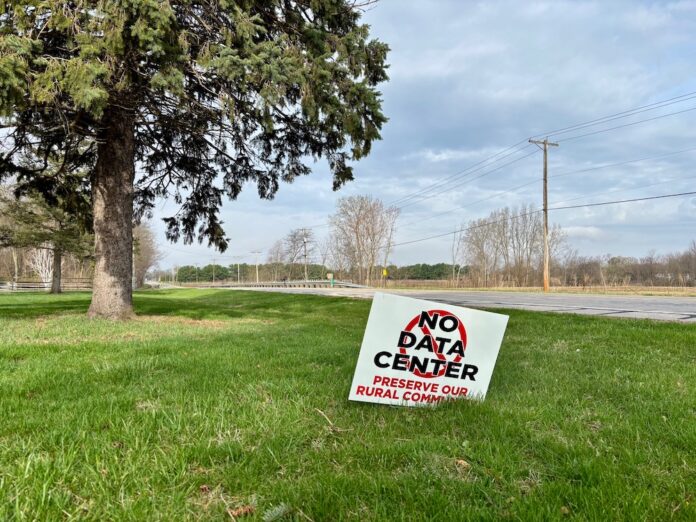
Providence Township trustees will consider a moratorium on data centers during their Wednesday, April 15 meeting. (AWFP photo by Karen Gerhardinger)

PROVIDENCE TOWNSHIP – Providence Township trustees are considering a moratorium on the construction of data centers.

“If we have one, it will gain us some time,” solicitor David Chamberlain told trustees during their April 2 meeting. He plans to review Waterville Township’s 12-month moratorium and create a similar resolution for Providence Township trustees to consider during their April 15 regular meeting.

If approved, trustees need to use that time to come up with language governing data centers to add to its zoning book, said Zoning Inspector Jim Fischer

Providence Township’s zoning book does not currently mention data centers. Trustees Lee Bialecki, Jeremiah Floyd and Steve Kendall discussed options, including whether they could exclude, ban or just not include data centers in their zoning  book.

“You can restrict it, but you can’t exclude it,” Kendall said, adding that while he’s not an attorney, he remembers discussions around attempts to ban adult-oriented businesses a decade or so ago. 

Floyd wondered whether the township could only allow data centers on M-1 Manufacturing – a process that would require rezoning – or limiting them in size. If the township allows property to be rezoned to M-1 and a project falls through, the M-1 zoning would remain, and then it would remain open to any type of manufacturing with little control, Fischer said. 

He recommends following Waterville Township’s lead, and requiring a conditional use permit for data centers to be allowed in A-Agricultural areas, which is the zoning for most of the township. The conditional use permit allows the township and the county to stipulate conditions related to setbacks, lighting, vibration, sound, landscaping.

“It’s bad enough if they end up being here, but at least we have some control in the process,” Fischer said. “The language better be in the book before we write permit No. 1.”

To add zoning language requires at least three to six months, as it gets reviewed at the county and township level, with opportunities for public input. A moratorium would allow time to pause any data center applications until that process is finished. The Providence Township Zoning Commission has been going through a full review of its zoning resolution over the past several months. 

Fischer suggested looking at Waterville Township, for which he also serves as zoning inspector, for guidance. That township enacted a 12-month moratorium in December and appointed a committee of residents to study and make recommendations on data center language and conditions to be added to their zoning resolution.

“The wheels are turning in Waterville Township. That should help in Providence,” Fischer said, recommending that Chamberlain look at their moratorium language as a guide. 

If approved, Providence Township would join a growing list of communities enacting moratoriums, also including Monclova Township and the City of Waterville. At the state level, Ohio Residents for Responsible Development learned last week that it can start collecting signatures to place on the November ballot a constitutional amendment to prohibit the construction of new data centers with a peak load of more than 25 megawatts a month. To get on the ballot, the group needs to collect 400,000 valid signatures from registered Ohio voters in the next 90 days.

During the meeting, trustees also:

-Discussed with Fiscal Officer Julie Ludwig how to handle the continued freeze on a $523,809.23 FEMA Assistance to Firefighters Grant to cover 95 percent of the cost of a new 3,000-gallon tanker/tender. The partial government shutdown is preventing the release of those funds, but Johnson’s Fire Equipment Company notified the township that it would begin charging 2 percent on the unpaid balance beginning April 3.

After a lengthy discussion on options, trustees agreed to pay the amount from the fire fund, and to replace those funds once the check comes through. If needed, the township can take out a loan from a bank to cover payroll and other expenses – much cheaper than the Johnson’s fine. The township also paid its portion of the truck and add-ons, for a total of $66,206.

-Heard an update on the county’s plans to repave Manore Road, and options for dealing with four concrete driveways that extend into the right-of-way.

-Listened to Floyd say that he spoke to the subcontractor installing boxes for Spectrum, as several were being incorrectly place on private property. 

-Heard Kendall and Fischer say that they were contacted by residents concerned about a man living in an RV on a Meredith Street property that has a home deemed unsafe. Multiple agencies have reached out to the resident, who is a veteran, offering assistance, but he has not followed through. A case is currently pending in Maumee Municipal Court.

-Listened to Fischer say that the township’s land use plan was last updated in 2005 – before the rerouting of U.S. 24 and the addition of a S.R. 295 overlay district. The county recommends an update every 10 years. An update would require hiring a firm, estimated at more than $30,000. He noted that Waterville Township obtained a grant to cover their costs.

-Agreed to hire Glick Electric to correct the electrical hook-ups on the township fuel tanks, at a cost of $5,000. Bialecki abstained, as the original work was done by his brother’s company.

-Approved a contract with TrioTech of Whitehouse to provide cybersecurity services at $36 per month, in order to comply with House Bill 96 requirements.

-Heard that the 2024 ambulance wrecked in a February accident on Neapolis-Waterville Road is estimated to need $120,795 in repairs. A new one costs $230,000 to $310,000, said Fire Chief Rick Triggs.

The insurance company will only declare it totaled if repairs add up to more than 80 percent of replacement cost. While insurance will cover the repairs, Floyd said he’s concerned that the costs may increase when it comes time to recertify the equipment that was in the squad, including the lift cot system.

-Heard that the county is considering giving responsibility for outdoor warning sirens back to municipalities. In total, Providence Township has five, not including an old one at the fire hall that is “band-aided” together, Triggs said. If a siren needs to be replaced, he estimates the cost is $20,000 to $25,000. Kendall noted that sirens are becoming obsolete, as most people have cell phones that receive emergency alerts.

Life is Terminal: Micheline Brewer’s debut novel 

0
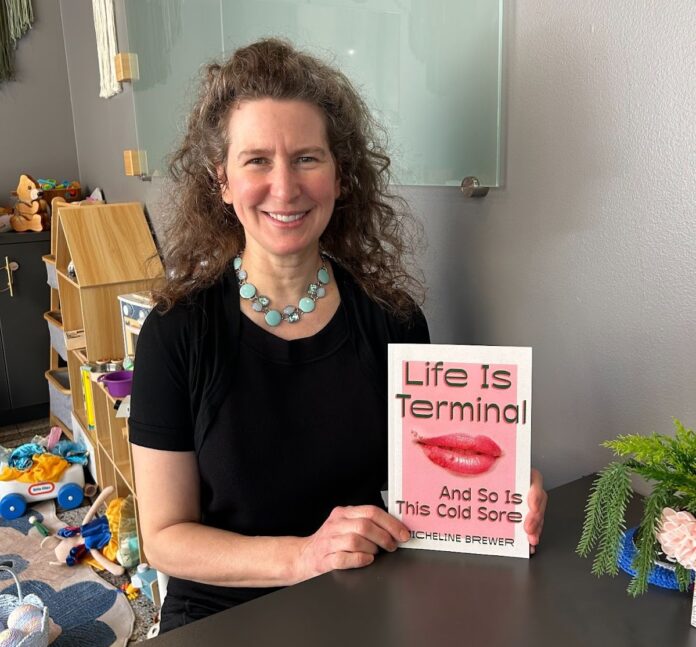
Micheline Brewer holding her debut novel, Life Is Terminal And So Is This Cold Sore. (TFP photo by Samantha Heywood)

TOLEDO – Crafting a novel is a daunting endeavor, but the subsequent challenge of marketing and publishing a final draft is an entirely different world for many authors. Micheline Brewer – a Toledo local and author of Life Is Terminal And So Is This Cold Sore  – found herself wrapped up in this chaos, ultimately choosing to self-publish her work. 

Growing up, Brewer watched her mother produce a novel that never saw publication. Living in a more technologically advanced era, Brewer believed she could bring her own novel to life – fulfilling not only her dream, but her mother’s too. 

“It got to the point where I thought, ‘No one’s getting younger here. What if I just self-publish?’” 

In July 2025, she began working with Book Baby, a self-publishing website that offers global distribution to Amazon, Barnes and Noble, and more. While larger publishing houses have strict deadlines for publication, Book Baby provides more flexibility in publishing and printing written work. 

“I would say they’re a bit more of a printer than a publisher. They communicated with me about the changes I needed to make, but there weren’t any deadlines… It would have been harder to navigate a larger publishing house for my first time.” 

Micheline Brewer’s debut novel. (TFP photo by Samantha Heywood)

By September 2025, Brewer had physical copies of her book at her doorstep and an e-book available online. Her official publication date was in November 2025, allowing for Life Is Terminal And So Is This Cold Sore to be carried by Amazon and Barnes and Noble.

While the self-publishing process was quite quick for Brewer, the marketing side of the journey has been a learning curve. 

“The publishing process was painful, but it was nothing compared to the publicity. Especially since I’m not a social media person… It was an easier entry, but that also comes with more books that you’re competing with at any given time.” 

The creative side 

Life Is Terminal And So Is This Cold Sore is a culmination of prose, poetry, and vignettes that were written at various points in Brewer’s life. Most of the dialogue is intentionally absurd, toggling the line between serious and funny. 

“I’ll come up with a commentary in my head about something I’ve been through.”

Brewer says she keeps “folders” in her mind of strange things she’s seen, someone she met during her time living out west in California, a dating experience…and that’s when she jots down ideas.

“I have several topics that I tend to write about. It probably narrows down to around ten topics. I’ve got the dating, and the marriage, and the dogs.”

With a mix of the mundane and the abnormal, Brewer has crafted a very human book.

“You Can Take This Job…”, the first vignette in the book, portrays a conversation between an interviewer and a hopeful job applicant. The conversation is relatable and silly, ultimately reminding readers that everyone is trying their best to make something of themselves. 

In contrast, “Ode to Your Appendectomy” is a poem that showcases the frivolity of life, inspired by a friend of Brewer’s who underwent emergency surgery. 

“It’s about finding the humor within the terminal life we will all have to go through. We’re all here; we’re all going to not be here. We can at least acknowledge the absurd in-between… One of these pieces should speak to everybody.”

More about the author 

Brewer’s book is available both online and in-store at Barnes and Noble, Amazon, Goodreads, and Kobo. At the moment, she is working on a larger novel that is “dialogue-heavy” and centered around the emotional nuances of interpersonal relationships.


“This next one will be released in a couple of years. It contains more situational dialogue than Life Is Terminal And So Is This Cold Sore. Universal themes such as marriage, work, family, societal norms, and, of course, dogs will be included.”

Cartoons by Don Lee: Data Centers

0
Cartoon by Don Lee

Demolition of iconic bridge: Pleas made to governor & council

0
Save The Bridge Association member Janice Braida and local artist Teri Utz Bersee hold a painting that Bersee completed of the Roche de Boeuf Interurban Bridge. Bersee plans to drive to Columbus to deliver the painting to the governor's office. (AWFP photo by Karen Gerhardinger)

*Update: as of 4/14/26, Gov. DeWine has given a 30-day extension. Read more here.

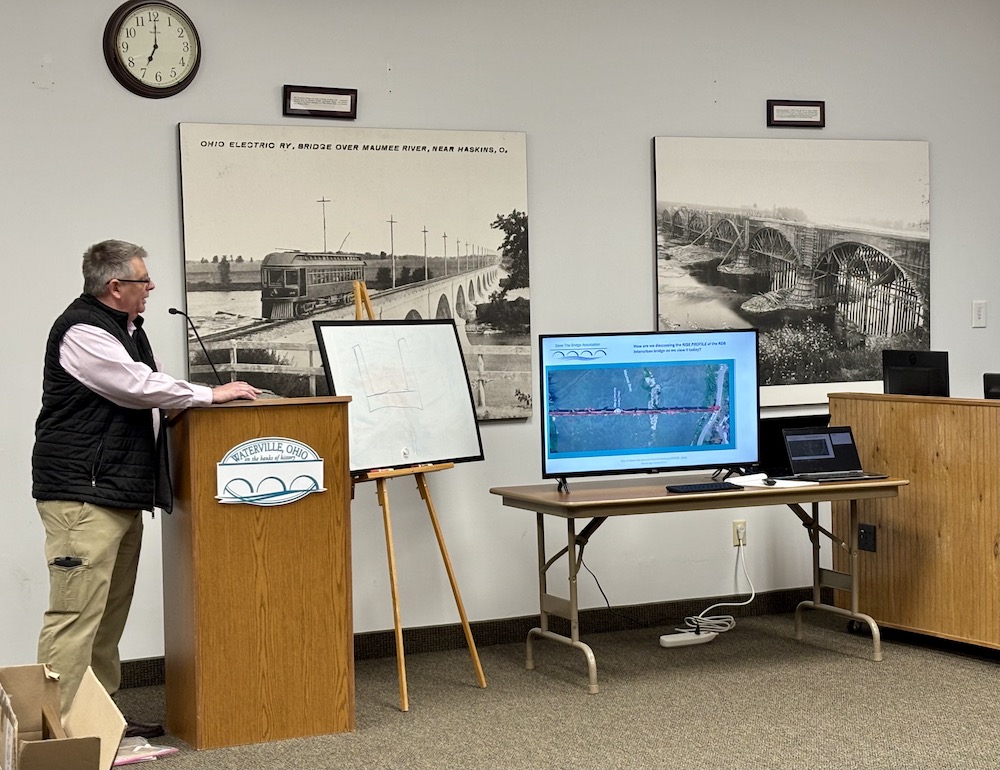
WATERVILLE – Over its 118-year life span, the Roche de Boeuf Interurban Bridge has been a source of transportation, inspiration and exploration. Unless Gov. Mike DeWine reconsiders the March 27 decision to deny a request for another one-year reprieve on its planned demolition, the historic landmark may only be a memory in a few years.

“This is a beautiful asset for our town,” said local artist Teri Utz Bersee, holding a framed painting of the bridge that she is delivering to the governor today, April 7

On April 6, Bersee was one of several presenters during a special Waterville City Council special meeting, called by Mayor Tim Pedro just three days ahead of the Ohio Department of Transportation’s date to open bids from construction companies interested in handling the two-year project to dismantle the bridge. Unless Pedro can sway DeWine with “new information” that will change his mind, those plans will go forward.

“We’re at the 11th hour,” said Council Member Scott Jahns, noting that stone for a causeway under the bridge is already being quarried for the project, set to begin in June.

The 118-year-old Roche de Boeuf Interurban Bridge is set for demolition beginning this June, unless Gov. Mike DeWine can be convinced to reconsider his decision to not allow another one-year pause while supporters come up with a new owner. (AWFP photo by Karen Gerhardinger)

During the 2-1/2 hour meeting, members of the Save the Bridge Association (STBA) presented new plans to stabilize and utilize the bridge .

“We’re talking about an actual preservation project,” said STBA President Barb Bruno, who – along with members Janice Braida, Rex Childers, John Pautz, Bill Vermes and Dave Weber – presented information on a path forward.

Vermes, a civil engineer and bridge inspector who has saved other historic bridges, laid out options for stabilizing the spandrel walls and creating bike and pedestrian paths along the top. Conferring with Pautz, a retired vice president of concrete contractor AA Boos, Vermes said he believes that the project could be done for $6.9 million.

By law, any nonprofit or governmental entity willing to assume ownership and liability for the bridge could be reimbursed with the estimated $4 million set aside by the state for demolition, Vermes said, adding that the project would also be eligible for historic preservation grants to help cover the remaining costs.

Holding up a National Bridge Company book about reinforced concrete bridges by designer Daniel Luten, Vermes said the Roche de Boeuf bridge was built to hold a 45-ton locomotive and last hundreds of years. He rates all but one of the 12 spans to be in fair condition, and notes that with piers embedded three feet into bedrock, there is no danger of a domino effect if one span fails.

It was chunks of concrete hanging from rebar or lying in the Maumee River that caused a Waterville citizen to initially question the bridge’s safety in 2017. In 2018, ODOT hired a private engineering consulting firm to research the condition and, in 2019, held meetings to present nine options and their costs.

The most likely option, as far as cost, is to dismantle the structure, which DeWine noted is in violation of the U.S. Army Corps of Engineers regulations. The only way to save the bridge is to find someone else who wants to assume ownership and liability. While STBA members have repeatedly asked city council, as well as adjoining Wood County and area parks districts, no one has stepped forward.

“These are the same questions that have been here since the beginning,” said Council Member Nick Sargent. “Who is going to own it? Who is going to insure it? Who is going to save it?”

Rex Childers, a member of the Save the Bridge Association and a former insurance agent, speaks about options to provide liability on the bridge. (AWFP photo by Karen Gerhardinger)

Council Member Wayne Wagner asked why the STBA didn’t take it over. As a 501c3 entity, ownership could be assumed by the organization, he said.

“We’re small. You’re bigger. You represent 7,000 citizens and the Metroparks is bigger yet,” Weber said, nodding to Metroparks Chief External Relations Officer Matt Killam, who was in the audience.

Farnsworth Metropark, which garners 100,000 visitors a year, has a scenic overlook of the bridge. “We’re not in the business of owning infrastructure,” Killam said, adding that the Metroparks would be willing to be part of a solution, including aiding with grant applications.

Insuring the bridge has been another sticking point for council. Mary Duncan said she walked the bridge with an insurance agent a few years ago and was told “no way, at any time, would they touch that bridge,” she said, adding that she called other agencies and got the same response.

But Childers, who owned an insurance agency in Waterville for over 30 years, said he believes if the city moves forward with a plan for the bridge’s future use, and can provide information that the engineering is sound, that an insurance company would provide general liability.

“Liability can be mitigated and managed,” Bruno added. “Anything is insurable.”

This isn’t the first time that a group has tried to save and insure the bridge, said longtime resident Diana Waugh, who served on a committee that obtained the historic landmark designation for the bridge in 1974. Efforts to raise the $300,000 to fix the bridge at the time – and to fine someone to insure it – fell flat. She also got involved when ODOT first announced its decision to look at demolition in 2019.

“Here we are again. It hurts every time we go back and rip these wounds open again,” she said. “I want us to stop the bleeding.”

She suggested turning the bridge into a positive memory, by inviting artists and photographers to capture its beauty to share, or to sell the rubble to the community.

Braida and Bruno countered that history should be preserved, and not just in photos. Sarah Lockyer, a South River Road resident who moved to Waterville five years ago, urged council to look at other successful examples of bridge restoration, and to not give up.

“I love that bridge,” Lockyer said.

With the presentation of a plan to restore the bridge and use it for walking paths, Pedro promised to call DeWine’s office today to share that new information and see if the governor would reconsider.

In the meantime, the city plan to move forward with plans to use two of the bridge’s piers – the ones straddling South River Road – to create a pedestrian bridge and overlook of the river, utilizing federal grant funding.

Toledo means business: New CEO named at Hart

0
Marc Paulenich, chief executive of Hart. (Courtesy photo)

 How the new CEO plans to support the agency’s mission and independent growth

TOLEDO Marc Paulenich was named the new chief executive officer of Hart in January 2026, supporting the agency’s continued growth, independence and success. 

Paulenich follows Mike Hart, who will be transitioning to executive chairman. 

“Hart is a full-service, independent brand transformation agency, with a goal to move audiences from apathy to advocacy through the design and deployment of empowering unified brand experiences,” is the description TFP received from a recent press release from the company. Hart is headquartered in Toledo, with additional offices in Columbus, Washington D.C. and Detroit. 

Paulenich said he moved to Toledo in 2001 after graduating from Hiram College to be closer to his wife. He was looking for a summer position while he worked on his graduate degree at the University of Toledo. 

His neighbor at the time, who was a graphic designer, gave him the suggestion to work at Hart. 

“She said, ‘You’ve got to go talk to those guys at Hart. I’ve known them a long time, and they do wonderful work,’” he said. “I submitted my resume there, got a summer part-time gig and an internship, essentially, for my MBA. Then that led to a full-time job, part-time graduate school and the rest is history.” 

Paulenich has been at Hart for 21 years in total, as he was there for six years, went on sabbatical for about three years and returned in 2011. He has been with the agency for 15 years since his return. 

“There was a desire to give Mike Hart, our owner and longtime CEO, a righthand and someone to complement what he was doing,” he said. “So I came back in a role that was one-half leadership in terms of operations and overall company strategy, but also one-half practitioner, and I was still wearing the hat of our head of strategy and engaging in a tremendous amount of client consultation, improving that product, etc.” 

Paulenich went through multiple senior leadership roles, helping the agency’s independent growth and guiding it through meaningful evolution. These roles included senior vice president of strategy, president and chief operating officer. 

“Five years ago, we made the pivot where Mike, who was the president and CEO, took the president title and gave that to me, and that was kind of part of the plan succession,” he said. “With that became some measure of decreased responsibility from day-to-day client work and in the product per se, and more and more effort focused on where we’re going next, how we continue to evolve and where our growth comes from.” 

As the president, Paulenich helped Hart with an expanded presence and sustained revenue growth. Hart was also named a 2023 Top Workplaces Winner by the Toledo Blade during that time for continuing to invest in its people-first culture. 

Paulenich is currently writing a book that will debut later this year, strengthening Hart’s commitment to forward-looking strategy and thought leadership. 

“It’s a philosophical exploration and research-driven narrative around this moment that we are in from a marketing perspective, and I’ve kind of branded this as how to move consumers from apathy to advocacy,” he said. 

He said more and more media and AI are being consumed these days, causing consumers to burn out, and it’s becoming harder to cut through that to attract customers in the way brands used to, so they have to pivot. He said his book will help answer the question of how to make customers feel aligned with brands. 

“The book is intended to help demonstrate how you can move them [consumers] through these four different areas that ultimately move them from being a more apathetic consumer who just doesn’t really see any difference between brands, to this place of advocacy where they become strong, loyal fans and ultimately help those brands themselves grow long-term.” 

Paulenich said his new role as CEO is a continuation of the direction that Hart has already been heading in, with a bit of refocused intention and long-term plans. He said the ability to tackle another era of change while using some of the same skills and expertise is exciting.

“It’s probably all wrapped up in this ability to continue to operate almost like a fresh-face startup, and having that mindset is what allowed us to move from the organization that was a third of what we are today, and pivot and move and evolve and grow in a moment of tremendous change,” he said. 

Paulenich said that with the changes in consumer behavior and agencies selling out, Hart is staying independent and staying committed to the model they have created over time. He said making smart investments in strategic capabilities, creative capabilities and the right technology along the way is what the business has been built on and will continue to be built on.

Toledo Works: Inside Toledo’s libraries

0

Episode 6 of Toledo Works

The Toledo Lucas County Public Library has been celebrated for its contributions to our city and throughout the county. Along with promoting literacy as all library’s do, it can be surprising to learn about the array of services the organization provides. In this episode, Jaden Jefferson speaks with Cathy Bartel, the Library’s Director of Public Service, and Zachary Huber, Fact and Fiction manager at the Main branch.

Everywhere in Toledo, you’ll find people who play a role in making our city tick – from hospitals and factories to restaurants and art galleries – and behind every person is a story. Our program, Toledo Works, highlights those stories from workers’ firsthand accounts. Each week, Toledo Free Press hosts Jaden Jefferson and Stephen Zenner focus on a different topic within the Toledo workforce, exploring their day-to-day challenges and triumphs.

Transfer options for Lourdes students

0
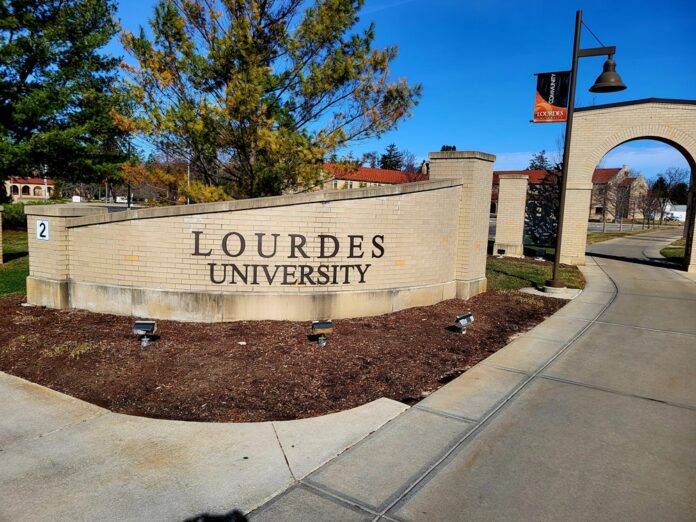
Students had their worlds turned upside down on Wednesday, February 11, when the university's Board of Trustees announced in a press release that it would be closing. (TFP photo by Steven Bieber)

Universities help students find a new home

SYLVANIA – Lourdes University was founded in 1958, and over its 68 years, it has offered students a small, close-knit educational community.

Students had their worlds turned upside down on Wednesday, Feb. 11, when the university’s Board of Trustees announced in a press release that it would be closing as a result of “financial pressures driven by declining enrollment, rising costs, and a funding model that is increasingly unsustainable.”

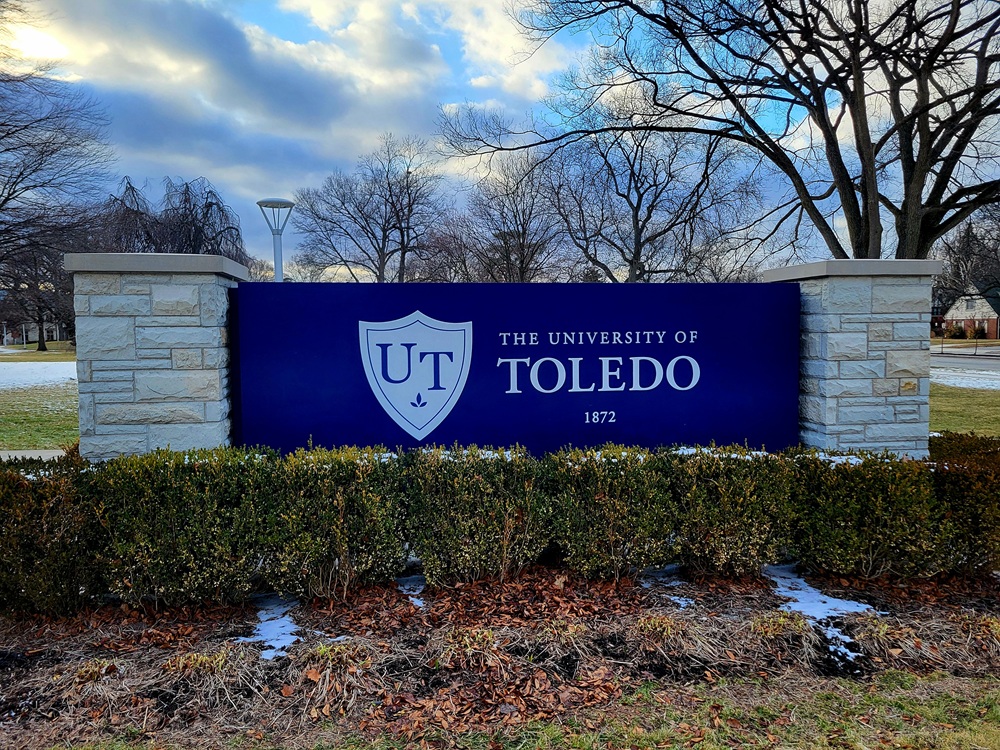
all students in good standing who are interested in transferring to Toledo will automatically be admitted to a program aligned with their major. (TFP photo by Steven Bieber)

University of Toledo commits to students

For students who still need to graduate, their biggest challenge is finding a new college. Fortunately for them, the University of Toledo has stepped up as the primary teach-out partner for Lourdes. This means that all students in good standing who are interested in transferring to Toledo will automatically be admitted to a program aligned with their major.

A teach-out agreement allows students to easily transfer credits and financial aid. Students will be placed in the same program or one that is closely aligned with their major. The agreement ensures that all of a student’s credits will transfer to the university. A teach-out agreement is designed to reduce the headache of transferring schools and to save students money.

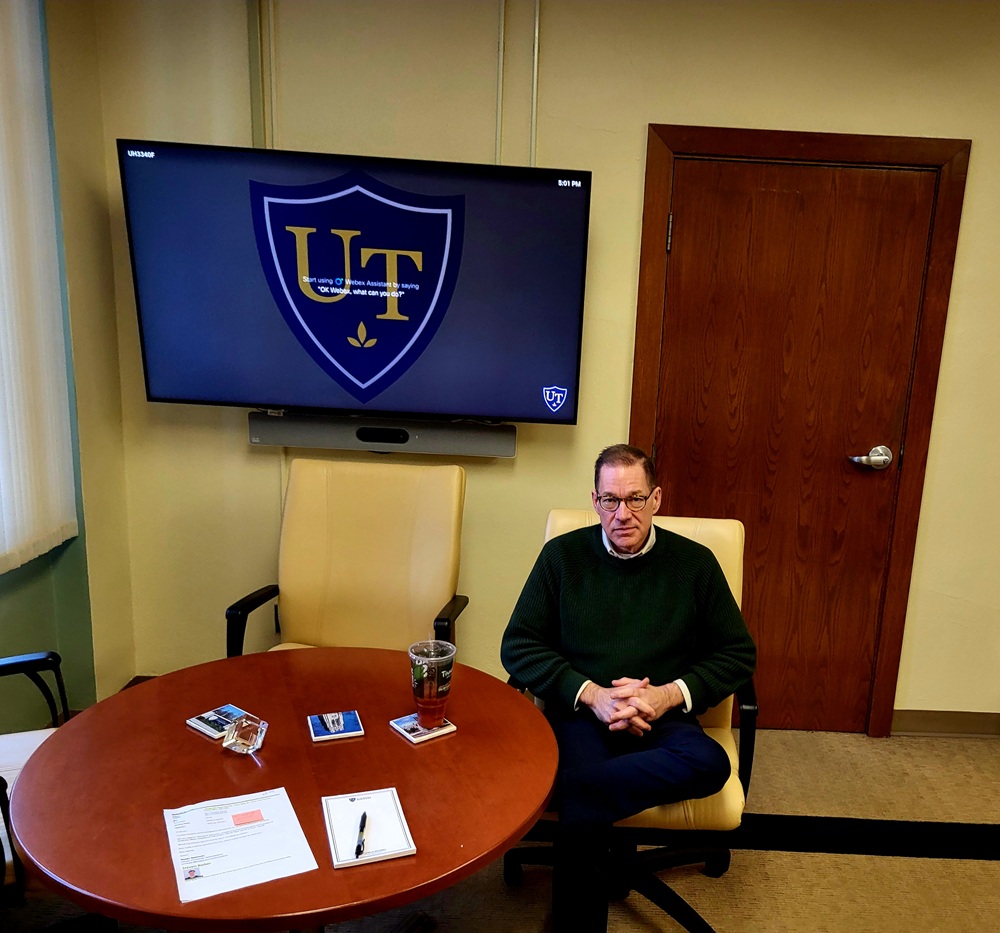
Dr. Mitchell S. McKinney, provost and executive vice president of academic affairs at the University of Toledo, in his office on the third floor of University Hall. (TFP photo by Steven Bieber)

Dr. Mitchell S. McKinney, provost and executive vice president of academic affairs at the University of Toledo, said the university did not hesitate to partner with Lourdes.

“Before we saw the numbers per academic program, we immediately agreed and said yes. We will provide an academic home for their students who wish to transfer.”

McKinney clarified that UToledo will be able to take all students at Lourdes who wish to transfer. This is because the approximately 400 undergraduates are spread out among about two dozen undergraduate programs, with some of those programs containing single-digit numbers of enrolled students. He also said the university will hire more faculty if needed.

According to McKinney, one of the biggest concerns coming from students is the difference in size between UToledo and Lourdes.

He said within specific majors, UToledo has “intimate, smaller learning communities that one can be a part of. And so if there is a concern like, ‘Oh, this is a much larger university, a big campus,’ we want to make that experience for Lourdes students to meet their needs so that they understand that they can become part of this campus environment.’” He also added, “Our course sizes are not dissimilar to what the students experience at Lourdes.”

The Franciscan Center at Lourdes University. (TFP photo by Steven Bieber)

McKinney’s advice to students making the transition is to take advantage of the opportunities offered at UToledo. The university is less than 10 miles away from Lourdes and offers the ability to work with staff in a research lab, mentoring for study abroad experiences, experiential learning, and applied learning.

He also said that the university acknowledges that Lourdes students are going through a major disruption they have no control over, and they want to be as accommodating as possible.

Marietta College Offers Transfer Pathway to Lourdes Students

The University of Toledo is not the only place that Lourdes students can transfer to. Marietta College announced in a press release on March 12 that it will offer a transfer pathway for its students, including guaranteed admission criteria, personalized advising, and expanded financial aid opportunities to support timely degree completion.

According to the release, Marietta College will offer guaranteed admission to Lourdes students with a cumulative undergraduate GPA of 2.75 or higher and a letter of good standing from their institution. Admission and academic teams will work individually with each student to evaluate transcripts, optimize transferable credits, and develop personalized plans that help students remain on track to graduate.

Lourdes students will receive the Marietta Promise Award, which will cover tuition and mandatory fees remaining after all federal, state, and institutional aid has been applied. While typically reserved for first-time freshmen, the college will waive that requirement for qualifying Lourdes students. The award is renewable for up to eight semesters for those who remain eligible and in good academic standing.

“Our goal with this partnership is to provide Lourdes’ students with stability, thoughtful advising, and a community that will help them continue the progress they’ve already made,” said Heidi Terry, vice president for enrollment management, in the March press release.

Along with UToledo and Marietta College, there are several more options for students to transfer to. A full list of teach-out and transfer options, along with other helpful resources, is available on Lourdes’ closure page.

Robertsims scores a hole-in-one for community

0
Jack Behnfeldt prepares to tee off on DPC Pebble, a highly-detailed 18-hole replica of Pebble Beach Golf Links on the GSPro golf simulator software. (AWFP photo by Karen Gerhardinger)

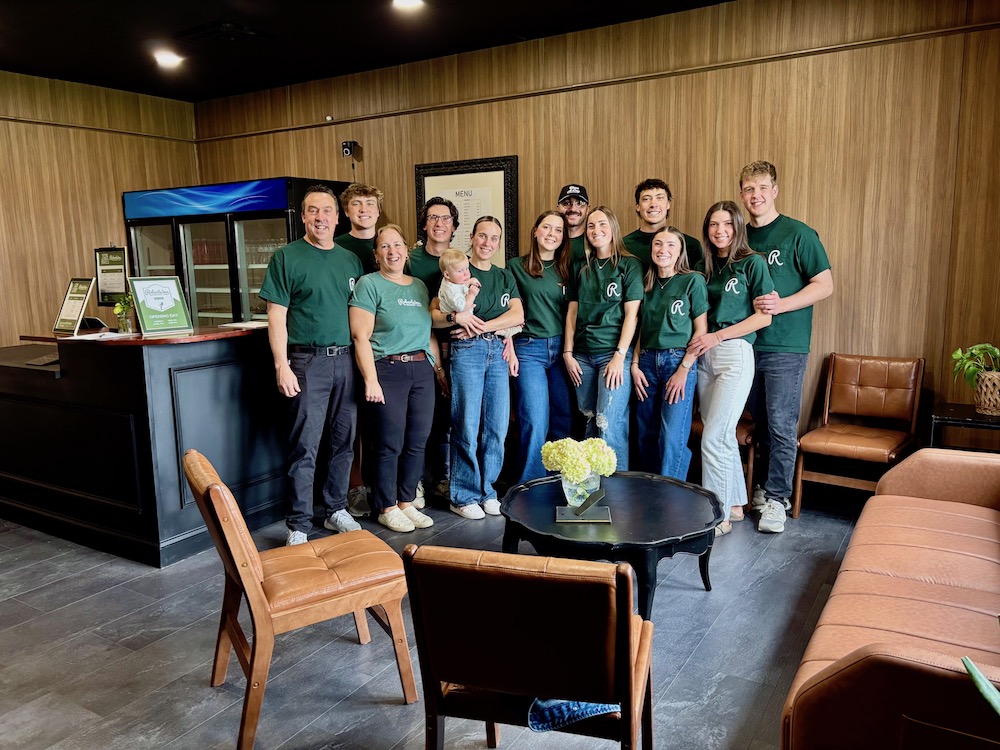
NEAPOLIS – When Scott and Beth Robertson decided to create an upscale golf destination in downtown Neapolis, they found backing from a team of fellow Anthony Wayne graduates – including their six grown children and Clarity.Golf co-owners Carson and Wilson Bales.

“I think it’s great that we’re two locally-owned businesses supporting each other to bring something to the community,” said Beth, as she welcomed friends and family for a preview of Robertsims Indoor Golf last week. “Now we have a place for community to gather.”

Sage Tansel takes a swing at Arcadia Bluffs while his cousin, Deion Tansel, looks on. Robertsims offers more than 2,000 golf courses from around the world. (AWFP photo by Karen Gerhardinger)

When the former pizza place in downtown Neapolis closed last year, the Robertsons were brainstorming with friends to come up with ideas for enhancing a community that’s been home to both of their families for generations. Immediately, a golf simulator business emerged. After all, their children – Joseph, Kitty, Jane, Ellie, Charlie and Ted – all golf and have worked for nearby White Pines, where Ellie is still a manager. 

Ted was a member of the General’s state winning 2023 golf team, while Charlie played in the state title-run two years prior. While playing golf for Lourdes University, both regularly used golf simulators to improve their game, and have extensive knowledge on the benefits of different types of software.

in the meantime, Carson and Wilson Bales moved Clarity into a Waterville warehouse last year, as they expand a business they co-founded with their father, Bill Bales, and two other representatives based in other states. 

Bill is known as a pioneer in the golf simulator world, having previously founded AboutGolf in 2001. AboutGolf paved the way for many simulator technologies, including camera-based systems.

The Robertson family gathers in the lobby of Robertsims Indoor Golf in Neapolis. Each family member has pitched in to help launch the business, which opens on Tuesday, April 7 at 10 a.m. (AWFP photo by Karen Gerhardinger)

Clarity represents the next generation of the Bales’ efforts to further these technologies – utilizing advancements in camera processing and artificial intelligence to ensure golfers have accurate instructional feedback and a realistic experience when stepping up to the tee. Clarity customizes its installations to the needs of customers, ranging from the do-it-yourselfer who wants the basics for a basement, to full build-outs with the best equipment for golf professionals or businesses.

“It really is a lot more accessible, whether you want the high end with the bells and whistles or a tracker in your garage,” Carson said.

While Clarity has customers as far away as Cyprus or England – where they transformed a former squash court in a private school into two sim bays last year – many more are closer to home.

“Over the past few months, I’ve put in two in Whitehouse. With the prices coming down and with people having pole barns and larger houses, people have room for them,” Wilson said.

Clarity.Golf co-founders Wilson and Carson Bales join technician Tyler Benore at Robertsims Indoor Golf – for which they installed the Uneekor system with GSPro Software. (AWFP photo by Karen Gerhardinger)

Each one is unique – whether it’s adapting the layout for an odd-sized room or coming up with technology to meet specific needs. One customer, who had been in an auto accident and has difficulty reaching down to pick up a ball or tee up, had the Bales’ install a special ramped floor with an auto return system, along with a machine to tee the ball up. For a nursing home, they added an interactive tablet with simple step-by-step instructors so that even those unfamiliar with technology could figure out how to play the game.

“There are some basic things we can use to create bespoke solutions for people,” Wilson said.

The Robertsons chose to build the four bays themselves, but called on Clarity to design and install tee pads, screens and ball trackers, using the Uneekor EYE X02 with GSPro software.

“This is a premium product,” said Joseph, noting that its three high-speed cameras provide a realistic experience as players hit into a 10-foot by 15-foot screen.

With the Uneekor and GSPro software, Robertsims has the best data in town, Wilson said. And that data can help all levels of golfers, from amateurs to PGA professionals, improve their game. It’s not just about hitting a bunch of balls –  It’s using the information to practice the right way instead of reinforcing bad habits, Carson added.

“If you’re trying to get two more yards out of a club or you want a backspin to be 10 rpm higher, it’s hard to visualize on a driving range. With ball trackers, you can see if the adjustments you’re making are giving you the effect you want,” Wilson explained.

The more than 2,000 courses on the GSPro give players the option of hitting the links on some of the most famous locations – such as Pebble Beach, Augusta National and St. Andrews – or their local course, such as Belmont Country Club in Perrysburg.

“The GSPro software uses outside guys who build the courses. There are things on there that you won’t find anywhere else, like Bushwood, the course from the movie Caddyshack,” Wilson said, referring to the 1980 classic with Chevy Chase, Rodney Dangerfield and Bill Murray.

Dominic Caraccio takes a swing during a friends and family preview for Robertsims Indoor Golf in Neapolis, set to open on Tuesday, April 7.Watching are his twin brother, Vincent, and friend, Brad Montion. (AWFP photo by Karen Gerhardinger)

During the friends and family weekend, Dominic Caraccio stepped up to the tee and swung a ball at the screen showing the fairway of Tobacco Road Golf Course in North Carolina.

“I like that you can play when it’s cold and rainy outside. And it’s a good group activity,” said Dominic, who was playing with his twin, Vincent, and friend, Brad Montion.

In the next bay, Sage Tansel and his cousin, Deion Tansel took some swings on Arcadia Bluffs. And in another, Jack Behnfeldt was hitting at Pebble Beach.

“When the weather’s good, it’s nice to be outside, but with a simulator, you can play any course, anywhere in the world, and get instant feedback on your numbers,” said Carson, a 2014 AW graduate who played on the high school golf team. 

Sim golf has gained in popularity over the past decade, and Joe Robertson is working with sim golf leagues to book times in the new facility. With comfortable seating and adult beverages now available, he envisions Robertsims as being a regular stop for golfers of all ages, or as a community gathering space for families looking for something fun to do.

“This is exciting for our community. We want joy. We want fun. We want to bring something for families to do,” Beth said, adding that the next phase for Robertsims is to add an outdoor area with picnic tables, yard games, food trucks and entertainment. 

Clarity is also gearing up for growth. As a business facilitator for a patent with the University of Michigan, the next offering will be a chip that goes into a ball to provide data on the ball’s path. It’s just one example of how Clarity works with academia, including the University of Waterloo, Queen Mary Institute and Washington State University, to develop new technology.

“A lot of what our dad focuses on is new technology.  He comes to us to produce it and make those things real,” Wilson said, noting that the Clarity team also works on flight and racing simulators, including building models of the F-35, the Bell AH-1Z helicopter and the Bell Boeing V-22 Osprey for the U.S. Marine corps to use in aviation officer recruitment.

For information on these two local businesses, visit Clarity.Golf and Robertsimsgolf.com – which includes online booking for tee times, leagues and private events – or call (419) 376-7594.

Hope for Toledo health care: NW Ohio Cancer Research Institute 

0
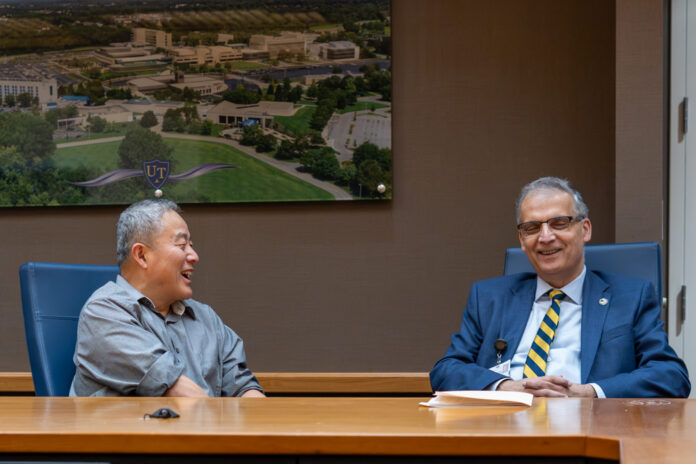
Dr. Jian-Ting Zhang (left) and Dr. Imran Ali sharing a humorous moment during their interview. Together, the two doctors work together on NOCRI. (TFP photo by Lucas Sells)

TOLEDO – According to Dr. Jian-Ting Zhang and Dr. Imran Ali—esteemed medical researchers and professors at the University of Toledo—northwest Ohio is underserved in medical care. For a variety of health problems, patients in the Toledo area are struggling to get the medical answers that they need. 

That’s why the University of Toledo medical team wanted to make a change, ultimately forming the Northwest Ohio Cancer Research Institute. Dr. Zhang—the director of the Northwest Ohio Research Institute—shares the variety of health problems that are plaguing the Toledo area. 

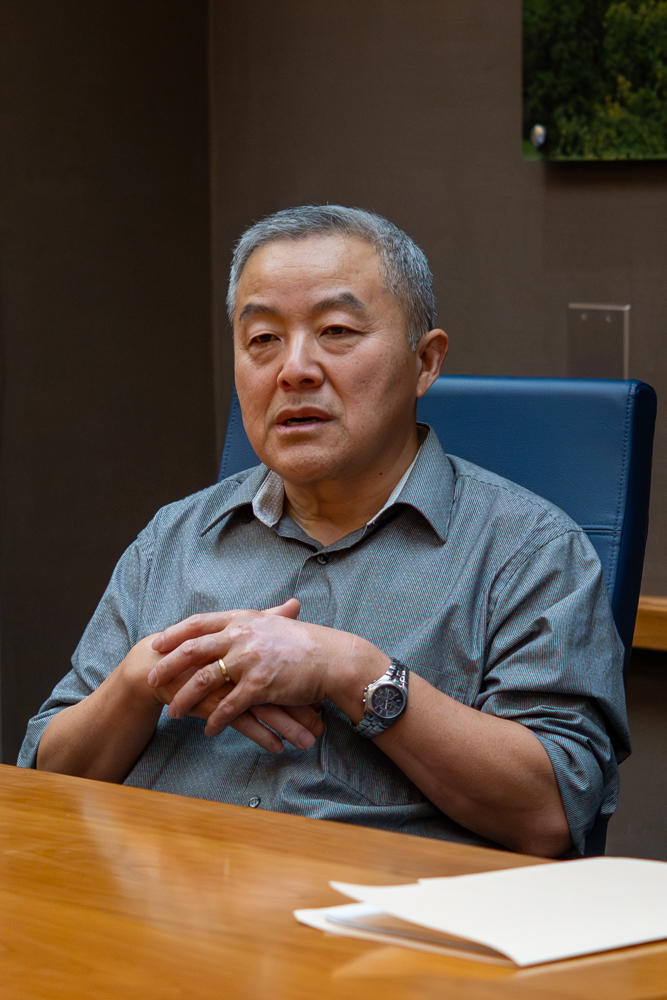
Dr. Zhang is a professor of Cell and Cancer Biology at UToledo. (TFP photo by Lucas Sells)

“Whether you look at cancer or you look at heart disease, people are not receiving the service that they need. We recently had the Lucas County Health Commissioner come and share his report with us, and some of those markers are well below the national average for outcomes.” 

In light of this deficit in care, Dr. Zhang emphasizes the need for interdisciplinary perspectives when facilitating new medical research. With the program only being approved this past December, Dr. Zhang is working to further develop his previous work: drug resistance in the context of chemotherapy

“In my previous work, we were able to discover another drug that targets the enzyme that resists breast cancer chemotherapy. So, I brought my research here and said, ‘If I can do it, anyone can.’” 

The Northwest Ohio Cancer Research Institute was granted $13 million to distribute among multiple colleges at the University of Toledo. With these funds, the college of pharmacy, engineering, natural sciences, and mathematics (to name a few) will make Dr. Zhang’s breast cancer research more tangible for the Toledo area. Faculty, professors, staff, and medical students within the University of Toledo’s circle will all collaborate to bring this research to patients in the area. 

Promedica Hospital is also contributing to the program’s beginnings. Dr. Zhang noted that multiple physicians are a part of the advisory board for the institute. 

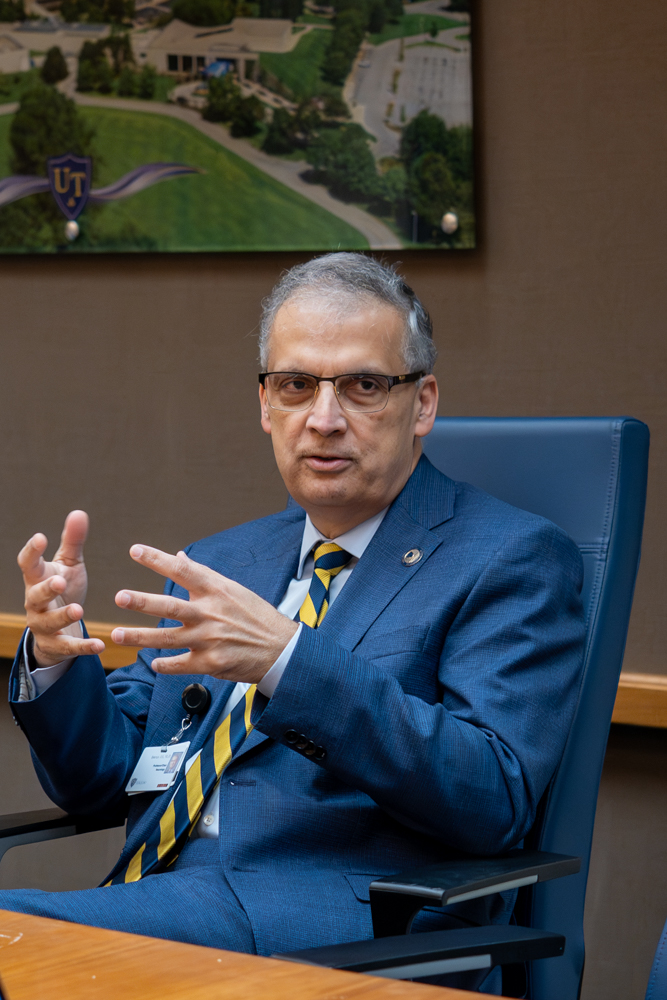
Dr. Imran Ali discussing the ins and outs of NOCRI. (TFP photo by Lucas Sells)

“We have three physicians working on our advisory board, and we have three other physicians taking part in the institute as well. They will help with our tangible, clinical work. We research; they see patients; They will be the hands-on part of the project.” 

The hands-on labor, also known as “bench-to-bedside” work, fosters breakthroughs in drug prevention, diagnoses, and other medical treatments. 

“Whatever we do as scientists in the laboratory (‘on the bench’) gets translated into bedside care.” 

Medical research of this caliber takes time and resources, which is why both Dr. Ali and Dr. Zhang want to advocate for this institute on a communal level. Not only will there be clinical breakthroughs with this research over time, but the economy will also benefit.

“This is a work in progress,” Dr. Ali says. “We are not sure where we will be in a year; however, being an advocate for the university and the institute, as well as our researchers and clinical faculty, will help. This is a University for Toledo, not just a University of Toledo.”

The Great Gatsby: Musical rendition hits the Stranahan

0
Samantha Pauly (center) & cast in the Broadway production of The Great Gatsby. © Matthew Murphy and Evan Zimmerman

TOLEDO – The Stranahan Theater will be featuring eight performances of The Great Gatsby, bringing F. Scott Fitzgerald’s classic story to life for a night of music and fun. 

The Great Gatsby is a Tony Award-winning musical that features marvelous production numbers and melodies. The Broadway musical will be shown from April 7-12, and is recommended for ages 10 and up. 

Joshua Grosso, a musical theater graduate from Carnegie Mellon University, plays Nick Carraway in the musical. His character is a WWI vet who comes to New York looking for a sense of meaning and escape from his past, and serves as the narrator of the show. 

Leanne Robinson, a British actress and singer known for her six-year role as Nabulungi in The Book of Mormon West End production, plays Jordan Baker in the musical. Her character is a quintessential alpha female who is independent, speaks her mind and knows all the right people. 

Noah J. Ricketts & cast in the Broadway production of The Great
Gatsby. © Matthew Murphy and Evan Zimmerman

“When discovering my version of who Jordan was, the word ‘chameleon’ came to mind,” Robinson said. “Bringing her to life wasn’t too difficult, as I consider myself similar to Jordan in some ways. My life has forced me to move around and step into new spaces alone, and that, along with my parents, has allowed me to really develop a sense of confidence in who I am, no matter what room I’m in.” 

Grosso said the musical honors many key aspects of the stories and characters, but it also gives room for a few cast members to expand upon their own decisions and get a chance to develop their characters as people. 

“The development of specifically our female characters offers a different perspective of the story,” Grosso said. “This is simply my own personal opinion, but I always find an adaptation to be most successful when it not only honors the themes and characters of the story, but it also adds onto the already established lore and cultural phenomena that it is based on.” 

The Broadway cast of The Great Gatsby. © Matthew Murphy and Evan Zimmerman

Robinson said the show does a good job of modernizing the classic story, without losing its 1920s essence. She noted how details such as costume choices and the added element of music bring a new perspective to the story.

“Jordan in the 1920s would never wear pants, and even to play golf, women would wear long skirts, and choices like that make the show very cool, fresh and relatable,” Robinson said. “Adding the element of music and dance completely heightens the experience of the story. The stage brings all those elements together and places them right in the forefront, and it makes for a very exciting night.” 

Grosso said it’s a privilege to bring the adaptation of a classic American story to audiences and see how people connect with the material. 

“Veteran readers of the book will get their satisfactory easter egg moments with a few surprises; all the while, those who are unfamiliar with the story hopefully feel inspired to pick one of the most culturally definitive books of the last 100 years.” 

Broadway cast of The Great Gatsby (c) Matthew Murphy and Evan Zimmerman

Grosso said it takes a village to bring such a massive production to life in each city, and it’s a combined effort of their crew and the hardworking, welcoming local crew. Robinson expressed a lot of love to their entire crew, stating it takes an army to get the show up and running every night. 

“Tireless hours of moving, packing sets, washing and preparing costumes and wigs, the list goes on,” Robinson said. “We have so many people supporting us in various ways behind the curtain to make our lives as easy as possible on stage, so we can deliver a stress-free performance for the audiences. We’d truly be lost without them, and quite frankly, there would be no show.” 

Grosso said the fact that he gets to share this production with the audience makes it worthwhile. 

“It’s truly a wonderful, unique experience to not only be a part of the story, but to also get to witness so much of it,” he said. “There are moments in the show where I get the immense pleasure of witnessing my cast members do what they do best onstage, alongside the audience.” 

The Broadway cast of The Great Gatsby (c) Matthew Murphy and Evan Zimmerman.

Robinson said she hopes that audiences feel inspired when they come to see The Great Gatsby. She hopes that audiences have an enjoyable time and feel all the emotions from the show.

“I want people to come to the theater and feel inspired to see more theatre,” she said. “I hope people have a good time, laugh and feel emotions and have a memorable night with us.” 

The Great Gatsby has a run time of about two hours and 30 minutes, with a 15-minute intermission. Free parking is available in the lot around the Stranahan Theater. 

For more information on The Great Gatsby, visit Americantheatreguild.com.