What you need to know about the issues on your ballot for the primary
Between now and May 5, voters have the opportunity to choose which candidates will show up on the November 3 ballot through voting in the already underway, spring primary.
But even if the candidates or parties in question don’t pique interest for voters, there are two levies on the ballot for Lucas County that concern all of its residents.
When voting in the primary, voters will choose a Republican, Democrat, Libertarian or an Unaffiliated ballot. Regardless of that choice, Issues 7 and 8 will be on the voter’s ballot, and they pertain to two separate property tax levies.
Issue 7
Exactly how Issue 7 is phrased on the ballot:
“A majority affirmative vote is necessary for passage.
An additional tax for the benefit of the County of Lucas for the purpose of the operation of a 9-1-1 system and a countywide public safety communications system, that the county auditor estimates will collect $9,230,891 annually, at a rate not exceeding 0.8 mill for each $1 of taxable value, which amounts to $28 for each $100,000 of the county auditor’s market value, for five (5) years, commencing in 2026, first due in calendar year 2027.
For the tax levy ____
Against the tax levy ____”
This levy was approved to be on the ballot in January 2026 to maintain the 9-1-1 emergency services system.
It is a 0.8 mill tax for each $1 of taxable value, on property.
It is about $28 for each $100,000 of estimated property value within Lucas County.
The levied tax will begin in 2026, it will begin to be collected in 2027 and will last until 2031.
Annually, the levy is estimated to bring in $9,230,891.
Commissioners’ discussion on Issue 7
Commissioners spoke during a board of commissioners meeting on Jan. 13 about adding the 0.8 mill.
Lucas County Commissioner Pete Gerken spoke openly about his concern about only putting on a 0.7 mill levy, the recommendation from the Sheriff and Technical Committee, and said the 0.8 mill was required.
“The point seven millage would not generate enough money over five years to operate the infrastructure in the system,” he said.
The millage for this levy is based on 2005 property tax values, which was one issue raised by Gerken. It should also be noted that the 0.8 mill levy was recommended by the Levy Review Committee.
Commissioners Lisa Sobecki and Anita Lopez also supported the 0.8 mill levy, and Lopez said she had done so after conversations with Sheriff Mike Navarre and Stacey Mitchell, the executive director of the Lucas County 911 Regional Council of Governments (RCOG), who runs the emergency system.
“The point seven levy request includes making potential cuts, cuts to a very strong system that we have,” Lopez said. “There was a discussion to whether or not we need all the towers in our area, and that is a little scary to me…I surely don’t want to have to consider years later, there’s an emergency out there, and the reception is not good for us to identify and find someone in need.”
Issue 8
Exactly how Issue 8 is phrased on the ballot:
“A majority affirmative vote is necessary for passage.
An additional tax for the benefit of the County of Lucas for the purpose of the provision and maintenance of zoological park services and facilities, that the county auditor estimates will collect $10,384,752 annually, at a rate not exceeding 0.9 mill for each $1 of taxable value, which amounts to $32 for each $100,000 of the county auditor’s market value, for ten (10) years, commencing in 2026, first due in calendar year 2027.
For the tax levy ____
Against the tax levy ____”
This levy was approved to be on the ballot in January 2026 to maintain the Toledo Zoo.
It is a 0.9 mill tax for each $1 of taxable value, on property.
It is about $32 for each $100,000 of estimated property value within Lucas County.
The levied tax will begin in 2026, it will begin to be collected in 2027 and will last ten years, 2037.
Annually, the levy is estimated to bring in $10,384,752.
Jeff Sailer, the CEO of the Zoo has said publicly that even though this issue presents as an “additional levy,” it is to replace two other levies that expire at the end of 2026. The new levy begins in 2026, but is not collected until 2027, when the other two expire.
Those old levies were for 1.1 mill and 0.6 mill.
According to Sailer, this new levy hopes to replace both previous levies, reduce the total amount the Toledo Zoo receives from taxpayers and hopefully ween the Zoo off of taxpayer support for operational costs.
The levy represents a $25 million reduction in taxpayer funds over its next ten years, and Sailer said any potentially additional levies would only be for capital projects for the maintenance of historic buildings or expansions.
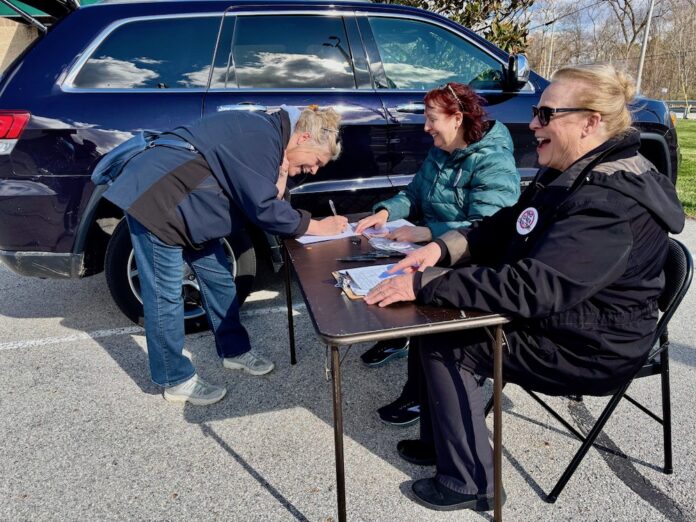
Monclova Township resident Lisa Daggett signs a petition to put a constitutional amendment on the November ballot – one that would ban new, large data centers in the state if passed by voters. Volunteers Risa Sindel and Lyn Cox hosted training and signing events during the week. (AWFP photo by Karen Gerhardinger)
MONCLOVA TOWNSHIP – Road closures, data centers and trail connections were among the topics covered during the Monclova Township Trustees’ April 6 meeting.
Roundabouts
Four roundabouts are being constructed in the township this summer, resulting in road closures of 40-90 days each:
•In mid-May, construction will begin on a roundabout at Albon Road at Monclova Road, resulting in a 45-day closure.
•Late June, or as soon as work on the Albon Road roundabout is finished, crews will begin work on a mini-roundabout at the Monclova Road intersection with Waterville-Monclova, in front of the school. Work is expected to last 40 days.
•Aug. 1, Albon Road and U.S. 20A/Maumee-Western; expect a 90 day closure for a full roundabout.
In addition to those three Lucas County projects the Ohio Department of Transportation is set to begin work on a roundabout at U.S. 20A and Strayer Road, with work beginning after AuG. 1.
A Monclova Township firefighter backs an engine into the station. The department is preparing for taking detours as construction of roundabouts on both ends of Albon Road are slated for this summer. (AWFP photo by Karen Gerhardinger)
Fire Chief Matt Homik was asked about plans to manage calls, especially to 55-and-older communities east of the fire station, when Monclova Road is closed. He’s looking at the option of sending out a smaller, quick response vehicle that can easily traverse the neighborhoods more quickly, followed by larger rigs taking the posted detours on main routes. He also noted that the fire department has auto aid and mutual aid agreements with other communities who will help as needed.
Data centers
During the hour before the meeting, Risa Sindel and Lyn Cox set up a table outside the front door, collecting signatures for a proposed constitutional amendment that would prohibit the construction of new, large data centers in Ohio. The amendment will need more than 413,000 signatures from a minimum of 44 counties by July 1 in order to get on the ballot.
Once the meeting started, several residents asked to speak about data centers, including Cox, Marilyn Campbell, Dianne Stroshine and Donna Zibbel.
“We don’t want our adult playground to change with the data centers,” said Zibbel, referring to the activities she enjoys as a newer resident of Waterside.
Campbell thanked the trustees for imposing a 12-month moratorium on data centers, but asked that each trustee state whether they are for or against such developments – and to provide an update on data centers on each agenda.
“We want to know where we are with the study,” Campbell said, referring to work underway to see how the zoning resolution can be beefed up to protect the township if it receives a data center application.
Zoning Administrator Eric Wagner recently sent four proposed zoning text amendments to the county for review, most dealing with issues that might arise from a data center or large development. Using the MyMonclova app will ensure that residents know of any public hearings planned, Trustee Barbara Lang said. Wagner reports to the trustees the second meeting of every month, and will share updates at that time.
As far as stating an opinion about data centers ahead of time, Lang reiterated that she will not make a statement for or against any project that may come to the trustees for a vote, as she wants to remain unbiased. Trustee Debbie Stevens-Laux said she stands with the residents, and wouldn’t want a hyperscale data center next to her.
“I’m not necessarily in favor of a hyperscale data center,” said Trustee Chuck Hoecherl, adding that he would listen to proposals for smaller, underground data centers the size of shipping containers, which wouldn’t negatively impact residents.
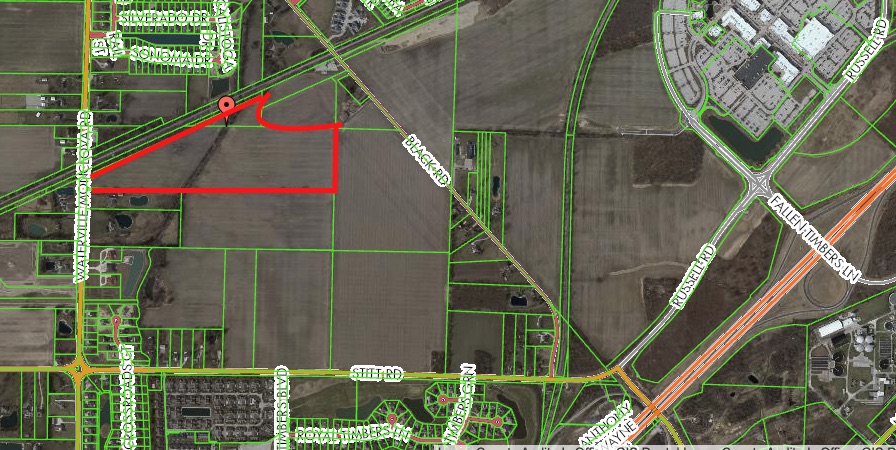
About 39 acres of land owned by James Moline is being considered for housing, according to Monclova Township trustee Chuck Hoecherl.
He also informed that audience that about 39-acres of property between Black and Waterville-Monclova roads – an area that residents have shared concerns is targeted for a data center – may instead be used for single family homes. James Moline submitted a plan to the county for a proposed housing development, he said.
“That’s good news,” said Stroshine.
Cox said she’s been attending other township meetings, and she sees many differences in how they accept public comments, including allowing more than the two minutes allowed in Monclova.
“It’s interactive. I encourage you to attend other township meetings to see how it’s done,” Cox said.
Active Transportation
When Monclova Township residents were surveyed about their top priorities for a land use plan update, multi-use trails and connectivity were often mentioned.
“Monclova Township residents don’t want sidewalks everywhere, but they want access to our amazing bike trails,” noted Lang.
Four representatives of the Lucas County Active Transportation Plan outlined reasons why the township should join their efforts to expand all “human-power travel used for everyday transportation – not just recreation,” according to the plan’s definition of active transportation. This includes walking cycling, wheelchairs and scooters, skating and skateboarding, said Amy Abodeely, a township resident, and Creating Health Communities Coordinator for the Toledo-Lucas County Health Department.
She was joined at the meeting by Beth Deakins, executive director of healthy living for the YMCA of Greater Toledo and two representatives of Lake Erie West Regional Council – Data Resource Manager Rajesh Nagisetty and Program Manager Sean Sammon. All are on the plan’s committee and are working to bring more communities into the fold.
Some of the projects eyed for the township include: extending and marking shoulders; creating consistent sidewalks; multi-use paths; safe crossings; and wayfinding connections. The partnership will enable the township to access planning and grant funding.
The trustees agreed to join the plan, and encouraged neighboring communities to participate in order to get all of the Anthony Wayne area on board with active transportation planning together.
During the meeting, the trustees also:
-Learned that longtime administrator Harold Grim plans to retire April 29.
-Learned that Michael Hampton II is expected to begin in the new position of director of safety services, zoning and projects, effective May 1. Cox questioned the $130,000 salary and the purpose for Hampton’s hiring.
-Approved salary increases for the fire chief, assistant fire chief, maintenance supervisor and all part-time and paid-per-call fire personnel not part of the bargaining unit – which negotiates for pay increases separately.
-Heard Hoecherl thank DGL Consulting Engineers for their 100 years in business. Located on Briarfield Boulevard, the business includes civil engineering, planning and surveying. DGL has worked on township projects and won a national award for The Andersons’ parking lot design.
-Approved a joint cooperation with the county to do long line striping on roads in the township, at a cost of $28,672.
-Heard that the Ohio Department of Commerce, Division of Liquor Control, was asking if trustees had any objections to renewing liquor licenses for permit holders in the township, including: the 180th Fighter Wing NCO Club, Barr’s Public House, Beck Suppliers (Friendship Kitchen), Bob Evans, Brandywine Country Club, Carrabba’s Italian Grill, Ed’s Bar and BBQ, Fallen Timbers Fairways, Loma Linda’s, S&G Stores, The Baker’s Kitchen, Urban Pine Winery and Walt Churchill’s Market. Without any objections, those permits will be reissued.
In this episode, Toledo Free Press Editor-in-Chief Erin Holden sits down with two guests who prioritize dignity and care for all animals in our region. First, Laura Zitzelberger, co-founder of the nonprofit Nature’s Nursery, speaks about her rehabilitation work with Toledo area wildlife that she first began in 1989. Then Erin chats with Rebecca Trumbull, a local photographer and animal advocate who found her niche capturing the lives of our pets, from dogs to farm animals and everything in between.
Everywhere in Toledo, you’ll find people who play a role in making our city tick – from hospitals and factories to restaurants and art galleries – and behind every person is a story. Our program, Toledo Works, highlights those stories from workers’ firsthand accounts. Each week, Toledo Free Press hosts Jaden Jefferson and Stephen Zenner focus on a different topic within the Toledo workforce, exploring their day-to-day challenges and triumphs.
Donald, an individual served by Anne Grady Services. (Photo by Hannah Sellers)
Partnership includes inclusive summer camp for kids and adults
Submitted by Anne Grady Services
TOLEDO – Toledo is built on nonprofits that listen to the needs of the community and design solutions to provide quality of life. Anne Grady Services has continued to expand their scope of care since 1982 for individuals with developmental disabilities. A recent alliance with Courageous Community Services is designed to enhance services and programs across northwest Ohio.
Effective Feb. 1, Courageous Community Services (CCS) became an affiliate of Anne Grady Services (AGS), marking a significant step forward in the region’s continuum of care. In an effort to build a stronger, more responsive system of support rooted in community needs, CCS is now integrated in year-round support for individuals with developmental disabilities. For AGS, this is an additional program available to the over 350 individuals they provide services for daily.
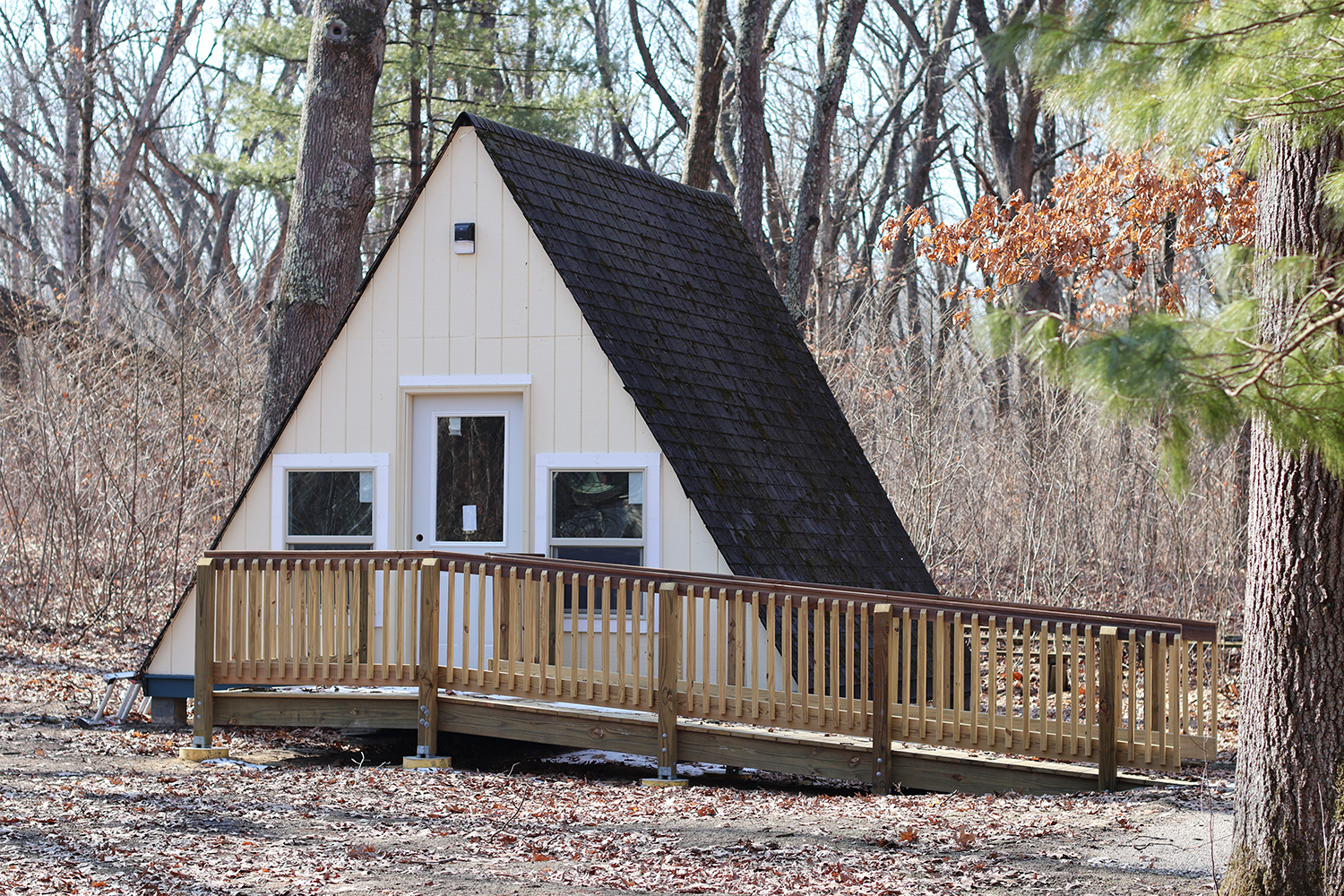
Courageous Acres is an inclusive summer camp located at 1207 Waterville Swanton Rd, Whitehouse. (Photo by Hannah Sellers)
Anne Grady Services offers care and programs such as Intermediate Care Facilities, Supported Living, Therapy, Remote Support, Respite Care, and Day Services. Since the alliance, CCS brings outdoor recreation to the list of services with Courageous Acres, an inclusive summer camp for children and adults.
At the heart of the collaboration is a shared commitment to providing individuals with developmental disabilities a full, well-rounded life that goes beyond basic care to include meaningful work, social engagement, recreation, and personal growth.
“We are excited about our new alliance with Courageous Community Services. The opportunities this presents to both organizations and what we can do together,” said Steve King, CEO of AGS.
(Photo by Hannah Sellers)
By integrating services, AGS and CCS aim to create a more seamless experience for individuals and families. This includes expanding access to employment programs, residential support, day services, and life-enrichment opportunities such as community outings, travel, and creative programming.
In reference to a long-time camper, Laura Kuhlenbeck, managing director at CCS, shared, “His parents would drive up every week for five weeks. With the Anne Grady respite program, they would only have to drive up every couple of weeks which takes a lot of stress off them.” Both organizations believe that everyone deserves to live a well-rounded and fulfilling life.
A defining feature of the partnership is its emphasis on community voice. Both organizations have long histories of engaging families, staff, and individuals in shaping programs, and leaders say that commitment will only deepen moving forward.
Isaac does a bit of crafting through programming at Anne Grady Services. (Photo by Hannah Sellers)
Shelby Mallory, development manager of AGS said, “Through our strategic alliance with Courageous Community Services, we’re expanding opportunities for both children and adults with disabilities. This partnership allows us to offer more comprehensive, lifespan services, meeting individuals where they are and supporting their unique interests. From residential care, respite, and therapy to employment, transportation, leisure, and now summer camp, we’re proud to provide high-quality, full-service supports grounded in dignity and respect.”
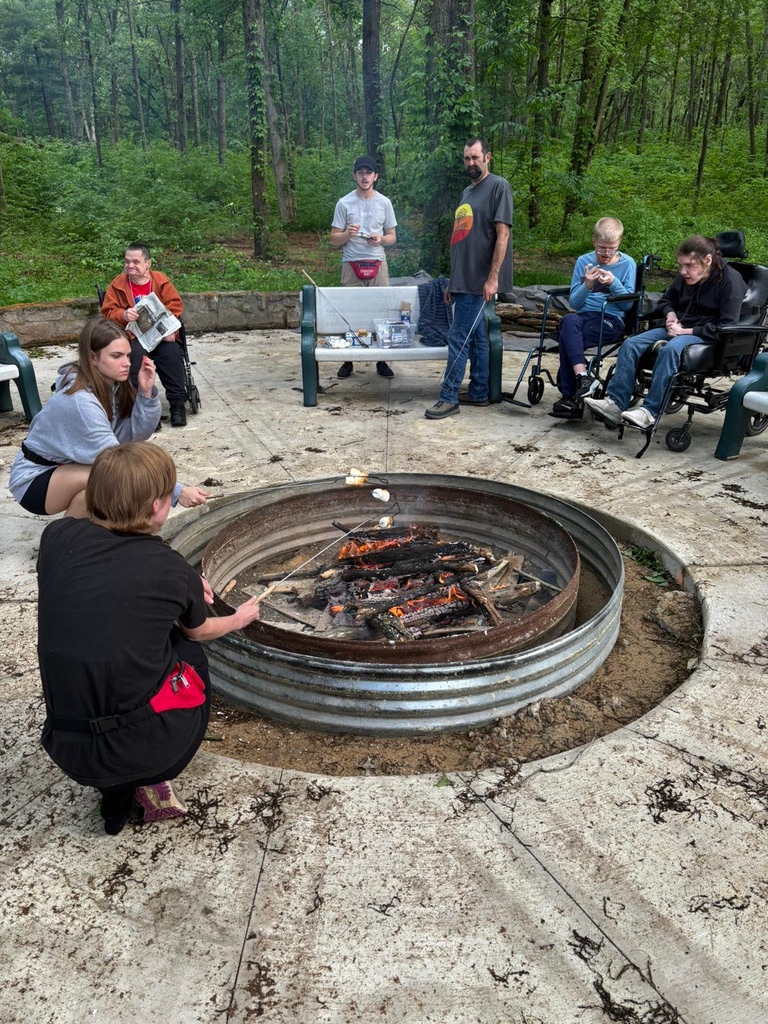
Campers at Courageous Acres enjoy making s’mores by a campfire. (Photo by Hannah Sellers)
While CCS now operates as an affiliate of AGS, it will maintain its mission and identity, preserving the legacy it has built within the community. At the same time, the partnership provides access to greater resources, shared expertise, and operational efficiencies that position both organizations for long-term growth.
For families and individuals receiving services, the transition is designed to feel additive rather than disruptive, enhancing opportunities without losing the personal connections that define both organizations.
With a strengthened foundation and a unified vision, Anne Grady Services and Courageous Community Services are positioning themselves not just as service providers, but as partners in building a more inclusive community. A community that listens, evolves, and ensures that every individual has the opportunity to thrive.
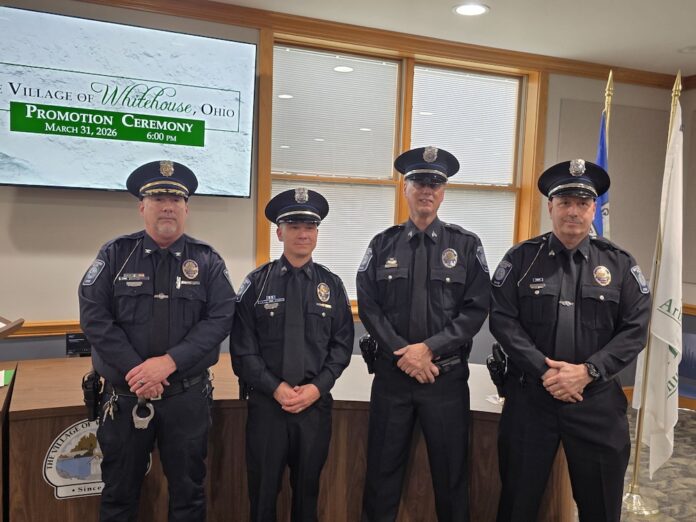
Police Chief Allan Baer pauses for a photo with new sergeants Andy Kasack, Jeff Siebenaler and Les Case. (Photo courtesy of Kelly Norris)
WHITEHOUSE – When Whitehouse Village Council meets on April 21 to consider rezoning 37.99 for a proposed 80-home subdivision, their task is not to determine lot widths or layouts, but whether the zoning makes sense, Law Director Kevin Heban advised during council’s April 7 meeting.
“You’re voting on the zoning change only,” Heban advised, as members held a second reading of ordinance 04-2026.
The proposed change for 11320 Archbold Whitehouse Rd. from S-1 Suburban to R-2 Residential attracted residents of nearby Oakbrook Drive, Waterville Street and Centerville Street, who shared concerns that Charlie Grass‘ plans for Country Meadows South will impact traffic, safety and the schools.
Craig Whitman questioned a drawing that he saw online, and speculated that Grass would need to ask for variances for several lots that he believes would be closer to an R-2 PUD zoning that was previously turned down.
“Have plans been submitted for approval?” asked Council Member Louann Artiaga.
Heban clarified that the drawings were just temporary, not final – and those would need to be approved by the Planning Commission and council. The rezoning is just the first step for the housing subdivision to come to fruition.
“While I’m mostly, personally against the development, I do recognize people want to move to Whitehouse for the better. I did six years and don’t regret it at all,” said Oakbrook Drive resident Mark O’Neil.
Both O’Neil and Whitman believe that adding 80 homes will add an estimated 160 cars that will increase traffic in and around the Oak Brook neighborhood. O’Neil suggested that the police step up patrols and the village look at adding speed bumps. He also questioned the impact on a school district that he believes is “approaching capacity.”
According to Anthony Wayne Local Schools Superintendent Kevin Herman, enrollment is actually down, from a district high of 4,631 in 2008-09 to 4,127 in the 2024-25 school year.
“Whitehouse is built for approximately 500 students, and we should be able to accommodate new students,” Herman said.
O’Neil also addressed Grass personally, suggesting that if someone from Artisan Built Homes had contacted neighbors initially to lay out his plans, that would “go a long way” in building relations and opening dialogue. Grass, who was at the meeting, did not comment.
During the meeting, council also:
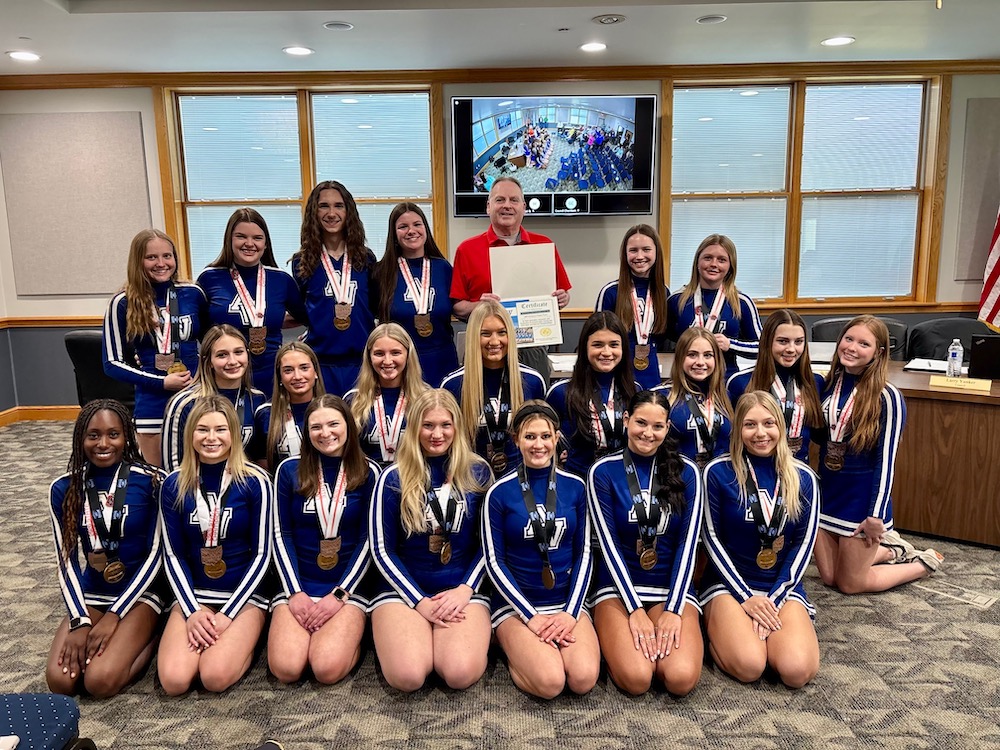
The Anthony Wayne High School cheerleading team, which won both national and state titles this year, was recognized by Whitehouse Mayor Rich Bingham during the April 6 Whitehouse Village Council meeting. (AWFP photo by Karen Gerhardinger)
-Congratulated the Anthony Wayne High School cheerleading team for winning the National Cheerleaders Association Game Day Championship – a first in school history – and the Ohio Association of Secondary School School Administrators state cheerleading competition.
-Discussed the Fallen Timbers Union Cemetery District report given by Council Member Larry Yunker. Two of the three district board members are new, and are picking up discussions on whether the contractors who take care of the five area cemeteries should be hired as full-time employees and how that would impact the budget.
-Heard that the Board of Zoning Appeals approved a variance for a garage to be built at 6214 Cemetery Road.
-Set a Tuesday, April 14 Committee of the Whole meeting to discuss e-bikes, a sidewalk plan, a summer meeting schedule and a DORA – designated outdoor refreshment area.
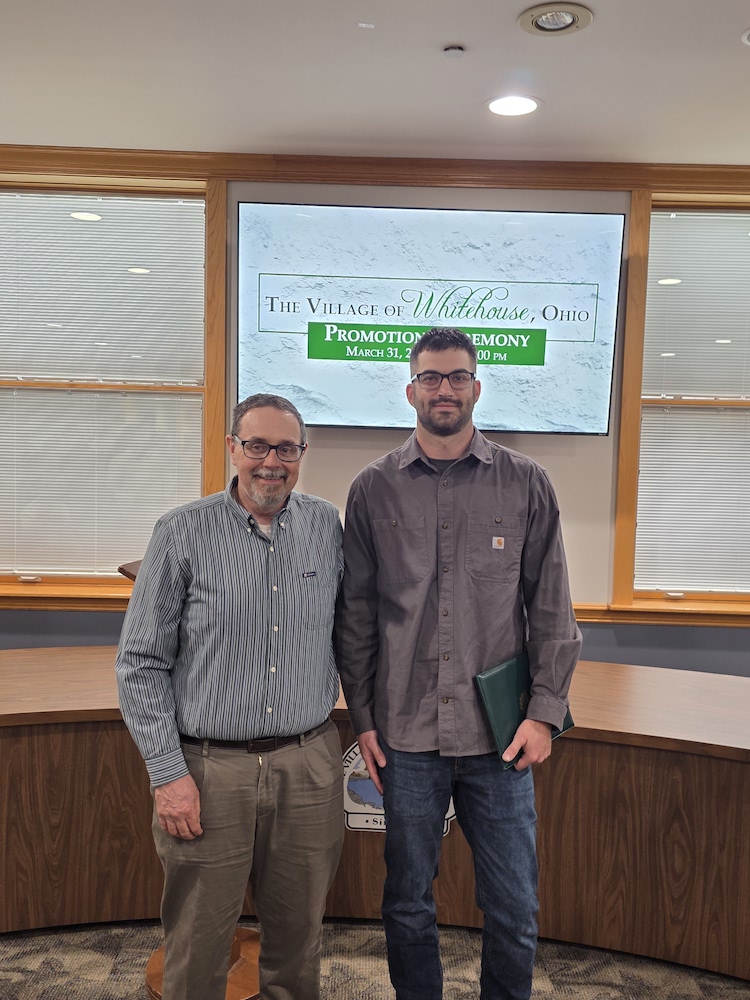
Public Works Director Mike Hill (left) welcomes Jordan Connor to the position of supervisor. (Photo courtesy of Kelly Norris)
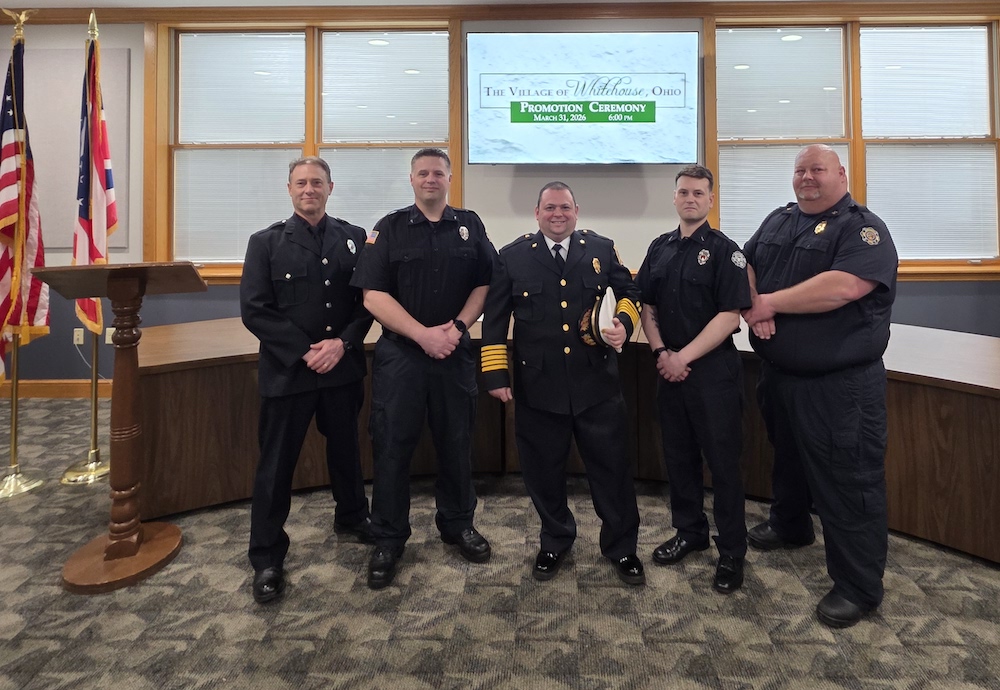
-Congratulated the employees who were promoted during a March 31 ceremony. Police officers Les Case, Andy Kasack and Jeff Siebenaler were promoted to sergeant. In the fire department, Bryce Blair, Derek Francis and Jim Steers were promoted to lieutenant and Dustin Richardson to platoon chief. Public Works employee Jordan Connor was promoted to superintendent.
-Heard Fire Chief Jason Francis say that he is working to improve the department’s ISO rating through driver’s ed training for the department. ISO (Insurance Services Office) assigns ratings of 1 to 10, with 1 being the best, to indicate the quality of fire protection. Insurers us this score to calculate property insurance premiums. Whitehouse has a 3/3x rating.
-Approved an agreement with the Ohio Department of Transportation to resurface the Whitehouse portion of S.R. 295, which will be redone between the river and the airport. Whitehouse will not pay for any of the work.
-Agreed to pay Kleinfelder an additional $11,400 for inspection services on infrastructure for Whitehouse Square Townhomes. The village will be reimbursed for the total cost of $39,400 for the work.
-Heard resident Jeff Heaney ask about the safety of track athletes running along Weckerly Road, which is slated for a multi-use path in a few years.
-Listened to Artiaga ask about plans for making the playground at Whitehouse Park accessible, and whether a committee that includes community members should be engaged to look at updating the parks master plan. Council agreed to add questions about the park into an upcoming survey.
Whitehouse Fire Chief Jason Francis (center) congratulated four department members who were promoted during a March 31 ceremony, including (from left) Lt. Bryce Blair, Lt. Jim Steers, Lt. Derek Francis and Platoon Chief Dustin Richardson. (Photo courtesy of Kelly Norris)
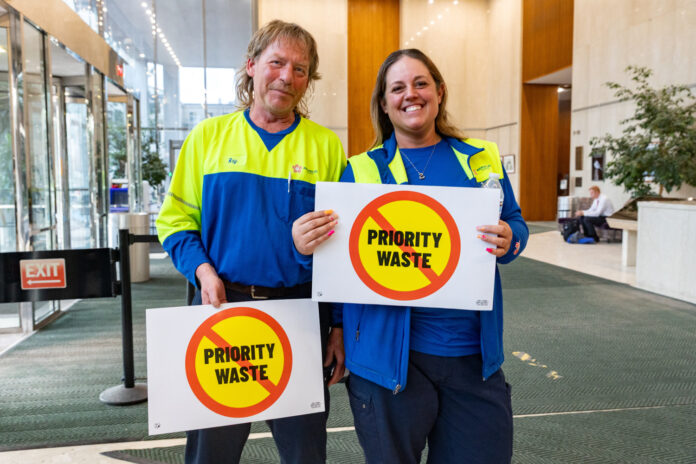
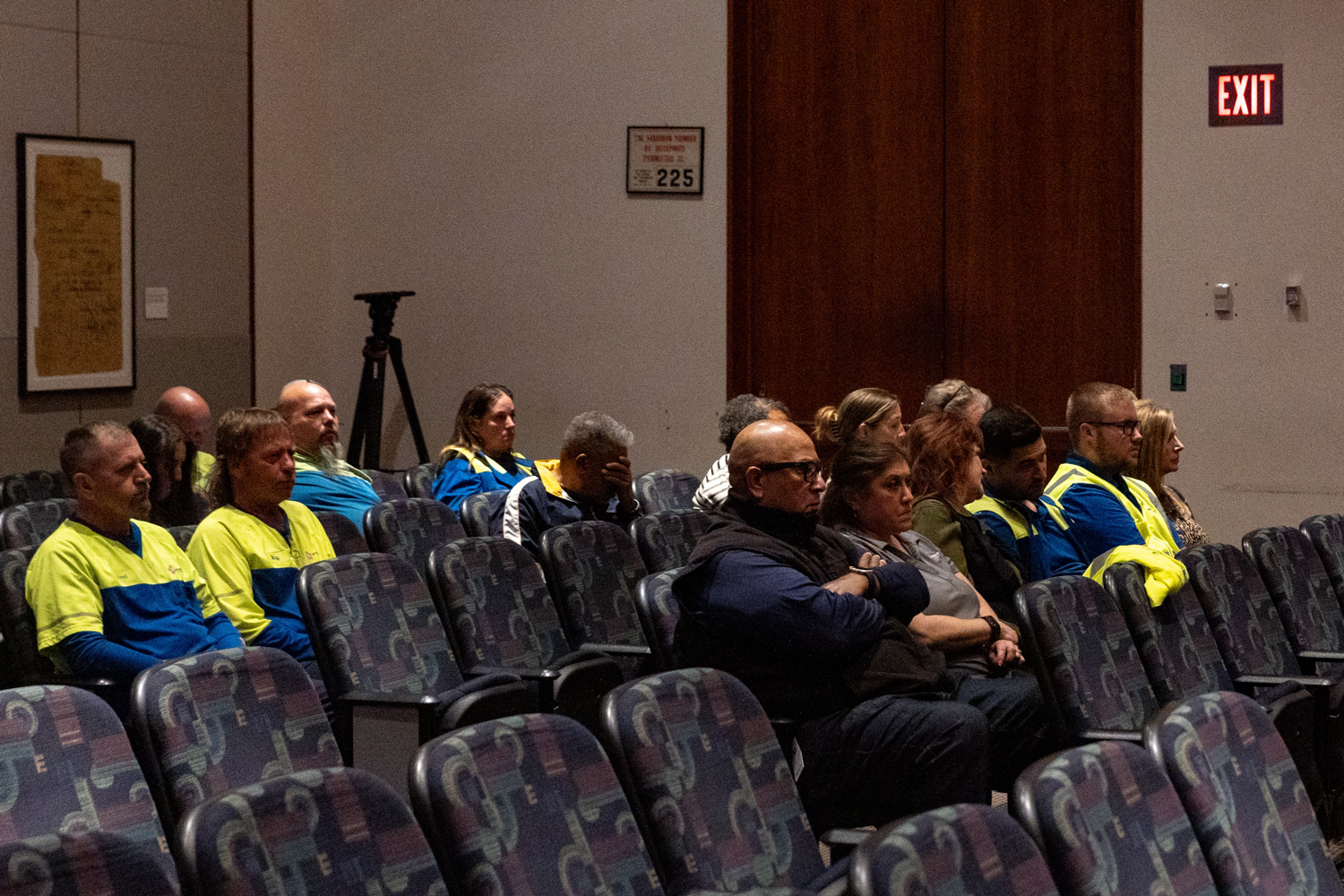
Republic Services workers who did not give their names protest a new contract with Priority Waste L.L.C. during a Toledo City Council meeting at 1 Government Center in Toledo, Ohio on Tuesday, March 31, 2026. (TFP photo by Stephen Zenner)
Toledo City Council late March review
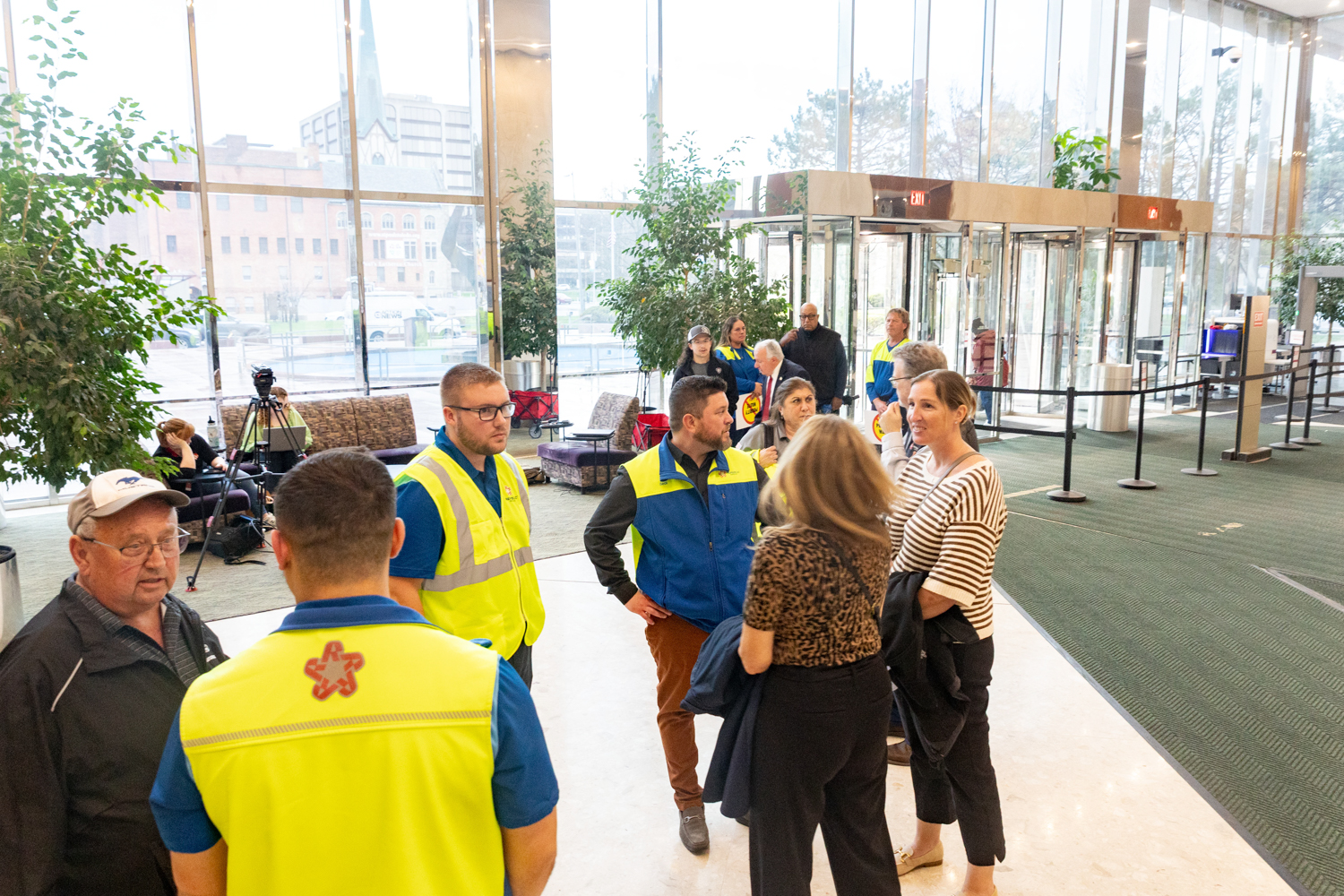
TOLEDO – Republic Services workers filed into the Toledo City Council Meeting on March 31, as council had on the agenda changing the Refuse and Recycling provider for Toledo to a different company, Priority Waste, L.L.C.
Under O-113-26, Priority Waste, would replace Republic Services for the next five years, and would be paid $13,560,000 annually. Republic’s contract would expire August 31, 2026, and residents would keep their current recycling and garbage receptacles.
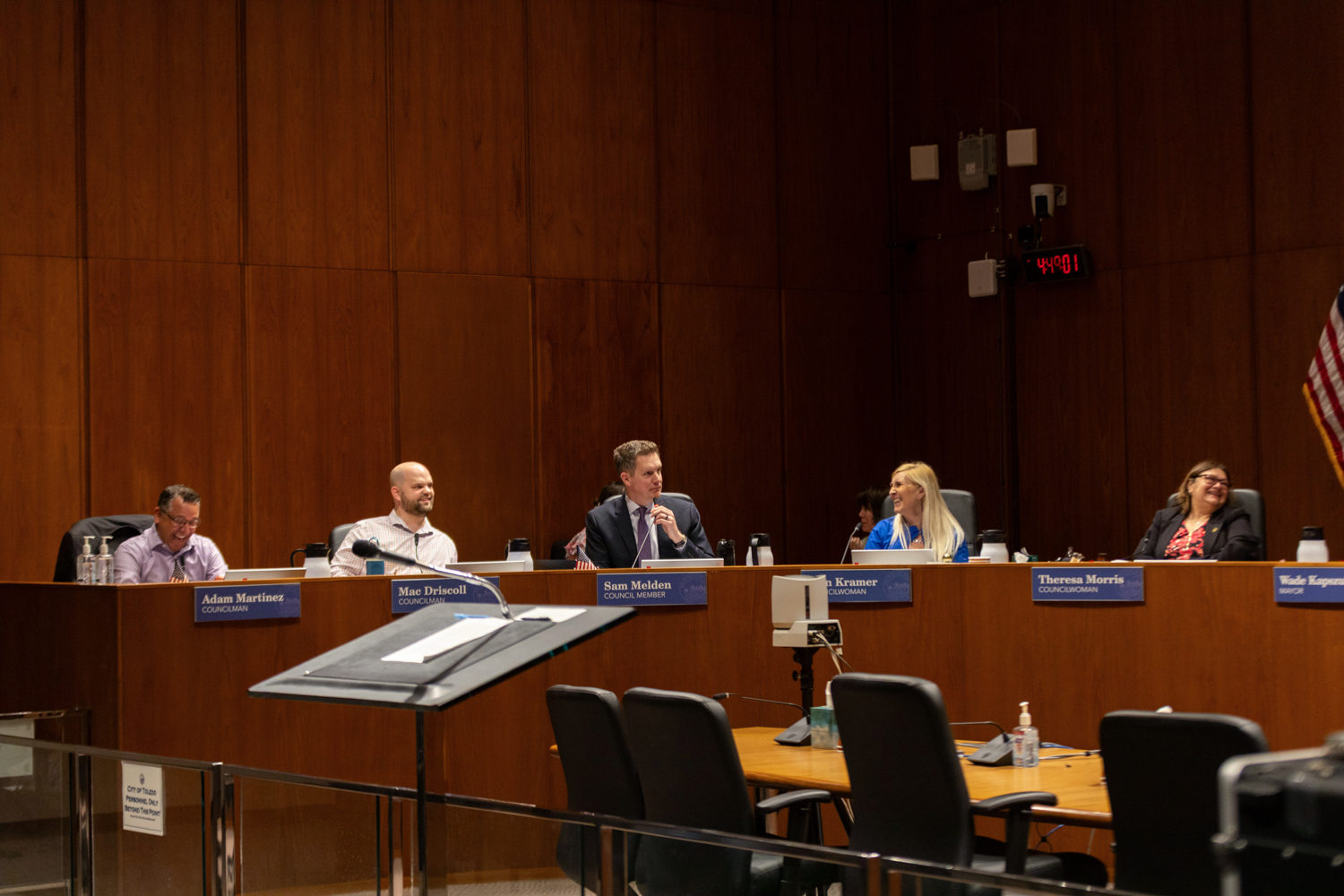
Sam Melden, council member for district 5, speaks during a Toledo City Council meeting. (TFP photo by Stephen Zenner)
The ordinance was given a first reading, and council moved on until closing remarks where Council Member John Hobbs III, District 1, used his time to advocate in support of Republic Services over Priority Waste.
Within District 1, Hobbs said Republic’s service has gotten better. “I can now pick up the phone and actually talk to someone, and before the end of the day, oftentimes, within hours, whatever has gone on has been taken care of.”
Much of the criticism of Republic was for poor response times with bulk pickups left on the curb long past when they were expected to be picked up. Hobbs mentioned he could only speak to his own experience in his district, but said Republic had gotten better since he started reaching out to them.
Hobbs spoke against the higher fees that would immediately occur with the new contract if the city switched to Priority, and talked about the $9 million which would be saved over the course of the five year contract by staying with Republic.
Republic Services workers after a Toledo City Council meeting. (TFP photo by Stephen Zenner)
Immediately, the city would start paying $13,560,000 with Priority, whereas Republic would start at $11,731,200 for the first year, gradually increasing their fees until they reached $13,203,568 in the final year of the contract, 2030.
For average households, this means a jump in waste fees from around $11 a month to closer to $18 a month with a switch, and Republic would maintain the same $11 fee until 2028.
“I don’t think it’s the right time to increase fees, and especially to the point of almost $9 million in the next five years,” he said, and emphasized Republic’s union leadership and improvements in service. “With groceries going up. With gas going up. We definitely don’t need trash going up.”
During their presentation to City Council at a Committee of the Whole on March 25, Priority outlined the improvements they would make including improved bulk collection, customer service, technology, including route tracking and robust performance metrics.
John Hobbs III, Council Member for District 1, during a Toledo City Council meeting. (TFP photo by Stephen Zenner)
Council Member At-Large Erin Kramer asked Priority if they would hire union workers to which they replied, “Priority is neutral, but if employees wish to unionize then they can. The majority of any given employee yard holds the right to unionize if they choose.”
Furthermore the spokesperson for Priority said, “Manpower would be hired to accommodate the Toledo-market” if the contract went through.
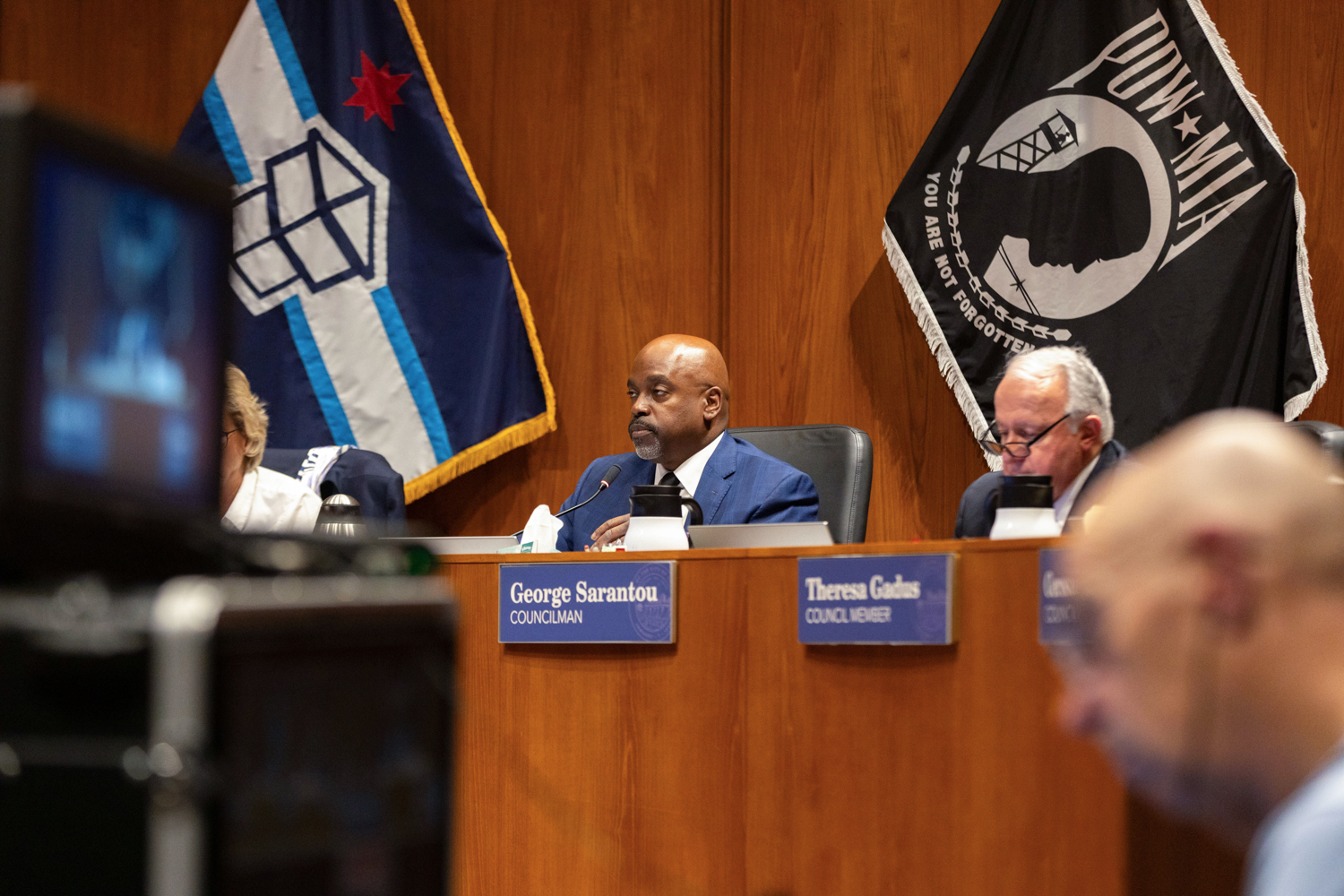
George Sarantou, Council Member At-Large, addressed the union Republic workers, members of the Teamsters, at the meeting, and thanked them for their interest in the council’s decisions.
“I appreciate all the emails and phone calls that I’ve had from constituents with their opinions on this very important decision that Council will have to make on April 14,” he said, but did not give a lean on which way he was thinking.
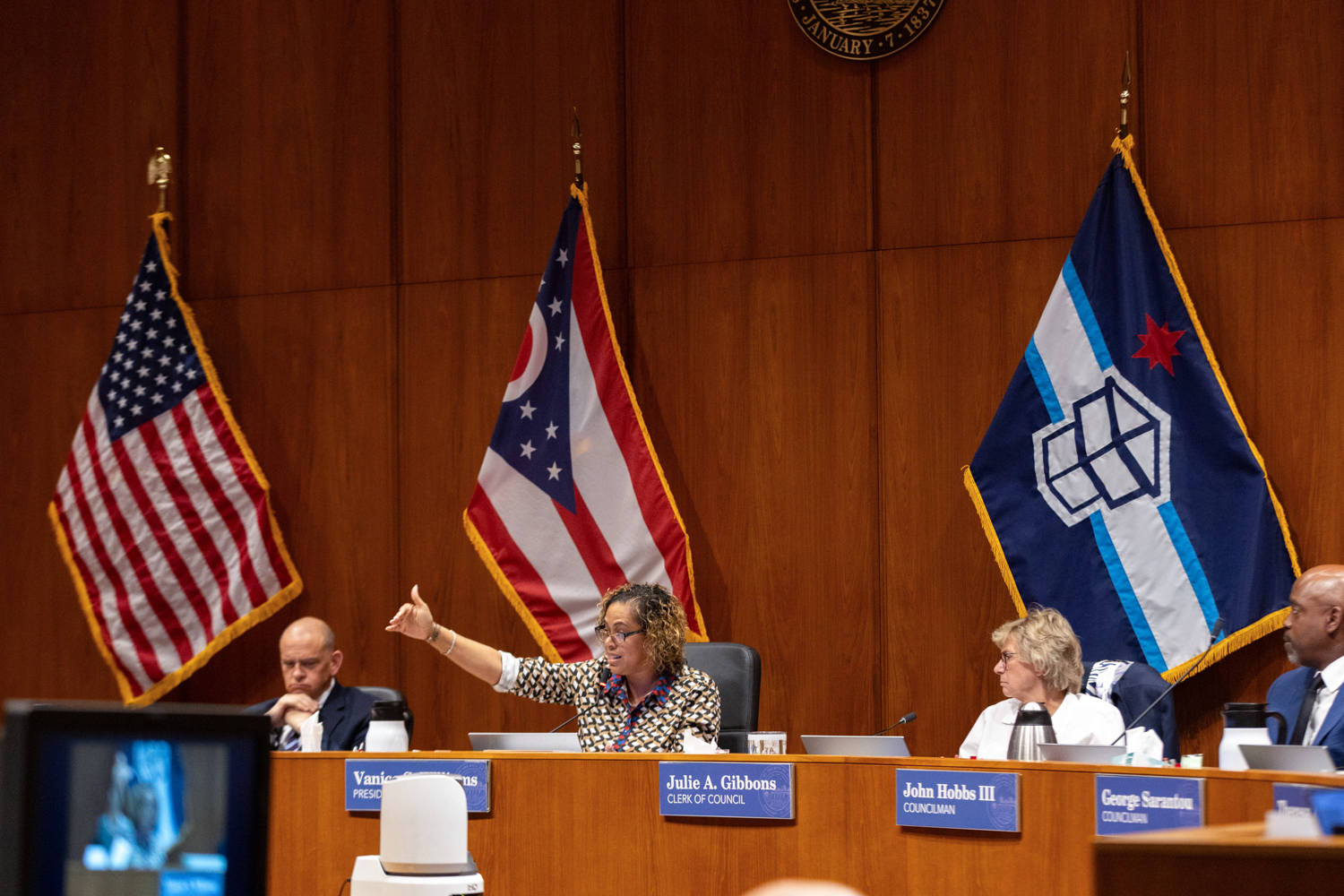
President of Toledo City Council Vanice Williams, District 4, speaks during a Toledo City Council meeting. (TFP photo by Stephen Zenner)
The last to give their remarks on waste management was President of Council and Representative for District 4, Vanice Williams, who was not as reserved with her thoughts.
“I actually was leading the charge to replace Republic,” she said. “I’m not gonna lie. I did, because my residents said we needed replacement, and all of y’all’s residents told y’all, we need to replace it. I didn’t forget.
“On Pearl Street, the 200 block of Pearl Street, there was a situation where curbside or bulk [pickup] wasn’t getting picked up for almost a year,” she said, and described the conditions. “I have a picture of a garbage can that has rats at the bottom that I shared with most of my colleagues, and I shared with union reps [within Republic Services].”
Williams said her responsibility to serve the residents of her district, District 4, dwarfed other considerations, because her residents were not receiving service.
“Most of my district is African American. Most of my district is impoverished, so I take issue with the trash that’s in my district,” she said. “Yes, I have met with Republic several times,” but said the work was not getting done.
She also said she didn’t want to see people lose jobs and did not blame the drivers or union workers.
Regardless, she said, “I’m still getting complaints about things not being picked up.”
In reaction to the rising price of service, Williams said rising price was a “misconception” because “our solid waste fees are below the average in the state, so that is something that we have been playing with for years.”
“I’m going to keep advocating for my residents, and I’m keep on advocating to the day that I die for what’s right, what’s just and what’s appropriate. Thank you. This meeting is adjourned.”
And with that she ended the meeting with a swift gavel strike.
Republic Services workers sit in during a Toledo City Council meeting. (TFP photo by Stephen Zenner)
Biometric data
A first reading was issued to Council Member Theresa Gadus’s sponsored legislation, O-109-26, amending the Toledo Municipal Code and enacting Chapter 557 “Biometric Data Collection.”
This ordinance was part of the package of legislation on separating the city from Immigration and Customs Enforcement (ICE).
§577 defines biometric data collection as, “a retina or iris scan, a fingerprint or voiceprint, a scan of hand or face geometry, or any other identifying characteristic,” and requires any public entity that is not the government, to clearly inform the public when their biometric data is being collected in a public space.
§557.03 (a) states, “Nothing in this chapter shall apply to the collection, storage, sharing or use of biometric data by government agencies, employees, or agents.”
And (b) of §557.03 said the requirement to disclose the collection of biometric data via photos or video recording is waved if the images or videos are not analyzed by software for the purposes of identification or if the images or videos are not shared or sold to third parties, other than law enforcement.
Violating the chapter at first receives a warning followed with a minor misdemeanor charge with a fine of up to $150.
Lead reduction grant
Brittany Jones, Council Member At-Large, was happy to sponsor O-112-26, which authorized the acceptance of $7,750,000 for the Lead Hazard Reduction Grant Program from the U.S. Department of Housing and Urban Development (HUD).
Outlined in the budget for these dollars are roughly $3 million for “property owner grants.”
The ordinance was unanimously passed, and Jones addressed her gratitude for getting the funds in her closing remarks.
“I believe that this is definitely going to go far,” she said.
“I’m working closely with Chief [Rosalyn] Clemens, [housing and neighborhood sustainability] in order to really get through as far as how the funds will be spent and what needs to be done in order to really take a chunk out of just lead in general. Because I know that [the grant] will be in combination with other lead programs, and so just trying to find a strategy in order to really reduce those numbers throughout the city.”
Invocation
Bishop Chaz D. Boes, of Compassion Church Toledo, opened the Toledo City Council meeting with a prayer, then the pledge of allegiance, a jazz rendition of the Star Spangled Banner, then Hobbs lauded Boes and his church as the most integrated church in Toledo.
Shortly after, Hobbs continued to speak about Holy Week, leading up to Easter, on April 4, and he said, “And to my St. Francis, brother of over 40 years, Mr. John Meyer, to all of the other high schools we know nothing.”
Fellow Council Member Cerssandra McPherson, At-Large, rolled her eyes back into her head before replying to Hobbs’s dig.
Laughing like a school boy, Hobbs watched for McPherson’s reaction, and waited for her reply.
“Whatever, Councilman Hobbs,” she said.
McPherson attended Toledo Public Schools (TPS), graduating from Libbey High School in 1977, and has been involved with the Toledo Federation of Teachers, including working as a special education paraprofessional for many years.
Hobbs has asserted his pride in St. Francis De Sales High School during previous council meetings, but also worked with TPS as a substitute teacher and barber instructor.
After shirking off Hobbs’ dig, McPherson thanked the bishop and his family for their work abroad and in the community.
Appointments
Brandon Selhorst, the chief growth officer for the City of Toledo ($135,750, 2024), was replaced with Cody Brown, the manager of economic development ($86,046, 2024), on Troy Township’s Joint Economic Development District (JEDD) Board.
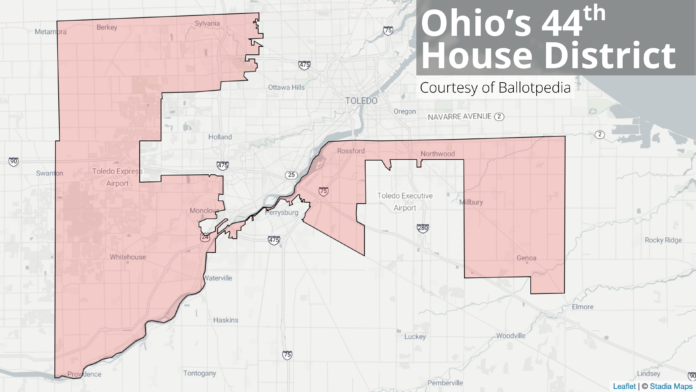
SYLVANIA — Ohio’s 44th House District is vast. It comprises much of western Lucas County, including the communities of Sylvania, Monclova, and Whitehouse. The district then snakes through Wood County, along the Maumee River, to cover eastern parts of Lucas County, including Rossford and Northwood. And if two counties weren’t enough for one state House district, it also encompasses the village of Genoa, in Ottawa County.
State Representative Joshua Williams (R-Sylvania) currently represents the district in Columbus — but with him seeking higher office, as one of multiple Republican candidates vying to represent Ohio’s 9th Congressional District — his seat in the state legislature is up for grabs.
There are three candidates hoping to replace Williams: one of whom is a Democrat, while the other two are Republicans, who are competing to advance past May’s primary. So, who are these candidates and what do they stand for? All agreed to interviews with the Toledo Free Press. Here’s what they had to say about issues ranging from school funding, to property taxes, to data centers.
Ohio’s 44th House District race. The three candidates running to represent Ohio’s 44th House District. (TFP photo by Jaden Jefferson)
David Fournier
David Fournier. (TFP photo by Jaden Jefferson)
The sole Democrat in this race, David Fournier is an employment benefits attorney who primarily works with union pension and apprentice programs, and occasionally, health plans. He’s a December 2013 graduate of the University of Toledo College of Law and passed the bar in 2014. Fournier started his career at the firm Shumaker, Loop & Kendrick. He told the Toledo Free Press that his entry into politics really began in the “last quarter of 2025 or so,” when he and his wife became involved with the Anthony Wayne Board of Education.
“We disagreed with some of the activities that they had engaged in, including the censure of Shellie McKnight, their sole left-leaning member. So, in the following meeting, I gave a statement, kind of calling them to task.”
Fournier says that led to him getting in touch with AW-area Democrats, including Dave Blyth, who encouraged him to launch his campaign. Blyth previously ran to represent this Ohio House district. A key tenet of his campaign, said Fournier, is public education.
“The voucher program needs to be paired back. Currently, I think Ohio has budgeted, maybe $2 billion, for what has essentially become a universal subsidy for private education — and that’s a lot,” he said. “That is a ton of money that we could be reallocating to schools, public schools, that have an obligation to serve all students, that are accountable to the taxpayer.”
Fournier expressed concern over the lack of transparency that surrounds Ohio’s EdChoice program. The program allows the state funding that school districts receive for a student — to be redirected to a non-public school — if that is where the student and their family chooses to receive an education. Fournier believes non-public schools should be subject to the same transparency requirements as public ones, such as how state dollars are being spent and the performance of students. While he has criticisms about how the program operates, he doesn’t oppose it being narrowed to low-income students from underperforming schools, allowing them to “shop around” for better options.
Because property taxes are a significant chunk of how Ohio’s public schools are funded, the conversation about schools and property taxes are greatly linked. Asked about property tax relief, as Ohioans see their bill grow, Fournier said that “if we were to put that [voucher dollars] back into the public schools, they would not need to go back to the local taxpayers to make up the gap, like they do currently.”
He added, “I think, by adequately funding the schools, you are already going to provide a measure of relief to property owners.”
Another hot-topic in Ohio communities, alongside schools and property taxes, is data centers. Amid the growth in artificial intelligence integration across the economy, demand for data center capacity has grown, and Ohio just so happens to be attractive to big tech. While Fournier believes that “the construction trades jobs would be fantastic” from data centers, he doesn’t know “why we’re negotiating against ourselves.”
“What I don’t understand is why we are in such a hurry to subsidize these mega-corporations’ profits and their stock price by giving them breaks on property taxes and the like, when they are going to be bringing all of these new issues into our communities,” he said.
Fournier said he would like to see, in writing, tech companies be responsible for providing, or at least paying, for 100 percent of the energy they use. He would also like to see more consideration given to the usefulness of these facilities in the future, as technology continues to advance, as well as where they locate. Fournier said he supports legislation that would create a commission to study the impacts from data centers, saying “fact-finding and information-gathering is a great start, but let’s keep it going.”
Edward Schimmel
Edward Schimmel. (TFP photo by Jaden Jefferson)
Northwood Mayor Edward Schimmel is one of two Republicans running to represent Ohio’s 44th House District. As someone who’s been mayor for 11 years, and previously a member of Northwood City Council for eight years, Schimmel said, “I’ve been involved in politics, probably, ever since college, where I was a member of the UT Young Republicans.” Schimmel said he obtained an undergrad degree in political science from the university.
“I’ve been down to meetings in Genoa, I’ve been to meetings out in Whitehouse, I’ve been going door-to-door — everywhere I can go, trying to hit every different community, to hear what different people in different areas really want to see from their state representative,” said Schimmel, who told the TFP that “the core issues that people have are essentially the same in every community.”
On school funding, Schimmel said that “I don’t, myself, have the answers to the school funding problems. Certainly, there’s people in Columbus that have been working on it, and I intend on helping, you know, push forward down that path and figure out how we can fix the school funding problem.”
Asked where those conversations on fixing “the school funding problem” should start, he said that “they need to start in the locality,” adding that “school boards need to look at their long-term plans” on the sustainability of their finances.
“Some schools, I’m sure they are — and other schools — I think that they do need to look at some cuts. Now, hopefully, those would be short-term cuts, ‘till we can get some of these issues straightened out, but the school funding problem- I don’t see it going away anytime soon, certainly with this group of individuals who want to do away with real estate taxes completely.”
Schimmel said he doesn’t completely agree with the assessment of Ohio Senate President Rob McColley, running mate of Republican gubernatorial candidate Vivek Ramaswamy, that schools are receiving enough money, but need to do a better job of spending it.
“I think you need to look at each individual school district to see how they’re spending those funds. Some schools, I know, are already being very prudent with the money that they have. Others, it’s something that they probably should look at.”
On property taxes, the primary source of revenue for local school districts, Schimmel said that “I think what voters are looking to have happen is to maybe connect your increases on your taxes to something like the rate of inflation, or something along those lines.”
He said that “if we’re gonna do tax cuts, we have to do true tax cuts, not replacements with fees and whatnot, so we have to be careful with that. And certainly, not eliminate real estate taxes. I think that is a horrible proposal that would throw our, primarily townships- they would not be able to provide police or fire services, schools would close overnight.”
Discussing energy costs, which have increased, in part, due to data centers, Schimmel shares Fournier’s perspective. Both believe the state needs to produce more energy, including from renewable sources, and that tech companies should pay their own costs.
“The question is: How do we make sure data centers don’t impact our energy bills? And I think it’s requiring them to have on-site energy production or to have some sort of an agreement with an energy provider, so that they’re not affecting the price of energy. As well as water — they need to recycle their water and only be put in communities, such as maybe Oregon or some parts of Toledo, where they have the excess capacity for water service.”
John Rozic
John Rozic. (TFP photo by Jaden Jefferson)
Originally from Lorain, Ohio, John Rozic is a 1973 graduate of Case Western Reserve University, where he earned an accounting degree, and ‘77 graduate of the University of Toledo College of Law, where he earned a Juris Doctor.
“In 2014, I was elected to the Waterville City Council,” said Rozic, who, term-limited, decided that running for state representative would be his next move. While he doesn’t view running for elected office as being an act of politics, but rather public service, running a successful campaign may require political savvy, given the various constituencies that comprise the district he’s hoping to represent.
“My position, basically, is I don’t have all the answers. I have questions, but not all the answers,” Rozic told the Free Press. “I just listen to everybody. Before I make a decision, I listen to as many sides as I can. I did this on city council, I did it with the school board. You just listen, take it all into consideration, and then hopefully make a good decision for the benefit of everybody.”
Rozic was also previously a member of the Anthony Wayne Board of Education.
“My experience with the school system is it is — especially in Anthony Wayne, and, I think, probably Sylvania and other communities — what holds the community together.”
He expressed disappointment with Ohio’s Fair School Funding Plan having not yet been realized.
“20 years ago or so, the Ohio Supreme Court ruled that the way we fund schools is not constitutional. And so, the legislature has had 20 years to fix it and they haven’t fixed it yet.”
Because property taxes are so closely linked to school funding, disparities are created between districts that comprise more affluent neighborhoods and ones whose neighborhoods experience greater levels of poverty. Rozic says he would like to see something done about it.
“We spread funds across the state for other purposes: highways, bridges, police, fire, infrastructure — all those things are done, I think, fairly equitably across the state. But schools have focused on local funding and, in some areas, it works great. In the affluent areas. But in the not-so-affluent areas, they struggle. So that’s something that really has to be addressed, I think.”
Asked whether, in Ohio’s GOP-controlled legislature, there’s the political will to improve Ohio’s public schools, Rozic said, “I think the people I’ve talked to, yeah, they recognize the importance of a successful school system in every corner of the state, and I would hope they would carry that through with appropriate funding.”
He added that, during his time on the school board, “the concern always was” that the state would cut funding, while at the same time, imposing more “requirements for the educational process.”
In his interview with the TFP, Rozic also discussed potential forms of property tax relief. One idea he talked about was linking property taxes to base value, rather than any unrealized gain. Rozic is wary of eliminating the tax altogether, saying, “I haven’t heard a good alternative to the property tax.” He says “the funds have to come from somewhere” in order for the state to carry out its basic functions, which is why he doesn’t support eliminating another tax — the income tax — without an alternative.
On data centers, Rozic spoke to his experience on Waterville City Council, saying they “all of a sudden” became “a very, very hot issue.” Echoing his opponents’ sentiments, he believes “if they’re gonna get the benefit of the increased grid, they should pay the largest portion, if not all, of the cost of increasing the grid, if it’s simply to provide energy for the data center.”
With regard to their location, Rozic said “I think they should be as far away from residential developments, and maybe even commercial developments, as possible.”
He also believes the state should be “careful” about handing out tax breaks, given that they “don’t produce a lot of employment” once construction is completed.
For more on Ohio’s primary election, read Jaden Jefferson’s report on the three things you should know here.
How the owner of Maumee Bay Turf Center and Danny’s Cafe got his start
MAUMEE – Brad Morrison, owner of the Maumee Bay Turf Center and Danny’s Cafe, grew up in a blue-collar family, an upbringing that led him to the synthetic turf industry he’s passionate about today.
“I started cutting grass when I was 13, and ended up having a pretty big mowing business for almost 30 years, and it kind of led us into the landscaping business, and then that led us into the athletic field business,” Morrison said.
Morrison earned a bachelor’s degree in education at the University of Findlay in 1992 and moved on to earn a master’s degree in education at Bowling Green State University.
Morrison’s family owned a driving range called The Ball Works Golf Range in Oregon, Ohio. He said that a lot of high schools would come to the range to practice golf, and they would inquire about how the grass was maintained.
“Pretty soon they started asking, ‘Who takes care of the grass here?’ and ‘Could you do this to our football field?’” he said. “So we started doing that on the side in the fall and got people’s athletic fields ready for the next year, and it just kind of turned into a business.”
(Courtesy photo)
Morrison is the co-founder and principal owner of the Maumee Bay Turf Center, a business that specializes in athletic field design, construction, consultation, renovation, maintenance and repair. The business has built 260 fields ranging from NFL stadiums to local community fields.
“We built our first synthetic field in 2008 in Clyde, Ohio, and it’s 2026, and we just finished our 260th field,” he said. “Doing good work, taking care of your customers and building relationships; it’s really what our business has been built on, just quality and wanting to be people’s solutions, not their headache, and with the turf, we’re just surrounded by the most amazing people in the industry.”
Morrison is also the owner of Danny’s Cafe in Rossford. Since he became the owner four years ago, Morrison and his turf crew have expanded the restaurant and built a place that went from holding 40 people to holding about 500 people.
“It’s a super competitive business, so the challenge is, how do you make it a place where people choose to spend their evening when they have so many good choices in Toledo? What can we do differently? And that’s kind of the contest,” he said. “It was a dive bar, and I say that in the most respectful and positive way because I think people like that old school step back in time, so we kind of maintain that and we’ve kind of built on that.”
Morrison said Danny’s Cafe has become a family place, and every day is like planning for a big party.
“I didn’t want it to be this knockdown party bar like a lot of places are, and we don’t want anything to do with the late-night crowd,” he said. “We’re super big at not over-serving people, and it’s more come have a good time, do it responsibly and get home safely…so it’s a different approach.”
Morrison said one of the challenges he faced as a business owner used to be people, and he explained how people will worry too much about saving money when hiring, and that’s the opposite of the way he does things.
“Show me the best people, the best cooks, the best floor manager, the best people involved with hospitality, decor and technology marketing, those are the people I want to hire,” he said. “A lot of people aren’t willing to invest that capital in their people, and if you’re not willing to, you’re really just wasting your money.”
(Courtesy photo)
He said his favorite part about owning and running his businesses has been all the relationships and people he gets to meet.
“It’s just a relationship thing for us. We’ve filled a lot of fields, and we make a lot of impacts with a lot of communities,” he said. “Those are pretty visible projects, not only with the sports field and putting in a new stadium, but building a restaurant, a community, doing things for the community and trying to be a giving person. I think that’s the best part of it all.”
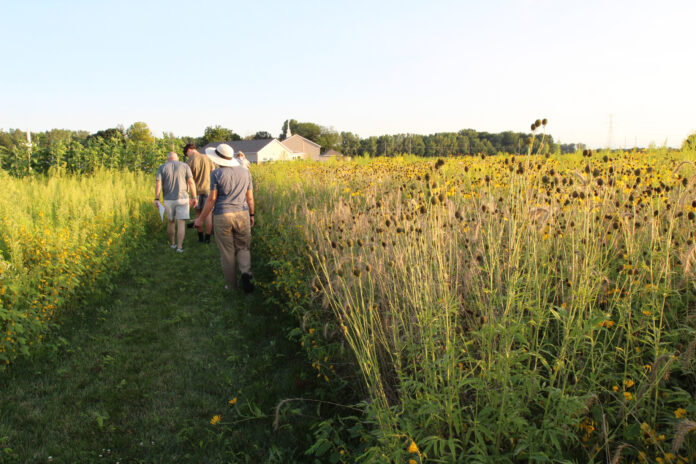
Sacred Grounds Toledo prairie tour participants examine flowers at the Blue Creek Metropark and Seed Nursery in Whitehouse. With an exclusive focus on native plants, the nursery cultivates seeds and seedlings used to restore and preserve natural areas throughout the region. (TFP Photo/Laurie Bertke)
The series is presented by WGTE and Metroparks Toledo to educate and entertain
TOLEDO – WGTE Public Media and Metroparks Toledo are putting out an exciting collaboration titled Nature in Action, a storytelling initiative on multiple platforms that educates and inspires the community to explore regional treasures.
This project features three multi-episode series that will be featured on YouTube and social media platforms. These series are titled The Living Wild, A Walk in the Park and Nature Clash.
Shane Potgieter, the executive producer and content and creative services officer at WGTE, said the series started based on a conversation with Matthew Killam, the chief external relations officer for Metroparks Toledo.
Shane Potgieter, Executive Producer/Content & Creative Services Officer at WGTE Public Media. (Courtesy photo)
“We were talking about how difficult it is to reach the middle school audience, and how do you get kids into our kind of content and into Metroparks again?” Potgieter said. “We had something in common, and we were like, ‘Hey why don’t we see if there is something we could do to work together?’ And that’s kind of where the project started.”
Potgieter said he wanted to do something similar to MrBeast challenges, as well as come up with other ideas that could attract other age groups and demographics through their programming and the Metroparks.
Scott Carpenter, the director of public relations for Metroparks Toledo, said the goal of this collaboration is to “spread the good word about Metroparks and the benefits of nature.”
The Living Wild is a series of short-form documentaries containing five episodes that focus on conservation in the Metroparks. Carpenter said the series will show not only what the Metroparks do, but why they do it, and why that work is so important.
“It will focus on various aspects of our natural resources management in the Metroparks,” Carpenter said. “It will include things like the prescribed fires that we use, the way we’ve restored and managed wetlands, and some of our research and monitoring that our volunteers do.”
Potgieter said The Living Wild is targeted to an older audience, as well as the latest edition, A Walk in the Park.
A Walk in the Park is a 10-episode podcast series that explores the intersections of work, nature and wellness. Potgieter said Erin Holden, the editor-in-chief of the Toledo Free Press, will host the podcast.
“It’s her walking in the park with somebody who’s just an ordinary Metropark-goer, just to showcase the different kinds of people that use the parks,” Potgieter said. “Erin is sort of like our Bridget Jones, who goes in the field, speaks to different people who use the park and tries out different things too.”
Nature Clash is a high-energy series of eight episodes featuring middle-school kids who will participate in a series of mental and physical challenges. These skills include climbing, paddling and other activities that people do in the Metroparks.
Potgieter said they have a few strong contenders for the host of Nature Clash, and the options will be narrowed down in the next couple of weeks.
“We have someone who is a biologist who worked on a Netflix program, a UT student who was also very promising and somebody in the community who’s a comedian, so there are quite a few options for us to go through,” Potgieter said.
Carpenter said he hopes Nature in Action will encourage people to come out to a park they haven’t visited before or try a new activity.
Potgieter said the big thing is the value of the park system Toledo has and how lucky the community is to have this on its doorstep.
“It’s uniquely northwest Ohio, and it’s amongst the best in the nation,” he said. “In terms of our mission at WGTE to educate and entertain, I’m hoping that we are able to marry those two ideals and come up with something that is uniquely engaging for all our audiences.”
This week, Stephen Zenner sits down with three artists from different disciplines who are making a living in Toledo doing what they love. Stephen begins his conversation with fellow photographer Jay Dickerson (AKA Dirty Kics), then speaks with multidisciplinary artist Cyd Gottlieb, and ends the episode with performance artist Krysta Sa.
Everywhere in Toledo, you’ll find people who play a role in making our city tick – from hospitals and factories to restaurants and art galleries – and behind every person is a story. Our program, Toledo Works, highlights those stories from workers’ firsthand accounts. Each week, Toledo Free Press hosts Jaden Jefferson and Stephen Zenner focus on a different topic within the Toledo workforce, exploring their day-to-day challenges and triumphs.