TOLEDO – After working in accounting for 35 years with one company, Rose Letherby thought she found her dream job as a protective services officer with the Toledo Museum of Art.
The position she took eight years ago allowed her to tap back into her roots as a college art major. “I love to talk to people, and I love to interact, and I love art,” said Letherby. “I thought I was going to be there until I was 75.”
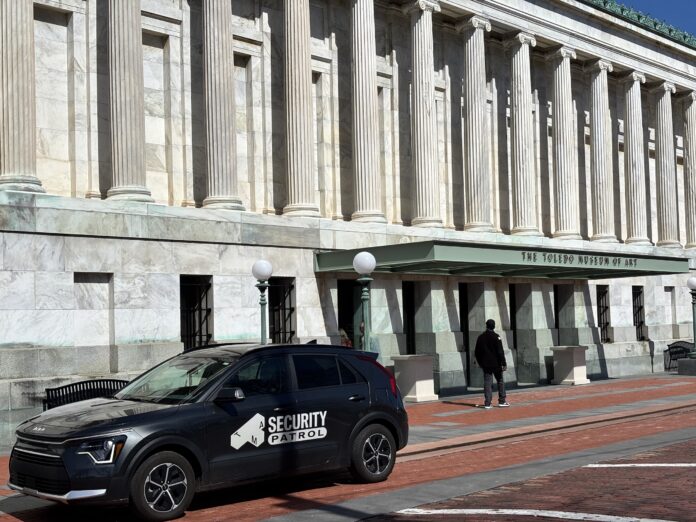
Things changed for Letherby on Jan. 27 when museum leadership surprised employees with the news that the protective services officers — commonly referred to as PSOs or security guards — were being outsourced to a company called Safeguard Security Services.
The director of Protective Services and employees associated with the control room would remain as museum employees, but the rest of the protective services staff was told at the mandatory department meeting that they would need to reapply and interview with Safeguard if they wanted to continue employment with the museum beyond Feb. 28.
Letherby, who had just accepted a promotion from part-time to full-time with benefits two weeks prior to the announcement, said she and the other guards were “absolutely blindsided” by the news. She said she hadn’t even had time to complete the paperwork and begin receiving benefits.
“It’s almost like a slap in the face, is what it amounted to,” said Letherby. She interviewed and accepted a position with Safeguard, but left the museum for employment elsewhere the day before the transition to Safeguard was completed March 1.

Museum has long history with Safeguard
The contract with Safeguard builds on what the museum’s director, Adam Levine, describes as an “incredibly close relationship” between the two entities.
The current director of Protective Services, Risa Smith, is a former Safeguard employee, and the president and owner of Safeguard, Josh Hardman, worked as director of Protective Services for the museum from 2014 to 2017 before leaving that post to purchase the Toledo-based security and investigations firm.
In a written statement, Hardman said the company has enjoyed a business relationship with the Toledo Museum of Art going back to 1999. During that time, Safeguard employees have staffed a variety of positions, including mobile patrols, parking lot security and control room operators.
Levine, who also serves as president and CEO of the museum, describes Safeguard as an organization that knows the institution inside and out. He said TMA’s leadership has been considering the transition to Safeguard for protective services for about two years.
With 61 employees, Protective Services was the museum’s largest department and the one with the highest rate of turnover. Managing such a large department in-house, including hiring and training new employees, took a large toll, particularly on human resources, according to Levine.
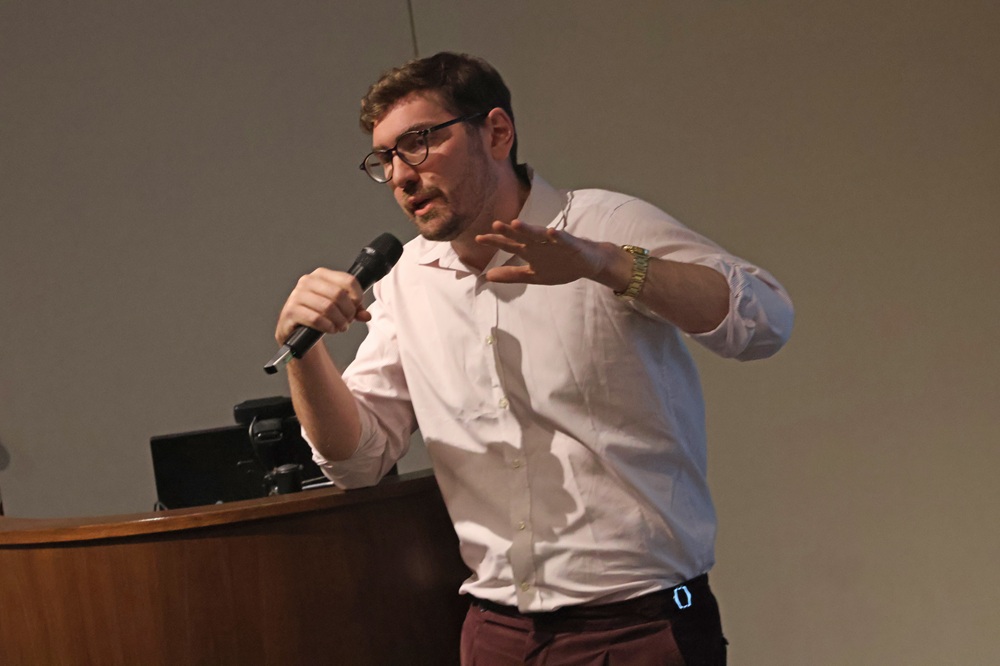
Levine said the move was about efficiency and not about cutting costs.
“Finances were not a factor in this decision. We made the decision because of the value of time that was being allocated to administrative burden, administrative work related to turnover among frontline staff, among the guards,” he said. “So there are real savings there, but they’re not like dollars and cents savings. The time is going to be reallocated to other things.”
Thirty-eight employees in Protective Services were impacted, including eight full-time and 30 part-time positions. According to Levine, all but two of the guards initially chose to stay on with Safeguard.
Levine noted the museum has made concerted efforts over the past five years to increase hourly wages for protective services employees from $8.75 to more than $15, and the museum negotiated for employees making the transition to receive a slight raise from that amount.
But Liz Sullivan, a former Protective Services supervisor who left employment with the museum in mid-February, said full-time employees lost health care and retirement benefits and saw a significant reduction in paid time off as part of the move to Safeguard. Several other employees interviewed by the Toledo Free Press confirmed this assessment.
Hardman declined to share details about the benefits that Safeguard employees receive.
News met with shock, hurt
Sullivan was one of three Protective Services supervisors and her duties included scheduling hours for about 45-50 guards to cover the daily needs of the museum. She said she learned the news about Safeguard about an hour before the rest of the staff, during a meeting with the director of Protective Services and the chief financial officer.
She had worked for the museum a little more than six years, advancing from gallery guard to team leader and then supervisor.
“I love the museum. I thought this was my forever job,” said Sullivan. “I really did work very, very hard for them because I loved the things they were pursuing and the mission and so forth. I thought they were really living that, they were dedicated to that. And I feel like this has shown me it’s really much more all about the bottom line and who’s important and who’s not, I guess. And that was very heartbreaking for me.”
She wrestled with the decision of whether to apply for Safeguard for a few days, but ultimately did not interview with the company. “I just couldn’t allow myself to be treated that way — to give so much to something, believe in people and then have them just treat you with so little regard,” said Sullivan. “It was soul crushing.”
Other protective services employees who spoke to the Toledo Free Press expressed feeling similarly hurt, disheartened and shocked by the news they received that day. According to several people who attended the Jan. 27 meeting, one employee put their resignation in and was gone by the end of that day, and several others walked out of the meeting.
“Almost everyone was upset by this whole thing and feels that it was underhanded,” said another protective services employee who asked not to be identified. The employee said the decision reflects a broader trend of upper management disregarding the frontline workers who keep things running and interact with the public on a daily basis. “We’ve been made to feel unimportant, in many ways.”
Guards question decision’s timing
About two weeks after museum leadership announced the contract with Safeguard, Levine received a copy of a petition the International Union, Security, Police and Fire.
Professionals of America filed with the National Labor Relations Board seeking to represent the museum’s guards. The letter was dated Feb. 10. A Notice of Petition for Election was posted for employees to review, but the petition was withdrawn Feb. 26.
Levine said the letter dated Feb. 10 was the first he heard about any organizing effort among the guards, and he said it was “absolutely not a factor” in the decision to move the Protective Services department to Safeguard. He said the final decision to pursue the contract with Safeguard was made at the end of last year.
Several guards who spoke with the Toledo Free Press still expressed suspicion that the move was related to union talk among the staff that had picked up steam in January.
Earlier that month, Sullivan said she and two other supervisors were asked by the chief financial officer and the director of Protective Services to bring anything they heard about unionizing to the attention of management.
“During those conversations, we were told that the supervisors were very important, that we would be protected, that they were putting measures in place so that we would not have to be part of the union and that we would stay TMA employees,” she said.
Sullivan said she never spoke to Levine on the topic of unionizing.
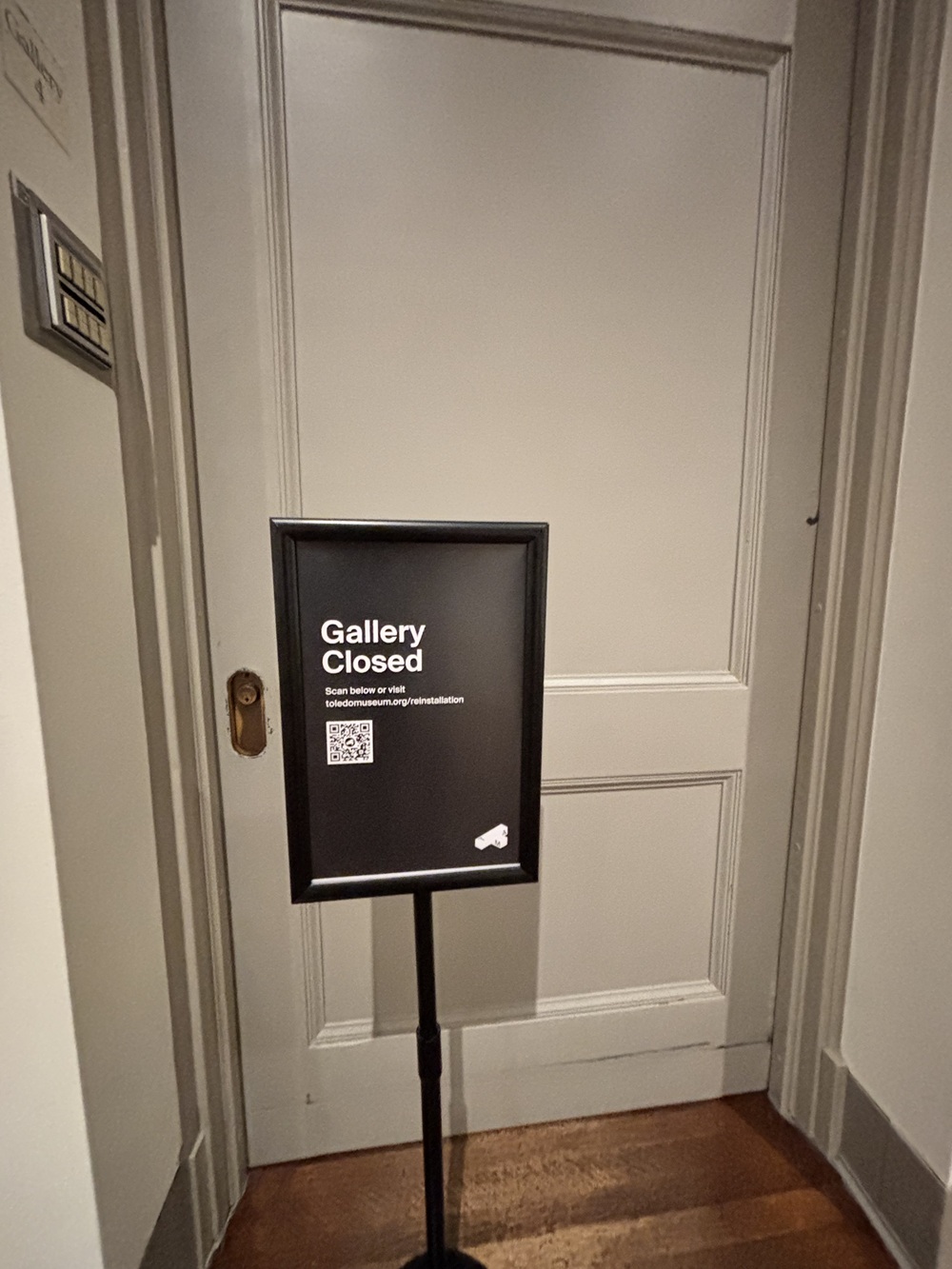
Letherby said safety concerns were among the reasons some guards were interested in organizing their own union. With more galleries temporarily closing as part of the museum’s reinstallation project, guards have spent a growing number of hours in construction zones.
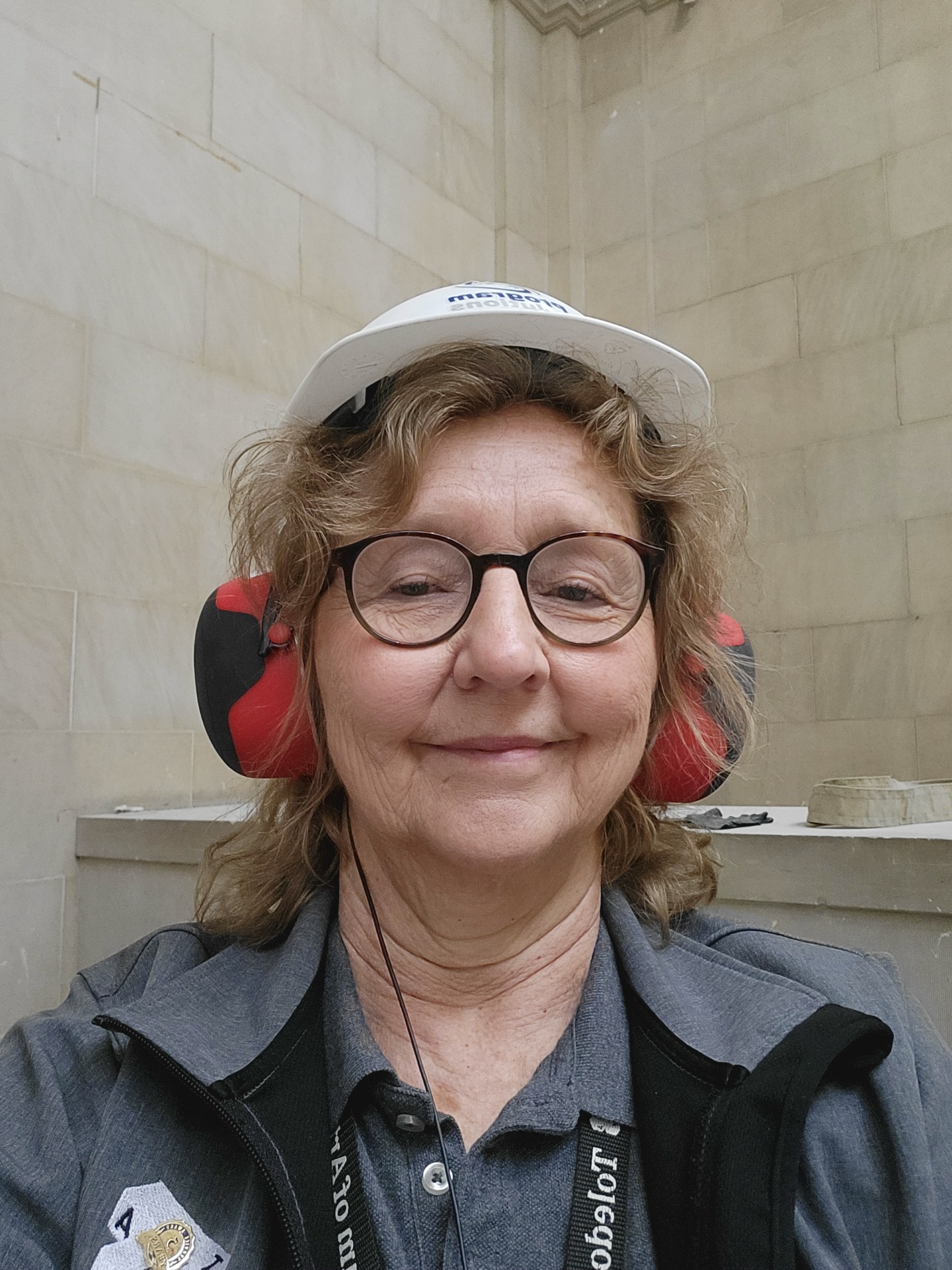
Toward the end of her employment with the museum, Letherby said she was spending less time working in a public-facing capacity and more time in hardhat zones as a construction guard. Letherby said she often experienced dust, loud noise and extreme heat and cold, such as when she was standing at the open dock doors while items were being moved.
“But you want your paycheck, you put the hard hat on and you go to work,” she said.
Protective services officers are not a part of the union that other TMA employees formed in April 2025, which included educators, curators, visitor services staff, technicians and research personnel. The employees voted to form Art Workers United through AFSCME Ohio Council 8 to address concerns about “job security, equitable wages and better working conditions,” according to a news release from the council announcing the vote.
A representative of AFSCME Ohio Council 8 said the protective services officers were not included due to their employment classification. The council declined to provide further comment or connect the Toledo Free Press with a representative of Art Workers United due to contract negotiations that are currently taking place.
No changes to visitor experience
Acknowledging the difficulty of the situation, Levine emphasized the importance of managing the museum in a way that fulfills its mission of integrating art into the lives of people.
“These are not decisions that we take lightly,” he said. “But I do feel very confident that we made the right decision, not just for the museum, but also did so in a way that was right for that team.”
Levine said Protective Services has had different structures over the years and had not always been managed in-house. He added that the museum made every effort to ensure everyone retained their jobs who wanted to do so.
“People’s jobs have changed. And that is real,” he said. “So people did not lose their jobs, but people are totally entitled to the feeling of a sense of loss.”
Levine said he and the rest of the leadership team are keeping close tabs on the transition, and that visitors can expect the same customer service, friendliness and safety standards from the museum guards as always. “It was one of the criteria for us that visitors would not notice any difference, and I do not believe that they would,” he added. “We continue to receive great feedback on our guards.”