Home Blog Page 241

Treece: Mapping wealth transfer at end of life

0

Dealing with end-of-life planning is never fun; even the financial portion is a long conversation that no one wants to have. Let’s first stress that we aren’t attorneys or accountants, and that it’s best to consult those professionals when finalizing a strategy for transferring wealth between generations. Nevertheless, we’re often asked questions about this process, and may be able to offer some insight on the subject. 

First understand that, while a trust may be the first thing most people think of when they think about transferring wealth, not everyone needs a full-blown trust. Almost everyone, on the other hand, does need a will and should have one prepared.  

For most assets — especially those that are more liquid —  there are some great ways to transfer money to heirs. While each has different tax consequences (hence the need to consult an accountant), simply avoiding probate court can be extremely helpful when the time comes. 

Another qualification I need to make at this point is that there isn’t much that can be done with regard to 401(k) accounts, IRAs and other tax-deferred accounts. All that anyone can do when it comes to transferring these types of assets is to make sure he or she has updated beneficiaries on file with their accounts. Likewise, there isn’t much to be done to reduce tax consequences for heirs since the principal holder of the account has been receiving a tax benefit for deferring income. 

Taxes and transfer of nonretirement assets can be trickier. This is where some of those more fortunate families and individuals employ trusts with varying degrees of complexity. For most people, however, Transfer on Death or Payable on Death accounts can make the transfer of assets to heirs fairly straightforward and certainly help avoid the hassles of probate.  

Joint accounts with rights of survivorship are another great way for investors to steward assets until they are left to heirs. Investors can establish joint accounts with anyone — not just a spouse. Joint accounts can be established with kids, grandkids, nieces, nephews, cousins, neighbors, friends or even your favorite weekly columnist as the surviving account holder. 

Sometimes it’s better to start early — and that’s certainly an option. While most of us never need to worry about the $5 million exemption to inheritance taxes, sometimes things come up that make it nice to start the process of transferring accumulated wealth to heirs before the end of life. Current tax law allows gifts of $13,000 per spouse per child per year without gift tax implications (example: a married couple could transfer $26,000 to each of their children every year without paying gift taxes). 

For others who want to schedule early transfers to help children, grandchildren or other minors save for college or a down payment on a home, UGMA/UTMA (Uniform Gift/Transfer to Minor Accounts) can be extremely helpful for nonretirement assets. Of course, like anything else there are drawbacks, especially for those who don’t think their heirs have the maturity or responsibility to handle money. 

Consider the UGMA/UTMA example: when the minor (account beneficiary) reaches the age of majority, any money in UGMA/UTMA accounts is legally theirs to use however they’d like —  assuming, of course, they know where it is and who to call to get their hands on it. However, it’s illegal for parents gifting assets through these types of accounts to rescind their gift if they doubt their child’s decision-making skills. 

When it comes to estate planning there are lots of options, and no two cases are alike. It’s always best to consult multiple advisors to get a list of options from each and their respective implications. Afterward, every investor needs to sit down and figure out what’s best for them. Like so many things in the investment world, there is no black-or-white, right-or-wrong answer; there are options. The challenge is to understand those options and determine the most comfortable solution. 

Dock David Treece is a partner with Treece Investment Advisory Corp (www.TreeceInvestments.com) and is licensed with FINRA through Treece Financial Services Corp. He provides expert content to numerous media outlets. The above information is the express opinion of Treece and should not be construed as investment advice or used without outside verification. 


Hearing loss, tinnitus affect many Americans 

0

Millions of Americans suffer from hearing loss and there are several signals of auditory issues, says one local doctor. 

 “It can be a significant sign or it can be very subtle,” said Dr. Randa Mansour-Shousher, director of the Northwest Ohio Hearing Clinic. Mansour-Shousher has been an audiologist for 32 years and also employs two other doctors. 

 “Socially, you could be asking [others] to repeat frequently. You could have trouble following conversations,” she said.  

Hearing background noise is also more difficult. People may have more difficulty hearing women or children because higher frequencies are lost first, Mansour-Shousher said. Voices can also seem muffled or like the speaker is mumbling. 

In the United States, about 17 percent (36 million) of adults report some degree of hearing loss, according to the National Institute on Deafness and Other Communication Disorders. Across the country, hearing loss affects 18 percent of 45-64-year-olds, 30 percent of 65-74 year-olds and 47 percent of those older than 75. 

Damage from noises, medical conditions or medications can contribute to hearing loss, Mansour-Shousher said.  

People who work in jobs with exposure to loud noises more frequently experience hearing loss. These jobs can include auto-industry workers, dentists, beauticians, firemen, miners and musicians. 

One-time exposure to loud noises can also damage nerves, Mansour-Shousher said. 

“July 4, firecrackers go off; July 5, they’re in the office,” she said. 

Hearing loss affects all ages and there is no standard age for screening like for mammograms. 

“I would think it would be [good] if we said everybody above 50 should go through hearing screenings annually, but there’s not a rule of thumb,” Mansour-Shousher said. 

Another sign of damage is tinnitus or ringing in the ears. Mansour-Shousher said 30 million people suffer from tinnitus, a sign of inner ear damage. 

“Tinnitus can affect people in different ways. It can affect their emotional status, their concentration,” she said. 

Hearing loss can be a sensitive issue. 

“I had someone that was in here crying because her coworkers were calling her stupid,” Mansour-Shousher said. In reality, the woman just had difficulty hearing. 

“I like to educate people on hearing loss and tell them not to be scared and know that it’s prevalent among all of us,” Mansour-Shousher said. “There’s easy solutions. Take advantage; have a better life.” 

These solutions can include hearing aids if the patient is a candidate. With technological advancement, phone calls or television sounds to be played through the hearing aid. 

Wearing protective items like earplugs while around loud noises is also crucial for prevention, Mansour-Shousher said. She also recommended getting iPhone headphones that block out background noise so the device can be played at a lower volume. 

In addition, it’s vital to keep the volume down. 

“If I can hear the music from your headset while I’m sitting next to you, it’s too loud,” Mansour-Shousher said. 

Sometimes, family members need to encourage their loved ones to get checked out by a doctor. 

“Men are really hard to get in here,” Mansour-Shousher said. “A lot of times, family members have to be the one to say, ‘I’m not mumbling or you have the TV on too loud for me; it’s stressful.” 

Northwest Ohio Hearing Clinic has locations at 1601 Brigham DriveSuite 160 in Perrysburg and at the University of Toledo Medical Center, 1125 Hospital Drive, Suite 50. Office hours are 8 a.m. to 4:30 p.m. Monday through Friday. For more information, visit http://www.nwohc.com. 


Glass Whispers turns loved ones’ cremains into art 

0
Gretchen Brell-Schroeder and her husband Richard Schroeder are the creative force behind Glass Whispers, which use the cremated remains of loved ones to become part of artistic glass mementoes. Toledo free press photos by Matt Liasse

Before Gretchen Brell-Schroeder creates her glass art pieces, she says a prayer. Not in hopes that the piece will come out nicely, but over the cremains she is using. 

With Glass Whispers, Schroeder and her husband, Richard, use ashes of clients’ loved ones to create art pieces. She said the process is spiritual for her. 

The teardrop is the newest shape offered by Glass Whispers. Toledo Free Press photo by Matt Liasse

“It’s really a huge privilege to do this for people,” Schroeder said. “I feel very honored. We also feel very obliged to do a really good job on them. I want to do my best work on these pieces. It’s something that’s very important to us.” 

Glass Whispers makes sculptures in a few shapes, including hearts, globes, rubbing stones and teardrops, the newest design. Schroeder puts the ashes inside the sculpture, creating a work of art that keeps a loved one close by.  

“It’s just a way of having that person in front of you every day,” Schroeder said.  “It’s a way of keeping that person near and dear to your heart.”  

Schroeder has been creating glass art for six years, but recently started working with cremains. Her work has been featured in art shows. 

“I took up glass-blowing in my middle-age and just fell in love with it,” Schroeder said. “It was kind of therapy for me during a difficult time in my life. I was hooked from the first gather of glass.” 

In 2010, Richard gave heart-shaped glass sculptures as gifts for his colleagues at the Cleveland Clinic. A co-worker approached him and asked if he ever tried putting ashes inside the glass. He returned home and asked Schroeder for her thoughts. 

While researching online, Schroeder found artists doing it on the West Coast. 

The heart shape is the most popular with Glass Whisper’s customers. Toledo Free Press photo by Matt Liasse

“So I thought, ‘Well gosh, if they’re doing it, I don’t know why I can’t,’” Schroeder said.  

She began to experiment using the cremains of Richard’s mother.  

“She’d think it’d be cool to be a piece of art,” Schroeder said.  

Schroeder said the first creation came out well, and the color of the cremains inside the glass astonished her the most.  

“We were stunned at how beautiful they came out,” Schroeder said, who said she loves how the cremains sparkle when held up to light. “I can remember the first time I looked at them I was blown away at how beautiful they looked.” 

Richard carries his mother’s cremains inside a rubbing stone in his pocket most of the time.  

“It’s a piece of artwork that has deeper meaning than just a piece of artwork,” Richard said. “It takes [loved ones] out of the box. It gets them off of the bookshelf.”  

Now, about half the glass art Schroeder makes contain cremains. Glass Whispers can also use the cremains of pets. Schroeder has made one for her daughter’s dog.  

But the business comes with some challenges, Schroeder said.  

“The biggest challenge about this is marketing,” Schroeder said. “Right after somebody dies, it’s too soon. They are not ready to make a decision like that, which is really understandable.”  

Although the clients are told to expect a two- to four-week wait, depending on when the artists can get studio time, the process of making the pieces takes 40 minutes. 

The process is the same as standard glass-blowing. Taking a rod with a heated end, Schroeder gathers molten glass from a furnace. She rolls this with a gather of glass on a table to cool and smooth it out.  

Most of Schroeder’s designs are three-gathered designs, so the same step is repeated three times. On the second gather, she gathers the color and cremains. After the third, she manipulates the glass into a shape. 

After removing the glass from the rod, the piece is put into an annealing oven for 24 hours.  

“It’s all a chemical process,” Schroeder said. “It has to cool down very slowly in order for it to keep its shape.” 

Schroeder performs these steps with Richard acting as her assistant. Richard hopes to one day make his own work with Schroeder assisting him.   

“You can’t guarantee how it’s going to come out,” Schroeder said. “It’s different every time. The humidity in the air can affect how it flows.” 

The pieces are presented in white boxes with tissue paper. Cost is $180-230, depending on the size and shape, except for rubbing stones, which are less.  

Schroeder has worked with diverse clients. One person’s cremains made 18 pieces for extended family members. She said she likes to sit down and meet clients before handling the cremains of their loved ones.  

The process takes only half a teaspoon of cremains, Schroeder said. She never uses all of the cremains provided to her and unused portions are returned to the clients.   

“Some people are not at all comfortable handling the cremains, so I often will say, ‘Just give me the whole box and I’ll take what I need out of it,’” Schroeder said. “That’s been quite common.” 

For more information, contact Schroeder at (419) 265-9639 or visit glasswhispers.net. 

Funeral, burial preplanning gives survivors peace of mind

0

When a loved one dies, family members are often left to plan and pay for the funeral and burial arrangements — unless that loved one has preplanned. 

 It’s never too early to preplan your final resting place, said Jim Mocek, sales manager at Toledo Memorial Park, a cemetery in Sylvania. Typically, a life change spurs preplanning. 

 “People don’t wake up in the morning and say, ‘Hey, honey, let’s go to the cemetery and plan.’ It’s usually something that has happened. They went to the doctor; there might be something wrong with them or a family member or friend passed away,” he said. 

 Preplanning also saves family members stress — and cash.  

 “Not only are they under the stress of somebody passing away, but then they have to make the decisions and then they have to figure out how they’re going pay for a lot of stuff too, which just compounds the problem,” Mocek said. At Toledo Memorial Park, clients lock in current rates and can pay off their bill in 60 months. 

 “Once you contract it, you lock in the prices. You’re considered paid in full the day you pay off your contract,” Mocek said.  

 While preplanning, customers can also learn about options for the cremation remains, like burial or niches, if they chose to go that route. 

 “Everybody thinks that it’s OK just to be cremated and have nothing permanently done with the remains as far as final disposition,” Mocek said. “We have so many affordable options for cremation burial.” 

 Preplanning seems to be on the rise, he said. About ninety percent of customers at Toledo Memorial Park have selected their grave spaces ahead of time.  

 “The big population that’s in that baby-boomer category is now getting into that age where they really need to start thinking about stuff like this,” Mocek said. 

 Megan Coyle Stamos, director and prearrangement specialist at Coyle Funeral Homes, agreed. 

 “[Baby boomers] are the much more practical, plan-ahead generation,” she said.  

 Coyle Stamos said she will make house calls and do whatever is needed to make clients comfortable for preplanning meetings. She also said she tries to inject “humor and smiles” into the meeting. 

 “When someone decides to come in and get more information about prearrangement, I take the time to really listen to what’s going to be important to them,” she said. This means educating people about their many options — like burial, cremation, religious aspects of the ceremony, loved ones’ involvement, items like caskets or even “green” ceremonies. 

 When customers prepay for their funeral, the money is held in an account and cannot be touched by the funeral home until after the individual passes, Coyle Stamos said. 

 The account, aka a funeral insurance irrevocable trust, features a flexible payment plan and also has built-in payments in case someone dies before he or she pays off the balance. The rates are also locked in and unaffected by inflation. If a person moves away, the trust can be transferred to other funeral homes. 

 By allowing customers to lock in rates, the funeral home assumes the risk, said Keith Walker, owner of Walker Funeral Homes. He said about 30 percent of his clients preplan while Coyle Stamos estimated about 60 percent of her customers do. 

“What we try hard to do is to get the word out that it’s an easy process. It makes a lot of sense and it would be best that everybody did,” Walker said. 

Walker said it isn’t uncommon for children of elderly parents to preplan for their mom or dad’s funerals. 

Funerals are a chance to celebrate a person’s life, he said.  

“One thing about a funeral, it’s probably the one time people come to commemorate everything that person was from start to finish,” Walker said. 

Sometimes the survivors don’t necessarily know their loved ones’ wishes or plans, said Hilary J. Sujkowski, owner of Sujkowski Funeral Home. When a customer comes in, a file with that pertinent information is started. 

Preplanning also allows for a more accurate obituary because a person can spell out all he or she wants publicized, Sujkowski said. 

Although some families consider preplanning morbid, they are thankful when it comes down to it. 

“They talk like that when they hear about [preplanning], but it’s totally different when they’re faced with it,” Sujkowski said. 

Survivors seem appreciative when their loved ones preplan, he added. 

“The survivors always seem to be happy that it’s done,” Sujkowski said. “It goes so much smoother.” 

Counseling, support groups can help when grievers feel ‘stuck’ 

0

Grief is a personal journey and no two journeys are exactly alike, area counselors say. 

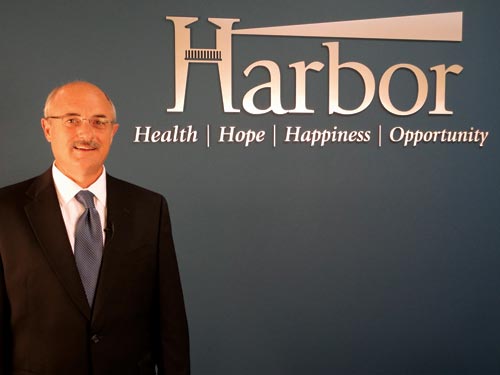
“There are people who come in and say, ‘I’m grieving, but I don’t think I’m doing it right,'” said Mary Macek, a clinical therapist at Harbor in Toledo. “Some of what we do with folks is just to normalize the grief process, to reassure people they are not going crazy for being in as much pain or distress as they are in.” 

One of the biggest misconceptions about grief is that it follows a certain timetable, said Dawn DeFalco, a licensed counselor and team leader for bereavement at Hospice of Northwest Ohio. 

“Grief is a lifetime journey and the journey ebbs and flows,” DeFalco said. “Many people feel they’ve come to terms with it, but then they are surprised months or years later when something triggers a special memory of a loved one. It is normal to have a reaction to a stimulus like a smell, taste, the different seasons of the year, an anniversary, a birthday or their favorite holiday.” 

Macek agreed. 

“Grief is a funny process. Even in its natural resolution, there are ups and downs and sometimes people have periods of time where they think, ‘OK, I’m doing better’ and then all of sudden they are overwhelmed by grief again and say, ‘OK, what did I do wrong?'” Macek said. “But I think it’s in the nature of grief to have those times when grief is more distressing again, so I don’t think it’s necessarily strictly a liner process even when it’s going well.” 

Many people are familiar with psychiatrist Elisabeth Kübler-Ross’ Five Stages of Grief — denial, anger, bargaining, depression and acceptance — but not everyone experiences every stage and the stages don’t necessarily happen in that order, Macek said. 

“It’s just to give a model to something that seems pretty overwhelming and out of control to a lot of people, but I like to think of grief as something that is normal and adaptive,” Macek said. “It’s the process by which we resolve some pretty intense feelings and take into ourselves information that for the most part we don’t want to take in.” 

Many people who have lost a loved one feel lost after the funeral, Macek said. 

“The funeral’s over, you’re back to work, everything is supposed to be fine and dandy and it’s not,” Macek said. “We don’t have a lot of visible markers in our culture beyond the funeral for dealing with loss. There are some countries in which the bereaved person is relieved of all the things they have to do on a daily basis for a year. We don’t seem to have some of those cultural norms any more.” 

Many people seek help from a counselor or support group when they feel “stuck,” Macek said. 

“Sometimes people get stuck on guilt. They think, ‘Boy, there should have been something else I could have done to prevent it,'” Macek said. “Some people get stuck in depression. They think that if they start to get happy, if they start to live their life again, they are going to lose their connection to the person who’s died. And some people get stuck because of the trauma. If a loved one has died in a sudden or violent way, there is some trauma associated with that that can impede their ability to resolve grief issues. A caregiver who has provided care for several years to someone whose condition has gotten progressively worse, I think those folks are somewhat traumatized too. 

“The places where people get stuck are usually places where they are afraid to go near their own pain,” Macek said. “If you’re stuck and you’re not getting unstuck that may be an indication it’s time to talk to somebody.” 

Harbor and Hospice of Northwest Ohio both offers individual and family grief counseling. The Hospice sessions are free. Hospice also offers free grief support groups, including Kids Grief Support, Mid-Life Spousal or Partner Loss, Young Families in Grief, Men in Grief, Supportive Spouses, After Your Parent Dies, Coping with Any Loss and Pathways, which includes a spiritual element. Everyone starts with Grief 101, a one-time session that addresses expectations. 

“The support groups help people normalize what they have experienced so they don’t feel so alone,” DelFalco said. “We learn from each other and we can be supportive of others and receive that support. It’s about getting back to some kind of normalcy in their life even though it’s going to be new normal for most people.” 

When Maryellen Schmidt’s 20-year-old son died in a car accident, she sought help from GriefShare, a free Christian-based group offered through CedarCreek Church’s LifeSupport series. The 13-week program is open to anyone who has lost someone close to them through death. People can join at any time and work through the series as many times as they need, Schmidt said. 

Schmidt participated in GriefShare for two years before becoming a group leader two years ago. 

“Those who have not experienced grief are often uncomfortable around those who are grieving and often shut the bereaved person down,” Schmidt said. “When you have a loved one who has died, you don’t just get over it and get back to work. It takes time. It might take two or three times through to even begin to heal.” 

Some GriefShare groups meet at a church; others meet in homes, Schmidt said. GriefShare leaders facilitate the sessions through videos and workbooks. 

“The leaders are not counselors. We’re just people who have experienced the death of a loved one and have dealt with grief,” Schmidt said. “I would encourage people to step forward to get help. Choking that grief and pushing it down leads to all kinds of other problems. As painful as it is, it’s most helpful and most beneficial to face it and deal with it.” 

Schmidt also operates the Northwest Ohio chapter of The Compassionate Friends, a nonprofit organization for parents who have lost a child “at any age, from any cause.” 

The group meets at 7 p.m. on the first Thursday of every month at St. James Lutheran Church, 4727 W. Sylvania Ave., but is not affiliated with any faith. The group host a fundraiser called Walk to Remember on Oct. 13. Registration is $5. For more information, visit www.compassionatefriends.org or email [email protected] 

Most people think of grief as a response to the death of a loved one, but there are many other situations that cause grief, Macek said. 

“People who have experienced trauma as children, when they are resolving that they are in part grieving the childhood they didn’t have. If someone has a difficult relationship with a parent, part of the adjustment to a healthier relationship with that parent may be grieving the loss of the parent you didn’t have so you can actually have a relationship with the parent you do,” Macek said. “There is some aspect of grief work in most forms of counseling.” 

Counseling isn’t the right fit for everyone. Some people, including many men, are “functional” grievers, Macek said. Instead of wanting to talk about it, they want to be doing something. 

“For some people, talking is probably not the best way of accomplishing things,” Macek said. “They want to work on a project and while they are working on things, sometimes their grief can resolve that way. To force someone who is a much more functional griever into talk therapy can be misguided and nonproductive.” 

Even after resolving issues found in acute stages of grief, there are still adjustments to be made. 

“Then there is the part about how do I rebuild my life and move on without this important person,” Macek said. “People have had expectations about how their life was going to look going forward and all of a sudden it doesn’t look that way and they have to make a new plan. That’s kind of a longterm consequence of grief.” 

 For more information, visit www.hospicenwo.org or www.harbor.org. 

Burnard: Challenge the GOP

0

This week’s topic for our pre-election roundtable: If we could talk to President Barack Obama, what would we say to him? To be honest, many times in the past three years or so, I’ve wished I could have a discussion with the president about what was happening in Washington, and his handling of it. In his zeal to try to lift the tenor of governance, the president bent over backwards to try to foster bipartisanship in Congress.

From the start and for the next three and a half years, obstruction was the name of the game for the GOP, both in the House and the Senate. Even with bills that at one time had wide support from Republicans and, in many cases, had even been proposed by Republicans, the obstruction was complete.

In the words of Senate Minority Leader Mitch McConnell, the No. 1 priority for the next four years for the GOP was to make sure that Obama was a one-term president.

To that end, they blocked any legislation they thought might give the president a “victory” and used the filibuster in the Senate more times in this time period than in all the history of the filibuster. The wheels of governance ground to a halt.

Their abhorrence for the man in the White House completely overrode any of the needs of the populace in the throes of the worst economic downturn since the Great Depression, and they fiddled while Rome burned. They refused to confirm many of the appointees the administration needed to address this dire situation, and offered no plans of their own to help the American public — commonly referred to as the 99 percent. The House couldn’t even be controlled by John Boehner, its own speaker.

If I could say something to the president, first it would be to ask him why he didn’t call them on their atrocious behavior and use his bully pulpit to try to force these so-called public servants to do their jobs. This could very well be the most do-nothing Congress in history. It is certainly in the top two. Instead of trying to remain above the fray, why not get in their faces and challenge them to do the job they were elected to do? Use your pulpit to explain the facts to the people, and to point out the many fallacies the GOP and its big-money backers foisted on us.

Much has been made of the Right’s obsession with Ayn Rand’s works. To put it in its most basic form, there are the producers (job creators) and the takers (the 47 percent of the population Mitt Romney referenced). Most of the people who fawn over Rand’s every word know nothing about her real life. If the Religious Right were to notice that she had no use for religion and didn’t believe in God, it might not be as enamored with her as Paul Ryan seems to be.

My impression is that a more appropriate analogy to the Romney and other GOP campaigns’ beliefs would be Nietzsche’s will to power and his concept of a superman. Good is anything that helps him reach his potential and Evil is anything that stands in the way of him doing so. Therefore, if lying and distorting facts help him reach the presidency, it is Good, and if the facts get in the way, they must necessarily be Evil.

A number of other GOP candidates and their backers seem to have taken this to heart. Romney’s campaign adviser even said they weren’t going to allow their campaign to be run by fact-checkers.

As the Obama campaign got into full gear this summer, it began to push back at the Karl Rove/Koch Bros./FOX News cabal’s lies and distortions, but it needs some personal input from the president. The perfect opportunity was the first presidential debate. Fact-checkers pointed out that Romney told 27 lies in 38 minutes, and the president did an incredibly ineffective job of calling him on his constantly changing positions and outright lying. My next talking point would be “Mr. President, you are an incredibly intelligent and skilled speaker. Will you use your talents in the next debate to call them on this and not let them frame the debate? You are the most powerful man in the world. It’s time to act like it.”

Lastly, I would ask why he chose to tackle health care reform before focusing on jobs. I know that rising health care costs are one of the most costly items for people and corporations, but it would have been better suited to a second-term agenda, when it could have been addressed in an even more effective manner.

Pounds: Sarantou for Recorder

0

There are many difficult choices facing Lucas County voters on Nov. 6. Who should be elected Lucas County Recorder is not one of them.

Republican George Sarantou is the clear choice over Democrat Phil Copeland, and it has nothing to do with party affiliation; it has everything to do with experience, competence and what is best for Lucas County.

The recorder’s office is responsible for indexing and maintaining land records like deeds, liens and mortgages in addition to military records. Voters do not hear much about the office because it has been run smoothly and without controversy by Recorder Jeanine Perry.

Copeland, an at-large councilman since 2005 who decided to run because he will be termed out of City Council at the end of his current tenure, captured 57 percent of the March 6 Democratic primary vote to top James Seaman and Kevin Eff.

Copeland did not attend the Feb. 27 recorder candidate forum to tell the public what he would bring to the office. Prior to his primary victory, he told Toledo Free Press, “I want to go and be a part of it and I may have some ideas when I get in there.”

The recorder position is important beyond its modest level of public recognition; Copeland’s vague goals should be a red flag to informed voters. So should his choice to decline a public appearance at a forum at the Sylvania Branch Library, a nondebate event organized by the League of Women Voters, Sojourner’s Truth and Toledo Free Press.

Copeland’s pattern of not facing voters is inexcusable and should be one factor in costing him the office.

Sarantou is also an at-large councilman near the end of his term limit. Sarantou, who works for 212 Capital Group, cited his love of public service and experience.

“For the last 30 years, I’ve been in the financial services and I’ve handled thousands of documents,” he said. He also serves as Council’s financial committee chairman. Sarantou said he would continue the efficiency displayed by Perry and move forward to modernize the office with a focus on security.

Finances and organization are Sarantou’s strengths; he is clearly prepared to take the office and move it forward. The recent Toledo Free Press report that Sarantou has one of Council’s best attendance records, while Copeland has one of its worst, is another compelling reason to believe the office will be in better hands with Sarantou.

Toledo Free Press strongly endorses Sarantou for Lucas County Recorder.

Thomas F. Pounds is president and publisher of Toledo Free Press and Toledo Free Press Star.

Michael S. Miller is editor in chief of Toledo Free Press and Toledo Free Press Star.

Forum discusses Ohio’s role in alternative energies

0

One Ohio Senate and three Ohio House of Representative candidates joined four area business entrepreneurs Sept. 25 to discuss their political positions on solar, wind, biomass, fossil fuel and nuclear energy projects. These projects were offered as solutions to establishing the best clean and alternative energy technologies for the state’s economy at the “Ohio Clean Energy Economy Meet the Candidates” forum at the University of Toledo’s Scott Park Campus auditorium.

The 90-minute panel discussion addressed how Ohio in general, and the northwest area of the state specifically, would best be served by its elected officials in meeting Senate Bill 221’s (SB221) requirements. SB221 says utility companies that do business in Ohio secure 12.5 and 25 percent of all their energy from clean and alternative energy technologies, respectively, by 2025. The remainder of energy in Ohio is derived from coal, oil and natural gas.

The Ohio legislature defines clean energy sources to include solar, wind, biomass, geothermal and hydroelectric energies. Alternative energy sources are defined to also include nuclear power.

And this is the area in which the four candidates in attendance — incumbents Randy Gardner (Republican, Senate District 2) and Matt Szollosi (Democrat, House District 46), and first-time candidates Jeff Bunck (Democrat, House District 47) and Dave Kissinger (Republican, House District 46) — differed most dramatically.

Bunck, who retired from teaching high school social studies after a 35-year career, describes himself as a lifelong environmental activist who strongly supports SB221, clean energy technologies and energy conservation. Bunck was the only candidate to receive applause for his proposals to a room of more than 60 UT students, faculty and staff members and local businessmen.

Wind turbines in Northwest Ohio

Gardner, a House representative who touted his role in passing SB221, noted that he holds the same energy positions as presidential candidates Barack Obama and Mitt Romney. He said Ohio, and the nation, must continue to utilize coal and oil as energy sources in addition to solar, wind and other clean energy technologies currently in the research and development stages.

Kissinger, a retired registered nurse with a military career that included monitoring the radiation levels of shipmates at sea for six- to 12-month deployments, is a firm believer in the “absolute” safety of nuclear energy. He is an outspoken advocate for legislating subsidies for Ohio energy companies research and development of nuclear power to meet SB221’s requirements.

Szollosi, a House incumbent who represents citizens of Jerusalem Township, Oregon and West Toledo, followed Gardner example in describing how hard he worked to pass SB221. Szollosi also took the opportunity to point out additional work in the Ohio legislature when he congratulated business participants Al Compaan (Xunlight 26 Solar), Praveen Paripati (SuGanit Systems, Inc.), Aaron Valentine (Emersol) and Keith Walters (One Energy, LLC) for taking advantage of some of the legislation he said he was instrumental in passing in past years.

Support for subsidies

All four candidates said they would support subsidies for the development of offshore wind energy projects on Lake Erie with one qualification. Bunck said his support was contingent upon a guarantee that Lake Erie’s “many other uses, including recreational fishing and boating, would not be ignored or lessened because of its use for wind energy R&D.”

Subsidies to the coal industry, fracking operations and the Davis-Besse nuclear power plant in Oak Harbor did not receive the same kind of support wind energy enjoyed.

Gardner said he would demand the legislature keep coal and oil in the debate when the Senate “scrutinizes all government involvement in the subsidizing of businesses.” Szollosi’s biggest concern was not eliminating coal from the discussion because, he said,  “We’re in a period of transition, and there are a lot of people in Ohio whose livelihood is tied to coal production, including the producers themselves and construction workers as two examples.”

Bunck jumped on Szollosi’s use of the word “transition” to discuss the U.S.’s need to transition from coal to “clean, natural energy,” a discussion of climate change and “our obligation to protect the future of our grandchildren.”

Kissinger told stories about his experiences as an RN in the armed services to tell the audience that the “health care of pollution is near and dear to my heart and I will do everything to ensure the ongoing reduction in pollution” as a legislator.

The discussion of Republican Gov. John Kasich’s interest in fracking did not follow party lines. Szollosi, a Democrat, agreed with Gardner that the jobs the natural gas industry has created with fracking have boosted Ohio’s economy and “had a significantly positive effect on the economies of northern and eastern Ohio, especially the Appalachian area.”

It was at this point the audience applauded Bunck’s rebuttal to Szollosi when he condemned companies’ drilling practices. Bunck said that as long as a drilling company “declares what they use is a trade secret, they don’t have to report what chemicals they put into the ground when they frack. They can legally throw the records away after two years, and we will never be able to hold them financially responsible if the people who live in the region develop health problems.”

Bunck said that, as a legislator, he would demand the government require more transparency in the fracking procedure and that “trade secrets have to go.”

The discussion of Davis-Besse gave Bunck an opportunity to question the legislature’s wisdom in subsidizing nuclear power R&D when the cost of energy is about $114 per nuclear megawatt and only $50 per wind megawatt.

Bunck said any subsidizing of nuclear energy should explore the safety issue, citing the near catastrophe at Three Mile Island as a warning to what could happen in Oak Harbor.

Szollosi, his fellow Democrat, disagreed, saying that since the nuclear industry “is very heavily regulated and there is full and complete transparency in everything they do, I have confidence that this facility is being very closely monitored.”

Gardner said he would support keeping nuclear power a part of the state’s energy program because “it seems to have bipartisan support in both the Senate and the House.”

Kissinger again told stories of his experiences as an RN in the service as a way of leading into his position of being “very pro-nuclear power. It is a great source of energy, and I would support any legislation that would foster the growth of nuclear energy.”

Miller: Me vs. food

0

I was wheeled into the operating room and transferred to the main table. The anesthesiologist leaned over me with a mask and lied, “I’m going to give you some oxygen.”

I nodded and glanced at the large TV showing my name and case details on the screen. I had chosen to undergo bariatric sleeve surgery to gain control over my dangerously ballooning weight. After six months of preparation and an 18-day liquid diet, I was seconds away from the operation.

It was 10:02 a.m. Sept. 18.

When I woke up at 2:30 p.m., I looked down to see six small incisions where 85 percent of my stomach used to be. I tried to swim to consciousness, but kept falling back asleep.

The first words I heard were from a nurse, who was talking to another nurse. About me.

“His blood pressure is way up,” she said. “At 190. We’re giving him meds to try to get it down.”

I groggily glanced over my left shoulder and saw the red flashing digital 190, which closely resembled the numbers on the hospital scale.

“Wow,” I said with a mushy mouth, “I went into surgery at 350 pounds and I’m down to 190! Nice!”

The nurse smiled and said, “No, that’s your blood pressure. We just gave you Lopressor to help get it back down.”

Even at my heaviest weight, I had been blessed with relatively healthy inner workings. No diabetes and blood pressure that reliably hovered at 120 over 80. The 70-point spike should have alarmed me, but I wasn’t quite awake and I had one finger on a morphine trigger.

I slipped back into darkness. When I opened my eyes, I was staring at Adam Richman, who hovered several feet over my hospital gurney, wearing jeans, a black jacket and a T-shirt with a cartoon pig chowing down on a rack of barbecued ribs.

“Adam?” I asked.

“That’s right, this is Adam Richman, host of Travel Channel’s ‘Man v. Food.’ I travel the country looking for the greatest pig-out spots, and today I am in beautiful Ann Arbor, Mich., where the wolverines fight and the students devour some of the Midwest’s biggest and best sandwiches and burgers,” Richman said.

“Did you bring me anything to eat?” I asked.

“No, dude, your pig-out days are over,” he said, smiling sympathetically.

“You know, I watched an hour of your show every day while I was on my presurgery diet,” I said, still hoping he was hiding a cheeseburger, plate of honey barbecue chicken wings or even a loaf of Zingerman’s fresh bread.

“Wasn’t that tortuous, watching me eat a 6-pound burrito while you were choking down 8-ounces of medical protein?” he asked.

“It actually made me feel better, seeing all those eats and vicariously watching you destroy a 10-patty burger and 4 pounds of fries,” I said. “I can’t explain it, it just helped.”

“Well, good for you, dude,” Richman said. “I just stopped by to wish you well and let you know you can do this. It’s an important decision and you are doing a proud thing for yourself and your family. It will be tough, but I and many others support you.”

“Thanks,” I croaked, teary-eyed. “Have you ever thought about losing a few pounds through diet or surgery?”

“F*ck that,” he said. “Now, I’m off to Boston to eat a 10-pound lobster and 2 gallons of ice cream!”

I shook my head, and he was gone.

“Adam,” I mumbled, fighting to wake up. “Pig-outs. Travel Channel. Dagobah System.”

Another hour had passed and my blood pressure numbers were down to 160.

I vaguely remember my wife and surgeon stopping by to check on me. Everything had gone smoothly, I was assured.

The nurse patted my hand and two assistants said hello as they began to wheel my bed toward the elevator and to my room. On the 10-minute journey, both women talked nonstop about what they were having for lunch and what their dinner plans were.

Solitary confinement

When my head was mostly clear, I took stock of my surroundings. I was in a small private room. I had an IV in my right hand, heart and vital signs monitors taped to my chest, oxygen tubes in my nose and a catheter draining urine from my body.

“Huh,” I thought. “I wonder how that is hooked up.”

Then I remembered/realized the catheter tube had been inserted through (for the purposes of this discussion, I will refer to the organ as “Sinbad”) and up into my bladder. I had been asleep for the unnatural act of insertion and tried to dwell on less excruciating details, like the severe pressure I felt in my chest, as if someone were leaning on my sternum with both elbows.

When the first nurse appeared, I described the pain and asked if I were having a heart attack.

“No,” she said, “that is from the CO2 they pump into your body while they operate. It takes a day or two for that pressure to dissipate.”

Between the needles, pressure, soreness and that catheter, which had taken on a Stephen King quality of evil in my head, all I wanted to do was sleep. Until the nurses woke me up to take a blood sample. And then when they woke me up to take my vital signs. And then when they woke me up to ask how I was sleeping.

In addition to those challenges, I had last taken a drink of water and eaten some plain low-fat yogurt at 6 p.m. Monday. It was now 8 a.m. Wednesday and even what remained of my stomach was wondering what the hell was going on.

The IV was keeping me hydrated, but the direct oxygen was drying out my mouth to the point where I was ready to start spitting up tumbleweeds. The nurses brought me little swabs my wife could dip in water to keep my lips from cracking like the roads in South Toledo, and eventually a nurse hooked up the oxygen to the CPAP breathing machine I brought from home. That handy device has a built-in humidifier, so I was much more comfortable.

TLC

A quick word about the nurses. The two primary nurses working with me were responsive, empathetic and absolutely helped me make the most of a tough situation. One of the nurse’s husbands had undergone bariatric surgery, so she knew exactly what road I was on and was a wonderful sounding board. I know not everyone has the same experience, but every nurse and assistant that aided me was a great help and a tremendous presence.

20 seconds of weirdness

Which is why I can forgive my main nurse for lying to me about the catheter. About 24 hours after the surgery, the IV, oxygen and monitors were removed. All I needed was to have the catheter taken out and I would be able to start walking to avoid blood clots and to keep the weight loss moving. She came in with an assistant (it seemed like every time I was at my most naked/vulnerable/grossly displayed, the assistant was some gorgeous young woman. I suppose a little humiliation is good for the soul). She took Sinbad in hand and said, “OK, this is going to feel weird for about 20 seconds.”

Then, she did the Band-Aid Yank and pulled the entire catheter from my bladder, out my urethra and on its long(ish) journey to freedom. She pulled it like a falling man pulls a ripcord on his parachute. She yanked it like an angry man trying to get his lawnmower started.

Later, when my wife joined us, the nurse said, “Your husband cried like a baby when I removed his catheter.”

“I did not,” I defended myself. “I screamed like a little girl. There’s a difference.”

Going home

About 48 hours after the surgeons reduced my stomach to about the size of a small peeled banana, I was released from the hospital. The liquid diet finally ended at 30 days, when cottage cheese and one scrambled egg were introduced to my diet. I never dreamed I would be so excited about cottage cheese. Low-fat cottage cheese. I have been blessed with tremendous support from friends, family and that strange family of friends on Facebook. I have cried randomly, been moody and missed more work than I wanted to.

For one short period, I would stare at the fridge or pantry, take a bite of something I could not have, and do what I called “The Clinton” — chew it until every atom of flavor had been savored, then spit it out in the sink without swallowing anything.

I started Sept. 1 at 380 pounds. As of this writing, Oct. 2, 14 days after the surgery, I am at 315 pounds. I am wearing shirts I haven’t taken out of the closet in two years. I am walking two or more miles every day.

I get tired, but I feel … better.

When my pal Adam Richman beats a food consumption challenge, he makes a capital “M” with his fingers and declares, “Today, in the eternal struggle between man vs. food, man wins!”

I am nowhere near ready to declare that victory yet, but when I break 300 pounds, and then 250, I am going to make a lowercase “m” and declare temporary victory in my eternal struggle.

And I will have earned it.


Michael S. Miller is editor in chief of Toledo Free Press and Toledo Free Press Star. 

Pounds: Honors roll

0

Between a narrow New York Giants loss, a Detroit Lions debacle and the Americans losing the Ryder Cup, Sept. 30 was a terrible sports day for me. But for a Sunday, it was a great workday.

Toledo Free Press Editor in Chief Michael Miller and I drove to Cincinnati for the 17th annual Ohio Society of Professional Journalists (SPJ) Awards, where we heard TFP’s name called a record six times. The lunch and ceremony took place at the club suite of the Cincinnati Reds’ Great American Ballpark, a beautiful facility even if it was built with a mediocre view of the Ohio River instead of what could have been a spectacular view of the city’s impressive skyline.

Hosted this year by SPJ Secretary-Treasurer Tom Moore of Clear Channel Media and SPJ Cincinnati Chapter President Alex Coolidge, the awards honor Ohio’s best journalism in print, broadcast and online media. This year, TFP was honored with the following awards:

“Best Weekly Newspaper” for the fourth year in a row (circulation over 100,000).

Because of our 100,000 circulation in 2011, TFP competed in writing categories against the state’s daily newspapers.

Miller won first place in Ohio for Best Defense of First Amendment for “Was it something I said?” in his “Lighting the Fuse” column.

Miller also received first place in Ohio for Best Media Criticism for the column “Monkey Business.” Miller deconstructed a Jan. 8, 2011, Blade story, “WSPD host compares TPS students, monkeys; Wilson denies racism.” SPJ awarded TFP second place for Children’s Issues Reporting to Patrick Timmis for stories on Feed Lucas County Children, a nonprofit that has prepared more than a million meals for hungry children.

Vicki L. Kroll, also the director of internal communications for the University of Toledo, received second place for Best Rock and Roll Feature Writing.

Jeff McGinnis, TFP Star’s pop culture editor, received second place for Best Arts Reporting (circulation under 100,000).

The Blade received eight awards, including a first place for explanatory journalism to David Yonke, who is now editor of ToledoFAVS.com and a Toledo Free Press contributor.

The awards judging this year was conducted by journalists in Chicago, Detroit, Hawaii, Florida, Milwaukee and Washington, D.C.

We are proud of the unchallenged standards SPJ represents and the high values the industry places on its honors. Congratulations to SPJ for another fine program and to all the winners of its honors.

Thomas F. Pounds is president and publisher of Toledo Free Press and Toledo Free Press Star. Contact him at [email protected].