Karen Dotrice Nalle played Jane Banks in “Mary Poppins.” Photo courtesy Karen Dotrice Nalle.
She called him “Uncle Walt.”
Decades after his passing, Walt Disney is a bit
of an unknowable figure for modern audiences — families who have grown up with
the classic films he helped create. For most people who watch “Snow
White,” “Fantasia,” “Pinocchio” and more, the man who
made it all possible is simply a legendary figure. They have no sense of the
human being at his core.
It isn’t like that for Karen Dotrice Nalle. Born
in Guernsey in the United Kingdom, Dotrice Nalle was the daughter of two actors
and ended up becoming part of the family business almost by accident. After
being sighted by a Disney scout in a play, she was brought to California with
her family to work in the company’s films. There, she came to see the
then-53-year-old Disney as a bit of a father figure — one who treated his
young stars with respect befitting another adult.
One day, Karen was visiting Disney in his office
when inspiration struck. “I said to him, ‘You know, Uncle Walt, your desk
is so far away from the door, where people come in. And I’ve got a great idea
— I can help you,'” Dotrice Nalle said in an interview with Toledo
Free Press Star.
“‘Why don’t we move your desk closer to the
door, so you won’t have so far to walk?’ And he was great, because he didn’t
treat me like a kid. And he said, ‘Karen, let me tell you something — it’s
over here for a reason. Because by the time those cigar-chewing executives have
had to cross the floor and get to my desk, they’ve changed their mind about
what they were going to ask me.'”
Dotrice Nalle was only eight years old when she
was chosen in 1954 to star in what had become a passion project for Disney —
his long-gestating adaptation of P.L. Travers’ “Mary Poppins.” Karen
was cast as Jane, one of the Banks children, in what would become a smash hit
that made her a recognizable face worldwide.
“I feel very blessed. Disney gave me a gift
— he picked me out of the blue. It could have been any other little girl. And
I made three films for them, and they were always such happy experiences,”
Dotrice Nalle said. “What kid wants to miss out on magic? He was magic,
the set was magic, everything that he did for us.”
Such a remarkable rise for a young performer who
didn’t necessarily ever want to be an actress. “I didn’t really want to
participate, actually. It was the family firm — we could have been dentists,
we happened to be actors. I don’t know if there’s many five-year-olds who say,
‘Ooh, mummy, I want to be a dentist.’ Or an actor. I just sort of fell into it.
I had a great time, absolutely. Ultimately, it just wasn’t for me. I’m kind of
a private person, so being out there in front of people wasn’t my ultimate cup
of tea,” Dotrice Nalle said.
“I was really lucky. So I feel a bit of an
ingrate, because I sort of got everything — which is kind of unfortunate that
I didn’t want it more. I loved the fans, I loved the crew, I loved being on
set. But the whole notion of being an actress just wasn’t for me.”
She left acting at a young age with an eye on
becoming a mother (she eventually had three children), though she has never
quite ended her connection with Hollywood. She married producer Edwin Nalle in
1994 and still lives in L.A. — strictly for the weather, she insists with a
chuckle.
“As an adult, having made a specific choice
that, okay, that was fun, quit while you’re ahead. I’ve always been surrounded
by the business, I’m married to a guy who’s a TV producer, my family are actors
still — so I’ve never left the profession, and I never want to. I think it’s
the most exciting game there is.”
But as the 50th anniversary of “Mary
Poppins” is upon us, Dotrice Nalle is beginning to reconnect with the
memories of her past. For the first time, she’ll be doing a few appearances at
conventions and other events in the days to come. She recently attended a screening
of “Poppins” at Grauman’s Chinese Theater in Hollywood — the first
time she’d actually seen the whole movie, believe it or not. And she was also
at the premiere of “Saving Mr. Banks” — which inspired new
reflections on a wonderful time of her life, and the caring, childlike man who
made it possible.
“He didn’t baby you, or talk down to any of
his actors — and I know Hayley Mills felt the same way,” Dotrice Nalle
recalled. “I think he was more our age than his own age.
“What a gift to be given in life, considering I
am a non-theatrical type of person. What a gift to be given, that somebody is
ever going to remember me for something.”
Hollywood Casino Toledo poker room manager Ken Lambert Jr. will host Hollywood Poker Open in May. Toledo Free Press photo by Dave Willinger.
It is said that if you stand in New York’s Times Square
long enough you will meet everyone you have ever known. It could also be said that
if you sit in a casino poker room long enough you will see just about everything
there is.
Had you been sitting in the poker room at Hollywood Casino
Toledo a few of weeks ago, you might have noticed a lanky, bespectacled
stranger wearing a sky blue suit strolling among the tables, chatting with the
floor boss and dealers on break. That man was Ken Lambert Jr., new to Toledo
but hardly new to poker rooms.
Since mid-February, Lambert has served as the casino’s
new poker room manager. It is the latest job title for a man whose poker
pedigree reaches back three decades all the way to Jack Binion’s storied
Horseshoe casino in Las Vegas, where a teenage Lambert got bit by the casino
bug in the late 1970s while working as a busboy. It was his father, Ken Lambert
Sr., who got him his start. When Ken Jr. was old enough,
he taught himself to deal, passed an audition and was hired at Vegas World.
Since then, Lambert has been involved in some aspect of running poker rooms
from Las Vegas to Oklahoma to Mississippi and now Toledo.
Lambert was hired to turbo-charge Hollywood Casino
Toledo’s poker room — great news for regional poker aficionados, amateurs and
pros alike, and also great news for the casino and Greater Toledo, whose bottom
line and general entertainment economy, respectively, stand to gain
significantly from the hiring.
As Lambert rolls out plans to expand poker tournaments at
Hollywood Casino Toledo and initiate events designed to draw players from across
the region, he expects his efforts will “kick it up a notch” in the casino’s 20-table
poker room.
Penn National Gaming, which owns Hollywood Casino Toledo,
had been searching for someone who was “the right fit for the property,”
said Jeffrey Goodman, vice president of casino operations at Hollywood Casino
Toledo. The poker room manager slot had been vacant since last year, Goodman
said, and the casino was not only seeking a replacement with extensive poker
knowledge but a person with “great poker business acumen.” Some company officials
knew of Lambert, who had semi-retired from the gaming life a couple of years
ago, and put forth his name as a candidate for the job.
Goodman, who has been with Hollywood Casino Toledo from its
start in 2012 and employed by Penn National for 12 years, said Lambert’s job
“is to increase traffic and revenue in the [poker] room.”
The company tracks poker revenue for its own management
uses but declined to release those numbers to Toledo Free Press. However, Goodman said poker room business had
been “a little stagnant over the past couple months,” with most business coming
on weekends, Friday through Sunday during the day, Goodman said.
According to monthly figures released by the Ohio Casino
Control Commission, gamblers at Hollywood Casino Toledo wagered $10.8 million
on table games in January and $12.9 million in February. Gamblers wagered a
total of $234.3 million on slot machines during the same time period.
Gamblers wagered a total of $1.81 billion at Hollywood
Casino Toledo in 2013, with about 10 percent, $159.4 million, coming from table
games. Toledo has the fewest table games — 80 — of any of Ohio’s casinos.
The casino reached out to Lambert, 51, who was living in
his home state of Indiana, reconnecting with family after the nonstop duties of
a Vegas casino official and the peripatetic lifestyle of a World Series of
Poker tournament manager.
The self-described workaholic — who opened the Mirage casino
on the Vegas strip in 1989 and is known for being the first person to run a
World Series of Poker event outside of Las Vegas — said when Hollywood Casino Toledo
called it made him realize he still had a passion for the game. That passion
along with a desire to provide for his new wife, whom he married in December, made
Lambert eager to end his hiatus and come to work in Toledo.
Hollywood Poker
Open
One of Lambert’s first duties has been to help finalize
the Toledo satellite events for this year’s second annual Hollywood Poker Open tournament.
The $2,500-seat tourney will take place at Penn National Gaming’s M Resort in
Las Vegas on June 27-29. Area poker players can vie for a $4,000 prize,
including a seat at the tournament, hotel accommodations and spending cash, at each
of three Hollywood Casino Toledo satellite events to be held the last three
Saturdays in May (May 17, 24, 31).
The structure of the satellites will be a $125 buy-in
with unlimited $50 rebuys during the first two hours of play. The maximum
number of players for each event is 160, and Hollywood Casino Toledo is
guaranteeing five seats to the HPO from each of those satellites.
“That’s a pretty strong guarantee,” Lambert said.
He also defended rebuys, a standard tournament option
that often stirs heated debate in the poker world. Rebuys are not designed to
make money for the casino but rather make it worthwhile for players to
participate, Lambert said.
“Nothing worse than a guy driving here from Cleveland
gets a bad beat put on him and he’s out,” he said, giving a hypothetical
example of why he favors rebuys.
With the structure in place for those May satellites,
“that guy has an opportunity to make his drive worthwhile,” Lambert said, noting
the $50 rebuy does not entail a second round of administrative fees.
Lambert said there would also be a free roll tournament
for regular players at the casino’s poker room. Players who log enough hours in
cash games or play in enough tournaments this spring can sign up for a chance
to play their way into the HPO. Details would be forthcoming soon, Lambert
said. The free roll would be held in advance of the three satellites, he said,
and likely be structured in two flights on the same day to avoid a repeat of
last year’s inaugural event when a long line of applicants were turned away.
So why should Lambert — veteran of Vegas, former protégé
of Jack Binion, friend of Doyle Brunson, whose rolodex contains the phone
numbers of countless famous professional poker players — be content to pace
the poker room at Hollywood Casino Toledo? Lambert said he loves the property,
citing its newness and state-of-the-art technology, including the mammoth
rear-projection TV screens in and around Scene sports bar.
Lambert is already thinking outside the poker room box. He
has ideas for large-scale tournaments that would require additional, temporary seating
beyond the 200-player capacity of Hollywood’s poker room. He also said he would
like to reach out to celebrity players like Todd Brunson, Vanessa Rousso and
the flamboyant Robert Williamson III to participate in poker room events at
Hollywood Casino Toledo.
Lambert conceded that the lack of a hotel on the
Hollywood casino property is a drawback. While he called it “tough to overcome
the room situation,” Lambert predicted the big events he envisions for Toledo
would “fill up every hotel in Rossford and down the road.”
Lambert’s “wish list” for the poker room
includes player amenities, such as food. But Lambert also is interested in
expanding the menu of poker room action to include higher limit Texas Hold ‘em
games, ante-only Hold ‘em tournaments and a high-low split Omaha game. Those
changes cannot happen overnight – new games require state gaming commission permits
– but Lambert, who is licensed in eight states to run gambling operations,
doesn’t foresee regulatory roadblocks and is confident the changes will take
place during the year.
By the way, that first World Series of Poker offsite
event was a charity tournament at the ESPN Zone in Times Square in 2005. So you
could have met Lambert had you been standing in that maelstrom of the masses
nine years ago. Either way, should you run into him on the poker floor at
Hollywood casino, feel free to introduce yourself. Lambert has built his brand
on a reputation for taking good care of players. Just bear in mind your
interlocutor has already heard, from amateurs and top pros alike, thousands of
bad beat stories — so spare him yours.
The Anthony Wayne Bridge will closet at 7A.M. March 17 for 19 months. Toledo Free Press photo by Sarah Ottney.
One of Toledo’s most iconic landmarks is set to go out of commission for the next 19 months, leaving many area residents and business owners apprehensive yet resigned.
The Anthony Wayne Bridge — more commonly called the High Level Bridge — will close to both vehicles and pedestrians at 7 a.m. March 17 and remain closed until September 2015 as it undergoes repairs. It’s the first longterm closure of this duration in the bridge’s eight-decade history, said Theresa Pollick, public information officer with Ohio Department of Transportation (ODOT), District 2.
Every day, more than 26,000 vehicles cross the 3,215-foot-long span. The structure, which connects Downtown with the city’s East Side over the Maumee River, is the last cable suspension bridge on the state highway system in Ohio, Pollick said.
“Obviously it has historical significance to Toledo,” Pollick said. “When you think of a bridge in Toledo you think of the Anthony Wayne Bridge.”
Compounding the traffic issues will be the Craig Memorial Bridge, which closed Jan. 15 for $11 million in painting and repairs, and, hampered by winter weather delays, will not reopen until March 27.
“We did our best to avoid it, but there will be an overlap,” Pollick said. “We’re working around the clock and squeezing about a third of the contract into a few months. There is a lot of work still to be done there.”
Henry Loughner, a tow truck driver with Boyz Automotive & Towing on East Broadway Street, said he drives across the bridge regularly.
“It’s going to make it a lot harder to get around to this side,” Loughner said. “And the traffic’s going to be crazy because the Craig Street Bridge is already closed out. It’s going to be a little hectic.”
Tim Williams, owner of Big Apple Deli on Woodville Road said he’s hoping for the best.
“You’re obviously nervous about it, but you can’t be upset about something that is progress and is going to improve the condition of the bridge,” he said. “It will make it more difficult for our customers, but our customers are a tough bunch. They come from all over and will get here come heck or high water — we hope anyway.”
Tony Whitaker, a student at Owens Community College, lives on the South End but walks the bridge two to three times a week to visit friends and his girlfriend on the East Side. He said the closure will cut his visits down to once a week unless he can find a ride.
For the past two years, Nicole Strong of South Toledo has been meeting a fellow Fremont Middle School teacher in Northwood to carpool to work. She will discontinue that when the bridge closes.
“It will take way too long to get to her place from mine so we will both just have to drive separate from now on,” Strong said. “I’ve been trying to find another teacher, but there’s nobody I know well enough or feel comfortable enough with carpooling so I’m on my own.”
Jeno DeLuca, owner of Complete Auto Repair on South Summit Street, said he’s afraid he’ll have to switch to a more expensive parts dealer to avoid the trip across the river to his preferred shop. However, he understands the closures.
“Yes, it will affect business,” DeLuca said. “It needs repaired, though. Have you seen it? It’s falling apart.”
Beatriz Garduno, owner of La Cachanilla Mexican Restaurant on South Summit Street near the foot of the bridge, said she’s hoping the closure will actually increase business.
“Last week, we had some construction people working on the bridge who came in and had lunch here,” Garduno said. “I’m hoping it won’t hurt us and might help us a little bit. It’s been a hard winter.”
Danielle Foltz, a cashier at the Valero gas station on the Downtown side of the bridge, said she’s hoping loyal customers and a popular 24-hour Subway will keep the station busy.
“A lot of customers ask about that. We don’t know yet,” Foltz said.
E.S. Wagner Company of Oregon will be the main contractor for the $28.7 million project. The entire concrete bridge deck will be replaced along with sidewalks, railings, street lighting, fencing and expansion joints. The lighting now on the outside sidewalks will move to the median. Substructure work will include repairs to the existing concrete piers and abutments and the addition of two new piers. The bridge will also undergo structural steel repairs to the towers and superstructure.
The most noticeable difference will be the replacement of two steel trusses on each end of the suspension spans with steel girders and the addition of two concrete support pillars, one on each side of the bridge, said Mel Williams, bridge division estimator project manager with E.S. Wagner.
There are 480 locations on the bridge that need steel repaired, including on the towers, the suspension span and the approach span, Williams said.
“A lot of the prep work has been fabricating the repair steel for the superstructure of the bridge,” Williams said. “We have to go in and take out the deteriorated steel, have new steel fabricated and go back and replace the deteriorated.”
Damaged portions of the concrete substructure will also be repaired.
On March 17, workers will begin about two weeks of preliminary work to prepare, Williams said. The next step will be to start taking the deck off the suspension span.
A crew of 50-75 workers will be working on the bridge at any given time, he said.
“It’s a very aggressive schedule to get the amount of work done that has to be done in that time frame,” Williams said. “We’ll work multiple crews and maybe even multiple shifts.”
The Anthony Wayne Bridge was built from 1929-31 for about $3 million.
In 1960-61, the bridge underwent an extensive rehabilitation, including a new deck, tower lighting upgrades and painting. It was repainted in the 1980s. Another major rehabilitation came in 1996-97, including a concrete deck overlay, suspender rope replacement, expansion joint replacement and painting, Pollick said.
Consultants from several companies spent three years, from 2009-12, inspecting the bridge’s structure and cables to determine what repairs were needed. Cables were tested to detect any breaks and the bridge was shut down for a day to take measurements without the weight of traffic.
Starting this fall, safety platforms were installed beneath the bridge.
“We’ve prepared for this one for a long time,” Pollick said. “We spent a long time dedicated to investigating what needed to be done with the bridge because of its age.
“We wanted to keep its historical integrity and do as much preservation work as possible,” she said. “But we had to make these changes to ensure the bridge’s span for the next 50 years.”
Darrel Hafner, owner of Hafner’s Sheet Metal & Supply on South Summit Street, said the bridge is “vital” to the area and it will be interesting to see how things go.
“I would imagine it’s going to be a pain, but I also understand the need and there’s not much you can do about it,” Hafner said. “I’ve been trying to figure it out, but I think I’m better off just adding some gas to the tank and doing my thing. It’s going to be a little bit cumbersome, but I think we can get around it.
“I have about six commercial roofing contractors and 10 residential heating contractors that might have to go out of their way a little bit to get here, but we provide them pretty good service so I’m sure they’ll do it no matter where we’re at. You just gotta work around it and do what you gotta do.”
Oscar Ponce, who owns San Marcos Mexican grocery and restaurant near the bridge, said he’s hoping he won’t lose business when it’s not as convenient for people to get there.
“We are [worried], of course we are,” Ponce said. “We know it’s going to affect our customers, but there’s nothing we can do. People come here because they love our food so hopefully nothing changes. We depend on our customers so I hope everything goes fine.”
Oliver House General Manager Neal Kovacik and Jamie Ondrus of True Value Ondrus Hardware on Oak Street both said there were enough other bridges that they didn’t foresee losing business.
Work is scheduled to be completed by December 2015, but lane restrictions will also be put in place in spring 2016 for painting.
Councilman Mike Craig of District 3 said such closures are just part of the price of living in a city with a river running through it.
“I know there are businesses with concerns,” Craig said. “But you know what the alternative is? Let it go and then close the bridge permanently. ODOT is doing what they have to do to preserve the bridge.”
ODOT’s official eight-mile detour is across the I-75 bridge, but Craig said he’s not so sure people are going to stick to that route.
“Nobody who knows their way around the city is going to take that detour,” Craig said. “I would say probably 80 to 90 percent of traffic is going to detour to the MLK Bridge and that’s going to put a lot of pressure on Main Street.”
Jodi Gross, community builder at East Toledo Family Center, said her biggest concern is traffic cutting across through the neighborhoods and down residential streets.
TARTA has four bus routes that service East Toledo but TARTA actually rerouted its buses over the MLK Bridge in June 2012 in anticipation of this bridge closure as well as Hollywood Casino Toledo opening, said Steve Atkinson, director of marketing for TARTA.
Sgt. Joe Heffernan, public information officer with Toledo Police Department (TPD), said he expects the first 10 days to be the worst because the Craig Bridge will still be closed and because it takes time to adjust to new routes.
TPD will work with traffic engineers on the timing and cycling of lights near the intersection of Front and Main streets in anticipation of heavier traffic. Officers will also be enforcing weight limits for commercial traffic.
“I would just ask for patience,” Heffernan said. “This will work out. People will figure it out as time goes on. It will certainly be an inconvenience in the beginning, but keep your eye on the prize, which is a new refurbished bridge that will serve us for the next 50 years. It will be worth it in the long run.”
In the wake of business owner Sandy Spang’s resounding success in running for Toledo City Council, more dollars-and-sense-oriented people are stepping into local politics.
Marcia Helman, Lickity Split ice cream store owner, and Joe Celusta, a business owner for several years and most recently senior manager of True- North, are among those planning to run for the District 2 City Council seat vacated by Mayor D. Michael Collins.
Celusta, a Republican, told Toledo Free Press Managing Editor Sarah Ottney the future of the Southwyck property is a key issue for District 2 and Toledo.
“Southwyck is vital to the city just for tax revenue,” Celusta said. “It’s is very important to us because that’s where our future income is to support to the rest of the district. If we develop it, we get tax revenue out of the Southwyck area and that’s what fixes the streets.”
Helman also said revitalizing Southwyck needs to be a major focus.
“We need to set up a master plan, not let just anybody go in there and build anything,” Helman told Ottney. “It’s going to be a slow revitalization, but I would work with anybody who wanted to work on that.”
Helman is running as an independent with the support of Realtor Rob Ludeman, who so skillfully guided Spang through her first election.
The District 2 seat is being temporarily filled by Democrat Matt Cherry, a Sheet Metal Workers Local 33 worker, who was appointed in January.
Cherry told Ottney he plans to focus on economic development, neighborhood safety and the amenities that keep young families in Toledo.
“More jobs fix a lot of problems in a lot of aspects,” Cherry said.
It is encouraging to see more business owners invest in the leadership issues of our region.
I suspect the dominant voice in the election will belong to Toledo Public Schools Board of Education member Bob Vasquez. Vasquez, a Democrat and licensed social worker, told Ottney the skills and experience he developed on the school board, including reading multimillion-dollar budgets and making tough financial decisions, will help him on City Council.
“You don’t get into leadership positions just to go along,” Vasquez told Ottney. “You either lead or you go along, one or the other, and I feel that I lead.”
Another universal concern was over ongoing fund transfers from the capital improvement budget to the general budget.
“I haven’t heard anyone talk about plans to wean ourselves off that in the future,” Vasquez said. “And that does affect basic services, especially streets, because that’s capital improvement.”
I have long known and trusted Vasquez, but I remain open to the messages and ideas the other candidates will present. In any event, I am pleased to see this continuing trend of more business owners joining the political scene. The insight, responsibility and financial acumen business people can bring to the conversation are a crucial contributions to the future of our region.
Thomas F. Pounds is president and publisher of Toledo Free Press. Contact him at [email protected].
Gina Fielding, above, Cerise Claussen started Verify Before You Share a Lie to help reduce the spread of misinformation via social media. Toledo Free Press photo by Christie Materni
Thousands of us do it every day: We click a button and share a post on social media. We think it’s harmless, but those shares often spread misinformation.
That’s why Toledo resident Gina Fielding is asking people to “Verify Before You Share a Lie.”
Her website conducts background research on people to verify whether they are really a sex offender, wanted by police or missing, as these reports are common on social media. Her research is used to help people determine whether they should share the information on Facebook, Twitter or other social media.
“People want to help and want to get this bad guy off the streets,” said Fielding, a social media expert. “I call them Internet warriors. They hit that share button thinking they’re doing a good thing and that makes sense. However, with everything positive, there is a negative, and that is misinformation spreads as good information.”
About 35,000 people thought they were doing a good thing when they shared bad information about 23-year-old Toledo resident Chad Lesko last year. Lesko’s ex-girlfriend created a fake Facebook account and posted lies about him, saying he was wanted by the Toledo Police Department for raping four children, one his own son.
The post went viral and soon Lesko was being harassed and nearly assaulted by strangers in a park. He received death threats and began having anxiety attacks that put him in the hospital several times.
“I see a lot of misinformation and it’s one of my pet peeves,” Fielding said. “It destroyed his life for months. He volunteers at a church every month handing out food to families. Within five minutes the police showed up and had him on the ground in front of the people he volunteers for. He’s humiliated and [the police] wasted valuable time.
“Here’s this kid whose life has been turned upside down and he doesn’t know how to handle it,” Fielding said. “He was devastated. … Kids are slitting their wrists over this kind of thing. They feel like their life is over.”
After witnessing Lesko’s case, Fielding and her friend Cerise Claussen got together and came up with the name Verify Before You Share a Lie.
Claussen was also deeply disturbed by Lesko’s story and is pleased they can do something positive to combat negative misinformation about innocent people.
“I could not stand seeing that kid being judged … when he really didn’t do what he was accused of,” Claussen said. “Everybody judged wrongly and that gets me. … Occasionally, he still has problems with it.”
Fielding’s and Claussen’s efforts grew into a full-fledged “misinformation-fighting operation.”
Not everyone has the time or the access of a journalist to check out whether information is good or bad, Fielding said. That’s why she spends her own time, without financial compensation, checking with police departments, court records and missing persons’ organizations.
Fielding recently worked to verify a submission about a Blade article that reported a rapist at Franklin Park Mall. Turns out the article was from 2003 and police had caught the suspect days after the incident, Fielding said.
“People were sharing it and going ‘This is awful.,” Fielding said. “People were on the lookout and police were getting calls. It’s from 2003. It’s as simple as looking at the date.
“They’ve already caught [the suspect] within days. It’s wasting police time. This is what happens [with] Internet warriors. They want to help. I think their hearts are in the right place.”
When a situation has been resolved it will be posted to her website and Facebook page with a “RESOLVED” stamp on it. If the information is verified, it will be stamped with “VERIFIED” for true or listed as “DEBUNKED” if false. If Fielding could not verify whether the information was true or false, she will advise her client to use caution when sharing.
“We will do all the work and you will be able to check back to the site within minutes to hours to see if the post is true or not,” Fielding said. “Then you can be comfortable in your sharing and not take part in potentially ruining someone’s life.”
Fielding said it’s difficult to know how prevalent misinformation is on social media because there is so much information out there in so many different forms. One of the biggest issues she sees is outdated information. For example, two girls from Wood County were recently reported missing but were found within days. People continued to share the story even after it was resolved.
“I don’t know why it happens or how it happens, but things resurface a lot,” she said. “There’s a picture going on for a year now. It’s an old lady standing with a poster board. She’s looking for her son. It gives her name and her email address. He was found last July and he just moved back in with his mother and they continue to get emails. He’s flustered because his picture keeps circulating. People think it’s just recent and they share it.”
Police departments are grateful for Fielding’s efforts, she said. While testing the logistics of her system at the Chicago Police Department, Fielding said she explained what she was doing to officers there and they said “Thank you.”
“I said, ‘You probably waste a lot of time on these calls’ and they said ‘You have no idea,’” Fielding said.
Fielding has been working on the website since April.
“It’s not as easy as a Google search,” she said. “What will set our website apart is the accuracy. Our information has to be accurate. It has to be 100 percent sure. There’s no room for mistakes. Our credibility is our name. That’s why we use only credible sources. I check my sources and my sources’ sources.”
Sharing is important and helpful, she said, but needs to be done in a responsible manner. If misinformation can be stopped, “We should stop it,” she said.
“We have a very powerful tool at our fingertips: social media,” Fielding said. “But with great power comes great responsibility. If you’re not careful you can inadvertently hurt people or waste time.
“We’re getting people to rethink before they click that button.”
For more information, visit verifybeforeyousharealie.com.
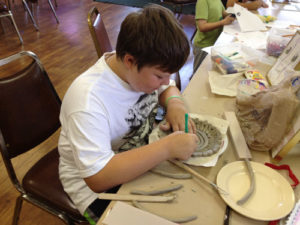
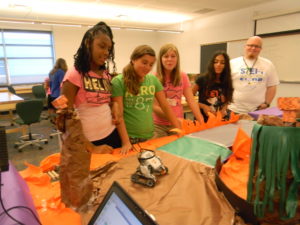
Super Splatter Science Camp at Imagination Station
Bedford Community Education
www.bedford.k12.mi.us/communityeducation
(734) 850-6036
Bedford Community Education offers year-round activities for all ages, but they have an especially busy lineup for the kids during the summer months.
While this summer’s lineup is still being put together, rest assured that it will include elements of sports, science and fun. Bedford Community Ed has been a point of pride for locals, offering a variety of activities that nurture the mind and body.
Check the website soon for the announcement of this summer’s activities.
Bowling Green State University Summer Music Institute
bgsu.edu/smi
(419) 372-2506
Bowling Green State University’s College of Musical Arts offers weeklong intensive camp sessions and a special Musical Theatre Workshop designed to help participants improve their musicianship, learn new skills and meet new friends, all on a college campus.
Session One runs June 15-20, and includes Recording Camp, Double Reed Camp and Flute Camp. Session Two runs June 22-27, and includes String Camp and Brass Camp. Session Three runs July 6-11, and offers Super Saxophone Camp and Vocal Arts Camp. A very special Musical Theatre Workshop is being offered on July 12, featuring a session with members of the cast from Broadway’s Next Hit Musical, a Broadway improv group that will be performing that evening in the Donnell Theatre on BGSU’s campus.
Students have the choice of living on campus or commuting, with costs ranging from $245 – $475 for those who register by April 30. Prices go up $50 after that date.
The Musical Theatre Workshop is open to high school students and adults. The fee is $125 and includes three workshops, a T-shirt, lunch, and a ticket to that evening’s performance of Broadway’s Next Hit Musical.
Boys & Girls Clubs of Toledo
www.bgctoledo.org
(419) 241-4258
The Boys & Girls Clubs of Toledo owns and operates Camp Big Silver, located on Silver Lake in Pinckney, Michigan, about 25 miles north of Ann Arbor and 45 miles southeast of Lansing.
Camp Big Silver provides a safe outdoor education and recreation program for Boys & Girls Clubs members ages 7-12. Through the support of the United Way and community-minded individuals, campers’ fees are kept extremely low so that all children, regardless of their family’s income, can enjoy a week at camp.
The camp offers seven different five-day trips, beginning June 16-20, and the last trip running Aug. 4-8. Fees are $30 for one child, $25 for a sibling, and $20 for a second sibling. Reservations can be made at the Boys & Girls Clubs, 2250 N. Detroit Ave.
For kids in kindergarten through age 12, the Catholic Club of Toledo offers summer camp activities throughout June, July and August from 9:00 a.m.- 4 p.m., with “extended care” available at no additional cost from 6:30 a.m. – 6:30 p.m. The summer camp program features a variety of activities that include swimming, art lessons, gym games, crafts, science activities, reading, a game room, outdoor play, rest and relaxation activities. Service projects and community speakers are also featured.
This year, the Toledo Ballet will continue working with the Catholic Club in offering musical theater lessons for children in grades 3-6 (free for students enrolled in a weekly camp). The children will also participate in a variety of field trips each week and special events.
For fees and other information, call (419) 243-7255, or email [email protected].
Central Catholic Summer Athletic and Enrichment Camps
centralcatholic.org/athletics/summer-sports-camps
(419) 255-2280 ext. 1103
Central Catholic Athletics will once again offer its Fighting Irish Summer Camps programs to keep kids social, in shape and having fun in 2014. Sports offered are baseball, basketball, football, soccer, volleyball and cheerleading. Dates, times, and fees will be announced soon. Check the website for details.
Common Space Center for Creativity
www.aclew.org
(419) 531-2046
The Common Space, 1700 N. Reynolds Rd, is hosting its 29th annual Arts and Sciences Creativity Camp for kids ages 5-14. Ten weekly sessions are offered this summer, beginning with the first from June 9-13, through the last, Aug. 11-15.
Common Space Center for Creativity
The Arts and Sciences Creativity Camp is a day camp that allows children to have fun learning to be creative, and learn the value of the creative process. Arts and sciences experiences provide multiple opportunities for children to explore, demonstrate and develop wholesome individual and collaborative abilities. Each week is exciting and challenging and based on expanding creativity, innovation and collaboration.
Creativity Camp utilizes the arts and sciences to develop multiple-intelligences learning and incorporates brainstorming, thinking, planning, doing, imagining, testing, reflecting and sharing. Both the creative and scientific processes help campers transform thoughts into reality. A wide range of materials and tools are utilized with campers for positive and personal growth and creative expression.
Fees are $110 per session for members, $120 for nonmembers, and $55/$60 per week for half-day (a.m. or p.m.) sessions. Discounts are also available for first-time campers.
Feed Lucas County Children
www.feedlucaschildren.org
(419) 720-1106
Feed Lucas County Children
Tony Siebeneck and Feed Lucas County Children are once again gearing up for a summer of free fun for Toledo area youth. This year, kids in grades 8-9 will be offered two Biology 101 sessions, where they can gain hands-on experience with plants and soils in an interactive learning environment.
Siebeneck said that plans are still in the works for many fun activities for the younger kids, as well, and to call or visit the website for the latest information on FLCC’s community appearances this summer.
Growing Minds
growingminds.wix.com/gmlc
(419) 829-3503
The Growing Minds/Oak Learning Center in Berkey offers some unique ways for children to enjoy some outdoor fun this summer, with some academic twists. Each five-day session has an outdoor theme, including patterns, colors, and textures in nature.. The center also features a natural habitat playground, with a “not-your-typical” garden. Fees are $60/week. Ages range from 3-12, and extended care is available for no additional charge. For dates or contact information, visit www.facebook.com/growingmindslc.
Heather Downs Country Club
www.heatherdowns.com
419-385-0248
Heather Downs Country Club
The HDCC Junior Golf Camp is offered four weeks during the summer. Dates are June 9-12, June 23-26, July 14-17, and Aug. 4-7. “If parents are looking to get their kids involved in the game of golf, our programs are perfect for them,” said Dan Sutton, Director of Golf at HDCC. “The kids will have a blast and really enjoy themselves.”
The camp is open to children ages 7-17, and will teach children the critical skills of the game. The Beginner Camp is for children with limited golf experience, and Intermediate Camp is for children who have a couple of years of experience. Children will also be introduced to the basic rules of golf and golf etiquette.
The fee of $60 includes instruction, range balls, and green fees during the camp. Children will also receive green fees at a discounted rate on weekdays when accompanied by a paying adult, so they can practice what they have learned.
HDCC also offers a variety of instructional sessions throughout the spring and summer for adults, as well. Check the website for details.
All golf instruction at HDCC is taught by Sutton and his staff. Sign up soon, as class size is limited.
Hunter’s Run
Hunter’s Run Riding Camp
huntersrunmhja.com
(734) 856-2404
Hunter’s Run, located at 9241 Secor Road in Temperance is a family owned business with more than 25 years of experience in providing equine care.
Three- and four-day camps are offered each summer for children ages 4 and up. The children get hands on experience learning proper care for horses, how to tack up their horses, how to give a horse a bath, how to make horse treats, along with various crafts which the children will be able to take home with them. On the last day of the camp, each group will have a mini-horse show and each child will receive a ribbon.
Dates for Summer 2014 are still being planned, and fees vary according the specific session. Check the website soon for more details.
Imagination Station
www.imaginationstationtoledo.org
(419) 244-2674
The Imagination Station in Downtown Toledo is hosting several Hot Summer, Cool Science camps this summer.
Super Splatter Science Camp at Imagination Station
Super Splatter Science (June 16-20, 23-27 and June 30-July 4) embraces all that’s messy, giving campers a full-on experience soaked with chaos and exciting science fun. Behind the Mask (July 7-11, 14-18 and 21-25) is a new event. Each day will be focused on a different superhero, and kids will learn firsthand how they can use science to their advantage. Participants will discover their superpowers and even create their own superhero gadgets. Survival Science (July 28-Aug. 1, Aug. 4-8 and 11-15) will test survival skills and prepare kids for unusual situations should such a moment ever arise.
Summer camp fees are $155 for members, $185 for nonmembers. An early bird special of $10 off is being offered for those who register by March 31.
Maumee Valley Country Day School
www.maumeevalleysummertime.org
(419) 381-1313
Half-day and full-day options at MVCDS summer camps will complement a busy family’s summer schedule. Hobbit Camp, for ages 4-5, offers arts and crafts, yoga for kids and exploring the woods among its numerous activities.
For grades 1-8, Afternoon STEAM (science, technology, engineering, arts, and math) Hob Haven Camp mixes sports, arts, science, stories, nature, with a low camper-counselor ratio, ensuring personalized attention to satisfy campers with varied interests.
Weeklong morning specialty classes for incoming grades 1-12 include soccer, tennis, basketball, yoga, glee performing classes, sculpture, cooking, crafty creations, playmaking, creative arts, chemistry, philosophy, study skills, algebra, SAT and ACT prep, Chinese, chess and much more. Before- and after-camp care is available from 7:30am – 5:30pm.
Fees vary, see website for dates and details.
Metroparks of Toledo Area
www.metroparkstoledo.com
(419) 407-9701
Metroparks offers a huge variety of summer activities for all ages, including Wee Workshop Camp (ages 3-5), Metroparks Explorers (ages 5-7), Nature Camp (ages 8-12), Art Camp (ages 8-14) and Teen Camp.
Registration is now open for summer 2014. Fees and dates vary, and applications for financial assistance are available for all camps.
Metroparks summer day camps are held rain or shine, with plenty of rainy day options.
Morgan Valley Farm
www.morganvalleyfarm.com
(517) 423-7858
Morgan Valley Farms
Morgan Valley Farm offers five week-long sessions of Summer Horse Camp. For each session, a “Day” camp and an “Overnight” camp is offered.
Day camp runs Monday through Friday from 9 am until 3:30 each day. Campers age five and up arrive at camp and are divided into small groups based on their age and experience level. They are then assigned their own horse, with a partner, to take care of for the week. Children will learn the responsibilities and care involved in taking care of a horse, such as grooming, cleaning stalls, feeding and exercising. Also included are daily riding lessons, basic first aid, anatomy, “tacking up,” foal care, hayrides, and the “Mini-Valley,” featuring a miniature donkey, miniature horse, goats and pigs. Friday concludes the week with a horse show, with family and friends invited.
“Overnight” camp runs Sunday evening through Friday. Campers enjoy all of the activities of regular day camp with the added excitement of “game nights” with the horses, a horse pajama party, trail ride, themed dinners, a counselor fashion show, bonfires and extra riding time. Overnight campers stay in climate controlled cabins with bathrooms, kitchenettes and bunk beds.
The camps teach children responsibility, caring for others and animals, teamwork, exercise and a sense of accomplishment, in a safe and educational environment.
The camp is for ages five and up. The Day camp fee is $325 per week, and the overnight is $650 for the week. All meals, snacks, a camp t -shirt, backpack, water bottle and supplies are included in fee.
Dates are June 16-20, June 23-27, July 7-11, July 14-18, and Aug. 4-8.
Early bird registration discounts, multiple children discounts (3 children or more) and same summer/multiple camp discounts are offered.
Advanced camp programs are also offered for more experienced children.
Penta Career Center STEM Camp
www.pentacareercenter.org
(419) 666-1120
STEM Camp at Penta Career Center
Penta Career Center, 9301 Buck Road in Perrysburg will host its STEM (science, technology, engineering and math) summer camp June 16-20, 10 a.m.-2:30 p.m., for students in grades 7-9.
This year, participants will be exploring alternative energy, computers, construction, manufacturing, and geographic information systems.
The $25 fee is all-inclusive, covering things like lunch, materials, and supplies. The fee also includes transport, if necessary, from a location near a participating school district. Students must attend one of the eligible school districts (including private schools)—Anthony Wayne, Bowling Green, Eastwood, Elmwood, Genoa, Lake, Maumee, Northwood, North Baltimore, Oak Harbor, Otsego, Perrysburg, Rossford, Springfield, Swanton and Woodmore—to qualify for admission.
Rosenbloom’s Farm
rosenbloomsfarm.weebly.com
(419) 841-3320
Rosenbloom’s Farm will once again offer its summer camp experience, with plenty of fun new activities planned.
Campers will care for and learn about animals on a daily basis. Rosenbloom’s may have some new kittens to play with, a turtle to learn about and, of course, chickens—providing fresh eggs for breakfast.
Camp will include hayrides, crafts and games. Each child will be making their own tie-dyed item to take home, as well as bird feeders, lawn art and much more.
Rosenbloom’s Farm prides itself on providing a safe and wholesome environment. All animals are part of the family, and are up to date on shots and vet visits. The farm also encourages hand washing and the use of hand sanitizer. Parents are also welcome to visit at any time-but be warned-you may be put to work!
Camp groups are intentionally kept small for maximum supervision, interaction and the ability to individualize the program, and groups fill up quickly, so early registration is advised. Call or see website for dates, fees, and to register.
St. John’s Jesuit
www.sjjtitans.org/summercamps
(419) 865-5743 ext. 231
St. John’s Jesuit Soccer Camp
St. John’s Jesuit Academy, 5901 Airport Hwy, will be hosting two types of camp this summer: SportCamps and FunCamps.
SportCamps run throughout the summer, and include baseball, basketball, football, lacrosse, soccer, track and field, wrestling and “total athlete” sessions. The camps are for boys entering grades 5-9.
FunCamps are for boys and girls entering grades 5-9, and include archery, high adventure, skateboarding, LEGO Camp, digital photography and build-your-own arcade.
SportCamps are $55 for regular sessions, and $65 for specialty sessions. FunCamps range from $80 to $175. See the website for dates.
St. Ursula Academy
https://www.toledosua.org
(419) 531-1693
St. Ursula Academy, 4025 Indian Road, is offering a diverse selection of summer camps throughout June and July.
Girls of various ages may register for basketball, lacrosse, rowing, soccer, golf, softball, volleyball, art, graphic design, writing, journalism, dance, photography, and others. Fees vary, and registration forms are available on the website.
The Animal Tails Summer Camp will be available for single-day camps and multiday camps in June, July and August. Each camp highlights a different animal-related theme and campers get to tour the Humane Society. Plus, each camp offers a variety of activities such as making fun crafts, playing animal-themed games, guest speakers and meeting four-legged furry friends.
Details for Summer 2014 coming soon.
Toledo Botanical Garden
www.toledogarden.org/summer2014
(419) 536-5589
The Toledo Botanical Garden offers unique, fun and educational programs each summer for kids ages 6 – 14. Choose from single-day themes like “Pioneer Life,” “Fairy Gardens,” “Blooming Artists,” and “Friend of Wildlife.” Fees for single-day camps range from $18-$25.
New to the lineup this year is YEP Mini Camp (Young Entrepreneurs and Philanthropists). YEP classes offer a unique opportunity for participants to design, create and market handmade products related to nature and then sell them at the TBG Summer Plant Sale. Proceeds will be used to support future TBG programming. The Mini Camp consists of two sessions; a three hour class during the week to create the product and an afternoon class Friday, July 18 during the Plant Sale, where they will put their advertising and marketing plan into action to benefit the less fortunate. Each participant will be asked to work at least a one-hour shift between 3-7 p.m.
Toledo Walleye Youth Hockey Summer Camp
www.toledowalleye.com/youth-hockey-summer-camp
419-725-4530
Beat the heat and hit the ice this summer! The Walleye 2014 Summer Camp is scheduled for Aug. 4-8, 8 a.m.-5 p.m. each day. Skate on the same ice as the Toledo Walleye while being instructed by the Walleye coaching staff. Off-ice activities will include exercises focused on youth athletes, and several team building games and activities.
The youth hockey camp will include instruction, lunch provided daily, a Walleye camp jersey, Toledo Mud Hens tickets and on-field recognition, and a Walleye ticket voucher.
For more information on Walleye youth hockey camp contact Emily at 419-725-4530 or [email protected].
Toledo Zoo Summer Safari Camps
www.toledozoo.org
(419) 385-5721 ext. 2042
Engage and educate your child with five-day camps at the Toledo Zoo during the summer. The Summer Safari Camps keep kids’ minds as active as they are. Children in each age group explore zoo topics and interact with live animals. Topics are designed to engage the interests of children, enrich their summer experience and expand their science awareness. A complete list of all camps is provided on the website along with links to register online. Extended child care is also available.
West Side Montessori
www.montessoritoledo.org
(419) 866-1931
West Side Montessori offers an enriching array of opportunities for children ages 13 months through the 6th grade to enjoy during their eight-week program. Specialty camps are also available for grades 7-8. All camps are run by dedicated counselors, many of whom are members of the West Side Montessori faculty. Campers will enjoy an action-packed summer, exploring and making friends in high energy programs with qualified, caring teachers.
West Side summer programs begin June 11 and end Aug. 1. There is no camp July 3 and 4. Morning camps begin at 8:30 a.m. and end at 11:30 a.m. Afternoon camps begin at 12 p.m. and end at 3 p.m. Full-day students will have a supervised lunch from 11:30 a.m.-12 p.m. Child care is available after camp, 3-5 p.m.
Kaylee Halko of Monclova Township has a rare rapid-aging disease called progeria. Toledo Free Press photo by Joseph Herr
Something has broken my heart this week, despite all the beautiful things that have been happening with Myles and Marlee Eckert and their pay it forward campaign.
.
I learned that a schoolmate of Kaylee Halko created an Instagram page of hate for those who are afflicted with progeria. I will not share specifics of the words and images posted because that only creates more of the same, and this world does not need any more of that.
But the Instagram account, which was removed days later, was filled with vile death threats and the ugliest words a princess should ever see.
I have known this fourth-grader since she was 3 years old and before she began school. Kaylee is one of the most beautiful souls living amongst us today.
I did not want to see the photos and comments; my heart can’t take that much ugliness and ignorance. Hearing about them dimmed my spirit.
The most frustrating part of the story is how Kaylee’s school feels its hands are tied because it happened outside school hours and off school property. The student received only a three-day suspension.
My fear is how fragile progeria makes those who have it. According to Progeria Research Foundation, Hutchinson-Gilford progeria syndrome (“progeria” or “HGPS”) is a rare, fatal genetic condition characterized by an appearance of accelerated aging in children.
Although they are born appearing healthy, children with progeria begin to display many characteristics of accelerated aging at around 18-24 months of age. The most common cause of death is atherosclerosis (heart disease) at an average age of 13.
It would not take much to harm a child with progeria. Kaylee weighs only 30 pounds.
This ugly, hate-filled page and its content must not be ignored. It is a red flag and should be treated as such. It’s a sign of trouble in the home and in the upbringing of its creator. If something tragic would happen in the future, this Instagram creation would be the No. 1 warning sign.
This is not a typical case of bullying because Kaylee is beautifully unique. She is not a normal healthy child, but at the same time she’s a typical fourth-grade girl.
She loves Taylor Swift, although she’s not a fan of One Direction — but that just proves she has good taste. The thing that makes her tragically different is her being born with progeria, and the effects it has on her little body.
It should be known that Kaylee is very important to Northwest Ohio and especially to me. Her family has championed fundraising for research and is the perfect example of families working to give back. Even though they have been dealt the hand of a child with progeria, they have turned her story into something positive and incredibly beautiful.
Kaylee’s spirit, heart and soul make her one of the most beautiful people I have ever met. If there ever was a little girl who deserved a happy ending to her story, it would be Kaylee.
Jeremy Baumhower can be reached at [email protected] or on Twitter @jeremytheproduc.
A Waterville boy’s $20 random act of kindness could turn into a $2 million donation, thanks to a $1 million challenge grant from a Texas company who wants to help him pay it forward.
Dallas-based Highland Capital Management heard about 8-year-old Myles Eckert, who recently found $20 in the parking lot of a Maumee restaurant and gave it to a soldier in uniform eating lunch, along with a note.
“Dear Soldier,” the note read. “My dad was a soldier. He’s in heaven now. I found this 20 dollars in the parking lot when we got here. We like to pay it forward in my family. It’s your lucky day! Thank you for your service. Myles Eckert, a gold star kid.”
Tiffany Eckert had no idea her son’s random act of kindness would generate so much attention. But when it did, the family was inundated with inquiries on how to send Myles money.
Instead, they decided to redirect the requests to fundraising website Crowdtilt, where they set up an account so donations will go to a national military children’s charity called Snowball Express.
In response, Highland has offered to match donations made on behalf of Myles Eckert up to $1 million through Memorial Day (May 26).
Ohio Air National Guard Lt. Col. Frank Dailey with 8-year-old Myles Eckert. Photo Via Facebook/Marlee’s Miracle
Founded in 2006, Snowball Express provides “hope and new happy memories to the children of military fallen heroes who have died while on active duty since 9/11.”
The group offers the children a four-day experience filled with fun activities, like sporting events, dances, amusement parks and more, according to its website.
Myles’ father, 24-year-old Army Sgt. Gary “Andy” Eckert Jr., was killed by a roadside bomb in Iraq on May 8, 2005, during his second tour of duty. Myles was just 4 weeks old and his sister Marlee was 20 months old.
In a March 13 news release, James Dondero, co-Founder and president of Highland, said “the Eckert children and their commitment to paying it forward are, and will continue to be, an incredible inspiration.”
“We believe every single one of us has a responsibility to help the children of our fallen military heroes,” Dondero said in the release. “Not one of us can do it alone, not Snowball Express, not Highland, and certainly not the individual families, but together, we have the ability to do great things by creating a supportive environment for all of these children and honoring the memories of their parents.”
“Highland’s challenge grant is ambitious, as it should be, but I’m confident the $1 million target can be achieved as others join us in paying it forward,” added Mark Okada, co-Founder and chief investment officer of Highland, in the release.
Each year, Snowball Express serves more than 1,200 children who’ve lost a parent in the military, according to the release.
“While we’re extremely proud of that figure, in truth there are many more children we need to serve,” said Snowball Express Executive Director Buck Kern in the release. “There are more than 8,000 Gold Star children in our country today who have lost a parent serving in our military since 9/11. Should we successfully meet the challenge, we’ll be in a better position to serve them all.”
Tiffany said she’s thrilled to be able to give back to Snowball Express, a group both Myles and Marlee have participated in, and even more excited about the challenge grant.
“Snowball Express has provided much-needed support for my family these past few years,” she said in the release. “The challenge grant will allow this great organization to serve even more Gold Star children across the country and improve this critical support system.”
To donate, visit https://www.crowdtilt.com/campaigns/myles-marlee-eckert-want-you-to-pay-it-forward.
It would have been a quiet and unremarkable death.
.
My doctor told me that although my body and skin had rebounded remarkably well from losing nearly 200 pounds since a September 2012 bariatric sleeve surgery, I undoubtedly qualified for the skin removal surgery and abdominoplasty, commonly referred to as a “tummy tuck.”
As I rapidly learned, referring to the procedure as an abdominoplasty elicited far more gravitas than calling it a tummy tuck.
All the walking, working out and smarter living during the past 18 months brought major changes, but the last vestiges of the old me still clung stubbornly in the shape of a spare tire of fat and loose skin that was as unsightly as it was uncomfortable. Prone to rashes and chafing, it was the one final reminder of my 400-pound life.
I scheduled the procedure for Feb. 24, approaching it with the confidence I’d earned through the success of the bariatric surgery.
I knew I had at least three major factors in my favor. I was in the best health of my adult life and physically fit for the surgery; I had worked especially carefully on toning my abdominal muscles, so the doctor said he would not need to cut and tighten the muscles themselves, as is common during a tummy tuck; and the surgery itself was performed by my University of Michigan surgeon as an outpatient procedure, not even requiring I stay the night. I would be in by 11 a.m. and home by 6 p.m., so how bad could it be?
I had been told it could be very bad indeed, by other weight-loss patients, by the doctors, by the testimonials I read on weight loss message boards. But I had also been told I would be out for a month after the sleeve surgery and would lose about 60 percent of my excess weight.
I bested that by two weeks and 30 percent, so I expected similar poster boy results from the tuck.
The commitment
The procedure went as planned and I was home less than 10 hours after I left.
So far, so good.
Except for the fact that I felt miserable. As I surveyed the extent of the procedure, all the warnings and cautions swirled in my head. The centerpiece was a 27-inch incision under my belt line from hip to hip, expertly stitched together but looking like I was Robert Shaw at the end of “Jaws,” perforated in a perfect semicircle by the maw of a great white shark. Even on whatever wonder drug was pleasantly swirling through my veins, I felt the soreness of the incision.
My abdomen was swollen to twice its pre-surgery size, yet also flat and sculpted in a way it hasn’t been since my high school football-playing days.
At the center of my new abdomen sat a brand-new bellybutton, created through an umbilicoplasty procedure as my old navel had been removed along with the excess skin and fat. That area was mostly numb and covered in gauze and surgical tape, so I had no idea what it looked like.
But the real aching misery lived, as it often does with men, in my groin. Two plastic tubes about 18 inches long sprouted from the area, leading to two hand grenade-shaped bulbs that were safety pinned in place, slowly filling with fluid that looked like blood. These were my two new pals, the Jackson-Pratt or “JP” vacuum drains that I would live with for at least two weeks.
They were the most visible sign of of tummy tucking, and they were tucking gross.
Keeping all this carnage in place was a flesh-tone “compression garment,” an ultra-tight single piece — well, girdle, really — designed to clinch the abdomen with force to keep the swelling in check.
The effect of all this was a degree of discomfort and pain I never came close to experiencing from the bariatric sleeve surgery. But I was just hours after the surgery and while my confidence was shaken, I was sure I would bounce back with quickness.
We had prepared for a week or two of my living on the first floor, sleeping upright in a recliner (no lying flat or stretching the incision) and I had everything from books to my phone charger to the TV remote at my side, arranged to fight the boredom of inactivity.
In sickness and in health
Those first 10 post-surgery days brought slow progress, not much moving around and unexpected —and unaccustomed and unwelcome — depression. I have long felt guilty about allowing myself to balloon to 400 pounds, and the untold damage that recklessness took on my family and life. Even though that life is in my rearview mirror, it lingers on that receding horizon like an angry and cheated sunset, coloring everything in purples and crimsons.
This newest incapacitation brought back that guilt, watching my young sons worry and my wife carry the load for all of us. Shannon was my nurse, company and taskmaster, providing comfort, love and attention — the pleasant aspects of recuperating. But she also served dutifully through the grossest duties: changing and washing compression garments and maintaining the JP Drains.
That entails a three-times-a-day procedure of unpinning the drains, using an alcohol-soaked cloth to pinch and strip the plastic tubing, forcing stringy blood clots and drainage debris through to the bulbs, then draining them, measuring the output and disposing of the bloody mess.
Choosing a Valentine’s Day card is one form of love; there is no Hallmark card for maintaining JP drains, but it became my habit to kiss my sweet wife’s head as she quietly went about the gross, gross task of clearing them.
As the days passed, the depression deepened. For one thing, I hurt. For another, I was blue because the daily exercise that had filled an hour or two of nearly every day of my life for the past 18 months had been reduced to three 10-minute slow walks around the first floor.
I could feel my hard work on my leg and arm muscles melting away with the inactivity. But I was also haunted by buyer’s remorse, uncertain that this surgery — unlike the bariatric sleeve surgery, which paid such great dividends — was worth the obstacle course of pains and problems. The swelling still distorted my abdomen, my new navel looked like a foreign element and the damned JP Drains freaked me out, protruding as they did from my body like Lovecraftian tentacles.
Worst of all, I hated being cooped up, largely confined to one room on one floor. I began to resent my cage and wished to be anywhere else.
’Til death do us part
I got my wish on the 11th day after the surgery. I woke up feeling fine but by 8 a.m. felt the unmistakable chills of a fever. There are a few danger signs of post-surgical complications and fever is a big red flag. I was at 102 degrees with no break from Tylenol when I called the clinic and spoke to a clinician who promised a nurse would call me back right away.
She did, 10 minutes later, with an urgent message for me to get to the clinic as soon as possible. Unfortunately, I passed out in my chair and missed the call. It was three hours later when I woke up, listened to the message and called my wife to tell her we needed to go.
At this point the fever was 103 and blinding in its intensity. At the clinic, the doctor inspected my incision and saw no outward sign of infection, but on the advice of my wife looked at the new colors of swirling debris in the JP drains and made immediate arrangements for me to be admitted to the University of Michigan Medical Center emergency room.
When I checked in, the fever was at 104.2 degrees and I have vague memories of feeling like I was swimming through hot Jell-O. The nurse took my blood pressure, frowned, checked it again, then wheeled over a manual unit and took it a third time.
All three measurements were the same: 74 over 48. In contrast, my heart was pounding, trying to compensate by working wildly at more than 120 beats per minute.
Sepsis is caused by the body’s immune response to infection. As the body fights to the point of septic shock, organs begin shutting down. The ER team was frantically working around me but I was only dimly aware of what was happening and had no sense of danger.
My wife, who works in health care, knew exactly what was going on and was holding my hand and talking to me softly as I drifted in and out of consciousness. I had been pumped with three IV bags but the fever held, my blood pressure continued to crash and I was unable to urinate despite being pumped full of liters of saline.
It would have been a quiet and unremarkable death, but I was blissfully, ignorantly unaware of the danger.
I did not experience any bright lights, visions of dead relatives or see my life pass before my eyes. Jesus apparently had more important visits to make and his face did not appear before my eyes. I kinda sorta remember the hum of the CT scan tunnel and the stream of white-coated visitors, but most of what I know comes from my wife’s reluctant descriptions.
The next thing I knew, it was a day later and I was in a hospital room, IV lines in both arms, legs encased in clot-fighting pressure cuffs and feeling a dreamy, foggy mindset courtesy of Norco, the new Vicodin.
I spent the first few waking hours absorbing the news and loudly complaining about being in a hospital bed. That first-floor living room suddenly seemed like a paradise to me.
My complaints were tempered when I heard why my roommate was hospitalized. Suffice it to say, his situation was a million times worse than mine. It’s not my place to share his story here, but his heroic determination in the face of medical disaster taught me great perspective and humility.
The doctors did not find the specific source of the infection and kept me hospitalized two more days to monitor my progress.
I believe that in six months, when all is healed and in place, the choice to have the abdominoplasty will be a good one for my health and future. I will soon be back to walking and in my normal routines. I won’t think of a tummy tuck infection as a near-death experience.
It would have been a quiet and unremarkable death, but I haven’t worked this hard to do anything but go kicking and screaming.
Michael S. Miller is editor in chief of Toledo Free Press. Contact him at [email protected].
The 38th Cleveland International Film Festival (CIFF) kicks off at Tower City Cinemas in downtown Cleveland March 19.
Film enthusiasts can take a quick trip down the turnpike for a peek at up-and-coming films and filmmakers.
On March 19, the lights will go dark and the projector will illuminate the big screen as the 38th Cleveland International Film Festival (CIFF) kicks off at Tower City Cinemas in downtown Cleveland.
The 12-day festival will showcase more than 180 feature films and more than 160 short films from 68 different countries, according to Patrick Shepherd, associate director of CIFF.
CIFF is the largest film festival between New York and Chicago, according to Shepherd.
“There’s no other festival in the region that matches us in attendance,” he said in an interview with Toledo Free Press.
CIFF has been at Tower City Cinemas since 1991, according to Shepherd. Back then, the attendance for the festival was around 15,000. In 2013, attendance for CIFF was more than 93,000, a record.
CIFF kicks off its opening night gala March 19 with screenings of “Not Another Happy Ending,” a romantic comedy that director John McKay is flying in from Scotland to attend.
The festival begins in earnest on March 20. On a typical day there will be around 40 films screened between 9 a.m. and midnight. On Fridays and Saturdays, there are late-night screenings that start around 11:30 p.m.
Organizers spend all year looking for films from around the world, Shepherd said. There is also a call for entries launched every summer. He said there were nearly 2,000 films submitted for consideration this year.
Once films are selected, CIFF works closely to connect specific films with nonprofit organizations in northern Ohio. Last year was the first time CIFF reached out to Toledo organizations, said Shepherd, a 1993 Bowling Green State University graduate.
Partners included Toledo-Lucas County Public Library and Equality Toledo. Both organizations are continuing the partnership this year, along with Toledo Pride, the Hungarian Club of Toledo and the Great Lakes Consortium for International Training and Development.
Toledo partnership film screenings include “Gore Vidal: The United States Of Amnesia,” “Matt Shepard is a Friend of Mine,” “One: A Story of Love and Equality” and “Men with Balls.”
More information and a schedule for the festival can be found online at clevelandfilm.org or by downloading CIFF’s mobile app. Toledo Free Press is a media sponsor for the 38th Cleveland International Film Festival. (For a $2 ticket discount, use code: TOLEDO). Watch Facebook, Twitter and Instagram for details on winning tickets to the festival.