The beginnings of Monroe Dodge Superstore took root when the late Ralph Mahalak Sr. opened the dealership in 1966, opening a 10-car lot on W. Front St. that eventually grew into a thriving six-dealership enterprise. (Courtesy photo)
MONROE, MICH. – To many in Monroe and beyond, the Mahalak name is synonymous with car dealerships, service and getting a good deal on a Dodge Ram, Jeep, Chrysler, or used vehicle.
But anyone who knows Ralph Mahalak Jr. will say he is much more than a business owner; he is an entrepreneur who is dedicated to his community, and his generosity toward community organizations knows no bounds.
“He never says no,” said Mike Gaynier, who has known Mr. Mahalak for 36 years. “If you come to [me] with a problem or a proposal, no matter how complicated it is, I never say no. Ralph is the same way.”
The man many know as the “Low Payment King” is marking 60 years in the business this month with a grand celebration at the Monroe dealership at 15160 S. Monroe St. where Mr. Mahalak took over operations in 1987.
The celebration is the epitome of a life dedicated to the auto industry and the communities they serve.
“To say we’re proud would be an understatement,” Mr. Mahalak said. “We’re celebrating anniversaries all year long.”
The beginnings of Monroe Dodge Superstore took root when the late Ralph Mahalak Sr. opened the dealership in 1966, opening a 10-car lot on W. Front St. that eventually grew into a thriving six-dealership enterprise. The senior Mahalak died at the age of 77 in 2017.
“He was a helluva man and a great car guy,” Mr. Mahalak Jr., the oldest of five, told The Monroe News in 2017. “Everybody loved my dad. Tons of people got their first real job from my dad.”
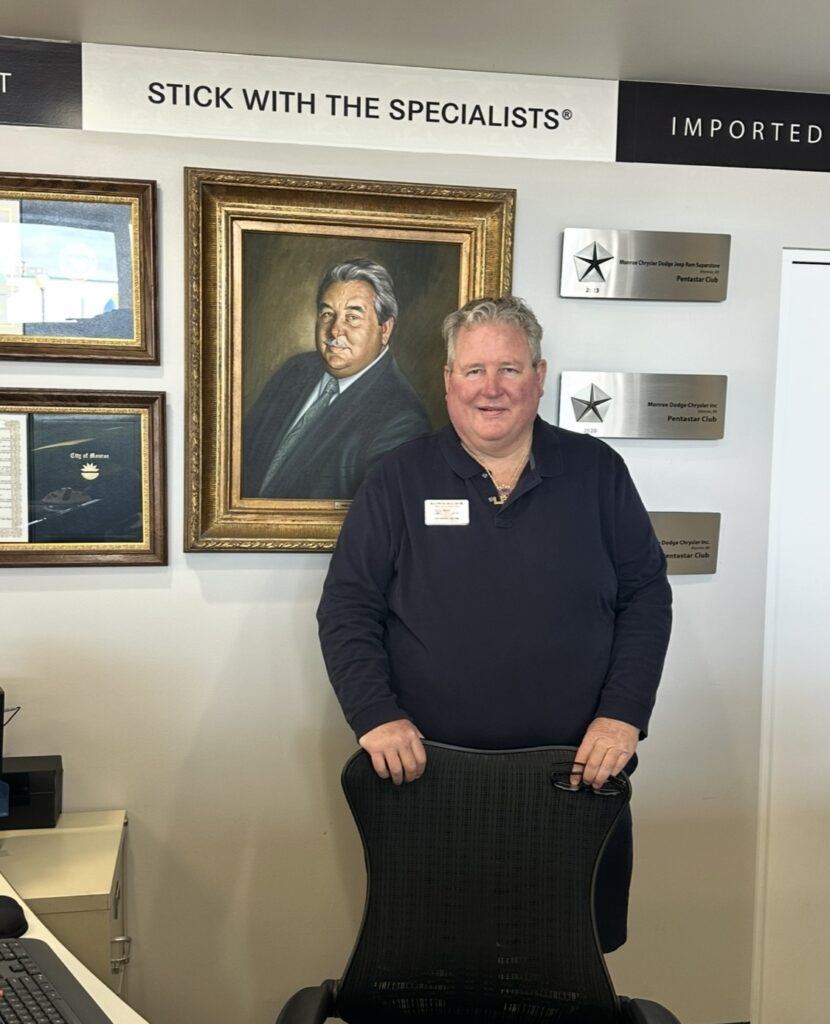
Ralph Mahalak Jr., the owner of Monroe Dodge Superstore. (Courtesy photo)
Mr. Mahalak, well-known for his friendly demeanor, constant smile and kindness, continued that legacy with his dedication to the communities that are home to the Mahalak dealerships. He and his siblings run successful stores in Monroe as well as Defiance and Shelby in Ohio and three others in Central Florida: Posner Park, Winter Haven and Lake Wales.
His fairness and kindness equates to a loyal and vast array of customers, many of whom are among generations of car lovers who go nowhere else for their vehicle purchases or service.
“Ralph’s been a business adviser for many years for me and my own business,” Brian Reicker, owner of Tim Horton’s in Monroe and a 26-year customer, told the Toledo Blade. “Ralph’s been a really good friend for a long time. He’s very helpful. He sells products that I’m happy with.”
Like most business owners, especially in the auto industry, Mr. Mahalak and his family have endured economic downturns and instability. When Chrysler filed for bankruptcy during tough times, Mr. Mahalak was proud that he never laid anyone off or paid anyone less.
Many of those employees reciprocated that loyalty, especially during the financial crisis in 2009.
“They pulled together just like a real team, and it was just really one of the proudest moments of my career,” Mr. Mahalak said. “There [are] a lot of proud moments in the 60-year career of the store.”
His entrepreneurship reaches many organizations, including raising funds for cancer research through the superstore’s annual 18 Aces to Conquer Cancer golf outing. His financial support also includes the Heart of the Badge scholarship, which helps students become first responders, and the Allies in Monroe program at Monroe schools.
The dealership will host a 60th anniversary celebration for clients and vendors at the Monroe location from 4:26 p.m. to 7:26 p.m., in honor of the anniversary date, on Tuesday, May 26. The celebration will feature a DJ, food, a photo booth, and other activities.
Waterville Primary School students explore the land lab behind the school - one of several programs that incorporate STEAM. (Photo courtesy of Anthony Wayne Local Schools)
WATERVILLE – Waterville Primary School has been officially re-designated as an Ohio STEAM School by the Ohio STEM Learning Network (OSLN) for an additional five-year term. This honor follows a rigorous evaluation process, site visit and a final vote by the Ohio STEM Committee.
First awarded in April 2019, this renewed designation indicates that Waterville Primary continues to lead the way in integrating Science, Technology, Engineering, Arts and Mathematics (STEAM) into the everyday learning experience of its kindergarten through fourth-grade students.
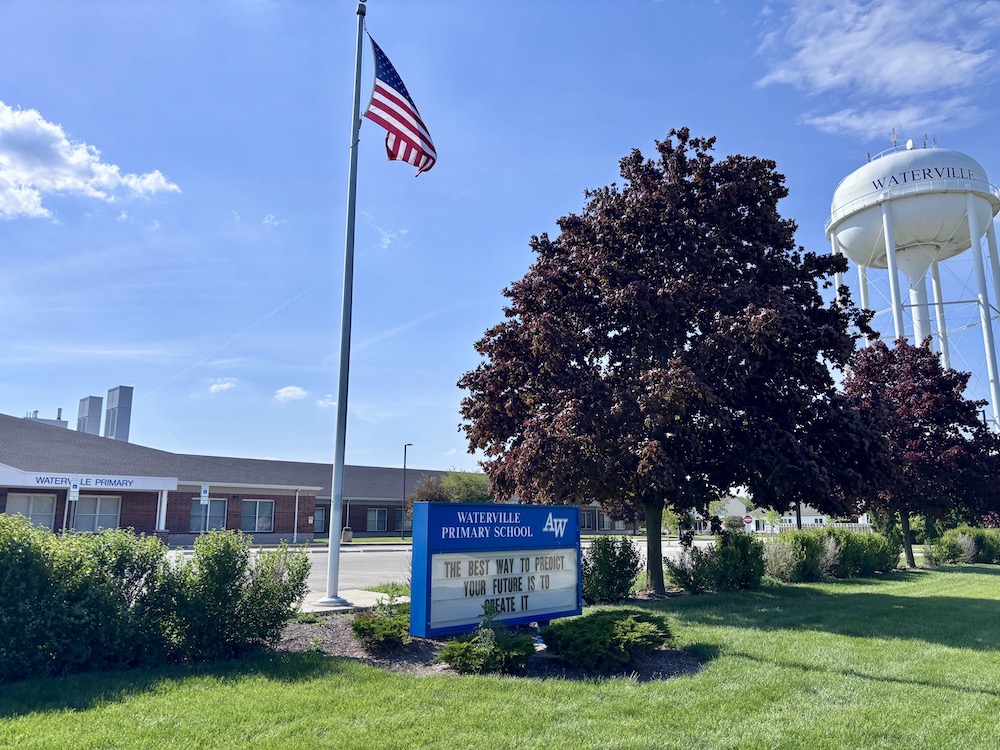
Waterville Primary School’s Ohio STEAM School designation has been renewed for five years – affirming the schools efforts to integrate science, technology, engineering, arts and mathematics into everyday learning. (Photo courtesy of Anthony Wayne Local Schools)
The re-designation process culminated in a comprehensive site visit on Jan. 28, with evaluators noting that Waterville Primary creates a “STEAM for all” environment. The school was specifically commended for:
• Portrait of a General: A set of core values that emphasizes critical thinking, empathy, adaptability and flexibility, communication and collaboration, and a learner’s mindset.
• Equitable Access: The school is committed to providing a high-quality education to all students across various racial, socioeconomic and disability demographics.
• Community Partnerships: Strong ties with Bowling Green State University, the Toledo Zoo & Aquarium, the Toledo Museum of Art and Xcite Learning.
The OSLN review team highlighted Waterville’s commitment to Problem-Based Learning (PBL) and its direct instruction on the seven-step engineering design cycle (Ask, Imagine, Plan, Create, Test, Improve, Share).
Notable projects recognized during the evaluation include:
• Engineering & Science: The K-4 “Soil, Water, and Air” explorations and second-grade and fourth grade “Balloons Over Broadway” design challenges.
• Technology & Art: Fourth-grade “Mini-Golf Challenges” and “Ozobot-animated mini-movies” created with the students as videographers.
• Community Impact: Designing pollinator-friendly improvements for the Land Lab with Toledo GROWS and presenting severe-weather safety kits at a “Weather News Expo.”
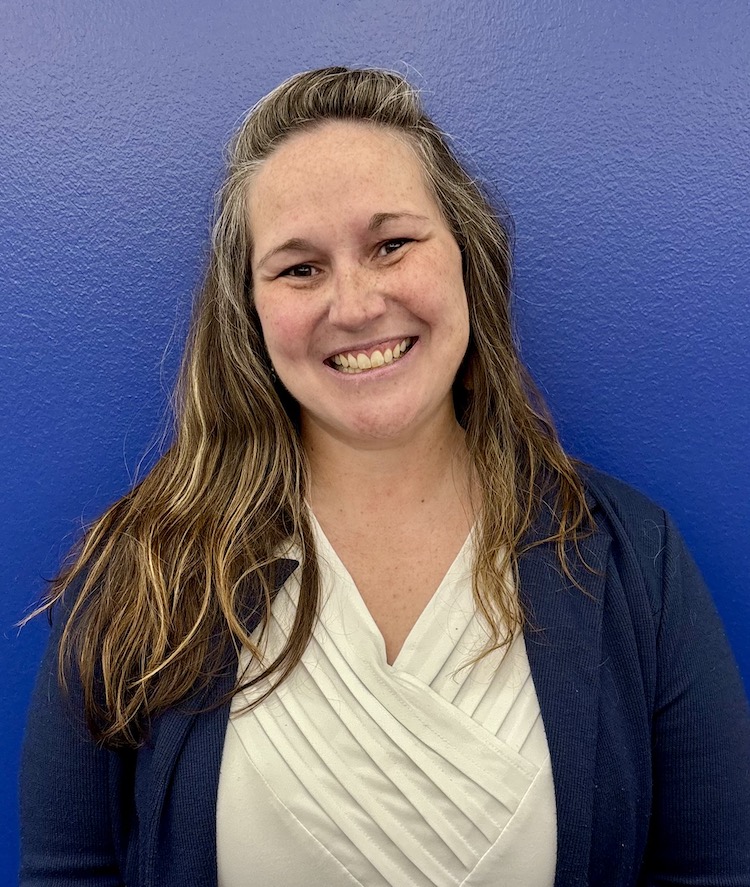
“I am so incredibly excited and proud of our entire team of educators, staff, students and families,” said Waterville Primary Principal Dr. Jamie Hollinger. “This recognizes our ongoing commitment to providing exceptional STEAM exploration, access, and opportunities that prepare our students for success long after they leave our learning environment.”
About the Ohio STEM Committee
The Ohio STEM Committee is a panel of policymakers, agency directors and business leaders. The STEAM Designation process recognizes schools for serving as an effective place for STEAM learning and invites the school into the statewide Ohio STEM Learning Network, a partnership between the Ohio Department of Education and Workforce and Battelle.
Enjoying lunch at Whitehouse Primary School are first-graders (from left) Cora Young, Paisley Franklin and Ava Betts. The district's food service director is gearing up for major changes in the school lunch menus to reflect a new food pyramid. (AWFP photo by Karen Gerhardinger)
Creating menus that meet federal nutrition guidelines, accommodate dietary needs and still appeal to students is like putting together a jigsaw puzzle, Food Service Director Megan Menchaca told the Anthony Wayne Board of Education during its May 11 meeting.
But with the United States Department of Agriculture (USDA) change in the food pyramid and expected changes to sodium and sugar levels, Menchaca expects meal planning to get even more challenging.
“Every few years, they adjust the sodium and sugar. I have the feeling bigger changes are coming,” Menchaca said. “Right now, we’re funded by the USDA and have to follow their rules to get their money.”
For the 2027-28 school year, the sodium levels will need to drop below 1 gram – the same as a cardiac patient would be prescribed. Sugar needs to be lowered to 10 percent of weekly calories. The flipped food pyramid has protein and vegetables occupying the largest section, focusing on nutrient-dense foods like meats, eggs, nuts and seafood, with less ultra-processed foods. Full-fat dairy and healthy fats are now preferred over low-fat alternatives. And grains are now a lower priority.
The rules on milk changed as well. Before, only 1 percent plain white or fat-free flavored milk were allowed, in order to meet lower sugar requirements. In January, she learned that schools can serve full-fat plain white milk, but didn’t switch.
“Are the manufacturers going to forego flavored milk? I would rather my kid drink 7 grams of sugar to get the calcium and vitamin D from milk,” she said.
The district started offering free breakfasts in all buildings this year, and those usually feature two servings of whole grains. Now those breakfast meals will need to include protein.
To meet these changing guidelines, schools will rely on manufacturers like Tyson, Pepsi and Nabisco, which have dedicated lines for school meals. Manufacturers will need to change their recipes, production lines and packaging to reflect new ingredients and to alert consumers of possible allergies.
Each meal takes about 90 minutes to heat and serve. If the changes require a return to scratch cooking, that would likely require more staff, training and equipment.
When coming up with menus, Menchaca looks at what is available and the different calorie minimums and maximums. She can’t serve two starches two days in a row. And meals need to incorporate dark greens, red and other vegetables. Texture and color also factor into meals.
“The trick is in finding popularity with kids’ palettes. It does no good to serve healthy foods if kids aren’t going to eat it,” she said.
Often she meets with groups of students to get input on the menu. Sushi, steak and Nutella are among the recommendations.
“Steak. That’s cute, but I have a budget to follow,” she laughed, noting that meals are $3.25 per student.
Instead, she can offer turkey dogs. This year at the high school, she offered an ala carte sushi bar that was popular.
“School meal planning is challenging. The contrast from the USDA to what’s coming down the pipeline will make it harder. Will the manufacturers be able to comply? How long will it take? Will the cafeteria be able to manage the changes? We will do our best to follow the USDA guidelines. We strive to make everything nutritionally appropriate and serve things kids like,” she said.
During the meeting, the board also:
The Anthony Wayne Board of Education recognized lead athletic trainer Noelle Matson (center) along with team doctors Dr. Ralph Whalen (left) and Dr. Robert Kose. (AWFP photo by Karen Gerhardinger)
-Presented certificates of appreciation to athletics team doctors Ralph Whalen and Robert Kose, and Lead Athletic Trainer Noelle Matson, for ensuring the health and safety of student-athletes. Dr. Whalen is a 1965 AW graduate and retired vascular surgeon who has served as a team physician since 1992.
Dr. Kose was a pulmonary and critical care medicine physician from 1982-2020 and is now the president of Hospice of Northwest Ohio. He has served as team physician since 1983.
Matson is finishing up her 15th year as the athletic trainer, and will start the next school year as the supervising lead athletic trainer at ProMedica’s Sports Medicine Institute. In that role, she will oversee 15-20 athletic trainers, make site visits, work contracts, organize events, do care coordination and attend leadership meetings. She plans to be on the AW campus next year to transition the new athletic trainer.
-Approved a $35,000 contract with Kleinfelder to design the junior high kitchen UV replacement project.
-Heard that a waterline broke under the Waterville Primary School parking lot on May 11. City crews made repairs later that evening.
-Heard an update from Director of Human Resources Brad Contat on the district’s wellness program, which promotes social, emotional, physical and intellectual well-being through events and services.
-Approved the retirements of Waterville teacher Lisa Ernsthausen, high school engineer Steve Trompeter and special education aide Cynthia Meyers. The board also approved the resignations of special education aides Cheyenne Crawford and Kristen Stamm; intervention specialist Scott Harrold; fifth grade teacher Taylor Pawliski; certified occupational therapist assistant Pam Weideman; and Director of Human Resources Brad Contat.
-Approved student handbooks and school and athletic fees. With the pay to participate plan for athletics, the fees are $125 per sport for the first two sports, with no charge for additional sports in the high school, and $80 per sport for the first two sports in the junior high.
Meagan Conroy is the new assistant treasurer for Anthony Wayne Local Schools. (AWFP photo by Karen Gerhardinger)
-Approved a list of 339 seniors for graduation on Saturday, May 23 at Bowling Green State University’s Stroh Center.
-Welcomed new Assistant Treasurer Meagan Conroy, who brings experience from Rossford Schools and as an assistant auditor with the Auditor of State’s office. The board also approved the hiring of bus aide Haley Voigt, food service worker Lisa Herald, high school science teacher Ellie Fleisher, fifth grade teacher Kaylee Prall and Whitehouse Intervention Specialist Molly Rutkowski. Several summer workers were also approved for extended school year programs and transportation.
The next regular board of education meeting is scheduled for Wednesday, June 10 at 8 a.m.
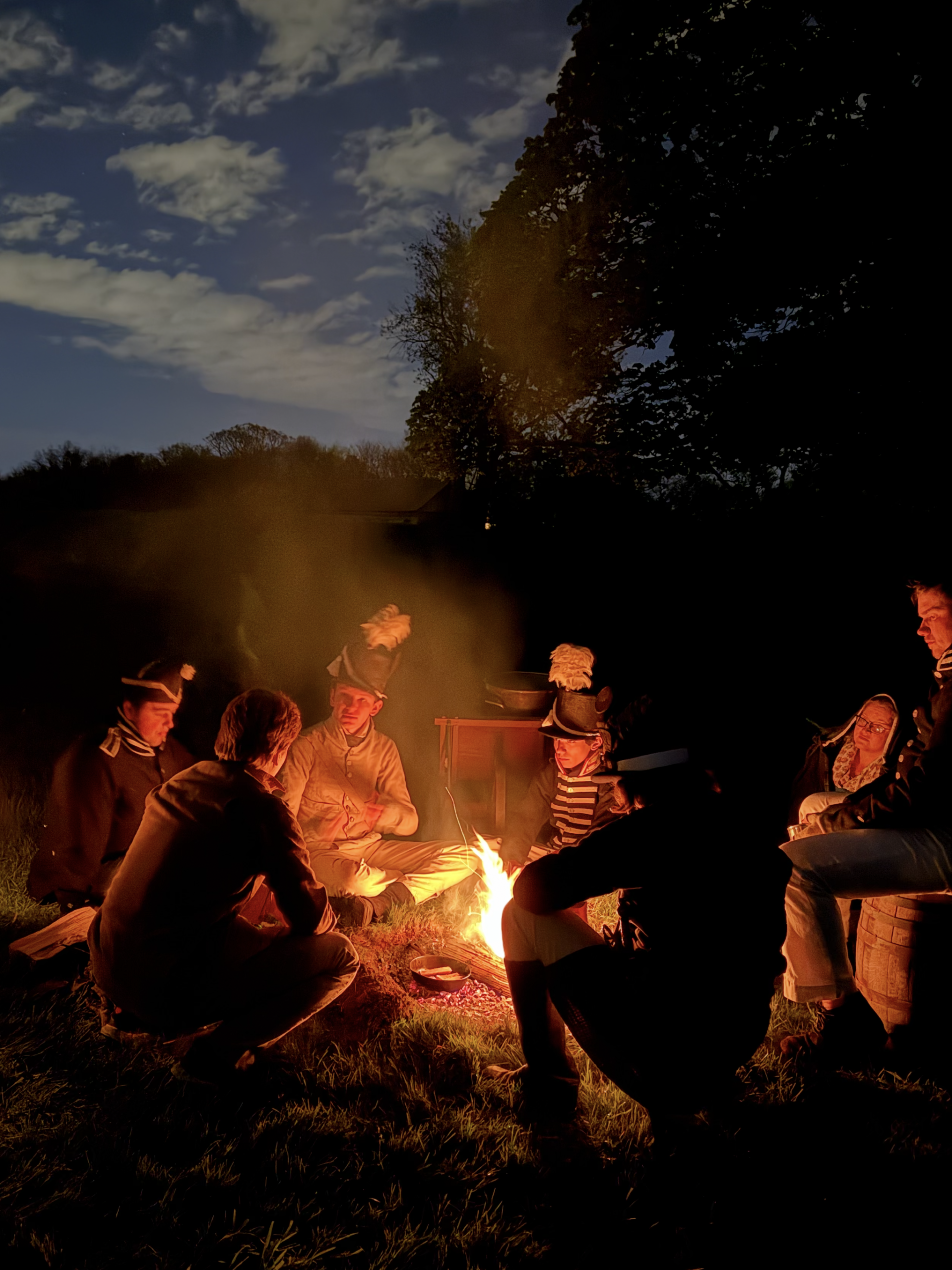
Re-enactors portraying the British 41st Regiment of Foote. They are engaged in battle on the south lawn of Fort Meigs. (Courtesy photo)
PERRYSBURG – Memorial Day means picnics and parades, but at Fort Meigs Historic Site, it means more. And this holiday weekend even more still, because for the first time in more than 20 years, the largest wooden-walled fort in North America will host the international War of 1812 re-enacting community.
Called the Grand Tactical, the event is in conjunction with the fort’s annual First Siege re-enactment, May 23-24. First Siege pays homage to when the fort in 1813 was under siege by British invaders and their Native American allies. That the fledgling American army withstood that onslaught, and one a couple months later, was a turning point in that little-known war that cemented the nation’s status as a player on the world stage.
The American forces forming up for the Morning Parade inside Fort Meigs in the Blockhouse 7 parade in 2019. (Courtesy photo)
What it means to have the Grand Tactical as a component is that there’ll be a lot more re-enactors dressed in period-correct wool uniforms and civilian clothing, firing muskets and cannons and cooking meals from the era, and freely talking about what happened at the site long ago with a lot more visitors than usual.
“I’d love to see 4,000 visitors for the weekend. More would be awesome,” said Ashley Phlipot Brock, the site’s executive director. “Usually for First Siege we get 3,000; if we can up that to 4,000, that would be amazing.”
“The Grand Tactical is the largest living-history event for the commemoration of the war held in North America,” explained John Thompson, Fort Meigs’ manager of historic programming and head of interpretation. “The hosting site moves around each year and alternates between a Canadian site and a U.S. battlefield. Fort Meigs was selected for 2026 because we are celebrating not only America 250, but Fort Meigs itself is celebrating its 50-year anniversary as a living history establishment.
“Re-enactors from all over North America will be joining us for two days of demonstrations, camping, and educational programming.”
American forces last year portraying camp life at Fort Meigs during the War of 1812. (Courtesy photo)
Thompson said between 300 and 400 re-enactors – portraying soldiers from specific regiments and militias of the period, merchants, and men and women civilians – are expected to set up camps and tents on the 10 acres inside the stockade.
“There were artisans and women who helped support the army,” Brock said. “This is not just a story of soldiers, but of humanity and people who all were involved in the conflict.”
With the larger-than-usual turnout of re-enactors and visitors, Brock said this will be an opportunity for more activities and items for the public to see.
The activities are many: morning parade, battalion drill, artillery demonstration, musket competitions, blacksmithing, history lectures, mini-militia children’s activity, court-martial proceedings, artillery workshops, 19th century fashion shows, camp displays, field music concerts, historic baking and cooking, medical displays on Sunday, historical and modern shopping, demonstration of the gun gin, and changing of the guard.
There also will be a main battle on Saturday and Sunday afternoons to demonstrate the tactics of the era, with the commanders to be available to talk with visitors afterward. There also will be smaller skirmishes each day. The fort will be open from 9:30 a.m. to 5 p.m. both days.
Thompson said having the Grand Tactical at Fort Meigs is a wonderful way to have a local centerpiece for America 250 celebrations.
“For America 250 nationally, it’s been decided we don’t have to focus on 1776, but focus on our entire history. The War of 1812 is very much a story of the Great Lakes, and is a chance to feature it as a chapter in our 250-year history. In Toledo and northwest Ohio, this is a signature event that can be used as a reminder that this is a significant year.”
He added that being chosen to host the Grand Tactical “is a great nod that Fort Meigs is celebrating its 50th year as a tour-able historical site and that the local 1812 community is doing a good job.”
The morning parade of American forces in the Blockhouse 7 parade in 2019. (Courtesy photo)
The local 1812 community is largely represented by the Old Northwest Military History Association, a group of about 60 volunteers who work with the fort’s staff to produce events and to promote the fort at away re-enactments.
Marking their 31st year as re-enactors are Marty and Tamia Land, the group’s president and treasurer, respectively. “Everybody in our community strives for an accurate representation of life in early America, when we’re still trying to figure how to run this country,” Marty said.
Tamia said the volunteers do a good job interpreting the time period. “It’s a passion that we like to share.”
The Lands, who said they helped plan the first-ever Grand Tactical, which was at Fort Meigs in 2004, realize the importance of the event to the fort. “People from other parts of the country who are interested in history will come to Fort Meigs because of the Grand Tactical. They would probably never come otherwise,” Marty said.
An American Artillery crew working their trade on the grand parade during a battle recreation. (Courtesy photo)
Thompson said Memorial Day at the fort is a separate event, yet also a larger than usual presentation.
“This is part of a widespread effort to call more attention to the fact that Fort Meigs is a cemetery,” he said, noting that war dead are buried outside the stockade. “We want to initiate a new era of respect and proper treatment of the property. The Memorial Day services here are designed to do that.”
For the upcoming holiday weekend, Brock looks forward to sharing the history of the site with visitors. “That’s always my favorite thing,” she said. “To share why the fort is important in the war. That’s super exciting.”
She added, “Another favorite is that we are good friends with many of these re-enactors, and it’s good fun to get together. We fight each other on the battlefield, but we’re friends around the campfire afterward.”
For Thompson, “I hope all of the sentiment that America 250 creates with history in this site, knowledge of the cemetery, or this event, does not die in 2027. I hope that people have a renewed enthusiasm that lasts long-term to celebrate Fort Meigs and northwest Ohio history.”
Virgil Baird, a maintenance technician of 43 years with the Zoo, prepares the splash pad at the Toledo Zoo & Aquarium for the summer season. (TFP photo by Stephen Zenner)
TOLEDO – Bouncy mesh and brightly painted concrete hide water pumps in the Aquarium Adventure Trail’s splash pad, and right now, bright yellow tape blocks off the area while two maintenance men ready the water experience for warmer weather and family fun.
Maintenance technicians Virgil Baird and Matt Hoover prepare the splash pad. Baird has worked for the zoo for 40+ years and Hoover for 20+ years. (TFP photo by Stephen Zenner)
“Prepping for the season,” explained Virgil Baird, a maintenance technician who conveys the overall mood for all parts of the Zoo & Aquarium.
“I actually do everything,” he said, adding that he has over 40 years of experience working for the Toledo Zoo. “So I do plumbing, welding, electrical…I do carpentry, I do HVAC, I take care of all the irrigation in the park.”
All of these practical preparations are necessary for the Zoo to be at full capacity, with the greatest number of exhibits and programs set for the public by Memorial Day weekend.
“It’ll be a great weekend where we have animal feeding demonstrations, keeper talks, animal shows within our Nature’s Neighborhood Children’s Zoo,” said Jennifer Brassil, the director of events, PR & communications. “Everything kind of opens up.”
Reptile House
Perhaps most anticipated feature this summer season is the reopening of the Reptile House, which has been closed since late 2024.
The Toledo Zoo & Aquarium promised there will be significant upgrades to the space, including better air conditioning, expanded exhibits, a dedicated event space, more reptiles and the return of the crown feature of the Reptile House, Baru, a 17-to-18 foot crocodile, considered to be the largest in North America.
Tours
Cassowary, flamingo and lemur tours will be in full force, and are only available between May and September.
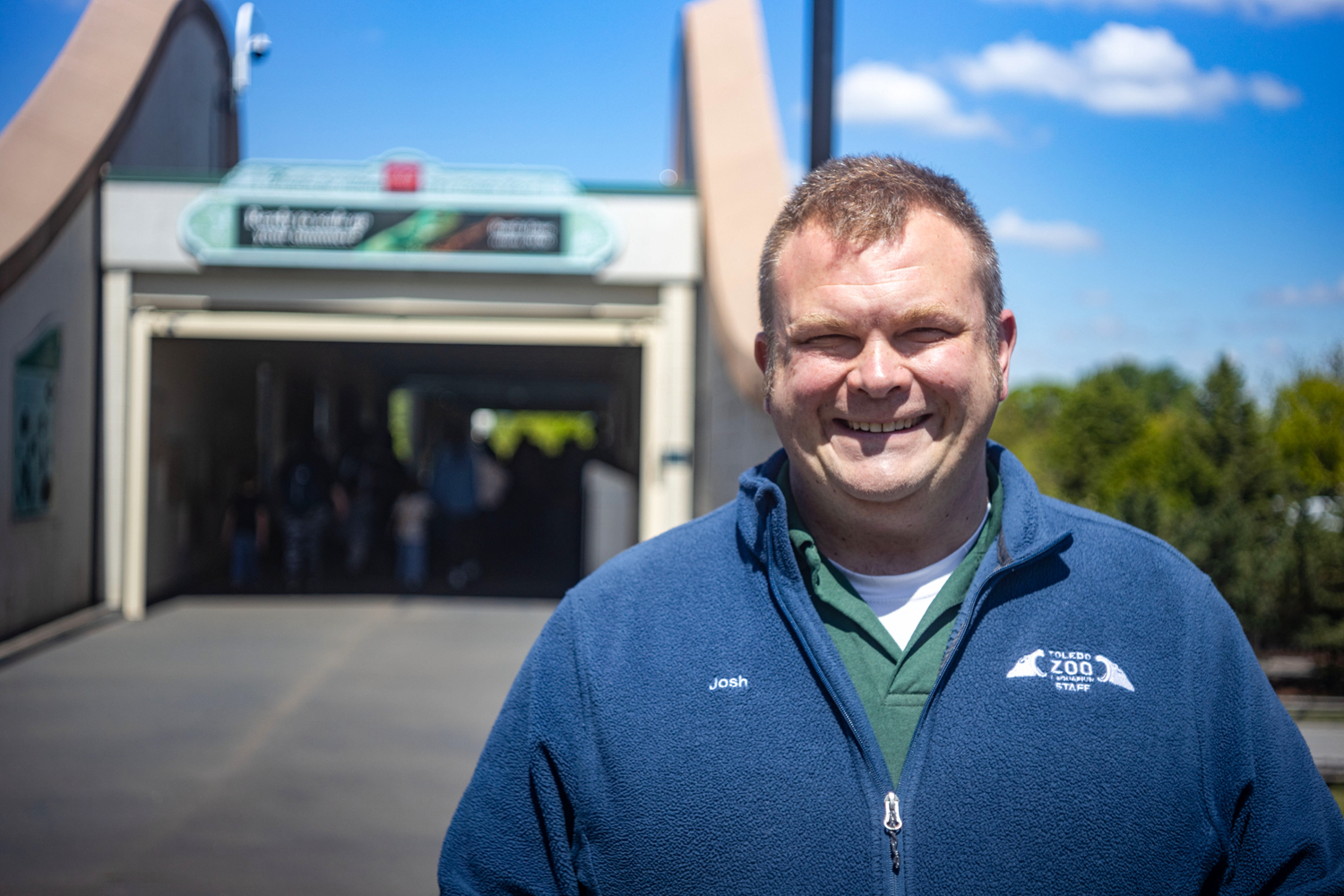
Josh Minor, the assistant director of programing at the Toledo Zoo & Aquarium. The end of May brings with it the onset of new grouping of programs at the Zoo. (TFP photo by Stephen Zenner)
“We’re now in our fullest schedule of behind the scenes tours,” said Josh Minor, the assistant director of education for the Toledo Zoo & Aquarium. Currently, there are 18 different animal tours available.
“Tours really give them [visitors] a chance to experience the zoo in a different way,” Minor said. “They get to connect with animal care staff to learn about the animals…It also gives you an opportunity to get closer to the animals than you can from the public side, so those experiences combined make it a once in a lifetime experience for people who participate.”
Camps
Week and day camps will be opening up this summer, as well with a host of different options available to Zoo-goers.
There are specific camps for 4 to 5 year-olds, 5 to 10 year-olds, 8 to 12 year-olds and 10 to 15 year-olds. Camps run from 9 a.m. to 3 p.m. unless otherwise noted, and all campers must be able to use the toilet independent of staff.
“We tend to put them in groups of about 10 campers for a teacher,” Minor said.
Nighttime Zoo & Aquarium
Overnight experiences are available for those who want to see more nocturnal creatures. “We do have a handful of dates out there that families or individuals can sign up to do an overnight, and that’s a great time.”
Giraffes at the Toledo Zoo & Aquarium. Feeding the giraffes is a very popular visitor experience. (TFP photo by Stephen Zenner)
From 6:30 p.m. to 10 a.m. zoo-goers can walk around the premises, and they can choose to sleep in four locations: Nature’s Neighborhood, Arctic, Safari or in the Aquarium. Minor said these are held because “some animals are lounging during the day, especially in the heat of the summer, and then when the evening comes, that’s when they’re more active.”
For visitors who want to continue enjoying the zoo at 10 a.m. the next day, after their overnight stay, they have full access to the Toledo Zoo & Aquarium (2 Hippo Way).
Scout Troop 101 member Andrew Wiczynski presents a new flag retirement box to Waterville City Council during its May 11 meeting. The box will be located in the city hall entryway for residents to properly retire U.S. flags. He was joined in the audience by his mom and step-father, Samantha and Ryan Courtney. (AWFP photo by Karen Gerhardinger)
WATERVILLE – Waterville City Council’s May 11 meeting carried a patriotic theme, with presentations from an Eagle Scout candidate and the president of the city’s America 250 Committee.
Scout Troop 101 member Andrew Wiczynski delivered a red, white and blue American flag retirement box that will placed in the entryway to Waterville City Hall. A Perrysburg High School junior, Wiczynski has been part of Troop 101 since he joined as a Cub Scout, and this project will help him earn his Eagle Scout rank, he said.
It was while pet-sitting for friends in Whitehouse that Andrew got the idea, as the home contained flags on display for both active and retired military members.
“I hope this box will provide residents with a location to retire worn American flags in a respectful way,” Wiczynski said.
Julia Wiley, head of the Waterville America 250 Committee, provided an update on the city’s events, which are posted on the new waterville.org website and on the city Facebook and Waterville 250 Facebook pages.
Last month, the committee rolled out a 3-minute video featuring the music of Waterville’s own Oliver Hazard band and including photos of people enjoying events and sites in Waterville.
“It shows what makes Waterville such a special community,” Wiley said of the video, which had over 3,000 views in just the first two days.
The Anthony Wayne Area Arts Commission (AWAAC), Waterville Community Foundation and the city teamed up to hire Dean Davis to paint a historical mural on a wall on Mechanic Street between Third and Second streets. The mural is expected to be complete at the end of the month.
The Waterville Branch Library will celebrate its 100th anniversary on Saturday, June 6 from 11 a.m. to 2 p.m. at Conrad Park, and will also host a four-part speakers series focused on local history for America’s 250th.
Families are invited to take part in the Time Traveler Passport program from July 1-14. Among the stops where guests can have a passport stamped are the Fallen Timbers Battlefield and the Wakeman Hall museum, which will have a display of Waterville in its past and future.
The AWAAC is hosting its three-part Eats and Beats Food Truck Tuesdays in June, July and August. The July 14 event includes a Kids Dig History theme with activities, period-dressed guides and music.
This year’s July 4 celebration, hosted by the city, will include bigger fireworks and an enhanced pre-fireworks celebration at Waterville Primary School with food trucks, DJ and bounce houses.
“We invite everybody in Waterville to get their red, white and blue out. We want to see the city decorated. Put your flag out, or bunting. Show the area, the county and the state what Waterville is all about,” Wiley said. “You don’t have to leave Waterville to celebrate America’s birthday all year long.”
During the meeting, council also:
-Listened to Dave Weber provide a concept for the Roche de Boeuf Interurban Bridge. He is a member of the Save the Bridge Association, which is hoping to stop demolition of the 118-year-old bridge. The governor provided another 30-day reprieve on April 16. Mayor Tim Pedro said the Ohio Department of Transportation owns the bridge, and the city is discussing options with interested parties.
-Listened to Bowling Green resident Leatra Harper share information on the negative impacts of gas plants used to power hyperscale data centers – including one being eyed for Waterville Township.
-Heard that residents can sign up for the quarterly newsletter at waterville.org.
-Learned that the city has a balance of $13.1 million as of the end of April.
-Discussed the fire departments upgrade in ISO ratings, and how to improve that rating even furter.
-Held a second reading on an ordinance that would set the speed limit on multi-use paths at 15 mph. Council Member Wayne Wagner said he is concerned about someone on a heavy e-bike colliding with a walker and causing serious injuries – and wondered if a lower speed limit would be enough to prevent such an incident. Administrator Jon Gochenour said the most important aspect of the signage is to promote the safe operation of e-bikes around walkers and runners, with the speed limit as a tool when necessary to address those operating an e-bike in a reckless manner.
-Welcomed Anthony Wayne High School junior Olivia Benefield to the meeting. A junior in government, Benefield is seeking to learn more about local government.
-Heard that a Memorial Day program will be held on Monday, May 25 at 11 a.m. at Wakeman Cemetery.
-Learned that the city accepted a bid from ARS to provide refuse and recycling service. Gochenour said the city is working on rolling out a program to transition from Republic Services, and more information will be forthcoming.
-Approved two ordinances related to Waterville Gas Company. One is a renewal, without changes, allowing the company to utilize the pipes and infrastructure to transport gas. A second ordinance fixes the price, which increases the customer charge from $12.50 to $14.50 per month but decreases the volumetric rate from $7.55 per Mcf (thousand cubic feet) to $6.724 per Mcf. The fee charged for uncollectable accounts is up $.0010 from $.0076 per Mcf. Council Member Nick Sargent said he was contacted by some elderly residents who were confused by the fees, and he asked Waterville Gas President Rob Black, who was in the audience, to see about providing more detailed explanations in the bills.
-Referred to the Planning Commission a request by Duvall Woodworking to change its zoning at 7551 Dutch. Rd. from Planned Business Park (PBP) to M-1 Light Industrial District. The adjacent Fallen Timbers Business Park was replatted and Duvall is no longer in able to maintain the PBP zoning classification. The Planning Commission will review the request on Monday, June 1 at 7 p.m.
-Selected Balas Concrete Services for the 2026 sidewalk improvement program, at a cost of $98,625. Sections that do not have future utility work planned were selected and include 266 panels on Fourth Street and Fifth Street between Farnsworth and Elm, and Second Street from the north to the south dead ends. The work includes the installation of 12 new ADA sidewalk ramps. The city received a $90,000 grant for the project.
The next regular Waterville City Council meeting is set for Monday, June 8 at 7:30 p.m.
Artist Dean Davis holds a board that he used as a guide while painting the 1843 canal boat, Albert White, on a wall on Mechanic Street in Waterville. It is one of five images that are part of a mural commissioned by the Anthony Wayne Area Arts Commission.
WATERVILLE – It’s been 183 years since the Albert White passed through Waterville on its way from Fort Wayne to Toledo, signaling the opening of the Wabash and Erie Canal. Filled in during the 1920s and 1930s, the canal later became the Anthony Wayne Trail.
Now, a painting of that first canal boat adorns a wall on Mechanic Street, which once served as a millrace from the canal to the Maumee River. Earlier this week, artist Dean Davis began sketching the second of five images that will adorn the 80-foot-by-18-foot wall under a “Welcome To Waterville” banner – all part of the city’s first public mural.
“We’ve been talking about public art for a while. It’s a really important piece of the community and gives everybody an opportunity to engage and have conversations about it,” said Lisa Exner, vice president of the Anthony Wayne Area Arts Commission (AWAAC). “It helps boost pride in the community.”
With $7,000 from AWAAC fundraising and a $5,000 donation from the Waterville Community Foundation, plus the blessing of building owner Scott Prephan, the AWAAC sought out Davis, who is known for his work on the Glass City River Wall, Holcim Silos, Weckerly Road America 250 barn and nearly 100 other murals in northwest Ohio and beyond.
The mural ties in beautifully with America’s 250 celebration – recognizing Waterville’s history and future.
“We had a conversation about the rich history in Waterville. We started with 20 photos and discussed each one. We picked out the ones that show how Waterville started, and how it looks to the future,” Exner said.
In addition to the canal boat, the mural will include Native American Chief Little Turtle, Wakeman Hall, the Roche de Boeuf Interurban Bridge and an American eagle in flight.
Artist Dean Davis utilizes a Meta headset to trace his original images onto the wall in preparation for painting.
Wearing a Meta headset, Davis quickly marked in the lines for where he will paint the Wakeman Hall exterior, using spray paint and an air brush. The augmented reality (AR) glasses are a game changer, Davis said, eliminating the need to go to a scene at night to use a projector to trace the image on the wall.
“My philosophy is to adapt and learn rather than trying to buck technology,” he said, talking as he sketched. “Now I can put in my workday and not wake up at 3 a.m. to project on the wall when it’s dark.”
Davis worked with AWAAC and Waterville’s Historic District Commission, then drew the rendering in his Art Farm studio just a few minutes away from downtown Waterville. As he draws, and then paints on the prepped wall, he’ll make minor adjustments to give the mural more life, such as making the edges to the “photographs” pop more.
This is the first time Davis has worked with the AWAAC, but he’s familiar with the group and its multiple events.
“These people really are artists, and I think that’s got a lot of merit. Working with these people has been a game changer,” he said. “I think Waterville is looking at public art with a different lens.”
Davis is involved in the 100 Works of Art initiative, a long-term effort to install murals throughout Lucas County. He is also the founder of River Gallery Studio, an artist-led initiative dedicated to creating sustainable pathways for young artists to stay and thrive in the Toledo area. He often works with youth in area schools, including Anthony Wayne. Last year he finished a mural on the wall near Monclova Primary School, incorporating ideas from students.
While this is the first public art piece commissioned by the AWAAC, more plans are on the horizon. Five kinetic wind sculptures from Utah artist Lyman Whitaker will arrive in the city in a few weeks, and be installed along the Maumee River near the Parker Square overlook.
“We certainly would like to contribute to the beauty of all three communities in the Anthony Wayne area, along with other places. Right now we’ve started with Waterville, and we hope we will see some more public artwork,” Exner said.
Davis expects to complete painting the project by the end of May.
A male ruby-throated hummingbird. (Photo by Metroparks Toledo nature photographer Art Weber)
Among all the wonderful hubbub over bird migration comes word that our smallest breeding bird and arguably most amazing summer resident has returned from wintering grounds as far away as South America.
Ruby-throated hummingbirds are back, visiting specially designed feeders all over the area. Keep those feeders fresh, clean, and full of properly mixed sugar water – no red dye please – and they’ll be with you all summer.
For obvious reasons, they’re nicknamed Mother Nature’s flying jewels, but don’t be fooled into thinking they’re gentle little creatures. Their demeanor is more barroom brawler than elegant and refined, especially if they’re defending a feeder they’ve staked out as their own.
Though they readily come to feeders, they’re perfectly capable of fending for themselves, nectaring on their preferred tubed flowers and feeding on insects they catch themselves or steal from spider webs.
They’re truly fascinating birds. It’s well worth taking a few minutes to learn more about them. Viewing them is a sure thing at the various Windows on Wildlife in your Metroparks. Look for them in Wildwood Preserve, Pearson, Swan Creek Preserve, Side Cut, Secor, and Oak Openings Preserve.
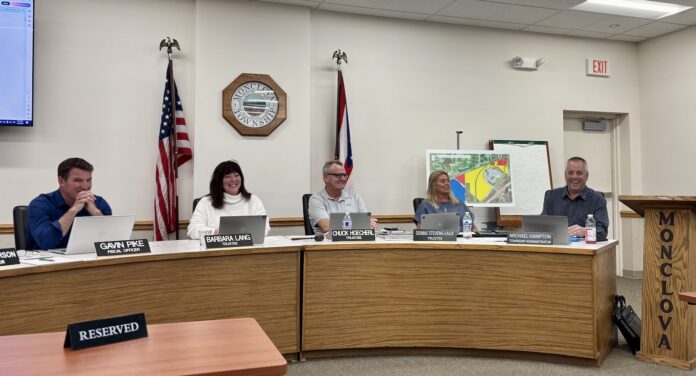
Monclova Township fiscal officer Gavin Pike and trustees Barbara Lang, Chuck Hoecherl and Deborah Stevens-Laux share a laugh with new administrator Michael Hampton II during the May 4 meeting. (AWFP photo by Karen Gerhardinger)
MONCLOVA TOWNSHIP – Two data center opponents want Monclova Township Trustee Barbara Lang to resign, citing a lack of trust and what Waterside resident Risa Sindel calls Lang’s “evasive, dishonest, dismissive tone throughout meetings the last seven months.”
During the April 20 and May 4 meetings, both Lyn Cox and Sindel addressed the board during the public comments section. During the May 4 meeting, Sindel accused Lang and Fiscal Officer Gavin Pike of not being truthful about participating in data center meetings.
“I don’t plan to resign. My thoughtful reaction is that I’m doing a great job protecting the residents of Monclova. My 20 years of service speaks to that,” Lang said.
Lyn Cox asked Monclova Township trustee Barbara Lang to resign during the April 20 meeting. (AWFP photo by Karen Gerhardinger)
It was early 2025 when Monclova Township trustees began holding public hearings about plans to amend their zoning text to make data centers a permissible use in agriculturally-zoned areas, with issuance of a conditional use permit – a process that requires multiple levels of review and public hearings.
Trustee Chuck Hoecherl explained during a March 31 meeting that the township didn’t have any data center requests pending, but that trustees had heard that site selectors were looking at the township. No one provided testimony against the text amendment, so trustees agreed to move forward with the change, noting that it would give them more control over aspects of data centers such as setbacks, lighting, sound and other factors written in as conditions.
In August, when Cox first learned that Monclova and other communities were being eyed for potential data center sites, she obtained marketing materials from Regional Growth Partnership (RGP) and the county. She created the Facebook page AW-CRAP (Anthony Wayne Area Community Response Awareness Group) and posted those materials. Soon, residents began coming to Monclova Township trustees meetings to ask questions – including Sindel, who said she was alarmed by what she learned.
“I have a strong research background. The public health impact aspect is what gets me concerned,” Sindel said.
So when Sindel heard that Lang, Pike and Lucas County Engineer Mike Pniewski were on the agenda for the monthly Hot Topics program in her Waterside community, Sindel urged the meeting organizer to add data centers as a last-minute topic. Nearly 100 residents were in attendance.
“When asked if there were any conversations or considerations of a data center deal for Monclova, and/or specifically adjacent to Waterside, both Pike and Lang denied they knew anything, denied any meetings, and claimed to ‘not even know much about data centers,'” Sindel said. “It was clear at the time that Monclova residents were not being given the whole story, but were being manipulatively silenced.”
Risa Sindel asked Barbara Lang to resign from the Monclova Township Board of Trustees during their May 4 meeting. (AWFP photo by Karen Gerhardinger)
During the May 4 meeting, Sindel asked about maps showing a potential data center. Pike said the renderings she referred to are just marketing materials created by the landowner, not a map. He confirmed after the trustees’ meeting that he did attend two meetings where the topic came up, but not in the way that Sindel and Cox assume.
As fiscal officer, Pike is not a voting member of the board, but attends meetings with outside entities to gather information, as he has relevant experience in business, real estate and finance.
“Did I have two meetings? Yes. One was administrative and the other was marketing,” he said.
In Spring 2025, Pike and Hoecherl met with Maumee’s now-retired administrator, Patrick Burtch, and former mayor Jim MacDonald, to look at how the two communities could work together, including the possibility of forming a joint economic development zone along Black Road, the dividing line between the township and the city.
“It wasn’t, ‘This data center is coming in and how do we work with them.’ It was, ‘If something comes in, what do we do?’ It was the first time I remember working with Maumee on a common goal,” Pike said, adding that he felt it was productive to open up a discussion with Maumee since the township is working to avoid further annexation by the city.
In fall 2025, Pike was asked to attend another meeting with an Isaac Land Investments representative, RGP and the city, but said he was handed a marketing piece – a mockup of what a data center might look like on mall-area land owned by Isaac. Once he saw what the meeting was about, Pike said he left after about seven minutes.
“We never met with a developer. A meeting with a land owner is a huge difference from a meeting with a developer – that’s when things start to get real,” he said.
He likens the meeting to the time, several years ago, that an Isaac rep approached him and his partners in Urban Air to propose locating their entertainment business near the mall. He was shown a professional rendering as a sales pitch. Urban Air later located in south Toledo.
Pike said he doesn’t believe a data center would come to the township, and definitely not on mall-area land that is bisected by Black Road and a railroad line. Conversations around potential developments are common, but 90 percent of the time, never come to fruition, he added.
“Those are the two meetings they were talking about. None of them have any significance because there wasn’t any end user,” Pike said, adding that Lang was not in attendance at either of those meetings.
But Cox and Sindel believe the two haven’t been forthright with their knowledge on data center proposals. Sindel said Pike and Lang have used semantics when answering questions during public meetings, such as saying, “We did not talk to a data center developer” instead of answering the more broad question of whether the township has had any discussions with any officials, economic development professionals or property owners about a potential deal with a data center.
“My overarching problem with the trustees, and Barb in particular, is that when considering a project which has the potential to fundamentally change the very character of the township, and is contrary to the land use comprehensive plan, residents should be brought into the discussion earlier,” Cox said. “We know of several meetings where data centers were discussed and we were provided maps by other attendees of those meetings. This, after being told by Barb that there were no discussions going on, that there were no maps. They revealed the existence of the meetings only after we pushed the issue. We feel like we are fighting a potential developer and our own trustees.”
Pike has his own frustrations, stating that he feels that Cox and Sindel are purposefully misrepresenting what he said. The AW-CRAP Facebook page is full of mistruths, he asserts, yet those are not corrected even when Cox is presented with facts.
“How do you prove to the public that you’re not doing something they believe you’re doing?” he asked, noting that trustees even went so far as to have their law director, Dawn Sanderson, draw up legislation – passed by all three trustees – stating that no one in the township has signed a non-disclosure agreement (NDA) with anyone about a data center development.
During the meetings, Lang said the trustees have made improvements to accommodate and answer questions from the audience. The microphones were improved so residents can hear better, seating was added for the larger crowds, and the agendas are more detailed.
“Everything they’ve suggested, we’ve implemented to make the meeting more effective, transparent and efficient,” she said. “We’re hearing them and taking action.”
While they appreciate those efforts, Cox and Sindel say Lang’s behavior during meetings continues to be unprofessional, citing instances where she has to put herself in a “time out” after getting frustrated and addressing the audience in what they see as rude manner.
“She has publicly disparaged members of the community for having shown concern over the data center issue. Her clearly visible disdain for concerned citizens is clear,” Sindel said.
“I feel she is a loose cannon, without the emotional maturity and the intellectual curiosity to perform the job as trustee. Her words, body language with the eye rolls, heavy sighs, looks of exasperation, head shaking and demonstration of annoyance is disgusting,” Cox added.
Both women said they trust Hoecherl and new Trustee Debbie Stevens-Laux to respectfully listen to constituents. Lang said she believes she’s targeted because she won’t openly state her opposition to data centers because she’s trying to remain neutral.
“Did I sigh? I apologized. I will try hard to have a neutral face. Do I pull it off every time? I’m not a practiced and polished politician. I am your neighbor. So if I don’t say it completely correctly, it doesn’t mean I’m lying. It means I’m not following a script,” Lang said of the times she’s been visibly rattled.
While the township is currently three months into a 12-month moratorium on data centers – and a housing development is now being eyed for land on Black Road initially thought to be considered for a data center – Sindel said she remains concerned that the trustees might be seduced into deal with another developer.
“I do not see – given seven months of consistent, negative behavior – that Lang would protect or preserve our township while welcoming responsible economic development,” Sindel said, noting that she’s not only fighting for Monclova Township, but all of Ohio. “I do not want to see Ohio further become big tech billionaires’ dirty, toxic broom closet. There must be responsible tech development. That is not happening at this time.”
So is there a way forward to mend differences between the anti-data center representatives, Lang and Pike?
Both Lang and Pike said they’re not comfortable speaking with Cox or Sindel, who they believe misconstrue their words. Sindel said a path forward can only happen if there is “a respectful and open approach of transparency and honesty.”
“Barb has shown us who she is. I go by the adage: when a person shows you who they are, believe them. There is no way forward with her,” Cox said.
Both Cox and Sindel said they will likely continue to ask for Lang’s resignation during the meetings.
“You can come to every meeting and make my life miserable, but I’m still doing my job. I would be really worried about this if I had done something wrong, but I’ve done absolutely nothing wrong. I haven’t had any secret meetings or taken a payout. None of that happened,” Lang said. “Monclova Township is great because we as leaders care so much about the job we are doing.”
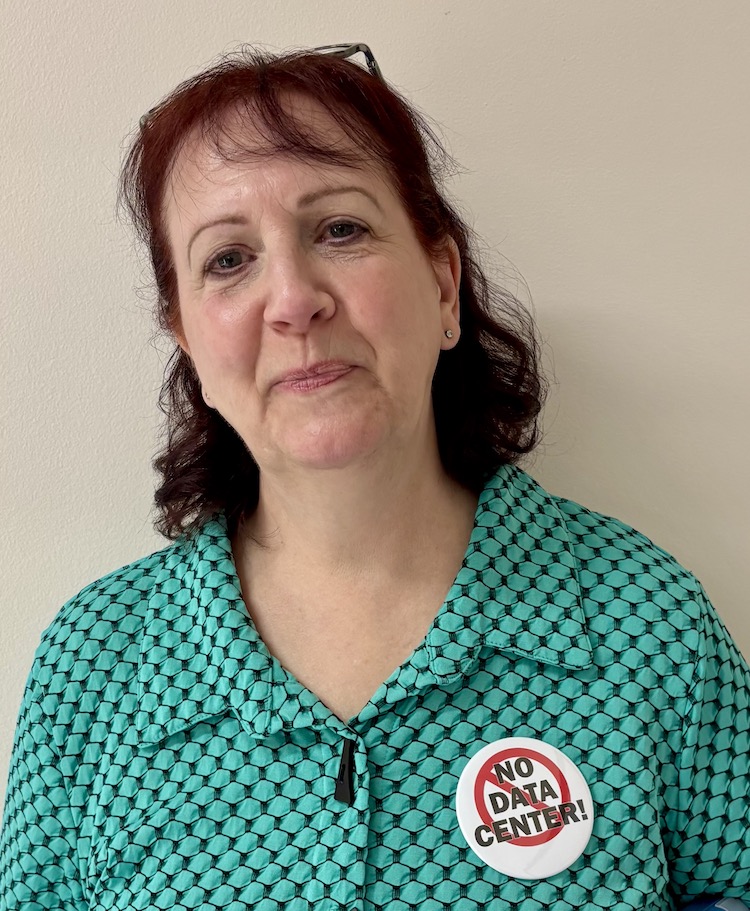
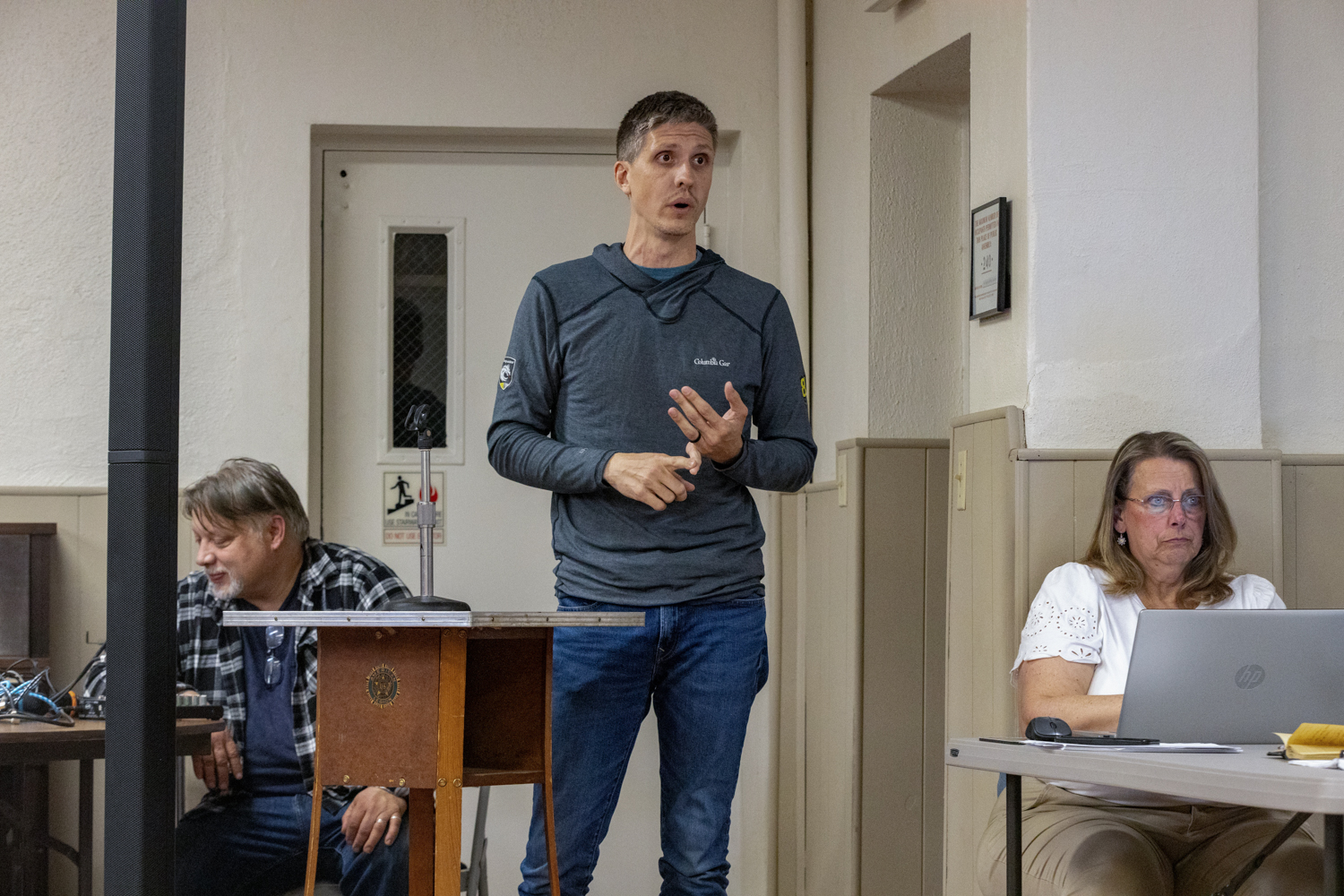
Bruce Baginski, of Monclova Township, sits with an anti data center pin during a Waterville Township Zoning Commission Board Special Meeting at Waterville Presbyterian Church (611 Farnsworth Rd., Waterville) on Tuesday, May 12, 2026. (AWFP photo by Stephen Zenner)
WATERVILLE TOWNSHIP – Waterville Township has everything a data center needs: abundant land and easy access to water and electricity. If approved by the trustees later this summer, the township will also have more thorough zoning regulations in place to handle such facilities.
“The committee did not give up any ground. We want to protect the rights of residents,” said Brian Gowing, one of several residents on the township’s Data Center Advisory Committee, which was formed soon after a one-year moratorium was approved in December.
Risa Sindel, sits next to Bruce Baginski, of Monclova Township. (AWFP photo by Stephen Zenner)
Over the past several months, multiple meetings and intense homework with each committee member researching areas including water, electricity, environment and other impacts, the DCAC dug into zoning codes and the Ohio Revised Code – all with a goal of beefing up the township’s zoning resolution to prepare for a data center or similar high-impact facility.
“Hopefully it dissuades a data center from coming in, but if a data center does come in, they have a lot of hurdles to jump through and a lot of money they’re going to have to put out,” Gowing told an audience gathered during a special May 12 zoning commission meeting.
Last year, the township’s board of trustees – recognizing that a data center developer might want to locate in the area – approved a change to its zoning resolution, allowing such facilities on agriculturally-zoned land with the issuance of a conditional use permit. Facing pushback and questions from dozens of residents, the trustees approved a one-year moratorium to give the township time to research and come up with recommendations, said Trustee Toby Miller.
Toby Miller, Waterville Township trustee, said that facing pushback and questions from dozens of residents, the trustees approved a one-year moratorium on data centers to give the township time to research and come up with recommendations. (AWFP photo by Stephen Zenner)
At the same time, the township has been undergoing a thorough review of its 2010 Comprehensive Land Use Plan, utilizing Reveille Ltd. of Bowling Green. In the process, Reveille recommended looking at adding an M-3 Campus Industrial District to its zoning resolution, and to amend its existing M-1 and M-2 industrial district regulations to include tiers that are based on electrical capacity and overall impact.
During the meeting, Miller shared a presentation outlining the proposed amendments to the zoning resolution, and noted that the presentation, along with the 65-page resolution and a draft copy of the land use plan update – which is still in progress – will be posted atwatervilletownship.com and on the township’s Facebook page.
While the Zoning Commission already sent the resolution to the Lucas County Plan Commission on May 10 – in order to get on the LCPC agenda for Wednesday, June 24 – commission members Bill Burkett, Shelly Hayes, Bob Long, Keith Moosman, Cathy Vorst and alternate Jon Poponak listened and asked questions during Miller’s presentation. He noted that the meeting is just the initial step in a process that will involve opportunities for public input at the county and township level before the trustees vote on the change later this summer. DCAC members Gowing, Rebecca Wooten, Robert Seeman, Todd Heller, Todd Kerschner and Russ Schifferly also reviewed the resolution.
(Left to right) Jon Poponak, alternate zoning board member, Cathy Vorst, vice chair zoning board member, Keith Moosman, chair of the zoning board, Shelly Hayes, zoning board member, and Bill Burkett, zoning board member, address concerns. (AWFP photo by Stephen Zenner)
The zoning will not only regulate data centers, but large-scale, high-impact, campus-style industrial developments such as power plants, utility yards and battery storage systems. It will replace the current data center language that requires a conditional use permit – a decision that would rest with the Board of Zoning Appeals (BZA).
Miller pointed out that while the BZA members are all dedicated and knowledgeable, they are not elected officials. And the conditional use permit is considered an administrative action, and therefore not subject to a referendum by citizens. By requiring a developer to apply for a zoning change, citizens can submit 327 signatures on a petition to put any zoning change decision on the ballot as a referendum.
“Ultimately this puts us in a position of giving residents more say on what happens here,” Miller said.
The new zoning resolution covers every possible impact, including electrical demand, water use, construction traffic, noise, lighting, stormwater, emergency services, environment, buffers and setbacks, wildlife, traffic, and how to ensure that the site can be restored at the end of the facility’s use, Miller said
Keith Moosman, the chair of the Waterville Township Zoning Board. AWFP photo by Stephen Zenner)
Any developer that wants to build a data center or other large facility will need to apply for rezoning land to M-3, and pay a nonrefundable $500 per acre. In addition, the developer would need to put 1 percent of the total cost of the project into escrow. This would be used if the developer doesn’t comply with those requirements.
“This gives us a pool of money to ensure compliance without dipping into township funds,” Miller said.
Resident Lisa Haberstock asked for more details on how the escrow could be used. Miller said it could cover property restoration, fixing water wells and putting up noise barriers – actions the developer should do as a good neighbor – but could be covered through escrow if the developer did not follow through.
Burkett recalled that when the U.S. 24 bypass was constructed in 2011-12, residents were concerned about the impact of borrow pits on the water table. The township asked that residents get a baseline study on their wells before construction. He recommends residents who are concerned about the impact of a large facility on their wells to do the same, in order to be able to prove any changes.
DCAC member Seeman, whose area of focus is water consumption, noted that data centers can use 500,000 to one million gallons a day, with 80 percent of that cooling water evaporating. The amendment under consideration requires a closed-circuit, non-evaporative system, he said.
Brian Gowing, of Waterville Township, is one of several residents on the township’s Data Center Advisory Committee. (AWFP photo by Stephen Zenner)
“I think overall we tried to make sure that anybody who tries to build a data center would be using best practices,” Seeman said.
Many residents also fear what will happen in the event of a power outage, and whether a data center would have its service restored first, Moosman said.
“A facility of this scale will have its own power generation,” Miller said, but acknowledged that the resolution doesn’t talk about the process of restoring power, as that’s up to First Energy. “The whole point of the power items in here are to prevent impact to residents’ power. They [developers] have to provide their own power, protection and backup to not impact the residents.”
Several residents in the audience shared concerns about data centers. Haberstock said she’s worried about the impact of a large development on some of the state’s best farmland, the chemicals in the air and soil, and dewatering of the area.
Brent Myer noted that while a 1 mw generator uses a 6-inch exhaust valve, a 300 mw generator would require a huge exhaust valve, and he is concerned about coal and natural gas emissions and their impacts on pediatric cancer rates.
Joe Ballmer, of Monclova, talks about how large industrial projects should be far away from residential zoning. (AWFP photo by Stephen Zenner)
Joe Ballmer, a retiree who previously built industrial projects around the world, including data centers, said he believes data centers belong near refineries or the port, not near homes.
Doug Lashaway, a Schadel Road resident, asked whether the resolution could include protections for homeowners who will be adjacent to such facilities. Legally, price protections cannot be put in place, Miller said.
“The best we can do is property setbacks, because that’s a zoning issue,” he said.
Also addressing the zoning commission were Lyn Cox, Jason Bailey and Leslie Harper, who shared that the fracking industry in southeast Ohio used LLCs to shield itself from responsibility for impacts.
The next step for the resolution – and opportunities for public comment – are expected to be during the Wednesday, June 24 Lucas County Plan Commission meeting, which begins at 9 a.m. at 1 Government Center in Toledo.
Doug Lashuay, a Schadel Road resident, asked whether the resolution could include protections for homeowners who will be adjacent to such facilities. (AWFP photo by Stephen Zenner)