Home Blog Page 179

Celebration of wine, food to benefit Toledo Animal Shelter

0

The Toledo Animal Shelter Auxiliary will present A Celebration of Wine and Food from 5:30-8:30 p.m. Oct. 22 at Manhattan’s, 1516 Adams St. All proceeds benefit Toledo Animal Shelter, Toledo’s oldest no-kill shelter.

“This is a fun and lovely event that helps showcase the shelter and all the employees who work tirelessly to create a safe, clean and caring environment for adoptable pets,” said Kate Kelley, auxiliary board member and shelter board vice president.

The event will feature four wines with animal themes, hors d’oeuvres and desserts. Raffle items include an eight-bottle wine refrigerator.

Tickets are $35 per person in advance or $40 at the door. Advance tickets can be purchased at Manhattan’s in person or by calling (419) 243-6675. Tickets may also be purchased at www.toledoanimalshelter.com.

Ottney takes reins as Toledo Free Press editor in chief

0

Sarah Ottney, former managing editor of Toledo Free Press, has taken the helm of the award-winning newspaper, the largest circulation paper in Lucas County, starting this week.

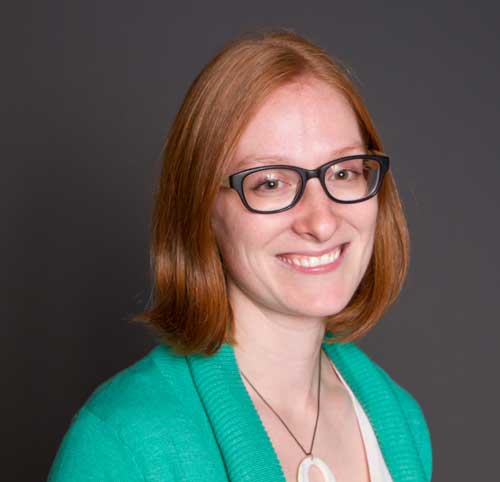
Sarah Ottney, the new Editor-in-Chief of the Toledo Free Press.

Sarah Ottney, the new Editor-in-Chief of the Toledo Free Press.

Editor in Chief Michael S. Miller, co-founder of the almost 10-year-old paper, vacated the position Oct. 17 for work in the nonprofit sector.

“Michael’s been with the Toledo Free Press since the beginning and really built it from the ground up. He’s been a great boss and mentor and I’m humbled to be entrusted with carrying it forward,” Ottney said.

Miller, who has worked tirelessly as “community ambassador” for the paper, will continue his efforts for the United Way of Greater Cleveland. He moves there with his wife and two sons.

He called Ottney a talented journalist — more naturally gifted than himself — now with managerial experience who can take the helm and continue to steer with quality and integrity but also maneuver in new directions.

“Sarah is so level-headed and moderate in her approach to people,” Miller said. “We’ve been a very good team. We’ve been incredibly lucky to find her.”

Ottney began her tenure at Toledo Free Press four years ago as a staff writer. In 2011, she was promoted to special sections editor and in 2012 became managing editor. She has reported on assignments from New York City, Washington, D.C., and Germany.

“I’m proud of the work Toledo Free Press does and the place it’s carved out for itself in the region,” Ottney said. “The format of a weekly newspaper gives us a chance to dig into topics or different angles of ongoing issues not covered by daily media and our staff works hard to earn and maintain reader interest and loyalty. I love the challenge that provides.”

Miller said he hired Ottney for her exceptional reporting and writing skills. She then proved herself as an excellent designer, editor and leader.

“When you’re talking about a small paper such as ours, it is an extraordinary blessing to have someone who can do those things,” Miller said.

The news team also includes Design Editor James A. Molnar, News Editor Danielle Stanton and Associate Editor Tom Konecny. The paper is also comprised of an advertising sales team, business administration, production and distribution.

Ottney, 30, was born in Toledo and graduated salutatorian of Oak Harbor High School. She majored in English and journalism at Ohio Wesleyan University where she served as editor of the weekly student newspaper. She also interned at New York City book publisher Soho Press.

She worked at the daily South Dakota newspaper Aberdeen American News for three years as a reporter and copy editor. She returned to Toledo for a year with AmeriCorps VISTA.

Toledo Free Press writer and community ombudsman Brandi Barhite, who has worked with Ottney since 2010, said Ottney as managing editor gave her reporters the support they needed to succeed, from help with story ideas to execution to copy editing.

“Sarah is the ultimate newswoman,” Barhite said. “She recognizes news and understands what makes people click on a story or pick up the paper. She isn’t afraid to ask a tough question, but she also knows how to approach difficult topics with tact and sensitivity.”

Ottney was recently named Public Children Services Association of Ohio Journalist of the Year for 2014.

“We nominated Sarah based on the quality of her work,” said Julie Malkin of Lucas County Children Services. “The article she wrote about our two parent partners who have been through the system was very sensitive but told an important story. She didn’t pull any punches. We respect the work that she’s done.”

She was also recently named one of Toledo’s 20 Under 40 winners.

The fact that Ottney is young and literate in social media is good for the paper, Miller said. Her youthful approach will bring a fresh new perspective, he said.

“My hope will be when I pick up Toledo Free Press in six months, I’ll recognize it but also see healthy changes,” he said. “We’ve built [Toledo Free Press] from nothing. We have 10 years of sweat and blood in this newspaper. I can walk away with peace of mind. I have great confidence in her.”

Not once has founder and publisher Tom Pounds interfered in the editorial process, Miller said, adding that it is critical that Pounds’ style of a hands-free directorship continues under Ottney’s reign. Pounds founded the Toledo Free Press in 2005 after leaving The Blade as general manager.

The challenge for Ottney will be how to reach more readership and continue on with the great journalism that Toledo Free Press has established, Miller said.

She plans to continue the paper’s “community ambassadorship” of writing about events passed over by other media.

“One of the classic tenets of journalism is ‘Giving a voice to the voiceless.’ I think Toledo Free Press has done a good job over the years of picking up on events and organizations­ — particularly new community events like Dine 419 Toledo, Toledo Pride and Toledo SOUP — that weren’t getting much coverage at first and helping to grow them and give them a voice,” Ottney said. “I plan to continue that effort.”

Tent City marks 25 years of serving area’s homeless

0

Lavette Miller is not shy about telling her story. She tells it straight: She abused drugs, gambled and prostituted herself.

She was homeless on and off. In 1997, a man shot her, the bullet hitting her spine, confining her to a wheelchair.

She said she was an angry person for a long time, but she wasn’t raised in a neglectful or abusive home; she just made bad choices.

Tent City Mayor Lavette Miller. Photo by Robin Charney.

Today, Miller is clean and sober, has a job and pays rent on time. The 45-year-old will be the honorary mayor of Tent City 2014 on Oct. 24-26 at the Civic Center Mall Downtown.

“Now I’m not ‘Where can I get my next fix?’” Miller said. “I’m not about what I can get and I can spend my money on other stuff. I like it and I’m honored that I have gone from a guest to a ‘1Matters King.’ They don’t try to bombard you or ‘fire and brimstone’ you with things; they simply wait for you. They stay in your life and help you and do whatever they can until you are ready to change. 1Matters holds their hands out and we just mold ourselves into a better version of ourself and 1Matters is there to love and embrace us through the process.”

Founded in 1990 by Ken Leslie who was homeless himself for a time, Tent City brings together people of compassion who value hard work and one-on-one relationships to honor the homeless and the work being done to house them.

In 2006 the event was restarted after a six-year hiatus and in 2007 singer John Mellencamp visited Tent City while in Toledo; the event was the impetus for Leslie to found 1Matters, the group that now organizes Tent City. This year, Tent City celebrates 25 years.

“It’s the power of [Tent City] that recognizes that everybody matters,” Leslie said. “For 25 years, it’s been a community of compassion. Another one of our slogans is ‘Don’t be behind us all the way; be with us all the way.’”

The kickoff to the event will be the Walk to End Veteran Homelessnes sponsored by Veterans Matter. New this year, organizers are asking participants to walk in a veteran’s name. Those doing so will wear T-shirts with the veteran’s name on the back. The walk starts at Promenade Park at 6 p.m. and will go to the Civic Center Mall. To register for the walk go to www.1matters.org/walk.

Veterans Matters housed 458 veterans last year in six states. Locally they housed 77. The program just opened up operations in Washington, D.C., and is working on establishing  services in Georgia, Leslie said. Their goal is to house 1,000 veterans this year. Celebrities Susan Sarandon and Katy Perry have both joined the campaign.

Leslie is expecting 300 at the walk and another 200 who will come out for the entertainment. Amongs others, Pat Lewandowski, who has been at every Tent City for the past 25 years, will perform.

There will be an expanded medical tent this year with dentists, cardiologists, podiatrists, opthamologists, mental health providers and a women’s center. Haircuts and birth certificate service will be offered. There will also be a complete Veterans Services Tent staffed by the Veterans Administration and Lucas County Veterans Services Commission.

Volunteer spots are filling up fast, Leslie said, which is usually the case every year. So far, the event is ahead of last year with 538 spots filled, or 73 percent, he said.

Cherry Street Mission Ministries is a main sponsor of Tent City and has been since the event was “reimagined” after its hiatus ended in 2006, said Dan Rogers, CEO of Cherry Street Mission Ministries. Rogers said the event has gone beyond making people aware of homelessness and now makes people aware that they are part of the solution.

“It an awareness project,” Rogers said. “It’s really started off as a homeless awareness project, but as we reimagined it in 2006, it’s really a people awareness project because when you come down to Tent City it is a convergence of everybody getting help. When you give you get given to as well, and it’s that but magnified 100 times. It’s a three-day convergence of a demographic of people that normally wouldn’t be in the same space.”

Miller is now a part of the 1Matters team. In order to join the team, you have to be nominated and endorsed by five others in the organization who determine whether you have consistent compassion.

“I lived in a motel for a year,” Miller said. “In 2008, I looked into an apartment and haven’t been homeless since. I pay my rent early if I can because I refuse to be homeless again. If I don’t change no one can help me to change.

Event caters to potential nonprofit board members

0

Toledo’s upcoming Board Fair event promises to match community-minded talent with interested nonprofits in order to fill vacant board seats.

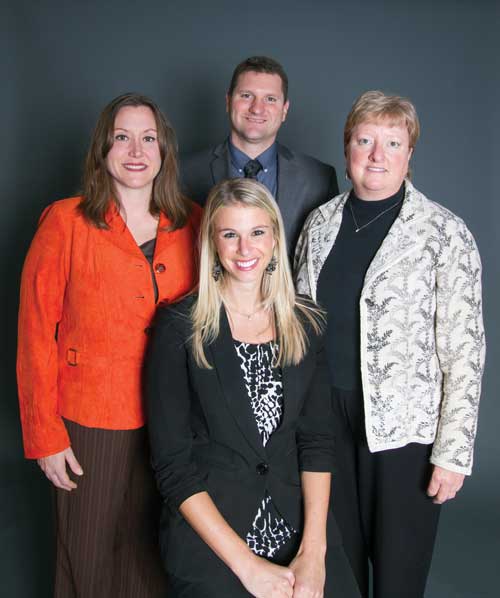
Clockwise from left, Renee Palacios of Family  House, Andy Hudak of  TransAmerica Financial Advisers,  Carol Smith of Family Service of  Northwest Ohio and Attorney Amanda  Coyle. Toledo Free Press photo by Christie Materni

Clockwise from left, Renee Palacios of Family House, Andy Hudak of TransAmerica Financial Advisers,

Carol Smith of Family Service of Northwest Ohio and Attorney Amanda Coyle. Toledo Free Press photo by Christie Materni

People interested in becoming a board member at a local nonprofit will want to attend Board Fair: Engage, Inspire & Involve. The free event runs from 5:30-7:30 p.m. Oct. 23 at The Toledo Club, 235 14th St. Sponsors are Columbia Gas of Ohio and The Andersons.

Event organizers are trying to meet the need for strong leadership in the nonprofit community while providing participants with a way to harness personal development.  Many of the attendees have never served on a board before and need to learn the steps necessary to becoming a board member, said organizer Sara Swisher of EPIC Toledo.

To help the young professionals, Julie Payeff of The Andersons will present “Millennials and Boomers in the Board Room.” The 20-minute pres-entation will be given at 6 p.m. and again at 7 p.m. Light appetizers and a cash bar will also be provided.

Swisher said 44 nonprofits plan to participate and she expects 200 attendees.

Board Fair got its start when Mike Anderson, chairman and CEO of The Andersons, approached Chris Kozak of Columbia Gas of Ohio with a problem: Only a small pool of people were being tapped for boards in the community.

Kozak in turn contacted EPIC Toledo, Leadership Toledo and 20 Under 40. After many conversations, Board Fair was born.

In its first year in 2013, 150 people showed up and 29 nonprofits participated — organizers had to turn some away.

“The goal and mission is to put interested individuals together with organizations who are looking for help,” Kozak said.

“It’s a pretty unique collaboration with EPIC Toledo, with 20 Under 40 and Leadership Toledo. Those organizations are nurturing and recognizing the next generation of leaders and we try to get everyone in the same room and say, ‘Here are some resources.’”

People will have the opportunity to explain what they do and what they have to offer. The hope is that individuals will have an interest in an organization or issue and be able to bring their interests and talents to a nonprofit.

Kozak is on several boards himself, including the American Red Cross of Northwest Ohio, the Boys & Girls Club of Toledo and the Toledo Regional Chamber of Commerce.

“I’m very fortunate in doing what I do,” Kozak said. “I think it’s a way to build the community. I have two children in Northwest Ohio and I hope that they have opportunities. It’s the right thing to do when you’re at a certain stage of your career.”

Andy Hudak, a financial adviser with Transamerica Financial Advisors, attended Board Fair last year because he wanted to be connected to like-minded individuals.

“I did not know what to expect when I went to the Board Fair,” Hudak said. “I had no idea; I took my sister. We just met so many cool people. You get out of it what you put into it and it was a really good experience.”

Hudak subsequently joined the board of Ballet Theatre of Toledo. He’s also on the board of Northpointe Academy and Wildwood Environmental Academy, two charter schools.

He said the benefits of serving on a board are many, from learning about the business, the community and personal interaction, to becoming connected with sincere people that you would never meet elsewhere.

“All our advisers that come and work with us, I tell them to find a cause you’re passionate about that you can really grab onto and find an organization that serves. Board service really only takes a few hours a month out of your schedule at most, and it’s well worth the time so I highly recommend it,” he said.

Hudak will attend this year’s Board Fair as a recruiter for the boards he serves. He said he’ll look for individuals who want to serve the community, connect with others and bear some of the responsibility for the success of the organization.

EPIC Toledo member Amanda Coyle recently graduated from law school and passed the bar. She has always lived in Sylvania and wanted to give back to her community. Board Fair offered her a step in that direction last year.

She said the process was actually “a little stressful” with so many non-profits represented, but in the end she chose Family Service of Northwest Ohio, an organization that works to empower families through counseling and violence intervention.

Coyle was a natural fit with her family court experience, said Carol Smith, the executive office manager for Family Service of Northwest Ohio. Smith also attended the first Board Fair and said she met a crop of talented young professionals who were deeply committed to giving back.

“I was amazed at the people there who were truly interested in finding a niche in the nonprofit world,” she said.

Smith said the process of filling board seats is fraught with difficulties. Finding people who are genuinely interested in a nonprofit’s mission is hard, she said. Family Service of Northwest Ohio  can take up to 18 board members and currently has 13 seats filled. Board members serve two or three year terms and are associated with the nonprofit an average of six years.

Smith hopes to see the same level of excitement and interest at this year’s Board Fair as she found at the last. Her organization is looking for engaged talent who are “dedicated to our mission, have leadership qualities and can bring a certain amount of expertise or guidance. It’s a volunteer board. If someone comes in and they’re engaged in our mission and stand behind us and get involved in our fundraising and activities, it’s golden.”

The mission of Family House is to keep families together during a difficult time — when they are homeless, said Executive Director Renee Palacios.

Family House does not do any marketing, but instead attends events like Board Fair to find the next generation of philanthropists who can continue the Family House mission.

Family House is currently full with 36 families, or 107 people, 70 of whom are children.

Last year, the organization found one board member and two ambassadors at Board Fair and this year is looking to discover more leaders who can take the reins of the organization.

“We can’t do Family House by ourself; we need help fundraising, in-kind donations and actually leadership of our organization,” Palacios said. “We need to share our mission, that we are out there and that we do amazing work.”

Ottney: The heart of it all

0

When I was growing up, Ohio’s license plates sported the slogan “The heart of it all.” I’m still disappointed the phrase was eventually dropped in favor of “Birthplace of Aviation.” Impressive and noteworthy to be sure, but I always thought the former motto was a corny yet perfect reflection of the state’s shape, location and unique mix of small-town charm and big-city vibe.

Toledo was recently No. 4 on Forbes’ list of 19 “Opportunity Cities,” described as cities “small enough that enterprising people can really make their mark” but “still large enough to offer amenities … that make for a high quality of life.” (Interestingly, three cities on the list, including Toledo, also appeared on the magazine’s controversial “Most Miserable cities” list, so go figure. I, obviously, disagree.)

During a recent visit to Cleveland, I talked with a number of residents in their 20s and 30s who are excited to be part of what they view as a resurgence in the city. One, a 27-year-old social media manager for CBS Radio, was typical in that she  grew up near the city and left the state for college. After graduating during the recession, she moved home to save money and figure out where to go from there.

“I came home to apply for jobs anywhere but here,” she told me. “My dream job was to do new media at a radio station and that opened up here. I found things here I was looking for in other cities. It’s like you rediscover your own city. Instead of feeling stuck here, I fell in love with it.”

I hear the same thing all the time from people in Toledo. Big enough to offer world-class amenities. Small enough to take chances.

Like many Northwest Ohio teens, I also planned to leave the region ASAP — for college, for a job, for the foreseeable future, forever. It wasn’t Toledo, or even Ohio. It was just a case of wanderlust that wouldn’t seem to let go until I did.

But sometimes you end up finding your heart where you least expect it.

I did stay in Ohio for college, but to the consternation of my practical, hardworking father, I quit a perfectly stable full-time, out-of-state job after three years to move back to Toledo — in 2009, during the economic downturn,  for a temporary stipend as an AmeriCorps VISTA (Volunteers in Service to America) member.

It might be the single riskiest move I’ve ever made. But it’s paid off in spades.

For starters, it got me back to Toledo. I didn’t necessarily plan to move back here, but I’d wanted to do a year of service for a long time. I would have been happy doing it anywhere, but it was particularly gratifying to do it in Toledo, both as my hometown and as a place that was especially hurting at the time.

When the year was up, I had the good fortune of meeting Michael S. Miller, who offered me a job at Toledo Free Press and the rest, as they say, is history.

In his inaugural column, “Welcome to the dawn of a new tradition,” published March 16, 2005, Miller wrote:

“The Toledo Free Press has a mission, but not an agenda; we want to be a paper for the people, a conduit for ideas, stories and conversation.

“We know there are good stories waiting to be told. We know there is positive news to spread. There are quiet developments, slow progressions and hardworking people investing in Toledo and working for its citizens. We want to give them a forum to discuss their ideas and discoveries.

“But there’s a difference between being a thoughtful booster and a blindly loyal cheerleader. We recognize that along with good news, there will be tough questions to ask and answer, accountability issues to explore, and dark, mossy corners that need a bright light focused upon them.”

Nothing will change in that regard.

I want Toledo Free Press to be in the heart of it all, whether that’s a heated Toledo City Council debate, a big move by a private-sector player or a court case that captures the attention of the nation — to never tire of asking the hard questions, untangling the tangled webs and making the unclear clear. Toledo is a city worth fighting for.

I also want us to continue to keep our pulse on the heartbeat of the community. I’m proud of the work this paper has done and the place it’s carved out for itself in the region over the past 10 years.

One of the classic tenets of journalism is “Giving a voice to the voiceless.” I think we’ve done a good job over the years of picking up on events and organizations — particularly new community events like Toledo Pride and Toledo SOUP — that weren’t getting much coverage at first and helping to grow them and give them a voice. I plan to continue that effort.

Focusing on special sections as well as being an on-call daily reporter has offered me the opportunity to cover a wide range of topics from musicians to nonprofits to sports to crime to local government — sometimes all in the same week.

I don’t plan to sequester myself in an ivory  tower. I will continue to be hands-on and active in the community. You’ll see me at meetings and events and you’ll still see my byline at times. I love hearing about things people are doing but I love seeing them firsthand even more.

It has been our goal this year to improve our digital content. Our website and electronic edition, which have always been free, are easier to use than ever. We launched a mobile version of our website this summer to improve the experience for our readers on the go and are interacting with readers via social media more than ever.

Our print paper will remain a great source of timely weekly news, but we hope you will also connect with us daily online at toledofreepress.com as well as via Facebook at Facebook.com/toledofreepress, Twitter at @toledofreepress and Instagram at @toledofreepress.

It’s humbling to be handed the reins to a project someone you admire has poured so much time and energy into. Readers have tuned in week after week in this space to read Michael’s words. He has deftly guided the sunrise of Toledo Free Press and I plan to keep the sun shining for many years to come.

Everyone has a story, from the guy on the corner to the gal in the corner office. I was born in Toledo and grew up in Northwest Ohio. It matters where you make it and there’s nowhere else I’d rather be sharing those stories with our readers than right here.

That’s the heart of it all.

Sarah Ottney is editor in chief of Toledo Free Press. Contact her at [email protected] or find her on Twitter at @sarahottney.

Ink and Iron: New tattoo shop opens on Adams Street.

0

When he was young, Mike Klein would go door to door to sell his drawings of Donald Duck. Now he has his own studio, Ink and Iron Tattoo Parlour, and since its opening Sept. 6 he’s inked almost 50 people.

Klein and friend Shane Gontarz opened the “boutique-style tattoo shop” together with the vision of changing the face of Toledo’s tattoo scene.

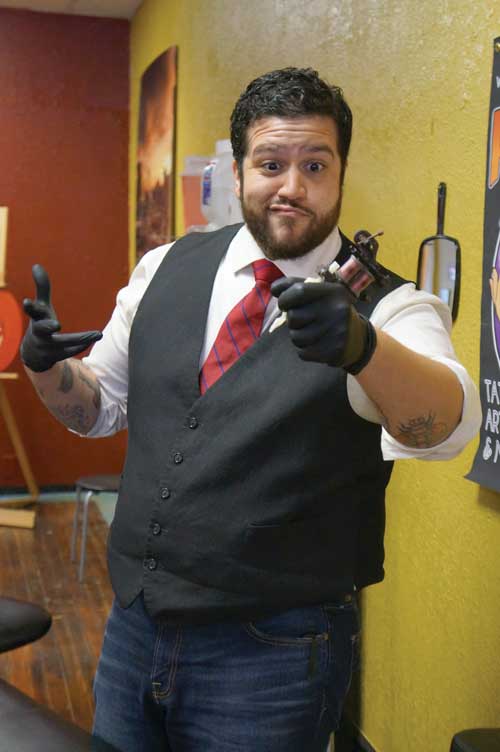
Mike Klein owner of Ink and Iron. Toledo Free Press Photo by Matt Liasse

Mike Klein owner of Ink and Iron. Toledo Free Press Photo by Matt Liasse

“I think the biggest thing is the Toledo tattoo scene has been kind of ruled by one shop,” Klein said. “I want them to still be successful [but] overall I just want to bring a new flavor to the tattoo scene.”

Klein concentrates on the art. He wants to help potential customers make educated decisions when it comes to a tattoo. Klein and Gontarz both said it’s important to sit and talk with customers during appointments.

“Being able to have an open floor space and have our customers feel engaged in every step of the artistic process ensures they are getting a piece and an experience that they will cherish and enjoy for a lifetime,” Gontarz said in an email.

Gontarz is currently attending The Ohio State University and will move to Toledo in December. Gontarz handles the business for the shop while Klein does the art.

“I cannot wait to be in Toledo full time and become immersed in the culture,” Gontarz said. “I can say without any hesitation that I have not experienced a city in Ohio that truly has more pride than Toledo, Ohio. And this is coming from a Cleveland boy so that means a lot.”

Klein wants every customer to be 100 percent satisfied unlike he was when he got his first tattoo. At the age of 17, he got a cross between his shoulder blades that he said is crooked.

“It’s something that’s on your body forever for it to just be an ‘eh’ experience [isn’t good enough],” he said.

Klein is also concentrating on the longevity of his clients’ tattoos.

“I guarantee my tattoos. If your tattoo doesn’t look 100 percent like you want it and you come back, I will fix it up for free,” Klein said. “It’s my name attached to your tattoo as well as yours.”

The name of the shop was inspired by Proverbs 27:17: “As iron sharpens iron, so one person sharpens another.”

“I always thought that was such a cool thing,” Klein said. “The integration of society is really the iron. The more people that come through the door and really feel the philosophy, the better we’ll get.”

Klein, originally from Maumee, looks forward to growing in the local community. The shop is currently collaborating with other local businesses.

On Oct. 24, Klein will do zombie makeovers for the Adams Street Zombie Pub Crawl.

Also in collaboration with that event, for the month of October the studio will be doing official zombie tattoos for $30. These tattoos are good for drink specials during the Zombie Pub Crawl. Klein hopes for a long-lasting partnership between the shop and the event.

The studio also works with the Glass City Rollers roller derby team and starting in November, local musicians will play at the shop.

“Everybody down here has been really receptive about the shop opening,” Klein said. “A lot of that comes from being from Maumee. I’m not some guy that moved here from out of town trying to make a quick buck. This is my roots and I’m really branching out from that point.”

Ink and Iron Tattoo Parlour is located at 1505 Adams St. For more information, visit  inkandirontattoo.com.

Flagg: TPS’ pig in a poke

0

This is the second in a series about the Toledo Public Schools levy. The first was “Tough Choices,” published July 26.

Steven Flagg

Steven Flagg

On the November ballot is Issue 1, a 5.8-mill levy for the Toledo Public Schools (TPS) that will increase local taxes by $13.3 million annually ($66.5 million over the five-year levy term). TPS officials have suggested numerous uses for the new funds, including $5.5 million ($27.5 million over five years) to create competitive salaries for retention and recruitment of employees.

From analysis of TPS data acquired through an open records request and numerous questions posed to TPS personnel, it appears the competitive salaries claim is not based on a thorough review and analysis, nor is there any basis to believe competitive issues exist except with principals, new hires and teacher specialists.

Only one documented analysis has been completed and it was done during contract negotiations in 2013 with the findings contained in the Sept. 18, 2013, fact finder report by Nels Nelson.

The 2013 report shows Nelson obtained all the information from the Toledo Federation of Teachers (TFT) and his analysis included only two of 182 salary grades on the salary ladder schedule. Further, there was no review of any other form of compensation, including health insurance, sick time, paid holidays, time in each district school day, sick time bonuses, personal days and severance payments. Cost of living differences among Ohio cities were also not considered.

In establishing an effective compensation package that meets the goals of the organization many factors have to be considered, yet TPS has decided to discuss just the salary portion and claim a competitive disadvantage with other local and large urban school districts.

From an employee’s perspective, salary is only one part of the equation. Benefits and working conditions also factor in heavily. In looking at TPS, they have excellent health benefits with deductibles and premiums lower than most in the private and public sector. They have 15 sick days, which can be accumulated, and seven holidays included in a 190-day work year. Severance pay upon retirement can be significant and in the past five years has averaged over $6.7 million per year, or an average of $4,000 for every teacher employed. Depending on accumulated sick time, employees can get as many as three additional personal days and a bonus payment of up to three days of pay. And those long summer vacations are attractive to many versus a 260-day work year in the private sector.

Finally, in looking at working conditions, how do you put a price on the challenges confronting teachers in an urban versus suburban school? It would seem that additional compensation would be needed to attract teachers to TPS’ underperforming central city schools. This is an issue that is constantly ignored or glossed over because it requires contractual changes and no one wants to tackle that political football.

TPS uses a single salary ladder for all teachers, which provides no incentives internally for staffing underperforming schools nor externally for hard-to-fill teacher specialist positions, such as science, math and special education.

TPS officials claim that operations have been adversely impacted by administrative employees ­— specifically principals — leaving for higher paying positions. It’s claimed that principals are being trained by TPS only for the best to be recruited away with salary increases of $20,000 or more above TPS’ maximum salary.

The claim leaves out an important fact: TPS is the only school district in Ohio where principals are unionized. Therefore, they have established a salary range for principals and by union contract cannot pay more than the contract maximum. Increasing the salary of all 49 TPS principals by $20,000 would cost taxpayers nearly $1 million annually to retain a small number of principals who would otherwise leave.

The competitive issue here is not salary and benefits but contractual language that prohibits TPS from offering competitive salaries to retain highly qualified principals.

Currently TPS pays out $93.2 million for the salaries of teachers and principals. If the entire $5.5 million earmarked for salary increases were paid just to these two groups — forgetting other administrative and non-teaching employees — it would amount to a 5.4 percent salary increase, which may or may not bring about parity with other districts.

TPS officials may have their reasons for this levy but they seem mostly political with trumped-up claims. It also seems they have spent little time understanding and designing an effective compensation system to recruit and retain employees, can’t justify with research or documentation that they have a competitive disadvantage in the compensation area and can’t really tell us how much is needed to overcome the perceived disadvantage. If they were in the classroom, they would likely get an “F” for not doing their homework and their inability to support the claims made.

This levy is like a pig in a poke. You don’t know what you’re getting and you don’t know if the taxes collected will result in higher student achievement. TPS officials cannot provide you with the research, analysis and documentation of the claims they have made nor can they promise the levy is sufficient to resolve the perceived issues.

Steven Flagg is a community activist with more than 20 years of experience in education advocacy including monitoring Toledo Public Schools’ policies, practices and operations. For more of his writings about TPS, visit tpsinfo.com.

Pounds: Jeep wrangling

0

The news that Chrysler is considering moving Jeep Wrangler production out of Toledo sent shock waves of uncertainty through Northwest Ohio, and there are plenty of questions swirling.

.

.

Although nothing has been decided, the city is feeling the smack of betrayal, and rightly so. As recently as January, Fiat Chrysler CEO Sergio Marchionne said Wranglers would never be built anywhere but here.

But at the Paris Motor Show on Oct. 2, Marchionne sang a different tune.

“If the solution is aluminum, then I think, unfortunately, that Toledo is the wrong place, the wrong setup to try and build a Wrangler because it requires a complete reconfiguring of the assets that would be cost-prohibitive,” he said. “It would be so outrageously expensive that it would be impossible to try and work out of that facility.”

Toledo native Larry Vellequette of Detroit’s Automotive News was the first to break the news. In light of Marchionne’s January statement about keeping Wrangler in Toledo, as well as a previous statement that Chrysler would not build another plant in North America despite the growing demand for Wranglers, Vellequette posed a question.

“The question that I asked him, ‘Given the number of Wranglers you’re selling, which of those promises is going to be broken first?,’ elicited the response,” Vellequette told Toledo Free Press. The response set off a flurry of reactions from all levels of government and the UAW.

“Everything’s up in the air now, but it unleashed quite a can of worms,” Lucas County Commissioner Pete Gerken, a former Jeep worker, told Toledo Free Press. “The reason we’re shocked is because we’ve had commitments from him that ‘We’ll never take the Wrangler out of Toledo.’ He said that to the workforce [and] governmental leaders and we took him at his word. It’s been a positive relationship. The Wrangler is Toledo, and Toledo is Jeep.”

Toledo Mayor D. Michael Collins came away from a recent meeting with Marchionne with the impression that whether or not Wrangler production leaves Toledo, the city’s jobs are safe. Whether that is true remains to be seen.

Also unclear is whether the land near the current Jeep plant the city is seeking to buy will play any future role in Jeep or Chrysler production in Toledo. Officials are staying mum for now.

Toledo began making Wranglers in 1992. The model was originally produced in Ontario from 1986-92, but Toledo had manufactured its precursor, the CJ, since the mid-20th century. After it returned, Chrysler considered another move, but civic leaders and citizens banded together to keep the brand here, and in 1997 Chrysler revealed plans for a new $1.2 billion facility in North Toledo.

Many Toledoans maintain ties to the plant and a deep pride in the city’s manufacturing history. UAW Local 12 President Bruce Baumhower and Jeep workers past and present have said that no matter what skill or technology is needed to build Wrangler, Toledo can provide it.

Businesses can’t survive on legacy or devotion alone, but Toledo deserves to be part of the conversation. Given Jeep’s history in Toledo, the company owes us that much at least. O

Thomas F. Pounds is president and publisher of Toledo Free Press. Contact him at [email protected].

Speculation over Jeep future spurs debate, city action

0

By Danielle Stanton & Tom Konecny

Toledo Free Press News Editor, Toledo Free Press Associate Editor

[email protected], [email protected]

It’s normal to take pride in things unique to an area, and Toledo has plenty to go around.

A baseball team with a quirky  nickname, a trend that’s been copied ubiquitously. A world-renowned art museum surrounded by a community craving and displaying more. A zoo voted best in the nation. The most well-known Hungarian restaurant this side of South Korea.

Jeeps have been built in Toledo for more than 70 Years. Now Wrangler production may leave the city. Toledo Free Press photo by Christie Materni / Cover illustration by James A. Molnar

Jeeps have been built in Toledo for more than 70 Years. Now Wrangler production may leave the city. Toledo Free Press photo by Christie Materni / Cover illustration by James A. Molnar

Take away any of those, and a part of us dies. But try to take Jeep — a fixture that’s supported Toledo’s economy, offered livelihoods, enriched local heritage and advanced civic pride for generations — and you have the makings of a full-scale public rebellion.

At least that’s what seemed to be brewing after Fiat Chrysler CEO Sergio Marchionne told Detroit’s Automotive News that “Toledo is the wrong place” to build a potentially reconfigured aluminum body Jeep Wrangler.

Marchionne’s Oct. 2 remarks stood in stark contrast to those made in January at Detroit’s North American International Auto Show, when he was also quoted in Automotive News as pledging “never to produce a Wrangler outside of Toledo. So whatever Wranglers are going to be made are going to be made there as long as I’m the CEO. They’ll not be built anywhere else.”

Local reaction

It was Larry Vellequette of Automotive News who delivered the quotes that stunned Northwest Ohio. Vellequette knows Toledo well, having worked for The Blade for 25 years.

“I was kind of surprised,” he said of hearing Marchionne’s comments.

Vellequette also remembers Marchionne’s promises. First, Marchionne said Chrysler would not build another plant in North America, despite the fact they can hardly meet growing demand for the popular Wrangler.

Then, Marchionne made his now-infamous Toledo pledge.

“The question that I asked him, ‘Given the number of Wranglers you’re selling, which of those promises is going to be broken first?,’ elicited the response,” Vellequette said.

If Vellequette was surprised, others were shocked, including Lucas County Commissioner Pete Gerken, a former Jeep employee.

“Everything’s up in the air now, but it unleashed quite a can of worms,” he said. “We need to figure out our next steps, but we can only do that by talking to them. The reason we’re shocked is because we’ve had commitments from him that ‘We’ll never take the Wrangler out of Toledo.’ He said that to the workforce [and] governmental leaders and we took him at his word. It’s been a positive relationship.

“The Wrangler is Toledo, and Toledo is Jeep.”

Gerken insists if there’s new technology needed to build Wrangler, Toledo can provide it.

“If something’s changed, we can understand that,” Gerken said. “But for us to help them give the best quality product in a unique market, we need to be a part of the decision process.”

Gerken doesn’t believe Marchionne’s comments represent a “power play,” but insists that Toledo should be a part of the assembly process and any changes that need to be made.

“Let’s maintain the integrity of the brand,” Gerken said.

Toledo Mayor D. Michael Collins maintains the same position he has taken all along.

“The city is working with its partners to better understand these challenges and assist in any way it can,” Collins said.

Jeep history runs deep

If the Glass City is Toledo’s primary epithet, then Jeep City may very well be its second.

Toledo has been the headquarters of Jeep since the brand’s inception, a source of pride in more ways than one, not the least of which is pure American patriotism.

It was in June 1940, while anticipating that America would become involved in the escalating war, that the U.S. military informed automakers it was looking for a light reconnaissance vehicle to replace the Army’s motorcycle.

After the military entertained different designs and prototypes, Toledo automaker Willys-Overland obtained the first major manufacturing deal in 1941 and began building its legendary vehicle. The first civilian models were produced in 1945, making it the oldest off-road vehicle in history — no doubt a forerunner to today’s SUV. Jeeps were used by every service of the U.S. military, ideal because of their light weight, low profile and load capacity.

In 1950, Willys-Overland trademarked the Jeep name and since then the brand has passed to auto companies Kaiser, American Motors Corporation and now, Chrysler.

“Jeep really is Toledo,” said Pat Foster, automobile historian and author. “[But] one thing I like to point out to people is that they have made Wranglers elsewhere.”

Many forget that the Wrangler  name officially dates back to 1986, when it was reborn as a revision of the classic Jeep CJ-7. It was produced at that time in Brampton, Ontario; it wasn’t until that plant closed in 1992 that Toledo took over Wrangler production.

In the mid-1990s, Chrysler explored the idea of replacing the old Jeep Parkway plant with another outside Toledo. Civic leaders and citizens banded together to keep the brand here, and in 1997 Chrysler revealed plans for a new $1.2 billion facility in North Toledo.

In 2011, Chrysler announced a $500 million addition to the plant, adding 260,000 square feet to the existing body shop and upgrading other areas of the assembly plant.

Chrysler continues with its two production facilities in North Toledo and a machining plant in Perrysburg. The North Toledo plant employs about 1,700 workers.

Economic impact

What if Wrangler production were to leave Toledo? Does that mean jobs would be lost? It has been reported that Marchionne said no jobs would be cut in Toledo if Wrangler were to move.

Economics professor David Black at the University of Toledo believes Chrysler is speaking of a “net job loss” for Chrysler. Meaning Chrysler could move those Toledo jobs to a different plant, still giving them a zero in job loss.

It’s purely speculation, Black said, but the effect of such a move by Chrysler would be “devastating” for Toledo.

“Toledo might lose 1,000 workers but Tennessee might gain 1,000 workers,” he said. “We’ve already had over the last six years a population loss because of some of the jobs leaving the area. This would accelerate that and lead to an exodus of the population. Because if there’s no jobs, people leave.”

Black said Toledo has lost about 1,000 jobs over the past several years. With a corresponding drop in population, the housing market would be hit and contribute to a downward spiral in the city. Black grew up in Buffalo, New York, he said, and when it lost the steel industry that was devastating to the area because people left, housing prices depressed and the city was left to rust.

“It happened to Detroit and it’s happening to Toledo,” he said.

“Toledo doesn’t want to lose Chrysler, but on the other side, Chrysler is somewhat invested in Toledo because there is a $2 billion plant. That’s a lot of capacity to walk away from,” Black said. “[Marchionne] said just a couple months ago [the Wrangler] would be made in Toledo; two months later he said the opposite. What are we left to think, except it’s a bargaining tool.”

Black did say that if there were no net job loss in Toledo, then there would be no economic impact.

United Auto Workers (UAW) Local 12 president Bruce Baumhower was unable to be reached for comment.

The big meeting

After a face-to-face meeting in Auburn Hills, Michigan, with Marchionne on Oct. 9, Collins assured the citizens of Toledo that whether or not Wrangler production leaves Toledo, the city’s jobs are safe.

“I can’t tell you positively that Wrangler will stay here,” Collins told reporters at One Government Center during a news conference Oct. 9. “But I can tell you that the UAW members will be employed whatever the decisions are for Wrangler.”

Collins sent a letter to Marchionne and also participated in a conference call with Marchionne and Gov. John Kasich after Marchionne’s comments. The mayor described his encounter with Marchionne as “positive.” Meeting the executive for the first time, Collins said Marchionne was “congenial, light-hearted and serious-minded” when it came time to discuss the issues.

Toledo officials who joined Collins at the meeting included Bob Reinbolt, his chief of staff; Toledo senior attorney Eileen Granata; and Matt Sapara, director of development. Other Ohio officials included Beth Hansen, chief of staff to Kasich, and John Minor, JobsOhio’s president and chief investment officer.

Collins’ aim was to keep the iconic Wrangler in Toledo. But he said he did not visit the Chrysler executive in order to tell him how to run his business.

“Government doesn’t dictate to private industry,” he told reporters.

“I took the man at his word,” he said. “I believe there was no insincerity. We have to work together.”

Collins said whatever Marchionne’s plans are for the Wrangler, he felt confident that Marchionne was “sincere” and that jobs at the Jeep plant would remain safe.

“It’s clear that the new federal fuel efficiency standards are putting enormous pressure on automakers and the company restated its position that it believes the new standards make it very challenging for it to continue building the Wrangler in Toledo,” Kasich spokesman Rob Nichols said in a written statement after the meeting. “Chrysler agreed with what the governor and mayor have said, that the Toledo workforce is one of the company’s best and has been determinative to its success, and there was no discussion of any reductions to that workforce.

“It was a candid and constructive meeting that gave the state and city a clearer understanding of the tough decisions facing the company. We restated what the company already knows to be true, that the governor and mayor are poised to continue being good partners in the company’s success in Toledo, and additional follow-up discussions will happen again soon.”

Rep. Bob Latta was among area politicians to come out with a statement. In it, he says he sent a letter to Marchionne requesting a meeting and expressed concern over the economic impact were Wrangler to leave Toledo.

“The Toledo Jeep Wrangler production facility is not only an important economic driver in Northwest Ohio, but it is also an important part of the local community,” Latta said in his written statement. “Toledo’s highly skilled workers have institutional wisdom that is a direct result of their experience and commitment to producing Jeep Wranglers, something that is not easily replicated. I urge Mr. Marchionne to keep this longstanding partnership and history of success between the company and the Toledo-based community in mind. I look forward to discussing further this important matter with him.”

Right now, the only thing that’s clear is that nothing has been decided. We know the economic impact were jobs to leave; we know our leaders want the Wrangler to stay. We also know that Marchionne plans to retire in 2018.


Intensity, team-first mentality hallmarks of Lalonde’s style

0
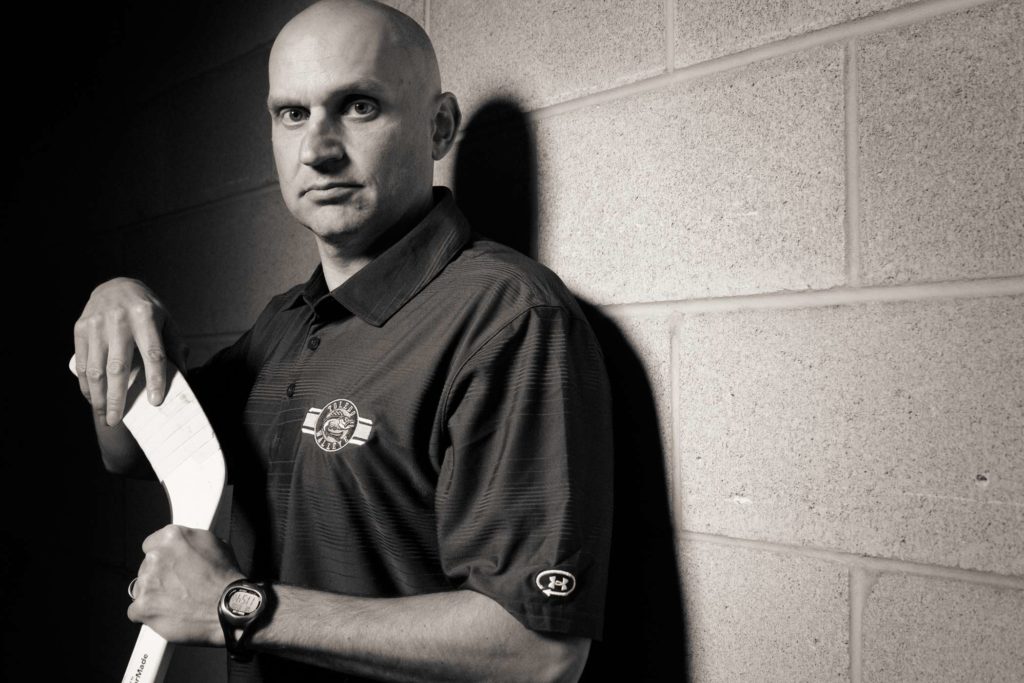
Walleye head coach Derek Lalonde.

New Walleye head coach Derek Lalonde wants to win and wasted no time making his expectations clear at the team’s first practice Oct. 3.

“Some of the guys were taken aback on day one by how difficult and how fast practice was, but we want that to be the norm and the culture here,” Lalonde said.

“The bottom line is we’re going to win, we have to win. This organization is ready for a winner. They made some changes, me being a big part of that change, to be successful on the ice. I know this is a development league and there’s many players going up and down, but when you’re in the locker room of the Walleye, you’ll be expected to do everything you can to win that night.”

His goal is to make the playoffs.

“We haven’t seen the playoffs much — only once here in the last few years — but I think that’s a realistic goal with how competitive and how tough this league is and considering we’re kind of starting new with only two returners from last year,” Lalonde said.

“I want to work on just playing fast, playing quick and competing. We designed this team with character, team-first type of guys and that has certainly come to fruition in the first few days of practice.”

The only expected returners are Kyle Rogers and Tyler Elbrecht. Cody Lampl, who played with the Walleye two years ago, is also back in Toledo after spending a season in the American Hockey League.

Dan Watson, former Walleye assistant coach who served as interim head coach after Nick Vitucci stepped down earlier this year, was named associate head coach.

“It’s been huge having him,” Lalonde said. “I knew he was good, but he’s probably exceeded my expectations on how much we have synergy between each other.”

Lampl, 28, supports Lalonde’s efforts to “lay the groundwork for a winning culture.”

“The preparation he’s made in terms of systems and recruiting and just all-around effort he’s already put into this program I think has already caught all of our eyes,” Lampl said. “That saying, ‘Fail to plan, plan to fail’? He’s got a plan.”

Lampl sees tempo and speed as the team’s biggest strengths.

“We want to push the pace and we have the players to do so,” Lampl said. “We have very skilled forwards and, as a defenseman, that’s always a great thing to just be able to get the puck to them and let them do what they are supposed to do. We should be able to outskate teams and our pace should be relentless throughout the game. Anytime we can play fast is going to be a positive for us.”

Fans should like the team’s style as well, Lampl said.

“I think all fans really want to see here is effort — guys who played hard every shift and really outworked their opponent — and I think effort will translate into wins and everybody will go home happy,” he said.

Colorado reunion

Three Walleye hopefuls — Chris Knowlton, 24, Josh Holmstrom, 25, and Tom Serratore, 25 – aren’t new teammates. They played together as teens on travel teams in Colorado Springs.

“We were pretty good buddies back then, so it’s kind of funny to get back together,” Knowlton said. “We kept in touch and knew

[coming to Toledo]

was a possibility, but then when it actually happened and all three of us signed here, we were pretty excited. It’s nice to be together again for sure.”

Knowlton went on to play for University of Denver, Holstrom for University of Massachusetts-Lowell and Serratore for University of Minnesota.

“We’ve been separated for six, seven years, but we still kind of know how each other plays with that chemistry we built as kids,” Serratore said. “It’d be cool to play with each other this year, if we could get a Colorado Springs line going or something.”

Knowlton’s older brother, Pat, formerly played for the Walleye.

“[He told me], ‘You’ve just got to go in there and work your hardest. Anything can happen in these camps, but as long as you just keep working hard, that’s all you can really control,'” Knowlton said. “There’s a ton of good players out here so I’m just trying to work as hard as I can and prove that I belong.”

Knowlton already knew Lalonde as the assistant coach at University of Denver.

“He’s a great coach,” Knowlton said. “I’m really excited. I enjoyed playing for him at school and can’t wait to play for him here.”

Serratore’s father coaches hockey at the U.S. Air Force Academy and his uncle coaches hockey for Bemidji State University in Minnesota. His twin brother played DIII hockey in Minnesota.

“I know [Lalonde is] a good coach because my father spoke highly of him and my coaches at the University of Minnesota had nothing but good things to say,” Serratore said. “Obviously he expects a lot, but we want to have a good year this year so I think the buy-in and the dedication is really something to build after.”

Lampl said everyone is excited for the regular-season opener Oct. 18.

“When you get a brand new group of guys and all you’ve been doing is training, you want that first game to get here as fast as possible,” Lampl said. “You’re only as good as your last game and we haven’t gotten to play one yet so we’re excited.”

ECHL expands

Seven new teams were approved Oct. 7 to join the ECHL this season: Allen (Texas) Americans, Brampton (Ontario) Beast, Missouri Mavericks, Quad City (Moine, Illinois) Mallards, Rapid City (S.D.) Rush, Tulsa Oilers and Wichita Thunder.

Updates to the playing schedule, divisional alignment and the format for the Kelly Cup Playoffs will be released at a later date.