Home Blog Page 175

Pilot program VITAL service to student vets

0

Navigating the bureaucracy of veterans services is notoriously complicated, but thanks to a pilot program called Veterans Integration to Academic Leadership (VITAL), it’s a one-stop shop for student veterans at the University of Toledo and Bowling Green State University to access their benefits.

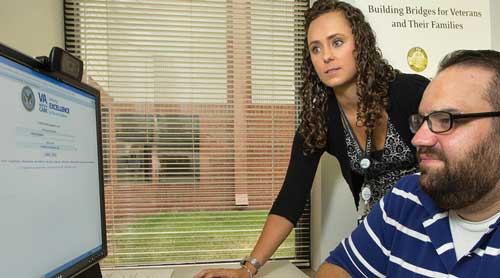
Brittany Powers is a U.S. Department of Veterans Affairs (VA)  social worker who has been managing the VITAL program for the Ann Arbor regional office since its inception in 2011. She manages the program for seven schools, including UT and BGSU. In the past year she has helped connect over 125 students to VA health benefits via the VITAL program.

VA social worker Brittany Powers works with veteran Doug Deprest at  Bowling Green State University. Photo courtesy Bowling Green State University.

VA social worker Brittany Powers works with veteran Doug Deprest at Bowling Green State University. Photo courtesy Bowling Green State University.

Instead of the time-consuming process of seeking out each benefit individually, the VITAL program brings together the full spectrum of VA services into a single access point on campus.

“Most student veterans are there on the GI Bill, but we find that a lot of veterans aren’t as active in seeking out health care,” Powers said. “We want to meet student vets where they’re at.”

Corey Carter is a sophomore in economics at UT and a veteran. He was connected to Powers and the VITAL program through the university’s veterans affairs office and he is now enrolled in VA benefits programs.

“Before I met Brittany, I probably had a list a mile long of frustrations with the VA,” Carter said. “There’s a lot of organizations that want to help veterans, but each only handles little pieces of the pie. The VITAL program really helped me out. It took less than an hour, and doing it on my own could have taken weeks.”

Doug Deprest is a Navy veteran and a senior in sports management at BGSU. He met Powers on a veterans night at a Falcon football game. He took advantage of remote mental health care via Skype, a VITAL program at BGSU that is unique in the area.

“I came out of the Navy and started school right away,” Deprest said. “On the initial meeting they evaluate whether you have post-traumatic stress disorder, and I didn’t have that, but I know there were some other things going on.”

Through the VITAL program, Deprest is able to access the counseling and therapy he needs over Skype on BGSU’s campus.

Derek Atkinson, a public affairs officer for the VA in Ann Arbor, said the VITAL program is part of a shift in focus at the VA.

“It really highlights what VA is doing to sort of step outside of the box,” Atkinson said. “They were a federal island — now they’re out in the community really doing things.”

Powers said the program has been working well, but hopes it will expand.

“Right now the program is just me,” she said. “I would really like to cover every college campus within our area, and I’d like to cover every university equally. To do that, we would need more staff. For right now we’re just in the beginning stages of showing that the program works.”

Students interested in learning more about VITAL can contact Powers at (734) 548-3452 or [email protected]. She is available by appointment at UT and has regular Tuesday office hours at BGSU’s office of Nontraditional and Transfer Student Services.

This Is M.E.: Country, R&B, hip-hop influence Melissa Etheridge’s new album.

0

Melissa Etheridge is rocking on with a little help from new friends.

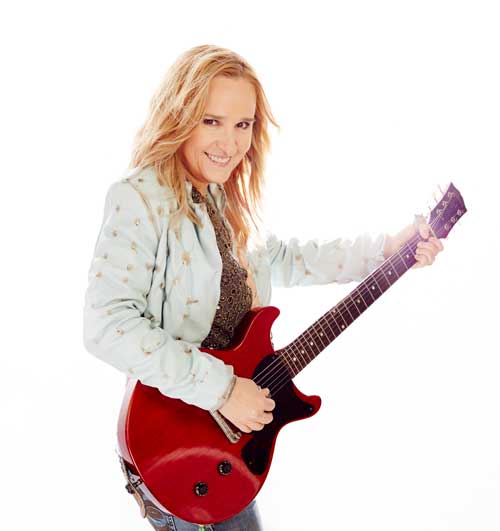
Melissa Ethridge, photo by John Tsiavis

Melissa Ethridge, photo by John Tsiavis

Released Sept. 30, “This Is M.E.” is the first disc on her label, ME Records.

Rather than rely on a more familiar way of recording, the veteran singer-songwriter decided to shake things up for this collection.

“Instead of writing all the songs and then taking them to different producers, I went to different producers and created songs with each of them,” she said. “So you get this great yummy center, which is always me — you can hear my guitars, you can hear my voice, my lyrics — yet around them is the jet fuel of other artists, like Jon Levine or Jerry ‘Wonda’ [Duplessis], and all of a sudden you can hear these beats and these rhythms that I’ve always wanted.”

In addition to Levine, who has worked with Nelly Furtado, K’Naan and Selena Gomez, and Wonda, who has produced The Fugees, Mary J. Blige and Akon, Etheridge joined forces with Jerrod Bettis, known for collaborating with Adele, OneRepublic and Gavin DeGraw, and Roccstar, who has teamed up with Usher and Chris Brown.

The result: rock, R&B, country, hip-hop — and a hell of a lot of fun.

“It was just a real thrill to work with everyone,” Etheridge said during a call from her California home.

She even did a little recruiting while in the studio.

“[Wonda] is in my band this tour; that’s so exciting. I talked him into coming out on the road with me, so he’s playing bass. His musicians are backing me up; I’ve got my drummer and then his keyboard player, his guitar player. I’ve got two background singers for the first time,” she said.

“It’s so much fun, just really dipping into that R&B side of rock ’n roll. I just feel a little bit more like Joe Cocker than Led Zeppelin this time out.”

Co-written with Bettis, her latest single, “Take My Number,” is classic Etheridge, complete with a catchy chorus sung by that powerful, passionate voice.

“Who Are You Waiting For” is the one track on the disc the Grammy- and Academy Award-winning artist penned herself.

She wrote it for her wife, Linda Wallem.

“Usually I just sit down and say, ‘OK, what am I going through?’ And that the relationship pretty much saved my life really was on the forefront of my mind,” Etheridge said. “When I sat down to write the last verse, I realized, ‘Oh, these are vows, these are wedding vows.’ And then I thought, ‘I’m going to sing this to her at the wedding.’

“And I sang my vows, which was just a really special moment. It’s really something powerful standing three feet in front of someone and singing right to them.”

Etheridge will take the stage at 7:30 p.m. at the Michigan Theater in Ann Arbor Nov. 16. Tickets range from $39.50 to $99.50.

“I’m so grateful for everyone who buys tickets and comes to see me. The people are excited before I’ve even played a note,” she said. “Once the show gets going and the audience knows the songs when you’re playing, you know, I start ‘Come to My Window’ and everyone’s on their feet, it’s amazing.”

Church program to feature veterans services advocate

0

Pam Hays, an advocate for veterans suffering from post-traumatic stress disorder and traumatic brain injury, will be the guest speaker at a 7 p.m. Veterans Day service Nov. 11 at Epworth United Methodist Church.

Hays, a Toledo Free Press columnist, is the president and founder of The Arms Forces, a nonprofit organization embracing the needs of veterans through individualized programs and services. Since 2009, the organization has worked closely with more than 400 veterans and their families. Hays is a traumatic brain injury survivor herself, having been involved in a motorcycle accident in 2000.

The Veterans Day program is part of the church’s monthly series on healing from physical, spiritual and emotional struggles.

Hays said her talk will center on how the community can come together to help veterans.

“Really what we’re about is making sure civilians and veterans and the military are connected,” Hays said of The Arms Forces. “We believe strongly that veterans and the community are better off when we stop isolating them and incorporate everyone into the same community and grow together. … Civilians need to be lifting up veterans in one way or another. How can [civilians] really be a part of it if we’re always saying that it’s only veterans who can help veterans?”

Hays’ research showed her a major gap in services available to veterans that can keep them from utilizing the system of supports and services in place for them. She has worked with Judge Advocate General’s Corps officers and U.S. Department of Defense personnel to help train officials on matters involving veterans’ services.

In working with veterans, Hays said she tries to center on the individual’s “moral wounds” sustained in military service, particularly in combat.

“You can’t go there without having your human spirit changed,” she said. “When they come back, there’s a lot of work being done in counseling and medical [needs], but no one’s really saying, ‘As a human being, how do you feel?’ … That takes a lot of time and a lot of vulnerability from the people who are helping them, but if we don’t get to that place, then all the other services seem to be wasted or not used as effectively.”

Beth Irwin, director of health ministries and director of communications at Epworth, said the church wanted to have a military angle for its November healing service.

“We have a number of veterans at Epworth and we know that there are many veterans out in the community,” Irwin said. “The healing process is ongoing for them. Pam has been very generous with her time and we’re happy to have her here as much as possible. She’s happy to share her personal experience of healing and show that it is possible to live a full life.”

In addition to Hays, the program will also feature a number of related scripture verses and hymns, as well as a time of open communion and hands-on prayer for anyone interested.

Epworth Church is located at 4855 W. Central Ave. For more information, visit www.thearmsforces.org.

Honor Flight Northwest Ohio takes final flight

0

After seven seasons, 37 flights and 2,071 veterans served, Honor Flight Northwest Ohio has taken its last flight.

The local hub formed in 2008 to fly World War II veterans to their memorial in Washington, D.C., free of charge. The organization has since opened to Korean and Vietnam veterans as well.

The group’s final flight was originally scheduled for September but an anonymous donor financed one more trip on Oct. 29, carrying 118 Vietnam and Korean veterans.

Navy veteran Kent Greenlese of Walbridge arrives home on the final Northwest Ohio Honor Flight on Oct. 29. Toledo Free Press Photo by Jeff Harris

Navy veteran Kent Greenlese of Walbridge arrives home on the final Northwest Ohio Honor Flight on Oct. 29. Toledo Free Press Photo by Jeff Harris

Kent Greenlese, 66, of Walbridge was among the veterans on that flight.

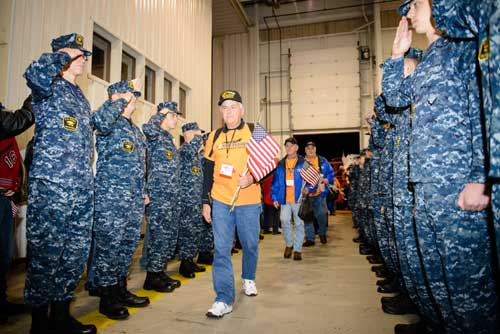
Greenlese, who served in the Navy, said when he returned from Vietnam there were protesters at the airport in California and only his mother to greet him in Toledo. Honor Flight’s welcome home ceremony at Grand Aire terminal was a little different.

“I admit I was crying when that happened,” he said. “I didn’t expect so many people to be there. It was really emotional to see everyone screaming and waving and the band playing. The part that got me the most was when they started chanting, ‘USA! USA!’ I kind of lost it there. There wasn’t a dry eye in the place.”

MORE PHOTOS: Click here for more photos of Honor Flight Northwest Ohio’s final flight.

His favorite part was seeing the changing of the guard at the Tomb of the Unknown Soldier. He also made rubbings at the Vietnam Veterans Memorial of the names of two neighbors who were killed.

“I’m sorry it was the last trip,” he said. “There are a lot of people who didn’t get to go. But it was really terrific.”

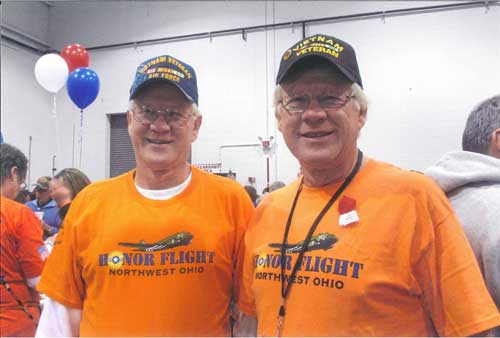
Twin brothers Harold, left, and Howard Yunker, both of Swanton, at the Honor Flight Northwest Ohio welcome home ceremony Oct. 29 at Grand Aire terminal. Howard was on the flight. Harold was on an Honor Flight in 2012. Both are Vietnam veterans. Photo Courtesy Yunker Family

Twin brothers Harold, left, and Howard Yunker, both of Swanton, at the Honor Flight Northwest Ohio welcome home ceremony Oct. 29 at Grand Aire terminal. Howard, an Army veteran, was on the flight. Harold, an Air Force veteran, was on an Honor Flight in 2012. Both are Vietnam veterans. Photo Courtesy Yunker Family

Vietnam veteran Howard Yunker of Swanton was also on the Oct. 29 flight. His twin brother, Harold, was there to welcome him home.

Harold, a Vietnam veteran who served in the Air Force, was on an Honor Flight trip two years ago. Howard served in the Army.

“He talks about it all the time,” Harold’s wife, Kathryn, said. “It was such an important day. I think it’s that way for everyone who goes. He was so excited.”

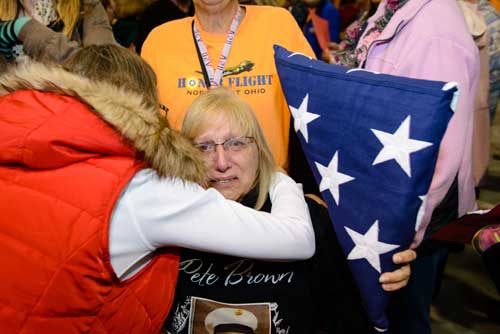
Marine Corps veteran Peter Brown, 65, of Toledo learned in August he would be on the Oct. 29 flight, but died two days later of complications of Agent Orange exposure during his service in Vietnam, his wife Conni Urbanski-Brown said. Honor Flight took Brown’s flag on the flight.

“That was such an honor for them to do that,” she said. “It’s the next best thing since he couldn’t go.”

Board member David Chilson, a Navy veteran, said closing the hub was a “difficult and emotional” decision, but the organization felt its original mission was complete. He declined to comment further as did other board members.

“We have taken really all of the World War II veterans who have applied,” Chilson told Toledo Free Press earlier this summer. “Many of the other hubs around the country have shut down once they took the WWII veterans. We’ve gone well beyond that.”

Conni Urbanski-Brown of Toledo is presented with her husband Peter Brown's flag. Peter, who served in the Marine Corps in Vietnam, was scheduled to be on the Oct. 29 but died in August from complications of Agent Orange. Honor Flight Northwest Ohio brought his flag on the trip and presented it to his wife afterward. Toledo Free Press photo by Jeff Harris

Peter Brown of Toledo, who served in the Marine Corps in Vietnam, was scheduled to be on the Oct. 29 but died in August from complications of Agent Orange. Honor Flight Northwest Ohio brought his flag on the trip and presented it to his wife Conni Urbanski-Brown at the welcome home ceremony afterward. Toledo Free Press photo by Jeff Harris

“Honor Flight is much more than just seeing the memorials,” he told TFP in 2013. “It’s a chance to share the experience of the entire day with 70-some other veterans. What I hope they take away is that people still remember and are very appreciative for their service during World War II and during the Korean War and we still remember and honor them.”

The Honor Flight Network, which includes 135 regional hubs in 42 states, was founded in 2005 and has flown more than 81,000 veterans.

The biggest obstacle for hubs is fundraising, said Diane Gresse, executive director of Honor Flight Network. Nationally, there are about 20,000 veterans on waiting lists with a typical wait time of about a year, she said.

“It’s just a way to pay back the veterans for their service and their sacrifice,” Gresse said. “They are very genuinely humble and appreciate that Americans have not forgotten their service to our country.”

Gaylord and Chris Sheldon of Genoa have served as medical guardians on about 20 Honor Flight trips.

“To listen to some of their stories was just flat-out amazing,” Gaylord said. “It just gave me goosebumps thinking about what they went through.”

Gaylord is a retired battalion fire chief and his wife is a firefighter.

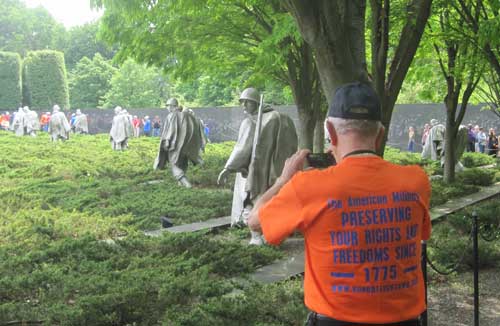
Korean War veteran Theodore LaCourse takes a photo of the Korean War Memorial in Washington, D.C., during an Honor Flight Northwest Ohio trip in June. Photo Courtesy Tim Bellville

Korean War veteran Theodore LaCourse takes a photo of the Korean War Memorial in Washington, D.C., during an Honor Flight Northwest Ohio trip in June. Photo Courtesy Tim Bellville

“I’m sorry to see it come to an end, but I’m even more sorry to see the World War II guys vanishing,” Gaylord said. “They are all getting old and passing away.”

The nearest hub now is Flag City Honor Flight in Findlay, which started in 2010 and offers one flight per year. This is the first year the group has had a waiting list, which president and flight director Deb Wickerham attributes partly to Toledo’s hub closing but also to growing awareness of Honor Flight among Korean and Vietnam veterans.

Army National Guard member and Marine Corps veteran Tim Bellville of Toledo served as a guardian for an Honor Flight Northwest Ohio trip in June.

“I love hanging around the ‘Greatest Generation,’” Bellville said.

“There was tears. There was hugs. There was a lot of silence,” he said of the veterans seeing their memorials. You hear a lot of the time, ‘They just don’t talk about it.’ But you get them around one of those memorials, and they open up. What Honor Flight is doing is admirable work, it really is.”

For more information, visit www.honorflight.org.

Toledo Free Press photo by Jeff Harris

Army veteran Cecil Smith enjoys the welcome home celebration as the final Northwest Ohio Honor Flight arrives on Oct. 29. Toledo Free Press photo by Jeff Harris

Read more stories about veterans in our Veterans Day special issue:

Lee: Car talk

0

I came late to the “Car Talk” party, but found a parking space pretty quickly.

Lee,-Don_WEBSometime in 1997 I was driving on I-71 from Columbus to Cincinnati and looking for something on the radio. Out from the static came two wry and raucous voices talking about the kind of person who’d own a Volvo. Specifically, a rusty, orange Volvo wagon.

I got interested, because a good friend took perverse pride in his wagon, a decade-old beater whose rust, a product of years of “Provincetown year-rounder” salt air, perfectly matched (and probably held together) what little orange paint was left.

“And this guy,” the voice on my Geo Prizm’s radio cracked, “will be wearing one of those — haw haw — Russian fur hats because — haw haw — THE HEATER DON’T WORK.”

That’s all I heard because I had to pull over, I was laughing so hard. George — that’s my rusty-Volvo-driving friend, who last time I saw him was driving a Jeep he customized himself — had one of those hats and wore it at the slightest excuse.

And just like that, Tom Magliozzi and his brother Ray got my attention and held it by translating a technical subject to human — and humorous — terms.

Tom was the “Click” of “Click and Clack, the Tappet Brothers,” hosts of “Car Talk” on NPR, and everybody’s go-to gurus for advice on cars and the lives we live around them.

Even the rapid-fire banjo strumming that was the opening theme of “Car Talk” took me back in time, to summer childhood nights spent listening to the distant roar of motors from the Toledo Speedway coming through the woods behind the house on Hoffman Road (it was a nice neighborhood once). I’m not sure why that particular connection is there — did TV commercials form the Speedway back then use similar music? — but it’s there.

That was the secret, I think, of the success of the show that reinvented the image of public radio.

Click and Clack, illustration by Don Lee

Click and Clack, illustration by Don Lee

The image of two regular guys talking about cars, car repair and whatever else was on their mind that week both hid and augmented a couple of sharp and agile minds. It was easy to forget that Tom in particular was entitled to a string of letters after his name sufficient to bend a business card; he’d both taken and taught graduate-level courses, and both he and Ray were graduates of MIT.

If it’s true, as the old saying goes, that a well-stocked mind is never bored, then Tom and Ray were never, ever going to be bored. And neither would their listeners.

That’s why the news that Tom had died of complications of Alzheimer’s disease was especially sobering. It’s heartbreaking enough to see anyone’s mind slip away like that, but when an instrument so finely tuned starts to play false, it’s doubly unsettling.

Though Tom and Ray loved to talk cars on “Car Talk” and solve listeners’ car problems, they didn’t exactly obsess over them.

One call got no farther than, “I have an old Ford Fiesta,” before Tom and Ray were guffawing and shouting, “Sell it!” before offering advice that would get the little car and its owner through another day.

Cars are great, was the message, but they’re just cars. What’s more important? Just about everything else.

Here’s what Tom had to say about the subject: “Some guy I met said it’s amazing how we use cars on our show as an excuse to discuss everything in the world — energy, psychology, behavior, love, money, economics and finance. The cars themselves are boring as hell.” (He also said, “Kids, get away from the cellphones, get away from the computers and mail someone a fish before it’s too late.” So there’s that, too.)

There’s more like that from Tom over at cartalk.com, and now that you’ve wasted a perfectly good couple of minutes reading this, head on over there for more.

And though Ray might caution you, “Don’t drive like my brother,” it might not hurt to look at life the way he did.

Cartoonist Don Lee can be reached at [email protected] or on Twitter at @DonLeeCartoons.

Tennaro: Girls and politics

0

This week our community was buzzing as Americans exercised their right to vote. There were winners and losers on each side of the aisle, but where do girls fall in that equation?

Tennaro,-AngelaA recent Girl Scouts Research Institute poll showed two-thirds of those surveyed (1,000-plus 11- to 17-year-old females) were interested in politics — Girl Scouts and nonscouts alike. Eighty-three percent of those girls have participated in civic activities such as a cause or campaign, or engaged with an organization they believe in. The same percentage believe they are smart enough to have a career in politics.

But here’s the catch — only a third are interested in pursuing a career in politics.

Why the disconnect? The research is captivating. Something changes and girls stop having dreams of being the next mayor, congresswoman or president.

They stop short of envisioning political careers for themselves, seeing politics as a man’s world, partially attributable to a media lens that favors men. According to the poll, girls think the media depicts female politicians as more motivated by their emotions and at the same time, less capable, brave, resilient and visionary than their male counterparts. What message are we sending girls through social and mass media?

Even though they don’t want to enter politics, it’s not because of a lack of faith in their abilities. Of those surveyed, 84 percent said they are smart enough to have a career in politics. So they think they have the ability and feel like they’re strong leaders, but they’re not quite picturing themselves in the Oval Office. We need to motivate them to take that next step.

Girls need more support from the community and a growing list of opportunities they can experience and get excited about. Let’s offer more mentoring and job-shadowing positions to girls — inspire them to see the possibilities and positive role models available right here in Northwest Ohio. Female politicians and community leaders can take a more vocal role in dispelling some of the myths that say women are less capable than men.

The vast majority of girls surveyed believe there are other ways than politics to make a difference in the world. We can show girls the power of lasting change accomplished through legislative means, giving girls another space where women are seen as equally qualified decision makers.

Girl Scouts inspires and empowers girls to take action to change the world. Regardless of their political leaning, we want to instill in girls the skills and knowledge they need to become tomorrow’s leaders and take action on the things that matter the most to them — whatever that may be.

Read the full results of the poll yourself at girlscouts.org/research.

Angela Tennaro is director of regional services for Girl Scouts of Western Ohio.

Toledo set to begin veterans court in January

0

A Toledo court set aside for veterans is scheduled to handle its first case Jan. 1.

Judge William M. Connelly Jr. of Toledo Municipal Court will preside.

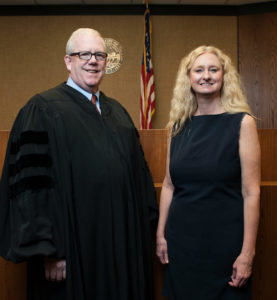
Judge William M. Connelly Jr. of Toledo Municipal Court,left, and Melody Powers, Veteran Justice Outreach Coordinator with the VA Ann Arbor Healthcare System. Connelly will preside over a courtroom set aside for veterans starting Jan. 1. Toledo Free Press photo by Aaron Geller

The legal process in veterans court is much like that in domestic violence and drug and alcohol dockets, which help individuals through their legal troubles. As in these specialized dockets, veterans’ legal problems are often the result of deeper mental, emotional or social issues.

The veterans courtroom is meant to not only dole out consequences for veterans who commit crimes but also intervene in their underlying issues to help them lead responsible, productive lives.

Combat troops returning from Iraq and Afghanistan often suffer from post-traumatic stress disorder (PTSD). They may also have traumatic brain injuries, drug and alcohol problems and other psychiatric conditions. The court will identify these issues and match them up with the appropriate services.

Many veterans from the Vietnam era have been dealing with their problems for years, in and out of the criminal justice system. Now, the new court’s veterans coordinator will go into jails looking for veterans who may be candidates for the treatment court.

Veterans court will only handle misdemeanor crimes, including disorderly conduct, “self-destructive” crimes like drug possession or more serious crimes like assault. The offending veteran will have to plead guilty or no contest in order to qualify for veterans court.

A person who is drunk and yelling in the street, for example, could end up before Connelly, who said he wants to intervene as quickly as possible to prevent the boomerang effect — veterans who commit a crime, serve time and are released only to commit another crime.

“You want to stop that and … get them into services,” he said. “My hope is that we are able to intervene as early as possible and save lives of veterans who have served the country.”

This is where Veterans Affairs (VA) steps in. The agency works to match veterans with professional services, such as mental health treatment, substance abuse counseling or help with a job search.

Melody Powers, a veteran justice outreach coordinator with the VA Ann Arbor Healthcare System, is one of three coordinators who link veterans with services. Powers works with veterans courts in Jackson and Redford, Michigan.

The outreach coordinator initiates first contact with the veteran and can make referrals to the treatment court, which then supports veterans through the process.

“You see lives completely changed,” Powers said. “I’ve seen people go from no income, no home, struggling with substance abuse, struggling with relationships. After treatment, they have all those things in place: job, income, reunited with family. The courts have just been so successful.”

The VA’s Leslie Witherell, who will coordinate the Toledo court, has already been combing the jails, looking for veterans who would be a good fit for the court where the judge gets on a personal level with the veteran.

“The judge becomes interested in that person personally: �?I heard you had a baby or got a job, good for you,’” Witherell said. “If you screw up, it’s not a punitive thing but still sanctioned. We don’t let them go. We will continue to uphold them because their issues are so unique.”

At every step of the way in the court system, the VA has the opportunity to become involved by asking, “Are you a veteran?” In Ohio, it’s “pretty standard” that those being booked into jail are asked if they’re a veteran, Connelly said; when they first appear in the court, they’re asked if they’re a veteran once again.

Once identified, the outreach coordinator performs an assessment on each veteran and then services are put in place. The ideal is to intervene before any type of regular court punishment occurs.

“I think often the Vietnam veterans have immersed themselves in work. After they retire, they start to struggle again and don’t know they’re eligible for VA care,” Powers said. “So this is a real opportunity to reach out and engage people.”

After a veteran pleads guilty in veterans court, the sentence is 18-24 months in what is a three-phase treatment program.

The misconception is that treatment court is easy but that couldn’t be further from the truth, Powers said. She called it “very intense supervision” by the court system.

For the first 45 days, or phase one, the veteran will meet with the judge every two weeks and a probation officer every week. They must keep every VA appointment and not violate any terms of their probation. The next four or five months, or phase two, allow more freedom as the veteran reintegrates into work or school. Phase three lasts 90 days, after which participating veterans graduate out of the program.

If the veteran completes treatment and does not reoffend, jail time can be dismissed. The goal is not to incarcerate, Connelly said, but jail isn’t off the table if the veteran commits an offense that warrants it.

“In the courts I’ve worked with in Southeast Michigan, anyone who has graduated the program has not re-offended,” Powers said.

The veterans often become so invested in the process, they return to court as mentors.

Michigan has 21 veteran treatment courts and Ohio has 10, including ones in Cleveland, Hamilton County, Mansfield and Youngstown. Akron, Dayton and Toledo all have courts in the same stages of development, Powers said.

In Redford District Court in Michigan, Chief Judge Karen Khalil presides over a veterans court that has processed 52 cases and has an 80 percent success rate, Khalil said.

One of the main reasons for its effectiveness is the three-phase structure the court offers to the veterans who are trained in the military way of life, she said.

“We’ve placed the structure back in their lives that they have become accustomed to in the military. It’s very rigorous and stringent,” Judge Khalil said. “They seem to thrive.

“You have to understand there’s a whole team of people monitoring everything that they’re doing. The judge is in charge, the mentor coordinator, probation department keeping track and justice outreach — so there’s a whole group of people constantly involved.”

Initially in Redford’s district court, people said the veterans were getting a “free pass,” but that is not true, Khalil said. The court is holding them responsible, she said, and that can be a struggle for them.

Defense attorney Rick Graham, who also has a private practice, advocates for the veterans before Khalil. A Vietnam veteran, Graham said helping other veterans out of their troubles is the “highest honor” that could be bestowed on him.

“Veterans are not typical defendants — they’re not drinking and using drugs to get high; they’re using to suppress memories,” Graham said. “Our court treats the symptoms: �?How did you get here and why did you get here?’”

Graham said about 35 percent of the men and woman who have transitioned from Iraq and Afghanistan back to civilian life have some form of PTSD.

“Nobody goes to war and comes back unchanged,” he said.

A third of the veterans the Redford court sees are Vietnam veterans and a majority served in Iraq and Afghanistan. The court sees more Marines than any other branch.

The application for Toledo’s veterans court is now before the Ohio Supreme Court, Connelly said. He will begin hearing cases on Jan. 1. The first veterans to go before the court have not yet been identified.

Election 2014: Kasich, incumbents coast to victory; most Lucas County levies pass

0

Gov. John Kasich and most state and local incumbents cruised to easy victories Nov. 4.

Lucas County voters passed levies for Toledo Public Schools (53 percent), Mental Health & Recovery Services Board (63 percent), Area Office on Aging of Northwestern Ohio (62 percent), Sylvania Fire Department (57 percent), Washington Local Schools (51 percent), Maumee City Schools (52 percent), Ottawa Hills roads (62 percent), Washington Township fire (67 percent), Waterville Township waste (52 percent) and Springfield Township (72 percent).

Voters denied levies to Lucas County Children Services (51 percent), Oregon City Schools (60 percent) and Providence Township streets (58 percent).

Voters in both Jerusalem Township and Springfield School District passed one levy, but failed another. In Wood County, Rossford voted to keep TARTA service (65 percent).

Governor

Kasich was declared the winner minutes after polls closed, easily defeating Democratic challenger Ed FitzGerald to clinch his second term with about 64 percent of the vote statewide. Green Party candidate Anita Rios of Toledo earned 3 percent of the state’s vote.

Also retaining their seats were Attorney General Mike DeWine, Auditor of State Dave Yost, Secretary of State Jon Husted and Ohio Treasurer Josh Mandel.

Lucas County Auditor

Anita Lopez, a Democrat, retained her seat as Lucas County Auditor with 64 percent of the vote over Republican John Navarre, an auditor’s office employee.

“I am grateful and blessed for another term to serve the public,” Lopez told Toledo Free Press on Nov. 4.

County Commissioner

Carol Contrada, president of the Lucas County Commissioners, defeated challenger Kevin Haddad with almost 60 percent of the vote.

“It is what it is, and the people got what they wanted,” Haddad, a former Sylvania Township Trustee, said Nov. 4. “It’s going to be mini-Detroit here, and people are going to leave this city. I’ll never run for political office again, and I’m going to leave here, too. If people are going to be that stupid and re-elect the same people, they deserve what they get.”

Issue 1 (TPS)

Toledo Public Schools’ levy passed with 53 percent of the vote. The estimated $66.5 million that will be raised over five years through the 5.8-mill levy  will be the first new money for the district since 2001.

“This is a great win for TPS, but more importantly an even greater win for Toledo,” said Superintendent Romules Durant.

Issue 7 (LCCS)

The 1.75-mill levy for Lucas County Children Services (LCCS) failed with 51 percent of voters saying no.

“Lucas County voters have spoken about the level of support that they want to provide children and families in this community,” LCCS Executive Director Dean Sparks wrote in an email to Toledo Free Press. “We are disappointed at the outcome of Issue 7, but we will continue to focus our efforts on investigating reports of abuse and neglect, keeping kids safe and finding new homes for the children that need them.”

Issue 8 (Mental Health)

Voters approved a 10-year, 0.5-mill renewal levy for the Mental Health & Recovery Services Board with 63 percent of the vote. The tax is expected to generate $3.4 million per year and will continue to cost the owner of a $100,000 home about $15 annually.

“We believe we’ve been making substantial progress in improving our system of care and following through on the commitment we made in the 2012 levy,” said Executive Director Scott Sylak. “We appreciate the voters’ validation.”

Issue 9 (Senior Citizens):

Issue 9 passed with 62 percent of the vote. The five-year levy renewal with a small increase is expected to provide $4.3 million annually for services for area senior citizens. The total cost to the owner of a $100,000 home will be about $19 per year.

“This will help us help older citizens in Lucas County remain at home,” said president and CEO Billie Johnson. “This will help us restore some of the cuts over the past several years to our home delivery meal program and Alzheimer’s daycare and respite care programs.”

Sylvania Fire

Sylvania Fire Chief Jeffrey Kowalski was afraid he’d have to close a fire station and lay off firefighters if Sylvania’s fire levy didn’t pass, but 57 percent of voters supported the new, continuous 1.5-mill levy. It is expected to collect an estimated $1.82 million annually and will cost the owner of a $100,000 home $53 a year.

“Sylvania Township and City residents — Thank you for exercising your right and privilege as a citizen of our great country to vote [Nov. 4], and thank you for your vote for the fire department,” Kowalski posted on the department’s Facebook page.

Ohio House

In District 44, Democrat incumbent Michael Ashford defeated Republican challenger John Insco with 81 percent of the vote.

“For someone that’s new, I think I did pretty good,” Insco said. “This was a learning experience for me. … I still believe business people are the best leaders. Within the next two years, I’m going to be right back in the saddle again.”

In District 45, Democrat incumbent Teresa Fedor defeated Toledo attorney James Nowak with 64 percent of the vote.

“It was a great race. I enjoyed all the help that I had from the people that I worked with,” Nowak said.

In District 46, Democrat incumbent Michael Sheehy defeated Republican Drew Blazsik with 57 percent of the vote.

“I’m humbled and happy and grateful to all those supporters who worked so hard for me,” Sheehy said.

Ohio Senate

Democrat incumbent Edna Brown retained her District 11 seat against Republican challenger Ernest McCarthy with 64 percent of the vote.

U.S. House

In District 5, incumbent Republican Bob Latta defeated Democrat Robert Fry and Libertarian Eric Eberly with 59 percent of the vote.

“I’m very grateful and humbled once again to have the trust and confidence of the people of the 5th District,” Latta said.

Fry was disappointed in his party’s turnout.

“[The Democratic Party] didn’t show up well. We were weak this year. Maybe I was, too,” he said. “We didn’t have a lot to put out.”

Eberly said he was not shocked.

“I don’t think the results were really a surprise given the way the districts are gerrymandered. It pretty much guarantees the outcome. Certainly I think voter turnout was disappointing,” he said.

In District 9, Democrat Rep. Marcy Kaptur is serving her 16th term. She handily won re-election with more than 79 percent of the vote over Republican Richard May of Cleveland.

“I am deeply grateful to our citizenry for the opportunity to serve them and our precious coastal region,” Kaptur said. “I look forward to the challenges before us as we secure greater economic, educational, environmental and national security for this generation and those to follow.”

Judges

In Lucas County, Lisa McGowan defeated Jay Feldstein with 61 percent of the vote for Common Pleas Judge, Domestic Relations Division, while Ian English topped Mark Davis with 52 percent of the vote for Common Pleas Judge, General Trial Division.

For state Supreme Court justice, Republican incumbent Sharon Kennedy defeated Tom Letson with 74 percent of the vote, and Republican incumbent Judi French edged Democrat John O’Donnell with 50.4 percent of the vote.

Toledo Free Press writers Danielle Stanton, Tom Konecny, Sarah Ottney, Joel Sensenig and Matt Liasse contributed to this report.

BBB honors five organizations for ethics

0

The Better Business Bureau (BBB) of Northwestern Ohio and Southeastern Michigan honored four local businesses and one nonprofit for exemplary and ethical business practices at its annual Torch Awards, held Nov. 5 in Perrysburg.
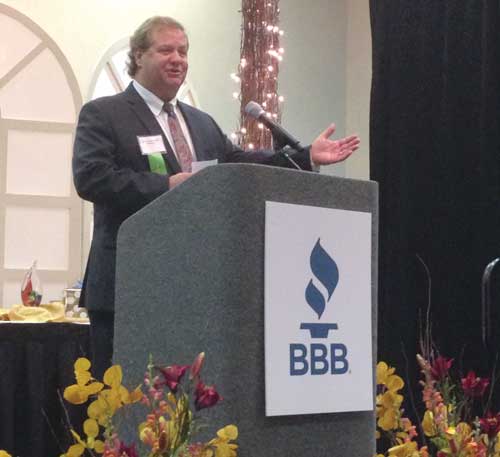
Brad Lay Sr. of Lay's Transmission speaks at the BBB Torch Awards after winning a business ethics award in the small business  category. Toledo Free Press photo by Sarah Ottney

Brad Lay Sr. of Lay’s Transmission speaks at the BBB Torch Awards after winning a business ethics award in the small business category. Toledo Free Press photo by Sarah Ottney

Winners have demonstrated business practices that exemplify ethics, integrity and exceptional customer service and are chosen by an independent panel of volunteer community leaders, based on criteria established by the BBB, said Mollie Tyrrell, the organization’s director of special projects.

Tyrrell said the BBB received about 100 nominations for this year’s awards. Winners received a trophy created by Toledo glass artist Mike Wallace.

This year’s keynote speaker was Dennis Johnson, a Toledo native and president of Brooks Insurance Agency.

Also revealed at the ceremony were the two winners of the Jim Smythe Memorial Student of Integrity Scholarships, a $500 scholarship awarded to area high school seniors.

For more information or to make a nomination for next year, contact the BBB at (419) 578-6000 or at bbb.org.

Small business: Lay’s Transmission

Lay’s Transmission won in the small business (one to nine employees) category.

The family-owned business has been an industry leader in drive train manufacturing and service in Northwest Ohio and Southeast Michigan since 1956. Owned by Bradley Lay Sr., Lay’s Transmission provides complete drive shaft, differential, rear end and transfer case repairs and rebuilds. It utilizes its on-site machine shop and state-of-the-art diagnostic equipment to get vehicles back on the road as soon as possible.

“This award is huge for us, especially in the automotive transmission business,” Lay said. “There’s a lot of complaints in our industry. But we’re going on 60 years in business and the reason for that longevity is honesty and integrity. A lot of it is what was instilled in me as a kid. My father taught me the Golden Rule, that if you treat someone right they will come back and that’s what we strive to do. I use biblical principles daily in business. I want to do the right thing in every situation and not sacrifice the future for the present.”

The company requires all employees to conduct themselves according to its code of business conduct and ethics, and maintains ties to the community through its support and involvement with 1Matters, Tent City, Food for Thought, YWCA’s Encore Plus program, University of Toledo athletics, holiday food baskets, Race for Hope, Ronald McDonald House, Vets Helping Vets, the Make-a-Wish Foundation and others.

The business is located at 378 Phillips Ave. For more information, call (419) 476-4088 or visit laystransmission.com.

Medium business: Roemer Insurance

Roemer Insurance won in the medium business (10-49 employees) category.

The company was started in 1934 by Wellington F. Roemer with the motto, “He profits most who serves best.” The business remains a family affair, with Wellington’s son, W. Thomas “Tommy” Roemer, serving as vice chairman of the board, and his grandson, Wellington F. “Rocky” Roemer III, serving as president and CEO for the past 20 years.

The 35-employee company maintains a 98 percent client retention rate by maintaining strong communication with a focus on customer service.

The company offers health insurance, vision, dental, life, disability and client services, as well as Medicare for individuals. Among the staff are eight expert health insurance professionals, who assist employers and individuals with personalized health care coverage. Roemer Insurance also offers services for truckers, one of its specialties from its inception. It offers liability insurance for long-haul truckers in the Midwest.

The company puts an emphasis on taking care of its staff, with amenities such as massage days at work, discounts to health clubs and an on-site gym. Roemer is dedicated to the community as well, with employees involved with organizations such as The Rotary Club of Toledo, The Victory Center, YMCA and JCC of Greater Toledo and The Ohio State University Alumni Association.

“This is very exciting,” Roemer III said. “We’re a longstanding business in this community and we owe our success to those who came before us. This is really a tribute to all those who have worked so hard over the years for this company.”

The business is located at 3912 Sunforest Court. For more information, call (419) 475-5151 or visit roemer-insurance.com.

Large business: Garner Transportation

Garner Transportation Group won in the large business (50-149 employees) category.

The family-owned and operated business was started by Vernon E. and Regina Garner in 1960 and has been under the direction of their daughter Sherri Garner Brumbaugh as president since 2008.

The company originally focused on transporting agricultural products. Today, it has shifted focus to general commodities, with shipments transported regionally (east of the Mississippi River). More than a trucking company, Garner’s services now include transportation, expediting, warehousing, logistics management, third-party services, contract maintenance and transportation consultation.

“We started with one truck, one driver — that was my dad — and one back office person — that was my mom,” Brumbaugh said.

Today, the company has 100 trucks, 400 trailers and more than 100 employees, she said.

“For my Garner employees and their families, what I work hard at every day is for them to be proud of whom and who they work for,” she said. “Ethical behavior is a very important component of a sound business practice.”

The company’s commitment to the community is evident through its involvement with Hancock Leadership, Findlay Race for the Cure, The Ohio State University Melanoma Research Foundation, University of Findlay and the Humane Society of Hancock County.

The business is located at 9291 County Road 313, in Findlay. For more information, call (419) 422-5742 or visit garnertrucking.com.

Extra-large business: Taylor Automotive Group

Taylor Automotive Group won in the extra-large business (150-plus employees) category.

The family of seven vehicle dealerships — with locations in Toledo, Perrysburg, Findlay and Lima — prides itself on putting customers first.

The business, which formed in 1979, has developed a list of five core values: personal growth and development, attitude, respect, teamwork, and the five Es — energy, enthusiasm and excitement equals more effectiveness and efficiency.

Many sales team members begin their morning by reciting the company’s “Dealer FOR the People Pledge.” The company also asks employees to write personal essays on what its core values mean to them, and potential employees to rate themselves on the five core values on its employment applications.

The dealership’s mantra of “Locally Owned, Locally Committed” is evident by its community involvement and numerous charitable donations. Owner Steve Taylor has implemented the “Driven To Succeed” program, where a new Hyundai vehicle is given to a graduating senior from high schools in Lucas, Hancock and Allen counties, as well as Perrysburg. Further, the automotive group’s “12 Days of Christmas” helps nearly 40 families in need during the holiday season.

“Really this honor is for [my dad],” Taylor said. “What I always learned from him were hard work, ethics and the importance of giving back to the community. It’s something he’s obviously passed on to me. He always said the secret to success is to do the right thing.”

For more information, call (419) 246-5693 or visit taylorauto.com.

Nonprofit: Toledo Fair Housing Center

The Toledo Fair Housing Center won in the nonprofit category.

The nonprofit civil rights agency is dedicated to the elimination of housing discrimination and to the expansion of neighborhood choice for all people. It was established in 1975 by The Women of the Old West End and The League of Women Voters in response to blockbusting and other housing discrimination practices.

The center has investigated more than 11,500 complaints of discrimination, recovering more than $30 million in damages. Its staff has conducted workshops for fair housing organizations, government agencies and housing industry professionals. The center has demonstrated a talent for setting national precedents in the enforcement of fair housing laws, while expanding housing opportunities for millions of Americans.

In 2009, the center was one of four private fair housing organizations in the United States to be featured in the Annual Report on Fair Housing published by the U.S. Department of Housing and Urban Development.

Members of the center participate in a variety of community service efforts, including the City of Toledo Department of Neighborhoods’ Community Development Block Grant Spring Sweep Cleanup, Pride Festival, International Festival, United Way Day of Caring, African American Festival, Latino Festival and its sister agency Northwest Ohio Development Agency’s Homeownership Fair.

“We absolutely have to live and work by high standards of ethics if we’re going to hold other entities accountable under fair housing regulations,” said President and CEO Michael Marsh.

The agency is gearing up for its 40th anniversary celebration next year and will be featured in one of WGTE’s “Toledo Stories” documentaries.

For more information, call (419) 243-6163 or visit toledofhc.org.

Toledo Free Press Editor in Chief Sarah Ottney contributed to this report.

Hays: Homing veterans

0

I became deeply aware of the difference between having a roof over your head and feeling at home when in 2011 I met a young mother whose husband, an officer in the military, had shot himself on the front lawn of their $250,000-plus home while she and their children were inside.

He seemed to have everything to live for: the love of a good woman, three healthy children, financial success, stature in the civilian and military community and a place to call home. But what does it really mean to be “at home”?

.

.

I sold real estate in the past and have also worked as a home builder and a decorator. I helped others make a brick-and-mortar house feel like a home. But although colors, textures and design matter, it is really the people inside and the memories they make that transform the structure from house to home.

I guess you could say I am still a home builder and decorator because of my work with our military and veterans. Though many do have a physical place to call home, they are missing the accessories — the pieces in their lives that allow them to find laughter and lightheartedness, interest in activities, comfort and familiarity, a sense of safety and trust that new memories can be made. They don’t believe the pieces of themselves they left behind and the pieces that remain can be brought together cohesively to bring beauty and peace to their human spirit where they feel at home with themselves.

Many people think veterans don’t feel comfortable with others and want to be left alone, so there is a lot of discussion about isolating veterans in structures or villages as a solution to some of their “issues.” So, they are built. There is also a lot of talk about how jobs are the main solution for veterans’ issues with reintegration in their communities. So we have job fair after job fair with nowhere near the success rate we should see based on dollars spent.

We may get veterans employed, but do they remain employed and are their lives changed long-term? Have their spirits been healed? These types of generalized, fix-it-fast solutions seldom succeed in reintegrating the veteran with himself or herself. And that, my friends, is the missing piece. It would be like building a home with no front door.

Our veteran reintegration process must help veterans feel at home with the people they are today and build on that to become who they want to be tomorrow, next year and 10 years from now. The ability for veterans to reach out for services and make lifelong changes is diminished if they never feel at home with themselves. Programs to help families will never resolve relational issues if the veteran has a broken relationship with his or her own spirit. Programs that aim to stop suicides will not be as effective if we only seek to solve the “act” and not the lack of services to match needs, which leads to feeling a black hole after hope is gone.

It isn’t easy to build a house. But with skilled workers and a great blueprint, one can go from houseless to housed within six months or so. But the blueprint to make that house a home is not so easily mapped out. It isn’t about skilled trades; it is the emotions, the life skills, the past experiences that add to the beauty rather than distract, like the ability to bring just the right antique into a modern home and have it fit right in. To bring our veterans all the way home, they have to love themselves.

They have to make peace with their pasts and find a purpose for their futures. I am a home builder for veterans. You can be too. It is what we do at The Arms Forces and it is the right thing to do for all generations of veterans.

Nov. 11 is Veterans Day. Beyond saying “Happy Veterans Day,” let’s spend time this year with a veteran and get to know his or her story without judgment or preconceived ideas of what they need or what they did or why they did it.

Let’s spend time getting to know the person behind the labels. Let’s reach out as one human being to another, not veteran to civilian or civilian to veteran. Let’s pursue what the human spirit is capable of as we drive down the barriers and lift up the possibilities.

Imagine the difference you could make, but also imagine the difference those you reach out to can make in your life. I know. I am blessed!

Pam Hays is president and founder of The Arms Forces, www.thearmsforces.org; (419) 891-2111; Facebook.com/thearmsforces.