Home Blog Page 174

Local cemeteries offer pet burials for furry family members

0

Since 1922, Toledo Memorial Park has served the community as a peaceful place to lay family members to rest. Earlier this year, it extended that offering to four-legged family members as well.

The cemetery opened its 6-acre Reflections Garden at Toledo Memorial Park Especially For Pets in the northwest corner of its lot at 6382 Monroe St., Sylvania.

Toledo Memorial Park president and CEO Jeffery Clegg in the cemetery’s pet burial area. Toledo Free Press photo by Christie Materni

“We’ve had quite a bit of interest from customers at the cemetery wanting to be buried with their pets or have their pets buried here,” said Jeffery Clegg, president and CEO of Toledo Memorial Park.

While laws dictate the cemetery can’t actually bury animals with their human owners, the request did get the cemetery staff’s wheels spinning.

“That started a conversation with our sales team, ‘Is there a market for that? Is that something we should be looking into?’” he said.

“We started an exploratory program looking at that to see if that’s something our customers would be interested in and overwhelmingly, they said yes.”

The pet cemetery officially opened for business in the summer, although it will likely be spring before the grand opening is held as the park is still getting the word out about Reflections Garden. It is set up as a separate entity due to Ohio laws, but will be operated through trust accounts for perpetual care of the grounds.

Clegg said it became clear the pet cemetery was an increasingly important commodity in his business.

“In a lifetime, a person may have five to seven pets,” he said. “They are a part of the family. Obviously because of their much shorter life span, there is a need to take care of these pets when they pass. … We wanted to have that extension of the family taken care of just like we would any of our other customers.”

Although some of the costs associated with having a pet buried are still being adjusted, Clegg said basic packages — which include a marker (with etching), vase, burial space and fees — start at a few hundred dollars.

The Toledo area does have another cemetery that, unlike Toledo Memorial Park, only handles pet burials.

Reith Pet Cemetery, 315 S. McCord Road in Holland, was established in 1964. Almost 5,000 pets have been buried on its 1.6 acres, according to owner Doug Ronau.

At Reith, a small pet may be buried starting at $225.

“(Pet owners) want to be able to come out and visit them and be able to look at a marker just like they would a human grave,” Ronau said.

For more information, contact Toledo Memorial Park, (419) 882-7151, www.toledomemorialpark.com; or Reith Pet Cemetery, (419) 829-2127, www.reithpetcemetery.com

Event pays tribute to transgender violence victims

0

Three years ago, Candice Milligan was one of the people who planned Toledo’s first Transgender Day of Remembrance.

The event was created to recognize transgender people from around the world who have been victims of violence and discrimination.

Candice Milligan

Candice Milligan

This year, Milligan came perilously close to being one of the names read during the event’s memorial service.

Milligan was attacked and robbed by three men near 13th Street and Madison Avenue at 2:50 p.m. Nov. 3. According to a police report, Milligan was punched in the face, mouth and head, and her phone was taken from her hand.

She was transported to Mercy St. Vincent Hospital, where she stayed until Nov. 6.

One of her alleged attackers, Christopher Temple, 20, has since been arrested and charged with aggravated robbery and felonious assault. Police still are trying to identify other people involved in the assault. Milligan declined to speak to media until after Temple’s court case is resolved. He is scheduled for arraignment in Lucas County Court of Common Pleas on Nov. 20.

This year’s Transgender Day of Remembrance will be at 7 p.m. Nov. 20 at the Sylvania United Church of Christ, 7240 Erie St. Organized by Toledo Area Transgender Support (TATS), the event includes a recognition reading, speakers, a memorial service and fellowship.

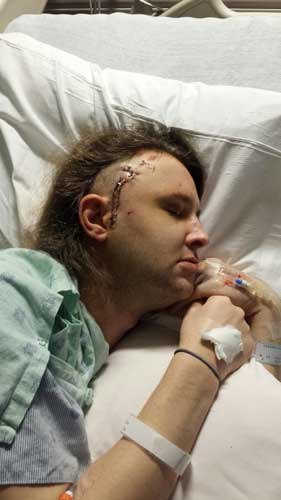
Candice Milligan in the hospital after hospital after her Nov 3 attack. Photo courtesy family of Candice Milligan

Candice Milligan in the hospital after hospital after her Nov 3 attack. Photo courtesy family of Candice Milligan

TATS founder and facilitator Edie Recker visited Milligan while she was in the hospital after the attack. She visited to provide support, not just for Milligan, but for Milligan’s family as well.

“I gave them a lot of advice to help them understand the journey that Candice was going on,” said Recker, who is also transgender. “I think it was a life-changing experience for them.”

After Milligan’s attack, the lesbian, gay, bisexual, transgender, questioning and allied (LGBTQA) community organized a community conversation to provide a safe space to discuss newsworthy issues.

The group discussed steps to ensure the safety of the transgender community. Conversations included how to be a caring ally, how the media covers the transgender community, how police treat transgender people and artistic avenues in which their community can express themselves.

“EqualityToledo, BRAVO (Buckeye Region Anti-Violence Organization)  and TransOhio knew the importance of bringing together the LGBTQ communities in Toledo as well as our allies to have a conversation about the state of our community,” EqualityToledo Executive Director Dave Crafts said.

“We wanted to give everyone an opportunity to discuss how we can best support Candice as well as talk about our safety and how we can move forward. The conversations were very positive and many goals were derived from the meeting. … The conversations are not over.”

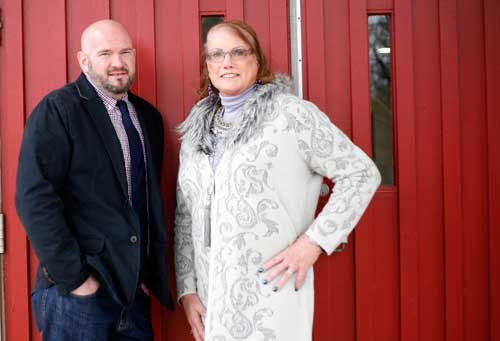
David Crafts, executive director of EqualityToledo, and Edie Recker of Toledo Area  Transgender Support. Toledo Free Press photo by Kristen Norman

David Crafts, executive director of EqualityToledo, and Edie Recker of Toledo Area Transgender Support. Toledo Free Press photo by Kristen Norman

Living in fear is not helpful, Recker said. She said education is the most important way to change attitudes. Even the straight community needs to be aware, she said.

“Straight people don’t have any more guarantees than we do,” she said. “Both sides need to be educated to live and work in a society that may not be their best friend.

“You think it’d never happen … but it did,” she said.

Transgender Day of Remembrance has grown each year: the first event was held in 2011 at Levis Square with eight people standing outside in the snow, Recker said. Last year, 100 people squeezed into a room at Sylvania United Church of Christ that could only hold 80. This year, the event will be held in the church’s sanctuary and Recker hopes to fill it.

Recker said it’s an event that provides a glimpse of the brutality the transgender community goes through.

“The stronger we are there, the stronger we are the next day on the street,” Recker said.

Flying Joe hosting Kickstarter fundraiser for coffee truck

0

A Perrysburg specialty coffee shop is asking the public for help in delivering its caffeinated beverages to them — wherever they may be.

The Flying Joe, 2130 Preston Parkway in Levis Commons, is in the midst of a Kickstarter campaign to fund a coffee truck in its attempt to bring its caffeine to the masses.

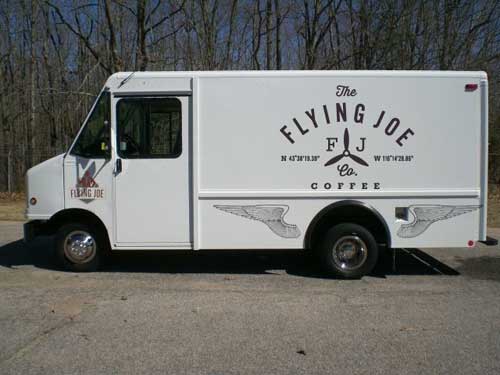
A prospective mock-up of The Flying Joe's coffee truck posted on the Levis Commons' coffee shop's Kickstarter Page

A prospective mock-up of what the The Flying Joe’s coffee truck could look like, posted at the shop’s Kickstarter page. The Levis Commons coffee shop is looking to raise $25,000 by Dec. 1 to roll out a coffee truck.

The 7-year-old coffee shop on the southern end of the suburban shopping complex has through Dec. 1 to raise $25,000 for the mobile service, which will bring beverages to customers throughout the metropolitan Toledo area.

“We were toying around with the idea of upgrading in the shop,” said owner Becky Ohm. “We really embrace the specialty coffee world and we’re always trying to up our game. … It sort of evolved into the coffee truck idea, as originally it was going to be a coffee cart.”

Ohm said the shop gets asked to provide its coffee, tea and food at weddings, festivals and fundraisers such as The Red Ribbon Run, Making Strides Against Breast Cancer and Resolution Run, and that the coffee truck could serve as a natural extension of its current offerings.

“We thought, ‘If we could bring the coffee to the people, that would be really awesome,’” she said. “Then we could expose more people to the specialty coffee industry. … We’re looking to grow as a company, but aren’t quite ready to open a second location. We thought this would help us get our name out there more, plus provide that service as far as mobility goes.”

Through the shop’s month-long Kickstarter campaign, those interested in making the truck become a reality can donate an amount ranging from $1 to $2,500. Pledges earn the donators a number of prizes: anything from a bumper sticker to drinks and T-shirts and — for $2,500 — a flight with Becky and husband John. The coffee shop’s name stems from the fact Becky was a pilot with the 180th Fighter Wing Air National Guard for 14 years and currently serves as the Aircraft Maintenance Squadron Commander, while John is currently a pilot for the 127th Selfridge Air National Guard in Harrison Township, Michigan, as well as for FedEx.

Bri Gibson, general manager of The Flying Joe, is passionate about the shop’s coffee and is eager to take that passion on the road.

“In a single location, we’re limited to whoever walks in the door,” she said. “There’s no way to bring specialty coffee to new customers, and we’re very hidden in the back of Levis Commons. We’re pretty committed to the current customer base we’ve got at the shop, and we’d never leave them. But my feet are itching to travel. … We’re trying to mobilize coffee in Toledo, bringing our passion to the table in a way that nobody else has yet.”

If the campaign were to fall short of its $25,000 goal, contributors’ credit cards would not be charged, and the Flying Joe would not get any of the funds. If extra money is raised, the funds would go to other costs associated with the truck.

“It’s really a cool thing for the area — it would be the first coffee truck in the area,” Ohm said. “Toledo deserves something that cool, I think. We already have a lot of food trucks popping up. … The specialty coffee industry has come so far in the seven years since we opened, and this will expose more people to some really good coffee that’s out there.”

A five-minute video detailing The Flying Joe’s mission to bring a coffee truck to Toledo can be seen on its Kickstarter page.

For more information or to donate, go to www.kickstarter.com and search for “The Flying Joe.”

For more information about the coffee shop, visit www.theflyingjoe.com.

Higgins: Dumb and Dumber-er in politics

0

As proof that there is not only a quirky, but perhaps even benignly evil bit of timing between real life and cinema, it’s hard not to notice next week’s release of a movie that would have probably have been better served by being left alone to die long ago: “Dumb and Dumber.” While it’s perhaps unfair to disparage “Dumb and Dumber To,” film that has yet to be released (although judging by the trailers already out there, not releasing it would be doing it, its producers, and the viewing public a favor.

.

.

I’m talking of course, about the occurrence and results of this week’s mid-term election, where the Republican party attempted to exhibit the real-life version of the “Dumb …” franchise by attempting to get away from the stigma of being the ‘Party of No’ by having no national concept of what it was they stood for. Dumber of course, being portrayed by the concept of Democrats attempting to show that imitation is the sincerest form of flattery by running candidates with the same predilection for ‘hoof in mouth disease’ that the Republicans did during the previous election cycle.

Proving that it’s often better to be lucky than good however, Republicans somehow managed to get re-elected a Senator who established his Kansas residency by claiming to rent a recliner from one of the constituents in his district. Democrats countered with lunacy straight out of “Mad Men” that their constituency could fight the ‘War Against Women’ by telling those of the fairer gender not to worry their pretty little heads about such complicated things as the economy, unemployment or foreign policy as long as someone in government would guarantee them a federal health subsidy for their uterus.

Republicans promoted change by running the same tired faces that they’d been showing up with since Clinton, while Democrats attempted to prove that that the American voter, while blind, misinformed and generally disinterested, seldom turns out to vote for a slate of candidates that the national party has already acknowledged as likely to lose.

Pundits on both sides may debate which candidates committed the greatest faux pas on this year’s campaign trail, and they’ll have a surprisingly large and bipartisan list to choose from. One that you won’t see, however, is the Democratic Party announcement to focus its money and effort on governors’ races to the detriment of their efforts in the Senate.  (How did that work out for you, by the way?)

The Senate Minority Leader (soon to be Majority Leader) and the President each held their press conferences Wednesday to discuss the meeting that they’re going to have later this week about the agenda of the upcoming lame duck Congressional sessions coming soon. (Only politicians consider the meetings about their meetings about their meetings of any real import.)

Both of these public statements continued to fulfill the promises of “Dumb and Dumber” by wasting the electorates’ time recapping what we already knew. Mitch McConnell said that he knew who the President is and vice versa  (thank you Captain Obvious). The President, meanwhile, reminded us of his continued promises to do something about the nation’s problems if Congress didn’t (difficult when both were on break to run for office). Both mentioned their willingness to compromise in such a way as to make it abundantly clear that neither really was.

Little mention was made about the money involved in this year’s election, since Democrats spent more than Republicans and (according to Fox News) that the $4 billion total was a fraction of what the nation spent on Halloween costumes and candy. The only entertainment left out of today’s session was the one never heard that: “Elections have consequences.”

Never fear however, the next sequel is just around the corner. By the end of 2015, the next election cycle will be in full swing again and most of Congress will return to becoming too busy running for their jobs again to actually do them. I hear that they’ve even got a working title for it: “Dumb and Dumber – Bush vs Clinton Again?”

Tim Higgins can be reached at [email protected].

Owens likely headed for ‘fiscal watch’ after enrollment drop

0

Faced with a steep drop in enrollment over the past several years, leaders at Owens Community College announced Nov. 10 the school anticipates being placed on “fiscal watch” by the state sometime early next year.

In anticipation, the school announced a five-part recovery plan meant to help stabilize its finances.

The plan includes efforts to increase student enrollment and retention, a proposed tax levy, more analyzation of spending, position eliminations and salary/wage reductions. At this time, it is not known how many positions might be impacted.

Owens already cut $16 million out of its fiscal year 2014 budget, but remains hampered by dropping enrollment, according to a news release.

The school has experienced a 38 percent reduction in enrollment over the past four years. The loss of revenue associated with this in terms of both tuition and state funding continues to put pressure on the college’s finances, resulting in the expected fiscal watch, according to the release.

“We will be challenged to be more entrepreneurial, to share difficult sacrifices, and to move this college forward,” President Mike Bower told the campus community Nov. 10. “We can and will transform this college.”

Based on Ohio law, a college can be placed on fiscal watch for several reasons. In Owens’ case, the trigger is a set of composite ratios that measure fiscal health.

Schools on fiscal watch are required to report finances to the state more frequently and to develop and implement a three-year recovery plan. The status is not official until the Ohio Board of Regents receives Owens’ audit and calculates the official composite ratios and adopts a resolution to that effect, expected to occur during the first quarter of 2015.

However, Bower said Owens is not waiting to begin its recovery plan, which includes initiatives on both the revenue and cost sides of the budget.

The five-part recovery plan is as follows:

1. Revenue enhancement through strategic enrollment growth, retention and completion.

2. Develop new long-term revenue sources, including but not limited to a tax levy proposal.

3. Analyze spending to ensure all spending is focused on recruiting and educating students and implementing a student completion plan.

4. Reduce employment costs through position elimination. The college’s leadership will consult with deans and department heads in the coming weeks to align position eliminations with Owens’ needs moving forward. The college community will be informed on which positions will be included in the reduction in January.

5. Implement across-the board salary and wage reductions among non-bargaining staff beginning Jan. 1, while requesting all bargaining units to make a similar sacrifice. Reductions will range from 2 to 5 percent with smaller reductions for those individuals in lower pay grades and higher reductions not to exceed 5 percent for those in higher pay grades. Bower said he plans to take a 6 percent reduction in salary. In addition, the college will offer the opportunity for employees to take voluntary furloughs.

“We are proposing some very challenging measures while focusing on initiatives which will improve our revenue,” Bowers said. “We will write a story where Owens makes the tough decisions needed to regain fiscal health and builds on a legacy of high-quality education and continue to fulfill our vital role as a leading education provider and economic engine within our communities.”

Local homeowners tout first Net Zero Energy home in Toledo area

0

Local homeowners Robert and Barbara Schmitt, along with their builder Bill Decker, claim to have the first Net Zero Energy home in Northwest Ohio.

Solar panels were installed on the roof of the Schmitt’s house and garage in Monclova Township that help made it a Net Zero Energy home. Photo courtesy of Decker Homes

Solar panels were installed on the roof of the Schmitt’s house and garage in Monclova Township that help made it a Net Zero Energy home. Photo courtesy of Decker Homes

Robert and Barbara Schmitt selected well-known energy-efficient builder Decker Homes of Lambertville in 2010 to build their new home in the Deer Valley development in Monclova Township.

The U.S. Department of Energy defines a Net Zero Energy home as one that uses 60 to 70 percent less energy than a conventional home with the balance of its energy supplied by renewable sources. It is essentially a home that sustains itself by generating the bulk of its own energy and making extra to sell back to the utility through “net metering” that offsets the amount purchased.

Another source defines a building with zero net energy consumption as meaning the total amount of energy used by the building on an annual basis is roughly equal to the amount of renewable energy created on the site. The Schmitt’s home appears to qualify under both definitions.

The couple moved into the 2,300 square-foot house in March of 2011 but didn’t achieve their ultimate goal of having a Net Zero Energy home until last month. Bob had worked in the construction industry for many years before retiring in 2010 and asking Decker to help them accomplish their goal.

Decker Homes included a geothermal ground source heating and cooling system, Energy Star appliances, LED lighting, and other energy-saving technologies to reduce energy costs as much as possible. Schmitt insisted upon having foam insulation sprayed in the attic, basement and walls of the house with plans to add solar power in the future.

When the cost of solar had dropped by 50 percent three years later, the time was right to add solar panels as the final step in having their Net Zero Energy home, Schmitt said.

“More people are talking about Net Zero and asking about geothermal and solar. The cost of solar keeps coming down and making it more affordable,” Decker said.
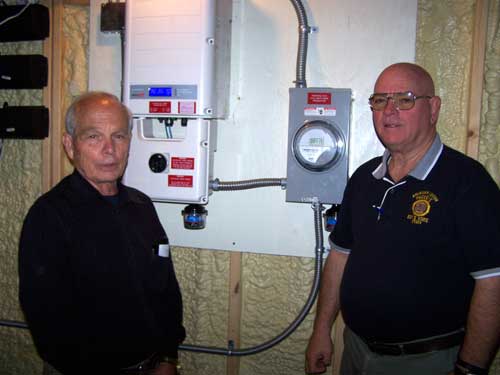
Bill Decker and Bob Schmitt check out the solar inverter in the basement of the Schmitt home that indicates how much energy the solar panels are generating.  Toledo Free Press photo by Duane Ramsey

Bill Decker and Bob Schmitt check out the solar inverter in the basement of the Schmitt home that indicates how much energy the solar panels are generating. Toledo Free Press photo by Duane Ramsey

The Schmitt home was the fifth home built by Decker Homes in Deer Valley with solar but the only Net Zero Energy home, although another one is close but not net zero, Decker reported.

The Schmitt home built by Decker Homes is the only Net Zero Energy home in the area as far as the Home Builders Association of Greater Toledo, Inc. knows, according to its executive director Jennifer Lynch.

The Schmitts signed a contract in August for 8 Kilowatts (KW) of solar at a cost of $3.57 per watt with Ohio-based Dovetail Solar and Wind recommended by Decker. They designed a solar system that would reduce the household energy costs to zero, according to Dave Leahy, director of sales for Dovetail.

“We had a three-year history of energy consumption of the Schmitt home and we knew how much an 8K solar system would produce in the Toledo area to achieve net zero energy,” Decker said.

The rooftop photovoltaic system consists of 32 Solar World 25-watt, 60-cell panels mounted on the roof of the home and garage. The tilt angle of the panels and roof is about 40 degrees, according to Dovetail’s listing of the Schmitt project.

The solar installation was completed in late September. The system was approved and activated on Oct. 1. Toledo Edison installed a new digital meter to accommodate the solar system on the home.

“They were surprised to see it was running backward,” Schmitt said, explaining the meter’s direction was due to the solar power being generated by their system.

On a bright sunny “peak” day, Schmitt reported it can generate as much as 45K with the meter literally flying backwards. Barbara said her husband really enjoys watching it run backwards.

In the first month, their system generated 663 kilowatts per hour (KWH) in October to cover the home’s 139 KWH of power usage. Schmitt said that it generated more than 110 KWH in the first four days of November.

“You only get down to zero. They won’t pay you when it goes beyond that,” Schmitt said. “If we generate more than our total consumption, Edison will show a credit for the next month and the credit would build up until we would use more than we generate.”

They don’t expect that to happen. Decker said the Schmitt’s 8K solar system is expected to produce about 10,500 kilowatts of electricity per year with the home consuming about the same amount. The average over 12 months would confirm the net zero.

Schmitt said the 30 percent solar Investment Tax Credit (ITC) from the federal government also helped make the solar installation more affordable.

Since the ITC went into effect in 2006, investment in solar installations will be 70 times higher in 2014. However, the ITC is scheduled to expire in 2016, according to the Solar Energy Industries Association (SEIA).

“The price to install a solar rooftop system has been cut in half. Solar has gone from being an $800 million industry in 2006 to a $15 billion industry today with 143,000 Americans currently employed in solar,” stated SEIA President and CEO Rhone Resch.

The SEIA launched a national campaign Oct. 20 to extend the 30 percent solar tax credit past 2016 by emphasizing tax fairness. Since the U.S. began offering incentives for energy development, the average annual subsidy has been $4.8 billion for oil and gas, compared to just $370 million for renewable technologies, according to Resch.

The next closest thing to a Net Zero Energy home in the Toledo area is probably the home of Al Compaan, retired professor of physics and astronomy who was involved in research and development of photovoltaic technology at the University of Toledo.

Compaan said they have a net zero electricity home with a solar installation that provides power for all their electrical use including the air conditioning. They use natural gas for heat instead of geothermal systems found in most net zero energy homes, he reported.

Compaan currently serves as president and CEO of Lucintech Inc., a start-up company involved in the development of thin-film photovoltaic modules that convert sunlight directly into electricity. The semitransparent modules can be applied to glass and flexible polymer sheets that are suitable for windows on buildings and automotive sunroofs.


ProMedica eyes part of Promenade Park for parking garage

0

ProMedica unveiled plans and renderings for its new $40 million move to Downtown, which will bring around 800 administrative employees together on one consolidated campus.

As part of the move, ProMedica intends to renovate the former Toledo Edison Steam Plant and also occupy the entire KeyBank office building, both along Summit Street. The proposed campus also incorporates a new multi-level parking garage to be built on a section of the adjacent Promenade Park along the Maumee River.

“The project will help boost economic development in the community and provide a catalytic energy for a revitalized Downtown in the future,” said Robin Whitney, vice president of property acquisition and development. “We are working collaboratively with city and state officials on this project and upon receiving the historic and new market tax credit approvals, the renovation and construction for the downtown campus could begin in the fall of 2015.”

ProMedica plans to create several levels inside the historic steam plant, still preserving its architectural elements, yet creating an open, contemporary environment and allowing for collaboration among employees and other community members.

According to a ProMedica release, final details must still be worked out with city and state officials regarding usage of the land in Promenade Park.

Local officials have applauded the move since intentions were first made known to the area by the Toledo Free Press this past February, and now visuals of a potential campus has them equally excited.

“ProMedica’s move downtown is going to be a great move for the city,” said Toledo Mayor D. Michael Collins. “It’ll be a domino effect of economic development. Downtown in five years is going to be nothing like the Downtown of today. It’s going to bring new jobs, too.”

Stacy Weber, Toledo public information officer, shared that ProMedica’s consolidation will bring 700 workers Downtown, and ProMedica plans to add 100 new positions, for a grand total of 800.

ProMedica will take over the entire KeyBank building as a result of KeyBank moving its offices to the 15th floor of the nearby Edison Building.

“They’ll occupy the whole thing, so I’m sure they’ll be renovating every floor,” said Jim Hoffman, KeyBank president. “We’ve taken some time and decided that would make sense for them, and for us to be across the street. We won’t move out of here until June of 2015. It’s great for the community and great for Downtown.”

The Regional Growth Partnership indicated this is the largest influx of workers to Downtown at least since its 1994 existence.

“We’re looking at this as a more Downtown revitalization story,” said John Gibney, vice president, marketing & communications. “This is a great story for the region. ProMedica is a huge piece of that. A lot of times the downtown is the face of the community and whenever you have positive news taking place, it shows a vibrant community and that things are happening.

“Where this Downtown is today to where it was 10 years ago is night and day. It started with Fifth Third Field, and across the river at the Marina District, you have a developer who has some plans to do something really nice there.”

Project funding will come from multiple sources, including the sale of existing ProMedica-owned properties.

Established in 1986, ProMedica is a locally owned, private nonprofit healthcare organization serving Northwest Ohio and Southeast Michigan.

Understanding the transgender community

0

The term “transgender” refers to anyone who transitions from one gender to another, according to www.transohio.org. It includes anyone whose gender identity differs from their assigned gender at birth.

There is a difference between a gay or lesbian person and a transgender person: The former deals with sexual orientation, which is the emotional and physical attraction to others, while the latter deals with gender identity and expression. Transgender people also have a sexual orientation, which can include heterosexual, gay, lesbian, bisexual or asexual.

Many transgender people face violence, insufficient access to medical and mental health services or lack of inclusive and accessible health insurance, according to the site. One of the biggest issues relates to the lack of legal protections: 81 percent of transgender people in Ohio reported experiencing harassment or mistreatment on the job, 28 percent lost a job, 27 percent were denied a promotion and 46 percent were not hired because they are transgender.

Buckeye Region Anti-Violence Organization (BRAVO) works to eliminate violence against the LGBTQ community. If anyone in the community experiences theft, vandalism, the burning of the rainbow flag, homo/bi/transphobic comments or threats, call BRAVO at 1-866-86-BRAVO, email [email protected] or visit www.bravo-ohio.org.

Report: Toledo below national average on LGBT equality

0

The Human Rights Campaign, the nation’s largest lesbian, gay, bisexual and transgender (LGBT) civil rights organization, recently released its third annual report assessing LGBT equality in 353 cities across the nation, including six in Ohio.

The group’s Municipal Equality Index rates cities on LGBT inclusion in municipal law and policy. The average score for cities in Ohio was 83 out of 100 points, which is above the national average of 59. Toledo, with 58, is the only Ohio city to fall below that average. Other Ohio cities rated include Akron (68), Cincinnati (100), Cleveland (79), Columbus (100) and Dayton (95). For more information, visit hrc.org/mei.

Veteran’s project pins honor onto military kids

0

By Michele Jurek

Every year on Veterans Day, Americans celebrate and honor veterans. But there is another group of people who have also served our country but are not typically recognized — the military “brats,” or children of service members.

This is what was going through the mind of retired Air Force pilot Robert Holliker of Whitehouse when he first read Pat Conroy’s introduction to Mary Edwards Wertsch’s book, “Military Brats: Legacies of Childhood Inside the Fortress” in the mid-1990s.

Holliker grew up as an Air Force brat from 1950-64. During that time, his family moved 12 times and Holliker attended 11 schools. He studied at four different high schools in three countries, graduating in West Germany in 1964.

After high school, Holliker returned to Whitehouse and attended Bowling Green State University. In 1968 he went on active duty himself and served 20 years in the Air Force.

In December 2009, Holliker approached Rep. Bob Latta and the two  began  working together to create  legislation to honor military brats.

As House resolutions to create Children of Military Service Members Commemorative Lapel Pins languished “in committee,” someone asked Holliker why he couldn’t just create a pin himself. So in July 2013 he started Brat Pin.

After soliciting ideas from other brats, he settled on the dandelion — the official flower of the military child — and a dog tag chain as a border.

“The dog tag chain is symbolic in that any kid who is a brat will recognize it immediately,” he said. In addition, it symbolizes the security of the fence that encompassed the bases and posts we grew up on — giving us security and freedom that a lot of other kids don’t have. We had the run of the base to play on when I was a kid — it was magic!”

The Brat Pin is available at www.bratpin.com, along with other items such as pendants, decals, magnets, dog tags and coins.

“I never went into this venture to make money myself. I went into it to recognize and honor military brats,” Holliker said. “Once I recover my investment, I will hand it all over to the Museum of The American Military Family out in New Mexico.

“I hope to create an awareness in our country for the sacrifices and service of our military kids to our nation. They do it year after year without fanfare,” he said. “I wanted something easily recognized by brats that says, ‘We served too.’”

After launching Brat pin, Holliker came up with a spinoff idea called Cards for Vets, (www.cardsforvets.com), which offers customized trading cards and posters that feature veterans and detail their service.

“One of the things we brats grow up with is a sense of not belonging anywhere,” he said. “I thought if trading cards were created, kids could collect and trade, bonds could be formed even tighter.

“I see these cards being used at memorial services, going-away events, retirements, reunions and so forth. Can you imagine the impact of a kid approaching Grandpa or Grandma and asking him or her to sign his card? And then the realization of the vet when they see that they are on the card? The sheer delight of a vet, thinking that his or her service meant something to that kid?”