Home Blog Page 166

Holiday heritage: Wolcott Center’s Christmas exhibit celebrates 150 years of history

0

The Maumee Valley Historical Society has been celebrating its 150th anniversary all year. The theme for this year’s special holiday exhibit highlights Christmas traditions and decorations of the mid- to late 1800s.

Nutcrackers at the Wolcott House. Photo by Matt Liasse

Walking into the Wolcott Heritage Center’s “150 Years of Christmas by the River” exhibit is like walking out of a time machine into a winter wonderland.

Each room features decorations from a different era. One room shows the simple trappings of the early settlers while another shows lavish decorations from the Victorian period.

The Judge’s Room represents the 1840-50s, the parlor the 1850-70s, the dining room the 1870-90s and the second floor the 1880-1910s. The exhibit features toys, handmade items, Christmas cards and elegant gowns from the Toledo area — many of which were donated.

Curator Marilyn Wendler said that’s what makes the exhibit special.

“A lot of Toledo families are represented here,” she said. “It’s important to keep local items.”

The exhibit also features a number of nutcrackers, which are hidden around the various rooms. Wendler said they are hidden for children to discover.

The Wolcott House was named for James Wolcott, a 19th century businessman from the area. It was built as a log cabin for him and his wife, but later evolved into a 14-room, Federal-style mansion.

The house was later owned by Mary Ann Wolcott Gilbert, Fredrica Gilbert Hull and Rilla E. Hull.

The displays will be up until Dec. 28, and the house is closed only on Christmas Day. The center is open Thursday to Sunday with tours at 12:30 and 2:30 p.m.

Special tours can be made by appointment. Admission is $6 for adults, $5 for seniors and $2 for students. Members of the historical society can visit free of charge.

For more information, contact Wendler at [email protected] or Amy Denforth at (419) 893-9602.

Walleye to sport special jerseys at Winterfest

0

It’s always fun to wear something special at holiday functions, and that’s exactly what the Toledo Walleye will do for the historic outdoor 10-day Winterfest event.

Photo courtesy Toledo Walleye

The Walleye created two unique jerseys for its upcoming games at Fifth Third Field.

“In April 2013 we started talking about what we wanted to do,” said Dan Royer, Walleye creative director. “We look at trends and what other teams are doing.”

Royer said the team wanted something distinctive for the first outdoor games in ECHL history.

“I really like how some of the teams wear things that represent how it used to be, how that vintage white used to be, and how some of the materials looked,” Royer said. “[Ours] was a nod to that era. It has a touch of history.”

One of Toledo’s opponents, the Kalamazoo Wings, is joining in the fun by also employing a special Winterfest-only jersey for the Dec. 27 game. Fort Wayne plans to wear its standard uniform for the Jan. 3 outdoor game.

“We wanted to be a part of it as well, because it’s a once-in-a-lifetime event,” said Mike Modugno, Kalamazoo Wings director of public relations. “We’re getting excited as a staff. We were just in Toledo last weekend, so it’s tough not to take a peek when you’re driving by and see the boards and getting excited about it.”

A design specialist by trade, Royer wanted to incorporate a unique touch by giving the jersey’s letters a hand-stitched look.

The team briefly considered wearing true throwback hockey sweaters, incorporating former jerseys from Toledo’s rich hockey history, including the Mercurys, Hornets and Goaldiggers.

“The idea was there,” Royer said. “We talked about wearing different jerseys, but we’ve done that with hockey history weekends, and we’ve worn a lot of those teams and fans have enjoyed it. But we felt like it needed to be Walleye because it is such a huge event.”

Royer has designed all the Walleye jerseys since the franchise’s reincarnation in 2009.

“It is a lot of fun. It’s one of my favorite things to do,” said Royer, who works in tandem with Craig Katz, director of merchandise and licensing.

Royer said the team is already working on its next designs, some which may or may not happen.

“The one thing I’ll hint at for the Walleye, is where it looks like there’s fish gills on the side of the jersey,” Royer said. “We’ve played around with the fins on the shoulders, and it has a sharp, aggressive feel with good clean lines, but without looking too campy or corny. There’s some ideas in the hopper.”

As for the Winterfest jerseys, it is undecided if the team will wear them again, but Royer said players seem to like them and they are selling well in the Swamp Shop.

After many months spent making plans for them, it was a thrill for Royer to see his design come to life.

“I love it,” Royer said. “That’s what it’s all about. It’s one thing to see it on a screen, but when you see it on fabric and it’s something you can hold, that’s a great feeling.”

TFP planning special focus on health, dining in 2015

0

Toledo Free Press will expand its coverage of health and dining topics in 2015 with the introduction of monthly special sections called Eye on Health and Indulge Toledo.

Eye on Health

Eye on Health will appear first, debuting Jan. 4 with a focus on diet and fitness.

The section will feature articles on a wide range of diet and fitness related subjects, including how local companies are helping adults and adolescents manage their weight; the CrossFit exercise regimen; a local group addressing eating disorders; and fitness for senior citizens, to name a few.

Other upcoming Eye on Health topics include heart health, obesity, diabetes, women’s health, men’s health, cancer, aging, kids and teens, the marketplace, active lifestyles and mind and body.

“Eye on Health is intended to be a comprehensive, topical guide to the health issues affecting our community today,” said Toledo Free Press Editor in Chief Sarah Ottney.

“From heart health to cancer to aging, each month’s section will be dedicated to one aspect of health that will include interesting, dynamic and informative articles on a particular topic.

“Our goal each month will be to really dive into that particular topic. I hope the coverage will both enlighten readers and help them make informed decisions about their health.”

Health experts from Toledo and Northwest Ohio will be asked to contribute guest columns, and each section will also include a calendar of events that pertain to the area of health being explored that month.

“We are always looking for story ideas, whether it’s someone who has overcome a health challenge or an upcoming event to profile or add to our monthly calendar,” Ottney said.

“Managing Editor Joel Sensenig will be taking the lead, but our whole team will be working to make sure these sections are robust, informative and useful for readers.”

Indulge Toledo

A commonly shared statistic is that Toledo has the most restaurants per capita than any city in the U.S.

True or not, more than 90 percent of Toledo Free Press readers say they dine out and purchase food and beverages at dining establishments on a regular basis.

With so many choices in the area’s dining scene, Toledo Free Press will introduce a new monthly section called Indulge Toledo. The section, debuting Jan. 18, will allow the paper to dedicate more space each month to the region’s food and drink scene.

The section will be devoted to all things cooking, dining, beer, wine and spirits in Northwest Ohio, including chef and business profiles, restaurant reviews, recipes, cooking classes, culinary trends and more.

“We have done regular dining guides, including patio guides, holiday dining guides and more, for years and they are always popular with readers and advertisers alike,” Ottney said. “Each time, we find there are always more great restaurants to profile and more stories to tell than we have room to include in print, so now we want to dedicate more regular coverage to this topic.

“We know Toledoans love to try new restaurants and discover hidden gems so we want to help share those stories with our readers.

“There are a lot of places out there to spend your dining dough, with more popping up every month. We will help you navigate the constantly changing dining and drinking scene in the region.”

The changes are also expected to be highly beneficial to advertisers, said John McNamara, Toledo Free Press sales and marketing manager.

“We are always looking for ways to add value and offer unique opportunities for our advertising partners, and these new sections in 2015 will allow us to do both,” he said.

“These sections will give our advertisers the ability to talk to an audience that is actively looking for products and services they offer. Having a monthly section dedicated to popular topics such as health and dining will allow us to offer a highly targeted medium for our advertisers.”

Business owners or other potential advertisers interested in learning more about these special sections can contact McNamara at [email protected].

Toledo Free Press is always interested in hearing story ideas from readers, Ottney said.

“Ideas might include a new business to profile, an established business marking a milestone or doing something unique, a particular person doing something unique in the community or an upcoming special event people might be interested to know about,” she said.

Those interested in sharing a story  idea can email [email protected] for Eye on Heath or [email protected] for Indulge Toledo.

— Staff Reports

Ottney: Yule do better

0

On Dec. 17, city officials unveiled the first of 55 planned “You Will Do Better in Toledo” signs, which will be installed at city entry points over the next few weeks.

.

The black and white road signs are modeled after the original display, which debuted 101 years ago on Dec. 17, 1913. That one topped Valentine Theatre and featured the slogan spelled out in lights.

“This sign demonstrated the viability and vitality of this great city 100 years ago, a city with a Downtown that was booming, where entrepreneurism flourished,” Toledo Mayor D. Michael Collins said afterward.

“As you come off the turnpike and you’re coming into Toledo, perhaps this is something that will capture the attention of those who are not familiar with Toledo,” he said. “You will do better in Toledo. It was proven 100 years ago and we’re going to prove it in 2015 and every year there forward.”

John Amato, owner of Jupmode, a Perrysburg-based screen-printing company whose flagship T-shirt design features the slogan, was among those who advocated for the installation of the signs. He attended the unveiling and said it’s “surreal” to see the slogan beside the street.

Toledo Mayor D. Michael Collins and other city officials and community members look on as the first of 55 planned

Toledo Mayor D. Michael Collins and other city officials and community members look on as the first of 55 planned “You Will Do Better in Toledo” sign is unveiled near the intersection of Reynolds Road and Heatherdowns Boulevard Dec. 17. Toledo Free Press Photo by Sarah Ottney

“It’s just really neat to see so many people get behind the slogan, because it really is about the city as a whole, the pride we have in the area, the optimism we have right now,” Amato said.

The slogan has organically dovetailed into Toledo Region Branding Initiative’s official slogan, “It Matters Where You Make It.”

“Everybody talks about how a city has to have an identification. It’s all part of marketing and labeling,” Collins said. “To market, you have to label. To label, you have to be able to capture a difference and this is the best way to do it.”

Collins also hopes the message makes its way to Chrysler, which is deciding the future of Jeep Wrangler production in Toledo.

“[We want to] demonstrate to Fiat Chrysler that it matters where you make it,” Collins said. “In January I’ll be going up to Auburn Hills to speak with Mr. [CEO Sergio] Marchionne and this is the type of message I’m going to give.”

The idea for the signs evolved last winter after Amato, with Dustin Hostetler of Grumpy’s and Adam Sattler of The Ottawa Tavern, met with Collins to discuss the possibility of rebuilding the original sign. Instead, Collins suggested the welcome signs.

He announced the initiative during his Dec. 9 State of the City address. Afterward, he said he thinks the signs represent a step in the right direction.

“We’ve been a government that’s been reactive instead of where I really wanted to be and that was to be more proactive in terms of giving us a different direction,” he told me. “I’m hoping in 2015 we can take those dynamic steps to redefine Toledo.”

Toledo Free Press Design and Illustration by James A. Molnar

Toledo Free Press Design and Illustration by James A. Molnar

Not everyone is a fan of the slogan.

“I hate to be the one to say this but ‘You will do better in Toledo’ is incredibly lame. Better than what?” a Facebook friend posted.

“Respectfully, what is the point? There is no discernible plan that I can find to help do better here. Are the signs magic?” a Twitter follower asked.

Yes, an actionable plan is needed. But basic civic pride is a good foundation to build on. I love that residents and community leaders are embracing Toledo for what it is while dreaming of what it could be.

This is a time of year when magical thinking is embraced and disbelief suspended.

On Jan. 2, the sparkle of the season will begin to fade for another year and we’ll all have to face the new year and its challenges head on.

The holidays bring a uniquely mixed bag of emotions. Many local households will be full of joyful reunions, twinkling lights, overflowing tables and bountiful gifts. But thousands are without food, clothing, housing or are missing a loved one. A family in Sylvania is burying their 19-year-old son, Zachary Wagenhauser, killed in a car crash Dec. 16. Firefighter Jamie Dickman’s widow is preparing for their son’s first birthday on Christmas Day.

Amanda Aldrich and her Resolve Toledo “sisters” are bracing themselves for more bad news from their fertility specialists and preparing to spend the holiday season surrounded by well-meaning but often hurtful friends and relatives. Some of these women have bravely shared their stories with us in these pages.

Toledo Free Press does better in Toledo because of our readers. Because of our advertisers.

Because of you.

Thank you for reading and happy holidays.

Sarah Ottney is Editor in Chief at Toledo Free Press. She can be reached at [email protected] or on Twitter at @sarahottney.

Alternate pipeline routes discussed

0

In a contentious public meeting marked by accusations of dishonesty and promises of profit, backers and foes of a proposed high-pressure pipeline in Swancreek Township might have found something to talk about.

“This is my Christmas present to you,” said NEXUS pipeline foe Liz Athaide-Victor, plopping a stapled-together copy of a map onto a conference table in front of Arthur Diestel, spokesman for the company planning the pipeline. The map contained a proposal for an alternate route through Swancreek Township and surrounding townships for the NEXUS high-pressure transport pipeline.

“That’s the sort of great Dec. 15 feedback we’re looking for,” Diestel told her in front of about 80 people crowded into the Swancreek Township building in Delta.

The map is a compromise of sorts, considering the pipeline opponents had already received backing from Swancreek Township trustees in the form of a Dec. 8 resolution opposing the passage of the pipeline through the township at all.

NEXUS is a proposed 42-inch, 2-billion-cubic-feet-a-day pipeline meant to link the Marcellus and Utica shale fields in southeast Ohio to the natural-gas pipeline grid in southeast Michigan and Ontario, Canada. Spectra Energy Corp. and Detroit-based DTE Energy are the lead developers on the project.

Spectra promises a safe, environmentally friendly pipeline that will provide jobs and other economic benefits to the areas through which the pipeline passes, but opposition groups aren’t buying that. They cite safety concerns, both about the high-pressure pipeline itself and from the natural gas it would carry.

The group Athaide-Victor represents, Neighbors against NEXUS, has argued for the pipeline to be relocated within an alternative “energy transmission corridor” established through a sparsely populated area and in which any pipelines could be more easily monitored for safety.

One suggested route is the already established path of the ET Rover pipeline through northwestern Fulton County. However, Diestel and others note that the “study corridor” proposed by NEXUS already follows the route of a high-tension electric line north and south through the township, making that an “energy transmission corridor.”

The Neighbors’ alternative corridor would swing west about two and a half miles, crossing the Ohio Turnpike before angling northeast, running through the hamlet of Ai, to rejoin the original NEXUS study corridor. A second alternative loop proposed by the Neighbors would swing south of, instead of north of, the village of Neapolis in Providence Township.

Diestel said the study corridor is only a starting point, and the final route could shift before the pipeline begins operation in late 2017.

Fernando Mora, who owns Johnston Fruit Farm in Swancreek Township, said it would take time for his operation to recover from a pipeline going through it.

Diestel attempted to reassure Mora that crop planting could begin almost immediately after the pipeline was buried and the land filled in, but Mora responded: “Sir, I don’t know if you know anything about orchards, but these are trees.”

Trees would not be allowed to be planted above the pipeline, according to the land-use restrictions provided by the company.

Not everyone there was in opposition, however.

Brett LaFaso, business representative for Local 18 of the International Union of Operating Engineers in Toledo, said the pipeline will mean jobs, and the gas it carries will mean “more energy, and the cheaper it gets, the more jobs [it will bring].”

“This energy will benefit us, if not this generation, then the next. Ultimately this is about people who want to work hard and pay their own way,” he said.

In answer to a challenge from another audience member, LaFaso said there’s a pipeline within 1,500 feet of  his home on Jeffers Road.

Brewfest to heat up Fifth Third Field Jan. 2

0

Beer lovers will get a chance to exercise their taste buds from 6-10 p.m. Jan. 2 with Walleye Winter Brewfest, a beer festival offering more than 250 beers.

The inaugural event, part of the Walleye Winterfest activities, will feature offerings from more than 50 breweries, including Toledo’s own Maumee Bay Brewing Co. and Great Black Swamp Brewing Co.

.

.

“We’d looked into doing this at other times in the last year, in other seasons, but this looked like a good time to do it with everything going on with Winterfest and bring some more focus to it,” said Joe Welker, catering manager for the Mud Hens.

Organizers expect about 2,000 people at the event, which Welker said will likely take place in the fall in future years.

Other Ohio brewers scheduled to be in attendance are TLC Brew Kettle, Strongsville; Catawba Island Brewing Co., Port Clinton; Cellar Rats Brewery, Madison; Fat Head’s Brewery, North Olmsted; Great Lakes Brewing Co., Cleveland; Jackie O’s Pub & Brewery, Athens; Rivertown Brewing Co., Lockland; Rockmill Brewery, Lancaster; and Thirsty Dog Brewing Co., Akron.

“We’re excited to be involved with Brewfest,” said Paul Traver of Great Black Swamp Brewing Co. “It’s always great to see new craft beer events in Toledo.”

Advance tickets are $35 or $25 for a designated driver ticket. Day-of regular tickets are $45. Each admission includes 15 taste tickets, each good for a 3-ounce beer sample. Additional taste tickets are also available for purchase.

Brewfest VIP tickets are available for $55. These tickets include 20 taste tickets, grazing stations and access to exclusive beer drafts. Designated driver VIP tickets, which include early access to the grazing stations, are $45. Doors open to VIP ticket holders at 5:30 p.m., with regular admission beginning at 6 p.m.

The Bradberries will perform in the VIP area, while Zak Ward & Co. and Black Swamp Rebels will play on two stages set up on the main concourse.

Tickets may be purchased at toledowalleye.com/winterfest or at the Fifth Third Field box office.

Groups help local women cope with ‘isolating’ infertility

0

Amanda Aldrich will find out Dec. 22 if she is pregnant.

She doesn’t expect good news.
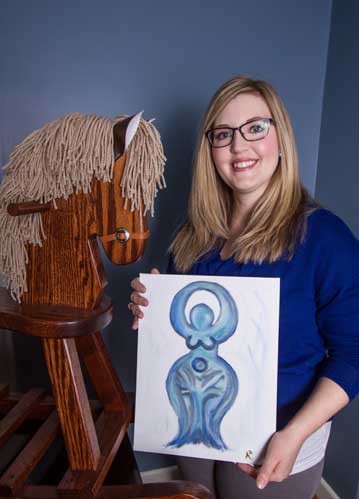
n   AMANDA ALDRICH, WHO STRUGGLES WITH INFERTILITY, SAID PEOPLE’S COMMENTS ARE OFTEN WELL-MEANING BUT HURTFUL.  TOLEDO FREE PRESS PHOTO BY CHRISTIE MATERNI

Amanda Aldrich, who struggles with infertility, said people’s comments are often well-meaning, but hurtful. Toledo Free Press photo by Christie Materni

A positive pregnancy test is not something the Toledo resident will probably get for Christmas, although it has been her wish for years.

But Aldrich, 34, doesn’t need a holiday to announce her pregnancy. She just needs a baby. Any time. Any month. Any year.

She and her 42-year-old husband have been battling infertility for six years. They are the faces of something that makes many people incredibly uncomfortable.

It isn’t something people like to talk about, and when they do, they usually say, “Just adopt,” Aldrich said.

“That makes me angry on a lot of levels,” she said. “Adoption is not a decision to be taken lightly and it isn’t an alternative solution to infertility, but I feel like people say it because they need to say something.”

Others make jokes about their own children without thinking: “Does anybody want a baby? Because we can’t handle it.”

Aldrich would like to say, “We would like one, thank you very much.”

Other well-meaning individuals comment, “It happens for a reason. It is in God’s plan.”

Aldrich used to believe that. She doesn’t anymore. After four failed embryo transfers, she doesn’t expect the fifth transfer, which occurred Dec. 11, to actually work. Sometimes God’s answer is “No,” she said.

“The hardest part of going through this is there is a really sincere possibility that it will never work.”

After the failed attempt in September, Aldrich and her husband decided they needed to use their frozen embryos before they made the decision to adopt or use donor eggs. If the most recent attempt fails to produce a pregnancy, their last transfer will be in the spring.

“There has to be a grieving that happens before you can move on to donor eggs or adoption,” Aldrich said. “You have to grieve the loss of your fertility because it is such an integral part of being a woman.”

Every time she meets someone for the first time, they ask, “What do you do? Do you have kids?”  Aldrich used to ask that as well.

Not anymore.

“I am kind of blunt about things. I think I catch people off guard at times when they ask if I have kids and I say, ‘I am infertile. I can’t have kids,’” she said. “It makes them uncomfortable. They don’t know what to say.

“It is a bad thing, but it is not contagious,” Aldrich said. “I just want people to understand how important it is to have empathy, not sympathy, for the couples going through this because it just destroys them.”

The clock is ticking


Aldrich and her husband, who asked not to be named, began their journey toward parenthood even before they got married in 2009. They knew it might be harder for them because of some health issues in Aldrich’s past, but they did not think it would be impossible.

“It is funny because even in our wedding video you can see my sister talking about us having children,” she said. “Everyone in my family has had children very young.

“My mom was a teen mom. My sister and brother were both teen parents,” Aldrich said. “I am the first in my family to go to college, move away and have a career and to aspire outside of our hometown.”

Yet she didn’t think her ambitions would mean she would struggle with having a baby. She figured it would happen for her like it did for everyone else in her family — just a little later.

Dr. Owen Davis, president-elect of the American Society for Reproductive Medicine, said between 10-20 percent of couples will experience infertility at some point in their lives. Conventional infertility is defined as the lack of pregnancy after one year of trying to get pregnant without protection, according to the New York City-based professor and doctor.

One of the growing reasons for infertility is women deferring child-bearing until their late 30s or early 40s.

“Age alone will affect infertility if for no other reason,” Davis said.

A woman trying to get pregnant at 40, who is otherwise healthy, only has a 50 percent chance of success.

However, there are pathological causes of infertility as well. A low sperm count, poor sperm mobility or complete absence of sperm in the man are reasons some couples can’t conceive. Women sometimes suffer from a hormonal imbalance that inhibits ovulation, while other women have tubal abnormalities.

In some cases, infertility is just unexplained, which is “not a satisfying diagnosis,” Davis said.

At first, most infertility doctors start with a less invasive treatment like intrauterine insemination (IUI), which puts the sperm directly into a woman’s uterus.

When this doesn’t work, in vitro fertilization (IVF) is usually the treatment of choice. This involves fertilization by manually combining an egg and sperm in a laboratory dish and then transferring the resulting embryo to the uterus.

“The quality of treatment for infertility has made huge strides, even if you go back a few decades,” Davis said.

However, no matter the technology, women are not going to have a great success rate if they are 45 years old, he said.

You better get started’


But Aldrich wasn’t 45 years old; she was 27 when she realized her fertility was at risk.

One night, she woke up with the worst pain she had ever felt in her life. She had no idea what was wrong. She was doubled over in pain and could not stand up.

“I need to go to the hospital. I need to go to the hospital,” she remembers thinking.

Doctors determined she had an ovarian contortion, which is when the whole ovary twists within itself. Most women with the condition end up losing their ovary.

Aldrich didn’t, but after doctors went in to fix it, she was told she had endometriosis.

Endometriosis occurs when the lining of the uterus (womb) grows outside of the uterus. It affects about 5 million American women, according to the Office of Women’s Health, U.S. Department of Health and Human Services.

The most common symptom is pain. The most heartbreaking symptom is trouble getting pregnant because the growth can block a woman’s fallopian tubes.

As Aldrich learned more about “endo,” she vividly remembers her gynecologist telling her, “If you want to have kids, you better get started.”

Aldrich wasn’t with her future husband at the time, but her doctor told her  plenty of women with endometriosis have had successful pregnancies.

“I knew that I wanted to be married. I never thought I would just meet some guy and get pregnant.”

She met her husband at work in 2007 and it became obvious that he would be the father of her future children.

Her husband, who has been tested and is perfectly fertile, said the world leaves you behind if you aren’t a parent, although he thinks it is easier for men.

“Every movie that you see every TV show that you watch. This is all this world really knows and if that isn’t possible, they don’t know how to talk about it and they don’t want to talk about it,” he said.

But Aldrich said they would not trade their relationship for a chance to try to conceive when they were younger. Everyone has something bad in their lives and “that is our joker,” she said.

“I am so thankful that I have the husband that I have. I am so lucky in so many ways. I really mean it,” she said. “Because of that reason, I am so happy that I did wait. I waited for the right one. That was important to me.”

The irony of the situation doesn’t escape her, however. “I spent my whole life trying to not get pregnant, so it is really funny to think about all the money you spent on that, and now here we are.”

‘We let it rule our lives’


Aldrich and her husband tried having kids the “old-fashioned way” from 2008-11, she said. Most doctors advise getting help after six months, especially if you are 35 or older.

“We tried on our own for probably longer then we should have. I think we tried for two years on our own because everybody in my family had three or four kids. We were like, ‘What is going on? This makes no sense.’”

She went to see Dr. Joseph Karnitis at the Fertility Center of Northwest Ohio, who put her on a fertility drug to help her eggs grow.

Since she was young, they thought this approach would do the trick when paired with intercourse at prescribed times.

Aldrich and her husband only tried that for six months, though, because they were spending $3,000-4,000 per month and nothing was covered by insurance. At one point, they ordered cheaper medication from England to save money, but it arrived in glass vials and the first time they did it, “We broke it and the medication went all over the place,” she said.

Aldrich said, “Enough.”

“I’d rather spend more money and know that we aren’t going to lose it,” she said. “It was $12,000-plus for IVF, and we thought, ‘Why are we spending all this money when we could spend a little more for more of a guarantee?’”

But it wasn’t that simple.

Aldrich had to go on Lupron Depot, a birth control medication, to try to shrink her endometriosis before the eggs could be retrieved. She and her husband lost months as the birth control stopped them from getting pregnant.

Meanwhile, she started a new job at a nonprofit in 2013 that offered infertility coverage, which was a relief because she said sometimes she feels like infertility comes down to a class system.

“If you can’t pay for it, you can’t have kids,” she said.

In June 2013, Aldrich underwent her first IVF and transferred two embryos. Her second round was in October 2013. Each time it looked like everything was in place to work out. She even had one chemical pregnancy, but nothing ever happened.

High hopes


The first time they did IVF, Aldrich allowed herself to get excited. She had Pinterest boards, an Amazon wish list and was picking out what the nursery would look like.

By late 2013, she was frustrated and wanted more guidance. She switched to Dr. Nicholas Shamma with IVF Michigan Fertility Center and had IVF for a third time.

This worked out, because the Fertility Center of Northwest Ohio will soon close. ProMedica spokeswoman Tedra White confirmed that 800 patients will be transitioned to the Toledo Fertility Center in Sylvania in 2015.

“Patients will have access to multiple physicians who will provide high-quality, coordinated and convenient care with high success rates,” she said in an email statement. “The majority of their treatment will be handled locally, but they will have to travel to metro Detroit for IVF.

“Similar to other health systems, ProMedica experienced many challenges with operating a fertility center,” White said. “These centers can be very expensive to operate. Additionally, recruitment is becoming more difficult due to a shortage of specialists.”

Aldrich said she once again had high hopes after switching doctors.

But once again, it didn’t work. IVF and the subsequent embryo transfers aren’t a guarantee.

“It is so hard to try to explain to people how difficult it is and to have them understand that it literally does encompass your entire life,” she said.

She and her husband second-guess vacation plans because what if she gets pregnant and they can’t travel? Should they remodel the guest room, because what if they need that room for the baby? They even traded in their car right before marrying to make sure they had something family-friendly.

Now they are trying to live life and if “it happens, it happens,” she said.

“We do get a little excited and have hope that it is going to work out and when it inevitably doesn’t, we are just as crushed as before.”

Her husband said, “Your expectations decrease as a defense mechanism. The first time we thought it was the end of the world; the second time the same. When the third didn’t work, we are like, ‘What is going on?’”

Aldrich said it destroys her self-esteem and while she tries to avoid alcohol in case she gets pregnant, the stress makes her want a drink. Without fail, she gains 10 pounds every time she goes through a treatment cycle because of the many medications she is on to aid the embryo transfer. For the Dec. 11 cycle, she has been taking an average of 12 medicines a day, from blood thinner to folic acid to estrogen.

Finding your resolve


One of the best ways to face infertility is with people who know what you are going through, Aldrich said. She belongs to the international Heels and Hormones Facebook group and Resolve Toledo, which is also online. The women from Resolve Toledo meet at Panera Bread once a month.

“They are my best friends. They are my confidantes. Oh my God, I love them like sisters,” Aldrich said. “They have changed everything. Infertility is so isolating in a lot of ways.”

The groups talk on Facebook about their medical appointments and obsess over pregnancy test photos. Aldrich has even met some of the members from out of town. In the summer, she went with a few other ladies to New Jersey as one woman went through an embryo transfer.

Ashley Schardt, 25, of Bowling Green said belonging to Toledo Resolve helps with the struggles of her infertility. Her body does not ovulate or have a monthly period.

“It is nice to have everyone around when I have an appointment or if I have a medical question.”

She recently underwent IUI, which involves placing sperm inside a woman’s uterus to help with fertilization. She thought she would be announcing at Thanksgiving she was pregnant. The IUI failed.

“You grow up believing you are going to get married, get a house and have kids,” she said.

Schardt didn’t even care if she got married; she just wanted children, she said, laughing.  She finds it so frustrating when people tell her to relax and she will get pregnant.

“I cannot force my body to do this,” Schardt said. “We tried.”

Elizabeth Sampson of Carmel, Indiana, belongs to Heels and Hormones because she is battling secondary infertility. She has three children, but has been trying for a fourth for five years.

“The group has really been able to band together and support each other through our infertility issues,” Sampson said. “We talk about medications, doctor’s appointments and sex with our husbands.”

Sampson, 38, said the group is nice because “there is no situation where your situation is worse than mine and mine is worse than yours. We are all in this hell together.”

Some of the women visit each other and even send gifts. When Sampson was in the hospital with a recent loss, she woke up to roses from the Heels gals.

Sarah Schwartz belongs to the Toledo Resolve group. She is saving up for IVF because her insurance doesn’t cover it.

“It is one of the few places that you feel safe. Your family and friends try to understand, but they will say things that aren’t helpful, even if they don’t mean it,” she said.

Schwartz suffers from polycystic ovary syndrome, which affects hormone levels, periods and ovulation.

“We have been trying for more than six years. We have been saving for IVF for two years, but we had a few setbacks. We had a death in the family and had to pay for a funeral,” she said.

Schwartz likes the group because everyone can talk about where they are in their journey. Some are doing IVF, while some are looking at adoption and fostering.

The women also vent. The holidays are one of the hardest times to be unwillingly childless, although Mother’s Day is the absolute worst.

“Every year, I put up the Christmas tree and think maybe next year will be the year,” Schwartz said.

A Christmas miracle


Christmas is hard for couples facing infertility, not that any day is particularly easy when the joys of children are plastered everywhere, especially on social media.

“It is amazing how many times everything seems to revolve around children,” Aldrich said. “Every single commercial that we see and every time we go somewhere, there is a pregnant belly or you see children playing or signs that say, ‘Make memories with your children.’ It is awful. It is enraging and frustrating and so sad all at the same time.”

On Thanksgiving, Aldrich spent time with her new niece. She was born on the day Aldrich found out an embryo transfer had failed.

“I spent all of Thanksgiving holding her and feeding her and it was so hard,” Aldrich said. “It feels good. And of course I love her. She is my niece and she is beautiful and it is an amazing thing. At the same time, it is also equally super heartbreaking to think we might not ever have that opportunity to experience what that is like.”

It is the hardest thing to express to people how hard it can be, she said. Once she went to dinner with a friend who told her to not consider IVF because of the moral consequences.

“They don’t understand what it really means. It is not a guarantee. You aren’t mixing it up in a petri dish, sticking it in and boom, you have a baby,” she said. “There is still a God or Allah or whoever, who says this is going to continue to grow and work.”

Aldrich said her infertility has made her an advocate for educating people who don’t know anything about it or say rude things.

Her infertility has also opened an opportunity for a bond beyond bonds. Her sister, Ashley Berger, recently offered to be a surrogate if the last rounds of embryo transfers do not work.

“I would do it in a heartbeat,” Berger said. “I have been waiting to see how her journey has unfolded. They have had multiple attempts and unfortunately we haven’t gotten that little niece and nephew we have been praying for.”

Aldrich said she and her husband would consider it, but they need to see what happens Dec. 22. There is always that tiny bit of hope.

We will never have a life without kids,” she said. “We will have kids. It just is a matter of how that happens. We just don’t know.”


Songwriter seeks funds for documentary-style film ‘Fulton Williams’

0

It’s a story 12 years in the making.

Ryan Roth, a singer-songwriter from Northwest Ohio, is making a film with friend Michael Cullen II based on the lives of both himself and his late father Britt, who died in 2000. PHOTO COURTESY SUNNY NEUENSCHWANDER

Ryan Roth, a singer-songwriter from Northwest Ohio, is making a film with friend Michael Cullen II based on the lives of both himself and his late father Britt, who died in 2000.

PHOTO COURTESY SUNNY NEUENSCHWANDER

And if you ask Ryan Roth, it’s a deeply personal story born out of the cornfields of Wauseon.

The 37-year-old singer/songwriter is currently in the midst of the production “Down Along the Road: The Life and Times of Fulton Williams,” a documentary-style narrative film chronicling the rise and fall of a local musician who mysteriously disappears while on the brink of fame.

The story of Fulton Williams is based off the lives of both Roth and his late father Britt, who died in 2000.

A writer and musician in his own right, Britt used Fulton Williams as his pen name as a tribute to his home near the Fulton and Williams county line. Before he died, Britt asked his son to carry on the name in whatever way he could.

“The character himself is loosely based on his life and mine,” Roth said. “It kind of shadows the same walk. Everything that happened in this guy’s life is true. Every story that’s going to be told in this film is a personal story to somebody telling it.”

“Fulton Williams” is a passion project for both Roth and Michael Cullen II, an aspiring local filmmaker and close friend of Roth who helped him come up with the idea back in 2002.

However, years went by and the project remained nothing more than an idea between friends.

Two months ago, the duo reconnected and finally decided they were at a place in their lives where it made sense to get the project moving.

“I think it was just about being at the right point in our lives,” Roth said.

For the project, Roth and Cullen enlisted the time and talent of nearly 40 area actors, as well as local musicians who will weave their own true-life stories into their “experiences” with Fulton Williams.

“Fulton Williams” has a budget of $2,500, which is being sought through Indiegogo.com, a crowdsourcing website. As of Dec. 18, the project has raised $1,974 with 30 funders. The fundraiser ends Dec. 29.

To donate to the cause, visit the Indiegogo page at https://www.indiegogo.com/projects/fulton-williams-film-project-documentary-style.

Baumhower: Hello … Santa?

0

When I was growing up, my mom’s favorite method for getting me to behave was the ol’ forward-leaning, outstretched arm toward the wall phone.

She used this maneuver anytime after September. This was a direct threat that she was going to pick up the phone, call Santa Claus and report me for being an asshole. (She also employed this tactic the rest of the year, but with the police instead.)

  .

.

As a visual reminder, my mom — with her perfect left-handed penmanship — would have Santa’s number written on a piece of paper, held by an oversized magnet that also served as a bottle opener for our bottled Pepsi, hanging on the fridge mere inches from our house phone.

As all kids figure out, I eventually started calling her bluff and would continue my behavior to see if she would actually pick up the phone and start the exhausting, drawn-out dialing exercise. As soon as I heard her finger dial a short-stroked “1,” I knew she wasn’t calling my grandparents; this was a long distance call being made.

With the phone straddled between her cheek and shoulder, my mom and I would have a staredown. Each ringtone, heard by her ears and mine, would raise the stakes of the our kitchen standoff.

As soon as my mom would say, “Hello … Santa?” the mood and scenario would change. I became instantly apologetic, promising to change my ways, flashing a very crooked smile to help peddle the half-truths I was trying to sell. I would start negotiating those things I could accept as punishment instead of the ensuing conversation with Kris Kringle.

Eventually I would say or do the right thing, prompting my mom to abruptly end the conversation with a “Never mind” or “I might have called you too soon, Santa.”

As you might imagine, I was not the easiest child to raise. I distinctly remember the mounting anticipation the month of December brought. Each day, I would be allowed to tear off another length of chain made of green or red construction paper, which we assembled every year at St. Clement School.

This chain was supposed to signify the countdown of days until we celebrated the birth of Jesus, but who were they kidding? It was a 7-year-old’s way of understanding how many days were left until the big man in a red hat would arrive and enter our chimney-less house with a bag full of toys.

With each fresh piece of construction paper torn came a brief moment of relief — for a boy who inspired near-daily correspondence between teacher and parent had somehow survived another day without Santa having to deal with my mother on the phone. At the time, I was convinced I was doing Mr. Claus a favor. It might have been the one act each year that kept my name off the “naughty list.”

I’ve been blessed to have children who act nothing like me, so I have never had to reach for an imaginary phone with 50 feet of cord. But I assume this parental holiday tactic has remained and evolved some. Maybe Santa has an email address or perhaps you can text him at will?

You should also know, especially coming from the child who was pleading, smiling and even dancing for another person to hang up the phone, that we do try our best to behave during the holidays. Maybe if you didn’t allow a 7-year-old to eat 10 sugar cookies at 8 p.m. with a chocolate milk chaser, we could “settle down” or “leave our little baby sister alone.” Just saying.

Parents aren’t perfect either in the month of December.

To every mom who never called Santa and to every child who forced his or her mom to keep his number on a nearby fridge: Merry Christmas.

Jeremy Baumhower can be reached at [email protected] or on Twitter @jeremytheproduc.

Lucas County Sheriff’s Office to get body cameras

0

Amid the growing backlash to incidents across the country of unarmed subjects being killed by law enforcement officials, Lucas County Sheriff deputies will soon be armed with body cameras.

Deputies have been testing several of the cameras on a trial basis for the past 30 days, but the sheriff’s office will soon be purchasing 15 of the $500 cameras for deputies to use.

Lucas County is set to pass its 2015 budget on Dec. 16, and officials said they wanted to be sure to set aside funds for the cameras.

A camera on the shoulder of Lucas County Sheriff's Deputy. Toledo Free Press Photo by Joel Sensenig

A camera on the shoulder of Lucas County Sheriff’s Deputy. Toledo Free Press Photo by Joel Sensenig

“In our budget there will be funds available to let Lucas County Sheriff John Tharp purchase and deploy body cameras,” said Pete Gerken, Lucas County commissioner, at a news conference Dec. 15 at One Government Center. “We are taking the step forward before there are incidents in Lucas County like there have been in Ferguson, Missouri, in New York City and in Cleveland, Ohio.

“We don’t want that for our community. What we want for our community is a safe, proactive community where everybody feels the transparency,” Gerken said. “We want no one to shoot, and we want everyone to breathe.”

“This is one more thing that talks about community policing, community safety and the partnership really that exists between the county commissioners, the sheriff’s department, the faith community and people who live in Lucas County,” said Carol Contrada, president of the board of commissioners.

Lucas County Sheriff John Tharp compared the body cameras to the speed cameras placed along the Anthony Wayne Trail in that they will cause all involved parties to think twice about their actions.

“It really forces law enforcement officials to be on our best behavior,” Tharp said.

“This will increase professionalism to another level and people in the community, they too will be on their best behavior. … We will be totally open with the community and provide all of the information that we have on the cameras.”

Tharp said the cameras will also help with criminal investigations, with footage potentially serving as evidence in trials.

Pending expected commissioner approval of the expenditure up to $20,000, Tharp said the cameras will be purchased by the office within the next 30 days.

Rev. Donald Perryman, pastor at Center of Hope Community Baptist Church, 1656 Dorr St., was at the news conference to represent the faith community.

“I want to commend Sheriff Tharp and the commissioners for their attention to this issue,” Perryman said. “Statistically, unarmed black men, women and children are killed by law enforcement at extraordinary rates compared to others. … The irony is that unarmed blacks are dying at record numbers, but seldom if ever are their killers held accountable in courts of law.”

Perryman said the cameras are not a solution, but a positive first step in improving relations between law enforcement and the community.

“While body cameras are not a panacea, today’s action represents an important first step in bringing more accountability to the criminal justice system,” he said. “I look forward to the ongoing fight and open dialogue that can lead to other policy changes that will improve relations between law enforcement and the community.”

Perryman noted that even though incidents such as the Eric Garner case in New York City were filmed, there were no criminal charges filed after he died following the altercation with police.

“I am looking to see what impact this might have on convictions,” Perryman said. “We need a comprehensive change in the entire criminal justice system. We have to bring accountability to officers. This might be a first step, but we need people being punished for doing wrong.”

Sgt. Richard Grove of the Lucas County Sheriff’s Office has been among those using the cameras for the past month.

“They’ve been great,” he said. “It gives a fair representation of what we do on a daily basis.”

Grove said the officers have been using the cameras on a case-by-case basis while on duty and to this point have not been informing citizens when the cameras are recording.

Tharp said the office will soon establish its policies regarding the cameras prior to their widespread use among deputies.