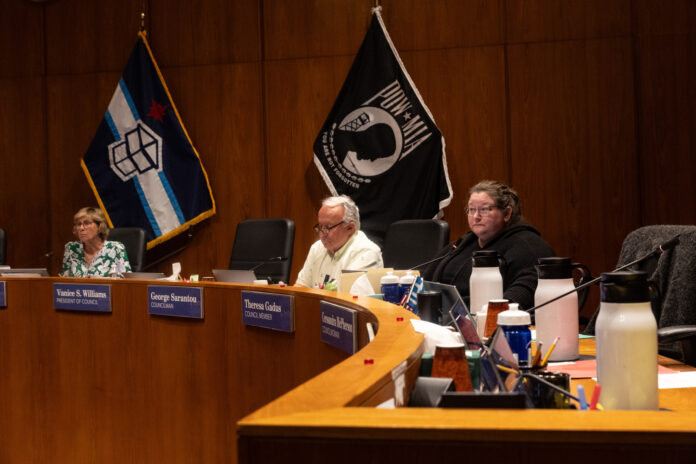
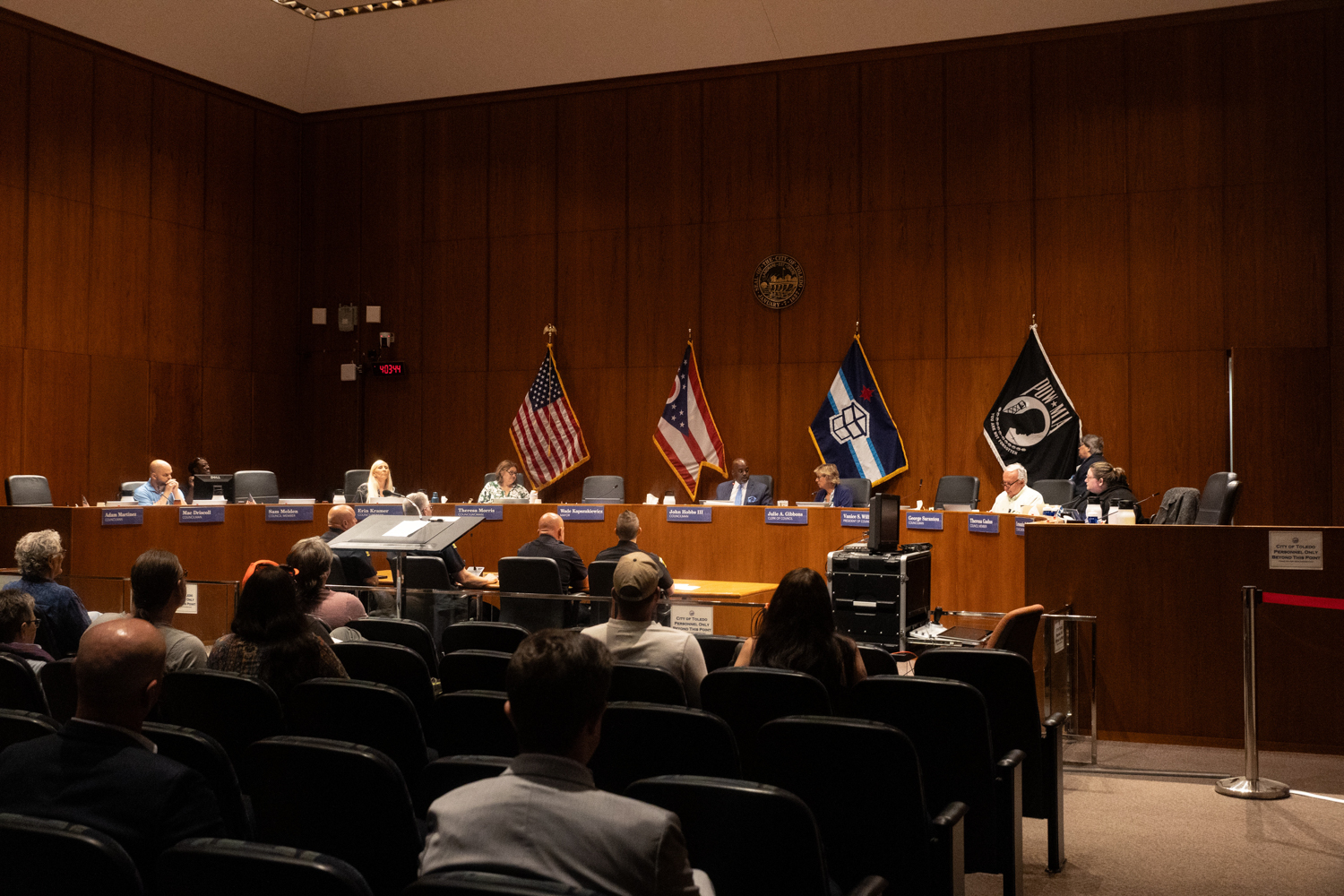
TOLEDO – Toledoans were given the opportunity for public comment on Flock Group, Inc.’s Automated License Plate Reader (ALPR) cameras, a surveillance network of interconnected ALPRs used to gather evidence, during a committee meeting on Monday, June 22.
The Toledo Police Department, prosecutors, and a representative from Flock and Toledo City Council were given over an hour to question the Flock system, composed of 114 cameras in Toledo.
On June 9, O-240-26 would have authorized $14,000 annually, for the next two years, for “portable” license plate reader cameras, in what is called a Real Time Crime Center (RTCC), licensed through Flock. That legislation failed to get the two thirds majority required to pass a sped up emergency legislation procedure, standard for most ordinances.
And two days after that ordinance failed, O-286-26 was drafted authorizing only one year of use of the portable license plate reader cameras instead of two years, but keeping the $14,000 annual price point. This legislation was the basis of discussion, hearing and review of the Flock system as a whole.
Funding for Flock
Back in November 2025, Toledo City Council (TCC) unanimously authorized $282,000 annually, for the next three years, in a contract with Flock.
Both ordinances (240/286) outlined that these portable ALPRs were already part of the existing ALPR arsenal at the disposal of TPD, who would like to continue using them.
However, it seems their expense was separate from the larger $282,000 yearly sum council already released.
City Council seemed opposed only to the $14,000 renewed expense for portable ALPRs.
Directly after O-240-26, TCC authorized $100,000 for a side-by-side comparison of Flock’s rapid response drone vs. a competitor’s drone in O-241-26.
The vote was 6-4 for and against, which is a suitable vote for a regular legislation, with multiple readings before it is adopted. But when legislation is put up for an “emergency” vote, which will take effect immediately, two thirds vote is required for passage.
Questions for TPD & Flock
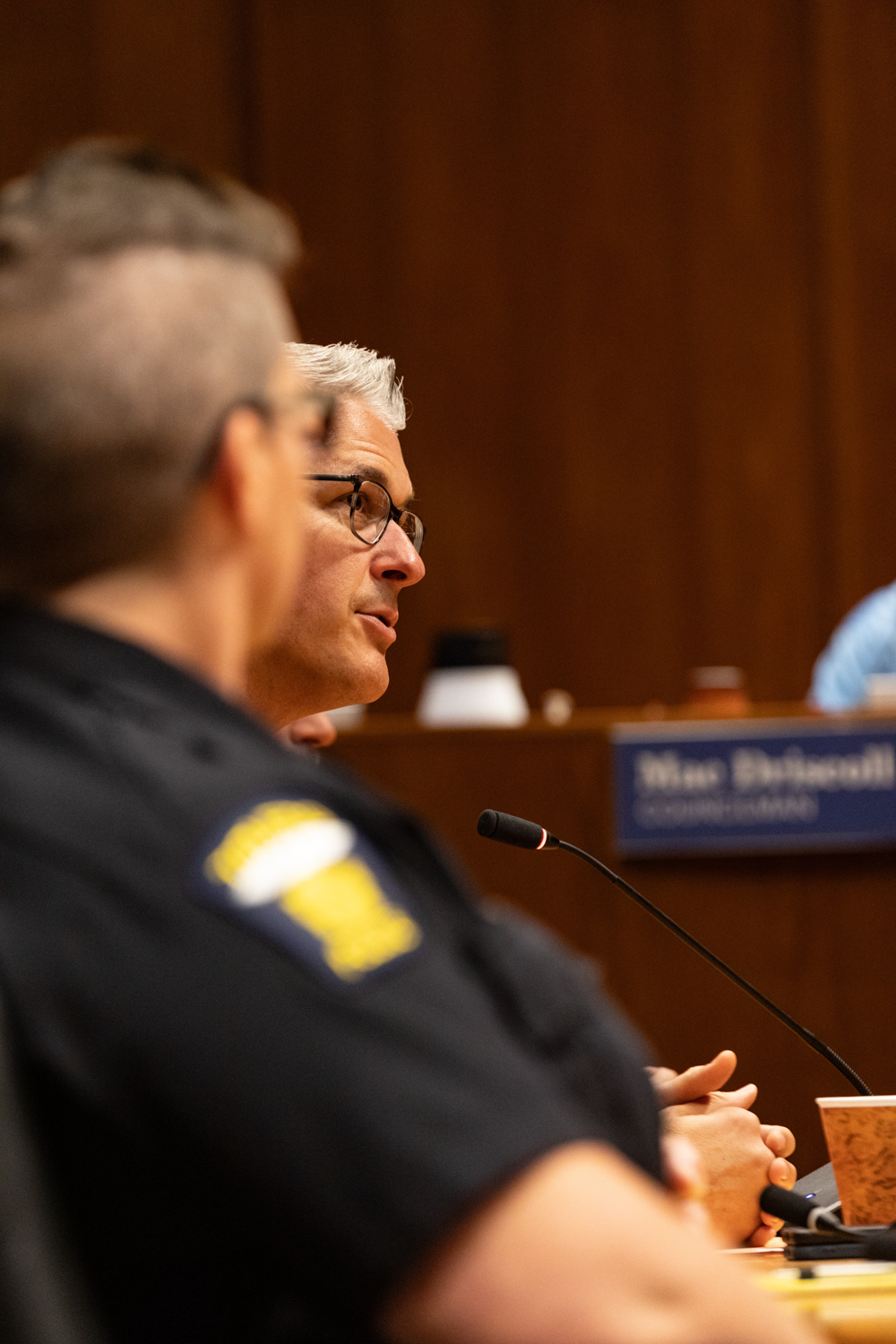
Council Member Theresa Gadus, District 3, asked the first public question to Assistant Police Chief Kevin Braun: Who has accessed Toledo’s local Flock surveillance data in the past? Braun had no response.
Braun had just noted that he wanted to clear up “misinformation” about the Flock system, and said the TPD never used it for immigration enforcement, that TPD does not share information with other agencies that work in immigration enforcement, and offered to share success stories on how Flock had helped TPD solve numerous high profile cases in Toledo.
No one present cast doubt on the power or effectiveness of the Flock system, whether public relations official, police officer or an opposing activist.
“Flock has been the most useful technology that we, as a department, have had, in my opinion,” said Braun, who has been a TPD officer for 25 years. Braun said the clearance rate (solve rate) for homicide investigations over the past three years has been between 81 percent and 87 percent, compared to the national average of 61.4 percent clearance. While Flock may not be solely responsible for the success in those investigations, Braun said Flock is leveraged to a great degree.
Gadus explained her questioning of the Flock system: “Up until this vote, I voted to support you with Flock, but it is the questions that we have seen raised in the community, as more and more reports have come out, that concern me about how other people are using our data, so I appreciate that you brought up immigration.”
Citing a University of Washington study, which showed access to Flock data was given to entities local law enforcement had not authorized, thousands of times, Gadus asked, “How often are we (Toledo) auditing who is looking at our information? How many times has Border Patrol, Homeland Security, maybe a police department that has 287(g) classification [immigration enforcement authorization on a state/local level], how often are they looking at our data?”

At this point, Braun pivoted to Trevor Chandler, senior director of public affairs for Flock Group, Inc.
Chandler, who wore custom Flock-branded socks and carried a Gucci briefcase, flew in for the committee meeting from San Francisco in an effort to persuade Council and the public to renew the $14,000 worth of ALPRs.
Chandler told Gadus that all sharing had to be chosen by the department, which negated the reality of mutual sharing.
When TFP reached out to get further clarification, Chandler said, “These sharing agreements are solely with the local agency that agrees to share; they do not provide access to other communities that the local agency chooses to share with.”
As TFP wrote in an exposé on FLOCK cameras earlier this year, Denver, Colo. rejected the Flock system because a smaller suburb, Loveland, unwittingly gave access to the federal government for immigration enforcement use of Flock. This access violated state law, but through the access given to the federal government through Loveland PD, Denver’s whole Flock system was accessed by just one department compromising the entire system.
Flock’s new safeguards, Chandler said, answered this data vulnerability, including whether federal agencies could access local data.
Three steps would have to happen for a federal agency to access TPD’s data, according to Chandler:
- 1. TPD would have to opt-in to receiving sharing requests with any federal agency.
- 2. Then the federal agency must submit a request to have a mutual sharing relationship with the department.
- 3. From there, Chandler said TPD would have to approve the request.
He said these safeguards were put in place “to make sure that there are no inadvertent sharing relationships that would go against a community’s laws or values.”
Once the request to share data is approved, not all searches need to be approved by the department/agency.
Gadus asked about the change in the terms of service, which appeared to open up Flock to selling data.
Chandler said the terms changed the language to simplify the agreement, but that Flock did not change the spirit of the agreement and still prohibited the sale of Flock user data.
“Our terms and conditions still fully prohibit the selling of any data,” he said. “…the principle and legal sending that you own your data and Flock cannot and will not sell that data remains legally binding.”
Perpetual licensing of data was another concern for Gadus, who noted that this was a change from a previous agreement. Chandler said the perpetual licensing data was stripped of metadata, including what department the images came from, time, and location, and was purely used for machine learning to improve the Flock system.
Bagging of cameras was another concern presented by Gadus. These are situations in which cities put bags over Flock cameras after their contracts are terminated, because it is thought that they are still working without a contract with the city.
Chandler assured Gadus that, “sometimes cities choose to put a bag over them to alleviate additional community concerns while the cameras remain up in the process of them being taken down,” he said.
Gadus then referred to reproductive rights safety, noting a case in Texas, where a woman was searched for after it was suspected she’d had an abortion. Chandler chose to side step the question, instead referring to the rollout of queries that would disable certain communities’ Flock data from being searched, including immigration searches and reproductive rights searches.
However, in an interview with Forbes, when Flock CEO Garrett Langley was pushed for an answer on this issue about the search query in the Flock system, and that people have been prosecuted in other cases for “unlawful abortions,” Langley said, “Flock doesn’t write the laws.”
Gadus also asked about protesters being targeted in searches for exercising their first amendment rights, as documented by the Electronic Frontier Foundation (EFF). Chandler said searching for “protester” was prohibited with the new Flock safeguards, and explained that large gatherings present more opportunities for crime to happen.
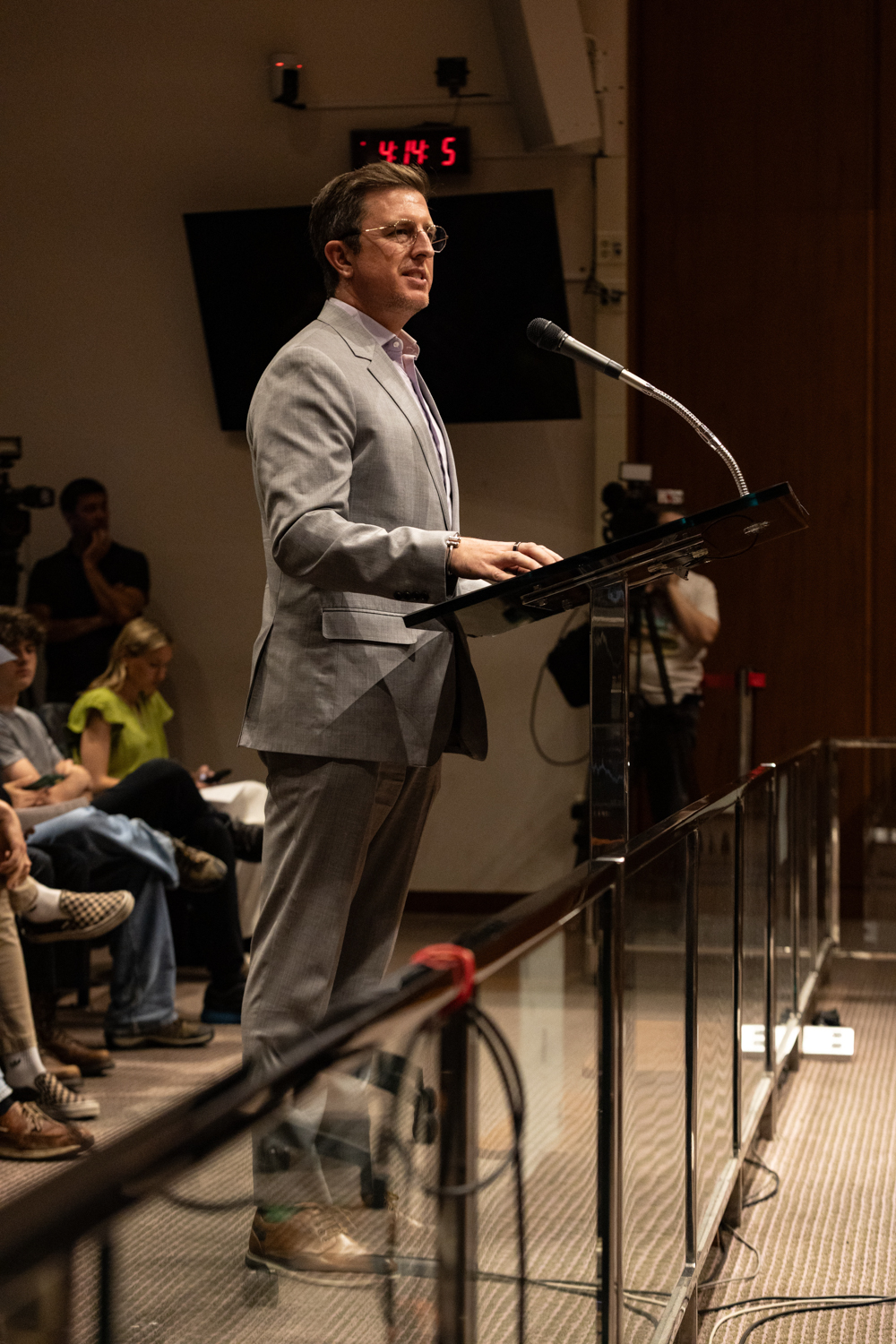
“The question that I think you’re asking is more related to community trust in law enforcement,” he said. “These aren’t facial recognition. You can’t search for people in the license plate reader system, you can’t search for politically protected speech in the license plate reader system…That’s one of the ways that we provide additional guardrails to make sure that, to the extent we can, from an operating system angle, provide those protections internally.”
Vague searches, Gadus answered, can get around specific searches.
Chandler said, since 2025, searches must fall into the National Incident-Based Reporting System (NIBRS), creating more transparency. The NIBRS was put out by the Federal Bureau of Investigation (FBI) and contains 52 specific classifications for crimes.
Since 2025, “you have to choose one of these pre-designated FBI NIBRS codes, and if it turns out that one of your officers is purposely mislabeling a search related to, say they put in a search for a missing person, and it turns out to not be the case…These transparency and accountability features allow you and your agency to hold that individual officer accountable so that even if they do leave the search term empty, they have stated that this is the reason they are searching it, and they can be held accountable to that reason,” he said.
In fall of last year, Brandon Upchurch was given $35,000 related to an inaccuracy by the Flock system. Gadus brought up this incident, and asked how effective the Flock camera system is.
“The success rate is above 95 percent, so we’re very proud of our success rate,” Chandler said, but also recommended officers visually confirm images and visual evidence as part of best practices. “You should not pull over someone just on a plate…Flock is an objective piece of intelligence that your officers can then use to make a decision on how to use it.”
Gadus asked about the crashworthiness of the poles on which Flock ALPR cameras are mounted, as they are near roadways.
CBS and NBC news teams in Maine and Colorado, respectively started asking this question earlier this year.
“We go through the full permitting process for installing all of our cameras, and we abide by all the rules and regulations for that permitting process to put these up,” Chandler said.
Gadus closed by asking whether Toledo’s cameras could be searched nationally through the national search feature.
One of the panelists, Lt. Jeffrey Thieman of the Forensic and Cybercrime section of the Intelligence and Forensics Bureau, said, “So, yes, we do have national search ‘on,’ but we do filter out all ‘immigration’ and ‘reproductive’ searches, so those filters are turned ‘on.’ We turned those ‘on’ once we saw that Flock had updated the system.”
The estimated time for when the Flock system was updated with the filters against reproductive and immigration searches was on June 1, months after Council passed O-095-26, prohibiting the use of city property to help immigration enforcement.
Other Council members
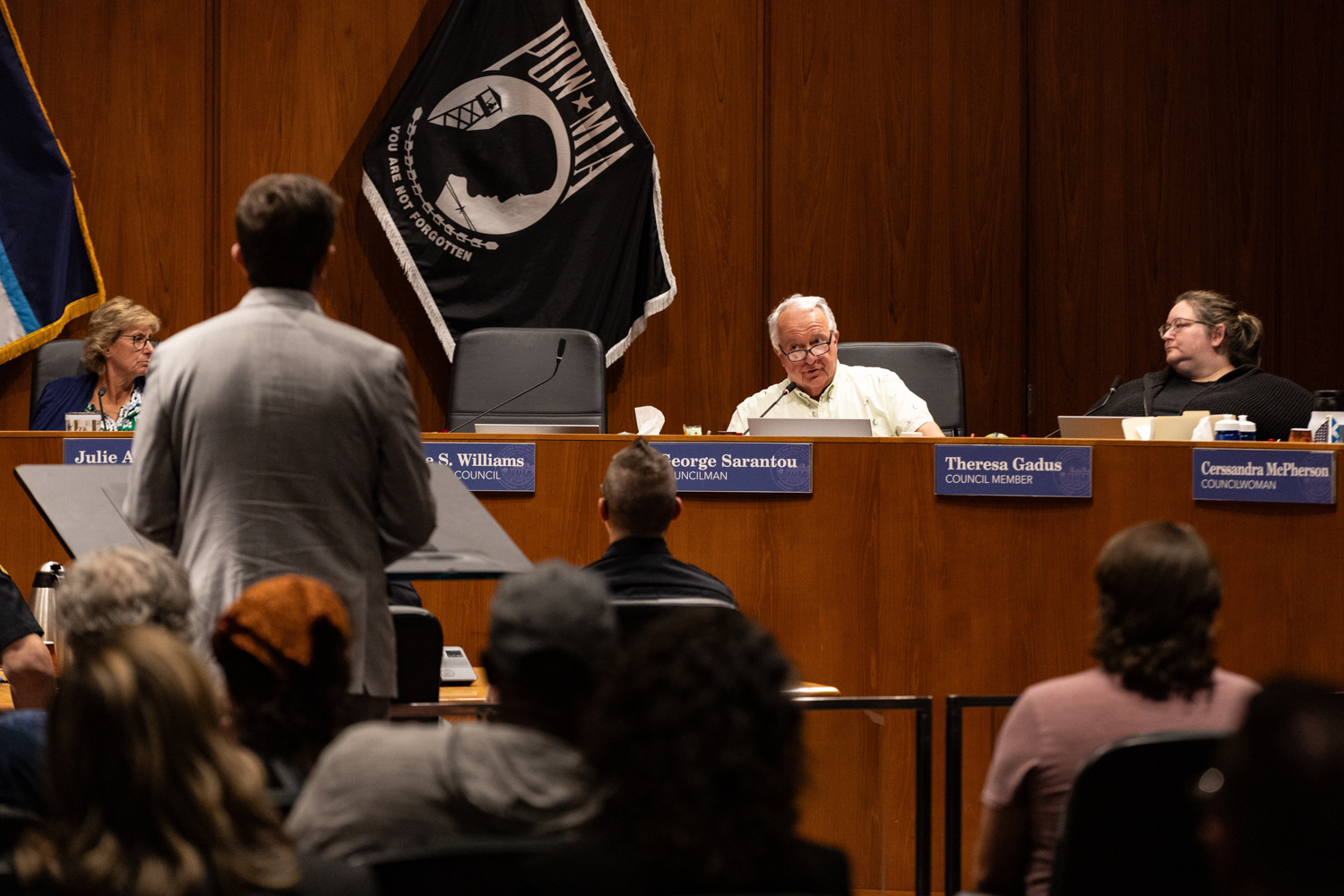
Council Members At-Large Mac Driscoll and George Sarantou followed with questions concerning TPD’s data. Driscoll asked how long the data was stored for, which was 30 days. Sarantou asked how data sharing works through Flock.
Braun said other police departments would have to request access to TPD’s data, and then TPD would have to grant access.
After access is granted between agencies/departments, searches done by outside agencies/departments are not individually reviewed unless audited.
Sarantou highlighted instances where the Flock system was used to help individuals with dementia, asking the officers if this was a common/realistic use of the system, which they corroborated.
Councilman Sarantou wanted to also confirm that the case involving 13-year-old Kei’Mani Latigue’s death utilized the Flock system, and Braun confirmed that it was.
Erin Kramer, council member At-Large, asked about how long the audit logs were stored, and Chandler said both agency and network audit logs were stored permanently, unless instructed otherwise by state or local governments.
Then Kramer asked about safeguards to prevent misuse of the system, which Chandler said, ultimately, “…it’s about trust between law enforcement, city councils, and the people that they serve.”
Calling Chandler, “Mr. Flock,” Theresa Morris, District 6, asked about sharing preferences between departments and agencies.
“Every agency chooses the level to which they share,” Chandler said, and that each department and agency chooses whom they share their information with.
Morris wanted clarification on the audits of search logs, and Braun said there is a 12-month look-back process of pulling random searches.
“When you have the volume of searches that we have, that’s kind of the only way to do it,” Braun said, but he mentioned some new pattern-recognizing features in the Flock system that might flag searches for review by the agency.
The audit assistance tool flags items for the agency’s administrator to look at, according to Chandler.
“It doesn’t mean there’s been misuse, it doesn’t mean anything’s been done wrong, but it does say there’s been an atypical behavior, like the same license plate being searched a bunch of times, or a search being done outside of typical work hours.”
Chandler said, “There could be incredibly valid reasons for that,” like if there was a crime committed that day, but ultimately it puts the review power in the administrator’s hands.
Sarantou then asked how many searches were done across the whole Flock system within a year.
Chandler answered that it was billions of searches, and then Sarantou clarified that the known abuses of the Flock system numbered about two dozen per billions of searches a year.
Recalling an instance of a Rossford police officer abusing the earlier LEADS system, the license plate reader system before Flock, Sarantou talked about the consequences for that officer, who was fired and prosecuted.
“Internally we’ve tried to make it as crystal clear as possible that these tools are for law enforcement purposes only, and they’re only to be shared with other law enforcement agencies that have a legitimate use for that as well,” Braun said.
Prosecutors
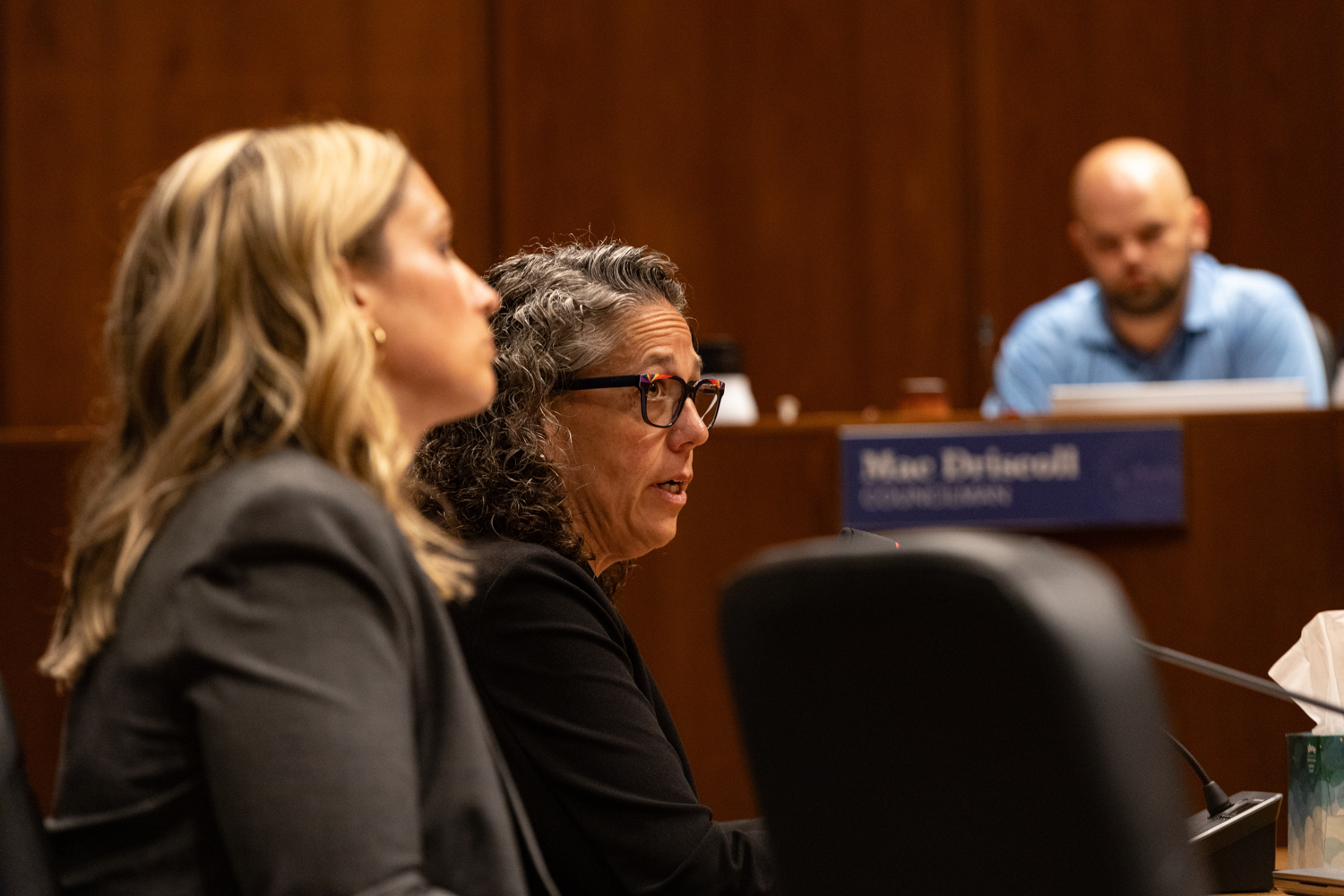
Chief Prosecutor for the City of Toledo, Rebecca Facey and Maggie Koch, the Deputy Chief of the Criminal Division of the Lucas County Prosecutor’s Office also appeared before Council.
“I was at the Association of Prosecuting Attorneys National AI and Data Summit two weeks ago in Washington, DC,” Facey said. “And the purpose of those conversations was, how do we balance the technology that none of us have created, but ultimately are responsible for in the criminal justice system.
“This is a tool that we use regularly in Toledo Municipal Court. I would say at this point, the majority of our hit-and-run traffic accidents are solved through Flock camera technology,” she said. “So, while this is highly personal information, while I recognize the privacy concerns, and myself don’t want to live in a surveillance state, I recognize that the folks and professionals who are in the positions to handle this material are held to a high standard that we have been all along.”
Koch more bluntly advocated on behalf of Flock.
“I’ve represented hundreds, if not thousands, of victims – men, women, and children alike in this county,” Koch said. “I hope that through my work I have made this community better each and every day, and that’s something that I now train the new attorneys in my office to do. But we cannot do that without evidence. There has to be evidence, and Flock cameras have assisted us since they have [been] put in place in the convictions of all levels of crime.”
Among her examples, Koch spoke about her own personal instance of a hit-and-run where the case was solved using Flock cameras.
Public response
For anyone familiar with local Toledo government, Richard Arnold attends just about every meeting possible, and didn’t have a whole lot to say either way on Flock, admitting that he thought the cameras were a good idea.
What Arnold cautioned the council about was to keep the fight civil, so there would not be a repeat of the fight over Flock cameras that happened in Lucas County’s government.
The Chair of the Public Safety and Criminal Justice Reform Committee, John Hobbs III, District 1, appreciated the sentiment, and said he would try to keep all things civil.

“I don’t think we should be in favor of Flock,” said the next speaker, Gwen Goldsberry, who recalled an incident from a number of weeks ago where a police officer told teenagers to “Enjoy poverty.”
Goldsberry’s main point was that the police could not be trusted, and the government should be investing in preventative measures to decrease crime instead of reactive measures.
Goldsberry noted that they are transgender, and admitted they have been worried about being tracked.
Reading a very long prepared statement Susan Kuehn of the Northwest Ohio Peace Coalition said:
“This technology is part of and feeds into the mass surveillance dragnet of U.S. citizens, created by Trump and implemented across this country, violating privacy rights, free speech rights under the First Amendment, and our Fourth Amendment protections that prohibit unreasonable searches and seizures without warrants, without probable cause.”
Kuehn talked about Flock’s use in reproductive health prosecution, immigration enforcements, Flock surveillance as a violation of constitutional rights and was cut off at the three-minute mark by Hobbs, as she was citing Ohio instances of Flock abuses (rather than Toledo-specific examples) and canceled contracts.
Fred Newstead spoke about how to reign in the power of the Flock system. “How do you stop the big boys from getting the information? And they’re the ones we’re most afraid of,” he said, referring to the federal government. “How do you stop them from coming after our trans friend over here,” he said motioning to Goldsberry. “At some point, all safeguards can be gone.”
Hobbs took the question literally, and asked Chandler what would happen if Flock were to be contacted by the federal government to get Toledo’s data. Chandler said Flock would default back to the city to make a ruling on the federal government’s request for Flock data.
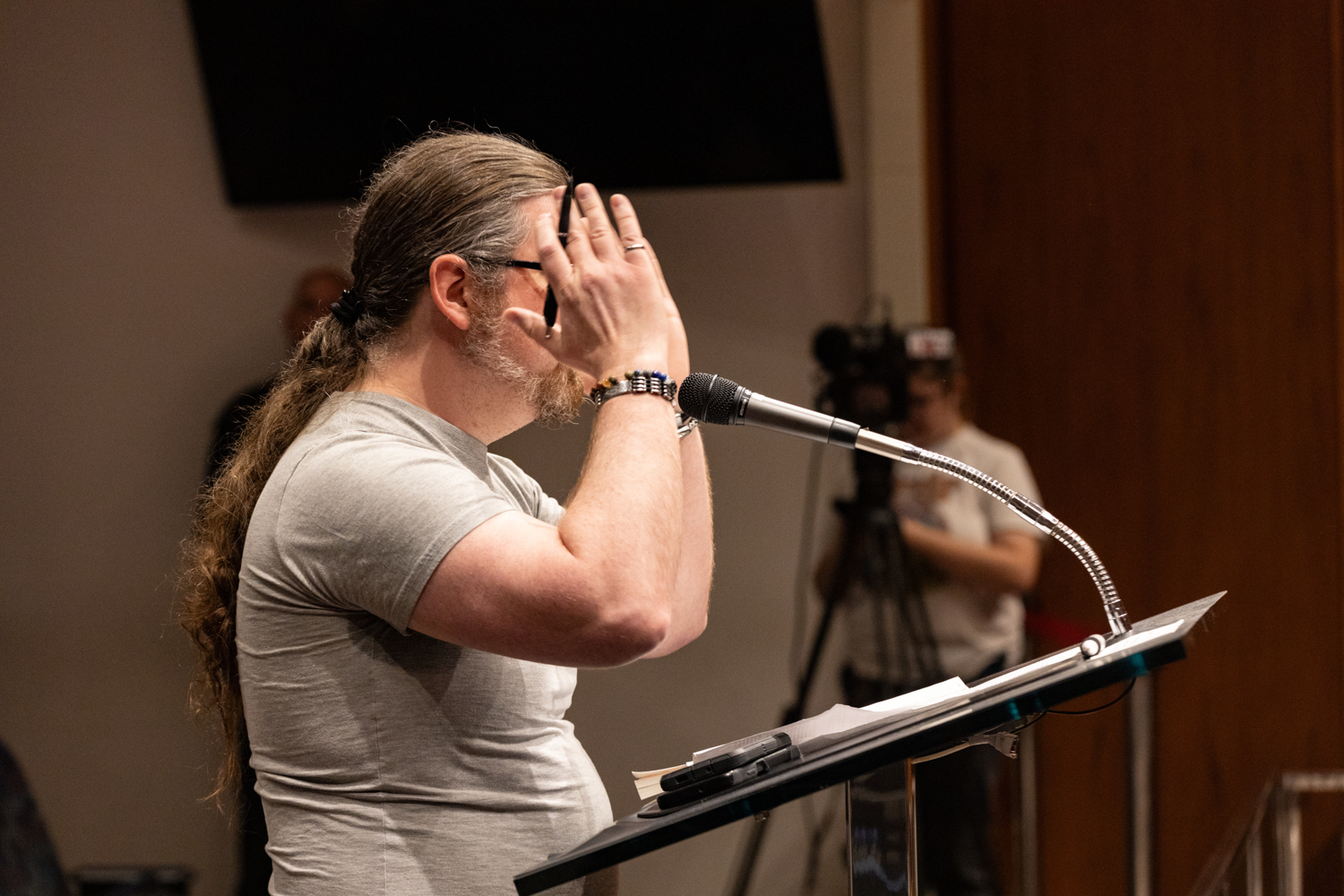
“My name is Sean Nestor,” the next speaker began. “I am asking everybody on Toledo City Council to vote no on the renewal of this contract.”
*Disclosure: Nestor is the Board Chair for the Toledo Free Press, though he was not speaking in that capacity, but rather as a concerned citizen.
“I’ve heard and I’ve listened to everything that’s been presented today, but I want to remind you that, of course, if I’m a law enforcement officer, if I’m a prosecutor, and I’m only worried about local public safety, I’m going to say, give me all the tools I can all the time. I’m never going to exercise restraint,” he said, asking for the representatives to exercise restraint in favor of public safety.
“Sometimes tools and concentration of power in government can result in disastrous effects, and by the time you’ve allowed these powers to accumulate, they’re almost impossible to deescalate,” he said.
“You swore to uphold the Constitution,” Nestor told the representatives, and referenced the fourth amendment. “Is it reasonable that all of us…there is a database somewhere of where we’ve gone, even though we are not suspects in a crime.”
“Historically, up until technology changed things, that was something that you could not do.”
“I believe it’s helping people. I don’t doubt that. That’s not in dispute. The problem is, what are the long-term effects?” he said, and reminded the public contingent that Renée Good and Alex Pretti were killed by the government with no consequences.
“Is there any accountability for the law enforcement officers to track them down, label them domestic terrorists, and [shoot] them in the head?” he said. “There’s not, so I’m not comforted by local assurances or software companies [who] tell me, ‘No, no, we have privacy in place.’ I work in cybersecurity. I understand that company [Flock] is never going to admit to their flaws. They have them, and they will be abused.”
Nestor ended his comment by asking those in attendance to respect the fourth amendment.
Tom Pruss, Libertarian candidate for Ohio Secretary of State, said, “It’s a discussion on whether every resident of Toledo should be tracked, cataloged, and monitored, simply because technology now makes it able to do so.”
“Supporters of these systems will tell you that… ‘If you’ve done nothing wrong, we have nothing to fear,’” he said. “The argument is fundamentally backwards. The Constitution was not written to protect guilty people; it was written to protect innocent people from government power.”
“The question should be why government needs to collect and store information on movements of innocent people,” Pruss said, and warned of grave government overreach in the future. “Instead of the government proving guilty, the citizen finds himself trying to prove innocence. That is the exact opposite of the American legal tradition.”
Christina Rodriguez shared her concern over the government’s massive amount of data that could be used to target people.
Veterans for Peace activist Mike Ferner reiterated similar points about how protections conceded to the government are lost, and made a point that if anyone in the room was Pro-Palestine, that would be a crime in the United Kingdom (UK). Anyone who showed support for Palestine could be tracked and prosecuted if this were the UK.
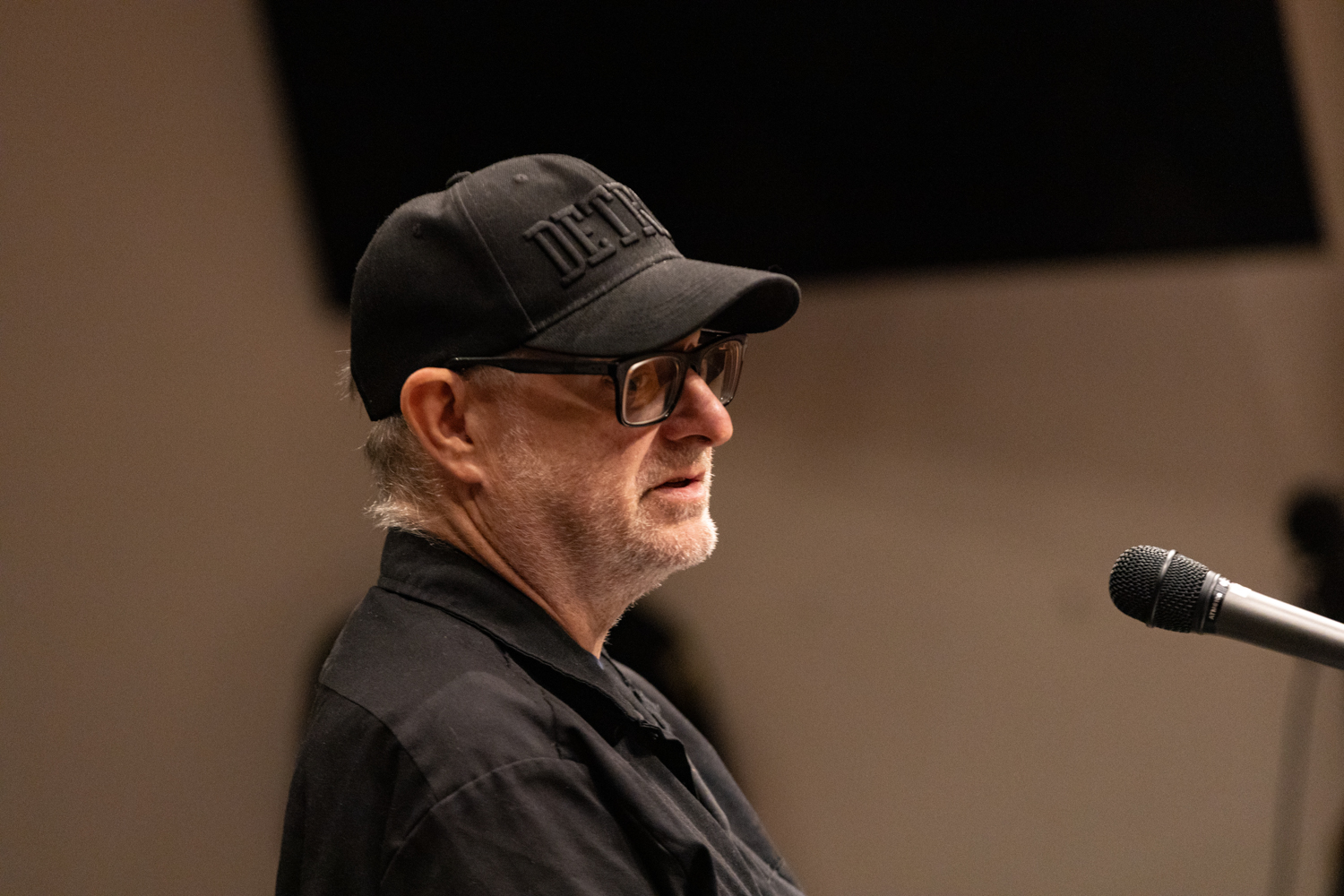
Michael Haynes declared that we should not refuse this technology. “We’ll basically be blasted into the Stone Age, police-wise,” he said. “As far as being surveilled…I guess we should all give up our phones, Google, Facebook, Insta, all that tracks us every single day.
“Game players, how many people that just hit agree on the 30 pages of user agreement?” he said. “We’re all being tracked, it all gets sold; that is how every platform runs.”
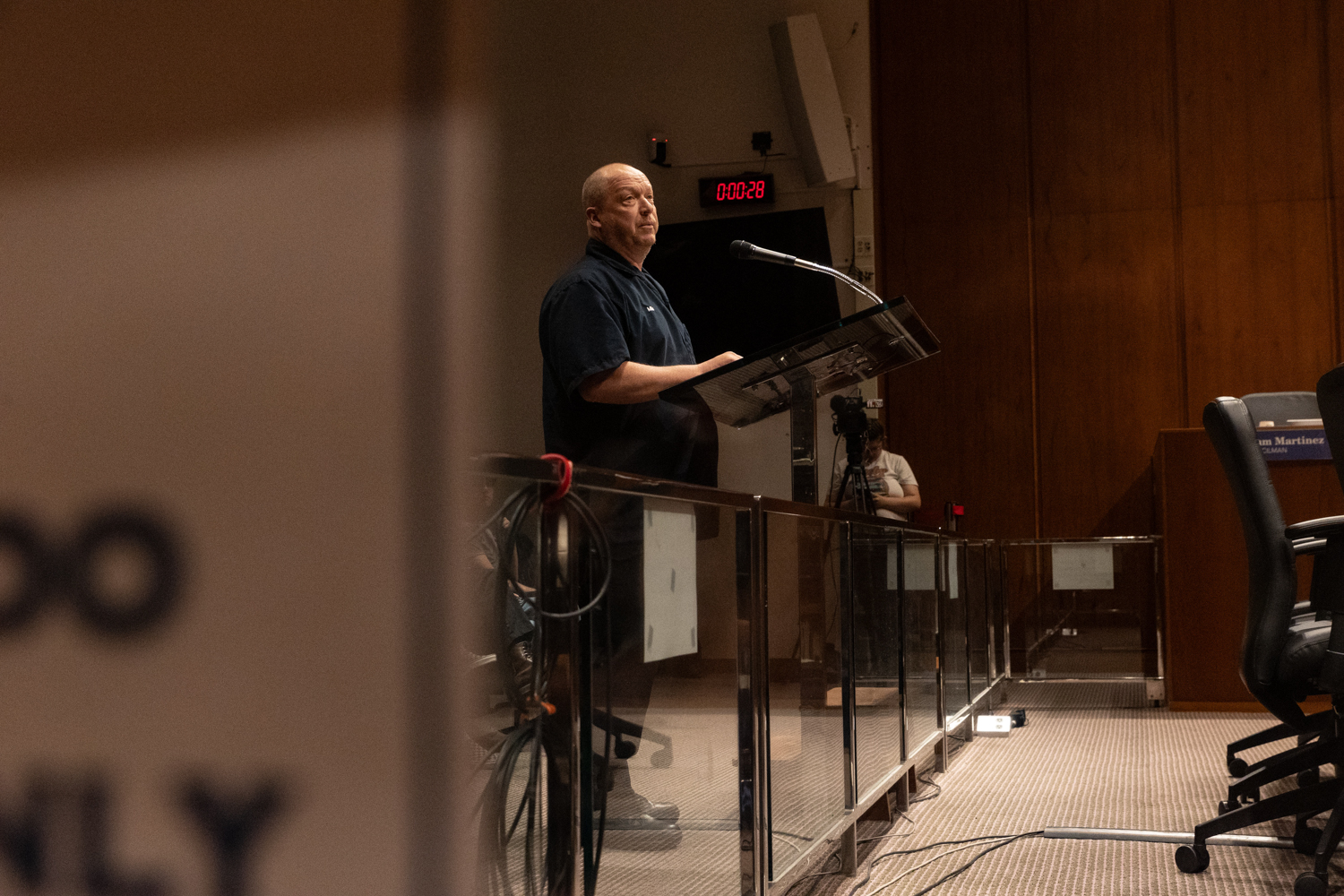
Haynes affirmed that the police should be held accountable with the logs and records, but also made the point that these ALPR cameras are in public spaces “where one has no reasonable expectation of privacy in the public on the same roads, intersections, and public areas that we all travel every day.”
“Flock cameras have become an essential tool in responding to some of the most urgent and heartbreaking situations we face,” he said. “Whether it’s a robbery, shooting, kidnapping, or a statewide or Flock cameras give law enforcement the ability to follow a vehicle’s path, not just locally, but across country, county, and state lines, and even nationwide. This is how modern policing works. It’s fast, it’s accurate, and it’s data driven.”
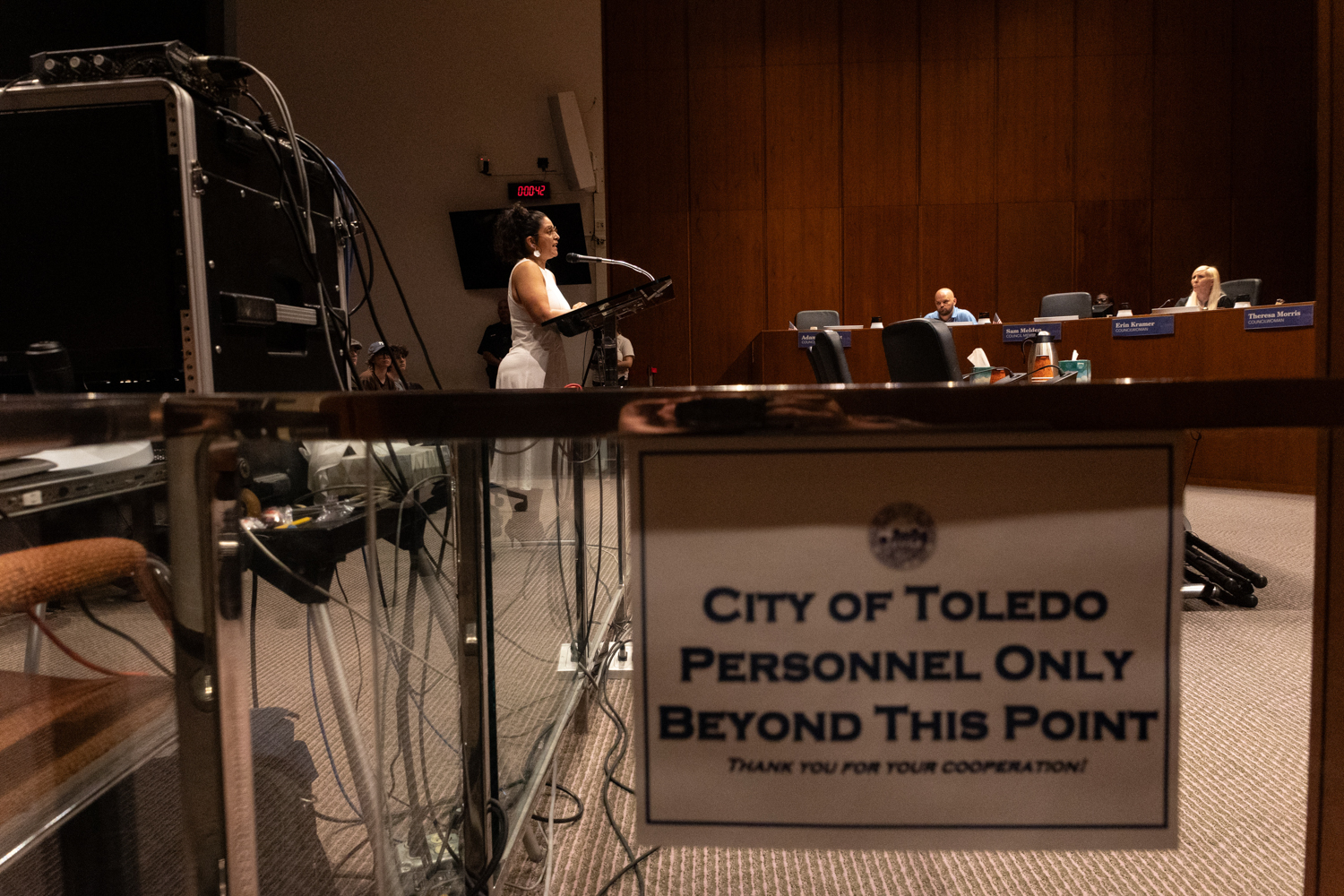
Belinda Covarrubias, walked those in the hearing through her day with her family and said that, before the day is done, her location and image is photographed more than 20 times.
“I’m not a criminal; my son is 11. He is not a suspect. We are a Toledo family, and we’re living a Toledo day,” she said. “Historically, surveillance has never fallen evenly across this country. It has always pressed hardest on Black and brown communities, immigrant families, and working people who have the least power and the most to lose.
“Real public safety. The type of safety that I believe in, must be equitable. It must protect everybody, or it is not safety. It is control that is directed at only some of us,” Covarrubias said, and reminded Toledo Council of their efforts to protect immigrants back in March with ordinances. “In Dayton, two hours away from here, with the same cameras, an audit found its data search for immigration more than 7,000 times. Dayton already had a written policy forbidding exactly what we’re hearing today. It stopped nothing. Dayton suspended that program and bagged all of those cameras. We do not want Toledo to be the next Dayton.”
Immigration lawyer, Rebecca Bundy spoke about how, under the Trump administration, protections for people are not being followed.
“The behavior is ongoing; to manage such surveillance in these times where it’s incapable of truly limiting its use is playing with fire,” she said.