Whether stopping by a backyard feeder, the Lake Erie shoreline or the oak savannahs and wooded trails in area Metroparks, birds – 381 species, to be exact – flock to the Toledo area. And so do birders, who want to know where to look, just what they’re seeing, and how unusual it is for that particular bird to be there.
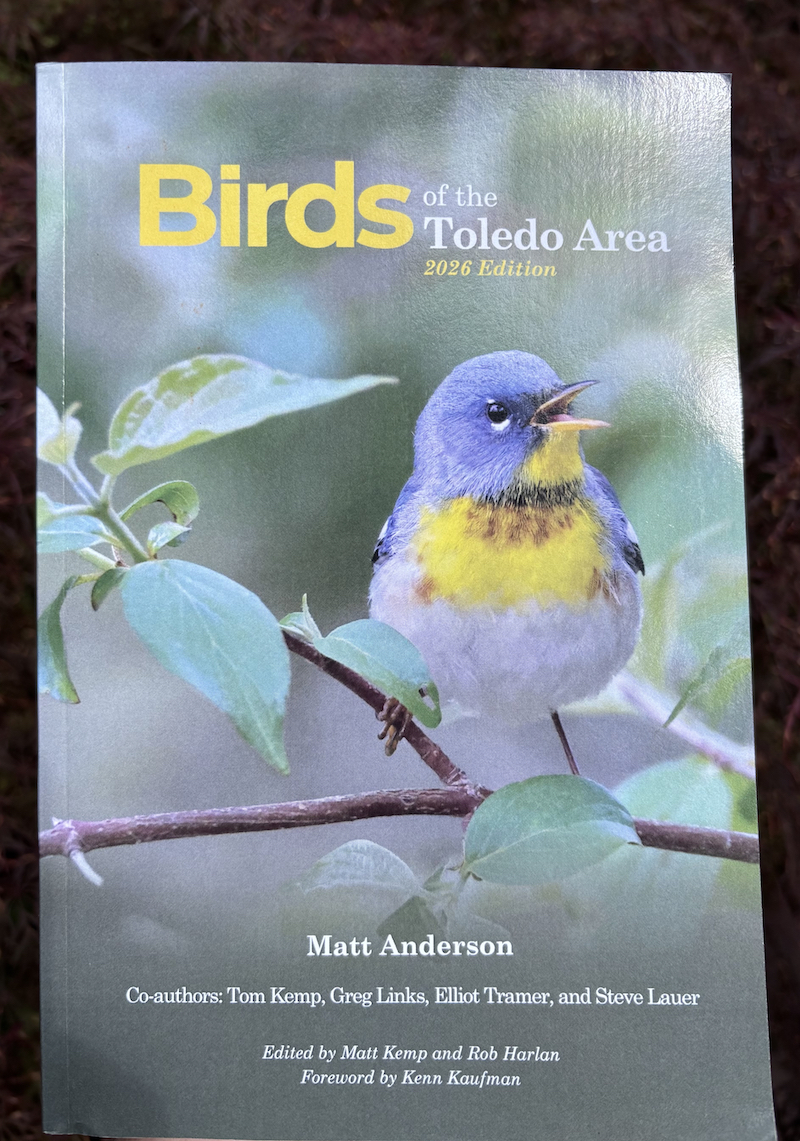
Lifelong birder Matt Anderson is happy to oblige, taking in data from multiple resources and co-authors Tom Kemp, Greg Links, Elliot Tramer and Steve Lauer, to publish the 326-page paperback, Birds of the Toledo Area | 2026 Edition.
“This book is not a field guide, and it’s not just for expert birders,” said Anderson. “It’s a summary of the status of the birds in the Toledo area that are known to have occurred over time, and of the area’s best birding spots. Toledo is one of the best birding areas in the United States.”
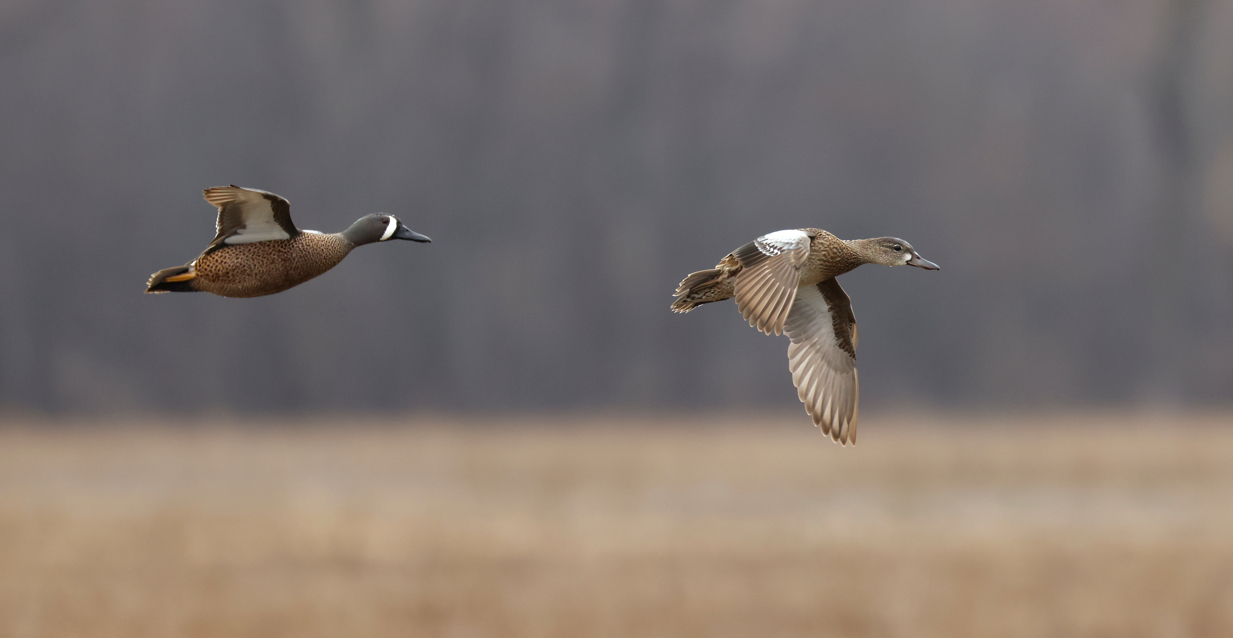
(Courtesy photo)
Naturalist and writer Lou Campbell first documented the area’s bird population in Birds of Lucas County in 1940, followed by Birds of the Toledo Area in 1968. In 1995 Anderson took over Campbell’s role in compiling Toledo Area Annual Bird Reports, which enabled him along with Kemp, Tramer, Lauer and Eric Durbin to publish the 2002 version of Birds of the Toledo Area. This new update, thoroughly rewritten and updated, stands out because of the 250 color photographs from many of the region’s best photographers, Anderson said.
After 24 years, an update was needed to share with readers information on changes in abundance, new birding spots, and the 27 new species that have been recorded since 2002. In that time, interest in birding has exploded, with the Biggest Week in American Birding attracting thousands of visitors to the area not just in May, but throughout the year, Anderson said.

“This book has value even for the beginning birder, who might spot a bird and want to check to see if it’s common or rare for it to be there,” said Tramer, a retired professor of ecology who visits Oak Openings daily to look for birds.
While information on birding locations and a species’ local abundance can be found from online resources such as eBird, the data is diffuse and scattered, Anderson and his co-authors agree. Birds of the Toledo Area brings it all together, providing the status, timing, and frequent whereabouts of these species, along with dates of unusual occurrences, record early and late arrival dates, and maximum one-day counts.
When Kenn Kaufmann, one of the world’s best-known bird experts and field editor for Audubon Magazine, moved to the Toledo area in 2005, he didn’t expect to find anything unusual about the birdlife.
“Every time I went out…I saw things that surprised me,” he writes in the book’s forward. “Every time, I came home with questions. Fortunately, I soon found the answers to all of my questions in a book that had been published in 2002.”
But even a great reference needs an update, Kaufman said, describing Birds of the Toledo Area | 2026 Edition as a gold mine. The book compiles nearly 100 years of birding records from a variety of sources: bird censuses and counts, books and, more recently, eBird, a database of more than 100 million bird sightings contributed by birders from around the world and managed by the Cornell Lab of Ornithology. While the app does come with some shortcomings – primarily inaccurate reports that are not properly excluded – it’s an amazing database of sightings for the Toledo area and practically everywhere across the globe, Anderson said.
“It’s an incredible resource for finding early dates and late dates and record numbers,” he said, adding that eBird and Merlin – an app that allows bird identification by voice – have changed birding. “It’s probably gotten more people interested, including from a competitive angle.”
Sitting around a table overlooking the Window on Wildlife at Oak Openings, Anderson, Kemp, Lauer and Tramer shared a few laughs about how much birding has changed since they began in the 1960s and 1970s.
“It used to be word of mouth. You saw something, and you would call a couple of buddies, and they would come over and see it,” said Lauer, who used to have a federal banding permit for birds of prey and has participated in hawk migration studies.
“Now you get instantaneous information on what birds are where, and people love that,” Kemp said.
Everyone carries a phone, and many birders simply wait for reports, primarily from eBird, then go looking for what was just spotted.
“Birders post to their eBird checklist, sometimes several times a day. People like to see their name in lights with rarity attached,” Anderson added. Some even change plans in an instant, hopping on a plane or driving long distances, to find a rare bird.
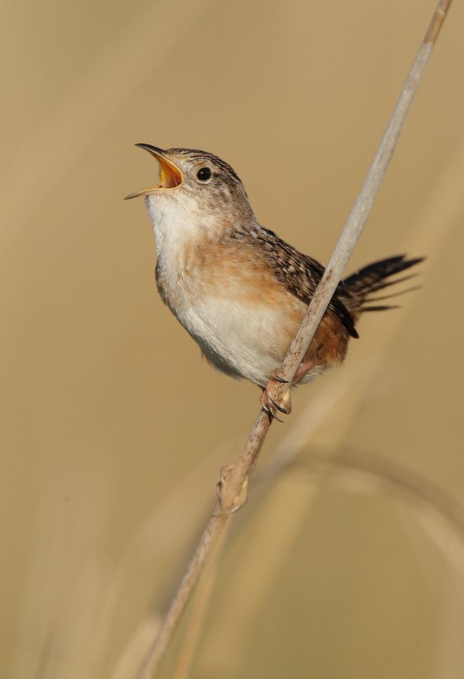
(Courtesy photo)
During the prime migration season along the lakeshore, the parks can get very crowded.
“And if someone sees a rare bird, there’s a stampede,” Kemp said.
Birders use eBird and other tools to keep lists by county, state, country and even, Lauer jokes, “birds seen copulating.”
While the longtime birders have a laugh about the competitiveness among birders, they understand the enthusiasm, and are encouraged by the younger generations who are opening their eyes to the rich abundance of birds that visit, breed or live in the area.
“When I was a kid and into birding, I was a little embarrassed,” said Tramer, who hid his binoculars in his jacket when he entered school each day. “It’s been a really nice change.”
Anderson credits Metroparks Toledo, The Nature Conservancy, the Ohio Department of Natural Resources and others for having the foresight to save the land that provides some of the best birding spots in the nation. The book shares details on these spots. The open water, marshes and woodlots of western Lake Erie welcome migrant and overwintering birds by the thousands. The Oak Openings area, with its sandy soil and high water table, supports an avifauna featuring a unique mix of northern, southern, and western species that otherwise do not exist or are otherwise rare within a considerable distance of northwest Ohio. Another major avian attraction is the Maumee River corridor, especially its shallow rapids.
Some of the new species spotted since the 2002 addition include the Swallow-tailed Kite, Prairie Falcon, Eurasian Collared-Dove, Arctic Tern, Black-throated Gray Warbler, White-throated Swift, White Ibis, Black-headed Grosbeak, California Gull, Fork-tailed Flycatcher, Smith’s Longspur and Eurasian Tree Sparrow. The book also documents birds that have successfully nested in the area for the first time since 2002, including Pileated Woodpecker, Sandhill Crane, Yellow-throated Warbler, Osprey and Black-necked Stilt. The book also documents the first occurrences of birds staying over the winter.
In addition to information contained in Anderson’s annual bird reports from more than 20 years, compiling all of the information for the book involved an intense effort that took over two years, with the co-authors contributing their own field research. Kemp, who taught high school biology for 30 years, has compiled the Grand Rapids-Waterville Christmas Bird Count since 1978. Anderson, who works at The Andersons, Inc., assisted in the 1990s Oak Openings censuses and then conducted additional annual breeding bird censuses there between 2013 and 2025. He has also led the Toledo Christmas Bird Count efforts for more than three decades. These censuses are referenced heavily in the book and tell a lot about nesting and wintering bird populations and trends.
Tramer has conducted surveys for the Metroparks and the U.S. Fish and Wildlife Service. He is also the author of Richness and Rarity: The Natural History of Lucas County. Links, who lives in Ottawa Lake, Mich., has been involved in bird banding since 1980. Lauer is co-leader, along with Karen Menard, of the Metroparks’ raptor breeding research in the Oak Openings Region.
Anderson and the co-authors are or have been involved in several organizations that support the study and conservation of birds and their habitats, including the Ohio Ornithological Society, the Toledo Naturalists’ Association, the Ohio Bird Records Committee, and Black Swamp Bird Observatory. The Bird Observatory launched the Ohio Young Birders Club, which encourages youth ages 12-18 to have access to opportunities to engage with nature and develop birding skills. All profits from the sales of the 2026 Birds of the Toledo Area will go to the OYBC. The book was edited by Matt Kemp and Rob Harlan. Abby Anderson, Matt’s daughter, played a large role with technical assistance and in designing the book’s layout.
Books are available through Amazon, Gathering Volumes, Wild Birds Unlimited, the Ottawa National Wildlife Refuge visitors center, and area public libraries. For further information, visit birdsoftoledo.com.