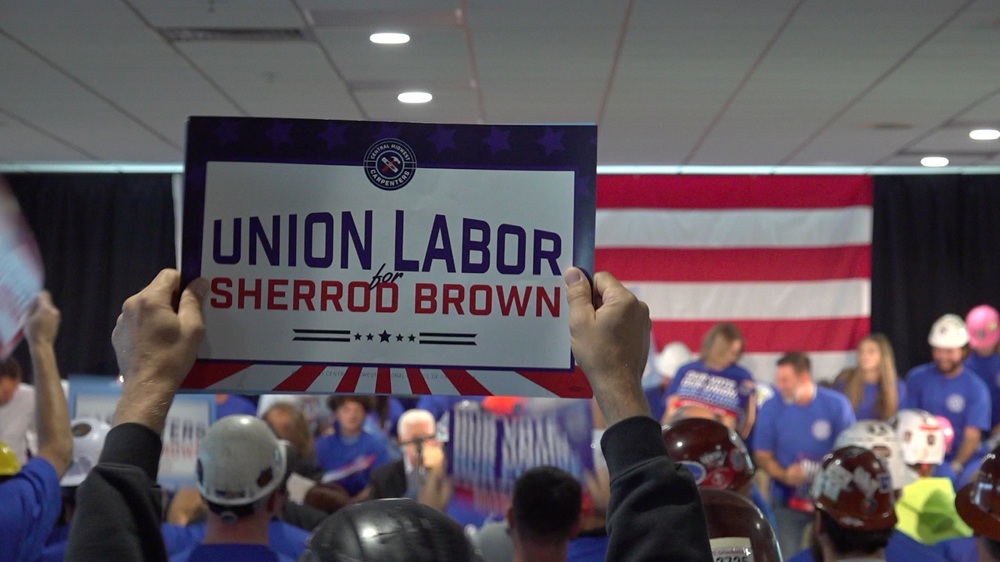

PERRYSBURG — Since his first successful U.S. Senate bid in 2006, organized labor has been an essential part of Democrat Sherrod Brown‘s coalition. 20 years later, and following his 2024 loss to Republican Bernie Moreno, Brown is not overlooking the importance of union support in his campaign for a comeback.
During a Get Out the Vote rally on Saturday, Oct. 17, at the Carpenters Local Union No. 351 in Perrysburg, Brown, along with area lawmakers and union members, spoke extensively about the importance of this election.
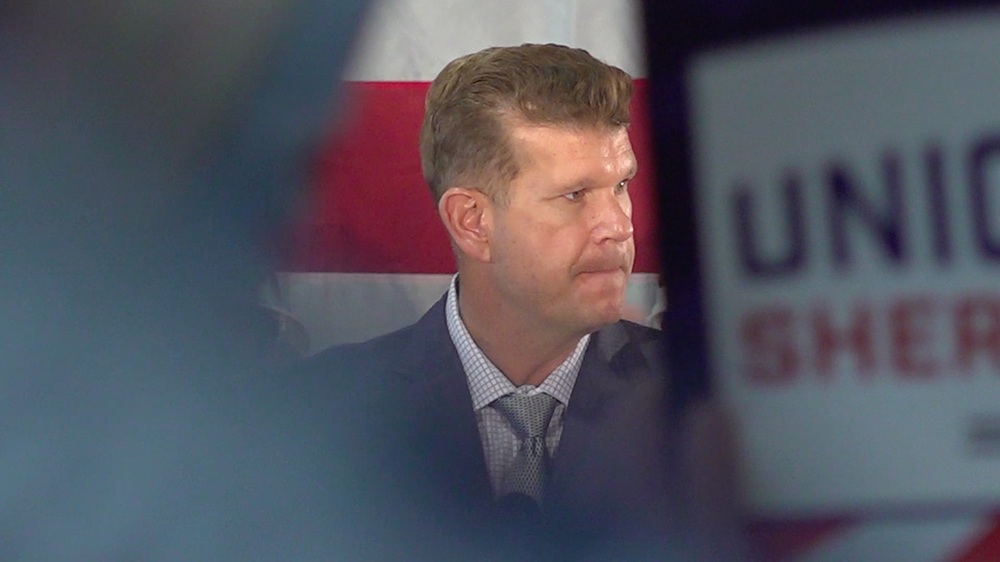
Among those who spoke before Brown himself took the mic is Adam Fedak, executive secretary-treasurer of the Central Midwest Regional Council of Carpenters.
“We spend a lot of time, these days, hearing people talk about politics. Choosing sides, and drawing lines,” Fedak told the crowd. “But for the men and women in this room, it really comes down to something much simpler: it’s not about the blue hat; it’s not about the red hat; it’s about the hard hat.”
Fedak said that of importance to this union are jobs, wages, and benefits, as well as a guarantee that carpenters and millwrights have a “strong future.”
“By showing up in force, we are sending a clear message: union members stand with leaders who stand with us,” he said.
He lauded Brown, saying that the former senator’s work on pension relief helped protect members’ benefits.
“Because of that work, our southwest Ohio pension fund was made whole.”
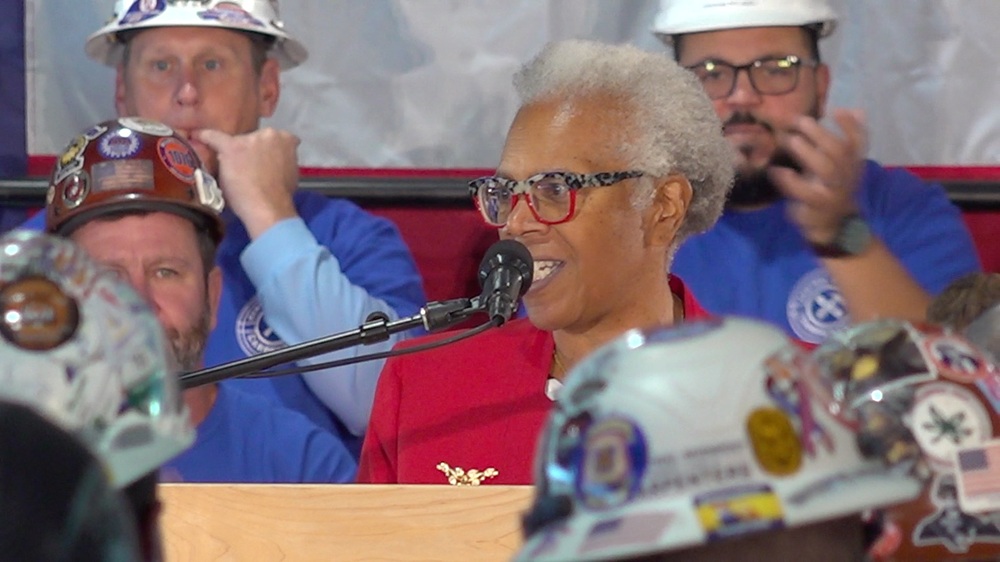
Following Fedak’s remarks, State Sen. Paula Hicks-Hudson (D-Toledo) took the stage.
“My brothers and sisters, I’m giving you an assignment: talk to at least five people, if not 50 people.”
With early voting now underway, she called on attendees to make their voices heard, but also ensure that others do, by casting a ballot.
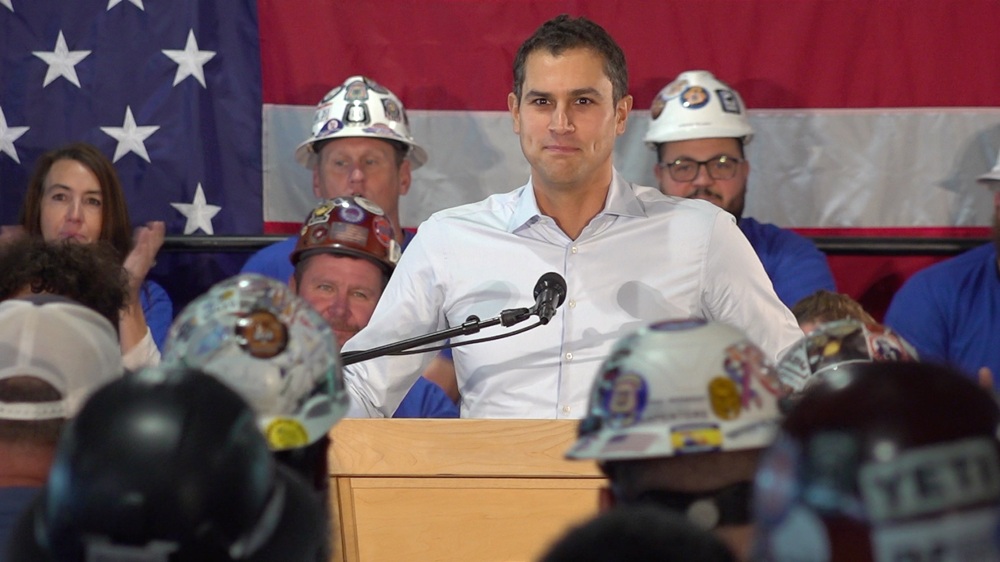
State Rep. Dani Isaacsohn (D-Cincinnati), minority leader in the Ohio House of Representatives, sought to motivate the audience, by pointing to what he not only sees as the stakes of this election — but opportunities in it.
“The future of Ohio is at stake in this election, that is why we are working so hard to once and for all break the [Republican] supermajority in the Ohio Statehouse.”
“To do that,” Rep. Isaaacsohn said, “we need to flip six seats. If we can flip six seats in the statehouse, we can put our statehouse back on the path of serving the people.”
He criticized Republican leadership in Columbus for the $2.5 billion in tax benefits that have been accrued by data center developers, as well as a plan to provide $600 million of Ohioans’ unclaimed funds for the construction of the Cleveland Browns’ new stadium (a proposal currently held up in the courts).
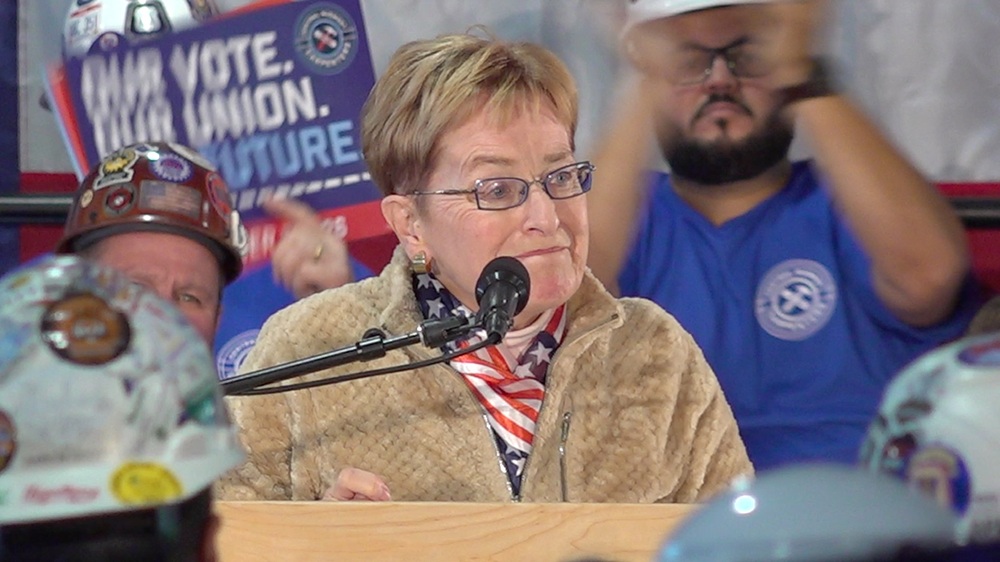
Congresswoman Marcy Kaptur (D-Toledo), another headliner of Saturday’s rally, spoke to the frustrations shared by both her and rally attendees.
Noting that Democrats are just four votes shy of a majority in the House of Representatives, Rep. Kaptur said, forcefully, “We must hold this seat.”
However, making that extra difficult this year — even in an electoral environment that favors Democrats — is last year’s redraw of Ohio’s 9th Congressional District, which Kaptur represents, to include more rural, Republican-leaning areas.
“In our state, some of you may know this, but there’s something called ‘gerrymandering,'” the congresswoman quipped.
While the U.S. Constitution requires the redrawing of congressional districts following each census (every ten years), to ensure population changes are reflected in district maps, Ohio has twice done so every four years.
Under state law, maps can only last a decade if they’re approved in a bipartisan manner. But because the Ohio Redistricting Commission, a majority-Republican body, passed its 2022 map without support from Democratic members, members had to return to the drawing board in 2025. However, the map passed last year was done so with Democratic support.
However, that wasn’t because Democrats felt positively about it. Rather, it was to avoid a situation in which the legislature would be tasked with drawing new congressional districts, as the Republican supermajority could have easily drawn maps that further disadvantaged Democrats.
“I don’t know which counties you’re from,” Kaptur told the crowd, in what was an emotional moment, “but they are taking away Sandusky County from us, and we just got the streets in Fremont, contracts to be paved; we finally got them a fire rescue center that’s worthy of the people that live there — and they’re pulling the rug out from under us.”
She passionately declared, with the sound of her fist coming down on the podium before her, that “the state legislature of our state is crooked, and it is not representative of the people of this state.”
Consistent with her speech’s main message — about the challenges facing workers, as wealth becomes increasingly concentrated at the top — Kaptur closed with this anecdote: “A woman came up to me recently. She said, ‘Marcy, no human being in America should be a trillionaire. Nobody.’ And I say that to Elon Musk, because he’s helping to put money against me — and that includes you, buddy. That includes you.”
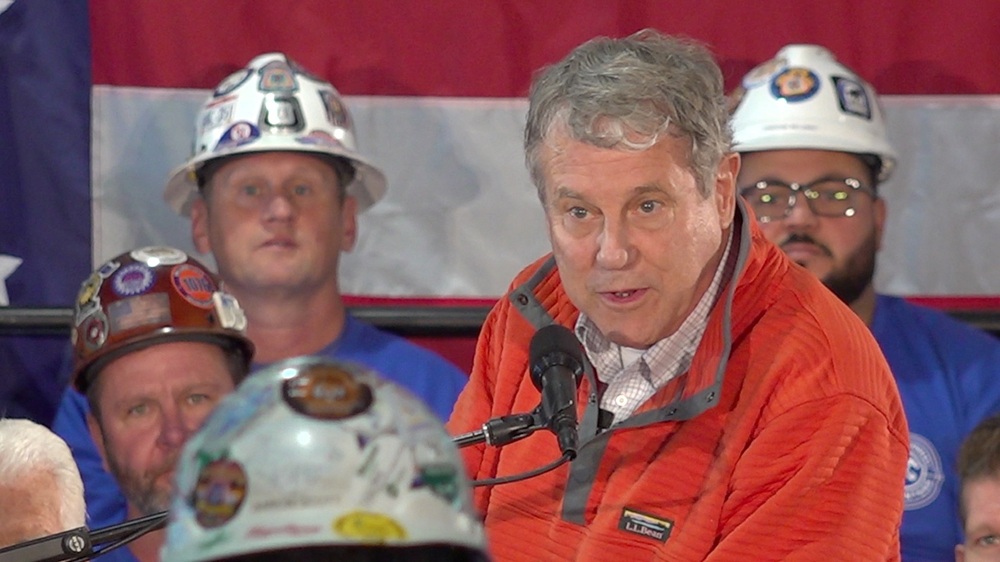
After taking the stage to deliver his remarks, Brown spoke to journalists, during which he took questions about politics and policy.
Asked what his number one legislative priority would be, as it pertains to working people, Brown said ending the war in Iran and rolling back the president’s tariffs, as both of which have contributed to higher fuel and grocery prices, respectively. He also laid out a policy objective.
“One of the things I’m proudest of, and we will do again, is the Child Tax Credit,” which he says provided the families of 2.6 million Ohio children with about $400 per month in relief.
The Child Tax Credit remains in effect; Brown appears to be referencing 2021’s expansion of the CTC, which temporarily increased it from $2,000 to $3,600, per child under six, and $3,000 per children ages 6-17.
Responding to the TFP’s question about data centers, which have become a significant source of concern locally and statewide, amid their increased energy and resource consumption because of artificial intelligence, Brown proposed a few regulations. He opposes tax breaks for data center projects, believes developers should cover the entirety of their electricity costs, and says local people should be given input. He says these reforms would “change things dramatically.”
The Toledo Free Press has reached out to the campaign of Republican U.S. candidate Jon Husted, extending an offer of a one-on-one interview. We’ve not yet received a response.
RELATED | Republican rally at Chevy’s: Ramaswamy, McColley, & Merrin
Check out more of our election coverage below: