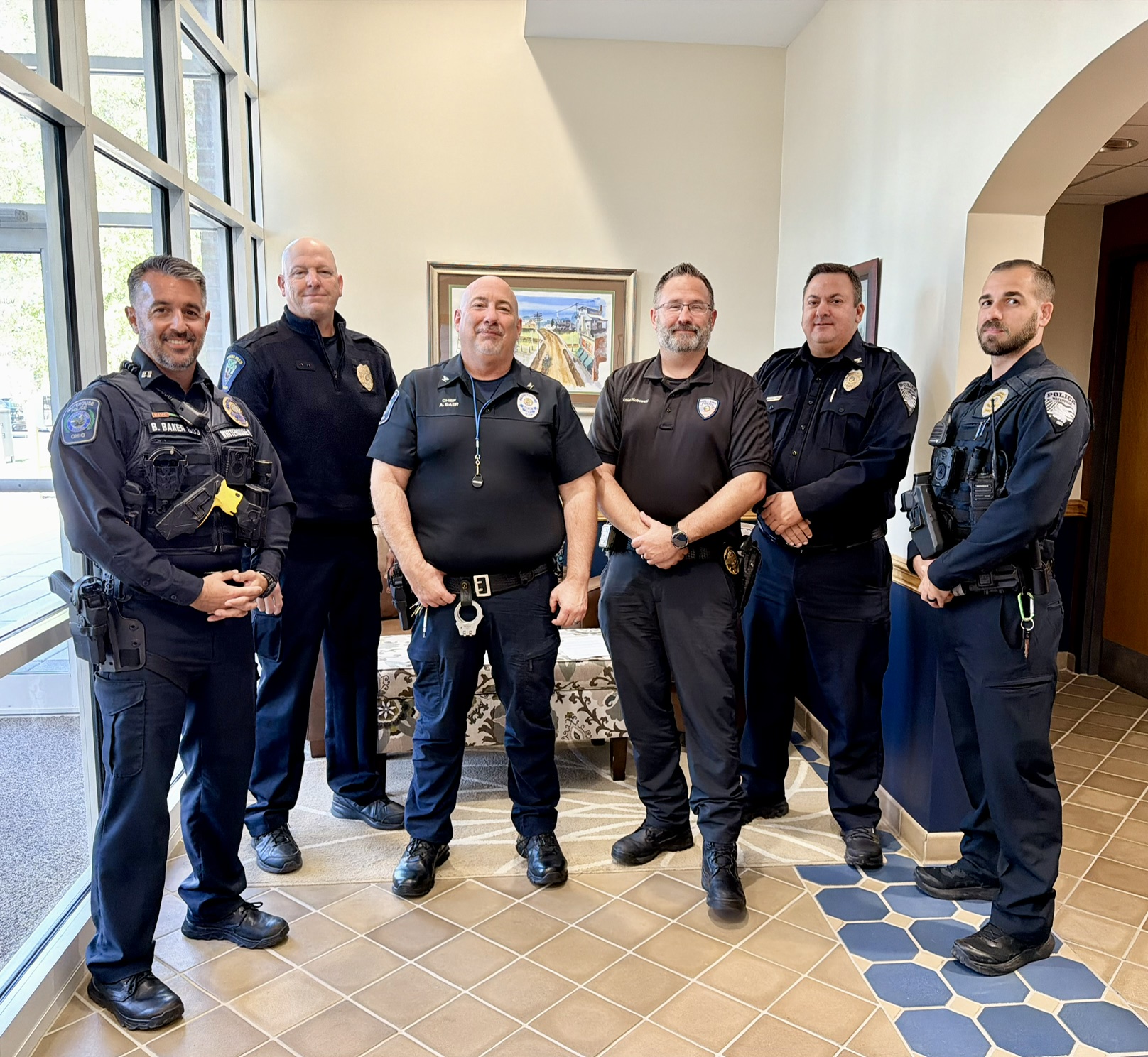
Whitehouse Police Capt. Brad Baker recently “had words” with a boy who was popping a wheelie on an e-bike in the middle of Providence Street.
“We’ve spent more than a year having words with them on the street and at school,” said Whitehouse Police Chief Allan Baer, who has heard in person and online the complaints about mostly 10- to 15-year-old boys driving e-bikes or dirt bikes recklessly on the streets, the parks and on the bike trails.
Knowing that other area police chiefs are experiencing the same problems, Baer invited area police chiefs to a brainstorming session on how to meet three shared goals: ensuring the safety of the kids on e-bikes; addressing the behavior without using the juvenile court system; and inducing parents to become more proactive in their children’s e-bike usage.
While the state legislature is currently looking at rules for e-bikes – a move that Baer said will provide consistency and guidance – the chiefs agree that working on a uniform set of ordinances for communities to put in place by spring is a priority.
Police chiefs Joe Valvano of Waterville, John Trejo of Swanton, Frederick Schnorr of Ottawa Hills, and James Piotrowski of Holland, along with law directors Paul Skaff, Austin Klapp, Kevin Heban and Law Clerk Christina Fuller discussed current regulations, what other municipalities have in place, and solutions that will work for smaller communities.
One of the suggestions is requiring all e-bikes to be registered, with color-coded stickers that will enable officers to identify the class and whether a helmet is required. A lack of a sticker may also indicate that the rider is on a dirt bike that is not permitted on public roads.
“This is not a money grab,” Baer said, explaining that the registration would be free. “We want our officers to be able to easily identify what class each bike is.”
According to the Ohio Department of Transportation, Class 1, 2 and 3 all have fully operable pedals and electric motors of less than 750 watts. In Class 1 and 2, the electric assist only reaches up to 20 mph. In Class 3, the the motor provides assistance of up to 28 mph.
According to ODOT, anyone riding a Class 3 e-bike must be at least 16 and wear a helmet. One of the ideas under consideration is requiring anyone under 18 to wear a helmet on any e-bike, regardless of the bike class. With e-bikes weighing 200 to 300 pounds and accelerating quickly to up to 28 mph, the brake time is longer and crashes more hazardous to riders, the chiefs noted. And with jailbreak programs enabling e-bike users to push speeds beyond 28 mph, the risks increase. Several of the chiefs spoke of serious injuries involving e-bike users in area communities.
“We’re one fatality away from being blamed,” Valvano said, agreeing that something needs to be done.
The registration and helmet requirements will help, but the chiefs agree that more needs to be done to curb the reckless operation that they’ve seen: jumping curbs, blowing through stop signs, zipping in and out of traffic, disturbing pedestrians and causing damage to public and private property. Education and warnings, as well as parent notification of behaviors, has done little to stop the reckless operation or improper use, Baker said.
“We’ve been doing warnings for years. We’re looking for more teeth,” Baer said. “I think a fee is the only thing that will have an impact. I know we’ll take some flack, but they have to understand the intent is for the safety of the children.”
In the event that a minor is seen driving recklessly, a first offense would require that the rider and parent watch a video on e-bike safety. Subsequent offenses will have civil penalties, including fines and e-bike impoundment. Those who want to contest the fine could have an opportunity to make an appeal to a hearing officer – a third-party attorney hired by all of the jurisdictions.
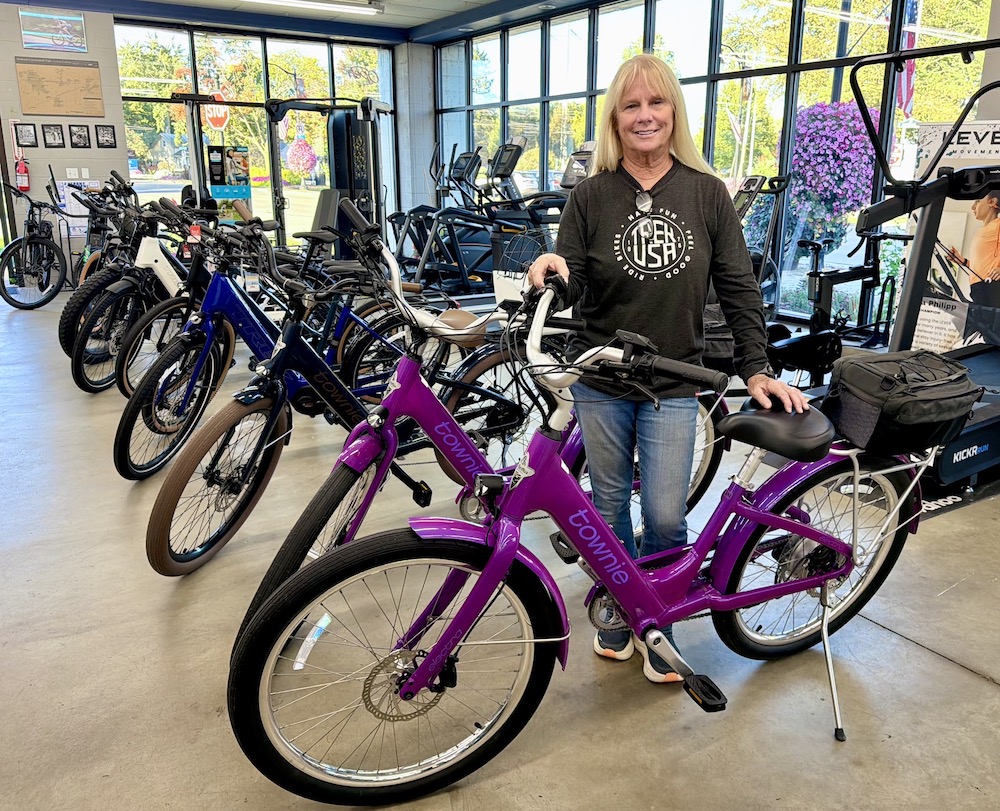
Julie Theroux, co-owner of CycleWerks, cautions against over regulation when 90 percent of the e-bike users are responsible adults who use them to ride farther and tackle hills with a little help.
With a view of busy downtown Whitehouse, the park and the Wabash Cannonball Trail, Theroux has seen the annoying behaviors of boys on e-motos, which are dirt bikes that are not street legal. While pedals might be put on to make them look like bikes, these are essentially motorcycles that go well over 28 mph, she said.
“It’s the wild, wild west,” she said, describing kids riding e-motos without helmets, lights or signals, zooming in and out of traffic. “These young boys are running around like gangs. Where are the parents? The parents need to be educated that e-motos are illegal other than on private property or on confirmed motocross trails.
“It’s not the bike that’s the problem; it’s the person on the bike – the reckless person,” Theroux said. “Don’t blame the e-bikes and overregulate.”
The ideas shared by the chiefs will be researched by legal and presented to each of the local municipalities in the coming months.
“This is going to be a slow and deliberate process,” Baer said.