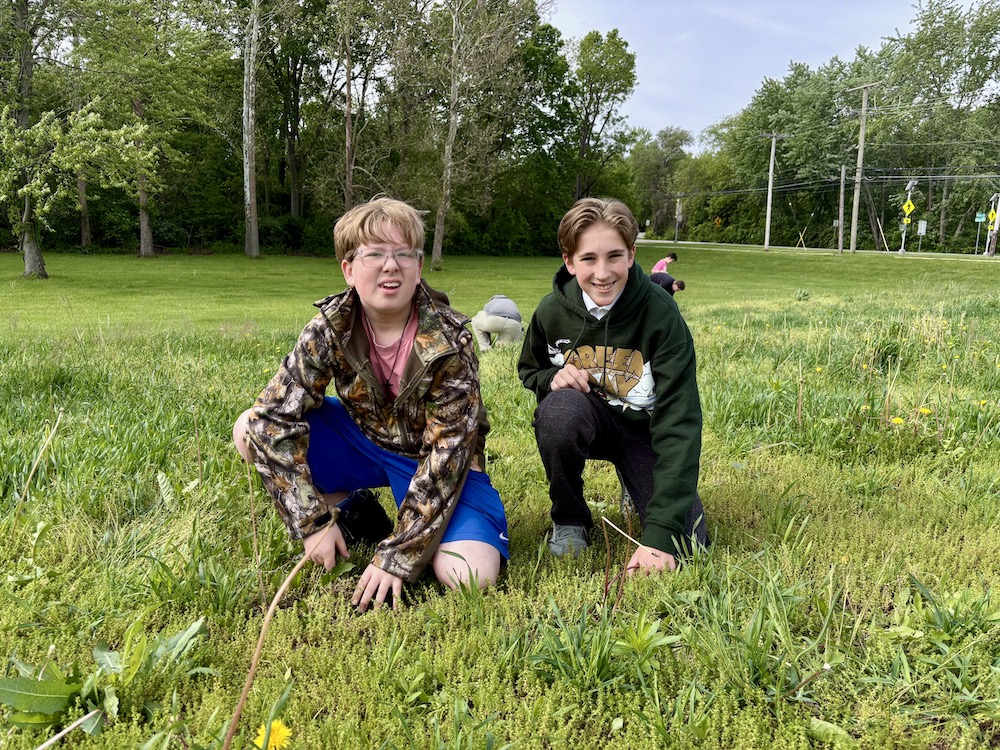
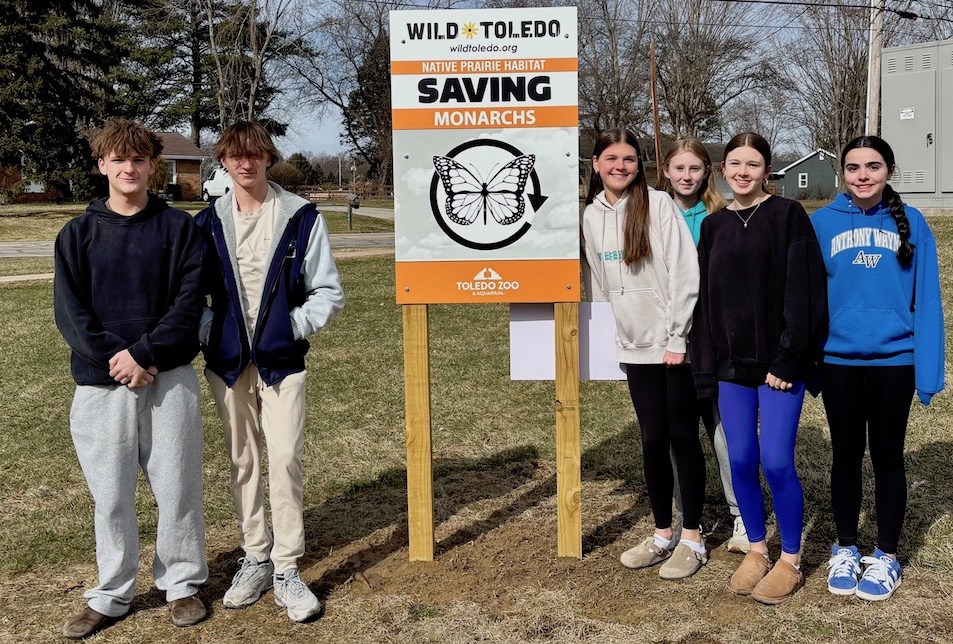
A section of land along Blue Creek – long used for overflow parking during Anthony Wayne football games – is being transformed into a living classroom.
Over the past several months, Anthony Wayne Junior High School students have planted and watched the progress of a prairie that will provide food and shelter for native animals.
“I didn’t realize how much prairies helped,” said seventh-grader Crosby Caskey, watching on May 22 as his classmates fanned out onto grass that was planted in early March. “I have an interest in native plants. Just seeing them providing for animals is awesome.”
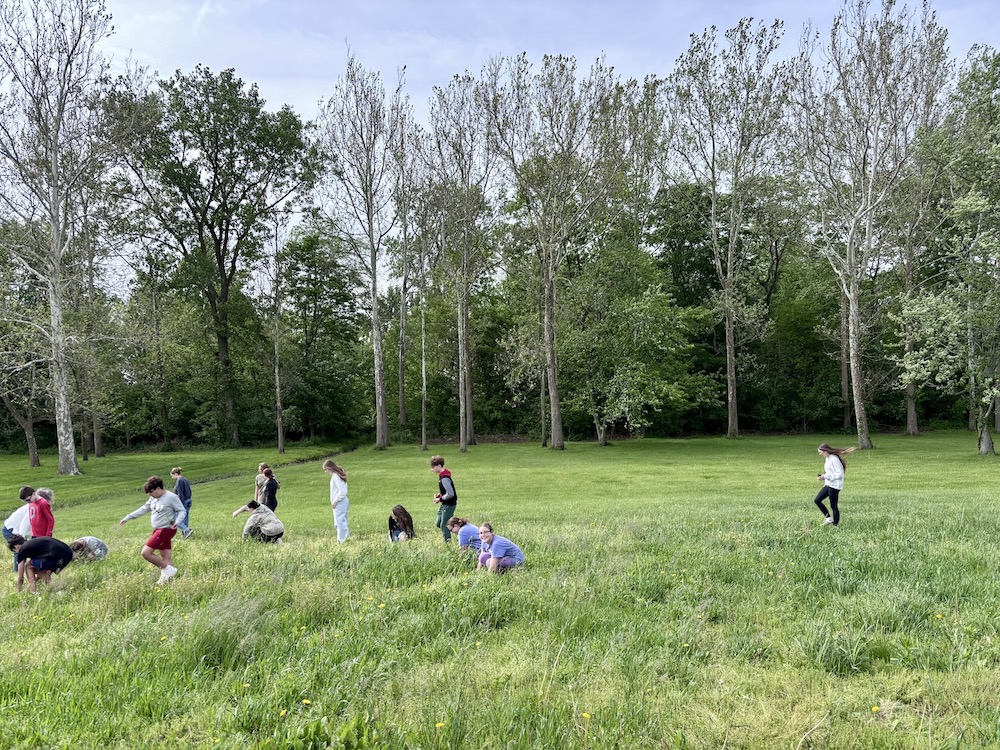
Kneeling in the grass, Reece Bueher took an aster and tamped it into the ground. While he was a student at Waterville Primary School, Reece was often involved with that school’s land lab.
“It took a while for it to come together,” Reece recalled of the Waterville prairie, which now serves as an educational resource for students.
It was seeing the success of Waterville Primary’s land lab that inspired junior high principal Jordan LeFevre to apply for his school to be a part of Project PRAIRIE, which is made possible through the Toledo Zoo’s Education Department in coordination with Wild Toledo and a grant from Owens Corning.
Last year, LeFevre learned that the school was accepted into the program, which includes standards-based curriculum for teachers to use in educating students about the prairie. The junior high prairie is now one of 160 planted outside schools, businesses and communities throughout the northwest Ohio area in the last 13 years.
“Knowing how much Waterville uses their land lab, and seeing kids being able to get outside and experience it, I can see opportunities for science classes to do studies here,” LeFevre said. “It’s experiential type learning.”
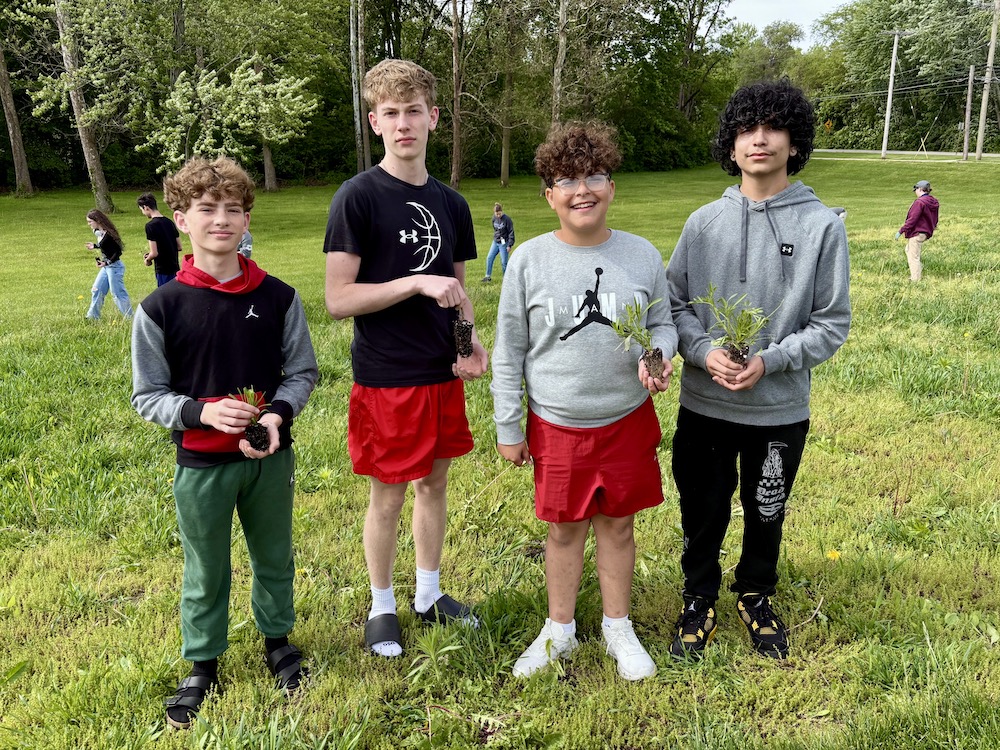
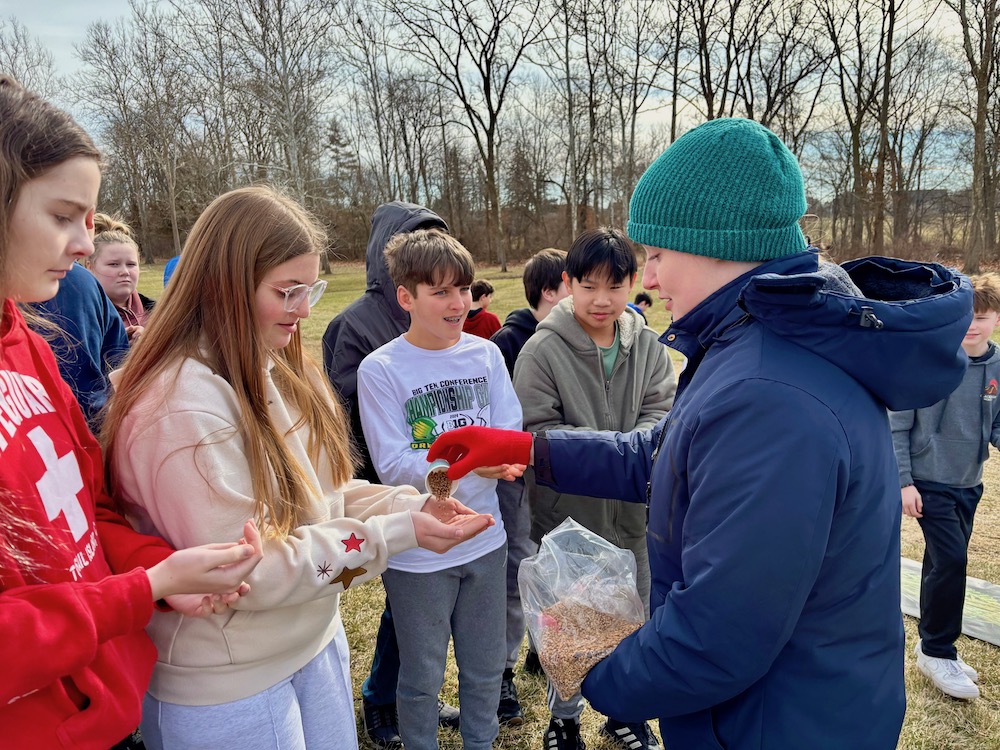
Last fall, a long patch of grass just south of the middle school parking lot was cleared. In early March, Toledo Zoo educators arrived with native grass seed for students to plant.
“With the freezing and thawing, the seed coating around the grass seeds will open up just like an egg for the grasses to grow nice and tall,” Toledo Zoo educator Alex Burris told the shivering students during that first visit.
And grow tall it did. As the students returned last week to add wildflowers, milkweed and other native plants, they had to search for the pre-dug holes that Toledo Zoo educators had made among the grass.
Bradley Dean, a self-described “green thumb,” has planted sunflowers, herbs and deep flowers that attract hummingbirds in his yard, but this was his first experience in planting a prairie. Just being outdoors during the school day is a bonus, said Bradley, who is a Counselor in Training for the Metroparks – helping with outdoor and nature education.
Even as Bradley and the other eighth-graders move on to the high school, they will have opportunities to visit the prairie to observe its progress. LeFevre said he can envision all students in grades 7-12 gaining insight from the prairie, including those interested in STEM, the environment and even Principles of Food classes. It’s also a prime example for the community to witness a change.
Native plants can absorb run-off and nutrients that would otherwise wind up in the water supply, said Ryan Walsh, Ph.D., director of plant conservation for Toledo Zoo.
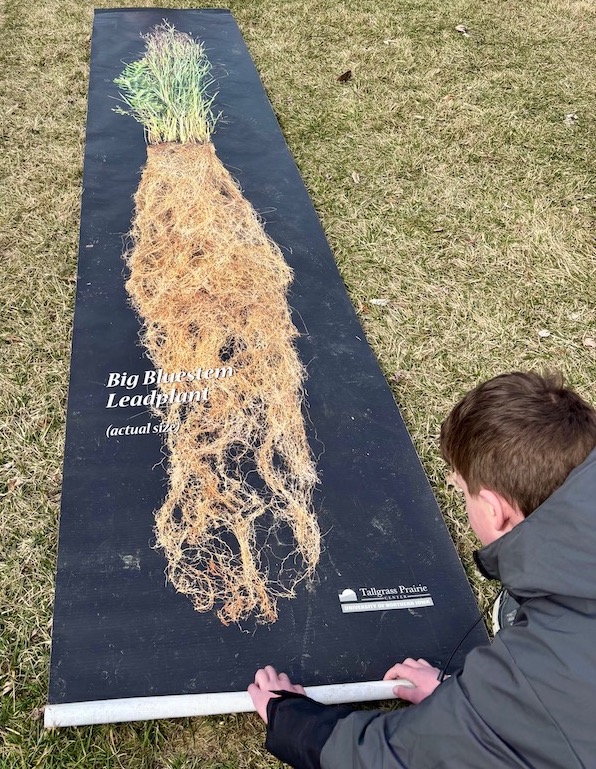
“The deep root systems of native plants stabilize soils and hep the plant absorb harmful CO2 that would otherwise contribute to climate change. Humans benefit from all of these ecosystem services provided by native plants as well as the positive psychological benefits that are known to come from exposure to natural areas,” Walsh said.
Native plants are adapted to the area and are easy to grow. Some native plants can serve as host plants for up to 10 different species at a time, he said.
“Planting milkweed probably results in the biggest visible change. Even a single milkweed plant can attract breeding monarchs to a yard,” Walsh said. “Milkweed also plays host to the milkweed beetle and milkweed aphid, making them a tiny ecosystem in themselves.”
Even small changes, like a small garden, can have big impacts on local biodiversity, he said.
“We encourage our customers to watch their plants and listen. A prairie or native garden can actually be quite loud with all of the insects buzzing and the animals foraging. Native gardens quite literally buzz with life.”
For property owners who want to add native plants, visit wildtoledo.org.