Toledo City Council late March review
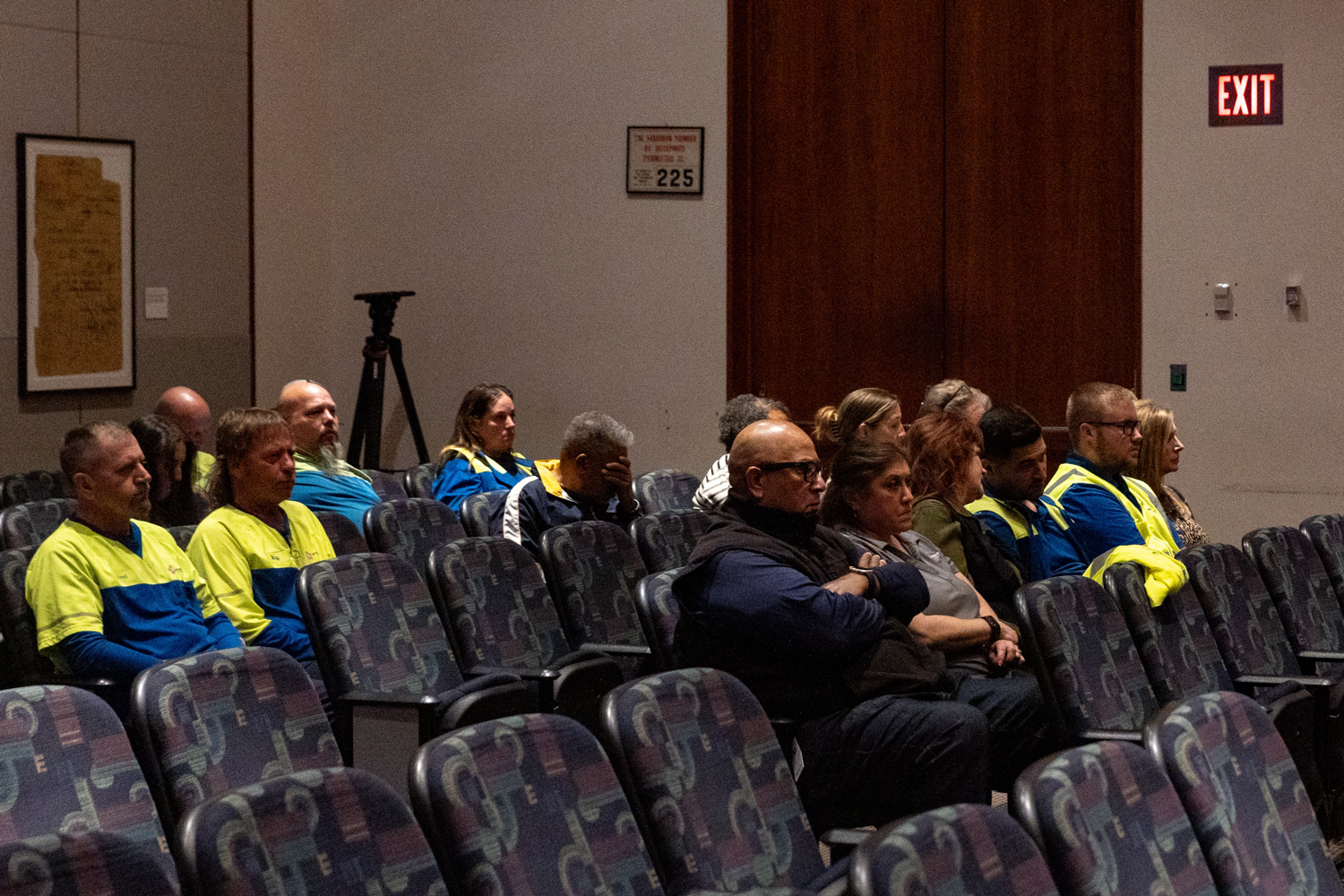
TOLEDO – Republic Services workers filed into the Toledo City Council Meeting on March 31, as council had on the agenda changing the Refuse and Recycling provider for Toledo to a different company, Priority Waste, L.L.C.
Under O-113-26, Priority Waste, would replace Republic Services for the next five years, and would be paid $13,560,000 annually. Republic’s contract would expire August 31, 2026, and residents would keep their current recycling and garbage receptacles.
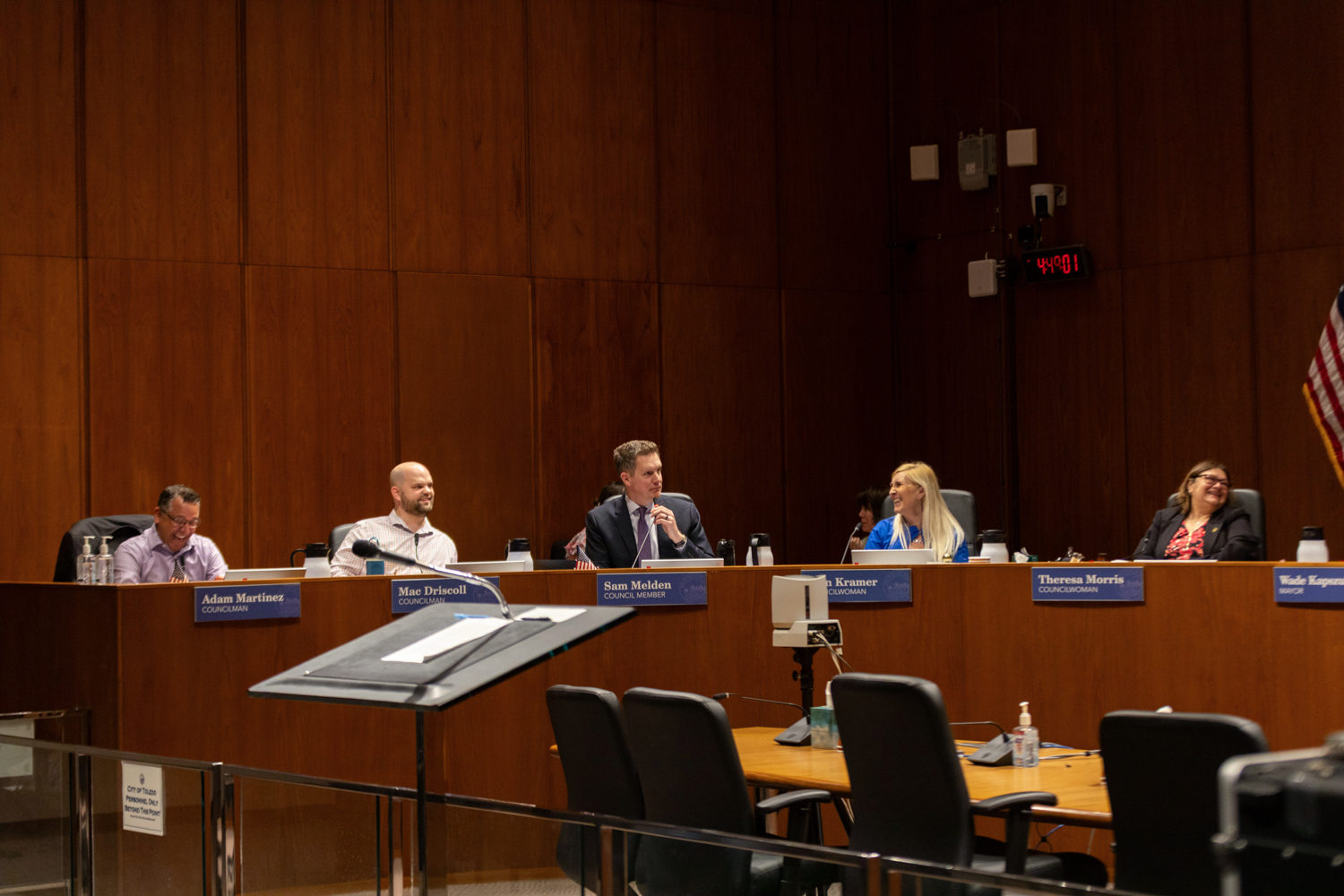
The ordinance was given a first reading, and council moved on until closing remarks where Council Member John Hobbs III, District 1, used his time to advocate in support of Republic Services over Priority Waste.
Within District 1, Hobbs said Republic’s service has gotten better. “I can now pick up the phone and actually talk to someone, and before the end of the day, oftentimes, within hours, whatever has gone on has been taken care of.”
Much of the criticism of Republic was for poor response times with bulk pickups left on the curb long past when they were expected to be picked up. Hobbs mentioned he could only speak to his own experience in his district, but said Republic had gotten better since he started reaching out to them.
Hobbs spoke against the higher fees that would immediately occur with the new contract if the city switched to Priority, and talked about the $9 million which would be saved over the course of the five year contract by staying with Republic.

Immediately, the city would start paying $13,560,000 with Priority, whereas Republic would start at $11,731,200 for the first year, gradually increasing their fees until they reached $13,203,568 in the final year of the contract, 2030.
For average households, this means a jump in waste fees from around $11 a month to closer to $18 a month with a switch, and Republic would maintain the same $11 fee until 2028.
“I don’t think it’s the right time to increase fees, and especially to the point of almost $9 million in the next five years,” he said, and emphasized Republic’s union leadership and improvements in service. “With groceries going up. With gas going up. We definitely don’t need trash going up.”
During their presentation to City Council at a Committee of the Whole on March 25, Priority outlined the improvements they would make including improved bulk collection, customer service, technology, including route tracking and robust performance metrics.
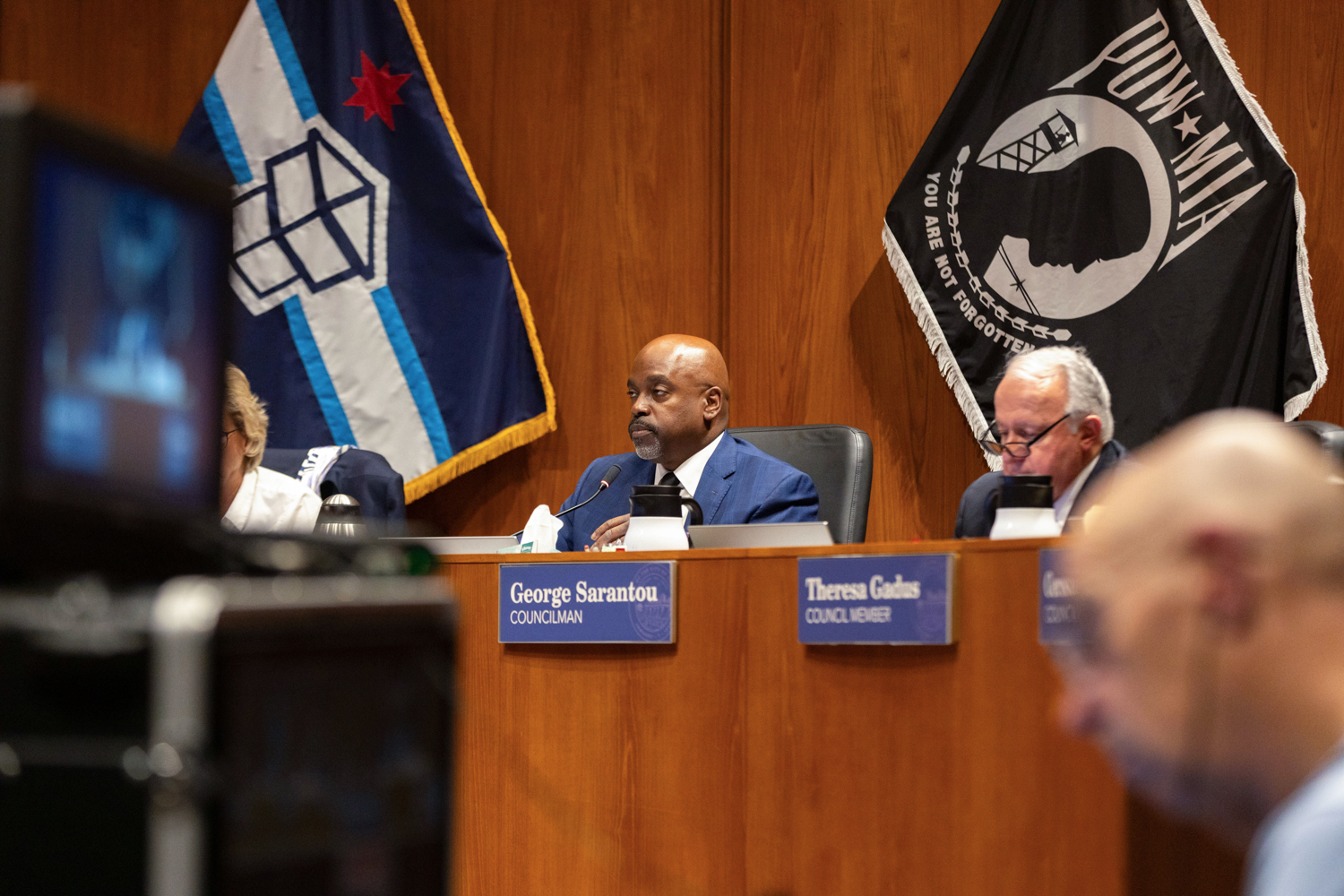
Council Member At-Large Erin Kramer asked Priority if they would hire union workers to which they replied, “Priority is neutral, but if employees wish to unionize then they can. The majority of any given employee yard holds the right to unionize if they choose.”
Furthermore the spokesperson for Priority said, “Manpower would be hired to accommodate the Toledo-market” if the contract went through.
George Sarantou, Council Member At-Large, addressed the union Republic workers, members of the Teamsters, at the meeting, and thanked them for their interest in the council’s decisions.
“I appreciate all the emails and phone calls that I’ve had from constituents with their opinions on this very important decision that Council will have to make on April 14,” he said, but did not give a lean on which way he was thinking.
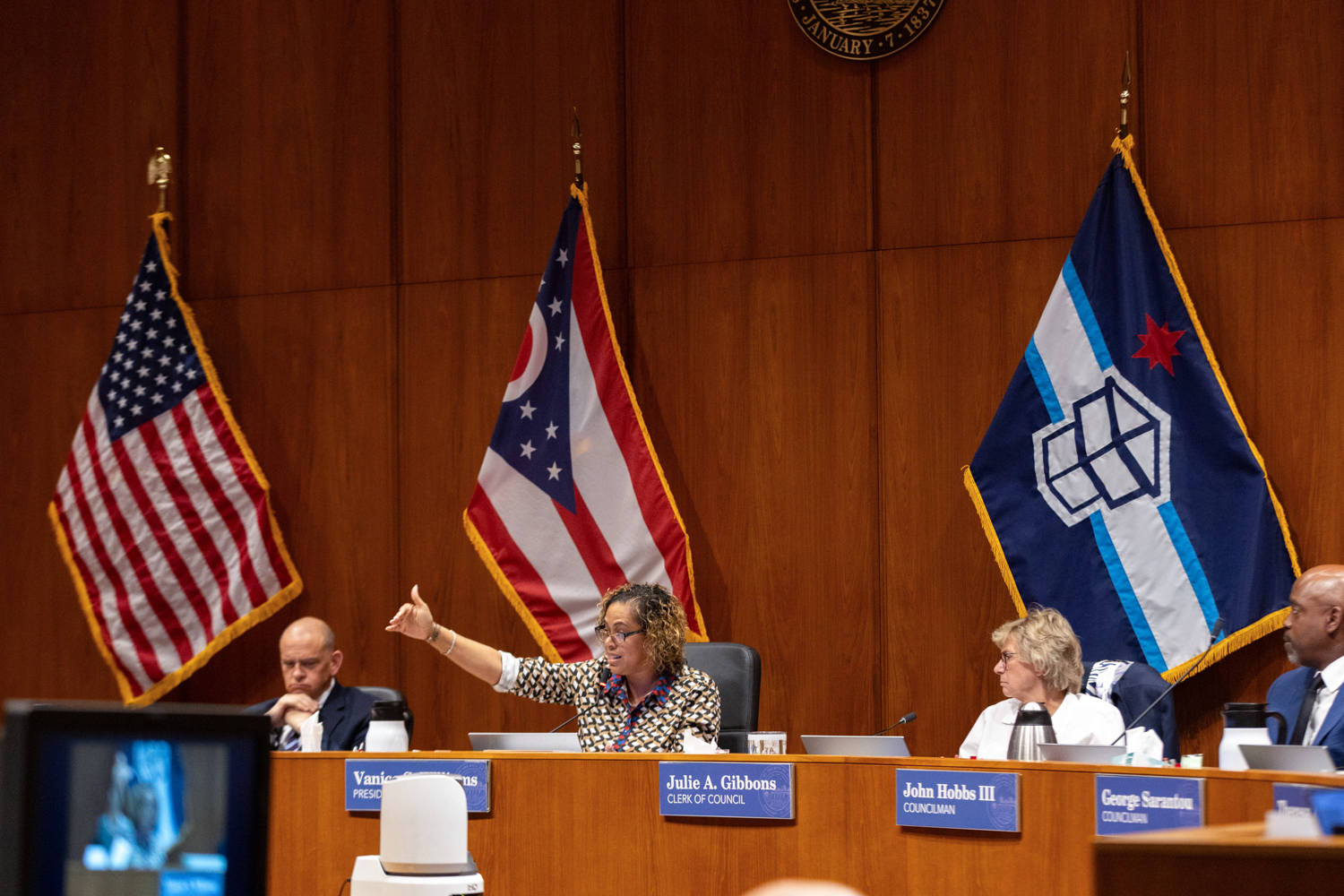
The last to give their remarks on waste management was President of Council and Representative for District 4, Vanice Williams, who was not as reserved with her thoughts.
“I actually was leading the charge to replace Republic,” she said. “I’m not gonna lie. I did, because my residents said we needed replacement, and all of y’all’s residents told y’all, we need to replace it. I didn’t forget.
“On Pearl Street, the 200 block of Pearl Street, there was a situation where curbside or bulk [pickup] wasn’t getting picked up for almost a year,” she said, and described the conditions. “I have a picture of a garbage can that has rats at the bottom that I shared with most of my colleagues, and I shared with union reps [within Republic Services].”
Williams said her responsibility to serve the residents of her district, District 4, dwarfed other considerations, because her residents were not receiving service.
“Most of my district is African American. Most of my district is impoverished, so I take issue with the trash that’s in my district,” she said. “Yes, I have met with Republic several times,” but said the work was not getting done.
She also said she didn’t want to see people lose jobs and did not blame the drivers or union workers.
Regardless, she said, “I’m still getting complaints about things not being picked up.”
In reaction to the rising price of service, Williams said rising price was a “misconception” because “our solid waste fees are below the average in the state, so that is something that we have been playing with for years.”
“I’m going to keep advocating for my residents, and I’m keep on advocating to the day that I die for what’s right, what’s just and what’s appropriate. Thank you. This meeting is adjourned.”
And with that she ended the meeting with a swift gavel strike.
Biometric data
A first reading was issued to Council Member Theresa Gadus’s sponsored legislation, O-109-26, amending the Toledo Municipal Code and enacting Chapter 557 “Biometric Data Collection.”
This ordinance was part of the package of legislation on separating the city from Immigration and Customs Enforcement (ICE).
§577 defines biometric data collection as, “a retina or iris scan, a fingerprint or voiceprint, a scan of hand or face geometry, or any other identifying characteristic,” and requires any public entity that is not the government, to clearly inform the public when their biometric data is being collected in a public space.
§557.03 (a) states, “Nothing in this chapter shall apply to the collection, storage, sharing or use of biometric data by government agencies, employees, or agents.”
And (b) of §557.03 said the requirement to disclose the collection of biometric data via photos or video recording is waved if the images or videos are not analyzed by software for the purposes of identification or if the images or videos are not shared or sold to third parties, other than law enforcement.
Violating the chapter at first receives a warning followed with a minor misdemeanor charge with a fine of up to $150.
Lead reduction grant
Brittany Jones, Council Member At-Large, was happy to sponsor O-112-26, which authorized the acceptance of $7,750,000 for the Lead Hazard Reduction Grant Program from the U.S. Department of Housing and Urban Development (HUD).
Outlined in the budget for these dollars are roughly $3 million for “property owner grants.”
The ordinance was unanimously passed, and Jones addressed her gratitude for getting the funds in her closing remarks.
“I believe that this is definitely going to go far,” she said.
“I’m working closely with Chief [Rosalyn] Clemens, [housing and neighborhood sustainability] in order to really get through as far as how the funds will be spent and what needs to be done in order to really take a chunk out of just lead in general. Because I know that [the grant] will be in combination with other lead programs, and so just trying to find a strategy in order to really reduce those numbers throughout the city.”
Invocation
Bishop Chaz D. Boes, of Compassion Church Toledo, opened the Toledo City Council meeting with a prayer, then the pledge of allegiance, a jazz rendition of the Star Spangled Banner, then Hobbs lauded Boes and his church as the most integrated church in Toledo.
Shortly after, Hobbs continued to speak about Holy Week, leading up to Easter, on April 4, and he said, “And to my St. Francis, brother of over 40 years, Mr. John Meyer, to all of the other high schools we know nothing.”
Fellow Council Member Cerssandra McPherson, At-Large, rolled her eyes back into her head before replying to Hobbs’s dig.
Laughing like a school boy, Hobbs watched for McPherson’s reaction, and waited for her reply.
“Whatever, Councilman Hobbs,” she said.
McPherson attended Toledo Public Schools (TPS), graduating from Libbey High School in 1977, and has been involved with the Toledo Federation of Teachers, including working as a special education paraprofessional for many years.
Hobbs has asserted his pride in St. Francis De Sales High School during previous council meetings, but also worked with TPS as a substitute teacher and barber instructor.
After shirking off Hobbs’ dig, McPherson thanked the bishop and his family for their work abroad and in the community.
Appointments
Brandon Selhorst, the chief growth officer for the City of Toledo ($135,750, 2024), was replaced with Cody Brown, the manager of economic development ($86,046, 2024), on Troy Township’s Joint Economic Development District (JEDD) Board.