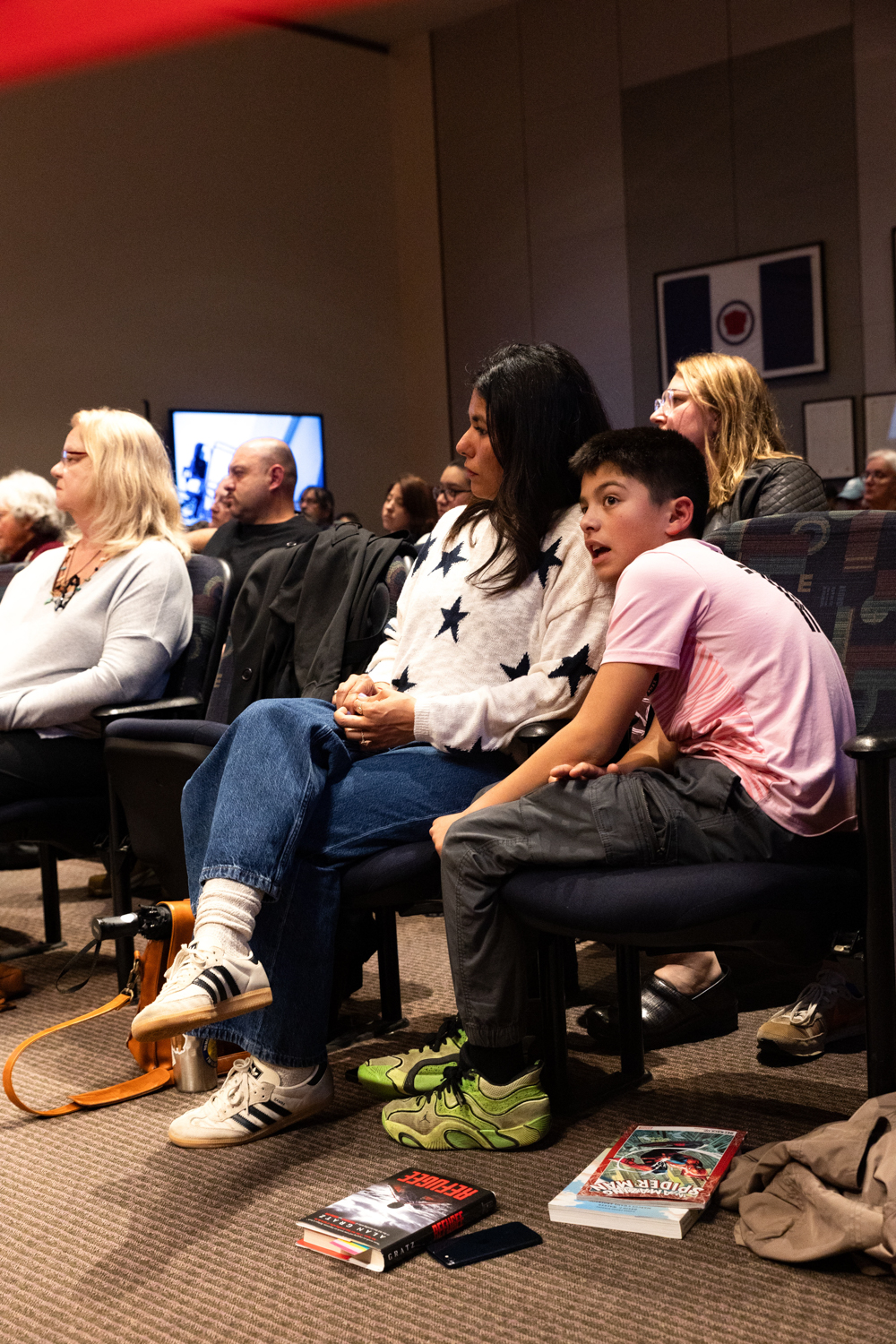
TOLEDO – A special Committee of the Whole took place Tuesday, March 10, as members of Toledo City Council listened to public comment on a package of resolutions concerning immigration policy for the city.
Briefly, Theresa Gadus, Toledo Council member for District 3, presented the five drafts of legislation from the city, which would clarify the city’s role if Toledo experienced a heightened immigration crackdown.
The package of legislation made up of two resolutions and three ordinances can be found at the bottom of this article.
Why now?
Over a year into President Donald Trump’s second term, Immigration and Customs Enforcement (ICE) has become known for their highly visible raids in Los Angeles, Calif., Chicago, Ill. and most notably, Minneapolis, Minn..
Toledo has not had a strong, visible presence of immigration enforcement, until Jan. 29, 2026, when videos of men armed and dressed in tactical gear in downtown Toledo were shared across social media, pushing the issue of how local law enforcement might interact with ICE.
Around this same timeframe, there was uncertainty around a heightened number of ICE agents making their way to Springfield, Ohio to make arrests as temporary protected status (TPS) seemed about to expire for the U.S. Haitian community on Feb. 3, 2026.
Springfield was made infamous for unsubstantiated claims that Haitian immigrants in the small suburb of Dayton were “eating” the cats and dogs of American citizens there, an unsubstantiated rumor spread by Trump during his debate with former Vice President Kamala Harris.
Ohio Governor Mike DeWine, the mayor of Springfield, and the Springfield Police all said the claim of Haitian immigrants eating the pets of the people of Springfield was false and a product of the internet.
Regardless, the tension for Springfield was high just preceding Feb. 3, when members of religious institutions gathered in St. John Missionary Baptist Church in Springfield to show solidarity with the Haitian immigrants, ahead of what some thought might be an Ohio surge of ICE activity.
On Feb. 2, a federal judge blocked the expiration of TPS for Haitian immigrants, and tensions subsided as the case moved to the Supreme Court of the United States, which has not decided whether they will see the case.
Toledo’s immigration presented by the Council
First to speak was Council Member Gadus, after reading off the new proposed legislative materials. “Fear is not public safety. Trust is,” she began. “It is the responsibility of local government to ensure that every resident in our community feels safe and protected under the law.
Across the country, we’ve seen and heard reports of ICE enforcement actions that extend beyond reasonable limits. These actions create fear in our schools, hospitals, workplaces, houses of worship and neighborhoods.
Toledo has not experienced a surge like Columbus; we want to proactively work together to establish guidelines for our resources and codify existing policies,” she said.
Council Member At-Large Nick Komives weighed-in.
“I think it’s important to note that what we’re doing is not unique,” he said. “We’re not doing something that’s radical; we’re not doing something that’s unheard of. We’re doing something that literally hundreds of communities across this country either already have done or are working on right now.
“While it’s true that we do not have the ability to tell ICE what they can and cannot do, we do have the ability to talk about how we use our resources, our employees, and our time to work to enforce immigration.”

From this standpoint Komives referenced ICE’s $85 billion budget, dwarfing all other law enforcement agencies in the country, and proposed Toledo’s Police Department (TPD) should be used to help Toledo instead of assisting ICE, making the point that they had enough resources already.
“Because one thing is very clear,” he said. “And it was clear before any of this even began, the City of Toledo does not have an immigration-related crime problem. We just don’t. We don’t see a lot of crime coming from immigrants in our community. In fact, we see fewer crimes coming from immigrants in our community.”
Council Member Adam Martinez of District 2 made note of the ways he has personally invested in Toledo’s immigrant community, and went on to talk about the benefits of immigrants in Toledo.
“If you look at our council…our council is very diverse, and we come from immigrant communities, and diversity is not a bad word,” he said, and shunned categorizing people because of “legal status.”
“The number one reason why neighborhoods turn around is because of the immigrant population, the second is the non-traditional lifestyles, like the LGBTQ questioning community that help turn around neighborhoods, and then also what I refer to as ‘dinks,’ – double income, no kids – that really help put the cherry on top to make our neighborhoods vibrant and engaging and unique.
“And we should be celebrating that diversity, and we should not be creating impediments to helping individuals get the American dream.”
At-Large Council Member Mac Driscoll briefly stated he had been doing “work behind the scenes” with Toledo’s public safety forces for this package of legislation.
“We work closely with the chief, his deputies and the public safety director to ensure that this ordinance makes sure that TPD can continue to do their job, which I believe to be very important,” he said.
Erin Kramer and Brittany Jones, both at-large Council members, talked about a reactive and proactive approach to the legislation.
Jones said, “It is not impeding on anything. It is not taking away any rights. It is literally adding protections and reaffirming us as a city that we support those who are coming from different backgrounds and wanting that quality of life, period.”
Members Cerssandra McPherson (At-Large), Sam Melden (District 5) and Theresa Morris (District 6) echoed previous sentiments, supporting immigrants and supporting local law enforcement.
Melden took a page from the Timothy Snyder book On Tyranny, and referenced the first rule in the book: “Do not obey in advance.”
Morris told the story of her grandfather immigrating to the United States, and talked about him working through the Bracero Program, emphasizing the need for comprehensive immigration reform and better immigrant work programs.
Public comment
A young man started the public comment section of the hearing, and introduced himself as Henry Garcia, then as Enrique Garcia.
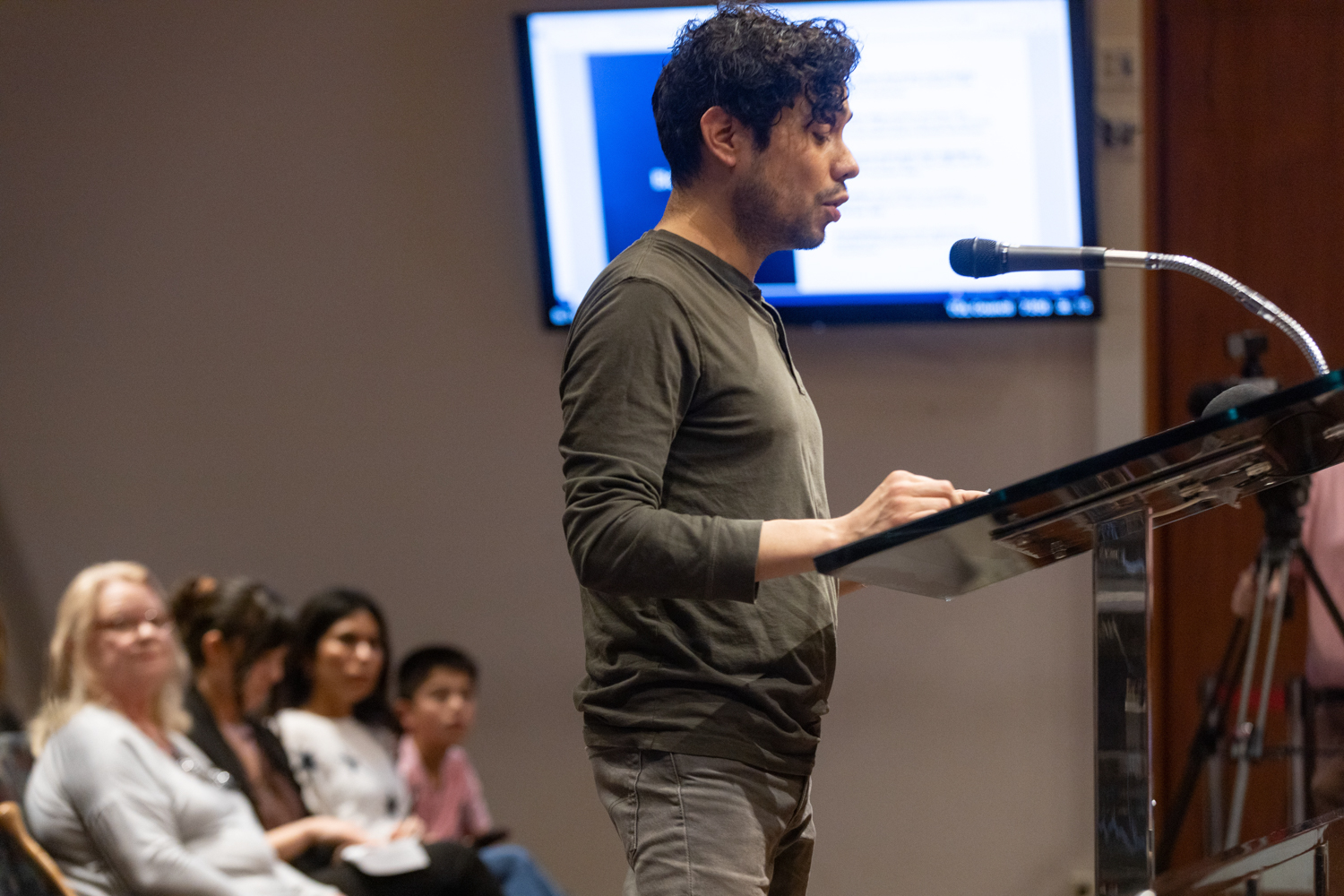
“I feel very encouraged after looking at the PowerPoint,” he said, referencing the resolutions and ordinances, and then shared that he was there to represent the organization Abriendo Puertas Para Soluciones (APPS), a local pro-immigrant organization.
Garcia’s main point, as many subsequent speakers would make, was that when immigrants are disenfranchised through fear of deportation or imprisonment, the entire community suffers, not just immigrants.
“We know of people not seeking medical attention when needed, avoiding assistance from local law enforcement, housing violations are underreported, and racial discrimination forcefully tolerated, and sadly, families not leaving their homes to enjoy a lovely day out,” he said.
“No one wants to deal with government overreach. No one wants to be targeted because of their name or the language they speak. We urge Toledo Council to pass the legislations that protect our constitutional rights.”
The next speaker, Nalix Otero, mentioned she was grocery shopping for her neighbors who were too afraid to go out.
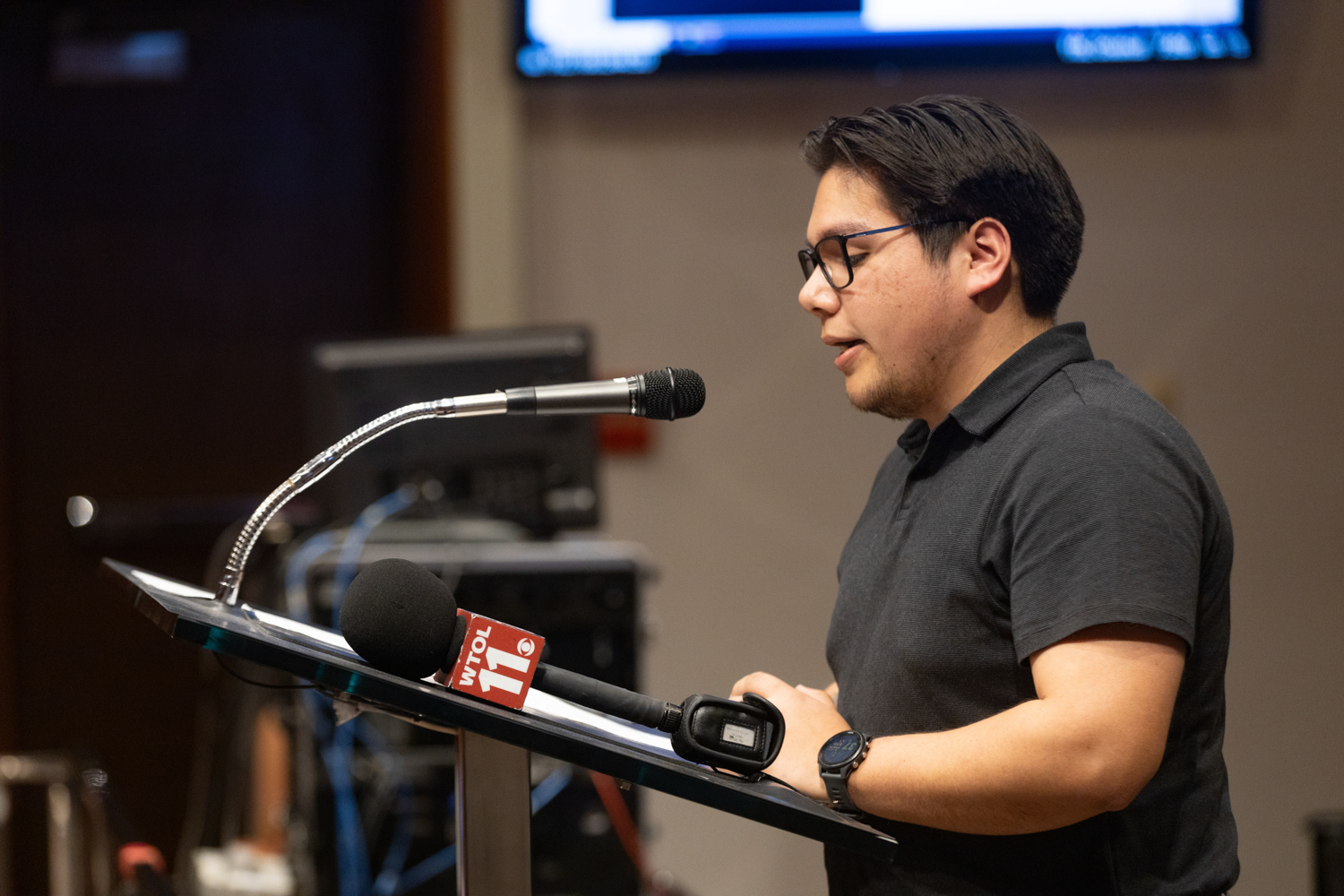
Valentin Ornelas then introduced himself as a first-generation Mexican-American who grew up with a Laotian-American here in Toledo.
“We weren’t Hispanic or Asian. We were just kids,” Ornelas said. “That mix of cultures – Mexican, Laotian and so many others – is what makes Toledo a great city.”
During Ornelas’s public comment, Council member for District 1, John Hobbs III, joined the committee hearing.
On behalf of the Farm Labor Organizing Committee (FLOC), Jessica Molina spoke next, about the history of immigration raids on FLOC going back to the 1970s.
“They raided an entire tomato field, detaining all of the workers, many of which were American citizens,” she said. “The raids and the detentions have grown to such an indiscriminate amount that it begs for legal guidance that allow for proper procedures.”
Molina said FLOC requested “…constitutional protections and safety for all residents. Public Safety only works when people feel safe calling 911, reporting crimes, seeking medical care and sending their kids to school.” She referenced Border Patrol and ICE agents breaking up families during the raids.
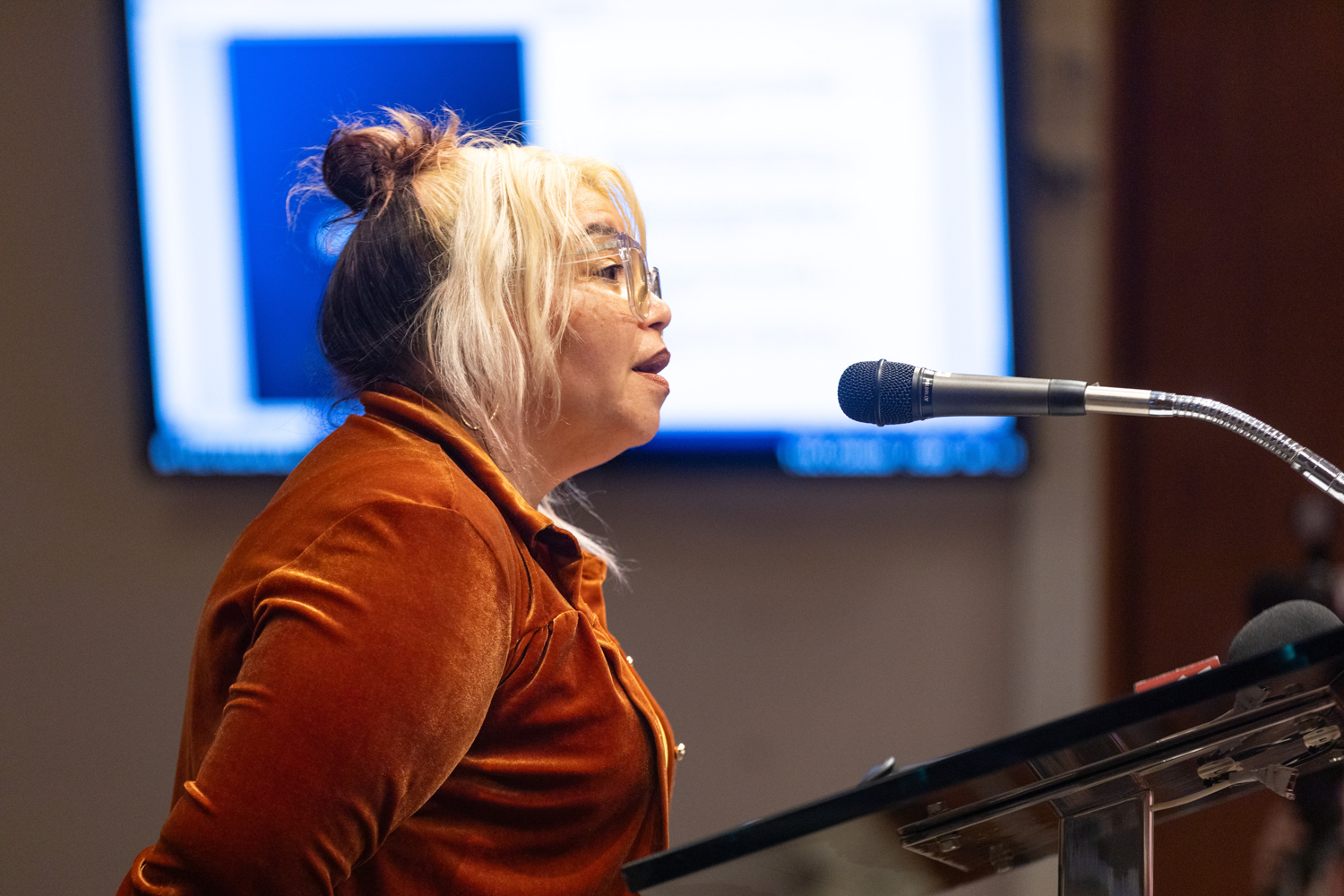
The following speaker, Rebecca Bundy, spoke as an immigration attorney with Advocates for Basic Legal Equality (ABLE).
“Immigration has long been a convoluted area of law,” she said.
“I have witnessed the federal government rewrite the law against immigrants, revoke status of hundreds of thousands of people with lawful status, change the rules to undercut applications, even terminating proceedings at will, defy court orders and due process. I’ve seen attacks on green card holders, U.S. citizens and immigration attorneys, even judges favorable to immigrants.
“We have been told to concede rights, liberties and principles of humanity in the name of condemning violent criminals, but the government is not focusing on violent criminals,” Bundy continued.
“These are people determined not to be a danger, who have been working, paying taxes…people who support themselves, their neighbors and their communities; they now risk waiting for their case in facilities lacking access to medical care, food, water. They risk dying at rates higher than ever in immigration detention. They risk being detained and deported, whether the law supports it or not.
“We are not living in ordinary times. Immigration Enforcement has trampled discretion, court orders and constitutional rights. If there is ever a time to draw a line and stand up for our communities and our local systems. It’s now we all rely on humanity and reasonability in our laws and our systems before we sacrifice fellow humans we don’t know or fail to stand up for them. We need to consider what we’re really sacrificing.”
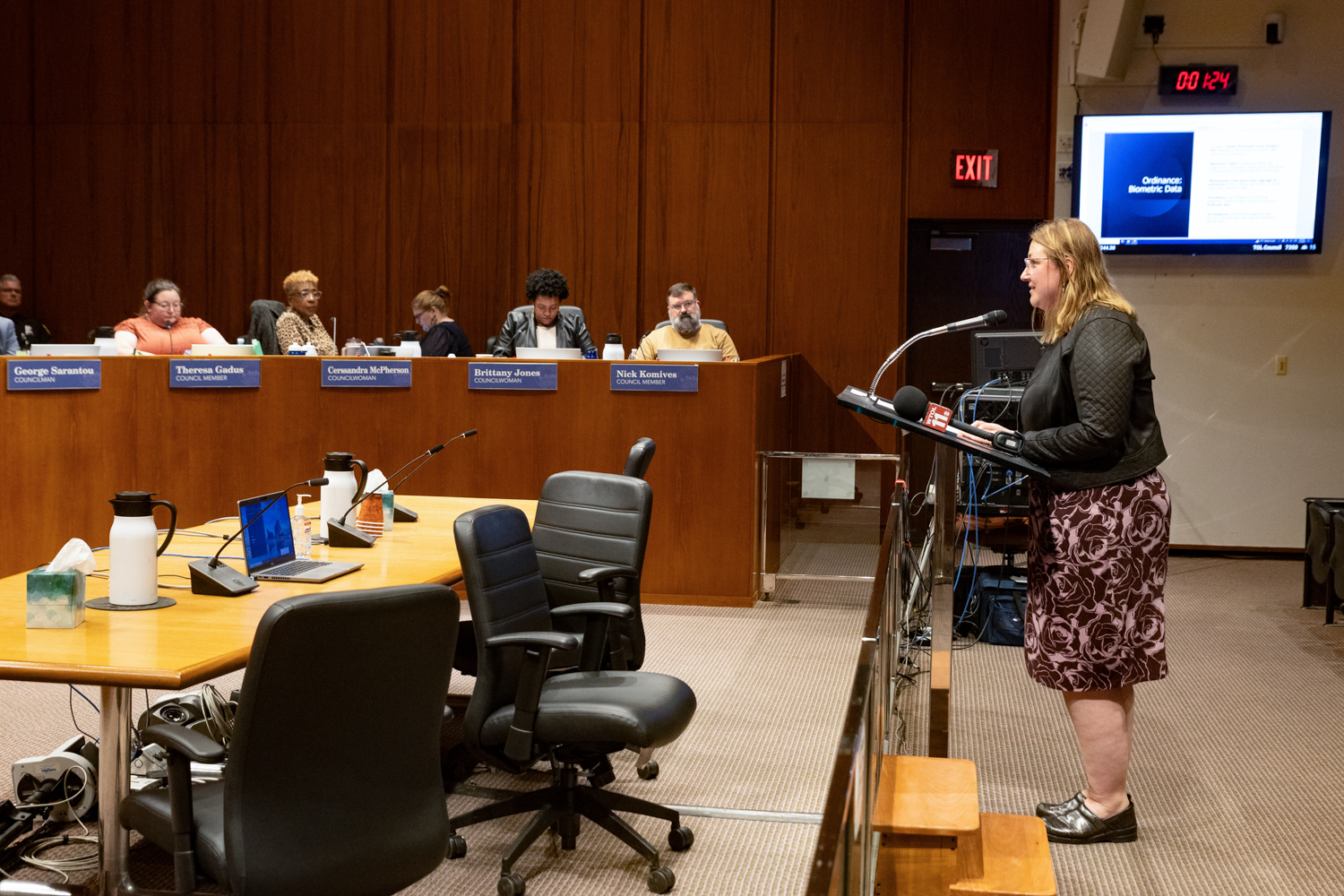
Next, Brittany Ford brought forth a study by the Cato Institute that speaks about the benefits of immigrants to the population (Cato Study: Immigrants Reduced Deficits by $14.5 Trillion Since 1994).
“We have very similar findings to the Cato Institute here in Toledo,” Ford said. “Immigrants in the City of Toledo earned $200.9 million with $30.3 million going to federal taxes, and $19.4 million, and this is just in 2017, going to state and local taxes,” she said.
“Immigrants are 4.6 percent of the workforce and nearly 10 percent of our STEM [Science, Technology Engineering and Mathematics] workers, including our engineers, nurses and doctors.”
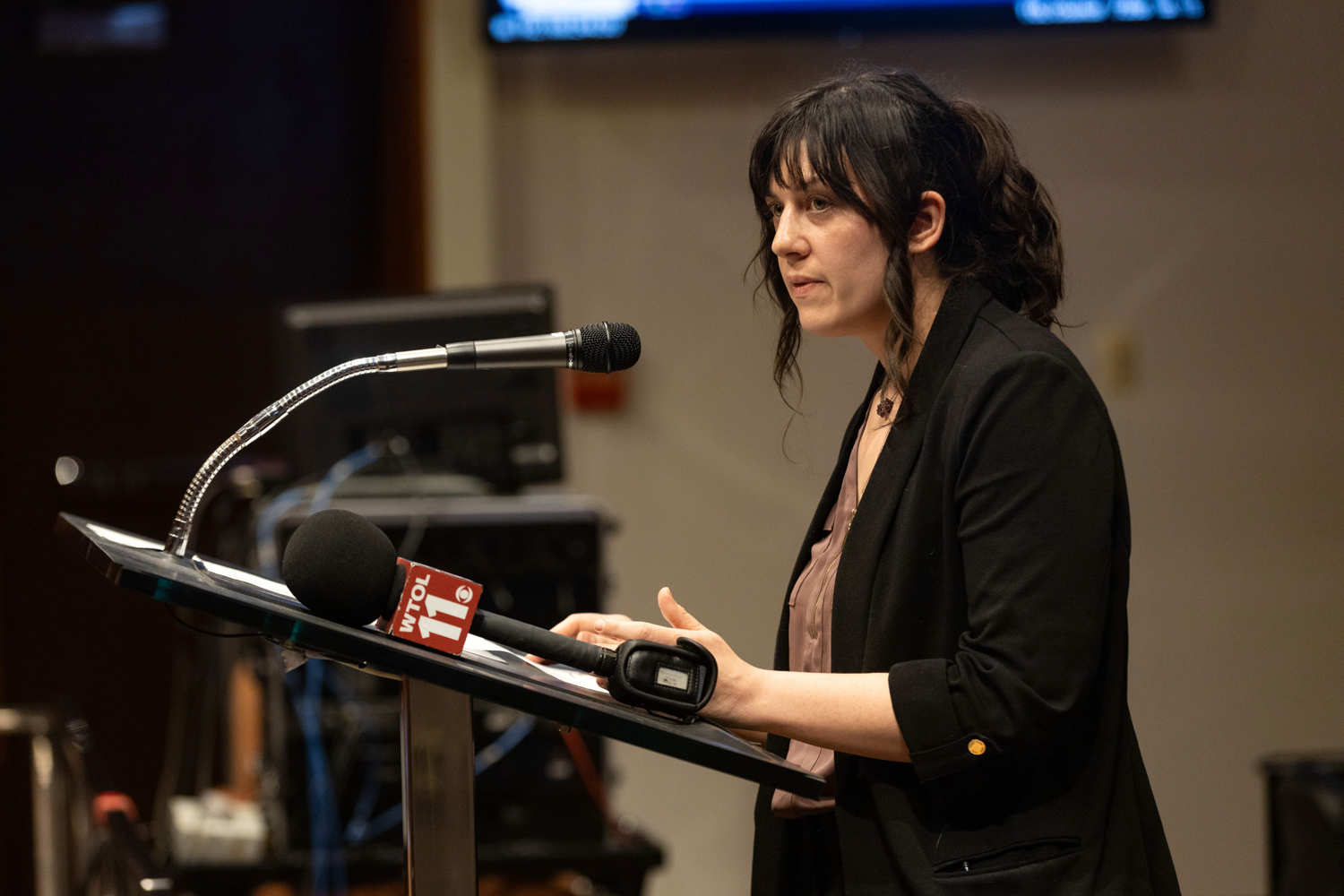
Rebecca Sillery brought a short anecdote about how her niece, who went to Denver, Colo., shared how diverse Toledo was in comparison, as a strength.
The simmered, even approach of Sillery was juxtaposed to the speaker following her, Rachel Davis, who roared, “The Constitution should be a bare minimum, and our government has already given ICE more money than God.”
“They don’t need to take resources from our city resources. We need to keep our resources for Toledo,” she said, in a Toledo First fashion, and then questioned why business owners were not being prosecuted instead of the immigrants they employed.
“Who is hiring all of these undocumented people if they’re so dangerous?” she questioned. “Why aren’t we going after some of these job creators that just somehow sit with their hands clean behind desks and are pulling the strings?”
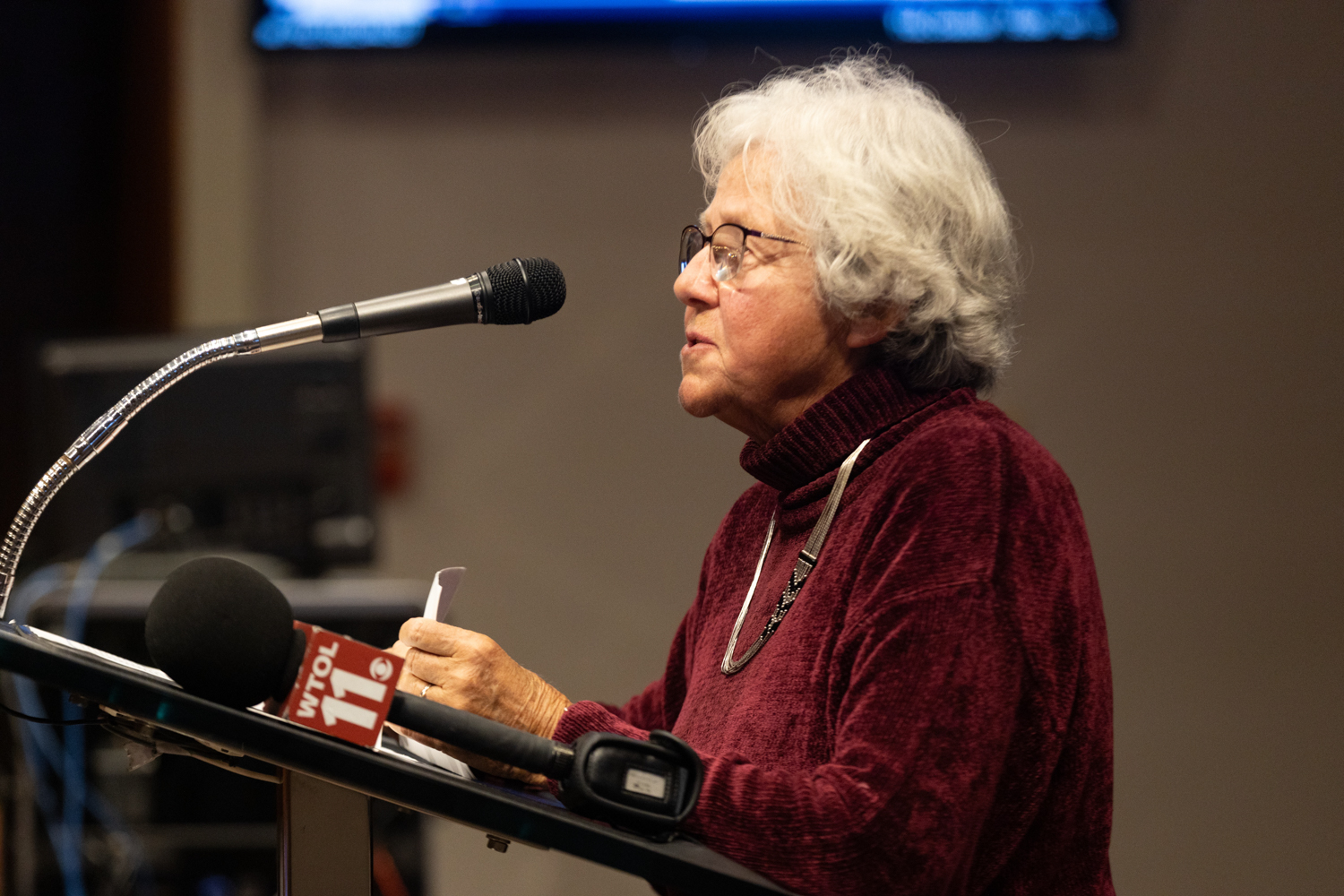
During the whole hearing, there was only one individual, Marcia Roby, who spoke in favor of immigration enforcement in Toledo.
“We’re all 100 percent for immigration and diversity,” she said. “The issue, though, is illegal immigration. We are all immigrants. My grandparents were from Germany, on all sides,” she said. “I expect and desire all local officials and law enforcement agencies to uphold and enforce the law for the safety of its citizens.
“If ICE comes to Toledo to detain illegal immigrants, and in particular, criminal illegal immigrants – if there are any, maybe there are none – I want local law enforcement agencies to cooperate in the apprehension. Should protesters attempt to obstruct the lawful execution of ICE duties…local law enforcement has the responsibility to provide the necessary help in crowd control and so forth.”
In stark contrast, the gentleman who followed Roby, Glenn Ryan, asked what local officials and government can do when the federal government violates the constitution.
“What is our obligation as a state, and local community organizations, when the federal government breaks its own laws concerning legal due process and search and seizure,” he said.
“I ask you, what are we going to do?”
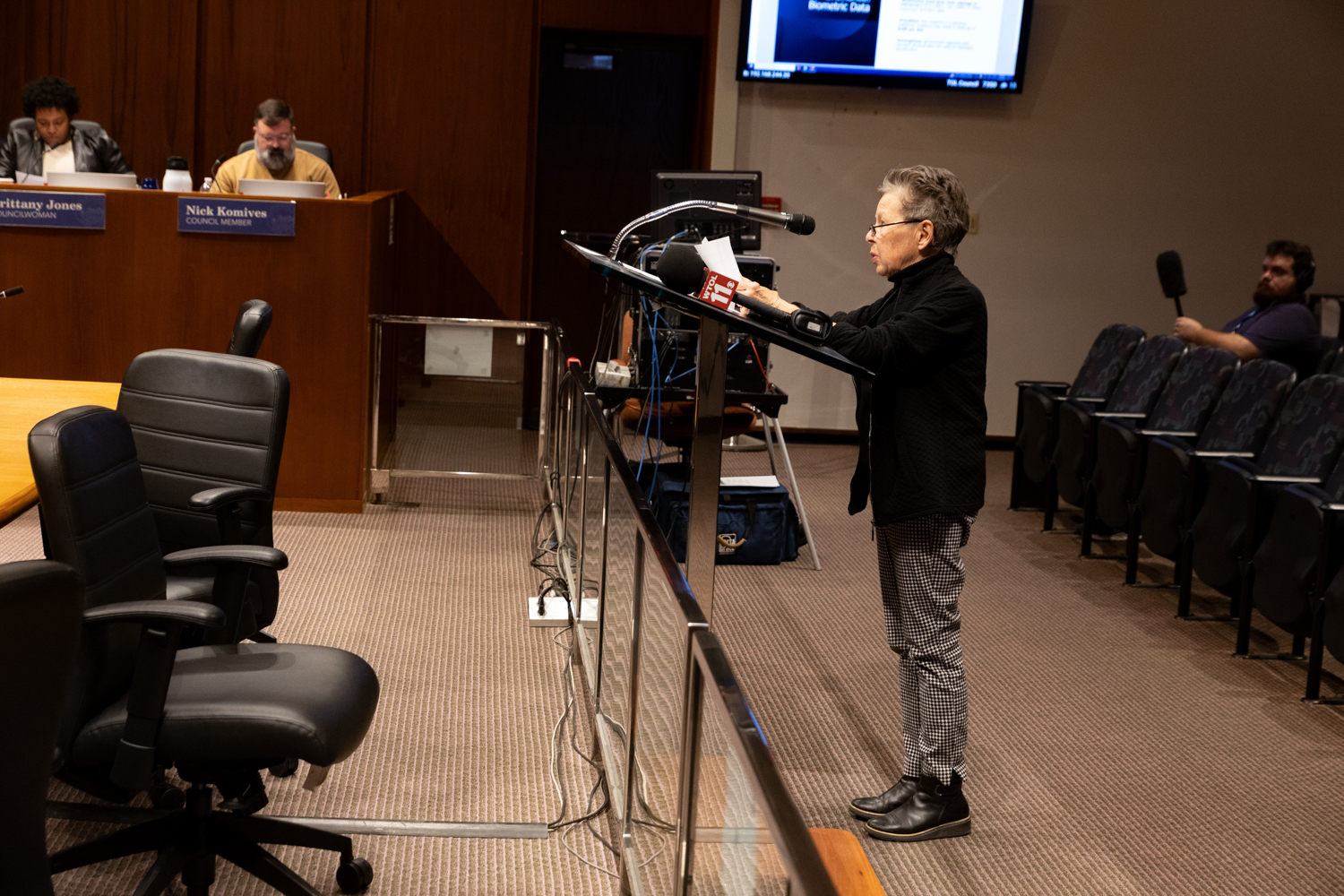
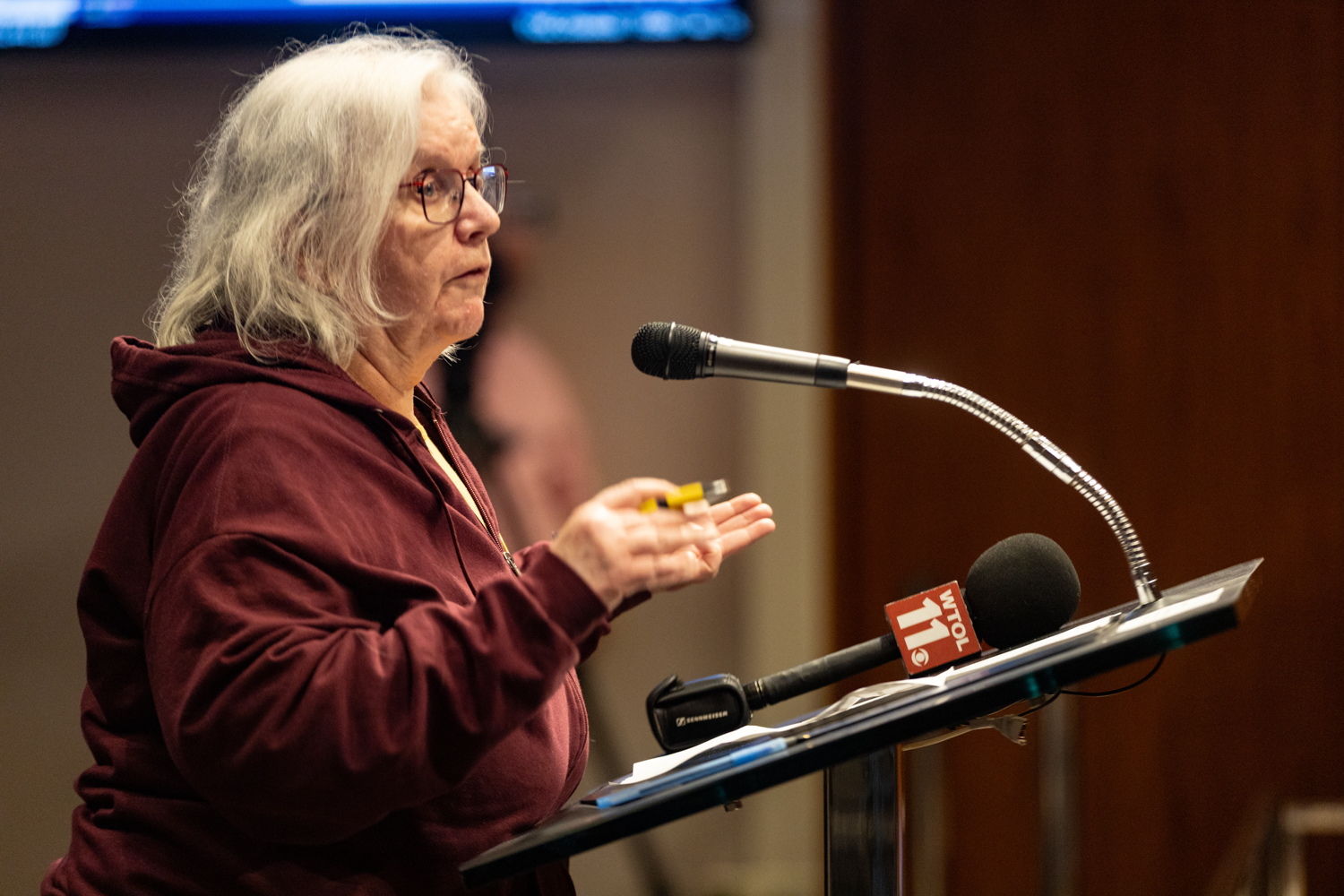
Northwest Ohio Peace Coalition Co-Chair Susan Kuehn followed Ryan and presented additions and revisions to the City’s compilation of ordinances and resolutions.
“We want a prohibition by law, not just resolution – ICE, Border Patrol, Toledo police – from wearing non-medical face coverings, including gators, balaclavas and other tactical face coverings while conducting civil immigration enforcement operations and otherwise interacting with residents,” she began.
“We want a prohibition by law for Toledo police complying with any and all ICE detainer request, even when accompanied by a judicial order.”
Kuehn also urged council to add an ordinance or resolution to remind TPD of their duty to enforce the law without bias, and that there would be no exception among the police force for breaking the law.
Terry Lodge, an attorney and activist in the area, spoke on the proposed ordinance that stops officials from asking legal status without a warrant. Lodge wanted the language to specify the warrant as judicial instead of administrative. And Lodge wanted to designate public parks as areas safe from immigration enforcement more clearly in the proposed legislation.
“We are in a very poor place when our local government is required to enact legislation and publicly declare that our federal government adhere to their sworn oath to the Constitution of this of the United States,” Harold Moseley said during his comment.
“You have confirmed, in my mind, that this is going to be a well-thought-out plan,” he said. “Both Councilman Driscoll and Jones talked about partnering with the local law enforcement officers, and I cannot overemphasize that they need to be at the table from beginning to end.”
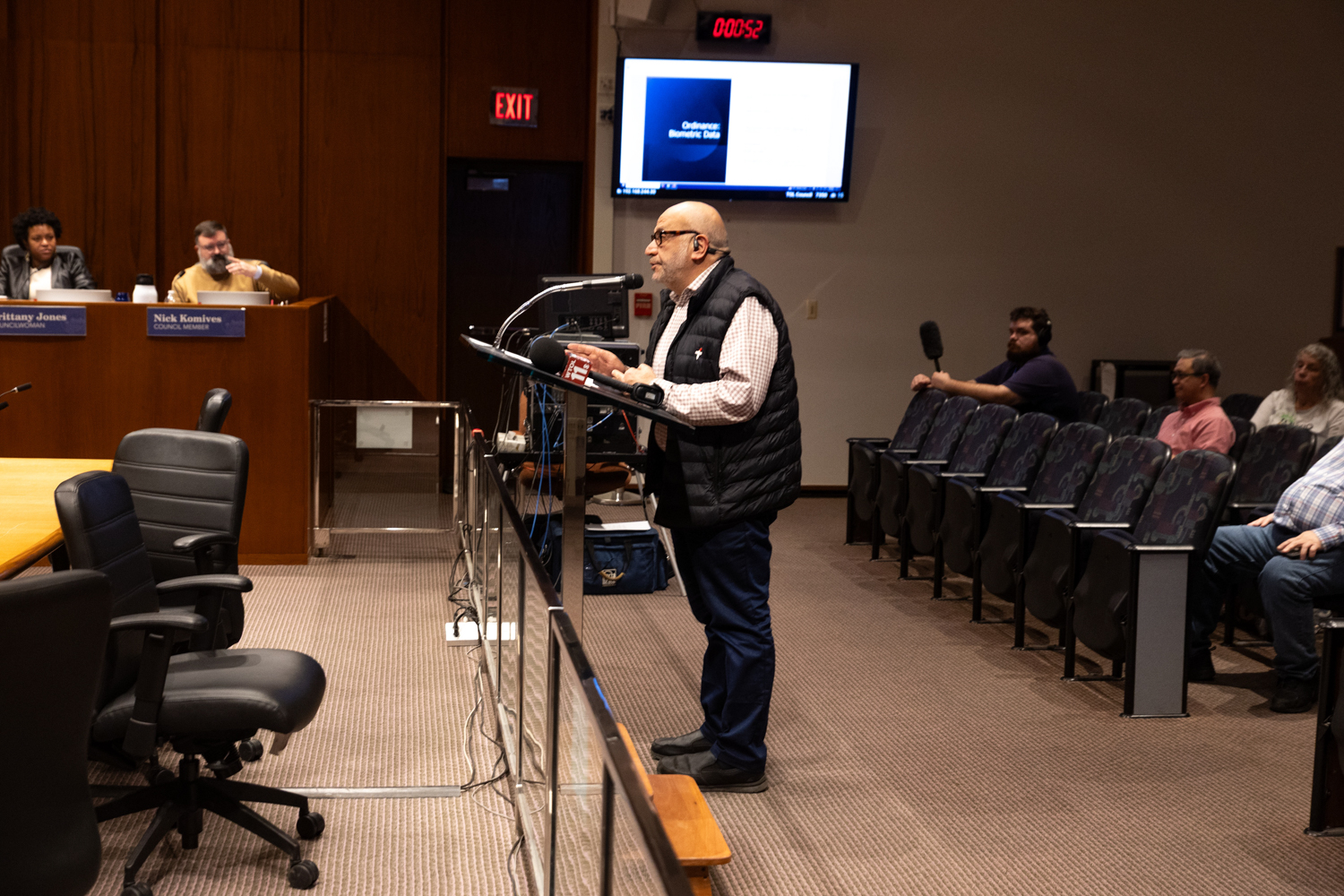
Local Pro-Palestinian organizer Ziad Hummos, spoke briefly on the corruption in the federal government.
“If they’re [ICE is] looking for criminals, just look at the Epstein files,” he said. “They’re looking for pedophiles; they are there [in the Epstein files].
“I mean, when Trump, he opened his mouth, he called the criminals the immigrants, he called them the Muslims, the Christians, the Africans.”
“The criminals…they live in the White House,” he said, clarifying against the narrative of immigrants as criminals. “If Jesus was among us today, he would be chased by ICE.”
Another attorney, Paul Redrup, spoke on the effort to “correct the mistakes of law enforcement’s past.”
“The reality is that immigrants, whether they are here illegally or legally, are less likely to commit crime, but more likely to be victims of crime, and we are seeing now, the data shows, even in the short time that this ICE enforcement action has been in place, that immigrant communities are less likely to report crime, and they’re less likely to show up to court, even if they bothered to report the crime to begin with,” he said.
“That, in and of itself, is making our communities less safe, and I appreciate the effort by this body to do something about that.”
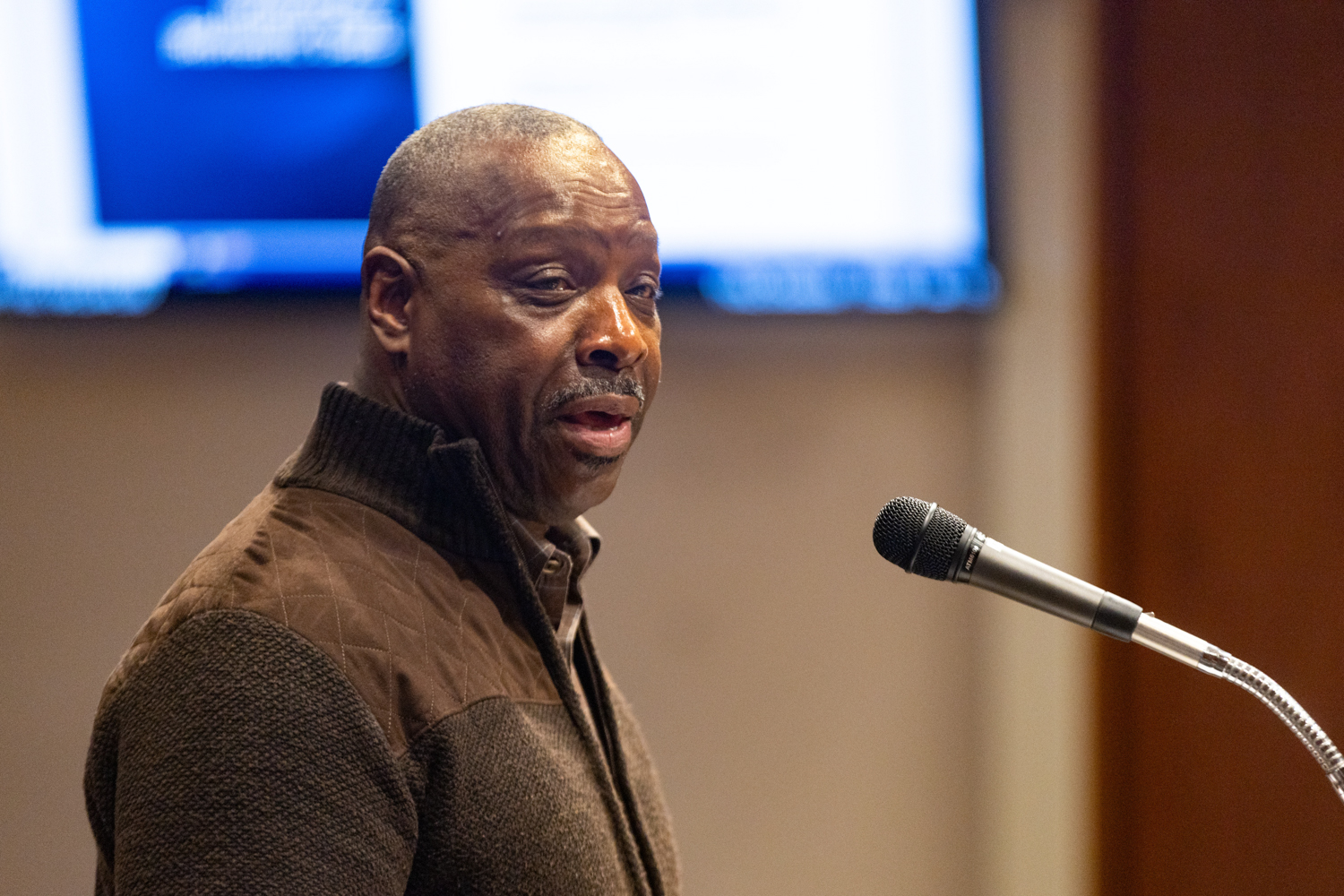
After Redrup, three individuals gave an impromptu comment, without writing their names down.
Peggy Daly-Masternak spoke on her personal, life-changing experience sponsoring individuals through the Toledo Sister Cities Program.
“Our family was greatly enriched,” she said, by sponsoring the individuals from many different countries.
And she asked the council to think of the repercussions of a potential international debacle if ICE chose to detain members of the sister-city program.
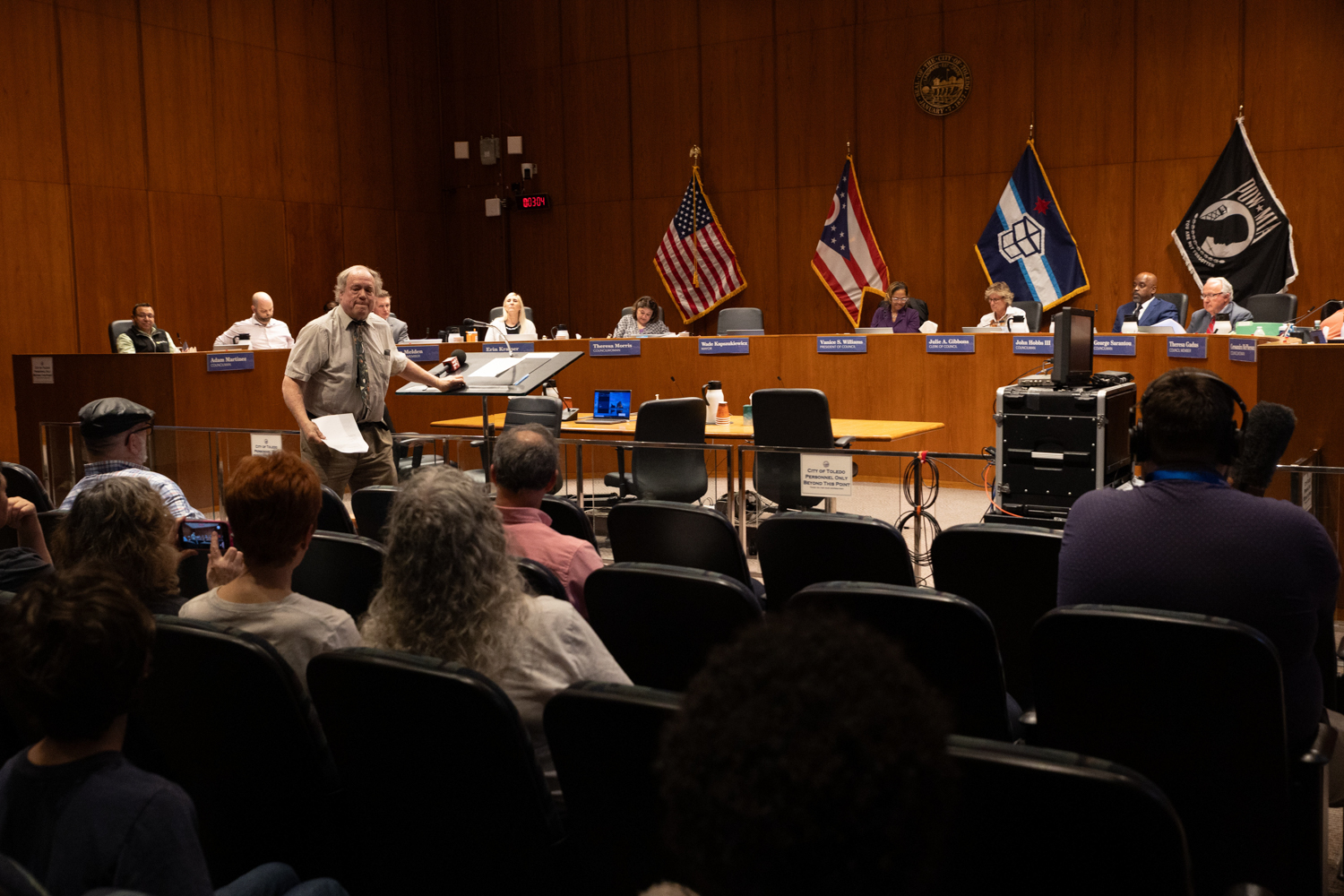
Proposed legislation as presented at the Committee of the Whole
1. Resolution: Urging Constitutional Conduct During Federal Immigration Enforcement
- * Calls on federal immigration agents operating in Toledo to identify themselves clearly and operate transparently.
- * Encourages the use of body-worn cameras during interactions with residents.
- * Recommends that federal agents avoid face coverings and clearly display agency identification.
- * Urges federal agencies to restore full training standards for ICE agents.
- * Calls for federal immigration enforcement to respect constitutional rights and operate in a civil and accountable manner.
2. Resolution: Sending Text Amendments Establishing Special Use Permit Requirements for Detention Facilities to the Toledo City Plan Commission for Study & Review
- * Directs the Toledo City Plan Commission to review proposed amendments to zoning regulations.
- * Defines “detention facilities” within the Toledo Municipal Code.
- * Requires special use permits for any new, expanded, or modified detention facility.
- Establishes standards requiring facilities to meet:
- * Safety requirements
- * Health standards
- * Building code compliance
- * Legal compliance
- * Requires detention facilities to demonstrate adequate space for detainees
- * Provides oversight of detention facility placement and operations
- * Aims to address community health, safety, and operational impacts of detention facilities
3. Ordinance: Creating Protections for Access to Education and Preventing Harassment of Educators
- * Establishes new local offenses prohibiting obstruction or intimidation at schools and childcare centers
- * Creates protections preventing individuals from blocking or interfering with access to court facilities
- * Makes it illegal to harass or threaten educators related to their professional duties
- * Prohibits intimidation, harassment, or disorderly conduct within 15 feet of protected locations.
4. Ordinance: Establishing Immigration Status and City Resources Policies
- * Ensures city services cannot be denied based on immigration status
- * Prohibits city employees from asking about immigration status unless required by law
- * Restricts the use of city funds, personnel, or equipment for civil immigration enforcement
- * Requires City Council approval before entering any federal immigration enforcement agreements (287(g))
- *Prohibits the use of city property as staging areas for federal immigration enforcement operations
- * Bars city employees from secondary employment with ICE or Customs and Border Protection unless required for official duties.
5. Ordinance: Biometric Data
- * Creates Toledo Municipal Code Chapter 557 regulating disclosure of biometric data collection by businesses
- * Biometric data includes identifiers like fingerprints, voiceprints, retina scans, and facial or hand geometry used to identify individuals.
- Businesses must post clear signage at entrances if they collect, use, retain, or share customers’ biometric data.
- Penalties: first violation is a warning; additional violations may result in fines up to $150 per day.
- Exemptions: government agencies and standard photos/video not used for biometric identification.