




Banned Israeli-Palestinian film shown at Maumee Indoor Theater
MAUMEE – The Israeli-Palestinian film No Other Land was shown at the Maumee Indoor Theater to a crowd of a few hundred over Memorial Day weekend.
Despite winning the 2024 Oscar for best documentary in March of 2025, no American streaming platforms or mass distribution have picked up No Other Land, forcing it into independent theaters in the United States.
This embargo on the documentary prompted the Media Decompression Collective (MDC), led by its founder Amjad Doumani, to approach the Maumee Indoor Theater to show the film, with a plan to show it again later in the summer season.
The documentary itself follows Basel Adra, a Palestinian activist, as he tries to get the world to pay attention to the Israeli settlers destroying his small Palestinian community in Masafer Yatta, in the occupied West Bank.

Doumani showed the 95-minute film, and then put together a panel to answer people’s questions after the film. The panel consisted of himself, as a Palestinian-American; Terry Lodge, a local peace activist and attorney; Mechelle Zarou, an immigration lawyer and 1st generation Palestinian-American; and Maha Zeidan, a member of the Palestinian American Bar Association with her J.D. in law from the University of Toledo.

When Doumani put together the event, he said he wanted the panel to help explain the history of what is happening between the Israeli government, Israeli settlers and Palestinians living in the occupied West Bank and Gaza, as No Other Land does not branch out beyond the small community of Masafer Yatta.
No Other Land directors at the Oscars
All four directors, two Israeli and two Palestinian, accepted their Oscars at the Academy Awards, and Yusuf Abraham, an Israeli journalist and one of the directors for the film, spoke plainly about why the team worked from 2019 to 2024 to produce the film.
“We made this film, Palestinians and Israelis, because together our voices are stronger,” Abraham said, and called for the end of the Israeli assault on Gaza and for the release of the remaining Israeli hostages.
“When I look at Basel, I see my brother, but we are unequal,” he continued. “We live in a regime where I am free under civilian law, and Basel is under military laws that destroy his life and he cannot control.”
Abraham said, “There is a different path, a political solution without ethnic supremacy, with national rights for both of our people. And I have to say as I’m here [in the U.S.] the foreign policy of this country is helping to block this path.”
“Why?” he asked. “Can’t you see that we are intertwined? That my people can be truly safe if Basel’s people are truly free and safe.”
“There is another way,” he resolved.
A brief look at settlements and settlers
Masafer Yatta is just one of many areas in the occupied West Bank, a 2,183 square mile area between the Jordan River and the Mediterranean Sea under Israeli occupation since 1967.
After the Six Day War in 1967, the first Israeli settlement was constructed, and since then Israeli settlers have forcibly displaced Palestinians living in the West Bank in a modern day effort of ethnic cleansing. The international community has condemned these settlements as they violate the Fourth Geneva Convention, designating them as illegal.
Israeli settlers believe they are creating a buffer for Israel while decreasing the viability of a Palestinian state in the future, which they see as a threat to Israeli sovereignty. Now it is estimated there are about 700,000 settlers in the Occupied West Bank, with well over a hundred settlements, some estimate as high as 250 settlements.
No Other Land shows a rare glimpse of what the displacement of Palestinian communities looks like on the ground level.
Following the acclaim of the film, the Israeli military has barred Adra, who has attempted to lead a press tour into Masafer Yatta.
After viewing the film at the Maumee Indoor Theater, members of the public came out of the theater with glazed looks of astonishment, including Mike Strom, a Jewish-American, who reactively said to the Toledo Free Press at the beginning of an interview, “Hello, my name’s Mike, and I just watched a movie. And it made me sad,” before expounding more in the YouTube video.
Inside Toledo City Council: June 3
Inside Toledo City Council is an ongoing TFP series highlighting the public functions of the 12-member council so citizens can become more civically involved.
TOLEDO – Three resolutions started off Tuesday’s Toledo City Council meeting, whose most controversial ordinances were placed on “hold” so council members could further investigate them.
All council members were in attendance with the exception of Brittany Jones (at-large), and the meeting officially began with an invocation from Rev. Aaron Baughman of Holy Trinity Lutheran Church. The invocation focused on the benefit and power of diversity, as told through a reimagining of the story of the Tower of Babel from the Bible.
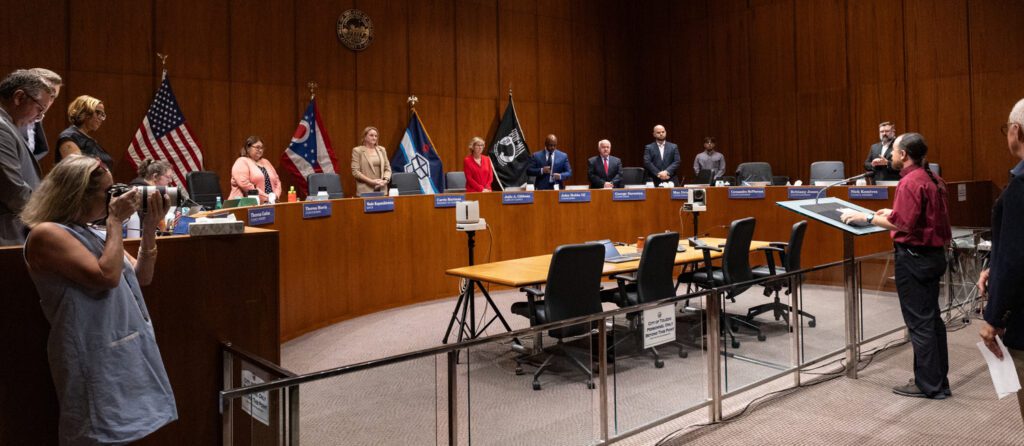
Old Orchard Pride
Next, a neighborhood team, the Old Orchard Neighborhood Association, took to the podium, and advertised their Garden Tours happening this Sunday, June 8. The tours are priced at $10 per person, happen from 10 a.m. to 5 p.m. and all the proceeds from the tours go towards the beautification of the Old Orchard neighborhood.
Sam Melden (District 5), whose district includes the Old Orchard neighborhood exclaimed that “this is one of the coolest events in the city, and it’s a great example of what happens when neighbors care so deeply about their neighborhood.”
One day before the garden tours, on June 7, Old Orchard is featuring a garage sale day from 9 a.m. to 3 p.m.
Ohio Youth of the Year
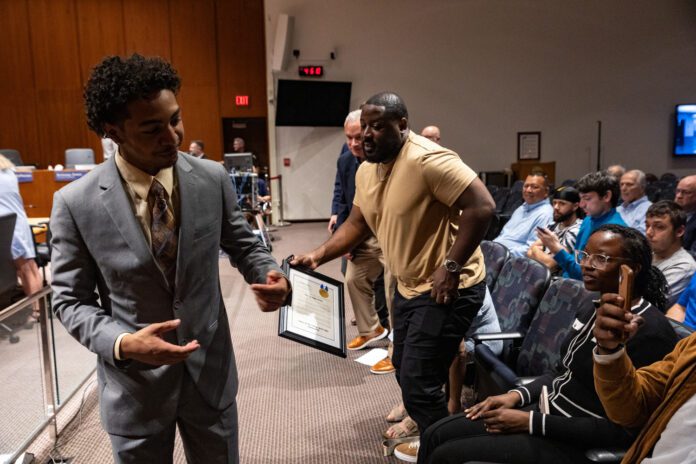
Council then took pride in recognizing high school senior Tyreese Blue II, who won the 2025 Ohio Youth of the Year award for the Ohio Alliance of Boys & Girls Clubs.
The award was announced in early April of this year and resulted from Blue’s volunteer dedication and service to the Boys & Girls Clubs of Toledo.
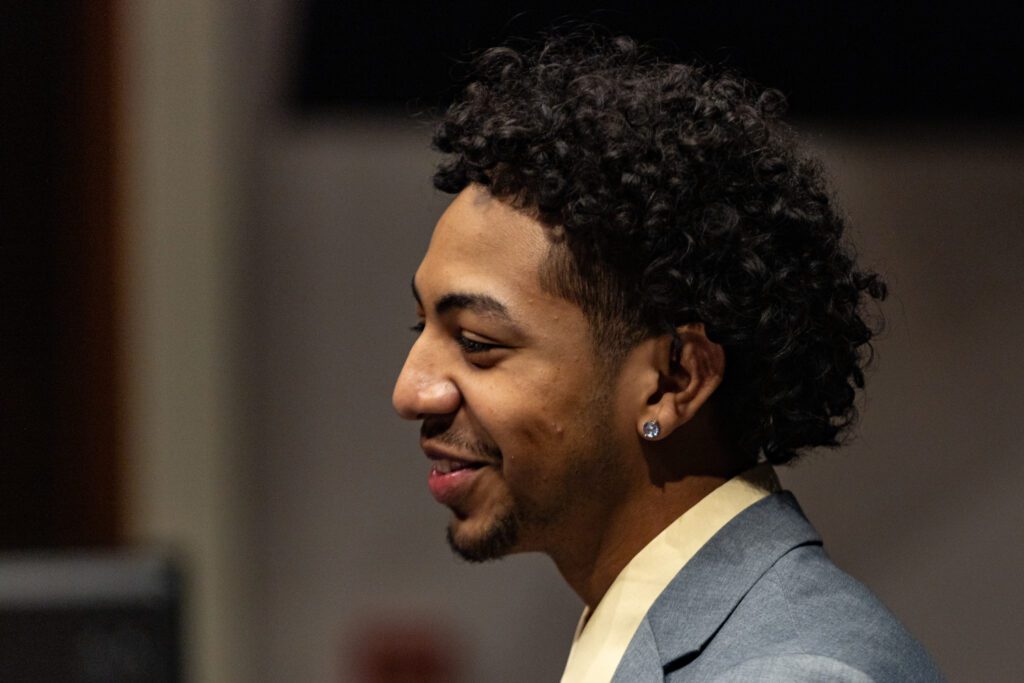
Blue plans on attending the University of Toledo, where he will have already collected enough credits to enter as a junior in undergraduate studies. The 17-year-old plans on majoring in construction engineering technology.
Multiple council members had words of encouragement for Blue, including Nick Komives (at-large), who hoped Blue would “stick around the city.”
During 13 ABC’s Rising Star segment, Blue said he intended on reinvesting in his family here in Toledo. “They put in so much work to put me in this position, I just want to give back to them in whatever way I can.”
Council members Vanice Williams (District 4), Cerssandra McPherson (at-large), Melden (District 5), and George Sarantou (at-large) all added their praises to Blue for his accomplishments and contribution to the community, with Williams and McPherson taking extra time to thank Blue’s parents for supporting him.
> A much shorter presentation was given to recognizing the Toledo Unified basketball team, a University of Toledo initiative in collaboration with the Special Olympics, for winning the 2025 National Intramural-Recreational Sports Association Championship.
Rocky Ridge Development LLC
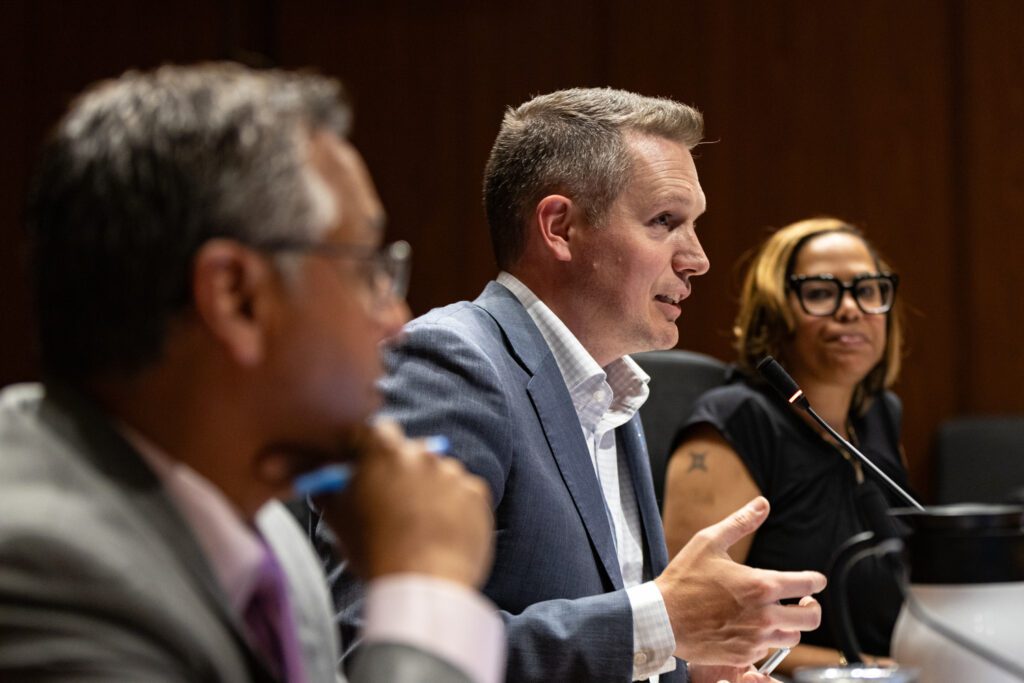
Perhaps the most anticipated moment in the council meeting was the vote on Ordinances 223-25, 224-25 and 225-25, which deal with rezoning the areas near Byrne Road and Angola Road for industrial use. But these Ordinances were not voted on in Tuesday’s meeting, because Mac Driscoll (at-large) chose to table them.

The main company in question for this zoning change is Rocky Ridge Development LLC, a company that mines lime for use in agriculture.
Last week, the three rezoning ordinances caused a significant disruption during the Council’s agenda review when Toledo mayoral candidate Roberto Torres interrupted the review with 300 signatures of Toledo residents against the rezoning.
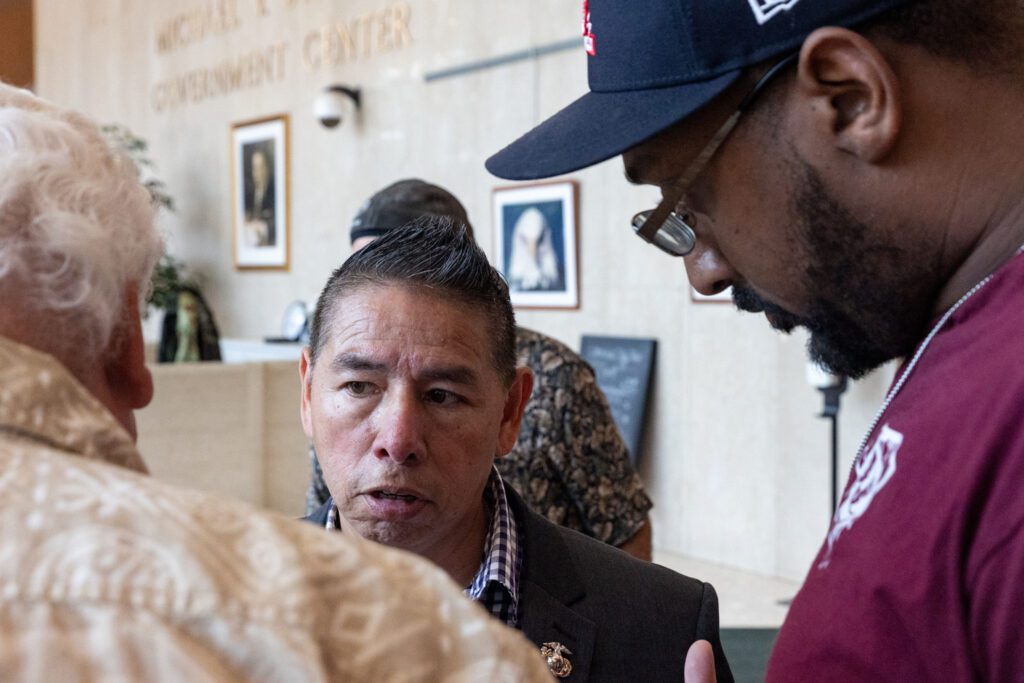
This week, Torres was back but left shortly after Driscoll tabled the ordinances, meeting the press in the 1 Government Center foyer.
“The residents need to be vigilant on this issue and be cautiously optimistic,” he said.
But Bill Hoag, who grew up in the area and owns a number of properties there, was less than satisfied with the hold. “You can’t keep postponing this,” he said. “It would have been turned down today if they voted, they don’t have enough [votes] to pass.”
Since the Plan Commission did not recommend the ordinances for approval, Council will need a supermajority of nine votes to pass the zoning changes from residential to industrial.
However, area residents say mining has already begun.
“They’ve been mining for two years. I watch it everyday,” said Kelly McKown, who can only vouch for the past two years she’s lived on Angola Road.
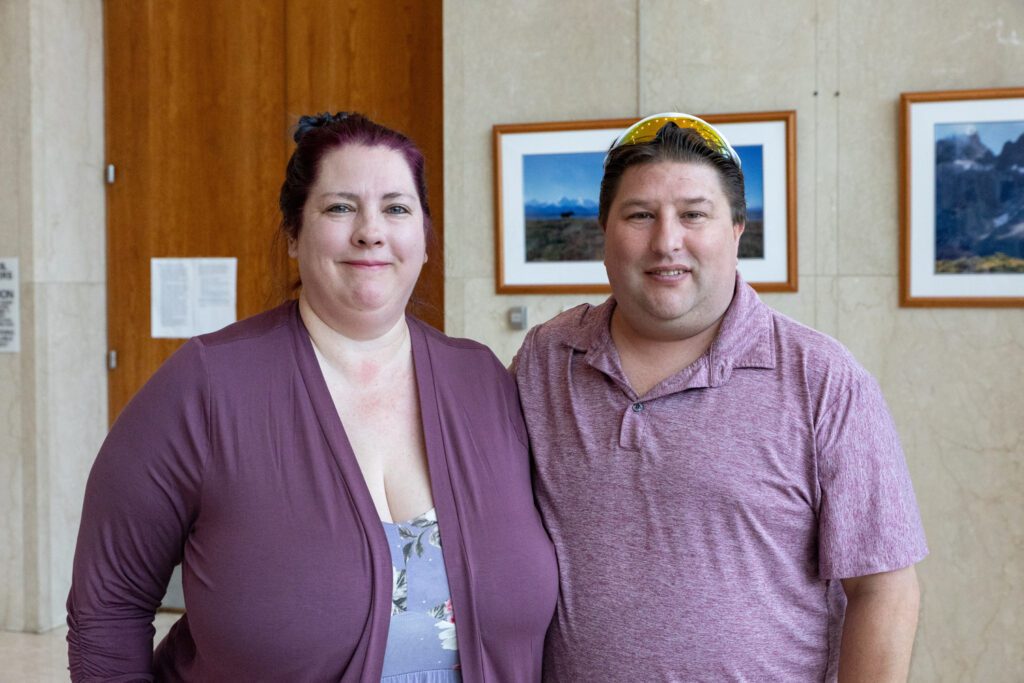
“They’ve been doing it without the zone change,” and the dust from the mining has been a significant concern for McKown’s health. “I do have asthma, and I’m now on an inhaler, a maintenance inhaler that I wasn’t on previously.
“If it’s because of that site, I don’t know. But going forward, the health implications for myself or residents around me, that’s a concern going forward.”
McKown and her husband said what Rocky Ridge Development LLC is putting into the ground and what residents are “breathing in” are of utmost importance to them.
There were three concerns brought to the attention of Toledo City council by the plan commission:
- Concern of dust from mining
- Reuse of the site after the mining
- Environmental impacts of mining
Driscoll seemed adequately assuaged by the efforts to mediate the dust with a “dust suppressant,” as Ed Moore, managing director of Rocky Ridge Development LLC, recommended. Driscoll referenced an individual who said the dust had gotten better since the use of the suppressant, but Hoag was less than pleased with the suppressant solution.
“Byrne Road’s all oil,” he said. “See, the people have complained so bad about the dust, [so] they’ve started treating that. Well, the treatment’s got oil in it. Come in off Angola, and come out onto Byrne…it’s an oil slick, basically. You can smell it. It’s not good.”
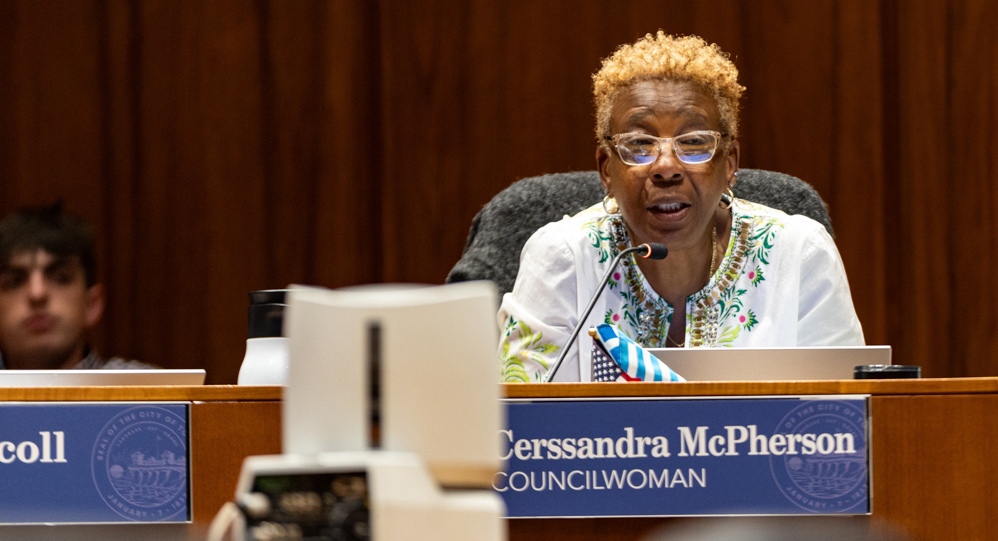
Regardless, the two council members who seemed most undecided on the issue were Driscoll and McPherson, who were very concerned about the size of the rezone (60 acres) and its viability for reuse.
“I asked them, could the property be used after this project is done for agriculture, farming?” McPherson said, but relayed that there were slightly different answers given to her by different sources.
Then came the issue of the signatures opposed to the industrial development, which she said she checked to make sure they were from residents of the City of Toledo.
She confirmed the signatures were from Toledoans, which also gave her pause.
“How does that [mining] affect those that live around there? How will it affect them? Will it affect the water around there? Will that dust and all of that, will that affect the people around here?” she questioned hypothetically, and added, “When you ask the question, then you get two different answers. Now, I got to go back, so we’ll look into it.”
Driscoll confirmed the ordinances could not be held indefinitely because it would not be fair to residents or Rocky Ridge LLC, but could not say when the ordinances would be voted on.

Toledo welcomes Victory 1 ship
TOLEDO – Toledo wasn’t supposed to be on this cruise ship’s itinerary.
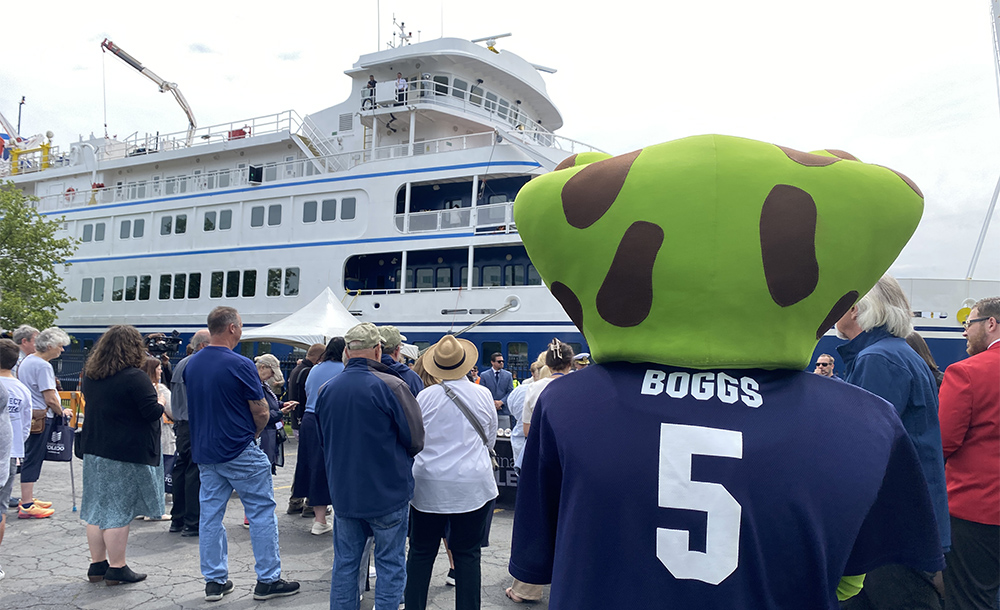
In fact, the Glass City hasn’t been on the itinerary of any cruise ship in over 20 years. That was the reality until May 30, when Victory I, a 286-foot small ship operated by Victory Cruise Lines, docked in the city Friday morning, bringing more than 190 passengers to explore what Toledo has to offer.
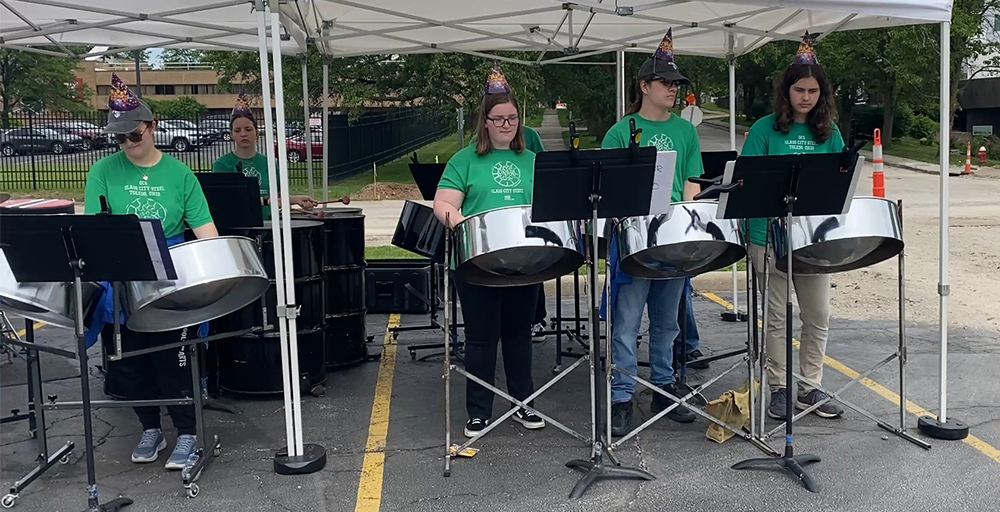
What began as a last-minute detour from Detroit turned into one of the most celebrated stops on the ship’s Great Lakes journey. City officials and local organizations lined the Maumee River to greet the vessel with fireboats, steel drum music and open arms—a show of civic pride years in the making.

Toledo’s waterfront isn’t new to maritime history or to passenger ships. In the early 20th century, steamships and passenger liners were common sights on the Maumee River, connecting Toledo to other Great Lakes cities. For decades, the city served as a vital industrial and shipping hub, but cruise traffic gradually disappeared as railroads and highways rose to dominance. By the early 2000s, cruise ships had all but vanished from Toledo’s port.
That changed last week.
Victory Cruise Lines operates the only cruise line sailing exclusively across all five Great Lakes, offering a 10-day journey from Chicago to Toronto. Friday’s stop in Toledo was a one-off, born out of a scheduling conflict in Detroit, but its success may open the door to more.
The detour was made possible thanks to a rapid-fire collaboration between Victory Cruise Lines, the National Museum of the Great Lakes, Destination Toledo and the Toledo-Lucas County Port Authority.
When the Detroit Grand Prix blocked Victory’s usual port in Detroit, the museum reached out to Joe Cappel, vice president of business development at the Port Authority six weeks prior. Cappel contacted Holcim Cement, which graciously offered use of their commercial dock, and the rest came together quickly.
“Getting the Victory I to Toledo was definitely a team effort,” Cappel said. “It really came about through Kate Fineske and her relationship through the National Museum of the Great Lakes and the folks at Victory Cruise Lines.”
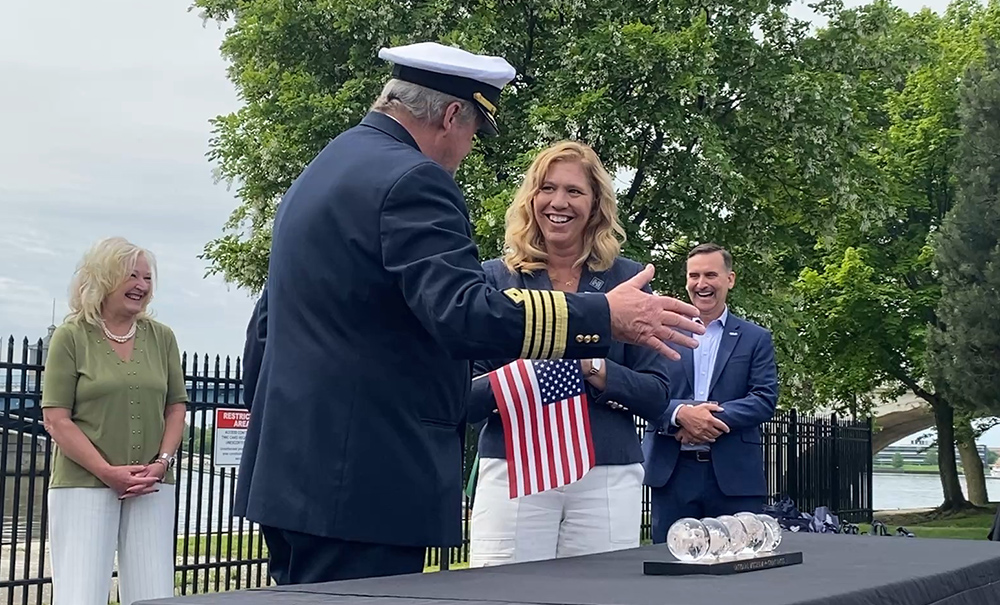
Sara Smith, director of Institutional Advancement at the National Museum, emphasized the significance of this event, which she said came together in just six weeks.
“Having cruise vessels stop here in Toledo on a regular basis has been a long-time goal of our organization, of the Port Authority and of Destination Toledo,” Smith said. “So we’re really excited to have this opportunity to show them what a great experience they could have coming to Toledo.”
Victory Cruise Lines already partners with the museum on a program called “Lake Lorian,” which puts Great Lakes history experts aboard the ships and features curated exhibits and archival materials.
“The Victory Cruise vessels are really like a floating extension of the National Museum of the Great Lakes,” Smith said. “Their passengers tend to be lifelong learners: Those who really are excited about learning about the region.”

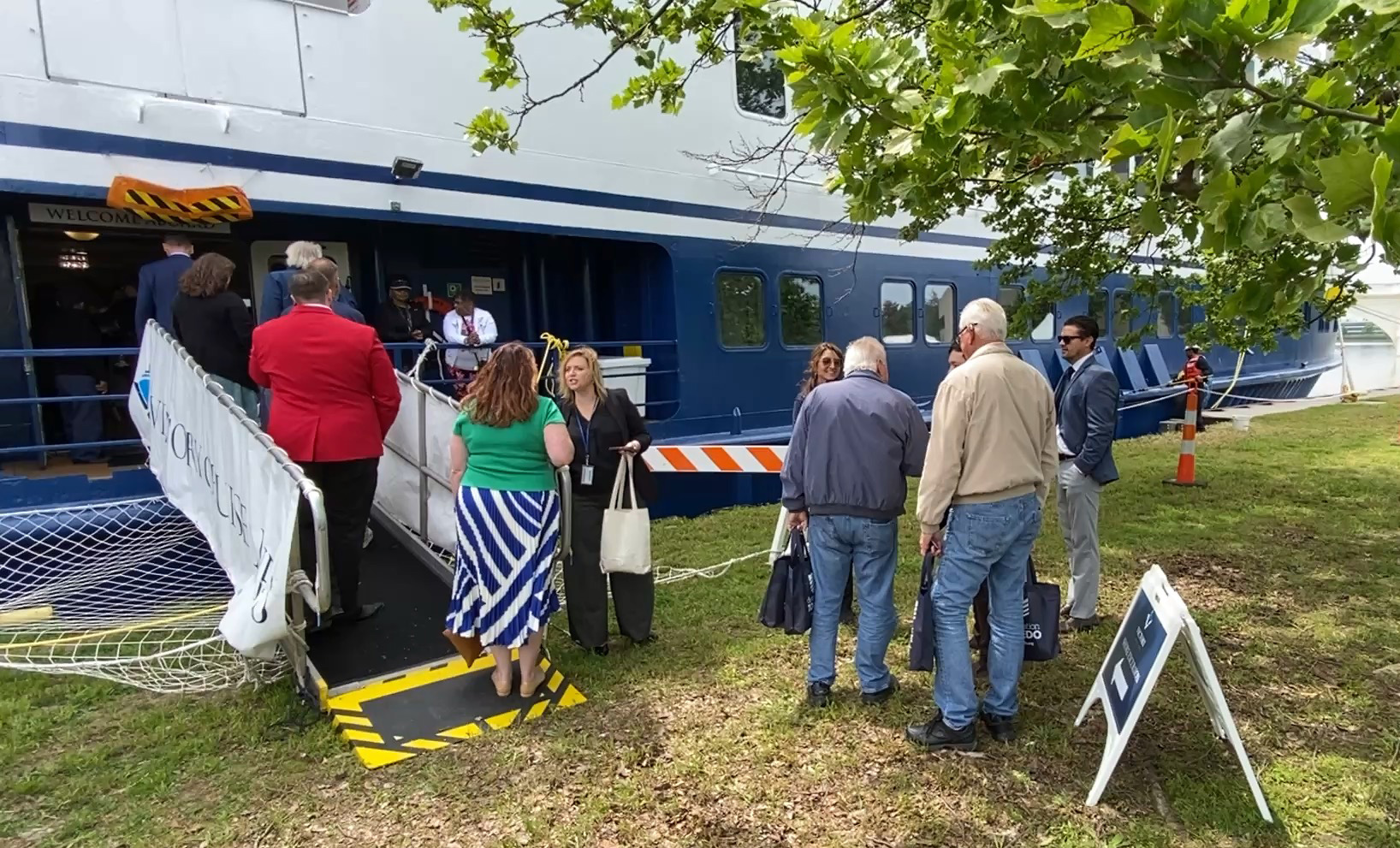
To make the Toledo stop unforgettable, the museum organized an excursion package for Victory I passengers, which included a private breakfast in the officers’ dining room before public hours, followed by behind-the-scenes artifact opportunities. They also offered all passengers an excursion with guided tours and one-on-one time with the museum’s exhibit curators.
“You know, we’re really trying,” Smith said. “We are trying to make sure that we were able to host as many of their passengers while they were docked here in Toledo as possible.”
Beyond the two opportunities to tour the National Museum of the Great Lakes, passengers could visit the internationally recognized Toledo Museum of Art.

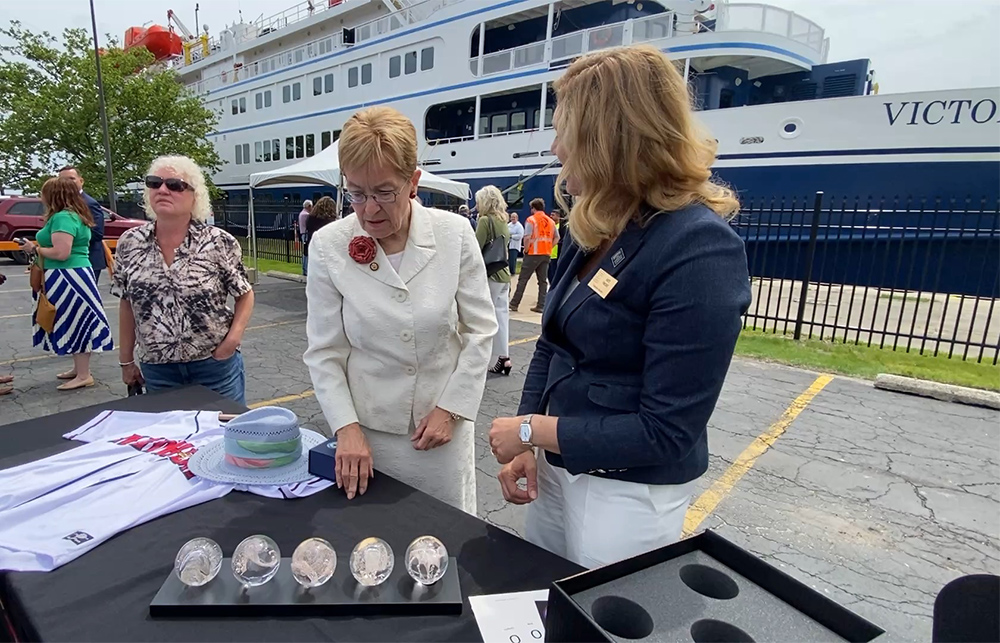
Victory passengers received swag bags filled with Toledo memorabilia, enjoyed live performances and were welcomed at an official ceremony attended by Mayor Wade Kapszukiewicz, Rep. Marcy Kaptur, Tim Schneider, the Northwest Ohio field director for Bernie Moreno, Lucas County commissioners and other civic leaders. The cruise line was also presented with a hand-blown glass sculpture representing all five Great Lakes, crafted with sand collected from each.
A lot of times when they dock in cities, you know, no one really cares if they’re there or not. And here in Toledo, we are so excited to welcome them … the Victory team has expressed their gratitude for just one of the warmest welcomes that they’ve ever had.
Sara Smith | Director of Institutional Advancement at the National Museum
Cappel agreed. “I could tell the captain was almost emotional over it. I mean, he really enjoyed that and said it was one of the best welcomings he’s ever had in a port city, so that certainly meant a lot to hear.”
Lucas County commissioner president Lisa Sobecki said the cruise ship’s docking brought back memories of her time in the Navy. “But, you know, that’s a working vessel, and this is a pleasure vessel.”
Sobecki described the visit as “inaugural” for Toledo’s tourism and waterfront future. “I’ve already talked to some of the passengers and they’re already talking about coming back on other trips,” she said.

Passengers, like Janice Carter-Steward from Dallas, Texas, were delighted by both the hospitality and the itinerary. “We’ve done so many cruises. We’ve done a lot of ocean cruises. We’ve even done riverboat cruises. But this is our first time doing Victory,” she said. “The staff is amazing, the food is excellent and it’s been really good. We’ve had some really good times on there. It’s just relaxed, which is what we like.”
Cappel recalled another passenger from New Orleans who called the Great Lakes his “bucket list trip,” eager to see Niagara Falls, the Rock and Roll Hall of Fame and Toledo.
“That was kind of cool to hear someone from a different region of the country who’s never been to the Great Lakes talk about how they’ve always wanted to come here,” he said. “Sometimes we’re kind of rough on ourselves here in Toledo. Here’s somebody from one of the coolest cities in the country talking about how neat they think our area is.”
According to Victory Cruise Lines spokesperson Michael Hicks, Victory I has no immediate plans to make Toledo a regular stop, but its potential is clear.
“It’s just a one time stop,” Hicks said, “but we’re looking at visiting Toledo more often.”
Cappel said the Port Authority is already looking long-term. In addition to working with Holcim to accommodate more visits, there are plans to study permanent cruise dock options near the former location of the S.S. Schoonmaker, which currently is housed near the National Museum.
“It’s more of a marathon than a sprint,” he said, “but we’ll certainly be at the table, and, you know, making sure they’re aware of Toledo as an option moving forward.”
Smith agrees. “We want people to think of the National Museum of the Great Lakes in Toledo as the place to come [for Great Lakes conversations]. It’s centrally located graphically across the Great Lakes,” she said. “We want Toledo to be that place, and, really, to be known not just as the Glass City, but also a Great Lakes City.”
As Toledo builds toward a more connected, vibrant riverfront, leaders and residents alike hope this cruise visit won’t be the last, but the first of many.



Doug Hinebaugh: Toledo’s Photographer

On this episode of Behind the Byline, host Jaden Jefferson speaks with Toledoan Doug Hinebaugh, a local photographer who documents events for businesses, organizations and nonprofits for his business, Doughiefresh Photography.
On this show, Hinebaugh, otherwise known as Dougie Fresh, talks about how he thought he was escaping Toledo for greener pastures when he moved away, bouncing around bigger cities for a few years, until he realized it was his drinking, not Toledo, that was the problem. Sober for nine years now, Dougie is now one of Toledo’s biggest cheerleaders.
Hinebaugh highlights:

- why he says yes to almost everything
- how and why COVID and toledo.com changed his life
- three of his most recent collaborations: The successful Toledo Metroparks levy; The Techledo event, an electronic festival, that will be held at the Glass City Riverwalk on June 21; and Jake and Cooper’s Bark Park in Oregon
- a fun fact, but you have to listen to the podcast to hear the “Easter egg”
- speculation on his future: An event organizer or Toledo mayor? Toledoans will have to wait and find out
“You know, I spent 25 years running printing presses and thought that was literally the only thing I was ever going to be good at,” Hinebaugh says in the podcast. “I really believed that, Jaden. I was like, ‘What a boring disappointment of a life I’m going to have here,’ until I flipped the script.”
New episodes of the Behind the Byline audio news podcast drop every Thursday on Pod Station.
Behind the Byline is a production of the Toledo Free Press.
(Recorded via phone interview on June 4, 2025)
Maumee recall: ‘They are not listening’
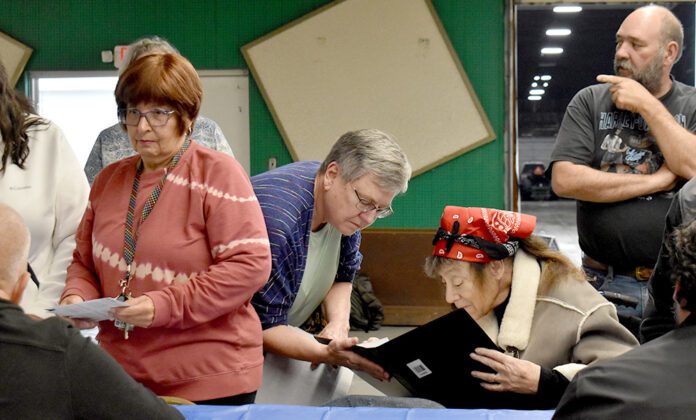
MAUMEE — Rain puddled between lines of parked cars at the Lucas County Fairgrounds as residents walked past RECALL yard signs stuck into the soggy ground and shook off water from their umbrellas as they filed into the Green Barn.
Despite the dreary weather, the crowd came out in force on May 21 for one reason – to sign the petitions of candidates who aim to replace the current Maumee mayor and six of the seven city council members.

What residents say began as backlash over a controversial sewer ordinance has grown into a full-fledged movement to recall Mayor Jim MacDonald and council members Gabriel Barrow, Scott Noonan, Margo Puffenberger, Josh Harris, Jon Fiscus and Ted Kurt. Their critics say the council has consistently ignored public input, pushed through emergency legislation and deferred too much authority to city administrator Patrick Burtch.
The only council member not being recalled is Philip Leinbach. Maumee residents, like Sherrie Schunck, say that Leinbach was the only city council member who took the initiative to have meetings with the citizens when the sewer issue first hit.
“[They] are not listening,” Schunck, supporter of the recall, said of the city’s officials. “They have their own agenda that is not acceptable…to spend money on fencing when we have issues like sewers, water that keeps going sky high.”
Schunck worries that residents like her will not be able to keep up with skyrocketing costs. What she refers to is a now-repealed sewer ordinance that many residents say imposed unexpected financial burdens on Maumee homeowners and was passed with limited discussion.
She is not alone.


Dana Johnson, one of the organizers of the recall effort, said the final straw was the June 2024 sewer ordinance, which he described as “one of the worst laws ever made.
“I started seeing some disturbing patterns in government, what I would consider government abuse, abuse of power, going back as far as three years,” Johnson said. “If it was just one or two isolated incidents, you know, I’d get it. But we see a repetitive pattern where the decisions they make and how they make them are just hurting way too many people. And when people speak up about it, they are dismissed.”
The citizen-led recall effort, spearheaded by Maumee Patriots and the Maumee Citizens for Common Sense group, began over a year ago. The first of two recall candidate meet and greet events occurred on May 21, six weeks after city council member Ted Kurt yelled at a disgruntled resident, as reported by WTOL.
Half a dozen candidates met with residents at the Lucas County Fairgrounds to collect signatures for their petitions to run in the recall election in September, should the Ohio Supreme Court move forward with it. The city of Maumee asked the court to block the recall effort of six council members and the mayor in April after the Lucas County Board of Elections voted in March to certify recall petitions.
Seven individuals are preparing petitions to be on the ballot in September:
- Rosemarie Barciz for council member
- Isiah Gonzalez for council member
- Gina Hughes for council member
- Andrew Huyghe for council member
- Dave Ross for council member
- Scott Sund for council member
- Chelsea Ziss for mayor
Dave Poeppelmeier, who lost his first run at city council two years ago, is running again for a seat in Maumee’s general election, as well, citing transparency issues and city administrator Burtch as motivators to return.
Not everyone in Maumee supports the recall. Jim Stengle, who serves on the UNITE Maumee leadership committee, believes the effort is an overreaction.
“My point is…this public leadership? They stub their toes. Sometimes they break some China along the way. All right, they make some people mad,” Stengle complained about those in office. “What you don’t see happening anywhere in the country is somebody coming in and saying, okay, the way we fix this is by pushing the nuclear button and completely blowing up government.”


Josh Harris, who is one of the six current council members being recalled, says he has tried to be transparent and available to the public by handing out his cell phone number.
“When I see people posting things,” Harris stated, regarding social media posts. “I’m saying, ‘Hey, you know, you seem to have some questions. I’d be more than happy to speak with you. Here’s my number.’ But honestly, no one calls.”
Harris claims he had only five people call him in his three years on council. His phone number is not listed on the City of Maumee website but he shared it with the Toledo Free Press, urging people to “call me.” He can be contacted at 419-351-5091 or at [email protected].
None of the current city council members have phone numbers listed on the Maumee City website. Also, the Maumee city’s contact page gives 911 as the only contact with an email form below.
As a city council member, Harris claims he does not have a working relationship with Burtch — the city administrator with whom the supporters of the recall cite their frustrations —saying, “he’s just basically there to advise any questions that we [Maumee City Council] may have.”
Ziss, a mayoral candidate in the recall election, said she was compelled to run because she believes Maumee residents deserve more transparency and accountability, which, for her, “is telling people why you’re doing what you’re doing” and “explaining how it turned out.
“I’m not afraid to admit mistakes. I’m also not afraid to disagree. But I also don’t take it personally if somebody disagrees with me, and I think that’s a really important thing.”
Chelsea Ziss
Chelsea Ziss believes that while everybody wants to feel heard by their elected officials, that is not what is happening in Maumee. “What has been happening, or what people feel have [sic] been happening, anyway, is that they’re just kind of following the leader or being totally apathetic, and I don’t even know which one of those is worse.”
Poeppelmeier, a candidate for city council in the general election, is aligned in thought with Ziss. “I think I can listen to people and give better guidance,” Poeppelmeier said. “The thing that made me finally run again was our city administrator, Patrick Burtch.”
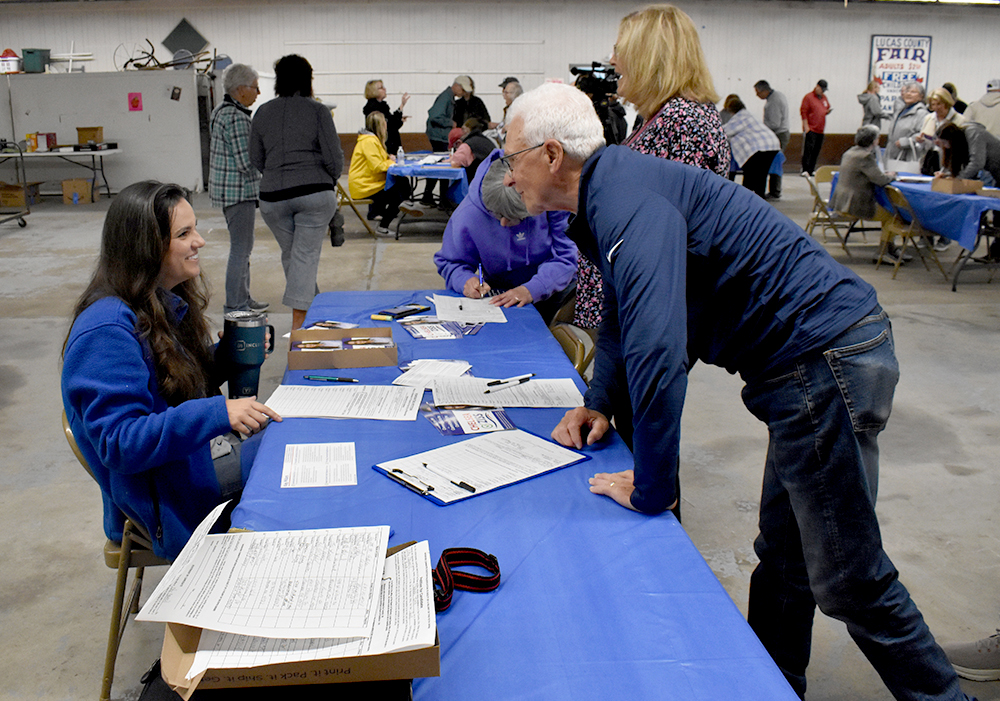
Ziss claims the current council wanted to pass an ordinance that would temporarily remove all spending restrictions for the city administrator. She continued to say that Burtch can already spend $75,000 without council approval, which is another concern for her regarding lack of transparency from the current city council.
While Unite Maumee members can admit faults on behalf of the current city council, they say that lack of accountability and transparency is not one of them.
“The city has made a lot of efforts to become more transparent,” Alex Schrinel, Unite Maumee leadership member. “There were legal issues with televising city council meetings. They figured all that out, and now they’re live streamed.”
Schrinel and other Unite Maumee leaders say that the best way for residents to get their voices heard would be to attend public committee meetings, read the City of Maumee newsletter each month and go to the proper place to get information instead of relying on social media.
Jamie Tscherne, Unite Maumee leadership member, says that all meetings are public, excluding executive sessions, and that residents are not taking advantage of the opportunity.
This echoes council member Harris’ sentiments urging constituents to “become educated” and “make sure you reach out and ask questions.”
Regarding spending, Unite Maumee says there is a plan to improve the community, such as continuing to upgrade the whole city, sidewalks, neighborhoods, safety and schools.
Tscherne noted that the current city council was already successful in updating uptown.
“Right now, there’s been $350 million of public and private investments in this community in the last few years,” Stengle said. “There’s another $500 million that’s already been announced. Right now, one of the fastest ways to blow that up is to blow up the city government.”
If the Ohio Supreme Court approves the recall, candidates will need 431 signatures to appear on the Sept. 9 special election ballot. Under Ohio law, recall petitions must be signed by a number of people equal to 15 percent of the votes cast in the most recent municipal election. That number in Maumee is 431.
Although it is not yet certain whether the recall election will proceed, both supporters and opponents are preparing for a pivotal moment in Maumee’s political future.

Toledo Excel inducts 60 new students
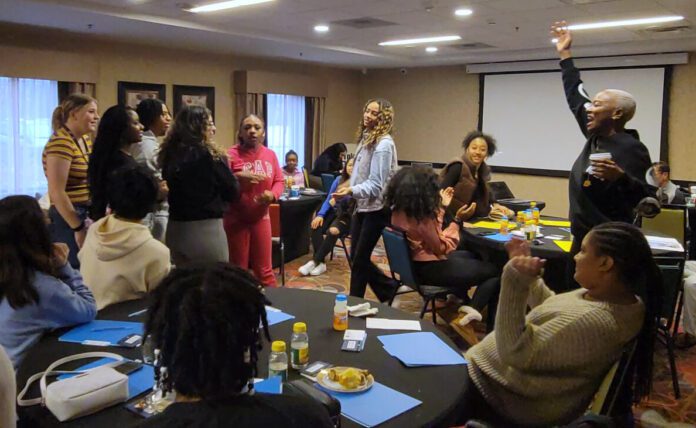
TOLEDO — For more than three decades, the Toledo Excel program has provided opportunities for underrepresented students, helping them succeed academically and professionally and preparing them for the future.
Founded in 1989 by Dr. Helen Cooks and local educators, Toledo Excel started as an initiative to inspire and motivate young minds in our community. Today, the program remains a beacon of hope, offering scholarships, leadership training and career-building experiences to students.
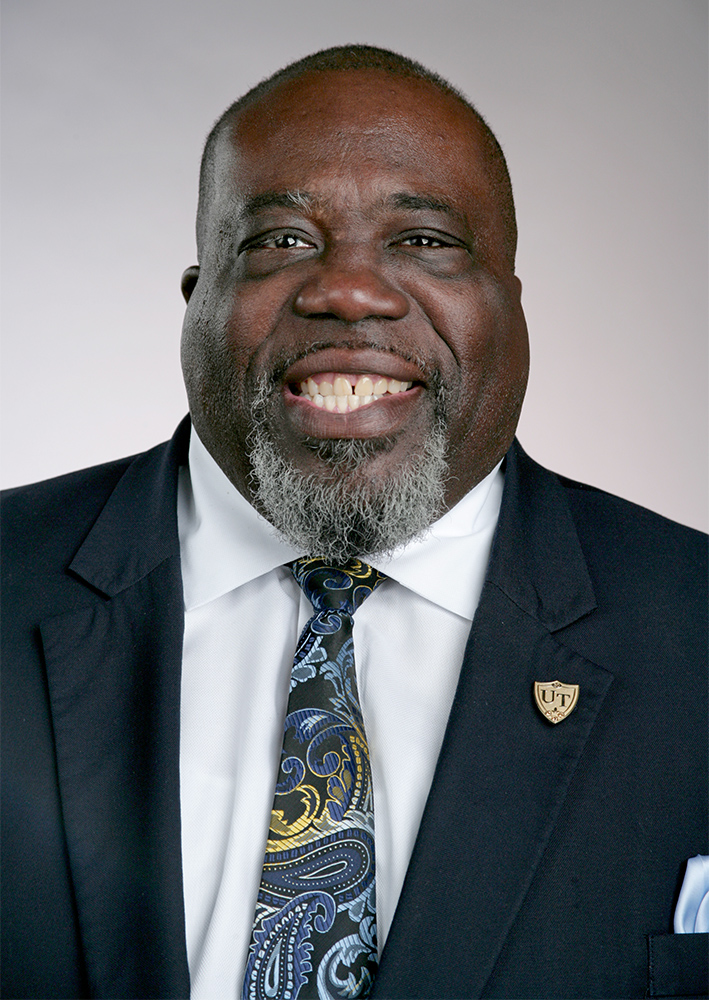
David Young, executive director of multicultural student success at the University of Toledo and director of Toledo Excel, ensures students receive invaluable opportunities and resources for success.
“From many years of attending the annual event, I’ve had the opportunity to receive advice and inspiration from the stories of industry leaders, such as Exonerated Five member Yusef Salaam, award-winning author Jason Reynolds, and Disney star Diane Guerrero of ‘Encanto,’” said Autumn Vasquez, Toledo Excel Group XXIX, graduate of 2021.
“These moments are truly inspiring for me, and the event sheds light on the resilience, intelligence and potential of the University of Toledo and Toledo high school students each year,” said Vasquez, a Toledo Early College graduate.
Students enter the Toledo Excel Program near the end of eighth grade, beginning their journey in the Basics Plus institute, which strengthens skills in math, science and English. First-year students spend time at the University of Toledo’s College of Engineering, where they are mentored by Toledo Excel alumni.
During the summer, alumni and team leaders live in residence halls alongside students, fostering leadership skills and reinforcing a sense of community.
Second-year students participate in the Careers and Leadership institute, which focuses on critical thinking, analytical reasoning and leadership skills.
Third-year students study social issues, human rights and their rights as U.S. citizens through the Civil Rights and Human Rights Institute.
Young said last year’s students examined Chicago’s economic disparities, human rights issues, and historical context to better understand the city’s successes and challenges.
Senior-year students expand their knowledge beyond national borders through the Global Diversity institute, analyzing global economics and how the U.S. interacts with the rest of the world.
Toledo Excel has a 97 percent high school graduation rate and an 85 percent college graduation rate—figures that surpass standard graduation rates for students outside the program.
“And so I think that’s why Excel students have been so successful,” Young said. “It’s that there has been that consistency in developing them to understand ‘yes, you’re headed toward college, and here’s how you’re gonna be successful,’ and they begin to be introduced to that before they even start high school.”
Students in the program contribute to their communities through service, completing at least 25 hours of community service per year. Many exceed that requirement, serving not only locally but internationally.
“You know, all places that the program visited, they didn’t just visit those places as a tourist, but actually contributed, helped build orphanages or supply library books and supplies for libraries in South Africa,” Young said. “Worked and help build orphanages in Ghana… ambassador work in China. So, like I said, it’s kind of national and even international reputation.”
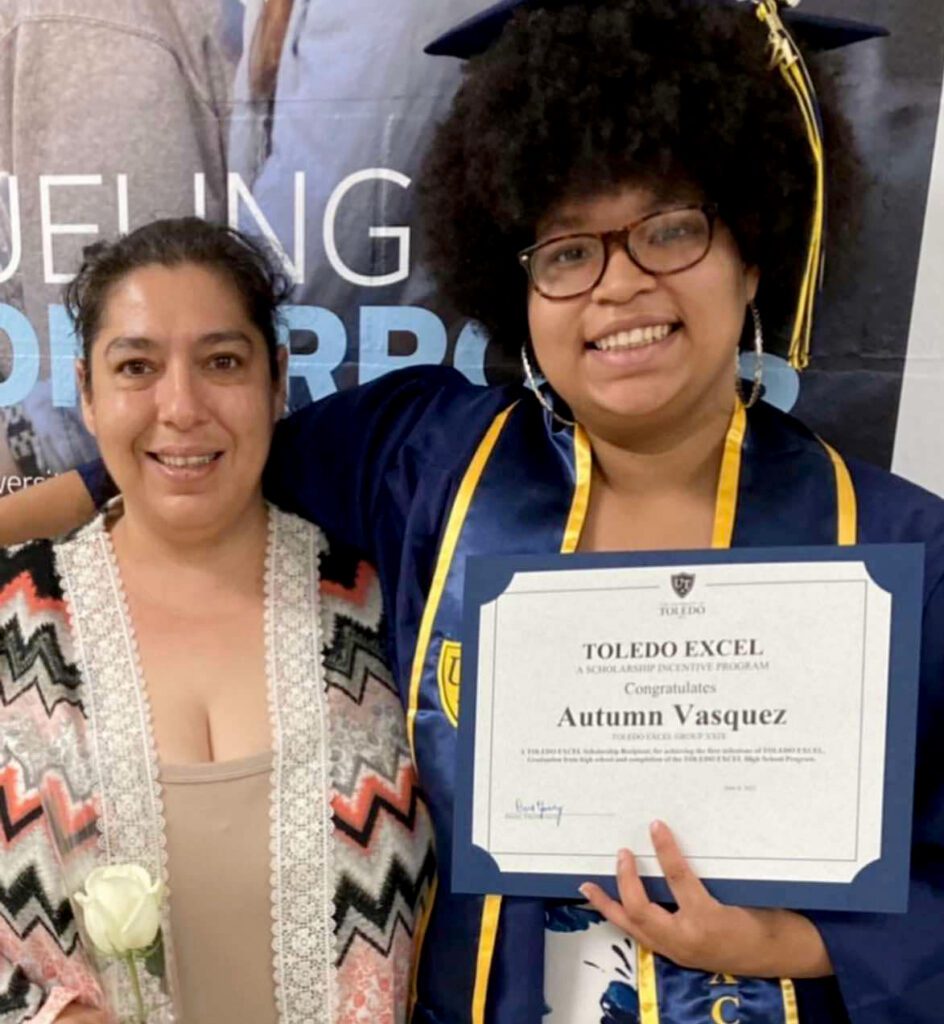
Despite its longtime success, Toledo Excel faces uncertainty due to rising political challenges surrounding DEI initiatives. Senate Bill 1, which passed in Ohio this year, has raised concerns about the future of programs dedicated to supporting underrepresented students.
“With the recent nationwide attacks on diversity, equity and inclusion, I have been afraid for the future of the Toledo Excel program,” Vasquez admitted.
“The leaders of the program work hard day in and day out to ensure minority students have the access and resources to earn degrees. Without their support, many of us would go unheard and overlooked when it comes to post-secondary education.”
Young acknowledged the concerns but remains optimistic.
“You know, of course, it was a concern with the things that have been coming out of Washington, DC, and then what was created with the Ohio State legislature with Senate Bill 1,” Young said. “But the University of Toledo has really stood behind the program, and so we’re moving on. We haven’t had a pause and we’re continuing to serve students.”
Toledo Excel will induct 60 new students, known as Group 37, at its ceremony on June 8, which will also serve as a graduation for students completing the program.
“I hope the program receives the support it needs to stick around for many years to come,” Vasquez said. “That way, more underrepresented students can receive the support they need and deserve.
“I urge Toledo youth to apply for the Toledo Excel program and take their education and future seriously—it is up to you to create your own path and take advantage of the resources available to you.”
Honey Baked adds to biz expansion
Pros and cons of owning a business in Toledo
TOLEDO – Honey Baked Ham was established in Detroit in 1957 by Harry J. Hoenselaar, and it quickly became well-known for its food quality and patented spiral slicer. Since then, it has grown to over 400 locations across 40 states.
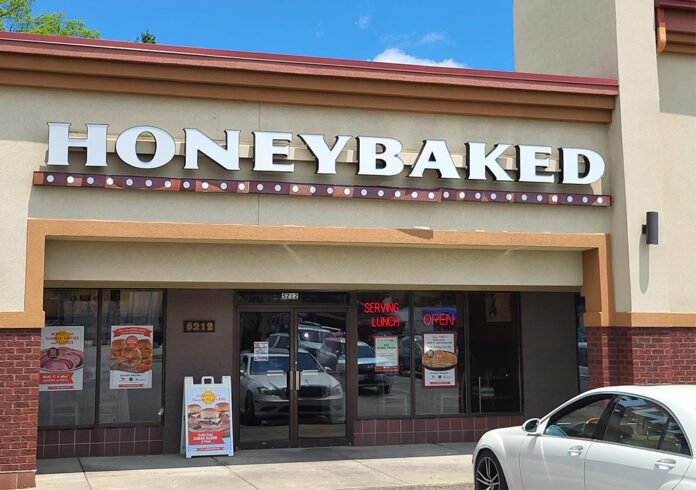
Honey Baked Ham is now eyeing Toledo for future expansion, adding another popular location to the Glass City’s growing roster of businesses. As of now, there are two seasonal locations only open during certain holidays (one in Sylvania and one on Navarre Ave. in Toledo), and another open year-round 5212 Monroe St.
Eric Edwards, who assists with growth development for Honey Baked Ham, liked what the company saw in Toledo.
“We started looking at places across cities, across the country where we’re currently not at, and then we started looking at what would be the best markets for us to be in,” he said. “The Midwest, in general, is a very strong territory for us as we started drilling down to the actual cities.”
Edwards added that Toledo was just one of the absolute best cities that the company felt it could be matched up with.
Specifically, the company liked the city’s diverse economy, infrastructure and growth. Honey Baked Ham has locations in surrounding markets but not as much representation in Toledo, and they are confident the city has enough customers.
“We want to see a really well-established infrastructure,” he said. “We want to see a city that’s growing. We like to see a city that’s got a diverse economy, and what we think is going to be a really good customer base,” said Edwards.
Currently, Honey Baked Ham only plans to open one new location. The company is at the stage where it’s looking for a brand partner to work with, but would love to have one built by either late 2025 or sometime in early 2026, Edwards noted.
To run a franchise, the franchisee attends extensive training at the corporate headquarters in Alpharetta, Georgia. After that, the company works with the franchisee to train the staff. Edwards said that many of their franchisees will go on to open multiple units. He also said that the new location would create 10-12 jobs, but that number could easily triple during their peak season.
The city of Toledo is growing, according to a Coworking Cafe study released in 2024. Its data, gathered from 2018 – 2022, showed a 90 percent increase in new business applications in Toledo.
Debbie Flores, interim director of small business development at the Toledo Regional Chamber of Commerce, said this information aligns with what the Small Business Development Center experienced over that timeframe. She said the number of clients they have helped start a business has doubled.
“Running a business in Toledo, whether it’s a franchise or a local operation, has some clear perks compared to bigger cities. I’d say operating costs, like rent and wages, are more reasonable here, which helps you keep overhead manageable without feeling pinched in certain sectors,” Flores said.
“There’s less competition, as well, so you’ve got space to make your mark. Toledo is a mid-sized community. So it has a tight-knit feel that’s perfect for building a steady customer base and creating strong local partnerships such as networking with other businesses.”
Flores also noted some disadvantages that business owners or franchisees will face in Toledo. The market is much larger in bigger cities, which will make your audience feel smaller, depending on the industry, and the infrastructure is not as expansive as bigger metros.
“Employee retention can be a bit of a challenge at times,” Flores added. “If you’re running a franchise, you got to follow their rules, which can limit your flexibility. Owning your own business gives you the freedom to adjust to what Toledo folks would want. Overall, the balance of reasonable costs and support in the community makes it a smart spot to set up shop. Either way, if it’s a franchise or local-owned, I think Toledo is a good area.”
Flores thinks Honey Baked Ham is a strong match for Toledo because it is “a widely recognized brand that customers already trust, which helps build its loyalty right from the start.”
She noted that the chain restaurant business has been growing in Toledo lately, mentioning places like Raising Cane’s, Ben and Jerry’s, Super Chix, Culver’s, Dunkin’ Donuts and Five Guys expanding in the city. Chain restaurants create jobs which boost the economy; they also provide consistent food experiences.
While they have their advantages, chain restaurants have some drawbacks compared to local restaurants.
“Local restaurants tend to keep more of their earnings circulating in the Toledo economy, while chain profits often flow out to corporate headquarters.”
Stacey Mallett, vice president of communications at the Toledo Regional Chamber of Commerce, pointed out some ways that chain restaurants have an advantage over local establishments.
“One of the other things we find is national chains have substantial marketing budgets, enabling them to launch widespread advertising campaigns, and that can make it challenging for local restaurants to compete for customer attention.”
Flores advised businesses and franchises in Toledo to stay on top of cash flow, manage expenses, develop a strong marketing strategy, build a positive work environment, and emphasize customer service. She said that strong community support makes Toledo a smart choice for a locally owned business or a franchise.
Mallet added that business owners should take advantage of resources in the community, such as the Small Business Development Center and the Minority Business Assistance Center, to avoid making costly mistakes. Their services are available at no cost.
