Home Blog Page 65

Toledo SEIU Local 1 janitors march for better pay, safer conditions

0
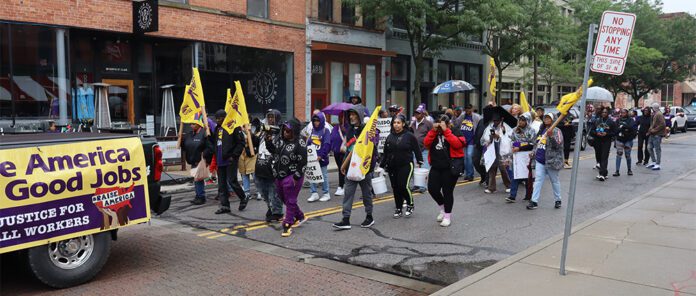
SEIU Local 1 janitors union march in the Toledo Juneteenth Parade on June 14. Courtesy Photo/Camilo Villa)

TOLEDO — Long after the last employee shuts down their computer and the lights flicker off for the night, the work is just beginning.

Inside Toledo’s high-rise offices and public buildings at night, vacuums hum down empty hallways. Mop water sloshes against bucket rims. The air is thick, stale and warm. Air conditioning typically shuts off when tenants go home, so the night shift sweats through it.

They clean the messes no one sees—or cares to see—that are left behind. They disinfect bathrooms, polish glass, scrub floors, sweep salt, haul trash. Their fingerprints are wiped away before anyone notices they were even there.

SEIU Local 1 janitors Philip Rudolph, from left, and Nadine Larde, march in the parade. (Courtesy Photo/Camilo Villa)

Janitors, like Nadine Larde, are deep into their shifts before the Glass City wakes up.

“It consists of a lot of work—a lot of sweeping, dusting, mopping. You know, some buff, wax and strip floors…and the mirrors and the glass and the doors,” said Larde, an SEIU Local 1 member who works for Holland Building Services, and serves as a union steward and bargaining committee member. “And dusting…a lot of dusting takes place.”

But last Saturday, their work—and their worth—were brought to light as they took to the streets during the daytime.

Joined by Congresswoman Marcy Kaptur and Ohio representatives Michele Grim and Erika White, more than 100 SEIU Local 1 janitors marched through downtown Toledo in the city’s Juneteenth Parade on June 14, not just to celebrate Black freedom, but to demand better pay, safer working conditions and long-overdue respect.


Ohio Rep. Michele Grim, (center in purple jacket), Philip Rudolph, center, and Congresswoman Marcy Kaptur, center right, pose for a photo during the Toledo Juneteenth Parade. (Courtesy Photo/Camilo Villa)
SEIU Local 1 union members march to make their voices heard. (Courtesy Photo/Camilo Villa)

With their current contract set to expire in July, union members are preparing for tense negotiations, and they’re making their voices heard.

“We represented with Juneteenth the freedom, and also for liberty, and also, for the Union,” Larde said of the march. “It’s not that they’re trying to take from the business owners, but they [Local 1 workers] want to live. They want to be able to take care of their children, their home and different things.”

For SEIU Local 1, participating in the Juneteenth Parade was a deliberate choice.

“Our members live in the communities where everybody else is,” said Yanela Sims, SEIU Local 1’s Ohio state director and recording secretary. “They have jobs, but they’re also people outside of work.”

SEIU Local 1 member Yanela Sims, left, and her fellow union members march in the parade. (Courtesy Photo/Camilo Villa)

Sims said participating in community events like the Juneteenth Parade helps members share their message and break the invisibility that often surrounds night-shift workers.

“It allows our members to communicate that they’re not just the invisible workers that come in at night and make everything clean and tidy. No one ever sees them or hears their perspective,” she said.

While Juneteenth commemorates the end of slavery in the United States, the federal holiday remains relevant to today’s labor struggles—especially for Black workers, who make up the majority of Local 1 janitors in Toledo, according to union representative Camilo Villa.

They’re an integral part of ensuring that workspaces are clean, tidy and safe. But if there’s a mess in the building, you’ll know.

Yanela Sims | SEIU Local 1’s Ohio state director and recording secretary

“They’re an integral part of ensuring that workspaces are clean, tidy and safe,” Sims said. “But if there’s a mess in the building, you’ll know.”

And yet, Sims added, their needs are too often overlooked. In many buildings, air conditioning is shut off after tenants leave, often leaving janitors to clean in stifling heat. 

“If it’s not safe for your tenants to work in the heat, then it shouldn’t be safe for our members, either,” she said.

The janitors clean some of the region’s most high-profile buildings—corporate offices, hospitals, manufacturing sites—but many still earn less than $15 an hour.

SEIU Local 1 represents more than 400 janitors in Toledo and Northwest Ohio. They clean buildings most residents pass by or work in every day, such as One Seagate, ProMedica buildings or Owens Corning. Though they are essential to keeping the city running, many work behind the scenes and under subcontracted conditions.

“All of them work for janitorial contractors, not for those companies,” Villa explained. One of SEIU’s key messages during this contract cycle is that employers—not just contractors—must ensure their buildings are staffed by workers who are paid a fair wage.

“For a lot of these people, this is their only source of income,” Villa added.

Many SEIU Local 1 members rely entirely on janitorial work to support their families, sometimes holding multiple part-time cleaning jobs or sharing the workload with a spouse. For some, it is a second career taken up later in life; others balance caregiving responsibilities during the day before heading to work at night. 

One longtime member, Villa noted, has worked as a janitor for 47 years. A military veteran who was deployed to Iraq during his time in the reserves, he returned to the same building he’s cleaned for two decades, still making under $15 an hour.

For Larde, the story is personal. A 14-year cancer survivor, she spends her time off recovering from the physical toll of the job. “I basically try to rest up so that I can go to work for next week, “ she said. “I do spend time out in the yard or what have you. Sometimes I go and see my daughter that lives in Michigan.”

With their current contract set to expire in July, SEIU Local 1 janitors say they are entering negotiations with a clear message: Their work is essential, and it is time it was treated that way.

After years of being overlooked, the union workers say they’re ready to be heard, not just at the bargaining table, but by the communities they serve every day.


SEIU Local 1 union organizer and former janitor Dericka Mays, with bull horn, joins the march. Courtesy Photo/Camilo Villa)

Don Lee: JuneTeenth Awareness

0

Juneteenth – or June 19 – marks the day in 1865 when Union troops, led by
General Gordon Granger, arrived in Galveston, Texas, with news that slavery had officially ended.


Juneteenth: Local ways to celebrate

0

TOLEDO – Juneteenth – or June 19 – marks the day in 1865 when Union troops, led by
General Gordon Granger, arrived in Galveston, Texas, with news that slavery had officially ended.

This came two and a half years after President Abraham Lincoln issued the Emancipation Proclamation. Lincoln declared in the 1863 proclamation “that all persons held as slaves” within the rebellious states “are, and henceforward shall be free.”

More than 250,000 African Americans in Texas joined almost 3.5 million of those who were already freed in other parts of the country as Union forces advanced through the South and enforced emancipation. Though Lincoln’s proclamation had laid the foundation, freedom arrived unevenly and was often long delayed.

Juneteenth, also known as Freedom Day or Black Independence Day, represents the final large-scale emancipation of enslaved people in the United States, a turning point that has been celebrated for generations as a day of liberation, resilience and remembrance.

Still, not everyone was freed, even on Juneteenth. Enslaved people in Union-loyal states, like Kentucky and Delaware, remained until the ratification of the 13th Amendment in December 1865. And even after abolition, many Black Americans continued to face systemic racism, segregation and violence.

Despite its heavy historical weight, Juneteenth has always been marked by joy. It is a celebration of survival and culture—of family, food, music and pride. Communities across the country gather to honor the past and uplift the future through cookouts, parades, concerts, education and storytelling. In 2021, Juneteenth was officially recognized as a federal holiday.

In Toledo, Juneteenth is celebrated through events that bring together residents, organizers, artists and educators. We’ve compiled a list of events for those who want to join in.

Thursday, June 19

Toledo Museum of Art Campus | 11 a.m.–5 p.m.

Music, performances and activities make up this year’s celebration at TMA, including live jazz, R&B/neo-soul and electric guitar sets in the galleries, along with a magician, interactive art experiences, and family-friendly programming throughout the museum.

There will also be yoga, a sound bath, storytelling, gallery drawing, and a LocalEyes tour with a Toledo artist. Food trucks will be present all day at the FREE event.

Glass City Pavilion and Event Lawn | 3:30-9 p.m.

Live entertainment, food trucks, games and other activities will be taking place at the Glass City Pavilion at this FREE cultural festival.

Glass City Metropark | Kids run begins at 5:30 p.m. / Adult run begins at 6 p.m.

Juneteenth 2.5 Miles for Freedom Run

Bring the kids for a free 1K run at Glass City Metropark! Cost for adults: 2.5 mile – $12; TRRC members get a $2 discount taken at checkout.

Club Evolution | 6 – 11 p.m. Doors open at 4 p.m.

Juneteenth Freedom Day Celebration

Take in live performances by Vteala Fields, LaBiche and other performers at this open mic night. $18. Tickets on Eventbrite.

Friday, June 20

Maumee Indoor Theater | Doors open at 3 p.m. / Show starts at 3:30 p.m.

Attend a recital by Famed Studios called Coming to America, an exploration of the immigrant experience and our country’s diversity. Kids: $12. Adults: $24. Tickets available on Eventbrite.

Saturday, June 21

The Pinnacle | Doors open at 10:30 a.m.

Honor 2025 scholarship recipients with the Alpha Kappa Alpha Sorority, Incorporated® – Zeta Alpha Omega Chapter at an elegant Juneteenth Brunch and Silent Auction. There will be a live performance by Distant Cousinz, food, and dancing. Cost for admission: $71. Tickets available on Eventbrite.


Woodville mayor, former football player wins Mayors’ Cup

0
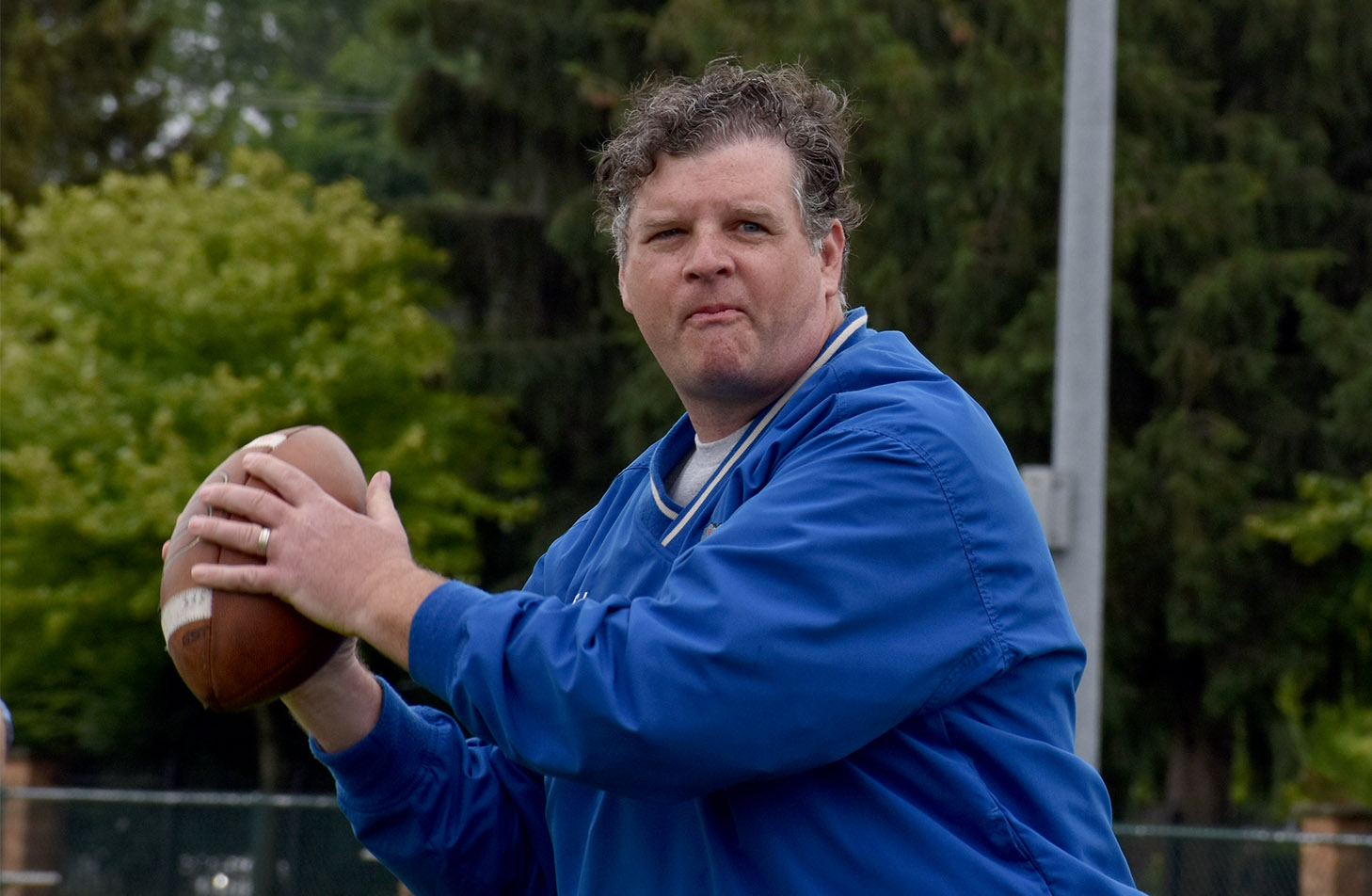
Woodville Mayor Ty Tracy is the winner of the Italian Bowl Mayors’ Cup held on Saturday at St. Francis de Sales High School. (Allyson Ritchey/TFP)

TOLEDO – Woodville Mayor Ty Tracy played several positions for the Cardinal Stritch High School football team back in the day.
Surprisingly, quarterback was not one of them.

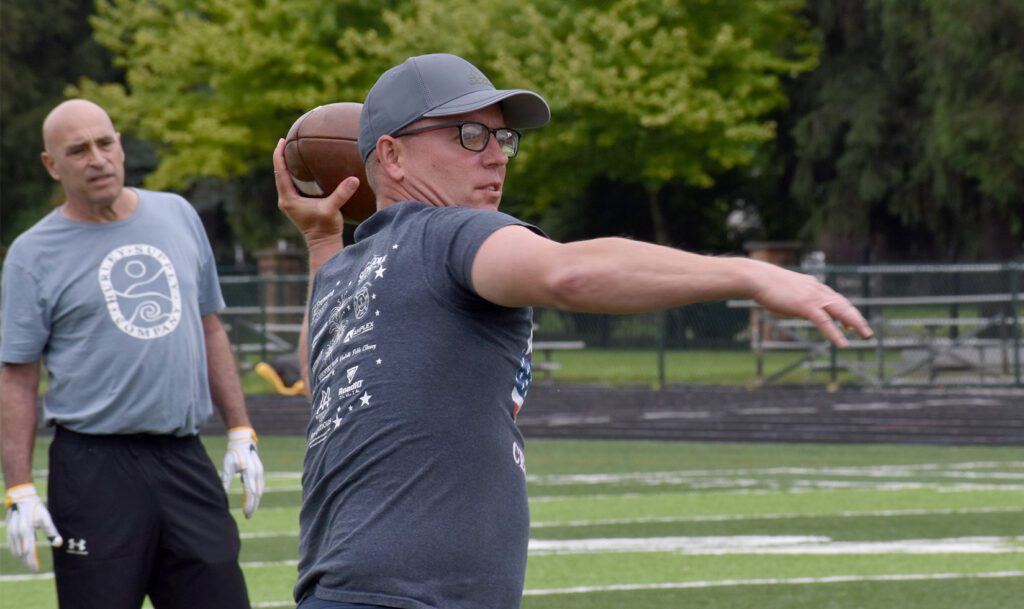
Tracy, 51, a 1992 grad, showed off his pass catching, punting and passing accuracy skills by winning all three events en route to taking first place at the second Italian Bowl XLIV Mayors’ Cup competition on Saturday at St. Francis de Sales High School.

Oregon Mayor Mike Seferian watches Ty Tracy throw the ball. (TFP Photo/Allyson Ritchey)

“I think I can compete well,” Tracy confidently said after the event. “I have a little bit of a football background, but I didn’t have a lot of expectations today. I haven’t thrown a football in about five years, but I play in a 50-and-over softball league in Walbridge and that keeps my arm loose.”

The Mayors’ Cup is one of several fun events leading up to the Italian Bowl XLIV, which will be played Saturday, June 28 at 3 p.m. at the University of Toledo’s Glass Bowl.

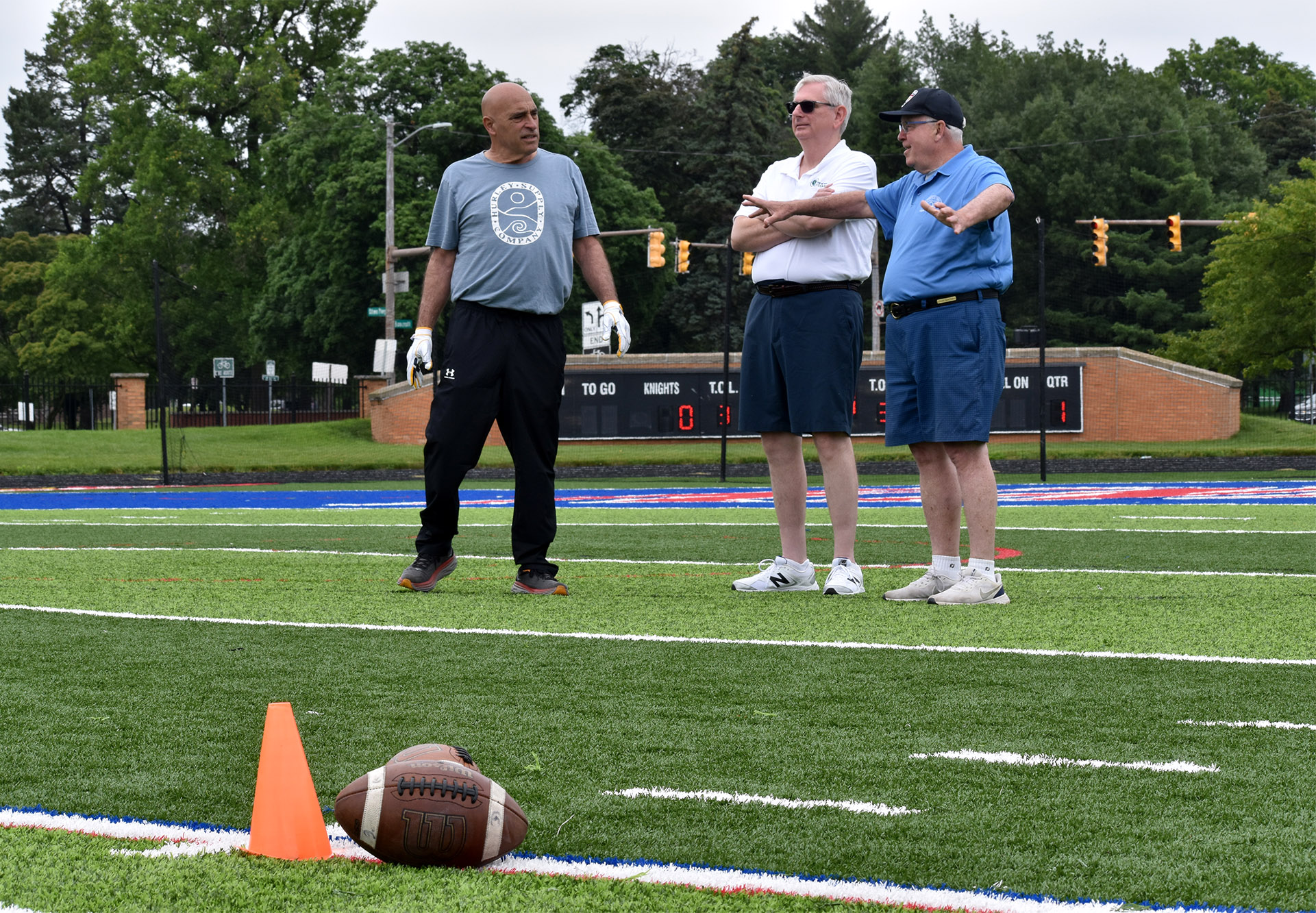
Tracy was one of eight mayors to compete in this year’s Mayors’ Cup. The other mayors were Wade Kapszukiewicz of Toledo; Mike Seferian of Oregon; Mark Frye of Sylvania; Melvin Sprauer of Clay Center; Edward Schimmel of Northwood; Timothy Pedro of Waterville; and Don Walters of Cuyahoga Falls.

Mayors, from left: Ty Tracy, Don Walters, Edward Schimmel, Melvin Sprauer, Wade Kapszukiewicz, Mike Seferian, Mark Frye and Timothy Pedro pose with a football at the end of the competition. (Allyson Ritchey/TFP)

The first Cup event was in 2023.

“I know Mike Seferian, and I knew he won two years ago,” Tracy said, who earned 150 points.

Seferian, 67, did, in fact, win the inaugural Mayors’ Cup trophy, but this year he finished second to Tracy, who outscored him by 41 points. Walters was third with 106, and Kapszukiewicz and Frye tied for fourth with 85.

“I’m here to have fun and try to win each event,” said Seferian, a 1975 Clay High School grad. “Two years ago, two days before this event, Wade called our city manager in Oregon to invite me to compete. I didn’t know I was competing until the day before, but I was in decent shape, so I thought at least I wouldn’t embarrass myself.”

Oregon Mayor Mike Seferian, mayor of Oregon, catches and runs with a football. (Allyson Ritchey/TFP)

Seferian looked especially impressive in the pass catching and passing accuracy skills competitions. He showed off a strong, accurate arm, tossing tight spirals to a stationary receiver from 25 yards. Seferian scored 100 points during the timed competition.

Tracy, a left-hander, followed Seferian and went last, also showing off a strong arm and pinpoint accuracy to score 130 points, the top score in the passing accuracy event.

Kapszukiewicz, 52, who like the other mayors said he did not specifically train for this year’s events, took third place in the 2023 Mayors’ Cup.

“I was in first after the throwing competition,” he said, “but I got a big head and thought I would coast to victory. I just got worse with every skill. I’m in better shape this year.”
Kapszukiewicz does look much different than two years ago, when he took third in the Mayors’ Cup. The 1990 St. Francis de Sales grad said he has lost 100 pounds simply by riding his bike daily.

“I bike 15-20 miles every day,” he said. “I went for 5,000 miles last year and I enjoy it. It doesn’t feel like work.”

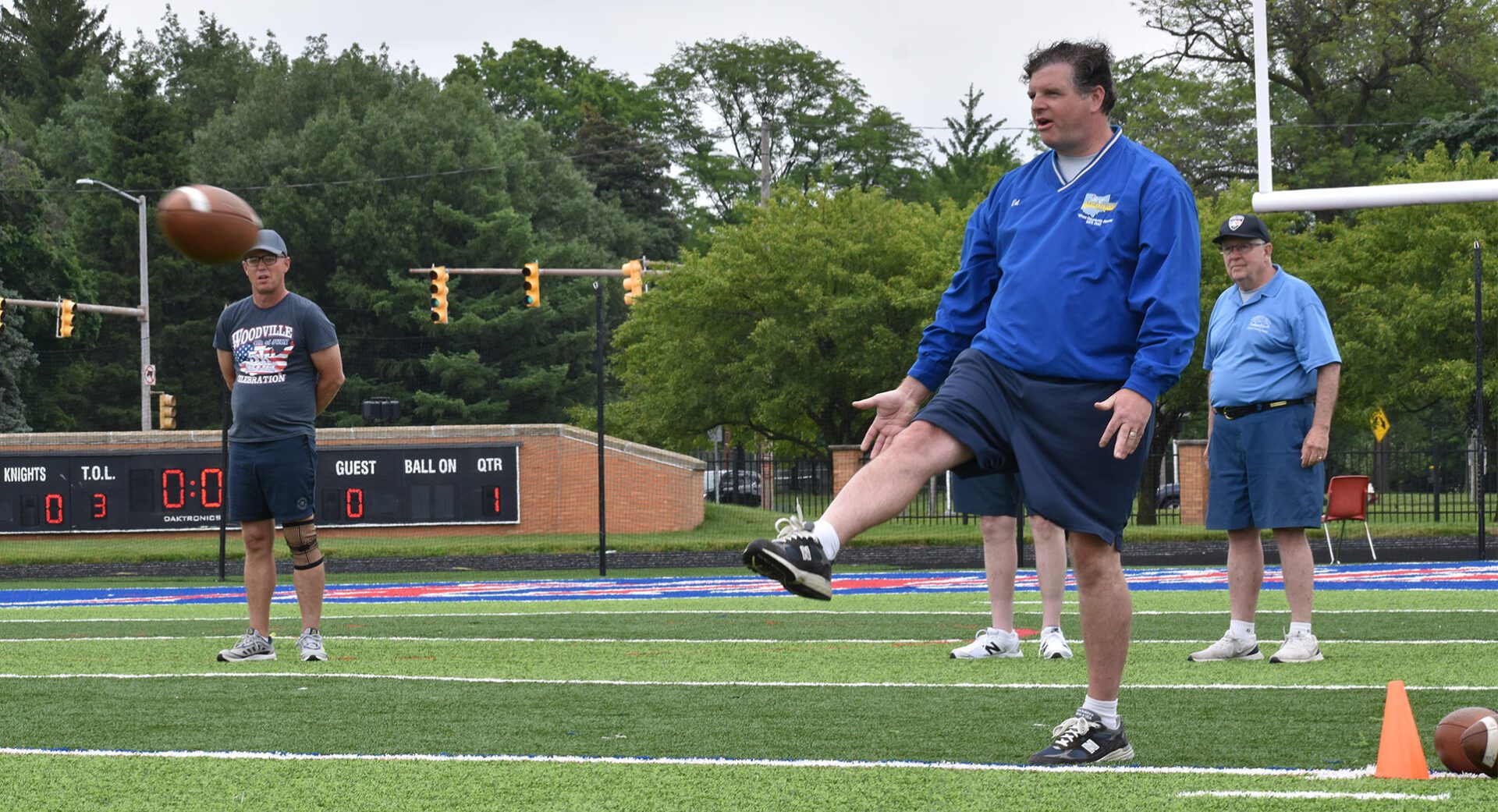
Toledo Mayor Wade Kapszukiewicz kicks a football at The Mayors’ Cup. (Allyson Ritchey/TFP)

Frye, 61, who grew up in Pennsylvania, admitted he hadn’t picked up a football “in 20 years, since my son was 12.” Frye said Italian Bowl XLIV will be “great” and “phenomenal.”

“It’s showing off the level of competition in a sport that’s growing around the world,” Frye said. “I’m looking forward to the game and the activities.”

The Italian Bowl showcases the two best teams competing for the Italian Football League (IFL) championship. On July 1, 2023, the IFL championship was played on American soil for the first time in 40 years. The Parma Panthers defeated defending champion Firenze Guelfi for the Italian Bowl XLII title in front of an estimated 10,000 fans at the UToledo Glass Bowl.

“The Italian Bowl is fun,” Kapszukiewicz said. “It’s a little different, and it’s unique and quirky. Cities like Los Angeles, New York and Chicago have built-in advantages. Cities like ours…it’s not often you get hundreds of fans and tourists from Italy coming here and shopping in our stores and eating in our restaurants.

“The players are thrilled to be here. To them, this might be like their Rose Bowl. To play for a championship in the sport they love – they’re thrilled.”

For more information and ticket information on Italian Bowl XLIV, which will be televised live on BCSN, visit theitalianbowlusa.com.

Oregon Mayor Michael Seferian, from left, chats with Sylvania Mayor Mark Frye and Waterville Mayor Timothy Pedro.

Edward Schimmel.

Mayors and volunteers walk toward the end zone to start the competition.

Don Walters, mayor of Cuyahoga Falls.

Toledo Mayor Wade Kapszukiewicz.

Wade Kapszukiewicz picks up a football.

Sylvania Mayor Mark Frye.

Northwood Mayor Edward Schimmel.

Clay Center Mayor Melvin Sprauer.

Waterville Mayor Timothy Pedro.

The Cocoon: Helping survivors of domestic, sexual violence

0

BOWLING GREEN – Since 2005, The Cocoon has seen a lot of pain come through its doors, but also a lot of healing.

So, to celebrate the successes and mark its service, Wood County’s only emergency shelter and advocacy agency for survivors of domestic and sexual violence will have a special 20th Anniversary Kickoff Reception on Tuesday, June 17, at 10:30 a.m. at the Wood County Courthouse at 1 Courthouse Square.

Staff, community members and dignitaries will reflect on The Cocoon’s impact since it welcomed its first survivor on June 14, 2005. The event, free and open to the public, will honor local leaders who have championed The Cocoon’s mission.

“We are really excited to embark on our 20th year,” exclaimed Kathy Mull, The Cocoon’s executive director. “What started as a small emergency shelter is now providing comprehensive services to both sexual and domestic violence survivors.”

Through its base in Bowling Green, The Cocoon provides help to domestic violence victims in Wood County: It’s service in regard to sexual violence is wider – to the counties of Ottawa, Sandusky, Seneca and Wood.

When The Cocoon began – under the name The Cocoon Shelter – there was only one paid staff member. Mull said today there are 21 on staff to provide 24/7 coverage. They field phone calls to the nonprofit’s hotline (419-373-1730, option 2) and provide services to help survivors rebuild their lives.

In 2024, The Cocoon served 837 survivors, the majority of whom were women and children, although there were some males who sought help. “They come from all backgrounds,” Mull said.

In its 20 years, The Cocoon has supported more than 8,000 survivors on their path to safety, healing and justice.

“What’s exciting and impactful for us,” Mull said of The Cocoon’s longevity, “is that it’s come about through community support and listening to the voices of survivors.”

Through listening to those voices, The Cocoon has launched five programs over the past two and a half years:

  • Youth advocacy program, reaching out to young people who experience or witness domestic violence in their homes.
  • Housing program to find affordable residences for survivors.
  • Criminal justice program to ensure a seamless process in the legal system from law enforcement involvement to adjudication.
  • In-house medical program, in which a physician comes to the shelter to provide non-emergency medical care to survivors staying there.
  • Champions of Change program, which trains and encourages local businesses and organizations to create safe spaces to support survivors, and to send a no-tolerance message to their employees to affirm respect for those in need.

Aside from these, The Cocoon has launched a program specifically to address human trafficking. “We’ve seen about a 25 percent increase of human trafficking survivors stay in our shelter,” Mull said.

She noted that the COVID-19 pandemic brought about the largest need for The Cocoon’s services, which included dealing with a higher level of violence. “Still today, survivors report those high levels, with more instances of strangulation and traumatic brain injuries. That continues to make our services more critical than ever.”

“Our biggest need,” she emphasized, “is to continue to spread awareness. We want to create communities that won’t tolerate domestic and sexual violence. We are going to continue to provide services for survivors as long as they need them.”

All The Cocoon’s services are at no cost to survivors, which means another big need is financial support, she said.

Along that line, The Cocoon has scheduled the following ticketed fundraising events and free celebration events:

“We’re definitely making headway,” Mull said. The stigma of reporting domestic and sexual violence has lessened. “Survivors know this is a safe place where they can disclose what happened.”

More openness is needed. To eradicate these forms of violence, Mull said, “we have to be comfortable to talk about it and to stop blaming the victim. The more we reduce the stigma, the more we create opportunities for survivors.”

More details are available at thecocoon.org.

Eastern bluebirds in Oak Openings

0
An eastern bluebird brings its catch to its young in Oak Openings Preserve Metropark. (Courtesy Photo/Art Weber)

Eastern bluebirds are at their busiest right now, spending more time than usual on the wing in search of insects to feed their young broods. 

One of our most beautiful songbirds, these are the birds with the sky on their backs. They are especially obvious in the Oak Openings Region, where they thrive in the sandy landscape that offers a natural and very special patchwork of woodland, tallgrass prairie and meadow. It offers ideal habitat for nesting and raising young. But virtually every Metroparks Toledo can host bluebirds.

The most obvious clue to places to observe bluebirds is to locate one of the many nest boxes already strategically located for success. Observe the box and its surroundings from a non-threatening distance. Many of those nest boxes are occupied, but not always by bluebirds. They’re designed to appeal to cavity nesters and sometimes tree sparrows, wrens, sparrows, titmice and nuthatch find them to their liking. A really special claim jumper would be protonotary warblers, which have been known to use boxes.

Cyclists memorialize fallen triathlete

0
Cyclists wait for the slow ride to begin in Whitehouse on June 10. (TFP Photo/Allyson Ritchey)

Anti-distracted driving initiative launched in Roseann’s name

WHITEHOUSE– Before the ride began, the crowd stood still, their helmeted heads bowed for a moment of silence. Then, a single song filled the air — “I Was Alive” by Beartooth — one of Roseann Peiffer’s favorites. She had trained to it, moved to it, lived to it. 

Its lyrics about living life to the fullest played as a tribute to a life cut short.

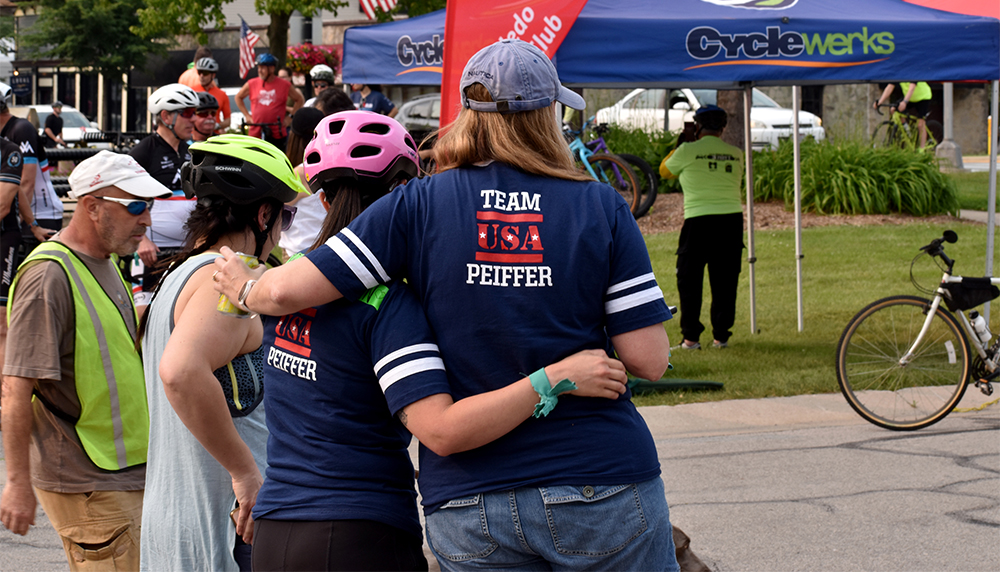
Kristen Jindra, Peiffer’s sister, left, and Jessica Miller, Peiffer’s sister-in-law, hug at the memorial ride. (TFP Photo/Allyson Ritchey)
Mike Peiffer, late husband of Rosanne Peiffer, expresses his pain with the crowd. (TFP Photo/Allyson Ritchey)

Peiffer, a respected triathlete and beloved figure in Northwest Ohio’s cycling and running communities, was killed in May by a distracted driver. She had been doing what she loved—riding her bike—with those she loved when a driver, according to her husband, veered off the road for just two seconds.

That was all it took.

She leaves behind not only a grieving husband and parents, but also her young daughter.

On Tuesday evening, More than 300 cyclists gathered at CycleWerks in Whitehouse to take part in a four-mile memorial ride organized by CycleWerks and several local athletic organizations, including Team Toledo Triathlon Club, Dave’s Running, Maumee Valley Wheelmen, Toledo Area BicyclistsMaumee Valley Adventurers, Flatlanders Bicycle Club and Run Toledo.

The slow, police-escorted ride was held not only to honor Peiffer’s life, but also to spark conversation about road safety and to support a family and community still grieving.

“My ten years married to Roseann were the best years of my life,” said her husband, Mike Peiffer, addressing the crowd before the ride. “I’ll never get those back. Nothing anybody can say can make it better. I’m hurting on the inside deeply.”

Mike Peiffer said he plans to speak to high school students and driver’s education classes, using his wife’s story to emphasize how quickly distraction behind the wheel can become deadly.

People are like, ‘Oh, it’ll never happen to me,’ but it happened to Roseann.

Mike Peiffer

Nicole Reece, president of Toledo Area Bicyclists, echoed that call to action. During the pre-ride program, she announced a new anti-distracted driving initiative launched in Roseann Peiffer’s name.

“Her passing must not be in vain,” Reece said. “It must be a moment that sparks change, real change, in how our families are protected, how distracted driving is understood and addressed, and how we value the safety and the dignity of all humankind. We owe her that and every person who shares the road.”

Reece urged attendees to talk with their children, friends and families about what it means to value life on the road—-and to put down their phones.

Nicole Reece, president of Toledo Area Bicyclists, committed TAB to new anti-distracted driving initiative. (TFP Photo/Allyson Ritchey)

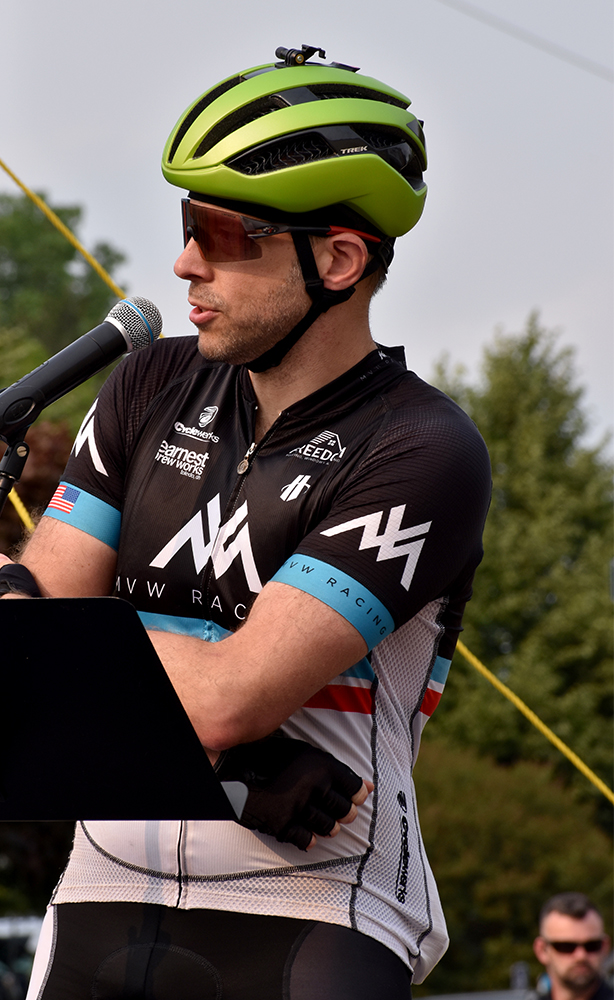
Nick Mossing, president of the Maumee Valley Wheelmen, described Roseann Peiffer as someone who embodied the spirit of constant improvement.

“What I enjoyed most about Roseann is that she was always, always trying to get better, both in her strength and her skills,” Mossing said. “I’ll never forget her working with us before, after races, on her cornering. And every year her fitness would increase this much, and her cornering increased that much, but it increased every year. She became very good at it.”

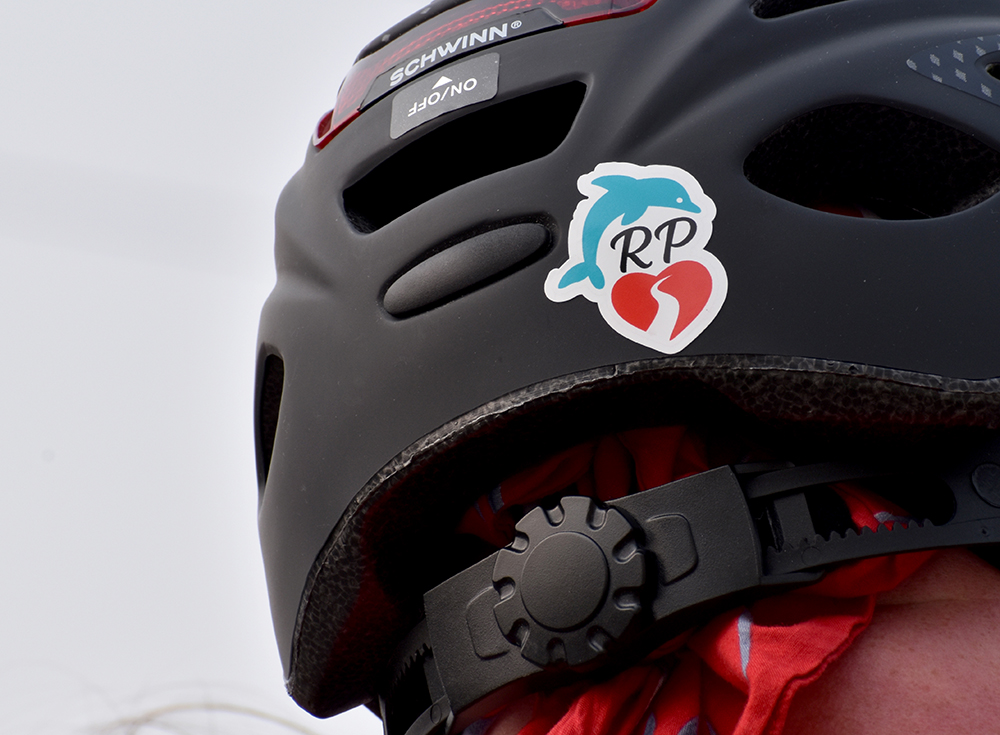
Leading up to the memorial, Mossing also designed and distributed custom stickers in Roseann Pieffer’s honor. Printed in her favorite color, seafoam green, the stickers feature her initials, a red heart with a winding road and a dolphin, which her family described as her spirit animal.

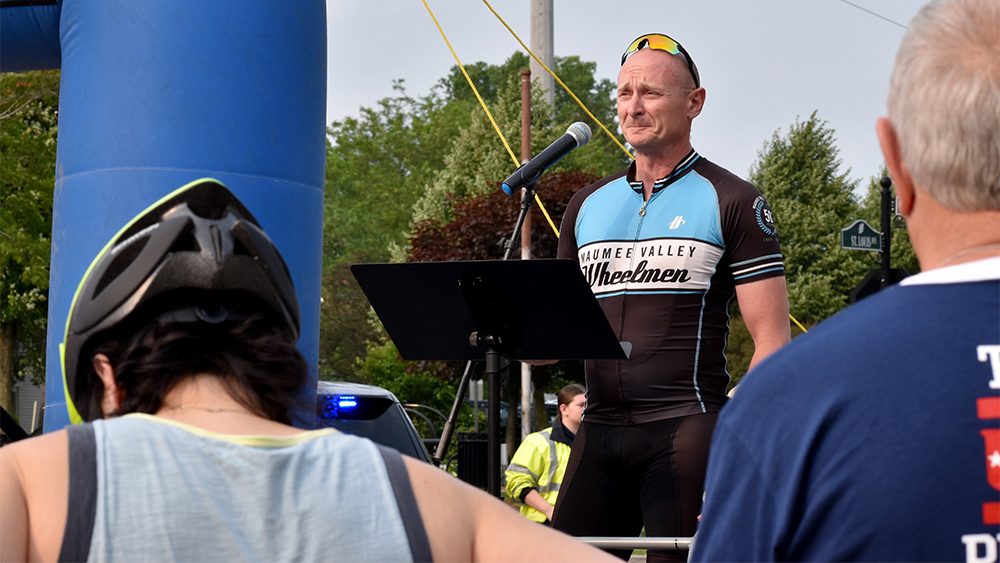
Nick Mossing, president of the Maumee Valley Wheelmen, is emotional as he remembers Peiffer. (TFP Photo/Allyson Ritchey)
The sticker Mossing designed. (TFP Photo/Allyson Ritchey)

“We’re all here because Roseann was just an awesome person,” Mossing said, “So that’s how we’ll remember her.”

Roseann Peiffer’s parents, Donna and Jim Berchinske, attended the event, alongside the hundreds of people whose lives their daughter had touched. They remembered her early love of cycling—rides through the Cleveland Metroparks, her growing collection of race medals and trips abroad to compete.

“She went to Italy while we were there and saw my grandfather’s house,” Donna Berchinske recalled.

But her family also shared their anger and frustration.

“All bicyclists are allowed to use the road, ” Donna Berchinske said. “There should be no distraction driving whatsoever. Ever, ever.”

The ride began shortly after the moment of silence, led by a Whitehouse police escort and followed by a support vehicle in case any riders encountered issues along the route.

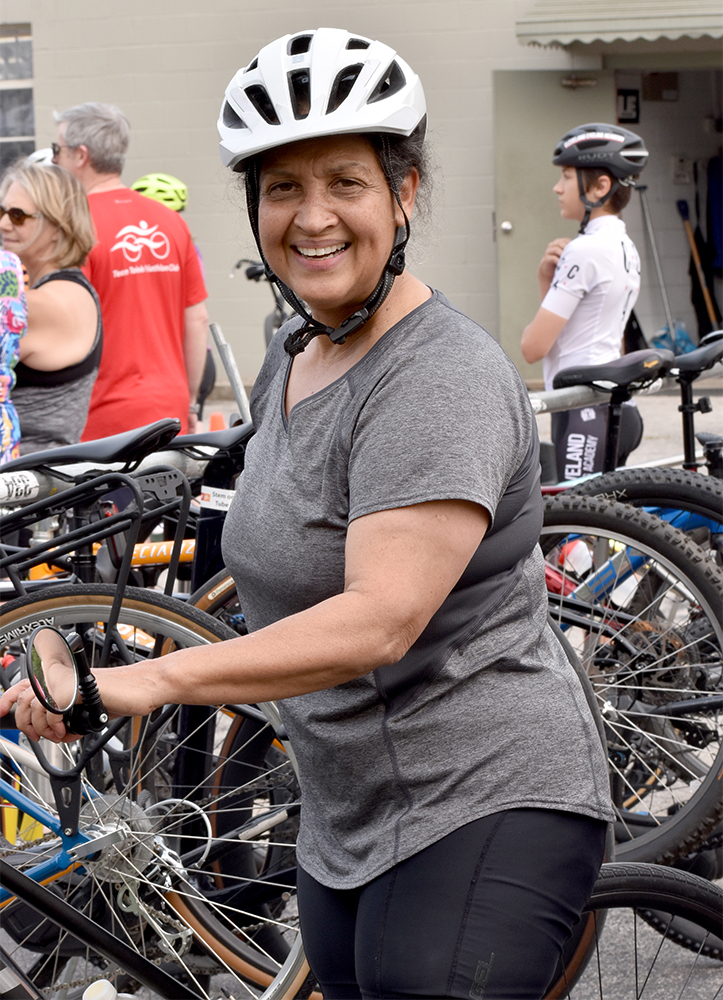
Vielka Cover, a member of CycleWerks’ riding groups, at the memorial ride. (TFP Photo/Allyson Ritchey)

Cyclists of all experience levels participated in the slow roll, which wound quietly through the village before returning to CycleWerks, where attendees gathered for food and shared memories and songs from Roseann Peiffer’s workout playlist.

Vielka Cover, a longtime cyclist and community member, called the turnout “supportive and unified.” She said she thinks of her safety every time she goes for a ride—and of riders like Roseann Peiffer.

“It can happen to any of us,” Cover said. “I wear the helmet and wear bright clothes, have my lights on, follow the rules of the road and always pray to God, ‘Send your angels and protect me.’”

The ride ended where it began—at CycleWerks—but few left unchanged.

Team Toledo Triathlon Club has established a GoFundMe to help with ongoing expenses and support for the Peiffer family.
The ride was attended by a furry supporter. (TFP Photo/Allyson Ritchey)

East Toledo federal grant in limbo

0
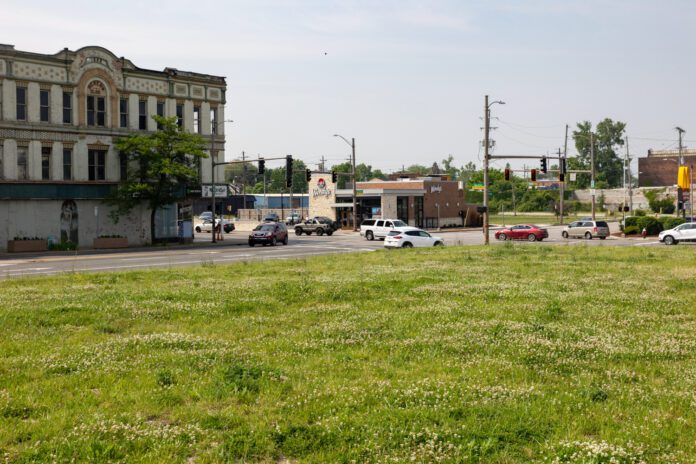
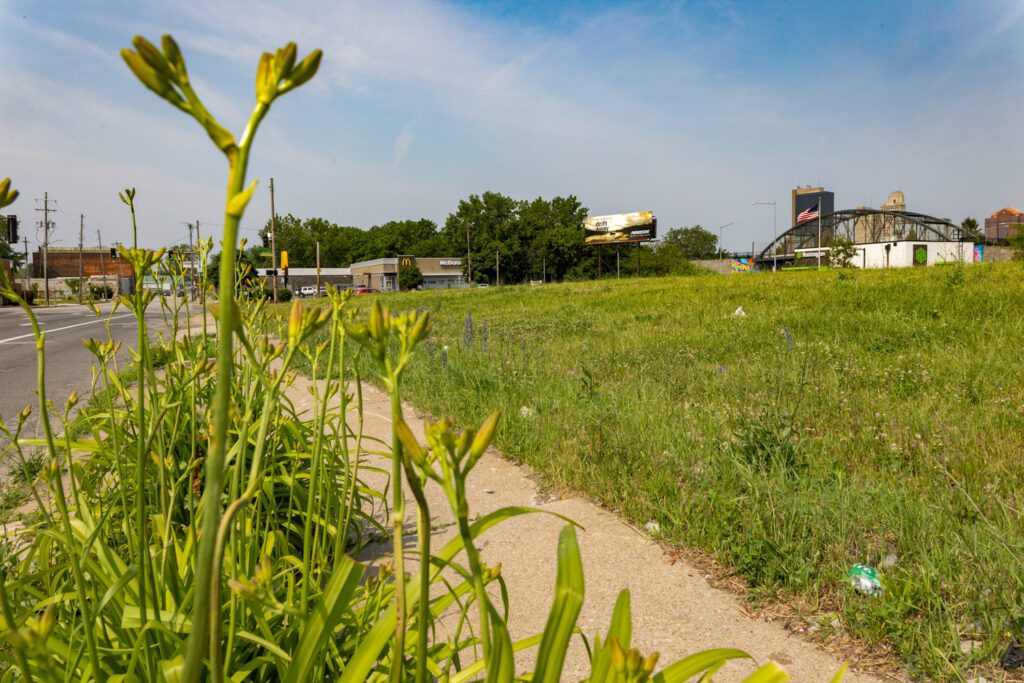
A blank lot at the corner of Front and Main streets in East Toledo would be the main area developed through the Neighborhood Access and Equity Grant Program awarded to the City of Toledo. (TFP Photo/Stephen Zenner)

TOLEDO – Toledo’s largest federal grant may be rescinded if the One Big Beautiful Bill Act is passed into law.

By just one vote the One Big Beautiful Bill successfully passed through the House of Representatives and is now on its way to the Senate. If the bill remains in its current form, it will not deliver the $28.5 million awarded to the City of Toledo to recreate the entrance to East Toledo, near Front and Main streets. 

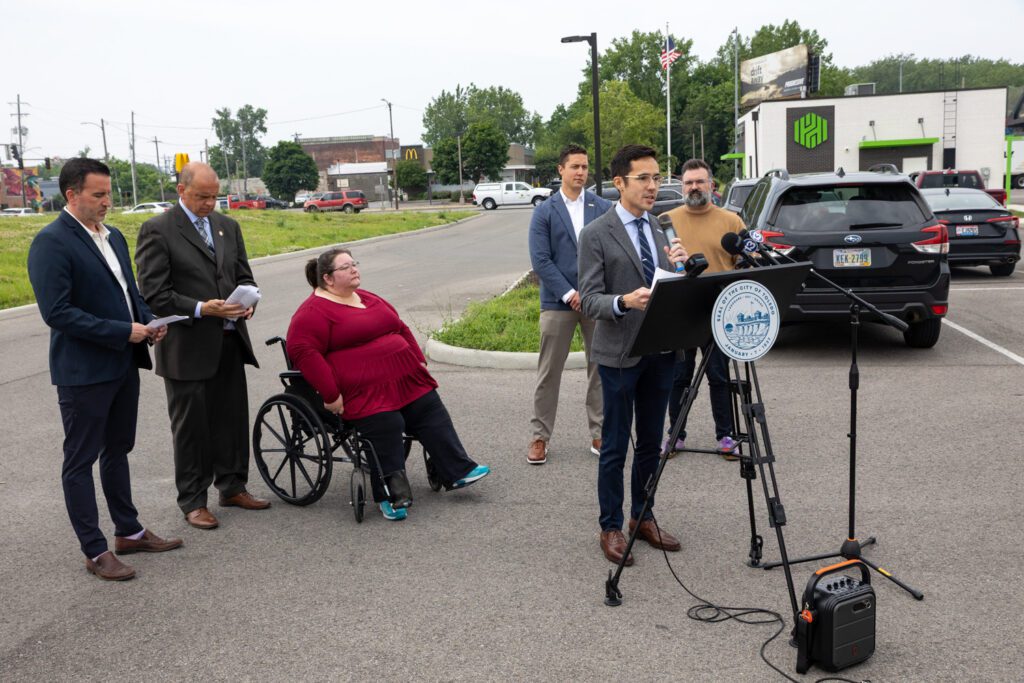
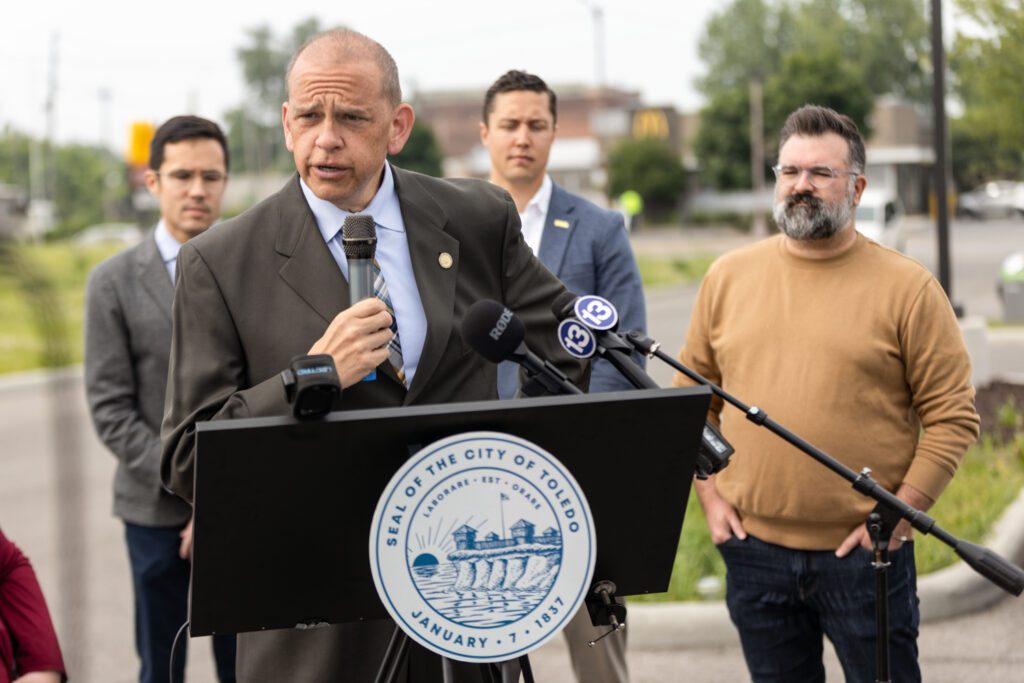
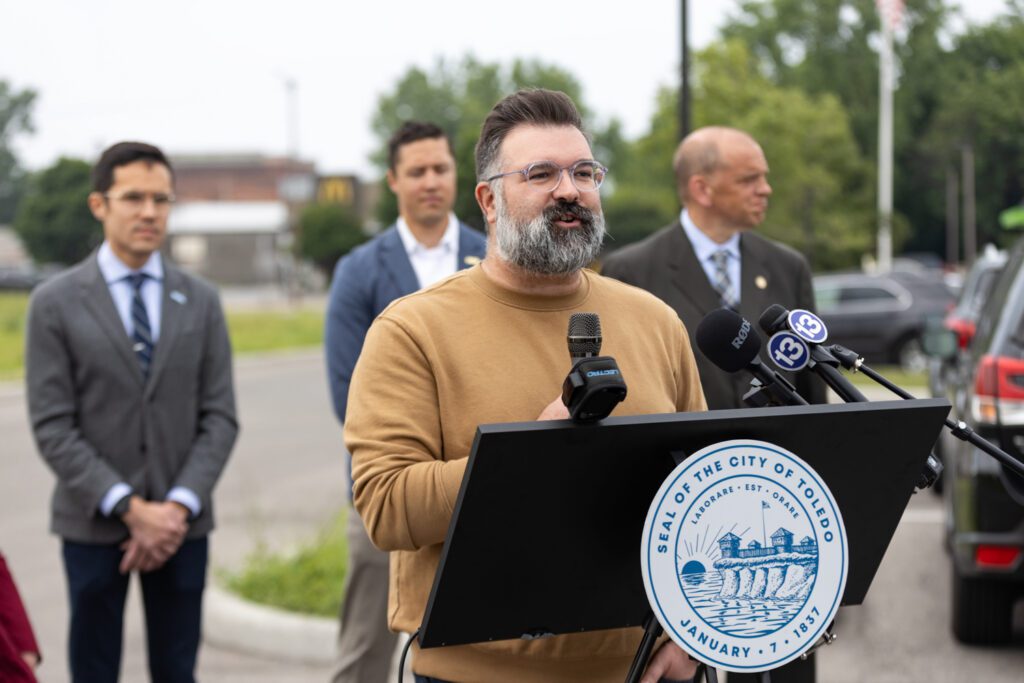
During a press conference at the site on June 12, Simon Nyi, the commissioner of grants for the City of Toledo, who was instrumental in winning the competitive grant, said that “the residents of this neighborhood have been clear. If we want our historic Main Street business corridor to once again thrive, we need to invest in its infrastructure. 

“And, if we want downtown revitalization to bring jobs, investments and economic opportunities to the east side,” he continued, “we need to make Front Street safer for everyone who uses it.”

Simon Nyi, grants commissioner for the City of Toledo, addresses the media concerning $28.5 million in federal funding that may be cut. (TFP Photo/Stephen Zenner)

Front Street is the bridge between the Garfield neighborhood, which includes Waite High School, and the Glass City Metropark, the newest and most popular metropark.

In coordination with the multi-step Riverwalk project, pioneered by Metroparks Toledo, this grant would connect the Glass City Metropark with International Park and Downtown Toledo more holistically by revitalizing and beautifying Front and Main Streets. 

In March 2024, the city was awarded the $28.5 million from the Department of Transportation through the Reconnecting Communities and Neighborhoods Grant, which was a subsection of the Neighborhood Access and Equity Grant Program.

Thinking the grant was cut because it was confused for a Diversity, Equity & Inclusion (DEI) initiative, Toledo Mayor Wade Kapszukiewicz thoroughly explained that there is nothing about this grant or its uses that is partisan. 

Toledo Mayor Wade Kapszukiewicz addresses media in the Huntington Bank parking lot off of 75 Main St. (TFP Photo/Stephen Zenner)

“I can’t imagine a single citizen of our country objecting to a program that would calm traffic to make life safer for pedestrians, for bicyclists, for motorists,” he said, and expounded that the only reason he could think of for the funding cut was the words used to describe the program. 

I honestly believe that someone sitting at a computer terminal in Washington saw the word ‘equity’ and must have misunderstood.

Toledo Mayor Wade Kapszukiewicz

The mayor stressed the 225 construction jobs that would be lost by cutting the revitalization initiative, set to begin in 2027, and the $2 million the city had already poured into prepping the project through engineering the streetscape and roadway changes.

The city’s website includes drawn schematics of what the city hoped to build with the grant: a mixed use path for cyclists and pedestrians alongside two two-lane streets for cars, a sidewalk on the other side of the road and ample space to plant trees.

Justin Lorenzen. (TFP Photo/Stephen Zenner)

Nyi stressed the importance of the redesign for public safety. “This corridor is less than a mile long, yet in the past 10 years traffic crashes here have tragically taken five lives and left 34 more with life-changing injuries.”

Both the mayor and Nyi said there would not be an easy way to replace the $28.5 million if the funding is rescinded. 

Even if the funding could be secured in the future, Nyi emphasized that “we don’t have 10 or 15, 20 years if we want to capture all the momentum and great things that are happening right now.”

Justin Lorenzen, owner of the Webber Block building at the intersection of Main and Front Streets, talked about the progress the city was making near the entrance to the east side. 

“Over the past few years, we’ve seen real, tangible progress: a beautiful new Metropark, the Marina Lofts apartments and renewed interest from investors and developers,” he said, but caveated, “East Toledo is in real need of well-designed streets equipped with new sidewalks, better lighting, green space and safer crosswalks.

“There are a lot of kids crossing the street for the Metropark, so safer crosswalks are definitely in need.”

Residents, community leaders and stakeholders all had input on the Front Street redesign, said Theresa Gadus, Toledo City Council member (District 3), who said they’ve been working on this project since around 2020. 

Theresa Gadus. (TFP Photo/Stephen Zenner)

“Front Street is a five-lane highway,” she said. “We’ve done traffic studies that clocked people going up to 90 miles per hour. There’s schools, there’s lots of schools, in the neighborhood, and if we want them to be able to utilize the Metroparks, they have to feel safe crossing.”

In a last ditch effort, as the bill heads to the Senate, Kapszukiewicz and the other city officials asked Toledoans to appeal to Republican Senators Bernie Moreno and Jon Husted to amend the bill, allowing for the Reconnecting Communities and Neighborhoods Grant to be fulfilled for this street project.

“Let them know how important this project is for our economy, for our neighborhoods and for our shared future. Thank you,” Kapszukiewicz said, finishing off a press conference. 

It is unclear when the One Big Beautiful Bill will be voted on in the Senate. 

The Toledo Free Press reached out to Senators Moreno and Husted for comment. Husted replied the morning of June 13th saying he voted for a budget amendment to protect Medicaid, but did not comment on this particular grant.

Toledo city officials said they also reached out to both senators concerning the Reconnecting Communities and Neighborhoods Grant, but have not heard more than that their messages were received. 

Nick Komives, Toledo City Council member at-large, addresses the press concerning $28.5 million in federal funding that may be cut from development on the east side. (TFP Photo/Stephen Zenner)
A blank lot at the corner of Front and Main Streets in East Toledo. (TFP Photo/Stephen Zenner)