Home Blog Page 58

Toledo parking ticket practices raise concerns

0
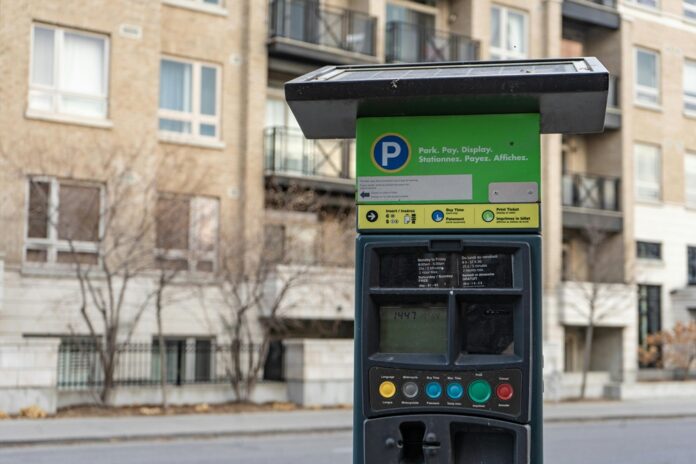
Pexels photo by Braeson Holland

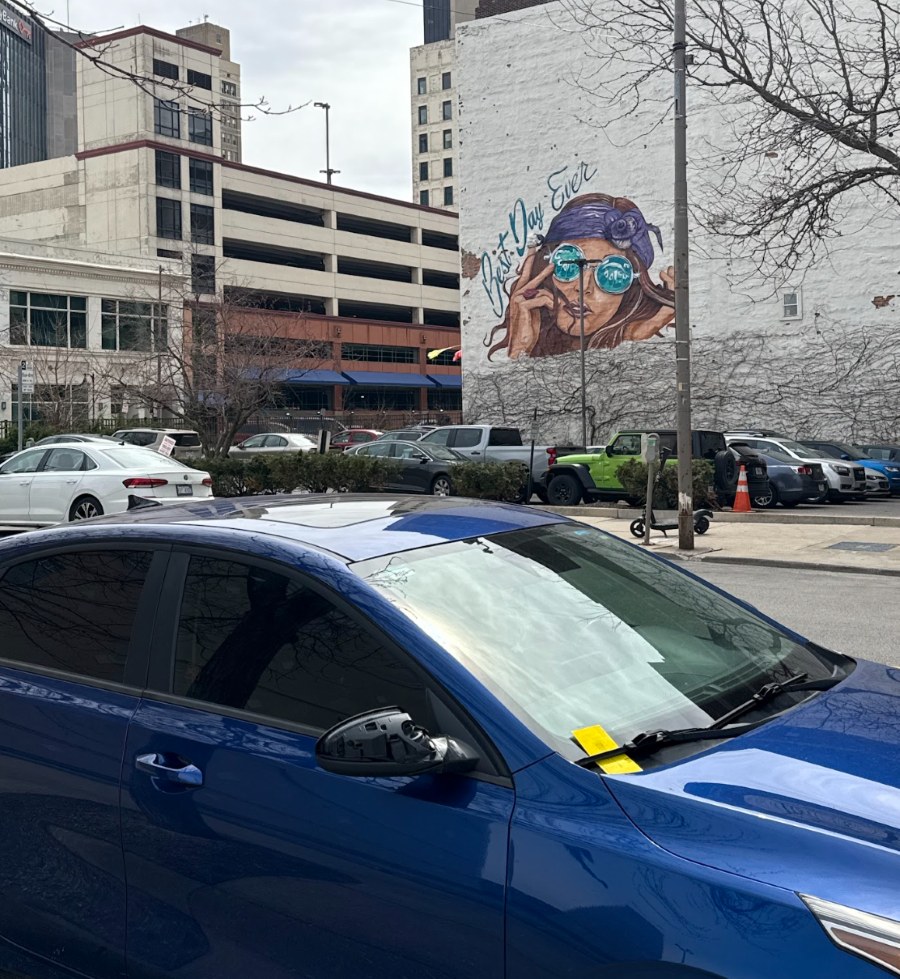
TOLEDO – On any given day, downtown Toledo buzzes with sports fans, office workers, and residents going about their lives. But behind the energy and excitement lies a quieter frustration… $55 fines for parking violations that begin with a 25-cent misstep. For those who live, work, or rely on state services downtown, the dreaded yellow ticket on the windshield has become an unfortunate part of life. Now, a new state law aims to curb some of these penalties.

A recent investigation into parking ticket practices in downtown Toledo has sparked discussions about potential racial and economic bias, and violations of the 8th amendment’s excessive fines clause. Some critics argue that the city’s parking enforcement disproportionately impacts low-income residents and communities of color, particularly those using state services or living in Section 8 housing near Downtown Toledo.


Recent legislation

House Bill 29, passed on April 9, 2025, eliminated driver’s license suspensions for unpaid fines and fees. It also effectively ended Ohio’s DETER program, which had allowed the BMV to block vehicle registrations over unpaid parking tickets. Parking violations, once falling into a gray area as civil infractions, can no longer result in state imposed license or registration holds. This major shift pushes the burden of enforcement back onto local measures like towing, impoundment or collections.

Ohio House Bill 29 effectively closed that murky loophole where civil infractions like parking tickets once fell between the cracks. Before this reform, because parking tickets were not handled in criminal court, they largely escaped the kind of judicial oversight that might weigh whether fines were excessive or consider someone’s ability to pay.

That gray area let local governments leverage state tools like registration holds to collect debts with little scrutiny. With the DETER program dismantled, that avenue is now off the table, which is a meaningful win for drivers who faced losing their ability to legally drive over relatively minor fines.

On the other hand, it also raises the question of whether cities like Toledo will rely more heavily on other penalties, such as towing or sending debts to collections, shifting the burden rather than truly reforming an inequitable system.

The use of towing to collect unpaid parking fines, while seemingly lawful, still raises concerns about whether these policies are being used to generate revenue at the expense of vulnerable residents.

A curious parallel emerges when we consider recent corruption scandals in Ohio’s energy sector. At first glance, these issues seem worlds apart. However, both share a common thread of systematic mismanagement and lack of accountability that disproportionately impacts low-income communities.

In both scenarios, public entities capitalize on the financial hardship of those who have little means to fight back. Whether it is inflated utility rates or excessive parking fines, these systems create an unfair burden on the same people: the economically disadvantaged. Meanwhile, the profits continue to flow into government coffers or private corporate pockets.
How much money has the city received from metered parking tickets?

According to Holly Kemler the Director of Communications for Toledo Port Authority, “Changes to the current metered parking structure went into effect January 2021 following approval by Toledo City Council in June 2019. The changes were to be implemented in 2020 but were paused due to the COVID-19 pandemic.”

“The average meter violations revenue for the past three years (’21-’23) is $264,329. Please note, these dollars go back into the operations of the parking system for capital improvement projects at the parking garages and for on-street meters. In addition, ConnecToledo is granted up to $100,000 each year from net revenues, which funds are re-invested into downtown Toledo development. Any remaining excess net revenue is then split 50/50 with the City of Toledo and the Port Authority. Over the past three years, the Port Authority has received minimal revenue from parking operations.”

Do metered parking fines violate the 8th Amendment?

According to the 8th amendment to the Constitution of the United States of America, excessive fines may not be imposed by federal, state or local governments on its citizens. 

What qualifies as an excessive fine is typically determined by a judge. However, when it comes to minor infractions, like metered parking tickets, these cases often bypass judicial review, creating a loophole. This gap can be exploited by local governments who impose punitive fines that might otherwise be deemed unconstitutional if evaluated in court.

Toledo is not alone in facing these concerns. Similar issues have arisen in jurisdictions around the country. One notable case involves Public Justice, a nonprofit legal advocacy organization, which intervened in City of Seattle v. Long.
“We filed an amicus brief with the Washington Supreme Court on behalf of Steven Long, a vehicularly housed man who was charged over $500 in towing and impound fees for a minor parking infraction. The lower court held that the fine imposed was not excessive, even though Steven was indigent and had only $50 to his name. Our brief argued that, under the Excessive Fines Clause, is necessary to consider a defendant’s individual circumstances, such as ability to pay when imposing a fine.

In August 2021, the State Supreme Court agreed with our brief and held in a unanimous decision that the Excessive Fines Clause requires consideration of a defendant’s ability to pay. The Long court was also the first court ever to hold that impoundment and towing fees can constitute a “fine” subject to the Clause’s protections.”

In another case, Timbs v. Indiana established that the 8th Amendment’s prohibition on excessive fines applies to states. In this case, Tyson Timbs, convicted of drug charges in Indiana, faced $1,200 in court costs and fees. However, officials attempted to confiscate his $35,000 Land Rover – permanently. The Indiana Supreme Court ruled unanimously that this fine was excessive, and the 8th Amendment applied to states.

Racial bias concerns

Columbia Law School professor Edward Morrison did a study called “Explaining Racial Disparities in Consumer Bankruptcy,” and used the 2011 Mayor of Chicago Rahm Emanuel‘s policy to go after unpaid parking tickets and fines as the basis. What he found was that the policy correlated with large increases in Chapter 13 bankruptcies throughout the city, with the Black community being the hardest hit. 

Is there evidence that the same thing is happening in Toledo?

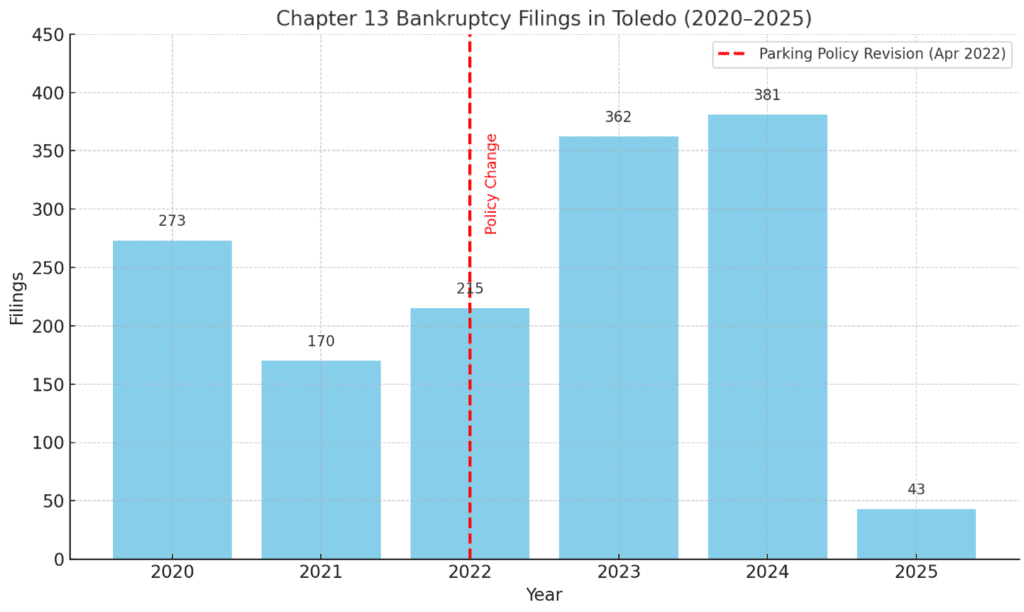
Since 2021, Chapter 13 bankruptcies in Toledo have surged, reflecting a concerning post-pandemic trend. In the Ohio Northern District Court, Chapter 13 filings rose from 170 in 2021 to 382 in 2024—an annual increase of 25 percent. 

Overall, bankruptcy filings have also spiked, with increases of 16 percent in 2023 and 13 percent in 2024, marking the largest year-over-year growth since the district began tracking data in 2015.

While the aftermath of COVID-19 restrictions may skew these figures, the upward trajectory raises significant concerns. The timing of the increase in bankruptcies coincides with the revised on-street parking policy, which was enacted on Jan. 4, 2021.

These policy updates came during the heart of Covid-19 lockdown, and economic stimulus checks. Many people were working from home, and if those individuals lived in Downtown Toledo, the parking situation became even more challenging.

What effect did that have? Economists say it is hard to tell. The pandemic resulted in a sharp decline in filings, largely due to courts processing less cases, and the Coronavirus Aid, Relief and Economic Security Act. Once this relief expired, bankruptcy fillings began to increase but still remained lower than pre-pandemic numbers.

📌 What the data suggests

There’s a strong correlation between the April 2022 enforcement and the sharp increase in Chapter 13 filings, from 2021 to 2023:

  • Chapter 13 bankruptcies more than doubled (170 → 362) during this window.
  • While correlation is not causation, this jump coincides with the period following the stricter metered parking enforcement.
  • Chapter 13 is often used to restructure debts like traffic/parking fines, which makes this trend particularly relevant.
For further reference:

Bankruptcy Filings During and After the COVID-19 Recession

Court Statistics | Northern District of Ohio | United States Bankruptcy Court

Parking meters near Section 8 housing

One point of contention is the placement of metered parking locations near Section 8 housing. A review of Toledo’s urban planning data reveals that a significant number of metered parking spaces are situated within a short radius of these low-income housing units. While many such complexes offer some garden style parking, residents who drive often rely on street parking, leaving them vulnerable to fines they can scarcely afford. This creates an added burden for households already grappling with economic challenges.

Locations of metered parking locations downtown Toledo.
Location of Section 8 housing units downtown Toledo. 

Access to state services downtown

Adding to the issue is the placement of metered parking in downtown Toledo, particularly near government buildings and state service centers. Residents visiting these offices for essential services, such as applying for benefits or attending court hearings, frequently face parking fines. The lack of accessible, free parking near these facilities disproportionately affects low-income individuals who cannot easily absorb the added expense.

Government services near metered parking
  1. Toledo-Lucas County Health Department
  2.  USPS Post Office
  3.  One Government Center
  4.  James M. Ashley and Thomas W. L. Ashley U.S. Courthouse
  5. Toledo Parking Violations Bureau
  6. The Courthouse

The cost of a quarter (punitive fine structure)

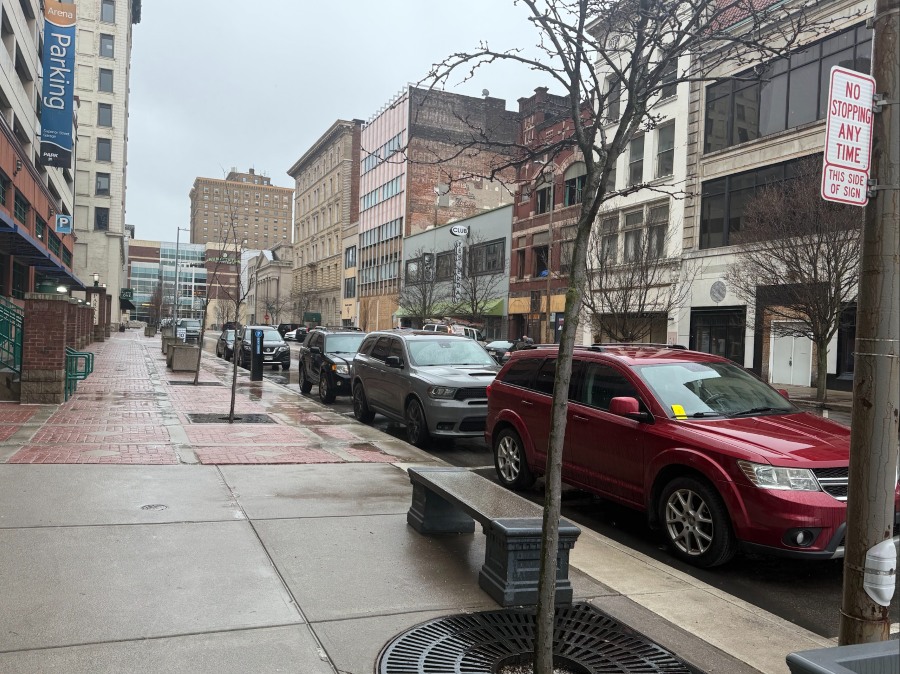
The fine structure further complicates the issue. Initial fines seem manageable but escalate steeply if left unpaid. For example, expired meter violations are initially fined at $10 for the first four offenses. If unpaid, these fines increase to $20 after 15 days and $35 after 30 days. For individuals with multiple offenses, the fines are even higher, reaching up to $55 after 30 days for those with 10 or more tickets.

The proportion of these violations must be considered. A 15-minute parking violation, at the original cost of 25 cents, can balloon up to $55. Some argue that such a system would be deemed exploitative if implemented by a private organization, yet it is legally sanctioned when operated by the local government. For citizens struggling financially who fall between the cracks of these policies, it can be difficult to overcome.

We asked Kemler of the Toledo Port Authority to clarify the options for relief that exist:

What types of payment programs are available for individuals who can’t pay? There are currently no payment programs available; however, parking fines are lower for the first through fourth offenses and increase for more habitual offenders.

Will essential government services be denied based on unpaid fines? Failure to pay after accumulating one single citation for parking in a handicap space, or three other citations, subjects you to Ohio’s D.E.T.E.R. program (administered by the Ohio Bureau of Motor Vehicles), at which time you may incur additional charges, a vehicle registration block by the State of Ohio, and/or towing and impoundment per City of Toledo ordinance.

Are the fines capped at $55 per metered parking violation? Or do they go higher? For expired and overtime meter violations, initial fines are increased to $30 beginning with the 10th parking offense, which fine will increase to $55 if not paid within 30 days. The fine for a handicap violation is $100, which fine will increase to $150 if not paid within 15 days. If any ticket is placed in the Ohio D.E.T.E.R. program due to nonpayment, additional fees may be attached.

Do unpaid tickets get sent to a collection agency? Unpaid parking citations may be sent to an outside collection agency after 90 days.

What considerations were made for residents in these areas when deciding on meter placements? The City of Toledo owns the parking meters and determines the placement of each meter. The Port Authority, via ParkSmart, manages the operation of the on-street parking on the City’s behalf. Residents in downtown Toledo have several options for parking, including monthly covered parking at the Port Lawrence and Superior parking garages.

Is there free subsidized parking nearby? Several downtown businesses own and operate private parking lots, many of which offer free parking.

These implemented changes are consistent with recommendations from a study of the City’s parking system to increase turnover in the metered spaces for patrons visiting the restaurants, shops, and businesses throughout the day. The study’s representatives indicated they were unaware of any other similar sized city that had free parking during the lunch hours and concluded that the people utilizing the free parking were primarily employees of downtown Toledo, eliminating the turnover needed for customers to find accessible on-street parking.

Similarly, it was also recommended that on-street parking have a two-hour limit to further permit turnover and create availability for patrons visiting downtown businesses.

Please note, on-street parking is free before 8 a.m. and after 6 p.m., Monday through Friday, and is free all day on Saturday and Sunday.

Local impacts of parking practices

For struggling citizens using state services, attending court or simply picking up a child from downtown daycares, parking can be hazardous. We interviewed Chris, a downtown Toledo resident, and he explained the impact “I had to pay $600 for like five or six tickets to get a block removed when I tried to get my license plate.

“And they are impossible to contact. They have two separate offices. I had to go back and forth to sign forms and get stuff notarized for the DMV to get the hold lifted. It was a lot for trying to park where I live. And they are out front early looking. It is a real injustice.”

Rachel Garza, manager of the LaSalle apartments downtown and a Downtown Toledo resident, spoke to the Free Press about whether metered parking practices restrict mobility downtown, or are just part of the expansion of the city.

“I see it both ways definitely, because we are building so much, the growth and everything is amazing,” Garza said. “So you can have parking now, getting around the parking though… we are a built-up market. So we always have Walleye events. We always have Mud Hens events. Jeep Fest takes place down here, the Christmas parade that we do, that’s when it becomes an issue for tenants who are living down here.

“Street parking and the way the tickets lapse, that’s definitely a cause of concern. Why are tenants around certain properties getting ticketed when that’s the only parking they have? And could that be a different type of structure?

“I have had tenants that came to me like, ‘Should it be ticketed if it’s the only parking we have for an apartment complex, even if it is downtown?’ And then for our property, leasing wise, we’ve offered different parking spots depending on lease renewals or working with prices, sometimes depending on how long they’ve been here and how long the issue they’ve had with parking.”

A path forward

The debate over Toledo’s parking enforcement highlights broader issues of urban planning, economic justice and systemic inequality. Residents and advocates remain hopeful that meaningful changes will create a more equitable system for all Toledoans.

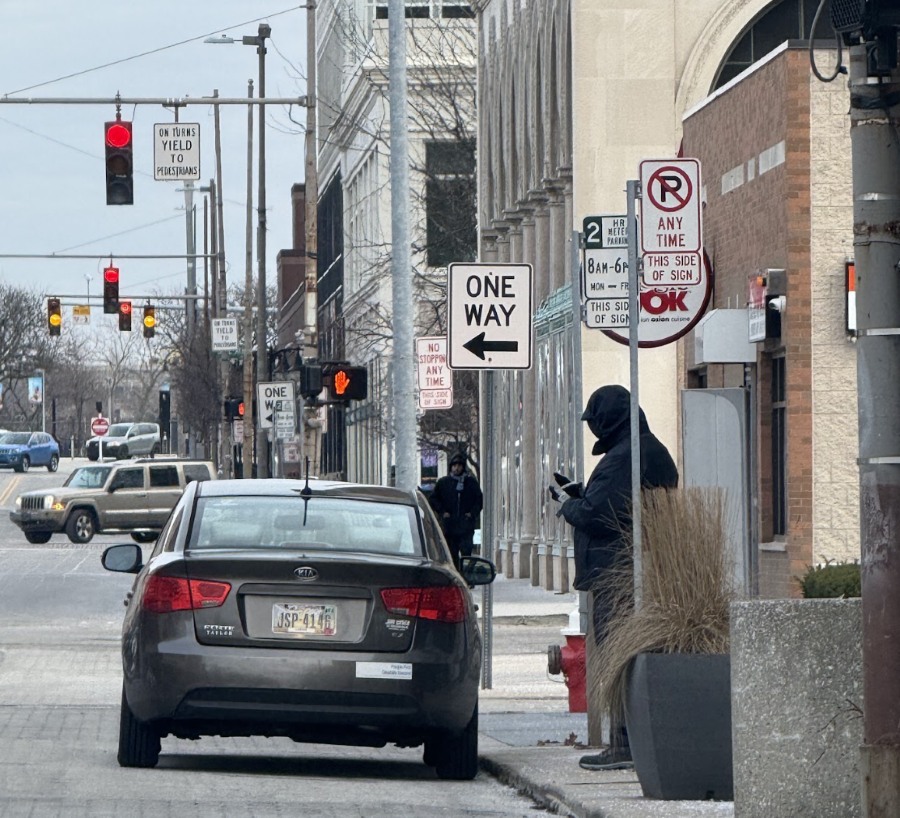
One issue uncovered in our investigation was the frequent breakdown of parking meters, leaving downtown visitors in a difficult spot, unable to pay but still at risk of receiving a ticket. I walked 0.7 miles down Huron Street, from Adams Street to the Farmers Market, and found two broken meters. To test the city’s response, I filed a repair request, and the meter was fixed within 24 hours. While these breakdowns seem to happen often, it’s clear the city is trying to address the issue quickly. 

However, for many residents and visitors, the uncertainty of broken meters can feel unfair, especially when there’s no way to pay and yet the risk of being ticketed remains. A more transparent policy addressing broken meters could go a long way to easing frustrations, particularly for those who frequent downtown for work or leisure.
Solutions include:

Implementing income-based fine structures: Adjusting fines according to an individual’s ability to pay.

Expanding free parking near essential services: Ensuring accessibility for all residents without additional financial burdens.

Transparency in enforcement practices: Publishing data on ticketing patterns to identify and address potential biases.

Amnesty programs for unpaid fines: Offering opportunities for residents to resolve outstanding tickets without facing overwhelming penalties.

As the debate over Toledo’s parking policies continues, the city faces mounting pressure to reform a system many view as inequitable. Advocates argue that fair and just parking enforcement policies are essential for fostering a city that prioritizes equity and inclusivity.

Without changes, Toledo risks deepening existing inequalities and alienating some of its most vulnerable residents.

Inside Lucas County Commissioners Meeting: July 29

0
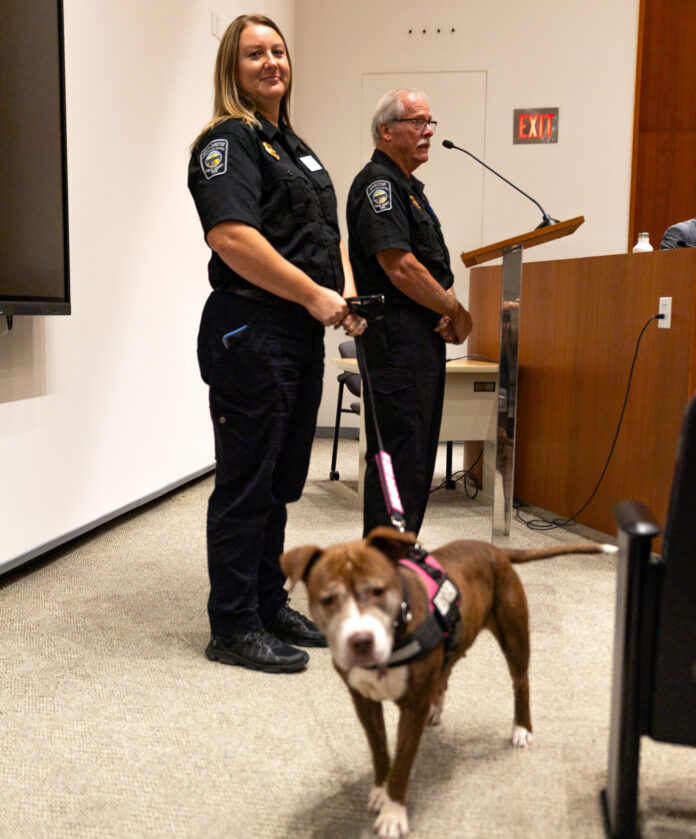
Charlotte, a six-year-old pit bull, accompanies Dave Blythe, the Lucas County Dog Warden and executive director of Lucas County Canine Care and Control, and Terra Bundy, the deputy director of Lucas County Canine Care and Control, to speak before the Lucas County Commissioners at 1 Government Center, downtown Toledo, Ohio on Tuesday July 29, 2025. (TFP Photo/STEPHEN ZENNER)

This week, Lucas County Commissioners met in two separate sessions. Both sessions are accounted for below in chronological order.

Canine Care & Control

A six-year-old pit bull named Charlotte entered the Lucas County Commissioners’ Hearing Room on Tuesday, bringing with her some good news for Lucas County Canine Care and Control (LC4)

“We are thrilled to receive an outstanding donation from the gentleman whose name is Denny” said Dave Blyth, the Lucas County dog warden and executive director of LC4. Blyth announced that Dennis “Denny” Van Camp, 1960-2025, donated $200,000 to LC4 upon his passing on June 10.

A line from Van Camp’s obituary reads, “He had many dogs, but Roxy (2024) was his favorite,” in reference to a German Shepherd Van Camp had adopted from LC4 in 2016. 

Lucas County Commissioner Pete Gerken was excited about a “really good” new era for LC4, and that the donation seemed to confirm that “good” new era. 

The adoption fee for Charlotte, the pit bull, was waved in an effort to find her a new home, and Gerken offered to pay the licensing fee for the dog. 

Charlotte, a six-year-old pit bull, accompanies LC4 staff, who speak before the Lucas County Commissioners on Tuesday July 29, 2025. (TFP Photo/STEPHEN ZENNER)

“It’s great to get this affirmation,” said Blyth when speaking to the press. “It speaks well of him – Denny. It also speaks well of the employees of LC4, and the dogs that we offer for adoption.”

Blyth said the funds would be “used for activities or costs associated with the discharge of our duties and in our mission in the community” but didn’t have specifics yet. 

Office of Management & Budget

An appropriations resolution was then passed for coroner lab funds for the second half of the year, along with a direct cost payment for the sanitary engineer. Then a transfer of appropriation was made for road creation that the commissioners passed. 

Administration

“As a landowner, we need to be the applicant for this grant,” said Ben Pushka, the sustainability coordinator for the Lucas County Commissioners. Pushka explained the importance of getting funding to build a bridge along Centennial and 10 Mile Creek in University Park Trail that would cost about $700,000. Metroparks Toledo offered to match 20 percent of the $700,000 and the grant for Congestion Mitigation and Air Quality (CAMQ) funds would cover the rest. 

“This bridge is the final piece in connecting Secor Metropark [to] Pacesetter [Park] to University [/Park Trail], and from University[/Park Trail] to Chessie Circle [Trail].”

“This is a really critical piece of the trail,” he said, and estimated the completion of the project on December 28. 

Ben Pushka, the sustainability director for the Lucas County Commissioners, speaks in front of Lucas County Commissioners about a bridge crossing on University/Park Trail and Lucas County’s participation in the SolSmart Program. He also asks for permission to conduct a solar analysis of Lucas County Buildings on Tuesday July 29, 2025. (TFP Photo/STEPHEN ZENNER)

Pushka’s next two items dealt with solar power, authorizing a “solar analysis” of Lucas County Buildings and to participate in the SolSmart Program while pursuing a Solar-Friendly designation for Lucas County. 

All items passed, and Pushka said, “We’re looking at some alternative ways to energize our buildings, so we’re looking at what we can get for free in terms of technical support. And that will hopefully allow us to maybe look at ways we can either reduce our consumption or lower the cost for the consumption that we have.”

Delving into the world of solar power, Pushka said, will also help the county instruct residents on the steps they need to take to get solar power for themselves. 

The Commissioners then went into an executive session, and adjourned until their next meeting at 2 p.m.

Afternoon meeting

The second meeting featured three brief items brought by the county engineer, Mike Pniewski, followed by a grievance hearing for Canine Care & Control, Grievance #25-03. 

Members of the press were not allowed into the Commissioners’ Hearing Room during the grievance hearing, but afterwards, Lisa Sobecki, Lucas County Commissioner, said, “After deliberations through our executive session, I’m going to make a motion to deny the grievance. It does not break any of the disciplinary infractions in the contract.” 

Then Lucas County Commissioner Anita Lopez spoke to the employee of LC4. 

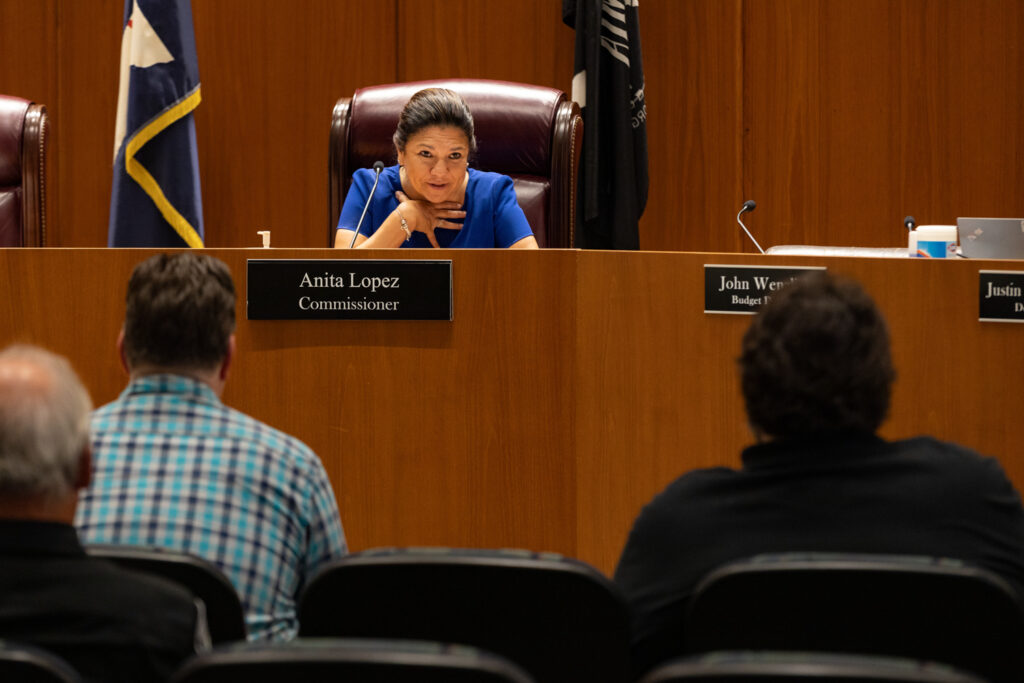
Anita Lopez, Lucas County Commissioner, addresses a Lucas County Canine Care & Control (LC4) employee after an executive session where they looked into a grievance brought by LC4’s union. (TFP Photo/STEPHEN ZENNER)

“It’s been challenging, I’m sure,” she said. “Management is new to working with you, and I know that you are very passionate about your job.” Lopez said she hoped the employee in question could continue to talk with management as well their union steward. 

Gerken echoed Sobecki’s assessment that the grievance did not violate the language of the contract. 

All three voted to deny the grievance. 

“I hope, for me, the discipline is both progressive and corrective,” he said, and then Sobecki adjourned the Commissioners from meeting until August 5. 

RELATED CONTENT: Inside Lucas County Commissioners Meeting: July 1

World’s Largest Duck Visits Toledo

0
Daisy and Dakotabear from the TikTok @dakotabear_n_daisy_poms sit in a remote controlled Jeep in front Mama Duck, the largest rubber duck in the world, and Timmy, her son, at the Hollywood Casino in Toledo, Ohio on Tuesday July 29, 2025. TFP Photo/STEPHEN ZENNER

TOLEDO – The World’s Largest Duck made an appearance for two days, July 29 and 30, at Hollywood Casino Toledo, bringing in guests who were there for the photo opp and to see the spectacle of a giant duck that could be seen from the highway. Mama Duck and Baby Duck were quite the attraction, especially given the rubber duck’s association with the Jeep brand. It was a good lead-in to this weekend’s Toledo Jeep Fest.

“We’re excited because we’re huge Jeep fans,” said Shasta Sibbersen of West Toledo, as she petted her Pomeranians, Dakota Bear and Daisy, who both sat contentedly in their tiny white Jeep below the giant Mama Duck. “This is their Jeep, and I have one that matches.”

Other Toledoans lined up for their chance to take pictures with the large yellow celebrities.

Mama Duck’s Director of Operations, Jase Wierda, 30, from Duluth, Minn., stopped by Toledo on the way to Put-In-Bay.

“It’s 61 feet tall, 64 feet wide, 74 feet long and it’s roughly 140,000 cubic feet,” Wierda said, rattling off the stats from memory. The massive duck was the brain child of Craig Samborski, who Wierda ended up working with outside of duck-related activities in Duluth.

Eventually, Samborski recruited Wierda for some help with the duck, and now Wierda has traveled with the duck for the past three years.

In all, Mama Duck has traveled for 11 years, and this is her second iteration, with the main improvement being a more easily compactible base for easier travel.

“We had a custom barge,” Wierda said of the original Mama Duck. “So it had to go on water, and it was a ton of work. This one is a lot easier to bring around to different places, and we don’t have to have a barge; we can set it up in a parking lot.”

Timmy, on the other hand, is on at least his seventh iteration. Wierda lost count at some point. But he mentioned the baby duck gets a little more punishment from the kids getting more interactive with it.

After Put-In-Bay, Wierda said the duck troupe was on to the Missouri State Fair.

“It seems to never really end,” he said. “Just when we want to take a break, somebody else calls us and they’re like, ‘Hey, we’re excited to bring you guys out, and have the duck.’ And then we do it.”

Hemp hysteria: The case for rational, consistent regulation

0
Pexels photo by Aphiwat Chuangchoem

As the hemp beverage industry rapidly expands across the United States, policymakers are at a crossroads: follow the facts and support innovation—or give in to hysteria and overregulate a federally legal industry. Two states—Tennessee and Ohio—illustrate this divide.

Tennessee: Smart, Structured, and Responsible

Tennessee’s HB 1376, signed by Gov. Bill Lee and taking effect January 1, 2026, is a blueprint for smart hemp regulation. It places hemp-derived cannabinoid products (HDCPs) like low-dose THC beverages under the jurisdiction of the Tennessee Alcoholic Beverage Commission and Department of Revenue, ensuring compliance without chaos.

Key provisions include:

  • 21+ sales through licensed retailers, bars, and restaurants only.
  • No online or gas station sales.
  • A $2,500 supplier license for out-of-state manufacturers.
  • A three-tier distribution model modeled on the alcohol industry.
  • Modest but enforceable taxes to fund regulation and oversight.

Ohio: A Pattern of Overreach—But No Action

In Ohio, several bills—including HB 168, SB 278, and HB 160—have been introduced to restrict or outright ban intoxicating hemp. These proposals include:

  • Arbitrarily redefining hemp as marijuana based on microdose THC thresholds.
  • Forcing hemp businesses into the marijuana dispensary channel—federally illegal territory.
  • Imposing licensing bottlenecks and caps that would stifle innovation and limit consumer access.

Yet despite months of debate and industry resistance, none of these measures passed before the Ohio House adjourned for summer recess. That silence says something loud and clear: there is no hemp crisis.

Texas and Congress also hit pause on prohibition

Ohio isn’t alone in walking back hemp hysteria. Texas Gov. Greg Abbott vetoed a proposed ban on intoxicating hemp, citing concerns about limiting business growth. And at the federal level, Congress passed the much-touted “Big Beautiful Bill” without including any hemp bans—not for intoxicating hemp, not for THCA flower, and not for synthetics.

If intoxicating hemp posed a national emergency, these policymakers would have acted. They didn’t.

Meanwhile, the Market Speaks Loud and Clear

Earlier this month, I attended the Hemp Beverage Expo in Atlanta, where hundreds of entrepreneurs, alcohol distributors, attorneys, accountants, investors, flavor houses and bottling companies from across the country gathered to build the next chapter in cannabis innovation. Hemp-derived THC beverages are a hot commodity. Retailers are eager. Consumers are responding. And capital is flowing.

The regulatory conversation must catch up with the commercial reality.

Ohio (and Others): Time to Get the Message

Rational regulation is not only possible—it’s essential. States should be:

  • Setting clear age restrictions.
  • Requiring product testing, labeling, and packaging standards.
  • Enabling compliant supply chains without redefining hemp as marijuana.
  • Supporting tax revenue collection and enforcement.

The federal definition of hemp remains the law of the land. It’s time Ohio and other states stop trying to rewrite it in fear. There is a path forward, and Tennessee is already walking it.

Let’s move beyond panic. Let’s promote safety, transparency and growth. Let’s stop the hemp hysteria—and let hemp thrive.

Toledo Jeep Fest 2025 Welcome Party

0

TOLEDO – Jeep Fest 2025 begins this weekend (August 1-3), and Monroe Superstore is hosting a Welcome Party to celebrate on Friday, August 1, from noon-6pm. Not only will the party include ice cream, food trucks, local vendors, and music by DJ LBoogie, but it will also feature an obstacle course. That means anyone who owns a trail-rated Jeep can show up and participate in this epic course.

Those who want to participate and don’t own a Jeep needn’t worry: Employees will be at the ready with Jeep Wranglers and Gladiators to give rides. What better way to kick off a celebration of Jeep’s history in Toledo than to go for a joy ride on an obstacle course? Click here to learn more.

Bad Homophones: A Dulcet

0
"Dulcet" - from the Bad Homophone series by Steven Athanas

Cartoon by Steven J. Athanas

RELATED CONTENT: Steven Athanas: The Artist

Whitetail deer show off antler growth

0
Buck in velvet photographed at Howard Marsh Metropark by Metroparks Toledo nature photographer Art Weber.

HOWARD MARSH METROPARK – A buck peers through a thick stand of cattails along Maumee Bay. He is already sporting a nice set of velveted antlers, highlighted in the sunlight of a recent summer evening. 

Now is the time for male whitetail deer to show the growth of antlers they’ll need this fall as they spar with other males during the rut, or mating season. The velvet protects and nourishes the antlers while they grow, drying up in the fall when the job is done. When it’s dry, the bucks rub the velvet off, revealing the bone-hard antlers. 

Krazy Bins expands to Toledo

0
Krazy Bins patron Kara Russo poses in front of her discount finds at the Parma location. (Courtesy photo)

Outlet store offers a new shopping experience for Toledoans

TOLEDO – Founded in 2020, Krazy Bins is an outlet store that buys overstocked and returned items from the largest retailers in the United States and sells them for a fraction of the cost. 

Noah Leavitt, founder of Krazy Bins, explained that it has a weekly cycle. This cycle begins on Friday when the store brings in three to four truckloads of merchandise. Items are stocked in bins and priced at $15 to start the cycle. In an attempt to sell out of the product by the end of the week, the price is lowered each day.

All items in the bins are $10 on Saturday, $6 on Sunday, $4 on Monday, $3 on Tuesday, $1.25 on Wednesday, and $1 on Thursday. On Friday, that cycle starts again.

Krazy Bins currently has locations in the Cleveland suburb cities of Medina, Parma and Kent. Over the years, they have had several locations in Ohio; some of those locations have moved or closed. Now the company is gearing up to open in Toledo. 

According to Leavitt, the decision to expand to the Glass City was driven by several factors, including the lack of similar stores in the area, the nearby university and the population size.   

“It was a huge decision for us; the traffic right there is phenomenal, and we just think it’s a really strong fit as a city, as a location.”

After expanding to Toledo, Leavitt says he has plans to venture out to Detroit, Pittsburgh and Columbus. 

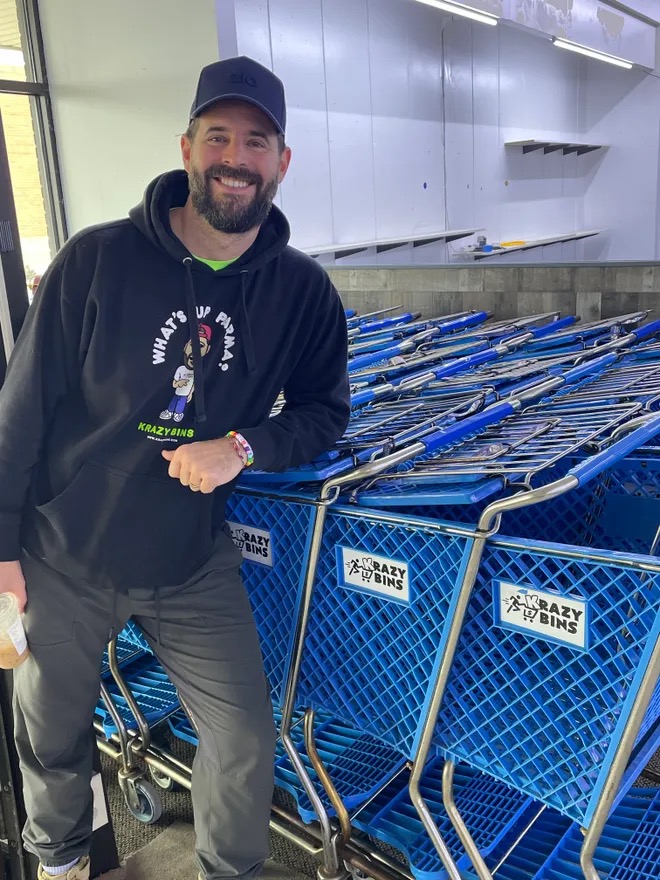
Noah Leavitt, founder of Krazy Bins. (Courtesy photo)

Leavitt said that Krazy Bins does not function like a normal store. It doesn’t restock the same items each week. The bin pricing model creates a treasure hunt atmosphere for shoppers, leading customers to visit the store multiple times a week or every week because there is always a new product on the shelves. 

“You’re never going to have the same experience when you walk into Krazy Bins,” Leavitt said. “If I walk into Krazy Bins on a Friday. It’s going to be different than when I walk in on a Wednesday because a lot of the merchandise is gone, but there still can be great stuff.”

Leavitt encourages shoppers from Toledo to go into the store with an open mind. 

Customers on Krazy Bins

Kara Russo is from Novelty, Ohio, and she is the owner of KASA Interiors Cleveland. She says Krazy Bins is one of her favorite stores, and she has been shopping there since they opened their location in Parma over four years ago. 

Russo says the prices are one factor for her support, but she also likes that they sell goods on Instagram, making it easier to purchase big-ticket items like furniture without physically going to the store. She also likes that the shopping experience is different from regular retail stores. 

“You never know what you’re going to find, which is a bunch of hidden treasures,” Russo said, adding that she is a big proponent of shopping the home goods section. Among these are furniture, fake plants, knick-knacks and art.

Russo says the store is helpful for people who are on a budget and don’t want to pay retail prices.  

“You get brand new items for a fraction of the price,” she said. “It just helps people be able to decorate their homes and clothing, and everything they need for a fraction [of the cost].”

Russo praised the store for preventing items from ending up in landfills by selling them at low prices. She advises shoppers to take their time: look at all the bins, check out all the shelving and explore the furniture section. 

Her advice to new customers is “you need to be there early, and you need to be prepared. You need to not have any expectations and just be open-minded for all the hidden gems that you will come across.”

Twin sisters Whitney Foore (left) and Shelby Pepin (right) at the Kent Krazy Bins location.
They call themselves the “Krazy Bins Twins.” (Courtesy photo)

Shelby Pepin of Kent, Ohio is another longtime customer of Krazy Bins. She has shopped at the stores since they first opened. Her first store was the now-closed Akron location; she now shops at the much closer location in Kent. Despite not being paid by Krazy Bins, she occasionally posts Instagram videos of her shopping trips. 

Pepin loves to go to the store to shop for clothing and home decor items. She thinks stores like Krazy Bins are important because she can enjoy shopping without overspending.

“I put myself on a budget because I would like to buy a house in the near future, but I also love fashion, and it gives me the ability to buy some things when I’m feeling the urge to shop but on a friendly budget, and the clothing is not going to landfills.”

The new Krazy Bins location will have its grand opening on Friday, August 1, at 10 a.m., 3314 Secor Rd, Toledo.

Passenger rail progress in Ohio slow, but encouraging

0
An Amtrak passenger train at Martin Luther King Jr. Plaza in Toledo on Jan. 19. (TFP Photo by Stephen Zenner)

All Aboard Ohio, Ability Center continue legislative efforts

Considering the uncertain funding from both federal and state sources, the future of the passenger rail movement in Ohio seems to be at a standstill. But there also was reason for optimism coming from All Aboard Ohio’s annual meeting on July 12. Lots of work ahead to be sure, but optimism too.

“We didn’t get what we wanted in the [recently passed] state budget, but we’re moving on to the next steps,” explained Liz Quigley, board member of All Aboard Ohio, a nonprofit organization dedicated to promoting improved public transportation and passenger rail service throughout the state.

The 2025 budget did not include an allocation for the state to rejoin the Midwest Interstate Passenger Rail Commission, a group that advocates for expanded rail service throughout the Midwest. Additionally, lawmakers refused to allocate one seat on the Ohio Rail Development Commission to the passenger rail industry (instead designating that seat for freight rail).

The Commission, in conjunction with the national Corridor ID Program, is overseeing studies of two of Amtrak’s proposed new Ohio passenger routes: the 3C+D line (Cleveland, Columbus, Cincinnati + Dayton) and the Cleveland-Toledo-Detroit line. Quigley said that the Corridor ID Program “is still on track, but it will be more challenging,” and is not scheduled to be complete until 2032.

Speaking of Amtrak, the 2025 federal budget calls for a 25 percent cut in the Amtrak Northeast Corridor, but most of the federal funding provided by the 2021 infrastructure law currently remains, including funding for the Ohio passenger routes.

Quigley said much of their group’s activities have to do with the law around taxes. “Our transportation funding comes from gas taxes, and transportation is typically interpreted as roads,” she said. “By adding state rail systems, you’re improving the longevity of our highway systems.”

Sally Fish, Disability Rights Advocate with The Ability Center in Toledo, created the Disability and Aging Rail Coalition (DARC) to address the systemic issues that limit individuals with disabilities from access to vital areas of community life. She also attended the All Aboard Ohio annual meeting as its Northwest Ohio Representative and was encouraged by the vibe at the meeting.

Sally Fish, Disability Rights Advocate, The Ability Center, Toledo;
also Northwest Ohio Representative to All Aboard Ohio. (Courtesy photo)

“We have support in the (Ohio) House of Representatives,” she said. Two Republicans attended the meeting, including Rep. Bernard Willis (District 74), Chair of the Transportation Committee. “He was in full support of our efforts, and was very encouraging,” she said. 

“Ohio has a high aging population, and our current transportation systems don’t provide the infrastructure support we need,” said Quigley. Fish agrees that a multi-modal transportation system across the state results in access to that infrastructure, particularly for individuals with disabilities.

“Rail provides the access to specialized care, services and recreational activities that other transportation may not provide,” she said.

All Aboard Ohio is focused on three specific areas going forward, according to Quigley:

  • Continued advocacy efforts for program research and funding
  • Building community engagement with groups that are impacted by transportation issues, such as commuters, new industrial development and in rural areas
  • Economic development efforts around the areas adjacent to passenger rail, such as supporting a walkable infrastructure, bike and riding sharing programs, etc.

And in Toledo, One Government Center will be the setting for a DARC legislative event, Toledo on Track, on Sept. 19.