Home Blog Page 55

Toledo enforcement targets lead risk

0
Arselia Ruiz walks with her children, Arryn Sleet, 4, and Alesanpra Nixon, 7, to get their their lead test at an event hosted by Indiana Ave. Missionary Baptist Church in Toledo. (TFP Photo/Barrett Dorner)

TOLEDO – In a mobile clinic in a church parking lot, registered nurse Gloria Smith prepped Vibe Carswell, 7, for a finger-poke lead check.

“At any given time, there are 3,400 children with lead poisoning in Lucas County,” she said, stressing each syllable of the statistic. “That’s crazy.”

Smith is the lead case manager for the Toledo Lucas County Health Department. Of the health department’s three lead caseworkers, she is the one whose sole focus is on children who test positive.

Vibe Carswell, 7, watches as Gloria Smith, of the Toledo-Lucas County Health Department, uses a “magic straw” to draw blood for a lead test. (TFP Photo/Barrett Dorner)

“My goal is to educate the parents, to help them to get those levels down as quickly as possible,” Smith said.

One child at a time, Smith works to find those who are already poisoned. When they are, the environment is prime suspect.

“About 98 percent of our cases are due to old housing stock,” she said.

One at a time, certain houses are supposed to be checked and certified by the City of Toledo. Now, for the first time in years, the city has the legal authority to hold owners to that.

On paper, the city’s lead ordinance has been in effect since 2020, but a lawsuit put enforcement on hold in 2022. After two courts heard the case and sided with the city, the Ohio Supreme Court refused to hear an additional appeal earlier this year. That left the lower court’s ruling in place.

So, the deadlines now have teeth – misdemeanor charges and fines – with the end of this year marking the cutoff for owners to register buildings in certain parts of the city.


(TFP Photo/Barrett Dorner)

For any building older than 1978 – the ones most likely to have lead-based paint – rental properties with up to four tenants and daycares are required to be inspected. When they pass, they are issued a certificate that any prospective renters can look up.

That peace of mind is something Arselia Ruiz of Toledo wishes for. She rents a home in that risky category. It has not been inspected, and her kids are sneaky.

“They’re future assassins,” she said of Arryn, 4, and Alesanpra, 7. She also has a one-year-old. 

“I have to watch my kids like a hawk,” she said. “I’m worried they’ll get a hold of it,” from peeling or chipping paint when she is not looking.

Ruiz brought the older two for tests at the same event, hosted by the Indiana Ave. Missionary Baptist Church, last month. They already get tests at annual pediatrician appointments, but until her house is checked – that’s not enough.

Kids enjoy a bounce house at a lead testing event hosted by Indiana Ave. Missionary Baptist Church in Toledo. (TFP Photo/Barrett Dorner)

Lead inspectors agree with the health department – concerns like hers are valid. In the little over two years as an inspector, Tiffany Brown said she has met families whose children were poisoned.

“More than I ever expected,” she said.

A friend she met in the lead inspector training experienced it first-hand. Lead dust made it into the vents during a renovation, and several members of the family had dangerous levels in their blood, she said. When the house was closed up for winter, their symptoms were worse; that helped track down the cause.

But “there are hardly any [specific] symptoms, so you wouldn’t know unless you’re looking,” Brown said.

And there may not be any at all, according to the Environmental Protection Agency. Children under six years old are most at risk, and any symptoms that do appear can range from fatigue to learning and behavior problems.

In addition to being a lead inspector, Walden Wilson is also a landlord. He understood the concerns about the ordinance from that perspective, but the chance to prevent lead-related illness needed immediate attention. He is relieved the legal roadblocks are out of the way.

“Because of the homes I’ve seen, I am glad they are doing it because there are some homes that I would not want to see people moving into knowing that it’s not safe,” Wilson said.

He expects his business to ramp up as enforcement kicks in.

“The property owners for the most part have been very diligent as far as ‘what do I need to do to handle it? What do I need to take care of?’” he said. There are some who do not have that same attitude, at least at first.

“When they get the reality – ‘You’ve got lead on your property – that’s when they wake up,” he said.

Ruiz wants to move somewhere newer, or at least certified. But financially, it is impossible for her right now.

“I’m going on a needle and thread,” she said before listing the cost of her most recent grocery trip. “So I’m taking that risk with that apartment.”

Her situation is a familiar situation for many residents of the Central Toledo neighborhood that’s within walking distance of the church’s event.

There, and across the community, “African Americans and the Latino community” are falling through the cracks in lead prevention and detection, associate preacher C. Jerome Graham said. 

Access and awareness were two main reasons he and the leadership put on the lead-testing event. With inflatables, a food truck and family-oriented vendors – they wanted it to feel more like an adventure as opposed to a trip to the doctor’s office.

“If you make it fun, they will come,” he said.

When they turned the corner into the parking lot, Arryn and Alesanpra rushed right over to the bounce house. It gave their mom a break from shouting at them to ‘stay close’ and to ‘get away from the street’ before their tests.

“My kids doing this – it’s important to me,” Ruiz said.

“I think everybody should do it, because there’s people out here whose kids could have a condition or illness and the whole time it’s because they’ve got lead in their system.”

Inside the mobile clinic, Nurse Gloria wrapped up the test but let young Vibe call the shots.

“You see the black line?” Smith asked. “When your blood gets to the black line, say ‘All done now!’ okay?”

When she shouted she was done, Vibe walked away with half-a-dozen stickers and kudos from the lead expert.

“Girl, you are good! You’re so brave. High five!”

Lead Resources:

For Lead Screening & Prevention in Lucas County – or call the Toledo Lucas County Health Department at 419-213-2013

For Toledo residents

Outside Toledo or Lucas County: Contact your county health department or your primary care provider.

For Toledo property owners


Toledo Day Nursery strives for affordability

0
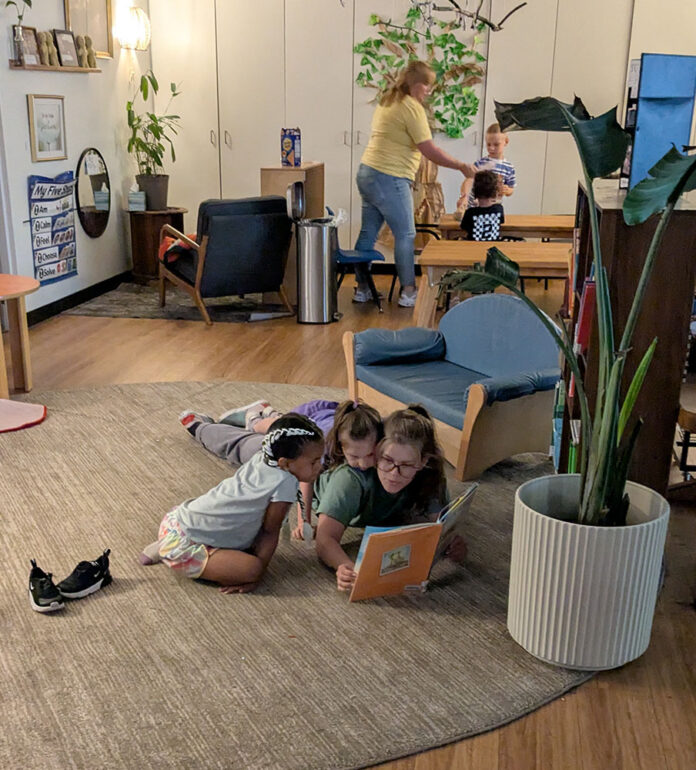
Miss Riley reads to Margaret, 4, and Baylor. (TFP Photo/Mary Helen DeLisle)

TOLEDO – Nelson Mandela once said, “History will judge us by the difference we make in the everyday lives of children.”

For most American parents, childcare is necessary for everyday life and many struggle to afford it. According to Policy Matters Ohio, the average annual cost of childcare for one infant in Ohio is $10,417.

The Toledo Day Nursery (TDN) is changing this narrative by creating initiatives that make childcare more affordable and accessible for Toledo families.

Julia Myers, left, and Chelsea Davis. (TFP Photo/Mary Helen DeLisle)

“Any family that goes on maternity leave or even medical leave does not have to pay any tuition during that time,” said Julia Myers, director of the TDN Jefferson Ave. location.

During November and December, she said no family at either the Stickney or Jefferson avenue locations paid tuition. 

“It’s a really hard time to be a parent. It’s the most beautiful time; you’ve got all these wonderful holidays, you get to spend all this time with your family, but things are very expensive,” Myers said. “We wanted parents to feel a sense of relief when it came to the holiday season.”

Chelsea Davis, director of the TDN Stickney Ave. location, added that this tuition-free initiative would not have been possible without the help of the Bainum Family Foundation, which selected TDN to be a WeVision EarlyEd Solutions Lab site.

“The hope is that by gathering enough data, we’ll be able to push policy on a national level to make childcare affordable, not just for the places that are part of this WeVision initiative, but across the entire nation,” Davis said. 

While Bainum is based in Washington, D.C., it has 22 lab sites spread throughout the U.S. 

“They [Bainum] trust and refer to the directors and the trusted caregivers as proximity experts. And through that, they’ve given their proximity experts full autonomy to decide how they’re going to meet deliverables,” Davis said. 

Marica Cox Mitchell, chief program officer at the Bainum Family Foundation, emphasized that each of the lab sites is unique.

Cox Mitchell explained that variety between test sites helps each one minister to the unique needs of the communities they serve, and this diversity helps Bainum gather data on effective childcare methodologies.

TDN was selected because it excels as a childcare facility, not only in Ohio, but also in the country at large. From affiliations with Toledo Public Schools and Hope Toledo to becoming and dissolving a charter school, TDN has been a long-standing community resource. 

Julia Myers watches children eat lunch at the Toledo Day Nursery (Jefferson Ave.). (TFP Photo/Mary Helen DeLisle)

“We’ve had so many different hats we’ve worn, but the mission has always been to positively impact children’s lives. I think the beauty of our 100 and almost 55 years is that our mission has always remained the same,” Myers said. 

While TDN uses a state-based curriculum, it also has its own adaptive methodologies to implement in the classrooms, such as Montessori toys and conscious discipline strategies. 

“Each of our classrooms have an extra staff person in there, which gives more intentionality,” Davis said. “You’re actually hearing the things they [the kids] are wanting to do, what they’re interested in. It also gives space to plan and think outside the box.”

To foster better learning, Myers and Davis have also added their own personal touches to the center.

“Julie and I have vision. Aesthetically, when you walk into our buildings, you know you’re going to feel a certain way. That’s very intentional,” Davis said. “We’re very purposeful with the things that we do, but we also adapt different philosophies depending on what different classrooms may need.” 

TDN also concentrates on the well-being of its teachers, following a trickle-down philosophy that if the teachers are well-served, the children will be, as well. TDN teachers receive free tuition for their children and are invited to team outings that help teachers prosper.

“I truly believe we’re putting the teachers’ mental health first,” Myers said. 

Founded in 1871, TDN continues to evolve with the times in order to keep serving the Toledo community.

Photos by Mary Helen DeLisle

Photos by Mary Helen DeLisle

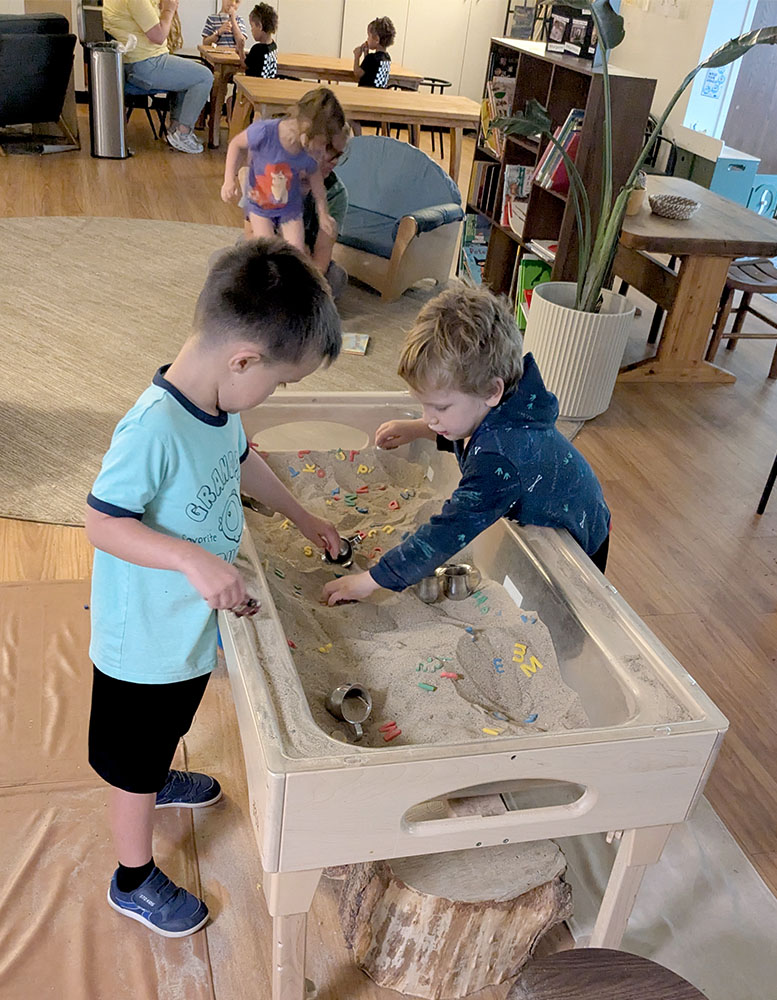
Baylor, 5, left, and Aria play.

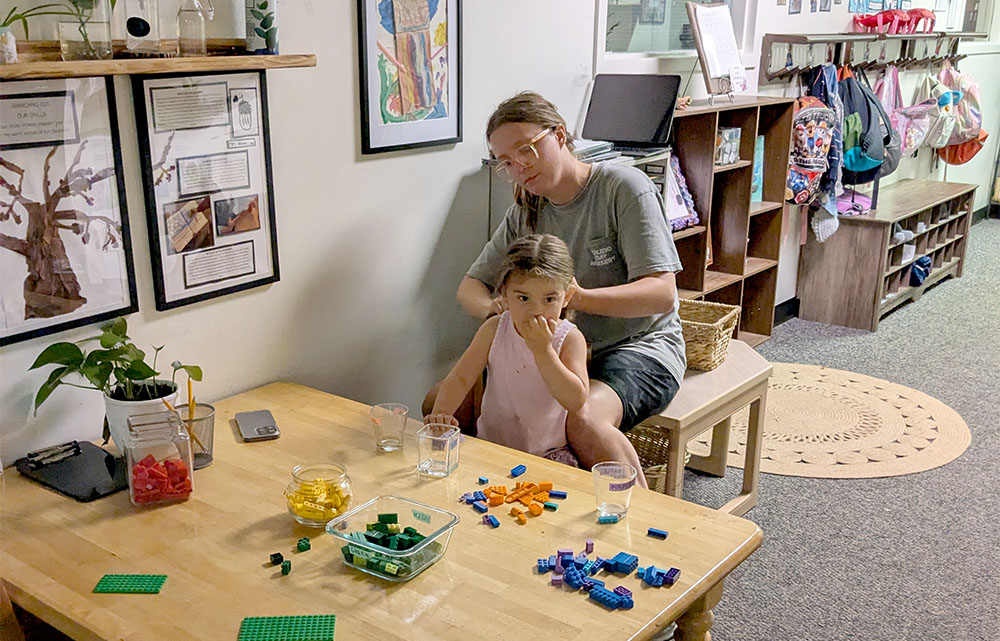
Miss Abbie braids Gwen’s hair.

Hudson (left), 4, and Nathaniel (right), 3.

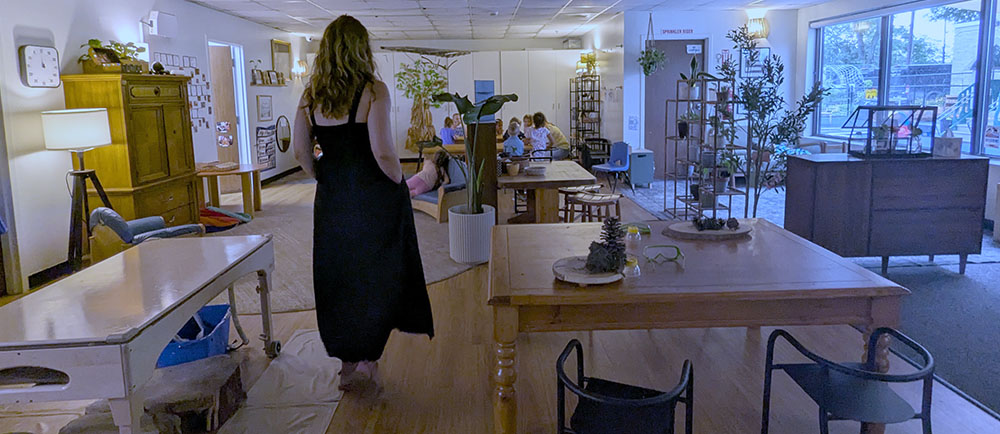
A play structure at TDN encourages exploration and creativity.

DeWine uses budget vetoes to help schools, libraries, Medicaid, newspapers

0
(Courtesy Photo/Ohio State House)
This story was originally published by Signal Statewide. Statewide is a nonprofit media partner of the Toledo Free Press.

By Andrew Tobias | Signal Statehouse

OHIO – Gov. Mike DeWine sided with public schools, libraries and local governments as he vetoed several high-profile items from the state budget on July 1.

DeWine also blocked a measure that would have potentially kicked babies off of the state’s Medicaid rolls by ending a DeWine-backed policy that ensured all newborn children deemed eligible for the program stay covered until they turn four years old.

The Republican governor announced the vetoes as he signed the two-year, $100 billion spending bill that funds basic state operations. The state legislature, where Republicans hold supermajorities in both the House and Senate, can override DeWine’s vetoes. Doing so requires support from 60 percent of the members in both chambers.

Republican legislative leaders issued statements Tuesday signaling they may try to overturn DeWine’s property tax related issues. Senate president Rob McColley and Sen. Jerry Cirino, a top Senate Republican, called DeWine’s moves “puzzling.”

“These are kitchen table issues that hardworking families understand, and the General Assembly needs to strongly consider acting on their behalf to implement these vital changes that would return the property tax system to its cost controlled guardrails as originally intended,” McColley and Cirino said.

The governor left untouched some high-profile legislative priorities tucked into the budget, including a tax cut for Ohio’s top 21 percent of earners and $600 million in state funding to help the Cleveland Browns build a new domed stadium in Brook Park.

DeWine explained his vetoes, which numbered 67 in total, in written messages that his office announced at 2:11 a.m. July 1. He and Lt. Gov. Jim Tressel also held an extended press conference at 10 a.m. Tuesday morning to go over the hundreds of fiscal and policy changes inside the 3,156-page final bill.

Property taxes related to school funding 

One major batch of DeWine vetoes reversed laws Republican state legislators passed that were meant to lower property taxes. These would have come at the expense of local governments, particularly public school districts, which get the bulk of their funding from local property tax levies. Republican lawmakers touted the laws as giving relief to property owners who absorbed huge tax increases due to the historically large increase in property values that has occurred this decade.

The most sweeping veto nixed a new “carryover cap” provision that said school districts couldn’t accumulate cash reserves that exceeded 40 percent of their annual operating budget. School districts would have to return anything more than 40 percent to local property owners via automatic tax reductions. The measure was a top priority for Republicans. GOP lawmakers billed it as an immediate multi-billion-dollar tax cut –estimated to be worth in total as much as $2.17 billion. School district officials were designing plans to circumvent it by taking advantage of an exemption for money set aside in a special fund for building maintenance and construction projects.  

DeWine also killed measures that would have:

  • Eliminated “replacement” levies, a type of property tax levy that typically results in tax increases but is distinct from an “increase” levy
  • Tightened the conditions under which schools can receive larger funding increases tied to existing levies when property values rise, via a tweak to the state’s property tax formula
  • Allowed county budget commissions, a panel consisting of the county prosecutor, auditor and treasurer, to unilaterally reduce tax rates when they felt doing so was “reasonably necessary or prudent to avoid unnecessary, excessive, or unneeded property tax collections”

DeWine echoed arguments from local government officials, school officials and teachers’ unions while explaining these vetoes. 

He said the new carryover cap would lead schools to make more frequent levy requests, prompting “levy fatigue” from voters.

“While the intention to save taxpayer dollars is understandable, this item would significantly limit the amount of funding that school districts can carry over year-to-year, resulting in more districts asking taxpayers to pass levies more often, which could very well exacerbate property tax increases instead of reducing them,” DeWine wrote. 

DeWine said that he would form a commission of administration officials, school officials, lawmakers and property tax experts to study possible property tax reforms “to ensure this critical topic is given the attention deserved.” This would add to the years of study the issue has gotten from the legislature that following the governor’s vetoes, still has yet to result in any major reform.

“I’m not going to go through each one of them, but I think that, collectively, they create a problem for the schools,” he told reporters.

The governor chopped a couple more education-related provisions from the budget. One would have required candidates for local school boards to run as Republicans or Democrats or with another political party label. He said doing so would discourage candidates who didn’t want to publicly identify with a party. 

He also vetoed a provision that would set aside $35.1 million for parents to help pay to send their children to attend religious private schools not affiliated with charter or public schools.

There’s “no accountability” for these dollars under the proposal, DeWine said when asked about the veto, as opposed to public or charter schools.

DeWine wants library adult-related material left alone

In addition, DeWine gave a win to public libraries by vetoing budget language that would have required libraries to place “material related to sexual orientation or gender identity or expression” in a special, cordoned-off section that’s not “primarily open to the view of minors.”

Libraries had urged the governor to veto the provision. They called it a form of censorship that would be expensive and potentially legally risky to implement.

The governor is a major library supporter who at times in his political career also has taken steps that were sympathetic to LGBTQ+ people. He wrote that the state’s existing obscenity laws were adequate to protect children.

“I think as parents or grandparents, no one wants their child to have a book or something that is inappropriate or obscene,” he said. “But I just felt that the language simply just did not work.”

DeWine vetoed a anti-trasngender measure dealing with children. He nixed language that would have forbidden homeless shelters from “promoting or affirming” transgender minors’ gender identities. DeWine said the provision would have limited shelters’ ability to get needy children off the streets. 

“We want homeless shelters to be open for everyone that’s coming in,” he said during his press conference Tuesday morning.

The governor kept other anti-transgender language in the budget, though, such as a measure that declared it official state policy to recognize the traditional male and female gender binary. He also left alone a measure that forbids medical providers from billing Medicaid for mental health care that affirms transgender people’s gender identities. 

Medicaid-eligible babies

One of DeWine’s vetoes preserved a measure passed in the last state budget bill two years ago. It automatically keeps children – ages three and younger already enrolled in Medicaid – covered until their fourth birthday. Medicaid is the health insurance program for the poor and disabled run by the state and federal government, and state officials currently perform annual eligibility checks on all recipients that can lead to disenrollments.

Lawmakers had decided to end “continuous enrollment” as part of a larger push to reduce the massive program’s costs. Children’s advocates sharply criticized the change, since it would have caused some babies and young mothers to lose health care coverage if families failed to comply with paperwork requirements.

In his veto message, DeWine said continuous enrollment reduces the state’s administrative burden and called it a “pro-life” policy.

“Access to needed healthcare for babies and young children is critical to early childhood development, and continuous health insurance coverage will help ensure children receive preventative care, ongoing care for chronic conditions, and hospitalization or emergency care,” he said. 

Data centers keep tax break

For about a decade, Ohio has given data centers owned by technology-sector players sales tax breaks worth hundreds of millions of dollars. The public subsidization came despite low employment at the facilities after construction and despite their enormous demand for electricity, which is on track to outpace supply.

The Senate proposed ending the tax break outright on new builds. Legislative analysts estimated this would mean $20 million in new taxes from the owners, although the figure doesn’t track with the estimated $127 million the tax break costs Ohio this year. 

DeWine said Ohio’s tax structure has been key to attracting tech and artificial intelligence companies to the state. 

Speaking to reporters, he said the data centers, even when they’re not major employers, attract other businesses here. Plus, he said data center businesses pay “significant” property tax dollars that support local schools. He didn’t mention, however, a common practice of local governments that lessens the money districts gain. That happens when local governments offer 75 percent to 100 percent tax abatements to such facilities lasting between 10 and 30 years.

“If we want Ohio to move forward, we have to move with history,” he said. “We cannot be behind history, we have to be with … the flow. And the flow is that data centers are important, and they’re important to our future.”

Newspapers keep a tax break

Along with the data centers, the budget would have hiked taxes on newspaper subscriptions and inputs used to create ad inserts. 

Lawmakers framed it as ending a longstanding tax break to make a fairer tax code and help pay for an income tax cut for the wealthy within the budget. However, the proposal came amid a broader political environment in which the right regularly attacks the press and congressional Republicans are seeking to defund public media. 

DeWine called the tax hike unnecessary and said it will “reduce civil discourse” in the state. 

“Newspapers serve a critical role in our society to inform the public about important issues, allow for civic engagement and discourse, and help bolster local communities,” he said. 

Stopping raids on account interest

To help pay for income tax cuts, lawmakers executed a macro-level hunt for stray coins lost in the couch cushions. This included transfers from certain accounts set for special purposes into the state’s general fund and sweeps of interest in certain accounts into the general fund. 

Of the cash transfers, DeWine blocked: 

  • $2.5 million per fiscal year from the Information Technology Fund
  • $20 million from the Pre-Securitization Tobacco Payments Fund 
  • $5 million per fiscal year from the Human Services Project Fund 

He also stopped lawmakers from sweeping interest on principal into the general fund from several accounts. Most of the accounts are known only to bureaucrats but help pay for things like erecting state buildings, Ohio’s tobacco-quit hotline, schools, brownfield remediation and health care.  

Signal Statewide is a nonprofit news organization covering government, education, health, economy and public safety. Sign up for Statewide's free newsletter.

NIH-funded researcher weighs in on “Big Beautiful Bill”

0

As a senior at Whitmer High School, I never dreamed of being a scientist. I was already accepted to the University of Toledo with the intent to study international business when a former Whitmer student and now-friend suggested I look into UToledo’s biochemistry program.

Biochemistry sounded really fancy, even though I didn’t really know what it was, and honestly, I had no idea what I wanted to do, so why not [look into] something that sounded cool? I emailed my academic advisor the next day to say that “I have given it a lot of thought [I had not] and I’d like to change my major to biochemistry.”

Despite the questionable reasoning, this turned out to be a great decision, and the more I learned about biochemistry, it turned out to be very cool, indeed. Biochemistry explains why naproxen sodium binds tighter, and therefore lasts longer, than ibuprofen. It is how we learned that a baby’s blood needs to be better at binding oxygen than the mom’s so that they can “breathe” through their blood instead of their lungs.

I fell in love with trying to understand our world, and I am now pursuing a Ph.D. at Northwestern University in biology.

I do National Institute of Health-funded research fulltime, trying to better understand how our cells detect changes in their environment. 

There are two ways to do science: publicly and privately. Privately funded research can be done by companies to develop proprietary products, pharmaceuticals and processes. They don’t have to share their findings with the world and can set their own premiums on the knowledge they generate.

Publicly funded research, on the other hand, does have to be shared with the greater scientific community. This research is done primarily at universities and national labs and is funded in large part through the National Institute of Health (NIH) and the National Science Foundation (NSF).

When applying for this funding, there are requirements to ensure that this public funding from taxpayers produces findings that are accessible to the public. These grants are tracked transparently for anyone to see and awarded very competitively so that only the most rigorous and effective projects are funded. This is science being done by the people, for the people, for the good of the world. 

Publicly funding science isn’t just “the right thing to do,” it’s also a good deal for the taxpayer. Every $1 of NIH funding generates $2.50 in return to the local economy. Funding science mostly means funding the jobs for individuals like me who do said science.

Scientists buy things, eat food, live somewhere – all those good things that stimulate an economy. In 2024, science in Ohio received a little over $1 billion dollars in research funding just from the NIH, which supported over 13,000 jobs. 

All of this good is on the chopping block right now. These people who do science for the love of knowledge and a desire for the truth rather than for profit are being fired. Funding for new grants has been decimated, peer-reviewed and approved projects have been cancelled out of the blue, and some funding has been frozen with no explanation or terms for reinstatement at all.

The funding that pays my salary has simply stopped coming, and there’s no way to know if it will come again. Right now, all of these cuts are based on executive orders, and since the funding was originally allocated by Congress, these cuts have – at best – questionable legality.

The “One Big Beautiful Bill,” now that it has passed, will damage scientific research in America in a much more permanent way. We are quickly racing toward a world where science is only done for profit and not for the greater good of the American people. 

I didn’t go into science for profit: For me, science is about a desire to understand our world so that we can help people live better lives. The world needs academics who do science for the love of truth and knowledge for the greater good of the world, and we need public funding to do that. Consider calling your representatives, and stand up with scientists before it’s too late.

Kings Throne Inn: Award-winning stay in the Old West End

0
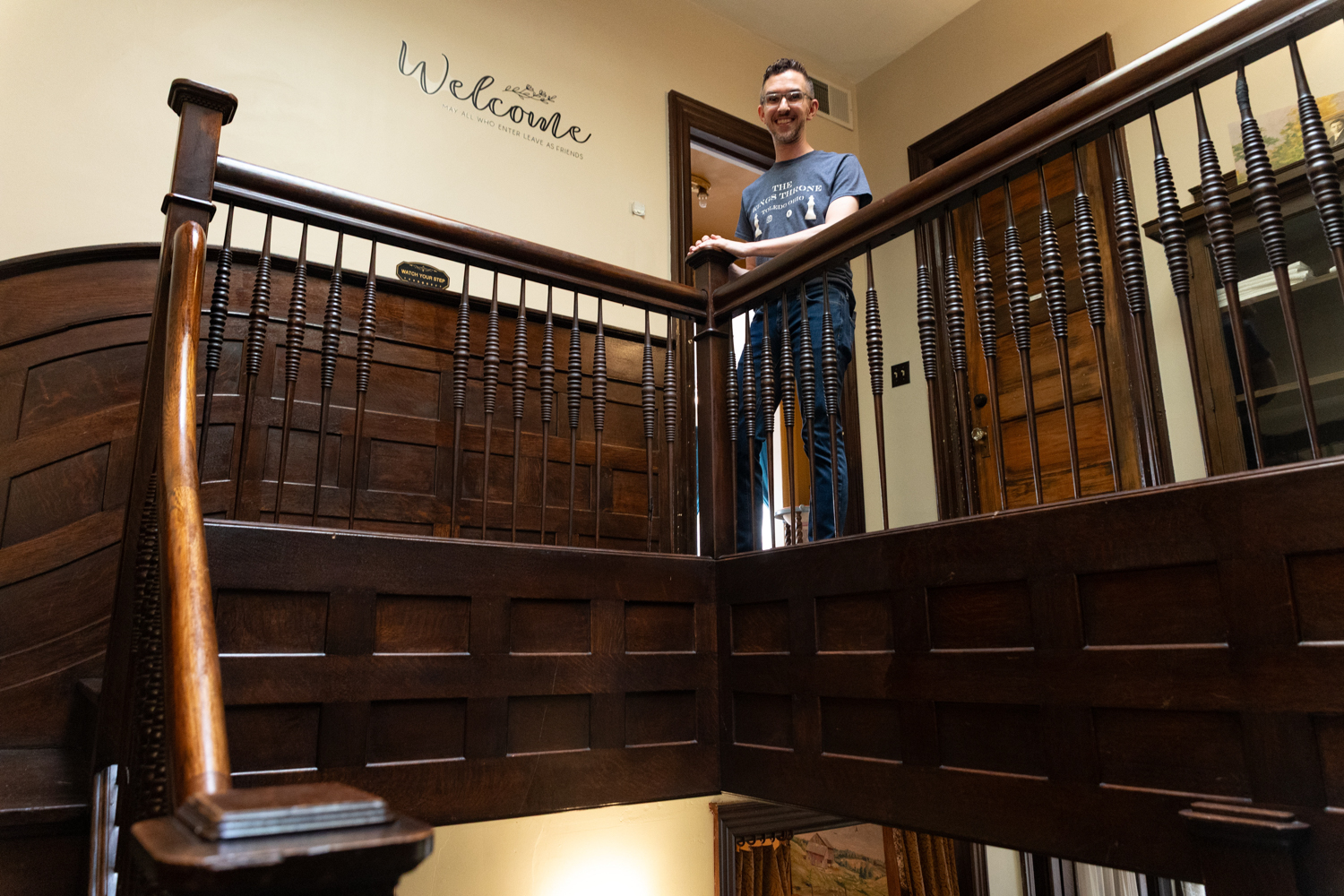
Landon King, owner of The Kings Throne Inn & Guest House, shows off his Inn. (TFP Photo/Stephen Zenner)

TOLEDO – Nestled on the southernmost reach of the Old West End’s historic district, The Kings Throne Inn occupies a quaint and secluded part of Collingwood Boulevard. 

“We love the place. We love the actual building,” said Atlanta resident Joe Roncetti, pointing out the biggest asset of the Old West End, its collection of eclectic Victorian homes. 

“We love the kitchen. We love the living room with the dining room. There’s a little sun room that has a little room in the back that has a hammock.”

Roncetti has stayed at the Inn on his trips up to Toronto, Canada, and has stayed for weeks at a time.

“It’s like a home to me,” Roncetti said, and shared this feeling of home was also due to the proprietor. 

“He knows me, and we’re family,” Roncetti said of the owner, Landon King. The two built their friendship after Roncetti had stayed there. 

“He’s a perfect people-person. He’s got a great heart,” Roncetti said of King, appreciative of how he runs his Inn. 

Landon King stands in front of his Kings Throne Inn & Guest House. (TFP Photo/Stephen Zenner)

Back in 2021, King decided to throw his heart into the hospitality industry, buying the 1892 4,000-square-foot, three-story building and turning it into a place for out-of-towners to enjoy the vintage quality of Toledo. 

“I used to travel overseas to Bulgaria and in other parts of Europe, and every place we stayed was someplace like this,” King said about his inspiration for the business model. 

King wasted no time, buying the house in August, and by October he hosted his first guests. 

“My partner and I work different day shifts; he works nights, I work days,” he said, and they both live on the third floor, available to fix any trouble the guests might have. 

At the same time, King was acting as a quality engineer for the auto industry by day, and furnishing the house in his spare time along with his partner. 

But that same eye for quality seems to have crossed over into a well-executed experience for guests. 

“From my level of luxury hotel background, I look at every delightful detail, and I thought that he did such a great job of exceeding my expectations, even with such a simple stay,” said Kylie Rae Fitzgibbons, a guest who threw a dart on the map that landed in Toledo. 

Fitzgibbons, a professional in hospitality working for multiple Ritz-Carlton Hotel and managing resorts in the Cayman Islands and Texas, is on a “Service with a Smile” 50-state tour, seeking out destinations and places to stay. 

She stopped by for a night at the Inn and was blown away.

“That was one of the most comfortable bedding that I’ve ever stayed in and I’ve traveled the world,” she proclaimed.

She said personalized service, attention to detail and charm were the hallmarks of her stay. And even more than those features, she added that King’s ability to anticipate her needs, “maybe before you even think to ask it,” made the stay memorable. 

This kind of attention to detail landed the Inn as the first Consumer Choice Award winner for a Toledo business. 

“They approached me first and said, ‘Congratulations, you have this, and this is why you have this,’” King said. 

According to the Consumer Choice Award website the, “winners are never random; they’re the result of an in-depth consumer evaluation calculated with the help of Big Data.”

The Kings Throne Inn & Guest House recently won the Consumer Choice Award. (TFP Photo/Stephen Zenner)

The Toledo Free Press reached out to the Canada-based organization for comment and have yet to hear hear back. But a brief synopsis of what they sent King said the award was tied with online reviews.

Kings Throne Inn commands a 4.9/5 stars on Google. The Consumer Choice Award status and listing, now on their website, stated they would be able to rescind the award if King’s rating dropped below a 4.5. 

King then hired Consumer Choice Awards to do “the majority of my marketing, because they already know the SEO [Search Engine Optimization].” The award, mixed with the marketing package, has landed the Kings Throne Inn with ad/reviews across papers in the USA Today network, including The Columbus Dispatch, The Tennessean, Business Insider and more. 

One of King’s coworkers reached out to him to congratulate him after seeing one of the reviews written by Consumer Choice Award. “I looked it up, and they were really big news outlets,” he said. The one he read initially was in the Indie Star. 

King thanked his friends, family and patrons in a Facebook post after seeing the listing.

“I’m overwhelmed with gratitude. To everyone who’s cheered me on, stayed with us, supported this dream — thank you.”

Photos by Stephen Zenner

Photos by Stephen Zenner

Inside Lucas County Commissioners Meeting: July 1

0
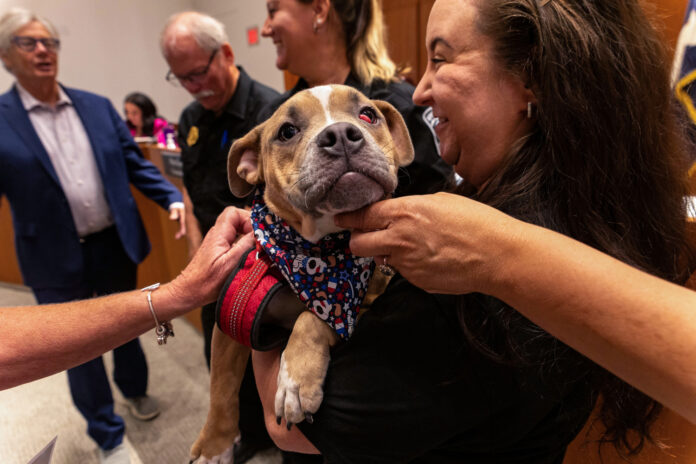
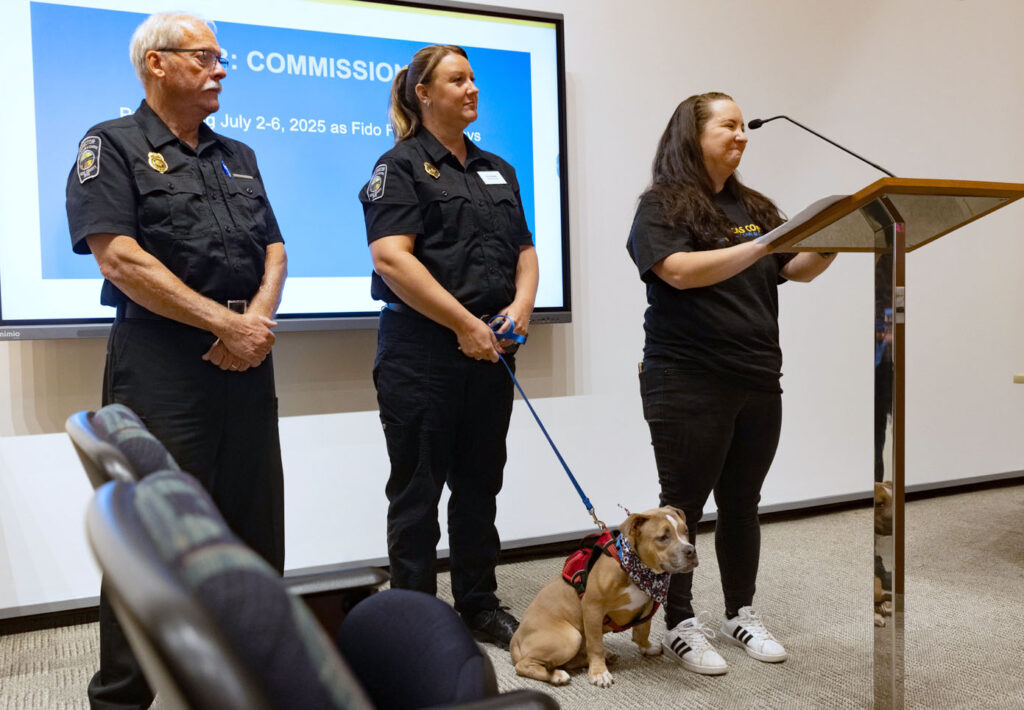
Cassie Bloomfield, community outreach coordinator for Lucas County Canine Care & Control, holds Julep, a five-six-month pit bull mix, during the Lucas County Commissioners’ meeting, which proclaimed July 2-6, 2025, Fido Freedom Days. (TFP Photo/Stephen Zenner)

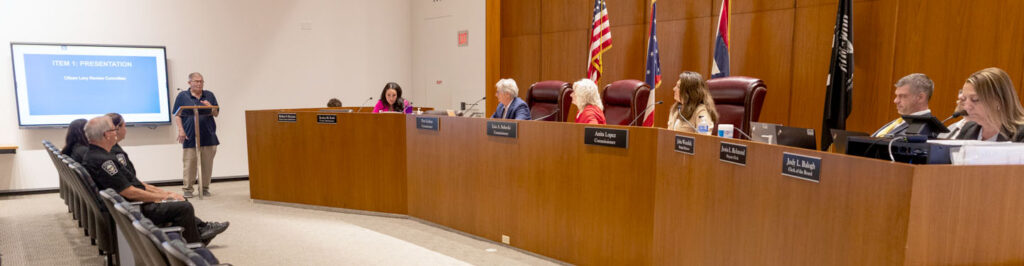
TOLEDO – Two meetings for the Lucas County Board of County Commissioners were held on Tuesday – one meeting at 11 a.m. and another at 2 p.m. 

Meeting 1

Citizen Levy Review Committee

First on the agenda at 11 a.m. was a proposal brought forth by Thomas Susor, the chairman for the Lucas County Levy Review Committee (LCLRC), who requested a renewal for the levy supporting the Lucas County Children Services (LCCS) board. 

“So, 20 years ago the board of commissioners decided it was important for an independent review outside the commissioners to look at levies,” said Pete Gerken, Lucas County commissioner, as he introduced the LCLRC. “They’re very important. This is the 20th year of doing that, and they had a really big assignment this year, to look at Children’s Services.”

Susor presented the request for the renewal of a 1.8 mill levy to appear on the November General Election ballot to fund Lucas County Children Services. 

Thomas Susor, chairman of the Lucas County Levy Review Committee (LCLRC), requests renewal of the levy for the Lucas County Children Service Board. (TFP Photo/Stephen Zenner)

A mill levy is $1 taxed per $1,000 of property valuation, and the proposed renewal is for 1.8 mill. Since this is a renewal of a levy, those who live in Lucas County will not see an increase in property taxes due to a successful renewal of the levy. 

LCCS had a new levy for 1.5 mill approved just a year ago in 2024, and attempted to renew this 1.8 mill levy before its scheduled renewal in 2025. 

“This levy that we recently reviewed from Lucas County Children’s Services was the same levy we actually approved to be on the ballot a year ago in June, but through some complication with the filings they had to redo it now,” Susor explained. 

In August 2023, LCCS realized it was going to run out of funding before any of the three levies that fund LCCS would be naturally up for renewal; the earliest natural renewal of the levy would have been in 2025. 

According to LCCS director Randall Muth, LCCS’s “[placement] costs over the last five years have risen by 68 percent statewide. So, for every county in the state, they’ve gone up 68 percent, but metro counties, urban counties always get hit harder. Ours went up by 77 percent.”

Because of the rising placement costs, LCCS proposed an early renewal of the 2025 levy. The effect of being crunched for time and filing under a different Ohio Revised Code than the advised one limited the millage, so LCCS bifurcated their funding into separate mills. 

This Tuesday’s request was for the second of the proposed property tax levies for LCCS, as the first had already passed. 

“They still need to be on the ballot to fund their operations,” Gerken said. “This is to keep the system intact. That’s all this is. This is not to expand the system or or make the system more rich. This is to keep what they’re doing going, and if it doesn’t pass, the consequences to us are going to be pretty severe.”

Commissioners put forth a resolution that declared the levy necessary, the first part of a two-stage process to get the levy on the ballot in November. 

A July 8 meeting will determine whether the LCCS levy will be on the November ballot, but the LCLRC unanimously voted for the levy to be approved for the November ballot. 

“It’s still important that our taxpayers realize that freedom is not free,” Susor said. “Kids are not going to take care of themselves, and as our families deteriorate, we have to step up and take a positive role in helping these kids get by.

“It’s imperative to know that without taxpayer support, the most vulnerable population, our children, will be the victims of any shortfall in funds.”

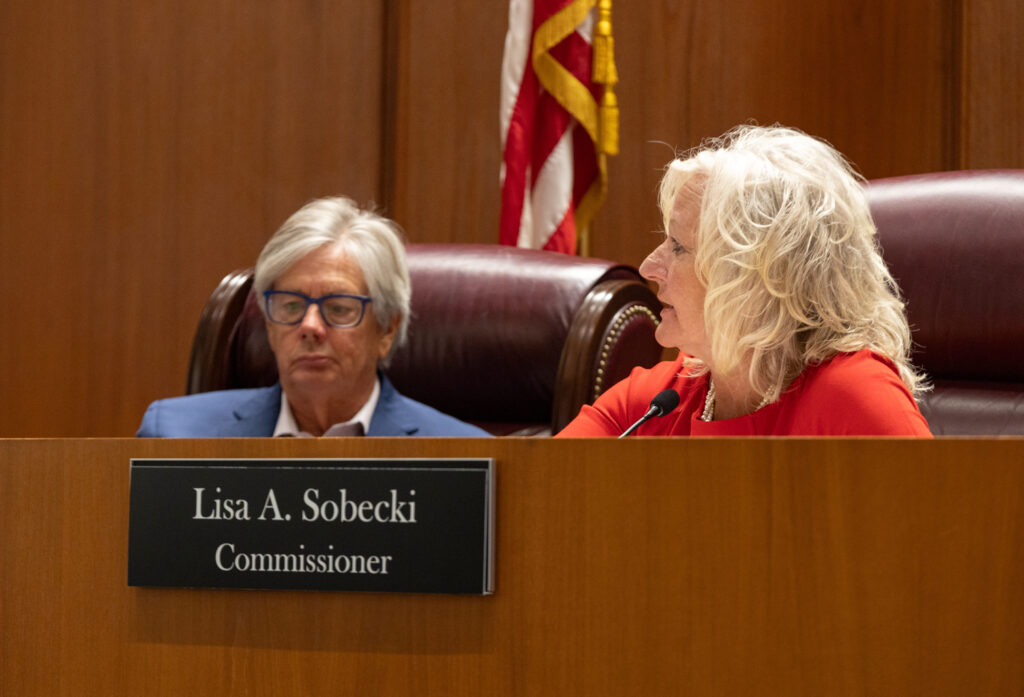
Commissioner Lisa Sobecki speaks about the percent rate raises to the county’s water during the meeting. (TFP Photo/Stephen Zenner)

Succinctly, Susor declared, “We reviewed it, it was viable and it’s needed,” with Lucas County Commissioners Gerken and Lisa Sobecki supporting the independent committee’s findings. They pointed to the rising costs of raising children as the overarching reason for funds running out before the levy’s planned renewal.

Fido Freedom Days and LC4

A five to six-month-old pit bull mix named Julep stood before the commissioners in the arms of Cassie Bloomfield, the community outreach coordinator for Lucas County Canine Care & Control (LC4), as the commissioners declared July 2-6, 2025, Fido Freedom Days. 

During Fido Freedom Days, any licensed dog picked up by LC4 will have their impound fees waved if the owner can show the dog’s license. Bloomfield stated before the commissioners, “Last year we took in over 50 dogs during the same time period, just over that extended holiday weekend alone.”

(From left): Dave Blyth, director of Lucas County Canine Care & Control (LC4) and chief Lucas County dog warden; Terra Bundy, deputy director of LC4; and Cassie Bloomfield, community outreach coordinator for LC4, stand with Julep, who represented all dogs available for adoption at LC4. (TFP Photo/Stephen Zenner)

Jeff Nowak, the facilities director for Lucas County, gave a brief update of the progress on LC4’s new location at 1301 Monroe S. in Toledo. 

“We’re finishing up the construction on the building,” he said, and asked the commissioners for permission to advertise that some of the items and services provided at LC4’s old location would now be at the new Monroe St. location. 

Early fall or later this summer, Sobecki said, “we’ll be transitioning from our old LC4 to our new LC4. Anyone that’s been able to drive right down here on Monroe St. has been able to see the progress and the excitement that’s building around it.”

Support Services then sought approval from the board of commissioners for the June 2025 Purchase Order “Then and Now” Certificates, an amendment to the Lucas County Purchasing Policy Manual #11 and a different amendment to the Lucas County Commissioners’ Surplus Property Policy #42. 

All were approved.

Administration

Then the commissioners authorized Lucas County to enter into an agreement with the Hospital Council Of Northwest Ohio to Support Rental Assistance and Housing Stability Services. 

Meeting 2

The main subjects of the second meeting on July 1 were the two proposals for revised rate charges for water services proposed by Jim Shaw, the Lucas County sanitary engineer.

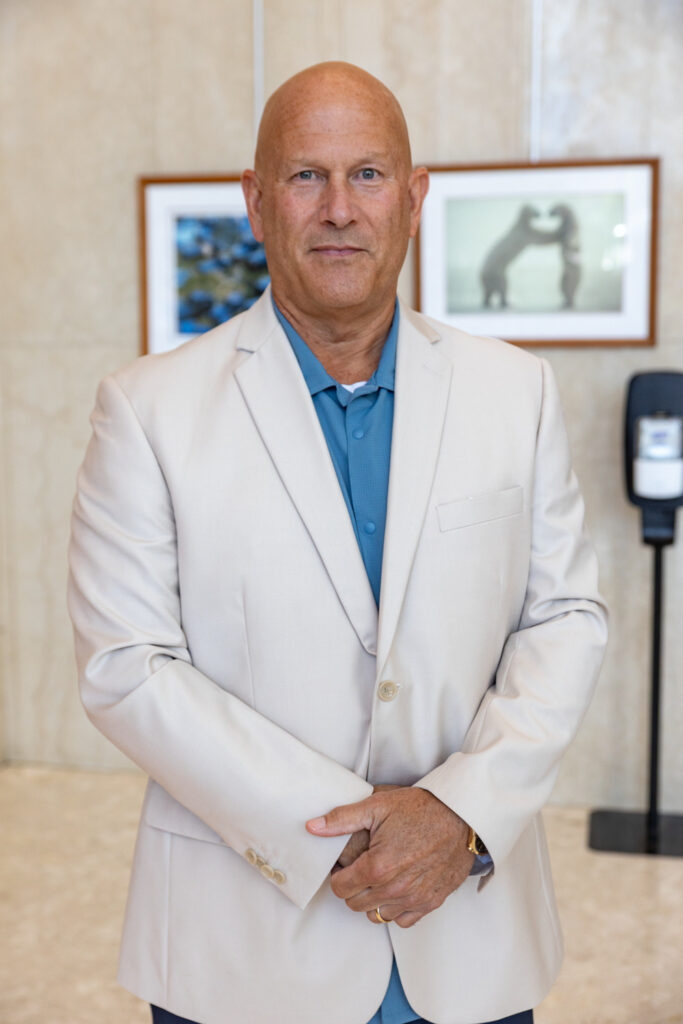
James (Jim) P. Shaw, Lucas County sanitary engineer. (TFP Photo/Stephen Zenner)

One revised rate charge was to the wastewater treatment and sanitary sewer collection charges, and another proposal revised rates on water charges for operation, maintenance and debt service.

The revised rate charges were approved by the commissioners. 

Gerken said, “Being able to maintain high quality services without disruptions at a small and reasonable increase over a few years is why I think people are not mad about it.”

Hearings were presented on June 10, 17 and 24 for people to comment on and inquire about the revised rate charges.

“I think people want to pay for good stuff,” Gerken said. 

With the revised rate charges, residents who get their water from the county, not from a municipality or city, will see a 4 percent rate increase to these services every year, starting in 2025 and ending in 2028. 

Shaw provided the Toledo Free Press with a visualization of the rate increase over the next four years for sample county residents.