Letter to the Editor: Tom Names weighs in on road repair budgeting

An ounce of prevention is worth a pound of cure, but Toledo government shuns spending money to maintain essential public infrastructure and passes inconvenience and expense on to its citizens.
Failure to maintain the Collins Park Water Plant resulted in the 2014 interruption of potable water and prompted expensive catchup dollars to update both the Collins Park and Bayview plants. The city did not recognize the failure of an 84-inch sewer culvert under the Bowsher High School football field in 2022 as a precursor to pipe collapses and sink holes along Arlington Avenue this past spring, resulting in raw sewage releases. The bill for emergency repair funding is forthcoming.
Road repair is the leading complaint to Engage Toledo. The income earmarked for Toledo roads: gas taxes, licensing fees, overweight truck fines, federal and state matching grants and what can be spared from the Toledo budget, has been meager. The city averaged only 11.7 lane miles per year of road resurfacing from 2015-2020. The mayor’s refrain is that money would be spent on road repair, if there was only a large source of money.
Regrettably, more of the $180 million of the American Recovery Plan Act of 2021 allocated to Toledo was not spent on infrastructure as allowed by the Act. Currently, in the second, four-year tax levy to catch up on neglected repair, Toledo is now averaging 44.8 lane miles per year (2021-2025), but the levies are not solving the problem.
The long-term strategic plan is a relatively simple arithmetic exercise. There are approximately 2,680 lane miles of road. If the useful life of a freshly rebuilt/repaved road, including patching, averages as much as 40 years, the city should be routinely budgeting to repave 2.5 percent of the roads (67 lane miles) annually and be caught up in forty years.
The 114 roads announced for 2025 only represents 42.64 lane miles of road or 1.6 percent of the total lane miles, and it will take about 60 years on average before all the roads are repaired. But don’t count on seeing your residential road being repaired inside 60 years, because the city sometimes prioritizes repair on roads that least require resurfacing.
Maintaining roads makes the roads safer, saves money on tires and car undercarriage repair, especially the most deteriorated roads, and makes Toledo more attractive for businesses and residential neighborhoods. Addressing road repair early also saves government money because road repair costs are rising quicker than other inflationary costs.
Letter to the Editor: One Party Rule is Killing Toledo
Toledo is a remarkable place, and we all know the reasons why. Our cultural institutions are globally recognized. Our culture is welcoming to families of all shapes and sizes. Our Mud Hens and Walleye are the envy of minor league cities across the country. We can walk or float to one of the world’s Great Lakes within minutes.
And yet, this is a city that has been in decline for over 50 years. Since its peak in 1970, Toledo has lost nearly one-third of its population. We have lost nearly 6 percent in the last decade alone. Manufacturing jobs have been cut in half, and family household income isn’t even keeping up with inflation.
There are a number of reasons for this, but the one voters should focus on this Tuesday is straightforward: This is a one-party town, run by Democrats, who have no checks and balances on their power. The result of this lack of political competition has been absolutely devastating to this city.
When there is no opposition party to check your work, or debate your approach, or create sensible compromises, the consequences are dire for voters and taxpayers. Democrats in Lucas County have used their consolidated power to put friends and political cronies in lucrative taxpayer-funded jobs, double dip by collecting a taxpayer-funded pension at the same time as a taxpayer-funded salary, and steered taxpayer-funded contracts to their politically connected friends, consultants and donors.
Most horrifying is the lack of government transparency. This city received roughly $180 million in COVID relief funds, and refused to tell the public how it planned to spend the money. It was later found that much of the money was spent on consulting fees for political allies, and loosely defined projects with zero oversight.
Local Democrats have shown us time and again: They care about their own power, taxpayers be damned.
Elections are usually defined by one core issue that motivates people to show up at the polls. For Toledoans this Tuesday, whether you are Republican, Democrat, or neither, that issue must be accountability. We must provide competition and accountability on city council, and eventually the county commission, to ensure that taxpayers have oversight over the corruption – and literal crimes – that have taken place in this city under one party rule.
Unfortunately, the local GOP isn’t quite ready to recruit a full slate electable candidates. So Republicans like myself are joining with moderate Democrats to support a slate of independently-minded candidates in Tom Waniewski, Ed Beczynski, and Rob Pasker.
Data centers, levies and land use in Waterville Township
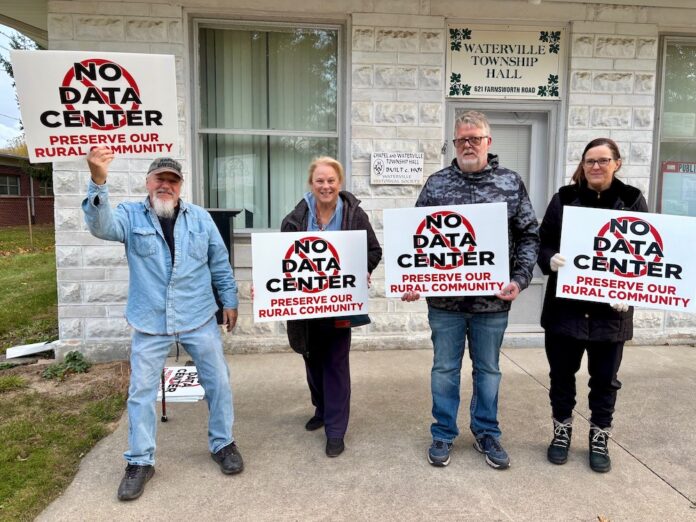
WATERVILLE TOWNSHIP – The dozens of Anthony Wayne-area residents who filled the basement of Waterville First Presbyterian Church on Oct. 29 came to share their opinions about data centers with Waterville Township trustees. While trustees Kim Anderson, Kyle Hertzfeld, Julie Theroux and incoming trustee Toby Miller fielded those questions, an overall theme beyond data centers also emerged – the future of the township.
For the fourth time in the past 18 months, the trustees have placed a levy on the ballot to generate income for the General Fund. Currently, residents pay an average of $13 a year toward the fund, which covers expenses beyond police, fire, EMS and roads. And it’s not enough to keep the township going, Hertzfeld said.
“Without the General Fund, there really is no township. We’ll be out of money in a year and a half,” he said. “We can’t take money from any other fund and put it in the General Fund; it’s illegal. I’m pleading with you to at least look at AREIS and look at what you’re paying.”
After reading what he called “totally wrong” information about the levy on Facebook, Hertzfeld suggested that residents go to the Lucas County Auditor’s website to see just how much of their property taxes go to the township and the General Fund in particular. The township receives 18.09 percent of property taxes. Of that, just .33 percent – or $22,000 a year – supports the General Fund. That’s about $20 a year for a home valued at $330,000.
A citizen committee including resident William Walborn paid for postcards to be sent out to all residents about the levy, which is Issue 9 on the ballot. The request is for a 3.5-mill levy that will cost about $10 a month per $100,000 in home value, to generate $398,800 a year.
These funds cover township hall operations, zoning and planning, legal and audit compliance and community services. It also supports the Police Department’s budget, which is strained because of increasing costs for equipment and training, even while officers are the lowest paid in the county, noted Miller.
If the township doesn’t have enough money in its General Fund, the state would place the township into fiscal emergency and the state would make decisions on funding.
“Honestly, I don’t know what the state is going to do if it doesn’t pass,” Hertzfeld said.

As costs for basic services go up, the township has three choices: raise taxes, reduce services or increase revenue by growing the economy, said Bill Burkett, a township Zoning Commission member and senior planner with Regional Growth Partnership. Burkett, along with Lucas County Economic Development Department director Matt Heyrman, spoke about how the LCEDD and RGP have teamed up with JobsOhio to look for sectors to pursue in order to grow the county’s economy – including data centers.
“Growth is inevitable. Growth can diversify our economy and pay for the services we need,” Burkett said.
“I would rather people vote for a levy than to get a data center,” said Tony Braida, one of several residents who addressed trustees.
Lisa Haberstock agreed.
“We have to get this passed,” she said, holding a flier about the levy. “What’s going to happen if this doesn’t pass? If the state takes over, will they care that people don’t want a data center? The data center will be here if we leave it to the state.”
She encouraged the township residents to band together with other Anthony Wayne area residents and leaders to fight the efforts to bring a data center to the area, whether it’s Waterville Township, Monclova Township, Waterville or Whitehouse.
In April 2024, Heyrman and RGP began digging into the pros and cons of data centers, and whether they would work in the county. Access to land, water and power, as well as the proper zoning and community acceptance, are all necessities. Some of the planning documents were shared on the AW-CRAP Facebook page, but weren’t meant for public distribution because they’re just ideas as they work on a plan to attract developers, Heyrman said.
“Data centers only want to come into communities where they’re welcome,” Heyrman said, adding that a community’s unwillingness to change zoning is a signal that data centers are not welcome.
“Didn’t we just do that?” asked Janice Braida, referring to Waterville Township’s Sept. 27 vote to allow data centers in agriculturally-zoned areas with a conditional use permit.
Mike Daum and Todd Heller both questioned the timing of how long data centers have been pursued, citing changes in zoning and realtors seeking agreements with landowners.
Last spring, Theroux began hearing from farmers that realtors were approaching them about options to sell. So the trustees hired a Columbus law firm to represent the township’s interest, and then moved forward with a text amendment to its zoning code. This allows the township to specify conditions regarding lighting, sound, landscape, buffers and other factors.
“It gives us control to make sure they’re thoroughly vetted. Without the text amendment, we face serious risk,” Theroux said, noting that the township does not currently have a proposal for a data center. “We want to make sure we have a voice in future proposals.”
Reading a list of headlines warning of the downsides of data centers – including public health, rising electric and water rates, and the consumption of valuable farmland, Janice Braida urged the trustees to represent the citizens.
“We are putting our trust in you to protect our community from big tech data centers that are stealing from everyday Americans,” Janice Braida said, encouraging trustees to look into a moratorium or ban on data centers.

Toby Miller, who is running unopposed to fill Kim Anderson‘s spot on the board of trustees, said courts have ruled against long-term moratoriums. A short-term pause for a safety or other evaluation is fine, but a ban would open up the township to lawsuits as it would be seen as an infringement on landowner rights.
“The General Fund doesn’t have enough in it to pay for legal fees,” Miller said. “If you pass a ban, they (landowners) can just file to annex their land into a neighboring community. They’ll take the land out of our jurisdiction and do what they want to do, and we’d lose the tax revenue.”
Resident Arnold Graf asked how much revenue the township or schools would stand to gain, while Tony Braida questioned the need to give tax breaks to huge tech companies. Each jurisdiction would need to negotiate its own agreement, Heyrman said, explaining that a payment in lieu of taxes (PILOT) agreement would funnel the money into the township and the schools.
For David and Amy Lindquist, who have been farming in the area for over 30 years, the news that their neighbor was looking at selling land for a data center was like a gut punch.
“I know a lot of people see dollar signs. If this was in your neighborhood or across the street would you want this for your family? Take the time to put yourselves in our shoes,” Amy Lindquist said. “People tell us that we use data. Well, we use a toilet every day, but it doesn’t mean we want to live next to a sewage treatment plant.”
The Lindquists are concerned about the ongoing hum that neighbors of some data centers report hearing constantly. Susanne Peats brought up long-term health and environmental costs, including on the Great Lakes. She asked who would clean up the data center site when it became obsolete.
Russ Schifferly urged the community to think about the impact of artificial intelligence (AI) on society, and how greed influences decisions. A Neapolis-Waterville Road resident, Schifferly said he’s often outside at night and hears drones flying over multiple times a week, collecting data to sell to the government and other entities.
“Eventually our freedoms get taken away by organizations that want to control the people,” he said. “We are helping to facilitate the takeover of artificial intelligence that will take over our society. This is a societal issue.”
“It’s Terminator from 1984,” chimed in an audience member, referring to the futuristic blockbuster movie with Arnold Schwarzenneger.
Theroux encouraged residents to stay informed, including attending a Thursday, Nov. 20 town hall meeting from 5:30 – 7:00 p.m. program at Anthony Wayne High School. Moderated by Jerry Anderson and live streamed on WGTE, the event is sponsored by RGP and LCEDD and will include a panel of experts on data centers. Questions may be emailed in advance to [email protected].
During the meeting, the trustees also:
-Encouraged residents to go to watervilletownship.com to gain access to a land use plan update survey. About 179 responses have come in so far, Anderson said, but more voices are needed as the township plans for its future.
-Approved a joint cooperation agreement with the county to pay for the Swan Creek ditch maintenance, using approximately $54,000 in storm water funds to cover the cost for residents.
-Learned that police officer Joel Turner is resigning to take a job with Norfolk Southern. Chief Kevin Smith announced the hiring of David Terry and George Roush to part-time positions.
-Set a public hearing on a request to rezone 8346 Dutch Rd. from Agricultural to R-A Suburban Residential with a planned unit development (PUD). The meeting will be held on Wednesday, Nov. 19 at 6:30 p.m. It may be moved from the township hall at 621 Farnsworth Rd. next door to Waterville First Presbyterian Church.
LEGO models dazzle at Imagination Station

TOLEDO — ”Are you ready? 3-2-1…go!”
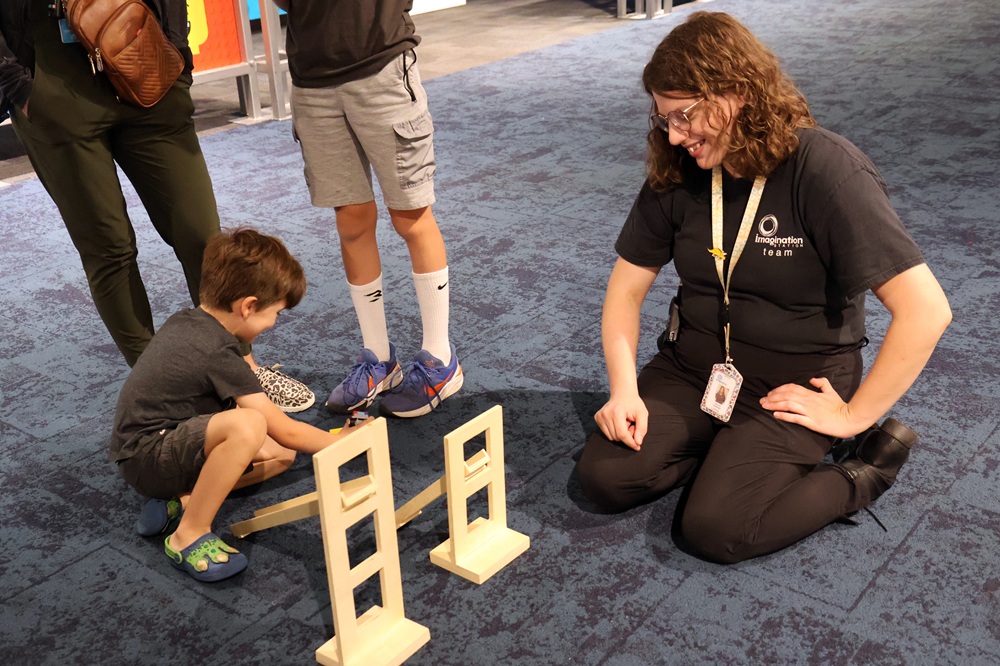
One by one, kids eagerly stepped up to watch their LEGO brick creations sail down a miniature zipline at Imagination Station. Educator Carrie Martin assisted by offering design tips and ranking their builds according to qualities like “explosion factor.”
The construction engineering major at The University of Toledo pointed out the “museum of fame” she had accumulated during the evening and admired the originality of the models designed by kids. “There are pieces here that I didn’t know existed with LEGO, and yet they saw it and knew exactly how to use it,” she said.
The LEGO zipline was one of several activities aimed at encouraging attendees to practice their engineering skills during a member preview night on Oct. 3 for Traveling Bricks, a new LEGO-themed exhibit at Imagination Station.

LEGO fans also built and tested cars made from the bricks on ramps, assembled custom LEGO Minifigures and enjoyed rounds of trivia in the KeyBank Discovery Theatre.
Martin, a longtime fan of the classic, versatile building toy, said that as a freshman her classmates had to share why they became engineers and 90 percent of them said it was because they played with LEGO as kids. “So us having a LEGO exhibit here when we focus so heavily on STEM stuff — it’s so cool. I love it. It’s fantastic.”
Traveling Bricks brings more than one million LEGO pieces to the Imagination Station and features 120 models that explore the history of transportation. Creations are themed around land, air, sea and space, and range from the world’s oldest-known boat dating to 8000 B.C. to a towering Saturn V Rocket built from 26,000 bricks that stands nine feet tall.

One of the most dazzling models is a 22-foot-long model of the Titanic. Built from an estimated 200,000 bricks, the ship comes adorned with tiny LEGO minifigures taking in the sights from its decks. Many visitors stopped to take pictures and expressed admiration for the creation.
“I thought the Titanic was really cool,” Max Taylor, 11, said as he and his brother Leo, 5, built and tested cars on a ramp.
The two boys have many shelves filled with LEGO models at home. Max said his favorite things to build are cars and planes, while Leo said he likes to make people.

Along with presenting history through the lens of science and art, the LEGO exhibit includes a large play zone with about 200,000 loose bricks for families to build, play and learn together.
Fans say building with the familiar toy is not only fun, but helps teach creativity, communication, problem-solving and critical thinking skills.
According to Eryn Barwinski, education coordinator for Imagination Station, the LEGO exhibit promotes the learning concept of STEAM — Science, Technology, Engineering, Arts and Mathematics — in a variety of ways.
Family programs offered this fall will explore engineering concepts and include opportunities to program LEGO robots. “It also connects to the creative side of STEAM.” she said. “LEGOs are fun for everyone because there’s the art side.”
Traveling Bricks opened to the public on Oct. 4 and runs through Jan. 4. The exhibit is included in the price of admission.
Special LEGO-themed events include bridge-building workshops on Nov. 1 and 15, a series of homeschooling workshops this fall and a visit from former LEGO Masters contestant Tim Croll the weekend of Nov. 2-3. Some of these events require advance tickets; visit the Imagination Station website for additional information.
TFP photos by Laurie Bertke






Coventry Glen residents oppose new subdivision
WATERVILLE TOWNSHIP – An Oct. 20 Waterville Township Zoning Commission meeting was filled with Coventry Glen residents who shared concerns about Walden subdivision, which is planned for adjacent land. Waterville City Council deferred discussion of a data center moratorium until its Nov. 24 meeting. Monclova Township’s zoning inspector is working with developers for several projects. And Whitehouse is installing a new Whitehouse Park entryway sign. These are a few of the highlights from Anthony Wayne area meetings in late October.
Waterville Township Zoning
The Waterville Township Hall was standing room only during an Oct. 20 public hearing about rezoning a 32-acre parcel of land at 8246 Dutch Rd. from Agricultural to R-A Suburban Agricultural with a planned unit development (PUD).
Developer Mark Rich plans to build 105 homes on two adjacent parcels between Crimson Hollow and Coventry Glen, including a 20-acre parcel to the north that Monclova Township approved for rezoning last month.
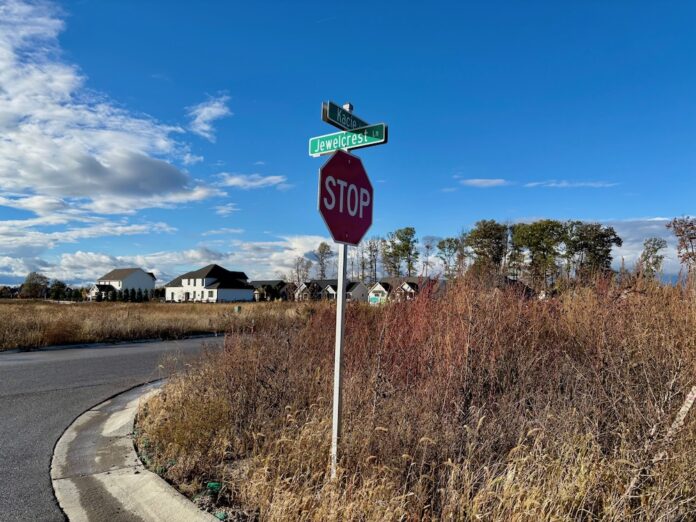
At the start of the meeting, zoning secretary Patty Rupert shared a petition signed by 84 residents of Coventry Glen, who oppose the rezoning because of concerns about traffic on the existing communities, since the only entrance would be through Jewel Crest Lane, a stub street off Kacie Lane.
“Do you normally get petitions signed by 84 neighbors? And get this number of residents who show up?” asked Nick Strause, who along with Steve Hale, Tyler Grandsko, Joe Yeager, Kaden Kelly and Keith Hannewald addressed the board.
The Lucas County Planning Commission recommended approval for rezoning, as long as Rich agreed to 28 conditions – which he did. Among the reasons cited for the county’s approval is that the land use plan shows the landlocked property should be used for residential. A stub street has been in place since Coventry Glen Plat 5 was laid out.
Engineer Greg Feller, who presented on behalf of Rich, said he acknowledges resident’s concerns about traffic, but that it’s no different than any other community where subdivisions are expanded.
Residents asked why an entryway couldn’t be constructed off Fischer Drive, a dead-end street adjacent to U.S. 24 at the south end of the property. Feller noted that it would require crossing Blystone Ditch, which is a floodway.
“It’s probably a million bridge, and I don’t even know that the Lucas County Engineer would approve it,” Feller said, adding that the cost would make constructing homes at an affordable price impossible.
Which brought up the question: Why not just abandon the project if it can’t have a second access?
“Coventry Glen was built before U.S. 24 and the roundabout and Fischer Drive were put in,” Zoning Commission member Bill Burkett said. “It was always a plan that housing would extend to the east. Properties can’t just be abandoned. There has to be road access to that parcel.”
A traffic study shows that the 105 lots would generate one vehicle every 34 seconds during peak hours, Feller said.
Coventry Glen resident Michelle Judy questioned that figure and noted that, with construction, she sees dump trucks pass more than a dozen times a day. Roads are deteriorating because of the heavy vehicles, she said.
“Is the developer willing to repair the roads…and have safety speed bumps to slow down traffic?” she asked.
Trustee Julie Theroux, who was in the audience, said that the trustees are considering a joint road district with Monclova Township to make sure that both townships pay their fair portion of the road maintenance – including repairs, snow and ice removal – based on the percentage of homes on Coventry Way, Sweetgum, Kacie Lane, Jewel Crest and future streets in Walden subdivision.
The township zoning commission voted to recommend to the trustees that the rezoning be approved. The township trustees will now hold a public hearing to make a final decision on whether to approve the zoning on Wednesday, Nov. 19 at 6:30 a.m.
During the meeting, the zoning commission also:
-Heard that Geddis Paving is purchasing property on the northeast corner of Dutch and Waterville-Monclova Road, which contains a large borrow pit. Geddis plans to backfill the pit with clean, hard fill, a process that will require working with the Lucas County Health Department, said zoning inspector Jim Fischer.
-Learned that Fischer is working with a Waterville-Swanton Road resident who has been operating a business out of his home without a permit. The owner will need to decide whether to move his business or apply for a permit.
-Heard that Dutch Road Storage has a sign on a semi-trailer to facing U.S. 24, which is prohibited by the zoning resolution. The property owner may apply to construct a digital billboard sign along the highway – the first of its type in the township. Fischer said that two subdivisions – Fairway Village and Telluride – also have signs within the right of way that need to be moved.
Waterville
A discussion on a data center moratorium – as proposed by Waterville City Council member Wayne Wagner during an Oct. 13 meeting – is now pushed back to Monday, Nov. 24.
During the Oct. 27 council meeting, Mayor Tim Pedro, Wagner and council members Todd Borowski, Mary Duncan and John Rozic agreed to move the discussion until a time when law director Kati Tharp and council members Anthony Bruno and Rod Frey were all present.
“I know there’s a lot of anticipation,” Pedro said, noting that although developers are considering the area for data centers and other projects, the city hasn’t received any requests for a conditional use permit to operate one within the city.
Wagner said waiting until Nov. 24 is acceptable, and clarified that the moratorium he suggested is not an outright ban but a one-year delay to give the city an opportunity to evaluate the needs and place the proper restrictions on a data center.
During the meeting, council also:
-Heard Pedro apologize to Wagner for a negative statement he made during the Oct. 13 meeting.
-Learned that the Waterville Area Chamber of Commerce will move its annual Roche de Boeuf Festival to the third Saturday of the month in 2026, which is Sept. 19, in order to not conflict with the Anthony Wayne High School homecoming weekend activities. Many high school students volunteer during the Roche de Boeuf Festival, said chamber director Michelle Smith.
-Listened to finance director Tiffany Bachman say that currently overall revenues are at 78.7 percent and expenditures at 65.9 percent of what was budgeted for the year. The balance of all funds by the end of September was $13.4 million.
-Tabled a third reading on a conditional use permit for Meijer to operate a store and gas station, as the applicant is awaiting the results of an updated traffic study about the eastbound U.S. 24 exit ramp.
-Learned that Chasidy Nieb-Sadhwani, owner of the Dazzled Dog, is organizing a community-wide Giving Tree to collect non-perishable food items for two local food banks. The collection will take place Nov. 28-December 19, and items can be dropped off in boxes including The Dazzled Dog, Kroger, Local Thyme, Cocina de Carlos, Hope United Methodist Church, Anthony Wayne Community Chiropractic, Whitehouse Hardware, Shawn’s Irish Tavern, Waterville Fire Department, Jo-Jo’s Pizza, Adventure Spirits Distilling, Whitehouse Animal Hospital and Waterville Animal Group.
Monclova
During the Oct. 20 Monclova Township meeting, trustees fielded questions from residents about data centers (read the full story here) but also learned of several projects in various stages of planning.
Zoning administrator Eric Wagner shared that:
-The architect for a multi-sport facility planned at 6606 Monclova Rd. is working on plans for the landscaping design and other elements that will undergo an architectural review.
-The owner of Tigon Golf Carts, which will open at 10420 Airport Highway, is getting ready to submit a site plan for renovation of the property at 10420 Airport Highway.
-Wagner has participated in discussions with the county and the planners of a 40-villa and commercial strip center to be developed at the southwest corner of Albon and U.S. 20A. Construction will begin within the next two years.
Whitehouse
The village of Whitehouse’s public works employees are busy making improvements to the downtown area, including the installation of a new entry sign at Whitehouse Park. Potted trees will be placed along Lucas and Providence streets. Work is also being done to repair the caboose on the Wabash Cannonball Trail.
Curing the meeting, council also:
-Heard that the mayor and council members will welcome the community for coffee and discussion at Copper Press Roastery from 8:30 to 10:30 a.m. on Saturday, Nov. 8.
-Shared with administrator Jordan Daugherty ideas for funding requests in the state’s 2027-28 budget. Among the ideas are funding for ditch maintenance, trail connectivity, the S.R. 64/Cemetery Road intersection improvements, and a bridge over S.R. 64 near the Whitehouse Library.
-Learned that Carlyle Group has purchased BASF’s coatings business. Mayor Rich Bingham met with representatives about opportunities for expansion and job creation in the Industrial Drive facility.
-Heard that the new water tower on Industrial Drive is now painted and is undergoing the installation of mixers and blowers before beginning a disinfection process, said public works director Mike Hill.
-Learned from Fire Chief Jason Francis that interest in CPR classes has grown, and he plans to add two classes each quarter at the station, along with on-site classes at area businesses and organizations that have 10 or more participants registered.
City council candidate disputes allegations of altercation

Find the original story by Victoria Dugger of WTOL11 here.
TOLEDO — A candidate for Toledo City Council is disputing an allegation that he shoved a woman outside a county government building this week, calling it a politically motivated attack days before the election.
Images of a Lucas County Sheriff’s Office report sent to WTOL 11 appear to show the incident happened around 1:30 p.m. Oct. 28 in the parking lot of the Shared Services Building on West Sylvania Avenue, which houses several county offices, including the Board of Elections.
The report identifies Robert Pasker III, 38, as the suspect. Witnesses told investigators that Pasker shoved a woman, prompting another person nearby to intervene, according to the report.
When deputies arrived, Pasker and the woman had already been separated. The report says deputies spoke with both the alleged victim and a witness and reviewed video footage of the encounter. The deputy wrote that the video appeared to show contact between the two as they approached the witness.
Initially, the woman asked only that Pasker leave the property. But after learning the incident was recorded, she decided to press charges, the report states.
The sheriff’s office report also notes that the video evidence is available to prosecutors for review. Pasker, who is listed on the ballot as a Toledo City Council at-large candidate, left the scene without further incident. No injuries were reported.
Pasker’s response
In a statement released Friday, Pasker denied the allegations and said the incident is being misrepresented for political purposes.
“I want to address the false claim being made about me at a polling site. The Lucas County Sheriff’s Office and Board of Elections reviewed the video footage and confirmed that no abuse occurred,” Pasker said.
“Despite that, the individual — connected to the Blair Johnson campaign — still chose to file a false report, even going so far as to claim I was arrested on October 29, 2025. That is completely untrue. I was never arrested, no warrants were ever issued, and I am not banned from the Board of Elections.
“This is a clear and calculated attempt by the Blair Johnson campaign to mislead voters and distract from the issues that truly matter to Toledo residents. I remain focused on running a campaign rooted in honesty, integrity, and results — and on serving our city with the leadership it deserves.”
Pasker also claimed he has been “fully cleared by the Lucas County Board of Elections.”
Board of Elections response
Lucas County Board of Elections Deputy Director Timothy Monaco told WTOL 11 that no one from the Board reviewed video footage of the incident.
“Neither members nor employees of the Board reviewed the video footage. The incident was reported to the Lucas County Sheriff’s Deputy on site as well as building management. They did review the security footage,” Monaco said.
Monaco added that the Board “does not clear anyone,” noting it is not a law enforcement or judicial body. He confirmed that Pasker is not banned from Board of Elections property.
Monaco said the individual involved in the report “has been actively campaigning outside the Early Vote Center in support of Mr. Johnson.” He said the Board does not know whether that person is a paid representative of the Blair Johnson campaign.
Johnson’s response
Council candidate Blair Johnson told WTOL 11 he was not involved in the incident and called Pasker’s claim of a coordinated smear campaign “disheartening.”
“I wasn’t involved in the situation at all,” Johnson said. “There was a 69-year-old veteran who became upset at Mr. Pasker’s actions toward one of my canvassers. He’s the one who went to get the Board of Elections and requested the sheriff’s department.”
Johnson said he was sitting in his car at the time and did not witness what led up to the encounter but heard raised voices afterward.
“It’s very disappointing that my name is being dragged into this. That’s not my character, my integrity, or how we act,” Johnson said. “If we were running a smear campaign, wouldn’t there be something up on our social media or website? We haven’t said a word about this.”
Johnson said both campaigns’ canvassers were handing out literature near the early voting center when the voter witnessed Pasker “put his arm in front of” the canvasser and “push her back.” He said the voter reacted angrily and demanded deputies respond.
“The voter was the one who got upset and yelled, ‘Why would you do that to a woman?’” Johnson said. “He’s the one who triggered everything. I had nothing to do with any of that.”
About the report
The images of the sheriff’s report obtained by WTOL 11 show that the field labeled “Arrest Date” lists “10/29/25 08:30.” No arrest location or offense codes are included in the document, and the field marked “Suspect Read Rights” is filled out “NO.”
WTOL 11 will continue to seek clarification from the Lucas County Sheriff’s Office on whether the report indicates an arrest or booking record.
Wild Side: Signs of winter at Oak Openings

Winter is sneaking up on the calendar and softening us up with some of its most subtle and beautiful work.
Most of us aren’t even paying attention on clear, calm fall nights when temperatures drop to near the freeze point. We don’t think about those low spots in open natural areas where temperatures can be just a bit colder, where maybe, just before dawn, air temperatures will dip below freezing just enough to cause moisture in the air to collect on plants and freeze. The result is leaves beautifully edged in ice crystals, even completely covered.
The frost may last only a matter of minutes, until the warmth of the rising sun melts the frost.
In the meantime, the scenes can be magical.
This frosted image is a young oak surrounded in a patch of sweetfern, a fern-like shrub that thrives in the open sandy areas of Oak Openings Preserve Metropark.
BGSU introduces new AI + X bachelor’s degree program

TOLEDO – In an era defined by artificial intelligence, Bowling Green State University is launching an AI + X degree, preparing students for careers by integrating AI knowledge with a secondary discipline.
Dr. Cheryl Bracken, BGSU director of media and communication, said that there are many jobs within the field of AI that students will be able to pursue.
“Since AI is still kind of new, we are thinking about traditional or existing entry level jobs, and for the journalism and PR side, there is a widespread number of jobs available,” Bracken said.
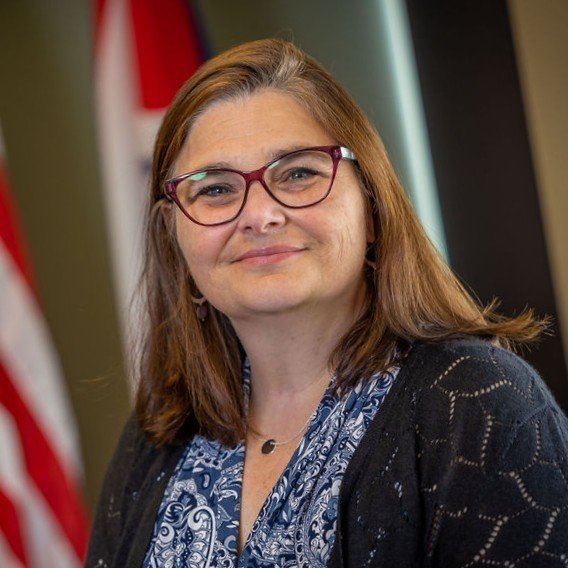
She said there will be jobs where students can go into fact checking, copywriting, and ensuring that the AI system has not made any mistakes.
“Students who choose a journalism-based discipline must complete 15–18 credit hours in that area,” Bracken said.
The program also includes an internship opportunity.
As an educator, Bracken said she has a lot of ethical concerns about AI.
“One of my biggest concerns about AI is that some students are using it in their classes, and if they lean on only that, they won’t be able to get the understanding and viewpoint of what makes people ‘human.’”
She said we are allowing AI to make choices for us and not making those choices ourselves.
“We might lose our individuality,” Bracken said. “My philosophy is to always try and have a sense of not hiding from something, and to understand it and position yourself and work within the system,” she added.
Environmental impact and data centers
There are also many environmental costs that people have to consider when using AI.
“Meta is actually building a data center five miles down the road from here [campus], so that reality is really going to impact the community,” Bracken said.
According to a CNN article, data centers are projected to consume approximately 6.7 to 12 percent of U.S. electricity in 2028, up from 4.4 percent in 2023. AI tools are also growing increasingly sophisticated, evolving beyond text-based queries to handle complex tasks like generating realistic video clips in a matter of seconds and coding websites from scratch. This means they also require more resources than ever.
Disciplines within the program
Dr. Ellen Schendel, BGSU dean of arts and sciences, said that there are many different disciplines within the degree program that a student can focus on.

“AI is practiced across so many disciplines, and we wanted to make sure that we were bringing the understanding of the technology and the ethical considerations because these things shift across different industries,” Schendel said.
The “X” in AI + X represents a customizable add-on in six fields, including computer science, mathematics, physics, history, journalism or public relations that allows students to apply AI to their field of choice, according to the BGSU News website.
The program is open to anyone who is interested in applying.
“Students can apply through the regular admissions process,” Schendel said.
There is also a minor available for students: AI and Society.
“It’s a small set of courses that are in the major, but it gives students background in coding and computer science technology behind AI,” Schendel said.
The program will begin in the fall 2026 semester.
Lucas County electricity rates are rising

LUCAS COUNTY – “The old deal was 6.3 cents a kilowatt hour,” said Mark Frye, the president of Palmer Energy Company and the consultant for the Northwest Ohio Aggregation Coalition, pointing out the differences between electricity rates at a Lucas County Commissioners meeting on Oct. 7. “The new deal is at 9.75 [cents per kilowatt hour], so it’s about 3.3 cents.”
3.3 cents per kilowatt hour may not make a whole lot of sense on its face, but Frye explained that “an average customer uses about 9,000 kilowatt hours a year.” For the average customer, that extra 3.3 cents per kilowatt hour will turn into “$250 to $300 a year. So it’s not nothing. This is real.”
The “new deal” for the Northwest Ohio Aggregation Coalition is only for one year, while the previous deal spanned three years. Frye explained that the set rate was agreed upon at a good time, saving Lucas County and its residents roughly $70 million compared to the wholesale market rate. Unfortunately, he said, the deal securing that rate ended in May 2025.
Frye said the price jump was because of a number of conditions concerning the energy market and infrastructure, and pointed, in dressed down terms, to a stagnant market jolted by the new demand caused by artificial intelligence (AI).
“Artificial Intelligence is augmenting and will eventually create productivity, but the unfortunate reality is they’re also massive consumers of electricity, those data centers,” he said.
Over the past 18 years, Frye said there was about 3 percent growth in demand for electricity. Starting in 2023, data centers started to strain the electrical grid in the area, which had not needed to increase its capacity in a major way for over a decade.
That is no longer the case.
“A single data center, a large AI data center, will consume more electricity than the entire Lucas County would consume on an annualized basis…the refineries, the Jeep plant, everybody,” Frye said. “So think of it, you have one data center connected only to Davis-Besse [Nuclear Power Station], and it’s gonna’ take all of the electricity just from that power plant.”
New forms of renewable energy, like wind and solar power are on their way Frye said, but by their very nature are intermittent. “The wind isn’t always blowing, and the sun’s not always shining,” he said. On the other hand, the data center usage is 24/7.
According to Frye, the market did not anticipate how quickly the energy demand from AI became reality. Microsoft has paid $1.5 billion to restart Three Mile Island, a nuclear power plant in Pennsylvania, for their data center needs, and Frye anticipates the Palisades Nuclear Plant in Michigan to be up and running soon.
Coal, he said, was not a viable option due to the destruction of coal plants, and due to air pollution restraints. Realistically, Frye said the energy for data centers is likely to come from natural gas.
Because of this, he said companies building data centers are looking for areas along natural gas pipelines; Lucas County has many.
“Unless we are all willing to put our cellphones in a shredder…we are going to need to respond to this in a productive way,” he said. Regardless of where the data centers are built, the energy costs will affect Lucas County regionally and nationally, even if the centers are not specifically in Toledo, Maumee, or elsewhere in our region.
In the future, Frye expects the data centers to create their own power plants, but for the next 2-5 years, he told the Commissioners that electric costs will be more of a burden on consumers as infrastructure and the amount of electricity is strained.
Since the data centers will inevitably strain the electric infrastructure, incurring costs on everyone, Frye said it was probably a better option to get the creators of data centers to invest in the community via jobs by allowing companies to build data centers in Lucas County.
There are more minute details Frye went into with the limitations of the electrical grid, as it moves from a hub and spoke, centralized system, to more of a decentralized system, where renewables can easily connect. But overall, he said that for the next 10-15 years, consumers should expect to pay more for electricity than they have previously.
Lucas County Commissioner Pete Gerken summed up the presentation for those who get their power from the county, calling it a “perfect storm,” and saying they’re “waiting for the field to play out a little bit,” before signing a longer contract with electricity suppliers.
Gerken called the present time, a “waiting period,” and said, “I think your bills are going to be difficult for a while,” likening the current electricity market to high interest rates.
“The point is, it’s not the fault of the aggregator,” Gerken said, and Frye agreed with him as counsel for the aggregator.
Once again agreeing with Frye, Gerken said Lucas County should take advantage of data centers. “They’re here,” he said. “We should take advantage of it. They’re paying for this infrastructure.”
While construction jobs and a limited number of upkeep jobs will be created by data centers, there have been downsides in regards to environmental costs and strains on resources, specifically fresh water.
Toledo Mayor Wade Kapszukiewicz, does not believe data centers will pop up in the city of Toledo proper, because there is not enough space for what developers are requiring for those types of projects.
“There’s power lines here, there’s natural gas pipelines here, we’ve got lots of labor available, lots of great construction companies…we can build data centers up here,” Frye said about the region/county. Already there is a data center being built in Bowling Green, Ohio, and plans for one in Oregon, Ohio are being discussed.
In other County business:
Item 2. Commissioners proclaimed Oct. 9 Children’s Environmental Health Day.
Children’s Environmental Health (CEH) Day was created by the Children’s Environmental Health Network, and the proclamation was presented by Ben Pushka, an executive assistant to the Lucas County Commissioners.
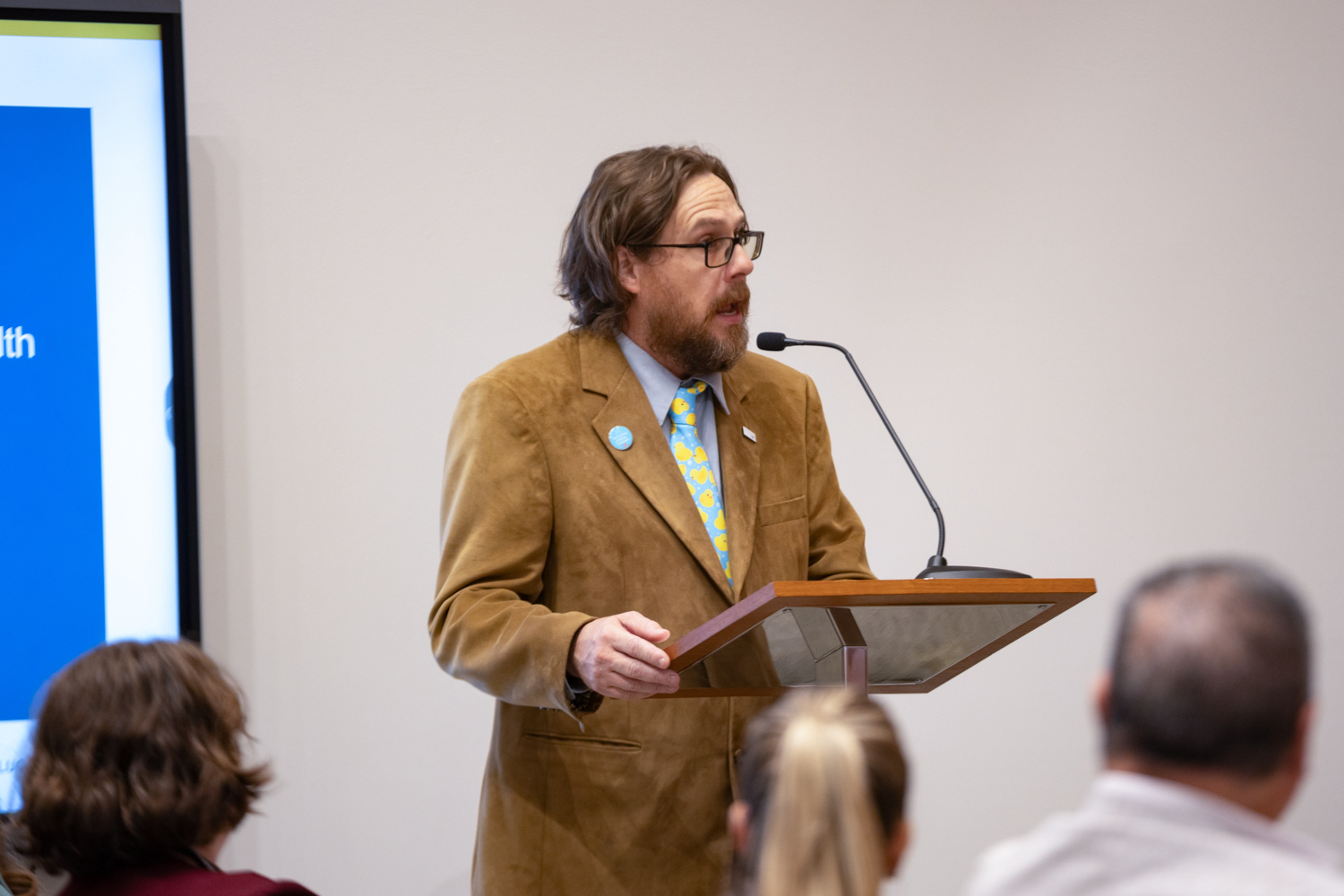
The day is meant to highlight the vulnerability of children to an array of toxic materials from lead paint to plastics. Included with the commissioner’s proclamation/resolution were a few informational handouts provided by Toledo-Lucas County.
Item 3. Permission to Accept Cost of Living Increase to Community Corrections Act
Ashley Richardson, the director of the Lucas County Adult Probation Department, asked for permission to receive a grant for $249,834 more than the county generally receives from the Ohio Department of Rehabilitation and Correction. The total amount of the grant was $3,643,122.
Richardson said this was the first cost of living increase the county had received for these funds in about 20 years.
Item 4. Title: Acceptance of Funds from Ohio Secretary of State, Frank LaRose, 2025 Voter
Registration Data Integrity Grant in the Amount of $4300 to Cover Expenses Associated with Implementation of Directive 2025-52
The acceptance of these funds was approved.
Lavera Scott, the director of the Lucas County Board of Elections, said the funding would cover the implementation of new software to secure elections in Lucas County, and that an additional $12,000 would be needed to complete the full security protocol required by the state.
These updates, passed in 2023, require the board of elections to link with the Department of Homeland Security, the Social Security Administration and the Bureau of Motor Vehicles.
Item 5. The county renewed their $56,701.70 contract with EverBridge, which provides the countywide emergency notification system.
Item 6. The county approved the Biennial Prevention, Retention and Contingency (PRC) Plan beginning Oct. 1, 2025 for Lucas County Department of Job & Family Services.
The contracts and services in the plan must be individually approved by the Lucas County Commissioners, but the approved plan provides an outline of services provided to the state.
Item 7. September Then and Now Certificates were approved.
A list of various day-to-day charges associated with running the county for the month of September.
Item 8. Approved “Increase Super Blanket Purchase Orders”
Similar to item 7, item 8 requires that “…expenditures requests meet one or more of the required categories of accountant, architect, attorney at law, physician, professional engineer, construction project manager, consultant, surveyor, or appraiser by or on behalf of the subdivision or contracting authority; fuel oil, gasoline, food items, roadway materials, and utilities; and any purchases exempt from competitive bidding under section 125.04 of the Revised Code…”
Item 9. Approved the Adoption of the 2025-2029 Ohio Workforce Area #9 (Lucas County) Workforce Development Strategic Plan Adopted by the Lucas County Workforce Development Board on Aug. 20, 2025.
Item 10
The Coroner’s Office presented their budget before the commissioners, and asked for a 2.59 percent increase to their budget, roughly an additional $85,000. The county budget director noted that the Coroner’s Office is projected to be slightly under budget this year.
Tom Blomquist, the Lucas County Coroner, said he tried to keep things as flat as possible, as per the request from the commissioners.