Agriculture and livestock production touch every county in Ohio. In Lucas County, urban sprawl continues to press against the remaining farmland, yet agriculture does persist—livestock farms too.
Summer county fairs fuel 4-H livestock projects. Local butchers depend on local meat, and an increasing share of consumers seek to buy directly from producers.
The county’s 364 farms, according to the 2022 Census of Agriculture, remain foundational to the region producing meat, milk, eggs and fiber. It also supports a thriving community of hobby farmers. While livestock numbers aren’t the highest in Lucas County, larger livestock operations bordering Toledo keep grocery shelves stocked.
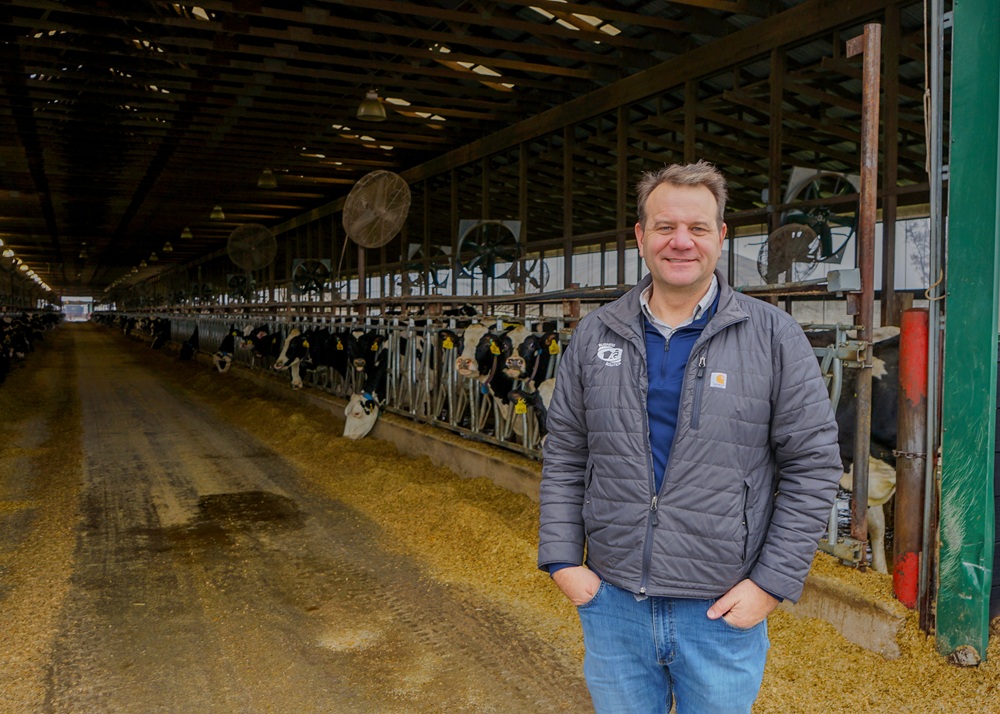
One of the people operating at that scale is Chris Weaver, a dairy farmer in Fulton and Williams counties.
Farming for your gallon
Weaver is a partner and operator at Bridgewater Farms, a dairy operation based in Montpelier. As a member of the Select Milk Producers Cooperative, milk from his farm ends up in national brands like Fairlife milk by Coca-Cola, in chocolates, baby formula and sometimes a Michigan cheese plant.
Bridgewater is large for northwest Ohio: nearly 6,000 cows across two locations. The farm began in 1998 with Weaver and his father, a dairyman and veterinarian originally from California, now making the 11th generation in their family to farm.
“I think there’s no better reward than helping a living being produce milk and providing a great product to people,” Weaver said.
Ohio ranks 12th nationally in dairy production, with most dairy cattle located northeast of Columbus. In the northwest, only a handful of dairy farms remain—one near Swanton, a few in Wood County and in Bryan too. But Weaver said the industry isn’t built on competition.
“We’re kind of competing against ourselves, trying to be as efficient as we can possibly be,” he said.
At the Montpelier farm, about 35 employees and a veterinarian handle milking, calving and daily operations. Cows are milked three times a day in a double-42 milking parlor. The farm goes through roughly 45,000 tons of corn silage each year, along with hundreds of tons of sand for bedding.
Feed, veterinary bills, bedding, technology, water, manure systems, fertilizer and seed dominate the budget. The expenses go into animal care. “The more comfortable a cow is, the more milk she’s gonna give,” Weaver said.
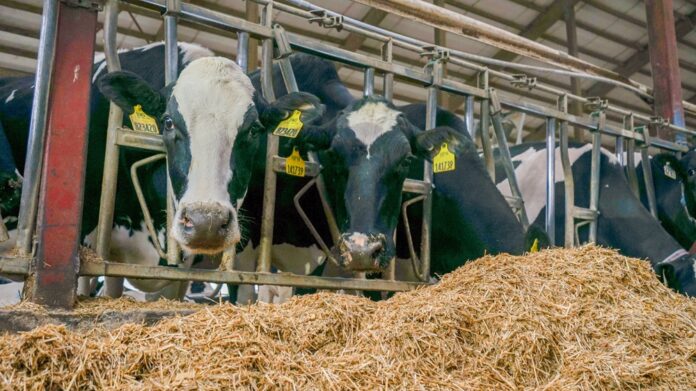
The dairy uses freestall barns, one of the most common and modern farm structures, allowing cows to move, eat, drink and lie down on sand bedding year-round, while still having shelter.
Protecting animal care
Weaver emphasized his responsibility to animal welfare and public trust. “Concerned citizens worry about it, and it’s good, because it holds us accountable,” he said.
Natural improvements to the farm have strengthened animal care. Updated fans and sprinklers were installed this past summer, in addition to cow collars that collect movement and health data.
Peer-reviewed research and state oversight also shape the standards livestock farms must follow, said Dr. Grazyne Tresoldi, assistant professor of animal welfare science at The Ohio State University.
The main framework is the Ohio Livestock Care Standards Board, which writes species-specific rules enforced by the Ohio Department of Agriculture.
But a second layer comes from industry expectations.
“Many rules are industry-led,” Tresoldi said. Large buyers require farms to join animal-care certification programs such as Beef Quality Assurance or the Ohio Egg Quality Assurance Program, which trains and audits farms.
For dairy farms, the National Milk Producers Federation reports more than 99 percent of the U.S. milk supply comes from those involved in the Farmers Assuring Responsible Management (FARM) program. “In practice, those programs carry real weight,” Tresoldi said.
Bridgewater Farms also receives support through quarterly third-party audits, where two companies evaluate animal care, environmental standards, and employee care. Their end product buyer, PepsiCo, the owner of Fairlife, completes audits too.
Tresoldi, a veterinary doctor, said while there are many perceptions of what animal welfare is, she defines it by how animals are perceiving and responding to their environment — including management, disease, handling or weather.
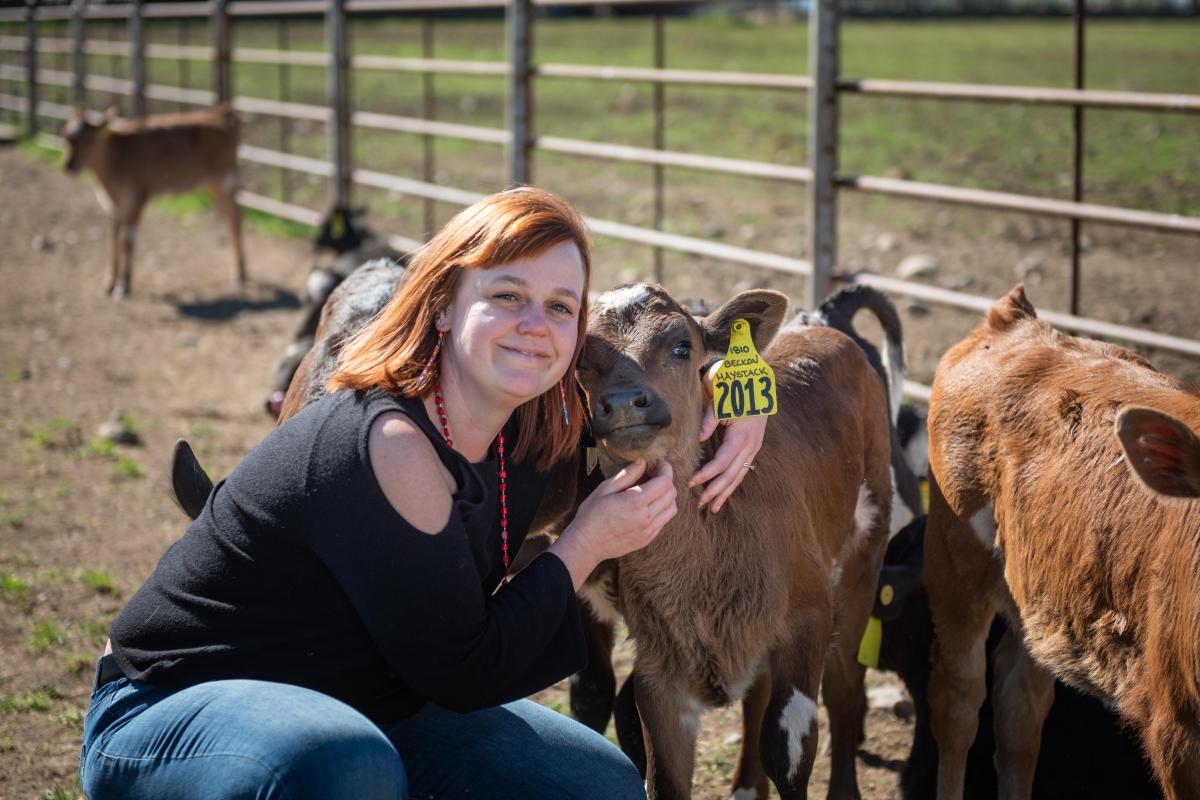
Scientists, farmers, and veterinarians each handle an aspect of the conversation together. The state has 3,300 veterinarians, 128,000 people employed in the animal industry and 160 faculty at The Ohio State University focused on animal science or veterinary medicine.
Environmental management and manure innovation
Regardless of the urban–rural divide, residents across the region pay close attention to how food production affects natural resources and water quality.
Bridgewater’s scale of operation is matched by its investment in manure and nutrient technology.
Everything on the farm runs on a schedule, Weaver said. “Manure takes the most time and effort to manage appropriately.”
The farm grows its own feed and monitors nutrient cycles closely.
“In the past, we saw it was easy to see manure as a waste product, but it had nutrients in it. As technology has improved, I think we’ve gotten better at utilizing the nutrient values that are existing in manure for energy,” he said.
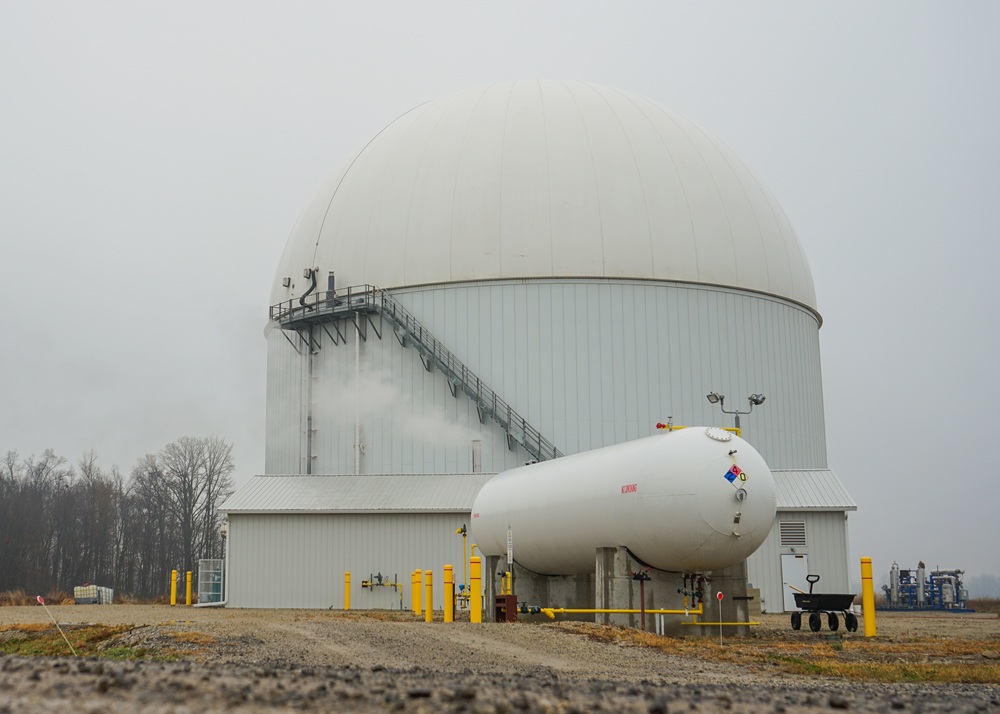
Their long-term solution for manure waste is energy. The operation separates manure liquid from sand bedding. The manure then moves into a methane digester that produces biogas, which ends up in propane tanks. The remaining material becomes fertilizer returned to surrounding fields.
“They’re harvesting the electrons for energy,” Weaver said, “and we’re still getting nitrogen, phosphorus, potash and other nutrients.” Following Ohio’s 4R Nutrient Stewardship principles, manure is applied before planting or in narrow windows after wheat harvest.
But manure is often at the center of public concern regarding its management.
When the country’s largest state-funded agriculture conservation program, H2Ohio, began in 2019 in response to dangerous levels of water nutrient pollution in 2014, Bridgewater aligned its cropping practices with the program and maintained filter strips registered with the conservation effort.
The program reached a milestone of farmer participation this year. Governor Mike DeWine announced 2.5 million acres enrolled in the conservation program. While the program has been defunded in the last state budget, phosphorus reduction has made headway in 2025. The National Oceanic and Atmospheric Administration reported the year’s bloom was the smallest the lake has seen since 2020.
Livestock agriculture, whether backyard poultry in Lucas County or dairies nearby, remains central to northwest Ohio’s identity.
The next generation of Ohio’s farmers, and milk for the fridge, is already taking shape. “My son, when he gets old enough, he’s gonna want to be on the tractor, farming too,” Weaver said.