*This article was updated on March 23, 2026.
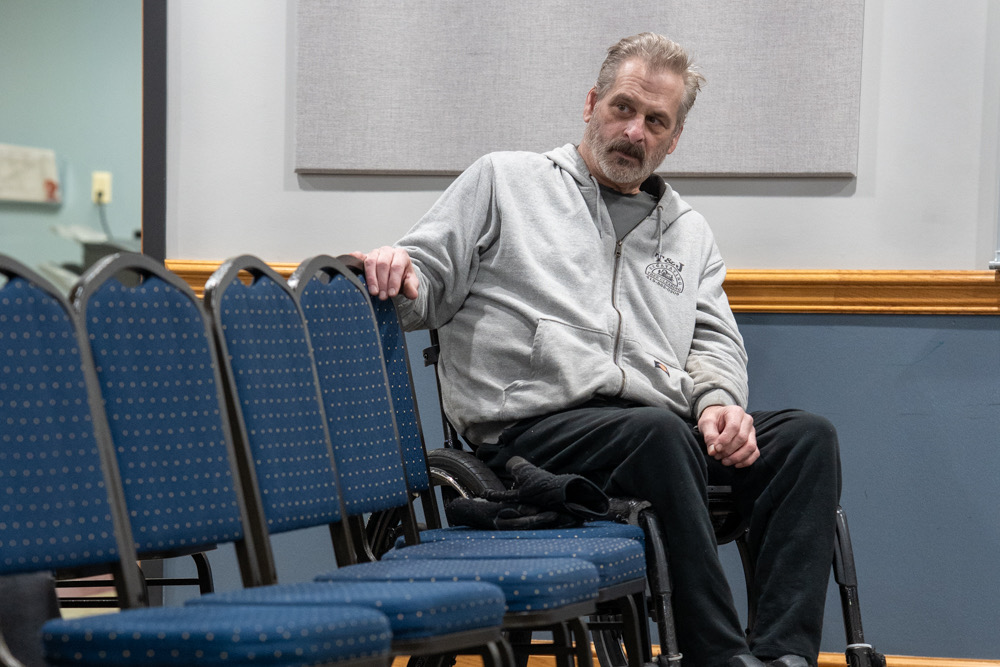
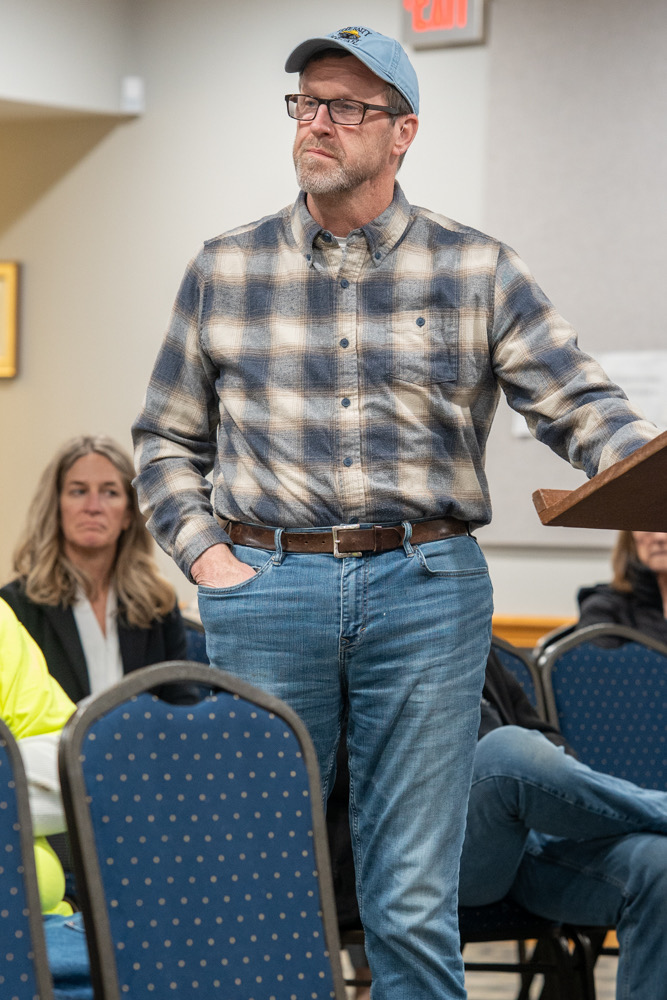
TOLEDO – Most controversial of the 65 items on the agenda was the approval for a new roof for the Lucas County jail during the March 10 Lucas County Commissioners meeting.
Commissioners Lisa Sobecki and Pete Gerken voted to approve the new contract with Overhead Roofing and Sheet Metal (Toledo) for the Replacement of the Roof at the Lucas County Correction Center, item 43 on the agenda, for roughly $1.3 million.
A different portion of the jail’s roof was replaced roughly six years earlier by the same contractor.
Original publication of this article read, “The jail’s roof was replaced roughly six years earlier by the same contractor.”
A Lucas County spokesperson clarified information on the jail’s roof on March 23rd. This information was not given in the legislation, during the commissioners meeting, or through the commissioners’ statements on March 10.
The legislation reads, “Competitive bids were received for the replacement of the roof at the Lucas County Correction Center located at 1622 Spielbusch Avenue, Toledo, Ohio 43604 on Tuesday, February 17, 2026” and does not mention any distinct portions of the jail’s roof or differentiation from the previous work done in 2020.
The Lucas County spokesperson clarified that there are three separate portions to the jail’s roof, and that this legislation was for the main, largest portion of the roof, not the portion of roof replaced around 2020. She noted that “the portion of the roof that Overhead Roofing and Sheet Metal completed in 2020 is not the same portion of roof that was just approved to be replaced…The work done in 2020 was for the upper mechanical area roof of the building, a smaller portion.” This distinction was not made during the meeting or during talks with individual commissioners. The facilities director referenced the penthouse mechanical roof during the meeting, but did not clarify that this legislation dealt with a different portion of the jail’s roof, only that the contractor in question had worked on the penthouse mechanical roof previously.
During the meeting, Anita Lopez, the only commissioner to vote against replacing the roof, asked before voting, “Were there any prior concerns with that contractor?”
Jeff Nowak, the facilities director, answered that originally there was concern over “some bubbling on the roof membrane” of the penthouse mechanical roof to the jail.
After having a manufacturer look into warranty claims, it was determined that the roof was installed correctly to the specifications prescribed back around 2019/2020.
“They’re [the manufacturer is] saying it’s more of a design issue in that the existing concrete roof deck has moisture in it. It’s getting heat from below. The boilers and equipment in that room has pushed the moisture up through the roof. The roof is not leaking. We are going to do some of this additional investigation,” Nowak said.
In order to fully assess what is going on, Nowak said they would have to cut into the roof.
Lopez inquired further about the vapor barrier on the roof, and Nowak answered, “[What] the manufacturer suggested, was that there was not a vapor barrier installed between the concrete deck and the insulation of the roofing. There should have been.”
Again, Nowak explained the roof was not leaking, and it seemed to be a design issue with the plans for the roof that the county planned to investigate further.
“Having a vapor barrier, isn’t that standard?” Lopez asked, which Nowak said has become more prevalent since the last roof was installed roughly six years ago.
After the meeting, Gerken said he voted for the new roof because they needed to keep moving on repairs for the jail, and that he did not think it was a problem with the contractor, vouching for Overhead Roofing and Sheet Metal.
“There’s an issue about some work done six or seven years ago, as they explained, that was the architect and engineer that told them to install it the way they installed it,” Gerken said, and clarified that the contractors did the work the way they were instructed.
“If it was the design that was flawed, then that’s not the contractor’s issue,” he said. “You go to the house, you tell them to put in a door on the righthand side of the garage. They put it in. Suddenly, you wanted it on the left. That’s not [the contractor’s call], that’s the design-engineer’s call.”
Gerken said he went with the same contractor because they were $200,000 under the other three other contractors’ bids.
Lopez was less convinced, and said as much after the meeting.
“Bottom line is, the cheapest is not the best,” she said. “Now, a vapor barrier, based on my research, is sort of standard in replacing or doing work, and so that’s why I asked that specific question.”
“I wanted it on the record,” she said, and explained that since she’s the youngest commissioner she might have to deal with problems with the jail’s roof in the future.
“I’m concerned that if a company does not recognize that a vapor barrier would have helped preserve the roof longer, and that’s a standard in the community of roofing, then that should have been brought to our attention and said, ‘maybe your design is wrong,’” she said.
If it were up to her, Lopez said she probably would have litigated over the loss, and was concerned about working with the same contractor again.
“We know his M.O., we know he’s going to say it’s the design work,” she said. “Even though it could have been brought to our attention. If he’s an expert in roofing, it should have been brought to our attention earlier.”
Women’s History Month
Recognizing Women’s History Month was the first item on a long 63-point agenda for the Lucas County Commissioners on Tuesday, March 10.
President of the Board of Commissioners, Sobecki, did not waste any time, and the commissioners honored three distinguished women, Sonia Flunder-McNair, Yvonne Dubielak and Jessica Molina, for their accomplishments in Lucas County.
“Women have played some vital roles in Lucas County in business, science, education, trades, the arts and public service, and many more other areas,” Sobecki began, and then unofficially recognized Jessica Ford, the Lucas County administrator, for being the Young Women’s Christian Association’s (YWCA) Milestone recipient in the category of government.
The 2026 theme for Women’s History Month is “Leading the Change: Women Shaping a Sustainable Future,” and Flunder-McNair was recognized for her work as the CEO of Urban Wholistics.
Flunder-McNair concisely summed up her nonprofit. “Urban Wholistics fights for land ownership, food security and beautification within urban settings that are not so wholesome.”
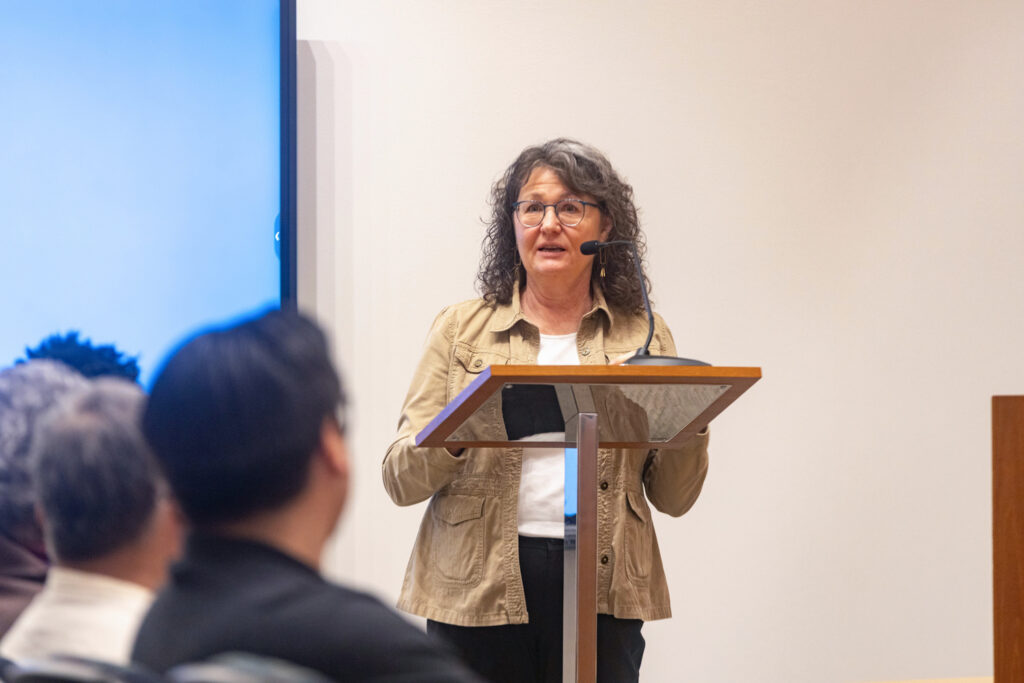
Toledo GROWS’s Executive Director Dubielak was honored similarly for her role in leading the nonprofit. “Toledo GROWs is a grassroots effort dedicated to the continued growth and success of community-based gardens in the City of Toledo and the surrounding area,” per the organization’s website.
Dubielak compared her leadership with Toledo GROWS to when she was a first grade teacher. “I took it where it was, and together with staff and board, we worked hard and moved along as far as I could, until my time was done and I was able to hand it over to someone else.”
Commissioner Lopez said, “You can listen to her [Molina] on La Prensa through WGTE, PBS, and it’s so important all the things that you’re doing; you’re a role model behind the scenes, but you’re also the future.”
Further, Lopez noted that Molina had challenged her through her actions, to be “more active.”
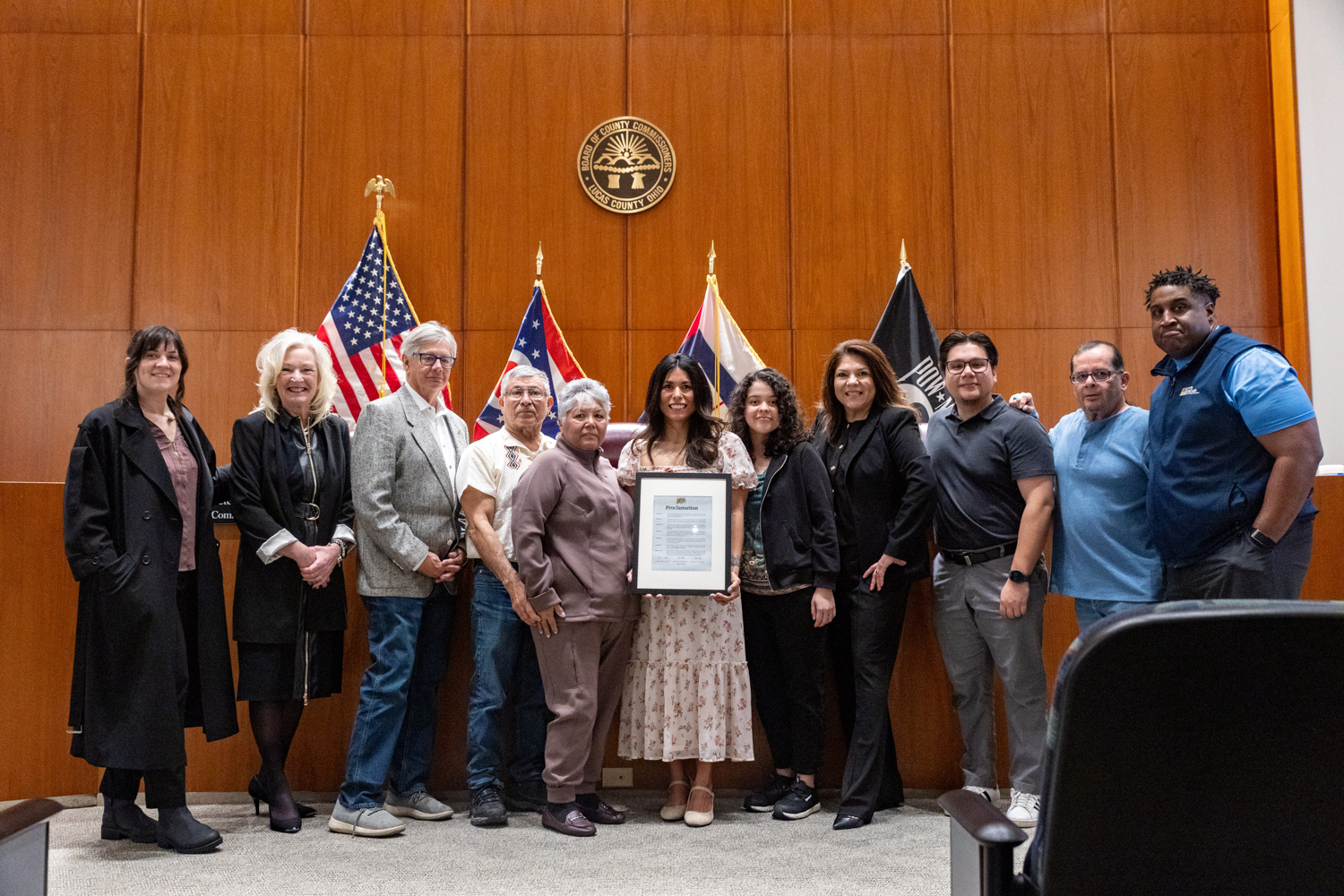
Commissioners did not mention any one organization Molina is associated with, potentially because she is active in so many spheres of influence. But Molina was quick to highlight her work with Abriendo Puertas Para Soluciones (APPS), which translates to Opening Doors For Solutions.
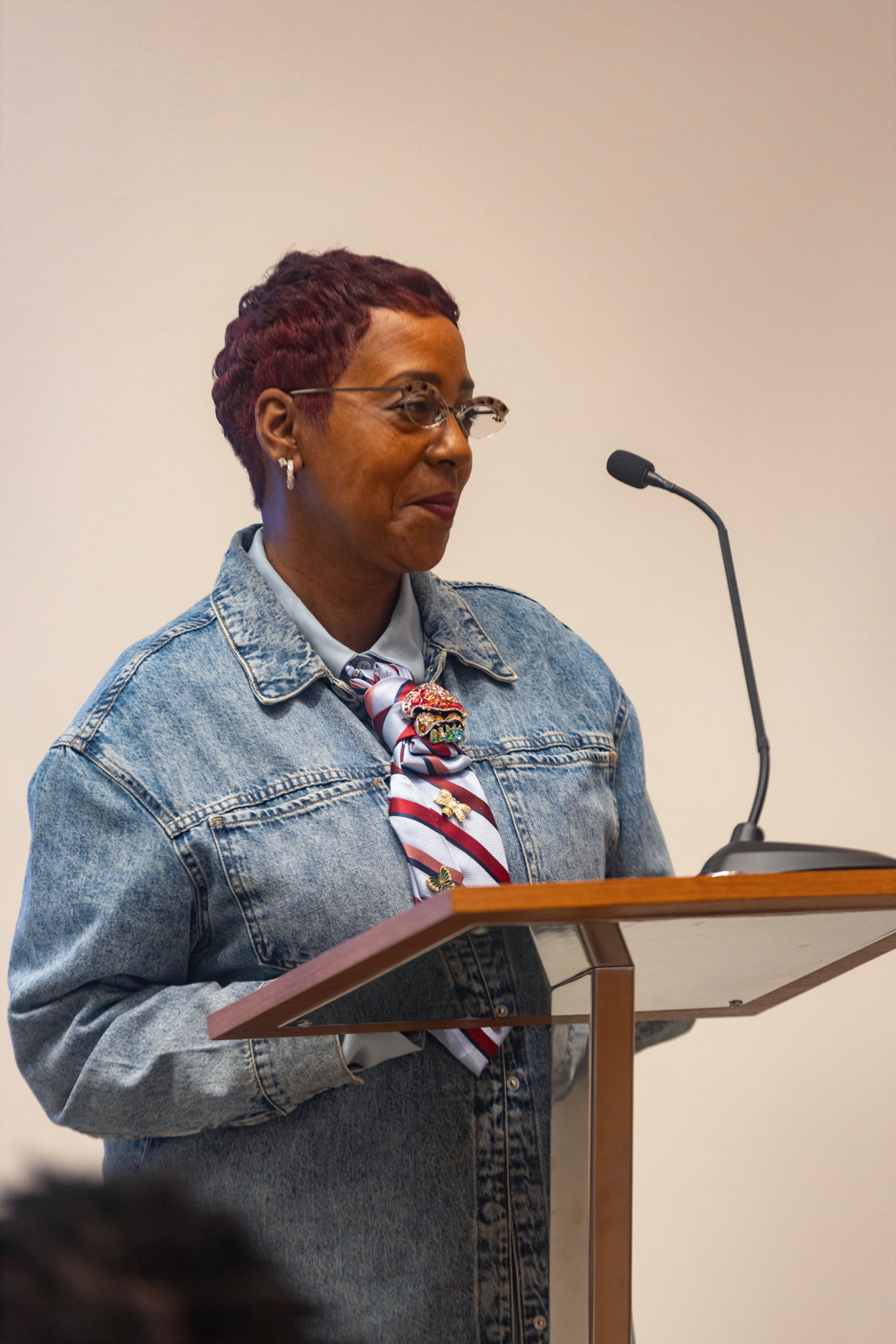
Molina spoke briefly about growing up as the child of migrant farmworkers, the dignity of hard work, and eventually her foray into academia. Halfway between the heritage of her parents and the status quo of the United States was an isolating experience, as she was not fully being embraced by either group.
“But you learn something really important being an outsider; you see the people that others often overlook,” she said.
APPS is about “opening doors with resources, information, solutions, doing that with dignity for people who deserve it, and yet this advocacy work is not comfortable for me. You can probably see that I’m shaking. I find it hard to speak up, sometimes, even though I am on air.
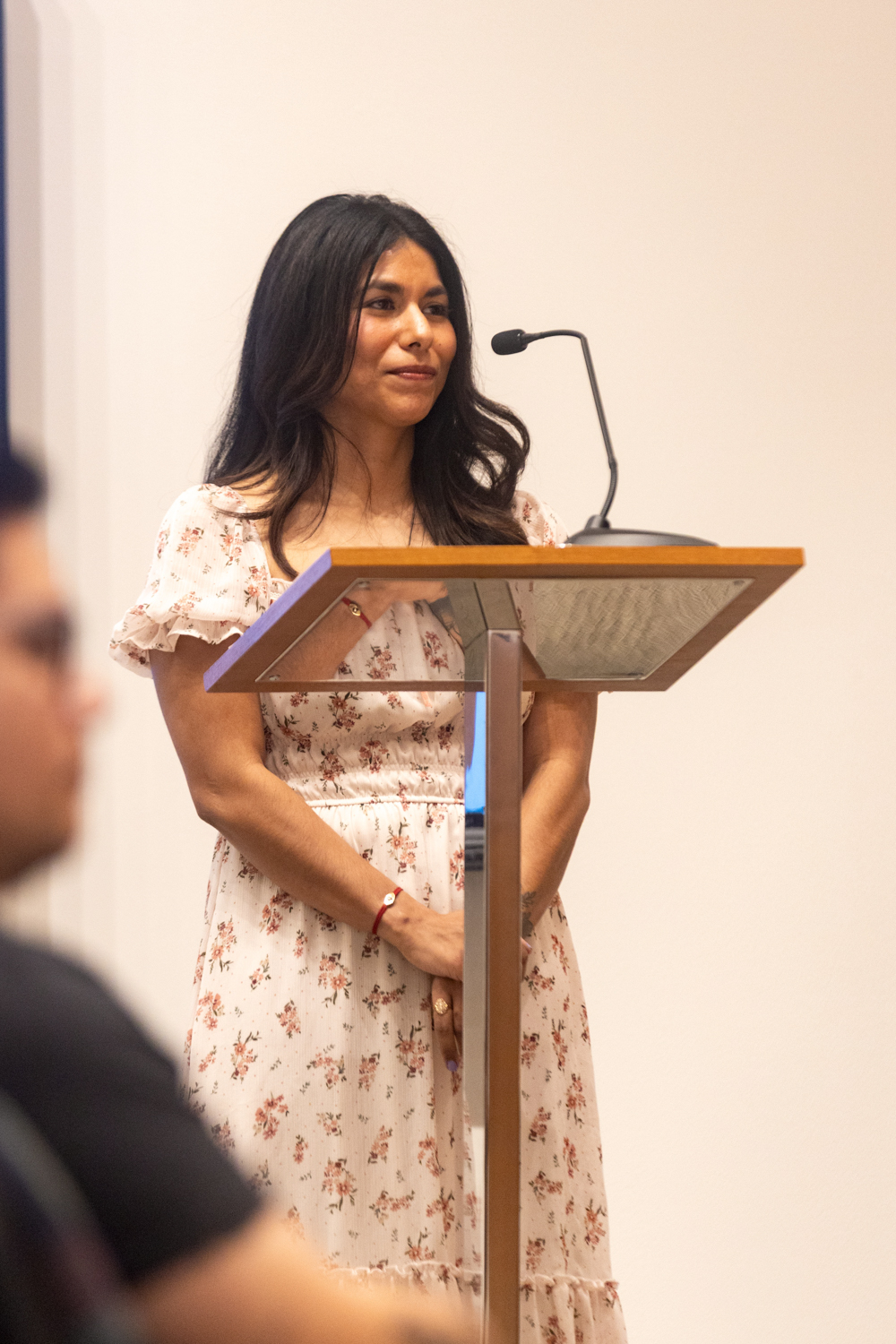
“I think as women, this is Women’s History Month, sometimes we’re taught to just be agreeable, to keep the peace, to avoid conflict, to stay silent. But silence…It does not create progress,” she said, and then began to speak about the recent immigration crackdowns in the United States.
“I think about the families who, in a moment’s time, their lives changed completely when a routine traffic stop turns into one of the parents being taken by immigration authorities.
“That family is split, overnight, separated overnight, often without due process,” and then she cited the constitutional provision for due process in Section 1. of the 14th amendment to the U.S. Constitution.
“…nor shall any state deprive any person of life, liberty, or property, without due process of law; nor deny to any person within its jurisdiction the equal protection of the laws.”
This provision in the constitution has become one of the main points of contention for President Donald Trump’s immigration crackdown, specifically around what the word “person” refers to in this context.
Supporters of the president have argued due process does not apply to immigrants in the same way it applies to citizens of the United States, while detractors argue the use of “person” means all people inside the United States are afforded the right of due process, regardless of immigration status.
At the end of her time, Molina thanked all who helped in the work of APPS, and said, “Together, we will keep opening doors,” and then thanked those in attendance.
A healthy dose of applause followed, and Commissioner Gerken stood up before ratifying the proclamation honoring Molina.
Recognition for WGTE
Recognition was given to WGTE’s podcast series, Rethinking Jails + Justice, is a 10-episode podcast and five-part radio series involving two community town halls. It features insights from law enforcement, legal professionals, mental health experts, researchers, and community leaders.
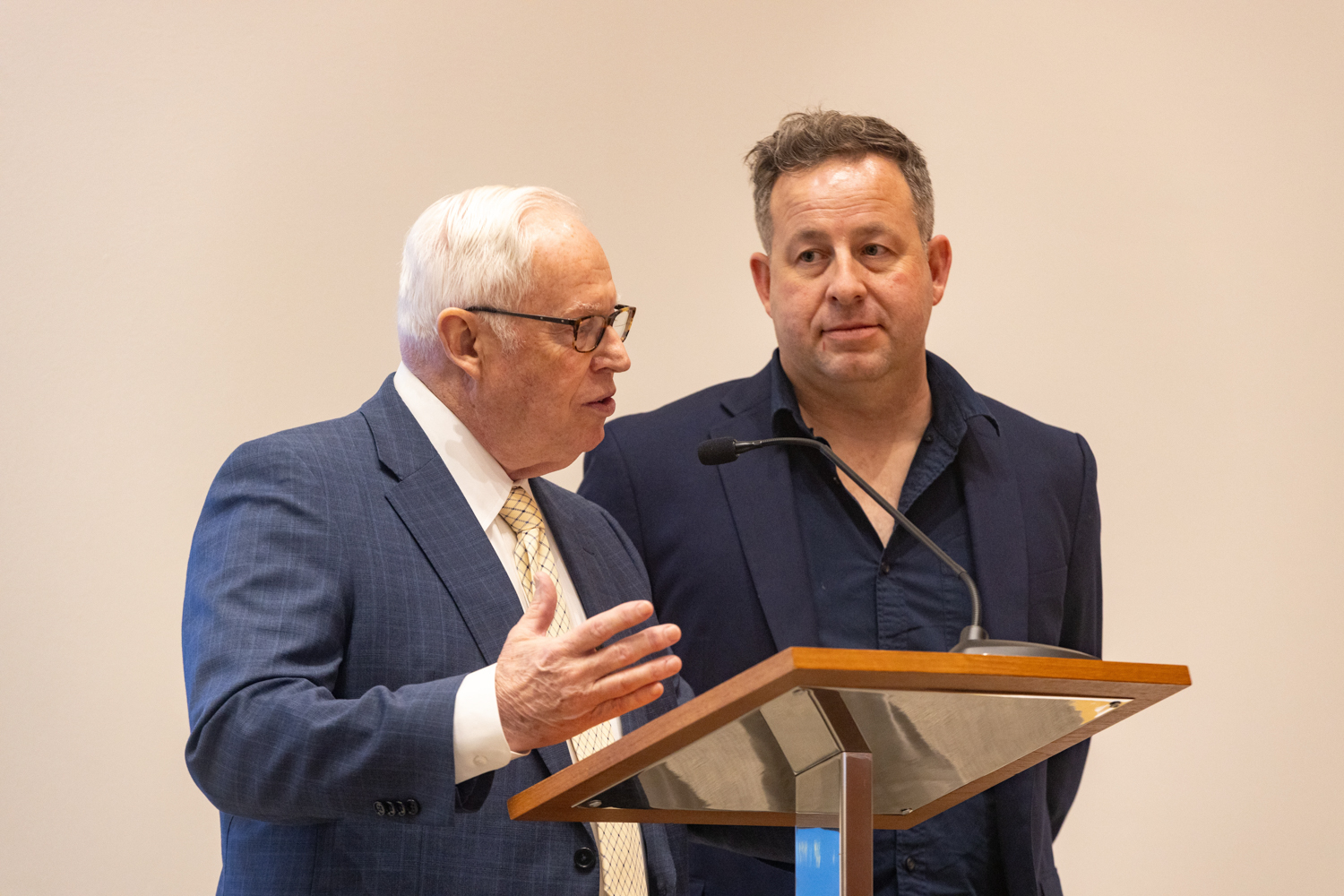
Dale Thorne, interim president and CEO of WGTE, was there to receive the resolution, and spoke at the commissioners meeting. “It was a partnership between commissioners [and] WGTE to tell a story about over incarceration, and what that means to people and how it affects their lives, and it was extremely successful.”
The podcast received the Public Media Award from the National Educational Telecommunications Association, a competitive award across 304 stations in 49 states.
“That is what we’re designed to do, to tell the stories that need to be told that no one else will tell in a way that no one else can replicate,” Thorne said.
And Commissioner Gerken followed up the thanks of Thorne with his own appreciation for the series.
“When we entered this process in 2015, we had 482 prisoners at Striker, our regional jail, 482. Last month we had 167. From 482 to 167, that’s an accomplishment, helping to reduce over-incarceration,” Gerken said.
Appointments
The Board of Commissioners appointed Commissioner Sobecki, Trustee Neal Mahoney, Gina Kaczala, as members of the Tax Incentive Review Committee for its 2026 annual review meeting and Karen Poore as an alternate should any of the members be unable to attend.
Appointments to the Community Corrections Planning Board (CCPB) are as follows:
Commissioner Lisa Sobecki, Board of Lucas County Commissioners
Mayor Wade Kapszukiewicz, Mayor, City of Toledo
Judge Stacy Cook, Lucas County Common Pleas Court
Judge Timothy Kuhlman, Toledo Municipal Court
Judge Linda Knepp, Lucas County Juvenile Court
Chief Michael Troendle, Toledo Police Department
Chief Dani Lynn Miller, Sylvania Township Police Department
Sheriff Michael J. Navarre, Lucas County Sheriff’s Office
Major Bobby Chromik, Lucas County Sheriff’s Office
Dennis Sullivan, Corrections Center of Northwest Ohio
Prosecutor Julia Bates, Lucas County Prosecutor’s Office
Chief Prosecutor Rebecca Facey, City of Toledo
Sean McNulty, Toledo Legal Aid Society
Vallie Bowman-English, Clerk of Toledo Municipal Court
Scott Sylak, Lucas County Mental Health and Recovery Services Board
Michele Myerholtz, Lucas County Board of Developmental Disabilities
Bud Hite, Lucas County Correctional Treatment Facility
Ashley Richardson, Lucas County Common Pleas Court – Probation
Jennifer Friddell, Toledo Municipal Court – Probation
Judge Lou Kovacs, Oregon Municipal Court
Judge Dan Hazard, Maumee Municipal Court
Judge Michael Bonfiglio, Sylvania Municipal Court
Lisa Falgiano, Toledo Municipal Court
Tim Lubbe, Lucas County Common Pleas Court
Linda Howe, Maumee Municipal Court
Michelle Butts, Lucas County Common Pleas Court – Regional Court Services
Karen Trail, Volunteers of America
Willie Knighten, Representative of the Public
Ann Ebbert, Representative of the Public
Auditor
The commissioners authorized Lucas County Auditor Katie Moline to “reclaim, recover any and all unclaimed funds that are due to Lucas County or any county agency, department, office, board, commission, or other subsidiary unit of county government.”
Moline said this was a house-cleaning measure initiated by the Ohio Auditor of State, “making it a requirement to reclaim funds,” for each office.
“Every office in Lucas County will have to do it, and as I am the Chief Financial Officer for the county, it makes sense for me to do it, versus everyone having to learn it and do it individually for their offices.”
According to Moline, the process involves working with the Department of Commerce website, and takes time to understand.
Since the resolution just passed, Moline said she is at the beginning of the process, but has already worked through 20 line items for her own office, totaling a little over $10,000.
She said, “These aren’t gonna’ solve a budget crisis,” but they might help subsidize other initiatives.
County Engineer
Items 10,11,12,13 were contracts awarded for various county projects.
Item 14 was a change order for the Summit Street & Shoreland Avenue Intersection Roundabout Project, PID #111415.
Item 15 approved an amendment with the Holland-Sylvania Road Resurfacing Project.
Item 16 approved an amendment to the Monclova Road Widening Project.
Item 17 approved an amendment to the Frankfort and Crissy Roads Roundabout Project.
Item 18 approved an amendment to the Gibbs Road Bridge Replacement Project.
Item 19 approved plans for the Sylvania Avenue Bridge #101 Rehabilitation Project.
Item 20 approved the Joint Cooperation Agreement with the Board of Monclova Township
Trustees for the 2026 Thin Overlay Program.
Item 21 approved Mike Pniewski, the county engineer, for travel for the National Highway Institute Training – Safety Inspection of In-Service Bridges, with a to be determined location. Estimated cost for this trip is $6,000. This is to certify Pniewski for upcoming bridge inspection work.
And the other travel item was $500 for FEMA Emergency Management Institute – Managing Floodplain Development Through the NFIP, Emmitsburg, Maryland.
Items 22,23,24,25,26,27,28,29 are all ditch maintenance petitions that were approved.
Item 30 was approved authorization to buy land for the Herr Road and Sylvania Avenue Roundabout Project.
Prosecutor
Item 31, authorized the Signing and Filing of the 2026 Federal Equitable Sharing
Agreement.
Item 32 authorized the Retention of a Consultant to Assist the Prosecutor’s Office with
Construction Contracts.
Recorder
Item 33 approved payment for the Annual Software Maintenance of the Recorder’s
TrakRecord System to Document Technology Systems (“DTS”).
Sheriff
Item 34 asked for permission to apply for funding.
Items 35,36,37,38 were all renewals of contracts with the American Tower Delaware Corporation, a company that deals with communication towers. Each tower impacts the budget somewhere between $5,000 and $11,000 a month.
Economic Development
Item 39 approved a change to the Citizen Participation Plan (CPP) related to the federal Community Development Block Grant Program (CDBG).
This resolution adds a public hearing if there are substantial amendments to the grant program.
“An amended public hearing will be held if a proposed amendment constitutes a substantial change to the scope of the grant agreement. The public notice and requirements will follow the format of the second public hearing.”
The public will be notified and guided as follows:
1. Legal notices shall be published, as specified in The Toledo Blade.
2. Notices will also be posted on the Lucas County website (oh-lucascounty.civicplus.com) and,
3. The notice shall state the time, date, place, and subject matter of the hearing.
4. A mailing will be sent to all townships, cities, villages and other interested agencies to notify them about the application and upcoming hearings.
Item 40 Commissioners removed a mortgage lien on a property in Holland, Ohio that received a loan through the Community Housing Impact and Preservation (CHIP) Program.
Facilities
Item 41 approved a lease agreement.
Item 42 awarded a contract for demolition of of the Former Child Studies Institute located at 410 10th Street, Toledo, Ohio 43604.
Item 43 awarded the contract for the county jail’s new roof explained at the top of the article.
Item 44 approved external repairs for Lucas County Common Pleas Court.
Item 45 purchased a John Deere TruFinish 1210 Utility Rake from Revels Turf and Tractor, LLC (Wadsworth, OH).
Commissioner Lopez voted no on items 41-45, because they were presented and voted on together. Her main opposition seemed to be item 43, the new roof for the jail.
Job and Family Services
Items 46,47,48, and 49 were approved contracts/partnerships/stipulations between Lucas County Job and Family Services and other organizations for programming/services.
Support Services
Items 50,51 and 52 approved purchase orders and funding for sanitation supplies and equipment.
Solid Waste Management District
Item 53 Approved a second amended agreement between Gateway Recycling (Toledo, OH) and the Lucas County Solid Waste Management District for recycling processing services.
Item 54 allowed Lucas County to enter into an Agreement for Household Hazardous Waste (HHW) Transportation and Processing with ERG Environmental Services (Livonia, MI)
Water Resource Recovery Facility
Item 55 allowed the Water Resource Recovery Facility to advertise for land application of biosolids for the Lucas County Water Resource Recovery Facility.
Workforce Development
Items 56 and57 allowed changes surrounding the Workforce Innovation and Opportunity Act (WIOA).
Item 58 approved a memorandum of understanding with Pathway Inc. Roles and Responsibilities
Pathway, Inc, Brothers United Fatherhood Program agrees to:
1. Provide program services under the Fatherhood FORGE grant services.
2. Recruit participants through outreach and engagement strategies.
3. Provide documentation and reports on participant progress.
4. Coordinate with case managers and partner agencies to deliver comprehensive services.
OhioMeansJobs Lucas County agrees to:
1. Provide referrals of eligible participants to Pathway, Inc.
2. Collaborate on outreach activities to increase community awareness.
3. Share resources and expertise that support participant success.
4. Participate in regular partner meetings and coordination efforts.
Office of Management and Budget
Item 59 approved a service agreement addendum.
Administration
Item 60 amended the Clean Ohio Trails fund.
Item 61 terminated the agreement with Medical Debt Resolution, Inc.
After the meeting, Gerken spoke on this resolution. “ We all knew medical debt was one of the large factors in foreclosures and bad debt rating and all the pressures it puts on individuals that got overrun by medical debt through things they can’t control.”
He went on to say the approach of the county was buying debt from hospitals, and that it was an effective approach for the time, using $180,000 from the county, affecting 42,000 county residents and providing roughly $18.6 million in debt relief.
Gerken said, “It’s harder to buy medical debt now; the world has changed, and medical finance, they’re not selling as much debt, they’re trying to collect it.”
Human Resources
Item 62 approved a one year license agreement for training program and anonymous reporting system.
Item 63 approved an amendment to an agreement with Experience Management Institute for their Completion of a Compensation and Equity Study.
After Executive Session
Item 64 amended an organizational breakdown to accommodate getting rid of one Senior Budget Analyst position.
Item 65 similarly amended an organizational breakdown to accommodate getting rid of one Workforce Development Financial Analyst position.