Home Blog Page 289

Treece: Seesaw stocks

0

The recent volatility in financial markets has been widely discussed in the media, and has been a growing concern among investors. In observing market activity, pundits and commentators are continually linking market action with headlines from around the world, as though every move in stocks can be tied directly back to a morsel of economic data or a new quote from a policymaker.

Of course, given the political upheaval on the far side of the pond — and the financial difficulties faced by a number of nations in that region — much attention has centered on Europe. Many continue to question whether the problems there might be on a transcontinental flight headed for New York.

The problem, dear reader, is that each comment made by a business news reporter about what the cause of a market effect is, is just that: an answer in search of a question. In reality, the world’s financial markets have been going up and down because that’s what markets do — they go up and they go down.

However, day-to-day action of stocks doesn’t change their fundamentals and that’s where investors should be focusing.

Stocks might rise from day to day because some senior International Monetary Fund official tells the press that a deal has been reached on Greece’s 49th bailout package. On the other hand, stocks might fall because a Goldman Sachs trader sits down to his trading desk upset because this morning Starbucks ran out of his favorite flavor (Meltdown Mocha, if you’re curious).

The simple facts are these: Despite recovering — in many cases to precrash levels — stocks remain cheap given the prospects for the U.S. and global economies over the next 15-20 years. At the same time, bond yields are uncharacteristically low — probably at the bottom of a 30-year cycle.

Simply stated, bonds aren’t the place to be today, given that as interest rates rise — and they will rise — bond values will fall. Stocks are obviously the better option.

However, investors who want to do well over the long term in these volatile markets need to be taking their lead on buying stocks from the old tagline for Showtime Rotisserie: Set it and Forget it!

In other words, don’t be constantly monitoring and worrying about stocks — leave that to professionals.

Anyone wanting to see what — in my opinion — the stock market will look like during the next 10-15 years should take a look at a chart of the Dow Jones Industrial Average that covers the 1980s.

Obviously the market won’t follow this course precisely. As the old saying goes, history never repeats itself — but it rhymes.

If you’ve set out to manage your money on your own, trust that the economy will recover, so stocks are still cheap. Pick a few solid companies, buy a bunch of shares, and try not to check them except a few times a year. In the end, investors who do any more than that are bound to do more harm than good.


Dock David Treece is a partner with Treece Investment Advisory Corp (www.TreeceInvestments.com) and is licensed with FINRA through Treece Financial Services Corp. He provides expert content to numerous media outlets. The above information is the express opinion of Dock David Treece and should not be construed as investment advice or used without outside verification.

Pounds: One step up …

0

There is always interesting news to be found in the weekly flow of life in Downtown Toledo. Two developments worth discussing this week are the exciting plans announced for the Steam Plant and City Council’s dubious vote on the Red Cross union negotiations.

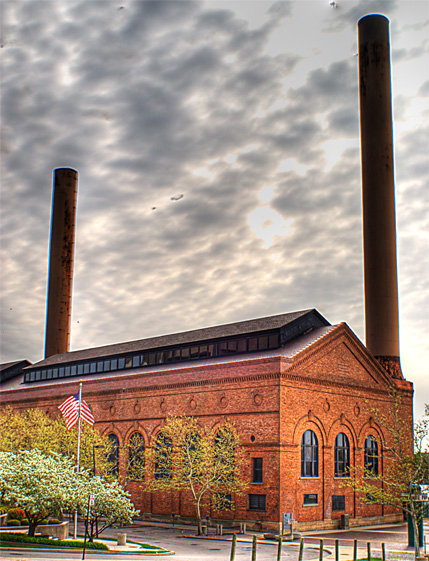
For far too long, the Steam Plant has stood as a symbol of our city’s inability to capitalize on its magnificent waterfront. But the news — first reported April 20 by Toledo Free Press — that the YMCA and University of Toledo Medical Center have plans for the facility is a cause for cautious celebration.

As reported by Caitlin McGlade, “The $16 million investment is a money saver for the YMCA, part of University of Toledo Medical Center’s expansion plans and the answer to developers David and Dean Ball’s goal to build downtown apartments. The building, dubbed the Water Street Station, will house 67 apartments from the third to sixth floors. The university’s medical center will lease space from the YMCA. The deal marks the third installment of plans to spread clinics across Northwest Ohio.”

Coupled with Mayor Mike Bell’s plans to renovate Promenade Park and the development of the Marina District, Toledo could finally see some progress on its long-underutilized riverfront.

Progressive Councilwoman Lindsay Webb led the charge for City Council (like the Lucas County commissioners) to stick its collective nose into the labor negotiations between United Food and Commercial Workers Local 75 and the blood collection branch of the American Red Cross. At this point, Webb’s quixotic pursuits are an unsurprising facet of her approach to public service, but Councilmen Tom Waniewski and Rob Ludeman were correct in opposing the nonbinding resolution — not from disrespect to the union negotiation process but from respect for Council’s time and attention.

“We stand with our Toledo workers, that’s what the resolution said and that’s what we’re asking them to do. We are supporting Toledo taxpayers in a dispute in which their employer was found to not have good cause and participated in unfair labor practices,” Webb said. “That is not something we tolerate in this city.”

That’s one or two too many applications of the word “we.”

As Waniewski said, “Figuring out somebody else’s contract talks is not something we should be doing. The Red Cross is a great organization and they’ve already shown that they’ve settled everywhere but Cleveland and Toledo. It was a waste of a resolution, it was a waste of our time here at City Council.”

Webb may not quite be fiddling while parts of Toledo burn, but she certainly has rosin on her hands. It is possible to respect her determination and consistency, but question her priorities in asserting her more tenacious qualities.

Thomas F. Pounds is president and publisher of Toledo Free Press and Toledo Free Press Star.

YMCA, UT Medical Center to lease space in old steam plant

0

After years of obstacles and amended plans, developers announced that the old Toledo Edison Steam Plant will soon become a new home for the YMCA and a family physician practice.

The $16 million investment is a money saver for the YMCA, part of University of Toledo Medical Center’s expansion plans and the answer to developers David and Dean Ball’s goal to build downtown apartments. The building, dubbed the Water Street Station, will host 67 apartments from the third to the sixth floors.

The YMCA will close its Summit Y in North Toledo and transfer memberships to the new site. The Summit building has become a financial burden, especially after government funding dried up and membership plummeted to 600. That’s down from at least 1,000 memberships about five or six years ago, said Todd Tibbits, CEO/president of the YMCA and JCC of Greater Toledo.

Plans are in the works to turn the former Toledo Edison Steam Plant into Water Street Station, a combination of apartments, YMCA and University of Toledo Medical Center clinic..

Only 15 percent of the Summit Y’s members live in that community, with many members coming from work in the downtown business district. Tibbits said the downtown spot should draw more members based on those figures.

Tibbits also pointed out that the new site would be more accessible to three low-income apartment complexes: Riverfront Apartments, Vistula Manor Apartments and Port Lawrence Homes. Toledoans living in these complexes will get free or reduced YMCA memberships.

The YMCA will save about $140,000 a year by moving because it will no longer have to pay the hefty utility bills that come along with the Summit building. The nonprofit shells out $400,000 a year in utility costs between the Summit Plaza and the present YMCA building.

The original plans, drafted in 2006, would have spruced up the old plant for 75 upscale apartments. The blueprints also included 34 townhouses along the building’s south side.

Apartments were slated for move-in by the fall of 2007. When that didn’t happen, the date was pushed back to March of 2008. Meanwhile, Mayor Carty Finkbeiner filed a lawsuit demanding that the developers either start construction immediately or hand over the property to the city.

The last two years of the Finkbeiner administration spelled trouble for the developers, Ball said.

“I spent more time battling with the mayor than I did working on this project,” he said.

The lawsuit was cleared when Mayor Mike Bell took office.

This January, the developers commenced conversations with the YMCA and the University of Toledo Medical Center. The original plans for the apartment complex needed an exercise facility, so the combination seemed to click, Ball said.

The university’s medical center will lease space from the YMCA. The deal marks the third installment of plans to spread across Northwest Ohio. The first clinic opened at the Franklin Park Mall and the next will open in October at Fallen Timbers. There will be at least two others announced within the next couple of years, said Scott Scarborough, senior vice president and executive director University of Toledo Medical Center.

Scarborough said the medical center intends to hire at least three new employees to fill the Water Street Station location. Ball said his company, STS Management, will hire about six full-time and four to six part-time employees to service the apartments. The YMCA might need to make a few hires, Tibbits said, but Summit Y employees will just move to the riverfront spot.

As for the Summit Y building, Ball bought the structure and intends to lease it to businesses or organizations.

Crews will break ground in six to eight weeks. The riverfront building should be open for business by mid- to late 2013.

“The Bell administration is ecstatic about this opportunity,” said Deputy Mayor Tom Crothers.

Baumhower: ‘Lenting it grow’ is akin to pun-ishment

0

My Aunt Joan asked, “Is that a playoff beard?”

“No,” said Kacee, my 8-year-old daughter.

“Did you lose a bet?” she queried and Kacee responded hastily with another “No!”

“Why in the world would you grow that beard?” my dear aunt asked a final time, and I pointed and nodded to Kacee, giving her the OK, playing the straight man to the theatrics.

“My dad gave up shaving for Lent, he is ‘Lenting it grow’ … get it?” giggled Kacee.

My Aunt Joan chuckled in the onlyway she could. She is an elementary teacher at a local Catholic school, and is probably the best Catholic I have ever met.

Then I shared this story of how myLenten promise/sacrifice had greatly backfired that irony and karmateamed up against me to teach a lesson.

Catholics, as a show of contrition and faith,elect to give up, forfeit and/or stop one tiny vice as a symbol of our beliefs for the 40 days prior to Easter, aka Lent. Th ese Lenten sacrifces normally consist of kids giving up candy, adults giving up fast food or snacks — normally they revolve around one’s diet.

In rare cases Catholics may chose to tackle something bigger — a life change, like quitting smoking or drinking or, in the very rarest of cases, forgoing on premartial sex.

Since I don’t smoke, wasn’t going to give up the drink, and am divorced but dating a beautiful woman, the whole sex thing wasn’t really an option, so I decided to take a little levity and wear my sacrifice on my face. I chose 40 days of not shaving — I Lent it grow.

A brief facial hair history of myself would show that I am not the manliest of men when it comes to growing a beard. For starters, my five o’ clock shadow takes about four days to grow. There are a couple of spots on my face that I am sure do not have any hair follicles, so it looks incredibly weird when I try to grow a beard.

To make it even more confusing, the hair on my head is super thick, full, curly and comes in a variety of colors from brown, red and now gray. So the attempted beard featured more colors than a GLAAD flag.

The manly man has to shave every day and can grow a beautiful beard within 72 hours. That same facial hair takes me weeks to grow and never looks good; I appear more of a meth head than a part-time Catholic.

This was the look I was choosing to wear as a symbol for a man who gave his life for my many sins. I created a pun for my promise.

By Day 21 the whole “hoarder” look was haunting me, people were starting to glare and trying to figure out if I had lost my mind, my home or my health. I think many were surprised when they saw I had a full mouth of teeth.

I volunteered to pour beers for a charity at the Miranda Lambert concert. The many faces I recognized failed to recognize me back, people from my high school, the neighborhood, excoworkers would glare as I said “hello” to them by name. I would then inform them of my “Lent it grow” promise and they would snicker and chuckle and I would weirdly be entertained, almost satisfied by wearing a Catholic pun on my face.

The third week also welcomed the unplanned-for side effects of growing a beard for the first time, “the itchies.”

My job has an incredibly demanding schedule where I get up at 2 a.m. to work. As a father of four, that means my sleep is in limited supply. I average around four-to-five hours a day, max.

The one thing I was not prepared for was the feeling of an overgrown, not-maintained patchy beard and how it felt against my 400 count cotton pillow case. The combination is not the picture perfect scenario one would draw up to get more sleep; in fact my hours of sleep were pretty much cut in half.

If you can now picture by the end, I had a full patched-in beard of many colors, my eyes were heavy due to the lack of sleep and I was tired of my own created “Lent it grow” quip. I had shared my sacrifice with so many people, including my children that there was no way I could shave it early.

In the only way the Good Lord works, or simply the sweet bite of Karma, my Lenten pun had become PUNishment.

On Easter Sunday, after a feast of HoneyBaked Ham, Stanley’s kielbasa, cheesy potatoes and Paula Deen’s corn casserole, I decided to shave. In less than five minutes, and after a purchase of a beard trimmer, I was back to my bare-faced self.

When I rejoined the dinner, my youngest, almost 6-year-old daughter, Joeli, kissed me and whispered that she liked the “hobo” version of me better (“It covered more of your ugly”) — and I thank God for my children every day?

It was like Jesus whispered the joke himself.


Toledo native helped push JOBS Act

0
Reagan McKee Anderson

Viewers who caught President Barack Obama on television signing the Jumpstart Our Business Startups (JOBS) Act a couple of weeks ago were watching the culmination of a year’s worth of work for a native Toledoan.

Reagan McKee Anderson, vice president of governmental affairs for the New York Stock Exchange (NYSE), grew up in South Toledo. Now she is a mainstay on Capitol Hill, lobbying for business advancement.

“What it comes down to is me being able to take rather complex issues relating to the financial services industry and you’ve got five minutes to explain something to a member of Congress,” Anderson said.

She harnessed that skill to push pieces of the act that the NYSE prioritized. One bill, the Onramp for Emerging Growth Companies, allows companies seeking to go public up to five years to comply with regulations such as a portion of the Sarbanes-Oxley Act that includes a requirement mandating an auditor’s attestation report on internal controls.

The bill also allows companies to provide reduced executive compensation disclosures, lifting a restriction within the Dodd-Frank Act.

The other bill, the Small Company CapitalFormation Act of 2011, permits companies to raise up to $50 million in public markets without registering with the Securities and Exchange Commission. The present limit is $5 million.

Anderson said this amount was so small that companies were not using it and she sees the new bill as an opportunity for business to “test the waters” before they launch an initial public offering.

The act passed 73 to 26 in the Senate andObama signed it April 5. Dissenters have argued that the bills lift the reins on transparency, enabling less disclosure is risky for investorsand
that soliciting the public for private investments could lead to more fraud. Anderson, however, is pleased with the act.

“It was such a great honor to be in the Rose Garden, standing next to the CEO of the stock exchange, a company that is recognized around the world, and to watch the president sign into law something I’ve worked on every day for the past year,” she said.

Anderson didn’t always see herself as a future stock exchange expert. She graduated from Notre Dame Academy in 1995 and attended Ohio University’s E.W. Scripps School of Journalism for a magazine journalism degree.

After briefly working for a public relations firm in Toledo that no longer exists, Andersonmoved to Georgia to assume the role of director of congressional affairs for the Federal Home Loan Bank of Atlanta.

After completing nearly four years of work there, she became a legislative assistant for Mel Martinez, then U.S. Senator from Florida. She served as his liaison for the Senate banking committee. About a year and a half after she started that job, she took a position at Fannie Mae for two and a half years, followed by an associate vice president position at the Private Equity Council.

She has worked for the NYSE since 2009.

Anderson said being a strong writer was helpful to her entire career.
“I knew in college I was interested in journalism because I love to write,” she said. “You have to be able to write.”

Amid the commutes from New York and D.C., the long hours traipsing around Capitol Hill and the various Congresspeople and legislative staff members with whom she wrangles on a daily basis, she has not forgotten Toledo.

Anderson doesn’t come home enough, she said. But when she does, she always hits Grumpy’s in Downtown Toledo.

“I just feel like the pace of life here in D.C. is so fast; it is so political and in Toledo you cango out to dinner with some people and have real
lives,” she said. “They don’t live in this bubble of D.C. people and are doing much more interesting things than what we’re doing here.”

Anderson grew up in south Toledo.

“Taking our dog for a walk in Walbridge Park and going to Wixey was like heaven,” she said.

Retirement guys: Two strategies to implement in good markets

0

Many investors are starting to get their investment statements for the fi rst quarter of 2012. Have you opened your own statement yet? If not, go ahead, it’s probably good news.

Wow, what an incredible start to the year the stock market had!
The S&P 500 gained 12.6 percent (total return) during the first quarter of 2012. The last time the stock index gained at least 10 percent in the first quarter was 1998.
(source: BTN Research).

Two strategies the average investor can learn from the past to make smart financial decisions about the future are to rebalance and avoid chasing performance.

The problem for many investors is that when everything appears to be going well, it is easy to become complacent or worse yet, to chase performance. Remember, the past is history, it’s done and over with. Instead, apply what has been learned from the past to making better investment decisions in the future.

Investments that went up recently already went up, and that doesn’t mean those investmentswill keep going up in the future. Remember how good technology stocks
were in the late ’90s before the 2000 crash? Or how easy it appeared to be to make money in real estate in 2007, before the 2008 crash? Mark Twain once said, “History may not repeat itself, but it does rhyme a lot.”

If history continues to repeat itself, the stock market could do greatthe rest of this year. According to www.seasonalcharts.com, from 1900 through 2004 an election year has historically been a good year in the stock market. Further supporting a strong stock market in election years according to the Stock Trader’s Almanac, the S&P 500 has risen in the
final seven months in 13 of the past 15 presidential elections years since 1950.

Plus, overall, the stock market is still at a discount compared to its all-time high. As of March 30, the S&P 500 iscurrently 11 percent under its all-time
closing high of 1,565 on Oct. 9, 2007 (source BTN Research).

We hope history repeats itself this year and the stock market keeps going up.

We recommend two strategies to follow even when the market is good.

First, investors should remember to rebalance their accounts in all markets. Rebalancing is the process of selling investments that have outperformed and buying investments that have under-performed to reset the allocation of the overall portfolio back to the original plan. This is an important but hard-to-follow strategy of buying low and selling high. Stick  with this disciplined investment approach, even when emotions say
otherwise.

The emotional battle the average equity investor may be having right now is: Why change when everything seems to be making money?

One easy way to remove emotions and accomplish rebalancing in a portfolio is to set it up on an automatic change cycle, such as monthly, quarterly or yearly. This could help the average investor keep the plan on autopilot.

Another option is to rebalance when the desired asset allocation changes beyond a set point. For example, an investor who starts with 50 percent stocks and 50 percent bonds, may need to rebalance if stocks get more than 60 percent and bonds are now only 40 percent. This approach involves keeping a closer eye on the asset allocation of the plan to help determine when it’s time to rebalance.

Second, avoid chasing performance results. We have heard over the years people say “Things look betternow so I’m ready to buy,” or, “Look how good that investment has done recently, shouldn’t I buy that?”

That is a good question, but we suggest that you step back for a minute before buying any investment. Is that the right strategy? Ask yourself, have the individual investment goals changed?

A conservative investor, who changes investments and gets much more aggressive after seeing results already go up, can dramatically increase risk.

Instead of making major changes, consider making gradual changes.

Although last year’s top performing investments could be winners again this year and next, remember that at other times the best performing investments of last year turn out to be the worst performing investments the following year. Prime examples are the technology stocks before and after 2000 and the financial and real estate stocks before and aft er 2008.

Instead, try and focus more on long-term investing based upon your own individual goals and objectives, and less on other short-term results. Chasing results can be like being the last one to show up to a party, realizing too late the party is going to end.


For more information about Th e Retirement Guys, tune in every Saturday at 1 p.m. on 1370 WSPD or visit www.retirementguysradio.com. Securities and Investment Advisory Services are offered through NEXT Financial Group Inc., Member FINRA / SIPC. NEXT Financial Group, Inc. does not provide tax or legal advice. The Retirement Guys are not an affiliate of NEXT Financial Group. The office is at 1700 Woodlands Drive, Suite 100, Maumee, OH 43537. (419) 842-0550.

Rathbun: Prices and earnings

0

Last week on the WSPD radio show “Eye on Your Money,” I received a call asking about the relationship between the price of a stock and the earnings of the company and why this is so important.

The question made me realize that I sometimes take for granted the technical aspect of investing and think everyone knows all the terms and definitions.

The price of a stock and the earnings of the underlying company have a very important relationship that will help you make the decision whether to invest or not. Actually, it is the ratio of the earnings to the price of the stock, or the P/E ratio, that is important.

One of the most popular stocks is Apple (AAPL) and it is priced today (late April 2012) at $560 a share, which is 16 times annual earnings. Another way of looking atthe same ratio is that it will take Apple 16 years at current earnings to equal today’s price of $560.

This may sound like a long time,but historically a P/E ratio of 16 is not considered too bad, especially considering this is a technology company. IBM, long considered the blue chip of blue chip stocks, trades at just under 15 times earnings.

If more people would have stuck to only investing in companies with low P/E ratios, no one would have been burned during the dot-com bubble. I remember some stocks were trading at 600 times earnings; that’s 600 years of earnings to justify the price of the stock. That is a long time.

Many of the dot-com companies didn’t have any earnings at all but people kept buying and the stock kept going up. What we commonly call “irrational exuberance.”

Getting back to a reasonable P/E ratio, it has been my experience that any stock trading at less than 17 or 18 is worth looking at, along with other fundamentals of the company.

ConocoPhillips, for example, is trading atless than 8 P/E. Compared to Apple, this looks like it should be twice as good an investment but you have to take into consideration the industry. Technology is more volatile than energy. Everyone needs energy but not everyone needs an iPad.

Another important fundamental in looking into a stock is the volume. It is important that a stock have sufficient volume to create the liquidity needed to keep the price from being too volatile.

If a stock is thinly traded and you wish to purchase or, more importantly, sell a large amount of shares, your trade could cause a serious price swing.

I have personally had this happen many years ago, once on the purchase side and once on the sell side. From that point on I set my price — either selling or buying — and if I don’t get my price I don’t do the trade.

A lot of volume during the day will make these trades less troublesome and ensure you that you will buy what you want at the price you have set.

Over the next several columns we will look at some of the different fundamentals that are important as well as take a look at some of the technical chart indicators to look for when evaluating a stock.

The market is an irrational animal regardless of the research you do and the cautions you take. There are always “black swans” out there that no one can see coming.

Regulation is always another important aspect to consider when looking at a particular company. Do you want to invest in a company that is in the regulatory sights of Congress? How about a drug company that is trying to get a new drug approved by the FDA?

Many variables go into evaluating a stock; you should learn which are important to you and stick to them when deciding what to invest in. ✯

Gary L. Rathbun is the president and CEO of Private Wealth Consultants, LTD. 

Better Business Bureau hosts Secure Your ID Day

0

The Better Business Bureau (BBB) in Northwestern Ohio and Southeastern Michigan invites area residents to safely shred any documents with pertinent information on them
at Secure Your ID Day on April 21, 2012.

Patrons can bring three boxes or bags of documents to the event for free shredding. Once unloaded, AccuShred, LLC and AllShred Services, Inc. will be on site to shred the documents — a process customers can watch.

Some of the documents recommended for shredding so they don’t get in the wrong hands include credit card bills, credit card applications, mortgage applications, correspondence with attorneys, medical paperwork and any other legal or banking paperwork.
BBB Secure Your ID Day is 9 a.m. to 1 p.m. April 21, 2012, at the Sears parking lot, 3408 W. Central Ave., Toledo.

‘Track meet’ set to commemorate, extend aid to teachers and students

0

After having rushed to countless scenes to help people in the snares of tragedy, two Toledo-area residents became victims.
Charlie Adair, 45, and Ron Lumbrezer, 64, were both struck by cars and killed last year.
Adair, a volunteer firefighter, had stopped to assist crews in a car crash Oct. 28 when a passing vehicle struck her.
Lumbrezer was hit Jan. 11, 2011 while he was crossing the road in front of his house.
Lumbrezer’s son, R.J., and Adair’s husband, Craig, planned a community track meet April 29 at Holy Trinity School. Tickets are $5, or 5 for $20, for a full day of dashes, runs, relays and mother/daughter and father/son competitions. There will be tug of war, baseball
throwing and hitting competitions, a corn hole tournament and a foul shooting contest.
Various fire departments will also play a tug of war for donations to their department and the Charlie Adair and Ron Lumbrezer Memorial Fund.
The Fulton County Sheriff’s Department will attend to fingerprint kids and the North Star BHP Steel company will discuss safety and demonstrate to children the differences between candy and medicine.
“It’s not just a track meet,” Craig Adair said. “It’s more a family get-together and have fun day and that’s what she would always want to do.”
Following Adair’s love for children and involvement with the Holy Trinity, the memorial fund will be split up among scholarships for students and teachers.
Present or future students who need financial help to attend the school will be eligible for scholarships from 75 percent of the memorial fund. The other 25 percent will go toward a teacher’s assistance fund, R.J. Lumbrezer said.
Adair taught sixth grade, coached volleyball and helped struggling kids get through their homework in tutoring sessions. She had started talking about wanting to become a volunteer firefighter in 2001.
Always known for getting things done, Adair made it happen a few years later. She was a volunteer firefighter for about six years, Craig said.
“If there was more of her in the world it would be a lot better place,” he said.
Lumbrezer also had a history of serving. He was in the National Guard and also the Metamora Fire Department years ago. He then worked in the insurance business for more than 40 years, starting with Prudential and later owning and operating Lumbrezer-Malone Insurance Agency until 2008.
He served musical tastes too. Lumbrezer played guitar in his band Sound Garden for 25 years. The group played covers of many genres, including country, pop
and rock, for weddings and other formal events. They also played for square dancers.
R.J. said the funeral was packed, with a two-and-a-half-hour wait to see the casket.
“He was very well-liked,” he said. “He was very good with people and it didn’t matter who you are, Dad could identify with you regardless of social differences on any end of the scale.”

April 22 Yell & Tell rally places focus on child abuse

0

When Yell & Tell: Stop Child Abuse Now, Inc. had its first rally in 2004, founder Pamela Crabtree wasn’t sure it’d ever have another. However, years later, the organization is planning its ninth rally.

“We’re not going anywhere. We’re not a threat to any of the big guys. We want to work in concert,” Crabtree said. Her group will have its ninth annual Yell & Tell: Stop Child Abuse Now Rally on April 22 at the Walbridge Park Shelter House. April is also National Child Abuse Prevention Month.

The first rally took place in Washington, D.C., and due to high costs, Crabtree wasn’t positive it would happen again. At her family’s encouragement, however, she brought the rally to Toledo where it has flourished. Throughout the years, keynote speakers have included Congresswoman Marcy Kaptur and State Rep. Teresa Fedor.

“Each year, since 2005, we have grown in stature and respect,” Crabtree said.

This year, University of Toledo head football coach Matt Campbell will give the keynote speech and Becky Shock of 93.5 WRQN will emcee the rally. For entertainment, the Distinguished Clown Corps and soloist Amy Gibson are set to perform.

Several local groups including Lucas County Children Services, Family and Child Abuse Prevention Center and Mercy Health Partners will be on site with more information. In addition, the Lucas County Sheriff’s Office will provide fingerprinting of children and give parents the records, Crabtree said. A silent auction gives eventgoers a chance to bid on Toledo Mud Hens tickets, car services and other prizes. Children will also receive a coloring book in English or Spanish that outlines inappropriate touching.

Crabtree, a survivor of abuse, was inspired to start her group after an experience on an Internet message board that she frequented with other survivors. The message board would occasionally get posts from young people who said they were being abused. Crabtree knew she had to do something.

“I got to the point where I posted a message where I said, ‘We’ve got to do more. We need to walk the walk,’” she said. “We have to tell [the children] to yell immediately. They have to yell and tell.”

Crabtree did not come forward with her story until she was in her mid-40s. “I did not feel comfortable telling anyone because I thought I had done something dirty. I was oblivious to the fact I was a victim of a crime,” she said. Crabtree also wrote a book based on her experiences “The Gift of Hurt,” available at www.pamelacrabtree.com.

“I know now of the importance of survivors, be it boys or girls, to come forth immediately,” Crabtree said, adding that some survivors can become depressed or turn to substance abuse so getting help is crucial.

Society should work toward ending child abuse and make sure to report cases of suspected abuse, Crabtree said. The average amount a family pays in taxes because of child abuse is $1,460 annually, she added.

“If you don’t want to go strictly for the compassionate side of helping kids because you’re afraid to report the abuser … Well, then look at the figure that’s taken out of your budget each year,” Crabtree said.

Some people don’t report suspected child abuse because they fear separating families, which is a misguided notion, Crabtree said.

“I can tell you that the police, Lucas County Children Services or any other child protection order, they don’t want to go in there and pull that child out; they want to help that child,” she said.

In 2011, Lucas County Children Services received 4,148 referrals of suspected child abuse involving 6,046 children. The agency learned that 587 area children were abused or neglected. Thirty-two percent of children served stayed in their own homes, 31 percent lived with a relative, 32 percent were placed in foster care and 5 percent went to a group home or private institution.

Crabtree also recommended that guardians keep open lines of communication so children feel comfortable talking to them. Parents and adults should also be careful to observe signs of child abuse such as changes in sleep patterns or even pregnancy.

In addition, parents should be certain it is safe to leave children with the parent’s boyfriend or girlfriend before doing so.

“Once we can protect our children, the ripple effect will be mammoth and we can stop child abuse, that’s something we do have control of,” Crabtree said.

The free rally is 1 p.m. April 22 at the Walbridge Park Shelter House on Broadway Street, across from the Toledo Zoo. For more information or to donate, visit www.yelltell.org. To report a case of suspected child abuse, call (419) 213-CARE.