Home Blog Page 289

Bluesman Ellis to ‘Speak No Evil’ at Evolution

0
Tinsley Ellis -- Photo by Flournoy Holmes

After watching The Beatles on “The Ed Sullivan Show,” 8-year-old Tinsley Ellis begged his parents for a guitar. But it was the King of the Blues who made him want to really learn to play.

“I was really into the music of the British invasion, like The Animals and The Yardbirds, Rolling Stones — they always talked about B.B. King,” Ellis said. “And an older guy said, ‘Well, if you like that bluesy kind of music and that twangy guitar, you need to check out B.B. King.’ And I said, ‘What is a B.B. King?’

“And around the time I was asking that question, [King] came and played at a hotel in North Miami Beach where I grew up in south Florida and did a teen show,” he recalled. “Mr. King did an hourlong set for kids. And I actually got a chance to meet him, and it just knocked me out. It floored me the way he would sing and then he would imitate with the guitar playing — the guitar playing was sort of a musical interpretation of the words.”

As if meeting a legend wasn’t inspiring enough, the 14-year-old took home a piece of the show.

Tinsley Ellis

“[King] was playing Lucille and bearing down on [his guitar], and his E string popped. We were in the front row, so we reached up and got that string and divided it amongst us, as kids do, and I’m the only one who kept the string,” Ellis said during a call from his Atlanta home.

Since his 1988 Alligator Records debut, “Georgia Blue,” the electrifying guitar slinger and his searing style have earned quite the reputation. Rolling Stone compared him to Eric Clapton and Jeff Beck. And he even toured with King.

The singer-songwriter will play an 8 p.m. concert May 6, 2012, at Evolution, 519 N. Reynolds Road. Tickets are $18 and $15 for Black Swamp Blues Society members.

“We count on these blues societies like the Black Swamp Blues Society to keep us on the road and to keep their members — new members and prospective members — aware that we are even coming to town. This will be a good night,” he said.

Ellis will play songs from his 2009 disc, “Speak No Evil.”

“The themes of blues songs are timeless,” the 54-year-old said. “People are always going to be losing jobs; there’s always going to be taxes; people are always going to be breaking up with their loved ones; people die — those are the themes of the blues.”

That said, Ellis aspires to take people away from their worries.

“I hope they leave the show with the feeling that they’ve had some relief. We need relief; we need the kind of relief that doesn’t leave you with a hangover, unless it’s a blues hangover.”


D. Michael Collins: Rainy days and Mondays

0

The tornado siren goes off and if you are like many Toledo-area residents, you’ll head to the basement or an interior room while awaiting more details on the storm. If you are one of the thousands of area residents who live in a manufactured home park, the tornado warning advises you to leave your home and take immediate shelter.

Where do you seek shelter?

The United States has the highest occurrence of tornadoes in the world, with more than 800 tornadoes reported each year. In Ohio, more than 200 tornadoes have been reported during the past decade.

In 2010, I was first approached by residents of a manufactured home park and asked that question. It is one I have asked members of the Mayor Mike Bell administration in 2010, in 2011 and again in 2012. Receiving no response as to what is the suggested safety plan for the residents of nearly 30 manufactured home parks in Toledo, as chair of Public Safety, Law & Criminal Justice, I held a hearing on Monday, April 23.

Residents of manufactured homes are at an increased risk during severe weather. In 2005, Harold Brooks, a National Weather Service research meteorologist, said mobile home residents are between 15 and 20 percent more likely to die in a tornado than people living in wood-frame houses.

The purpose of the hearing was to discover if the City of Toledo had a plan for residents of manufactured home parks that included suggested shelters; Lucas County Emergency Management Services and the Lucas County Sheriff’s Office were also invited to the hearing.

None of the Toledo safety forces administrators invited to the hearing chose to attend. Major John Tharp of the Lucas County Sheriff’s Office and Joe Walter of Lucas County Emergency Management Service did attend.

D. Michael Collins

Shirley Green, safety director for the City of Toledo, stated in an April 20 email that neither she, Fire and Rescue Chief Luis Santiago nor Police Chief Derrick Diggs would attend the April 23 hearing, “As a matter of protocol concerning tornado events, we (TPD and TFRD) continue to implement and follow the process established by the Lucas County Emergency Operations Plan.”

On April 21, I requested a copy of that process be provided prior to the hearing. It was not provided.

Manufactured home parks are regulated by the state, which means it would be difficult for Toledo to regulate what type of safe shelters must be provided. While  states like Minnesota require manufactured home parks to have storm shelters, Ohio does not.

Discussions could take place about what funding options exist. At least two manufactured home parks in other parts of Ohio received FEMA funding for storm shelters.

Spending taxpayer dollars on shelters was not a suggestion, nor is it something I advocate. I do support Councilman Rob Ludeman’s suggestion of exploring what type of tax incentives or insurance incentives exist for owners of manufactured home parks who provide shelters.

I wanted to stress the public information aspect and encourage residents to know weather terminology. According to Impact Forecasting:

A tornado watch is issued when meteorologists believe conditions are favorable for the formation of severe weather and tornadoes. At this time you should be going over your tornado safety rules and keeping abreast of the weather conditions via television, radio or NOAA radio.

A tornado warning is issued when a tornado has been spotted or weather radar indicates a developing tornado. When a tornado warning is issued, head to a tornado-safe place, such as a basement or interior room.

Possible safe shelter locations exist in our community for residents of manufactured homes and for others in our community who are not at home or who live in a home they feel is not safe during a tornado. However, if the Public Safety administration in Toledo does not work with Lucas County and the community to explore how we come up with those safe shelter locations and to publicize what options our residents have when severe weather threatens — the question asked two years ago will keep being asked.

“There’s a tornado coming — where do I seek safe shelter?”


D. Michael Collins was the Toledo City Councilman for District 2 and the chair of Council’s Public Safety, Law & Criminal Justice committee. He defeated Mike Bell in the 2014 mayor’s race and died in office in 2015.

Kuron (1812): O Canada, you stood on guard for thee

0

We Americans often tease our northern neighbors for their relative passivity, but how many of you knew that they fought alongside the British and Native Americans in the War of 1812, eh? One such distinguished Canadian was John Richardson, a “gentleman volunteer.” His adventures throughout our Northwest Territory are both amusing and insightful.

Although he became Canada’s earliest esteemed man of literature, Richardson despised structured schooling in his hometown of Amherstburg. He often dreamt of running away to escape its rigors, and, but for the fear of a stern father’s retribution, he would have followed through on his fantasy. He noted, “It was therefore, a day of rejoicing to me when the commencement of hostilities on the part of the United States proved the signal of the ‘break up’ of the school.” Thus his transition from student to soldier began at age 15.

One of his first and fondest thrills occurred in August 1812, when he was selected to raise the British colors over Fort Detroit after helping to defeat U.S. Gen. Hull’s forces. This privilege, at such a young age, ignited his patriotism. Richardson’s military career would span the next 25 years and through it he would weave his extensive writing profession as well.

In January 1813, he found himself along the Raisin River in Monroe, Mich. The night before that battle, someone took advantage of young Richardson by switching the working firelock on his musket with a faulty one. He relates that in the midst of combat, “It flashed in the pan, I tried it again, and again it flashed. I never was so vexed – to think that I was exposed to the torrent of fire from the enemy without having the power to return a single shot, quite disconcerted the economy of my pericranium.” I told you he was an academic.

Soon Richardson was among those storming U.S. Col. Dudley’s men across from Perrysburg’s Fort Meigs. Twenty-seven years later he revisited the site for William Harrison’s presidential rally. Among 40,000 revelers, Richardson was the lone Canadian representative and was flattered to be received by Harrison “in that spirit of true and generous courtesy which is ever characteristic of the soldier.”

Back in the War of 1812, Richardson’s next stop was Fort Stephenson in Fremont, Ohio. As that moonlit attack wound down, he found himself isolated after lying for hours in a muddy ravine near the fort. Surmising that the rest of his troops had withdrawn, he did likewise. “I stumbled over the dead body of a soldier … the noise occasioned by my fall put the enemy once more on alert … not an individual, save myself, was exposed to their aim … although the balls whistled round my ears in every direction, and hissed through the long grass … I did not sustain the slightest injury … I found that my retreat had been well-timed, for the troops were already in motion toward the boats.” As Richardson collapsed into his departing vessel, he discovered a bottle of port wine that gave him “the most delicious moments of repose I recollect ever having experienced.”

Richardson returned to Canada fighting in the Battle of the Thames near Chatham, Ontario. Here, just moments into the conflict, the British and Canadians were taken prisoners. He explains, “A strong body of U.S. cavalry (was) coming toward us. At the head was a stout elderly man who galloped forward; and brandishing his sword over his head, cried out with stentorian lungs ‘Surrender, surrender, it’s no use resisting, all your people are taken, and you had better surrender.’” Richardson did; but not before he buried his musket into the deep mud as an act of sentimental defiance.

Richardson was marched to Frankfort, Ky., and imprisoned, returning to his Canadian homeland a year later. Despite his stellar military career and prolific writing, Richardson spent the rest of his life as a man of culture, living on the wages of a peasant. His fame arrived post-mortem. Sadly, just days before his death, he was overheard telling his lone friend, “Hector, we must part or starve,” and indeed his dog was sold in order to purchase his last meals.

Richardson’s books are still available and many provide a clear window into the history of this era.

Frank Kuron is author of the War of 1812 book, “Thus Fell Tecumseh.” Email him at [email protected].

Birding week to draw 64,000 to NW Ohio

0
Prothonotary warbler -- photo courtesy Black Swamp Bird Observatory

An expected 64,000 visitors will flock to Northwest Ohio for “The Biggest Week in American Birding” festival, May 4-13, 2012, in Oregon and Port Clinton.

People from all over the world attend, according to Kim Kaufman, executive director of Black Swamp Bird Observatory in Port Clinton and festival director. Last year, Kaufman said, visitors came from as far away as Spain and Australia.

“The reach of this place is huge,” she said. “This wildlife area has become the most iconic area in birding in the Western Hemisphere.”

The birding festival’s headquarters will be at Maumee Bay Lodge and Conference Center, 1750 State Park Road No. 2, Oregon, on Lake Erie about 15 minutes from Downtown Toledo.

The festival, organized by Black Swamp Bird Observatory, is expected to generate close to $30 million for the Northwest Ohio economy, Kaufman said.

The entire area will enjoy the benefits of the birding festival, said Larry Fletcher, executive director of the Lake Erie Shores and Islands Welcome Center in Port Clinton.

“Indirectly, everyone benefits because of how tourism dollars trickle down into the economy,” Fletcher said. “People may come here for the festival in May and find out other things to do in the area, and then return later in the year. People who come here find so many other events and attractions, like the islands and the beaches, to see and return to. This area has a high concentration of family fun and recreation in a relatively small area.”

In 2011, bird watchers, commonly called “birders,” reported seeing 234 species of birds during the festival; expectations this year are for 225 species.

Kenn Kaufman, one of the world’s most renowned bird experts and keynote speaker for the birding festival, believes local residents should take an interest in birding.

“It won’t increase your income, but it makes the world more three-dimensional,” he said. “It makes life more interesting to know what’s going on. Birds live fascinating lives. Knowing about birds captures the imagination.”

Festival birders will be served by more than 200 volunteers, including 55 professional guides, who will give guided walks from dawn to dusk, Kim Kaufman said. She said what she “loves so much about this area is the amount of diversity in the people I see here. This has become a melting pot of all different kinds of people.”

Kenn Kaufman said he has known birders as young as 9 and as old as 90.

“The best birders are people who are aware, have a natural curiosity about things, have active minds, want to know ‘What’s up with that?’” he said. “The best birders are friendly, open-minded, accepting, willing to use all of their senses and can watch and listen well.”

The festival will close with the celebration of International Migratory Bird Day, May 12, with a Silent Auction for Conservation scheduled at Black Swamp Bird Observatory. In 2011, the silent auction raised $20,000 for bird research, education and conservation in Northwest Ohio. Kim Kaufman said she expects to generate another $20,000 this year.

The festival takes place in Northwest Ohio because it is the best place to witness spring migration of songbirds in North America, Kenn Kaufman said. The southern edge of Lake Erie acts as a barrier that birds are reluctant to cross during migration.

The birds tend to “pile up” in the woodlots surrounded by marshland on the lake’s southern edge to rest and refuel before crossing the lake. The timing of their arrival is early enough in spring that the trees have few leaves, there are no bugs and the birds fly incredibly low.

Festival workshops will be held morning, afternoon and evening from May 4-11, and range in price from free to $40 per workshop.

Participants are encouraged to register online. A 44-page downloadable PDF document that outlines the schedule of events is available online. The website’s home page has 30 links where someone can explore all the festival’s events and opportunities and find answers to almost any question, Kim Kaufman said.

The website address is biggestweekinamericanbirding.com.

Local residents are encouraged to attend. They do not have to preregister for events like guided bird walks, family/beginner bird walks and shoreland and waterbird bird walks.

“Someone who lives here locally may be interested to know that people would travel so far just for these birds,” Kenn Kaufman said. “It implies that there’s something special here. Just come out. Birders are friendly, and you’re likely to get caught up in it.”

Ready U to address harvesting, storing garden produce

0

Spring planting season is just around the corner, but an upcoming Ready U session will help area gardeners think ahead to harvest time, including safe handling of produce and what to do with an overabundant crop.

Directed toward home and community gardeners, “Using Your Victory Garden” will focus on food safety tips for the garden and kitchen as well as food preservation options, said Lee Richter, program assistant in urban horticulture with the Ohio State University Extension office in Lucas County. Also presenting will be Patrice Powers-Barker, program assistant in family and consumer science with the OSU Extension office.

The free, hour-long session is set for 7 p.m. April 30, 2012, at The Andersons Activity Room, 1833 S. Holland-Sylvania Road in Maumee. The presentation will be the final Ready U event of the season.

Ready U, a yearlong series presented by the Red Cross of Greater Toledo and the Lucas County Emergency Management Agency, is designed to educate the public and prepare individuals and families for potential emergencies in Northwest Ohio.

“It certainly is that time of year when everyone is getting excited about vegetable gardening,” Powers-Barker said. “We’ll be looking a little at what’s going on immediately as well as what will be happening a few months out.”

Richter will share tips on food safety and preparation, while Powers-Barker will discuss preservation options, including canning, drying and freezing.

The session will cover the basics and discuss community resources where gardeners can find more in-depth information and instruction.

“We just want to give an overview so people can decide what will work best for their own gardens and kitchens,” Powers-Barker said.

One safety tip, for example, is to always wash your hands before handling plants or produce in a garden, Richter said.

“People don’t think before they go out to work in the garden they should wash their hands, but it’s really important,” Richter said. “Making sure of sanitation and cleanliness, even when working in a garden, is very important, especially when harvesting.”

Smokers, for example, can spread a virus called tobacco mosaic virus to plants by touching them after smoking, Richter said.

Community gardeners are encouraged to bring a bucket of water, soap and towel to wash their hands before and after working in their plot, Richter said.

The session won’t be a tutorial in preservation methods, but rather a discussion of options, Powers-Barker said.

“If it’s a great year for tomatoes, what are you going to do with all those? We will talk about where to share them if you want to donate, ways to prepare them fresh and also preservation,” Powers-Barker said. “We can’t cover everything, because there’s a different between canning green beans and canning tomatoes. It really depends on people’s interests and what they will be preserving, but we will offer an overview and show people where resources are for more information.”

The OSU Extension office promotes gardening as a healthy alternative to fast food and an inexpensive alternative to purchasing produce, Richter said. One of its main functions is connecting local gardeners with community resources.

“Our main purpose is to make people’s lives easier when trying to find answers to questions,” Richter said.

One resource is the Extension’s horticulture hotline, staffed 10 a.m. to 1 p.m. Monday, Wednesday and Friday. At other times, callers can leave a message that will be returned. The number is (419) 578-6783.

Toledo Free Press is a media sponsor for the Ready U program.

Ready U kits containing emergency preparedness materials as well as smoke detectors will be given to the first 50 attendees, said Red Cross Communications Officer Jason Copsey.

For more information, visit ready-u.com.

Treece: Seesaw stocks

0

The recent volatility in financial markets has been widely discussed in the media, and has been a growing concern among investors. In observing market activity, pundits and commentators are continually linking market action with headlines from around the world, as though every move in stocks can be tied directly back to a morsel of economic data or a new quote from a policymaker.

Of course, given the political upheaval on the far side of the pond — and the financial difficulties faced by a number of nations in that region — much attention has centered on Europe. Many continue to question whether the problems there might be on a transcontinental flight headed for New York.

The problem, dear reader, is that each comment made by a business news reporter about what the cause of a market effect is, is just that: an answer in search of a question. In reality, the world’s financial markets have been going up and down because that’s what markets do — they go up and they go down.

However, day-to-day action of stocks doesn’t change their fundamentals and that’s where investors should be focusing.

Stocks might rise from day to day because some senior International Monetary Fund official tells the press that a deal has been reached on Greece’s 49th bailout package. On the other hand, stocks might fall because a Goldman Sachs trader sits down to his trading desk upset because this morning Starbucks ran out of his favorite flavor (Meltdown Mocha, if you’re curious).

The simple facts are these: Despite recovering — in many cases to precrash levels — stocks remain cheap given the prospects for the U.S. and global economies over the next 15-20 years. At the same time, bond yields are uncharacteristically low — probably at the bottom of a 30-year cycle.

Simply stated, bonds aren’t the place to be today, given that as interest rates rise — and they will rise — bond values will fall. Stocks are obviously the better option.

However, investors who want to do well over the long term in these volatile markets need to be taking their lead on buying stocks from the old tagline for Showtime Rotisserie: Set it and Forget it!

In other words, don’t be constantly monitoring and worrying about stocks — leave that to professionals.

Anyone wanting to see what — in my opinion — the stock market will look like during the next 10-15 years should take a look at a chart of the Dow Jones Industrial Average that covers the 1980s.

Obviously the market won’t follow this course precisely. As the old saying goes, history never repeats itself — but it rhymes.

If you’ve set out to manage your money on your own, trust that the economy will recover, so stocks are still cheap. Pick a few solid companies, buy a bunch of shares, and try not to check them except a few times a year. In the end, investors who do any more than that are bound to do more harm than good.


Dock David Treece is a partner with Treece Investment Advisory Corp (www.TreeceInvestments.com) and is licensed with FINRA through Treece Financial Services Corp. He provides expert content to numerous media outlets. The above information is the express opinion of Dock David Treece and should not be construed as investment advice or used without outside verification.

Pounds: One step up …

0

There is always interesting news to be found in the weekly flow of life in Downtown Toledo. Two developments worth discussing this week are the exciting plans announced for the Steam Plant and City Council’s dubious vote on the Red Cross union negotiations.

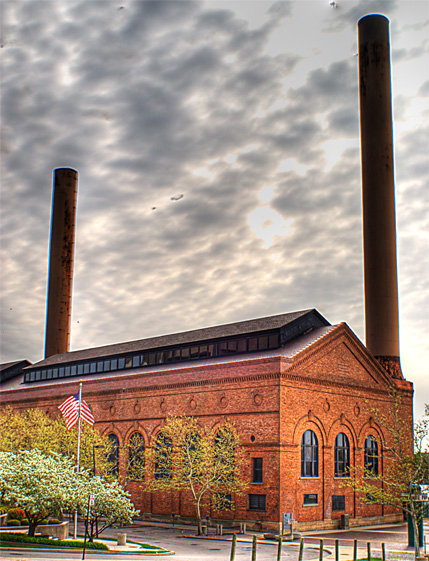
For far too long, the Steam Plant has stood as a symbol of our city’s inability to capitalize on its magnificent waterfront. But the news — first reported April 20 by Toledo Free Press — that the YMCA and University of Toledo Medical Center have plans for the facility is a cause for cautious celebration.

As reported by Caitlin McGlade, “The $16 million investment is a money saver for the YMCA, part of University of Toledo Medical Center’s expansion plans and the answer to developers David and Dean Ball’s goal to build downtown apartments. The building, dubbed the Water Street Station, will house 67 apartments from the third to sixth floors. The university’s medical center will lease space from the YMCA. The deal marks the third installment of plans to spread clinics across Northwest Ohio.”

Coupled with Mayor Mike Bell’s plans to renovate Promenade Park and the development of the Marina District, Toledo could finally see some progress on its long-underutilized riverfront.

Progressive Councilwoman Lindsay Webb led the charge for City Council (like the Lucas County commissioners) to stick its collective nose into the labor negotiations between United Food and Commercial Workers Local 75 and the blood collection branch of the American Red Cross. At this point, Webb’s quixotic pursuits are an unsurprising facet of her approach to public service, but Councilmen Tom Waniewski and Rob Ludeman were correct in opposing the nonbinding resolution — not from disrespect to the union negotiation process but from respect for Council’s time and attention.

“We stand with our Toledo workers, that’s what the resolution said and that’s what we’re asking them to do. We are supporting Toledo taxpayers in a dispute in which their employer was found to not have good cause and participated in unfair labor practices,” Webb said. “That is not something we tolerate in this city.”

That’s one or two too many applications of the word “we.”

As Waniewski said, “Figuring out somebody else’s contract talks is not something we should be doing. The Red Cross is a great organization and they’ve already shown that they’ve settled everywhere but Cleveland and Toledo. It was a waste of a resolution, it was a waste of our time here at City Council.”

Webb may not quite be fiddling while parts of Toledo burn, but she certainly has rosin on her hands. It is possible to respect her determination and consistency, but question her priorities in asserting her more tenacious qualities.

Thomas F. Pounds is president and publisher of Toledo Free Press and Toledo Free Press Star.

YMCA, UT Medical Center to lease space in old steam plant

0

After years of obstacles and amended plans, developers announced that the old Toledo Edison Steam Plant will soon become a new home for the YMCA and a family physician practice.

The $16 million investment is a money saver for the YMCA, part of University of Toledo Medical Center’s expansion plans and the answer to developers David and Dean Ball’s goal to build downtown apartments. The building, dubbed the Water Street Station, will host 67 apartments from the third to the sixth floors.

The YMCA will close its Summit Y in North Toledo and transfer memberships to the new site. The Summit building has become a financial burden, especially after government funding dried up and membership plummeted to 600. That’s down from at least 1,000 memberships about five or six years ago, said Todd Tibbits, CEO/president of the YMCA and JCC of Greater Toledo.

Plans are in the works to turn the former Toledo Edison Steam Plant into Water Street Station, a combination of apartments, YMCA and University of Toledo Medical Center clinic..

Only 15 percent of the Summit Y’s members live in that community, with many members coming from work in the downtown business district. Tibbits said the downtown spot should draw more members based on those figures.

Tibbits also pointed out that the new site would be more accessible to three low-income apartment complexes: Riverfront Apartments, Vistula Manor Apartments and Port Lawrence Homes. Toledoans living in these complexes will get free or reduced YMCA memberships.

The YMCA will save about $140,000 a year by moving because it will no longer have to pay the hefty utility bills that come along with the Summit building. The nonprofit shells out $400,000 a year in utility costs between the Summit Plaza and the present YMCA building.

The original plans, drafted in 2006, would have spruced up the old plant for 75 upscale apartments. The blueprints also included 34 townhouses along the building’s south side.

Apartments were slated for move-in by the fall of 2007. When that didn’t happen, the date was pushed back to March of 2008. Meanwhile, Mayor Carty Finkbeiner filed a lawsuit demanding that the developers either start construction immediately or hand over the property to the city.

The last two years of the Finkbeiner administration spelled trouble for the developers, Ball said.

“I spent more time battling with the mayor than I did working on this project,” he said.

The lawsuit was cleared when Mayor Mike Bell took office.

This January, the developers commenced conversations with the YMCA and the University of Toledo Medical Center. The original plans for the apartment complex needed an exercise facility, so the combination seemed to click, Ball said.

The university’s medical center will lease space from the YMCA. The deal marks the third installment of plans to spread across Northwest Ohio. The first clinic opened at the Franklin Park Mall and the next will open in October at Fallen Timbers. There will be at least two others announced within the next couple of years, said Scott Scarborough, senior vice president and executive director University of Toledo Medical Center.

Scarborough said the medical center intends to hire at least three new employees to fill the Water Street Station location. Ball said his company, STS Management, will hire about six full-time and four to six part-time employees to service the apartments. The YMCA might need to make a few hires, Tibbits said, but Summit Y employees will just move to the riverfront spot.

As for the Summit Y building, Ball bought the structure and intends to lease it to businesses or organizations.

Crews will break ground in six to eight weeks. The riverfront building should be open for business by mid- to late 2013.

“The Bell administration is ecstatic about this opportunity,” said Deputy Mayor Tom Crothers.

Baumhower: ‘Lenting it grow’ is akin to pun-ishment

0

My Aunt Joan asked, “Is that a playoff beard?”

“No,” said Kacee, my 8-year-old daughter.

“Did you lose a bet?” she queried and Kacee responded hastily with another “No!”

“Why in the world would you grow that beard?” my dear aunt asked a final time, and I pointed and nodded to Kacee, giving her the OK, playing the straight man to the theatrics.

“My dad gave up shaving for Lent, he is ‘Lenting it grow’ … get it?” giggled Kacee.

My Aunt Joan chuckled in the onlyway she could. She is an elementary teacher at a local Catholic school, and is probably the best Catholic I have ever met.

Then I shared this story of how myLenten promise/sacrifice had greatly backfired that irony and karmateamed up against me to teach a lesson.

Catholics, as a show of contrition and faith,elect to give up, forfeit and/or stop one tiny vice as a symbol of our beliefs for the 40 days prior to Easter, aka Lent. Th ese Lenten sacrifces normally consist of kids giving up candy, adults giving up fast food or snacks — normally they revolve around one’s diet.

In rare cases Catholics may chose to tackle something bigger — a life change, like quitting smoking or drinking or, in the very rarest of cases, forgoing on premartial sex.

Since I don’t smoke, wasn’t going to give up the drink, and am divorced but dating a beautiful woman, the whole sex thing wasn’t really an option, so I decided to take a little levity and wear my sacrifice on my face. I chose 40 days of not shaving — I Lent it grow.

A brief facial hair history of myself would show that I am not the manliest of men when it comes to growing a beard. For starters, my five o’ clock shadow takes about four days to grow. There are a couple of spots on my face that I am sure do not have any hair follicles, so it looks incredibly weird when I try to grow a beard.

To make it even more confusing, the hair on my head is super thick, full, curly and comes in a variety of colors from brown, red and now gray. So the attempted beard featured more colors than a GLAAD flag.

The manly man has to shave every day and can grow a beautiful beard within 72 hours. That same facial hair takes me weeks to grow and never looks good; I appear more of a meth head than a part-time Catholic.

This was the look I was choosing to wear as a symbol for a man who gave his life for my many sins. I created a pun for my promise.

By Day 21 the whole “hoarder” look was haunting me, people were starting to glare and trying to figure out if I had lost my mind, my home or my health. I think many were surprised when they saw I had a full mouth of teeth.

I volunteered to pour beers for a charity at the Miranda Lambert concert. The many faces I recognized failed to recognize me back, people from my high school, the neighborhood, excoworkers would glare as I said “hello” to them by name. I would then inform them of my “Lent it grow” promise and they would snicker and chuckle and I would weirdly be entertained, almost satisfied by wearing a Catholic pun on my face.

The third week also welcomed the unplanned-for side effects of growing a beard for the first time, “the itchies.”

My job has an incredibly demanding schedule where I get up at 2 a.m. to work. As a father of four, that means my sleep is in limited supply. I average around four-to-five hours a day, max.

The one thing I was not prepared for was the feeling of an overgrown, not-maintained patchy beard and how it felt against my 400 count cotton pillow case. The combination is not the picture perfect scenario one would draw up to get more sleep; in fact my hours of sleep were pretty much cut in half.

If you can now picture by the end, I had a full patched-in beard of many colors, my eyes were heavy due to the lack of sleep and I was tired of my own created “Lent it grow” quip. I had shared my sacrifice with so many people, including my children that there was no way I could shave it early.

In the only way the Good Lord works, or simply the sweet bite of Karma, my Lenten pun had become PUNishment.

On Easter Sunday, after a feast of HoneyBaked Ham, Stanley’s kielbasa, cheesy potatoes and Paula Deen’s corn casserole, I decided to shave. In less than five minutes, and after a purchase of a beard trimmer, I was back to my bare-faced self.

When I rejoined the dinner, my youngest, almost 6-year-old daughter, Joeli, kissed me and whispered that she liked the “hobo” version of me better (“It covered more of your ugly”) — and I thank God for my children every day?

It was like Jesus whispered the joke himself.


Toledo native helped push JOBS Act

0
Reagan McKee Anderson

Viewers who caught President Barack Obama on television signing the Jumpstart Our Business Startups (JOBS) Act a couple of weeks ago were watching the culmination of a year’s worth of work for a native Toledoan.

Reagan McKee Anderson, vice president of governmental affairs for the New York Stock Exchange (NYSE), grew up in South Toledo. Now she is a mainstay on Capitol Hill, lobbying for business advancement.

“What it comes down to is me being able to take rather complex issues relating to the financial services industry and you’ve got five minutes to explain something to a member of Congress,” Anderson said.

She harnessed that skill to push pieces of the act that the NYSE prioritized. One bill, the Onramp for Emerging Growth Companies, allows companies seeking to go public up to five years to comply with regulations such as a portion of the Sarbanes-Oxley Act that includes a requirement mandating an auditor’s attestation report on internal controls.

The bill also allows companies to provide reduced executive compensation disclosures, lifting a restriction within the Dodd-Frank Act.

The other bill, the Small Company CapitalFormation Act of 2011, permits companies to raise up to $50 million in public markets without registering with the Securities and Exchange Commission. The present limit is $5 million.

Anderson said this amount was so small that companies were not using it and she sees the new bill as an opportunity for business to “test the waters” before they launch an initial public offering.

The act passed 73 to 26 in the Senate andObama signed it April 5. Dissenters have argued that the bills lift the reins on transparency, enabling less disclosure is risky for investorsand
that soliciting the public for private investments could lead to more fraud. Anderson, however, is pleased with the act.

“It was such a great honor to be in the Rose Garden, standing next to the CEO of the stock exchange, a company that is recognized around the world, and to watch the president sign into law something I’ve worked on every day for the past year,” she said.

Anderson didn’t always see herself as a future stock exchange expert. She graduated from Notre Dame Academy in 1995 and attended Ohio University’s E.W. Scripps School of Journalism for a magazine journalism degree.

After briefly working for a public relations firm in Toledo that no longer exists, Andersonmoved to Georgia to assume the role of director of congressional affairs for the Federal Home Loan Bank of Atlanta.

After completing nearly four years of work there, she became a legislative assistant for Mel Martinez, then U.S. Senator from Florida. She served as his liaison for the Senate banking committee. About a year and a half after she started that job, she took a position at Fannie Mae for two and a half years, followed by an associate vice president position at the Private Equity Council.

She has worked for the NYSE since 2009.

Anderson said being a strong writer was helpful to her entire career.
“I knew in college I was interested in journalism because I love to write,” she said. “You have to be able to write.”

Amid the commutes from New York and D.C., the long hours traipsing around Capitol Hill and the various Congresspeople and legislative staff members with whom she wrangles on a daily basis, she has not forgotten Toledo.

Anderson doesn’t come home enough, she said. But when she does, she always hits Grumpy’s in Downtown Toledo.

“I just feel like the pace of life here in D.C. is so fast; it is so political and in Toledo you cango out to dinner with some people and have real
lives,” she said. “They don’t live in this bubble of D.C. people and are doing much more interesting things than what we’re doing here.”

Anderson grew up in south Toledo.

“Taking our dog for a walk in Walbridge Park and going to Wixey was like heaven,” she said.