Home Blog Page 285

‘Drive Time’ offers local take on sports radio

0
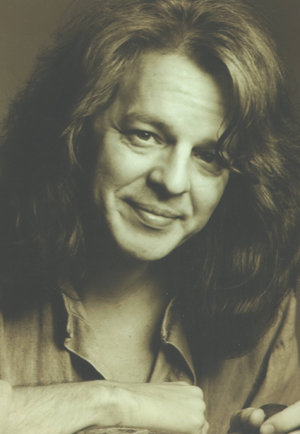
Mike Miller and Anthony Mellino. Photo courtesy Ralph Mahalak Jr.

“Drive Time,” a sports talk radio program that premiered April 30 on ESPN 106.5 FM The Ticket, broadcasts every weeknight from 5 to 7 p.m. Hosts Mike Miller and Anthony Bellino talk to guests about a variety of sports. What makes the radio show unique? For starters, “Drive Time” is broadcast from a car dealership, Monroe Dodge Chrysler Jeep RAM Superstore.

“We are very proud and excited to have two quality people like Mike Miller and Anthony Bellino,” Superstore owner Ralph Mahalak, Jr. said.  “Both have great resumes in the sporting and broadcasting world, but the emphasis of the show will be their interviews with great guests recognized both nationally and locally.”

The talk show hosts, both from Monroe, have a long history of sports broadcasting.

Miller began his career in 1980 as the play-by-play voice of the International Hockey League’s Toledo Goaldiggers and went on to spend nine seasons as the radio voice for the NHL’s New Jersey Devils. Occasionally, SiriusXM Radio will recruit Miller to broadcast various sporting events, including the Presidents Cup of the PGA Tour.

In the spring of 2011, Miller broadcast his 2000th game.

Bellino is the public address announcer for the Toledo Mud Hens and the University of Michigan’s Wolverines baseball. He is also a voice of Rockets football at the University of Toledo and a voice of both the men’s and women’s basketball programs at UT.

Together, Miller and Bellino will interview guests from all types of athletic backgrounds.

“‘Drive Time’ is going to be a multi-faceted show,” Mahalak said. “Miller and Bellino will be covering all sports, not just basketball and football.

“The goal of the show is to have three to four guests every night over the course of two hours.”


Mike Miller, left, and Anthony Bellino.

The radio show’s first guests were Mario Impemba, the play-by-play broadcaster for the Detroit Tigers, and Miami Heat television host and courtside reporter Jason Jackson. Audie Cole, an NFL draft pick from Monroe, was also interviewed.

A majority of “Drive Time” will broadcast from inside the Monroe Superstore, but a portion will come from remote locations at sporting or high-charity events.

“We want to get our listeners involved,” Bellino said. “We want to get out there and see the event firsthand, but we also want to be seen by our audience.”

In addition to being on the scene, Bellino also hopes to capture a larger audience by utilizing

social media.

“Drive Time” has its own Twitter account and works with 106.5 FM The Ticket’s Facebook page. By providing alternative methods of communication with the show, Bellino said he believes he can reach younger listeners.

“Since I am younger, I think I can stay on top of the social media and bring a younger demographic into the news sports show,” he said. “This will not be the typical sports radio with a group of 50-year-olds rambling about sports. We want to hear from everyone. If the phone lines get jammed, younger listeners can use social media as another avenue to contact us live on the show.”

Listeners who do not live in the Toledo area can still stream “Drive Time” live online or on their smartphones. The sports talk show will also be aired on 1470 AM in addition to The Ticket.

The Superstore is located at 15160 S. Dixie Highway in Monroe.

“People are always coming in and out of here,” Mahalak said. “We’re really excited for the show, because there’s going to be a lot of action and energy right here.”

Homeless shelters face budget cuts, changes in systems

0
Karen Fowler completed the Aurora House program and recently graduated from Owens Community College. Toledo Free Press photo by Joseph Herr

By the end of the month the verdict will be in: Homeless shelters and transitional housing agencies shocked by cuts will learn whether they can make up at least some of the loss through a different funding source that would push them to rethink how they operate.

About a month ago, shelters including the Aurora House, Family House, Bethany House, the Harbor House and La Posada Family Shelter discovered they might have to do without money they have depended on for decades. The city released community development block grant (CDBG) recommendations and the shelters were not on the list.

Toledo City Council has yet to approve the recommendations.

“We’re basically a skeleton crew already,” said Kathy Griffin, executive director of Bethany House, a shelter for domestic violence victims. “We don’t have a lot of fluff.”

Ken Leslie, founder of 1Matters and former Toledo Lucas County Homelessness Board member, said he is puzzled by the decision. The city’s citizen review panel and Department of Neighborhoods panel ranked Aurora House’s grant proposal the highest in quality and community need of all comparable homeless shelters.

The Bethany House also received a high ranking, along with La Posada. Family Outreach Community United Services (FOCUS), which ranked lower than these agencies, did not get cut from CDBG funding.

Lourdes Santiago, director of the Department of Neighborhoods, said the panel didn’t recommend those highly-ranked shelters for CDBG money because they could apply for Emergency Solutions Grants (ESG) funding. This is money sent from the U.S. Department of Housing and Urban Development (HUD) that has grown while CDBG funding has shrunk.

Many of these shelters are considered transitional housing projects, meaning that their residents stay for long periods of time and complete rehabilitation processes before their release. The Aurora House, for example, can house a woman and her children for up to two years before that woman is ready to move into a dwelling on her own.

HUD spokesman Brian Sullivan said ESG funding is intended for basic emergency shelter operations, prevention, rapid rehousing and limited transitional housing needs.

Rapid Rehousing

The goal is to measure agency success in part by reducing the average length of stay among shelters that use ESG funds. Deborah Conklin, director of the Toledo Lucas County Homelessness Board, said the board aims to achieve a 30-day average system-wide.

The funding shift will change how a lot of shelters do business. For the Family House, the 30-day goal is attainable but not ideal, said Renee Palacios, director of the Family House.

“Essentially, we are turning our shelter inside out,” she said.

The change is tasking her shelter to “rapidly rehouse” homeless people who enter the Family House, she said. This means that case managers must start planning an exit strategy the second someone walks in for help. Then, they would work with these individuals in their homes, as opposed to on-site, Palacios said.

People stay at the Family House for 38 days on average but the maximum time allowed is 90 days. There are people behind those numbers, Palacios said, and many of them come in with a variety of problems or ailments that must be addressed before they can move out and be successful on their own.

“People don’t come in here and pour out their hearts and souls. They don’t come in saying, ‘Yes, I’m bipolar,’” she said. “It takes weeks to get to know them to see that they’re presenting these issues and they have to accept it and accept the treatment.”

For now, when a homeless person walks through the doors, the staff gives him or her a week to adjust to shelter life before discussing rehabilitative services. Some newcomers might spend two to three days in their rooms crying. This is not the time to be forcing them out into their own apartments, Palacios said.

Recovery Time


Karen Fowler

At the Aurora House, which would lose about $74,390 in the aftermath of CDBG cuts, time could be the difference between healing and relapsing, said Denise Fox, executive director of the house. Many of the women who come in are referred by the court system or by Lucas County Children Services (LCCS). Many are addicted to drugs or alcohol.

The loss has left the Aurora House scrambling to replace 12 percent of its budget with ESG money. The shift will press the Aurora House to reduce the average stay to six months, Fox said.

Fox said this is particularly difficult to do because of the collaboration with LCCS and the court, which are not only on their own schedule, but can mandate lengths of time a woman needs to partake in rehab at the shelter.

“If we have a woman with chemical dependency, you aren’t going to get stabilized in six months; you don’t have the capabilities to start thinking clearly and making good decisions until at least six months,” Fox said. “The first year of recovery is very crucial — they are so readily susceptible to relapse.”

Karen Fowler, a 44-year-old mother, spent a few months in the Aurora House before giving up and leaving. She came back later and completed the program in eight months. She said she needed every minute of that period to recover.

She recently graduated with a certificate in Web design from Owens Community College, wielding a portfolio of site designs for a number of local agencies. She has tutored her peers in writing papers, is well versed in English literature and she keeps in tune with her guitar. She and her 11-year-old son Joshua live in a bright apartment in the Vistula district and she’s ready to take off to wherever the job market carries her.

Just six years ago she was on the brink of homelessness. Addicted to alcohol and drifting from one waitressing job to the next, Fowler could hardly turn to her parents in Perrysburg for help. She went to rehab. And then she found the Aurora House.

“I thought I’d be lucky to have a bed,” Fowler said. “But I recovered a sense of myself, a sense of what I can do. Finishing this place was probably the most important thing I’ve ever finished.”

That challenge took nearly a year of structure and authority — she had chores she was required to complete, classes she had to take and a curfew to follow. She had to designate a career goal, find ways to follow through and learn how to balance a checkbook again.

The Bethany House requires a lot of time to serve its residents, Griffin said.

The house is a safehaven for domestic violence victims. The residents stay about eight months on average, but the funding shift will push Bethany House to reduce that number to six, like the Aurora House, Griffin said.

Once a victim is moved out of the shelter, the idea is then to have services brought to them in their new homes. But Griffin said this plan does not take into consideration the fact that many of these victims need a safe hiding place from abusive partners.

Bethany House would lose about $27,412 of its $295,580 budget because of the CDBG cuts. In the past, the money has paid for a case manager.

The Harbor House, a transitional home for women with drug addictions, would lose about 5 percent of its budget through CDBG cuts. Women from as far as California come in for rehab services at the Harbor House.

“I’m just going to have to work harder for our fundraisers to make that up and reach out to corporate sponsors,” said Executive Director Donna Perras. “It’s going to be a burden on the business community absolutely because we’re going to be looking for sponsors and that’s going to trickle down to them.”

Embattled money

The embattled pot of money comes from the federal government, but decisions about how to use it are made locally, Sullivan said.

In 2010, Toledo received $8.8 million in CDBG money. This year, the city got about $6.8 million. At the same time, the ESG money increased to $610,000, compared to $353,000 a couple of years ago, Sullivan said.

The intent of the ESG boost was not to replace CDBG funding for homeless shelters, he said.

When the housing crisis struck, the American Recovery and Reinvestment Act allotted $1.5 billion to a three-year program called the Homelessness Prevention and Rapid Re-Housing Program. This money was not for the chronically homeless, but was for those people who were at risk of becoming homeless. Assistance came in the form of short or medium-term rent assistance, financial help with moving expenses or checks to cover security deposits. This helped at least 1.2 million people across the country, Sullivan said.

“The upfront cost of getting into an apartment can make all the difference of somebody falling into homelessness or not,” Sullivan said.

When Congress saw that this was working, members voted to allow traditional funding from HUD to be used for prevention and rapid rehousing. So the former Emergency Shelter Grant was changed to the Emergency Solutions Grant, with money added for rapid rehousing and prevention, Sullivan said.

The homelessness board is responsible for setting the parameters for ESG funding. The board will allocate 60 percent for essential services, after administrative fees, and the remainder for housing stabilization programs.

Conklin said an overlooked fact during the ESG funding discussion is that the county now has to operate with less money to prevent homelessness because that $1.5 billion stimulus program is ending.

The board could allocate less to essential services, but no more than what it already has, she said.

The board had also applied for its own CDBG grant but the panel rejected it, citing a vague objective, undefined community need, no fund balance and incomplete financial information.

“Having residential facilities is very costly to the community,” Conklin said. “These are expensive beds at the end of the day. The system will allow us to decipher those who need it the most.”

Fox isn’t convinced. Her program spends about $10,000 on each woman.

“I don’t know of anyone who can live on $10,000 a year; that’s pretty cost effective for those women,” she said.

City council will wait for ESG recommendations before voting on the CDBG recommendations. The council has the final say.

“I’m trying to do everything I can to make sure they have funding,” said Councilman George Sarantou. “I have no interest in turning people with needs out on the street.”

Leslie said the pressure to rapid rehouse in Toledo is misguided.

“They’re all about housing first housing first, but I believe it should be housing next,” Leslie said. “If you kill the shelters, you kill the very people who use those shelters.”


Pastry chef Ken Bredeson enjoys sweet gig at casino

0
Ken Bredeson is pastry chef at Hollywood Casino. Toledo Free Press photo by Joseph Herr

Ken Bredeson, executive pastry chef at Hollywood Casino Toledo, turned 38 on May 8 — but he did not make himself a cake.

“My birthday [present] is not making a cake, even though my favorite cake is probably German chocolate because that’s what my mom used to make me every year,” Bredeson said.

Bredeson moved to Toledo from Kansas City, Mo., about four months ago after working as the pastry chef at the Ameristar Casino Hotel for about eight years. But, before he worked in casinos, he was attached to his mother’s apron strings.

His mother worked as a sommelier while Bredeson was growing up. “She couldn’t afford a babysitter so the kitchen was the babysitter. I was sitting with chefs when I was 7, 8 years old, working in the kitchen, learning how to make mother sauces, cutting and using a knife; you know, child labor,” he joked.

The Denver native was also exposed to many different cultures growing up. “I’ve lived all over the world because I was an Air Force brat. We lived everywhere from Asia to Europe to South America, all over the place. I was traveling from as far as I could walk until my mid-teens,” he said.

The pastry chef spent those teen years working in various kitchens learning the ropes before pursuing college. Despite having other ambitions, he couldn’t shake the need to cook. When he got a job at a bakery while attending the University of Kansas, he was hooked.

“[Cooking] kind of stuck with me even though I went to college for three years and almost finished my law degree,” he said.

Bredeson eventually landed an internship baking in France and Italy through a colleague.

“I learned old-school baking, really old-school; no gas, no nothing, just fire,” he said.

After returning to the states in 2001, he started working at an artisan bakery and later became a partner at a Kansas City bakery called Morning Glory.

After two and a half years at Morning Glory, Bredeson was ready for a change and relocated to Las Vegas. It was there that he decided he wanted to run a kitchen some day. “Every chef has a point where they make a decision of where they want to go. Whether they want to continue on in the kitchen working in the trenches every day or becoming more of a leader,” he said.

At the encouragement of his family, Bredeson returned to Kansas City and began work at Ameristar as the assistant pastry chef before becoming executive pastry chef a year and a half later.

At Ameristar, Bredeson became acquainted with Chef Brian Hein who now serves as executive chef at Hollywood Casino Toledo.

When Hein approached Bredeson about working together again, he was thrilled.

“Where we were at before (Ameristar), we kind of reached our ability to grow and he was like, ‘If you want an opportunity to do more and become more, Penn [National Gaming] has opportunities to do that,’” Bredeson said.

Hein is also excited to have Bredeson on board. “He’s an asset for us on both sides of the playing field. Not only is he an expert in the bake shop and a master bread maker, he understands the savory side of what we do,” Hein said.

The new kitchen is already abuzz with Bredeson’s staff of 10 testing out things. When Hollywood Casino Toledo opens its doors, Bredeson estimated the kitchen will make 6,000-8,000 bread products  daily along with 500-700 hot dog buns. The bakery is responsible for 249 different products for all four casino restaurants.

“It takes a definite art to be able to get it all organized, basically [with] time management and crossover shifts. I have some really skilled bakers,” Bredeson said.

This includes his two lead bakers Brandi Smith and Marisa Edelstein, both of whom Bredeson praised with helping get the kitchen running.

Smith tapped into her connections as an instructor at Owens Community College to bring on other bakers. She praised Bredeson’s ability to work with the staff.

“Chef Ken is a very creative mind. He’s actually been open to our feedback and having us bring in menus and recipes so I think that’s an amazing thing,” she said.

Edelstein came to the area after working in Las Vegas and brings her love of the baking process. “I love when a project comes from start to finish. You’re like, ‘I really accomplished that, my name is on that,’” she said.

For his part, Bredeson enjoys the basics: bread.

“Bread is one of those things where it’s the fundamentals of baking. It’s probably where baking started. Not to mention it’s the only product you really make in the bakery from when you start making it to when you finish, it’s a living product,” he said.

Still, the pastry chef also likes some unusual creations like the Irish Car Bomb dessert that will be served at Skybox Sports Bar. This dessert pairs a dark stout brownie and whiskey ganache with an Irish cream milkshake.

“I really enjoy molecular gastronomy, where you deconstruct the atoms, put it on a plate, and people think they know what it is and they eat it and they’re surprised because the flavor’s not really what they expected,” Bredeson said.

Pounds: Saluting Austin

0

An upcoming Toledo Free Press project dovetails with one of my proudest moments as a father. I don’t usually use this space to gloat about my family, but I just came back from a most outstanding weekend at Fort Benning, in Columbus, Ga. My son Austin graduated from Army Basic Training or One Station Unit Training. This was a nine-week basic training course followed by a five-week Advanced Individualized Training segment.

Those of you with children may know how emotional it is to see your child grow up. Austin is a fun and carefree guy. What I saw this weekend made me the most proud person on the planet! Not only did Austin graduate but he excelled. He has found his calling and is making the most of it. Austin was a graduate of the 3rd Platoon, Charlie Company, 2nd Battalion, 54th Infantry Regiment. His certificate reads, “Due to his high standards of conduct and excellent performance, Pvt. Pounds achieved outstanding results in areas of physical training, basic rifle marksmanship, common skills and infantry skills testing. His performance reflects great credit upon him, Charlie Company, the 2nd battalion, 54th infantry Regiment, the 198th Brigade and the United States Army.”

Austin also was awarded the “High Marksman” award for all of Charlie Company, consisting of 204 soldiers. That certificate reads: “For superior performance during Charlie Company’s basic rifle marksman training, Pvt. Pounds distinguished himself as the ‘High Marksman’ because of his attention to detail, tactical competence and dedication to training, which reflects great credit upon him, Charlie Company, the 2nd Battalion, 54th infantry Regiment, the 198th Brigade and the United States Army.”

Wow! This was along with a promotion and selection to Airborne school and a shot at Special Forces.

I was the proudest I have ever been of Austin. His attitude, work ethic and general demeanor have never been better.

This experience comes as Toledo Free Press announces its first-ever Military Yearbook. To be published July 1, the Military Yearbook will collect photos and brief information of every serviceman and service woman in our region, free of charge to participating families, along with a veterans’ resource guide and many special stories. A special email address and web site tab to help families contribute to the Military Yearbook issue will be available soon. We thank our partners in this project — Honor Flight Northwest Ohio, the Greater Toledo Area Chapter of the American Red Cross, Toledo Veterans Center, Columbia Gas of Ohio and Toledo Clear Channel radio stations. We are also working with the offices of Rep. Bob Latta and Rep. Marcy Kaptur on a special veterans history project. More on both of these projects soon.

So good luck, Austin and God bless you, the United States Army and every serviceman, servicewoman and their families. We are 110 percent behind every one of you.

And Austin — thanks for picking up the dinner tab!


Thomas F. Pounds is president and publisher of Toledo Free Press and Toledo Free Press Star.

Treece Blog: Eliminating the 2013 deficit without raising taxes

0

After my column “Eat the rich and starve to death,” a reader challenged me to draw up a balanced budget for the United States federal government. As an added bonus, I was asked to outline the consequences of any cuts or reductions made. I quote the reader, “You have to explain the ripple effect of each program you cut. If it means people die, then you have to say that. If it means all of our insurance rates will go up, you have to say that.” While it is impossible to predict the exact outcomes of each program cut, I can make general assumptions about what we could assume would happen.

I would like to point out that I used the numbers provided by the White House from their proposed 2013 budget. If there is any overlap in funds or discrepancies I apologize in advance, however I did my best to make sure that no funds were double-counted or exaggerated.

The fiscal 2013 budget looks to add $901 billion to the national debt according to the White House. As a fiscal conservative, most readers would assume that I would slash Medicare/Medicaid spending to nothing, cut Social Security, alter tax structure, etc. However, overhauling the system is a difficult task that I would use as an approach to lowering the deficit, since it is a long-term plan that takes time to implement and see real changes. I have taken the approach of decreasing wasteful spending and eliminating programs that require less funding, receive alternative funding or have been unsuccessful at accomplishing the goals they set out to achieve.

Congressional salaries

Currently, members of Congress take home $174,000 a year, while House/Senate party leaders take $193,400 and the Speaker takes $223,500. The president takes home a $400,000 salary, a $50,000 annual expense account, a $100,000 nontaxable travel account and $19,000 for entertainment. The vice president then takes home $230,700. I would pay all members of Congress, the president and vice president a modest salary the same as the median U.S. household income, $50,000. This would save us $67.9 million a year. A small dent, but a necessary change.

Military spending

Defending our nation and promoting interstate commerce are truly the two main purposes of a federal government. However, having bases in foreign nations such as Germany or Japan seems unnecessary given our current economic situation. Furthermore, according to Business Insider, $11 billion has been “lost” in Iraq since ’07. If we were to cut down on wasteful spending such as that and cut the $851 billion broadly labeled “National Defense Budget” by 25 percent we would save $223.75 billion, roughly 25 percent of the deficit so far. I should also point out that if this cut meant a decrease in pay or treatment options for service members, I would reinstate these funds in a second (Veterans Affairs is separately funded).

Unemployment insurance solvency

This is the section for which I am sure to get an angry response or two; all I can say is do not blame the messenger. When the nation is in the state that it is in, we cannot afford to pay for individuals to sit around and not work. This is not a moral conflict or an ideological statement, it is a fact. In 2013 unemployment insurance is set to contribute nearly $4 billion to the deficit, but the White House states that by 2015 this spending will result in a nearly $8 billion decrease of the deficit. If it is going to net out anyway, why not just do away with it all now? That puts $4 billion back on the books.

Wastebook

Sen. Tom Coburn (R-Okla.) created the 2011 Wastebook, which highlights useless government grants on ridiculous studies and projects. Once totaled the 100 items listed sum up to nearly

$7 billion in waste. Let’s assume a 10 percent deviation in case anything has been double-counted so far, that is $6.2 billion in waste. If we spend frugally and stop using federal funds to buy iPads for kindergartners (one of the items outlined in the report), we could see some real savings.

Programs to severely cut

There are a few programs that I would drastically cut for one of three reasons — their job details do not require massive funding anymore, they receive alternative funding, or they have been unsuccessful in accomplishing their goals. Those programs I would reduce funding for would be NASA ($17.7 billion to $2 billion), the Department of Defense ($525.4 billion to $325.4 billion), Treasury Department ($14 billion down to $2 billion), Department of Transportation ($74 billion halved to $37 billion), Health and Human Services ($76.4 billion down to $1.4 billion), State Department ($51.6 billion down to $600 million) and the Department of Justice ($27.1 billion down to $10 billion).

Programs to eliminate

The amount of money spent on ineffective programs in this country is truly nauseating. When the national debt is continuing to climb due to frivolous spending, it is time for some programs to go. I would eliminate Housing/Urban Development ($44.8 billion saved, they already receive funds from the sale/purchase of any home, which should adequately fund them), the National Science Foundation ($7.4 billion saved), Department of Energy ($27.2 billion saved), Department of Education ($69.8 billion saved), Corporation for National and Community Services ($1.1 billion saved, the government does not need to try and fund citizens who want to help make a difference and work with charities), Corps of Civil Engineers ($4.7 billion saved), Overseas Contingency Operations (separate than D.O.D. or defense budget, works to train foreign militaries and promote coalition partnerships, save $96.7 billion) and the Department of Labor ($12 billion saved).

Sum it all up and we have savings of more than $905 billion, all without raising taxes or touching Medicare, Medicaid or Social Security.

Some of these cuts would mean that federal employees will lose their jobs, federal funds for research will diminish, and some regulatory holes will open. My suggestion as an alternative would be to allow states to have the right to regulate industries and fund research (it is not in the constitution that the EPA must exist), and allow the private sector to thrive. Brokers and dealers are governed by FINRA, a self-regulating organization (SRO). While FINRA is a bad example due to their demonstrated incompetence, there are several SROs out there who effectively regulate their specific fields. As for the federal employees who will be out of work due to these cuts — it truly is for the best for our struggling economy. These employees do not contribute to GDP or economic growth; they draw pay from the tax pool but do not create any goods or services that result in positive economic growth. Hopefully, these employees would be forced to find a job with the private sector and contribute to strengthening the economy.

Remember, I am not suggesting that this is a long-term viable option. I am simply stating that if we want to eliminate the national debt we have to start with a balanced budget, and to do that cuts must be made. It is as simple as that.


Ben Treece is a 2009 Graduate from the University of Miami (Fla.), BBA International Finance and Marketing. He is a partner with Treece Investment Advisory Corp (www.TreeceInvestments.com) and a stockbroker licensed with FINRA, working for Treece Financial Services Corp. The above information is the express opinion of Ben Treece and should not be construed as investment advice or used without outside verification.

Steel tables ‘Joe Wicks Way’ decision; activist Scott threatens June 1 protest march

0

UPDATE: In reaction to what he called an unanticipated “vitriol and divisive” reaction, Councilman Steve Steel says he plans to table the ordinance he proposed May 8 to rename a Downtown intersection in honor of Joe Wicks.

Steel made the proposal as a way to honor Wicks’ activism the early 1990s in which he promoted AIDS awareness, prevention and treatment.

The response of downtown business owners, however, was quick and harsh, as Councilman Steve Sarantou received 23 emails in protest of the intersection renaming proposal in the first 15 hours following the City Council meeting. Business owners took intense issue with what they all referred to as Wicks’ failure to maintain his property at Caesar’s Show Lounge, formerly located at 725 Jefferson Ave.

Lair Scott, the gay activist who approached Steel with the intersection renaming proposal, says he’s not at all surprised with what he called “a homophobic overreaction to honoring Toledo’s gay icon.”

On the same day Barack Obama became the first United States president to endorse same-sex marriage, an activist accused the City of Toledo of being unresponsive to the gay community.

Gay rights activist Lair Scott warned City Council members that if they don’t approve the naming of a Downtown intersection in honor of the late Joe Wicks, “the people of Toledo will hear the voices of the gay community screaming at the top of their lungs.”

Scott’s warning comes in response to City Council’s May 8 decision to postpone a vote to name the intersection at the 100 block of Erie Street, which lies between Monroe Street and Jefferson Avenue, as “Joe Wicks Way.”

Wicks owned Caesar’s Show Bar, located at 725 Jefferson Ave. Caesar’s was known nationally as a gay bar and lounge with nightly performances by female impersonators.

Scott said he is “forewarning” City Council that a protest in which he has “invited thousands of gay and lesbian people from around the country” to participate is planned for noon, June 1 at One Government Center [located at 640 Jackson St.].

Scott said he chose the “Joe Wicks Way” proposal as a vehicle through which he could advocate for the rights of lesbian, gay, bisexual and transgender [LGBT] Toledoans.

Councilman Steve Steel, who introduced the resolution at the City Council meeting, said he doesn’t “personally believe Lair Scott came to me to get his march started. I believe it’s more coincidental than that.”

Other Council members said they are neither disturbed nor threatened by Scott’s warning.

“I’m not concerned that this may have been a nefarious act,” Councilman Tom Waniewski said. “I’m more concerned about how we run the government. This never should have seen the light of day. The naming of a street should be a fun, positive thing, and this situation just brings embarrassment to the City of Toledo.”

Councilman George Sarantou said opposition to the naming of the intersection has primarily come from Downtown business owners who tell him that recognizing Wicks “in this way is a slap in the face” for Downtown business owners.

Lair Scott

Waniewski said business owners accuse Wicks of not maintaining his property, thereby lowering the property value of their businesses.

“The uproar from the business people has been overwhelming,” Waniewski said. “They say he was rude to people, that he didn’t keep up his property, and that he wouldn’t get involved in the association of Downtown business people.”

Email uproar

The uproar Waniewski references are 23 emails Sarantou had received as of 2:30 p.m. May 9.

In response to an open records request from Toledo Free Press, Sarantou provided copies of 23 emails  he received from business owners in the 15 hours following council’s decision to not vote on renaming the intersection (see sidebar, at bottom of page).

The correspondence was directed to Sarantou after Bill Thomas contacted the councilman with concerns over the reaction he was hearing.

Thomas, chief operating officer of the Downtown Toledo Development Corporation and executive director of the Downtown Toledo Improvement District, said that after his discussion with Sarantou, he sent an email to business owners encouraging them to voice their opinions, either pro or con, in emails to Sarantou.

Sarantou said emails have been universally opposed to the renaming of the intersection.

“I’m not surprised at all,” Sarantou said. “They are all responsible people. They maintain first-class facilities and are offended that someone who did not maintain his property would be honored in this way.”

Waniewski agrees that the business owners’ response deserves City Council’s attention.

“I have never seen comments so eloquently articulated in such an elegant way about something so negative,” he said. “I’ve never seen such a groundswell of opposition.”

Scott said the responses Sarantou and Waniewski are receiving are not representative of Toledo, and that thousands of people would write to City Council in support of Joe Wicks Way if they only knew the intensity of Downtown business owners’ negative reactions.

Sarantou also cites business owners’ issue with the fact that Wicks did not pay property taxes on time. At the time of his death, April 19, 2010, both the Lucas County Treasurer and the Auditor reported that Wicks owed $30,954.83 in back taxes, and that those taxes have never been paid by Wicks’ estate.

In a May 4 email to Sarantou, City of Toledo Commissioner of Building Inspection and Acting Director of the Department of Inspection Chris Zervos wrote, “The misuse and abuse of its last owner, Joe Wick [sic] has rendered the building unusable in its present state.”

Waniewski also said the response to City Council’s decision to not act is a clear indication that Council must adopt an official policy regarding the naming of streets and intersections.

“This is a big deal,” Waniewski said. “We need a process in place by which we’re sure we’re doing the right thing. Just relying on a councilman’s judgment isn’t good enough anymore.”

Scott said opposition to the proposal has nothing to do with Wicks’ upkeep of a building.

Scott is adamant that “this is an issue of social justice. When streets were named for honorary people in the past, did City Council have a need for a policy back then? Why now? It’s because of the homophobic attitude of certain City Council members.”

Scott also said that he does not believe Waniewski’s claim that Council President Joe McNamara and Waniewski have discussed establishing a policy in the past, and are now recommitted to establishing that policy in light of the past days’ events.

Steel said he is stunned at the negative reaction.

“I did my research,” he said. “I read the Blade obituary, talked to local people. I was aware of the building problems with his business, but I thought Joe’s work with, and his legacy and contribution to the gay community with AIDS awareness, AIDS prevention and AIDS treatment back in the early ’90s far outweighed everything else.

“I was stunned by the flurry of emails in opposition as to why this would even be proposed in the first place. This is a level of scrutiny I’ve never seen before.”

Scott said Steel’s observations are a clear indication that the current scrutiny is discriminatory.

“Why are they concerned with the policies in naming streets for people?” he asked. “Why, all of a sudden, does a gay icon in Toledo have to be under changing policies or procedures? This has nothing at all to do with Caesar’s Show Bar. It deals with Joe’s legacy and the millions of dollars he brought into Toledo over the past decades.”

Sarantou said Steel and Scott do not recognize what he calls “Wicks’ true legacy.”

Sarantou cited former presidents Richard Nixon and Lyndon Baines Johnson as examples to illustrate

his position.

“Richard Nixon, despite all the good he did in his career, will be remembered for the stupidity of Watergate,” Sarantou said. “And LBJ, despite the civil rights legislation he passed, will be remembered for Vietnam, an albatross that will always hang around his neck.

“It’s the same case with Joe Wicks. Like it or not, God rest his soul, Joe Wicks has left a reputation as someone who did not maintain his property. That’s a fact.”

‘Lack of leadership’

Scott also cited what he calls Mayor Mike Bell’s “lack of leadership” as a mitigating factor in City Council’s lack of action.

“I appreciate that he just passed the city employees domestic partnership [ordinance], giving benefits to gay and lesbian partners,” Scott said. “But that’s not enough. Mayor Bell should follow the footsteps of our president, Barack Obama, and back him for his May 9 statement for equality. Mayor Bell has had an opportunity to be on a board with other mayors of cities in Ohio to assist in passing Ohio’s right to same-sex marriage. He was offered and declined.”

Bell responded to Scott’s accusations through Jen Sorgenfrei, public information officer for the City of Toledo. Sorgenfrei said Scott does not understand the complexities of the legal process.

“In fact, Mayor Bell did not pass anything,” Sorgenfrei said. “Domestic partnership is just an ordinance. Mayor Bell just introduced the ordinance. It must be passed. It requires Council approval.”

Sorgenfrei also dismissed any claims that Bell does not support all Toledoans. She said Bell is committed to working with the local community.

“The mayor says he was not asked to join a committee of other mayors to assist in the passing of a same-sex marriage act,” she said. “He said he was presented a petition of mayors, and he did not sign it. He does not hold a position on same-sex marriage, one way or another. What he does do is continue to engage in conversation with members of our local community.”

Sorgenfrei questioned Scott’s motives, pointing out that he lives in Chicago, not Toledo, and no longer has roots in the local community.

Scott said he is deeply offended that anyone suggests he may be an outside agitator.

“I left Toledo because of the oppression of Toledo back in 1980,” Scott said. “I owe Joe Wicks with my time and my passion for the gay community. Whether I live in Toledo or not doesn’t make any difference. A lot of people come into Toledo to do their business. And the gay community is my business.”

In  August, Scott made national news with a petition, “Let Bert & Ernie Get Married On Sesame Street” on Change.org. It collected 9,000 signatures in two weeks. The Facebook page “Bert and Ernie Get Married” has more than 6,700 fans.

Emails protest Joe Wicks Way

Emails sent to Toledo City Council:

  • “I’m unclear why we would be honoring this individual? What specifically did he do during the course of his lifetime that is triggering this action? If it is simply that he was the proprietor of Caesars then I humbly ask how that validates such an honor? If there is more that is behind this initiative, please advise.”— Rich Schurfeld, CEO, REDSSON (May 6)
  • “This is not appropriate. This individual did not maintain his property in downtown Toledo. How can the city single out this individual? There are so many other people who have been responsible, contributing citizens.” — Dennis Johnson, president, Brooks Insurance (May 4)
  • “With all of the honorable citizens that have done so much for Toledo I think we could honor them prior to someone who has left buildings in decay creating hazards on our sidewalks. If this is approved I will be joining the ranks to have this repealed.” — Glen Blohm, facility manager, SSOE Group (May 4)
  • “I am a partner in a property on Ontario St., less than 1.2 block from Jefferson and Ontario — I received the complaints from my tenants because his clientele, lack of concern by him for other businesses and property owners around the neighborhood. …  Think we can find better qualified individuals to name streets after.” — Ken Marciniak, principal, Signature Associates (May 4)
  • “The designation of any public street, park, bridge or other structures is a coveted honor. To preserve the value of such recognitions, this honor should be reserved for a person who advanced the city or specific community through their extensive volunteer efforts or philanthropic work. An entrepreneur whose ingenuity and willingness to take a risk by investing personal assets created a product or service that enhanced the lives of others. This may be an ideal time to establish a ‘Criteria of Worthiness’ for such honorable designations.” — Vickie Rapp, Registry Bistro (May 4)
  • “I’m not sure why anyone would want to spend time on this Joe Wicks issue. What did this guy do for the city to warrant attention such as this? We have more important topics to be discussing on behalf of our taxpayers and I believe you will find many who believe this way if they would even give it the time to respond and share their feelings.” — Tony Plath, vice president, CBRE | Reichle Klein (May 4)

Conference to address conservative issues

0

Citizens interested in learning about and discussing issues important to the conservative political movement are invited to attend the NW Ohio Conservative Conference, from 9 a.m. to 4 p.m. May 19.

The seven-hour conference will take place at Hilton Garden Inn, at Levis Commons in Perrysburg.

There is a $25 registration fee for adults, $15 for students, which includes lunch. Attendance will be limited to 650 people. John McAvoy, conference chairman, said he believes it will be a sellout crowd. He encourages people to preregister at www.nwohioconservativeconference.com.

McAvoy, who defines “political” as “supporting a particular candidate,” is adamant that the May 19 conference is not political.

“This will present conservative views on subjects, but it’s an information resource for people that just don’t know that there are resources out there, for people who want to get more information on a particular subject.”

McAvoy said conference leaders are planning breakout sessions and forums that will present information about national, state and local issues.

National issues to be discussed include health care, the right to bear arms, state sovereignty, the National Defense Authorization Act, home schooling, the balanced budget amendment, and the role of the Federal Reserve.

State and local issues to be discussed include the Ohio Workplace Freedom Amendment, voter identification, the pending Senate bill on voter fraud and the Lucas County Charter Group.

McAvoy encourages people from all political persuasions to attend.

“If you’re an honest liberal, and there are a few of them out there, if you really want to do some research and get the other side of the story, come to this. I always believe in getting the other side of the story. Don’t shut yourself out to one side because you’re doing yourself a disservice. If you want to try to get the other side of the story, come to this.”

Some Northwest Ohioans who have already registered for the conference have said that they’re attending because they have concerns with the direction the United States appears to be taking.

Anita Hahn, a Fremont resident in her early 50s, said she is attending the conference to meet other people interested in the same causes she is. She said she would like to find out what she can get involved in because she doesn’t like the direction the country is taking, “and I want to help change it.”

Hahn encourages people to attend and “just come out to find out what’s happening. You don’t have to get involved or join a cause. Just come and see what’s going on.”

Judith Ehret, 70, a Maumee resident, said the conference will be about issues that apply to people “whether they know it or not.”

Ehret said the current administration is manipulating citizens to “accept social justice or social redistribution rather than reliance on self and family.

“I’m concerned that we are losing our freedoms set down by our Founding Fathers. It’s to the point where people are treating this country as if it’s a democracy. It’s not. We are a republic, which is a nation of laws.”

Robert Densic, 45, a Rossford resident, is the founder and president of Back to Basics, an organization he describes as “committed to promoting the conservative, libertarian, constitutionalist approach to government.”

Densic said attending the conference will give people the chance to answer the “why” to policies and laws established by politicians.

“This is about the principle of America,” he said. “A principle which was framed when the founders asked the overriding question, ‘Can man govern himself?’

“We really are at a turning point in this nation. We have many options. The key from this point forward is not in reinventing America, but rediscovering our principles, our history and our heritage.”

Tammy Leinbach, 52, the mother of three children, registered for the conference at the end of April.

Leinbach plans to attend because “ignorance is not bliss. It’s dangerous. The best way I can combat my ignorance is to become more informed in my world in Maumee, my world in Ohio, my world in the United States and the world as a whole.

“I want to be a better citizen and a better person. It will increase my value of the role I play as a mom because I’m more informed. I need to be a watchdog at the gate. Maybe that comes from, especially comes from, being a mom.”

Osburn: Romney seeks VP

0

If you’ve ever seen HBO’s “Game Change” or read the book, you know that choosing a vice presidential candidate can make or break a presidential campaign. The movie, with questionable accuracy, depicts the trials and tribulations of Sarah Palin during the 2008 presidential campaign. Although Palin may have “fired up” the Republican Party’s conservative base, the campaign failed to stop the Democratic tide in 2008.

Perhaps that is why Sen. John McCain recently said on ABC’s “This Week with George Stephanopoulos” that when picking a VP, presumptive nominee Mitt Romney should pick a person he “knows and trusts” and who is “well-qualified” to take his place.

It must first be noted that Romney will most likely not make a pick for at least two months, possibly longer. Research by the University of Virginia Center for Politics shows that presidential candidates historically have chosen their running mates several days before their party’s conventions. In 2008, McCain made the Palin announcement on Aug. 29, three days before the convention. Trending along the same lines was President Barack Obama, who chose Joe Biden two days before the Democratic Convention.  If history repeats itself, it is safe to bet that Romney will make his announcement sometime after Aug. 20, but before Aug. 27, when this year’s GOP convention starts.

The question on everyone’s mind is whom he will pick. Many questions surround the issue. Will Romney try to balance the ticket by choosing someone from outside the Northeast, perhaps from a swing state? Will he go with someone who is part of the Washington “establishment,” or someone who represents a change? Will he try to choose someone with a more conservative reputation? Each potential prospect addresses these issues in one way or another. Although the list is long, perhaps the three most salient candidates are Rep. Paul Ryan, Sen. Marco Rubio and Ohio’s own Sen. Rob Portman.

Representing the southeast Wisconsin area, Ryan has served in the House since 1999. He has become one of the leading activists for the Tea Party movement and has risen within the ranks of the party to become the House Budget Committee chairman. Ryan also has become an influential figure on the economy, frequently criticizing the Obama administration’s lack of commitment to the issue. Ryan’s budget plan, which would reduce taxes at all income levels, cut discretionary spending to 3.75 percent of the gross domestic product by 2050 and reform Medicare into a voucher based program, was hailed by fiscal conservatives of the party.  Wisconsin is a swing state and Ryan is a social conservative, two reasons Romney might want to select him. However, Ryan’s polarizing stance on health care and budget issues may not sit well with independents.

Rubio’s name has been thrown into the ring as well. Rubio is the son of Cuban immigrants and is also a leading Tea Party activist. Rubio, a former attorney, has spent most of his life in politics, quashing beliefs many critics have about him not being experienced enough to hold the vice presidential position. Rubio served in the Florida House of Representatives for ten years, before being elected to the Senate in 2010. In the Senate he has been a leading voice behind tax reform and recently was in the news for sponsoring a Republican version of the DREAM Act, which would grant temporary residency to illegal aliens in college or in the service. Picking Rubio may appeal to Latino voters and the more conservative members of the GOP.

Ohio Sen. Rob Portman. Portman is the possibly the most qualified person for the job. Also a former attorney, Portman served in the House for 12 years representing Ohio’s 2nd District, which consists mostly of suburban Cincinnati. Portman also held two cabinet-level positions under the George W. Bush administration. From 2005-06 he served as the U.S, Trade Representative. From 2006-07, he served as the director of the Office of Management and Budget, which assists the president in budgetary preparation and supervision.

While not the greatest campaigner and a Washington insider, Portman’s credentials will be difficult for Romney to pass up.


Ben Osburn is a graduate student in political science at the University of Toledo.

Former Rocket Marrow running down a dream in Houston

0
Desmond Marrow said the Houston Texans like the fact he can play cornerback or safety. Toledo Free Press file photo.

The road to former University of Toledo cornerback Desmond Marrow’s dream of reaching the NFL has not been gone as he pictured it.

When he committed to UT in 2006, he had no idea that the Rockets would fall on hard times. The team failed to register a winning record until Marrow’s fifth year, after racking up two Mid-American Conference championships and two bowl victories in the five seasons prior to his arrival. He had no idea he would suffer two serious injuries that would cost him two full seasons at Toledo and finish his collegiate career in 2011 at 24-years-old and a sixth-year senior.

As a 24-year-old sixth-year senior during the NFL Draft last month, those themes of difficulty and perseverance continued for the Youngstown native. He watched the draft round by round with family and friends back home and never saw his name flash across the bottom of the TV screen.

“I remember, like, two or three times I just went upstairs, man,” said Marrow, who received First Team All-MAC honors in 2011 after leading the Rockets with 83 tackles, intercepting three passes and ranking fourth in the country with 15 pass breakups. “Just laid in my room; just waited for my phone to ring.”

Though he went undrafted, Marrow’s chance to fulfill his dream still came. The Houston Texans, whom Marrow had visited in early April, were interested in him and kept in touch throughout the draft. Then Houston’s defensive backs coach, Vance Joseph, finally gave Marrow a ring.

“They called me,” Marrow said. “They were like, ‘We want you.’ Then they told me that I was coming in with a chance to play right now and they couldn’t wait to get me down there, so it was pretty much a done deal after that.”

Desmond Marrow

Given all he’s been through in the past six years, the moment was emotional for Marrow.

“When they called me, it was just crazy, man,” Marrow said. “My mom started crying; my aunts were crying; my cousins were crying; then I started crying. I mean, you want to play in the NFL your whole life — then it happens — then it’s like, ‘Man, it’s here.’”

As one of 21 undrafted free agents Houston agreed to terms with, Marrow will have to prove his worth to the Texans, whom he reportedly chose over Dallas, Detroit, Jacksonville, San Francisco and Tampa Bay.

The 49ers were his favorite team growing up. But with two former Toledo teammates on the Cowboys’ roster in safety Barry Church and center Kevin Kowalski — and recent teammates Mike VanDerMeulen and Danny Noble heading down to Tampa Bay for a chance to play for the Buccaneers — Houston was ultimately where Marrow wanted to be.

“I mean, I’ve always been a person who will try to do everything, like, different from anyone else and try to leave my own legacy, pretty much,” Marrow said on choosing to sign with the Texans. “I just wanted to go up to Houston by myself, make my own mark and make a name for myself and help the team as much as I could.”

In addition to Houston not selecting any defensive backs in this year’s draft, another big factor in Marrow choosing the Texans was his initial impression after getting to spend time with some of the team’s brass during his visit last month.

“They’ve just got an overall great organization,” Marrow said. “I met [Houston head coach Gary] Kubiak. He’s a great coach. Then my position coaches [Vance Joseph and Perry Carter], both coaches were real good guys. I went out for dinner with them, and Houston’s just a nice city, man.”

Marrow said Houston likes that he can play either cornerback or safety, adding that he’s willing to compete wherever the team needs him. With his dream now in his grasp, Marrow’s ready to turn his opportunity into an NFL career.

“A lot of people want to play in the NFL, but they never get that chance,” Marrow said. “So I definitely just look at it as a blessing to have an opportunity.”

Owens Community College partners with Hollywood Casino for job training

0
Students practice dealing blackjack in preparation for job auditions at Hollywood Casino. Toledo Free Press photo by Sarah Ottney

Shortly after voters approved Penn National Gaming Inc.’s move into Ohio, Owens Community College offered to help the casino company with job training. College representatives have multiple corporate partnerships that typically involve visiting a business and training on site.

The Hollywood Casino Toledo partnership differed because the business didn’t have a training site readily available, considering the months of construction.

“We knew it would be an opportunity for members of the local community to be employed there,” said Michael Bankey, vice president of the college’s workforce and community services.

A wing of one of the buildings on campus was vacant, so the college constructed walls, laid down carpeting, installed ventilation and brought in tables to create a space for dealer training, he said.

Bankey and his colleagues then set out to find instructors to teach blackjack. As casinos are new in Ohio, Bankey had to look out of state and research curriculum. But the casino made a deal to send its own instructors.

Each job seeker enrolled in blackjack training paid the college $200, which the casino will reimburse if that employee stays with the company for at least six months, said Chrystal Herndon, vice president of human resources.

Herndon said dealer schools typically cost $400-$500.

Before enrolling, future blackjack dealers had to be approved by the casino team. The process began with a group interview among 20 to 25 people, which flowed like an informal conversation. If the hiring team liked an individual, it would set up a one-on-one interview.

Few applicants had any dealing experience, so the successful candidates were chosen based on personality, Herndon said.

“We can teach you the technical skills but we cannot teach you how to be nice,” she said.

From there, the college conducted registration and casino instructors kicked off classes. Blackjack dealing instructor Amy Marinov said the students had a 98 percent success rate.

“The drive was there; they really wanted to learn — it’s a new career move and it’s a good living,” Marinov said. “I’ve done this for years and these were probably some of the best students I’ve ever had.”

Irick Shikwana applied for the job for just that reason — a new career. He was working at Fifth Third Bank when the casino posted job openings.

“I’m an energetic person and I like talking, and in the bank we just sat down and cashed checks and did the same process over and over and I didn’t mind it but I just needed something more refreshing,” Shikwana said.

He learned blackjack within three days. He was promoted to a supervisor position. Most people in training catch on by the third week, Marinov said.

Blackjack dealers make about $16 to $22 an hour with tips, adding up to about $40,000 a year on average across Penn National Gaming’s 27 properties, Herndon said.