Home Blog Page 281

Miller: Branding Toledo at the casino

0

The Hollywood Casino Toledo is magnificent. The décor, technology and customer service efforts rival anything in Lucas County.

One of the impressive elements of the casino is how carefully branded the word “Toledo” is.

It’s on the gaming tables, the cards, the card-shuffling machines and on most every surface. There are some local institutions that drop “Toledo” from their names but the casino embraces its host city.

One of the many electronic screens has an homage to Jamie Farr and his “M*A*S*H” legacy. In the private room of the Final Cut steakhouse (which features a spectacular glass-wall view of the river and trees), a Katie Holmes dress is displayed alongside outfits worn by Halle Berry, Elvis, Tony Curtis and Ann-Margret.

Toledo is shown respect in the casino and patrons will always know exactly which city they are visiting.

But there is another way the Hollywood Casino Toledo could honor the Glass City — by offering Toledo-themed games among its 2,000 slot machines. It’s cool to have such movie themed choices as “The Hangover,” “Sex and the City” and the Toledo exclusive “Breakfast at Tiffany’s” games, but here are some suggestions for more specific Toledo-themed slots.

Mayors of Toledo: Each pull of the handle brings up three windows with rotating images of Toledo mayors past and present. Three Mayor Mike Bells or Donna Owenses or Charles M. Dorrs and you’re a winner!

If the windows show three Carty Finkbeiners, a casino attendant walks up to you, takes your remaining money and roughs you up a bit.

City Council Word Scramble: The images of Toledo City Council members scroll by, while an audio quote from a recent meeting plays through the slot machine speakers. Match the face of the councilperson with the quote that is playing without breaking into laughter or tears and you win a free play on …

Wheel of Suburbs: Grab that handle and watch the images of suburbs spin by. Match up Sylvania or Perrysburg and win. Hit three Ottawa Hills images and the jackpot pays double.

Education Crapshoot: Place yer bet on your child’s future and let the wheels spin. Hit matching private schools and graduate to the “College Roulette” machine. Hit three Toledo Public Schools images and your outcome could be anything from “dishwasher” or “newspaper columnist” on the low end to “CEO ” or “software engineer” on the high end. Charter schools are wild cards.

Gay in the Glass City: You never know what you’re going to get in this game. On one spin, you could win domestic partner benefits. On the next spin, one of your icons may be mocked as a crossdresser. Spin again and see great community support for Pride Day. Spin once more and see your state ban gay marriage. The drama!

Red Cross vs. Food and Commercial Workers union: Draw matching images of bags of donated blood to win. Odds of winning are low, as images of strike signs tend to interrupt the blood supply.

Development Wild Cards: Insert dollars and make an investment in Toledo. Potential  winnings include abandoned movie theaters, closed shopping malls and lots and lots and lots and lots and lots and lots of undeveloped waterfront property. Increase your chances of winning by inserting yen.

Roll the Dice on County Reorganization: Take your tax dollars and play this slot machine, based on the proposal to reorganize county government under a county executive. Will the county win by consolidating power? Or will reducing the number of elected officials be a bust?

Page One: Pull the lever to see which story will dominate the news. Are there dogs in trouble? Is there a courthouse in jeopardy? Match three subscription cancellation notices and the slot machine spits out a pile of rare, collectible
coins paid for with state funds.

Michael S. Miller is editor in chief of Toledo Free Press and Toledo Free Press Star.

Baumhower: Congratulations, graduates! Now, don’t be stupid!

0

Dear graduating class of 2012:

As you are inundated with uninspiring graduation speeches and duplicate copies of Dr. Seuss’ “Oh, the Places You’ll Go!” I would like to drop some serious knowledge on you. I am sure everyone around you is offering advice as to what comes after high school, how to pursue your goals and live the American Dream.

I want to focus on something many fail to discuss in these commencement ceremonies — I want you to live to see the end of summer and fall. I want you to survive.

You feel on top of the world, you’re invincible, the future is wide open andyour dreams are finally ready to be pursued. The stress of your senior year is behind you, the pressure has been lifted and you are ready to get on with your life. You have 90 days left to be a kid and have fun!

Many of you are planning and preparing for the move to college, choosing courses totake, deciding what to pack and how will you continue to date the person you are involved with, etc. Those who are staying here might be looking for full-time work or preparing for fall classes at UT, BGSU,Lourdes or Owens Community College.

The one thing all of you have in common is the excitement for the upcoming graduation party season. Which kids are going to have a family party versus a “cool” family party … you know, the one that will have a keg of beer and some booze. This is where my advice begins.

Every year, June brings fatal car accidents involving current or graduating high school kids. These accidents can happen anywhere and at any time, from rural areas to any suburb of Toledo. They are often the saddest of tragedies because a family goes from celebrating your tremendous future and hard work to planning your funeral.

In almost all of the cases they are completely avoidable if you simply listen to my words: Don’t drive drunk; don’t drive late at night; don’t drive distracted.

Those words are often over preached by known hypocrites such as teachers and guidance counselors and, sadly, fall on deaf ears. I know some to most of you are going to drink illegally and some of you are going to drive later at night than you have before.

I know some of you have checked your phone twice since you began to read this column, so I know you will probably be tweeting, texting, Facebooking, playing Words with Friends or Draw Something all while driving.

You are going to be stupid.

Put these together in any combination and factor in your inexperience with driving, and it spells the perfect formula for tragedy.

Here is how to stay alive, pursue your dreams and find out what life is
truly about.

If you are at a party late at night, juststay where you are; crash on a couch, grab some floor or have a parent/older sibling pick you up. Even if you have not had one sip of alcohol, the roads are filled with people who have, especially late at night.

Your parents may be furious at you for missing curfew, they will be pissed because maybe you had a drink, but if they are yelling at a live you, they are not crying over a dead you at the coroner’s office.

This seems dramatic because it is. I am talking Life and Death with you. I am not trying to be unrealistic. These words are coming from a man who celebrated with the best of them and was lucky to survive. I have seen enough grieving familiesin the month of June, I’ve been to enough funerals. I simply want you all to survive.

Congratulations and don’t be stupid. The world will be yours if you are smart enough to survive.

Toledo Streets newspaper offers alternative to panhandling

0

Lawrence Staler patrols the area in front of the Toledo Municipal Courthouse on North Erie Street on Monday through Friday, stopping clerks, judges, police officers and others going in and out of the courthouse.

But Staler is not begging or scamming for money. He is working for a better life by selling newspapers that aim to empower and provide opportunities for homeless and impoverished people.

Toledo Streets was founded in 2009 as an all-volunteer project of 1Matters, the local community funded organization responsible for Tent City, Veterans Matter and other programs designed to aid the homeless and underprivileged.

Ken Leslie, a former panhandler and founder of 1Matters, said he believes that selling these publications not only gives people on the streets employment, but builds their esteem as well.

“We believe if the compassionate community stops giving to panhandlers we can stop supporting the behavior that takes their esteem down another notch, replacing it with behavior that builds esteem each time you support the vendor by buying a paper,” Leslie said.

“Sooner or later, whether they want to or not, they soon recognize how good they really are.”

Staler is one of Toledo Streets’ eight vendors and has turned his life around since starting the job, Leslie said.
Staler was imprisoned in Texas for 13 years prior to his move to Toledo, where he is on probation for not paying child support. Now, on a good day, Staler makes $35-$80, which he puts into his new bank account and uses to pay off his child support and pay tithe at church, he said.

Staler, who lives at the Cherry Street Missions, said he has sold more than 1,000 papers since he started vending.

“I had no idea how to sell papers, I had no idea how to talk to anybody because I was a convicted convict,” Staler said, referring to his first day of vending.

“I sold 10 papers in an hour and bought 20, sold them in a couple hours, bought 30, and now I start buying anywhere from 40-60.”

Staler said he attributes his success in sales to his knowledge of the product. He said he reads each issue, which covers topics about poverty and community issues, from cover to cover, so he can inform potential buyers about pieces that might be of interest to them.

Staler and the other vendors buy their papers from Toledo Streets Managing Editor Amanda Moore, who publishes an issue once a month, then sells them for 25 cents to vendors on Tuesdays, Thursdays and Saturdays in the Downtown area, Staler said. The vendors then sell them for $1 throughout the week.

Staler said that sometimes people will give him $1 or even five, and not even want a paper.

“I had one guy and he came out of the courtroom mad and he cussed me out, and I told him ‘God bless,’ and he goes to his Hummer,” Staler said. “He came [back] and had what I thought was a five and he said, ‘Can I please have a paper?’ and I took the five, gave him a paper and said ‘God bless you’and he gets to the Hummer and I open it up and it’s a fifty!”

“I ran over there and said, ‘Hey! You know what you gave me?’ and he said, ‘Yeah, a $50’” Staler said. “‘Why?’ ‘The spirit told me you needed it. Plus you gave me two God bless you’s so we should be just about even here, shouldn’t we?’”

Staler said he feels blessed because of the kindness he has experienced from other people.

“God blesses me in a lot of ways. Hot dog vendors will give me a hot dog or a soda here and there. I’ve had people give me T-shirts and don’t even charge me nothing,” Staler said. “I got clerks here, a magistrate, some cops and a couple lawyers who regularly  buy papers from me, or just give me money.”

Inside the Toledo Streets publication, there’s a vendor code of conduct with 10 specifications, which include rules about not selling under the influence of drugs or alcohol, not selling other products along with the paper and respecting the space of other vendors.

“The agreement is that if a vendor has a specific area he works at all the time, and if he or she’s not there, another vendor can be there but as soon as the other person shows up, they gotta leave,” Staler said.

Toledo Streets is a member of the North American Street Newspaper Association (NASNA) and International Network of Street Papers (INSP). 1Matters has funded the startup of three street publications, the other two being Groundcover News in Ann Arbor and Thrive in Detroit.

Ken Leslie said he hopes to expand the “Make Change, Don’t Give Change”campaign, which is the panhandling alternative initiative of 1Matters.

Leslie said people can help the cause by visiting toledostreets.org/coupons and downloading the printable coupons to hand out to panhandlers on the street. The coupons read,

“If you were selling Toledo Streets, I would be giving you $1 (or more) right now,” with information about how to become a vendor.

“It would be wonderful for all panhandling to be replaced with employment,” Leslie said. “For the record, we are not against panhandling, as people have the right to do it. But we know that in reality it does not help those who do it. When I was on the street I learned
it pounds you down. When you’re begging and scheming, esteem goes down. For every paper sold, esteem goes up, whether they want it to or not?

Kuron: “Colonel, make it a double, please!”

0

Several years ago I helped a friend paint his house. The idea of sacrificing a whole day off from work, to work, made me balk at first. However, I succumbed out of loyalty toward our friendship and the 12-pack he offered as payment. Vices do have an inherent lure, don’t they? Well, there was a bit of that in the U.S. armed forces during the War of 1812.

Alcohol consumption in our new, emerging country was widespread and prolific and there were few restrictions of its use in the military. In fact, it was used as an incentive to serve. At our own Fort Meigs, and other fortresses in our area, it was pretty standard procedure for every man to receive a gil of whisky or rum per day. A gil? Well, that’s four ounces, or what they called a “quarter-pint,” of hard liquor, packing at least a 100-proof wallop.

Don’t get the wrong idea, there was plenty of patriotism in the 1812 military and militia, and it wasn’t the simple lure of free booze that prompted them to risk their lives, but it did help make up for other deficiencies. Our young government was frequently lax in providing the troops with some vital items like clothing, firearms and even their pay. Alcohol, however, was almost always in-stock even if food wasn’t — the officers made certain of it. The warmth of a few shots probably saved more than a few lives of men who were nearly frozen in threadbare linen shirts during brutal wilderness winters. And wounded soldiers drew courage from it as they faced battlefield amputations and surgeries with no other anesthesia.

Consider that the attack of Fort Meigs came predominantly in the form of British cannonballs being fired across the Maumee River at our fortress. Their arsenal seemed limitless, ours very sparse. What to do? Well, our commander, Gen. William Harrison, offered an extra gil to any man who dared retrieve an enemy cannon ball that had missed its mark. Hundreds of balls were thus recovered.

Now it wasn’t that all these men were alcoholics, though surely many had built up a decent tolerance. Early Americans were raised on alcohol. The reason was not simply for the obvious pleasure. It was primarily a matter of health. Water was often contaminated with all sorts of bacteria and viruses causing disease and death. The frontiersmen didn’t quite understand the specifics, but they found that drinking fermented water solved many of their disease issues, and it sure tasted better.

Since our founding, until temperance movements began to have an influence around 1830, many families on the frontier had their own beer brewing equipment. On a weekly basis, the woman of the house would typically make a batch of hard cider or “small beer,” a low-alcohol stout sweetened with molasses. Men, women and children would routinely have a pint for breakfast. Men would usually have a pint or two at midday, again at dinner, and of course a nightcap.

Although regular drinking was a way of life, drunkenness was seriously frowned upon. There were severe penalties for a sentry who jeopardized numerous lives by being found drunk at his post. And no villages wanted a town drunk causing a ruckus. In a bit of irony, the use of spirits instead of water for health reasons, when consumed in excess, caused those individuals to lose any sense of hygiene, thus making them susceptible to life-threatening germs anyway.

Still another reason for regular consumption of whisky, rum, cider and beer was that it was the only way to keep the abundant excesses of corn, sugarcane, fruit and grains preserved. For the locals on the frontier, a drink was a cheap commodity, but it was also a very lucrative “export” to the East Coast.

Breweries making full-strength stout sprang up everywhere as the country grew. By 1810, 132 of them were in operation in the U.S. It wasn’t until 1838 that the first brewery in the Toledo area began selling its Buckeye beer at Consaul and Front streets, still a landmark today as the home of Tony Packo’s restaurant.

Frank Kuron is author of the War of 1812 book, “Thus Fell Tecumseh.” Email him at [email protected]

Bugle Call: upcoming events (2012)

  • Visit Fort Meigs May 26-27 and see recreated battles, musket and artillery demonstrations, and camp life demonstrations during their “1st Siege 1813: War of 1812 Re-enactment & Memorial Day Ceremony.” On Memorial Day, a special wreath-laying ceremony will take place at 2 p.m. in front of the monument within the fort.
  • Visit Fort Meigs June 2 for a beautiful, musical summer evening in commemoration of the bicentennial of the War of 1812 and the 50th anniversary of the Perrysburg Symphony Orchestra as it performs Melodies on the Maumee, a celebration concert.Visit www.fortmeigs.org or call (419) 874-4121 for complete details about all upcoming events.

Sanderling celebrates 10-year anniversary with TSO

0
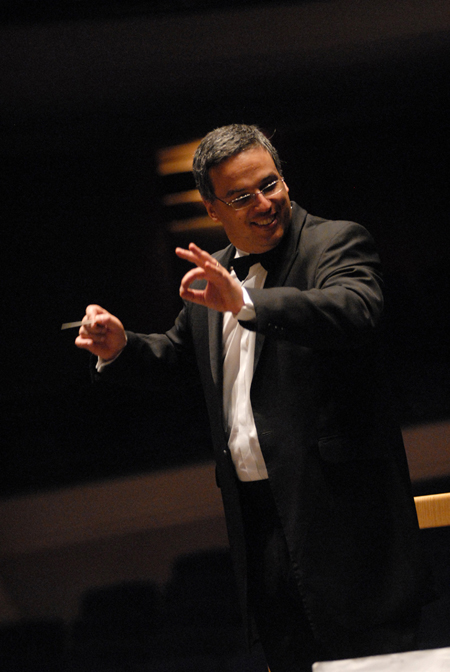
Stefan Sanderling conducts the Toledo Symphony Orchestra at it 2011 debut at Carnegie Hall in New York. Photo courtesy TSO.

The Toledo Symphony Orchestra’s (TSO) May 19 season finale featured Dvorak’s “Symphony No. 9 in E Minor,” music that brought Maestro Stefan Sanderling full circle.

The Dvorak piece was the first Sanderling conducted with TSO in his 2002 debut, and it closed the 2012 season on his 10th anniversary with the orchestra.

Sanderling said he has felt welcomed in Toledo since his arrival.

“When I arrived at the Toledo Express Airport, I walked off the airplane into the arrival hall, and there was a picture saying something like, ‘Toledo Symphony Orchestra welcomes you to Toledo.’ I thought, ‘This is a great place. This is the place I want to be,’” Sanderling said.

Sanderling

Kathy Carroll, TSO president and CEO, said Sanderling has brought a unique insight to the orchestra, allowing musicians to achieve their personal best and display that.

“It isn’t enough to just have people who are really good at what they do, but real leadership comes from making the best of that when you pull it all together. It takes a lot of balancing, insight and knowledge,” Carroll said.

Sanderling said the musicians he has conducted have progressed tremendously, with a great desire to improve.

“The orchestra wants to be better, and wants to achieve more. That is why we have such a wonderful relationship,” he said. “It is not just one side that pushes with the other side having resistance; both conductor and orchestra want the same thing, and that is to have a world-class orchestra in Toledo.”

Renewing the vows

Sanderling conducted Dvorak’s “Symphony No. 9,” better known as the “New World Symphony” in 2002.

“I looked at the program and I thought, ‘Isn’t it time for me, after 10 years, to repeat the Dvorak symphony?’ I love the symphony very much so its’ like renewing the vows. I think this was a good idea, and it worked out very nicely,” Sanderling said.

A standing ovation echoed through the Toledo Museum of Art’s Peristyle Theater following the performance, which also featured Tianwa Yang on violin.

“All of those people in the theater are experiencing something together and there is a power that happens when great music is performed at a high level. It is hugely impactful to bring a whole crowd of people to the same conclusion,” Carroll said.

Music at an early age

Sanderling, a native of the former East Germany, was born to Kurt and Barbara Sanderling in 1964. With parents whose occupations were conductor and musician respectively, Stefan was exposed to music at an early age.

After obtaining a degree from the University of Southern California, Sanderling returned to Germany, gaining accreditation as one of Germany’s youngest chief conductors.

He then returned to the United States to serve as the music director of the Florida Orchestra and later accepted his current position as principal conductor of the TSO.

Sanderling celebrates his 10th anniversary one year after the orchestra’s debut at Carnegie Hall in New York. An estimated 1,400 people traveled from the Toledo area to New York City to hear the TSO make its debut.

“The Carnegie Hall appearance was much more a consequence of our direction, our way, our path than it was a moment. We worked very hard the nine years before that and as a result we were are able to compete and sustain our high level of quality in Carnegie Hall,” Sanderling said.

Sanderling said the question is not in finding the relevancy of classical music, but rather how to show that, in fact, it is relevant.

“Classical music simply is relevant, and I am very grateful to Toledo, and the patrons of the TSO that they actually see this. Toledo is on the threshold of becoming an arts hub, and that is something wonderful. I am very excited to be part of it,” Sanderling said.

The Carnegie trip could be considered Sanderling’s highlight with TSO, but he said there have been several memorable experiences and every concert he conducts is a highlight.

“The beauty of being music director is that I only conduct what I really love, and really believe in. I have the right and the duty to look forward to every single program I conduct,” Sanderling said.

The TSO’s 69th season will commence this September and will feature several new scores and a trip to China. Sanderling said he plans to collaborate with local arts organizations to emphasize the symphony’s strengths.

A full schedule of the upcoming season can be found at www.toledosymphony.com.

FBI indicts 18 in IHOP raid case

0

The Federal Bureau of Investigation announced Wednesday the indictment of 18 people allegedly linked to a series of criminal schemes centered on seven Northwest Ohio and Indiana IHOP restaurants that resulted more than a $3 million loss to the company

The charges outlined in the indictment include money laundering, identity theft, alien harboring and arson.

The charges stem from a Sept. 20 raid of the seven IHOP locations in west Toledo, Springfield Township, Perrysburg, Sylvania Township, Lima, Findlay and Evansville, Ind.

“These defendants turned pancake houses into crime dens,” said Steven M. Dettelbach, United States Attorney for the Northern District of Ohio, in a news release. “This indictment lays out a menu of crimes ranging from harboring undocumented workers to identity theft to money laundering to insurance fraud.”

Carole Rendon, first assistant U.S. Attorney, said the franchise owner, Tarek “Terry” Elkafrawi, used his seven IHOP locations as fronts for money laundering. She said Elkafrawi and others stole money from corporate IHOP by underreporting net sales to decrease the amount of payments owed.

“The crimes that are laid out in the 64-count indictment result in losses in excess of three million dollars,” Rendon said.

The indictment states that Elkafrawi and 17 others allegedly used their control of the IHOP restaurants to “fraudulently manipulate sales figures, salaries and payrolls to evade taxes, avoid paying royalties and illegally divert money from the IHOP franchises to themselves.”

In underreporting sales figures, Elkafrawi and the others allegedly generated $1.2 million in unreported income, Rendon said.

Federal authorities also alleged that Elkafrawi directed employee Jose Leon-Gonzalez to burn down the Findlay IHOP in 2008. Elkafrawi then claimed $1.3 million through insurance and through “inflated payroll claims,” according to a new release.

In addition to those charges, Elkafrawi allegedly employed nearly 200 illegal immigrants to work in his seven IHOP locations, with most of them using stolen or fraudulent identities. Elkafrawi allegedly had Carlos, Gamboa, Leon-Gonzalez and other employees obtain false documentation for the workers.

Rendon said law enforcement officials will seize all seven IHOP locations, 12 bank accounts, a home and other property purchased by Elkafrawi and Autumn Lee Tangas, a co-conspirator in the alleged schemes.

Taking part in last year’s raid were members of the FBI, U.S. Department of Homeland Security, and Immigration and Customs. All searches took place at around 6 a.m. that morning.

The 1:30 p.m. press conference to announce the indictments took place at the U.S. Attorney’s Office at Four Seagate downtown.

The names of the 18 arrested:

  • Tarek Elkafrawi
  • Autumn Lee Tangas
  • Tarek Eid Omar
  • Khaled Yousef
  • Jamil Mohammed Awwad
  • Ramiz Awwad
  • Carlos Gamboa
  • Jose Leon-Gonzalez
  • Donna Herriot
  • Lucky Williams
  • Mark Anthony Turner
  • Sara Rinebolt
  • Cesar Avilla
  • Yoni Merida
  • Ali Mahmoud
  • Mohammed Hassan
  • Kelly Elkafrawi
  • Khalil Aboudakka

‘Viva Ross-Vegas!’ Casino to open May 29

0
Toledo Free Press photo by James A. Molnar

Hollywood Casino Toledo’s interior demands attention from four of your five senses the moment you step onto its granite floors.

All at once.

An LED banner stretches across the entrance, rapidly scrolling through images of limousines and glamorous women. Then it’s Toledo’s skyline and the words “HOLLYWOOD CASINO” positioned on a hill like California’s famous “Hollywood” sign.

Guitars wail and singers croon from the H Lounge stage, which glows purple and blue in the distance. Past rows of table games, slot machines beep, whir and blink, each offering a quick escape into a fantasy — a jungle, ancient Egypt, outer space or the ocean floor.

The aroma of cakes and pastries tugs visitors toward Epic Buffet, where chefs work busily and glass cases display desserts like edible artwork.

“This is the first Las Vegas-style casino in Ohio and as people walk in they forget they’re in Toledo,” General Manager Richard St. Jean said during a media tour May 21, a sneak peek before the official opening at 2 p.m. May 29.

Visitors might also forget where they’re going from one end of the casino floor to the other. The 125,000-square-foot gaming area offers 2,002 slot machines and 60 table games and 20 live poker tables. More than 220 televisions, lining the walls and standing on columns amidst the card tables, compete for eye contact. Scene, the swanky sports bar beside the stage, features glass panels splashed with televised game broadcasts.

“You’ll never miss a sporting event,” said Neal Perry, director of table games. “If you look to your right you’ll see a TV and if you turn to your left you’ll see a TV.”

The casino offers 24 beers on tap and a slew of fancy liquor drinks. Final Cut Steak & Seafood even offers pre-prohibition-style Manhattans brewed in wooden barrels.

All the high-tech buzz is woven into a 1930s art-deco feel, marked with movie posters boasting stars like Marilyn Monroe, Katharine Hepburn and Humphrey Bogart.

Most of the chairs are covered in white leather, with material textured like alligator skin.

Mock-stone columns stretch from the floor to the ceiling, accentuated with rows of spheres that resemble continuous chains of pearl necklaces.

The Hollywood Casino Toledo has been a long time coming.

The history

Ohio voters passed Issue 3 on Nov. 3, 2009, with 53 percent of voters in favor. The measure amended the Ohio Constitution to allow casinos in Cincinnati, Cleveland, Columbus and Toledo.

Proponents argued the casinos would generate hundreds of millions in tax revenue for the state, create local jobs at a time when Ohio’s unemployment rate was nearly 11 percent and keep money in Ohio rather than sending it to casinos in neighboring states.

Opponents argued that casinos have negative effects on compulsive gamblers, their families and communities and would likely attract out-of-state owners.

“The fundamental reasoning against gambling is the impact it has on people who become problem gamblers — people mortgage their houses, they do all kinds of things to get money to go gamble more,” said Tom Smith, public policy director for the Ohio Council of Churches, which opposed the measure.

The 2009 measure succeeded where four previous attempts had failed. A 1990 initiative proposing a casino resort hotel in Lorain failed with 37 percent of voters in favor. A 1996 initiative proposing eight permanently moored riverboat gaming facilities was defeated with 38 percent of voters in favor.

A 2006 initiative proposing allowing slot machines at horse racing tracks failed with 43 percent of voters in favor. A 2008 initiative proposing a privately owned $600 million resort and casino near Wilmington was defeated with 37 percent of voters in favor.

Smith pointed to these failures as evidence that voters approved the casinos in 2009 because they were marketed as a job growth source.

“It would never have passed if we wouldn’t have been in an economic downturn,” Smith said.

After the measure passed, lawmakers were given six months to enact regulations on how the casinos would operate and grant licenses to casino operators. Meanwhile, developers began design work. Ground was broken in August 2010 on the $320 million casino. More than 1,300 employees have been hired, 90 percent of them local.

Per state legislation, the casinos will have an entry age of 21, rules prohibiting free drinks and smoking and no alcohol sold after 2:30 a.m.

One of the guidelines for Toledo’s casino was it could not build a hotel on-site or within 10 miles until Lucas County hotels sustain a 68 percent occupancy threshold for a three-year period.

Each casino will pay a fixed tax of 33 percent of gross casino revenue. Fifty-one percent of the revenue will be distributed among Ohio’s 88 counties in proportion to population; half of each county’s distribution will go to its largest city if that city’s population is above 80,000. Thirty-four percent of the revenue will be distributed among all public school districts, 5 percent among  host cities, 3 percent to Ohio Casino Control Commission, 3 percent to the Ohio State Racing Commission fund, 2 percent to a state law enforcement training fund and 2 percent to a state problem gambling and addictions fund.

Cleveland’s Horseshoe Casino became the first casino in the state when it opened May 14. Hollywood Casino Columbus is set to open this fall while the Horseshoe Casino Cincinnati is set to open spring 2013.

Once all four are open, the casinos are expected to generate about $25.3 million in annual tax revenue for the City of Toledo, Lucas County and Lucas County school districts.

Michigan’s example

Although Michigan does not report payout for slot machines in its casinos, the state receives an average of $121 million in wagering tax each year, said Eric T. Bush, administrative manager for the Michigan Gaming Control Board (MGCB). Michigan’s wagering tax is 8.1 percent.

Bush said Michigan’s share of the adjusted gross revenue made from the casinos is 45 percent, all going to the state’s education fund. The Detroit casinos are some of the largest employers in the city, employing between 8,000 and 9,000 workers.

According to the MGCB’s 2011 Detroit Casinos Revenue spreadsheet, Detroit’s casinos had a total adjusted gross receipt of $1.4 billion in 2011.

Viva ‘Ross-Vegas’

Hollywood Casino Toledo, located on a 44-acre site on the banks of the Maumee River five minutes south of Downtown Toledo, could draw up to 2.8 million visitors per year, according to Penn National Gaming, which operates the site.

Some of the casino employees refer to the property as “Ross-Vegas,” a nod to the casino’s proximity to Rossford.

Pat McGrady, president of the Rossford Business Association, said the group has been working closely with the casino.

“Through the last couple of years, our business association has kept an open mind with welcoming the casino,” McGrady said. “The casino has been a big part of our organization, joining it, being part of the meetings as they draw near to the opening day, making sure they give us information as partners and helping us transition.”

McGrady, who owns the Cold Stone Creamery/Blimpie location in Rossford, said many Rossford businesses are hoping to draw casino employees as well as out-of-town guests.

Holley Bockelman, who owns Bock’s Place with her father Bill Bockelman, said she thinks the casino will be good for business.

“I think it’s going to be great. The more people coming through Rossford the better,” Bockelman said. “I don’t think there’s anything negative about this whole thing.”

John Names, who owns Danny’s Cafe with his wife Vickie, said he isn’t expecting much of a change.

“We’re hoping for the best and ready for the worst,” Names said. “People will be coming for the casino so we don’t expect anything really, but we seem to attract out-of-town customers passing through so maybe we’ll pick up a few new faces.”

Larry Eilert, owner of Larry’s Auto Center, said he’s cautiously optimistic.

“I’m excited and hopeful. Hopefully it can give our town some new vigor and pick it up a little,” Eilert said. “This is all new, so you don’t know what to anticipate. You’re always a little apprehensive about what it’s going to draw, but I think in the long run it will make our town much more attractive and give us a little boost and bring all the other businesses up a little. I’m looking forward to it and I hope it will work.”

Safety

Rossford Schools Superintendent Bill McFarland said children’s safety is the focus of the school district.

“The amount of traffic and the possible criminal element it brings to town — those are the only concerns that have been raised,” McFarland said. “We’re only going to be in school for four days after it opens, so hopefully by the end of the summer, the mass of people going there will have leveled off a little bit.”

Rossford Police Chief Glenn Goss Sr. recently met with the school board to address concerns, particularly increased traffic expected on Glenwood Road near Indian Hills Elementary.

“We’ve got a lot of kids that walk, especially on Glenwood,” said McFarland, who said the district planned to post more crossing guards. “We’re going to do everything we can to protect our kids.”

Goss said he plans to increase the presence of law enforcement in the area.

“Like any department, you want to be proactive, not reactive,” Goss said. “We want to be prepared for what may be coming and not necessarily wait until it’s too late and wish we did something.”

Traffic and parking

Non-casino traffic will be rerouted south on Glenwood Road to Buck Road to I-75 to reduce congestion in the casino area, Goss said. Toledo Police will also reroute traffic.

The casino offers free parking for more than 3,000 vehicles, but two lots in Rossford have been designated for overflow parking if needed, Goss said. One is between Rossford United Methodist Church and Rossford Community Recreation Center on State Route 65. Another will be the Rossford High School parking lot after school hours.

The lots will be operated by Penta Career Center law enforcement students under the supervision of the Wood County Sheriff’s Office. Parking is $8, which will go to Penta, and shuttles to the casino will run every 20 to 30 minutes, Goss said.

For more information, visit the website www.hollywoodcasinotoledo.com.

Toledo Free Press Special Sections Editor Sarah Ottney and Toledo Free Press Staff Writer Brian Bohnert contributed to this article.

Activist fights law that slows aid for some veterans

0

The county’s Veterans Service Commission (VSC) denied 12 of the 437 veterans who applied for emergency financial aid during the past three months because of questions surrounding the applicants’ previous residency.

That’s 12 too many for Nick Haupricht, chairman of Remembrance Inc., a local group of six veterans that advocates for the refurbishing of war memorials.

“We’ve got veterans out there on the streets — that’s what burns me,” he said.

Haupricht attributes this to a section of the Ohio Revised Code written into law in the ’90s. Section 5901.08 requires veterans to prove that they have lived in the county in which they are seeking financial assistance for at least three months.

For example: If a man loses his home in Michigan, catches a bus to Toledo and winds up on the streets, in order to receive emergency cash from the Lucas County Veterans Service Commission (VSC), he’d need to either enroll in a local shelter’s housing program or sign a lease. And then wait for three months.

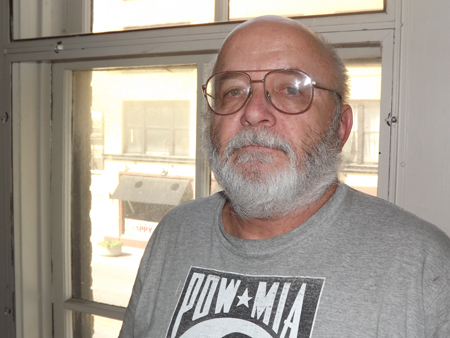
Nick Haupricht

Or say a woman who served in Iraq has lived on and off Toledo’s streets for a while. If she has no proof that she’s lived somewhere in Lucas County then she cannot receive aid from Lucas County’s VSC.

The VSC rarely has to turn people away based on the three-month rule, said Jason Brown, deputy director of VSC. In 2011, the VSC fielded 1,961 requests for emergency financial assistance. Of the 59 requests denied because of residency issues, some were turned away merely because they failed to finish paperwork, Brown said.

Also, veterans new to Lucas County fall under the jurisdiction of their previous homes, and are thus eligible to receive aid from their home county’s commission. Likewise, if a veteran leaves Lucas County, the Lucas County VSC can continue to serve that individual for three months, Brown said.

But the rule is all too familiar for folks at Cherry Street Mission, where veterans comprise 15 percent of the homeless seeking shelter. Whether they’re coming in from out of state or have stayed off the grid for a while, many veterans who enter the mission’s doors have to play that three-month waiting game, said Dan Rogers, CEO and president of the mission.

After the shelter has served someone for 90 days, staff can report to the VSC for that individual to receive aid. But even for those who have lived in Lucas County for at least three months, digging up old leases for proof of residency can be daunting, Rogers said.

The law was instated to solve a “double, triple and even quadruple-dipping” problem, Brown said. The Veterans Service Commission had found that a number of low-income veterans were using up one county’s resources to his or her limits and moving on to the next, he said.

The Lucas County VSC has no limit on the amount of money given to each person who requests help, but one person can receive help up to three different times in one year, he said.

“So a lot of people are punished for the people who took advantage,” said Renee Palacios, director of the Family House.  “That just puts another layer of bureaucracy in front of homeless people. Years ago our economy was way different — it’s time to move forward.”

With the new directive from the Lucas County Homelessness Board that presses the county shelter system to reduce the average length of stay to 30 days, the three-month rule regarding veterans becomes all the more challenging, Palacios said.

Tammy Holder, executive director of the Beach House Family Shelter, said she hasn’t seen barriers blocking impoverished veterans from getting the aid they need from the commission. About 6 percent of those who sought shelter at the Beach House  Family Shelter last year were veterans, she said.

Sen. Edna Brown, who is on the State and Local Government and Veterans Affairs committee, wrote in a prepared statement that her office has communicated with the Ohio Department of Veterans Services and the Lucas County VSC regarding the rule.

Acknowledging that the rule was implicated to preclude a person from receiving assistance from multiple counties at once, she wrote that her office is researching options to determine if there are other ways for commissions to determine if a veteran in question is receiving service elsewhere.

Her office is comparing solutions that other states have made, she wrote.

“I understand that this rule makes it difficult for homeless veterans to receive financial assistance from the county commissions,” she wrote.

Haupricht and his crew have started a campaign to strike down the three-month residency law. They’ve contacted state senators and representatives and will pass out fliers during the Memorial Day parade.

Barhite: Compulsive gamblers can ban themselves from Ohio casinos

0
Toledo Free Press photo by James A. Molnar

Many people will want to visit  Hollywood Casino Toledo  after it opens May 29.

But some people already know — or will find out — they shouldn’t be anywhere near a place that allows gambling.

For those people, the Ohio Casino Control Commission has a new program in response to the opening of four casinos in Ohio and the gambling addiction that might follow for some.

The voluntary exclusion program gives people the option of putting themselves on a list that bans them from entering an Ohio casino, according to Laura Clemens, who directs the responsible gambling program for the commission.

If those people try to get in, they will be escorted out. If they happen to get in and then win, their winnings will be forfeited, and if they get caught in the casino, they could be charged with trespassing.

“We already have a couple of people on the list and some appointments to get on the list,” Clemens said. “We meet with them and take an application and a photo. We want to make sure it is voluntary.”

Because the list is voluntary, a family member or spouse cannot put a person on it, she said. A person can choose to be on the list for one year, five years or a lifetime.

Although casinos are new to Ohio, gambling addiction is not. Clemens said the Ohio Department of Alcohol & Drug Addiction Services and the Ohio Lottery have offered gambling addiction programs and organized media campaigns for years.

However, the newest radio and TV campaign, “Silence the Addiction,” and the voluntary exclusion program are timed to coincide with the opening of the casinos. Cleveland’s casino opened May 14; Columbus’ casino is opening in the fall and Cincinnati’s casino will open next spring.

“We are putting a larger focus on the resources that are available,” Clemens said. “Many of the resources have been there, but we want to make sure people know about them.”

A study is being completed to gauge the gambling situation in Ohio and make sure the resources are adequate.

The cities that are opening casinos are being “over surveyed,” Clemens said, although the survey also addresses lottery gambling and playing poker with friends.

“We aren’t saying don’t gamble, we are saying gamble responsibly,” Clemens said. “Go in with a certain amount of money and when that is gone, stop. Or go to a casino for two hours and then leave.”

For those who suspect they have a problem, Clemens suggested starting with a call to the Ohio Problem Gambling Helpline at (800) 589-9966.

Those who call will talk to a real person, not a machine, she said. If someone wants to be added to the exclusion list, to get the process started email [email protected].

Detroit, Cleveland media praise Toledo casino

0
Cleveland media praised the Toledo casino location for its variety and spaciousness. Toledo Free Press photo by James Molnar

A sneak peek of the Hollywood Casino Toledo on May 21 gave the media a chance to get a look at Penn National Gaming’s latest property before its May 29 opening.

Many reported on the glamorous 1930s style, the food and the games — but also on the fact that Toledo’s casino could siphon business from Detroit’s three casinos.

A May 22 story by Matt Helms in the Detroit Free Press emphasized the glitz of the Hollywood Casino Toledo in addition to the worries that the joint might take away patrons from Detroit casinos:

“Analysts said Detroit’s casinos could take as much as a 5 percent hit to their revenues once all of the Ohio casinos are up and running. A study done for the city estimates it will lose $30 million a year in revenue by 2015. Mayor Dave Bing’s administration said it is already factoring that loss into its budgets.”

Helms also pointed out that the new casino is smoke free, aside from designated outdoor areas for smokers, and doesn’t have a hotel attached, unlike Detroit’s casinos.


The design and decor reflects the glitz and glamour of 1930s art deco Hollywood.

The Detroit News also reported that Toledo’s casino could be a hit to the Motor City’s casinos.

Karl Henkel reported: “Horseshoe Casino Cleveland, which opened May 14 (in Cleveland), and Hollywood Casino Toledo together represent the greatest threat to Detroit’s three gambling destinations — MGM Grand Detroit, Greektown and MotorCity casinos — which last year generated $1.4 billion in revenue.”

The May 22 story also touched on the different benefits the Detroit casinos offered versus Toledo’s.

“Promotions and discounts will play a role in the casino competition. John McNamara, marketing operations manager at Hollywood Casino, said it will offer certain benefits but won’t immediately copy Detroit’s “comp”-heavy model.

The casino will have a tiered rewards program for food, drinks and retail comps, and plans to give away a car sometime in July, McNamara said.

By contrast, Detroit’s casinos offer free plays of games along with food discounts.”

Toledo’s casino being largely smoke-free might not be beneficial, one source in the story also said.

“Casinos that have tried to reduce smoking have not done well,” said Jake Miklojcik, a casino analyst and president of Michigan Consultants in Lansing.

A story reported by Sandra McNeill for CBS Detroit focused on the art deco meets Hollywood décor:

“When you walk into the Hollywood Casino the theme is evident. Photographs of late movie stars from the well-known to the more obscure decorate the walls.”

McNeill’s piece also discussed the hiring of Michiganders at the Ohio casino: “The new casino is giving jobs not just to residents from Ohio, but also to those from Michigan.

Detroiter London Johnson, who has worked at the MGM Grand as a coat check attendant, said her new job will be worth the hour-long daily commute.”

Cleveland recently saw the opening of Horseshoe Casino Cleveland and Cincinnati and Columbus are set to open their own casinos.

Thomas Ott for The Plain Dealer wrote: “The Cleveland casino is vertical — four floors — tucked into the heart of a downtown and is expected to see spin-off traffic. The Hollywood is all one floor, will have entertainment and dining options not found at the Horseshoe and sits in a sea of parking less than five miles from a farmer’s field.”

He also noted that Hollywood’s parking is free, while the Horseshoe’s parking costs $15-35, although that fee can be waived if patrons “gamble for at least a half-hour and wager certain minimums.”

The Cleveland casino does beat Toledo when it comes to the number of games — but not wide open space. Ott wrote:

“The Hollywood Casino has 2,002 slot and video-poker machines, 60 gaming tables and 20 poker tables, fewer than the Horseshoe in every category. But the Hollywood has nearly 30,000 more square feet of gaming space, resulting in an open and airy feel comparable to that of a mall.”