Home Blog Page 277

Letters to the editor, June 10, 2012

0

Only owner can decide future
of sexually oriented business

TO THE EDITOR,

I appreciate and share Toledo Free Press’ enthusiasm for the growth of Downtown Toledo. The area Tom Pounds mentioned (“Addition by subtraction,” June 3) surrounding the Monroe/Huron intersection certainly has been energized by private and public investment and serves as a wonderful hub of activity for Downtown.

Adult establishments, classified as “sexually oriented businesses” under the Toledo Zoning Code, are permitted in the Downtown Commercial zoning district subject to spacing requirements.

As noted in your column, these businesses are required to be 500 feet from any residential zoning district, church or use established specifically for the activities of minors, such as schools and parks, and 1,000 feet from any other sexually oriented business.

We checked on the spacing requirements and determined that the business at 715 Monroe is 530 feet from Fifth Third Field and approximately 700 feet from Glass City Academy.
As much as I share your desire to keep downtown “family friendly,” there does not appear to be any legal basis for disapproving the zoning permit.

Your suggestions regarding creating a sexually oriented business-free zone or prohibiting a sexually oriented business within so many feet of a sports arena could not be applied retroactively, so ultimately it will be up to the building owner to decide if the proposed sexually oriented business opens at 715 Monroe. ✯

TOM LEMON, AICP
Director, Toledo-Lucas County Plan Commissions

Closing of Raceway Park is a loss

TO THE EDITOR,

There is much talk and excitement about the new casino.

However, what is being overlooked in all the exciting newsmstories about the grand opening is the price we paid for the new casino.

As some people may remember, Raceway Park is set to close its doors soon. The new casino, while adding pizzazz and jobs to the other side of the river, has added blight and destruction to North Toledo.

Our concerns about Raceway Park were subdued in the initial casino proposal when Penn National Gaming hinted that the new facility would not adversely affect Raceway Park.

Now everyone who visits the new casino is basically they are willing to overlook that. I am not. People will argue that the new casino is a nicer facility than Raceway. They would be correct, although if Penn National put a fraction of the money they put in the new Casino into the Park it would not be so.

They might also argue that the new casino provides more jobs than Raceway Park. Again, they would be correct. But what Penn National leaves behind in its wake is the further destruction of the North End.

But really, who cares about the North End anyway? North Towne Mall is gone as well as numerous other businesses. Most Toledoans have little or no occasion to visit that blighted area and now with Raceway Park closing one less reason to visit.

If we keep playing our cards this way perhaps one day there will be nothing of interest left at all.

Does no one remember we fought a “war” with Michigan for that area? Perhaps we should give it back because it seems we don’t really want it anyway. ✯

DANIEL P. FINKEL
Toledo

McCord students earn award for saving teacher

0
From left, Jaret Hoschak, Sarah Sabol, Connie Root, Andy Riggs, Mark Curtis. Photo by George Tanber

Seven months after they helped save the life of their sixth-grade science teacher, four McCord Junior High School students have been recognized by the American Legion Auxiliary for their quick-thinking actions.

Sarah Sabol, Jaret Hoschak, Mark Curtis and Andy Riggs were presented the auxiliary’s Youth Hero Award on June 4 at the school’s year-end academic awards assembly.

The students acted swiftly when their teacher, Connie Root, collapsed in their room Nov. 9. Sarah, using the classroom phone, called a teacher in a nearby classroom. Andy hustled next door to another teacher’s classroom.  Jaret and Mark sprinted to the cafeteria where they found the school’s principal, Keith Limes, and Kathleen Theiss, a teacher.

Theiss performed CPR on Root, who had stopped breathing after suffering a severe heart attack. Paramedics from the Sylvania Township Fire Department and Lucas County EMS, who arrived within a few minutes, brought Root back from certain death.

During a five-day stay in Toledo Hospital’s intensive care unit, doctors found Root, amazingly, had not suffered brain damage after her heart stopped.

On Nov. 16, Root walked out of the hospital.

A week later, Evelyn Navarre, treasurer of the legion’s Sylvania auxiliary, Joseph W. Diehn Unit 468, read a Nov. 23 article in Toledo Free Press detailing Root’s ordeal.  She was moved to tears by the actions of the students.

“They had a courageous attitude. And they didn’t panic,” she said. “I thought ‘This is amazing. I have to do something.’”

Navarre submitted the students’ names to the national auxiliary headquarters in Indianapolis, where officials agreed they deserved the award that was established in 2002 for exactly this type of situation.

In introducing the students at the assembly, an emotional, teary-eyed Navarre said: “May you all be reminded of the example of Andy, Sarah, Mark and Jaret, and never hesitate to go and get help when the need arises. Their teacher, Connie Root, is here today because of their quick actions.”

One by one, the students approached the podium to receive first a certificate from the Sylvania auxiliary president, Marian Darr and then a medal with a red, white and blue ribbon which Mariam Wuwert the auxiliary’s Children & Youth chairman, hung around their necks.

As their families clicked away with their phone cameras, the students couldn’t stop smiling.

“I feel good about it,” said Mark, 12. “I was kind of proud.”

Jaret, celebrating his 13th birthday, said: “At first, I just thought I helped out. Now, with people recognizing me, I think that’s cool.”

Nearby, an overjoyed Root couldn’t stop crying. Gradually, she’s going off the medications required since her attack. Otherwise, she’s receiving good reports from her doctors and said she feels great.  She still marvels at her students’ actions.

“It’s just amazing what they did. Someone was in trouble, and they knew what to do.”

Glancing over at her students with a warm, tear-laced smile, she said, wistfully: “I don’t think they’ll realize what they did and the impact it had on so many people until they get older.”

Szuch move to Signature Bank ‘like going home’

0
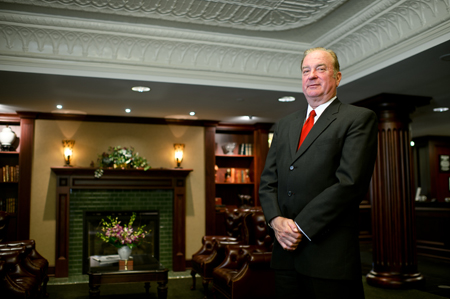
John Szuch will take a leadership position at SignatureBank. Toledo Free Press photo by Joseph Herr

Nightly news of banking blunders, like the recent report that incompetence at J.P. Morgan led to a loss of more than $2 billion, frightens many Americans. That national trend is not indicative of local banks that make news with reports like Signature Bank’s announcement, that it had appointed John S. Szuch to its board of directors and an executive officer position.

Szuch’s appointment brought a smile to local businessman Rob Armstrong’s face. Armstrong, executive vice president of Bennett Enterprises Inc., a corporation that operates 21 restaurants and four hotels in Northwest Ohio, said he is one of Szuch’s biggest fans.

“John has been very helpful to our organization for over 30 years,” Armstrong said. “John may well be the most respected banker in Northwest Ohio. For John, going to work at Signature must be just like going home.

“Signature Bank was a great bank before John joined. John is going to be just another feather in their cap.”

Armstrong said he is convinced Szuch’s move to Signature Bank’s staff will only enhance Armstrong’s 10-year association with the bank, a financial institution that he said has done especially well at “presenting us with direct access to any of their people. I can pick up the phone and talk to any individual, from the chairman and president all the way down the ladder. I even have the personal cellphone numbers of the officers.”

Armstrong’s “going home” reference alludes to Szuch’s work, starting in 1971, at local banking powerhouses that include TrustCorp, Capital and Fifth Third banks.

After 17 years at TrustCorp, now known as KeyBank, Szuch and colleague Bob Sullivan co-founded Capital Bank on July 1, 1988, and opened for business a year later, Aug. 24, 1989.

Twelve years later, in March, 2001, Szuch and Sullivan sold Capital Bank to Fifth Third Bank, and both men joined Fifth Third’s staff. A group of Capital Bank executives who didn’t make the move to Fifth Third founded Signature Bank in April 2002.

One month after its 10th anniversary, on May 9, 2012, Signature Bank hired Szuch, their longtime friend and former boss. For Szuch, that meant leaving the corporate world of large banks with thousands of employees who “do a huge volume in a standard format, and have everything channeled through specific people. They’re very good at standard, everything-between-the-lines things. They do it very efficiently and price it well,” he said.

In its place, Szuch enters a banking institution in which all 97 employees focus on personal attention, individual needs and creating a service environment, according to bank President Dave Reed.

John Szuch

“We’re like the old, smalltown banks,” Reed said. “You know the people, they know you, and we try to make it easy.

“There’s a lot of complexity out there in the world. You’d like to be able to count on some people who you know you can come to if you have something unusual, and it will get done. It will get seriously considered quickly, which is a big component of what we do,” Reed said.

Szuch chuckled upon hearing the word “quickly.”

“‘Quickly’ is a big word,” Szuch said. “You don’t know how long it takes to get something through at the other places. I mean, weeks sometimes.”

It’s Signature Bank’s timeliness that appeals to Jan Ruma, vice president and executive director of Toledo-Lucas County CareNet for the last 14 years.

“We work with Signature Bank because, simply speaking, they are able to meet our needs,” Ruma said. “We have limited staffing, and running to the bank uses up a lot of our resources. Signature provides simple things, like a courier service.

“Anything we need is just a phone call or an email away. We always work with the same people, and that’s comforting. We don’t call and get a voice recording or extension 262 to contact. We get a personal response.”

Rick Brunner, with 22 years experience in the banking industry, is Signature Bank’s chairman and chief executive officer. He says the addition of Szuch will enhance Signature’s collaborative approach to customer service.

“John has an enormous wealth of experience in a lot of different facets of banking,” Brunner said. “John has a vast network of people he’s worked with over the course of his career that will help him attract clients to Signature Bank.”

Brunner says Szuch’s 41 years of experience will help Signature Bank meet its clients’ unique needs.

“We like to make banking simple, straightforward and efficient, and a big piece of that is the personalized, customized piece of dealing with people, understanding what they need,” Brunner said. “In a lot of different industries, it’s ‘Let me tell you what you need. This is the right product for you.’ Our approach is more, ‘Let’s talk about what you need. What will help you? Are we a fit for that?’ ”

Szuch said he is humbled that Signature Bank created this executive officer position especially for him.

“Is there pressure?” he asked. “Yes, but the only pressure on me is self-imposed because I want to make sure bringing me here was a good decision.”

Workshop to teach how to collect stories from veterans

0
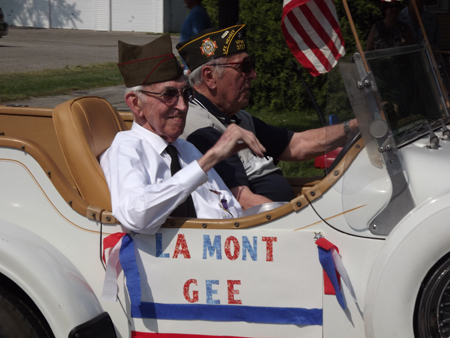
Veteran LaMont Gee's story is preserved in the Library of Congress. Toledo Free Press photo -- SARAH OTTNEY

When LaMont Gee was hit in the throat by shrapnel while defending a bridge in Belgium during World War II, his friends thought he was dead.

The 18-year-old was drafted in 1943 and assigned to the Army’s 988th Engineering Treadway Bridge Company, which built bridges to replace those destroyed by the retreating German army. He was injured during an attack by a German airplane attempting to destroy a recently completed bridge. After a field hospital operation and two months of rehabilitation in England, his voice returned and he rejoined his company in Germany.

“I walked over and the guys just looked at me,” said Gee, now 87, a Silver Star and Purple Heart recipient who served as grand marshal of Sylvania’s Memorial Day parade this year. “They said, “‘What are you doing here?’ I said, “‘Where’s my duffel bag?’ It was still in the truck. I got it and we just kept on going. When there’s a job to do, you do it.”

Veteran LaMont Gee’s story is preserved at the Library of Congress.

The Sylvania resident’s story is among those archived at the Library of Congress in Washington, D.C., as part of the Veterans History Project. The ongoing nationwide project, which started in 2000, collects audio- or videotaped firsthand accounts of World War I, World War II, the Korean War, the Vietnam War, the Persian Gulf War and the Afghanistan and Iraq conflicts from veterans as well as U.S. citizen civilians involved in supporting war efforts, such as war industry workers, USO workers, flight instructors and medical volunteers. The project also collects original documents, such as photographs, letters, diaries and maps.

Free workshop

A free workshop for those interested in learning how to interview veterans will be 1-3 p.m. June 15 at Owens Community College, 30335 Oregon Road, in Perrysburg, in the Audio/Visual Classroom Center rooms 125-128.

The session will be taught by Tom Barden, Northwest Ohio regional coordinator of the Veterans History Project. No interviews will be conducted during the training.

“It’s an amazing project,” said Barden, dean of the Honors College at the University of Toledo and a Vietnam War veteran. “To me as an academic, all oral history is important. History is written about the famous people, but to me the more interesting stories are those of the average person and their lives.”

Local interviewer

More than 75,000 stories have been collected so far, including more than 500 by retired Sylvania resident Bud Fisher.

“Seventy-five thousand may sound like a lot, but it’s not when you consider how many millions of people served,” said Fisher, who compiled many of his interviews into two books: “What a Time It Was” about World War II and “30 Below on Christmas Eve” about the Korean War.

Each of those millions has a story and Fisher enjoys giving them a voice.

“What I enjoy the most is watching these fellows open up,” Fisher said. “When they came home they didn’t sit their families down and tell them about the war. They took off their uniforms and went back to work or school. A story might have come out here or there, but I provided the means by which they could really open up and talk about their military service from start to finish. I helped to transport them back 60 years to when they were young.”

Copies of the interviews are also archived locally at UT’s Canaday Center or Perrysburg’s Way Public Library. The veteran also receives a copy of the interview.

“That’s like a genealogical treasure,” Fisher said. “When they are long gone, their family can hear their voice, which is priceless. I’d love to hear my grandfather’s voice or my great-grandfather’s voice, even though I know a fair amount about them. It’s like a voice from the past.”

Another local interviewer is Richard Baranowski, local history librarian at Way Public Library.

“Fifty years from now, 100 years from now, a descendent of one of these guys will be able to go to the Library of Congress and see his ancestor on a video camera,”  Baranowski said. “If we had that from the Civil War, how valuable would that be? History dies with people. A lot of the people we’ve interviewed have died. It’s a good idea to see what you can preserve.”

Some veterans are determined to never talk of their experiences again while others find it therapeutic, Fisher said. Some are talkative while others need more prodding to open up.

“No one has ever said “‘I’m sorry I did this.’ Everybody is happy they did it,” Fisher said.

Fisher, who served during the Korean War, said being a fellow veteran has helped, but anyone can conduct interviews if they know what questions to ask.

“The process is simple. I take my recorder to their kitchen table and we talk,” Fisher said. “It helps to be a student of history, but you don’t have to be knowledgeable about the war. You just have to know what questions to ask.”

Fisher asks veterans to bring his or her discharge papers as reference. Barden suggests doing some background research, but then just listen.

“Do your homework, but don’t use it,” Barden said. “People want to feel like you know what they are talking about, but if you start talking like a historian, they might get intimidated.”

Start with a family member, Fisher suggested.

“Everybody’s got a father or grandfather or uncle who was in the service and you can practice on them,” Fisher said. “Not everybody has to do 500 interviews.”

Some veterans tell him their contributions are not important enough to talk about, but Fisher disagrees.

“I tell them not everybody won the Medal of Honor, but every story is important. If you served, your story is important,” Fisher said. “Historians talk about the generals and the admirals and the leaders of the country. They don’t talk about the people who did the work. This is a way to finally have a history of the common man, the ordinary GI. We’ve heard enough about Douglas MacArthur and Adm. [Chester W.] Nimitz and Gen. [George S.] Patton. We know all about those guys, but finally we’re going to hear the stories of the guys who made them famous.”

Toledo Free Press is a media sponsor of the workshop. Other sponsors include U.S. Representatives Bob Latta and Marcy Kaptur, Northwest Ohio Honor Flight and American Red Cross Greater Toledo Area Chapter.

Pounds: China Summit

0

Toledo Free Press was honored to be a sponsor of the May 31 China Business Summit, presented by Communica at The Toledo Club.

With more than 400 million people in its middle class alone, China presents an incredible market.

As reported by Toledo Free Press Staff Writer Morgan Delp, all of the speakers at the event talked about the challenges and benefits of expansion into China.

In addition to the four main presentations, the event included brief remarks from Jim Rush, executive vice president and head of business development at Communica, Debbie Monagan, president of Communica, Mayor Mike Bell and Regional Growth Partnership President and CEO Dean Monske. Minhua Wu from the Confucius Institute at the University of Toledo also presented on the institute’s Chinese language and culture courses, which it offers to teachers, business people and students in the area.

“You cannot be successful in any foreign market unless you know the challenges,” said William Sinn, president of the Cleveland-based Sinn & Company consultancy.

He said these challenges include a language barrier even within the country of China, due to all of the different dialects. When illustrating the drastic language difference amongst neighboring towns in China by comparing them to Ohio cities, Sinn said that unless using the same dialect, “Toledo could not talk to Bowling Green.” He said that acquiring a skilled and reliable translator was essential in overcoming this obstacle.

John Tang, attorney and head of the Shanghai-based Brennan, Manna & Diamond group in Akron, said a big aspect of Chinese culture is that people focus on outward appearances because they are extremely concerned with “saving face,” or retaining a respectable image.

Tang gave the example of the successful American chain, Victoria’s Secret, which tried to expand into China, but had to scale back because the Chinese were not interested in spending money on undergarments that could not be seen by others.

Wei Shen, managing director of BridgeConnect LLC in Bloomfield Hills, Mich., said Americans need to understand that business deals cannot be made on the first visit with potential Chinese clients. She said gaining the respect of potential clients and having patience in negotiations are key to gaining wealth in China.

However, many differing aspects of the Chinese way of life offer promising business opportunities, Tang said.

“China is very polluted due to the factories, and the government knows that, so if you are in an industry with environmentally friendly products, they’ll offer a lot of incentives and open a lot of doors for you,” he said.

Toledo Free Press has long advocated bringing international business to Toledo, and has supported the Bell administration’s efforts to do so. We will continue to support events such as the China Business Summit and urge local entrepreneurs to continue to engage in the global conversation.

Thomas F. Pounds is president and publisher of Toledo Free Press and Toledo Free Press Star. Contact him at [email protected].

Miller: Readers name desired franchises

0
Toledo Free Press illustration by DON LEE


Last week, we reflected on a Toledo Free Press story from 2008 that asked readers to name the restaurant and entertainment franchises they would most like to see in Lucas County. Some of those — a casino and a large-format movie screen — have come true. Others, such as Trader Joe’s and IKEA, are rumored but not yet a reality. During the past week, scores of emails — and calls during my Monday hosting gig on WSPD’s “Eye on Toledo” — contributed to this “most wanted” list.

Tori Crowell suggested Quaker Steak and Lube and Cosi restaurants and department stores Ross and Beall’s.

Leah Owell mentioned Sweet Tomatoes restaurant, L&L Hawaiian Barbecue, Heart Attack Grill, Steamers, a wild game restaurant, a Moroccan restaurant and a Russian restaurant.

With all due respect to Sonic, Five Guys and Burger Bar 419, many people mentioned In-N-Out Burger and Culver’s. We mentioned that there is a Culver’s in Adrian, and Thomas Blaha, executive director of the Wood County Economic Development Commission, wrote in to say there is a Culver’s in Findlay. He said it was financed in part through the SBA Regional 504 Loan board, hosted by the Toledo-Lucas County Port Authority.

Barb Meyers was enthusiastic about IKEA, and agreed Culver’s would make a “wonderful addition. My son-in-law took us to Culver’s in Ypsilanti, and I found out they have frozen custard, wonderful stuff that I haven’t had since I was a kid.”

Tom Glassmoyer wrote about Firehouse Subs, praising the food and the chain’s dedication to charity and local fire departments.

Romaine asked for a Zingerman’s Deli, a request that came up during the radio show.

Jeannine Reilly’s wish list included Noodles & Company, Mad Mex (“Downtown needs a great Mexican restaurant”) and wrote, “When and if the riverfront is ever developed, someone should look into bringing back Tiedtke’s, making it the center of attraction and try to make it close to the original … how cool would that be?”

A retro Tiedtke’s Downtown? That would be very cool indeed, Jeannine.

Michael S. Miller is editor in chief of Toledo Free Press and Toledo Free Press Star.

Counting Crows to swoop into Sylvania

0
Counting Crows brought their Outlaw Road Show to Centennial Terrace in Sylvania in June 2012. Photo by James Minchin.

On “Underwater Sunshine (Or What We Did on Our Summer Vacation),” Counting Crows refract 15 tracks, bending a few favorite songs to create big, bright waves of sound.

Adam Duritz said the group had fun covering songs — and found freedom.

“It was such a great liberating thing to get to work with so many other songwriters, in a way. I mean, it was like collaborating with people without them being there,” he said during a teleconference with some 30 media outlets, including Toledo Free Press.

“Something happened when we made that record. I mean, we just played differently and I’m not sure why, but it affected everybody,” he said. “There was something that was completely liberating about not doing my songs, about just like the fact that the guy that wrote them wasn’t necessarily standing in the room with you and wasn’t necessarily a guy you’d known for all these years, so you owed less to them, in a way.

“I don’t know what happened with everybody, but everybody loosened up in some way. It was really creative, including [for] me. Like, I love the singing on this record; I love the vocals on this record.”

And he loves listening to the disc, which features songs by Pure Prairie League, Tender Mercies, Fairport Convention, Travis, Bob Dylan, Teenage Fanclub, Faces, Gram Parsons, Big Star and others.

“I feel like putting it on sometimes, walking around the city listening to it. I dig it. It just keeps surprising me,” Duritz said.

The singer-songwriter and the band — drummer Jim Bogios, keyboardist Charlie Gillingham, bassist Millard Powers, and guitarists David Bryson, David Immerglück and Dan Vickrey — are hitting the road in support of their first independent release, which came out in April.

“We were looking for just not playing the sort of same old cookie-cutter venues that everybody goes to. We wanted venues that were a little bit more fun to play and also maybe a little more fun for an audience because we want people to be coming out early and checking out all these bands,” he said.

Counting Crows will bring the Outlaw Road Show to Centennial Terrace in Sylvania for a 7 p.m. concert June 16, 2012. Special guests will be Good Old War, Foreign Fields and Filligar. Tickets range from $35 to $85. Gates open at 5:30 p.m.

The front man with the famous dreads said the group likes to wing it and writes the set list right before the show.

That list might not feature all the rockers’ hits, which include “Mr. Jones,” “Rain King,” “Hangin’ Around,” “Accidentally in Love,” “Big Yellow Taxi” and “Round Here.”

“If I’m tired of playing something, I’m not going to play it because I think that’s going to make a bad show,” Duritz said.

“You don’t owe [fans] songs, but you do owe them a quality performance, and I think the best way to do that is to, like, make sure that you’re fully invested in everything you’re doing. And it’s art, so you can’t necessarily guarantee you’re going to be fully invested in somebody else’s suggestions, but you can pretty much guarantee you’ll be invested in yours.

“And I think we’ve stuck by that fairly religiously over the years, and I think it’s really paid off for us because I still like playing ‘Mr. Jones’ as opposed to a lot of people I know who have that kind of song in their catalog who just don’t want to play [it].”

PechaKucha to unite ideas, stories, performances

0
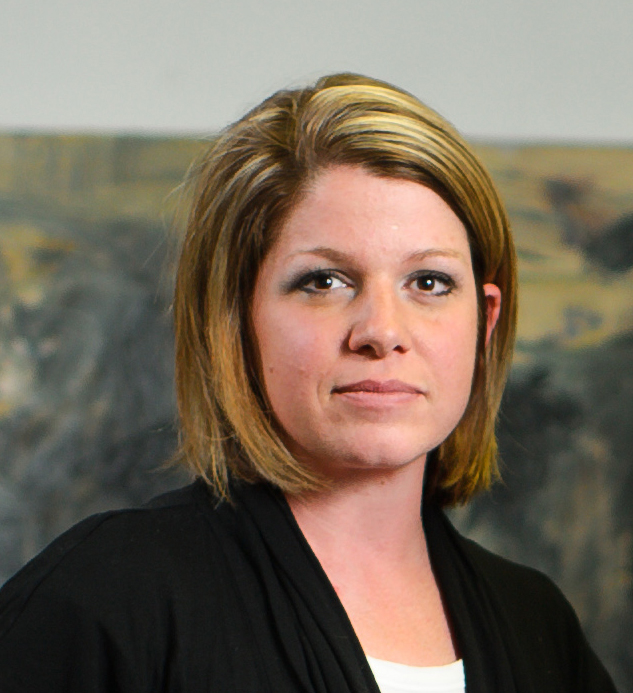
Samantha Hookway

Toledoans can see slide shows on steroids at the Glass City’s second PechaKucha Night on June 12 at the Toledo-Lucas County Main Library.

In PechaKucha, presenters have six minutes and 40 seconds to share concepts, stories, performances or artwork by sharing 20 slides for 20 seconds each.

“It can be very entertaining because you don’t know what’s going to happen in those 20 seconds, the audience doesn’t know what’s going to happen in those 20 seconds and mistakes do happen,” said event organizer Kimberly Adams.
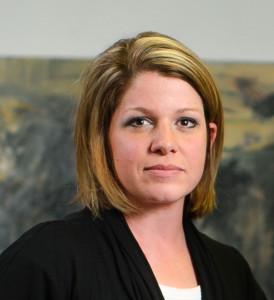
Kimberly Adams

PechaKucha began in Tokyo in 2003 as a way for young designers to share their ideas.

“They started it for architects, because the architects tended to be a little long-winded when they were presenting their designs so they kind of shortened that format for them,” Adams said. Now the nights occur in more than 500 cities all over the world and Tokyo itself has had about 100 PechaKucha Nights. The events even have their own designated space within the city.

Adams, founder of tart :: projects, an artists’ platform, also organized Toledo’s first PechaKucha Night, which took place March 31 at Manhattan’s. She recently moved back to Ohio after living in Tampa, Fla., where she first observed PechaKucha.

“I’d been to a couple in Tampa and they were really well put-together so I just thought it’d be great to happen here,” Adams said.

PechaKucha almost started in Toledo in 2010, but never officially took off. However, 2012 was a different story for PechaKucha in Toledo. After deciding to bring the events to Toledo, Adams reached out to the PechaKucha organization in Tokyo.

“I had to sign a contract, like a handshake contact. The contract had a picture of the two hands shaking,” Adams said with a laugh. By signing the contract, Adams agreed to organize four nights within the year.

The first Toledo event included 10 presenters of all kinds and 30-50 people attended, Adams said. So far, the June presentation also looks to be full of variety.

“[PechaKucha is] used for like artists, designers, people that are advocating for anything and everything,” Adams said.

The documentarian

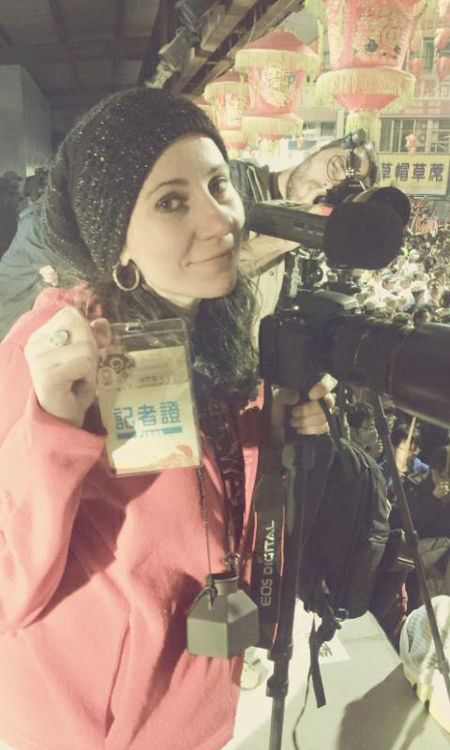
One of those artists is Tina Gionis, who returned from making a documentary in Taiwan about a month ago. While in Taiwan, she documented the Mazu Pilgrimage and Festival, an annual celebration honoring Mazu, the sea deity of the Taoist faith. Her PechaKucha presentation will feature images and stories from her trip, she said.
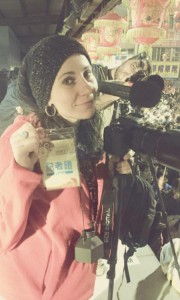
Tina Gionis

“[Filming] was really a good experience, pretty high-pressure. I did a lot of traveling around and the pilgrimage was very fast moving. A lot of times, I didn’t get enough sleep but I managed to get the footage I needed and I was able to get a lot of interviews with the right people and capture the intensity,” Gionis said.

The next step is the film’s editing process. “I believe the making of a film, half of it is actually shooting and capturing footage and the other half is editing. You really tell a story with how you put the shots together,” she said. Depending on funding, the editing process could take up to a year.

This is Gionis’ first PechaKucha night and she is still putting together her presentation, but plans to share some exciting stories.

“I’ll probably talk about how I almost got trampled in a religious frenzy by Mazu followers,” she said.

Events like PechaKucha Night can make the city stronger, Gionis said.

“It sounds like a really good way to make people aware of different projects artists are working on,” she said.

The movie-inspired poet

Imani Lateef, an independent graphic designer and presenter, agreed with Gionis.

“[PechaKucha] creates an opportunity for people to share in real time. It’s so odd with all the technology that there’s so many connections, but we’re still very much separated. This actually gives us the opportunity to step out of our comfort zone so to speak, in ways that social media outlets don’t normally do,”

Lateef said.
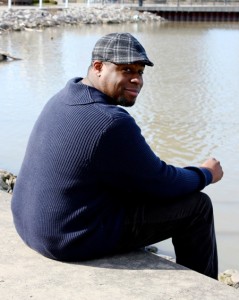
Imani Lateef

Lateef plans on presenting a poem he wrote based on scenes from the  film, “Black Orpheus,” which won the 1960 Academy Award for Best Foreign Language Film. The film was made in Brazil and directed by Marcel Camus.

“I thought it would be a cool way to use the PechaKucha format,” Lateef said. “[The format] lends itself perfectly to poetry and artistic presentations.”

Lateef first heard of PechaKucha in 2010 and even offered to sponsor a night at his now closed Ground Level Coffee House, but the event fell through. But now the designer is happy to be working on his new presentation. “I enjoy the challenge. I think it’s going to be very interesting to see how people work in the constraints,” he said.

The nonprofit worker

Sam Melden, executive director of Food for Thought, hopes to be helped by those constraints. “It’s actually helpful because you know exactly what’s expected. The interesting part for me is I’ve never seen [PechaKucha] done,” he said. If his presentation is successful, Melden may start talking in “20-second bursts,” he said.

His organization, Food for Thought, aims to feed the hungry while investing dignity and respect in them, Melden said. He plans to share the story of the nonprofit along with “how thought or being thoughtful really matters to the work that you do in the nonprofit type job.”

Food for Thoughtn was founded in May 2007 and Melden joined the organization in August 2011 after working in retail and ministry positions. Food for Thought now operates a stationary and mobile food pantry, a lunch distribution program and gardens for growing healthy foods.
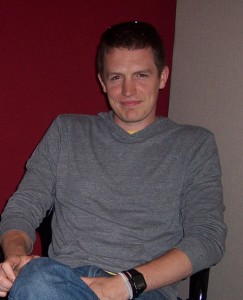
Sam Melden

Melden said he hopes to impart some of the group’s philosophy at PechaKucha Night.

“It would be my No. 1 goal just to offer something of value. If [the audience] considers it valuable then I’ve accomplished something,” he said of his presentation.

The out-of-town artist

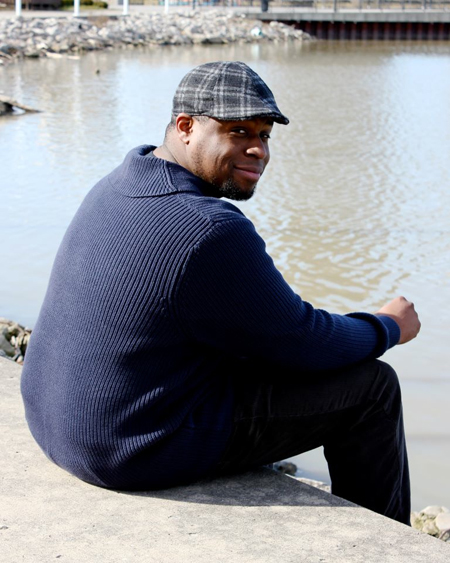
Samantha Hookway has a few reasons to be in Toledo this June: a friend’s wedding, the Glass Art Society (GAS) Convention from June 13-17 and, of course, presenting at PechaKucha.

When she heard of PechaKucha, “I thought, ‘Score!’ because I wanted to come to Toledo and do something but I’m feeling very tight with the wedding and the GAS conference,” Hookway said. She plans to present some of her artwork and background on the slides.

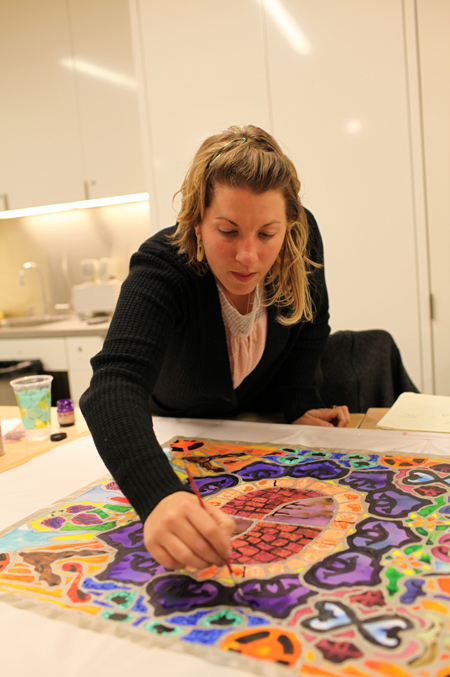
The artist, influenced by how painters interpret windows, often puts the look of a stained glass window on materials like silk.

“I was making [glass art] traditionally … but then as I kept making the work, I realized I wanted to take the stained glass in the leaded window into another world altogether,” she said.

Hookway lives in Columbus and has heard of PechaKucha Nights, but never attended.

“It’s a platform where all the disciplines can find a way to fit together, so that’s a really strong part of it and I’m hoping I’ll learn something I hadn’t considered,” she said.

At press time, other presenters include Karen Ranney Wolkins of the Toledo Botanical Garden, Adam Goldberg of Gathered Studio, Amy Fidler of You Are Here Toledo/AIGA Toledo and Aesa Bjork, a glass artist. The event is sponsored by Toledo Free Press, Erie Construction Mid-West Inc., DoxSystems, Paul R. Sullivan Jr., AIA LLC, Law Office of Gretchen DeBacker and tart :: projects.
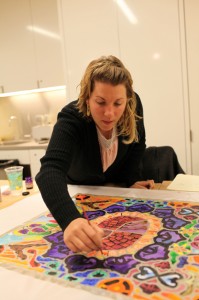
Samantha Hookway

Adams is still looking for presenters for June 12. The only requirement of presenters is that they use images and send Adams a statement to [email protected].

The minimum number of presenters is 10 and the maximum is 16.

“[PechaKucha is] pretty wide open. It’s just a platform for people to share their ideas, you know, get it out there. With as much as we’ve got going on here, it’s a great way to inform the community of what’s happening,” Adams said. After June, the next PechaKucha Night is set for September and Adams hopes to get Rep. Marcy Kaptur to present.

PechaKucha Night is 7:30-10 p.m. June 12 at the Toledo-Lucas County Main Library, 325 N. Michigan St. Admission is free.

For more information, visit www.pecha-kucha.org/night/toledo/.

South Toledo Community Center seeks new home

0
The end of a lease has the South Toledo Community Center looking for new options for a home, Toledo Free Press photo by Caitlin McGlade.

For two years, the bulky gray church at the corner of Walbridge Avenue and Broadway Street has stood as an uplifting symbol for thousands of Toledoans crushed by the South End’s decline.

But this will likely change by the end of the year, when Cherry Street Mission’s lease expires with Moawad Ball Holdings, LLC, the firm that purchased the building in 2006.

The firm bought the building at 1411 Broadway  St. for $140,000 but has since put as much as $15,000 into the property and has accumulated debt in mortgage and taxes, said William Lowry of the Moawad Group, which operates Moawad Ball Holdings.

The company recently paid off property taxes for the building, after going from 2009 to 2012 without paying any, according to the Auditor’s Real Estate Information System (AREIS).

Pastor called ‘joker’

The South Toledo Community Center, which is run from the church, partners with Cherry Street Mission. The mission pays the rent and Pastor David Kaiser and his wife Kelly of Western Avenue Ministries operate the programs for low-income neighbors and the church services.

Rent costs $1,500 a month and Dan Rogers, president and CEO of Cherry Street Mission, said operating the outreach ministry would be more affordable if the partnership could buy its own building. Kaiser offered to buy the property  for what Moawad Ball Holdings paid for it in 2006.

Lowry called Kaiser a “joker.”

“I’ll be darned if I’m going to put more money into his pockets,” Lowry said. He said the firm already subsidizes $1,000 a month of Cherry Street Mission’s rent. The mortgage costs $2,500 a month. Between the mortgage, the debts and the investment pumped into the building, Kaiser was told he would need $384,000 to purchase it.

That’s just not doable, Kaiser said.

“The fundamental thing is that they bought the building in 2006, at the height of the real estate bubble,” Kaiser said. “It feels like greed.”

The building, with its dated infrastructure, has needed a lot of work throughout the years. When asked why the firm owns the building, Lowry said,“Stupidity.”

Different approach

Sam Moawad of Moawad Ball Holdings has a different approach. Moawad bought the building when a church came to him asking for help finding a place to locate.

“We like to get involved in ministries,” Moawad said. “We’ve been involved in the community and we know the cash flow and the economy is hard for everybody.”

He also owns a smaller church on Western Avenue that he bought for $22,500 in 2005. Lowry said at least $60,000 in repairs went into that building. Moawad said his company has borrowed money to subsidize much of Cherry Street Mission’s building expenses for the church because the mission does great work for the community.

A new real estate sign stands in the building’s front lawn. Moawad said if he sells the place he wants to sell it to another church group.

David Kaiser

Parenting classes have coached almost 130 moms and dads — as young as 14 years old — about discipline, self worth and gearing their kids toward college.  Another program has offered hours to at least 60 welfare recipients to clean and cook, so they can meet the government-mandated work requirements to receive cash assistance.

The kitchen sent groceries home to at least 10,000 households last year. On average, the South Toledo Community Center serves 167 meals a day.

Outreach workers have knocked on countless doors to connect struggling Toledoans to aid services. Spanish-speaking workers have hit up the Hispanic neighborhoods, helping to bridge the language barrier between service providers and Toledoans who speak little English.

Talk of a free clinic in the second story had evolved into more concrete plans just last month, with a handful of doctors meeting to discuss logistics and equipment needs. Kaiser had also intended to set up a day care in partnership with the YMCA.

“But our hopes to transform the South End are in limbo,” Kaiser said. “At the end of this year, we’re going to have sort of nowhere to go.”

Kaiser has a few options. The nearby Queen of Apostles offered to host the parenting courses and church services, but Kaiser said he fears that numbers will dwindle without the soup kitchen and food pantry.

Other buildings that might seem like options are older and mostly dilapidated. Kaiser was considering the La Garza building but repair costs could be immense. The block of brick buildings surrounding La Garza was constructed when Abraham Lincoln was president, Kaiser said.

Up in the air

As for the free clinic? The day care? It’s all up in the air for now.

“These ideas have been in the brew for so long and I’m so confident with every closed door, a door will open,” Rogers said.

The top priority is to keep services long-term — to implement a 12-to-15-year plan so that the outreach can cut through generations of poverty. The partnership between Kaiser and the mission will continue, Rogers said.

‘I’m going to be lost’

Gege Sprague depends on it continuing. But she has a weak knee and no car — and if the church moves too far she’ll have to stop going. Sprague, 52, lives down the street and her morning routine every day for the past two years has included breakfast from the soup kitchen.

“Whenever this church is open, I’m here,” she said. “If they take this away from me I’m going to rot — I’m going to be lost.”

Baby University, the parenting class, has educated her niece and her son. She eats many suppers at the soup kitchen and attends every church service she can. In a life challenged by two deaths — her son and spouse — and the subsequent years of working two jobs to support her three other kids, Sprague finds solace and healing behind the Broadway Street building’s doors, she said.

Kaiser said many of his attendees face a similar plight: They don’t have transportation. Making it a mile down the road on foot often hinders people in the neighborhood from making medical appointments or getting to the drug store, he said.

“If the new place is not within walking distance, I’m going to have to say goodbye,” Sprague said.

Toledo Police Museum marks one-year anniversary

0
A police van and traffic cop's motorbike are part of the local history on display at the Toledo Police Museum. Toledo Free Press photo by Brian Bohnert.

The voice of the late James “Jimmy” Ogle echoes through the Toledo Police Museum on Kenwood Boulevard. A speaker projects the former Toledo police officer’s yearly Christmas Eve broadcast, urging anyone on duty to be on the lookout for a red-suited suspect:

“Attention all cars and listeners: Be on the lookout for a short, jolly individual dressed in red and trimmed in white, who is constantly saying, ‘Ho Ho Ho,’” he would say. “Subject was last seen operating a sleigh being pulled by eight reindeer southbound from the North Pole. The subject’s method of operation is that he spreads joy and cheer everywhere. If this subject is observed, all units are advised to assist this subject as much as possible. If found, this subject will bring happiness all year long.”

Christmas Eve 2011 was his final holiday greeting to his peers.

A few feet away, Sarah McLaughlin’s “Angel” plays behind a video of late Detective Keith Dressel’s funeral from Feb. 26, 2007. A white hearse drives slowly, flanked by Toledo Police Department (TPD) squad cars. Toledoans look on from the nearby sidewalks.

On the opposite wall, a plaque hangs over a wooden mantel. On it are 30 names, all Toledo Police officers. All were killed on duty.

Ogle, Dressel and more of Toledo’s fallen heroes are immortalized inside the stone walls of the Toledo Police Museum.

Discovering history

The museum, which opened to a crowd of 300 on June 9, 2011, was designed so Toledoans could “discover the history of the Toledo Police Department” and remember those who lost their lives, according to the museum’s website.

“I’ve had many people say [opening night] was like a magical night. It was so rainy the week before we opened, we were afraid it was going to be that way when we opened,” said officer Beth Cooley. “But it wasn’t. That night was the most beautiful, perfect night. Even the mosquitoes were afraid to come out to bother us.”

Cooley, a TPD veteran since December 10, 1993, said officers never forget their start date and they never forget a fallen comrade.

Since TPD’s inception in 1867, 30 men have died while on duty.

“We promised that we will not forget,” Cooley said. “We call it our ‘solemn obligation’ to never let time diminish the sacrifices they have made. That’s the part closest to my heart.”

Remembering those who died too soon, the museum houses kiosks for visitors to read about the fallen officers and the circumstances surrounding their deaths.

“We have a kiosk that tells their stories,” Cooley said. “We have all of their names and their end-of-watch dates.”

For anyone wanting to explore the history of the Toledo Police Department, the museum has a variety of artifacts that showcase the evolution of TPD.

“It’s the history that has been lying around and not told. We have so many things to discover and we’ve only scratched the surface,” she said. “I have always said right now we are glossy front, and the real research and learning comes now.”

Inside, visitors can find everything from a vintage police radio and bulletproof vests to an old jail cell and a 1948 Toledo Police wagon.

Admission to the museum, 2201 Kenwood Blvd., is free.

Resurrection

Cooley manages all business operations and the 40 volunteers who work during its hours of operation. The museum is open Thursday through Saturday, 10 a.m. to 4 p.m.

In May 2010, then Police Chief Mike Navarre put Cooley in charge of resurrecting the museum, which originally stood at 525 N. Erie St. from 1985 to 1994, she said. After years of storing artifacts, Cooley and the Toledo Police Retirees Association put the wheels into motion and opened the museum eight months later.

“It was a perfect storm in a sense. The mayor helped us with the building, which had been vacant at the time,” Cooley said. “It was next to a police substation so it was kind of the obvious choice. It just looked like a museum waiting to be a museum.”

Close to home

On Sept. 18, 1970, TPD Officer William Miscannon was gunned down inside his patrol car during a race riot sparked by the Black Panthers. He was just 33 years old.

His daughter, Diane Miscannon, was only 10 at the time.

After growing close to Detective Dressel’s parents, Larraine and Mike, Diane was not only inspired to help with the annual Dressel Ride, she was also inspired to commemorate the life of her father.

Starting the second year of the Dressel Ride, Detective Bonnie Weis surprised Diane by having all proceeds from the event go to the Officer William Miscannon Scholarship Fund at Owens Community College.

“I started bawling like a baby when they told me,” she said.

After reading about the museum needing volunteers, Diane jumped at the chance to devote her time to TPD history. Though, she was completely unaware of how fate would play out.

“I did it to be closer to my father, but I didn’t even think about it right away that the day I started at the museum was Feb. 21, 2011, the anniversary of Keith’s death,” she said.

99 to go

Cooley said the museum must sustain itself so future generations can experience the city’s rich history.

“We want to be here in 100 years,” she said. “We don’t just want to be here for five years and leave, so it’s important to come up with a feasible plan to sustain ourselves.”

Cooley keeps fighting for the history of the Toledo Police Department.

“We have had an amazing history with some cool stuff that no one’s ever known because they’ve just been tucked away,” she said. “Now we have the opportunity to see how our city has grown through eyes of the police department. When you look back and see history through eyes of police, it helps people understand why we do what we do. Without that, we’re a little less rich.”