Home Blog Page 268

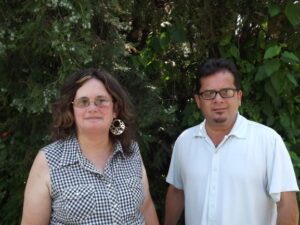
Group works to change county’s government structure

0
Proposed change to county government organization, with a county council and executive concentrating power and contact with county residents.

A group trying to change the government structure in Lucas County has until June 29, 2012, to obtain the 13,500 valid signatures of registered voters needed to get their proposal on the November ballot. The group is proposing a county charter form of government, with “home rule” for Lucas County.

Five co-leaders have taken charge of the effort, which they have titled “Better Lucas County.” The effort is the product of many more citizens’ years of work, said one of the co-leaders, Robert Reinbolt, president and CEO of Reinbolt Consulting Group.
KeyBank, Fifth Third Bank, Mercy and ProMedica are some of the petition drive’s supporting organizations.

The University of Toledo provided major research and facilities support for a study that spurred the proposal.

Reinbolt said there was a “citizens for effective government concept” that pushed for county reform two or three years ago. Dr. Richard Ruppert, another of the fi ve co-leaders and former president of the University of Toledo, said when that effort stalled, the county suggested a study be conducted.

“Sometime in early 2010, a former County Commissioner (Ben Konop) suggested that Cuyahoga County and their form of government might be worth looking into,” County Commissioner Carol Contrada said. “An independent group was constituted.”

Advisory group Reinbolt and Ruppert were on the study committee that consisted of 35 members and met at least weekly for more than a year, Reinbolt said. There was also an advisory group that consisted of about 15-20 people, he said.

Contrada said Lucas County Commissioners Pete Gerken and Tina Skeldon Wozniak were briefed on the group’s findings in May 2011 and the study was released and published in June 2011. Reinbolt said the group met with all the cities’ and some township trustees, got their input and incorporated it into the charter that Neema Bell finalized. Bell is a co-leader and attorney and partner at Shumaker, Loop & Kendrick LLP.

“The advisory and study groups spent quite a bit of time leading up to where we finally got the report [and] recommendation, then it was decided earlier this year that we need to take it forward in terms of a petition drive,” Reinbolt said.

The other co-leaders are Scott Hamner, vice president-secretary and principal at Findley Davies, and Thomas Palmer, managing partner at Marshall & Melhorn, LLC. The co-leaders have been presenting and talking to different groups, Reinbolt said.

“All we’re saying is, here’s an idea that’s been through a lot of citizens and a lot of hours, and a lot of research [has been] done, so sign the petition, put it on the ballot, and let the voters decide,” Reinbolt said. “If we get enough signatures we’ll spend the summer making sure the voters know what it’s about.”

Ruppert said the reason for the proposed change isn’t that things in the county government aren’t going well, but that by adopting this charter, the government will improve.

The proposal

Currently, Lucas County citizens elect eight row officers — coroner, auditor, treasurer, prosecutor, engineer,  recorder, clerk of courts and sheriff — and a three-member board of commissioners, along with the court of common pleas.

The group is proposing a county charter in which citizens would instead elect a county executive, a nine-member county council and the county prosecutor. Six of the nine council members would represent six different districts in the county, which the group has divided based on population, and the remaining three positions will be at-large spots, open to representatives from any district.

The county executive would appoint the chief fiscal officer, medical examiner, engineer and sheriff, with confirmation from the council. The council would appoint an internal auditor, who would work with the chief fiscal officer, a position that combines the roles of recorder and treasurer.

“Look at how we do private industry, or public. We have a board; even in the public setting we have a chief executive, the mayor, and there’s a council,” Ruppert said.

“That’s what we’re doing now. We’re suggesting that form of government,” Ruppert said.

In the study, the group looked at the two other counties in Ohio that have a similar, charter form of government — Cuyahoga and Summit counties.

Reinbolt said Delaware County has contacted him about pursuing a new form of government as well.

“In every case it looks like they were more efficient and more cost-effective and they began to focus on countywide, ‘What can we do, collectively, to improve our situation?’”
Ruppert said.

Summit County originally adopted a charter form of government in November 1979 but has acquired amendments and adoptions since then, according to ccao.org.

Cuyahoga County citizens voted for their charter in November 2009 and it was fully operating in the county as of Jan. 1, 2011, according to charter.cuyahogacounty.us.

Ruppert and Contrada said that Cuyahoga County adopted the charter because there was corruption within its county government.

Ruppert said on a per-capita basis, Summit County’s costs of publicfunding dollars are 20 percent lower than Lucas County’s. Ruppert said the group did not perform a study to discover why that was.

“The committee lacked the resources and time to perform an in-depth analysis of each office, department and agency to ascertain efficiencies that could be achieved by reorganization. These analyses can be left to other groups in the months ahead. However, the committee did draw high level comparisons between Lucas and Summit counties
because of their general similarity,” stated the report available at lucascountystudy.org in reference to cost comparisons between Lucas and Summit counties.

Economic development

Reinbolt said that the main purpose for the reform is not to save money, although he said he believes that will happen if this new structure is implemented.

“I can’t really say any cost analysis was done,” Reinbolt said. “It will probably save around $200,000- $300,000 a year but it could very well save more as we consolidate positions. It’s not intended to be driven by saving money, as the main purpose is not to save money. The main purpose is to have a more responsive government.”

Bell said with the charter, there is “every likelihood of economic development countywide.” Bell said it’s an opportunity for job development and a way to keep talented youth in the Toledo area.

“As we have it now, we have row offices; we’ve got all elected officials, none of whom are responsible to anyone other than to the citizens. It doesn’t channel up. With this new form of government, there would be one go-to person with whom the buck stops, which makes it easier to coordinate efforts throughout the county with the various branches. It makes it more efficient for businesses who want to come do business with the county,” Bell said.

Contrada said the report acknowledged that from 2008-11, the county cut more than $20 million its budget.

“Then [the report] says the ‘committee is not aware of commensurate decline of services,’” Contrada said. “They are making the case that the county has been able to institute efficiencies without the reform.”

Contrada said the group had one good recommendation that the county is already looking into, and that is the internal auditor position.

“You have a lot of different offices that deal with budget and fi scal matters. By having an internal auditor, it makes sure there is a standard, transparent, consistent methodology in use. It helps effi ciency from one department to another,” Contrada said.

Skepticism

Sylvania City Councilman Doug Haynam said he is “very skeptical about the proposal,” which was presented to him in November. Haynam said he thinks the proposed structure will cripple political diversity and fair representation.

“One concern I have is the extreme centralization of power within a single executive,” Haynam said. “He is more likely to appoint friends and political buddies instead of qualified people. The executive would be more likely to appoint someone who has contributed to his campaign and would use the positions as political patronage. Trusting in the good faith of a single executive — most people with government experience understand that that would not be a reasonable place to put trust.”

Haynam said he is also wary about the home-rule aspect of the charter and the supposed cost-effectiveness of the change.

Reinbolt said townships, villages or cities that have home-rule capabilities now will not be superseded by the new governmental structure.

“The home-rule is a provision of state law that allows you to establish a law or rule that would supersede something the state or county has in place,” Reinbolt said. “Right now, the county has to go by the charter established for all counties in Ohio. With this [new charter], we could put different laws into place, once approved by the council and a referendum by voters.”

Haynam said the proposal is “change for change’s sake.”

“I don’t have anything to lose or  gain [from this],” Haynam said. “It just really isn’t a good idea. The fact that they did it in Cleveland doesn’t mean it’s a good idea here. In Lucas County, we have a well-functioning county government. What we have going here works pretty well.”

Kevin Haddad, Sylvania Township Trustee and President of the Lucas County Township Association, said he wants change in the county government system, but not by way of the proposed structure.

When he ran for county commissioner in 1996, Haddad said, he and a township trustee created a plan to change the three-member board to a five-member one.

Haddad said he thinks that the three at-large spots of the proposed plan will most likely go to Toledo city representatives, unfairly excluding the other county districts.

“I’m not happy with the three board member [structure] right now, but if we’re going to change the county government, let’s look at something to be fair. With a nine-member board, it’s going to be Toledo City Council running it,” Haddad said.


 

Osburn: Flawed Claims

0

Every four years, Ohio plays an integral role in each presidential candidate’s strategy, especially in terms of television ad time.

This year will be no different. To date, voters have seen more than $162 million worth of ads. The bulk of the money has been spent in battleground states like Pennsylvania, Nevada, Florida and Ohio.

According to The Washington Post, Toledo has seen $1.5 million worth of ads to date from
both candidates. While smaller in comparison to other parts of the state, this amount is still enough to leave a lasting impression in a voter’s mind.

One ad that has been recently played from the Barack Obama campaign targets Mitt Romney’s governorship of Massachusetts. Paid for by Obama for America, the ad depicts Mitt Romney as a job killer and a debt creator. Th e campaign claims that “Romney economics” didn’t work when he was governor and they won’t work if he is president.

The ad states that under Romney, Massachusetts had the highest amount of public debt per person than any other state. This is a true statement. According to Moody’s Investor Services, during Romney’s last year in office, Massachusetts had the highest per capita debt in the country with $4,153 per citizen. Connecticut came in a distant second.

Cumulatively during Romney’s four years, the rankings stayed the same. Even though Romney slowed the rate of debt growth from 5.8 to 1.9 percent, this ultimately means that the claim made by team Obama is true.

However, the claim is also somewhat misleading. First, there is a distinct difference between state and national debt.

Many states are like Massachusetts, which by law must balance its budget. This means that the operating budget for the state, which covers public employees’ payroll and government services, must be fully paid for by taxes and fees each year.

Romney did not increase taxes during his tenure, but did increase fees. Money for capital improvement projects like road and school improvements are typically not covered in the budget and are paid for by borrowing money. In Massachusetts, regional capital projects are often paid for by the state, due to the lack of regional government taxing authority.
This increased the debt even more.

State debt is different from the national debt because, unlike state governments, the federal government is not required to have sufficient funds to cover discretionary and mandatory spending. It is able to print money to pay for services it doesn’t have the money for, unlike states. So the idea that based on Romney’s state debt record, he would increase the debt to pay for discretionary and mandatory spending is severely flawed.

Second, Massachusetts had a trackrecord of operating in debt that started before Romney took office. In the two years prior to his governorship, Massachusetts ranked first and second in debt per capita. In fact, it has been in the top five ranking for almost five
decades.

However, while the state may be notorious for racking up large amounts of debt, it is also well known for paying it off . Under Romney, the state operated with a AA credit rating, recently being upgraded to AA+. Any money borrowed by the state was most likely paid off.

The ad also states that during Romney’s tenure, Massachusetts at one time ranked 47th in job creation. This is true, but ignores the improvements Romney made during his time. When Romney took office in 2003, Massachusetts was at the bottom of the list at 50th, in terms of job creation. When he left office in 2007, the state jumped to 28th on
the list.

Romney even improved the state’s unemployment rate from the 5.6 percent rate he inherited to 4.7 percent when he left office. Though the jobless rate and unemployment numbers were still above the national average when Romney left the governorship, it is clear that conditions did improve under his leadership.

Instead of doing a year-by-year analysis of Massachusetts’ job creation rankings, the Obama campaign decided to use the much worse average. Additionally, the campaign also used the most misleading measure of state debt to paint the worst picture of candidate Romney.

The Obama campaign continues to blame Romney for problems that he inherited when he was governor, while ignoring the successes of his tenure. ✯

Ben Osburn is a graduate student in political science at the University of Toledo.

Miller: Six

0

Since December 2006, Rainbow Valley has been a family oasis and tradition.

Nestled in the Sears court at Aventura Mall in South Florida, Rainbow Valley is about the size of a suburban backyard. It looks like an anime dream of a marshmallow world; every hill and slide and cave is made of soft, yielding foam.

Babies crawl, toddlers toddle and shoeless kids run and jump on the bright green and blue surfaces while parents sit or play along and an attendant guards the only exit.

White clouds with smiling faces are suspended from the ceiling, overlooking the play area like benevolent sentinels.

Our twice-yearly visits to Aventura to visit family almost always include a walk through the seemingly endless Aventura Mall, which during the holidays features a wonderland of Christmas trains, trees and a Santa Claus who remembers our sons every year and adds to the season’s magic.

Evan, who is now 6, and Sean, who is now 4, celebrate their mid-June birthdays within a few days of each other; Sean was born on the same date as my brother Mark, my onlysibling. So June visits to Aventura, just south of Hollywood and Fort Lauderdale,  revolve around birthday parties and the inevitable spoiling that loving uncles like Mark and Jack orchestrate.

The boys love walking through the air-conditioned Aventura Mall, with its gigantic Disney Store, a LEGO store with open workbenches and piles of LEGOs and the whirring escalators.

Rainbow Valley, not coincidentally, is located next to an It’Sugar store that boasts enough candy and sweets to give Willy Wonka a toothache.

One of our rituals at the mall is to visit Rainbow Valley, where everyone takes off their shoes, places them in a cubicle and then runs and plays, ideally helping the kids expend energy but in reality draining the adults while the kids grow exponentially stronger. Th ey slide, climb into the mountain fort to look through the periscope, slide down hills and chase each other in circles, laughing and laughing until someone falls or climbs too high.

Our annual file of photographs from Aventura includes six years of Evan and Sean at Rainbow Valley, chronicling their growth against the unmoving background of the plastic hills and slides.

During our visit the week of June 11, we visited the malland let the boys play with LEGOs and marvel at the Disney Store (which, due to its corporate parent’s continuing efforts to own every brand of entertainment, features Snow White and Buzz Lightyear next to the Iron Man, Miss Piggy and Perry the Platypus) before finding our way to Rainbow Valley.

We were with our family friend Julie and her little boy, Ben, another Rainbow Valley veteran. We approached the playground and watched the three boys take off their shoes and scurry to the entrance gate. Ben and Sean were inside, running and exploring within seconds. But the attendant stopped Evan and motioned for me to come over.

“He’s too tall to come in,” she said, with the air of someone who has delivered this particular piece of bad news before and is ready for the protest. She guided Evan to the fixed ruler on the gate, which, like the doomed One Ring of Mordor, was inscribed with a message: “Children who are taller than 42 inches may not use the play area.”

I do not know how she sized Evan up so quickly, but I was confident she was wrong.
We had just been here in November and he sailed through. There was no way Evan was now 3-and-a-half-feet tall.

But when he stood against the ruler, the top of Evan’s head was a clear two inches above the cutoff line.

“I’m sorry, Evan,” I said, and walked him back to his shoes. I was as confused and thrown off as he was, but while I was fighting what my eyes had seen, Evan showed excitement.

“Hey, I’m too big for the playground,” he said, with a mixture of pride and wonder.

“Looks like it,” I said, proud of his reaction to being denied a treat he had enjoyed twice a year for his entire life.

“Hey, I’m too big for the playground,” he repeated, and this time I could hear the understanding and disappointment I was already mired in.

We walked around and watched the other kids play for a while, then left them in their mothers’ care and walked back to the LEGO store for a half-hour.

There are days when it feels like I just brought my sons home from the hospital, but those moments are fading as traditions like Rainbow Valley are felled by the arrows of growth and maturation.

As we played with LEGOs, Evan and I had a conversation about his just-completed year of kindergarten. He was confident he knew everything he needed to know and figured he wouldn’t need to spend any time this summer preparing for first grade.

“You think you know it all, huh?” I asked him.

“Yep,” Evan replied. “Ask me something.”

“OK, professor,” I said. “What’s the meaning of life?”

Evan looked at me like I had asked him for an elementary answer, like his name.

“Family,” he said.

I smiled and nodded.

My 6-year-old son thus proved  himself not only too grown for Rainbow Valley, but, on this one question, wise enough to silence his father.

Michael Miller is editor of Toledo Free Press.

Pounds: For whom the Bell rolls

0

Two local media mainstays, Toledo Mayor Mike Bell and Columbia Gas of Ohio, have been the subject of conversation this week. They always are, but there are interesting public relations elements to discuss.

A few photos of Bell have been posted on Facebook and local message boards such as Toledo Talk. The photos show the mayor hanging out at the new Ye Olde Cock n’ Bull Tavern, wearing his motorcycle leathers and torn jeans.  He is shown on stage with a band, posing with women at the bar and just generally enjoying himself.

Good for him.

It appears the photos were posted to embarrass Bell by raising questions about his behavior. It is of interest that these photos almost always draw comments about the race of the people Bell is with; whether those comments are in jest or come from a less admirable mindset can only be known by the people posting them.

During his run for office, Bell promised he was going to remain true to himself and he has. He has taken controversial stances, made statements with bulldog determination and run the city as he said he would.

If he parties on his own time and it helps him deal with stress and stay in touch with who he is and what he loves about Toledo, that’s healthy.

Bell has made mistakes, and his increasing distance from some City Council members is a concern, but none of his perceived missteps have to do with him blowing off steam on his motorcycle and enjoying some rock star action.

There are lines of behavior and responsibility on the party scene, and there have been no indications that Bell has crossed them.

Rock on, Mike.

Residents at GrayStone Woods have been rocked by the discovery of methane gas seeping around their homes. Columbia Gas of Ohio determined the levels were a danger and cut off service to the subdivision. This has understandably caused distress to the homeowners, who have been without a major utility service for three weeks. No gas means no hot showers and meals cooked in microwaves, with no immediate endgame in sight.

The situation is undoubtedly a major inconvenience for the homeowners, a scary proposition for developer Seneca Building Co., a jurisdiction puzzle for government and a public relations issue for Columbia Gas.

The utility company is doing the right thing. Columbia’s zero-tolerance policy is a safety-first call (one that does not help its bottom line, by the way) and one residents should respect, even if they can’t appreciate it.

Residents in GrayStone Woods have a right to voice their unhappiness, but  they would have much bigger worries if Columbia Gas had rushed to restore service and one or more homes or lives had been lost.

We certainly hope the parties involved can find a quick and permanent solution to the problem. But in the meantime, Columbia Gas and Mayor Bell find themselves in a similar situation; being criticized for taking care of their business — and their lives — with unwavering dedication to what they believe is right.


Thomas F. Pounds is president and publisher of Toledo Free Press and Toledo Free Press Star.


Respite Center for people with disabilities to open in Defiance

0
Kaitlyn's Cottage in Defiance. Toledo Free Press photo by Joseph Herr

DEFIANCE — Step inside Kaitlyn’s Cottage behind ProMedica’s Defiance campus and the high ceilings, granite countertops and rich wooden floors will wow you.

That is, if the front deck that winds around the wood and stone exterior of the building hasn’t already.

But here, tucked away from the hospital hustle and perched at the edge of a dark and tall forest, what truly matters is the space to roam those wooden floors and the messes that will soon pile up on those countertops.

Kaitlyn’s Cottage opens June 26 to serve as a respite center for 16-to-40 year olds who have intellectual and physical disabilities. Guests can visit for a few hours or stay overnight in one of the four bedrooms. Staff will work with guests on a one-on-one basis, offering two frequently changing scheduled activities daily, said Marsha Kott, the program manager.

The building cost $1.9 million, an amount partially subsidized by ProMedica Defiance Regional Hospital, funded by donors and mostly fueled by Sharon and Dan Farrell, a Defiance couple who has an 18-year-old granddaughter with a disability. Her name is Kaitlyn.

Kaitlyn Shock

The two also started an endowment fund, which has accumulated $1.5 million, to help families afford to send their relatives to Kaitlyn’s Cottage.

“This is an idea that I thought about years ago and it was because of our Kaitlyn, seeing a need for a place like this,” Sharon Farrell said. “When young people like Kaitlyn come out of school, there’s nothing left, there’s no place … nothing for them to do … there are no options.”

Filling the gap

Parents of children with disabilities often struggle to fill the gap during the period following high school graduation. They are faced with finding a new social outlet for their kids or new programs to challenge them, said Frances Diehl, director of respite services for those with disabilities at Kaitlyn’s Cottage.

She said her little brother had a disability and her family saw him regress as her parents searched for a new outlet for him once he graduated.

Kott said the chance to socialize becomes strained after graduation.

“As they exit the school setting, if they don’t have the option to go onto other workshop settings and things like that, they’re limited to as to their friendships and the people they can be with,” she said.

Parents also suddenly have less time for themselves — not that they had much before — and couples often struggle to find time for a simple dinner date. Farrell said Kaitlyn’s Cottage gives parents the opportunity for their own respite.

But it’s difficult for parents to feel comfortable leaving their offspring with strangers, sometimes even at respite centers, said Cris Shock, Kaitlyn’s mother. She, her spouse Josh and her three daughters are a unit, and they all know how to communicate with Kaitlyn, she said, whereas strangers might not.

Kaitlyn has Rett syndrome, a nervous system disorder that leads to development reversals particularly in language and hand usage. The disorder almost exclusively affects girls. Kaitlyn does not talk, has never walked and has limited function in her hands, but Shock said she always knows what Kaitlyn is thinking because of her expressive eyes.

The staff at Kaitlyn’s Cottage learned communication styles firsthand through more than 40 hours of training. Kott said she assigned each trainee a particular disability to prompt the individual to problem solve just like their future guests. Kott gave the group sparse help, pushing them to decipher which communication cues would work to get the attention of their caretakers. For example, Kott left one “non-ambulatory” and “non-verbal” trainee in the kitchen alone so she had to figure out how to alert Kott that she was left behind.

After the exercises, the group discussed how it felt to be excluded. The idea is that once the employees know how they communicated thoughts when saddled with a disability, they would be able to pick up on those same cues from their guests.

Freedom of choice

Communication enables one of the most important aspects of Kaitlyn’s Cottage: choices.

“I’ve had students who were growing up in an environment where they’re afraid to say no and the first time my one guy said ‘No,’ I was thrilled,” Kott said. “It’s that freedom of choice — making a purposeful, functional concrete decision.”

Scheduled activities for a day might include making pottery, baking cakes, making crafts, playing music or engaging in games. For guests who have limited control of their hands, the staff can use objects that are activated when the guest pushes a button, such as a pair of electric scissors that the employee holds but depends upon the guest to power them.

But Kott said staff will ask guests if they want to partake in the activities or do something else. If someone needs quiet time, a reflection room flanks the living area for some solitude. The guests who cannot communicate with words will use cards with icons. The trained staff can notice which icon the guest prefers based on the guest’s eye contact, Kott said.

Kaitlyn just graduated with her class from Defiance High School; she will continue attending school until she is 22-years-old. After that? Shock said she feels comforted knowing that Kaitlyn’s Cottage will be waiting.

Man seeking children photos claims false connection to newspapers

0

A man with no connection to Toledo Free Press identified himself to a Holland mother as a photographer for the newspaper and asked her if he could take pictures of her children Monday.

Kelly Devol, a mother of two, said a man knocked on her front door at about 4 p.m. and told her he was taking photographs for a Toledo Free Press article about children left home alone during the summer. The man, who Devol said identified himself as “Tim O’Neil,” told Devol that he saw her children playing through a second story window and thought their Nerf gun fight would make a good picture to accompany the story.

The man looked to be in his 20s and had tattoos on his neck, arm, calf and fingers. His arm tattoo was a red and green dragon and his hand tattoo said “Live Free.” His T-shirt had an image of a gun on it, she said.

Devol asked for the man’s name and telephone number and told him her spouse might call him back the next day.

“I’m never afraid in my neighborhood, so I wasn’t afraid at the time,” Devol said. “It was after the fact that I started thinking about it.”

The next morning she called her relative, who is a copy editor at Toledo Free Press, called Toledo City Paper and The Blade; everyone with whom she spoke said no employee with the stated name had ever worked at their newspapers.

Her spouse called the man back. This time, he said he was a Blade photographer. Her spouse then asked for a contact at the The Blade to verify the man’s story. The man declined and said that the family didn’t seem interested so he wasn’t going to bother.

“My kids are a little freaked out,” Devol said.

Tuesday she called the Holland Police Department and an officer came out within five minutes, she said. But the police department does not have a report on file and Chief Robert Reed said he didn’t know if that officer was going to file one. The officer who responded to Devol’s call is out of town for training, he said. Devol gave that officer the man’s phone number. Reed said he did not have the number on him as of press time.

Reed said the department has little information about the man because Devol didn’t call while the man was at her doorstep.

He said he would love to talk to the guy.

“If you have something suspicious happen — call us right now,” Reed said. “I can’t tell you how many times people will call and say ‘Last week, something funny happened.’ I can’t do anything about it if it happened last week because the [assailant] is gone.”

Michael S. Miller, editor in chief of Toledo Free Press, said anyone who is approached by someone claiming to work for thes newspaper should feel free to call (419) 241-1700 to verify employment.

“All Toledo Free Press employees carry company IDs but it is easy to forge such identification,” he said. “No Toledo Free Press employee will ever randomly knock on your door asking to take pictures of your children or family members. All feature story assignments are arranged in advance with full permission and cooperation of the sources.”

An early report had placed the incident in Perrysburg and was reported on the Toledo Free Press Facebook page.

Car, motorcycle show to help fund ONE initiatives

0
Sherry Walker with the 1968 Buick Electra she and her husband own. Toledo Free Press photo by Sarah Ottney.

A classic car and motorcycle show will help a local group fund initiatives to improve education, safety and employment rates in its North Toledo neighborhood.

The inaugural Under the Bridge Classic Car and Motorcycle Show, sponsored by the Olde North End’s ONE Village Council, is set for noon to 7 p.m. June 24 on Water Street, between Lagrange Street and the Martin Luther King Jr. Memorial Bridge.

Admission to the show is free. Cost to display a car or motorcycle is $10 per vehicle. People’s Choice trophies will be awarded to the car and motorcycle with the most votes.

The show will also feature a flea market, music from the ’50s and ’60s, food, a 50-50 raffle, door prizes and more, said ONE Village Council member Ramon Perez.

“We’re really excited,” Perez said. “We just want everyone to come out, be along the riverfront, listen to some ’50s and ’60s music and have a great time. We just want to make as much money as we can because 100 percent of the money goes back into ONE Village in North Toledo.”

Sherry Walker and Ramon Perez

Money raised will be used to fund ongoing campaigns to improve education and safety and to help residents find jobs, Perez said.

“All the money goes back to getting folks engaged in the community and helping them get jobs and a good-quality education because that’s what ONE Village Council is known for,” Perez said. “We’re a resident-run organization and we’re always working on improving the neighborhood.”

ONE Village Council President Sherry Walker and her husband, Paul Walker Jr., own and restore classic cars and will have two on display at the show, a 1965 Chevrolet Nova and a 1968 Buick Electra. Walker said she’s hoping for a big turnout.

“Car shows are always fun,” Walker said. “My husband and I are car buffs and this is something we always enjoy. We have a lot of car enthusiasts in Northwest Ohio and southeast Michigan. It’s what Toledo’s about. We produce cars. People should come out and just enjoy being in the neighborhood, seeing the classic cars and supporting ONE Village in our mission to make life better in our neighborhood and community.”

Registration forms are available by contacting Perez at (419) 261-0598 or [email protected]. For information, visit www.unitednorth.org.

Flying high with Idina Menzel

0
Idina Menzel -- Photo by Robin Wong

When Idina Menzel landed the role of Maureen Johnson in “Rent” in 1995, she had no idea it would be her big break on Broadway — or that she would meet her future husband, castmate Taye Diggs.

“I was a struggling wedding singer/bar mitzvah singer, and I was just happy to get this job in the midst of January and February because there’s no weddings in that time, so I needed work,” the New York native said.

“The first day we sang ‘Seasons of Love’ that we learned in rehearsal, I thought this beautiful song is special, but I had no idea to what extent that would be. And as far as my husband goes, I thought he was really hot, but I didn’t think we had very much in common,” Menzel said and laughed.

Idina Menzel — photo by Robin Wong

Her star rose to new heights when she played Elphaba in the original Broadway cast of “Wicked,” singing “Defying Gravity” while soaring above the stage of the Gershwin Theatre from 2003-05.

“[Singing that song on Broadway is] a different sensation, but it’s still thrilling for me, especially now because I feel so lucky to have a song like that in my life that people know so well, that people love, and it’s a beautiful way to revisit ‘Wicked’ for me every night,” she said during a call from her tour bus in Texas.

Fans can hear it live when Menzel performs at 8 p.m. June 27 at the Detroit Opera House. Tickets range from $35.50 to $95.50.

As the Wicked Witch of the West, she won the Tony Award for best performance by a leading actress in 2004.

Because she was in “Wicked,” Menzel’s life was changed — for good.

“There’s the platform that it puts me on as a role model that I’ve become because of what that character represents and how young people connect with her, so that’s a huge responsibility that I embrace and I love,” she said.

“The most important, significant aspect of playing Elphaba was, as women, we are often afraid and let our true power, our true strengths, kind of be eliminated in society because we don’t want to seem threatening or off-putting. And I had to learn that about myself, as a human being, that I wasn’t doing anybody any favors by stifling, quelling those things that make me special.”

These days she’s embracing her beauty, that amazing voice — and singing shoeless.

“Idina Menzel Live: Barefoot at the Symphony” was released as a CD and DVD by Concord Records in March. A special also aired on PBS.

The singer offers glimpses of her life through music by Cole Porter, The Police, Barbra Streisand and Lady Gaga.

“Some songs chronicle a specific time in my life that I wanted to share with the audience, so the Cole Porter song is from my college days, Lady Gaga is ‘Glee,’ ” she said.

On “Glee,” Menzel played Shelby Corcoran, mother of Rachel Berry (Lea Michele).

“I liked being on that show; I liked being around all those talented singers and dancers. It makes me feel like I’m in New York a little bit more when I’m stuck in LA,” she joked.

Soon Menzel will work on a project for the big screen: She’ll be the voice of the Snow Queen in Walt Disney’s “Frozen,” based on Hans Christian Andersen’s “The Snow Queen.”

“This is a dream of mine come true; I had a little piece of it in ‘Enchanted’ [as Nancy Tremaine], but this is a whole different ballgame,” she said. “As soon as I get off tour, I go into the studio and really start getting into it.”

Szyperski: Lucy the Nonliteral and other visionaries 

0

A young boy I was taking care of once came to me out of the blue and told me he had hit his head. A little nervous not knowing the extent of his injury, I questioned the when, where and how of the incident. He began explaining in detail how he had hit it on my ceiling fan. Shocked and confused, I implored him to let me know just how he was able to do such a thing. He continued on about how he was crawling around on my ceiling when it happened, much like the time he had hit his head on my curtain rod when crawling up my wall one day. Huh? 

 I’m a literal thinker. What happens happens and what doesn’t doesn’t. In my little world, there is description but not embellishment. There are gray areas but not purple areas filled with cotton candy trees and unicorns. In my mind, the world is ours for discovery, interpretation and adding onto that which came before us, but not so much for just making stuff up. 

 That being said, I do have a great appreciation for imagination. I completely agree with Einstein’s assertion that imagination is more important than knowledge. From my experience, I can’t conceive of how one would be even exist without the other. They just seem to work hand in hand. 

 Still, I am coming to find that imagination lives in many different forms. My youngest child, Lucy, exemplifies the most recognized childhood variety. She runs around the house with mermaids and Barbies and other characters in hand proclaiming each exciting turn their little imaginary lives take. She digs for buried treasure as “the little pirate” and repeatedly exalts the wonder of her bounty to me, “the mommy pirate.” She spends hours and hours just making things up. 

Lucy is the quintessential imaginative kid, embodying what I thought imagination was supposed to be. I’m proud of the way she is able to produce scenarios seemingly out of thin air and verbalize them in a way that captivates any informal audience surrounding her. She definitely holds that little spark of light that could one day shine on stages near and far.  

Still, I don’t always get her. 

Not only do I tend toward a different type of imagination than Lucy fancies most, but my two older children do also. When I realized that we had a whimsical, this-box-is-a-pirate-ship thinker in the house, I was intrigued to have an imaginative child in the mix. I was used to asking one of my children a question and getting an at least semi-logical, straightforward response.  

Lucy, on the other hand, will happily respond to a serious question by simply retelling the last episode of “Dora the Explorer” she watched. When it’s time to figure out a family mystery (e.g., who spilled something on the floor or why Lucy is crying and clutching her leg), one must be careful not to offer even the slightest bit of storytelling fodder. Asking Lucy if the leg issue was caused by a biting bug can easily unleash a grand narrative about a fanciful insect that swooped down out of nowhere to wreak great havoc on the appendage in question, even if the truth is that she misjudged a stair. I’ve come to find that she even utters some things for no other purpose than to practice certain facial expressions. 

Lucy’s seemingly boundless imagination and dramatic interpretation of it fascinates me, especially since she’s the first of my children to create in such a manner. Discovering that I “finally” had an imaginative child has actually led me to a new appreciation of imagination in general, however. After considering what I assumed to be my other children‘s lack of imagination, I’ve learned to see that their imagination simply shines through in other ways. 

Jack, my oldest, is a problem solver. While staging a production out of a pile of stuffed animals is not his thing, constructing the best way to send a soccer ball from one end of field to the other or offering multiple solutions to a math problem is not without mental boundary pushing or visionary effort. My middle child, Laney, practices her creativity in a similar manner, seeking imaginative resolve to household issues and other quandaries. In short, not all imaginative endeavor comes in the form of cotton candy trees and unicorns.  

However our children are best able to illustrate their creative side, it is important that we are able to recognize and encourage it. The world is always looking to move in new directions and we need all types of vision to take it there, whether it be by making things better or making things up. 

Shannon and her husband, Michael, are raising three children in Sylvania.

Music Under the Stars returns to Toledo Zoo

0

Music Under the Stars, a concert series performed by the Toledo Symphony Concert Band, will be offered at the Toledo Zoo Amphitheater for six Sundays this summer, from July 8 to Aug. 12. 

 This marks the return of the free series, offered for more than 60 years before last year’s hiatus. 

 Music plays an important part in each of our lives and that’s why Mercy felt it was so important to ensure that Music Under the Stars — this community’s treasure — returns to the Historic Amphitheater at the Toledo Zoo,” said Mercy President and CEO Andrea Price, in a news release. 

 The Andersons, The Toledo Community Foundation, Huntington Bank, Taylor Cadillac and the Toledo Zoo are additional sponsors of the series. 

 A different faculty conductor from the Michigan and Ohio area will direct each show, while Sam Szor, who conducted the shows for almost 60 years, will make a “cameo appearance” at each performance, said Toledo Symphony General Manager Keith McWatters, also a drummer in the concert band. Szor was diagnosed with leukemia last summer, McWatters said.  

 Between the lack of funding and Sam’s health, we decided to step away for the summer and regroup,” McWatters said of last year’s series cancelation. “Sam’s health was not really the deciding factor; it was one of the ingredients. We wanted to create a strategic plan to relaunch the series and make it brand new.”  

 Some conductors are choosing themes, as Szor did, and all are encouraged to partner with community organizations for their shows, McWatters said. 

 The series opens on July 8 with a patriotic-themed concert directed by Bruce Moss, director of band activities at Bowling Green State University, who is also music director of the Wheaton Municipal Band in Illinois, according to BGSU’s website. McWatters said Wheaton’s band is similar to the Symphony’s Concert Band.  

 On July 15, John Madden, associate director of bands at Michigan State University, will direct the show. 

For the performances on July 22 and 29, University of Toledo fellows Robert Mirakian and Jason Stumbo, respectively, will conduct. Mirakian is the director of the UT Symphony Orchestra and is also music director of the Perrysburg Symphony Orchestra, according to ourtownperrysburg.com. Stumbo is the director of bands at UT.  

 Rodney Dorsey, associate director of bands at the University of Michigan, will lead the band on Aug. 5 and Kenneth Thompson from BGSU will close the series on Aug. 12. In addition to serving as associate professor of band activities at BGSU, Thompson is the artistic director of the Toledo Youth Orchestras (TYO) and conductor of the TYO Philharmonic Orchestra, according to BGSU’s website. 

 Each show, which will begin at 7:30 p.m., is expected to run a little less than two hours, including an intermission. 

 [Times] will vary,” McWatters said. “They might do a medley for six to eight minutes and then a couple of marches. Some will choose four pieces that are 10 minutes each, or some might choose 10 pieces that are four minutes each.” 

 The 45-member band, of which half are salaried Toledo Symphony members, will typically not learn the pieces they will play in the evening performance until that afternoon, McWatters said.  

 With a professional group at this caliber, … we get together at two o’clock on Sunday afternoon and practice and then do the performance in the evening,” McWatters said. “We don’t rehearse at the zoo; we rehearse at the symphony. We don’t mind playing the concert in the heat, but practicing (outside) can be kind of a drag.” 

 A new feature of this summer’s series will be the symphony’s partnership with the Toledo Area Regional Transit Authority (TARTA), which will provide a shuttle service to and from the amphitheater and Toledo-area locations, similar to the service TARTA provides for Toledo Mud Hens and Toledo Walleye games. 

 The participation of community sponsors, including reduced fares from TARTA, reduce barriers to transportation and parking, and enable many more people to enjoy the Zoo’s historic amphitheater and the outstanding sounds of the Toledo Symphony Concert Band. These are the collaborative partnerships that continue to improve our quality of life in Toledo,” Mayor Michael Bell said in a news release.  

 The cost of the TARTA transportation is $1 each way, with pick-up and drop-off sites at Centennial Terrace in Sylvania, St. Luke’s Hospital in Maumee, River Place Shopping Center in Perrysburg, Miracle Mile Shopping Center in Toledo, Sears at Westgate Shopping Center in Toledo, Kroger in Waterville and Adams Street in Toledo.  

 Steve Atkinson, marketing director at TARTA, said the “park and ride” shuttles will leave each location at 6:30 p.m. and are scheduled to leave the zoo 20 minutes after the concert ends.  

 [Drop-off and pick-up] will be on the Broadway entrance, so it’s a short walk from the bus to the amphitheater,” Atkinson said. 

 Admission to all concerts is free and seating is first-come, first-serve. Parking is free for zoo members; nonmember parking is $6 or $15 for buses and campers. 

 For more information on transportation, visit tarta.com or call (419) 243-RIDE.