Toledo Mayor Mike Bell with Kids Unlimited participants, Photos courtesy Kids Unlimited
Even more important than providing a stage for elite golfers to showcase their skills, the mission of the Jamie Farr Toledo Classic is to raise money for area charities.
The golf tournament has donated $7.4 million to more than 120 charities since 1984, said volunteer coordinator Heather Warga.
“That’s what it’s all about,” Warga said. “The community’s been so good to us in the way of volunteers, sponsorships and the relationships we have with a lot of the companies here in Toledo. What better thing to be able to do than to give back to the community. It’s important to us that the money stays right here, that it goes to organizations here and the people they serve and just the impact it makes on their lives.”
This year’s 10 charity beneficiaries are Aurora House, Boys & Girls Clubs of Toledo, Family and Child Abuse Prevention Center, Feed Lucas County Children, Kids Unlimited, Mom’s House, The Victory Center, YMCA/JCC of Greater Toledo, Ronald McDonald House Charities
of Northwest Ohio and the Jamie Farr Scholarship Fund of the Toledo Community Foundation.
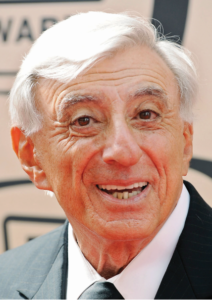
Tournament host Jamie Farr said he’s proud to be associated with such a worthy cause.
“I thoroughly enjoy the LPGA classic and I am very proud of all the money it has donated to many of the needy and deserving charities,” Farr said in an email to Toledo Free Press.
“The sponsors, the fans, the cities of Toledo and Sylvania and the players have been exceptional in their devotion to making this tournament so successful.”
Each charity provides volunteers to work the tournament, Warga said.
Golf course architect Arthur Hills, right, is a board member and longtime volunteer with Kids Unlimited.
“The charities do participate quite a bit with the tournament and they are always eager to help out,” Warga said. “The ones we have this year have been great. They all know the importance of it and have been great.”
Kids Unlimited President Chris Amato said the money raised will not only help fund the after-school and summer programs his organization operates for inner-city youth, butwill also offer increased visibility and credibility for the group, helping to leverage funds from other sources.
“It’s very significant,” Amato said. “When you get the Jamie Farr designation, it elevates you to a different level and gives you a lot of credibility in the community and with donors.”
Operating out of the school buildings where participants attend, Kids Unlimited helps develop academic and social skills as well as emphasizes cooperation, respect, self discipline and teamwork, Amato said.
Amato said teachers notice major improvements both academically and behaviorally in the kindergarten through eighth grade students involved with Kids Unlimited.
“One child was 25 points below the state average and hit 25 points above the state average next time he took the test,” Amato said. “It’s hard to quantify behavior the way you can a test score, but anecdotally, that’s where we see it. Teachers will come up to us and say, ‘We can really see a difference in so and so.’”
Internationally known golf coursearchitect Arthur Hills is a board member and longtime volunteer with Kids Unlimited.
“He comes at least once a week, if not twice a week,” Amato said. “He’s been working with one boy for three years now and the improvement level is amazing.”
The organization will be opening its own charter school, Kids Unlimited Academy, in the fall for kindergarten through third grade with plans to expand through eighth grade later, Amato said.
Boys & Girls Clubs of Toledo Executive Director Dave Wehrmeister said the club feels a special significance in partnering with the tournament because Farr is a former member. The organization operates four locations in the central city as well as a resident summer camp in Michigan.
“It’s huge on many different levels,” Wehrmeister said. “Jamie was a Boys Club member in his childhood and a member of our Hall of Fame, so it’s quite special for him to come back to town and remember where his roots are. We’re hoping he will stop by one of our clubs and spend a little time with our kids.”
The Victory Center is a first-time charity partner, said Executive Director Dianne Cherry.
“We are so excited,” Cherry said. “It’s a real opportunity to educate more people about what The Victory Center is and what we do. It’s going to be some wonderful exposure to the community and beyond. The grant funds are just invaluable to us this year.”
The Victory Center provides individual and group services to cancer patients, survivors and their families, including massage therapy, reflexology, Reiki, healing touch, hypnotherapy, aromatherapy, counseling, support groups, yoga, gentle exercise, meditation, expressive arts and more.
“Our philosophy is that there is a mind-body-spirit connection,”Cherry said. “The medical community takes care of the body portion and we help with the mind and the spirit. We heal people from the inside out.”
Feed Lucas County Children operates 80 sites that provide meals for Lucas County children during the summer when they are not being fed at school. The organization plans to invest its share of the tournament proceeds in a steamer oven for the organization’s new kitchen, said Executive Director Tony Siebeneck.
“That right there is going to help us feed more kids next year,” Siebeneck said. “You can’t ask for anything better.”
The YMCA/JCC of Greater Toledo will put the money into its Fun Bus,a colorfully painted vehicle that provides free recreational activities and nutritional snacks for kids inunderprivileged Lucas and Wood County neighborhoods, said Michael Ashford, vice president of urban relations. The Fun Bus served about 18,000 children last summer and is on track for the same this year, Ashford said.
“Without the support of the Jamie Farr, we would not be able to reach that amount of kids and provide those recreational activities throughout the summer,” Ashford said. “There is limited money going around right now, so this is a very important gap for us.”
The Jamie Farr Scholarship Fund is an endowed scholarship fund established by the tournament and administered by the Toledo Community Foundation. Each year, four renewable $3,000 college scholarships are awarded to graduating high school seniors with financial need, said Joanne Olnhausen, communications and scholarship officerat Toledo Community Foundation.
“Our goal is to help our local students get to school, and we’ve been able to make a very large impact in our community,” Olnhausen said.
The Children’s Advocacy Center at the Family and Child Abuse Prevention Center provides free crisis counseling and case management services for child victims of sexual abuse and their families.
“We’re thrilled to be able to get funding from the Jamie Farr ToledoClassic,” said CEO Cindy Pisano. “That funding will allow us to continue to offer crisis counseling tohelp children cope and heal from the trauma they’ve experienced.”
Aurora House provides housing and services to homeless women and children.
Mom’s House offers counseling, child care, tutoring, crisis intervention, mentoring and parent education classes and more as it helps low-income, single moms graduate from high school and college.
Ronald McDonald House Charities provides temporary, homelike accommodations for families whose children are receiving medical care away from home.
For more information, visit www.jamiefarrtoledoclassic.com
Lauren O'Meill is Miss Klinger’s Club 2012. Toledo Free Press photos by Joseph Herr.
What do you get when you mix the fun, festive atmosphere of Mud Hens’ Opening Day with a professional golf tournament?
You get Friday at The Farr, the 14th hole at the 2012 Jamie Farr Toledo Classic presented by Kroger, Owens Corning and O-I at Highland Meadows Golf Club in Sylvania.
On Aug. 10, the Ladies Professional Golf Association (LPGA) tournament will introduce a new “party atmosphere” to its 14th hole in imitation of the famed par-3 16th hole at the Professional Golfers’ Association of America(PGA) Waste Management (WM) Phoenix Open at Tournament Players Club Scottsdale. That tournament takes place in Arizona in February each year.
The hole will be called “Klinger’s Club,” after Toledo native Jamie Farr’s character on the television show “M*A*S*H,” and will be part of the Friday at the Farr festivities, which begin at 1 p.m. Aug. 10.
“We want it to be kind of like … (Mud Hens’) Opening Day, where if the game is at three or even if it’s at five, people are Downtown partying in the streets at 12 o’clock,” said Stephen Vasquez, membership development manager at the Toledo Chamber of Commerce and one of the two event organizers. “It’s kind of turned into a Downtown Toledo holiday.”
The par-3 hole will feature bleacher seating for about 400 people, an electronic scoreboard and a large concession stand nearby with food and beverages. T-shirts will be distributed to create a “white-out,” like those at basketball and football games.
Fans are encouraged to cheer, chant and sing for the golfers, like fans at the WM Phoenix Open do, Vasquez said.
Lauren O’Neill is Miss Klinger’s Club for 2012 at the Jamie Farr LPGA tournament.
According to the Klinger’s Club’s Facebook page, the goal is to make the 14th hole the “loudest and most exciting hole on the LPGA tour.”
Vasquez said “cheerleaders” and “cheat sheets” with LPGA player information are in the works to help make this happen.
“If you watch the Phoenix Open, [the fans] are really quiet, but as soon as the ball is hit, they scream like crazy,” Vasquez said. “We’re going to encourage cheering.”
Admission to Klinger’s Club is included in admission price. Daily tickets start at $15 and are available at the gate or Shawn’s Irish Tavern, which is also providing shuttle service from its 4400 Heatherdowns Blvd. location.
Weekly tickets are $50 and are available at local Kroger stores. Kids 17 and younger get in free with an adult. More ticket information is available online at www.jamiefarrtoledoclassic.com.
Once the last golfer finishes her round at approximately 7 p.m. Aug. 10, the local band Nine Lives will play at the public pavilion as a grandfinale to Friday at The Farr. Nine Lives is a cover band that plays everything from Journey to Eminem to The Temptations, said Franz Gilis, co-organizer of Klinger’s Club.
Vasquez said Klinger’s Club is an event that many people, not just traditional golf fans, can enjoy.
“If you don’t even like golf, who cares? Just come to party,” he said.
Toledo exposure
There were many motives behind the Klinger’s Club initiative, including simply offering a good time for fans and golfers alike, Vasquez said.
“It’s one of those things where [the tournament] is not quite at the level of (Mud Hens’) Opening Day yet,” Vasquez said. “For most people, the Jamie Farr is … like ‘If I get tickets, I’ll go,’ but we want it to be ‘I’m going to the Jamie Farr this year!’”
The tournament’s net proceeds go to 10 area children’s charities, said Judd Silverman, tournament chairman for 27 years.
“It’s for a good cause,” Silverman. “Since 1984, the Jamie Farr has donated $7.4 million to more than 100 Northwest Ohio and southeast Michigan children’s charities.”
Silverman said tournament organizers wanted to create a gathering and networking spot for young business professionals and Vasquez and Gilis had the idea to model a hole after the WM Phoenix Open’s.
“What we’re trying to create is a special event for the business community to gather and have a great afternoon of watching golf while also interacting with fellow business professionals from the area,” Silverman said. “The goal is to get the business community to take the afternoon off and come out and be a part of the hole’s festivities.”
Vasquez said a successful Friday at The Farr will mean more exposure for Toledo, which will help the area attract events and sponsorships.
“It would be cool if we got a lot of people to come out to this,” Vasquez said. “Even if we increase Jamie Farr’s attendance by one or two thousand, all that stuff builds up and puts Toledo on the map … and shows we can really rally around an event and support it.”
Vasquez said this will show Toledo can support major sporting events and may even help give the area the opportunity to host higher-level events, like the PGA U.S. Open.
“Those events don’t just decide in October to come here in August. They’re planned a few years out,” Vasquez said. “There’s a lot of factors that go into that decision.”
Among the factors are city infrastructure, potential company sponsorships and a supportive fan base, Vasquez said.
Vasquez said Klinger’s Club will also promote the tournament, the LPGA and the sport of golf in the Toledo area, complementing an LPGA initiative to build its brand.
“Over the course of the last five or six years [the LPGA has been] trying to get its golfers out there more to build more of a brand, like a Tiger Woods or a Phil Mickelson,” Vasquez said. “Fans will then come out to LPGA events to follow their favorite golfer and not just to follow golf.” Player participation
The WM Phoenix Open’s 16th hole has often been referred to as “a party where a golf tournament breaks out.”
However, the party started with humble beginnings.
Tom Altieri, 2013 WM Phoenix Open tournament chairman, said the Phoenix Open moved to Scottsdale in 1986, and the lively atmosphere developed naturally when fans, especially college students, started congregating by the hole and nearby beer stand.
In 1997, Tiger Woods hit a hole-in-one on the 16th, which Altieri said created an electric atmosphere that has grown into a vacation destination that attracts 16,000 people and the world’s top-tier performing artists. One hundred and fifty corporate skyboxes sell for $40,000 each, Altieri said.
What has made the Phoenix Open’s par-3 “party hole” so successful is the players’ willingness to embrace it, Altieri said.
“The players themselves have really embraced the energy and atmosphere of the hole and that has really helped it grow,” he said. “In order for it to succeed the players have had to embrace it, and they have … and they tend to do better on that hole.”
Altieri said players pass out merchandise to the crowd while it sings the fight songs of the golfers’ alma mater. One golfer even encouraged noise from the crowd.
“We had one player who didn’t want quiet. He was egging the crowd on to make noise,” Altieri said. “The crowd obliged and it was pretty cool.”
Chris Erblich, a Phoenix attorney who attended the WM Phoenix Open in 2005, said even though he is not a golf fan it was exciting for him to witness the events on the 16th hole.
“As soon as the ball is in the air, the crowd screams, or boos in the case of a bad shot. It’s a loud, party-time atmosphere,” Erblich said. “Some golfers think it’s great, while some have complained the expectation is unnerving, but it’s cool and fun and different.”
Altieri said when other tournaments ask about creating a similar experience, he tells them that a controlled environment with communication to players is vital for a successful “party hole.”
Altieri said he suggests talking to the LPGA and its players about the idea ahead of time.
“I wish there was a magic formula, but there’s not,” Altieri said. “We’ve worked hard to keep an energy … and make sure the fans understand that these are professional golfers out there trying to earn a living. Fans have to be respectful of the players.”
Vasquez said Klinger’s Club organizers plan on reaching out to golfers through Facebook, Twitter and other outlets to let them know what’s coming and ask them to get involved.
Sponsors for the event include Nemsys, The Image Group, Wholehan Marketing and Shawn’s Irish Tavern.
Media sponsors are Toledo Free Press, WNWO, 101.5 The River and 92.5 KISS -FM. For more information on Klinger’s Club, visit www.facebook.com/KlingersClub.
Jamie Farr, who portrayed Cpl. Max Klinger on the popular television series “M*A*S*H,” agreed to lend his name and celebrity to the original Jamie Farr Toledo Classic tournament in 1984.
His willingness to help promote the event during the past 28 years has allowed the annual Ladies Professional Golf Association (LPGA) tournament to succeed where many others have not been so lucky. Toledo Free Press recently had a chance to ask Farr how he came to be associated with the Jamie Farr Toledo Classic, presented by Kroger, Owens Corning and O-I.
In 1983, “M*A*S*H” was just going out of production and Farr was not sure what direction his life would take. He had always enjoyed watching golf and now, with some free time on his hands, decided to start playing the game. He bought a set of clubs, joined a club and hit the driving range to set about learning to hit the little white ball.
Jamie Farr
Singer and actress Dinah Shore learned of Jamie’s new hobby and invited him to play in her LPGA tournament — now an LPGA Major — the Kraft Nabisco Championship in Palm Springs, Calif., where Farr was paired with LPGA legends Beth Daniel and Nancy Lopez.
This was about the same time Professional Golfers’ Association (PGA) professional Craig Stadler’s caddie and eventual Jamie Farr founder and tournament director Judd Silverman was seeking a celebrity who would help promote an LPGA golf tournament in Toledo.
Silverman felt Farr would be the perfect match as a celebrity host. He was a likeable television star and hometown Toledo boy done good. And Silverman needed a big name to get the LPGA to take his bid to start an event in Toledo seriously.
Silverman was originally able to contact Farr through Farr’s childhood friend, Don Michel. Michel was a local McDonald’s franchise owner and was involved with the Ronald McDonald House in Toledo, which was to be the first beneficiary of the proceeds from the new golf tournament.
The LPGA commissioner at the time, John Laupheimer, approved the idea and the Jamie Farr Toledo Classic was born.
Without the involvement of Farr from the outset, the tournament might never have gotten off the ground. Now, 28 years later, the tournament is still growing.
In an email to Toledo Free Press, Farr said he thoroughly enjoys his association with the Jamie Farr Toledo Classic and looks forward to the annual tournament. He said he is very proud of the millions of dollars that have been donated to the many deserving Toledo-area charities.
Asked about the current state of his golf game, the 73-year-old Farr said he still loves the game, but doesn’t play as often as he used to. His best handicap throughout the years was an 18 and he currently plays to a 23 handicap.
He went on to add that his game is somewhat unpredictable, but then retracted: “I take that back. My game is very predictable. … It stinks.”
Farr does golf and plays in charity events and tournaments sponsored by former NFL quarterback Jim Kelly and singer Michael Bolton as well as the Kraft Nabisco Championship. Farr said the game is great fun although it brings with it great frustrations for amateurs and pros alike.
He said he appreciates the complexity of the game and its appeal to golfers everywhere.
“No one has ever owned the game. Not Tiger Woods, Jack Nicklaus, Arnold Palmer nor Bobby Jones,” Farr said. “It is just on loan to those who have excelled. I have often said that the clubs in an amateur’s hands is called equipment, but in the hands of professionals is called instruments.”
Farr wanted to express his appreciation to everyone connected to the Jamie Farr Toledo Classic who have helped make it a first-class event.
He mentioned the efforts of Silverman, his staff and the more than 1,200 volunteers and sponsors who donate time and money to make the event a success.
Farr also wanted to thank the Toledo area business community, all the tournament chairmen over the years, the mayors of Sylvania and Toledo and the various governmental agencies that provide the services needed to carry out an event of this size.
Farr also wanted to recognize Highland Meadows Golf Club and Inverness Club for providing such wonderful facilities for the pro-ams and events that surround the tournament.
“I give a rousing, thunderous, standing ovation [to all],” Farr said.
Although he is not able to get back to the Toledo area as often as he would like, Farr said the tournament gives him a perfect reason to return every year and spend time with family and friends.
Farr has never lost his Toledo roots and continues to give back to the area. He also donates time to promote the Toledo Symphony Orchestra and Toledo-Lucas County Public Library.
In 2011, he recorded the holiday poem “‘Twas The Night Before Christmas” for a Toledo Free Press CD that benefited the Northwest Ohio Make-A-Wish Foundation.
“I try to give back as much as I can when I can,” Farr said.
A hundred years ago, when I was in college, one of my economics professors used to say, “If you punish a behavior you get less of it and if you reward a behavior you get more of it.”
He was referring to taxes. Taxes are essentially penalizing a behavior. It is only natural that the activity you are taxing will go down and hence the revenue the government receives will not be what it expects.
More recently, this was made clearer by Arthur Laffer, with a graphic illustration aptly named the Laffer Curve. The bottom line is that there are two tax rates that produce zero revenue for the government.
The first is a zero rate of tax, which of course will produce zero revenue. No big surprise there! The second rate that will produce zero revenue is a 100 percent tax rate.
If everything you produce is confiscated in taxes, what is your motivation for producing anything? If your net personal result is the same if you work or if you don’t work, why work?
Now the logical conclusion is that there is an optimal rate of taxes that generates the most revenue for the taxing authority and yet still motivates the producers to produce. There are several factors that go into this calculation and they are constantly changing with the times.
According to Laffer, revenue responses to a tax rate change will
depend upon the tax system in place, the time period being considered, the ease of moving into underground activities and the prevalence of legal loopholes.
This makes it a little more difficult than just saying lowering tax rates will increase revenue. This statement will hold generally but not absolutely.
The point I want to make with this information is how governments operate when thinkingabout taxes and what the reality ends up being.
Let’s take Ohio’s cigarette tax, which was increased several years ago. What the people in Columbus do is they look at how many packs of cigarettes are sold in a year and then decide how much revenue they want based on that quantity.
For example, let’s say that 1 million packs of cigarettes are sold each day in Ohio. It makes some sense that if you add one dollar of tax to a pack of cigarettes that this tax will generate $365 million new dollars in revenue each year.
The reality is quite different, however. Penalizing the purchase of cigarettes means
people will purchase fewer, thereby changing their behavior or finding
alternatives. The actual revenue received by the state will be considerably less than planned.
This works the same for gasoline, sugary drinks, bullets, salty snacks, alcohol, gambling or any other product or behavior the state deems worthy.
All this is well and good except the state spends the $365 million upfront and then is baffled when the revenue isn’t there. It’s even worse if the state plans on this revenue and goes out and borrows money based on these new future revenues.
It baffles my mind since I know that the state is aware of this phenomenon. Otherwise, why would it give tax incentives in order to encourage the behavior it wants; tax credits for
buying green cars, property tax abatements for building new buildings, deductions for providing health insurance to employees and many more.
As we go into this election, remember the Laffer Curve and listen to the words of the candidates when it comes to taxing (penalizing) a behavior to lower the deficit and create jobs.
Look past the rhetoric and look at the economics. Both parties are guilty of this because the behavior of politicians is always about power and not about sound economics. One more reason to celebrate John Galt Day on Aug. 13 — go on strike for the day.
Gary L. Rathbun is the president and CEO of Private Wealth Consultants, Ltd.
Willie Williams is director of the learning center at The Source at Owens Community College. Toledo Free Press photo by Sarah Ottney.
Owens Community College’s Learning Center at The Source will host an open house to showcase the educational programs, services and resources available at the school’s Downtown location.
The event, which is open to the public, is set for noon to 3 p.m. July 31 at The Source, 1301 Monroe St.
Tours will be available and representatives will be on hand to answer questions about academic programs and resources available within the schools of Arts and Sciences, Business, Health Sciences, Nursing, Public Safety and Emergency Preparedness and Technology.
“A lot of people know they want to go back to school, but are not sure what to study,” said Cory Stine, Owens’ director of admissions. “There will be representatives from all six of our academic schools, so prospective students can comparison shop.”
Staff from admissions, academic advising, career services, testing services, disability services, veterans services and Oserve (records, registration and finance) will also be available to answer questions about new student orientation, placement testing and more.
Willie Williams, director of the Learning Center at The Source, proposed the open house after talking to high school guidance counselors and parents who didn’t realize there was an Owens location Downtown.
“A large population still has no idea we are located inside The Source,” Williams said. “We want to make sure everyone who wants to participate in or even consider college knows we have this location. I just want people to be aware.”
Toledo Free Press photos by Sarah Ottney
The Learning Center at The Source was established in 2007 in part because many people living in the Downtown area were interested in attending Owens but did not have reliable transportation to the campus in Perrysburg, Williams said. The location features eight academic classrooms, three computer labs and one nursing lab, all with state-of-the-art technology, according to the school’s website.
“A group of community members thought it’d be a great idea to bring Owens to Toledo,” Williams said. “The Source is centrally located and already works with the unemployed and underemployed. We can work hand-in-hand with that. Education and employment working hand-in-hand.”
Organizers also hope the open house helps prospective nontraditional students feel more at ease in an educational environment, Stine said.
“Adult learners are often afraid to take the steps to go back to school, whether because they’re not sure where to go or what to do or nervous because maybe it’s been a while since they were in school,” Stine said. “This way, we open it up for them to see the location, meet the staff and become a little more comfortable.”
Attendees need only to bring an open mind, Williams said.
“I want people to bring an open mind about higher education,” Williams said. “We will provide them with a tour of the facility and general information about the programs we have to offer and, most of all, let them know we are here to serve our community. We just want to make sure our community knows we are here to serve them and that we have this centrally located position inside The Source. People can start here, build a solid foundation of higher education and what’s expected of them and then transition to the Toledo campus.”
Stine said he hoped attendees come away from the open house with a better understanding of their next educational steps.
“I hope when people leave they know more about the process and are comfortable making the decision either to go back to school or to wait or to explore different options,” Stine said. “The biggest thing we want people to know is there are options out there. If they are looking for a better job or looking for a better option, we might be one solution that can help. We just want to help people to feel more comfortable about the whole thing.”
All attendees are encouraged to visit the check-in and information location at the entrance upon arrival.
For more information about the open house, call (567) 661-2732 or 1-800-GO-OWENS, ext. 2732, or visit www.owens.edu/openhouse.
It is completely normal for adults and children to be anxious about visiting a movie theater after the Batman shooting, said OraLee Macklenar, a clinical therapist who specializes in the treatment of anxiety disorders.
The Mercy employee said people should not be embarrassed if they want to take a break from movie theaters, especially the first few weekends after such a tragedy. However, they need to remind themselves how frequently they have safely watched a movie.
“Fear is very, very common for adults and especially for children,” Macklenar said. “When something violent happens in a place where it is friendly and peaceful, it is never anticipated.”
Additionally, people are upset that a fellow human has inflicted such pain. They ask, “How could this happen?”
When people eventually return to the movies, it makes sense for them to watch for a person “doing something weird,” Macklenar said, but they also need to guard against overreacting.
“You do need to be vigilant. I don’t think that is abnormal. Rewind 50 years ago and it might be, but not in this day and age.”
Macklenar saw a spike in anxiety disorders after Sept. 11, 2001, but that doesn’t mean people who experience anxiety in the weeks after the Batman tragedy have a disorder, she said.
“Get away from the TV, turn it off. It is good to be informed, but you need a happy balance.”
A study after the Oklahoma City bombing showed children within a 100-mile radius of the attack were suffering from post-traumatic stress disorder because they were taking in daily doses of intense media coverage.
These days the coverage is even more comprehensive because of the Internet, Macklenar said.
“We recommend that families take a cautious approach. We know what the news is and we need to back away and do engaging things as a family,” she said. Also, don’t take a hard line approach by forcing a child to go to the movies to conquer the fear.
“Temper that with time and patience. In our adult thinking, we are so much more mature. We have a different way of reasoning through crisis,” she said.
Talk to your children about facts. Let them talk about what has happened. Let them put it into their own words. Reassure them that they aren’t alone and you are with them.
“Help them realize that bad thingshappen and this is bad, but there are safe places and good theaters to go to.”
This is also good advice for adults who are scared.
“It is normal to not want to go to the movies for a while,” Macklenar said.
“It’s funny how one insect can damage so much grain.”
— Elton John, “Empty Garden”
About 30 minutes into the 10:15 p.m. July 20 showing of “The Dark Knight Rises,” a man left his seat in the front row and headed for the exit door. I, and scores of people in Theater 1 of the MJR Theater in Adrian, Mich., audibly and visibly tensed. I had mentally rehearsed the movement it would take to throw my wife to the floor and suspend myself between the seats to shield her from attack, but in that vague mind-movie way that rarely becomes reality. When the man took an abrupt left turn for the lobby, there was palpable relief. When he returned a few minutes later with popcorn, there was muted, “What were we afraid of?” laughter.
Of course, what we were afraid of was that the man was going to copycat his way into the 24-hour news cycle by opening fire on the crowd of moviegoers as hellbound 24-year-old James Eagan Holmes had allegedly done less than 24 hours before in Aurora, Colo.
Do you remember the first time you boarded an airplane after the Sept. 11, 2001, terror attacks? That same low-thrumming anxiety that defies intellectual analysis and sharpens the senses accompanied many to the dark theater that night. I love going to the movies, as I love traveling by plane, and I resent the intrusion into normalcy such capitulation represents.
Cowering does not honor the dead. Bowing to the wishes of madmen does not provide shelter. But it seems that when these slaughters take place, there is a swift reaction taken to ward off the grief, helplessness and terror, that is tantamount to throwing a feather at a raging rhinoceros.
So, as bodies are prepared for burial in Colorado, our freedoms and choices are also corroded. The limitations on choice may be temporary, but once yielded, how many freedoms fully bounce back?
Before Sept. 11, 2001, family members could accompany each other all the way to the departure gate, or wait for them at the arrival gate in airports. One of the indelible images of my life is silently walking through the Fort Lauderdale International Airport in October 2001, focusing on the rifles cradled in the arms of military personnel as passengers checked bags, bought magazines and generally acted as if they were preparing to walk the Green Mile, not fly the friendly skies.
Those rifles and soldiers are gone, but the security measures and intrusions on freedom are likely permanent.
It is too early to say how the Aurora shootings will impact one of our most popular and compelling entertainment habits, but the immediate surrendering of normalcy in the name of “safety,” happens with a swiftness that indicates a frightening willingness to abdicate freedom for “protection.”
MJR Theaters canceled midnight screenings. AMC Theatres chain banned the wearing of costumes to showings. Whether you have ever donned a Jedi robe or brandished a Harry Potter wand at a screening is not the point; many people do, but for now at least, they no longer have that option.
As the nation shook its collective head in denial and grief, Warner Bros. pulled its “The Dark Knight Rises” ads from TV. The film industry announced it would not release its daily box office numbers, a trivial pursuit followed by millions of people. DC Comics postponed the delivery of the comic book Batman Incorporated because it contains “content that may be perceived as insensitive in light of recent events.”
“Recent events?” The Penn State punishment? The Tom Cruise/Katie Holmes divorce? The casino opening? Are we so sensitive, easily offended and unable to deal with reality that DC couldn’t even directly refer to the massacre?
I understand all of these reactions to an event that shook and shocked us. But there is a line between honoring the victims and giving in to the psychopath, and every time a horrific event takes place, that line increasingly takes the shape of a noose tightening itself around normalcy and our freedom of choice.
Which path best preserves the honor of the victims? Shutting down or standing up? Twisting reality to appease or living life as normal? As this strain of murder invades more sanctuaries (schools, churches, army bases, restaurants, now movie theaters), the reactions become more frequently geared toward protection via surrender.
Remember the now-cliché line that if we give up Freedom X, the terrorists win? That’s not such a funny concept when our society is increasingly eager to hide its collective head in the sand. And while some may find comfort in that cocoon of darkness, they may not realize just how prominently exposed their asses are.
Michael S. Miller is editor in chief of Toledo Free Press and Toledo Free Press Star. Contact him at [email protected].
They were living the good life. Solar energy companies were posting impressive stock gains, successfully winning county, state and national grants and securing local and state loans. Money flowed freely.
Then, with little warning, it all changed. The solar industry, with its unlimited growth potential, began to struggle. Local, state, national and international circumstances changed.
European countries failed to renew their solar energy subsidy programs, Asia entered the production process and federal, state and local political party leadership changed.
Global demand dropped and the increase in panel-producing companies and factories glutted the marketplace with efficient solar panels at significantly cheaper prices than just 12 months earlier.
The drop in panel prices globally saw U.S. solar energy company stock prices plummet almost as quickly as they had risen from 2007 through 2008. Companies responded by restructuring their organizations and tweaking their mission statements, CEOs stepped aside or were fired, companies scrambled to expand their traditional markets and cut their workforces, and one company began to introduce new, innovative products using solar energy to power cellphones, campers, boats and military equipment.
Scientists, engineers and technicians in research and development departments pushed their creative limits to develop new, more energy-efficient technologies. They had to increase solar panel gigawatts cheaper and more efficiently.
What happened to the solar energy industry?
Simply speaking, life happened.
Changing technology
As early as May 31, 2009, reports surfaced that the once-rich European market was quickly disappearing. Continued success for solar panel-making corporations meant deciding whether to continue with the traditional 6-inch cell-shaped wafers made of polysilicon — an expensive man-made crystal requiring a time-consuming process — or shift to the thin-film process of applying a thin coating of chemicals to glass or other surfaces.
The four Greater Toledo-area companies were all using the newer thin-film technology methods by 2009.
The thin-film process requires fewer raw materials and is cheaper than traditional wafer panels, which rely on polysilicon. In 2009, the cost of polysilicon, the main raw material in traditional wafer panels, rose as high as $500 a kilogram (about 2.2 pounds).
Although thin-film technology advocates were in agreement that cost prohibited the use of polysilicon, they differed on which chemical coatings would yield the most efficient panels suitable for mass production. One coating First Solar was using, cadmium, caused significant concern among research and development teams. Critics cautioned against using cadmium because it could cause cancer, although officials at firms using the cadmium technology, including First Solar, insisted that their production methods guarded against cancer-causing environments.
Thin-film technology advocates pointed to significant production time advantages of cadmium. The cadmium coating process took much less time and First Solar’s process was much more cost-effective because it used only one percent of the chemical compound used in traditional wafer panels.
By 2011, cost concerns won. The technologies of the Toledo-area solar firms set them apart from all other solar companies globally; First Solar, Willard & Kelsey and Xunlight were all using the thin-film production process, even though, at that time, it was a relatively small segment of the overall industry.
Today, solar industry experts are questioning the wisdom of the Toledo-area firms’ decisions.
In a research note published May 4, Joe Osha, global coordinator for solar power for Bank of America Merrill Lynch, wrote, “A year ago, the question was when the inevitable recovery in thin-film would occur. Now it’s whether thin-film solar is viable as a business at all.”
China’s response
A worker at First Solar. Photo courtesy First Solar.
First Solar, the global leader in the newer thin-film production process, faced another challenge when China entered the solar industry business. In December 2011, Mike Ahearn, First Solar’s then-interim CEO, offered his observations about the supply of solar panels in a conference call with investors.
“Global production has effectively tripled over the last three years, as you know,” Ahearn said. “Two factors have enabled this to occur. First, entry barriers for manufacturing [the traditional 6-inch cell-shaped wafers made of polysilicon] evaporated several years ago when equipment suppliers effectively integrated process technology into turnkey production equipment. This enabled relatively inexperienced and unskilled operators to quickly enter the supply chain and led to an explosion of production capacity in China and elsewhere.”
China’s labor costs nosedived because, unlike First Solar, it did not need skilled labor to produce its product, which has traditionally been more energy efficient than thin-film panels. Before China’s introduction of what Ahearn called “turnkey production equipment,” consumers had to choose between energy efficiency and cost, and cost (thin-film technology) usually won.
China could now produce the more energy-efficient traditional wafers as cheaply as First Solar could produce solar panels using the thin-film process.
First Solar had lost its pricing advantage, and China’s model was easily replicated.
“If you look at polysilicon manufacturers (of traditional solar panels), they’re a dime a dozen out there,” said Mike Koralewski, First Solar vice president and site manager for the Perrysburg plant. “That just tells you that it’s the level of competency and education you have to have to get [First Solar’s] technology to work.
“Right now, if you wanted to make a polysilicon wafer PV plant, you can go to various vendors around the globe and actually buy an entire plant from them, and they’ll install it for you.”
Changes in demand
The issue of which company had the best technology took on increased importance as many panel producers were struggled with a supply glut and an international credit crisis that prompted customers to cancel orders and delay construction of solar farms.
“Globally, there’s been a kind of softening of demand,” said Monique Hanis, Solar Energy Industries Association spokesperson in Washington, D.C.
In addition to other developments, Germany, First Solar’s primary customer, reduced subsidies for converting energy systems from fossil fuel to solar power.
On Sept. 25, 2011, it was reported that although solar experts were saying the domestic market for thin-film panels was growing, Toledo-area solar firms were struggling to overcome hurdles at state, federal and global levels. In addition to the U.S. recession and an increasing number of global competitors, First Solar, Willard & Kelsey and Xunlight had to adjust production schedules as a result of Germany’s decision to abandon its renewable-energy policies and subsidies that had been helping drive U.S. sales.
Ahearn said the cut in subsidies was troubling for First Solar.
“Going forward, our goal is not just to survive the current environment but to transcend it by creating and expanding markets worldwide that do not depend on today’s subsidy programs,” Ahearn said. “This requires that we refocus our strategy and commit our resources to solving the pressing energy needs that exist in much of the world.”
Alan Bernheimer, First Solar’s public relations director, said, “The company is starting to make progress in these new markets, recently announcing 159 megawatts in Australian projects, in addition to a 10 megawatt project already under construction.”
Additionally, Bernheimer said in 2011 that 8 percent of First Solar sales were in India, another developing sustainable market.
A second Toledo-based company, SSOE, a privately held international engineering, architecture and construction management firm, gained notoriety for its work in the solar industry.
In its September 2009 issue, Inc. Magazine ranked SSOE among the country’s fastest-growing firms based on revenue from 2005-08. CEO Tony Damon cited three contributing factors for SSOE’s success: global expansions into high-growth markets; increased focus on delivering engineering, procurement and construction management services; and, most importantly, growing sections such as alternative energy.
However, predictions about fluctuating market demands caused additional concerns.
In December 2011, Tom Kimbis, vice president of strategy and external affairs for the Solar Energy Industries Association, said the intense competition among solar industry firms would produce four things: failures, mergers, acquisitions and bankruptcies.
Kimbis suggested the biggest problem firms faced was the loss of subsidies to finance large solar projects. Germany and Italy, the two largest European solar panel customers, had curtailed subsidies for new projects, thereby creating a glut of solar panels that resulted in the lowest solar panel prices ever.
Ahearn said First Solar adopted a five-point strategy to prevent potential failure: pursue new markets; improve its technology; adapt to customer needs; form better relationships with policy makers and regulators to promote large-scale solar deployment; and price its panels to drive demand without need for subsidies.
First Solar also planned to target five new growth markets: Australia, India, the Middle East, North Africa and the United States.
Analysts saw wisdom in First Solar’s strategy, suggesting that it was the best positioned of the Toledo-area companies to survive a fundamental restructuring of the global solar energy industry.
Bernheimer said First Solar has been successful in pursuing new markets. Just last month, First Solar announced three significant projects. It had been retained to build Australia’s two largest thin-film solar energy projects, to construct a 106-megawatt and a 53-megawatt project in New South Wales for power distributor AGL Energy Ltd. and to continue construction on Solar Ranch One power plant, a California project that is predicted to generate enough electricity to power 75,000 homes.
And when Fitch Ratings Ltd. reported in January that solar power companies were likely to encounter tough conditions for their public stock, First Solar responded by saying its competitors were “desperate” to sell inventory after adding too much factory capacity, leading to the current supply glut.
The week of July 16, Bernheimer suggested that “desperation” was still a problem because “there is still a supply and demand imbalance in the PV panel market.”
Bernheimer said this “desperation” has had a significant impact on the firm’s production workers, who make up the greatest percentage of First Solar employees.
“The supply/demand imbalance in Europe has affected our production associates in Europe, since we have announced the closure by year end of our manufacturing operations in Germany, with the elimination of about 1200 factory jobs there. In Perrysburg, by contrast, almost no positions were affected by First Solar’s restructuring,” Bernheimer said.
Alan Bernheimer
Xunlight has taken a completely different approach in dealing with changes in market demand. Rather than pursuing new markets, Xunlight is working to find practical applications for its technology.
On May 19, Dennis Kebrdle, Xunlight’s chief transition officer, introduced flexible solar panels for use on campers and boats as well as the roofs of buildings that can’t support heavier panels.
Kebrdle also announced that Xunlight obtained a $600,000 contract from the U.S. Navy.
On June 8, Xunlight introduced its go-anywhere power, a design Kebrdle called ideal for military personnel in remote locations who need power. The four flexible solar panels contained in the bag can be secured to the ground with stakes or fastened to another object through eyelets.
Xunlight’s strategy is to market its signature flexible solar panels to campers, boaters, the military and developing nations.
Fallout from Solyndra
After President Barack Obama beat John McCain in 2008, he set out to begin to repair the beleaguered economy. One of his solutions was The American Recovery and Reinvestment Act of 2009, a federal program that pumped $787 billion into the economy.
Opponents of the federal stimulus package criticized how money was distributed, and one business, the solar energy firm Solyndra Inc., became the poster child for critics determined to focus on the stimulus package’s faults.
Solyndra, which had received $535 million in federal loans, filed for bankruptcy in September 2011. As a result, the California solar energy company faces a U.S. Justice Department investigation, a congressional probe, and a mostly Republican contingent of lawmakers contesting any federal aid for other solar manufacturers. By Dec. 4, 2011, two other large U.S. solar companies, Evergreen Solar and SpectraWatt, joined Solyndra in bankruptcy, and a fourth, BP Solar, stopped manufacturing in the spring of 2011.
Republican presidential candidate Mitt Romney has turned Solyndra’s failure into a campaign issue.
In a speech given in front of Solyndra’s headquarters May 31, Romney said he intends to make “crony capitalism” a major theme in his campaign as well as a counter-attack to the Democratic Party’s emphasis on the worst-performing investments of Bain Capital during Romney’s time there.
A Romney ad uses First Solar as an example of Solyndra-like failure, and First Solar employees at all levels take exception to that portrayal.
Of First Solar, the ad states: “$3 billion in taxpayer-backed loan guarantees. Now they’re cutting jobs and their stock is near all-time lows.”
First Solar spokesman Ted Meyer acknowledges that jobs have been eliminated, but emphasizes that more than 90 percent of staff reductions were outside the U.S. First Solar has laid off 2,000 workers and closed its factory in Germany as well as closing down some production in Malaysia.
Meyer concedes that First Solar stock is “near all-time lows,” its price lower than it has been in more than six years. But it is not down to $4 per share, as a graphic in the Romney ad suggests. As of July 20, it was trading at $14.83 a share, down from its high of $301.30 in July 2008.
Meyer released a company statement about the ad.
“It’s surprising a candidate that claims to support U.S. economic growth would criticize a great American success story like First Solar. First Solar has proven that an American company can compete and win in renewable energy globally, and our success supports almost 10,000 American jobs, more than $1 billion in U.S. purchasing, tens of millions of dollars in exports, and record-setting innovation that reduces pollution and enhances U.S. energy security.”
Increased competition
Although solar experts said the domestic market for thin-film panels was growing in September 2011, Toledo-area solar firms were working to overcome hurdles at state, national and global levels. First Solar, Willard & Kelsey Solar Group and Xunlight faced serious issues in competition, including the economic uncertainty of the U.S. recession, an increase in worldwide competitors and the potential end of European renewable-energy policies and subsidies.
In December 2011, Ohio’s solar-panel industry experts predicted the industry would undergo a major shake-up that would break all but a handful of solar panel producers worldwide. The forecast raised questions about the future of the Toledo area’s three current panel makers, and the viability of a fourth one, Isofoton, coming in 2012.
Each area firm, First Solar, Isofoton North America, Willard & Kelsey and Xunlight, contended it would survive any shake-up because it made a particular type of panel that was both in demand and competitively priced.
Jifan Gao, chief executive of China’s Trina Solar Ltd., the world’s fifth-largest solar panel maker, predicted in late 2011 that by 2015, two-thirds of the industry’s solar-related companies would face either a merger, an acquisition or bankruptcy.
Gao also predicted that, by 2020, just 15 solar firms will be left worldwide, five in each one of three major segments: photovoltaic (solar) panels, solar energy, absorbing wafers and ingots, and production of raw materials such as polysilicon.
Ahearn of First Solar said his firm is prepared for any change, no matter how drastic.
“First Solar is transitioning from serving subsidized markets, such as Europe, to focus on sustainable markets, where high solar resource and strong demand for new generation make solar competitive with fossil fuel generation,” he said.
However, global industry pressures have affected First Solar, which responded by cutting its sales and margin forecasts to reflect slower demand growth and stiffer competition.
Xunlight responded to those same pressures by laying off 30 employees in May 2011, after an Italian firm delayed payment on its order.
Xunming Deng, then Xunlight CEO, was not disheartened, predicting that “We will be one of those survivors. Our products are unique and different and we’re starting at a much more premium price.”
Executives at Willard & Kelsey, who had planned to have two production lines and 250 workers by December 2011, said the U.S.’s poor economy and slow solar panel demand hindered the financing for its second line.
Mike Cicak, Willard & Kelsey’s chairman and CEO, remained optimistic as well. Cicak said the goal for his firm “is to get very, very low on cost and see what happens.”
Michael Peck, chairman of Isofoton North America, suggested that the lack of preparation in three key areas would be the downfall of most companies.
“Casualties will be those companies who have not introduced new technologies in a timely manner, whose cost structures are not competitive, and who have taken on too much debt to finance past performance due to sector challenges,” Peck said.
Peck said Isofoton North America, a Spanish company, chose to build its plant in the Toledo area because of the city’s cluster of solar firms and the research under way at the University of Toledo.
In addition to the disarray the U.S. industry faced with Solyndra, Evergreen Solar and SpectraWatt’s well-publicized bankruptcies, U.S. solar industry companies had filed a joint complaint in 2011 that China was dumping low-cost panels into the United States. The Federal Trade Commission ruled, Dec. 2 2011, that solar-equipment makers are being harmed by imports from China. The commission announced it would proceed with a full investigation, which, depending on its findings, might result in imposing added tariffs on China’s imports.
Asian competition
Few experts saw it coming.
The United States had been the leader in solar panel production in the beginning but by 2009, a Breakthrough Institute study indicated that China, Japan and South Korea were on the brink of outspending the United States 3-to-1 in all clean-energy investment through 2014. That same study also indicated that those three Asian nations had already passed the United States in “virtually all clean energy technologies.”
U.S. companies also complained that solar panel prices had been negatively affected by China’s flooding the world market with solar panels priced below production costs.
In mid-December 2011, First Solar’s Ahearn, then interim CEO, explained his firm’s position concerning the supply of solar panels in a conference call with First Solar investors.
“Global production has effectively tripled over the last three years,” Ahearn said. “Two factors have enabled this to occur.
“First, entry barriers for manufacturing polysilicon wafers and cells evaporated … when equipment suppliers effectively integrated process technology into turnkey production equipment. This enabled relatively inexperienced and unskilled operators to quickly enter the supply chain and led to an explosion of production capacity in China and elsewhere.
“Second, silicon feedstock constraints … were alleviated in recent years as additional feedstock capacity was brought on line by … suppliers. Feedstock availability brought down prices and enabled higher utilization rates for the nameplate production capacity. … The essential point is that the polysilicon supply chain has undergone a fundamental structural change.
“In a supply chain without structural entry barriers, several things occur. First, production volumes increase so long as capital is available to fund it, and we’ve seen over the past several years that U.S. equity markets and more recently, Chinese governmental entities have been willing to provide the capital needed to fund a massive production expansion.”
On May 18, 2012, the federal trade commission released a preliminary ruling that would add a 31 percent penalty on China’s imports. If the preliminary ruling is upheld, the 31 percent tariff could be imposed on Chinese solar-panel imports. A final decision is expected in October.
The tariffs would be in addition to fees ranging from 2.9 percent to 4.73 percent imposed in March after the Commerce Department found that China was improperly subsidizing its solar manufacturers.
Although U.S. solar panel-producing companies either support or maintain a neutral position on the tariffs, the majority of U.S. solar panel installers oppose them, arguing that less expensive imports have helped make solar panels more affordable for U.S. customers.
The ruling “will re-establish a natural balance in pricing that does need to occur in the global marketplace,” said SolarWorld President Gordon Brinser. He contends that the U.S. solar market has been harmed by cheap Chinese imports.
Jigar Shah, the leader of a coalition of solar companies that oppose U.S. tariffs, said he fears that additional tariffs will lead to the loss of thousands of U.S. jobs.
Brinser dismissed Shah’s forecast as “doomsday” talk.
First Solar in Perrysburg
Changes in leadership
As solar companies struggled to remain solvent, some organizations decided to make a change at the top.
On Oct. 25, 2011, First Solar’s CEO Rob Gillette resigned with no advance notice, and the company’s stock nosedived. First Solar stock had opened the trading day at $58.11 per share. It closed at $43.27 a share, a 25 percent drop in one day and the biggest single-day decline since the company’s initial public offering in November 2006. At $43.27, the stock was at its lowest level since 2007.
Ahearn, one of the company’s founders and its chairman, was tapped to serve as interim CEO. The extent of the shakeup became clear that day, as only one of First Solar’s top six corporate officers listed in the firm’s 2008 annual report remained with the company.
In a news release dated April 26, 2011, Ahearn explained the executive reshuffling.
“The board of directors believes First Solar needed a leadership change to navigate through the industry turmoil and achieve our long-term goals,” Ahearn wrote.
On March 8, 2012, Deng, co-founder of Xunlight, resigned as the firm’s president, CEO and chairman of the board.
In an email, Deng wrote that he would continue on as an adviser to Xunlightas needed by the board of directors. Deng also said he would continue as chairman and CEO of Xunlight 26 Solar, as well as chairman and legal representative of Xunlight Kunshan and its plant in Kunshan, China.
First Solar made another change May 3, 2012, when it announced that James Hughes, the firm’s chief commercial officer, would become CEO, replacing Ahearn, the interim CEO and company founder. Ahearn took CEO position after Gillette left the position.
“Jim [Hughes] has been instrumental in developing the strategic plan that will enable us to compete and win in this new era for the solar industry, and it became clear he is the right person to lead the execution of that plan,” Ahearn said. “Jim brings a wide range of experience that will be invaluable in leading our organization, having owned and operated utilities, built power projects, cultivated partnerships and led profitable growth in a wide array of key markets around the world.”
Willard & Kelsey’s replacement of CEO William Mitchell in 2009 was much less cordial.
Mitchell was fired. After being fired, Mitchell copied the firm’s records onto what he said was his computer’s external hard drive, including months of financial transactions, banking records and detailed expense reports Mitchell claimed showed Willard & Kelsey’s travel and entertainment expenses.
Mitchell hired a lawyer to facilitate using that information to pressure Willard & Kelsey executives into paying him more than $1 million he claimed he was owed as CEO and part owner. Mitchell told his lawyer he had been instructed by Cicak, current CEO and chairman of Willard & Kelsey, to make payments to company executives from money advanced by group of Italian investors.
Mitchell died in July 2011.
Cicak said he could not discuss the situation because Willard & Kelsey has litigation pending against Mitchell’s estate, with the intention of recouping money he said Mitchell owed the company. He framed his discussion of the situation with the claim that all of Mitchell’s accusations were the work of a disgruntled employee fired for just cause.
Workforce issues
Leaders of Toledo-area solar panel companies say they recognize how important it is to both the economy and workforce morale to be able to offer members of the region’s extensive displaced workforce a job.
In that spirit, Willard & Kelsey executives said in February 2011 that the firm expected to hire 600 to 700 employees in 2012 and 2013. Cicak and Mossie Murphy, the firm’s chief financial officer, said the company hoped to generate 3,000 to 4,000 jobs between 2012 and 2017 and open a second factory three times the size of the one on Progress Drive in Perrysburg.
Despite its optimism, Willard & Kelsey has not been able to meet its hiring goals. Cicak said he remains hopeful that his firm will begin a full production schedule sooner rather than later.
In August 2011, First Solar faced workforce concerns when it was forced to rearrange about 60 jobs in its Perrysburg manufacturing complex because of what a news release called “a shift in our production processes.” First Solar, which has more than 1,200 employees at its Perrysburg facility, “redeployed” about 5 percent of its employees at one production site, assigning the “redeployed” workers to different production site at the same Perrysburg facility. Matt Dills, vice president in human resources, emphasized that “no jobs were eliminated and no salaries were affected.”
Since then, Deng said, Xunlight has slowly climbed back, securing new customers and pursuing a partnership with another solar firm that could lead Xunlight to expand its production beyond traditional solar panels.
On Dec. 4, 2011, Toledo media took stock of the area’s solar industry employment records, reporting that First Solar was the biggest solar industry presence in Toledo area with 1,200 employees. Willard & Kelsey had 72 employees, and 40 of those 72 were laid off in January 2012. Xunlight, which had promised 181 jobs, employed 50. Isofoton North America, which is building a plant in Napoleon, plans to open at the end of July with 330 jobs.
In March 2012, First Solar announced it would fire about 2,000 workers worldwide. The firm promised no layoffs would occur among production employees at the Perrysburg plant, although about 30 members of what it called Perrysburg’s “corporate administrative staff” would be laid off.
Although company officials said Perrysburg facility workers are not included in First Solar’s plans to reduce global production throughout 2012, industry analysts suggest Perrysburg facility employees might have reason to worry.
The Perrysburg facility faces the risk of downsizing later in 2012, according to Gordon Johnson, managing director and head of equity research at Axiom Capital Management Inc.
Johnson suggested that delayed and/or canceled projects could result in layoffs in Perrysburg.
Bernheimer, First Solar’s public relations director, said the firm would decrease operations at facilities in Germany and Malaysia, delay plans to open a second U.S. facility in Mesa, Ariz., and abandon a plan for a facility in Vietnam before it would downsize at the Perrysburg plant.
Bernheimer said the Perrysburg facility was spared this time because “demand in the U.S. remains strong and we have 2.7 gigawatts of projects under contract with utilities.”
Money issues
First Solar reported $664 million in profit in 2010 on sales of nearly $2.6 billion for global operations. The firm does not provide figures for the U.S. market. Financial figures are not available on Willard & Kelsey or Xunlight because they are privately owned and are not traded on the stock market.
All three Toledo-area firms have benefited from federal and state money and tax breaks.
First Solar’s Perrysburg facility was approved in September 2011 for $455.7 million loan from Export-Import Bank of USA. First Solar also received $16.3 million in federal tax credits for expansions at the Perrysburg plant.
Willard & Kelsey has secured at least $19.5 million in aid while Xunlight has received nearly $50 million in aid.
The biggest expense in a solar project is the interest on financing, according to Jeffrey Pichel, industry analyst at Jefferies & Co. Given what Pichel called First Solar’s “excellent balance sheet,” Pichel said First Solar is in good shape to finance future projects.
Todd Nein, interim executive director of Ohio Air Quality Development Authority (OAQDA), said solar companies are struggling because of the global economic downturn, the loss of European subsidies and the overabundance of unrealistically inexpensive Chinese solar panels.
In October 2011, First Solar reported net sales of $1 billion in the third quarter, an increase of $473 million from the second quarter of 2011, and up from $798 million in the third quarter of 2010.
Third quarter net income per fully diluted share for 2011 was $2.25, up from $0.70 in the second quarter of 2011 and $2.04 in the third quarter of 2010.
In December 2011, First Solar forecast 2011 net sales in the range of $2.8 billion to $2.9 billion, down from its previous range for net sales of $3 billion to $3.3 billion.
For 2012, First Solar forecast net sales from $3.7 billion to $4 billion, including approximately $1.7 billion from its systems business. Diluted earnings per share were expected to be between $3.75 and $4.25 with consolidated income.
First Solar reported in 2012 that it expected to generate nearly $1 billion of operating cash flow and had plans for approximately $375 million to $425 million in capital investments.
On Feb. 29, First Solar reported fourth-quarter losses of $413 million, or $4.74 per share, compared with profit of $155.9 million, or $1.80 per share, in February of 2011.
On May 4, First Solar acknowledged its enormous cost advantage over its competition had disappeared. As a result, First Solar stock fell to about $18 per share, down from $140 per share in 2011.
Also, since the cost of raw materials for crystalline silicon panels had taken a nosedive, it became easier for these traditional, more energy efficient panels to compete on price with First Solar’s thin-film panels.
Xunlight got a financial reprieve on May 19 when it was awarded a one-year deferment in repaying its state loans. Xunlight owed the OAQDA payments of a little more than $193,000 in both February and May. However, it made an interest-only payment in February and failed to make its May payment, said Nein.
Although the missed and partial payments violate the terms of Xunlight’s loan agreement, the company was allowed to defer loan repayments for a year because of the progress it is making, Nein said.
In January, the state took notice that Willard & Kelsey had failed to live up to production and staffing goals its executive leadership had set when it was formed in 2008. Willard & Kelsey had been conditionally approved for more than $3 million in state tax breaks, but has not generated enough jobs to remain eligible for those breaks, according to Daryl Hennessy, assistant chief of business services at the Ohio Department of Development (ODD).
Cicak said his firm had laid off employees because Willard & Kelsey’s only assembly line was undergoing changes to produce more efficient solar panels.
Nein of the OAQDA said his agency has confidence in Willard & Kelsey because its executives have experience with First Solar.
Willard & Kelsey faced additional scrutiny earlier this year because it had also reduced payments on a five-year $5 million loan from the ODD. The firm was only paying about $7,800 a month to cover the interest on the loan, Hennessy said.
Cicak said he is looking into financial options, including finding another investor, to fund Willard & Kelsey’s operations.
“No, I’m not closing,” Cicak said Jan. 18. “I’m going to try and work my way out of it.”
Cicak said investors have sunk more than $100 million into Willard & Kelsey and he is determined to keep the firm afloat.
Stock prices
First Solar has ridden a stock market roller coaster since it went public Nov. 17, 2006. In opening-day trading, the stock closed at $28.30, a 41 percent increase on the opening price of $20 a share. The stock peaked 20 months later, when, on July 31, 2008, it closed at $301.30 a share.
First Solar’s closing price history, as reported by Market Watch, shows rapid growth from November 2006 to July 2008, and then a precipitous fall of $185.75 per share in just four months. It closed at $115.55 per share on Nov. 17, 2008, the two-year anniversary of its first public offering.
Since then, prices have fluctuated, all the while declining, closing at $123.99 on Nov. 17, 2009; $122.83 on Nov. 17, 2010; $45.61 on Nov. 17, 2011; and $14.83 on July 20.
Isofoton, like Willard & Kelsey and Xunlight, is privately held. None of the three are traded on the stock market or release their financial information.
Since July 2010, Isofoton has been part of the Affirma Business Group, which holds 80 percent of the firm’s ownership). Affirma’s expertise is in the development of solar projects. The other 20 percent ownership belongs to TOPTEC, a South Korean company that specializes in industrial automation.
Construction problems
In February, First Solar faced financial uncertainty when a construction delay threatened to cancel the sale of a large solar power plant it was building for Exelon.
In a filing with the Securities and Exchange Commission, First Solar said it has been unable to resolve a construction permit issue at the 230-megawatt Antelope Valley Solar Ranch One plant in Los Angeles County, Calif. The issue was blocking the distribution of funds from a $646 million federal loan guarantee intended to pay for the construction project.
First Solar sold the California project to Exelon for $75 million in September 2011. Under the terms of the sale, First Solar was obligated to buy the solar power plant back from Exelon if the funding for the loan was unavailable.
First Solar, which is in the business of constructing, not operating, solar plants, said that if it were required to purchase the solar power plant from Exelon it would still have enough cash to operate its business while the firm looked for another buyer.
First Solar is the only area solar firm in the business of building solar energy fields. Bernheimer said First Solar is “very much the (global) leader in building and developing these large, utility-scale solar generating plants, or solar projects.”
Bernheimer also said First Solar has seen an increase in domestic demand for solar energy field construction. First Solar has 25 construction projects, totaling 2.7 gigawatts of utility-scale solar projects, in various stages of development and construction in North America, all with long-term contracts to deliver power to utilities.
Twelve of the projects are in the “In Operation” stage: four in California, three in New Mexico, one in Arizona and four in Ontario, Canada.
Seven are in the “Under Construction” stage: five in California and two in Arizona.
Six are in the “In Development” stage: three in California and three in Ontario, Canada.
Drastic drop in prices
In 2000, the United States produced about 40 percent of thin-film solar panels worldwide. Ten years later, in 2010, the U.S. was producing less than 10 percent of said panels.
Decreased production was accompanied by an unexpected drop in panel prices. In September 2011, the solar association reported that the price of solar panels had declined 30 percent since 2010, the result of increased solar competition and falling silicon prices.
Despite the decline in price, Bernheimer said First Solar experienced sales growth in 2010 because it made what he called the most affordable panels in the world.
In 2011, solar panel prices decreased another 50 percent amid the global glut of panels, increased competition and governments’ reduced incentives for renewable energy.
As early as April 14, the average selling prices for solar panels had dropped another 10 percent from the record-low levels recorded in 2011. The drop in prices helped boost global sales and made solar power less dependent on subsidies to compete against fossil fuels. However, lower prices erased any profit among the region’s three manufacturers.
Analysts’ observations
In June 2008, solar industry analysts suggested that new competitors and high stock prices would cause First Solar problems.
Mehdi Hosseini, an analyst with FBR Capital Markets, lowered the rating on First Solar shares from hold to sell. First Solar’s stock was trading at almost $300 a share then, and Hosseini argued the price reflected unrealistic expectations about the firm’s future profit margins. He also expressed concern that First Solar could be forced to lower its prices to achieve its goal of selling plant-size solar-energy installations to U.S. utilities, and lower prices could hurt profit margins.
In 2009, stock analysts at Deutsche Bank Securities in New York predicted that panels made with cadmium would account for 13 percent of global production that year, up from 10 percent just a year earlier. Analysts attributed most of that to growth at First Solar.
Steve O’Rourke, a Deutsche Bank Securities analyst, said he expected the excess supply of panels to lead to industry competition that would benefit First Solar, a company that he called the “industry leader” with “sustainable competitive advantages.”
In his report, O’Rourke suggested that First Solar “offer[ed] the most compelling value proposition in the industry.” He predicted that First Solar would “do the most to define and advance the solar panel industry in years to come.”
Two years later, on Dec. 4, 2011, Jeffrey Pichel, an industry analyst at Jefferies & Co., forecast solar industry consolidation for 2012 to 2014, citing the bankruptcies of Solyndra, Evergreen Solar and SpectraWatt, and BP Solar’s halt in manufacturing as the primary reasons for consolidation.
Pichel said First Solar avoiding becoming a victim of industry consolidation “all [comes] down to how they can improve their efficiency.”
Clarifications for Part I:
Alan Bernheimer, First Solar’s public relations director, reported via email July 20 that First Solar stock peaked July 31, 2008 at $301.30 a share, not Nov. 1, 2007, at $237.15 a share as reported in Part I.
First Solar’s Perrysburg plant was built in 1999. The June 3, 2003, groundbreaking event referenced in Part I was for the building of an expansion to the original structure.
Sources
Newspaper sources
1. Toledo Free Press, “Plan to transform regional economy”, Duane Ramsey, June 8, 2007.
8. Toledo Free Press, “First Solar’s Sohn to chair Manufacturing Council”, Duane Ramsey, Aug. 12, 2010.
9. Toledo Blade, “Obama’s rosy take on Toledo imprecise; Area’s clean-energy progress overstated”, Joe Vardon, Aug. 22, 2010.
10. Toledo Blade, “Local solar jobs”, no byline, Nov. 20, 2010.
11. Toledo Blade, “Clouds part for solar start-up; Local firm begins output, says breakthrough is near”, Sheena Harrison, Feb. 13, 2011.
12. Toledo Blade, “First Solar rearranges 60 jobs; Production needs caused shift at Perrysburg Twp. Complex”, Sheena Harrison, Aug. 19, 2011.
13. Toledo Blade, “Local solar firms shining bright through some dim spots in market; Recent Calif. bankruptcy case prompts look into operations”, Sheena Harrison, Sept. 25, 2011.
41. Bloomberg News, “Solyndra Losses a Fraction of Default Budget”, Jim Efstathiou, Jr., Nov. 10, 2011, http://www.bloomberg.com/news/2011-11-10/solyndra-losses-a-fraction-of-default-budget-bgov-barometer.html
42. CBS News, “Stimulus recipient under investigation for insider trading”, Laura Strickler, March 22, 2012, http://www.cbsnews.com/8301-31727_162-57402463-10391695/stimulus-recipient-under-investigation-for-insider-trading/
43. CBS San Francisco, “Fremont-Based Solyndra Goes Bankrupt; 1,100 Workers Laid Off”, Aug. 31, 2011,
44. Chicago Tribune, “First Solar shines at lobbying, but results are spottier”, James Nash and Jim Snyder, Jan. 4, 2012, http://articles.chicagotribune.com/2012-01-04/business/ct-biz-0104-bf-solar-clout-20120104_1_solar-panels-first-solar-government-aid
45. FactCheck.org, “Romney’s solar flareout”, Robert Farley, June 1, 2012, http://factcheck.org/2012/06/romneys-solar-flareout/
46. FirstSolar.com, “First Solar Appoints James Hughes CEO”, May 3, 2012,
47. greentechmedia.com, “Update: First Solar ‘Furloughs’ Half Its AVSR1 Workforce”, Herman K. Trabish, May 30, 2012, http://www.greentechmedia.com/articles/read/First-Solar-Furloughs-Half-its-AVSR1-Workforce-1100MW-in-Jeopardy
48. KGO-TV San Francisco, CA, “CA’s solar industry continues to show signs of distress”, David Louie, Nov. 4, 2011, http://abclocal.go.com/kgo/story?section=news/business&id=8418898
49. Nasdaq.com. “Interactive Stock Chart – First Solar, Inc.”, http://www.nasdaq.com/symbol/fslr/interactive-chart
51. Politico, “Mitt Romney’s Solyndra ad a mixed bag on facts”, Darius Dixon and Alex Guillen, May 29, 2012, http://www.politico.com/news/stories/0512/76835.html
52. Recovery.gov, “The Recovery Act”,
http://www.recovery.gov/About/Pages/The_Act.aspx
53. Reuters, “First Solar project loan delay hits stock”, Krishna N. Das, Feb. 10, 2012, http://www.reuters.com/article/2012/02/10/us-firstsolar-idUSTRE81915Z20120210
54. The Daily Best/In Newsweek Magazine, “Obama Campaign Backers and Bundlers Rewarded With Green Grants and Loans”, Peter Schweizer, Nov. 12, 2011, http://www.thedailybeast.com/newsweek/2011/11/13/how-obama-s-alternative-energy-programs-became-green-graft.html
55. The Free Dictionary by Farlex, “Polycrystalline silicon”, July 21, 2012, http://encyclopedia.thefreedictionary.com/polysilicon
56. The Washington Post, “Solyndra: Politics infused Obama energy programs”, Joe Stephens and Carol D. Leonnig, Dec. 25, 2012, http://www.washingtonpost.com/solyndra-politics-infused-obama-energy-programs/2011/12/14/gIQA4HllHP_story.html?hpid=z1
57. U.S. Department of Energy Loan Programs Office, “DOE Finalizes $1.2 Billion Loan Guarantee to Support California Solar Generation Project”, Sept. 30, 2011, https://lpo.energy.gov/?p=5314
63. Yahoo! News, “First Solar lays off 2,000 as Europe demand wanes”, Chris Kahn, April 17, 2012, http://news.yahoo.com/first-solar-lays-off-2-000-europe-demand-133231920-finance.html
A Toledo-area businessman is establishing some serious presidential connections. Will Lucas, founder and CEO of Creadio, was recently named a co-chair of the Ohio Small Business Owners for Obama committee, part of the Obama for America campaign.
The committee supports President Barack Obama for his role in promoting small businesses. Obama cut taxes for small business owners 18 times and encouraged them to hire by signing into law $200 billion in tax relief, according to a news release. The president also allowed businesses to write off 100 percent of new investment costs for equipment in 2011.
Will Lucas
“Our president understands that America prospers when we’re all in it together, when hard work pays off and responsibility is rewarded, when everyone from Main Street business owners like myself to those on Wall Street do their fair share and play by the same rules,” Lucas said in a release.
A few years ago, the entrepreneur founded Creadio, which offers customized radio and television stations for businesses to promote their products in-house. For example, if a McDonald’s location had Creadio, restaurant patrons would only hear McDonald’s commercials (no Burger King ads here) along with the music on the radio.
Lucas also founded thankyouaga.in, a mobile app and website where users are encouraged to share positive aspects of their lives. It’s also a way of saying thank you — again.
“It’s meant to be the second thank you after you’ve thought about it, the one that means something,” Lucas has said.
The businessman’s counterparts on the committee include Stephen
Hightower, the president and CEO of Hightowers Petroleum in Middletown, Liz Lessner, CEO and president of Columbus Food League, Donna Staffilino, co-owner of Staffilino Chevrolet in Southeast Ohio and Ariane Kirkpatrick, owner of AKA Construction in Cleveland.
Lucas also said of Mitt Romney, Obama’s rival in the race for the presidential seat and the former CEO of Bain Capital, “Mitt Romney made his fortune by sending American jobs overseas, not growing them here at home. That kind of economic philosophy is bad for business and bad for American innovators and entrepreneurs. We need an economy built to last, not one that inhibits the growth of the small businesses that keep our economy running.”
On Friday, July 13, President Barack Obama made several outrageous statements that very quickly became the “shot heard ’round the world” for private business owners in this country. To quote: “If you were successful, somebody along the line gave you some help … If you’ve got a business, you didn’t build that. Somebody else made that happen.”
The implication is that we would have nothing were it not for government. I own my company at the leisure of the federal government and it is only because of this largess that I am allowed to exist and make the money I make. Anyone who has ever started their own business and worked and sacrificed to make it grow knows the ignorance of that statement.
In my case, the emotion is not anger but pity. This administration and most of Congress don’t know anything about business — and worse, they don’t know that they don’t know. It is what we call the unconscious incompetent. This is a very dangerous state of mind.
It is from these statements and the following outrage that an article was penned by local talk show host Brian Wilson of 1370 AM WSPD. The article, on lewrockwell.com, is titled, “John Galt Day! Why Not?”
In the article, Wilson makes the suggestion that on the 30-day anniversary of Obama’s statements, all of us essentially go on strike for the day. We close our business for the day, we don’t buy anything and starve the government of our production and taxes for one day.
Sure, there are some practical issues that we have to consider. I want the hospital to be open in case I need it, etc. Wilson also points out that the mega stores and chains probably won’t participate but that doesn’t mean we can’t make a statement anyway.
It has been said that all it takes is a small group of committed individuals to make a change, indeed that is all that ever has been needed. Let’s begin the revolution on Aug. 13 and as Wilson suggested, make it two days in September and so on until they get the message.
As you may or may not know, John Galt is the fictional character in Ayn Rand’s epic novel “Atlas Shrugged.” John Galt is the representation of man’s mind, the ultimate source of wealth and production.
In the book, he reaches a point where government, the ultimate moocher, decides that it is entitled to the product of the producers to redistribute to society as it deems appropriate.
Sound familiar? Isn’t it a good idea to spread the wealth around a little? After all, you didn’t really produce anything without the help of government anyway, right?
Galt decides that the only thing that government cannot take from him is his mind, so he goes on strike and convinces other producers to go on strike with him and retreat to Galt’s Gulch (that might clue you in to the origin of the name of this column).
Now, can I do what I do without the help of many other people? Of course not! But I pay for those services and materials and those people are given a choice to work with me or not. I need to provide a valuable service that is worth the cost or no one will pay me.
The government has created nothing and it provides nothing without confiscating money from the producers at the point of a gun.
I personally go on strike a little each day. I refuse to purchase compact florescence bulbs, I won’t do business with companies that make their money by lobbying for favors and advantages. I don’t have solar panels on my house. I carry a gun. I set my air conditioning where I want it and pay the electric bill myself. I refuse to be afraid of anything that the government says I should be. I use salt and sugar. I use the elevator instead of the stairs.
I have a car with real horsepower and I drive it. I don’t get a flu shot. I drink water out of my own well. Every day I look at what I can do to be self-sufficient and rely on my own judgment as to what is best for me.
Join us in celebrating John Galt Day on Aug. 13.
And every day, rely on your own mind to create your best life.
Gary L. Rathbun is the president and CEO of Private Wealth Consultants, Ltd. He can be heard every day at 4:06 p.m. on After the Bell with “Brian Wilson and the Afternoon Drive,” and every Wednesday and Thursday evening at 6 throughout Northern Ohio on “Eye on Your Money.” He can be reached at (419) 842-0334 or email him at [email protected].