Joni Meyer-Crothers with her husband, Jamie, and four of their seven children. Toledo Free Press photo by Sarah Ottney.
Like most area parents, Joni Meyer-Crothers of Sylvania has back-to-school shopping lists to tackle before fall — but she’ll probably spend far less money than most.
“I have four right now going to school and we spend $15 per child at the most, and that’s mainly the backpack they want,” Meyer-Crothers said. “We do mostly penny deals.”
Meyer-Crothers is an “extreme couponer” frequently featured in the national media, including TLC’s “Extreme Couponing,” “The Today Show,” “Rachael Ray,” “FOX News” and AOL’s You’ve Got.
She and her husband, Jamie Crothers, have seven children ranging in age from 6 to 25. She started couponing to save money on groceries after Jamie was laid off from his automotive job, and it has grown to become both a passion and a lifestyle.
For back-to-school shopping, Meyer-Crothers recommends looking online for deals.
“I use a combination of print and online coupons, but usually around school time, you’ll find more online,” Meyer-Crothers said.
Her own website, www.freetastesgood.com, features daily deals on back-to-school items. Type “Back to School” in the search bar or click the “Back to School” link on the righthand sidebar.
“As coupons come out, I’ll be updating that all the time,” said Meyer-Crothers, who also has a Facebook page, “Saving and Sharing for Christ.”
Another good website is coupons.com, Meyer-Crothers said.
“People are going to want to check them daily because it can change every day,” she said. “As it gets closer to school, they will start adding more.”
Print online coupons even if you don’t plan to use them right away,Meyer-Crothers said.
“Even if you’re not going shopping that day, print it out because usually they only allow a certain number to be printed,” she said. “By next week it might be gone, or even the next day.”
Comparison shopping between stores can sound daunting, but many couponing blogs will do the price-matching for you, Meyer-Crothers said.
“You don’t have to go through all the ads to save money,” she said. “It’s all spelled out for you in most of the blogs.”
Walmart will price-match any store’s coupon as long as it carries the item, she said.
“That’s a huge benefit because then you don’t have to go to all the different stores,” Meyer-Crothers said.
Walmart is the only local store that will actually pay shoppers for purchasing certain items, Meyer-Crothers said. For example, if an item costs $1 but the shopper has a coupon for $2 off, not only will the item will be free, the shopper will get $1 in change.
“That’s huge,” she said.
Another tip for back-to-school shopping is to partner with other parents.
“If you each take a store, you can get all the same deals, but it makes it easier on you,” she said. “Not only money, but time is precious for everyone and you want to make sure you are making the most of both.”
It’s more cost-effective to do back-to-school shopping gradually, Meyer-Crothers said.
“People want to do it all in one day, but that’s not going to save a whole lot of money,” Meyer-Crothers said.
“They’re probably going to spend three to four times more. You really want to start now and do it up until school starts. Most people are going to the store once a week anyway, so by the time three to four weeks are up, you’ll have all the school supplies you need. Peoplecan save at least 75 percent if not more if that’s how they shop at school time.” Couponing class
Besides keeping her own family’s expenses down, Meyer-Crothers is passionate about helping others do the same.
Her next couponing class will be 10:30 a.m. to 12:30 p.m. Aug. 11 at Sylvania Area FamilyServices, 5440 Marshall Road, Sylvania. Cost is $10 and five nonperishable food or hygienic items. Space is limited to 40 participants. Participants must pre-register by visiting freetastesgood.com. Type “Sylvania Area Family Services” into the search bar to find registration information.
Giving back is another passion for Meyer-Crothers, who regularly donates groceries and items to local charities. She also partnered with Toledo Free Press last year to take a local mother on a holiday grocery shopping trip.
When back-to-school shopping, pick up a few extra sale items if possible and donate them to local charities or school supply drives, Meyer-Crothers said.
“My big thing would just be when getting out there to think about kids that don’t have a lot,” she said. “Most people can afford to pick up a few extras, so give back and help somebody else out.”
Participants at Meyer-Crothers’ most recent couponing class were asked to bring school supplies to donate.
The collected supplies will be given away to more than 200 Sylvania area children at a carnival hosted by Sylvania Area Family Services and North Point Community Church, said Dottie Van Drieson, social services coordinator at Sylvania Area Family Services.
“Every time she has a class, whether it’s here or if it’s local, the food comes back to us. For one of the ‘Extreme Couponing’ shows she did, all the food came to us,” Van Drieson said. “She’s been very kind and generous to our organization. It really helps us. At times when our pantry is getting low, she brings in food and we’re able to feed 10 to 20 families with what she brings in.”
Meyer-Crothers’ next big project is a how-to book on extreme couponing for TLC’s Discovery Communications due to be released this winter by Penguin Books.
“I just finished my last chapter, so it’s getting very exciting,” MeyerCrothers said.
For more information, visit www.freetastesgood.com.
A young student works on visualizing math concepts at Montessori.
When Toledo natives Jason Thomas and his wife Sally Gladwell moved back to the city with their young son, they planned to enroll him in public school when the time came.
Then they stumbled upon West Side Montessori.
Gladwell discovered the private school while researching child care for 8-month-old Henry and fell in love.
“I was just flipping through the phone book and set up an appointment,” Gladwell said. “I floated out of the place. It was so consistent with what we wanted for our children. I recall calling Jason as soon as I got to my car and saying, ‘You and Henry have to come and see this place. This is everything we want for our kids.’”
The American Montessori Society describes its model as an innovative, child-centered approach to education that aims to foster a child’s natural inclination to learn. Developed in Rome in 1907 by Maria Montessori, there are now more than 4,000 Montessori schools in the United States and thousands more worldwide.
“Our children are taught how to think, not what to think,” Gladwell said. “The curriculum is fashioned after naturally occurring milestones in brain development.”
Today, Henry, now 10, as well as Sam, 7, and Eleanor, 4, love school, their parents say.
“There are no struggles to get our kids to want to be at school,”
Gladwell said. “As summer approached, they would say, ‘Oh, I’m really going to miss school.’ That to us makes it feel like West Side is an extension of our home life for them, like everything we are veryintentionally trying to do at home is being supported by what’s happening at West Side. That value in that is just immeasurable. You can’t convert that into a tuition payment.”
New building
West Side, which enrolls children age 13 months through eighth grade, will open a new building this school year on its Bancroft Street campus. The facility, for toddlers through third-graders, will replace a building the school formerly leased on McCord Road. The school also has a campus in Perrysburg.
Unlike the McCord Road location, the new 30,000-square-foot building was purpose-built for the Montessori curriculum, said Lynn Fisher, head of school and founder of West Side Montessori.
The building features winding paths that meet at a crossroads featuring a 15-foot blue ceiling painted with clouds. At the center is a light tube representing the sun. Each spacious classroom features child-level windows and a porch.
“There’s a very natural feel to the space, very organic,” Fisher said. “It definitely does not look like a traditional school.”
A “natural playground,” featuring logs, rocks and equipment that utilizes the natural contours of the landscape, will be built in stages.
“That will be quite different than anything in Toledo,” Fisher said. “It’s designed for children to be very active and very creative. We think it will be really exciting.” Montessori philosophy
Almost all children thrive in a Montessori environment, said Joy Perozek, co-director and lead teacher at Toledo’s Montessori Day School, which enrolls students age 18 months to kindergarten.
“I wish every child had the opportunity to be in the program,” Perozek said. “Montessori is just such a great foundation for further education.”
Children who are academically advanced, independent or curious tend to do especially well, said Sister Pat McClain, principal and president of Lial Catholic School in Whitehouse, which enrolls pre-kindergarten to eighth grade students.
“Children who just have a great love of learning, that independence can be nurtured here. The curious child does very well here,” McClain said.
Lial is Montessori-based, but also utilizes other curriculums, McClain said.
“Montessori has very specific materials whereas we are more diverse than that and feel free to use whatever materials we feel are good for the child,” McClain said. “It’s a very dynamic way of teaching and a very dynamic way of learning.”
An authentic Montessori program features multi-age groupings that foster peer learning, uninterrupted blocks of work time and guided choice of work activity.
Teachers guide rather than instruct, offering activities that meet eachchild’s interests and needs. Classrooms are designed to allow movement and collaboration while also promoting concentration, independence and a sense of order.
“Once you step inside a classroom and see how children are being educated, it makes you think, ‘Who could I have been if I would have been educated this way?’ It’s very compelling,” Gladwell said.
The multi-age classroom format encourages peer-to-peer learning, McClain said.
“Children are learning from one another and being in a community of learners, very similar to a home environment, where siblings learn from siblings,” McClain said.
When children are able to work at their own level, they take ownership of their educational process, McClain said. Parent reaction
Eileen Pasquarette enrolled her children at Lial Catholic School last year after moving to Monclova from Bowling Green. Her daughter, Tori, will be in seventh grade and her son, Nick, will be in third grade.
Although Lial is more expensive than the Catholic grade school they attended in BowlingGreen, Pasquarette said the investment is worth it.
“My daughter is able to work at a faster pace and is progressing faster, while my son is enjoying it more and talking about it more because it’s hands-on,” Pasquarette said. “They are learning to be more independent and more active in their learning and they are enjoying their learning more. I’m a big advocate for active learning. That’s the part of the Montessori style I really like. Plus it’s a Catholic school, which was a big thing for us. They value faith as a part of learning.”
Gladwell and Thomas also said it’s worth adjusting their lifestyle to keep their children at West Side.
“Everything else is superfluous to their education,” Gladwell said. “This is our one big chance to raise our kids and we want to do it right. When we hear other people say it’s really college that matters most or its really high school that you need to make the big investment, I guess I respectfully disagree. That foundation is so powerful and so important in the early years.” For more information, visit www.montessoritoledo.org, www. montessoridaytoledo.com or www.lialschool.org.
AOL Real Estate has ranked Toledo the 10th emptiest city in the United States.
The team of reporters and editors, which posts real estate advice and information, cited rental and homeowner property vacancy rates for the list of the country’s 10 emptiest cities.
Toledo’s 11.5 percent rental vacancy rate and 3.8 percent homeowner vacancy rate landed the city behind Tampa, Fla., at No. 8 and Houston at No. 9 on the list.
Orlando, Fla., is the emptiest city in the country, according to the report, with 18.8 percent of its rental properties and 2.2 percent of its homeowner properties lying vacant. Dayton ranked second, followed by Memphis, Tenn., Detroit, Richmond, Va., Las Vegas and Atlanta.
On the other hand, a recent list appearing on The Daily Beast included Toledo among the best American cities from Minneapolis to Fargo in which to buy a home. Citing a median home price of $63,400 and the job growth rate at 2.1 percent, the news organization ranked Toledo ninth. Demolitions and upkeep
The city enjoyed population growth from 1940 until 1970, reaching about 383,800. By 1980, the population sunk to 354,635. The trend continued; 287,208 residents were recorded in the 2010 census. Just 10 years prior, the census had recorded 313,619.
And so more than 2,300 houses in Toledo lie vacant today, according to the city’s 2012 vacancy registry.
The City of Toledo tears down about 300 properties a year, but the Lucas County Land Bank has identified at least 2,000 homes eligible for demolition. To remedy this, the county agency has secured a $3.6 million grant from the state attorney general’s office to tear down some 900 houses during the next 18 months.
After matching the grant, the land bank will invest a total of $6.8 million in the project, said Karen Poore, executive assistant to the Lucas County treasurer.
While the city pays to demolish these houses, it also picks up the growing tab to maintain their tangled lawns. Toledo’s $698,000 neighborhood beautification action (NBA) fund sends workers out with trash bags and lawn mowers to pluck glass splinters and trash from yards and cut unruly grass.
“When someone notices a property is vacant, all of a sudden someone realizes that’s a great place where you can clean your garage out to,” said Councilman Mike Craig. “You might havethree people there for three or four hours for most of the day cleaning up the trash and the debris in the yard.”
The city responded to 4,888 cleanup orders in 2009, 5,810 in 2010 and is on track to exceed 7,800 this year, said Jen Sorgenfrei, the mayor’s spokesperson.
Meanwhile, the budget for these clean up orders is getting more difficult to maintain. The NBA fund comes from Community Development Block Grant dollars. This year the NBA fund is at least $325,700 shorter than last year.
Banks and mortgage companies that foreclose on these properties do not have to transfer official titles with the county treasurer’s office, so county books often still list the foreclosed upon homeowner as the present owner of a vacant property, Sorgenfrei said.
This leaves the responsibility of upkeep and fines to the former homeowner, who is unable to pay.
City records list BAC Home Loans Servicing, LP as the single largest holder of the vacant properties, followed by American Home Mortgage Servicing, Inc.
“So who ends up paying for that? Me and you,” Sorgenfrei said. “It’s a lose, lose, lose situation. But you can’t blame [the banks and mortgage firms] because, what are they going to do, send a mortgage agent out to mow the lawns?”
Craig said this adds just another element that pushes Toledo into that Top 10 list. The total assessed value for Lucas County properties has dropped by 20 percent since 2006. From homeowner to renter
Anna Mills, the president of the Toledo Real Estate Investment Association, said the market is changing from homeowners to renters.
“I find that the people I used to be selling houses to are now renting from me,” Mills said.
This is a testament to the ailing job market, Mills said. People are more likely to rent properties to avoid being tied down to a given place, so they are free to take off to wherever the jobs are.
She mentioned the Chrysler Toledo North Assembly Plant revival and the new Hollywood Casino Toledo as hopeful venues to spark jobgrowth. But for the most part, she said, the jobs are not here.
“We’re in the ‘crossroads of America’, they’re saying. We’re on the water, on the lake, on the river and we have all this and there’s no development,” Mills said. “There’s no amusement-type things along the lake and it’s amazing how we’ve not done much with our assets.”
She also attributed Toledo’s shrinking population to capital gain taxes and other local taxes. She said she hasn’t sold any of her rentals in years because of the taxes she’d have to pay. The maximum capital gains rate in 2010 was about 15 percent for most people, according to the Internal Revenue Service.
The November ballot will be stacked with levies.
“And people wonder why we’re losing people and then we’ve got seven levies on the property tax?”
On July 23, 2012, Toledo Free Pressreported online that AOL Real Estate ranked Toledo the “10th Emptiest City” in the United States.
The list cited rental and homeowner property vacancy rates. Toledo’s 11.5 percent rental vacancy rate and 3.8 percent homeowner vacancy rate landed the city behind Orlando, No. 1 on the list, followed by Dayton, Memphis, Tenn., Detroit, Richmond, Va., Las Vegas, Atlanta, Tampa, Fla. and Houston.
That vacancy rates stands despite tearing down houses at a rate of about 300 a year.
So, is the Glass City half empty or half full?
In 1970, this area was home to about 383,800. The 2010 census recorded 287,208 residents.
What went wrong? The combination of over-reliance on the auto industry, underdevelopment of the waterfront and a business community that ceded leadership to media politicians has proven disastrous.
Toledo Free Press reporter Caitlin McGlade quoted Anna Mills, the president of the Toledo Real Estate Investment Association, as saying the market is changing from homeowners to renters.
“I find that the people I used to be selling houses to are now renting from me,” Mills said.
People are more likely to rent properties to avoid being tied down to a given place, so they are free to take off to wherever the jobs are.
Mills also credited Toledo’s shrinking population to capital gain taxes — she said she hasn’t sold any of her rentals because of the taxes she’d have to pay — and local taxes.
“And people wonder why we’re losing people and then we’ve got seven levies on the property tax?” Mills said.
For Realtors and a market that depend on people with money to spend, it is increasingly difficult to express optimism. I described the situation to a friend as a “buyer’s market,” and he responded, “Only if you’re buying a wrecking ball or a moving van.”
Toledo’s inclusion on this list must serve as a wake-up call toour community. If we choose to sleepwalk through this critical challenge, we stand to lose everything. Only by steadfastly maintaining that there is still potential to fill that glass — and acting on that potential by pushing our business leaders to take back the reins of investment and development — can we ever hope to move down and off lists such as these.
Thomas F. Pounds is president and publisher of Toledo Free Press and Toledo Free Press Star.
Former UT physics professor Xunming Deng founded the company that would become Xunlight. Photo courtesy Regional Growth Partnership.
First in a series
Like most relationships, it started slowly. The two began to get acquainted. There was the usual small talk and some occasional flirting.
In what seemed like record time, they decided they were made for one another. They shared so much in common — mutual interests, a willingness to make the necessary time commitment and hopes and dreams of a longtime future together.
Familiarity led to mutual respect and an intoxicating affection for success. Before they knew it, and without much planning, they were involved in a serious relationship. They couldn’t see anything beyond the here and now. They had nothing but good things to say to and about each another.
It was the best of times.
But then they hit the inevitable rough patch. They were unprepared for the jealousy that infiltrated the relationship as they began to listen to what others were saying about them. With that doubt came the beginning of bigger problems. They began to see, even focus on, each other’s flaws — a few slight exaggerations, unintentional broken promises and the aggravation of not quite living up to expectations.
Money became an issue. They had spent what they had without enough planning, and it became almost impossible to make minimum payments. The bill collectors started calling. And calling. And calling.
Rather than tackle the issues head on, they took the easy route. They never really talked about what was happening. Each would admit feeling a little let down, but there were no real hard feelings. They just accepted the inevitable. They just stopped seeing and calling one another. They split up.
It was the worst of times.
Photo courtesy Regional Growth Partnership
They both knew they would eventually have to deal with everything that had happened. They just weren’t quite ready.
This is the story of Greater Toledo and its courtship of, and investment in, the solar industry.
The Toledo region was committed to upholding its reputation of being a great place to live — well-paying manufacturing jobs, a safe, family-oriented community and comfortable city amenities.
And then the recession hit.
Economic uncertainty
Beginning in 2000, and peaking with the 2007 recession, an estimated 50,000 jobs, or 14 percent of all employment opportunities, were lost in the Greater Toledo area, according to the Ohio Department of Job and Family Services (ODJFS).
The automotive industry was hit hardest. General Motors Co.’s Toledo Powertrain plant saw extensive job losses from 2000 to 2010 as 4,000 jobs became 1,600. Perrysburg’s Chrysler plant also lost about 2,500 jobs, from 5,000 workers in 2001 to half that many in 2010.
In the retail sector, ODJFS figures show that Toledo lost 9,500 jobs between 2000 and 2010. The state agency also estimates 3,100 Toledo jobs were lost in “general merchandise stores” in that same 10-year span.
No one industry was to blame; generally speaking, jobs were the victim of increased automation and greater productivity, which allowed employers to produce the same, or often more, product with fewer workers.
In stepped the solar energy industry.
Political support
Buoyed by groundbreaking research at the University of Toledo and funded by the American Recovery and Reinvestment Act of 2009, Toledo saw a chance to rebound from its economic woes and become what Dan Johnson, UT president emeritus and a solar industry advocate, called “the solar capital of the nation.”
Everyone and anyone jumped on board: then-Mayor Carty Finkbeiner, mayoral candidate Keith Wilkowski, then-Lucas County Commissioner Ben Konop and councilman Joe McNamara; UT’s Johnson, Lloyd Jacobs, Frank Calzonetti, and Vern Snyder; Regional Growth Partnership’s Steve Weathers and Paul Zito; Lucas County Improvement Corporation’s Shawn Ferguson; Toledo-Lucas County Port Authority’s Kevin Moyer; even Sen. Sherrod Brown and U.S. Rep. Marcy Kaptur.
With financial and civic support — what cynics might call a romantic wooing of the solar industry — Toledo saw the emergence of no fewer than nine solar energy business ventures.
First Solar
In 1984, inventor and entrepreneur Harold McMaster founded Glasstech Solar to manufacture low-cost, thin film cells on a large scale. At the urging of a colleague, McMaster founded Solar Cells, Inc. in 1990. In February 1999, he sold Solar Cells, Inc. to True North Partners LLC., who renamed it First Solar.
Three years later, in 2002, First Solar launched production of commercial products. On June 3, 2003, First Solar broke ground on its Perrysburg facility and began production one year later.
The company went public in 2006, trading on the NASDAQ market.
On Nov. 17, 2006, the first day of its public offering of shares, First Solar reports its stock opened at $20 a share. By the end of that same day, a single share of stock had climbed to $28.30, a one-day increase of 41 percent on the initial investment.
Eleven months later, on Nov. 1, 2007, First Solar stock reached its peak: the initial $20 investment per share had become $237.15 a share. A stockholder’s modest investment of $1,000, the cost of 50 shares of stock, had become $11,857.50.
On Nov. 17, 2007, its first anniversary of going public, First Solar reported a market value of $15 billion.
Those kind of short-term returns are unparalleled, and some stockholders who had gotten in on the ground floor suddenly found themselves rich beyond their wildest dreams. Excitement in the company rose to a fever pitch.
No American business venture has been able to maintain an almost 1,200 percent annual growth rate for any length of time. First Solar was no exception. Stock prices began to fall, but shareholders, spurred by dreams of even greater wealth, continued to invest. Excitement in First Solar continued to grow.
In 2009, First Solar became the first solar panel manufacturing company globally to lower its manufacturing cost to $1 per watt. It has since been reduced to 73 cents per watt, and company officials predict the price will continue to fall.
Lower production prices took center stage because the less money First Solar had to spend producing solar panels, the less the firm would have to charge customers. Its lower prices eventually resulted in increased sales, higher company profit margins and healthy shareholder profit.
Additionally, by crossing the $1-per-watt threshold, First Solar made its energy competitive with power produced by conventional means. Consumers no longer had to spend any more for solar power than they spent for electricity.
Harold McMaster
At the end of 2009, First Solar also surpassed an annual production rate of one gigawatt. In doing so, it became the largest photovoltaic (PV) module manufacturer in the world before dropping in subsequent years.
It was ranked sixth in Fast Company’s 2010 list of the world’s 50 most innovative companies, behind only Facebook, Amazon, Apple, Google and Huawei (the world’s No. 2 telecommunication-equipment provider), and ahead of corporate powerhouses like Wal-Mart (9th), Nike (13th), IBM (18th), General Electric (19th), Disney (20th) and Twitter (50th).
Fast Company editors praised First Solar for focusing on “one overriding goal: driving down the cost of solar-power modules until they could compete with traditional power. It has used every strategy at its disposal, from newly patented technologies to overseas mass production to vertical integration at all levels of a project — all while managing to sidestep economic landmines and navigate the shifting policy landscape.”
First Solar also became the first renewable energy company in the past decade to be listed on the Standard & Poor’s 500, widely regarded as the best single gauge of the U.S. stock market. The S&P index includes the 500 leading companies in leading industries of the U.S. economy, capturing 75 percent coverage of all U.S. stocks.
In 2011, First Solar was ranked No. 1 on Forbes Magazine’s list of America’s 25 fastest-growing technology companies, ahead of better-known, better-financed companies like Apple (16th) and Google (17th).
First Solar’s financial success, notoriety and professional recognition prompted other solar energy academics and entrepreneurs to enter the solar energy industry, and Toledo saw the birth of five other solar industry companies: Soalr Fields, Calyxo USA Inc., Q-Cells AG, Willard & Kelsey Solar Group LLC, Xunlight Corporation and Xunlight 26 Solar.
Solar Fields
A second solar company, Solar Fields LLC, followed in First Solar’s footsteps, establishing itself as a n industry leader in cutting-edge solar energy research.
Solar Fields began its life in October 2002 when Integrated Thin Films, the solar-energy project of McMaster and colleagues Frank Larimer and Norman Nitschke at UT’s Clean and Alternative Energy Business Incubator, underwent a name change. In 2002, UT was arguably the nation’s leading center for research on solar-energy technology.
Solar Fields faced its biggest challenge when its founder, McMaster, died Aug. 25, 2003, 10 months after the firm’s establishment.
In McMaster’s obituary, Michael Cicak, former president and COO of McMaster’s Glasstech Solar and current CEO of Willard & Kelsey Solar Group, acknowledged his mentor’s brilliance.
“There is no equal to Harold McMaster,” Cicak said. “When he speaks, you listen — then you analyze and learn from what he’s said.”
Solar Field ownership transferred to the firm’s investors and it was led by McMaster’s widow with guidance from Larimer and Nitschke. Helen McMaster ran the firm until it was sold to Q-Cells AG, a Germany company, in 2007.
At the time of the sale, Toledo media reported that Solar Fields’ patents, property and employees transferred to Calyxo USA Inc., a subsidiary of Q-Cells AG. Solar Fields’ investors received $5 million and 7 percent of stock in Calyxo USA Inc.
Norm Johnston
During its five years in Perrysburg, Solar Fields had nine employees whose primary focus was research.
In November 2007, Robert Collins, director of UT’s Wright Center for Photovoltaics Innovation and Commercialization (established in 2006), told Toledo media outlets that Solar Fields’ chief accomplishment was the development of machinery for the mass production of what was at that time a highly innovative style of solar panels that held promise of making energy from sunlight as cheap as that produced from fossil fuels.
Norm Johnston, Solar Fields’ CEO and inventor of the panel-coating technology used at Solar Fields, praised the sale, calling it “an excellent opportunity to be associated with one of the world’s most successful solar companies.”
Q-Cells AG, the parent company of Solar Fields’ new home, was First Solar’s chief competitor for leadership in the global market. Q-Cells AG had grown almost as rapidly as First Solar, increasing production by 42 percent in the first half of 2007. Its annual revenues were expected to reach $1.2 billion by year’s end.
Q-Cells AG was the world’s second-largest manufacturer of solar panels, although its primary expertise was in traditional technology. To gain the competitive advantage over rival First Solar, Q-Cells AG invested in a number of promising new “thin-film” manufacturing methods, specifically those used by First Solar’s fellow tenant in the UT business incubator.
Xunlight
2002 was a very productive year.
At the same time First Solar was launching production of commercial products and Solar Fields was morphing from Integrated Thin Films into Calyxo USA Inc., a pair of UT professors started looking for ways to commercialize their research in solar panels using thin-film photovoltaics.
Along with Harold McMaster and his Solar Fields’ team, UT physics professor Xunming Deng and UT visiting assistant professor Liwei Xu, conducted research at UT’s Clean and Alternative Energy Business Incubator. In the fall of 2002, Deng and Xu followed McMaster’s lead and co-founded their own company, Midwest Optoelectronics, LLC. Four years later, in 2006, the firm was reorganized, becoming Xunlight Corporation.
The commercial solar industry was attracting national attention at that time, and after First Solar’s first public offering of stock, Xunlight found itself in the lucrative position of riding First Solar’s coattails.
In its first eight months as Xunlight, the solar energy start-up raised $7 million in venture capital investment. By Sept. 29, 2007, Xunlight had collected another $3 million more in government funding, including a $1.9 million grant from the prestigious National Institute of Standards and Technology (NIST).
Toledo’s emergence in the industry of clean technology was becoming national news. The May 26, 2007, issue of The Economist highlighted Toledo as one of four regions in the U.S. that could emerge “as the Silicon Valley of clean technology,” citing Xunlight Corp. as an example of excellence.
Xunlight’s success was also documented in 2007 in articles appearing in Newsweek and The Wall Street Journal. Deng and Xu’s Xunlight had emerged from UT’s Clean and Alternative Energy Business Incubator as a model of how intellectual capital of university researchers could be turned into successful businesses and regional economic development.
Two months after Xunlight received the NIST grant, the Lucas County Board of Commissioners and County Treasurer Wade Kapszukiewicz announced that Lucas County was making a $2 million investment in Xunlight. Lucas County Commissioner Ben Konop said the county took the gamble because “we have a chance to become the Silicon Valley of alternative energy, and Xunlight will be at the front of that charge.”
In a guest column in Toledo Free Press three days later, Karl Rundgren, managing editor and co-anchor of FOX Toledo News, sang Xunlight’s praises, saying “it’s hard not to get excited about Xunlight’s prospects,” he wrote, noting the promise of the firm “bringing in $200 million annually” and ”possibly employing 700 people.”
Xunming Deng
The money continued to flow.
On April 25, 2008, Xunlight announced that private investors would contribute $22.3 million to give Toledo its second alternative energy product manufacturer in the past year. Trident Capital became Xunlight’s third major investor, making a $22.3 million investment. In doing so, Trident Capital joined Emerald Technology Ventures and NGP Energy Technology Partners, which had invested $7 million of their own money.
On the same day Xunlight got the $22.3 million infusion of capital, co-founder Deng excited the Toledo business community with the announcement that he was partnering with Al Compaan, a retired UT physics professor and longtime Deng associate, to establish Xunlight 26 Solar.
Three months later, on July 18, Xunlight received a $4.9 million grant from the Ohio’s Third Frontier Commission because, with Xunlight Corp. and Xunlight 26, Deng, Xu and associates were promoting high-tech jobs and business ventures. According to a Third Frontier spokesman, the money was earmarked to aid Xunlight in manufacturing.
Not to be outdone, one month later, on Aug. 29, the Toledo-Lucas County Port Authority guaranteed $1 million of a $7 million loan to assist Xunlight in the purchase and installation of a solar-panel production line at its Nebraska Avenue facility. The Port Authority also discussed possibly buying stake in the solar-panel firm.
The Port Authority board had enough confidence in Xunlight’s potential to vote unanimously to lend Xunlight the money from its Northwest Ohio Bond Fund. In doing so, Paul Toth, the Port Authority’s interim president, said the Port Authority was willing to take on part of the financial risk and accept stock warrants that would allow the organization to buy up to $100,000 of Xunlight stock at a fixed per-share price. Should Xunlight default on the $7 million loan, the Port Authority, along with Lucas County and a number of private banks, would have first claim to solar-cell production equipment, software and other intellectual property required to operate the solar panel plant.
Willard & Kelsey Solar Group
Another group of investors, four of who had worked with Harold McMaster in the 1980s to establish the pioneering firms of Glasstech and Solar Cells, joined forces in 2008 to create Willard & Kelsey Solar Group LLC. They intended the company to build upon McMaster’s solar energy developments while moving current technology to a higher level.
Led by solar industry veterans James Appold, Michael Cicak, James Heider and Gary Faykosh, the Willard & Kelsey executive team raised $105 million in investment capital to get the company up and running. Planned expenditures included $7 million to buy the factory, $7.3 million for renovations and $89 million for machinery.
On July 30, 2008, Toledo media reported that Ohio officials approved tax credits for Willard & Kelsey, whose founders had filed documents with the state detailing plans to develop a Perrysburg plant with 400 employees making low-cost solar energy panels.
At that time, Willard & Kelsey indicated it intended to redevelop Delafoil Ohio Inc., an out-of-business electronics component manufacturing plant on Progress Drive, off state route 25 in Perrysburg.
The Ohio Tax Credit Authority agreed to provide Willard & Kelsey credit against state income taxes worth 60 percent of the Ohio payroll taxes withheld from its employees. The job creation tax credit was approved to last 10 years.
Mohammad Smidi, a U.S. Environmental Protection Agency (EPA) official in Bowling Green, said a company executive told him earlier that month that Willard & Kelsey planned to begin operations as early as August 2008.
An EPA permit issued April 24 indicated the firm planned to make solar panels using a low-cost thin-film technology similar to that used at First Solar. That same EPA permit gave the firm permission to run a 24-hour-a-day operation producing 240 panels an hour at the Perrysburg factory.
Company executives also told Perrysburg officials they intended to seek a 10-year, $177,000 job-creation grant as well as assistance with road and traffic improvements.
The tax credits, approved July 28, 2008, were scheduled to begin in January 2009 and stretch through December 2018. A company executive told Ohio that Willard & Kelsey intended to create 400 full-time jobs by August 2011, with employees earning an average wage of $21.25 an hour.
Hopes ran high among Toledo political and business leaders. If Willard & Kelsey successfully executed its plan — and every indication was that its executive team’s extensive experience and presumed expertise almost guaranteed success — Perrysburg was destined to become the global center of the quickly expanding solar energy industry.
Isofoton North America
The most recent addition to the Greater Toledo solar energy industry is Isofoton North America, a Spanish solar energy company that chose Napoleon as the location for its North American manufacturing facility, initially scheduled to open in December 2011. Toledo-area political and business leaders responded with enthusiasm because Isofoton’s initial estimates were that the plant could generate as many as 330 jobs.
Toledo Free Press reported a year ago this month that the Ohio Department of Development (DOD) announced that it would provide $15.8 million of assistance to match the European manufacturer’s pledge to invest $16.4 million in Northwest Ohio.
The $15,893,057 in state funds included $7.08 million from the Ohio Enterprise Bond Fund, $5 million from the Ohio Air Quality Development Authority, $3 million in a 166 Direct Loan, $488,057 in an Ohio Job Creation Tax Credit, $250,000 from an Economic Development Grant and $75,000 from the Ohio Workforce Investment Program, according to James Leftwich, director of the Ohio DOD.
The Napoleon factory was initially slated to begin operation with 121 clean-energy manufacturing jobs and build up to 330 direct jobs by 2012, according to Angel Luis Serrano, CEO of Isofoton’s headquarters in Spain.
The DOD also projected another 1,000 indirect jobs being created by the Isofoton project in 2012.
Lloyd Jacobs, University of Toledo president, welcomed Isofoton to Northwest Ohio.
“We are pleased that Isofoton looks forward to working closely with regional economic development partners and with the University’s multiple research and worker training fronts,” Jacobs stated in a news release.
Paul Zito, vice president of international development at the Regional Growth Partnership, echoed Jacobs. He used Isofoton’s decision to locate in Napoleon to make his point. He reported that Isofoton’s executives praised Northwest Ohio’s skilled labor force, work ethic, research and development programs at UT, supplier base and spirit of collaboration as their reasons for choosing this region.
Part II: How the solar industry, with its unlimited growth potential, began to struggle; a look at the circumstances that led Toledo-area solar energy corporations to restructure their organizations, change leadership, redirect missions and enter new markets.
SOURCES
Newspaper sources
1. Toledo Blade, “Sun comes out on First Solar: Toledo-born firm heads for first profit in history”, Jon Chavez, Oct. 10, 2004.
2. Toledo Blade, “First Solar posts 1st profit in 20-year history”, Julie M. McKinnon, Feb. 14, 2007.
3. Toledo Free Press, “UT incubators help grow technology into businesses”, Duane Ramsey, June 8, 2007.
4. Toledo Blade, “Solar energy firm gets $7M funding boost”, Jenni Laidman, July 6, 2007.
6. Toledo Blade, “Local solar-technology firm sold Perrysburg’s Solar Fields bought by German concern”, Gary T. Pakulski, Nov. 6, 2007.
7. Toledo Blade, “Out of shadows, into solar: Area a world leader in promising method of panel production”, Gary T. Pakulski, Nov. 18, 2007.
8. Toledo Free Press, “Basking in Xunlight”, Karl Rundgren, Dec. 21, 2007.
9. Toledo Free Press, “County investment keeps solar energy firm in Toledo”, Duane Ramsey, Dec. 21, 2007.
10. Toledo Free Press, “2007: A year of recognition and defined vision”, Carty Finkbeiner, Dec. 28, 2007.
11. Toledo Blade, “Former Delafoil plant may get new life: Perrysburg facility eyed for conversion”, Gary T. Pakulski, March 1, 2008.
12. Toledo Blade, “Solar firm with UT ties expanding: Investor’s $22M to be used for full-size production line”, Larry P. Vellequette, April 25, 2008.
13. Toledo Blade, “Investor takes shine to fledgling Toledo firm: Xunlight receives $22.3M shot in arm”, Larry P. Vellequette, April 26, 2008.
14. Toledo Blade, “Toledo’s Xunlight gets $4.9 million state grant”, no byline, July 18, 2008.
15. Toledo Blade, “Solar start-up eyeing Perrysburg: City believed favored site state OKs tax credits for firm”, Gary T. Pakulski and Larry P. Vellequette, July 30, 2008.
16. Toledo Blade, “Port Authority OKs $1M loan to maker of solar panels”, David Patch, Aug. 29, 2008.
44. S&P Dow Jones Indices, “Standard & Poor’s Rating Services”,
http://www.standardandpoors.com/home/en/us
45. The Daily Beast, “In Newsweek Magazine: The Power of the Sun”, Oct 1, 2007, http://www.thedailybeast.com/newsweek/2007/10/01/the-power-of-the-sun.html
46. The Economist, “Greening the rustbelt: In the shadows of the climate bill, the industrial Midwest begins to get ready”, Aug. 13, 2009; from May 26, 2007 print edition,
http://www.economist.com/node/14214855
47. The University of Toledo, “President Emeritus and Distinguished University Professor of Public Policy and Economic Development”,
53. Toledo Talk, “The Wall Street Journal article about Toledo area solar power companies: Excerpts from a Dec. 18, 2007 The Wall Street Journal article titled ퟀ�?Toledo finds the energy to reinvent itself’ ”,
On July 18, 2012, Mitt Romney ventured to the Toledo area, and we heard the same distortions he’s been touting for the past few months. He either paints an out-of-touch picture of economic doom and gloom, something even Gov. John Kasich disagrees with, or he tries to take credit for the auto industry rescue that he famously opposed. One thing is sure, you don’t hear much about Romney’s record.
That’s because Romney has made his fortune by outsourcing American jobs to India and China and, as governor, led his state to drop to 47th in job creation. What Romney ultimately fails to mention is that his plans for the economy would take Northwest Ohio backward, returning us to the same failed policies that led our state and our country to the worst economic crisis since the Great Depression.
Thanks to President Barack Obama’s policies, Northwest Ohio is back on track. While there is still much work to do, we are seeing signs of a re-emerging economy almost every day.
In June, the Toledo-made Jeep Wrangler posted its best-ever monthly sales. Jeep’s parent company, Chrysler, posted June numbers that topped last year’s by 20 percent. And for the first time since the start of the recession, the Lucas County unemployment rate dipped below 8 percent.
Just imagine what would have happened to Toledo had we followed Romney’s advice. Had we “let Detroit go bankrupt,” as Romney suggested, General Motors Co. and Chrysler would have been forced to liquidate. The auto industry would have been devastated, along with the one in eight Ohio jobs that depend on it.
Szollosi
Worse still, imagine what would happen if we followed Romney’s tax plan. Just this week, we learned that Romney’s support for eliminating U.S. taxes on American companies’ foreign incomes would create 800,000 jobs … in other countries. These jobs are likely to come at the expense of American workers in cities like Toledo.
A new report published in Tax Notes concludes that the reforms Romney supports “would significantly increase incentives for U.S. firms to move economic activity abroad.” Economist Kimberly Clausing writes that, under current economic conditions, “those new, low-tax-country jobs could displace jobs at home.”
Given Romney’s record, it should come as no surprise that he continues to support policies that send American jobs overseas.
As corporate buyout specialist at Bain Capital, Romney invested in companies that pioneered the practice of shipping American jobs overseas. This practice lined his pockets and the pockets of shareholders while leaving American workers holding the bag.
Romney’s Bain Capital invested in companies like Modus Media, which cut jobs in America while expanding in Mexico and China, and SMTC, a Denver-based electronics manufacturer that laid off U.S. workers while sending nearly 430 jobs to Mexico.
Knowing that his tenure as an outsourcer at Bain Capital would hurt his political fortunes, Romney has attempted to mislead the American public by claiming he left Bain Capital in 1999, rather than 2002, in order to escape taking responsibility for sending American jobs overseas.
Sadly, his tenure as governor of Massachusetts is no better than his record at Bain Capital.
In 2004, Romney vetoed legislation that would have barred the outsourcing of Massachusetts state jobs overseas. He went on to ship state jobs to other countries, using offshore outsourcing for the state’s child support enforcement, food stamp and unemployment services.
His administration even signed a $160,000-per-month contract to operate an electronic food stamp system that included a consumer call center in India.
And while Romney claims he’ll be tough on China, he still holds investments in Chinese companies — even after aides claimed he had dumped up to $1.5 million of his personal investments there. He even attacked Obama’s Chinese tire tariffs as “bad for the nation and our workers.”
A lot of hot air came with Romney’s visit to our fair city. But we weren’t fooled — Ohioans know that Romney’s vision for the future and his past experience prove he won’t protect American jobs and will go back to the trickle-down economics that were tried and failed last decade.
State Representative Matt Szollosi, assistant minority leader of the Ohio House of Representatives, represents Toledo and Lucas County.
Christian Bale as Batman grapples with Tom Hardy as villain Bane in Christopher Nolan's "The Dark Knight Rises." Photo courtesy Warner Bros. Studios.
Avengers and Spider-Man, move over. It’s time to let the big boys play.
The latest superhero blockbuster of the summer aims to be different and succeeds in every way. “The Dark Knight Rises,” out nationwide July 20, is the darkest superhero film of the summer — maybe ever. Director and co-writer Christopher Nolan has a vision for Batman and it’s not pretty.
.
His creative freedom — a seeming carte blanche from Warner Bros. — pays off. He takes the movie and character to places about which audiences only have nightmares.
“The Dark Knight Rises,” the final installment of Nolan’s trilogy, picks up the story eight years later from where its predecessor left off.
Batman battled the Joker in an Oscar-winning performance by the late Heath Ledger in “The Dark Knight.” The Caped Crusader has exiled himself and hung up his Bat suit. But Gotham cannot live without its hero.
And here is where the new villain comes in: a poetic self-proclaimed “necessary evil” Bane. With a scratchy voice and a freaky facemask, he seems to be a cross between Darth Vader and Hannibal Lecter. Suffice it to say, you don’t want to cross this guy. That’s Batman’s job apparently.
Official poster.
Alfred the butler, played again by Michael Caine, warns Bruce Wayne (aka Batman) that there is “nothing here but pain and tragedy.” Alfred urges Wayne to stay in retirement and move on. He’s afraid his boss is just going to get killed. But Wayne needs Batman and so does Gotham.
Not only does Nolan achieve a luscious storyline, his creative team creates a movie decadent in visual and auditory prowess. Cinematographer Wally Pfister, Oscar winner for Nolan’s most recent film “Inception,” captures a story for “Rises” that’s beautifully dark.
Composer Hans Zimmer again strikes the perfect notes for every scene. Nolan also knows when to cut out the music and let the action play — to chilling effect. The art direction also stands out.
“Rises” may also be the movie to give audiences the most bang for their buck this summer. With a run time of 2 hours and 44 minutes and no 3-D, the movie-going experience is well worth the $10. It may even be worth the drive to an IMAX screen. (It was well worth the drive for this reviewer to a screening in Cleveland.)
Marvel’s the “Avengers” and “The Amazing Spider-Man” are lucky they were released before “The Dark Knight Rises.” Each have unique qualities and are wonderful movies. The first surprised many and has become a box office juggernaut, setting the bar impossibly high and earning nearly 25 percent of the entire summer domestic box office. The second was a surprising reboot that kicked up the emotions and had stellar animation.
But what is surprising about “Rises” is that the bar was set extremely high for Nolan after his previous film. Did anyone expect a film on par and equal to “The Dark Knight”? That’s the difference, it seems, from the other summer superhero movies. For this one, audiences expected a lot. And Nolan delivers.
Five stars out of five.
Rated PG-13 for intense sequences of violence and action, some sensuality and language.
Toledo Free Press Lead Designer and Film Editor James A. Molnar blogs about all things Oscar at TheGoldKnight.com. Watch him on “WNWO Today” on Fridays around 5:50 a.m.
What do you get when you mix the fun, festive atmosphere of Mud Hens’ Opening Day with a professional golf tournament?
You get “Friday at The Farr,” the 14th hole at the 2012 Jamie Farr Toledo Classic presented by Kroger, Owens Corning and O-I at Highland Meadows Golf Club in Sylvania.
On Aug. 10, the local Ladies Professional Golf Association (LPGA) tournament will introduce a new “party atmosphere” to its 14th hole in imitation of the famed par-3 16th hole at the Professional Golfers’ Association of America (PGA) Waste Management Phoenix Open at Tournament Players Club Scottsdale. That tournament takes place in Arizona in February each year.
The hole will be called “Klinger’s Club,” after Toledo native Jamie Farr’s character on the television show “M*A*S*H,” and will be part of the Friday at the Farr festivities, which begin at 1 p.m. Aug. 10.
“We want it to be kind of like … (Mud Hens) Opening Day, where if the game is at three or even if it’s at five, people are Downtown partying in the streets at 12 o’clock,” said Stephen Vasquez, membership development manager at the Toledo Chamber of Commerce and one of the two event organizers. “It’s kind of turned into a Downtown Toledo holiday.”
The par-3 hole will feature bleacher seating for approximately 400 people, an electronic scoreboard and a large concession stand nearby with food and beverages. T-shirts will be distributed to create a “white-out,” like those at basketball and football games.
Lauren O’Neill is Miss Klinger’s Club 2012.
Fans are encouraged to cheer, chant and sing at the golfers, like fans at the Waste Management (WM) Phoenix Open do, Vasquez said. According to the Klinger’s Club’s Facebook page, the goal is to make the 14th hole the “loudest and most exciting hole on the LPGA tour.”
Vasquez said “cheerleaders” and “cheat sheets” of player information are in the works to help make this happen.
“If you watch the Phoenix Open, [the fans] are really quiet, but as soon as the ball is hit, they scream like crazy,” Vasquez said. “We’re going to encourage cheering.”
Admission to Klinger’s Club is included in admission price. Daily tickets start at $15 and are available at the gate or Shawn’s Irish Tavern, which is also providing shuttle service. Weekly tickets are $50 and are available at local Kroger stores. Kids 17 and younger get in free with an adult. More ticket information is available online at the web site www.jamiefarrtoledoclassic.com.
Once the last golfer finishes her round at approximately 7 p.m. Aug. 10, the local band Nine Lives will play at the public pavilion as a grand finale to Friday at the Farr. Nine Lives is a cover band that plays everything from Journey to Eminem to The Temptations, said Franz Gilis, the other co-organizer of Klinger’s Club.
Vasquez said Klinger’s Club is an event that many people, not just traditional golf fans, can enjoy.
“If you don’t even like golf, who cares? Just come to party,” Vasquez said.
Toledo exposure
There were many motives behind the Klinger’s Club initiative, including simply offering a good time for fans and golfers alike, Vasquez said.
“It’s one of those things where [the tournament] is not quite at the level of (Mud Hens) Opening Day yet,” Vasquez said. “For most people, the Jamie Farr is … like ‘If I get tickets, I’ll go,’ but we want it to be ‘I’m going to the Jamie Farr this year!’”
The tournament’s net proceeds go to 10 area children’s charities, said Judd Silverman, tournament chairman for 27 years.
“It’s for a good cause,” Silverman said. “Since 1984, the Jamie Farr has donated $7.4 million to more than 100 Northwest Ohio and southeast Michigan children’s charities.”
Silverman said tournament organizers wanted to create a gathfranzering and networking spot for young business professionals and Vasquez and Gilis had the idea to model a hole after the WM Phoenix Open’s.
“What we’re trying to create is a special event for the business community to gather and have a great afternoon of watching golf, while also interacting with fellow business professionals from the area,” Silverman said. “The goal is to get the business community to take the afternoon off and come out and be a part of the hole’s festivities.”
Vasquez said a successful Friday at the Farr will mean more exposure for Toledo, which will help the area attract future events and sponsorships.
“It would be cool if we got a lot of people to come out to this,” Vasquez said. “Even if we increase Jamie Farr’s attendance by one or two thousand, all that stuff builds up and puts Toledo on the map … and shows we can really rally around an event and support it.”
Vasquez said this will show Toledo can support major sporting events and may even help give the area the opportunity to host higher-level events, like the PGA U.S. Open.
“Those events don’t just decide in October to come here in August. They’re planned a few years out,” Vasquez said. “There’s a lot of factors that go into that decision.”
Among the factors are city infrastructure, potential company sponsorships and a supportive fan base, Vasquez said.
Vasquez said Klinger’s Club will also promote the tournament, the LPGA and the sport of golf in the Toledo area, complementing an LPGA initiative to build its brand.
“Over the course of the last five or six years [the LPGA has been] trying to get its golfers out there more to build more of a brand, like a Tiger Woods or a Phil Mickelson,” Vasquez said. “Fans will then come out to LPGA events to follow their favorite golfer and not just to follow golf.”
Player participation
The WM Phoenix Open’s 16th hole has often been referred to as “a party where a golf tournament breaks out.”
However, the party began with humble beginnings.
Tom Altieri, 2013 WM Phoenix Open tournament chairman, said the Phoenix Open moved to Scottsdale in 1986, and the lively atmosphere developed naturally when fans, especially college students, started congregating by the hole and nearby beer stand.
In 1997, Tiger Woods hit a hole-in-one on the 16th, which Altieri said created an electric atmosphere that has grown into a vacation destination that attracts 16,000 people and the world’s top-tier performing artists. One hundred and fifty corporate skyboxes sell for $40,000 each, Altieri said.
What has made the WM Phoenix Open’s par-3 “party hole” so successful is the players’ willingness to embrace it, Altieri said.
“The players themselves have really embraced the energy and atmosphere of the hole and that has really helped it grow,” Altieri said. “In order for it to succeed the players have had to embrace it, and they have, … and they tend to do better on that hole.”
Altieri said players pass out merchandise to the crowd while it sings the fight songs of the golfers’ alma maters, for example. One golfer even encouraged noise from the crowd.
“We had one player who didn’t want quiet. He was egging the crowd on to make noise,” Altieri said. “The crowd obliged and it was pretty cool.”
Chris Erblich, an attorney from Phoenix who attended the WM Phoenix Open in 2005, said even though he is not a golf fan it was exciting for him to witness the events on the 16th hole.
“As soon as the ball is in the air, the crowd screams, or boos in the case of a bad shot. It’s a loud, party-time atmosphere,” Erblich said. “Some golfers think it’s great, while some have complained the expectation is unnerving, but it’s cool and fun and different.”
Altieri said other tournaments have asked about creating a similar experience he tells them that a controlled environment with communication to players is vital for a successful “party hole.” Altieri said he suggests talking to the LPGA and its players about the idea ahead of time.
“I wish there was a magic formula, but there’s not,” Altieri said. “We’ve worked hard to keep an energy … and make sure the fans understand that these are professional golfers out there trying to earn a living. Fans have to be respectful of the players.”
Vasquez said Klinger’s Club organizers plan on reaching out to golfers through Facebook, Twitter and other connections to let them know what’s coming and ask them to get involved.
Sponsors for the event include Nemsys, The Image Group, Wholehan Marketing and Shawn’s Irish Tavern. Media sponsors are Toledo Free Press, NBC24, 101.5 FM The River and 92.5 KISS FM.
For more information on Klinger’s Club, visit www.facebook.com/KlingersClub.
Officials at Toledo hospitals say they were already seeking to improve areas criticized by a recent hospital safety ranking prior to the survey’s release.
Whether ranked worst in the state or mediocre in comparison, all local hospitals have room for improvement according to the report.
Consumer Reports, a nonprofit marketplace watchdog organization, released the rankings this month, which compared 1,100 hospitals across the country in six areas: infections, readmissions, communication, CT scanning, complications and mortality. The ratings were based on a 100 point scale, with the highest scoring hospital earning 72 points and the lowest receiving 25 points.
ProMedica’s Flower Hospital took the lead in Lucas County with 65 points and University of Toledo Medical Center ranked the lowest with 28 points. Mercy hospitals placed in between, with Mercy St. Vincent Medical System garnering 58 points and Mercy St. Anne Hospital collecting 56. In Maumee, St. Luke’s Hospital earned a 54.
ProMedica’s corporate director of quality, Linda Yielding, said the problem comes down to consistency.
“We can identify best practices but then everyone has to know about it and consistently apply it,” Yielding said. “There are certain things like a 15 second scrub of the hub before you inject the medication and yet sometimes people will not do that. It’s the consistent application of it that we’re trying to make sure happens every time — so that every patient gets the same practice. Every hospital struggles with that.”
ProMedica Toledo Hospital ranked on par or above average in most categories, such as avoiding surgical site infections. The hospital saw 10 such infections out of 2,453 surgeries performed between 2009 and 2010. Toledo Hospital also ranked well in appropriate use of CT scans, with only 5 percent of patients receiving double abdominal scans and 3 percent receiving double chest scans. Frequent CT scans are undesirable because of radiation’s link to cancer.
However, ProMedica ranked worse than the average hospital in communicating information about prescription drugs to patients. Confusion about prescriptions, which often leads to taking too little or too much, is the most common reason for unplanned re-admission, Yielding said.
But she pointed to one of the caveats of the Consumer Reports data: Much of the information reported covers numbers from 2010 or earlier. Check out ProMedica’s most recent policy about drug communication, she said, and you might find it merits a better ranking.
Patients at Toledo Hospital, for example, now go home with a comprehensive list of medications and dose changes. ProMedica is also working toward implementing a systemwide policy of “teaching back,” meaning that medical staff quiz patients before they leave not only on what they are taking but why, Yielding said.
‘Most recent data’
Dr. John Santa, director of the Consumer Reports Health Ratings Center, said he and his team worked with the most recent data available. He accumulated his information by combing state data, some of which is reported by health officials and some of which is taken in survey form by patients. His study could only include a small percentage of America’s hospitals because 22 states have no laws requiring health institutions to report complications, errors and infections.
The Affordable Care Act changes this in a way by requiring hospitals being paid by Medicare to report central line infections to the government. But a full year’s worth of data won’t be available until 2013.
“One of the frustrating things here are that the hospitals are saying, ‘Well this isn’t current’ but it’s the most current information that they have agreed to release and if they would be quicker we would love to print more current data,” Santa said. “We’re used to other industries commonly trying to do as little as possible to provide any information about safety problems with their products. This is how industries deal with these issues. They don’t volunteer information about problems — but it’s disappointing that it turns out to be that way in the hospital.”
Ohio’s hospitals report infections acquired while in the hospital, surgical site infections during knee replacements, cesarean sections and open heart operations. Among other data, they also have to report figures on mortality during heart surgery and information about how their employees prevent infection, according to the Ohio Department of Health.
The Consumer Reports team has been collecting hospital safety data for four years now but this is the first publication that has ranked the hospitals. Santa said the Health Ratings Center will continue to add new information as hospitals report the latest figures to the government.
Scott Scarborough, senior vice president and executive director at the University of Toledo Medical Center (UTMC), said he is skeptical of the report’s fledgling nature. The medical center was ranked 18th in the state by US News & World Report Best Hospitals from 2012-13, with 53 percent of surveyed patients indicating they would definitely recommend the medical center to a friend.
Scarborough said the US News & World Report was “more time tested” and covered a larger sample size of hospitals. The magazine surveyed nearly 10,000 specialists and collected data on about 5,000 hospitals.
The Consumer Reports low ranking of UTMC surprised Scarborough because the system typically receives high marks, he said. Scarborough questioned the validity of the report’s data collection process, pointing out that some of the areas were not adjusted for risk.
Yielding had similar concerns about risk adjustment, but said ProMedica puts some “rather high stock” on Consumer Reports, particularly because it does not require hospitals to buy information or submit information directly.
“How can Cleveland Clinic be rated No. 1 in the state on US News & World Report and Consumer Reports ranks it seventh from the bottom?” Scarborough asked. “It causes us to suspect they didn’t get it quite right on this first attempt.”
Take risk into account
Scarborough would have preferred if the Consumer Reports numbers took risk into account, noting that UTMC takes in the sickest patients in the area. University medical centers take referrals from other institutions to treat more complicated conditions because of their teaching status and the specialists that are available, he said.
On average, UTMC patients are already taking 12 different medications before they even check in, Scarborough said.
The Consumer Reports survey put UTMC at worse than average in communication about drug information, room cleanliness, appropriate use of abdominal CT scans, avoiding surgical site infections, complications and re-admissions.
Avoiding infection can be as simple as creating a culture more observant of hand-washing. The medical center is still installing new machines that automatically wash your hands with soap and water when you place them before a sensor. Also, the hospital employs one and a half staff members whose job is solely to address the prevention of infection, Scarborough said.
The medical center has focused on effectively communicating drug information since 2010, improving the system by decentralizing the pharmacy department and moving pharmacists to the patient floors.
As for re-admissions, many are planned or are because the patient is elderly and his or her body is breaking down, Scarborough said.
And how about double CT scans? He said his doctors tell him that taking two scans, one with contrast and one without, often yields more comprehensive results because they can notice different issues with both methods.
The Consumer Reports overview lists excessive CT scans as a major problem in hospitals across the country. While some of the categories in the report are, in fact, adjusted for risk, CT scans are not. And because of the radiation, Santa said he doesn’t think they should be.
Some health officials argue that surveys should not adjust for risk at all because doing so makes it easier for hospitals not to take accountability for hospital-acquired infections and complications, he said.
Santa said he understands that university medical centers see the sickest patients.
“It’s not about arguing where the data came from and who’s got the sickest patients,” Santa said. “UT should call Baylor if they have concerns about the score.”
Baylor University Medical Center scored 67 out of 100. Texas does not require hospitals to report surgical site infections, but it does require bloodstream infection reports. Baylor logged four during 2010. Ohio does not require hospitals to report bloodstream infections. UTMC reported nine surgical-site infections out of 299 from 2009 to 2010 — 130 percent worse than national rates.
The Consumer Reports data took into account discrepancies in available types of data and differing numbers of types of treatments, Santa said.
Santa started with the Health Rankings Center four years ago, after 30 years as a doctor in the state of Oregon.
“I’m afraid I would have to admit, when I was practicing I was like many other physicians in that era and I didn’t know how preventable hospital infections were,” he said. “I’m sad to say that I told many patients that, ‘you know, these things just happen.’ But they don’t just happen.”
He said a patient, regardless of risk, should never get a punctured lung during a procedure or fall while in the hospital. But, he said, the areas in which hospitals tended to perform the worst were related to communication about drugs and hospital discharge.
Address root causes
Mercy hospitals scored both above average and worse than average on infections. Nine bloodstream infections were logged in and three surgical-site infections out of 171 surgical procedures between 2009 and 2010 at St. Anne Hospital.
Mercy St. Vincent Hospital earned higher scores in those departments.
Charla Ulrich, director of quality at Mercy St. Vincent Hospital, said it is important not to make health care choices based on one survey. She pointed out The Leapfrog Group as another type of health institution scoring system that Mercy inspects.
The survey’s most recent reports indicate that Mercy St. Anne Hospital has made “some progress” at reducing ICU infections. The hospital fully meets standards in reducing hospital injuries, its steps to avoid harm and preventing medication errors. But the hospital ranked low on “managing serious errors.”
Ulrich said the hospital system looks at all surveys and rankings that are relevant to Mercy.
“Does it drive changes? Somewhat … sometimes. But overall I can’t say that it is the strongest indicator of the quality of care hospitals provide,” Ulrich said.
Santa said the health community as a whole needs to become better at addressing the root cause of errors and complications and eliminating infections and falls.
“We would acknowledge that we have set the bar high,” he said. “But even the best hospitals are re-admitting 16 to 20 percent with heart attack or failure or pneumonia, and we don’t think that’s a winning score.”
A field of solar panels. Photo courtesy Regional Growth Partnership.
Just as automotive manufacturing was slowing down, causing economic distress locally, a bright light of hope appeared on Toledo’s horizon: solar energy. It seemed Northwest Ohio, ever-enterprising in spirit, had discovered an exciting new opportunity. The University of Toledo led the way with research and many of the area’s proud manufacturing businesses adapted to the emerging solar industry.
Dan Johnson, former University of Toledo president and a solar industry advocate, wrote in these pages that Toledo could be “the solar capital of the nation.”
A who’s who of civic leaders and entrepreneurs backed the movement and it truly looked like Northwest Ohio could lead the world in this emerging technology.
A who’s who of regional leaders worked to educate the community and facilitate the growth of the solar industry, including then-Mayor Carty Finkbeiner, mayoral candidate Keith Wilkowski, then-Lucas County Commissioner Ben Konop and councilman Joe McNamara; UT’s Lloyd Jacobs, Frank Calzonetti, Vern Snyder and Johnson; Regional Growth Partnership’s Steve Weathers and Paul Zito; Lucas County Improvement Corporation’s Shawn Ferguson; Toledo-Lucas County Port Authority’s Kevin Moyer; and Sen. Sherrod Brown (D) and U.S. Rep. Marcy Kaptur
The resurgent auto industry is making more positive headlines in our region than solar is. Plagued by a sluggish economy, layoffs, outsourcing, plunging values and scandals, the local solar energy industry finds itself losing luster.
Are these temporary growing pains or has this potential source of jobs and growth already seen its brightest days?
Toledo Free Press Editor in Chief Michael S. Miller and Staff Writer John P. McCartney have collaborated to plan the largest research and journalism project in Toledo Free Press’ nearly eight-year history. The four-part series, “Sun Burn,” will take an in-depth look at solar’s past, present and future in Northwest Ohio. It is an ambitious blend of research, reporting and analysis, seeking to answer the question, “What role does solar energy play in our future?”
It’s a simple question with an undoubtedly complicated answer. The story begins with Harold McMaster’s mid-1980s work and will travel through the University of Toledo, the Third Frontier Project, state and federal money, First Solar, Xunlight, Solar Fields, Willard & Kelsey, Isofoton and nearly 100 sources, from elected officials to workers assembling solar panels.
The story was carefully outlined, but the ultimate answer to the thesis question was not known when the research started: Has the sun set on solar energy in Northwest Ohio, or is this a temporary retrenching?
Follow this compelling series and you will have access to enough information to make a qualified judgment of your own.
Thomas F. Pounds is president and publisher of Toledo Free Press and Toledo Free Press Star. Contact him at [email protected].
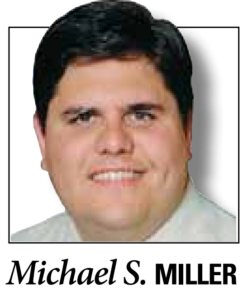
Michael S. Miller is editor in chief of Toledo Free Press and Toledo Free Press Star. Contact him at [email protected].



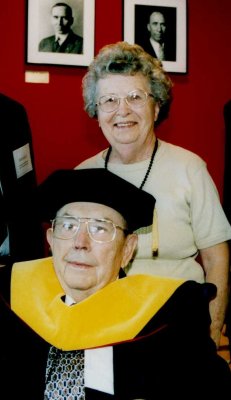


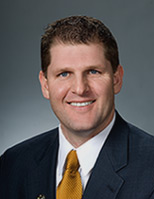



 of the solar industry, including then-Mayor Carty Finkbeiner, mayoral candidate Keith Wilkowski, then-Lucas County Commissioner Ben Konop and councilman Joe McNamara; UT’s Lloyd Jacobs, Frank Calzonetti, Vern Snyder and Johnson; Regional Growth Partnership’s Steve Weathers and Paul Zito; Lucas County Improvement Corporation’s Shawn Ferguson; Toledo-Lucas County Port Authority’s Kevin Moyer; and Sen. Sherrod Brown (D) and U.S. Rep. Marcy Kaptur
 seen its brightest days?