Home Blog Page 259

‘Hardcore Pawn’ star to visit Hollywood Casino Toledo

0
Seth Gold, star of the reality TV show "Hardcore Pawn," will visit Hollywood Casino Toledo. Photo courtesy TruTV

Seth Gold still isn’t used to fame. And it seems he likes it that way.

It’s clear from talking to him that Gold — one of the stars of the top-rated TruTV series “Hardcore Pawn” — is genuinely tickled by the fame that has suddenly been thrust upon him. But at his core, he doesn’t think of himself as a celebrity.

“It’s surreal. It’s tough for me to even put into words,” Gold said of his newfound notoriety. “Essentially, I call myself a pawnbroker, first and foremost. And when people come around and wanna take pictures, and when I do these events, a lot of people show up, you know, obviously, they find some sort of connection with our show, with the people involved. And it’s a fun, unique, crazy experience.”

His next event will be in Toledo — Gold will be making an appearance at Hollywood Casino Toledo on Aug. 4 from 2-4 p.m. This is just the latest stop on a particularly unique path to fame for the young pawnbroker, who originally had a much different career in mind.

Gold attended the University of Michigan with an eye on eventually getting into medicine.

“I sort of changed pace my senior year. I said, ‘Well, I really don’t love what I’m doing right now, and I’ve got a lot more schooling in order to complete this degree. So, I think I’m gonna go in the family business,” he said.

The family business was American Jewelry and Loan, a large pawnshop in Detroit owned and operated by his father Les, who’s also a main figure on “Hardcore Pawn.”

“The funny part was, I didn’t even call my dad to tell him I was coming in the business because I stayed away from it for a very, very long time. And I called my mom, and I went, ‘You know, I wanna get into the business.’ And her response was, ‘What business?’ And I went, ‘The family business!’ It kind of caught everybody off guard.”

He has worked full time at American Jewelry for the past seven years, becoming his father’s business partner in the process.

When Gold speaks of misconceptions people have about the pawn business, it’s clear the younger Gold has inherited a great deal of his father’s passion for his work.

“There’s 25 million people around the United States without bank accounts. Where are those people supposed to go, you know, to get money? And a lot of people are like, well, easy, just ask a family member. Just go to the bank. Well, that’s not an option for a lot of people,” Gold said.

That’s a facet of pawn shops that Gold is clearly proud to highlight on “Hardcore.” Other shows in the genre tend to focus on pie-in-the-sky sales of big ticket items, which is actually a fairly small percentage of an average pawn shop’s transactions.

“I’m in the business of loaning money and getting interest. I’m not in the business of buying low and selling high, because ultimately, the more I loan, the more interest I accumulate,” Gold said. “So a lot of people don’t understand that there’s an actual business formula behind the method. Because once someone loses their merchandise — they’re not a customer of mine anymore.”

Nowadays, thanks to the success of “Hardcore,” business is booming. The TV process began with a phone call a few years ago.

“I got a call from a producer saying, ‘Hey, you have a unique business, I think we should film it.’ And my first reaction was, ‘Absolutely not,’ and I hung up the phone. I’m not kidding,” Gold said with a laugh. “And I was like, ‘Well, you know, I don’t really run the company, I’m not the president of the company, maybe I should talk to Les about it.’ So, I went in his office, and he’s like, ‘Absolutely, we’re doing it.’

“And I said, ‘You know Dad, I really don’t know about this whole reality TV thing.’ And he’s like, ‘Seth, how big can it possibly get?’”

How big has it gotten so far? It’s become one of TruTV’s highest rated shows: six seasons, 94 episodes and more on the way. A spinoff — “Combat Pawn” — debuted earlier this year. And now he’s booking personal appearances at casinos and the like.

Still, at the end of the day Gold said he keeps his focus on American Jewelry and Loan — a place he has put his heart into, and which he trusts will still be going strong long after the television show is a thing of the past.

“The show’s great, it’s a great experience, but I know there’s gonna be an end date at some point. And I need to keep my business going beyond that.”

Legendary trumpeter to headline 2012 River Raisin Jazz Festival

0
Arturo Sandoval. Photo by Manny Iriarte

It was a journalist who turned Arturo Sandoval on to jazz.

“He played for me a Charlie Parker and Dizzy Gillespie record. Oh my goodness, I went crazy, saying, ‘Wow! What is this? Man, what are those people playing? That’s so difficult! I love it! I want to learn how to play that!’

“And then I start with that and I’m still trying to figure out what those people were playing,” the renowned trumpet player said.

In 1977, Sandoval had a chance to meet his idol when Gillespie visited his home country of Cuba. But he didn’t tell the trumpeter he was also a musician right away.

“I drove him all over the city for the whole day. Then in the evening, we got a jam session,” Sandoval recalled. “When he gets to the place, I was warming up on stage and he saw me with a trumpet, and he opened his eyes and said, ‘What the heck’s my driver doing with a trumpet?’ And somebody said, ‘No, no, no! He’s the guy here in Cuba!’”


Arturo Sandoval

With the help of Gillespie, Sandoval soon became one of the great horn players of the world.

“[Gillespie] really helped me a lot. He was so good to me since we met. He gave me so many opportunities over so many years,” he said.

Sandoval was touring with Gillespie in Spain in 1990 when he and his family were granted political asylum by the United States.

“Dear Diz (Every Day I Think of You)” is the title of Sandoval’s disc released in May.

“[It’s] a group of tunes I have been playing that I had the honor and privilege to play with [Gillespie] many times when he was alive. It was a lot of fun doing the record; this is the kind of material that I really love,” the jazzman said.

“The most important thing he taught me was love music,” Sandoval said. “That was really the key motivation for me was how much he loved music and how much he really enjoyed talking and playing and trying to learn things about music.”

One of his father’s loves inspired his new CD, “Tango — Como Yo Te Siento,” released in July.

“I remember my father — my dear father, he’s in heaven — he liked tango music very much, and he never showed any kind of interest in music in general,” Sandoval said during a call from his home near Los Angeles.

“But when you put in a good tango, he loved it. He knew the lyrics and the melodies of every tango. And in certain ways, this is a tribute as well to my dear father.”

The Grammy Award winner will headline the River Raisin Jazz Festival at 7:30 p.m. Aug. 12 at St. Mary’s Park in Monroe. The event is free.

“At all my gigs, I play percussion and I sing a couple tunes, and I play piano and play keyboard, and I dance a little bit, and I tell the story — I have fun on stage,” Sandoval said. “My intention, my goal, is to let the people have fun too.”

River Raisin Jazz Festival

St. Mary’s Park, Monroe, Free

Saturday, Aug. 11

1 p.m.              The River Raisin Big Band

2:30 p.m.         Deon Yates

4 p.m.              Hot Sauce

5:45 p.m.         Chris Standring

7:30 p.m.         Alexander Zonjic & Friends with special guest Bob James

Sunday, Aug. 12

1 p.m.              RJ Spangler with special guests Larry Smith and Nikki Pearse

2:30 p.m.         Soundproof

4 p.m.              David Myles & The Mylestones

5:45 p.m.         Chieli Minucci

7:30 p.m.         Arturo Sandoval

Pounds: Nexus nixed

0

One week after a report described Toledo as one of “America’s Emptiest Cities,” Toledo City Council showed the world why there is more motivation to leave the city than there is to invest here. In a stunning and arrogant vote July 31, Council failed to approve the Nexus Academy of Toledo’s request to open a charter school Downtown.

Council voted 6-4 to deny permission to Nexus, owned by the national company Connections Education, to open a charter school on the fourth floor of One Lake Erie Center, 600 Jefferson Ave.

The decision bolsters every impression that Toledo is not business friendly and will undoubtedly discourage untold other enterprises from considering investing in Downtown.

Led by Toledo Public Schools loyalist Steve Steel, fellow shortsighted and insensate Council members Lindsay Webb, Phil Copeland and Adam Martinez voted against the special-use permit that would have allowed Nexus to open. Paula Hicks-Hudson was on vacation. Tyrone Riley chose to abstain, which sealed the charter school’s fate.

Council rules state that “A member abstaining at a regularly scheduled Council Meeting shall do so only in the event of a conflict of interest.” Riley gave no such reason, and in fact, on July 3, voted in favor of waiving the minimum 30-day period for the special-use permit Nexus was seeking. If Riley had a conflict, why did he vote for that ordinance on July 3?

Riley told Toledo Free Press on Aug. 1 he had a “prior business arrangement with a business adjacent to that property (the restaurant Our Brothers Place) and I wanted to avoid any type of impropriety or the appearance of impropriety. If I voted one way or the other, it may give someone the impression that I was trying to protect one of the local establishments.”

Riley said he voted for the 30-day waiver July 3 because, “I was still in this prior business arrangement with one of the adjacent properties at the time and I just didn’t realize that may be a conflict.”

But he later added, “I made a mistake in not completely understanding this rule of Council. My vote was inconsistent. I didn’t have a complete handle on the rule of Council. Both sides had compelling arguments and I was thinking, ‘OK,’ they’re both compelling,’ and I just abstained and that was a mistake on my part.”

Steel claimed the special-use permit should be denied because the Nexus Academy location would be within 1,000 feet of convenience stores. But before the vote, Toledo-Lucas County Plan Commission Director Tom Lemon told Council that because the building Nexus wanted to locate is within an entertainment district, the spacing requirements regarding convenience stores would not apply.

Ignoring that simple fact, Steel, Webb, Copeland, Martinez — and passively, Riley — voted against jobs, education and development.

“Some of [the charter schools] that are in that core Downtown area have been there since longer than I was voting, certainly. We should be very cautious about it whenever you have kids that are walking around a bunch of adult-oriented establishments,” Steel told Toledo Free Press on Aug. 1. “I have voted yes on special-use permits for charter schools. I would have the same objection if TPS wanted to go in. It has to do with children, a lot of kids going to and from school are unsupervised. That’s why we have coding in the law about adult-oriented establishments.”

“The spacing requirement for carryouts is bogus to begin with. We’ve vilified carryouts and now, by association, we’ve vilified schools that want to go near carryouts,” Councilman Tom Waniewski told Toledo Free Press on Aug. 1. “Here’s a charter school that wants to do business and we’re saying, ‘Mmm, you can’t because there are carryouts around.’ If you just came here from another planet and you didn’t know my colleagues on Council, you might be scratching your head saying, ‘What are you talking about?’

“We’ve got people on City Council who have no concept of business and are merely voting for stupid reasons. The other stupid reason is some of them on Council have a bias against charter schools so they are too intricately tied to TPS and are afraid of the competition.

“A recent study showed we are one of the poorest cities to do business with. This adds to that. Why are we telling businesses how to run their business? Selling [cigarettes and alcohol] to minors is illegal, so let’s enforce those laws that we have rather than create these artificial pieces of duct tape. We’re not the morals police.”

These four Council members also sent the message that they believe Downtown Toledo is not a safe place for students attending school. This despite the healthy attendance at Toledo School for the Arts and other Downtown charter schools, not to mention the thousands of students bused Downtown each season to Fifth Third Field and Imagination Station.

If they believe that, perhaps they should spend more time improving that situation than blocking viable business development.

“Some Council members used their vote to express their disdain for charter schools in general and to me that’s just wrong,” Councilman Rob Ludeman told Toledo Free Press on Aug. 1. “Charter schools are allowed by Ohio law and as long as they meet all the zoning requirements we should allow them to go in. It’s a huge component of the economic development of Downtown.

“It’s a slap in the face to them and the business community Downtown. They apparently just didn’t listen to the planning commissioner director. There are other charter schools in the Downtown entertainment district already; how do you pick and choose? That’s just not right.

“When it came time for the vote, Tyrone Riley abstained. We have a Council rule that you can’t abstain unless you have a direct association with that entity and he has no connection to this charter school so the least he should have done is voted. They all just looked at me with blank faces when I read the rule. I was on Council when we put that in place because it was getting ridiculous how many people didn’t want to make a decision on things. You are elected to make a decision,” Ludeman said.

It’s almost as if these myopic Council members want to see Downtown fail; certainly, nothing in this decision shows any understanding of the facts or ramifications surrounding this vote.

Voters are right to ask, “What are these people thinking?”

Rebecca Booth, a spokesperson for Nexus, which has advertised in these pages, was gracious after the vote.

“We believe that this is just one step in a series of steps toward opening a charter school. We believe in our blended learning environment and we still think that we’ve got a great location to help out our students, so we’re moving forward hoping that we can still open in the fall,” she told Toledo Free Press on Aug. 1. “Everything is all up in the air but we’re exploring all possibilities. We were surprised [by the vote]. We go back to this just being part of the process. Sometimes you’re going to hit a hurdle and sometimes you’re not.”

At the same session, Council approved special-use permits for three other schools outside Downtown — all of which are reportedly located near convenience stores or bars. Ironically, as construction on the school had already started, Steel, Webb, Copeland, Martinez — and passively, Riley — have, for now, put union construction workers out of a job.

They have also potentially opened Council and the city to legal action. Even if the case never sees a day in court, a different kind of jury is watching this dysfunction and will return its own verdict, one that will continue to stymie efforts of growth and development in our hurting, increasingly troubled city.

Riley said he will change his vote to “yes” if Council reconsiders the vote, which it will apparently do on Aug. 7. That can only be proposed by Steel, Webb, Copeland or Martinez. There is an opportunity for redemption in the midst of this mess. But if any these Council members choose to let the vote stand and deny Riley his opportunity to revote, they should be painted as the aspiring statists they are — and the business community should rally to make sure they are voted out of office at the earliest opportunity.

Sun Burn 3: Finkbeiner: Bell, RGP, Port ‘dropped the ball’ on solar

0
A field of solar panels. Photo courtesy Regional Growth Partnership.

Part 1

Part 2

Between 2005, when it began publishing, and June 30, 2012, Toledo Free Press, a weekly newspaper, published 97 articles with the keywords “solar industry.” Between Jan. 1, 1997, and June 30, 2012, The Blade, a daily newspaper, published 388 articles with those same keywords.

In the beginning, the two publications were almost of a singular voice on the topic.

In those 485 newspaper stories, the print media regularly turned to national, state, county and City of Toledo politicians and candidates — including Toledo’s mayor, an Ohio senator and House of Representatives member, the University of Toledo president, a UT president emeritus, a local broadcast TV news co-anchor, community leaders from the Regional Growth Partnership and the Toledo-Lucas County Port Authority, and local business men and women — for their perspective on Northwest Ohio’s solar industry.

Starting in 1997 and peaking in 2007, nearly everyone interviewed and everyone who submitted a guest column voiced support for the solar industry and the hope that it would become the salvation of the economic woes the area faced.

Some guest columnists proposed strategies they believed would ensure success. Others prodded Toledoans to develop attitudes that promoted the city and focused on its strengths. Many suggested that Toledo could become the solar hub, at that time referred to as “the next Silicon Valley” of the United States.

The solar industry enjoyed the unbridled support of almost everyone in Northwest Ohio.

Who were those people?

What did they have to say?

And, enjoying the 20/20 vision that comes with hindsight, what do some of those people have to say now?

Mayoral approval

Focused on building Toledo’s industrial base as well as promoting the city as one of America’s best, then-Mayor Carty Finkbeiner embraced the solar industry and all the potential it offered the city. If ever there was a political advocate for the solar industry, it was Finkbeiner.

In September 2007, Finkbeiner announced Toledo would work with the University of Toledo to develop the Ohio Center for Renewable Energy and Sustainable Development, a program the Lucas County Improvement Corporation predicted would pay huge dividends to Northwest Ohio’s economy.

Two months later, Finkbeiner wrote a column published in Toledo Free Press, declaring June 18, 2007, a symbolic day in Toledo’s history as wrecking balls knocked down the smokestacks at the Toledo Jeep Plant and Toledo began its transition from smokestacks and pollution to clean technology and alternative fuels. Finkbeiner said the solar industry, rooted in cleaning up and preserving the environment, would be Toledo’s economic future.

In April 2008, Finkbeiner touted Toledo’s foray into alternative energy, proclaiming that Toledo was “one of six solar energy capitals in the world,” projected to have 3 million jobs in the solar economy during the next 20 years.
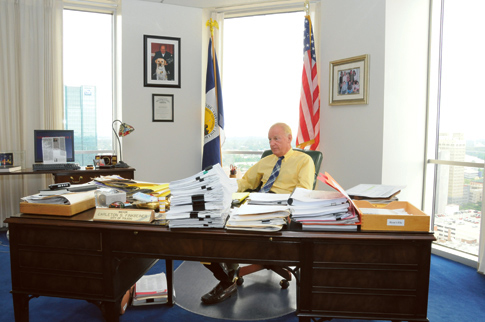
Carty FInkbeiner at the mayoral desk in One Government Center in July 2009.

Even as he faced the threat of a recall election in December 2008, Finkbeiner took the opportunity to plug the solar industry.

Refusing to let the recall petition effort demoralize him, Finkbeiner publicly suggested that Take Back Toledo, the group of opponents that  organized the petition drive to unseat him during his 2006-09 term, should “also support us in working to bring alternative energy jobs and companies to Toledo.”

Recalling those days during a July 31 interview, Finkbeiner said, “Those Take Back Toledo people wanted change and people who are excited for change are very, very good for America. You need critics. If everybody agrees, you’re not getting the other opinion.

“I was challenging them. ‘Let’s use your energy and get behind the alternative energy thing. Put it into that, and we’ll move forward together.’

“I was just trying to challenge, as I always do,” Finkbeiner said. “That’s just my personality, to say, ‘OK. That’s your perspective. Why don’t we get behind the alternative energy thing and we’ll be working together on something. You put your energy, and I’ll put my energy, and two will be better than one. Let’s get at it.’ ”

A source of momentum Finkbeiner  pointed to in December 2008 was Toledo’s growing reputation in the national media as a center of solar-energy innovation and manufacturing. Finkbeiner took tremendous pleasure in January 2009 when Foreign Direct Investment magazine named Toledo the “Most Business Friendly City in North America.” He said at the time that the national recognition must motivate the community to increase “support of growing advanced technology businesses by encouraging an entrepreneurial mindset and funding research that fuels growth.”

Bell at the helm

When Mike Bell moved into the mayor’s office Jan. 4, 2010, beating Democrat Keith Wilkowski by a margin of 2 percent of the popular vote, the local print media reported he would not follow Finkbeiner’s lead as a solar energy advocate.

In an interview July 25, Mayor Mike Bell said he did not choose to not make the solar industry a part of his agenda. When he took over in January 2010, the City of Toledo was $48 million dollars in debt. He felt it most important to find a way to get Toledo out of the red.

One avenue was to investigate the possibilities that Asian investors had an interest in Toledo.

Bell said that since the city faced a $48 million debt, he didn’t even think to consider Finkbeiner’s solar push. His focus was the $48 million debt, not the outgoing mayor’s agenda.
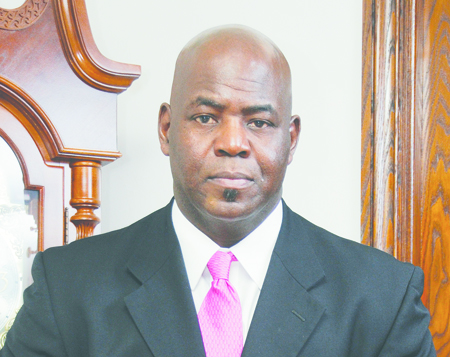
Mayor Mike Bell

Bell said the solar industry was already established in Northwest Ohio, and he didn’t think focusing on it would bring the financial solution Toledo needed. In his judgment, pursuing Asian investor interest would pay quicker dividends.

“When you ask me about this two-and-a-half years later, I would point out the fact that we’re out of debt and actually have a surplus in the city budget,” Bell said. “I’d say that’s proof I made the right decision.”

Bell said he thinks the solar industry is, and will continue to be, an important part of Toledo. However, he says it has issues to solve, like making solar panels affordable for homeowners who want to install them in their homes. He feels confident the solar industry will continue to be a part of Toledo, and now that the city has a surplus in its budget, he may have the luxury to look at other things. Bell said he most needed to improve the city’s budget issues, and he’s pleased that he’s done that.

“I say, ‘Finkbeiner pooh-poohs that explanation. He didn’t have the deficit he claims to have had,’ ” Finkbeiner said July 31. “Let’s just be very blunt. First, there was no $48 million deficit. That was a Mike Bell, Steve Herwat (deputy mayor of operations) made-up figure. I can prove it. I’ve been to The Blade. They all didn’t want to get into it.

“His debt was exactly what my debt was the last year I was mayor (2009). The bottom fell out of the American economy and the Toledo economy. It was in October 2008, one month before the presidential election.

“The American automobile industry is very relevant. The American automobile industry was fleecing Toledo.  We dropped $28 million in anticipated revenue from 2007 to the end of 2008. To be precise, when I began my last year as mayor in 2009, it was $27.7 million debt that I had to make up during the year 2009.

“I didn’t make it all up. I made all of it up but about $4.5 million. So that $27.7 million that I had as a deficit to make up in 2009 was also what Mr. Bell had, because the economy was just as flat in 2010. He had $27.7 million plus $4.5 million that I did not balance the budget with (for a total deficit of

$32.2 million, not $48 million).

“The automobile industry is what brought the present black-and-white situation back. That’s what did it. Period. End of discussion. There’s no question.

“And the casino. The Jeep plant and the casino both have put the coffers back in respectful [shape]. No budget cutting. No fewer and no more bodies working for the city.

“And, secondly, [making up the deficit is] no explanation to running off to China thrice.

“And at the moment, I don’t know of one single job that’s been created in Northwest Ohio as a result of all those trips to China. Not a single job,” FInkbeiner said. “If you find one and point it out, I’ll accept your correction.”

In Dec. 2011, however, Bell did publicly support a landfill reclamation project that had the potential to substantially boost Toledo’s credentials as a solar-energy hub.

OCI Solar Toledo City LLC, a partnership of two international energy companies, OCI Solar Power and CME Energy, invested an estimated $20 million into plans to install an 80-acre solar-energy field on top of capped landfills in North Toledo next to I-75, located close to Chrysler’s Toledo Assembly Complex.

The project, which was predicted to generate enough electricity to power as many as 7,000 homes upon completion in 2013, was to be the largest solar-energy installation in Toledo.

In late 2011, plans were for OCI Solar Toledo City to also lease landfills from the City of Toledo for about $20,000 a year. Reports suggested that Toledo Public Power might buy energy generated from these solar fields and resell it. The end-users of that power could be local businesses and residents.

Bell said the project was a common-sense use of land that otherwise would not be redeveloped.

“It’s land that we couldn’t do anything else with,” Bell said, “so it’s nice that we’ve found something positive to do on that piece of property that will help our community.”

Democrats in charge

Democrat Ted Strickland was governor of Ohio when the solar energy industry took off in 2007. Strickland relinquished the office in 2011 after Republican John Kasich defeated him in the Nov. 2, 2010, election, with 49.09 percent of the vote to Strickland’s 47.04 percent.

Under Strickland, the Toledo-area solar energy companies flourished. Strickland visited Toledo often in the late 2000s to take part in ceremonies, such as when more than 1,400 panels made in Perrysburg’s First Solar plant were installed on the Toledo Museum of Art’s rooftop. The panels were meant to help the museum generate enough power to handle one-fifth of its energy needs.

A portion of the installation project was funded by the state through an Ohio Department of Development grant. Strickland joined local political and business leaders the day of the installation ceremony, heaping praise on the project.

“This is but one example of what can be done to make our state more progressive [and] to make us less dependent on outside supplies for our energy needs,” Strickland said. “We will look back maybe 10, 20 years from now, and we will realize the significance of what’s happening with our economy today.”

While in office, Strickland supported an alternative energy agenda, specifically backing Ohio’s Senate Bill 221 which required 25 percent of all Ohio’s energy to be generated through alternative means by 2025. That bill became law in May 2009.

In a Toledo Free Press guest column, April 4, 2008, Karl Rundgren, then managing editor and co-anchor of FOX Toledo News, praised the national attention Toledo had received for its focus on green technology that same week when CNN ran a report that featured First Solar and Xunlight.

Rundgren foreshadowed the 2009 mayoral recall drive when he pointed out a warning in that same CNN report.
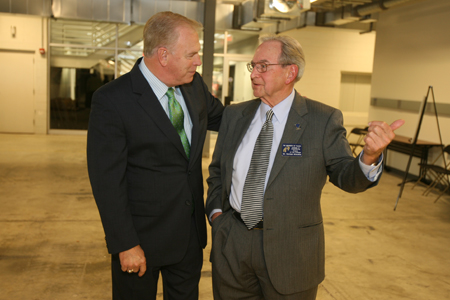
Ohio Governor Ted Strickland speaks with Norm Nitschke.

“These jobs are developing, but they’ll go to the place that is prepared for them,” Rundgren wrote. “Communities that delay and debate might find themselves doing without, watching as other cities become the capitals of alternative energy. While Toledo is doing well now, I worry that we could end up our own worst enemy. Our history of territorial griping, finger pointing and baseless threats could lead to a pathetic squabble that costs time and, ultimately, jobs.”

Republicans in charge

When Kasich took office, his Republican-led administration criticized Strickland and former Lt. Gov. Lee Fisher for how Ohio’s $8.2 billion in federal stimulus money from the President Barack Obama-supported American Recovery and Reinvestment Act of 2009 was dispersed. Although Kasich never publicly criticized Obama, members of his administration questioned Strickland’s relationship with executives at Toledo’s Willard & Kelsey Solar Group LLC, suggesting that the $23,400 worth of  2010 campaign contributions by four Willard & Kelsey executives were improper and indicated favoritism from Strickland.

On March 10, 2010, State Sen. Mark Wagoner joined fellow Republicans in criticizing Strickland. They called for the governor to be more open to “game-changing investments,” such as the rejected proposal offered by local solar company executive Norm Johnston, chairman of nonprofit group Ohio Advanced Energy,  vice chairman of Germany’s Calyxo GmbH and chief executive of Calyxo’s North American subsidiary, to use state funding to cover 30 former industrial sites with solar panels.

Johnston had complained about the Strickland administration’s rejection of his $750 million proposal to build 30 solar fields on cleaned-up industrial sites throughout Ohio.

Johnston claimed Strickland was to blame for Ohioans not having thousands more jobs in solar industry in 2010.

Strickland countered, saying he put emphasis on solar and other renewable energies as two of the most exciting prospects for reversing what he said felt like a decade-long recession in Ohio. Strickland said his approach would have resulted in thousands of solar jobs for Ohioans. Then-gubernatorial candidate Kasich criticized Strickland over what Kasich said was the disappearance of some 300,000 jobs during Strickland’s administration.

Strickland asserted that his solar policy adjustments would have created more jobs sooner had Republicans not opposed legislation that would establish a market for solar products.

Republicans reacted angrily to the suggestion they opposed any job-creating legislation.

“We passed Senate Bill 221 … that moved advanced alternative energy further down the road in Ohio, and that was a very bipartisan effort to do so,” Rep. Randy Gardner said. “The strongest champion on SB 221, I think, was at the time [former Republican House leader] Jon Husted.”

One Republican’s strategy

The animosity between Ohio’s Democratic and Republican parties escalated in April when Jeff Jacobson, former Republican lawmaker and current secretary-treasurer of The Ohio Air Quality Development Authority (OAQDA), moved to turn over three Toledo-area solar companies to the attorney general’s collections department for failing to make scheduled payments on millions in low-interest state loans issued in 2010.

“I don’t know why companies would think it’s OK to take our money and not pay,” Jacobson told media April 15. “Us doing nothing is not a good reaction to something like that.”

Other OAQDA members did not support Jacobson’s motion. Jacobson acknowledged that he didn’t expect his motion to garner support, but said he made it to send a message from Kasich’s administration to Ohio companies that the OAQDA is keeping detailed records and expects to be paid back the money it loans.

Katie Sabatino, an Ohio Department of Development spokesperson, said such drastic measures may become common if businesses “don’t live up to the commitments they promised [because] we’re going to take appropriate action. We want to make sure we’re being business friendly in letting them repay their loans, but still being good stewards of taxpayer dollars.”
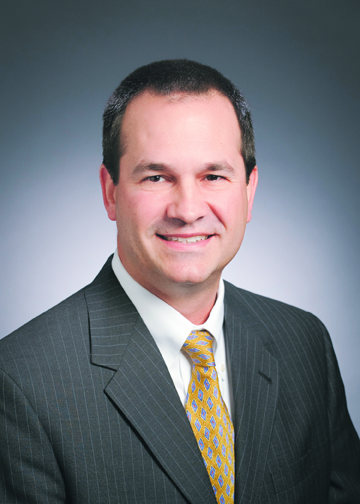
Dean Monske

Willard & Kelsey Solar and Xunlight Corp. have made interest-only payments on Advanced Energy loans of $5.1 and $4 million, respectively. This despite the fact that their loan agreements required them to make principal payments. Willard & Kelsey’s $5.1 million loan and a separate $5 million loan from the Department of Development will come due Sept. 30.

On April 15, Mossie Murphy, Willard & Kelsey’s chief financial officer, insisted that the firm never misused state funds and always complied with state law. He said private funding, which had also been scrutinized in the local print media, is used at the discretion of Willard & Kelsey’s executives and not subject to public review.

“We view the state money as sacred, and the state loans we fully intend to pay,” Murphy told media.

The third firm, Buckeye Silicon of Toledo, has not made a $2,400-a-month interest payment on its $1.4 million loan in 2012, although the firm was supposed to begin paying $25,000 a month on principal starting May 2012.

Educational leadership

Toledoans appreciated the notoriety then-Gov. Strickland brought their city when he christened Northwest Ohio an official hub of solar energy research and innovation, on July 1, 2010. Many saw the ceremony as an economic-development coming-of-age party intended to boost investment and create local jobs in alternative energy.

Strickland’s ceremony confirmed something that Dan Johnson, then-provost and chief operating officer of Zayed University, Dubai, United Arab Emirates, and UT president emeritus, already knew. A year earlier, Johnson expressed that same pride and delight when he saw UT and Xunlight accept leadership roles in the international solar energy industry by representing Toledo at the World Future Energy Summit in Abu Dhabi, UAE.

Johnson encouraged more members of the Toledo business and educational communities to attend future summits.

In a Toledo Free Press guest column Feb. 13, 2009, Johnson wrote, “To compete, we must have a strategy that recognizes and takes into account what is happening globally as well as nationally and locally. Participating in the World Future Energy Summit was a good move and one that should be repeated every year.”

Frank Calzonetti, UT’s vice president of research and development, praised Johnson’s strategy, saying UT’s decision to attend the summit spoke volumes about Toledo’s commitment to the solar energy industry.

“Our presence at this meeting sends a message that we are a global player and gives us an opportunity to show leading companies, investors and government officials why Toledo is a good place for research collaboration, business location and investment in renewable energy,” Calzonetti said.

More than three years later,  Johnson said he has been privileged to attend the past three World Future Energy Summit conventions and “see the global input into the development of solar energy. There are literally hundreds and hundreds of companies worldwide involved in solar energy research and development.” That exposure has convinced Johnson that “we must collaborate together.”

“What we’ve seen happen in Toledo [these past four years] in terms of response to specific solar industry companies is the result of a shift of policy decisions,” he said.

“The enthusiasm we saw here in the United States in 2008 produced a considerable investment and a large number of startups. As those start-ups developed and matured, the market and business cycles took over.

“Look at the auto industry as an example. Almost, if not all, the start-ups 75 years ago are gone now,” Johnson said. “The industry grew, and as technology developed the startups of the early 20th century gave way to other companies.

“The shake-up we see happening in the solar industry could have and should have been expected. It’s a natural process in the business cycle. If you look at it from a global perspective, it’s a pattern we see in all new industries.

“It’s also very important to recognize that demand for solar energy is affected by policy. We’ve been strong on the technical development side. We need to be as strong on policy issues.

“Also, although we have been strong on things like technological development, we have not been strong on marketing supply. Some companies and some countries have done it better than others. We have much to learn about how to market solar energy.”

Johnson insists “there is still a lot of potential for Toledo. However, we need to have strong leadership in this area. We need leadership. Where will it come from? That will be interesting to see.”

Finkbeiner said the leaders for economic development in this region are the University of Toledo and Bowling Green State University, the Regional Growth Partnership (RGP), the Port Authority and the mayor.

“The University of Toledo has been a tremendous leader because it has the wherewithal and the staff to assist with the research and development aspect of things as they did with Harold McMaster.”

In discussing Willard & Kelsey’s continuing research and development, including 3-by-6 and 4-by-8 solar panels and higher-than-industry-standard, energy-efficient solar windows, Michael Cicak praised UT’s researchers and their work with his firm.

“You can’t sell the University of Toledo short,” Cicak said July 19. “They have some damn good people who are working very, very diligently with us with some projects.”

Cicak, chairman and CEO of Willard & Kelsey, was an original partner with Harold McMaster in the pioneering developmental work UT did with GlassTech Solar in 1984 and Solar Cells, Inc. in 1990. Solar Cells eventually became First Solar after being bought by True North Partners, LLC in 1999 and renamed First Solar, Inc.

Community leadership

Finkbeiner said he is particularly disappointed in what he called a lack of leadership from the RGP and the Toledo-Lucas County Port Authority, organizations that he said played a major role in promoting the solar industry from 2006-09.

As an example, Finkbeiner pointed to Steven Weathers, then-president and CEO of the Regional Growth Partnership, who came out on June 8, 2007, in strong support of the University of Toledo’s Northwest Ohio Science and Technology Corridor as a way to diversify and stabilize the region’s economy.

“I see it as the branding of an area like Silicon Valley where we can bring together all the components of economic development within Northwest Ohio, becoming a center of innovative technology in addition to automotive manufacturing,” Weathers said.

The RGP is responsible for marketing and promoting Northwest Ohio. The Port Authority aims to generate transportation and economic development in the Toledo area. Finkbeiner said both have “dropped the ball.”

In RGP’s defense, its president and CEO, Dean Monske, said that through RGP’s editorial marketing program, “We continuously communicate with national and international media, promoting our regional strengths, assets and success stories.

“When we began pitching our regional solar story in 2007, we were fortunate to catch the media at a time when ‘green’ industry was the hot topic. What resulted were dozens of stories about this region in top-tier media outlets across the world. Today, we still pitch this story on a national level, but most media interest comes from industrial trade publications.

“Most growth in the local solar industry has taken place in the creation of new startup companies. The lead entity in working directly with technology startups is Rocket Ventures, LLC, a venture capital organization created as a joint venture in 2011 through the RGP and University of Toledo Innovation Enterprises,” Monske said.

Prior to the joint venture, Rocket Ventures operated directly under the RGP, where it worked with technology-based startups, including solar companies, Monske said.

“The recent merger presents a more sustainable and lower-cost platform to continue providing services to technology-based clients,” Monske said.

“Undoubtedly, the global economic downturn has hampered growth in solar,” Monske said. “However, with our core capacity in this industry, combined with our regional competitive assets spanning the traditional sectors such as workforce, geographic location, education, transportation and quality of life, Northwest Ohio can maintain and enhance its standing as a major player in the industry.”

The ultimate responsibility

Finkbeiner also pointed to the mayor, whom he said “remains the most important” leader in the region’s economic development.

“Those three organizations (UT, the RGP and the Port Authority), and that one individual, is where the responsibility lies. The glory goes to them if we gain and grow jobs, and the responsibility is on their shoulders if we don’t do that,” Finkbeiner said.

“I believe that one, if not the most important reason [for the decline of the solar industry in this area], is all of the attention, excitement, glory and journalism following the very early Mike Bell-tenure trip to China. It took us off the message. It took us off focus. We began to look at the relationships with China, not the rest of the world, as the single most important economic development initiative. And I haven’t heard hardly a word about alternative energy since that China topic was introduced.

“In this man’s opinion, the Chinese have not created hardly a job in the United States of America. They’re investors in real estate in this country. They aren’t manufacturers. They aren’t doing major technology investments. They’re basically real estate investors — a hotel in Downtown Toledo, the Marina District, and a docks property in East Toledo — but the jobs are not a part of their mission.

“Since we got so involved with that China thing, I haven’t heard, read hardly a word about alternative energy and its significance.

“Some region of the United States is going to be a major player in alternative energy programs, starting with research and development, the manufacture at a cost-efficient scale of alternative energy. The world is overheating. It’s becoming more and more known to even the doubting Thomases, and we can’t continue to be held hostage to dictators in other parts of the world who don’t really share our belief in democracy, in freedom, in respect for women.

“And so just to get their oil, we sell our principles and our very important constitutional guarantees of freedom and opportunity. We sell those out just to get oil and support dictators that are harsh, unfair to significant parts of the population.

“But we, within the confines of the continental United States, need to be that region that isn’t guided by gray skies, as you now know.”

Finkbeiner also discounted any argument that sunnier climates might steal Toledo’s solar energy potential.

“I didn’t know this until the last two or three or four years ago when I asked the question, ‘Are we going to be foreclosed upon to the Arizonas and the Californias because of their supposedly clear skies and sunshine?’

“The response that I got was, ‘No. It has nothing to do with that or First Solar wouldn’t have picked that site in Toledo to locate.’

“So I’d say the sun is still rising on alternative energy options,” he said.

“I hope that alternative energy advocates, including Northwest Ohioans like Marcy Kaptur, Bob Latta and Sherrod Brown, will continue … not just with whatever the popularity quote of the month is. We have got to be consistently keeping our eye on any development opportunities in the field of alternative energy that we might be able to welcome to Northwest Ohio, using the resources at UT.”

Sources:

Newspaper sources

1. Toledo Free Press, “Plan to transform regional economy”, Duane Ramsey, June 8, 2007.

2. Toledo Free Press, “Transforming Toledo”, Tom Pounds, June 8, 2007.

3. Toledo Blade, “Catching up on tech grants – Frozen out of funds early in program, area intensifies effort”, Jon Chavez, Sept. 23, 2007.

4. Toledo Free Press, “Advanced energy activity ‘encouraging’ ”, Brooke Brockschmidt, Matt Sattle and Shawn Ferguson, Sept. 28, 2007.

5. Toledo Free Press, “2007: A year of recognition and defined vision”, Carty Finkbeiner, Dec. 28, 2007.

6. Toledo Free Press, “Toledo 2020: Engaging future stakeholders”, Dan Johnson, Jan. 4, 2008.

7. Toledo Free Press, “RGP fosters technology”, Steve Weathers, Jan. 25, 2008.

8. Toledo Blade, “Middle East nation may invest here, mayor says – Economic team has 101 companies on list”, Ignazio Messina, April 2, 2008.

9. Toledo Free Press, “Alternative energy: Making lemonade from the lemons”, Dan Johnson, May 2, 2008.

10. Toledo Free Press, “Toledo company develops technology for cleaner biofuel”, Duane Ramsey, May 25, 2008.

11. Toledo Blade, “Analysts cool on First Solar – New competitors, high stock price spur ratings dip”, Gary T. Pakulski, June 8, 2008.

12. Toledo Free Press, “Toledo’s future in alternative energy”, Dan Johnson, Aug. 1, 2008.


13. Toledo Free Press, “Business-led effort aims to recall mayor, establish PAC”, Scott McKimmy, Dec. 4, 2008.

14. Toledo Free Press, “Toledo turns to solar to revive city”, Associated Press, Dec. 8, 2008.

15. Toledo Blade, “Finkbeiner bullish on city’s prospects for development – Mayor’s critics see lack of progress”, Tom Troy, Dec. 28, 2008.

16. Toledo Blade, “City making strides, mayor says – His annual talk cites alternative energy”, Ignazio Messina, Jan. 6, 2009.

17. Toledo Blade, “Solar field’s backers ask Toledo Council to invest”, Ignazio Messina, Jan. 15, 2009.

18. Toledo Free Press, “What 2009 offers”, Steve Weathers, Jan. 16, 2009.

19. Toledo Blade, “Council OKs $65,000 for solar project”, Ignazio Messina, Jan. 21, 2009.

20. Toledo Free Press, “Regional cooperation is bold step in right direction”, Carty Finkbeiner, Jan. 23, 2009.

21. Toledo Free Press, “Toledo at the World Future Energy Summit”, Dan Johnson, Feb. 13, 2009.

22. Toledo Free Press, “Local public, private sources file for stimulus money”, Duane Ramsey, March 6, 2009.

23. Toledo Blade, “Thin is key for First Solar – Cost-saving production is choice for it, Xunlight”, Gary T. Pakulski, May 31, 2009.

24. Toledo Free Press, “Can Toledo re-invent itself?”, Dan Johnson, June 9, 2009.

25. Toledo Free Press, “SSOE ranked among fastest-growing firms”, Duane Ramsey, Oct. 8, 2009.

26. Toledo Blade, “First Solar plant re-energized – Expansion reflects growth in demand across N. America”, Gary T. Pakulski, Nov. 22, 2009.

27. Toledo Blade, “Third Frontier: A good investment for NW Ohio”, Steve Weathers, Dec. 10, 2009.

28. Toledo Free Press, “UT honors efforts of Abu Dhabi energy company”, Kristen Criswell, July 29, 2010.

29. Toledo Free Press, “Expanding our economic horizon through alternative energy”, Dan Johnson, July 29, 2010.

30. Toledo Blade, “Obama’s rosy take on Toledo imprecise; Area’s clean-energy progress overstated”, Joe Vardon, Aug. 22, 2010.


Online sources

31. Ask.com, “Carlton S (Carty) Finkbeiner second term; 2006–2010”,

http://www.ask.com/wiki/List_of_mayors_of_Toledo,_Ohio


32. Ask.com, “Michael Bell (Mayor)”, http://www.ask.com/wiki/Michael_Bell_(mayor)


33. Ask.com, “Presidential Election 2008”, http://www.ask.com/wiki/United_States_presidential_election,_2008


34. CBS News, “Stimulus recipient under investigation for insider trading”, Laura Strickler, March 22, 2012, http://www.cbsnews.com/8301-31727_162-57402463-10391695/stimulus-recipient-under-investigation-for-insider-trading/


35. City of Toledo, “Mayor’s Office Staff”, http://www.ci.toledo.oh.us/MayorsOffice/MayoralStaff/tabid/267/Default.aspx


36. Nasdaq.com. “Interactive Stock Chart – First Solar, Inc.”, http://www.nasdaq.com/symbol/fslr/interactive-chart


37. Recovery.gov, “The Recovery Act”,

http://www.recovery.gov/About/Pages/The_Act.aspx


38. ToledoFreePress.com, “Sun Burn 1: Area courted solar energy with research”, July 19, 2012, https://tfpmay.toledowebdesigns.com/2012/07/19/sun-burn-1-area-courted-solar-energy-with-research/


39. ToledoFreePress.com, “Sun Burn 2: Global changes slow solar growth”, July 26, 2012, https://tfpmay.toledowebdesigns.com/2012/07/26/sun-burn-2-global-changes-slow-solar-growth/


40. Wikipedia.org, “Ohio Gubernatorial Election 2010”, http://en.wikipedia.org/wiki/Ohio_gubernatorial_election,_2010


41. Wikipedia.org, “SSOE”, http://en.wikipedia.org/wiki/SSOE

Nine Lives to play the After Play Party at Friday at The Farr

0

Nine Lives lead singer Jake Pilewski never pictured himself in a cover band. Turns out it’s been one of the most positive musical decisions he’s made.

“I got so into the writing that I said, ‘You know, I would never be in a cover band. I would rather play a dive bar the rest of my life making chump change a night just as long as I’m playing originals,’” Pilewski said. “Well, then reality sets in, and you start realizing, ‘Oh, I’ve got bills and I’ve got to do this and I’ve got to do this.’”

Formerly of local band Highland, which also featured Nine Lives members Mike Toth and Mike Haskins, Pilewski said he didn’t consider playing covers an option until he went to a music convention in Harrisburg, Pa., where Fuel vocalist Brett Scallions was speaking.

“At the time he had just left Fuel, and he was telling this story about how Fuel was a big cover band all around Harrisburg, Pa., for years,” Pilewski said of Scallions. “And he said in Harrisburg, they were artsy, but still these places were going to hire bands to play what the bar crowd wanted to hear, which was cover music.”

Jake Pilewski and Nine Lives will headline the After Play Party at Friday at the Farr. Photo courtesy Mike Toth

That experience, as well as seeing Cincinnati cover band The Menus live at Put-In-Bay, was enough to convince Pilewski to give covers a shot. He and Haskins left Highland nearly three years ago to join Toth in Nine Lives, a move that proved to be fruitful.

It wasn’t long before Nine Lives was playing at some of Toledo’s bigger bars and events, including fundraisers at The Blarney Irish Pub and Mud Hens’ Opening Day.

“It definitely was worth it right off the bat when we started seeing the reaction from people,” Pilewski said. “It made the whole decision to start playing cover music a lot easier.”

Comprised of Pilewski, drummer Toth, lead guitarist Haskins, Tim Bauer (guitar/piano/sax/harmonica/vocals) and bassist Chad Singleton, Nine Lives will perform on Aug. 10 at the Jamie Farr Toledo Classic as part of the tournament’s Friday at The Farr festivities.

“We are absolutely stoked,” Pilewski said. “That’s one of those things that we’ve heard over the years, like, what a party it is.”

Pilewski and Nine Lives are particularly excited to play at the tournament given that it’s not their typical venue.

“We love the usual [venues],” Pilewski said. “That’s what keeps us going, but it’s great to play something completely different because there’s kind of a bit of mystery and mystique about the whole thing, that you go in not knowing what to expect.”

Part of what has helped Nine Lives find so much local success is its versatility. The band covers everything from 1950s era music to pop, classic rock, blues, dance, country and Top 40 hits.

“Whether they were born in the ’50s or they were born in 1989, I mean, we have a little bit of something for everybody,” Pilewski said. “They always say, ‘You can’t make everybody happy,’ but we come pretty close to it at least throughout the night, as long as people stick around the whole set.”

Friday at the Farr will take place during the Jamie Farr Toledo Classic at Highland Meadows Golf Club, 7455 Erie St., in Sylvania.

Daily tournament tickets start at $15 and are available at the gate or Shawn’s Irish Tavern, which is also providing shuttle service on Aug. 10 from its Toledo location, 4400 Heatherdowns Blvd. Weekly tickets are $50 and are available at local Kroger stores. Kids 17 and younger get in free with an adult. More ticket information is available online at jamiefarrtoledoclassic.com.

After the final golfer finishes her round at approximately 7 p.m., Nine Lives will perform at the public pavilion at Highland Meadows as a grand finale to the Friday at The Farr festivities.

For more information, visit facebook.com/ninelivestoledo or facebook.com/KlingersClub.

Local businesswoman, student to golf with Jamie Farr

0
Brooke Darah, left, and Judy McFarland. Photo courtesy Thread Marketing Group.

An area businesswoman and a college student will golf alongside Toledo legend Jamie Farr on Aug. 6.
“It is very exciting as well as a little nerve-wracking, given my handicap,” said Judy McFarland, president of Thread Marketing Group, with a laugh. McFarland’s company is one of the sponsors of the Jamie Farr Toledo Classic.
At the Mercy/Lucas County Healthy Communities Foundation Pro-Am, McFarland and Lourdes University student Brooke Darah will round out Farr’s team. Farr, best known for his role on the television show “M*A*S*H,” is bringing a friend who will play and a pro golfer will complete the fivesome.
McFarland said Thread attempts to support a different cause every year and chose to support the tournament for its positive impact on the community. The classic will raise money for 10 area charities.
“The effect [the classic] has on our local economy as well as our community brand is just enormous,” McFarland said. “It’s just a win, win, win in all that it accomplishes.”
McFarland said she chose Darah to join the group because of the student’s Sylvania ties. The tournament takes place at Sylvania’s Highland Meadows Golf Club.

Darah is not only on the Lourdes University women’s golf team, but she is a graduate of Sylvania Northview High School.
The businesswoman said she wanted to “give a local gal an opportunity of a lifetime” in addition to supporting Lourdes, a client of Thread’s.
“I was worried given her age, [Darah] might not know who Jamie Farr is,” McFarland said with a chuckle.
But Darah not only knew who Farr was, she said her grandfather knew Farr personally and she met the star at a restaurant once.
Darah, a junior studying nursing, said she was thrilled McFarland invited her to play.
“[Lourdes] has a really good golf program, I think. It’s a honor that they chose me to represent our school andpromote Lourdes,” Darah said.
She also said she hoped and believed Farr would remember her, or at least her last name.
Golfing at the classic will also give Darah a chance to meet professional golfers. Her favorites are Paula Creamer and Christina Kim.
McFarland met Farr a few years ago at a photo shoot, but said the two just exchanged pleasantries.
Although she is nervous about her skill level, she said Darah offered to give her pointers.
“I am one of those people who love the game, who has not quite mastered it,” McFarland said.
Toledo-based Thread Marketing offers marketing, communications, public relations and information technology services. The company has been around for 25 years and employs about 40 people. For more information, visit www.threadgroup.com.
The classic runs from Aug. 6-12.

For more information, visit the website www.jamiefarrtoledoclassic.com.

Proceeds from The Farr will benefit 10 charities

0
Toledo Mayor Mike Bell with Kids Unlimited participants, Photos courtesy Kids Unlimited

Even more important than providing a stage for elite golfers to showcase their skills, the mission of the Jamie Farr Toledo Classic is to raise money for area charities.
The golf tournament has donated $7.4 million to more than 120 charities since 1984, said volunteer coordinator Heather Warga.
“That’s what it’s all about,” Warga said. “The community’s been so good to us in the way of volunteers, sponsorships and the relationships we have with a lot of the companies here in Toledo. What better thing to be able to do than to give back to the community. It’s important to us that the money stays right here, that it goes to organizations here and the people they serve and just the impact it makes on their lives.”
This year’s 10 charity beneficiaries are Aurora House, Boys & Girls Clubs of Toledo, Family and Child Abuse Prevention Center, Feed Lucas County Children, Kids Unlimited, Mom’s House, The Victory Center, YMCA/JCC of Greater Toledo, Ronald McDonald House Charities
of Northwest Ohio and the Jamie Farr Scholarship Fund of the Toledo Community Foundation.
Tournament host Jamie Farr said he’s proud to be associated with such a worthy cause.
“I thoroughly enjoy the LPGA classic and I am very proud of all the money it has donated to many of the needy and deserving charities,” Farr said in an email to Toledo Free Press.
“The sponsors, the fans, the cities of Toledo and Sylvania and the players have been exceptional in their devotion to making this tournament so successful.”
Each charity provides volunteers to work the tournament, Warga said.

Golf course architect Arthur Hills, right, is a board member and longtime volunteer with Kids Unlimited.

“The charities do participate quite a bit with the tournament and they are always eager to help out,” Warga said. “The ones we have this year have been great. They all know the importance of it and have been great.”
Kids Unlimited President Chris Amato said the money raised will not only help fund the after-school and summer programs his organization operates for inner-city youth, butwill also offer increased visibility and credibility for the group, helping to leverage funds from other sources.
“It’s very significant,” Amato said. “When you get the Jamie Farr designation, it elevates you to a different level and gives you a lot of credibility in the community and with donors.”
Operating out of the school buildings where participants attend, Kids Unlimited helps develop academic and social skills as well as emphasizes cooperation, respect, self discipline and teamwork, Amato said.
Amato said teachers notice major improvements both academically and behaviorally in the kindergarten through eighth grade students involved with Kids Unlimited.
“One child was 25 points below the state average and hit 25 points above the state average next time he took the test,” Amato said. “It’s hard to quantify behavior the way you can a test score, but anecdotally, that’s where we see it. Teachers will come up to us and say, ‘We can really see a difference in so and so.’”
Internationally known golf coursearchitect Arthur Hills is a board member and longtime volunteer with Kids Unlimited.
“He comes at least once a week, if not twice a week,” Amato said. “He’s been working with one boy for three years now and the improvement level is amazing.”
The organization will be opening its own charter school, Kids Unlimited Academy, in the fall for kindergarten through third grade with plans to expand through eighth grade later, Amato said.

Boys & Girls Clubs of Toledo Executive Director Dave Wehrmeister said the club feels a special significance in partnering with the tournament because Farr is a former member. The organization operates four locations in the central city as well as a resident summer camp in Michigan.
“It’s huge on many different levels,” Wehrmeister said. “Jamie was a Boys Club member in his childhood and a member of our Hall of Fame, so it’s quite special for him to come back to town and remember where his roots are. We’re hoping he will stop by one of our clubs and spend a little time with our kids.”
The Victory Center is a first-time charity partner, said Executive Director Dianne Cherry.
“We are so excited,” Cherry said. “It’s a real opportunity to educate more people about what The Victory Center is and what we do. It’s going to be some wonderful exposure to the community and beyond. The grant funds are just invaluable to us this year.”
The Victory Center provides individual and group services to cancer patients, survivors and their families, including massage therapy, reflexology, Reiki, healing touch, hypnotherapy, aromatherapy, counseling, support groups, yoga, gentle exercise, meditation, expressive arts and more.
“Our philosophy is that there is a mind-body-spirit connection,”Cherry said. “The medical community takes care of the body portion and we help with the mind and the spirit. We heal people from the inside out.”
Feed Lucas County Children operates 80 sites that provide meals for Lucas County children during the summer when they are not being fed at school. The organization plans to invest its share of the tournament proceeds in a steamer oven for the organization’s new kitchen, said Executive Director Tony Siebeneck.
“That right there is going to help us feed more kids next year,” Siebeneck said. “You can’t ask for anything better.”
The YMCA/JCC of Greater Toledo will put the money into its Fun Bus,a colorfully painted vehicle that provides free recreational activities and nutritional snacks for kids inunderprivileged Lucas and Wood County neighborhoods, said Michael Ashford, vice president of urban relations. The Fun Bus served about 18,000 children last summer and is on track for the same this year, Ashford said.
“Without the support of the Jamie Farr, we would not be able to reach that amount of kids and provide those recreational activities throughout the summer,” Ashford said. “There is limited money going around right now, so this is a very important gap for us.”
The Jamie Farr Scholarship Fund is an endowed scholarship fund established by the tournament and administered by the Toledo Community Foundation. Each year, four renewable $3,000 college scholarships are awarded to graduating high school seniors with financial need, said Joanne Olnhausen, communications and scholarship officerat Toledo Community Foundation.
“Our goal is to help our local students get to school, and we’ve been able to make a very large impact in our community,” Olnhausen said.
The Children’s Advocacy Center at the Family and Child Abuse Prevention Center provides free crisis counseling and case management services for child victims of sexual abuse and their families.

“We’re thrilled to be able to get funding from the Jamie Farr ToledoClassic,” said CEO Cindy Pisano. “That funding will allow us to continue to offer crisis counseling tohelp children cope and heal from the trauma they’ve experienced.”
Aurora House provides housing and services to homeless women and children.
Mom’s House offers counseling, child care, tutoring, crisis intervention, mentoring and parent education classes and more as it helps low-income, single moms graduate from high school and college.
Ronald McDonald House Charities provides temporary, homelike accommodations for families whose children are receiving medical care away from home.
For more information, visit www.jamiefarrtoledoclassic.com

Friday at The Farr mixes golf with spirit of Hens’ Opening Day

0
Lauren O'Meill is Miss Klinger’s Club 2012. Toledo Free Press photos by Joseph Herr.

What do you get when you mix the fun, festive atmosphere of Mud Hens’ Opening Day with a professional golf tournament?
You get Friday at The Farr, the 14th hole at the 2012 Jamie Farr Toledo Classic presented by Kroger, Owens Corning and O-I at Highland Meadows Golf Club in Sylvania.
On Aug. 10, the Ladies Professional Golf Association (LPGA) tournament will introduce a new “party atmosphere” to its 14th hole in imitation of the famed par-3 16th hole at the Professional Golfers’ Association of America(PGA) Waste Management (WM) Phoenix Open at Tournament Players Club Scottsdale. That tournament takes place in Arizona in February each year.

The hole will be called “Klinger’s Club,” after Toledo native Jamie Farr’s character on the television show “M*A*S*H,” and will be part of the Friday at the Farr festivities, which begin at 1 p.m. Aug. 10.

“We want it to be kind of like … (Mud Hens’) Opening Day, where if the game is at three or even if it’s at five, people are Downtown partying in the streets at 12 o’clock,” said Stephen Vasquez, membership development manager at the Toledo Chamber of Commerce and one of the two event organizers. “It’s kind of turned into a Downtown Toledo holiday.”
The par-3 hole will feature bleacher seating for about 400 people, an electronic scoreboard and a large concession stand nearby with food and beverages. T-shirts will be distributed to create a “white-out,” like those at basketball and football games.
Fans are encouraged to cheer, chant and sing for the golfers, like fans at the WM Phoenix Open do, Vasquez said.

Lauren O’Neill is Miss Klinger’s Club for 2012 at the Jamie Farr LPGA tournament.

According to the Klinger’s Club’s Facebook page, the goal is to make the 14th hole the “loudest and most exciting hole on the LPGA tour.”
Vasquez said “cheerleaders” and “cheat sheets” with LPGA player information are in the works to help make this happen.
“If you watch the Phoenix Open, [the fans] are really quiet, but as soon as the ball is hit, they scream like crazy,” Vasquez said. “We’re going to encourage cheering.”
Admission to Klinger’s Club is included in admission price. Daily tickets start at $15 and are available at the gate or Shawn’s Irish Tavern, which is also providing shuttle service from its 4400 Heatherdowns Blvd. location.
Weekly tickets are $50 and are available at local Kroger stores. Kids 17 and younger get in free with an adult. More ticket information is available online at www.jamiefarrtoledoclassic.com.
Once the last golfer finishes her round at approximately 7 p.m. Aug. 10, the local band Nine Lives will play at the public pavilion as a grandfinale to Friday at The Farr. Nine Lives is a cover band that plays everything from Journey to Eminem to The Temptations, said Franz Gilis, co-organizer of Klinger’s Club.
Vasquez said Klinger’s Club is an event that many people, not just traditional golf fans, can enjoy.
“If you don’t even like golf, who cares? Just come to party,” he said.

Toledo exposure

There were many motives behind the Klinger’s Club initiative, including simply offering a good time for fans and golfers alike, Vasquez said.
“It’s one of those things where [the tournament] is not quite at the level of (Mud Hens’) Opening Day yet,” Vasquez said. “For most people, the Jamie Farr is … like ‘If I get tickets, I’ll go,’ but we want it to be ‘I’m going to the Jamie Farr this year!’”
The tournament’s net proceeds go to 10 area children’s charities, said Judd Silverman, tournament chairman for 27 years.
“It’s for a good cause,” Silverman. “Since 1984, the Jamie Farr has donated $7.4 million to more than 100 Northwest Ohio and southeast Michigan children’s charities.”
Silverman said tournament organizers wanted to create a gathering and networking spot for young business professionals and Vasquez and Gilis had the idea to model a hole after the WM Phoenix Open’s.
“What we’re trying to create is a special event for the business community to gather and have a great afternoon of watching golf while also interacting with fellow business professionals from the area,” Silverman said. “The goal is to get the business community to take the afternoon off and come out and be a part of the hole’s festivities.”
Vasquez said a successful Friday at The Farr will mean more exposure for Toledo, which will help the area attract events and sponsorships.

“It would be cool if we got a lot of people to come out to this,” Vasquez said. “Even if we increase Jamie Farr’s attendance by one or two thousand, all that stuff builds up and puts Toledo on the map … and shows we can really rally around an event and support it.”
Vasquez said this will show Toledo can support major sporting events and may even help give the area the opportunity to host higher-level events, like the PGA U.S. Open.
“Those events don’t just decide in October to come here in August. They’re planned a few years out,” Vasquez said. “There’s a lot of factors that go into that decision.”
Among the factors are city infrastructure, potential company sponsorships and a supportive fan base, Vasquez said.
Vasquez said Klinger’s Club will also promote the tournament, the LPGA and the sport of golf in the Toledo area, complementing an LPGA initiative to build its brand.
“Over the course of the last five or six years [the LPGA has been] trying to get its golfers out there more to build more of a brand, like a Tiger Woods or a Phil Mickelson,” Vasquez said. “Fans will then come out to LPGA events to follow their favorite golfer and not just to follow golf.”
Player participation
The WM Phoenix Open’s 16th hole has often been referred to as “a party where a golf tournament breaks out.”
However, the party started with humble beginnings.
Tom Altieri, 2013 WM Phoenix Open tournament chairman, said the Phoenix Open moved to Scottsdale in 1986, and the lively atmosphere developed naturally when fans, especially college students, started congregating by the hole and nearby beer stand.
In 1997, Tiger Woods hit a hole-in-one on the 16th, which Altieri said created an electric atmosphere that has grown into a vacation destination that attracts 16,000 people and the world’s top-tier performing artists. One hundred and fifty corporate skyboxes sell for $40,000 each, Altieri said.
What has made the Phoenix Open’s par-3 “party hole” so successful is the players’ willingness to embrace it, Altieri said.
“The players themselves have really embraced the energy and atmosphere of the hole and that has really helped it grow,” he said. “In order for it to succeed the players have had to embrace it, and they have … and they tend to do better on that hole.”
Altieri said players pass out merchandise to the crowd while it sings the fight songs of the golfers’ alma mater. One golfer even encouraged noise from the crowd.
“We had one player who didn’t want quiet. He was egging the crowd on to make noise,” Altieri said. “The crowd obliged and it was pretty cool.”
Chris Erblich, a Phoenix attorney who attended the WM Phoenix Open in 2005, said even though he is not a golf fan it was exciting for him to witness the events on the 16th hole.
“As soon as the ball is in the air, the crowd screams, or boos in the case of a bad shot. It’s a loud, party-time atmosphere,” Erblich said. “Some golfers think it’s great, while some have complained the expectation is unnerving, but it’s cool and fun and different.”
Altieri said when other tournaments ask about creating a similar experience, he tells them that a controlled environment with communication to players is vital for a successful “party hole.”

Altieri said he suggests talking to the LPGA and its players about the idea ahead of time.
“I wish there was a magic formula, but there’s not,” Altieri said. “We’ve worked hard to keep an energy … and make sure the fans understand that these are professional golfers out there trying to earn a living. Fans have to be respectful of the players.”
Vasquez said Klinger’s Club organizers plan on reaching out to golfers through Facebook, Twitter and other outlets to let them know what’s coming and ask them to get involved.
Sponsors for the event include Nemsys, The Image Group, Wholehan Marketing and Shawn’s Irish Tavern.
Media sponsors are Toledo Free Press, WNWO, 101.5 The River and 92.5 KISS -FM. For more information on Klinger’s Club, visit www.facebook.com/KlingersClub.

Actor Jamie Farr has never lost his Toledo roots

0

Jamie Farr, who portrayed Cpl. Max Klinger on the popular television series “M*A*S*H,” agreed to lend his name and celebrity to the original Jamie Farr Toledo Classic tournament in 1984.
His willingness to help promote the event during the past 28 years has allowed the annual Ladies Professional Golf Association (LPGA) tournament to succeed where many others have not been so lucky.
Toledo Free Press recently had a chance to ask Farr how he came to be associated with the Jamie Farr Toledo Classic, presented by Kroger, Owens Corning and O-I.
In 1983, “M*A*S*H” was just going out of production and Farr was not sure what direction his life would take. He had always enjoyed watching golf and now, with some free time on his hands, decided to start playing the game. He bought a set of clubs, joined a club and hit the driving range to set about learning to hit the little white ball.

Jamie Farr

Singer and actress Dinah Shore learned of Jamie’s new hobby and invited him to play in her LPGA tournament — now an LPGA Major — the Kraft Nabisco Championship in Palm Springs, Calif., where Farr was paired with LPGA legends Beth Daniel and Nancy Lopez.
This was about the same time Professional Golfers’ Association (PGA) professional Craig Stadler’s caddie and eventual Jamie Farr founder and tournament director Judd Silverman was seeking a celebrity who would help promote an LPGA golf tournament in Toledo.
Silverman felt Farr would be the perfect match as a celebrity host. He was a likeable television star and hometown Toledo boy done good. And Silverman needed a big name to get the LPGA to take his bid to start an event in Toledo seriously.
Silverman was originally able to contact Farr through Farr’s childhood friend, Don Michel. Michel was a local McDonald’s franchise owner and was involved with the Ronald McDonald House in Toledo, which was to be the first beneficiary of the proceeds from the new golf tournament.
The LPGA commissioner at the time, John Laupheimer, approved the idea and the Jamie Farr Toledo Classic was born.
Without the involvement of Farr from the outset, the tournament might never have gotten off the ground. Now, 28 years later, the tournament is still growing.
In an email to Toledo Free Press, Farr said he thoroughly enjoys his association with the Jamie Farr Toledo Classic and looks forward to the annual tournament. He said he is very proud of the millions of dollars that have been donated to the many deserving Toledo-area charities.
Asked about the current state of his golf game, the 73-year-old Farr said he still loves the game, but doesn’t play as often as he used to. His best handicap throughout the years was an 18 and he currently plays to a 23 handicap.
He went on to add that his game is somewhat unpredictable, but then retracted: “I take that back. My game is very predictable. … It stinks.”
Farr does golf and plays in charity events and tournaments sponsored by former NFL quarterback Jim Kelly and singer Michael Bolton as well as the Kraft Nabisco Championship. Farr said the game is great fun although it brings with it great frustrations for amateurs and pros alike.
He said he appreciates the complexity of the game and its appeal to golfers everywhere.
“No one has ever owned the game. Not Tiger Woods, Jack Nicklaus, Arnold Palmer nor Bobby Jones,” Farr said. “It is just on loan to those who have excelled. I have often said that the clubs in an amateur’s hands is called equipment, but in the hands of professionals is called instruments.”
Farr wanted to express his appreciation to everyone connected to the Jamie Farr Toledo Classic who have helped make it a first-class event.
He mentioned the efforts of Silverman, his staff and the more than 1,200 volunteers and sponsors who donate time and money to make the event a success.
Farr also wanted to thank the Toledo area business community, all the tournament chairmen over the years, the mayors of Sylvania and Toledo and the various governmental agencies that provide the services needed to carry out an event of this size.
Farr also wanted to recognize Highland Meadows Golf Club and Inverness Club for providing such wonderful facilities for the pro-ams and events that surround the tournament.
“I give a rousing, thunderous, standing ovation [to all],” Farr said.
Although he is not able to get back to the Toledo area as often as he would like, Farr said the tournament gives him a perfect reason to return every year and spend time with family and friends.

Farr has never lost his Toledo roots and continues to give back to the area. He also donates time to promote the Toledo Symphony Orchestra and Toledo-Lucas County Public Library.
In 2011, he recorded the holiday poem “‘Twas The Night Before Christmas” for a Toledo Free Press CD that benefited  the Northwest Ohio Make-A-Wish Foundation.
“I try to give back as much as I can when I can,” Farr said.

Rathbun: Taxes versus revenue

0

A hundred years ago, when I was in college, one of my economics professors used to say, “If you punish a behavior you get less of it and if you reward a behavior you get more of it.”

He was referring to taxes. Taxes are essentially penalizing a behavior. It is only natural that the activity you are taxing will go down and hence the revenue the government receives will not be what it expects.
More recently, this was made clearer by Arthur Laffer, with a graphic illustration aptly named the Laffer Curve. The bottom line is that there are two tax rates that produce zero revenue for the government.
The first is a zero rate of tax, which of course will produce zero revenue. No big surprise there! The second rate that will produce zero revenue is a 100 percent tax rate.
If everything you produce is confiscated in taxes, what is your motivation for producing anything? If your net personal result is the same if you work or if you don’t work, why work?
Now the logical conclusion is that there is an optimal rate of taxes that generates the most revenue for the taxing authority and yet still motivates the producers to produce. There are several factors that go into this calculation and they are constantly changing with the times.
According to Laffer, revenue responses to a tax rate change will
depend upon the tax system in place, the time period being considered, the ease of moving into underground activities and the prevalence of legal loopholes.
This makes it a little more difficult than just saying lowering tax rates will increase revenue. This statement will hold generally but not absolutely.

The point I want to make with this information is how governments operate when thinkingabout taxes and what the reality ends up being.
Let’s take Ohio’s cigarette tax, which was increased several years ago. What the people in Columbus do is they look at how many packs of cigarettes are sold in a year and then decide how much revenue they want based on that quantity.
For example, let’s say that 1 million packs of cigarettes are sold each day in Ohio. It makes some sense that if you add one dollar of tax to a pack of cigarettes that this tax will generate $365 million new dollars in revenue each year.
The reality is quite different, however. Penalizing the purchase of cigarettes means
people will purchase fewer, thereby changing their behavior or finding
alternatives. The actual revenue received by the state will be considerably less than planned.
This works the same for gasoline, sugary drinks, bullets, salty snacks, alcohol, gambling or any other product or behavior the state deems worthy.
All this is well and good except the state spends the $365 million upfront and then is baffled when the revenue isn’t there. It’s even worse if the state plans on this revenue and goes out and borrows money based on these new future revenues.
It baffles my mind since I know that the state is aware of this phenomenon. Otherwise, why would it give tax incentives in order to encourage the behavior it wants; tax credits for
buying green cars, property tax abatements for building new buildings, deductions for providing health insurance to employees and many more.
As we go into this election, remember the Laffer Curve and listen to the words of the candidates when it comes to taxing (penalizing) a behavior to lower the deficit and create jobs.

Look past the rhetoric and look at the economics. Both parties are guilty of this because the behavior of politicians is always about power and not about sound economics. One more reason to celebrate John Galt Day on Aug. 13 — go on strike for the day.

Gary L. Rathbun is the president and CEO of Private Wealth Consultants, Ltd.