Home Blog Page 255

State texting ban focuses on younger drivers

0

Ohio lawmakers and police officers aren’t LOL-ing about texting and driving, especially when it comes to younger drivers. The state texting/driving ban, featuring harsher rules for those younger than 18, went into effect Aug. 31. The City of Toledo has had a ban since 2010.

However, the bans differ and it is up to police whether to charge drivers under the state or city code.

“Both laws are on the books so the officer has the option to cite under whichever code the officer feels is appropriate,” said Toledo Police Sgt. Joe Heffernan, adding that most officers are inclined to charge under city code. The city fine is $130. The state fines are up to $150 for adults and up to $300 for those younger than 18.

No officers will enforce the statewide ban during the six-month warning period, which began Aug. 31. After six months, officers can charge any driver younger than 18 for using any electronic wireless communication device outside of the ban’s exemptions. Texting and driving will be considered a primary offense, meaning the officer needs no other reason to pull the teen driver over. Talking on a cellphone is also included in the ban for the teens.

For drivers older than 18, the ban prohibits driving while using devices to write or read a text-based communication. However, texting while driving is a secondary offense for adults — meaning officers need another reason to pull texters over.

The Fremont-area state Rep. Rex Damschroder, who sponsored the bill that led to the ban, said he originally intended texting and driving to be a primary offense for everyone.

“My full intentions are to go back and revisit [the ban] in the next general assembly,” Damschroder said. A 16-year-old was texting and driving in Damschroder’s district when she crossed the centerline and killed a motorcyclist, he said.
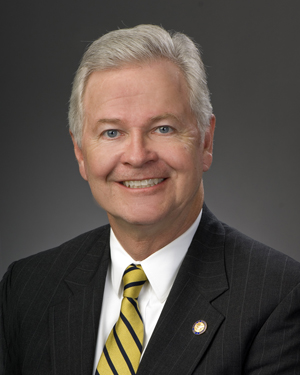
Damschroder

Exemptions

There are also several exceptions to the state ban. Drivers younger than 18 can use their cellphones for emergency purposes and when their vehicle is in a stationary position and outside of the travel lane. Young drivers can also use navigation devices so long as they are hands-free or voice-operated and not programmed while driving.

There are 10 exemptions for adults, including using devices for navigating and hands-free texting. Adult drivers can also use their devices for emergencies and when their vehicle is in a stationary position and outside of the travel lane. They are also permitted to enter a name or phone number to make a call and to receive messages or navigation alerts regarding safety, emergency traffic, weather and the vehicle’s operation.

In Toledo, the city ban enables officers to pull over anyone they see texting as a primary offense.  However, in 2011, Heffernan estimated there were about four citations for texting and just one as of April 2012.

That may be because the ban has encouraged drivers to put down their phones, Heffernan said.

“One of the main values of the ban is the awareness part of the law, to get people thinking, ‘Wow, I used to do this, but it’s against the law now,’” he said.

Officers are also more likely to write citations for something other than texting. For instance, if a driver is texting and rear-ends someone, the officer would write a ticket for “assured clear distance.” The texting is also usually done by the time the citation occurs.

Joe McNamara, City Council president, said the lack of citations could be because the police are focused on other things and lacking in manpower.

“You enforce the dangerous things more vigorously than traffic issues,” he said, adding however, “It’s still a danger; it’s still a problem.”

Councilwoman Lindsay Webb voted against the ban in late 2009.

“There was a reason I voted no, because I thought the enforcement was sort of difficult,” she said, adding that the different city borders and laws could have made things tough.

Webb said at the time that she felt the issue needed to be addressed on a statewide basis. Now that it has been, “Hopefully, we’ll raise a new crop of drivers who don’t text and drive,” she said.

Drivers between 16 and 20 are traditionally the leading group in terms of fatal traffic accidents, said Lt. Anne Ralston of the Ohio State Highway Patrol (OSHP).

“Those are the most dangerous years without texting, but to throw texting in with a beginning driver, it’s just a real dangerous combination,” Damschroder said.

When Damschroder started his term, “I was kind of surprised to learn Ohio didn’t have a ban against [texting],” he said. “There is no way you can safely drive your car and take your eyes off the road and text. You just can’t do it.” Ohio is the 39th state to have a texting ban.

The representative had bigger hopes for his bill. “I can’t understand why [the Ohio Senate] would want to weaken the bill, but they succeeded,” he said, adding that maybe Senate members didn’t want to get pulled over themselves.

Personal freedom was one reason politicians gave Damschroder for not wanting a ban.

“[Texting and driving] infringes on the personal freedom of drivers coming down the opposite side of the highway, those Ohioans who expect the safest possible highway you can make,” he said.

Ralston said other distracted driving behaviors — from tending to a child to picking something up off the floor to eating —  also pose a threat.

“There’s a wide variety of things that can distract,” she said. From 2009-11 in Ohio, there were 31,231 crashes, including 74 fatal crashes and 7,825 injury crashes, that were caused by distracted driving, according to the OSHP. Numbers for how many accidents are caused by texting aren’t kept yet.

On average, sending or receiving text messages takes a driver’s eyes from the road for 4.6 seconds. At 55 mph, this is enough time to go over the length of an entire football field, according to the OSHP.

For more information, visit www.distraction.gov.
Theft case shakes local religious institutions

0

When the former business manager of a West Toledo Catholic church pleaded guilty in federal court Sept. 5 to stealing $525,000 in parish funds, the repercussions were felt at religious institutions throughout the region where multiple thousands of dollars are handled every week.

Patricia Ann Stanz, 61, was described by authorities as “a trusted employee” of Gesu Roman Catholic Church, working at the Parkside Boulevard parish, next to St. Francis de Sales High School, from August 2007 to August 2011.

The thefts reportedly began in June 2008 and continued until Stanz’s termination more than three years later. The case was investigated by the FBI and is being handled by Assistant U.S. Attorney Thomas Karol, according to U.S. District Court records.

Stanz told authorities she used most of the stolen funds for gambling.

“This person abused the trust of her employer and the entire congregation,” said Steven M. Dettelbach, U.S. attorney for the Northern District of Ohio.

As the church’s business manager, Stanz used a rubber stamp with the signature of the parish’s former pastor, the Rev. James Cryan, then signed her name on nearly 100 checks to draw $295,000 from the parish’s checking account with Fifth Third Bank, according to federal officials.

She also withdrew about $200,000 in cash advances using a Gesu credit card, officials said.

“Obviously the parish suffered an extreme monetary loss,” said Toledo City Councilman D. Michael Collins, a former police officer and 35-year member of Gesu Parish. Collins said he was asked by Cryan to help the parish review its policies and practices last December, after the theft had been discovered.

“The greater loss, in my opinion, was to Father James Cryan, who is now retired, and his loss of having placed trust, and then finding that trust had been misplaced,” Collins said. “If there are any lessons to be learned, it is by the laymen who must learn to be responsible for the financial structure of the parish.”

Policies weren’t followed

Indeed, the Toledo Catholic Diocese has extensive guidelines for parishes on handling money responsibly and with oversight, but by all accounts those guidelines went unheeded while Stanz was at Gesu.

“There’s no doubt the policies weren’t followed,” Collins said.

Virtually all of the larger religious organizations have financial guidelines for their members to follow.

The Rev. Larry Clark, pastor of Sylvania First United Methodist Church, said his church has a finance committee of 15 that meets monthly and reviews all the church’s financial records.

Each week, a different set of four people counts the money collected during services, Clark said.

In addition, the church’s financial secretary records who donated what amounts, and a separate person serving as church treasurer submits monthly reports to the finance committee.

“Hopefully, by having enough people involved in the checks and balances, as well as conducting an internal audit each year, we can make sure that it couldn’t happen,” Clark said.

“I never worry about our church at all. We’ve got good checks and balances in place. But if you have somebody smart enough and desperate enough, they probably can get away with it — at least for a while,” he added.

Annual audit

The Rev. Tim Philabaum, pastor of Zoar Lutheran Church in Perrysburg, said a financial audit is performed annually at Zoar, which ensures that the church’s financial books are in order.

“And we have different people handling the income and the outgo of funds,” he said. “The person who writes the checks cannot touch the money that comes in from the offerings.”

The theft at Gesu was the largest local church theft in memory, but certainly not the only one. In March 2010, Toledo police  reported that an employee of St. George Antiochian Orthodox Christian Cathedral on Woodley Road had allegedly embezzled $145,000, and last June police reported a suspected embezzlement at Morning Star Missionary Baptist Church, with $12,000 missing.

Financial guidelines

The Evangelical Council for Financial Accountability (ECFA), a Christian accreditation agency based in Winchester, Va., sets financial guidelines for its members to ensure that funds are handled properly.

There are 1,700 churches and ministries nationwide that have received ECFA accreditation, with each one agreeing to follow specific mandates on financial oversight.

“Each organization shall prepare complete and accurate financial statements,” ECFA’s policy states. “The board or a committee consisting of a majority of independent members shall approve the engagement of an independent certified public accountant, review the annual financial statements and maintain appropriate communication with the independent certified public accountant. The board shall be apprised of any material weaknesses in internal control or other significant risks,” ECFA’s guidelines state.

Transparency with finances is a biblical principle, ECFA states on its website, and “serves to deter improper diversion of funds and other misdeeds.”

Stanz, meanwhile, faces a maximum sentence of 25 years in prison when she is sentenced, now scheduled for Jan. 14, by Judge James Carr in U.S. District Court.

Collins said it is inappropriate to comment further on the case until the sentence is imposed. But he rejected some people’s suggestion that Cryan drop all charges and forgive Stanz, contending that Jesus preached forgiveness.

“I say that in my world there are two sets of rules: God’s rules and man’s rules,” Collins said. “I can’t control God’s rules but I have a responsibility with man’s rules. What [Stanz] did was an uncivilized act. If there are no consequences to breaking the law, what’s the barrier to create civil behavior? She broke man’s rules, so I say, ퟀ�?Throw her in jail.’”


David Yonke is the editor and community manager of ToledoFAVS.com, a website that provides in-depth, nonsectarian news coverage of religion, faith and spirituality in the Toledo area.

Szyperski: Part of your world

0

Attention, please. I have a very special gift for all of you. Her name is Lucy.

As bittersweet as it is for me, I’m taking the first steps to hand her over to the world at large. I’m handing her over to all of you. Right now, I’m just loaning her out five hours a week by way of preschool, to be precise, so you personally might not have the chance to enjoy her just yet.

When you do finally have the pleasure of meeting my Lucy, enjoy her you will. She comes with a smile that can light up a room and the words and expressions to captivate it. She wears her goodness on her sleeve and she loves you, all of you, or, as she likes to say, “everyone in the whole wide world.” I know that loving everyone in the whole wide world seems unlikely and cliché, but one just can’t help but believe it coming from sweet little her.

Lucy is coming to you with open arms, so please be sure to embrace her back. In fact, for all she has to give, what she needs in return is fairly simple. She just wants you to play with her, laugh with her, keep her safe and love her. I don’t think that’s too much to ask.

While I’m at it, I’d like to put good words in for my other children, Jack and Laney. They already have a few worldly years under their belts, but I worry about them just the same. What they have to give and what they’d like to get are a little different from Lucy, my littlest one, for the way each of my children wishes to interact with the world is as unique as they are.

Jack doesn’t need anything special. He gives and takes at face value, only struggling when things stray too much from the concrete. Perhaps surprisingly, he couples his straightforwardness with healthy doses of compassion and consideration for each and every one of you. He does have a bit of an Irish temper on him, however. If you ever come face to face with it, look out, but also be thankful. It means that he loves you enough to let you in and see it, which makes you one of the lucky ones.

And then there’s my Laney. Rarely does she take on the world with open arms, so you’ll have to be the one to walk up and embrace her. She secretly loves and needs it more than anyone else. Don’t get me wrong about her capacity to give; she has things to offer the world so wondrous that I am only privy to their inceptive sparks. As best I can tell, she is someone who will make you want to practically pull your hair out on the surface while she quietly and unassumingly changes the world for you in new and magnificent ways. She is well worth the extra work it sometimes takes to grasp her.

It’s hard to believe that it is actually time to include little Lucy in my “World, Please Look Out for My Children” wishes. I thought ages 0 to 3 for my first two children whizzed by rather quickly, but I feel like those same years for my third child were scarcely a blink in Father Time’s eye. The swiftness of it all is no doubt a bit unsettling.

As much as I know that my children need me to give up some of the responsibility of shaping them to the rest of the world at some point, it always seems to come too soon and the prospect of my work being overwritten seems so risky. By no means do I want you to go too easy on them, however. Allowing them to fly through life’s chapters unchallenged may leave them to wonder what the point is or rob them of appreciation for its wonder.

I don’t want you to sugarcoat life for them or hand them rose-colored glasses as they step outside our front door. I want them to recognize life’s beauty without makeup and sans Photoshop. I want them to have the opportunity to take it, as is, and see what they can do with it.

I’m giving you a gift — three gifts actually. All I ask for in return is that you do the best to see the good in them and utilize them to the best of their individual abilities.

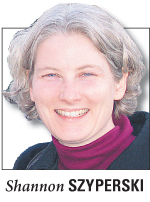
Shannon and her husband, Michael, are raising three children in Sylvania. Email her at [email protected].

United Way sets $13.8 million goal

0

The United Way of Greater Toledo aims to raise $13.8 million during its 2012 campaign.

Geoffrey Canada, an education innovator and founder of the Harlem Children’s Zone, is set to speak at the campaign’s kickoff at 7:30 a.m. Sept. 11 at the Hilton Garden Inn in Perrysburg. The Harlem Children’s Zone emphasizes community and parental involvement, early childhood education and afterschool programming to support children from birth on.

“We have not had someone like that at our kickoff in eons. I really cannot remember. I’ve been at this United Way for more than 30 years and this is one of the more exciting kickoffs I can remember,” said Jane Moore, interim president and CEO.

Randy Oostra, president and CEO of ProMedica, will serve as chair of the campaign. The campaign sum will aid in supporting the United Way’s goal of helping children graduate. The organization, which helps support other groups and encourages volunteering, factors in how education, income and health affect graduation rates in Lucas, Wood and Ottawa counties. In Toledo Public Schools, the graduation rate was at 80.5 percent for 2009-10, according to the Ohio Department of Education.

“We’re looking at [graduation] in a very holistic way. Kids can’t learn if they’re hungry. Kids can’t learn if they don’t know where they’re sleeping. Kids can’t learn if their families aren’t healthy,” Moore said.

Last year, about $13.6 million was raised for the campaign, up 1.5 percent from 2010, but still short of the same $13.8 million goal. About 30,000 donors contributed in 2011.

Oostra said while he is aware that times are tough, “I’ve never done this before so I’m optimistic.”

One of the ways United Way could meet its goal is through its matching grants, Moore said. For the leadership matching grant, ProMedica and the United Way Board of Trustees, will match new gifts made at or increased to $1,000 (leadership level) or more for up to $100,000. They will also match the increased amount of existing leadership level gifts for up to $100,000, according to a news release.

For the education matching grant challenge, Medical Mutual of Ohio, The Blade and BP-Husky Refining, LLC will match designations of $100 or more to United Way’s education-focused area for up to $100,000.

For the health matching challenge grant, HCR ManorCare, Mercy, University of Toledo Medical Center and ProMedica will match designations of $100 or more to United Way’s health-focused area for up to $100,000.

For the income matching challenge grant, the Hylant Group, Findley Davies and Fifth Third Bank will match designations of $100 or more to United Way’s income-focused area for up to $50,000.

Oostra has worked with United Ways in different capacities for more than 30 years. “People have ideas sometimes of what United Way is, but it’s really radically changed over the last decade,” he said, adding that the organization focuses on very specific results.

The United Way’s second annual Week of Caring (up from the standard Day of Caring in the past) began Sept. 10. More than 1,400 people from 40 companies are slated to volunteer this week. Oostra said he expects to help out at a local school’s garden.

When he worked with a United Way for the first time more than 30 years ago, “My boss at the time told me it would be one of the best experiences of my life and it was,” he said.

“I can tell you, Randy has really thrown himself into this and has been an extremely visible and willing leader,” Moore said of the new campaign leader.

The Andersons, Inc., Consultants in Laboratory Medicine, Fifth Third Bank, Health Care REIT, Inc. and Owens-Illinois are sponsoring the 2012 United Way Fellow Program, so the organization can temporarily expand staffing during the campaign.

For more information, visit www.unitedwaytoledo.org. The majority of campaign donations will be wrapped up in November, but the final sum isn’t expected to be released until February.

Rathbun: Labor Day

0

My dad always found it ironic that we would celebrate Labor Day by not working. He, and eventually I, would always spend the day working with the thought that most of the competition is taking the day off so we have an opportunity to create more and work a little harder.

Coming off of Labor Day and starting the Democratic National Convention, I started thinking about what was instilled in me and how too many people today think that the wealth pie is limited in size. My labor is a resource of sorts, and I can deploy that any way I want to create more money and wealth. The more of my labor I utilize, the bigger the pie gets. If I work more hours that someone else I get paid more; the other person is not diminished at all, he or she just chose to use their resources differently.

Granted, there is more to life than money and wealth and if you choose to watch your kids play ball or play yourself that is fine with me. I choose to work and see if I could increase my wealth.

Now, I know that Labor Day was to give the working man an extra day off. I believe that the working man or woman has generally earned that day off. The trouble is that too many people feel that only the worker and not the businessperson is responsible for the increase in wealth. The bottom line is that the worker would not have a job without the business owner and the business owner would not be able to create his product without the workers.

The workers have a resource that the business owner needs and is willing to pay for. If the price is too high the business owner doesn’t hire and if the wage is too low the worker does not have to work there. Both sides have choices to make and all choices have consequences. When those choices are taken away, with minimum wage laws, layoff notices, hiring quotas, etc., then the free market forces are no longer unrestricted and everyone suffers.

Where a lot of the conflict comes from is workers who want low accountability and ever-more pay for ever-less work. The only group of employees that can thrive in such an environment is government workers. In today’s competitive world economy, governments are mostly exempt from competitive forces.

The competitive forces going forward will be small entrepreneurs, independent contractors, home-based businesses and some entrepreneurial-thinking employees in large corporations.

All this being said, the United States has less than 5 percent of the world’s population and is responsible for almost 25 percent of the global manufacturing. No other country comes close. We are producing at almost three times the rate of the 1950s and we are doing it with fewer people. Part of the reason for this is robotics and automation and part of it is the productivity of the American worker.

One of the only things that we can count on is that things will continue to change at a faster and faster pace. We as a country need to be free to produce things and use the resources available to their best and most profitable use. This includes labor.

Only capitalism will make this country solvent again. Only capitalism will decrease unemployment. Only capitalism will make the wealth pie larger.

I hope you enjoyed and celebrated Labor Day this year and I also hope that you realize that the American people are the best in the world. The most generous and caring people in the world and I believe that we can outwork anyone in the world as well.


Gary L. Rathbun is the president and CEO of Private Wealth Consultants, LTD. 

Jefferson Starship cruises to Valentine Theatre

0
Jefferson Starship was set to land at the Valentine Theatre in downtown Toledo. Photo courtesy Mission Control Management.

David Freiberg climbed aboard Jefferson Airplane in 1972. The bass player and singer was excited, but it turned out to be the band’s final flight.

“It was a wee bit nuts because you could tell that Paul [Kantner] and Grace [Slick] and Jorma [Kaukonen] and Jack [Casady] weren’t getting along; they just kind of looked like they were tolerating each other for the tour,” Freiberg said. “We were trying to hold it together, and it was fun.

“But then when the tour was over and here I was in Jefferson Airplane and nothing was happening, and I’d be getting my paycheck wondering: What’s going on? When are we going out to play? Are we going to make a record? Nothing ever happened.”

Kantner, a co-founder of Jefferson Airplane, decided to assemble a new crew. In 1974, Jefferson Starship launched.

“I was surprised that Marty [Balin] came back. I thought that was interesting because I was officially there to replace Marty because he was gone, that’s why I got hired on as a harmony singer mostly and a sometimes lead singer. But then Marty came back, so I decided I’d better concentrate on playing stuff,” Freiberg joked.

“And [Balin] wrote some great songs, and we lucked out a lot and had some really good stuff.”

Jefferson Starship

Jefferson Starship zipped along in the mid-1970s, thanks to “Miracles,” “With Your Love,” “Count on Me” and “Runaway.”

“Then Marty left and Grace left after 1978,” Freiberg recalled during a phone interview from his studio in Novato, Calif. “And I had written this song called ‘Jane,’ and we were looking for another singer to replace at least Marty and/or Grace. And it seemed like every singer that came in we had them sing ‘Jane’ and whoever sang ‘Jane’ best would probably get the gig.

“And Mickey Thomas definitely sang it best — although I sing it now,” the songwriter said and laughed.

With Thomas on board, Jefferson Starship landed on the charts with “Jane” in 1979 and “Find Your Way Back” in 1980.

“Right before ‘We Built This City,’ right before it changed to Starship, Paul [Kantner] and I both left,” Freiberg said. “Nobody in the band was writing the songs; they were being brought in and being completely produced, and it wasn’t what I did. So it was obvious that I had to leave.”

For two decades, Freiberg, who was an original member of Quicksilver Messenger Service, concentrated on computers and creating a studio.

Guitarist Kantner started Jefferson Starship — The Next Generation in 1992.

“In 2005, Paul asked me to come and sit in on a song or two at a local gig, and I did and it was fun,” Freiberg said. “He asked me to go on a tour, and I did, and I’ve been doing it ever since, so that’s like seven years now. And I’m having more fun than I ever did.”

Freiberg attributed the group’s long flight to good fortune: “The right person always seems to come along,” he said. “For our last studio album [2008’s ‘Jefferson’s Tree of Liberty’], that’s when our new singer came on, Cathy Richardson, who’s one of the greatest voices I’ve ever heard.”

Jefferson Starship — Kantner, Freiberg, Richardson, guitarist Mark Aguilar, keyboardist Chris Smith and drummer Donny Baldwin — will play at 8:30 p.m. Sept. 15 at the Valentine Theatre. Tickets for the theater fundraiser, which starts at 6:30 p.m. and includes dinner, cocktails and the concert, are $150. To attend just the show, seats are $45 and $35.

“We play Jefferson Airplane songs, Jefferson Starship songs; we won’t play ‘We Built This City,’ ” Freiberg said and laughed. “That’s not us.”

Innovative ramp program helps elderly return home

0
Allen Beaupre, pictured with his wife Shelian, was able to leave a nursing home thanks to a temporary ramp. Toledo Free Press photo by Caitlin McGlade

On May 23, Shelian Beaupre sat down to talk with her husband, Allen, over a cup of hot cocoa in his nursing home’s common room.

Allen knew he would be able to leave the nursing home soon, but Shelian quietly told him it was time to pack his belongings.

“He looked at me and said, ‘This is no joke is it?’” Shelian recalled.

With tears rolling down her cheeks, she told him, “No.” He looked into his hot chocolate and said, “Let’s blow this Popsicle stand,” triggering cheers and applause from the nursing home residents around him.

Shelian beamed as she recounted that story from her living room in Bowling Green, months after she finally got her husband home. A triple bypass heart surgery had landed Allen in the nursing home for seven months. Desperate for him to be home before their anniversary, the pair ran into a number of obstacles.

One obstacle was the stairs he’d have to climb each day to enter or leave the house. Allen had trouble walking and would need a ramp installed in order to get around.

Medicaid will cover the cost to modify a home through PASSPORT, a waiver program that links homebound seniors to long-term care services. But seniors cannot participate in PASSPORT while they live in a nursing home and thus cannot receive a PASSPORT-covered ramp until they are discharged from their nursing facility.

This can sometimes create a trap for people who want to leave the nursing home, but cannot until their homes are modified, said Justin Moor, spokesperson for the Area Office on Aging of Northwest Ohio.

“It does not make sense and it’s something that needs to be addressed at the federal level,” Moor said.

In response, the Area Office on Aging started working with The Ability Center in 2011 to install temporary ramps at seniors’ homes before they leave the nursing home. That way, individuals can leave the nursing home and start the paperwork to get a Medicaid-covered permanent ramp installed.

With a $17,000 grant from the Northwest Ohio Area Office on Aging Foundation, the local program has brought eight seniors home from nursing facilities by installing the temporary ramps. The seniors use the ramps for at least a couple of months until their permanent ones, which cost about $2,300, are installed.

The average cost to Medicaid to live in a nursing home for one year is about $62,000. Living at home and using PASSPORT services costs about $20,000. About 70 percent of nursing home residents are on Medicaid.

The National Association of Area Agencies on Aging recently presented the Area Office on Aging of Northwest Ohio with a National Aging Achievement Award to recognize the innovative ramp program.

Marion Winnick has been staying at Heartland of Perrysburg for about nine months now, but the Area Office on Aging recently secured her a temporary ramp.

She’ll get to go home soon.

Winnick is wheelchair-bound and couldn’t move home until the ramp was installed. She said the Heartland staff do a fine job caring for her, but that she is ready to look after herself and — most importantly — start growing her own garden again.

Turnips, collard greens, kale, beans — you name it, Winnick has grown it — and being sequestered in a nursing home has left her reminiscing about her home cooking.

“I’m ready to run!” she said.

An encounter with President Obama

0
Brian Malkowski and son Liam meet President Obama at Rick's City Diner in Toledo. Photo courtesy Brian Malkowski.

By Brian Malkowski

“He will have juice and I’ll have coffee,” I said to the waitress after my son and I sat down Labor Day at Rick’s City Diner. After our drinks came, I ordered a fruit dish for Liam and a Western omelet for myself. We had arrived around 10 a.m. with the restaurant about a quarter full and people coming and going as they would on any other day.

What I and the rest of the customers had thought was just another morning breakfast soon turned into a once-in-a-lifetime experience.  At 10:15 a.m., a gentleman walked to the center of the room and asked for everybody’s attention. He said he was from the Secret Service and that in 15 to 30 minutes we should expect a special guest. He said if we wanted to leave we would have to do it at that moment. If we chose to stay we would be in for a great experience, but would have to remain in the restaurant until the special guest had left.

To be honest, I didn’t know if I would be able to stay because my soon-to-be 2-year-old son can only stay put for so long. I decided to stay and figured if Liam got restless, the Secret Service would just have to deal with it. For the next 15 minutes, everyone was searched and we sat in anticipation.

Around 10:45 a.m., about 30 vehicles surrounded the building. Among those vehicles were two presidential limos, one of which was carrying President Obama. No one inside the restaurant could believe what was happening as, seconds later, the president walked through the back door.

Obama made his way through the back of the restaurant and the news media poured in through the front. The chaos was nice because my son was interested in what was going on. Obama said, “Hello everybody, pretend like I’m not even here. When I am done with breakfast I will come around and meet with everyone,” and took a seat for breakfast.

After the president finished breakfast, he made his way down the aisle to meet and greet the customers. I knew I had only about five minutes before Liam was going to erupt, so I decided to sit him on my knee. The couple Obama was talking to before me was taking a while and Liam began to fuss so I let him stand, but that was a bad idea because seconds later he bumped his head on the table.

A moment of silence by a toddler who has just hurt himself means an eruption is about to happen, and it did — and that is how Liam met the President of the United States. Obama and I tried to calm him down, but it wasn’t happening. That’s when a member of the Secret Service jetted over with a box of presidential M&Ms. In the instant silence by Liam and applause by the customers, I had the opportunity to introduce my son to the president.

After shaking hands and introducing myself, I asked Liam (who was wearing a Tigers Jersey) to remind the president what had happened to his White Sox over the weekend. Obama laughed and then told the restaurant what I had said. He asked if I had any more kids and I said, “After this one, I am one and done.” The president said he had it pretty easy only having girls. “Boys, however, can be a little tougher to raise.” We shook hands again and he said, “You have a good-looking boy; take care.”

Obama then worked his way around the room and paid his bill. After that he was off to Scott High School to give a Labor Day speech.

I spent $14.84 in the restaurant, but the experience was priceless. Liam will be 2 on Oct. 1 and I hope someday he will appreciate the day he met the President of The United States.

Grugelfest brings jazz lovers to Downtown Toledo

0
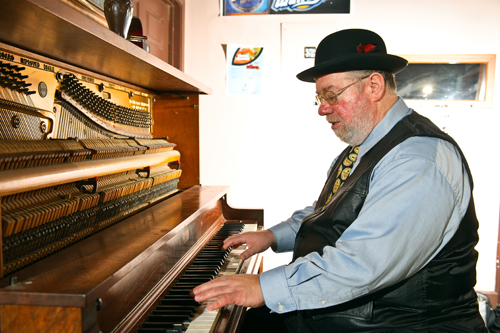
Grugelfest is named after Ralph Grugel, bandleader and friend of "Ragtime Rick" Grafing, seen here at his piano. Toledo Free Press photo by Joseph Herr

When people ask local jazz artist “Ragtime” Rick Grafing what Grugelfest is, he tells them “do a Grugel search and you’ll find it.”

Grugelfest is actually a traditional jazz festival taking place Sept. 14-16 at the Park Inn by Radisson. Grafing, the festival co-chair, said the name is a tribute to his friend Ralph Grugel, the trombonist and leader of the Eagle Jazz band, who died in 2005.

“Ralph Grugel was a huge fellow. He was very tall and wide, much bigger than I am, and he was a marvelous bandleader and master of ceremonies and also a good trombone player. But he was exceptional as a bandleader. He would get five or six guys together and they would play and even guys who were not necessarily top-notch players would rise to the occasion when they played with Ralph,” Grafing said.

The fest will feature five bands that specialize in New Orleans-style jazz, aka traditional jazz or Dixieland jazz, a term Grafing doesn’t like.

“Dixieland is a very bad term because it has lots of different meanings and most of them are wrong,” he said. “Today there’s an awful lot of guys that don’t really know how to play jazz but they dress up in white shirts and red vests and straw hats and they read charts and they call themselves Dixieland jazz bands and they’re terrible. That’s not what this festival is.”

The term Dixieland comes from the Original Dixieland Jass Band, the first group to record jazz in 1917. “Jass” comes from the traditional spelling of jazz.

“In the days when Louis Armstrong and King Oliver and Jelly Roll Morton were playing this music, it was just called jazz. Later jazz evolved into bebop and then swing and took all these different directions,” Grafing said.

“Ragtime” Rick Grafing

Grafing is the leader of the band Chefs of Dixieland and piano player in the Cakewalkin’ Jass Band, which will play at Grugelfest.

“I loved the [New Orleans jazz]. To me, it’s very much like classical music. It’s beautiful and powerful,” said Ray Heitger, the leader and clarinet player for the Cakewalkin’ Jass Band. Heitger’s band played at Tony Packo’s from 1968-2001 and will mark its 45-year anniversary this winter.

Rosie O’Grady’s Good Time Jazz Band from Orlando, Fla., Buffalo Ridge Jazz Band from Cincinnati, the Easy Street Jazz Band from Ann Arbor and the Sunset Stomp Jazz Band from Indianapolis will also play Grugelfest. The festival features four sessions and each band will play twice each session (once in the hotel’s ballroom and once in the lounge).

At 10 a.m. Sept. 16, a Dixieland worship service will take place at the Bethel Lutheran Church, 1853 South Ave. The Sunset Stomp Jazz Band will play at the service.

“It’ll be a typical Sunday morning church service with the exception of the choir and organ won’t be providing the music, an eight-piece Dixieland jazz band will be providing the music,” Grafing said. After the service, there will be a chicken barbecue meal.

Ragtime pianist Bob Milne will play during the meal.

Grafing decided to start Grugelfest after the popular EARLYJAS Fall Festival in Strongsville, Ohio, folded last year due to lack of volunteers. Grafing was a longtime supporter of the festival that was a jazz staple for 20 years.

“We made the decision last year. We don’t have the volunteers to do the work that’s necessary to set it up. That’s just a function of the fact that our people are getting older and older,” said Jim Emert, EARLYJAS president.

“When I heard about it, I was like, ‘Man, you can’t stop that! You can’t end the festival! Oh, no!’” Grafing said, waving his arms. Luckily, the festival’s organizers gave Grafing a planning template and financial receipts to help him get started on his own festival.

“Essentially, what he’s doing is replacing the festival that we had but putting his own spin on it,” Emert said. “I’m hoping the festival will do as well for him as it did for us.”

“For me, that was one of the big pieces of the puzzle, that we get to keep the music going. Another piece of the puzzle was we get to bring some business into Downtown Toledo, which is something that’s important to me,” Grafing said. He owned a jazz venue, Ragtime Rick’s First Draught, for 22 years in the area.

Another part of the “puzzle” for Grafing is helping people. Grugelfest will benefit the Children’s Dyslexia Center-NWO.

The center has 14 trained tutors who teach children with dyslexia about spelling and reading. It moved from its location on Indian Wood Circle to Maumee Union Elementary School about a month ago.

The center uses the Orton-Gillingham method, a multisensory technique, said the center’s director, Diane McCreery.

“It works very well for these children. It’s basically the only way some of them can learn to read,” she said.

Between 15-20 percent of the population has dyslexia, McCreery said.

“With dyslexia, the language part of the brain does not work well. It’s not developed properly. So what we do is reteach the brain so that it uses the neuro pathways that it’s supposed to be using,” she said.

“[People with dyslexia] don’t see the letters backward or see the letters mixed up. They see it the way it is, but then their brain processes it differently. It goes in correctly, but it comes out incorrectly,” she said.

The center was started by the 32° Masons in 1998. Until 2005, the Masonic organization paid for everything. Now it contributes $50,000 per year and the center must come up with the other $60,000 of its budget.

Until recently, the Valley of Toledo, Scottish Rite provided a space for the center, but is no longer able to. In addition to the $60,000 for its operations, the center must now come up with rent money for its new location. Following Grugelfest, the center will have a walkathon 1 p.m. Oct. 7 at the Swan Creek Metropark to raise money.

“[The center is] up to their necks in issues and problems, things that they will solve, but it’s not automatic,” Grafing said.

“I’m just very impressed that these teachers take these kids … and they teach them how to read and change their lives forever for the better,” he said.

The tutors, who will work with 25 students this school year, go through 45 hours of training that would normally cost $6,000-$7,000. They do not receive payment for the first 100 hours and are compensated with $20 per hour after that. There is currently a waiting list of about 20 children for the program.

Tickets to Grugelfest are available at ticketmaster.com. An all-sessions ticket is $120. Individual sessions cost $40. The sessions are 6 p.m. Sept. 14, 11 a.m. Sept. 15, 6 p.m. Sept. 15 and 11:30 a.m. Sept. 16. Patron tickets are $150 and include reserved seating, Sept. 15 breakfast and other perks. There is additional stage space for piano players and small groups. The Park Inn by Radisson is at 101 N. Summit St. For more information, visit grugelfest.com. Contact McCreery at [email protected].

New website to educate, discuss, raise religious awareness

0

A former Blade editor has helped launch a website to get Toledo talking about religion.

ToledoFAVS.com mixes columns and news articles written by religious leaders and followers alike about subjects relating to all forms of religion. David Yonke, who was a religion editor for 12 years, approached the Religion News Service about a year ago about getting the site up and running.

Toledo is the fourth city to see a local “faith and values” site administered by the Religion News Service. Religion News LLC, which is based out of the Missouri School of Journalism, acquired the Religion News Service about a year ago. Seeing that the company was not sustaining itself, Religion News LLC turned the news service into a nonprofit and sought to open sites in local markets to drive up advertising opportunities, said Debra Mason, the publisher.

The local sites are also a way to fill the gap left by many daily metro newspapers closing out their religion sections, Mason said.

“We see part of our role as educational and helping to foster a civil discourse about religion and part of our role as telling good stories that many daily newspapers have abandoned and are not telling anymore,” Mason said.

David Yonke

Yonke said he aims to improve religious literacy and acceptance in the area.

“A lot of people are fearful or naive about religions and defensive,” Yonke said. “If they are educated and informed and learn about what other people believe, it will build a better sense of community and understanding. Religion can be a wonderful driving force in people’s lives and it can be abused — the more we can break down the stereotypes, the better.”

Yonke has 11 official contributors and his goal is to get 50-70 writers to update the site with at least three stories a day. Yonke is seeking contributors from all faiths — from Wiccans to pagans and druids to Catholics, mainline protestants, Muslims and Jewish people, he said.

Yonke emphasized that the site will not just be “Theology 101,” but will host a multitude of stories analyzing anything from current events to television shows.

Mason said FAV sites might offer a venue for reporters interested in faith topics to learn their craft and exercise their skills.

“We need to have a place where people can learn how to do it — it takes years to learn how to do religion reporting,” said Mason, who is also on faculty at the Missouri School of Journalism. “We have students coming out of journalism schools who are interested in writing about religion but we don’t have anywhere to send them to do that.”

ToledoFAVS.com and Toledo Free Press have formed a media partnership in which Toledo Free Press will publish articles by Yonke on faith and values and ToledoFAVS will promote Toledo Free Press online. The agreement expands the media partners’ reach in Northwest Ohio and southeast Michigan while giving readers greater and more diverse options for local news and features.