Home Blog Page 236

Forecaster: Economic recovery hampered by bad policies

0
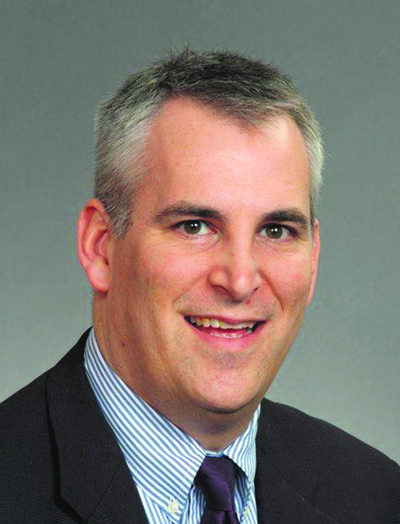
Ken Mayland of ClearView Economics

Imagine a baseball team on which all batters must wear a patch over one eye, all pitchers must throw with their opposite hand, all baserunners must hop rather than run and all fielders must wear their gloves backward.

Economist Ken Mayland, president of ClearView Economics, used that analogy during an Oct. 23 presentation in Toledo to illustrate how the recovery of the U.S. economy has been hampered by bad policies.

“How would you expect that economy to perform? You’d probably say it’s going to underperform what its true potential is,” Mayland said. “Bad policymaking is hobbling business and tampering growth. If the policies don’t change, why would you expect the results to change?”

Mayland, who spoke at KeyBank’s annual economic forecast breakfast at The Toledo Club, has spent more than 35 years studying the business cycle and is one of the nation’s leading experts in economic forecasting.

During his presentation, “What Emerging Data Reveals About America’s Future,” Mayland reviewed economic events of the past 70 years and explained what they can teach us about our present economic situation.

“If you line up the current tracking of this economic recession and recovery to date with the tracking of the four previous recession episodes — two of which were mild recessions and two of which were very deep — it’s quite apparent we are severely underperforming any kind of recovery we’ve seen in the past,” Mayland said.

Economic recovery has been slow because of poor government leadership under multiple administrations, especially on regulatory policies for housing, energy, taxing and spending, health care, labor relations, the environment and more, Mayland said.

“It’s the whole panoply of government policies that’s creating all kinds of stumbling blocks and drags to growth,” Mayland said. “We are still living with the legacies of bad policies of the past; that’s constraining growth today.”

Traditional fiscal policy levers have been “maxed out” and are no longer effective, Mayland said. The key now is sensible regulation, not oppressive regulation.

“These regulations have created a great deal of uncertainty about the future and they are clearly increasing costs, and those are [job] killers,”  Mayland said. “I would roll back Sarbanes-Oxley, Dodd-Frank, regulations that create a lot of spinning of the wheels, a lot of compliance cost, but produce very little good for the country.”

Mayland said he also disagrees with the Federal Reserve keeping the interest rate at zero and adding monthly mortgage securities.

“We’re punishing savers, people trying to do the right thing,” Mayland said. “We are rewarding them with zero, or near-zero returns. When we count in inflation, we are giving them losses of purchasing power. It’s counterproductive.”

Mayland also advocated energy independence and implementing a flat tax system.

Election

This year’s presidential race is one of the most divisive and critical in recent memory, Mayland said.

“I don’t know of any election where the differences were so starkly different as this,” he said. “We’re going to go one path or another.”

Historically, if economic growth exceeds 3 percent in the year preceding a presidential election, the incumbent or incumbent party has won, Mayland said.

“This economy ahead of this election will not come close to 3 percent growth,” Mayland said. “If the economy has a vote — and this has been a very strong pattern in past presidential elections — Obama is going to have a very tough road of it for his re-election bid.”

History

To lay the framework for his conclusions, Mayland reviewed the U.S. economic situation of each decade, starting at the end of World War II, from which the U.S. emerged with “an enormous amount” of debt, nearly 25 percent of the gross domestic product (GDP). Deficit accumulations raised the debt-to-GDP ratio to about 120 percent, higher than it is today, but by 1960, the ratio was down to 60 percent, Mayland said.

“Which raises the question, ퟀ�?How’d you do that? How’d you fix that situation?’ Obviously that question has relevance to the deficit and debt situation today,” Mayland said.

The ratio was not reduced by creating surpluses, although there were a few surplus years in the 1950s, Mayland said. The more important factors were maintaining “not spectacular, but good, solid growth” of 3.3 percent per year on average during the 1950s and keeping the growth of federal spending to under 4 percent per year, Mayland said.

“The lesson to be drawn from this period — and, by the way, we did exactly the same thing over the course of the ’90s — is the way to remedy big deficits is with good economic growth, austerity, discipline and patience,” Mayland said. “Put that policy into place, let it run and, over time, you will fix the problem.”

The 1960s were largely prosperous, with nearly full employment by the end of the decade, but then Vietnam War buildup and defense spending put pressure on the economy, Mayland said.

The inflation rate rose from 1 percent to 5 percent, prompting President Richard Nixon to implement wage and price controls — which never work, Mayland said. In 1973, the U.S. was blindsided by the tripling of oil prices. That pressure, along with the stress of coming off wage and price controls, drove the inflation rate to 12 percent.

“There was a kind of smugness in the economics community that, boy, we did such a good job managing the economy in the ’60s, we can tweak the economy, pull the levers,” Mayland said. “There was a sense that we can  squeeze a little more growth out of this economy by being willing to accept a little bit higher inflation. … What we ultimately found was there is no long-term trade-off between growth and inflation. When you try to put these measures in place, all you ultimately get is higher inflation.”

As inflation rates continued to rise, confidence in the economy dropped, measured by a steep decline in the value of the dollar and the rise of interest rates.

“When that prime rate was 21.5 percent, you had no sense that the rate was going to stop there,” Mayland said. “Is it going to be 30 percent next quarter, next year? There was really a loss of confidence and some real fear about the economy.”

Paul Volcker, chairman of the Federal Reserve from 1979-87, resolved the inflation problem by “clamping down on the money supply,” which contributed to high interest rates in the short term, but dropped inflation to below 4 percent by the early 1980s, Mayland said.

“He accomplished what he achieved, but with great pain,” Mayland said. “We went through two recessions over that period and we saw the unemployment rate rise ultimately in 1982 to 10.8 percent, which is higher than the unemployment rate rose in this most recent episode of recession. On top of that we suffered from sky-high inflation rates and sky-high interest rates, so there’s a case that this period was just as bad as what we recently experienced.”

Today

Today, the U.S. is experiencing a poor economy along with “eye-popping deficits,” Mayland said.

“We’ve now seen nine of 10 quarters come in under 3 percent growth, which is the average growth rate we’ve seen over the last 50 or 60 years,” Mayland said.

Consumer spending comprises 70 percent of the economy, but growth in disposable income, the main driver for consumer spending, has been slow and people don’t have money to spend, Mayland said. Jobs are being recovered, but at a slower rate than Mayland feels is acceptable. Wage growth has been under 2 percent while the inflation rate is 2 percent or more.

“Wage growth is not even covering the loss of purchasing power due to inflation,” Mayland said. “How can you expect consumer spending to grow? When you understand that arithmetic, you can see why the growth of the economy is constrained.”

Good companies will always find a way to survive, if not thrive, Mayland said. Segments of the economy that are recovering well include the auto industry, the aerospace industry and the fuel drilling industry, all of which impact Ohio, he said.

Mayland also briefly addressed the economic situation in Greece and Spain, which is calm for the moment, but he doesn’t expect that to last.

“We’re going to see more problems come out of Europe and when we do they are going to rock the financial markets,” Mayland said. “We can’t control what’s going on in Europe. The only question is, can we do something with creating good policies here in this country to help us decouple from them? In other words, create such a strong dynamic here that it doesn’t matter so much what’s going on in Europe.”

Mayland said he is ultimately optimistic about the U.S. economic recovery.

“Is this sluggish growth, this 2 percent growth, the new normal for our economy?” Mayland said. “I refuse to accept that.”

Jim Hoffman, president of KeyBank’s Michigan/Northwest Ohio district, said Mayland’s presentation was insightful.

“It just helps everyone focus on how important this election is going to be and probably the different paths our economy can follow based on the election,” Hoffman said. “The other thing I thought it did is it focused on the steady but very slow growth that we’re having in our economy, and that’s why people are not feeling like things are very robust. It’s not bad; it’s just not good enough for people to really thrive.”

Jambard-Sweet: Grassroots awakening needed to reverse control

0
Doug Jambard-Sweet

Doug Jambard-Sweet is Toledo coordinator for Move to Amend (MTA).

Toledo Free Press: What is Move to Amend and when was it started?

Jambard-Sweet: Formed in September 2009, Move to Amend is a coalition committed to social and economic justice, ending corporate rule and building a vibrant democracy genuinely accountable to the people.

Toledo Free Press: What is Move to Amend working on locally?

Jambard-Sweet: In Toledo, we are educating the public by sponsoring events meant to awaken ordinary people to inequities created by corporate influence and creating a sense of empowerment that, yes, we can change things if enough of us make room in our busy lives to work on issues that will determine the course of society and the type of choices our children and grandchildren will have available to them.


jambard-Sweet

Our short-term goals consist of organizing local outreach, consisting of lectures, rallies, film screenings and theatrical events to bring these issues to life and raise general awareness. Medium-term goals consist of working with elected officials to pass resolutions in support of Move to Amend’s goals. Within the next few years we hope to organize a ballot initiative allowing every citizen the chance to vote in support of a constitutional amendment to abolish corporate personhood and declare that money is not speech.

MTA recognizes that to reverse multinational corporate control over virtually every aspect of our lives, there has to be a grassroots awakening in the public mind. Only when that happens will there be an uproar from the public calling for control of corporate influence over the political process.

That corporate influence is primarily the undue influence of money on political decision-makers and using profits to hire armies of lobbyists to ensure their interests are protected. They also use business profits to leverage corporate-friendly legislation, regulations and tax laws. Lobbies can make or break a candidate’s chances for re-election and this power is now magnified virtually without limit by the recent Supreme Court Citizens United ruling.

In Citizens United, the court majority ruled that because corporations have become defined as persons with the constitutional rights of persons, they have the right of free speech, including political speech. The court also ruled that money is equivalent to speech and, since speech cannot be limited, the ruling has led directly to the current situation in which unlimited amounts of money are now spent by corporations to virtually buy elections.

The question we all need to be asking ourselves is “Where does this leave us?” It shouldn’t take a rocket scientist to understand that a system that is rigged to protect and enhance corporate privilege may not have the welfare and interests of the general public at the top of their list. Corporate profits now take precedence over basic social needs such as decent food and water, education, health care and civil rights.

Toledo Free Press: Move to Amend is co-sponsoring this year’s NWO Armistice Day Bell Ringing Commemoration with Veterans for Peace (VFP). How does Armistice Day tie in with the movement to end corporate personhood?

Jambard-Sweet: In 1938, Congress declared Armistice Day a national holiday, “to be dedicated to the cause of world peace.”

This year MTA is partnering with VFP to expand Armistice Day observances. World peace still eludes us, in large part due to the forces of greed controlling valuable natural resources and maintaining geopolitical economic advantage. Exposing the endless cycle of war and conflict to this root cause is as central to MTA’s message as exposing any other aspect of corporate abuse in society.

More information about Move to Amend can be found by visiting: movetoamend.org/oh-toledo.

TPS officials say levy crucial to long-term plan

0
Lisa Sobecki, school board president, and Jerome Pecko, superintendent, campaign for the Toledo Public Schools levy in 2012. Toledo Free Press photo by Joseph Herr.

Toledo Public Schools (TPS) is “super lean” when it comes to finances, said Lisa Sobecki, president of the Board of Education.

TPS Superintendent Jerome Pecko agreed: “We’ve really stripped everything down to pretty much bare bones,” he said.

This election season, TPS is asking voters to put some meat on those bones by supporting Issue 20. The 4.9-mill levy would cost the owner of a $100,000 home about $150 per year. Originally, a 6.9-mill levy was sought, but that amount was lowered after TPS’ budget projections were reassessed.

The levy would be for “providing for the emergency requirements of the district in the sum of $13,300,000,” according to the ballot language.

In November 2010, voters rejected a 7.8-mill levy for TPS. Operating money has not increased for TPS since 2001. Its annual operating budget is about $300 million; about 23,000 students attend public schools in Toledo.

During the past six years, TPS has carved about $125 million from its budget, Sobecki said. Schools have been demolished, programs have been cut (and reinstated, in the case of middle-school athletics) and positions have been eliminated, many through attrition. About 230 teachers retired last year, Pecko said.

Sobecki said Pecko also operates with six cabinet members, down from 26 two administrations ago.

Different campaign

Pecko came on board as superintendent shortly before the 2010 election season.

This year’s campaign is different in a few ways, he said.

For one, the board finalized the levy decision in spring instead of August, giving it more time to plan.

TPS was also out in full force during summer vacation with a recruitment/retention campaign.

Lisa Sobecki, president of the Toledo Public Schools Board of Education, and Jerome Pecko, Toledo Public Schools Superintendent.

“We spent the whole summer trying to get the word out about the Toledo Public Schools. We did a lot of neighborhood walks; you saw us in all the parades in town, putting yard signs out,” Pecko said.

This year, about 380 students did not re-enroll at TPS — as opposed to the usual 1,000-1,200 annually.

Not all numbers are in the district’s favor, however. On Oct. 17, just weeks before the Nov. 6 election, the Ohio Department of Education (ODE) released its preliminary report card data. Toledo Public Schools was downgraded from a continuous improvement rating to academic watch. Its performance index rating was 81.8 out of 120, down from 83.1 last school year.

Pecko said the scoring is not much different from last year. If a district fails to meet ODE’s “value-added” expectations three years in a row, however, the district is downgraded. Value-added criteria measure how a student’s performance grows year to year and is based on certain reading/math tests for grades four through eight. This is the third year that TPS did not meet value-added criteria.

Of the individual TPS schools, five were excellent, seven were effective, 19 were at continuous improvement, eight were on academic watch and 10 were on academic emergency.

East Broadway, Pickett, Glenwood, Leverette, Marshall, Robinson, Rosa Parks, Samuel M. Jones at Gunckel Park, Sherman and Spring elementary schools were the schools listed on academic emergency.

“Those are things that are challenges for us and, quite frankly, if we did not have the schools that are struggling academically, we probably wouldn’t be putting those extra resources in that building. It makes this levy more important because we are trying to do some very special things in our lowest performing schools because those things cost extra money,” Pecko said.

Some of those schools on academic emergency did meet value-added criteria, meaning test scores went up.

TPS also recently stopped its practice of retroactively withdrawing and re-enrolling frequently absent students, or “scrubbing” records. This did not affect the report card, Pecko said.

He added that he put a stop to the practice immediately after learning of it. He and Sobecki attributed some of the situation to the confusing language of the state rules. Outside legal counsel determined that the practice did not violate the Ohio Revised Code or ODE rules, but the state auditor’s office is currently conducting an investigation, Pecko said.

Settling into the plan

The dip in TPS’ grade could be a result of the district settling into its transformation plan, Pecko and Sobecki said. The district aims to have an effective rating by 2015.

The transformation plan saw middle schools being eliminated to create K-8 schools. Research shows that K-8 schools benefit the students, Pecko and Sobecki said.

K-8 schools help students because students “know those teachers, and the teachers know the mom and the dad and the teachers know the siblings … they’ve built a relationship,” Sobecki said.

Other recent changes include 98 administrators being assigned to new positions, 300 teachers either being new or having changed grade levels and 3,500 students attending new schools.

“It is a clear demonstration of what happens when you rebuild your house and that’s exactly what TPS has done, through the transformation,” Sobecki said.

TPS is also stressing its inclusion program, which places special-education students in some regular classrooms.

“Those students are going to begin to show higher performance academically and that will impact the district’s grades,” Pecko said. TPS has about 4,000 special-education students.

In addition, TPS started a program allowing students to get high school credit early as well as a distance-learning lab, allowing some students to take classes remotely if their school does not offer a specific class.

Some potential tenets of the transformation plan are at stake if the levy does not pass, Pecko said.

These tenants include thematic high schools focusing on specific areas, a credit-recovery program helping students graduate on time and e-textbooks.

“Kids are more inclined to be centered around electronics and the electronic world and the reality is that’s the world they’re going into for future jobs,” Sobecki said, adding that e-textbooks would allow students to receive updates to material faster.

Teachers at Start High School have also expressed interest in starting an International Baccalaureate program, Pecko said.

“International Baccalaureate is a very prestigious, very rigorous high school curriculum. It’s almost collegiate and it’s recognized by the Ivy colleges,” he said.

The transformation plan isn’t the only thing TPS is doing to improve itself, Pecko added.

Fine-tuning

“We’re not putting all our marbles into that basket. We need to focus in on instructional planning and instructional delivery and really fine-tuning that across the district,” he said. This means more training for teachers, but since there’s a shortage of substitute teachers, the training is happening on a modified schedule.

Some areas may be safe from cuts if the levy fails.

“We want to preserve the arts, music and PE. We don’t want to go after that. That was on the table in 2010 and it’s a very controversial area. Personally for me, it’s an area where I have quite a bit of interest in, so it’s tough for me to go to that,” Pecko said.

Small class sizes may, however, be at stake.

“We have really protected and preserved class sizes at smaller numbers … we may have to start looking at that direction,” Pecko said.

If the levy does pass, TPS could see more employees on the clerical side specifically. Salaries could also be positively impacted.

Negotiations coming

“Eighty percent of our budget is in salary. We do have negotiations coming up, and in fairness to our employees we do need to look at what is reasonable for us to be able to offer them. So there will certainly be something, but I don’t see the floodgates opening and all the dollars going to that. I see the vast majority of the dollars from this levy campaign going into sustaining some of the pieces and parts of the transformation plan,” Pecko said.

His salary would not go up, he said.

Sobecki said that the union employees stepped up and took a 3.5 percent pay cut recently.

“They’ve given a substantial amount for the district and you have to remember they also have families,” she said.

TPS has tried to incorporate the community — including the skeptical members — with the campaign and transformation plan, Sobecki said.

“What I did hear from a lot of folks on the transformation plan was, ‘Yeah, we’ll see. It’ll take forever.’ And then they woke up and school started and there it was. And what I heard from folks was, ‘You guys meant what you said.’ Absolutely.”

Zimmann focuses on faith in Congressional race

0
Angela Zimmann

While the presidential candidates have been discussing values and downplaying personal religious beliefs, faith is front and center in the race for Ohio’s 5th Congressional District.

The Democratic challenger, the Rev. Angela Zimmann, is an ordained Lutheran minister and the incumbent, Republican Bob Latta, is a Catholic who attends congressional prayer meetings and promotes the core values of “faith, family and community.”

“A person without a religious faith can still be a person of integrity,” Zimmann said in a recent interview, “so I wouldn’t say that if you don’t have faith you don’t have values. But I know for myself my faith influences my values. Being from the Christian faith, our values are to care for the needy. The Bible talks about helping the elderly and the widows, and I see that as an analogy for helping anyone who doesn’t have their needs met.”

Latta said he’s “a firm believer that you’ve got to have a true faith value in everything that you do. It starts with faith in God, family and country.”

The Libertarian candidate for 5th District, Eric Eberly, is a member of St. Mark’s Evangelical Lutheran Church in Bowling Green.

Zimmann, 39, is the pastor of Trinity Evangelical Lutheran Church in America, a small church just over the state line in Riga, Mich.

To the best of her knowledge, she said, she is the only female pastor seeking federal office this year. (Researchers at Congressional Quarterly and the Pew Forum on Religion and Public Life said they knew of no other female ministers running for Congress, but could not say definitively.)

Zimmann spoke with Bishop Donald Kreiss of southeast Michigan and Bishop Marcus Lohrmann of Northwest Ohio before announcing her candidacy.

Zimmann

“It was all conversational, not hierarchical,” she said. “Both bishops were supportive and said the church should be more involved in the public forum and listening and participating in the process.”

With her church being in Michigan and her political campaign in Ohio, Zimmann’s church and state are literally separate. But she talked with church members before running for office.

“It’s a pretty conservative little congregation,” she said, with about 100 people on the rolls and Sunday attendance averaging between 40 and 50.

“There are more registered Republicans than Democrats for sure, but they’re pretty open and affirming. We’ve had conversations with the parishioners and many of them said, ‘We’ll vote for you even though we’re Republicans because you are an independent thinker.’”

But politics is not a big topic at Trinity.

“We don’t talk about it on Sunday morning. We’re there to worship and that’s what we do,” she said.

Zimmann, who has a doctorate degree in rhetoric, gave up her job teaching writing at Bowling Green State University to run for Congress. But she has kept her part-time job at Trinity.

“I have not missed a Sunday,” she said. “And my plan, and my bishop’s plan, is that even if I’m elected I will continue as their pastor because most weekends I’m going to go to church anyway.”

She has a ready stand-in if there’s a scheduling conflict: her husband, Martin Zimmann, also an ordained ELCA minister.

If elected, she said she will be on guard to not let politics corrupt her faith.

“I’m not going to say, ‘Oh no, I’m incorruptible. I’m above that.’ I think that’s when we become most susceptible,” Zimmann said. “Absolutely I’m worried. I pray. I’ll be on guard. I’ll be asking people around me to watch, monitor, be truthful and hold me accountable.”

Latta, 56, said his father, former Republican U.S. Rep. Del Latta, is a member of the Church of Christ and his mother is a Catholic.

He serves as an usher at St. Thomas More University Parish in Bowling Green and attends congressional prayer breakfasts in Washington, D.C., on Thursdays whenever possible.

“You have got to know where your principles come from. If you don’t have principles to begin with, you can’t do this job,” said Latta, who was elected to Congress in 2007.

“You’ve got to have your foundation to do what you believe in to be a good representative.”

He said both houses of Congress have chaplains and every congressional session opens with prayer.

“That goes back to 1789, when we first had a chaplain in the House,” Latta said. “And a lot of people do not realize that we have what might be called a chapel right off the Rotunda at the Capitol Building and I know that it’s utilized.”

David Yonke is the editor and community manager of Toledo Faith & Values (ToledoFAVS.com), a website that provides in-depth, nonsectarian news coverage of religion, faith and spirituality.

Bowersox endorses Obama during local visit

0
Singer Crystal Bowersox endorsed Barack Obama in the 2012 presidential election because she says he understands women's issues which have directly affected her life. Toledo Free Press photo by Vicki Kroll.

Crystal Bowersox, who belted out “Me and Bobby McGee” and “Piece of My Heart” on “American Idol,” brought that big, powerful voice to the area Oct. 20-21 to campaign for Obama for America’s Women Decide 2012 initiative.

“Ohio is pretty important in the election, and I’m really here to support the president and his campaign,” the singer-songwriter said.

“Yesterday was jam-packed; I started in Sylvania, I went to Port Clinton, and then on to Sandusky, really speaking on women’s issues and how important those are.”

Wearing a black velvet blazer, black jeans, a black T-shirt with a graphic that included an homage to the American flag and orange flats, Bowersox seemed relaxed talking politics at the Lucas County Democratic Headquarters.

“In my younger days, I relied on Planned Parenthood for services — cervical cancer screenings, birth control contraception. I think it’s important that Planned Parenthood maintains support and, as we know, Romney wants to get rid of it. I don’t agree with that,” the Elliston native said.

Crystal Bowersox (TFP Photo by Vicki L. Kroll)

“As far as women’s issues go, I think Obama understands them from his own background, his grandmother, and his mother being a single mother,” she added.

The 27-year-old has always been on the left.

“I was raised in a Democratic household; my grandparents were Democrats as well. We’ve just always been taught to treat people equally and that we all have to put a hand in to help out so we can all benefit from the good that’s being done,” Bowersox said. “I don’t think the top-down politics that Romney would like to put into place work.”

She will cast her ballot in Portland, Ore., where she lives with her husband, Brian Walker, and son, Tony.

“Voting is so important because if you don’t voice your opinion, then you can’t have one,” Bowersox said.

While she did bring her guitar to sing to campaign supporters, she also hit the streets and went door to door to talk issues.

“If I can bring awareness to the issues that I think are important, I’m going to do that,” Bowersox said. “I know that my being on ‘American Idol’ was big for Toledo, and I’ve heard from so many people here: ‘I’m so proud of you.’

“If you have a megaphone and decide not to use it, it’s inexcusable.”

The only topic the star shied away from: her next disc.

“I’ll be recording most of the fall, and we’ll have an album out in the spring,” she said. “We haven’t started recording yet, but I’ve got the material, and you’ll just have to stay posted.”

Bowersox said the follow-up to 2010’s “Farmer’s Daughter” will be all original songs. She collaborated with her husband on some tracks as well as with musician and producer Jono Manson, who worked on Blues Traveler’s new disc, “Suzie Cracks the Whip,” which features her as a guest vocalist.

“MamaSox” was more forthcoming about her 4-year-old son: “He’s really into Michael Jackson right now. My husband can moonwalk, so we’re trying to teach him.”

She added, “[Tony] started preschool. He’s got a really good heart; you can see it in him. He cares genuinely for little bugs, everything — he’s amazing. He’s taught me a lot.”

What has she learned?

“I want to make more of my decisions, I guess even shopping decisions, out of kindness and love. I don’t buy things that have palm oil in them because they’re killing the habitat of the orangutans,” she said.

“And my son, he’s Captain Obvious; he states the most obvious things that are overlooked by adults. He sees the world in a very pure, lighthearted, loving way, and that’s what I’m learning from him, is to see the world that way, too.”

Biden criticizes Romney, Ryan at UT rally

0
Vice President Joe Biden exhorts the crowd at a rally at University of Toledo as U.S. Rep. Marcy Kaptur, D-Toledo, left, is among those applauding. Toledo Free Press photo by Joseph Herr.

An impassioned Vice President Joe Biden criticized former Gov. Mitt Romney’s and Rep. Paul Ryan’s policies and “inconsistent” stances at the University of Toledo on Oct. 23.

Ryan and Romney have “a foreign policy out of the ’80s, a social policy out of the ’50s and an economic policy out of the ’20s,” Biden said.

Biden spoke to a more intimate crowd of 1,500 compared to the group of more than 5,500 that President Barack Obama addressed Sept. 26 in Bowling Green. Romney spoke to 3,500 people at the SeaGate Centre that same day and Ryan spoke at Toledo Express Airport on Oct. 8.

Since starting his vice presidency, Biden has traveled to Ohio 23 times. In 2012, he has been to Ohio nine times. Biden last spoke in Toledo at the United Auto Workers Hall in March.

In the student union auditorium, Biden criticized Romney’s Oct. 22 debate performance.

“Last night, you saw Gov. Romney rush to agree with President Obama,” Biden said, adding, to laughs, “I was stunned and pleased that Gov. Romney had disavowed so many things he had said in the past.”

“Some days [Romney and Ryan] go out there and rattle the sabers; some days they are doves carrying olive branches,” Biden said. “The only thing consistent about the way they talk about policy is that they are inconsistent. That’s the only thing.”

The vice president also focused on women’s rights in his speech.

“One of the things that bound us (Obama/Biden) together from the very beginning as a team is he is absolutely as committed as I am and I’m as committed as he is about one fundamental thing: My daughter, my four granddaughters, his daughters deserve every single opportunity my sons have,” he said. Biden’s daughter Ashley was also in attendance at the event and spoke just before her father.

The vice president added that Romney would give the power to insurance companies when it comes to women’s health issues.

“This is a fellow whose chief adviser said he was not supportive of the Lilly Ledbetter Act,” Biden said.

Biden later bashed Romney’s role in shipping jobs overseas as leader of Bain Capital and later as governor of Massachusetts.

“It was Bain’s job to go to the cheapest market they could find, the lowest wages they could find, I get that, but folks, I got news for Gov. Romney: That’s not the president’s job,” Biden said.

Romney and Ryan’s economic policies would hurt the middle class because their proposed tax cuts would favor 120,000 families and hurt education and Medicare, Biden added.

The Republican candidates have also not been able to name any tax exemption they would eliminate for the wealthy, Biden said.

“The only loophole they say they will not change is the loophole that allows Gov. Romney to pay 14 percent on $20 million a year,” he said.

Tax experts say the only way to accomplish those cuts would be to raise taxes for middle-class families with children by $2,000 a year, Biden said.

“To pay for these massive tax cuts and another $2 trillion in defense spending the defense department’s not even asking for, that’s what they have to do. They have to raise your taxes, and they have to eviscerate the budget on things that make the middle class and the middle class’s workforce,” Biden said.

Obama’s economic policies would create a million manufacturing jobs and double the amount of exports by giving breaks to companies that keep jobs in the United States, Biden said.

Biden also told the crowd, which included many students, that the president would expand student aid and loans and also work to hire 100,000 new math and science teachers.

The vice president addressed defense issues and said he and Obama would end the war in Afghanistan and make taking care of U.S. troops and veterans a priority.

“There’s only one sacred obligation we have. We have an obligation to our children, the elderly and to the poor, but there is no obligation that is the same as the obligation we have to make sure we equip our troops when we send them to war and care for them when they come home,” Biden said.

Rep. Marcy Kaptur also addressed the crowd. She highlighted the importance of early voting, a central theme of the Obama campaign this year.

She criticized Secretary of State Jon Husted’s opposition to early voting on the three days before the Nov. 6 election. Husted brought the early voting case before the U.S. Supreme Court, but on Oct. 16, the court declined to take on the federal ruling allowing early voting on those days.

“What kind of Secretary of State is that? One that needs to be removed,” Kaptur said.

Guyton Mathews IV, a political science and communication student and fellow at UT, also spoke before Biden.

Mathews said when he found out he would be speaking before the vice president a couple of days ago, he was “definitely excited and a little nervous.”

Although he has spoken in public before, “There’s really no way to prepare for that,” he said with a chuckle.

Women’s rights and education are important to Mathews because he has two younger sisters and a younger brother.

“I have two younger sisters and I care about women’s rights and health care and I know when they start their careers, they’ll have equal pay for equal work because of team Obama/Biden,” he said.

Equal rights are also important to fellow eventgoer Beth Bingle, a “retired stay-at-home mom” from Old Orchard.

“I’ve never heard [Biden] speak before. You really get a feel for [candidates] when you see them in person,” she said, adding that she values a “people over money” philosophy.

“Equality for women is one [issue] that I find extremely important,” Bingle said.

If Romney were elected, “I don’t see any progress in that regard at all. I see us backsliding and it makes me very nervous,” she said.

Christopher Maloney, Romney for President Ohio spokesman, said in a statement, “Instead of laying out a second-term agenda, or ideas for how we can stop the recent loss of Ohio manufacturing jobs, Joe Biden instead chose to resort to the same tired distortions and negative attacks which have come to define the Obama campaign’s closing argument for their re-election. The Obama campaign finds themselves losing ground in Ohio because voters are looking for leadership, not four more years of higher taxes and debt that have ground our recovery to a halt.”

Libertarian Johnson in BG on Nov. 2

0

UPDATE: Note change to start time.

Libertarian presidential candidate Gary Johnson is set to speak in Northwest Ohio on Nov. 2.

Johnson, the former governor of New Mexico, will participate in an event at Clazel Theatre in Bowling Green from noon-3 p.m. Nov. 2, said Kenneth Sharp, an active member of the Lucas County Libertarian Party and Toledo Free Press columnist.

The event will be a joint effort between Lucas and Wood county Libertarian parties.

Sharp said Johnson’s campaign reached out after learning they had an open slot for Nov. 2 and would be around the area the same day.

Currently, there are no tickets being distributed because the Clazel should be able to hold all attendees, Sharp said.

That could change based on response to the event.

The Libertarian group is hoping for at least 600 attendees.

“I think people from both sides of the aisle have really been let down enough that they’re looking for a viable third-party alternative,” Sharp said.

“Even a 5 percent voter turnout nationally for the Libertarian party would break the two-party monopoly, because it breaks open the campaign finances,” he added.

There is a strong Libertarian presence in Northwest Ohio, Sharp said, adding that Johnson’s vice presidential candidate Jim Gray had a strong turnout when he spoke in Bowling Green in August.

According to Johnson’s campaign website, he was known as the “most fiscally conservative governor” and for his businesslike approach to governing.

To learn more, visit lucascountylibertarians.com/ or garyjohnson2012.com/.

Local haunted houses scaring up the screams

0

Whether you’re a hardcore haunt fan or looking for something to do with the family to celebrate the Halloween season, you’ll find everything you could want within an hour of Toledo.

Between Scream Acres at Leaders Family Farms in Napoleon and The Haunted Hydro in Fremont, your nightmares are only a short ride from home.

The Haunted Hydro in Fremont is a Halloween classic. This year, owner/operators and actors Bob and Beth Turner redesigned 60 percent of the interior of the Hydro and created an all-new outdoor walk-through haunt that is sure to get even the toughest people to jump and yell.

The theme for the Hydro this year is “Hex-Treme Takeover.” With newly designed rooms and elevated walkways, the poorly lit and cool outdoor vibes of the 100-plus-year-old Hydro add a unique feel to the attraction.

Whether you’re walking through a maze of chain-link fence or looking for ways out of a confined space, the outdoor walk-through makes sure that your focusing on what you can see is one of your biggest disadvantages.

Beth said the outdoor walk-through has been redesigned.

“Bob has actually made the walk-through much bigger this year, including a path that takes you very close to the river,” she said.

Just 30 minutes from Maumee is easily one of the best combinations of haunt and family destinations, Leaders Family Farms in Napoleon. Leaders offers a two-phase corn maze that is stunning in every respect. Both phases of the maze, Scream Acres and the PanDEMONium Project, are included in the price of maze admission and a daytime walkthrough of both phases of the maze will take guests more than an hour to complete.

If you have the guts to walk the maze at night, expect to be in the corn for two hours or more.

If you have kids and want to make a day of your trip to the family farm, Leaders also offers a giant trampoline-like pillow for kids to jump on, straw tunnels for the little ones, a petting zoo full of well-cared-for animals, a maze for munchkins and many other things.

Once you’re finished walking around the grounds, eating, shopping for pumpkins and perhaps participating in some karaoke, it will be dark enough for Scream Acres and The PanDEMONium Project to open.

When walking from building to building in each haunt, you’re forced to walk through pitch-black mini corn mazes alone.

Each time you think you’re almost finished or safe, you realize you’re wrong and the suspense just amplifies the quality of frights.

While it’s fun to take the family out for a day trip, Leaders offers much more than a family destination: It offers two of the must-experience haunts in our area.

For operation dates, hours and directions visit  leadersfamilyfarms.com and thehauntedhydro.com.

Study suggests ways to improve local food economy

0
Sage Produce products at a farmers' market. Photo courtesy Elizabeth Bergman

A study released this October showed that $3.6 billion has crept out of the Northwest Ohio economy because the local food system isn’t being fully utilized.

“The region has much to gain by doing so: our analysis of the region’s farm and food economy shows that $3.6 billion leaks out of Northwest Ohio each year as residents farm and eat, since farmers farm at narrow margins to produce commodities for export, while consumers eat food imported from far away,” according to “Finding Food in Northwest Ohio,” a study conducted by Ken Meter.

Meter is president of the Crossroads Resource Center, a nonprofit in Minneapolis.

“It isn’t surprising. This is happening all over the United States. Obviously in Northwest Ohio, some of that is tied to the decline of cucumber, tomato greenhouses,” he said. With foreign competition from countries such as Mexico, the number of acres for tomato production in Lucas County fell 90 percent from 1992 to 2007.

Paula Ross, a research associate at the University of Toledo Urban Affairs Center, served as Meter’s “ground person,” connecting him with locals for the study. Ross is also the facilitator of the Northwest Ohio Food Council. She had worked with Meter in the past on a study about Ohio food systems.

This time, she wanted to better understand a more local economy.

“I believe whenever you want to change something as complex as a food system you have to understand it first,” she said.

“I had gotten to know [Meter] and very much respect his work and the way he combines vignettes and stories … but he also has the quantitative information,” Ross said.

The study is funded by an existing grant that also supports other work being done by the Urban Affairs Center.

Meter’s study features examples of local individuals or groups exemplifying the groundwork that leads to improving the local food economy. This includes Elizabeth Bergman, who runs the Westgate and Job & Family Services locations of the Toledo Farmers’ Market two days a week.

Meter’s study includes eight recommendations toward improving the local food system. Bergman, 28, embodies one of those steps — creating a farm system that grows new farmers. She has had three interns work at her small farm. She operates Sage Produce in Genoa, where she grows year-round in addition to her work with the farmers market.

Bergman nearly went into a career in history before deciding to pursue culinary training.

“I wanted to do something that wasn’t so theoretical and get my hands dirty,” she said. Bergman studied at Culinary Arts Institute of America, in Hyde Park, New York.

However, at 23 she was diagnosed with cancer and returned to Ohio for treatment. Bergman said she became interested in nutrition and learning what “good stuff” to put in her body.

When she asked local farmers if their produce was organic, “I never got a straight answer,” she said.

So in 2009, she and her brother started Sage, a farm of their own.

Although Bergman does not use chemical sprays on her produce, “I don’t think organic is the most important thing. I think local is the most important thing.”

Money is an important factor in creating young farmers like Bergman, according to Ross.

“Bottom line is nobody is going to be a farmer unless they can make money being a farmer,” Ross said. “It’s kind of surprising in a country that says, ‘We feed the world’ that what we’re finding is the number of younger farmers is rapidly declining,” Meter said, adding that average age of a farmer is 57.

He also suggested creating places for children to learn about food and agriculture.

Policy and zoning changes could make farming easier and more attractive, Ross said. In 2007, there were 372 farms in Lucas County, 8 percent less than in 2002, according to the study.

To further improve the local economy, Ross suggested talking to businesses about where they get their produce.

“We need to be asking restaurants and grocery stores if they’re not sourcing from local growers, well,why not?” she said. “That’s the power of the consumer.”

There is a misconception that eating locally costs more, Bergman said. It’s just that “vegetables cost more than Doritos.”

“The stuff in season at the farmers’ market is cheaper than the grocery store by far,” Bergman said. “You can get cabbage the size of two heads for a dollar right now.”

According to Meter’s study, 80 percent of Toledo residents reported in 2009 that they do not eat five or more servings of fruit or vegetables each day. Ross emphasized that small changes could have a big impact on the local food scene.

“This is not absolutism. Small changes here can make a big difference,” she said.

Bergman noted that she still buys some items at Meijer or The Andersons. She also suggested eating foods that are in season locally.

“We can eat seasonally. You can have squash soup instead of tomato bisque soup,” she said.

The economy could improve by $345 million for local farmers if area residents bought $5 worth of food from them each week, Meter said.

“That’s a pretty substantial slice of money. Small changes by local customers could make a big difference,” he said.

Coordinating citizen efforts through the Northwest Ohio Food Council was another step Meter recommended. Ross sees the council, which meets quarterly and has specific topic-based subgroups, as a way to connect the community.

The council has representatives from about 10 local groups and is open to individuals, too.

“The disappointing news (from the study) has to turn into, ‘We can do something about it,’ and I think the folks in Toledo are coming together to do that,” Meter said.

Meter became interested in food systems because of his father, who grew up on a farm. Despite feeling most at home on a farm, his father spent his life distancing himself from that life, Meter said.

“It created a mystery for me,” Meter said. “Part of my passion for me is how bad economics for farming has affected my family and to ask why can’t we create a system that rewards farmers better for what they do.”

Meter was set to speak at 1:15 p.m. Oct. 26 at the Green Town event at Sea Gate Convention Centre.

To read the study, visit www.crcworks.org/ohnwfood.pdf.

Visit the web site foodcouncil419.org to learn more.

Tent City offers many services to Toledo’s unhoused

0
Tent City volunteer Michelle Ross was formerly unhoused and was Tent City's "mayor" in 2008. Toledo Free Press photo by Joseph Herr

Ken Leslie started Tent City, an annual event for the unhoused, after reading a startling statistic in 1990: 60 percent of the homeless were families with children.

“I thought it was unconscionable that kids were on the street,” said Leslie, founder of homeless advocacy group 1Matters and its veterans counterpart, Veterans Matter. Leslie also used to be among the unhoused.

The all-volunteer event, which returned in 2006 after a six-year hiatus, gives the unhoused opportunities to partake in several different activities and services. Haircuts and doctor and dentist appointments are just some of the services offered in addition to food, clothing and birth certificates/legal documents being provided. The unhoused, along with volunteers and anyone who wishes to attend, will camp out at the Civic Center Mall, next to the Toledo Police Department on North Erie Street, from Oct. 26-28. Findlay is having a similar event the same weekend.

“Tent City is about bringing the community’s compassion together and delivering it in one weekend to people in need. It is incredible the amount of results that we get when we bring people together,” Leslie said. For $7,000, Tent City was able to offer $140,000 worth of services to the unhoused last year because of community collaboration.

Volunteers are what drive Tent City, Leslie said.

“The reason all this comes together is the insane, wonderful, hard-working, dedicated compassionate volunteers,” he said. There are slots for 462 volunteers this year.

Michele Ross will be one of the volunteers at Tent City and was appointed honorary “mayor” of Tent City in 2008.

But before that, in 2007, she was a homeless crack addict who wanted to score loot at the event. Today, she credits Tent City with helping get her life on track.

“I went down looking for free stuff and I met some fabulous people,” she said. Now, Ross is a proud grandma and a cook at Bowling Green State University — and a renter of a “beautiful one-bedroom apartment.”

Ross said it was the casual questions the volunteers asked her in 2007 that inspired her to get clean.

“They wanted to know where I was from. When you answer that question you start thinking about your family,” Ross said. “Someone asked me if I had any children.

“Those are kind of questions people don’t ask each other when you’re living on the streets [because] you go there to die because you ruined everything. You ruined your relationship with your family; you ruined your relationship with jobs.”

One volunteer asked Ross what her hobby was. Ross told her that she liked to crochet. The volunteer brought her yarn and hooks the next time she saw her.

“I met people and those relationships developed into friendships,” Ross said. “The first thing that’s offered is the unconditional friendship by the people that volunteer there.”

A volunteer will walk each homeless person through Tent City to make sure he or she gets access to whatever’s needed, said Shawn Dowling, local coordinator for the Healthcare for Homeless Veterans program at the Ann Arbor VA Health System.

But before the “Project Connect” part of Tent City comes a walk from Promenade Park to the Civic Center Mall. Registration for the walk begins at 4:30 p.m. Oct. 26 and the opening ceremony is 6:15 p.m. A sock drive will also occur during the walk.

Walk participants who pay the $25 registration fee will receive a T-shirt and an entry into the door prize raffle.  The top 10 fundraisers also get one entry into the grand prize raffle. Raffle prizes include show tickets and the chance to meet musical artists like Justin Bieber, Carrie Underwood, The Who and ZZ Top.

ZZ Top recently became spokespeople for a Veterans Matter campaign and John Mellencamp has worked with Leslie in the past.

“We’re being recognized by people like John Mellencamp, ZZ Top and others in the music industry who say what [1Matters is] doing in Toledo is really cool,” Leslie said.

After the walk, dinner will be served at Tent City. Musical director Pat Lewandowski will ensure that tunes play into the night, Leslie said.

Neighborhood Health Association, which aims to put health services in reach of all community members, will provide some of the medical care on site, said CEO Doni Miller.

“There are so many people that are giving that care to the folks that day because they think it’s the right thing to do,” said Miller, who praised Leslie for organizing Tent City.

“Ken Leslie has embraced this whole idea of addressing those people who are unhoused, rom a tiny little seed, and he has made it grow into this mammoth tree,” she said.

There will also be social workers onsite who can help the unhoused get into programs they may need.

“We connect with people there and grab them while we have them,” Miller said.

Tent City provides a way for agencies to get in touch with the unhoused, often veterans, who may not be going to shelters that normally serve as access points for services, Dowling said.

“There are some people who aren’t able to access homeless shelters for a variety of reasons,” she said. These reasons could be PTSD or not being comfortable sleeping in a building.

This is why Tent City is a great way to connect homeless veterans with services, both Dowling and Miller said.

“What happens at Tent City is the veterans will come in and get some good food and connect with some positive people who aren’t going to judge them,” Dowling said.

Getting the unhoused legal documents like birth certificates is also crucial because these items are required for housing programs, she said.

The City of Toledo Department of Neighborhoods and Lucas County Health Department are covering the cost of 50 birth certificates, but more funds are needed.

Tent City also offers something to citizens who have a cozy bed at night — it gives them a chance to experience life as an unhoused person and sleep outside.

“I just know that if people are really curious about what it’s like to be homeless, coming down there is an experience they will never forget,” Ross said.

Leslie said he was recently reminded of his goal of helping the young and unhoused at Tent City.

After speaking at a high school, “This beautiful 16-year-old girl came up to me in tears and said, ‘Thank you for telling my story, I’m homeless.’ Her dad is a drug addict and drug dealer. She grew up never knowing if today was going be the day they got evicted or the utilities got turned off.”

The girl, who was kicked out by her father after he got a girlfriend, was inspired to speak at another high school.

“After she gave the talk to these kids, one of them came up afterward and said, ‘Thank you for telling your story. I’m homeless, too,” Leslie said. The second young woman is a longtime Tent City volunteer who Leslie did not know was homeless.

“People say all the homeless are drunks on the street. It’s bullshit. Look at those two girls who are in varsity sports in their schools, who are leaders in their schools and you tell me that the homeless want to be there, that they’re all bums, that they’re all lazy,” he said.

For more information, to volunteer or donate, visit http://www.1matters.org. To donate new or gently used winter clothing to Tent City’s clothing tent, drop off items at Cherry Street’s LifeBridge Center, 3342 Monroe St.