It’s a chance to rub elbows with celebrities and enjoy an intimate concert, all while raising money for an important Lucas County charity.
On March 23, Bob Guiney, one of the most popular bachelors from the ABC show “The Bachelor,” and Scott Grimes, an actor from NBC’s “ER,” will take the stage in Toledo. The concert benefits Food for Thought, a social justice organization dedicated to feeding the hungry with a mobile food program.
“We are really hopeful people will come out,” Guiney said. “They are trying to raise as much money as they can for Food for Thought and hopefully people will see the value of that and come and hang out with us.”
Guiney and Grimes teamed up about a year ago. They tour together and play a many charity shows.
“We are doing it for causes that we believe in and causes that we think the money is really
going to go to a really good place,” Guiney said. “Plus, it’s an advantage because he is my best buddy and we get to hang out and play music together and all the while we are doing something good for someone else.”
Guiney and Grimes met after playing in Band From TV, a group of actors that has a passion for music and charity. They tour together and all the money raised at their shows goes to the actors’ favorite charities.
“It’s been the most rewarding thing because we do it all for charity,” Guiney said. “We have raised $3 million for charity during the past seven years.”
But with so many actors’ conflicting schedules, it’s hard to tour often, so Guiney and Grimes started their own band.
“What actually ended up happening is Bob and I were itching all the time to keep performing,” Grimes said. “So we said, ‘While we are on break, let’s do a very scaled down version of Band From TV,’ which ended up being something more original than Band From TV, because we don’t just do cover songs. We do our own stuff.”
Guiney added, “We were itching to play more and were anxious to put our creative minds together more and write some more real songs.
Because Band From TV is more about playing cover songs, and we love that, but we both had the desire to get up there and play our own stuff too.”
Guiney’s TV career began when he was an eligible bachelor not chosen by Trista Rehn (Sutter) on the 2003 season of “The Bachelorette,” before taking the lead on “The Bachelor.” He has hosted several TV shows, including HGTV’s “Showhouse Showdown,” as well as contributing to “Today.”
“My whole life, before I was on ‘The Bachelor’ or anything, I signed a record deal and I was a musician,” Guiney said. “I played Toledo several times. I was in a band called Fat Amy,
which we started back in 1991 and started touring with bands like The
Verve Pipe, Matchbox Twenty and The Smoking Popes.”
Grimes was also a songwriter and solo artist before his acting career took off in movies like “Robin Hood” and TV shows such as “Party of Five,” “Band of Brothers,” “ER” and his voice
work on “American Dad” and “Family Guy.” Both have a collection of original work they play at their concerts.
“We play our own original music that we played before we met,” Grimes said. “But we’ve noticed that accidentally we’ve changed our own stuff to combine what he loves and I love. The music that I’ve written before I met Bob is kind of changing as we sing together and has changed into the music that him and I sing together.”
Both men said the show will have people dancing to the music.
“We are a couple of guys with guitars who bang out a bunch of fun songs,” Guiney said. “There are a bunch of songs you will recognize, there are some songs you might recognize from back in the day that got a lot of radio play like my song ‘Girlfriend’ and Scott’s song ‘Sunset Boulevard.’ We like to mix songs that we like to play and the crowd likes and keep things moving and have some fun with it.”
Grimes added, “There is no pretentiousness about it; it’s nothing but fun. People are welcome onstage anytime. It’s a good old-fashioned pub show even if we are playing at a giant place. It’s really intimate and anything goes.”
The event is part of Free From Hunger 2013, a yearlong initiative spearheaded by Columbia Gas of Ohio, Toledo Free Press, WNWOTV and Moms on the Go and supported by Hollywood Casino Toledo, Wells Fargo Advisors and WSPD. All the money raised at the Guiney and Grimes concert will benefit Food for Thought, a social justice organization
dedicated to feeding the hungry with a mobile food program. The concert
will be at 7 p.m. March 23 at Forrester’s on the River in The Docks. Tickets are available online at http://store.feedtoledo.org and are $40 each.
“What we are doing for Food for Thought and Moms in Heels and these events in Toledo is awesome because instead of just sending a check from a show from a thousand miles away and hoping it helps, we are actually raising awareness,” Guiney said.
In addition to raising awareness, this concert is a homecoming for Guiney. He is a Detroit native who worked in Toledo years ago, for a phone book company.
“I love Toledo. There were some great restaurants and I even worked
in Bowling Green for a while,” Guiney said. “We are very excited. I’m excited
to introduce Scott to some people in the Midwest. We will give them a
great show and shake hands and meet people and have a lot of fun.”
‘Bachelor’ concert benefits Food for Thought
Allegrini: Stand with Rand
On March 6 there was a shift in this country, but most people did not notice.
A defense of freedom, liberty and the Bill of Rights was on display in the U.S. Senate. Sen. Rand Paul stood up in the well of the Senate and spoke for more than 13 hours.
The media will tell you the purpose of the filibuster was to block CIA nominee John Brennan, but the truth is even more significant.
Attorney General Eric Holder sent a letter to Paul that said, “In an emergency, the federal government could execute a drone strike on U.S. soil.”
While Holder added the caveat “in an emergency,” the answer was yes, the executive branch of the U.S. government could serve as judge, jury and executioner, in an emergency.
Who determines what constitutes an emergency? Why of course the executive branch does. According to the top U.S. attorney the executive branch, headed by a sitting president, can declare an emergency, thereby having the authority to execute a drone strike.
Paul stood up with 14 other senators and demanded the executive branch answer the question: Can American citizens have their fourth, fifth and sixth amendment rights denied by a president?
Can a president, with a drone strike, take away an American citizen’s right to “be secure in
their person,” “be indicted by a grand jury,” “not be deprived of life, liberty and property
without due process of law” or to the “right to a speedy and public trial by an impartial jury”?
This is why this moment was so important. The Bill of Rights has been under attack for decades, but the past 12 years have seen an unprecedented attack: the Patriot Act, warrantless wiretaps, surveillance of emails, monitoring of cellphones and social media, attacks on religious freedom and the curtailing of free speech. Yet during this attack on the Bill of Rights, few in power stood up and took on the executive branch.
Paul and those that supported the filibuster did just that; they stood up and demanded that the president tell them if he had the power to ignore the Constitution.
These few rebels shook the earth in Washington, D.C., evidenced by the reactions of those in power during the next few days.
The “old guard” of the GOP took to the Senate floor and called Paul everything from “dangerous,” “Wacko Bird” and the “leader of the code pink Republicans.” Those in Washington, D.C., who believe in party over principle understood what had happened
and it scared them.
If the American people begin to understand that what is happening in Washington, D.C., is just a game of Republicans versus Democrats, the ruling class’ power would disappear.
As long as they keep us fighting each other, we will not notice the government overstepping its bounds and taking away our rights.
Paul lifted the veil just a little and an amazing thing happened. The people’s media, Twitter, Facebook, Internet news sites and citizen journalists covered the filibuster with astounding
success. The news that someone was standing for freedom and the Bill of Rights spread across the Internet, from C-SPAN to the Twitter hashtag #standwithrand trending to No. 1.
Even today if you Google “Stand with Rand” there are hundreds of blogs and new media stories, many of them left-leaning news sources. Even the progressive site Mother Jones questioned the use of drone strikes. Raha Wala, an attorney with Human Rights First said, “Any use of drone strikes or other premeditated lethal force inside the United States would raise grave legal and ethical concerns.”
If we can stand together on the issue of liberty and freedom, we can stop this attack on our basic freedoms and present a united front to remind those in government that the only
power they have is what the people grant them.
The ground has shifted, the veil lifted and the game has been exposed. We are purposely being pitted against each other to keep us distracted. We need to stop fighting each other and unite to defend our rights against a government that thinks it is OK to be judge, jury and executioner, as long as there is an “emergency,” which is defined by that very same government.
Scott Allegrini is a co-founder of the Children of Liberty. Email him at [email protected].
Zepf Center serves up tennis event on March 22
A Toledo mental health clinic is set to host a fundraising event that mixes tennis with philanthropy.
The Zepf Center will have its sixth annual “Serve up an Ace” charity event 7-11 p.m. March 22 at Laurel Hill Swim and Tennis Club, 2222 Cass Road. Admission is $30 per person and $50 per couple.
The nonprofit provides behavioral health and vocational services to youth and adults with severe and persistent mental illness. This includes therapy services, career development and résumé building. The Zepf Center features a medical department as well.
The evening’s festivities include tennis competitions and skill sessions, as well as hors d’oeuvres, a cash bar, astrology readings by Janet Amid, raffles and door prizes.
According to Zepf Center’s Chief Operations Officer Brittany Barhite, the original idea for the event came from Mark Faber, tennis pro at Laurel Hill, and Zepf’s Chief Executive Officer Jennifer Moses.
“They just started talking and came up with the event, and since then it’s grown,” Barhite said.
Barhite added that while the theme of “Serve up an Ace” is tennis, one does not have to be a tennis enthusiast to enjoy the night.
“Some people don’t like to play tennis, but there will be lots of stuff to do if [they] don’t,” she said.
Raffle prizes include $2,500 cash, a 64GB iPad Mini and a 16MP Nikon digital camera. Attendees also have a chance to win door prizes, like a 32-inch flat-screen TV.
Another feature of the night is a silent auction, with items and services offered from various local businesses. Possible items up for bid include a stay at a Florida condominium, U.S. Open tickets, tennis packages with rackets and outfits, haircuts, salon services, puppy-care packages, movie tickets, glass art and beer baskets. Many local businesses sponsored the event.
“We had a lot of local places step up and donate, and a lot of local tennis pros are donating their time to teach the tennis that night,” Barhite said.
Tennis competitions will take place on all of the different courts at Laurel Hill, with pairs separated by skill level. Those new to tennis are invited to play.
“We’ll do everything from point play to fun games,” Barhite said. “After the groups play for an hour, we’ll have competitions like fastest serve, with prizes for best male and female. Then, at 9:30 [p.m.], the courts will be free for open play the rest of the night.”
Health Home provider
Last year, the event raised $30,000. In 2010, “Serve up an Ace” was named the United States Tennis Association’s (USTA) Midwest Charity Event of the Year. Part of the proceeds from this year’s event will go toward building a fitness center, which is part of a new initiative at the Zepf Center.
“As of Oct. 1, we are one of the clinics selected to become a Health Home provider,” Barhite said. “We are looking at a holistic approach to taking care of our clients.”
The Health Home system is part of the Affordable Care Act of 2010. It is designed for people with Medicaid who have chronic conditions, and encourages treatment centers to operate under a “whole-person” philosophy.
“Along with our therapy services we also want to help them with other physical [needs], because if you don’t feel good physically, you’re not going to feel good mentally,” Barhite said. “In addition to therapy, we ask them, ‘When was your last checkup? When was your last dental visit?’ We also want to offer more yoga classes.”
Barhite explained that because many of Zepf’s clients do not have a lot of disposable income, they are probably not going to be buying gym memberships.
She added that some may not feel safe walking around in their neighborhoods, which also prohibits physical activity.
“There are a lot of studies that show that just 30 minutes of physical activity can improve your mood,” Barhite said. “Also, a lot of people with persistent mental illnesses die on an average of 25 to 30 years sooner than other individuals. That is usually because of cardiac issues like heart disease, being overweight and diabetes. If we provide some wellness education, we can help them. Also, a lot of them are underserved, and so they might not have learned the proper way to eat or have access to nutritious food.”
Barhite encouraged those who are interested in attending the tennis event to order tickets in advance, though she noted that some walk-ins will be accepted that night.
For more information or to order tickets, visit www.zepfcenter.org.
TPS committee hears preview of district performance audit
In a 25-minute presentation to the Toledo Public School (TPS) Board of Education Finance Committee on March 13, Dr. Linda Recio, president of Evergreen Solutions, presented 31 preliminary findings of what she said would be a 500-plus page performance audit report Evergreen will present to the full board of trustees no later than April 3.
During her presentation, Recio outlined the preliminary findings:
- “We applaud the Policy Committee for a very comprehensive and up-to-date policy manual. It’s one of the best we’ve seen, and it’s available online,” she said. “However, the board has no administrative procedure manual. You’ve got numerous memos — memos from the present superintendent, memos from previous superintendents and memos from the previous treasurer — but no one takes those memos and puts them in some kind of form to relate to board policy.
“The superintendent and his cabinet are accountable for the implementation of board policy, but what are the procedures? Where are those procedures? Everybody ends up searching all over for them
- “The teachers’ relationships with the cabinet and the leaders of the district are in need of improvement.” “
- Some schools are overstaffed in terms of administrators and clerical. They’re not in line with your own contracts. That’s not to say that some of the more atypical, challenged schools may need more special education teachers at that school. There may be very good reasons you have more clerical or assistant principals at a specific school. That’s the board’s prerogative.”
- “Legal services are exceptionally high.”
- “The superintendent has an excellent relationship within the business community.”
- The district has no centralized approach to grant management. There is no grant manager, and that works against the Transformation Plan.”
- “Distance learning is a really good effort, but it is not being fully implemented.”
- “You have several exemplary curriculum, instructional and vocational programs, but in many schools, they’re the best kept secrets. You’re not taking the opportunity to share those exemplary programs between schools.”
- “You have between 75 and 100 teachers on special assignment. There’s nothing wrong with teachers on special assignment. Yet, you weren’t able to find job descriptions. There’s no indication of their responsibility during the day and who they report to. There’s no accountability.”
- “Expenditure for textbooks has not decreased although student enrollment is down.”
- “There are too many signoffs and not enough encumbrances which means delays in budget expenditures. There have been improvements in recent months, but you still have a way to go.”
- “There is the need for a centralized bidding and purchasing process for all departments.”
- “Attempts to automate the payroll function have been unsuccessful. And the manual payroll function used is being carried out in obsolete applications. This requires the movement of paper documents and other archaic procedures.”
- “The treasurer’s office is to be applauded for bond [refinancing] in 2010 and 2012. It saved the district more than $10 million. And the same efforts in 2013 will probably save the district even more money.”
- “There no risk management program that involves training.”
- “In facilities, you have a very effective teamwork structure in place as well as an efficient trades-based organizational structure. Nonetheless, in transportation and other departments, you have no KPI’s [Keen Performance Indicators] in place. How do you know you’re being successful?”
- “You need a comprehensive energy conservation management program.”
- “Food service workers are very committed to their work. We observed that in several cafeterias. In our opinion, they show compassion and respect for the students.”
- “Using the number of meals served per labor hour, which is the standard, some of the cafeterias are overstaffed.”
- “Food service has operated as a deficit for many years. You have improved some, but you have not improved sufficiently to eliminate the deficit.”
- “You are to be commended for seeking the Walmart grant for food services.”
- “It does not appear you are aggressively seeking to qualify eligible students for free or reduced lunch. It can be sometimes difficult because of the perceived stigma associated with being in that program, particularly at the high school level, but stronger efforts are needed.”
- “We applaud the district for qualifying and receiving the additional six cents from the federal government for the use of nutrition standards.”
- “In transportation, the arbitrary decision for bus replacement incurs unnecessary costs. There needs to be an organized pattern for ordering buses on an annual basis. There needs to be the purchase of a handful of buses a year instead of ordering a number of buses that may not be needed when they show up all at once.
“And some administrators didn’t know buses were ordered the day we were in the building and the buses had arrived.”
- “The use of 96 buses to provide student transportation amounts to the ratio of one bus per 19 students. Some of your buses have the capacity to hold 76 students.”
- “Overtime is extensive among your school resources officers.”
- “Badges are not worn throughout the district. Some schools are very, very proactive in wearing badges and others are not. This is a safety issue.”
- “Another safety issue is that there’s a lot of buzzing without verifying who is coming through the door. Just because I am wearing a business suit does not mean I have any business being in that school building.”
- “In terms of personnel and customer service, not all schools are customer service friendly. You know which ones those are. The names of those schools will not be in the report.”
- “In technology, there is not sufficient use of funds which you are eligible for.”
- “The Department of Computer Services needs to be reorganized.”
Final report
Recio said the final report will have 11 chapters covering each of the major operations the board asked to have analyzed. Those 11 chapters will be:
- district administration.
- curriculum and instruction.
- human resource management.
- personnel management.
- financial management.
- facilities.
- food service.
- transportation.
- safety and security.
- technology.
- fiscal impact.
Recio said the fiscal impact chapter would answer the question, “What does all this mean?”
Recio said the report will identify costs that TPS will have to incur in order to generate cost savings. All costs will be stated in 2013 dollars, and not pro-rated.
Recio said that each of Evergreen’s 150 to 200 findings will lead to a recommendation or a commendation, but not both. Evergreen will also identify every recommendation that it believes will require contract negotiations with one of the district’s three unions, Recio said.
Recio guaranteed the report will not be based on perceptual data, but hard data. It will include charts and figures, “and if we don’t give you the data, challenge us,” she said.
Making the report public
Discussion following Recio’s presentation focused on how the district would make the report available to the public. Cecelia Adams, TPS Board of Education (BOE) vice president, was concerned that board members have an opportunity to proofread the document before it is made available to the public. BOE committee member Bob Vasquez was concerned that “since the board commissioned this report, the fidelity of process necessitates that the board gets the full report and not a sanitized version of it.”
Treasurer Matthew Cleland, performance audit project manager, initially rejected Recio’s suggestion that Evergreen email the report to him. Cleland suggested Evergreen keep possession of the document and deliver it to the board and district administrators through a facilitator of Evergreen’s choice.
Cleland said his concerns were twofold: “First, the more people the report is shared with, the more likely it will get out to the public,” Cleland said. “And second, if it comes to me and I distribute it to the board, that makes it a public document.”
Vasquez suggested that the initial report be seen only by board and cabinet members and that the revised version become the public document.
�?A part of the public record’
Keith Wilkowski, TPS legal counsel, informed committee members that regardless of how TPS receives the report, “once a record is received by a governmental agency, it is a part of the public record even if it has the word ‘draft’ on it. As long as it is in your possession, it is public record.”
When it became clear that TPS could not withhold what Adams, Vasquez and cabinet members were calling a “rough” draft, Adams suggested the board schedule a public meeting for the first draft.
Recio suggested the word “rough” not be used to describe the initial draft. Recio suggested calling it the “final” draft. After the document is proofread by board members, administrators and taxpayers, Recio said Evergreen would create the one revision as required by contract.
Recio also said that any revision would only be made if the district provided facts or figures with hard data.
“This will not be a philosophical discussion,” Recio said. “There will be recommendations that everyone in this room will hate. I can guarantee it. And there will be recommendations that everyone in this room will love.”
Adams said she will take the discussion of when to hold the public meeting to the board’s March 26 regular business meeting. Recio suggested the district make the 500-plus page performance audit available online on TPS’s website on the date of the meeting at the time the meeting starts. She also suggested that since the cost of photocopying the full 500-plus page report is prohibitive, the board make Evergreen’s 20- to 25-page executive summary available to people who attend the meeting.
Carroll returns to radio after ‘slow slide down into hell’
When Suzanne Carroll announced she would take a five-month break from her radio show, “The Jazz Brunch,” she wasn’t sure she could return as promised on St. Patrick’s Day.
A series of complicated health crises, in concert with her 20-year battle with multiple sclerosis (MS), was pushing her toward a possible early retirement that would include walkers with wheels and preparing doorways for wheelchairs.
It started with extreme nerve pain from going off MS medicine. That was followed by a diagnosis of gall bladder disease. Then she had a breast cancer scare, which delayed her gall bladder removal. During that surgery, doctors found liver disease.
This was in addition to “the worst MS attack of my entire life,” the 57-year-old said. Carroll felt the attack coming on before announcing her break and it got more debilitating during her hiatus. She called it a “slow slide down into hell.”
“I knew my MS was already bad in the summer,” Carroll said. “When I would get up from a chair, I couldn’t walk. I had to stand there and start walking really slow. I couldn’t pick things up; I was so fatigued. I was getting tired 10 minutes after waking up from a full night’s sleep.”
But with MS it is hard to tell how long an attack will continue and Carroll was unsure if she would recover as she had in the past. She thought: “If I don’t take a break right now, I am going to skid right into the dirt.”

Suzanne carroll will return to ‘The Jazz Brunch’ after taking a five-month break to battle health issues. Toledo Free Press photo by Joseph Herr.
Her doctors actually wanted her to retire, something Carroll rejected. She started her jazz show 17 years ago Oct. 7, a date so symbolic she made that her final Sunday morning show before going on extended leave.
Her return to radio March 17 is also meaningful. Twenty years ago on that date Carroll received her MS diagnosis.
“For the longest time I would say to people that I don’t know why I ever went to the doctor’s office on St. Patrick’s Day, what a stupid thing to do. Looking back at it now, I think it is a great day to get diagnosed. I feel very lucky still being function-able.”
Taking its toll
Carroll began exhibiting symptoms when she was 19. She lost part of the sight in her right eye and experienced numbing from the waist down. Diagnosis was difficult.
“I stopped going to the doctor for all of those strange, awful things, and I thought if I was just patient with myself and rested, it would subside,” Carroll said. “Now I know that it was relapsing-remitting MS.”
In January 1993, she woke up with double vision. It was her second day of judging a local advertising contest and she didn’t want to miss it. All day she kept asking fellow judges, “Can you see anything in my eye?”
When she finished, she called her husband, Dennis Witherell, and said he needed to meet her at the ER.
“We had no idea what that was about, but we later found out that double vision is a common symptom of MS,” Witherell said.
The doctors did a series of tests, including a spinal tap. At her follow-up appointment on St. Patrick’s Day, she found out she had MS, an autoimmune disease that affects the brain and spinal cord.
“A lot of doctors had told me that my mind was playing tricks on my body. In essence, they were telling me I was a little squirrely,” she said. “Knowing what was happening really was a powerful thing. It gave me a chance to start fighting it.”
When she was first diagnosed there were no medications on the market to slow the progress of the incurable disease. She was sent home with no hope. Eight months later, the first medication came out.
“I have been on medication for a period of 20 years, except when I have to take a holiday in between meds,” Carroll said. “I would safely say at this point in time that if I had not done aggressive medication throughout these years, including a two-year stint with chemotherapy, I would not be working.”
Carroll is permanently numb on the right side of her body from the waist down and is three-quarters blind in her right eye. After her most recent attack, her left hand is arthritic-like.
“Every time I have a relapse, I usually get 90 percent of everything back. Over 20 years, I am slowly losing little bits. The cumulative effect, make no mistake, is taking its toll,” she said.
Going off air
Carroll’s health began a slow descent in late 2011 when she stopped taking an MS drug that put her at risk for a brain infection.
The subsequent nerve pain she felt from her waist to her neck was so painful she often had to sit unclothed with her arms in the air.
Gall bladder disease would follow, along with surgery, which had to be delayed when a mammogram revealed possible breast cancer. Fortunately, a follow-up scan came back clear a few weeks ago.
During her gall bladder surgery, doctors discovered the liver disease, which did not require a transplant, but will take two years to heal.
Meanwhile, the stress and body changes aggravated her MS.
“When you know something is happening, you chill out. That is all you can do. I have a handicap sticker and I don’t usually put the sticker on my car, but as soon as all these things started, I was parking in the handicap spaces, conserving my energy, saving my steps.”
The call to go off the air was made primarily because of the liver disease and MS.

‘The Jazz Brunch with Suzanne Carroll’ airs 8 a.m. to noon Sundays on 101.5 The River.
“My body was shutting down. I knew it was shutting down. I would have never taken a break if I didn’t know something was happening with me.”
Since the break would be so long, she could not prerecord enough shows; however, management held her spot on 101.5 The River.
“I needed to deal with what was happening. The number of doctor appointments and testing and time spent on my health pretty much paralleled the time I was spending on ‘The Jazz Brunch.’ There was no time for both,” Carroll said.
In December, doctors decided to retry steroid treatments for her MS, despite a horrible reaction a decade earlier. A few steroid treatments later she was admitted into the Cleveland Clinic with another severe reaction.
Soon after, on the day her leg started to feel a tad less “dead,” she discovered she had shingles.
“I am going to shoot myself right now. I am never going to get back on the radio. My plan isn’t going to work,” Carroll said of her mindset.
But extremely high doses of antivirals led to a surprising recovery, one that happened over a span of five days in January. Doctors still aren’t positive, but they think shingles may have been the longtime culprit. Her immune system, weakened by MS, could not handle it.
“All this crap just lifted off of me,” Carroll said. “It was stunning. It was unbelievable. I am not a big one for miracles, but this feels miraculous.”
These days, Carroll is getting around without her cane. Her legs feel more limber and the tingling has lifted in some places.
“Even after this most recent attack, I did get about 90 percent back again, and I am really grateful because there is going to be a day when this will not remit,” she said.
Her husband said this MS attack was the scariest.
“We were both thinking it likely would not remit and when it did, we were thrilled.”
The voice
Carroll’s return to the radio is much anticipated. “The Jazz Brunch” is her dream job, a position she dared not seek when she was a single mother raising three children.
Instead, she focused on her ad business until she was offered a show. The newly remarried Carroll wasn’t sure she should take it, though. She had just been diagnosed with a rotten disease and didn’t want such a high-profile position.
“But they were going to let me pick all my own music and do all my own thing. It was going to be all my own show. You don’t get an opportunity like this too many times.”
So she took it and made it her own, even selling the advertisements. The show has become a staple of Northwest Ohio radio.
“We’re thrilled to have Suzanne Carroll back on the air Sunday mornings with her show, ‘The Jazz Brunch,’” said Kellie Holeman-Szenderski, regional market manager for Clear Channel Media & Entertainment, in an email. “Our listeners and the community have truly missed her and we’re so glad that she is ready to return to 101.5 The River. Suzanne’s show is very important to the station’s Sunday programming and she’s a dear friend of Clear Channel Media and Entertainment Toledo.”
D.J. Yark, general manager of Yark BMW, said that Carroll has been a wonderful partner. Yark runs seven commercials throughout her four-hour show.
“It was a very tough time for her, but we are glad she is getting back as soon as she has. We didn’t like to have her off,” Yark said.
Carroll said her show has always been intensely personal. Longtime listeners can tell what is going on in her life by what is being played. One of her favorite CDs and title tracks is “Lucky To Be Me” by Carol Welsman. This song especially resonates because of her recent recovery.
To get in the mood for her live show, she turns down the lights in the studio, gets her coffee and turns on her sexy voice. Longtime fan Gary Enck said he hasn’t listened to The River since she went off the air.
“My Sundays have been very lonely,” he said. “We are really anxious to have her back. She is a treasure.”
Carroll said she never knew for certain if she would return by March 17. Luck was involved.
“A lot of people would say I have planned on coming back on St. Patrick’s Day all along, but I didn’t. I grabbed at the date in the spring that meant something to me and that was my date of my MS diagnosis.”
Now St. Patrick’s Day is doubly meaningful. It is the day she returned to radio, too.
Miller: Lessons from Motown
A recent visit to the Motown Museum and recording studios has led to a happy immersion in the music from that movement’s glory days. My car speakers and earbuds are thrumming with the sounds of The Marvelettes, Stevie Wonder, Marvin Gaye, Martha Reeves, The Temptations and several other artists.
Naturally, I have been excited to share this music with my sons, Evan and Sean, who are nearing their seventh and fifth birthdays. I am playing the upbeat, fun songs such as “ABC” by The Jackson 5, “I Can’t Help Myself (Sugar Pie Honey Bunch)” by The Four Tops and “The Way You Do The Things You Do” by The Temptations.
I was discussing this with a friend who gently admonished me, saying I should still play “educational” songs for the boys, things from Elmo and The Wiggles and their ilk.
“Pop music isn’t going to teach them anything,” he said.
I strenuously disagree.
In addition to the joy of creating and sharing the finer emotions evoked by music, many of the greatest songs, specifically Motown songs, contain encapsulated life lessons that run the gamut from appreciating peace, love and understanding to the horrors of war. My boys aren’t ready for all of these lessons, but then, who amongst us is?
So, thanks to such writers as Wonder, Gaye, Smokey Robinson, Norman Whitfield, Barrett Strong, Berry Gordy, Harvey Fuqua, Brian Holland, Lamont Dozier, Eddie Holland, Nickolas Ashford, Valerie Simpson and scores of others artists, here is a tiny slice of “Everything I need to know about life I learned from Motown.”
- “Before you take a girl and say I do now/Make sure she’s in love with you now/My mama told me/You better shop around”
- “I don’t like you, but I love you/Seems like I’m always thinking of you/Though you treat me badly, I love you madly/You really got a hold on me”
- “Has high blood pressure got a hold on me, or is this the way love’s supposed to be?”
- “I don’t need no money, fortune, or fame/I’ve got all the riches baby one man can claim/I guess you’d say, what can make me feel this way?/My girl …”
- “It doesn’t matter what you wear, just as long as you are there/So come on every guy, grab a girl/Everywhere, around the world”
- “I heard a cryin’ man/Is half a man, with no sense of pride/But if I have to cry to keep you/I don’t mind weepin’ if it’ll keep you by my side”
- “You can’t hurry love/No, you just have to wait/You got to trust, give it time/No matter how long it takes”
- “Now show me a girl, a girl that’s fine/And I’ll choose the one with true lovin’ every time/I know that beauty’s only skin deep”
- “People say believe half of what you see, Son, and none of what you hear”
- “When you believe in things you don’t understand, then you suffer/Superstition ain’t the way”
- “This love we’re contemplatin’/Is worth the pain of waitin’/We’ll only end up hatin’/The child we may be creatin’”
- “As I walk this land of broken dreams/I have visions of many things/Love’s happiness is just an illusion/Filled with sadness and confusion/What becomes of the brokenhearted/Who had love that’s now departed?”
- “Reading and writing, arithmetic/Are the branches of the learning tree/But without the roots of love every day, girl/Your education ain’t complete”
- “If you see an old friend on the street, and he’s down/Remember his shoes could fit your feet/Why don’t you reach out and touch somebody’s hand/Make this world a better place, if you can”
- “Air pollution, revolution, gun control/Sound of soul/Shootin’ rockets to the moon/Kids growin’ up too soon/Politicians say more taxes will solve everything/Ball of Confusion, that’s what the world is today”
- “War! Good God, y’all, what is it good for?/Absolutely nothin’”
- “We don’t need to escalate/You see, war is not the answer/For only love can conquer hate/You know we’ve got to find a way/To bring some lovin’ here today”
- “Music is a world within itself, with a language we all understand/With an equal opportunity, for all to sing, dance and clap their hands/But just because a record has a groove, don’t make it in the groove”
- “Poison is the wind that blows from the north and south and east/Oil wasted on the ocean and upon our seas, fish full of mercury/Radiation underground and in the sky/Animals and birds who live nearby are dying/Oh mercy, mercy me/Things ain’t what they used to be/What about this overcrowded land/How much more abuse from man can she stand?”
- “I’m telling you beware, beware of the handshake/That hides the snake/Beware of that pat on the back/It just might hold you back/Smiling faces, smiling faces sometimes/They don’t tell the truth”
- “Money, we make it/Before we see it, you take it/Inflation, no chance/To increase finance”
- “Hey Mama, folk say that Papa was never much on thinking/Spent most of his time chasing women and drinking/Mama, I’m depending on you to tell me the truth/Mama looked up with a tear in her eye and said, ‘Son, Papa was a rolling stone/Wherever he laid his hat was his home/And when he died, all he left us was alone’”
- “Don’t you know how sweet and wonderful life can be/I’m askin’ you baby, to get it on with me/I ain’t gonna worry, I ain’t gonna push/So come on, come on, come on, come on baby/Stop beatin’ round the bush”
- “We are amazed but not amused/By all the things you say that you’ll do/We’re much concerned but not involved/With decisions that are made by you/But we are sick and tired of hearing your song/Telling how you are gonna change right from wrong/’Cause if you really want to hear our views/You haven’t done nothing!”
- “I hope you hear inside my voice of sorrow/And that it motivates you to make a better tomorrow/This place is cruel, nowhere could be much colder/If we don’t change the world will soon be over/Living just enough, just enough for the city”
- “Now there’s some sad things known to man/But ain’t too much sadder than/The tears of a clown, when there’s no one around”
- “Is her sweet expression/Worth more than my love and affection?”
- “I know flowers grow through rain/But how can love grow through pain?”
- “Now if you feel that you can’t go on/Because all of your hope is gone/And your life is filled with much confusion/Until happiness is just an illusion/Come on reach on out for me/I’ll be there with a love that will shelter you/I’ll be there with a love that will see you through”
Michael S. Miller is editor in chief of Toledo Free Press and Toledo Free Press Star. Email him at [email protected].
Pounds: Free From Hunger
March 16 marks the eighth anniversary of the publication of Toledo Free Press and the third anniversary of Toledo Free Press Star. We have published a combined 475 issues, but understand we are still at the beginning of a long process in sharing positive news and offering a “glass half-full” approach to chronicling the evolution of Northwest Ohio.
It has been a remarkable and challenging eight years. Toledo Free Press has grown to be Lucas County’s largest circulation Sunday newspaper, one named “Best Weekly Newspaper in Ohio” for the past four years by the Ohio Society of Professional Journalists. We cannot fully express our gratitude to the readers, advertisers and partners who have helped us and continue to help us in the
nascent days of our journey.
A major part of our mission has been to give back to the community that supports us. We have sponsored hundreds of nonprofit events and spearheaded such projects as the benefit CDs for Make-A-Wish and Red Cross as well as Leadership Toledo’s Restaurant Week Toledo, which just marked a third successful year.
With that mindset, Toledo Free Press is proud to announce a yearlong initiative, “Free from Hunger.” The brainchild of Toledo Free Press Editor in Chief Michael S. Miller and Columbia Gas of Ohio Communications and Community Relations Manager Chris Kozak, Free from Hunger builds on our previous efforts to address a critical community issue.
- 74,100 people, or 25.8 percent of the City of Toledo’s population, are living in poverty ($23,000 household income for a family of four).
- 37 percent of the individuals in Lucas County live at or below 200 percent of the federal poverty level.
- 30,116 children in Lucas County live at or below the poverty level.
- More than 85,000 Lucas County residents are “food insecure”; 35 percent of them are children under 18. One out of 10 of those children is younger than 5.
For Free from Hunger, Toledo Free Press, Columbia Gas of Ohio, Hollywood Casino Toledo, Wells Fargo Advisors, WNWO-TV, WNWO Moms on the Go and WSPD 1370 AM are organizing a yearlong initiative to benefit three local charities whose mission is to feed needy citizens in Lucas County: Food for Thought, Feed Lucas County Children and Cherry Street Mission.
We are recruiting corporate sponsors to contribute to a fund, established with the Toledo Community Foundation, to donate to these groups and host a series of fundraising events to benefit these causes. The March 23 concert by Bob Guiney and Scott Grimes will benefit Food for Thought.
As the year progresses, Toledo Free Press will devote considerable resources to highlighting the needs of these charities and to discussing this devastating problem. There cannot be an honest dialogue about education and economic development when so many of our citizens are dealing with basics such as hunger and nutrition. Through Free from Hunger, we hope to raise awareness and make a direct impact on our community.
Thank you for your support of our previous initiatives. As we hurtle toward a full decade in business, we ask you to join us in contributing to solutions, not just dwelling on problems.
Thomas F. Pounds is president and publisher of Toledo Free Press and Toledo Free Press Star. Contact him at [email protected].
Toledo 911 call center authority transferred to fire department
The oversight of the communications department responsible for answering and dispatching 911 calls is set to be transferred from the Toledo Police Department to the Toledo Fire Department.
Fire Chief Luis Santiago said, “We’re certainly embracing the opportunity to be the lead as far as the dispatch center. Operationally, I don’t think the workers involved are going to see much of a difference as far as the operations.”
On Feb. 21, Toledo Free Press reported that 21 communications positions and six records positions were open and being filled at the Toledo Police Department. However, the reason for the high number of vacancies was in dispute.
Councilman D. Michael Collins, chair of Council’s Public Safety, Law & Criminal Justice committee, said the communications vacancies could be attributed to, “a very hostile environment, solely as a result of top police division leadership responsible for their operations.”
On March 14, Collins said, “[According to] the information, which has been provided to me from the [Mayor Mike] Bell administration, as a result of an investigation by the Affirmative Action Office, a reorganization decision has been made and effective April 1, the communications center for police and fire of the City of Toledo will be under the authority of Chief Santiago of Toledo Fire and Rescue.”
He added that the investigation from affirmative action also called for further training of the communication center’s police supervisors. A police captain and two sergeants currently oversee the call center, Collins said.
“I fully believe that this is an unfortunate set of circumstances. However given the option of keeping the current sworn supervisors in place … it is probably in the best interest of the whole operation,” he said.
Santiago said at present, the two sergeants are staying in the communications department.
Representatives from the mayor’s office and police department were not available for further comment at press time.
When asked about the reason for the high number of communications vacancies on March 1, Toledo Police Deputy Chief Diana Ruiz-Krause said, “Well, there are a number of reasons. Obviously, we can’t just hire on our own. We need the assistance of our personnel department and they have a lot of other positions that need to be filled.”
She added, “It is a difficult job and it’s not unusual throughout the country to have vacancies.”
The call center handles about 300,000 calls per year.
In a Nov. 21 resignation letter sent to several city officials, a former employee said she had spoken to human resources, affirmative action and union representatives about “the harassment” at the communications center.
“I have suffered documented health issues from the stress and emotional abuse over this harassment and retaliation,” the letter read.
“Although I am able to maintain the ability to perform my job, the working environment continues to be a concern.”
Ruiz-Krause said while she is familiar with the individual who wrote the letter, “I don’t know any more detail than what she states in her letter.”
Initiative aids local charities fighting hunger
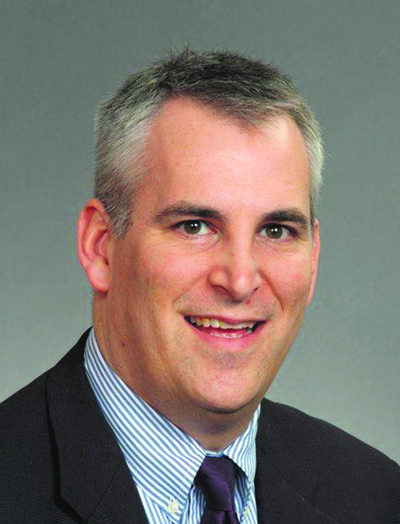
Kozak
Several local groups are partnering to combat one of the biggest issues facing Northwest Ohio — hunger.
Columbia Gas of Ohio, Toledo Free Press, WNWO-TV and Moms on the Go have joined forces for the Free from Hunger initiative. The yearlong initiative supports Food for Thought, Feed Lucas County Children and Cherry Street Mission. Major sponsors include Hollywood Casino Toledo, Wells Fargo Advisors and WSPD.
“It’s a really interesting approach to take a yearlong look at this because to a certain extent, it’s hard to combat something as large as hunger. … How do we start to do that?” said Chris Kozak, communications and community relations manager for Columbia Gas of Ohio. “We’ve picked three good partners who are having a strong impact now and our goal is to help them have an even bigger impact.”
The initiative was partially inspired by startling statistics: More than 85,000 Lucas County residents are “food insecure” and 35 percent of them are children younger than 18. One out of 10 of those children is younger than 5. More than 30,000 children in Lucas County live at or below the poverty line.
“How does Lucas County address issues such as education and economic development if it can’t feed its people?” said Michael S. Miller, editor in chief of Toledo Free Press. Miller, who collaborated with Kozak on the initiative, said, “It’s an overwhelming situation, but there are people devoting their lives to helping alleviate the crisis and we want to bring as much awareness and as many resources as we can to contributing to the solution.”
Each charity will have a season of spotlight during 2013. The initiative seeks corporate sponsors to donate $5,000 each and aims to get those funds matched by the public through events put on by the charities.
All funds are being maintained by the Toledo Community Foundation. Food for Thought is the first spotlight charity, followed by Feed Lucas County Children (FLCC) and Cherry Street Mission.
Kozak said, “It’s really gotta be a team effort and I’ll steal a quote from Bruce Springsteen: ‘Nobody wins unless everybody wins.’”
Food for Thought
The first initiative event is 7 p.m. March 23 at Forrester’s on the River. “Bachelor” Bob Guiney is set to perform along with Scott Grimes. Tickets are $40 to benefit Food for Thought. A second event where local restaurants will show off their take on peanut butter and jelly sandwiches is set for May 23. More details on that event, which will feature wine/beer pairings, is forthcoming.
Sam Melden, executive director of Food for Thought, said, “One of the things about the Free from Hunger campaign is I think it really represents the next wave of raising money and community support. It really represents organizations with influence teaming up to say, ‘Let’s focus on this issue.’”
Food for Thought, which started in 2007, runs its stationary food pantry at 3540 Seaman Road, Oregon. It also has a mobile unit that it takes into its three-county wide community.
“We have about 12 food pantries a month — everything from rural and more urban churches to family centers,” Melden said.
He stressed the importance of partnerships to Food for Thought.

Sam Melden is executive director of Food for Thought. Toledo Free Press photo by Joseph Herr.
“It’s definitely not like an ice cream truck where it just pulls into a neighborhood and pulls out,” he said. “Really what we want to do is we partner with other organizations and we kind of become their food pantry.”
“The idea with that is we aren’t going to assume we can be more engaged with somebody’s community than they already are and that’s served us well.”
The charity also emphasizes serving food with thoughtfulness — meaning eye contact counts as much, if not more, than full stomachs, Melden said. This means a simplified check-in process for patrons and letting them shop more than once a month.
It also means creative spins on projects like Art for Thought, where professional and amateur artists alike can decorate lunch bags. That program is run out of The Art Supply Depo in Downtown.
Art for Thought is mainly meant for school art classes and afterschool programs. However, Melden said, “Everyone from kids the youngest age that can pick up a crayon to the most incredible artist in the city can take a bag and decorate it.”
Food for Thought is also currently working with the Northwest Ohio Food Council to help provide healthier options to food pantry patrons. This means community gardens, cooking classes and themed recipes based on the pantry’s inventory.
Melden said that an increase in funds could mean expanding the types of food offered at pantries and maybe taking a potential partner organization off the waiting list. He also said that more volunteers are always needed. To sign up, visit www.feedtoledo.org.
FLCC and Cherry Street
Tony Siebeneck, executive director of FLCC, and Dan Rogers, president of Cherry Street Mission, both said that the awareness that the Free from Hunger initiative could bring to the issue is especially crucial.
Siebeneck said, “This hunger awareness project to me, it’s a godsend.”
FLCC, which prepares meals in its kitchen and then serves them throughout the community to hungry children, started in 2002. Last summer, it served its millionth summer meal.
The summer meal program is receiving accolades, Siebeneck said.
“We’re receiving a lot of calls from in-state and out-of-state organizations that are wanting to learn more about our successful food model. … That’s keeping us kind of busy,” he said, adding that his nonprofit is also gearing up for summer.
Rogers said of the campaign, “No question about it. What this does for Cherry Street is keep it in the forefront of our community.”
Cherry Street has provided food, shelter and other goods to the needy since 1947.
Rogers stressed that food is a stabilizing force in people’s lives.
“Hunger is distracting. Anything that’s distracting stands between us and where we want to be,” he said.
Rogers is aiming to purchase 100 chickens to provide Cherry Street with more eggs and also to vastly increase its two urban gardens’ produce.
Like Rogers and Siebeneck, Kozak said that awareness is a big part of the initiative.
“Awareness is the first step to [helping]; finding out what the need is; finding out it’s not something happening in a different state, in a different country; finding out there’s people in Toledo just down the street that are hungry that your kids may go to school with,” Kozak said.
Moms on the Go
Moms on the Go — Lisa Harst, Allie Darr and Molly Pearson — film a weekly family segment for WNWO-TV. The group has helped several charities since its inception last year.
“Basically every month we were picking a new charity and decided our efforts would be better spent,” Pearson said, adding that the statistics and facts they learned about hunger made the decision to get onboard obvious.
“It kind of pulls at your heartstrings and being moms ourselves, the thought of not being able to feed your children three meals a day or even one is heart wrenching.”
Darr agreed.
“Personally, I’m a mom of three little boys and the thought of me not being able to feed them is very emotional for me,” she said.
Pearson said even if you can’t come to a specific event, donations to the charities are still encouraged.
Chris Topf, president of WNWO-TV, said that the station always looks for ways to make the community a better place.
“I want everybody to take this seriously and get involved. For the amount of money you might spend for going out to lunch, you can feed a family for a good long time,” he said.
For more information, search for “Free from Hunger” on Facebook.
Local ‘extreme couponer’ hosts book signing
Local coupon expert Joni Meyer-Crothers is hosting a book signing March 23 at Sylvania Area Family Services. Her book, “Extreme Couponing: Learn How to Be a Savvy Shopper and Save Money … One Coupon At a Time,” came out March 5.
Meyer-Crothers started extreme couponing about five years ago after her husband was laid off from his auto-industry job. Since then, she’s appeared on TLC’s “Extreme Couponing,” the “Rachael Ray Show,” “Good Morning America,” “20/20,” “Today,” “The 700 Club” and Fox News.
The extreme couponer spends about $200 for $5,000 worth of groceries every month and donates about 80 percent of that to Sylvania Area Family Services.
“I’m very big into teaching people that you can save for your own family, but you also have to share. There are too many hurting people out there and we have to step up and help them,” she said.
TLC and Discovery Channel Publishing contacted Meyer-Crothers in December 2011 to pitch a book.
“Of course, I said, ‘Yeah!’” Meyer-Crothers said. “By the end of the book, it kind of walks people through how to make a successful shopping trip.”
She co-authored the book with ghost writer Beth Adelman. Adelman now uses tips she picked up from Meyer-Crothers — like saving coupons for when items go on sale, she said. She also started donating to a local food bank.
“Very few people are having a very fabulous time financially right now and this is a book that will help people stretch what they have,” Adelman said.
The book signing also includes an opportunity to win a coupon binder, a Kroger gift card and an upright freezer. Entrants must purchase a copy of the book for $13 and bring five nonperishable/hygienic items to donate to Sylvania Area Family Services.
The signing runs noon to 2 p.m. March 23 at 5440 Marshall Drive, Sylvania. For more information, visit Meyer-Crothers’ blog at www.freetastesgood.com.