WTOL-11 news anchor Chrys Peterson is among the local women photographed without makeup for This is Me, a Sept. 13 fundraiser to benefit Girls on the Run of Northwest Ohio. Photo by Lee Bates
They are advocates, entrepreneurs, elected officials, media personalities, mothers, musicians, cancer survivors and more, and they are joining forces for a common purpose — to help women feel more confident and raise money for a local nonprofit that works with young girls.
An upcoming fundraiser, This is Me, will feature portraits of nine barefaced women to be sold by silent auction to benefit Girls on the Run (GOTR) of Northwest Ohio.
Those featured will be Lucas County Prosecutor Julia Bates, Toledo City Councilwoman Lindsay Webb, WTOL-11 news anchor Chrys Peterson, 101.5 The River morning radio host Mary Beth Zolik, Project iAm founder Nicole Khoury, The Josh Project founder Wanda Butts, Hannah’s Socks founder Hannah Turner, two-time cancer survivor and Susan G. Komen for the Cure honoree Kelli Andres and Toledo Police Sgt. Anita Madison of the Toledo Community Initiative to Reduce Violence.
Organizer Jeremy Baumhower, a Toledo Free Press columnist, said he wanted to feature women who are diverse in age, background, occupation and the ways they impact Northwest Ohio.
“Everyone has a story and their own reason for doing it,” Baumhower said. “The night will be a celebration.”
The “makeup optional” event is set for 7-11 p.m. Sept. 13 at The Blarney Event Center, 601 Monroe St. Light refreshments will be served and a cash bar will be available. A portion of profits from a signature drink, the This is Me-tini, will also be donated to GOTR of Northwest Ohio. Performing will be Kristi Marie, Carmen Miller and The Rivets. Tickets are available at thisismetoledo.com for $20 or at the door for $25.
Attorney and Arctic Clam lead singer Nicole Khoury is among the local women photographed without makeup for This is Me, a Sept. 13 fundraiser to benefit Girls on the Run of Northwest Ohio. Photo by Lee Bates
Baumhower come up with the idea after seeing “Game of Thrones” actress Emilia Clarke and singer/actress Demi Lovato post photos of themselves without makeup to social media sites, encouraging others to do the same.
“I just woke up and saw in my head, ‘What if we did it locally with beautiful, powerful women?’” Baumhower said.
Girls on the Run
Soon after, he approached GOTR of Northwest Ohio, a 10-week program that combines running with an interactive curriculum to inspire self-respect and healthy lifestyles in preteen girls. Topics discussed include bullying, peer pressure and healthy body image with a focus on positive physical, emotional, mental and social development.
The organization has chapters in more than 200 cities in the United States and Canada. Northwest Ohio’s chapter started in 2012 and hosted 13 teams of third-, fourth- and fifth-graders at 11 sites during its spring season. More local sites will be added this fall.
“The message we’re teaching our girls is to be proud of yourself, respect yourself and you’re beautiful just the way you are, so to showcase some of the successes and awesome impacts adult women are having on the community that have nothing to do with their looks is great,” said Lindsay McKibben, council director of GOTR of Northwest Ohio. “We loved the idea and the message that he is trying to share.”
Baumhower said he was in awe of the strength each woman displayed while being photographed by local photographer Lee Bates.
“I was mesmerized how comfortable and confident [Peterson] was while getting her picture taken, even without makeup. Her TV station was there shooting it for a news story and she had zero fear. Her authenticity and genuineness really came out in her pictures,” Baumhower said. “[Andres’] energy and positivity is beyond infectious. She laughed almost the entire time she was being photographed. Even discussing her numerous battles with cancer —losing a leg at age 12 and a breast at the age of 45 — was done with a smile on her face. She glows when she talks about her sons and was transparent when she describes how scared she was battling her second bout of cancer, having two small boys.”
Bates said she finds it frustrating that society has a double standard for men and women.
“Men are so lucky,” Bates said. “A few wrinkles and a few gray hairs on a guy is just fine and charming. It’s just a different way society views the gray at the temples on a man — that’s distinguished, sophisticated, mature, wise. Women get the dye out at the first sign of gray.”
She said times have changed since she went to law school, but it’s still important for girls to develop the self-confidence to excel in whatever arena they choose.
“Men are different to women today in the workplace than they were when I first started. To our kids, it’s just accepted you can be anything. You can be a stay-at-home mom or you can be an astronaut,” Bates said. “For me, it was ‘You’re going to be a lawyer? That’s not really a place for women.’ I got that a lot. Then of course, it was like, ‘OK you can be a lawyer, but you’re going to be a prosecutor? Like try cases? Murder cases? What are you going to do when they say dirty words?’ So I think times have changed a great deal in that respect.”
Webb said she was drawn to This is Me because it reinforces the example she’s trying to set for her stepdaughters.
“I believe combating the message that you have to be what society deems as perfect is crucial to their self-
esteem and well-being,” Webb said in an email. “If women who are successful can demonstrate they are comfortable in their own skin without makeup, it may send the message to girls and other women that what really matters is how you feel about yourself. Your inner beauty and your other abilities are what matter most.”
“If you personally feel better in makeup, by all means wear it, but if you are doing it because you feel it’s expected, it may be time to rethink things because all of the time spent on worrying about superficial looks could be better spent on what truly makes you happy,” Webb said. “I’m beautiful in the eyes of my husband and my family, at the end of the day, that is really what matters most.”
Social media
Dozens of local women, including the University of Toledo women’s soccer team and members of the WTOL-11 and FOX Toledo newsrooms, have shared photos of themselves without makeup on social media sites using the hashtag #thisismetoledo.
Instagram user @Bethaknee22 captioned her photo: “In the past week, my skin has broken out worse than it ever has in my entire life. I’ve cringed looking in the mirror & bowed my head when talking to people so they wouldn’t look at me. I haven’t even wanted to leave the house. Then tonight, I looked in the mirror & my thoughts turned to my daughter. I’ve been given one of the most amazing blessings possible, and I’ve got a pretty serious job to do in return. Part of my responsibility is to raise a confident, loving, honest & strong woman that loves the skin she’s in & knows beauty is much deeper than the surface. So, I decided to post this picture (which of course was the best of 32 shots ) of me before bed. Four eyes, blemished skin with no makeup…this is me…the real me. I love you so much, baby girl”
Facebook user Jacqueline wrote: “I love your campaign for This is me! I have had 19 surgeries since 2001 and I have many scars all over my body! At first I was embarrassed of them and very insecure! I felt ugly very ugly I couldn’t stand to look at myself in the mirror! I now have learned to love myself and to feel beautiful! I realized these scars made me who I am today and that’s a stronger woman!”
GOTR of Northwest Ohio Volunteer Director Renee Stack said the social media shares exemplify what This is Me is all about.
“We want everyone to feel good and beautiful in their natural state and let them showcase who they are without feeling the need to conceal,” Stack said. “I think makeup is beautiful and it’s definitely something I choose to wear, but I’m also feeling empowered to go bare as well.”
Toledo Free Press is a media sponsor of the event. For more information, visit thisismetoledo.com.
Her four sons haven’t donned a Perrysburg jersey for more than 30 years, but June Sweede can still regularly be found in the fan section at school sporting events — especially the home football games at Steinecker Stadium.
Sweede, 78, of Perrysburg has a Senior Stinger Pass issued by Perrysburg Schools, which offers free admission to middle school and high school home regular season sporting events, plays and musicals for district residents age 60 and older.
Toledo Public Schools (TPS), Maumee City Schools and Washington Local Schools are among the other area districts that offer senior passes.
June Sweede
“I got one as soon as I was eligible,” said Sweede, who has lived in Perrysburg for 45 years. “They made it very easy to receive it.”
Although her children and grandchildren live outside of the district, Sweede said she enjoys going to school events to visit with old friends and support current students.
“It’s just a nice thing for the school district to offer for folks,” Sweede said. “Whether they’re our own [children or grandchildren] or other people’s, we want to encourage them all.”
Football is her favorite, but Sweede also enjoys baseball, basketball and wrestling.
“I’ve really gone to all of them at one point,” Sweede said. “Of course, the plays and musicals are absolutely wonderful, too and I get in on those when I can.”
The passes are popular, said Rachel Johnson, coordinator of institutional advancement with Perrysburg Schools, which has issued the passes for more than 20 years.
“It’s a great program,” Johnson said. “Just in the last two weeks I’ve had three appointments from folks hearing about it and coming in. A lot of them are alumni or current grandparents, but it’s open to anyone as long as they live in the district. They all love it.”
The district organizes community events a couple times a year at senior housing facilities, senior centers or libraries to spread the word about the program.
“Pretty much whenever we hold an event out in the public, we get about 30 people signed up,” Johnson said. “We do about one pass a week on average.”
Sweede said she encourages other seniors to get their passes.
“They take very good care of the older folks,” Sweede said. “There’s special parking. You feel comfortable going to the games. Between good school friends, school officials and boosters, there’s always someone there to watch out for you. You feel safe when you go to the events. I feel good about going. If you need it, there’s quick help and lots of kindness. It’s a good feeling.”
TPS
TPS offers its Golden Apple Card to district residents 60 and older or retired TPS employees of any age.
“The biggest thing is when people come in when it’s their grandson or granddaughter playing in a big game and they get to cheer them on,” said TPS spokesperson Patty Mazur. “It’s just a thing the district does to give back to the community.”
The cards can’t be used for all-star games, city championships, state tournament events or the Shoe Bowl. Admission to plays and musicals is decided by each school, Mazur said. When filling out an application, seniors are also asked about their interest in volunteering.
“We’re always looking for volunteers so that works out nicely,” Mazur said. “We can pass it on to the principals.”
Maumee
Maumee City Schools has offered its Golden Panther Card for more than a decade, said district spokesperson Nancy Sayre.
“We do it to thank our community and encourage them to come out and support the students,” Sayre said. “The kids who are participating love to have people in the stands and we love it. We have lots of grandparents who are residents. We love to have them come out and support our students.
“We get an excellent response from the community,” she said. “The program is well-received and well-used.”
Among those who regularly use their Golden Panther cards are Sayre’s parents, Dave and Gail Lindsay, who have lived in Maumee for 45 years. The Lindsays particularly enjoy attending track meets and volleyball and basketball games to watch their grandchildren. They occasionally go to football games with friends.
“It’s wonderful to get to go to plays and athletic activities,” Gail said. “There’s just a whole lot of stuff that’s available to us at no charge. It’s great.”
The cards are helpful for seniors on fixed incomes, Gail said.
“My granddaughter played volleyball twice a week. At $6 a game, $12 a week, $50 a month — that can add up,” Gail said. “So it gives them a way to get out there rather than stay at home because they can’t afford to do things. It also helps them realize how much the schools are doing for the kids. So it benefits the seniors and I think also helps the schools. I just wish more seniors knew about them.”
For more information or to make an appointment to get a pass, contact Maumee City Schools at (419) 8933200, Ext. 201; Perrysburg Schools at (419) 874-9131, Ext. 2156; TPS at (419) 671-8263; or Washington Local Schools at (419) 473-8433.
Seniors will need to bring proof of age and proof of residence, such as a driver’s license or other photo ID and a piece of mail with their address. In most cases, school staff will take their photo and produce a photo ID card while they wait. The passes are valid for life.
Local nonprofit Food for Thought and the Toledo Farmers’ Market recently formed a partnership aimed at providing more nutritious food to local families in need.
Starting July 27, Food for Thought will have a booth at the Downtown farmers market, located at Erie Street Market, 525 Market St., every Saturday. The group will accept donations of produce purchased from local farmers at the farmers market. Monetary donations will also be accepted.
“Essentially the idea is it will be a reverse farmers market,” said Sam Melden, Food for Thought’s chief thought officer. “It’s a way for local patrons to buy from local farmers and support a local food pantry. It’s just like this clean circle and we can take it back and integrate it into our food pantries the very next day.”
Food for Thought operates a pantry out of New Harvest Christian Church in Oregon as well as a mobile pantry that visits 11 sites. The group will soon acquire a second mobile pantry and expand service to six to eight new sites, thanks to a grant from ProMedica, Melden said.
“Part of feeding people in a thoughtful way is offering nutritious food. It’s not just about volume, it’s also about quality,” Melden said. “We want people to actually increase their health and increase their access to healthy food, so this is obviously a huge opportunity.”
The idea for the partnership came last year, after Melden was introduced to Westgate Farmers’ Market manager Liz Bergman through a mutual friend.
“We started talking about how both our organizations are really good and how we can help each other,” Bergman said. “Sam’s group does such a good job. We get thousands of people every Saturday so it’s a really great place to meet a broad spectrum of people. Maybe people who could qualify for the food pantry and didn’t know it was in the area. Or people who are excited to give their time or a little of their hard-earned money to people in need.”
Bergman also expects farmers who know they won’t have another chance to sell leftover produce to donate it to Food for Thought so it won’t go to waste.
“It just makes sense,” Bergman said. “A lot of other farmers markets all throughout the country do this. We don’t have a full-time person working for the farmers market, so these are the extra things that take a while to get going. But hopefully it works out.”
If the partnership is successful Downtown, it may expand to other farmers markets, Bergman said.
“The people at the farmers market often are interested in two things: They are interested in health and they are interested in the local food economy,” Melden said. “All our table is there for, all we are doing in that space, is saying we agree and we believe even if someone isn’t here shopping they should have access to this quality of food and so we want them to help us pull that off. I think it’s going to be great.”
The Toledo Farmers’ Market is open year-round: 8 a.m. to 2 p.m. Saturdays May through November and 9 a.m. to 1 p.m. December through April.
For information, visit feedtoledo.org or toledofarmersmarket.com.
1.Toledo Museum of Art This internationally renowned museum recently expanded its Thursday hours and is now open until 9 p.m. on both Thursdays and Fridays. With free admission to most exhibitions, TMA also offers art classes, demonstrations, free docent-guided tours and more. Circle 2445 regularly hosts social events geared toward young adults, including Art in the Dark, a drinks and flashlight tour on Sept. 26. 2445 Monroe St. toledomuseum.org
2. Toledo Symphony About to enter its 70th season this fall, one of the symphony’s most popular series is the annual free summer Music under the Stars concert series at the Toledo Zoo. toledosymphony.com
3. Toledo Opera The opera strives to make its performances accessible to all with translations provided above the stage like closed captioning. This season’s offerings will include “Aida” and “Faust.” toledoopera.org
4. Theater and stage Northwest Ohio is full of opportunities to catch a theater performance, including “Wicked” at the Stranahan Theater (Aug. 14-Sept. 1). There’s also Valentine Theatre, Toledo Repertoire Theatre and Edgy Rep, Village Players and The Upton Players and regional community theater productions, not to mention high school and college performances.
5. Drink and Draw The Art Supply Depo offers life drawing sessions 7-9 p.m. on fourth Tuesdays. The shop provides the model and music while participants (18 and older) bring their own drinks and art supplies. The next date is July 23. $10 or $7 with a friend. 29 S. St. Clair St. artsupplydepo.com
6. Uncork the Artist Bring drinks (or don’t) and let a local featured artist guide your group through creating a painting. All supplies provided. $35 per person/$60 for two. 5228 Monroe St. uncorktheartist.com
7. Create glass art Let artists at Gathered Art Gallery & Studio, 23 N. Huron St.; Firenation Glass, 7166 Front St., Holland; or Toledo Museum of Art, 2445 Monroe St., help you try your hand at the art that put Toledo on the map. Options include a flower, paperweight, cup and more. gatheredartgallery.com, firenation.com, toledomuseum.org
8. Art Walk Featuring street performers and locally made crafts from Handmade Toledo vendors, the Art Walks include nearly 30 arts-related venues in the Warehouse District, UpTown, Downtown, Old West End and more. Free and held on second Thursdays June through September. theartscommission.org
9. Artomatic419! It won’t be back until 2015, but mark your calendars because Artomatic419! has grown into one of the biggest creative displays in the area, featuring work from more than 500 local visual, performing and literary artists. theartscommission.org
Artomatic 419! Toledo Free Press Photo by Sarah Ottney
10. Make It Indie Crafter Fair This ain’t your granny’s craft show. The one-day alternative craft fair organized by the UpTown Association is set for 10 a.m. to 7 p.m. Nov. 16 at 1717 Adams St. makeitindie.com
11. Maumee Photo Walk Local photographer Eric Shanteau (hobbes2485 on Instagram) organized a photo walk to raise money for the medical bills of 19-year-old Bowling Green State University student Tori Jennings, who is fighting lymphoma. Cost is $25 and includes coffee, snack, T-shirt and lunch at Dégagé, 301 River Road. Participants are asked to donate at least one print to be sold at the Maumee Summer Fair. Deadline to register is July 22, but those who show up on the day of are welcome to participate (minus the T-shirt and food). 10 a.m. to 3 p.m. July 27. maumeephotowalk.eventzilla.net
12. Black Swamp Arts Festival Bowling Green’s annual festival featuring art vendors, performing artists and more is set for Sept. 6-8. blackswamparts.org
13. Crosby Festival of the Arts Northwest Ohio’s premier fine arts festival takes place every June at Toledo Botanical Gardens and features the work of more than 200 artists from across the country. toledogarden.org
14. Nature Photography The National Center for Nature Photography features photo exhibits, contests, demonstrations and classes. Free and open noon to 5 p.m. Saturday-Sunday. At Secor Metropark, 10001 W. Central Ave., Berkey. metroparkstoledo.com
Community
15. Tent City With the likes of John Mellencamp and ZZ Top lending support in recent years, this longtime homelessness awareness event aims to help Toledo’s unhoused population connect with resources like food, clothing, medical screenings, haircuts and more. Oct. 25-27. 1matters.org
16. Hunger Awareness Festival The highlight of this event benefiting Feed Lucas County Children is a lottery with winners chosen by fruit dropped from a helicopter onto a half-acre grid of squares. 2-9 p.m. July 27 at Centennial and Brint roads in Sylvania. Free but donations accepted. feedlucaschildren.org
17. Toledo Soup Several local projects present their work, with all getting exposure and one getting funding toward their idea as voted on by attendees of this crowd-funded microgrant dinner series. The next one is 5-9 p.m. Sept. 8 at Toledo School for the Arts, 333 14th St. toledosoup.com
18. TEDxToledo Themed “ReIMAGINE Toledo,” the conference is planned for Sept. 19. TEDx events feature video and live speakers with the aim of sparking deep discussion and connection in small groups about “ideas worth spreading.” tedxtoledo.com
19. Jam City The inaugural Jam City was held in May and featured creative peanut butter and jelly-inspired dishes from a dozen local restaurants, including Mancy’s Steaks, Swig, Burger Bar 419 and many more. The event is a fundraiser for Food for Thought, a local nonprofit that makes and gives away sack lunches containing PB&J sandwiches. Next year’s date is TBD. feedtoledo.org
Day Trips
20. Cedar Point Featuring 16 roller coasters, including the brand-new GateKeeper, tons of shows and other attractions, Sandusky’s Cedar Point has been voted the “Best Amusement Park in the World” for 15 consecutive years. Water park Soak City is next door. cedarpoint.com
Cedar Point’s Gatekeeper. Toledo Free Press Photo by James A. Molnar
21. Sauder Village Ohio’s largest living history village features more than 40 historic homes and shops, costumed guides and working craftsmen who help visitors experience daily life in the rural Northwest Ohio of the past. New this year is a traveling exhibit of knitted presidents wearing period clothing. Open April to October. $8-15, active military and children 5 and younger free, children 16 and younger free on Sundays. 22611 State Route 2, Archbold. saudervillage.org
22. Spangler Candy Co. Founded in 1906, Spangler manufactures Dum Dums lollipops, candy canes, circus peanuts and more. Museum and store are free. Factory tour on a trolley is $3-$5, children 5 and younger free. 400 N. Portland St., Bryan. spanglercandy.com
23. Hayes Presidential Center The Fremont site includes the home, library, museum, tomb and 25-acre estate (Spiegel Grove) of the 19th U.S. president. Entrance to the property is through one of six sets of original White House gates. Sleigh rides are offered in the winter. $3-$13. GroveFest, featuring a dog parade, kids activities, demonstrations and an auction, is set for July 27. A Civil War re-enactment is set for Oct. 5-6. rbhayes.org
24. Port Clinton About an hour from Downtown Toledo, this Lake Erie shoreline town calls itself the Walleye Capital of the World. Liberty Aviation Museum, which opened in July 2012, features a collection of aircraft, vehicles and other historical artifacts, including World War II-era Jeeps and “Georgie’s Gal,” a refurbished flyable B-25. All proceeds from the vintage 1950s Tin Goose Diner go back to the museum. The Great Lakes Popcorn Company features unique flavors like Wild Walleye, Bubble Gum and Bacon and Cheese. The African Safari Wildlife Park is open March to November. There’s also the Mon Ami Winery and putt-putt golf, go-kart racing, beaches and access to Put-in-Bay ferries. The city drops a Walleye on New Year’s Eve. portclinton.com, libertyaviationmuseum.org
25. Put-in-Bay Put-in-Bay offers something for everyone, whether you’re looking for a museum tour, a winery, a jet ski rental, a climb to the top of Perry’s Memorial, a chocolate museum or just a cold drink and live entertainment by the pool. Accessible by ferry (one-way fares $1.50-$14.99). putinbay.com
26. Kelleys Island The largest American island in Lake Erie, Kelleys Island offers one of the nation’s best examples of glacial grooves, left as a heavy glacial wall moved over the island’s soft limestone. Campgrounds, wineries and Inscription Rock State Memorial featuring Native American petroglyphs are other draws. kelleysisland.com
27. Maumee Bay State Park This lakeshore destination features a hotel, rental cabins, campground, golf course, fishing, birdwatching, nature center, paths for walking, biking or rollerblading and more. 1400 State Park Road, Oregon. parks.ohiodnr.gov/maumeebay
Festivals
28. Ethnic festivals Birmingham Ethnic (Aug. 17-18), German-American (Aug. 23-25), Greek-American (Sept. 6-8), Latino, Polish — so much ethnicity to celebrate! Food, drink, music, dancing, contests: What’s not to love?
29. Whitehouse Winterfest The annual event typically features a parade, cardboard sled races, horse and carriage rides, ice sculptures, chili cook-off, music, snowman building and snowball throwing contests, a 5k, dancing and more. whitehouseoh.gov
30. Old West End Festival Held the first week of June, the OWE Fest features the King Wamba Parade, house tours, art fair, live entertainment, kids activities, 5K, yard sales, antique car show, craft vendors and more. toledooldwestend.com/owe-festival
31. Dia de los Muertos Local residents create altars featuring photos, candles, decorations, favorite foods and more on the day Latin American culture believes spirits of the dead come back to visit the living for one day. Nov. 2 at Sofia Quintero Art & Cultural Center, 1225 Broadway St. sqacc.org
32. Toledo Pride The fourth annual LGBTQA (lesbian, gay, bisexual, transgender, questioning and allied) event is set for Aug. 24 at Promenade Park. The event, which has grown each year, features a parade, live entertainment, drag queen performances, a night glo 5K on Aug. 23 and a family fun day Aug. 25. toledopride.comToledo Auto Show The annual winter show features hundreds of cars, trucks, SUVs and motorcycles. toledoautoshow.org
Toledo Pride. Toledo Free Press Photo by Joseph Herr
33. Toledo Auto Show The annual winter show features hundreds of cars, trucks, SUVs and motorcycles. toledoautoshow.org
34. Antique and Classic Boat Show Set for Aug. 24-25, this show is an “extravaganza of antique, classic and historical watercraft through the ages,” featuring local maritime vendors and artisans, live entertainment, food and more at the Toledo Yacht Club, 3900 N. Summit St. toledoboatshow.com
35. First Friday and Rock the Dock These two Perrysburg events feature live entertainment, food and more. First Fridays are free and family-friendly, held the first Fridays of the month June-September (Aug. 2 and Sept. 6). Rock the Docks (Sept. 21) is $5 and for age 21 and older. Facebook.com/DowntownPerrysburg
Food/Drink
36. Iconic Toledo Food Culinary quests for residents and outof-town visitors alike include hot dogs from Tony Packo’s, chili dogs from Rudy’s, steak from Mancy’s, pizza from Jo-Jo’s or Inky’s, an everything bagel from Barry Bagels, ice cream from Mr. Freeze, doughnuts from Wixey Bakery, a garbage salad from Grumpy’s or a great view of the Toledo skyline from a patio at The Docks.
37. Restaurant Week Toledo Support locally owned restaurants while raising money for local nonprofit Leadership Toledo by ordering off specially created menus during this annual weeklong event. restaurantweektoledo.com
38. Farmers Markets Local markets include Downtown at Erie Street Market (8 a.m. to 2 p.m. Saturdays May through November, 9 a.m. to 1 p.m. Saturdays December through April), Perrysburg (3-8 p.m. Thursdays May through mid-October, including Music at the Market 7-8:30 p.m. June through August), Westgate Village (3-7 p.m. Wednesdays May through October) and Whitehouse (9 a.m. to noon Saturdays May through early October). toledofarmersmarket.com or perrysburg-farmers-market.com
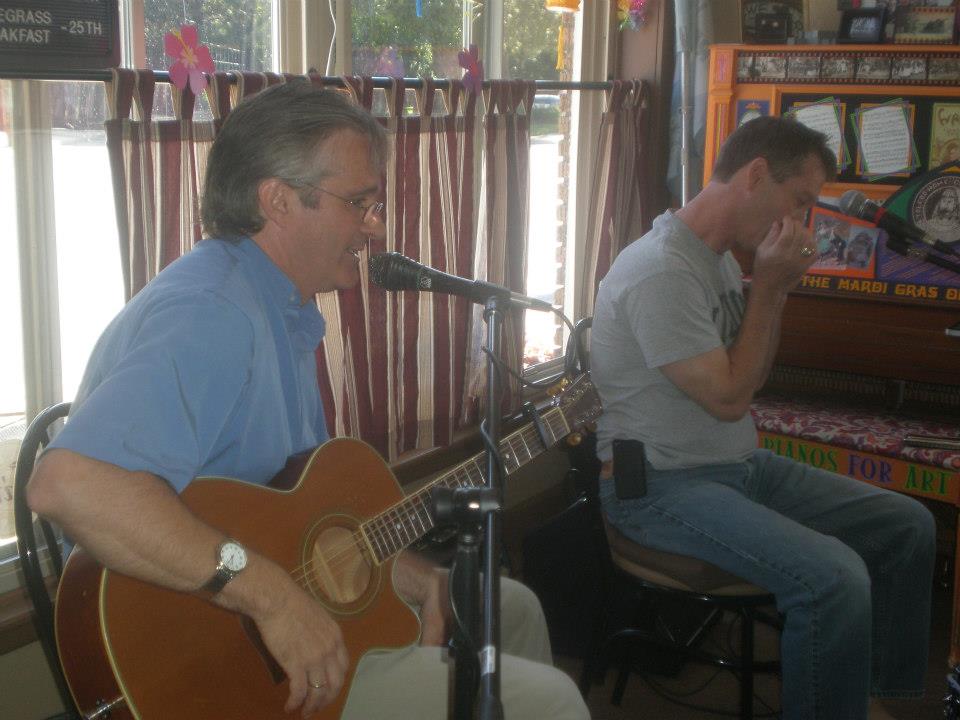
39. Glass City Café The eatery at 1107 Jackson St. features music every Saturday at 10 a.m.: First Saturdays feature acoustic Americana group Old State Line, second Saturdays are called OWE’ver Easy featuring Jason Quick, third Saturdays offer Americana and classic rock favorites and fourth Saturdays are bluegrass. “Glass City Café” on Facebook
Glass City Cafe
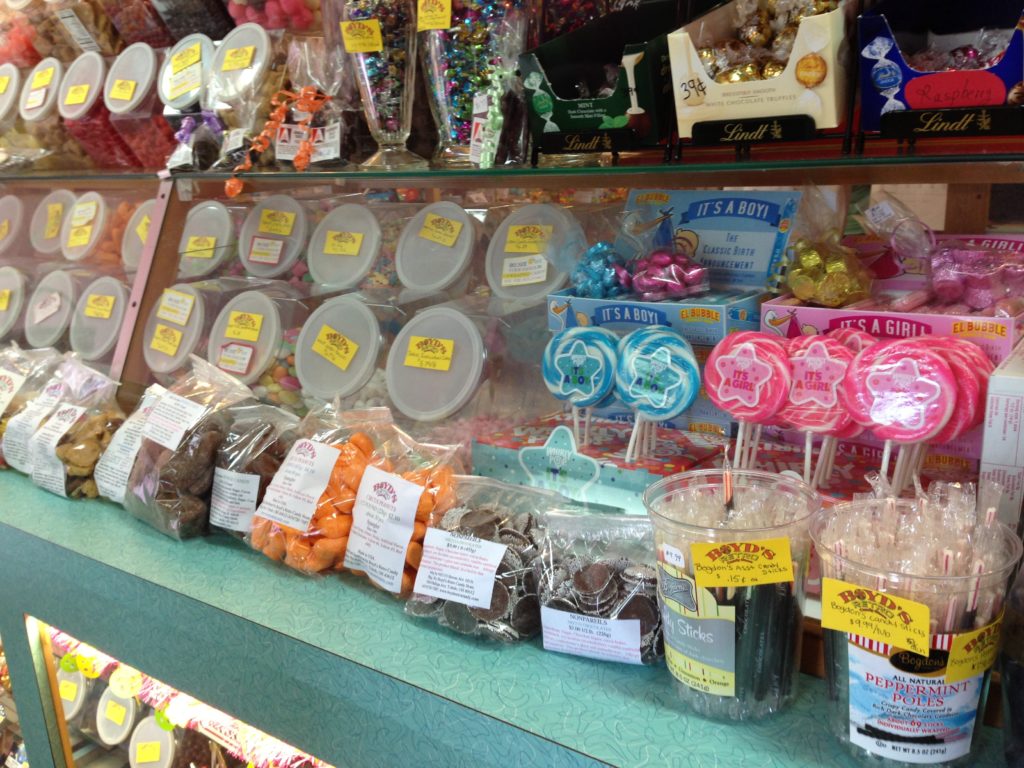
40. Boyd’s Retro Candy Store Features penny candy, old-fashioned taffy, retro soft drinks – and plenty of nostolgia. 954 Phillips Ave. boydsretrocandy.com
Boyd’s Retro Candy. Toledo Free Press Photo by Sarah Ottney
41. Pizza Palooza Local pizza joints will vie for the title of best judges’ choice and people’s choice July 26-27 at Centennial Terrace, 5773 Centennial Road, Sylvania. Admission $3-$5, children 4 and younger free. Pizza $1.50-$2 per slice. sylvaniachamber.org/PizzaPalooza.aspx
42. Brewery tour Tours of Toledo’s Maumee Bay Brewery Co., located inside the Oliver House, 27 Broadway St., are available by appointment. Beers brewed include Buckeye Beer, Glass City Pale Ale, Total Eclipse Breakfast Stout and more. The Maumee Bay Brew Pub overlooks the brewing floor. oh-maumeebaybrewingco.com
43. Food-themed fests Area food-themed fests include Whitehouse’s Cherry Fest, Swanton’s Corn Festival (Aug. 17), Oak Harbor’s Apple Fest (Oct. 12-13), Grand Rapids’ Applebutter Fest (Oct. 13) and more. whitehouseohiochamber.com/ cherryfest.htm, swantoncornfest.com, oakharborohio.net, applebutterfest.org
44. Taste of Maumee Set for Aug. 16-17 during Maumee’s 175th anniversary celebration, Taste of Maumee features more than a dozen local restaurants serving food from around the world, including Sidelines, Jacky’s Depot, El Salto, Fricker’s, Pizzaroma, Rib Cage and La Fiesta. maumeeuptown.com
History
45. Sylvania Historical Village The complex features an 1840s log home, schoolhouse, blacksmith and carpentry shop, railroad depot (the oldest in Ohio) with locomotive engine and caboose and museum. It hosts art camps for kids in the summer and the popular Fossil Fest in September. 5717 Main St., Sylvania. cityofsylvania.com
46. Wolcott House Current exhibit is “Patriotism, Petticoats and Progress: A Tribute to the Early Settlers of the Maumee Valley.” Will offer a Paranormal Tour, featuring a night tour of the house where unexplained events have been documented over the years, 7-11 p.m. Oct. 26. Guided tours available Thursday-Sunday, April through December. $2.50-$6. 1035 River Road, Maumee. wolcotthouse.org
47. Fort Meigs Featuring costumed historical interpreters, War of 1812 re-enactors, third Thursday lecture series, “Life in Early Ohio” event Aug. 24-25, Miniature War Gaming Day on Nov. 2 and more. $4-$8, children 5 and younger free. 29100 W. River Road, Perrysburg. fortmeigs.org
48. Lighthouse tours The Toledo Harbor Lighthouse Preservation Society offers trips to the Toledo Harbor Lighthouse during its annual festival in early July. Lighthouse cruises are offered aboard the Sandpiper on select Sundays during the summer. In Ottawa County, Marblehead Lighthouse Festival is Oct. 12. Cost to climb lighthouse is $2, children 6 and younger free. toledoharborlighthouse.org, marbleheadlighthouseohio.org
Holidays
49. Tours de Noel Featuring tours of historic Old West End homes decorated for the holidays plus a gift boutique, Tours de Noel is a fun way to kick off the holiday season. $10-15, children 13 and younger free. womenoftheoldwestendinc.com/tours
50. ‘The Nutcracker’ Approaching its 73rd year, the Toledo Ballet’s “Nutcracker,” performed at Stranahan Theater, is the longest-running performance in the nation and a holiday tradition for many. toledoballet.net
51. Lights Before Christmas Another holiday staple for many, the Toledo Zoo lights up with animation displays and more than a million lights, including 350,000 on the 85-foot Norway Spruce alone. Mid-November through Dec. 31. toledozoo.org
52. Christmas in July Need a fix of Christmas music, Christmas movies and Christmas ales? Find all that and more at the Santa Shuffle Pub Crawl, hosted by The Blarney Irish Pub, Bronze Boar, Home Slice Pizza, Table Forty4, Ye Olde Cock n’ Bull and Ye Old Durty Bird starting at 6 p.m. July 25. Drink and food item at each location. $30.
53. HalloWeekends Cedar Point isn’t just for summer. The “Best Amusement Park in the World” also features 10 haunted houses, plenty of “screamsters” and more. cedarpoint.com
54. Zombie Bar Crawl Thousands of costumed “zombies” hit the streets and bars of UpTown Toledo the Friday before Halloween. Hosted by the UpTown Association in partnership with the bars, restaurants and businesses of the Adams Street corridor. uptowntoledo.org
Literature/Film
55. Authors! Authors! Hosted each spring and fall by the Toledo-Lucas County Public Library, this series has brought famous authors such as Anna Quindlen, Nicholas Sparks, Bob Woodward, John Updike and more to Toledo. toledolibrary.org
56. Sundance Kid Drive-in One of the only drive-in movie theaters left in the area, the business across from Pearson Park offers two screens of double features April through October plus a concessions stand. 4500 Navarre Ave., Oregon. $3.75-$8.75 per person, children 5 and younger free. greateasterntheatres.com
57. Book clubs Book clubs are offered at Birmingham, Heatherdowns, Oregon, Point Place, Sanger, Sylvania, Washington, Waterville and West Toledo branch libraries as well as Way Public Library in Perrysburg. toledolibrary.org or waylibrary.info
58. Banned Books Week The annual event hosted by the University of Toledo each fall features speakers, raffle prizes and a banned books vigil. “banned books — University of Toledo” on Facebook
59. Featured Lines Each month, Launch Pad Cooperative hosts a different writer or poet to present an extended reading at the Downtown gallery, 911 Jefferson Ave. Upcoming speakers include Carl Dietrich in August, Michael Kocinski in September and Patricia Clark in November. 8 p.m., free. launchpadcooperative.com
Music
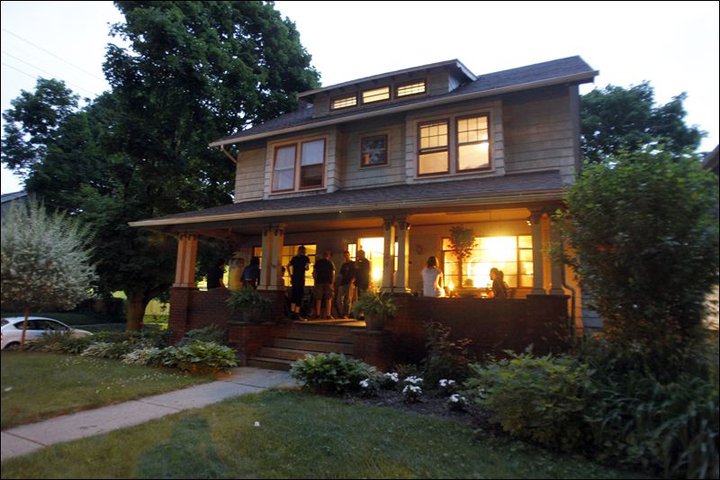
60. Robinwood Concert House October will be the five-year anniversary of this Old West End house’s first concert. The home at 2564 Robinwood Ave. hosts two to three shows per month for international, national and regional experimental or avant-garde musicians. toledobellows.wordpress.com
Robinwood Concert House
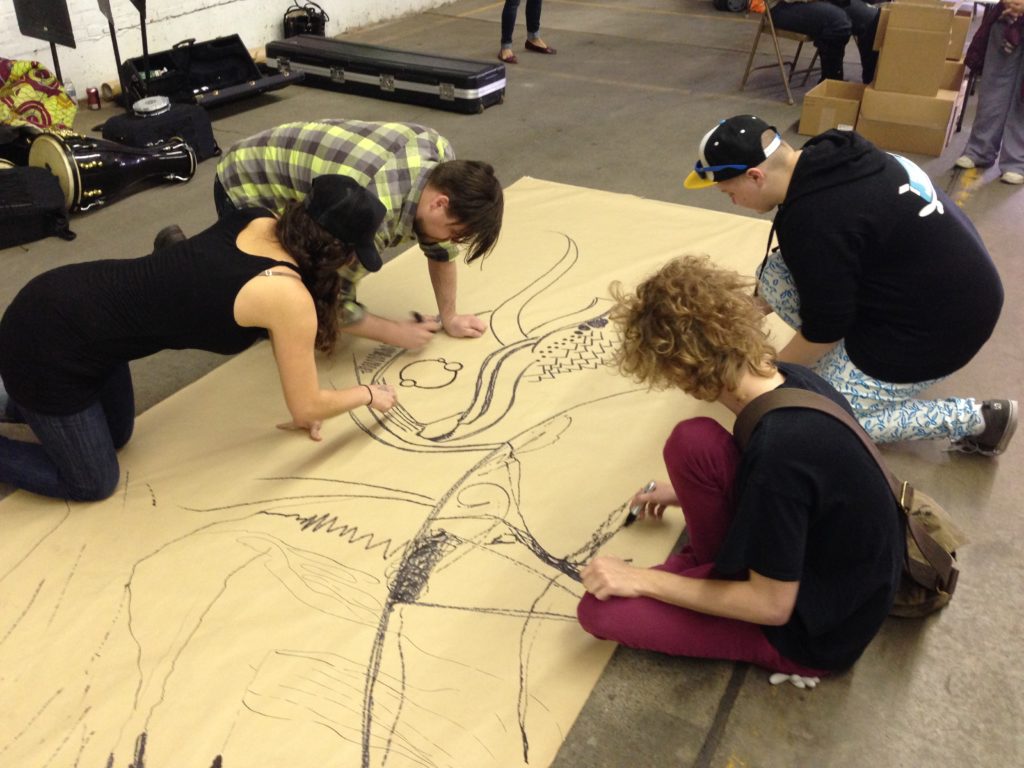
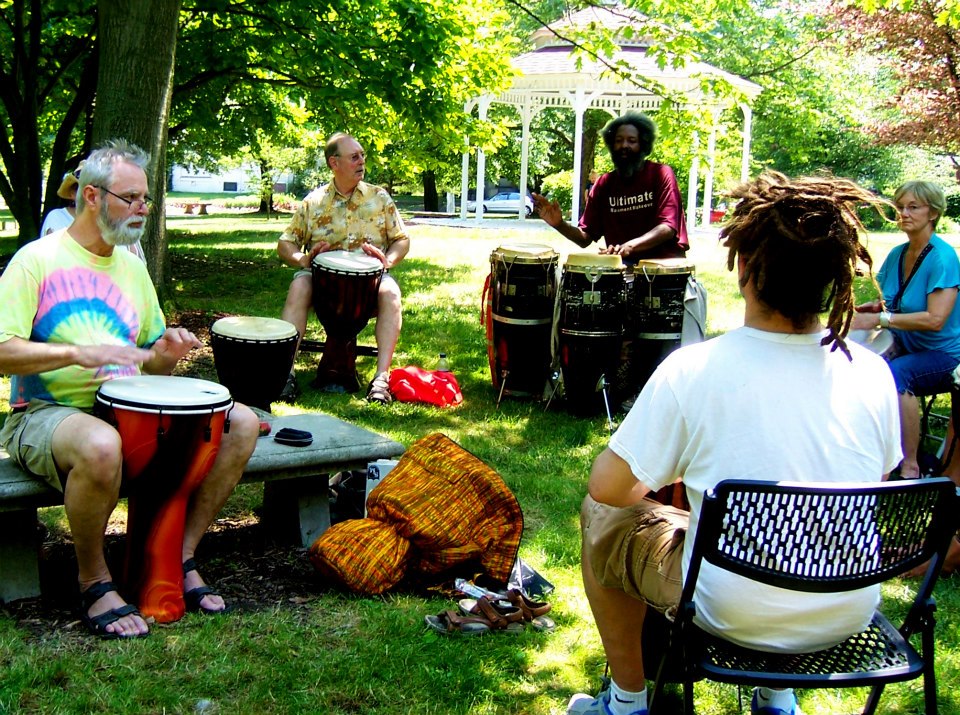
61. Community Drum Circle All are welcome to a drum circle that forms 1-3 p.m. Sundays in the Old West End’s Agnes Reynolds Jackson Arboretum, 2510 Robinwood Ave. Bring your own hand drum, percussion toy or other musical instrument if you have one. Some extras are usually available. Kids and beginners welcome. Organizers say it’s a form of art therapy, as the rhythms melt away the stress of daily life and promote spontaneity, creativity, cooperation, community building, empowerment and cultural awareness. “Community Drum Circle of Toledo” on Facebook
Community Drum Circle of Toledo
62. SoundTrek A wristband lets you hop between 11 UpTown Toledo venues hosting nearly 40 local acts performing a diverse array of live music on July 19 for $15-$20. theartscommission.org/programs/ soundtrek
63. Ice Skating With DJs The all-ages event features ice skating to the sounds of DJ-spun tunes at Ottawa Park Ice Rink, 2200 W. Bancroft St. $6-$10 includes skate rental and a drink at the afterparty.
64. Jazz On The Maumee Hear local and national artists perform 5:30-7:30 p.m. Wednesdays at the Best Western Premier Grand Plaza Hotel, 444 N. Summit St., hosted by the Art Tatum Jazz Society. $5-$15. arttatumsociety.com
65. Grugelfest Traditional jazz festival set for Sept. 13-15. grugelfest.com/Grugelfest2013
66. Spotlight Summer Nights There’s more to Hollywood Casino Toledo than gambling. Upcoming acts in the casino’s inaugural outdoor summer concert series along the riverfront include Wynonna Judd on July 20, Chevelle on July 26 (story on page 30), Ronnie Dunn on Aug. 2 and Travis Tritt on Aug. 24. 777 Hollywood Blvd. hollywoodcasinotoledo.com
Museums
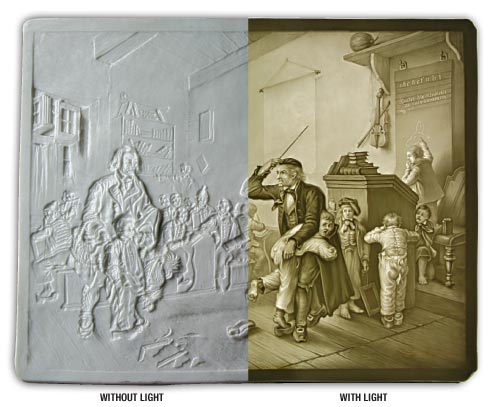
67. Blair Museum Toledo is home to the largest collection of lithophanes and the only museum worldwide dedicated to the art. Lithophanes are etchings made in translucent porcelain that can only be clearly viewed when lit from behind. The museum is home to more than 2,300 lithophanes and has about 750 lithophanes on display. Featuring “Captured in Porcelain” through Oct. 27. Toledo Botanical Gardens, 5403 Elmer Drive. Free and open 1-4 p.m. Saturday-Sunday May-October with special group tours for 10 or more available year-round for $5 a person. lithophanemuseum.org
A lithophane at the Blair Museum
68. Great Lakes museum The National Museum of the Great Lakes is scheduled to open in spring 2014 along with the Col. James M. Schoonmaker museum ship. In the meantime, check out the new Maritime Park, featuring an inlaid outline of the Great Lakes as well as Lakes-themed poetry by local artists stamped into the sidewalk. 1701 Front St. inlandseas.org
69. Firefighters Museum Features vintage firefighting uniforms, memorabilia, photos and equipment, including the city’s first fire pumper from 1837, a horse-drawn steamer, a Willys Fire Jeep and more. Noon to 4 p.m. Saturday or by appointment. 918 Sylvania Ave. toledofiremuseum.com
Toledo Firefighter Museum
70. Toledo Police Museum Visitors can get locked up in a jail cell, have their mug shot taken by the original TPD mug shot camera, check out interactive displays or peek inside a replica 1948 police wagon. Free. 10 a.m. to 4 p.m. Thursday-Saturday. At Ottawa Park, 2201 Kenwood Blvd. toledopolicemuseum.com
Nature/Science
71. Free Mondays at Toledo Zoo Lucas County residents get free admission on Mondays between 10 a.m. and noon (except holidays) and $2 off admission rates every day with proof of residence. Highlights include the new Australian exhibit, Wild Walkabout, the largest crocodile in North America and twin polar bear cubs. Active military and veterans also get free admission with military ID. toledozoo.org
Lucas the elephant at the Toledo Zoo. Photo Courtesy Lynn Lyons
72. Hit the trails or river Take advantage of about 150 miles of walking/running/dog-walking/horseback-riding trails spread over nine Metroparks of Toledo Area parks. The longest is the 15-mile hiking trail at Oak Openings Preserve. Don’t forget the Maumee River. Farnsworth Metropark along the Maumee River in Waterville has a ramp for small boats and personal watercraft. The park overlooks Missionary Island, a popular destination for paddlers to explore. Cartop boats can be launched under the I-475 bridge at Side Cut Metropark. metroparkstoledo.com
73. Imagination Station Featuring more than 250 hands-on exhibits, including “Grossology” through Sept. 2, this science center is fun even for adults. Closed Mondays and holidays. $7.50-$9.50, children 2 and younger free. Two Lucas County kids (12 and younger) per paid adult free on Saturdays. Teachers and active military free. imaginationstationtoledo.org
74. Ritter Planetarium and Brooks Observatory Ritter Planetarium features the first projection system of its kind in the world. “Two Small Pieces of Glass,” tracing the history of the telescope, 8:30 p.m. Fridays through Aug. 30. $5-$7, children 4 and younger free. www.utoledo.edu/nsm/rpbo
75. Fossil Park at Olander Search for fossils in a handicapaccessible 5-acre rock quarry, one of only a handful of such parks in the nation. Free and open April to November. 5675 Centennial Road, Sylvania. olanderpark.com/pages/Fossil.htm
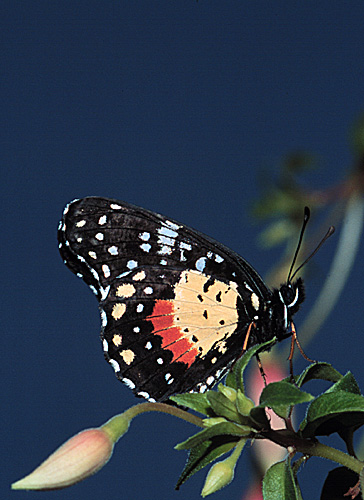
76. The Butterfly House This wheelchair-accessible greenhouse is filled with tropical plants and more than 1,000 butterflies from all over the world. Open May-October. Admission $7-$9, children 3 and younger free. 11455 Obee Road, Whitehouse. butterfly-house.com
The Butterfly House
77. Grow something Working in partnership with community organizations and neighborhoods, Toledo GROWs serves more than 165 community gardens, which are planned and cared for by neighborhood residents. Toledo GROWs is the community gardening outreach program of Toledo Botanical Garden. Find one near you by emailing [email protected]
78. Sandpiper cruise The Sandpiper is a 100-passenger cruise vessel available for private and public rides on the Maumee River from May through October. Cruise options include picnic lunch, Friday Night Family, sunset and city lights, fireworks, musical dinner, fall color and Halloween. $7-$40. sandpiperboat.com
79. Go birding Ottawa County recently drew visitors from 46 states and 13 countries for “The Biggest Week in American Birding,” a 10-day birding event held each May. Destinations that can be enjoyed yearround include Magee Marsh Wildlife Area, Metzger Marsh Wildlife Area and the Black Swamp Bird Observatory. biggestweekinamericanbirding.com
80. Park(ing) Day Various organizations bring in sod, plants, turf and other installations to create temporary green spaces along Adams Street. The third annual event is set for Sept. 20. Free. uptowntoledo.org
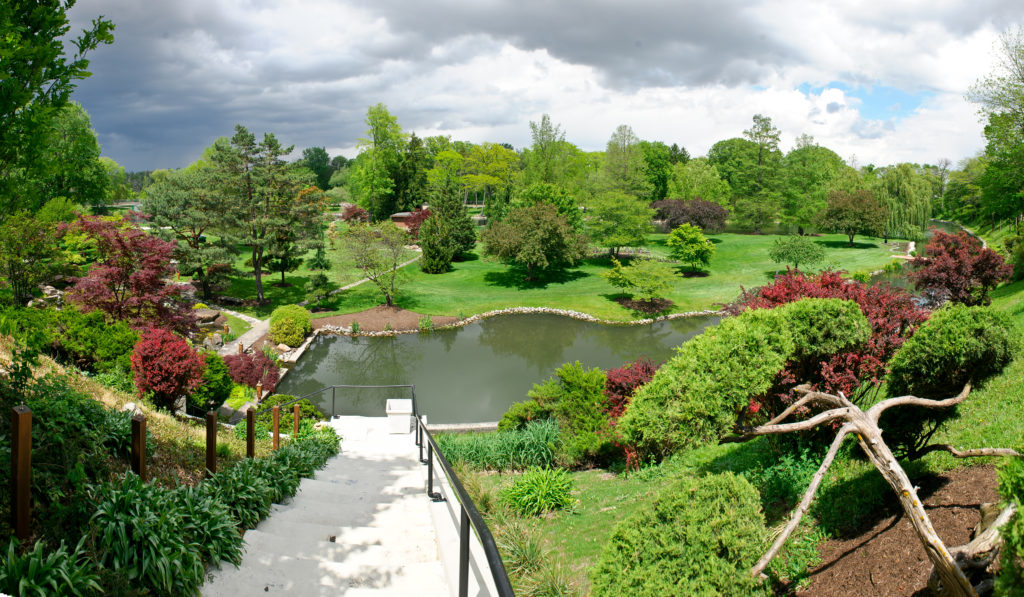
81. Schedel Arboretum Located in Elmore, the 17-acre site has more than 13,000 annuals, around 100 tree species and more than 100 beds, along with plant species and collectibles from more than 110 countries. It’s also home to a collection of more than 100 bonsai trees. Admission $6-$10, children 5 and younger free. Open May through October. Closed Mondays and holidays. 19255 W. Portage River South Road. schedel-gardens.org
Schedel Arboretum in Elmore. Toledo Free Press Photo by Joseph Herr
Offbeat
82. Free Comic Book Day Free Comic Book Day. First Saturday of every May, including JC’s Comic Stop, 5239 Hill Ave.; Monarch Cards & Comics, 4400 Heatherdowns Blvd.; The Game Room, 3001 W. Sylvania Ave.; and Seann’s Anime and Comics, 5805 Monroe St. monarchcomics.net, toledogameroom.com, seannsanimeandcomics.com
83. Go antiquing Whether buying or just browsing, some amazing pieces can be found at local antique shops, including Adams Street Antiques & Art, 1500 Adams St.; Great Finds in Maumee, 1414 Reynolds Road, Maumee; Maumee Antique Mall, 1552 Reynolds Road, Maumee; Leffler’s Antiques, 2646 W. Central Ave.; Toledo Architectural Artifacts, 20 S. Ontario St.; and more. maumeeantiquemall.com, lefflersantiques.com, coolstuffiscoolstuff.com
84. Record Store Day Featuring in-store performances, meet-and-greets with artists and special deals on merchandise, Record Store Day is observed across the country, including locally at Allied Record Exchange, Culture Clash Records, RamaLama Records, Shakin’ Street Records, B-Bop Records and more. recordstoreday.com
85. Bird’s Eye View Circus Space Bird’s Eye View Circus Space is a new studio offering lessons in aerial silks, lyra, trapeze, contact staff, hooping, acro yoga, yoga and partner yoga at Collingwood Arts Center, 2413 Collingwood Ave. facebook.com/BirdsEyeviewCircusSpace
86. BASHCon Whether you’re into video games, card games, board games or role-playing games, you’ll find something for you at BASHCon, featuring tournaments, costume contests, vendors and more. Hosted by the University of Toledo student gaming group BASH, the convention is the largest student-run gaming event in the Midwest. Feb. 14-16, 2014. ut-bash.com
87. Live comedy Catch a comedian at Funny Bone at Fat Fish Blue or Connxtions (closed for remodeling but slated to re-open in the fall). toledofunnybone.com, connxtionscomedyclub.com
Sports
88. National Tractor Pulling Championships Set in Bowling Green since 1967, this annual event is one of the largest in the nation, drawing an estimated 60,000 people. Aug. 16-18. $20-$44 for a single session pass, three-day passes start at $100, children 10 and younger free. Wood County Fairgrounds, 13800 W. Poe Road, Bowling Green. pulltown.com
89. Toledo Speedway Owned by ARCA Racing, which has been a starting point for many NASCAR and other professional drivers over the years. 5639 Benore Road. arcaracing.com
90. Raceway Park Live harness racing every Saturday and Sunday April through September. 5700 Telegraph Road. racewayparktoledo.com
91. Mud Hens and Walleye Catch baseball at Fifth Third Field and hockey at Huntington Center for year-round minor league sports — sometimes even on the same night. mudhens.com, toledowalleye.com
92. Marathon Classic See the top women golfers in the world at Toledo’s annual LPGA golf tournament. Let loose a little at Club 14, a chance to cheer and interact with golfers at hole 14 followed by an afterparty with live entertainment. marathonclassic.com
93. Glass City Rollers Toledo’s roller derby team will kick off its season Oct. 5 with other home bouts scheduled for Nov. 9, Dec. 7, Jan. 11, March 29 and May 3 at the SeaGate Convention Centre. glasscityrollers.com
94. Support a local sports team Several local high school and college teams have won state and national titles in recent years. (The University of Toledo’s women’s soccer team has a player who played for Colombia in the World Cup.) The Great Black Swamp Frogs of Sylvania play baseball by vintage 1860s rules, complete with vintage uniforms. UT and Bowling Green State University have quidditch teams in the spirit of the “Harry Potter” books. There’s also Toledo Celtics (men’s rugby), Toledo Reign (women’s pro football team), Cherokee Hockey, Toledo Crash (wheelchair football via The Ability Center) and more. sev.org/GBSFrogs, toledorugby.com, theetoledoreign.blogspot.com utoledoquidditch.tumblr.com, bgsuquidditch.tumblr.com
95. Join a community sports league Get-active options range from touch football, indoor soccer, ultimate Frisbee and broomball to “bar games” like euchre and cornhole via Toledo Sport and Social Club, Gold Medal Indoor Sports, Tam-O-Shanter, CedarCreek Church and more. toledosportandsocialclub.com, gmisports.net, playsylvania.com, cedarcreek.tv/get-connected/sports
96. Extreme Fort Meig-ing If going to the gym’s not your thing, join this group that stays fit by meeting at Fort Meigs to run, climb and engage in intense exercise sessions together outside. 29100 W River Road, Perrysburg “Extreme Ft. Meig-Ing” on Facebook
97. Hit the local bike trails Miles of bike trials, including the Jermain Park Trail built for off-road mountain bikes. thebikeworks.com/cycling-community/local-trails
98. Centennial Quarry Deep-water, spring-fed swimming facility in Sylvania, featuring sandy beach, diving platforms, water toys like an aqua-bobber, a water teeter-totter, log roller, swim rafts and more. Gate pass $6 or $90-$165 season membership. Noon to 7 p.m. daily Memorial Day through Labor Day. centennialterrace.org
99. Golf Pick up a Toledo Traditions of Golf Trail Pass, which includes six rounds of golf at Detwiler Park Golf Course, Collins Park Golf Course, South Toledo Golf Club and Ottawa Park Golf Course for $179. Or hit the virtual links at Tamaron Country Club’s Indoor Golf Center and play Pebble Beach, The Old Course at St Andrews or Spyglass without ever leaving town. $10-$25 per hour. tamaroncc.com
100. National Rifle and Pistol Matches More than 6,000 military and civilian shooters from across the country come to Camp Perry in Port Clinton each summer. Several matches include expert instruction for beginners and watching the competitions is free. Dozens of vendors are set up at commercial row the whole month. July 8-Aug. 14. odcmp.com/NM.htm
101. Fun runs Upcoming themed fun runs and mud runs include Run or Dye (Aug. 10, Toledo), Color Run (Aug. 17, Toledo), Dance Dash (Aug. 24, Perrysburg), Color Me Rad (Sept. 22, Toledo), Survival Race (Sept. 28, Holland), Zombie Race (Sept. 29, Holland). runordye.com, thecolorrun.com, dancedash5k.org, colormerad.com, thesurvivalrace.com, zombierace.co. Find more races at ToledoRoadRunners.org
Compiled by Toledo Free Press and Toledo Free Press Star Managing Editor Sarah Ottney. What did we miss? Let us know at [email protected].
I hear it all the time: “Toledo’s so boring. There’s nothing to do here.” The next time you hear someone say those words, please hand them a copy of this issue.
I admit: When our editorial team decided to come up with a list of “101 ways to spend 101 days” in Northwest Ohio, I thought it might be difficult. I imagined our stream of ideas running dry around No. 70 or so and really having to dig deep to finish the list.
As it turned out, we had the opposite problem. In no time at all, we had a list of nearly 150 regional activities and destinations. We pared the list to 101 a few times only to think of new ones to add.
Nearly every day for several weeks, I’d come into work to find an idea from a co-worker in an email or on a sticky note, or someone poking their head around the door frame to say, “What about this?” Picking the brains of some of our friends and regular contributors yielded more activities I wasn’t aware of, including a Sunday afternoon community drum circle in the Old West End, virtual golf at Tamaron Country Golf Club’s Indoor Golf Center and Bird’s Eye View Circus Space, a new studio at the Collingwood Arts Center offering lessons in aerial silks, trapeze, acro yoga and more.
I started paying more attention to Facebook posts and event invitations, where I learned about Glass City Café’s Saturday morning breakfast music series. Driving around town with new eyes, I started to notice things I’d never noticed before, like the Toledo Firefighters Museum just down the street from Boyd’s Retro Candy Store.
The weekend of July 20-21 alone offers the opportunity to take in worldclass golf at the LPGA’s Marathon Classic in Sylvania, groove to the sounds of more than 40 local musicians at 11 UpTown venues during The Arts Commission’s SoundTrek, get your Jiggs Dinner fix at the Toledo Hibernian Irish Festival Downtown or admire the riverfront as Wynonna Judd performs at Hollywood Casino Toledo’s outdoor summer concert series.
I’m inspired by local resident Sherry Stanfa-Stanley, who recently decided she needed to break out of a “30-year slump.” As reported by Staff Writer Evan Brune, Stanfa-Stanley is now almost two months into a quest to have 52 new experiences in the 52 weeks leading up to her 52nd birthday. So far, she’s entered a pizza-eating contest, taken a belly dancing class, auditioned for “Survivor,” been hypnotized and more.
It’s never too late to look around and see how much Northwest Ohio has to offer. We could have easily doubled our list and still been forced to leave things off. In the end, we decided to choose our 101 with the goal of touching on as many points of interest as possible. We listed them in no particular order but grouped them by category for ease of reading and include a disclaimer that the list was far from exhaustive.
So let us know: Which of your favorites did we miss? Email us at [email protected].
Sarah Ottney is managing editor of Toledo Free Press and Toledo Free Press Star. Contact her at [email protected].
I can’t pinpoint exactly how I first heard of Tough Mudder, but I like a good challenge and I knew immediately this was one I wanted to take.
Taglined “Probably the Toughest Event on the Planet,” Tough Mudder events are “hardcore 10-12 mile obstacle courses designed by British Special Forces to test your all-around strength, stamina, mental grit and camaraderie,” according to its website. Born as a Harvard Business School project and now hosting events around the world, the organization has drawn more than a million participants and raised more than $5.7 million for the Wounded Warrior Project since 2010.
During the weekend of June 29-30, I joined about 16,000 people taking on the 12-mile, 20-obstacle course at Michigan International Speedway in Brooklyn, Mich.
Three-and-a-half hours later, limping and covered in mud, I crossed the finish line to claim victory and my hard-earned orange sweatband.
Obstacles
With names like Walk the Plank, Kiss of Mud and Trench Warfare, each obstacle offers a unique challenge.
The worst by far was Arctic Enema, which involves submersion in a tub of ice water. I couldn’t feel my legs for the next half mile.
Third-time Mudder Jason Failing, 26, of Perrysburg said the obstacle is actually easier when it’s colder. “My body was so cold last year, it didn’t feel much colder,” Failing said. “I was sweating this year so it was a drastic change in temperature.”
Electric Eel — a belly crawl through shallow muddy water while trying to avoid getting zapped by dangling wires — was the most exciting, said Philip Meck, 25, of Grosse Pointe Woods, Mich.
“It was great watching everyone trying different methods to try and not get shocked,” Meck said. “I got shocked about 20 times. The shocks to the shoulders hurt the most.”
Kate Kelley, 38, of Toledo thought the hardest obstacle was Funky Monkey, a more intense version of the classic playground monkey bars.
“The bars were just too far apart for me to grab. Plus, my hands were muddy, the bars were muddy and my arms were pretty tired by then,” Kelley said. “I got across two bars and had to let go into the pit of muddy water and swim the rest.”
Her favorite was Fire Walker, where participants jumped over flames into a pit of water.
“It was intimidating, but exhilarating,” she said. Josh Curie, 27, of Detroit said Bale Bonds — stacks of round hay bales to climb over — was the toughest obstacle, while Erica Bechaz, 24, of Grand Rapids, Mich., who grew up on a farm, thought it was the easiest.
Meck’s least favorite obstacle was Boa Constrictor, which involved crawling through a series of narrow pipes.
“I’m 6-foot and have wide shoulders so it was rather hard for me to get up the tunnel out of the water,” Meck said.
Camaraderie
Phillip Dahlhofer, 29, of Haslett, Mich., believes there’s no single obstacle that’s the hardest, but that the event is more of a “cumulative stress that gets to you over time.”
That’s where encouragement from teammates and fellow participants comes in — that and most people need help to overcome at least a few obstacles.
I was planning to run with a team, but through a series of mishaps, we never found each other and I ended up running alone. I needed a boost over Glory Blades, Berlin Walls and Everest, but found quick and ready help. Warrior Carry, an obstacle in which one person must carry another, can’t be done alone.
Tough Mudder is billed as “not a race but a challenge.” Participants are urged to put teamwork before course time.
“You can’t help but feel the camaraderie as you run,” Dahlhofer said. “Even when I ran solo last year I was amazed how quickly people started to work together and help each other out.”
Kelley agreed.
“My hamstrings started to seize up around the seventh mile, which was excruciating,” she said. “I could barely jog through all the mud. I ran with my friend Jamie and she was great in helping me to keep moving. I just kept thinking, ‘You don’t have to be fast; just keep going forward.’ It was grueling!
“I couldn’t believe how great the other competitors were with helping. Everyone in our heat kind of kept an eye out for the rest of the competitors and kept the encouragement going.”
Bechaz said she especially noticed the camaraderie at Everest, a 15-foot-tall quarter pipe.
“Everyone turned back and made sure the next person jumping had a helping hand to pull them up,” she said. “Some people were up there helping for quite a while.”
Failing ran with a team of 23 people. Each ran at his or her own pace, then waited for their teammates at each obstacle. They linked arms and ran through the finish line together.
Several participants said they wish they would have run more beforehand.
“I did not run nearly enough,” Meck said. “My advice to people thinking about doing it would be to run, and then run some more. Training for running is the most important. People can help you over obstacles, but no one can help you run.
“You do feel the camaraderie,” Meck added. “There is a real feeling that you don’t want to let your team down.”
Everyone said the feeling of achievement was the best part.
“I felt so awesome and badass when I crossed the finish line,” Curie said. “I wished they would have timed it because I knew I did well. Mentally, I felt amazing. What kept me going is knowing that we are capable of doing so many things we feel are beyond ourselves if we just focus and push ourselves. I loved the looks I got from all the people who had not run the event when I was leaving. I was like, ‘Yup, I just did it!’”
Illness
The lone sour spot on the weekend was getting sick 24 hours later. The Michigan Department of Community Health is investigating an outbreak of norovirus among participants and spectators. Several hundred cases have been reported, but a cause has not been determined. However, the news is not enough to discourage most participants from signing up again.
“I would do it again in a heartbeat,” Bechaz said.
Dahlhofer and Failing both love Tough Mudder, but are looking for new challenges. Failing is thinking about the team challenge GORUCK while Dahlhofer’s next goal is World’s Toughest Mudder, a 24-hour Tough Mudder competition.
“You can’t help but get swept up in the excitement of a Tough Mudder once you get there. After your first Tough Mudder you gain a lot of confidence,” Dahlhofer said. “Advice for anyone interested is train hard and just do it. Life is too short to live with regrets.”
Cost is $85-$180. Those who don’t feel ready to enter the course can walk along the route as spectators for $20-$40. Spectators are appreciated for shouts of encouragement, snapping action shots, helping their loved ones hobble back to the car and driving home while they nap.
Organizers of Tough Mudder don’t like to see the event compared to other mud runs, but those who can’t wait for next year can get a taste of the experience at The Survival Race, a 5K coming to Holland on Sept. 28, or Zombie Race, a 5K or 15K coming to Holland on Sept. 29.
Sarah Ottney is managing editor of Toledo Free Press and Toledo Free Press Star. Contact her at sottney@ toledofreepress.com.
Toledo Free Press received a huge response to last year’s inaugural Military Yearbook and this year’s response was even more enthusiastic. The issue, published June 30, featured the names and faces of more than 100 area men and women who proudly wear the uniform of the United States military, hailing from every era and branch of service. Many have siblings, parents, children and other family members who also served.
There’s a special blend of pride, patriotism and camaraderie shared by military members and it spans the generations. I witnessed it June 26 watching veterans interact at Honor Flight of Northwest Ohio’s latest welcome home celebration. I witnessed it June 5-9 at the traveling Vietnam Veterans Memorial Wall in Toledo. And I’ve seen it in my own family.
My grandfather, Alfred Ottney, and brother-inlaw, Alex Wolff (both pictured in last week’s yearbook) joined the Navy more than 60 years apart, yet find more common ground than I’d expect about their experiences, comparing stories every chance they get.
Military families — parents, spouses, children and significant others who go months at a time without being able to embrace, lean on or know their loved one is safe — also sacrifice.
Growing up, my grandma taught all her grandchildren the proper way to fold a flag, warning us to never let it touch the ground. My parents illuminate their flag at night or take it down each evening. They remove their hats and place their hands over their hearts during the national anthem. They attend a Memorial Day service every year and linger afterward at gravesites, willing to sacrifice a few hours to pay their respects. I’m thankful now I was raised with that kind of reverence and attitude of gratitude toward those who serve.
Shortly after Memorial Day, a letter to the editor came across my desk. Vietnam veteran Daniel Cannode of Waterville was concerned that fewer and fewer members of local veterans groups seem to be honoring the annual ritual of placing flags at veteran headstones in area cemeteries.
“The current generation it appears does not deem it necessary to remember the sacrifices veterans made to keep this great republic free,” Cannode wrote. “How much longer will it be before it is ‘just another Monday holiday’?”
I can’t speak for veterans groups, but it does seem too few civilians take time out of their three-day weekend to attend a Memorial Day ceremony. Too few bother on the Fourth of July to think about the true cost of our independence. Too few ever pause to thank a veteran for his or her service. The service members highlighted in last week’s yearbook represent only a small fraction of those with ties to this area; the issue is our modest effort to thank them all, one we plan to continue for years to come.
Sarah Ottney is managing editor of Toledo Free Press and Toledo Free Press Star. Contact her via email at sottney@ toledofreepress.com.
Relatives of Angela Steinfurth’s cellmate alerted the FBI late Tuesday evening to the potential location of Steinfurth’s missing 18-month-old daughter, Elaina.
Jobeth Adams of North Toledo said her sister, Connie Elam, called her June 18 from Lucas County Correctional Facility. Elam told Adams that Steinfurth had confessed to helping her boyfriend hide Elaina’s body.
Jobeth Adams of North Toledo holds her cellphone showing the call she and her husband made to Toledo Police Department's Crime Stoppers tip line on June 18 regarding missing 18-month-old Elaina Steinfurth. Toledo Free Press Photo by Sarah Ottney
“[Elam] called Tuesday night, and she was really upset,” Adams said. “She said, ‘I don’t know why this woman has decided to confide in me.’”
According to Elam, Steinfurth’s boyfriend Steven W. King threw Elaina up against the wall between the night of June 1 and the morning of June 2, injuring her. King then put the toddler down for a nap and when Steinfurth checked on her later, Elaina was dead.
“They wrapped [Elaina] up in a blanket, and took her down by the High-Level Bridge and [King] stood behind [Steinfurth] and she threw this baby in the river,” Adams said.
‘“[I said] ‘So what you’re trying to tell me, Connie, is there is no hope for this baby coming home?,’” Adams said. “And she said, ‘No Jobeth.’ She said, ‘They’re looking in the right place for this baby. This baby is dead. She’s in the river.’”
Elam called Adams at 9:24 p.m. June 18. Adams’ husband called Toledo Police Department’s Crime Stoppers tip line at 10:50 p.m.
“Carl called and gave all the information, and they transferred us over to the FBI,” Adams said.
Adams said her sister is only interested in helping the search for Elaina.
“The other women [in Steinfurth’s cell] want something. My sister don’t want something,” Adams said. “That’s the reason she said something.”
Adams said Elam and Steinfurth became cellmates on June 17.
“[At first], she felt bad because all the girls in there was wanting to beat the girl up,” Adams said. “Then all of a sudden, the girl comes to her and confided in her and she’s like, ‘You didn’t take your baby to the hospital?’
Elam is currently incarcerated on child endangerment charges, but has not been convicted.The charges stem from an incident on March 20, in which Elam left her 2-year-old daughter with the child’s paternal grandfather, Aubrey Dale Marshall, a convicted sex offender. Adams said Elam did not know of Marshall’s prior conviction. Marshall is charged with raping Elam’s daughter, but has not been convicted.
“My sister’s in there for something that happened to her child that she couldn’t help and is looking at this girl like, ‘I took my baby to the hospital.’ My sister took her child to the hospital. … and this lady didn’t do nothing for her baby. So it hurt my sister. It hurt her bad. It is a real messed up situation.”
Steinfurth is being held on child endangerment charges while the investigation into Elaina’s disappearance continues. King has not been charged in connection with Elaina’s disappearance.
Elaina was reported missing on June 2 when her father Terry Steinfurth Jr. came to pick up his daughter between noon and 1 p.m. at a home on Federal Street. An argument ensued when Angela refused to give him Elaina, according to several witnesses.
Almost an hour after the start of the argument, Angela went in to get Elaina but came out “crying and screaming” that Elaina was gone, according to Terry Steinfurth Sr., Elaina’s grandfather.
The family began searching the area for Elaina. They called the police when she could not be found.
Remarking that “success in any business is measured one guest at a time,” Hollywood Casino Toledo General Manager Richard St. Jean has 3.4 million reasons to feel the casino’s first year of operation has been a success.
The casino drew more than 20,000 guests on its opening day, May 29, 2012, and went on to log more than 3.4 million visitors during its first year — 600,000 more than projected, he said. Seventy-four percent of visitors came from outside Lucas County and 44 percent came from outside Ohio, including 31 percent from Michigan. The casino paid out $41.5 million in jackpots.
Hollywood Casino Toledo General Manager Richard St. Jean speaks during the casino’s one-year anniversary celebration on May 29. Toledo Free Press Photo by Sarah Ottney
On May 29, as hundreds of slot machines dinged and chimed in the background, St. Jean joined local officials and business partners on the H Lounge stage to mark the casino’s anniversary.
“I stood here a year ago very, very proud of the property we were ready to launch and here it is one year later and I can tell you that pride hasn’t changed or diminished one bit; in fact, it’s actually grown,” St. Jean said.
During its first year, the casino served 36,000 gallons of draft beer, Final Cut Steak & Seafood served 23,000 pounds of prime beef and visitors used 1,662 miles of toilet paper, said Hollywood Casino Toledo Vice President of Marketing Jason Birney.
In February, Final Cut earned a four-star rating from Forbes — the only restaurant in Ohio, Michigan or Indiana to receive the distinction.
“We’ve been a great neighbor to Rossford and a great business neighbor to Toledo,” St. Jean said. “We feel we have been accepted as a fun hotspot that complements the other entertainment facilities in town.”
St. Jean said he and parent company Penn National Gaming are pleased with Hollywood Casino Toledo’s first-year results.
“Our patterns, inception to date, have been very, very close to what we’ve predicted month by month,” St. Jean told Toledo Free Press. “We can’t control how we perform relative to someone else’s numbers. Too many people compare a state number pulled out of a budget that said, ‘This is what we really need to hit,’ whether its current or whether it was back in 2009 when the referendum passed. Well, there are a lot of mitigating factors with the economy and everything else, so we do our own forecasts and we measure our success against that forecast and we were pleased with our performance against our forecast.”
Horseshoe Casino Cleveland opened May 14, 2012, followed two weeks later by Hollywood Casino Toledo. Hollywood Casino Columbus opened in October followed by Horseshoe Casino Cincinnati in March.
From their openings through April, Ohio’s four casinos brought in $615.7 million in adjusted gross revenue, with $181.2 million coming from Hollywood Casino Toledo.
St. Jean said he was particularly pleased to see Toledo notch the highest net slot win among the state’s four casinos in April, a result he attributed to Cleveland’s casino being “cannibalized to a degree” by nearby Thistledown Racino.
Toledo’s biggest revenue month to date was June 2012, the casino’s first full month of operation, when it brought in $20.4 million.
Revenue then dropped to $19.1 million in July, $17.4 million in August, $15.9 million in September, $14.8 million in October and $13.6 million in November before bumping up to $14.2 million in December, $14.3 million in January, $14.8 million in February and $17.8 million in March and then dipping to $16.4 million in April.
Economic growth
Toledo Mayor Mike Bell said May 29 that, while the casino was a controversial subject, to him the issue was simple: The casino would create jobs and help turn the city’s economy around.
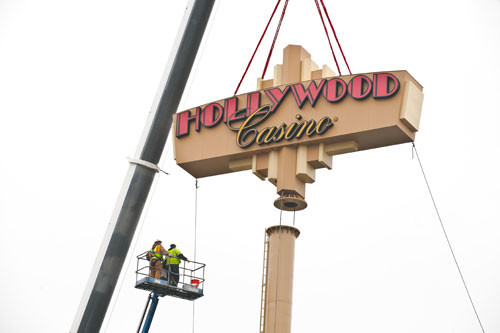
Workers install the Hollywood Casino Toledo sign facing Interstate 75 in December. Toledo Free Press Photo by Joseph Herr.
“When we started our administration the unemployment here in Toledo was about 13.8 percent; that’s down to somewhere about 8 percent now,” Bell said. “The casino has played a role in that. It’s employed people who were not employed before and they now have a job. They are able to do the things they want to do for their families and that increases the quality of life for all Toledoans.
“If all 1-year-olds could do what [the casino has] been able to do in one year, we’d really be moving forward as a city and as a world,” Bell said.
New opportunities
About 90 percent of the casino’s 1,300 team members were local hires and 80 percent of the original hires are still with the casino, St. Jean said. So far, 128 people have been promoted, including 13 twice and six three times or more.
One local hire was 41-year-old Stacy Alani of Toledo. Two years ago, Alani didn’t know a thing about cards. Now it’s her livelihood.
After the transportation company she’d worked at for four years consolidated most of its Toledo area operation to an out-of-state office, Alani found herself out of a job.
After several frustrating months of applying for jobs but getting no response, Alani landed a job as a table games dealer — earning more money than before and enjoying the work more.
“Everything happens for a reason. I firmly believe that,” Alani said. “I love the people I work for. Compared to the job I had, which just wasn’t a friendly environment, at Hollywood [General Manager] Richard St. Jean and [Assistant General Manager] Mike Galle will sit down in our lunchroom, just plop their tray down beside us. They are not above anyone. They know everyone by name. They want you to succeed and be happy and you want to do well for them. Everybody is just like a big family there.”
Alani deals mainly craps, but also works at the roulette and blackjack tables. She and the other dealers know regular customers by name. She went through weeks of dealer training, but said her education continues daily.
“This is my new career. This is what I’m doing and I want to know everything about it,” Alani said. “I just try to take it all in and learn everything I can. I learn so many new things every day.”
Business impact
Construction workers provided an initial increase in revenue for Rossford businesses and casino employees continue to bring in a minimal level of business, employees at several Rossford businesses said.
“We get business from the employees of the casino, but not their customers,” said Amanda Schoenhofer, an employee of Marco’s Pizza in Rossford. “I don’t think a lot of the people leaving the casino come into Rossford. They just go straight to the highway.”
Rossford City Councilman Chuck Duricek, who owns Duricek’s Automotive Services about a mile from the casino, said businesses in Rossford have experienced little to no increase in customers. The best part, though, is that the predicted increases in crime have not been an issue at all, Duricek said.
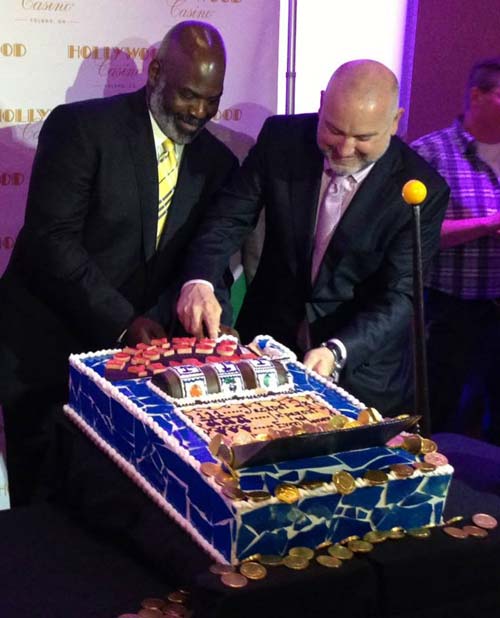
Toledo Mayor Mike Bell helps Hollywood Casino Toledo General Manager Richard St. Jean cut a cake during the casino’s one-year anniversary celebration May 29. Toledo Free Press Photo by Sarah Ottney
Nearby hotels, however, are an exception. According to Front Desk Manager Cal Disouky, the Days Inn in Toledo, located across the street from the casino, has experienced a 15 to 20 percent increase in occupancy because of the casino.
“We’re the only hotel within walking distance,” Disouky said. “We expected more, but it didn’t turn out how we expected in part because we’re not on the casino’s list of approved hotels.”
Other hotels have experienced a bump in business.
“We’ve picked up quite a bit of business,” said Connie Adams, front office supervisor at Country Inn & Suites in Rossford, which is on the casino’s recommended list. “We probably have six to 10 people per day from the casino.”
Local focus
The casino often touts a commitment to supporting local businesses, especially woman- and minority-owned businesses.
Kurt Amstutz, co-owner of Elmore-based Tank’s Meats, which supplies 50 percent of the meat sold at the casino, said May 29 he was thankful for the opportunity to partner with the casino.
“For a company this size to give a small player like us the opportunity, the chance of doing business with them, is phenomenal,” Amstutz said.
Shelly Okun, owner of Toledo-based Sam Okun Produce, called the partnership a once-in-a-lifetime opportunity.
“It’s been really empowering to us as a company and for our customers,” Okun said.
Graphic by James A. Molnar; information compiled by Sarah Ottney.
Tourism
Richard Nachazel, president of Destination Toledo Convention and Visitors Bureau, said the casino has helped attract conventions and events to Toledo.
“There’s probably been 15-20 groups that have booked the Toledo area not specifically because the casino was there, but the casino being there was a help,” Nachazel said.
One example is the Heartland Travel Showcase, which hosted its annual convention in Toledo in February for the first time in 25 years and will return in March 2014.
“One of the things that helped them decide on us versus other cities was the fact we do have a casino,” Nachazel said. “It’s been incredible for the area, in a word. They’ve been a great stakeholder in the economic tourism impact of Northwest Ohio and certainly work well with our office. We couldn’t be happier they are there.”
Crime
By the six-month mark of the casino’s opening, concerns about increased crime, traffic jams and gambling addictions had largely subsided, area law enforcement said.
Capt. Brad Weis, commander of the Toledo Police Department’s strategic response bureau, said the casino has not been the problem area that many people expected — especially after it started hiring off-duty police officers to work inside.
“It’s definitely less than we expected,” Weis said. “Crime is actually minimal at best. From my perspective, it’s a benefit to the community and it hasn’t been a police issue at all other than traffic backups now and then.”
Rossford Mayor Neil A. MacKinnon III said the casino has actually made Rossford safer than before, thanks to a $200,000 public safety grant from Penn National used to purchase new radios and automated CPR machines, and a $12,000 grant to help establish a K-9 unit.
“We’ve seen no increase in crime whatsoever,” MacKinnon said. “We are actually safer today as a community than before they got here.”
Rossford Police Chief Glenn Goss Sr. agreed.
“It’s been real quiet,” Goss said. “We haven’t had any major changes in criminal activity since the casino’s been there.”
Goss reported more operating a vehicle while impaired (OVI) stops during the past year, but attributed the increase to his increased focus on all traffic law enforcement since taking over as chief in December 2011 rather than a direct result of casino traffic.
Last summer, Rossford police noticed an increase in burglaries, but that also was seemingly unrelated to the casino, Goss said.
Community involvement
Penn National prides itself on community involvement and has given more than $270,000 to local organizations in the past year, plus thousands more prior to opening, St. Jean said. Management team members sit on a dozen local boards and are active participants in the Toledo Regional Chamber of Commerce and Rossford Business Association.
The casino recently partnered with ProMedica on a food reclamation program, in which ProMedica collects unused food and donates it to local social service agencies. Since late February, more than 13,000 pounds of food have been collected, said Stephanie Cihon, corporate director of community relations for ProMedica, who is now working to expand the program into other area businesses.
Tax revenue distribution
Each casino pays a fixed tax of 33 percent of gross casino revenue. Fifty-one percent of the revenue is distributed among Ohio’s 88 counties in proportion to population; half of each county’s distribution will go to its largest city if that city’s population is above 80,000. Thirty-four percent of the revenue is distributed among all public school districts, 5 percent among host cities, 3 percent to Ohio Casino Control Commission, 3 percent to the Ohio State Racing Commission fund, 2 percent to a state law enforcement training fund and 2 percent to a state problem gambling and addictions fund.
The City of Toledo received $2.9 million in 2012 and about $1.4 million so far this year in tax revenue distributions. Lucas County received more than $575,300 in 2012 and $1.1 million so far this year. Lucas County school districts have received $1.3 million, including $462,575 for Toledo Public Schools.
2012 distributions fell short of the city’s projected $3.4 million, but Lucas County got more than its projected $545,000, said Lucas County Commissioner Carol Contrada.
“We projected conservatively but realistically and the casino outdid itself,” Contrada said. “For 2013, we are on pace to exceed again. In fact, if the casino revenue keeps up the pace that it has been, we’re doubling down in Lucas County.”
The city’s 2013 budget projects $4.95 million in casino revenue, according to public information officer Jen Sorgenfrei.
Rossford City Council member Robert Ruse said he wished the legislation would have allowed for Rossford and Rossford Schools to benefit more from the casino. Rossford Schools has received $38,390 from casino tax revenue distributions.
Detroit impact
Ohio’s casinos have impacted Detroit’s casino business by about 4 percent, said Jake Miklojcik, president of Michigan Consultants, a Lansing-based firm providing economic and policy analysis for the casino and gaming market.
“Stories with the ‘lower than expectations’ headlines for Ohio casinos are intriguing because the totals are just about exactly what I thought they might be and told clients,” Miklojcik said in an email. “I was quoted several places in putting the likely impacts on Detroit at between 2.5 percent and 5 percent, with 4 percent my best estimate. If you look at Detroit figures, and factor in that there was a clear trend upward of 2 percent before the opening, and now down about 2 percent to 2.5 percent with the openings and, in addition, a racino, the net of about 4 percent from the Ohio casinos is pretty much right on.”
Yvette Monet, a spokesman for MGM Resorts International, the parent company of MGM Grand Detroit, said the company “enjoys hearty competition in all of the jurisdictions in which we operate.”
“Though we have seen some recent impact on revenues, there are a variety of factors, including the poor economy, that have impacted revenues in regional gaming markets throughout the county,” Monet said in an email.
MotorCity Casino and Greektown representatives did not return requests for comment.
Looking ahead
Casino employees recently decided to unionize, with negotiations expected to begin in June, St. Jean said.
The biggest challenge for Hollywood Casino Toledo going forward will be continuing to attract new visitors, St. Jean said. Food specials and entertainment such as the outdoor summer concert series that recently kicked off are among ways the casino is trying to draw more people in.
“It was a little lighter attendance than I was expecting, probably compounded by the holiday weekend and cold weather and it being the first concert people didn’t really know what to expect,” St. Jean said of The Temptations and The Spinners concert on May 24. “We expect Air Supply and LeAnn Rimes to be at capacity.”
Year one has been exciting, but St. Jean said he won’t spend too long celebrating the milestone before turning back to the work ahead.
“We’re excited about our performance in year one, but it’s like anything else, we’re now in a new year and it starts all over again. We’re interested in seeing where the business volumes level out. I don’t think we’ve necessarily seen that yet,” St. Jean said.
“We’re always raising the bar, so whether its financial performance, team member engagement or guest satisfaction, we’ve set all new benchmarks based on 2012 which became our baseline. So although we fared well compared to Penn National metrics, we challenge ourselves to do even better [next year].”
The 2012 CIFF Closing Ceremony at Tower City Center in Cleveland. Photo by Janet Macoska.
It’s a long way to Sundance and even farther to Cannes. But film enthusiasts don’t have to travel quite so far for a peek at up-and-coming films and filmmakers.
On April 3, the lights will go dark and the projector will illuminate the big screen as the 37th Cleveland International Film Festival (CIFF) kicks off.
The 12-day festival will showcase 180 feature films and 165 short films from 65 different countries.
More than 200 filmmakers are traveling to Cleveland for the festival, according to Patrick Shepherd, associate director of CIFF.
The 2012 CIFF closing ceremony at Tower City Center in Cleveland. Photo by Janet Macoska.
“Their countries of origin include Belgium, Belize, Brazil, Canada, France, India, Mexico, the Netherlands, Poland, Romania, Slovenia, United Kingdom and of course the USA,” he said. “We’ll also have a filmmaker from Puerto Rico.”
CIFF kicks off its opening night gala April 3 with screenings of “The Kings of Summer,” a coming-of-age film that was shot last summer in Greater Cleveland.
The festival begins at full steam on April 4. On a typical day there will be more than 30 films screened between 9 a.m. and midnight. On Fridays and Saturdays, there are late-night screenings that start around 11:30 p.m.
For those traveling from Toledo, Shepherd said they could make a day trip out of it or spend the whole weekend in Cleveland.
“The program is spread very evenly throughout the festival so you can get a sampling of the different types of films from around the world and all of the various documentaries that we bring in,” he said in an interview with Toledo Free Press.
For those who have never been to a film festival before, most operate out of theaters of varying shape and size. CIFF benefits from having one main location for almost all of its screenings: Tower City Cinemas in downtown Cleveland.
“We’re lucky to be in the heart of downtown,” Shepherd said.
“We’re very fortunate to have a very attentive film-going community in Northern Ohio,” he said, “and we’re most lucky about having everything under one roof.”
Organizers spend all year looking for films around the world, he said. There is also a call for entries launched every summer. Shepherd said there were nearly 2,000 films submitted for consideration.
Local connection
Once films are selected, CIFF works closely to connect specific films with nonprofit organizations in Northern Ohio. This was the first year CIFF reached out to Toledo organizations, said Shepherd, a 1993 Bowling Green State University graduate.
“I noticed that there was a trend of more people coming to the festival from the [Toledo] area,” he said.
The Toledo-Lucas County Public Library is partnering with CIFF for screenings of ‘Google and the World Brain’ on April 6 and 7.
The Toledo-Lucas County Public Library is partnering with CIFF for screenings of “Google and the World Brain” on April 6 and 7.
Shepherd said he reached out to the library because of the film’s story about Google’s mission to digitally scan and preserve every book ever written.
Tracy Montri, manager of the Main Library’s audiovisual department, said the partnership is a great opportunity to remind the community of the library’s commitment to film.
She noted that individuals who enjoy movies can borrow from the library’s film collection for free.
Montri has gone to CIFF several times and recommends attending.
“If you’re really into film, it’s a great investment to surround yourself with it. The folks who attend film festivals are like-minded individuals,” she said. “Film festival crowds are just there for the right reasons. It’s a really great community experience.”
Montri also organizes the library’s Film Focus series, which is a twice-annual, six-week independent film program at the Main Library, 325 N. Michigan St.
LGBT films
Equality Toledo is also partnering with the festival for God Loves Uganda,’ which screens April 11 and 12.
Equality Toledo is also partnering with the festival. The nonprofit organization that works to end discrimination in the region is connected with “God Loves Uganda,” which screens April 11 and 12.
“The festival has always made a commitment to LGBT films and the LGBT community, especially with its 10 percent cinema series,” said David Mann, spokesman for Equality Toledo. “We thought it was a great opportunity to help tell our collective stories.”
The film tells the story of LGBT Ugandans, who are risking their lives to fight for basic equality, Mann said. It also features certain forces in America that are exporting antigay hate and fueling violence in Africa.
“It’s a story that fits well with what we do here locally,” Mann said. “Whether here in Toledo or in Uganda, all of us are fighting for basic equality for LGBT people.”
What to expect
Audiences can expect to see filmmakers from films screened at CIFF.
“What makes a film festival special is the ability to engage filmmakers,” Shepherd said. “Anybody can watch a film on an iPad or even on your smartphone these days.”
Audiences at festivals have an opportunity to connect directly with directors, producers, writers or actors of a film, he said.
“Last year we had a little over 200 filmmakers come in for the 11 days,” Shepherd said. “I think we have at least 130 feature filmmakers coming in” this year.
One program at the festival is Focus on Filmmakers, which is sponsored by a grant from the Academy of Motion Picture Arts and Sciences.
Official poster for 2013.
CIFF received a three-year $150,000 grant in 2011 — the only festival in the country to receive the grant from the Academy, which is known for its Oscars.
“Getting support from the Academy is like getting a Good Housekeeping seal of approval from the industry,” Shepherd said.
In 2011, the focus was on African Diaspora films and filmmakers. This year, the focus is on the Latino community. Next year, the focus will be on the LGBT community.
Another tie-in with the Academy, two of CIFF’s short film award winners — Best Animated and Best Live Action Shorts — are automatically eligible for nomination consideration for the Oscars. Last year’s Live Action Short winner, “Curfew,” went on to win the Oscar in the same category in February.
CIFF is the largest film festival between New York and Chicago, according to Shepherd.
“There’s no other festival in the region that matches us in attendance,” he said.
CIFF has been at Tower City Cinemas since 1991, according to Shepherd. Back then, the attendance for the festival was around 15,000. In 2012, attendance for CIFF was more than 85,000, a record.
More are expected to attend this year after organizers added another day to the festival.
“There wasn’t any more room to grow, space-wise,” Shepherd said. “This is the first time in over 20 years that we’ve extended the length of the festival.”
Toledo Free Press is a media sponsor for the 37th Cleveland International Film Festival. More information and a schedule for the festival can be found online at clevelandfilm.org. (For a $2 ticket discount, use code: TOLEDO). For a chance to win tickets, visit Facebook.com/ToledoFreePress.