Home Blog Page 231

Initiative aids local charities fighting hunger

0
Sam Melden is executive director of Food for Thought. Toledo Free Press photo by Joseph Herr.

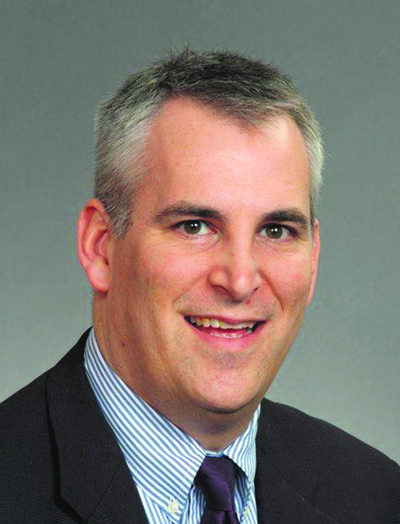
Kozak

Several local groups are partnering to combat one of the biggest issues facing Northwest Ohio — hunger.

Columbia Gas of Ohio, Toledo Free Press, WNWO-TV and Moms on the Go have joined forces for the Free from Hunger initiative. The yearlong initiative supports Food for Thought, Feed Lucas County Children and Cherry Street Mission. Major sponsors include Hollywood Casino Toledo, Wells Fargo Advisors and WSPD.

“It’s a really interesting approach to take a yearlong look at this because to a certain extent, it’s hard to combat something as large as hunger. … How do we start to do that?” said Chris Kozak, communications and community relations manager for Columbia Gas of Ohio. “We’ve picked three good partners who are having a strong impact now and our goal is to help them have an even bigger impact.”

The initiative was partially inspired by startling statistics: More than 85,000 Lucas County residents are “food insecure” and 35 percent of them are children younger than 18. One out of 10 of those children is younger than 5. More than 30,000 children in Lucas County live at or below the poverty line.

“How does Lucas County address issues such as education and economic development if it can’t feed its people?” said Michael S. Miller, editor in chief of Toledo Free Press. Miller, who collaborated with Kozak on the initiative, said, “It’s an overwhelming situation, but there are people devoting their lives to helping alleviate the crisis and we want to bring as much awareness and as many resources as we can to contributing to the solution.”

Each charity will have a season of spotlight during 2013. The initiative seeks corporate sponsors to donate $5,000 each and aims to get those funds matched by the public through events put on by the charities.

All funds are being maintained by the Toledo Community Foundation. Food for Thought is the first spotlight charity, followed by Feed Lucas County Children (FLCC) and  Cherry Street Mission.

Kozak said, “It’s really gotta be a team effort and I’ll steal a quote from Bruce Springsteen: ‘Nobody wins unless everybody wins.’”

Food for Thought

The first initiative event is 7 p.m. March 23 at Forrester’s on the River. “Bachelor” Bob Guiney is set to perform along with Scott Grimes. Tickets are $40 to benefit Food for Thought. A second event where local restaurants will show off their take on peanut butter and jelly sandwiches is set for May 23. More details on that event, which will feature wine/beer pairings, is forthcoming.

Sam Melden, executive director of Food for Thought, said, “One of the things about the Free from Hunger campaign is I think it really represents the next wave of raising money and community support. It really represents organizations with influence teaming up to say, ‘Let’s focus on this issue.’”

Food for Thought, which started in 2007, runs its stationary food pantry at 3540 Seaman Road, Oregon. It also has a mobile unit that it takes into its three-county wide community.

“We have about 12 food pantries a month — everything from rural and more urban churches to family centers,” Melden said.

He stressed the importance of partnerships to Food for Thought.

Sam Melden is executive director of Food for Thought. Toledo Free Press photo by Joseph Herr.

“It’s definitely not like an ice cream truck where it just pulls into a neighborhood and  pulls out,” he said. “Really what we want to do is we partner with other organizations and we kind of become their food pantry.”

“The idea with that is we aren’t going to assume we can be more engaged with somebody’s community than they already are and that’s served us well.”

The charity also emphasizes serving food with thoughtfulness — meaning eye contact counts as much, if not more, than full stomachs, Melden said. This means a simplified check-in process for patrons and letting them shop more than once a month.

It also means creative spins on projects like Art for Thought, where professional and amateur artists alike can decorate lunch bags. That program is run out of The Art Supply Depo in Downtown.

Art for Thought is mainly meant for school art classes and afterschool programs. However, Melden said, “Everyone from kids the youngest age that can pick up a crayon to the most incredible artist in the city can take a bag and decorate it.”

Food for Thought is also currently working with the Northwest Ohio Food Council to help provide healthier options to food pantry patrons. This means community gardens, cooking classes and themed recipes based on the pantry’s inventory.

Melden said that an increase in funds could mean expanding the types of food offered at pantries and maybe taking a potential partner organization off the waiting list. He also said that more volunteers are always needed. To sign up, visit www.feedtoledo.org.

FLCC and Cherry Street

Tony Siebeneck, executive director of FLCC, and Dan Rogers, president of Cherry Street Mission, both said that the awareness that the Free from Hunger initiative could bring to the issue is especially crucial.

Siebeneck said, “This hunger awareness project to me, it’s a godsend.”

FLCC, which prepares meals in its kitchen and then serves them throughout the community to hungry children, started in 2002. Last summer, it served its millionth summer meal.

The summer meal program is receiving accolades, Siebeneck said.

“We’re receiving a lot of calls from in-state and out-of-state organizations that are wanting to learn more about our successful food model. … That’s keeping us kind of busy,” he said, adding that his nonprofit is also gearing up for summer.

Rogers said of the campaign, “No question about it. What this does for Cherry Street is keep it in the forefront of our community.”

Cherry Street has provided food, shelter and other goods to the needy since 1947.

Rogers stressed that food is a stabilizing force in people’s lives.

“Hunger is distracting. Anything that’s distracting stands between us and where we want to be,” he said.

Rogers is aiming to purchase 100 chickens to provide Cherry Street with more eggs and also to vastly increase its two urban gardens’ produce.

Like Rogers and Siebeneck, Kozak said that awareness is a big part of the initiative.

“Awareness is the first step to [helping]; finding out what the need is; finding out it’s not something happening in a different state, in a different country; finding out there’s people in Toledo  just down the street that are hungry that your kids may go to school with,” Kozak said.

Moms on the Go

Moms on the Go — Lisa Harst, Allie Darr and Molly Pearson — film a weekly family segment for WNWO-TV. The group has helped several charities since its inception last year.

“Basically every month we were picking a new charity and decided our efforts would be better spent,” Pearson said, adding that the statistics and facts they learned about hunger made the decision to get onboard obvious.

“It kind of pulls at your heartstrings and being moms ourselves, the thought of not being able to feed your children three meals a day or even one is heart wrenching.”

Darr agreed.

“Personally, I’m a mom of three little boys and the thought of me not being able to feed them is very emotional for me,” she said.

Pearson said even if you can’t come to a specific event, donations to the charities are still encouraged.

Chris Topf, president of WNWO-TV, said that the station always looks for ways to make the community a better place.

“I want everybody to take this seriously and get involved. For the amount of money you might spend for going out to lunch, you can feed a family for a good long time,” he said.

For more information, search for “Free from Hunger” on Facebook.

Local ‘extreme couponer’ hosts book signing

0

Local coupon expert Joni Meyer-Crothers is hosting a book signing March 23 at Sylvania Area Family Services. Her book, “Extreme Couponing: Learn How to Be a Savvy Shopper and Save Money … One Coupon At a Time,” came out March 5.

Meyer-Crothers started extreme couponing about five years ago after her husband was laid off from his auto-industry job. Since then, she’s appeared on TLC’s “Extreme Couponing,” the “Rachael Ray Show,” “Good Morning America,” “20/20,” “Today,” “The 700 Club” and Fox News.

The extreme couponer spends about $200 for $5,000 worth of groceries every month and donates about 80 percent of that to Sylvania Area Family Services.

“I’m very big into teaching people that you can save for your own family, but you also have to share. There are too many hurting people out there and we have to step up and help them,” she said.

TLC and Discovery Channel Publishing contacted Meyer-Crothers in December 2011 to pitch a book.

“Of course, I said, ‘Yeah!’” Meyer-Crothers said. “By the end of the book, it kind of walks people through how to make a successful shopping trip.”

She co-authored the book with ghost writer Beth Adelman. Adelman now uses tips she picked up from Meyer-Crothers — like saving coupons for when items go on sale, she said. She also started donating to a local food bank.

“Very few people are having a very fabulous time financially right now and this is a book that will help people stretch what they have,” Adelman said.

The book signing also includes an opportunity to win a coupon binder, a Kroger gift card and an upright freezer. Entrants must purchase a copy of the book for $13 and bring five nonperishable/hygienic items to donate to Sylvania Area Family Services.

The signing runs noon to 2 p.m. March 23 at 5440 Marshall Drive, Sylvania. For more information, visit Meyer-Crothers’ blog at www.freetastesgood.com.

Rathbun: We need more undertakers

0

This country’s beginning revolved around personal liberty and self-reliance. America quickly became the wealthiest nation in history on the premise of free markets and the rule of law. The Founding Fathers knew we were, and would continue to be, imperfect but they put together a remarkable document that we still have today, the Constitution.

The founders knew that limited government was supposed to act only in those areas that the citizens could not on their own, e.g., national defense, courts of law, treaties, etc.

At the heart of the founding and during virtually every decade since, the small business owner was the key to growth, creativity and the creation of wealth both on an individual and a national level. More than any nation in the world throughout history, we have benefited from the fact that any citizen or resident has the opportunity to start a business.

Small-business owners can invest their own money and/or get their friends and family to invest in their idea with them. More than anything in the world, that sole concept of opportunity, of risk and profit, has driven individuals and consequently this nation to achieve the greatest level of wealth ever created.

There is no question that starting a business is risky. Most new businesses fail. Many are not profitable for a long time. You never know if your idea will be accepted and purchased until you try.

Just about every major, and minor, development in this country and ultimately in the world started as the idea of an individual and grew into something much more. The personal PC was not developed by IBM but by two small companies by the name of Apple and Microsoft. I can name hundreds more: Facebook, Ford, Google, ESPN and Disney all come to mind.

Today, however, the story is changing rapidly. Government, at all levels, is rapidly making it impossible to own and operate a business profitably. The number of regulations imposed today on a small privately held company creates a situation where the owner must decide whether the effort and cost are worth it. If the potential for profit disappears, then what is the use of taking the risk?

The current regulatory climate creates an environment where some great ideas never get off the ground or are shot down early before they can fully develop.

The Federal Register is a catalog of federal regulations. In 1950 there were just over 9,700 pages and GDP for that decade averaged 4.2 percent. In 1960 there were more than 22,000 pages and GDP averaged 4.4 percent a year for the decade. By 1970 regulations grew to more than 54,000 pages and GDP for the decade was 3.75 percent. By the year 2000 the regulations totaled more than 138,000 pages and the growth averaged 1.73. Today we have more than 170,000 pages of regulations and look around you to see what the GDP is now. (This is not counting the Affordable Care Act or Dodd-Frank.)

If you wanted to start a business and the only requirement was to read and understand all of the regulations, would you say, “Let’s go, I’m in!” or would you say, “Singapore is looking better every day?”

“Entrepreneur” is a French word meaning “one who undertakes.” This means risk, the freedom to not only succeed but also the freedom to fail. My dad always told me I would learn more by failing than I would by succeeding. Today, failing has become an intolerable situation and the government has decided it is its duty to have all the rules it needs to prevent any negative situation for its citizens, thereby diminishing the motivation to succeed.

This attitude has laid the foundation for undermining the freedom and opportunity that made us the greatest nation in the world. We need to get the shackles off of small business and get creative again. It is in our genes and we still have the most productive and creative workers in the world. Time to suit up and become an “undertaker.”


Gary L. Rathbun is the president and CEO of Private Wealth Consultants, LTD. He can be heard every day on 1370 WSPD at 4:06 p.m. on “After the Bell,” every day on the Afternoon Drive, and every Tuesday, Wednesday and Thursday evening at 6  throughout Northern Ohio on “Eye on Your Money.” He can be reached at (419) 842-0334 or email him at [email protected].

Szyperski: The carpet is here! The carpet is here!

0

We purchased our current house just over five years ago. It was sold in “mint condition,” so the only thing we intended to change right away was the carpeting. One mold remediation job, one new roof, one new bathroom and countless other unexpected non-mint condition expenses later, we are finally having that elusive new carpeting installed this month.

In a society where waiting the seven or eight minutes for macaroni to boil can seem like a tedious task, five years is a mighty long time. In a culture where student loans hang around longer than the initial job they gained, paying cash for a major expense is a major accomplishment. In a house where three children younger than 10 messily reside, having something new and fresh and wonderful feels like a miracle. Ahhhh, new carpeting!

Along with new carpeting comes new responsibility. Suddenly that food-stained, peed-on, pooped-on and, yes, vomited-on (just by pets, as far as I know) layer of the house we had come to completely ignore, other than our constant disdain for it, is of the utmost prominence.

The flooring we had consciously started beating up something fierce out of total disgust now demands the most delicate of care. I’m not sure we have it in us.

We’re not ones to take our shoes off upon entering the house. Actually, my kids all do out of their own preference, but I personally can’t stand the idea of it. My big ol’ feet are prone to toe stubbing and my high arches really prefer some form of constant support. As someone who is home much of the day, putting shoes on is also as close as I have to a “getting ready for work” routine.

I may be one of the few women on Earth constantly begging her offspring to stop taking their shoes off when they come inside. It’s not as big of a deal as when they were little and I had to do all of the tying and untying, but it’s still frustrating to pop in the house for a couple of minutes and turn around to see six bare feet when it’s time to leave again. Of course, it’s not quite as frustrating as when we all walk to the car shoed, but half of us are then shoeless when we arrive at our shoes-required destination five minutes later. Oh, the shoemanity!

I’m not quite willing to live a shoe-free inside existence, but I am willing to try to take the Mister Rogers approach and re-shoe myself at the front door. I may even go cardigan; I haven’t yet decided. I know the prospect of hideous germs lurking on the floor of my family’s home should scare the dickens out of me, but my microbial bravery is twofold. One, I have to assume that the potential contaminants and I already shared space somewhere when they latched onto my shoelaces, and, two, perhaps out of sheer cleaning laziness, I subscribe much more to the “exposure builds immunity” theory than its counterpart.

Still, I have an obvious vested interest in keeping our new prized possession as clean as possible for preservation’s sake. We are at least all (and by that I mean just my husband and I) agreed that there is to be no food outside of the Pergo-clad kitchen and dining room from here on out. We mean business too, unlike our meaningless “no food in the new car” rule that didn’t live past our it’s-9pm-and-we-have-yet-to-eat-dinner drive home from the dealership.

It did, however, only take a couple of days until we decided to play our grown-up card and allow ourselves to partake in coffee over carpeted surfaces. Coffee turned out to be a gateway substance that led to Panera takeout in our bedroom a day or two later. Again, we’re adults and can eat anywhere we darn well please.

Aside from the struggle to form better carpet care habits, there isn’t a whole lot of downside to new carpeting. Our 7-year-old, who could take or leave things like birthday cake and Disney World, was beside herself with excitement in anticipation of the new carpeting. Carpet day might as well have been Christmas morning in the eyes of our middle child. The girl is “meh” about french fries and most toys but went bonkers at the prospect of multi-colored frieze in her bedroom for some reason.

It was Christmas morning for me, too. There is something about the reward at the end of an extended wait, even if it is just buying new carpeting, that makes you feel like a kid again.

TPS battles obstacles to meet computer testing mandate

0

When Bob Vasquez told Toledo Public Schools (TPS) Business Manager James Gant at the February Finance Committee meeting that “if this doesn’t happen, the board will be looking to hold someone responsible,” Gant said he fully understood the enormity of the situation.

Vasquez, TPS Board of Education (BOE) member, was referring to the Ohio Department of Education’s (ODE) unfunded mandate that all state-required tests must be administered electronically in the 2014-15 academic year. Students from kindergarten through 12th grade will be required to take state-mandated tests using computers.

“It’s my responsibility to make sure the board is aware that if we need additional technology or additional funding — and I think this was Mr. Vasquez’s point — that it’s my responsibility to make sure they’re aware of that so that we can get what we need in order to run a successful testing period,” Gant said. “My biggest concern is to make sure that we are capable of being able to meet the needs of the district and test well when this thing is rolled out.”


Gant said that as of March 13, TPS has 8,000 computers for student use.

Based on Jim Gault’s explanation of the ODE’s most current recommendations, TPS will either have to purchase at least another 4,000 student computers within the next year or, as Vasquez suggested in February, “look to hire an outside service” to ensure the district has the necessary hardware to give its students the opportunity to pass the tests.

Gault, TPS’s chief academic officer, said ODE is telling districts that it recommends that school buildings with more than six grade levels, which includes all of TPS’s elementary schools, have one computer for every two students in six of the eight grade levels within each building and a 1-to-1 ratio of computers to students in the two grade levels with the highest enrollment in that same building.

‘Quite a bit away’

Gant said an analysis the district recently completed in some of its buildings indicates TPS is “quite a bit away” from establishing a 1-to-1 student-to-computer ratio.

“It’s difficult to quantify ‘quite a bit,’” Gant said, “but we did assess [the cost of providing] Arlington Elementary with a 11-to-1 ratio. That cost is approximately $60,000.”

Gault said ODE also recommends that schools with fewer than six grade levels, which includes TPS’s high schools, have a 2-to-1 students-to-computer ratio.

“We have also been working with ODE in providing an assessment of our technology to ensure … our computers have the necessary RAM (random-access memory) to perform the PARCC (Partnership for Assessment of Readiness for College and Careers) Assessments,” Gault said.

One frustration districts across the state face is ODE’s decision to release the plan piecemeal, Gault said.

“This is not all developed as of yet,” Gault said. “They are releasing more information as we go forward. In fact, they just released some additional information last week on PARCC Assessments.”

A proactive approach

Despite the uncertainty, Gault said TPS is taking a proactive approach to preparing its students for PARCC.

“The district is working diligently to be involved in any state-level pilots we can to not only test our equipment but also to allow our students the opportunity of taking an online assessment,” Gault said.

“There is a fourth-grade social studies pilot that is going to be offered this year that is online. The district is applying to pilot that. Last year, we had the opportunity to pilot the online social studies test as well. We are actively volunteering to engage in any opportunities to test our hardware with the online assessments that are coming.

Gault points to the district’s use of the STAR (Standardized Test for Assessment of Reading) test and SuccessMaker as two examples of TPS’s hands-on methodology.

“We’ve already started by getting online summative assessments like STAR that our students are utilizing in grades K through 8 as we try to get them used to that format of sitting at a computer and taking an assessment,” Gault said. “That’s a new addition of a norm-referenced test we started this year that is showing positive results academically.”

The TPS website describes SuccessMaker as instructional software that provides kindergarten through eighth-grade students with “adaptive, personalized paths for mastery of essential reading and math concepts.

“The program is highly interactive, addressing multiple learning styles and making students active participants in their learning. Many skills are presented in a game-like format, which is challenging and motivating, making students excited to use the program.”

The website has a link to the program that gives students with Internet access in their homes the ability to hone their reading and math skills.

Optimal testing conditions

Capacity is another issue TPS faces, Gault said.

“The minimum requirement is one computer for every two students,” Gault said. “That’s not optimal testing in the way this should be rolled out.

“The other thing we need to talk about is providing instruction for students to have basic keyboarding skills,” Gault said. “When you talk about second, third, fourth and fifth graders, you have to realize they’re not going to be just pointing and clicking. They’re going to have to compose at the computer screen. They’re going to have to word process. They’re going to have to be able to do some copying and editing. So those are things that are going to have to become part of our curriculum that there is not currently funding for.”

Gault said the district is studying where it may be able to include that computer instruction.

“However, one thing we have going for us is that every student at every school can use that school’s computer lab, so there are opportunities for students to learn the word processing skills they will need so that how they take the test does not interfere with their ability to demonstrate their knowledge of the material and their ability to succeed.”

Gault said he is aware that some districts have purchased “little microprocessors” for students in the lower grades to start getting used to the keys and to practice their keystrokes at home.

“We will have to discuss ways we can find opportunities for the youngest students to learn the necessary computer skills to ensure they can succeed. Those are some things that we’ll have to look at to ensure that not only do our students have the content to master these tests, but also have the technology skills [so that] that their skill levels don’t interfere with their ability to demonstrate their knowledge of the content.”

Gault also said he doesn’t believe the infrastructure exists within TPS to provide a one-to-one match. At issue is whether:

  • Computers will be wired or wireless.
  • The computers the district already owns have sufficient RAM.
  • School buildings have the capacity to be wired for today’s technology, which Gault said is much different than the technology standards in place when the buildings were assessed in 2000.
  • The district owns the required software.

New material, lengthy tests

Equal consideration must also be given to the curriculum covered in PARCC tests as well as the length of tests, Gault said.

“It’s a twofold issue school districts face,” Gault said. “Not only are we going to be doing new online assessments, but also we’re going to be testing over new material.”

That new material is the Common Core curriculum, and Gault said textbooks will be another significant issue.

“Remember, textbooks were not written for the Common Core — that’s coming,” Gault said. “That’s another issue with some of these unfunded mandates. Districts across the country are going to have to look at their textbook inventories and see if they’re aligned with the Common Core.”

Gault said ODE reports that PARCC Assessments in English language arts and math are expected to take students in grade 3 eight hours to complete, grades 4 and 5 students nine hours to complete, and those in grades 6-12 nine and one-half hours to complete.

Schools will be given a maximum of four weeks to complete the PARCC Assessments. Tests will be scheduled after students complete  approximately three-fourths of the school year.

“We can only speculate at this time, because the details and requirements of the 2014-15 tests are being released incrementally, but if I use English as an example, I would speculate that we might administer one test a day for three days,” Gault said. “There is no way children could take a 9.5 hour test in one day. Kids don’t have that kind of attention span.”

Treece: The shelf life of a record-high Dow

0

In an exciting week for traders, the Dow Jones reached new record highs multiple times. Many professionals have begun speculating how long the rally can last, and whether or not real growth in equities can be sustained in this economic environment.

Looking back to 2012, the Dow started off the year at 12,217, and pundits were spewing pessimism every chance they had. None of these experts believed that equities would see any benefit with 9.4 percent unemployment at the time and companies maintaining record levels of cash on their balance sheets.

Now, in March of 2013, the Dow has risen 18.5 percent during that time, and many investment professionals have been left scratching their heads trying to figure out what to tell their clients when asked why they were not invested in equities during the rally. During that same time frame, gold has increased from approximately $1,550/oz. to $1,598/oz., a mere 3 percent increase. Silver performed much better than gold over that same time, but rose just 7.4 percent to $29/oz. Even crude has increased only 1.3 percent, despite erratic prices at the gas pump.

With the economy still struggling to kick into full gear, many feel that this rally in equities cannot be maintained and fail to understand why stocks continue to rise. According to The Wall Street Journal, Fortune 500 companies have initiated programs that directly benefit their shareholders, such as share buybacks and issuing attractive dividends to current shareholders in an effort to entice more buyers. “American corporations also announced plans to buy back $117.8 billion of their own shares in February, the highest monthly total in records dating back to 1985,” the Journal reports. These companies include Apple, Exxon, Nordstrom, PepsiCo, Home Depot, AT&T and GE.

The cynic would look at this information and say that the rally is artificial, in no way backed up by market fundamentals. While I understand that argument, the fact remains that perception is reality, and market actions today are in anticipation of events 10-12 months down the road. However, these buybacks coupled with the March 12 NFIB Small Business Optimism Index report could continue to drive shares higher in the short term. The index rose 1.9 points as small businesses started to spend cash and look to hire.

One question I often hear is, “Why would the big companies spend so much money buying their own shares as opposed to investing in property, plants and equipment, or even new workers?” As I mentioned earlier, these corporations are sitting on record amounts of cash, and they feel that at this time allocating those resources towards stock purchases is the best use of their financial assets. This also shows they have favorable opinions of their future production and expect their shares to continue to rise in the long run.

The “it can’t last forever” argument does have some merit though. We are currently in the honeymoon phase of this buyback; the news is fresh and enjoyable. I do expect to see a downturn at some point, but I believe that it will simply be a market correction as opposed to a longterm market trend.

Readers who follow these columns know that we are quite bullish on the U.S. economy in the 2-5 and 5-10 year time frames, and that we are still wary of bonds. The Dow cannot rise forever and interest rates cannot fall forever; timing is the key in this market.

Ben Treece is a 2009 graduate from the University of Miami (Fla.), BBA International Finance and Marketing. He is a partner with Treece Investment Advisory Corp (www.TreeceInvestments.com) and a stockbroker licensed with FINRA, working for Treece Financial Services Corp. The above information is the express opinion of Ben Treece and should not be construed as investment advice or used without outside verification.

Paula Hicks-Hudson voted in as new Council president

0

UPDATED: With comments from Council members and Mayor Mike Bell.

Toledo City Council elected Paula Hicks-Hudson as its new president at a special meeting Feb. 26.

Hicks-Hudson, nominated by fellow Democrat Lindsay Webb, won the vote 8-4. Republican George Sarantou was the other nominee.

The four votes for Sarantou came from himself, Tom Waniewski, who nominated him, Rob Ludeman and D. Michael Collins. Waniewski and Ludeman are Republicans and Collins is an independent. The other eight Council members are Democrats.

After the vote, Sarantou moved to make the vote unanimous and that vote was 11-1 with Waniewski voting no.

Waniewski said he kept his vote with Sarantou because he was “the right guy for that job.”

“Paula is completely competent, without question, but George was the right guy,” Waniewski said, adding that he’s frustrated by members’ continued unwillingness to cross party lines.

Sarantou, who is term-limited for Council at the end of this year, said he accepted the decision.

“Council had to make a decision and I respect that and I wish President Hicks-Hudson the very best,” Sarantou said. “We live in a democracy.”

The special session was held before Council’s regular agenda review and a week after the Feb. 19 Council meeting at which Joe McNamara stepped down as Council president days after announcing he would run for mayor. But after  a protracted session during which five votes failed to receive the needed seven majority, Council adjourned without choosing a new president. As determined by a rotating schedule, Councilman Shaun Enright served as president pro tempore for the week.

McNamara said he resigned as president because he wanted to keep political differences between himself and Mayor Mike Bell, who is planning to run for re-election, from affecting the work of City Council. Webb said things were “very tense” between Bell and the Council after McNamara officially entered the race Feb. 12.

Nominees for president at the Feb. 19 meeting were Hicks-Hudson, Sarantou and Adam Martinez.

Martinez, who was nominated by McNamara, said he decided to bow out of the race and support Hicks-Hudson.

“It certainly was never my intent for it to go as far as it did,” Martinez said. “On Thursday (Feb. 21) … I reached out to fellow colleagues to kind of stop the hemorrhaging and move forward together. We have bigger, more important issues than the presidency so I just wanted to make sure we’re all on the same page.

“I’m extremely excited for her,” Martinez added. “I think she will do a phenomenal job.”

Hicks-Hudson, of District 4, became a Council member Jan. 11, 2011, after Council voted her in to replace Michael Ashford. The attorney later ran for and won her position.

After being sworn in, Hicks-Hudson said she and the Council would “work as a unit and work together to make sure that we take care of the people’s business.”

“It’s an opportunity to serve the people and to help Council become stronger,” Hicks-Hudson later added. “Not that we will always agree, but we want to be working toward a common goal. I think most of us that work in this particular position are doing it because we care about the city.”

She said her experience in state and local government and especially her background as a lawyer are what set her apart from other nominees and will serve her well as president.

“I’ve been working within city government not only as a lawyer but also as a legislative director and I think that is an addition that my predecessors didn’t have,” Hicks-Hudson said.

Bell said he looks forward to working with Hicks-Hudson as president.

“Paula is a very seasoned individual in governmental affairs. She’s done time with the city, she’s done time with the state and I think she’ll be an excellent president,” Bell said, adding that he didn’t foresee any difficulties in working with her.

“Absolutely not. It will be a pleasure,” Bell said. “We may not always agree on things, but she’s very logical in her thinking.”

Luna: ‘Liaison’ label fosters tension, obscures role of TPS Hispanic Outreach Coordinator

0

Although he says there’s not a single thing he doesn’t thoroughly enjoy about his job as Toledo Public Schools (TPS) Hispanic Outreach Coordinator, if José Luna could change one thing, it would be how he is perceived.

“There was debate the last time they wanted to cut my job,” Luna said. “And all the media talked about was that I was a liaison. That’s just a miniscule part of what I do.

“And then people in the African-American community were [questioning why] they cut Pastor [Cedric] Brock’s job as ombudsman. Why did his job not exist and mine did?”

Luna suggested that much of that confusion and occasional animosity goes back more than a century and a half.

“That tension between the black and Hispanic communities is historical,” Luna said. “It goes back to the slaves being given freedom. Suddenly, the Hispanic people were vying with members of the black community for the same lowlevel, low-paying jobs. That was something new for Hispanics. Those jobs had always been theirs, and now they had to vie for them. And sadly, too many of them are still doing the same thing today.”

Morris Jenkins said the tension that arose between the African-American and Latino communities over the elimination of the ombudsman position in 2010 is not unique to TPS or even to Toledo.

Jenkins is chairman of the Department of Criminal Justice and Social Work at the University of Toledo, an associate professor in criminal justice and a member of the City of Toledo Police Review Board. He also works with the Lucas County Court of Common Pleas Juvenile Division.

“It becomes a question of who’s the most oppressed minority,” Jenkins said. “You get that argument going, and the system now is trying to balance it out, and they’re overbalancing it with the Latino community, which is growing.

“I think they should do something across the board, not only with Latinos and blacks. I think there’s a lot of poor white folks in this community as well. There should be something to deal with all of the groups. The tension is there.”

Economic limitations
Jenkins said he recognizes that TPS faces economic limitations, but he thinks the district may be playing one racial group off the other.

“I think that’s part of this issue of institutional racism,” Jenkins said. “In order to take care of the slaves, they used to split them up based on color. The light-colored slaves would be in the house and the darker-colored slaves would be in the field.

“That’s the tactic that they’re using to deal with the issue here — dividing and conquer. I think it’s Willie Lynch where they separated the races for the house vs. the field.”

Willie Lynch refers to a policy some historians have argued slave owners used to managing their slaves. Rather than lynching the unruly ones, which was counterproductive, slave owners exploited the differences such as age and skin color in order to pit slaves against each other.

“We’ve got to be careful when we do stuff like that,” Jenkins warned.

‘There’s no comparison’
However, Luna said there is no comparison to the job of an ombudsman with what he does.

In addition to his undergraduate degree in education from Bowling Green State University, Luna earned a master’s degree from Siena Heights University’s School of Counseling.

“I’m not an ombudsman,” Luna said. “There are certain times I serve as an advocate, like an ombudsman, but I never get involved in disciplinary issues unless I act as the interpreter.

“I’m an educator and a school counselor. I do more counseling than most counselors. Unfortunately, school counselors today have lots to do as far as scheduling, and it’s hard for them to find the time to sit down and talk to students. I have that ability to sit down with kids.”

Luna said he approaches everything he does as Hispanic Outreach Coordinator from a career counseling perspective.

“When I got to this job, there was nothing in place. When I started, I did my job putting out fires. And then I decided to become more proactive.

“So I looked at the Carl D. Perkins federal grant that paid my salary. No. 1: What I should be doing? I should be serving the area of the grant I’m being paid from. So I started doing career-based programs.”

Brian Murphy, assistant superintendent of the Start, Rogers and Woodward learning communities and Luna’s supervisor, acknowledges that one of the problems in 2010 was that the general public wasn’t aware that Luna’s job is funded differently than a teacher’s and an ombudsman’s job.

Luna said he still follows the advice of former TPS Superintendent Crystal Ellis, a man he describes as “one of my greatest mentors in my career. I always quote him when anyone questions what I do. He told me, ‘José, children will never become what they don’t see. Go out and show them.’”

‘If it don’t kill you …’
“One of my philosophies is, ‘Never baby a child.’ Make them face what they’ve got to face,” he said. “I go back to, ‘If it don’t kill you, it makes you stronger.’

“I believe children mature when they’re challenged. If they’re having disciplinary issues, we sit down and talk about what they’re doing wrong. It’s up to that child and his family to make him grow.”

Luna regularly tells students and parents the story of an incident that happened to him when he was in elementary school to make his point.

“I was in fourth grade down in Texas, and this teacher called me a wetback,” Luna said. “I was outraged. And I let that teacher know it. And they took me out and paddled me.

“When I got home, I righteously told my mom what the deal was. And she paddled me. She said, ‘One of these days, you’re going to look back at this and you’ll understand even more what I’m telling you now. You need this education more than calling you any name.’

“And I see what my mother was saying now as an adult. I tell these kids all the time that I need education more than anything else. My job is to get past anything anybody calls me to get that education so that I can move forward.”

A growing trend
The number of Hispanic students enrolled in TPS is in flux for many reasons, almost all of which are financial, Luna said.

Of the 2,168 Hispanic children enrolled on March 6, Luna said he works most closely with approximately 300 Spanish-speaking families as a translator.

“But the demographics are changing every year with the influx of immigrants,” Luna said. “More and more of my business is being done in K-8 because younger families are coming in from out of the country.”

Murphy said that in the past two years, TPS’s Hispanic population has increased by about 10 percent, and that he expects that increase to continue for at least the next two years.

Luna said today’s statistics show that 20 percent of jobs are for the college-educated, 20 percent are for those with a high school education and 60 percent are for people who have had a career tech education.

“That’s a huge thing. Brian [Murphy] and I could just talk about the fact that opportunities abound, even in this area, if you have the right skills.”

Start and Bowsher high schools have milling programs through which small local companies hire students out of high school with basic milling education in metal lathes, Luna said. Luna pointed to Bowsher High School’s electronic tech prep program; those he said students can enter the workforce immediately after graduation repairing computers or working in electronic security or the cable and satellite industries. Luna also points to Woodward High School’s graphic arts program and Rogers High School’s construction academy as career tech programs students can graduate from with job skills to earn more than $30,000 a year.

“Myself, I’m a pusher of career tech because I really believe that’s where it’s at,” Luna said. “I don’t think colleges are always good. And we do kids an injustice by saying they have to go to college. I see in a lot of kids that it’s just not for them.

“We’ve got to get them to dream, a dream that fits them,” Luna said. “And then we’ve got to get them to realize that a dream is one-fifteenth of the whole deal. The other 14 parts are work, work, work, work and more work. And more work. And more work. And each stage will give you a sense of gratification that will build. That’s what I’m all about because I’m a product of that.”

Keystone Utilities

0

The City of Maumee, through its deal with Mueller Systems, has contracted with Keystone Utilities for the installation of the new electronic water meters.

All Keystone installers are licensed and bonded, according to Joe Camp, Maumee’s director of public service.

Camp said the installers wear photo ID badges and all of their vehicles bear the company name.

Camp said the city considers it a very serious matter when all the residences and businesses of the municipality must be entered for the installations.

If any resident or business owner is unsure whether to allow workers access to their premises, Camp said they should call the City of Maumee for verification. Keystone installers are also working evenings and on weekends for the convenience of residents, he said.

The installation usually takes about a half-hour, depending on the location of the old meter and other factors.

Archaeologist/curator to discuss cultural preservation March 15

0

Museums provide an invaluable service by educating the public on the arts and cultures of the world, yet the artifacts collected and exhibited may have been removed illicitly from their native countries.

“Stealing the Past? Collectors and Museums in the 21st Century” will be presented at 7:30 p.m. March 15 in the Center for Visual Arts Haigh Auditorium on The Toledo Museum of Art Campus. The lecture will be presented by Richard M. Leventhal, director of the Penn Cultural Heritage Center, professor of anthropology at the University of Pennsylvania and curator in the American section at the Penn Museum.

In the free, public lecture, Leventhal will talk about the need to prevent the looting of global heritage resources and the acquisition policies of museums — two of the main focuses of his professional activities.

Leventhal also focuses on the preservation of cultural heritage and cultural sites and has worked with law enforcement agencies internationally to stop the illegal movement
of antiquities.

He will illustrate his talk with examples from his own work and several recent cases covered in the media. For more than 30 years, the archaeologist conducted field research in Central America and Mexico, and has written about the ancient Maya.

The event is sponsored by the Toledo Society of the Archaeological Institute of America,
with financial support from the Kurt T. Luckner Lecture Fund and the UT Department of Sociology and Anthropology.

For more information, contact Lea McChesney of the UT Department of Sociology and Anthropology at [email protected].